Business Case: Mango Orchard Maintenance Service Provider
←
→
Page content transcription
If your browser does not render page correctly, please read the page content below
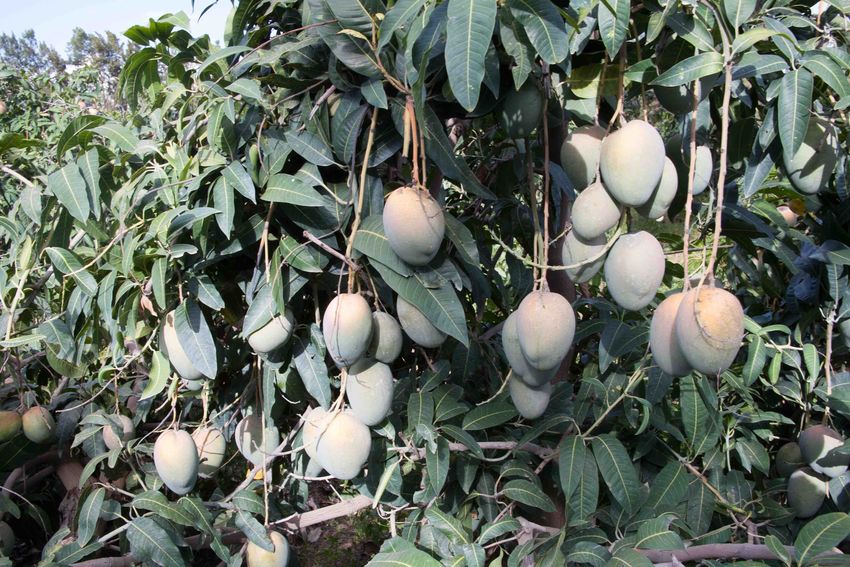
Business Case: Mango Orchard Maintenance Service Provider
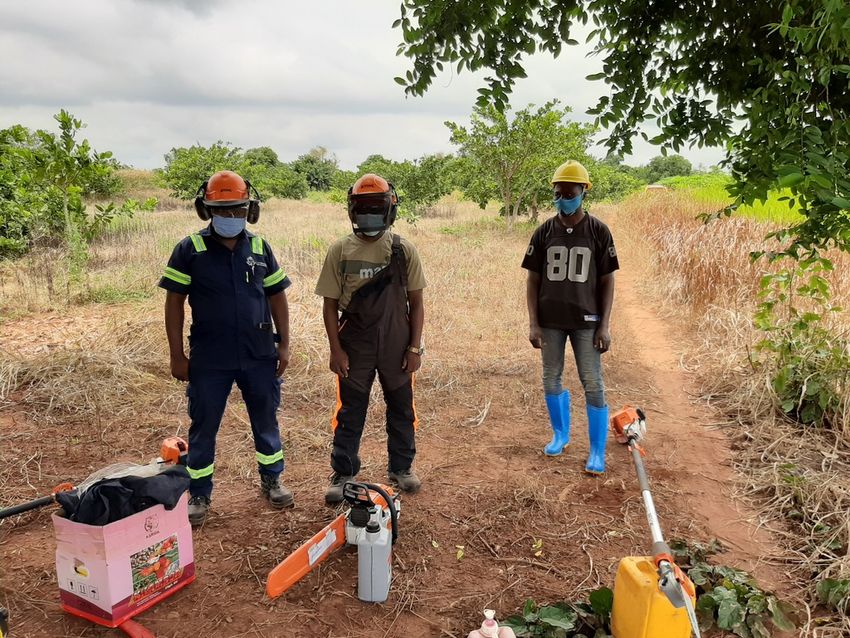
Description of Business Model

The entrepreneur equips and trains a team of labourers to provide a range of
orchard maintenance services through the year to neighbouring small-scale mango
farmers who do not have the scale, labour or capital to do this maintenance
themselves.

Yields improve from the current average of 5 tons per ha, 50% export grade, to 10
tons per ha with 60% export grade, radically improving the farmers profit per ha.

The maintenance service provider (SP) works with a mango exporter or trader to
prefinance the services. The exporter/trader deducts the cost of the services from
the price paid to the farmer after the harvest.

In addition, the SP offers planting and orchard rehabilitation services to farmers
who require them.

                     Typical Entrepreneur
        Entrepreneur
        • An emerging mango farmer who sees the value of good orchard
          maintenance who invests in equipment and sells services to
          neighbouring farmers.

        • A mango exporter who wants to increase the volumes of export
          grade fruit from his farmer supplier base.

        • A mango trader who needs to secure more fruit to resell. 1st Grade
          is sold to exporters. 2nd Grade is sold to market women who resell
          on the local fresh market.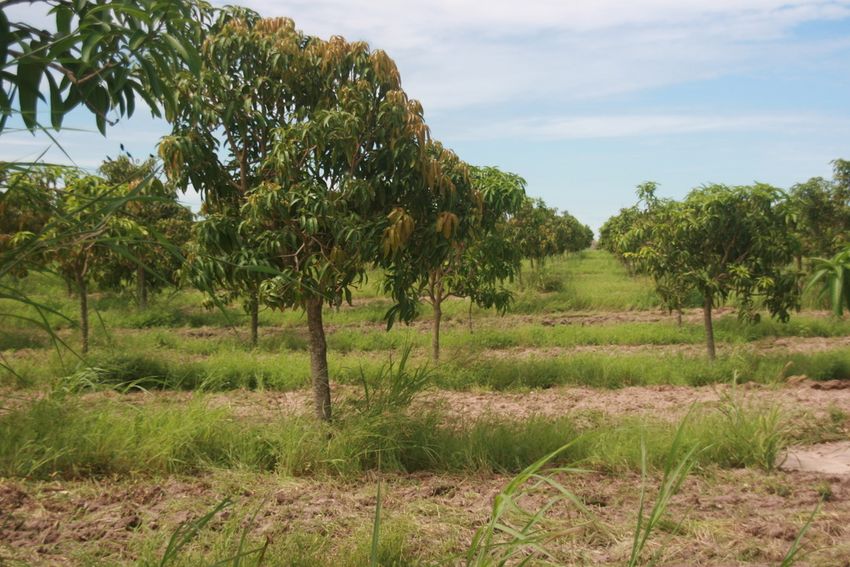
Business Case- Mango Orchard Maintenance Service Provider The Opportunity
Market Rationale for investment
Senegal has a unique export window for mangoes from May to July. During this period, the leading suppliers of Senegal’s unique EU market window:
mango in South America are not producing. As a result, there's great potential to expand mango production from • Good orchard maintenance has been shown to have a radical impact
small-scalers in Senegal because there is no other Kent or Keitt mango on the EU market. Between €15 000- € on yields and percentage of export grade fruit, if done at the right
30 000 per month of fruit can be accommodated on the market from Mid May to October (see figure below), which time and in the right way.
represents a doubling of the current capacity. The price paid by EU importers per 4 kg box of Kent and Keitt • Small-scale farmers in Senegal currently lack the knowledge, labour
mango peaks at between € 5 and € 6 due to the scarcity of mango during Senegal’s unique window. and capital to invest in their orchards and as a result achieve yields
of up to 5 tons per ha, a third of that achieved by commercial
The farm gate price of second grade mango on the local fresh market is also very high at FCFA 150 (€0,225) farmers.
with market women competing for this lucrative trade during the mango season. Market women resell the fruit for • Some farmers do prune, apply fertilisers and may use fruit-fly traps if
FCFA 300 per kg. subsidized. However, these activities are often done in the wrong
way.
• Exporters, traders and farmers all have a major incentive to invest in
European Imports by Lead Origins orchard maintenance practices that improve yields and fruit quality.
2019, Euros
90000
Service
80000 SERVICE Price per Ha Price in Euro
Space for growth Yield per hectare, Senegal compared to South Africa
70000 Maintenance pruning 80 000 122,00
60
60000 50 Rehabilitation Pruning 150 000 228,65
50000 40 Spraying for Fruitfly 25 000 38,00
30
40000
Foliar spray at fruit set 18 000 27,43
20
30000
Foliar fertiliser and fungicide spray 31 000 47,25
10
20000
0 Brushcutting (weed control) 12 000 18,29
Senegal Irrigated Senegal Irrigated Historic Benchmark South Africa Modern South Africa Modern
10000 Orchard (bottom Orchard (To End) Yield professsional orchard professsional orchard
range) (Keitt) (Kent) Insecticide spraying 22 000 33,53
0
Jan Feb March April May June July Aug Sept Oct Nov Dec Harvest 142 000 216,46
Brazil Peru Dominican Republic CDI Senegal Israel Ghana
Planting grafted clones (400/ ha) 320 000 487,80
Package deal (excl. planting & 330 000 503
rehabilitation pruning)
Business Case- Mango Orchard Maintenance Service Provider
                                                                                                                           Key Assumptions

Key Assumptions

Staff                                                      Services                                                        Equipment
• The team includes 6 trained and equipped service         • Each 6 man team can service 100ha over the course of the      • Equipment includes vehicles such as 2 , a motorbike
  providers.                                                 year. This icludes a variety of services from pruning to        and a truck for harvesting.
• In year 1, only one team is employed. However, in          spraying & even harvesting.                                   • The model allows for various cutting equipment-
  subsequent years additional teams can be added to        • Pruning services include mulching or chipping of pruned         chainsaw and parts, 2 machetes, a chipper, a pole
  reduce the fixed costs of operation.                       wood which is returned to the orchard floor, improving soil     pruner, a planting auger, picking crates and a mist-
• A mechanic is employed throughout the season.              fertility.                                                      blower.
                                                           • Services are delivered inclusive of fuel, transport and
                                                             inputs.

Safety                                                     Financing                                                       Cost of Services
• Protective clothing and training are fixed costs which   • The model assumes that 50% of the investment costs are        • Cost of services are calculated on time taken per tree
  are repeated every year.                                   self financed.                                                  or per ha with 100 trees per ha. This is based on
                                                                                                                             orchard maintenance trials conducted in Ghana and
                                                                                                                             adapted for Senegal.

Maintenance
• Maintenance on equipment is assumed to be 20% of
  the purchase price.
• This is in keeping with the heavy wear and tear on
  cutting equipment such as chainsaws, pruning poles
  etc.
Business Case- Mango Orchard Maintenance Service Provider
Economic Logic
Production Costs & Gross Margins Profit and Loss year 1
Year 2021
Revenues per Variable costs per Gross margin per Gross margin per Gross margin per Revenues
Name of the product/service product product product unit of sales unit of sales (in %) Maintenance Pruning 8 000 000
Maintenance Pruning 12 195,12 8 319,21 3 875,91 38,76 32% Rehabilitation of large trees 1 500 000
Planting 8 000 000
Rehabilitation of large trees 2 286,59 1 510,88 775,71 77,57 34%
Spraying for fruit fly 2 500 000
Planting 12 195,12 8 190,93 4 004,19 160,17 33% Foliar fertiliser Spraying at fruit set 1 800 000
Spraying for fruit fly 3 810,98 2 544,21 1 266,77 12,67 33% Brush cutting 1 200 000
Foliar fertiliser Spraying at fruit set 2 743,90 1 788,11 955,79 9,56 35% Insecticide spray 2 200 000
Brush cutting 1 829,27 1 198,17 631,10 6,31 35% Combined foliar and fungicide spraying 9 300 000
Harvesting 14 200 000
Insecticide spray 3 353,66 2 265,24 1 088,41 10,88 32%
Total revenues 48 700 000
Combined foliar and fungicide spraying 14 176,83 9 471,04 4 705,79 15,69 33%
Variable costs
Harvesting 21 646,34 14 405,49 7 240,85 72,41 33% Maintenance Pruning 5 457 400
Total 74 237,80 49 693,27 24 544,53 33% Rehabilitation of large trees 991 136
Planting 5 373 250
Spraying for fruit fly 1 669 000
Foliar fertiliser Spraying at fruit set 1 173 000
Investments Required Working Capital requirement Brush cutting
Insecticide spray
786 000
1 486 000
Combined foliar and fungicide spraying 6 213 000
Harvesting 9 450 000
Investments Cost FCFA Total variable costs 32 598 786
Fixed costs per month are FCFA 720 800.
Gross margin 16 101 214
The business should have 2 to 3 months of working capital.
Equipment 20 209 201 Fixed costs
Maintenance and insurance 5 022 890
Services are paid cash on delivery Fixed staff 1 200 000
Vehicles 6 018 000
Other fixed costs 720 800
Office and workshop 2 116 600
Return on Investment Depreciation
Long term loan interest expenses
4 712 431
-
28 343 801
Seasonal loan interest expenses -
Total
Total fixed costs 11 656 121
ROI Available Financial Instruments
Profit before tax 4 445 093
• 6 Years Applicable tax -
EURO 43 207 Net income 4 445 093
Cumulative net income 4 445 093
Business Case- Mango Orchard Maintenance Service Provider
                                                                                                                                   Economic Logic

   Cost Benefit for farmers and off-takers
                                                                                              Farmers
  Existing situation          Small-scale mango farmer with low input and yields              •   Yields are expected to double if the full suit of maintenance services are
                                                                        FCFA                      applied.
  Yield                       Kg/ha                Price FCFA                     5 000,00
  Export Grade                                50%                300,00           2 500,00    •   This increases farmers revenue per ha from FCFA 984 000,00 to
  Local Grade                                 50%                150,00           2 500,00        FCFA 2 043 000 at a cost of only FCFA 330 000.
  Revenue                                                                     1 125 000,00
  Variable costs                                   Cost FCFA                                  •   In the event these yields are not achieved, farmers would need at least a 1
  Pruning                     30 days                          2 500,00          75 000,00        ton/ha improvement in yield and no increase in export grade fruit to break
  Fertiliser                  3 bags+Labour                    9 000,00          27 000,00        even.
  Manual Weed control         6 mandays                        3 000,00           9 000,00
  Harvest                     10 mandays                       3 000,00          30 000,00    Off-takers
  Total Variable cost                                                           141 000,00    • Off-takers will benefit from increased volume of fruit.
  Gross Profit                                                     87%          984 000,00    • Increase in exportable grades.

Improved situation           Small-scale mango farmer with mechanised service                Breakeven yield improvement Small-scale mango farmer with mechanised service
                                                                        FCFA                                                                                        FCFA
Yield                        Kg/ha                Price FCFA                   10 000,00     Yield                       Kg/ha                Price FCFA                    6 000,00
Export Grade                                 60%                 300,00         6 000,00     Export Grade                                50%                 300,00         3 000,00
Local Grade                                  40%                 150,00         4 000,00     Local Grade                                 50%                 150,00         3 000,00
Revenue                                                                     2 400 000,00     Revenue                                                                    1 350 000,00
Variable costs                                    Cost FCFA                                  Variable costs                                   Cost FCFA
Mechanised service package                      1            330 000,00       330 000,00     Mechanised service package                     1            330 000,00       330 000,00
Fertiliser                   3 bags+Labour                     9 000,00        27 000,00     Fertiliser                  3 bags+Labour                     9 000,00        27 000,00
Manual Weed control                                                                          Manual Weed control
Harvest                                                                                      Harvest
Total Variable cost                                                            357 000,00    Total Variable cost                                                          357 000,00
Gross Profit                                                       85%       2 043 000,00    Gross Profit                                                      74%        993 000,00
Business Case- Mango Orchard Maintenance Service Provider
Ingredients for Success
1 2
Capability and Skills Proximity of large number of mango orchards
Entrepreneur • Each team of 6 can service 100 ha of orchards, performing different services throughout
• Experience and training in horticulture specifically mango farming in Senegal is needed. the year, according to the agricultural calendar.
• Good mathematical literacy and admin skills are required.
• Business and negotiating skills should be solid. • The model is highly scalable. Investment in equipment and vehicles per team of 6 is
approximately FCFA 26 million (€ 39,634). Inclusion of additional teams reduces the
Machine operators & mechanic fixed cost of operating.
• Annual training in health and safety, equipment maintenance and agrochemical use.
Team members
• Annual training in health and safety.
• On the job training in orchard maintenance and harvesting.
3 4
Pre-finance agreement with off-taker Services must improve yield and fruit quality
• Due to the significant cost of services, small-scale farmers will require pre-finance for • Maintenance pruning improves yields and fruit quality by letting light into the canopy,
the first year of services. resulting in more flowers and reddening up of Kent and Keitt mango, which is a requirement
for export fruit.
• The off-taker recovers the cost of the services from the price paid for fruit.
• Pesticide spraying, especially for fruit-fly is essential in the production of EU export quality
• The services should be provided to farmers with a previous supply relationship with the fruit and reduces the risk of containers being rejected in the port of destination.
offtaker.
• Foliar fertilisers and fungicides improve the internal quality and external quality of fruit.
• Foliar sprays at fruit set increase yields and cause fruit to ripen more or less at the same
time.
• Planting with grafted clones give higher yields and bear sooner than seedlings.
• Services should only be offered on farms with exportable varieties.Business Case- Mango Orchard Maintenance Service
Provider Risks & Risk Management
Risk Analysis Risk Mitigation
Shortage of farmers willing to invest in services during year 1 Shortage of farmers willing to invest in services during year 1
• Farmers and off-takers will need to see the benefits with their own eyes. • If the service provider is a farmer, he should master the techniques on his own farm
• In year 1 the service provider may not be able to find enough work to cover fixed costs and use this as a demonstration farm to show the results.
and investments. • If the service provider is an off-taker, they should have a network of farmers with
whom they have worked. This will provide a strong client base for the service provider
Phytosanitary Issues: business. Offering prefinance for the first year of services on 1 ha per farmer should
• There is some risk that unsterilized equipment can transmit diseases such as fusarium convince farmers as to the value of the services.
from one orchard to the next. • The business should start with just 1 team in the 1st year and teams should be paid
per ha, per service and not employed as fixed staff, this will also motivate team
Unwillingness of farmers to invest leaders to find work and to perform services efficiently.
• Small-scale farmers are accustomed to a low input, low yield model with high margins Phytosanitary issues
due to the low cost-base. They will need to see the financial benefits for themselves • Thorough cleaning of equipment and protective clothing with a fungicide (chlorine
before being willing to invest their own money in orchard maintenance. bleach) can mitigate risk of transfer of diseases by the service teams.
Unwillingness of farmers to invest
Side-selling and default on pre-finance • Prefinancing of the first year’s services on 1 ha.
• Farmers who receive prefinance from the off-taker may sell some or all of their fruit to • Guaranteed results should be possible. No improvement = no payment.
other off-takers, to avoid reimbursement of the prefinance. Side-selling and default on pre-finance
• Any prefinanced services should include a mandatory harvesting service,
Lack of irrigation guaranteeing the off-taker receives the fruit.
• To get the yields of 15 tons a hectare achieved by commercial farmers, irrigation is • If the service provider works with the farmer throughout the year, they will be known
essential, and not available to small-scale farmers. when the orchard is ready to pick and reduce the risk of someone else getting there
• Without irrigation, doubling of yields and revenue may not be possible. The breakeven first.
yield improvement required to cover in the investment would be 1,5 tons/ha or 29%. Lack of irrigation
• The benefits of orchard maintenance on mango have been tried and tested in
Non-payment by farmers or off-takers Senegal and around the world. The 30% improvement of yields required to cover the
• The Senegalese have an expression ”To buy does not mean to pay!” full-service package is easily achievable, if not certain.
Non-payment by farmers or off-takers
Injuries and exposure to pesticides • Harvest by the service provider is the best guarantee that services are paid for.
• There is significant risk associated with the use of chainsaws and many agro- Injuries and exposure to pesticides
chemicals. • Health and safety training is repeated annually. Only trained people should operate
machinery or mix chemicals.Business Case- Mango Orchard Maintenance Service Provider
Development & CSR Logic
Economic & Social Impact Environment Sustainability Women & Youth
• Job creation • Mulching and brushcutting increase organic • Service provider jobs and skill development for
• Income improvement for farmers, off-takers and content of soils young men
exporters through better yield and higher % • Establishment of orchards reduces soil erosion • Seasonal jobs for women especially picking and
exportable fruit • Control of plant pests, especially fruit-fly sorting of fruit
• Training and skills transfer • Increase in revenue for market women who sell
• Generation of income for market women through fresh mango on the local market
increased quantity and quality of local grade fruit • Reduction of youth migration to cities through local
• Economic sustainability of the mango sector in job creation
Senegal
• Reduction of Senegal’s trade deficit
• Reduction of economic impact of fruit-fly and
other insect pests and diseasesBusiness Case- Mango Orchard Maintenance Service Provider
Opportunities for Dutch Transfers
Knowledge Transfers Commercial Trade Technology
While the Netherlands is a leading importer of fruit, There would be an increase in availability of high There may be opportunities for Dutch companies to
mango production is not a key competence. quality Kent and Keitt mango for Dutch importers sell agro-chemicals such as paclobutsol, bion and
during the May to September window when prices bee friendly insecticides.
are highest.Business Case- Mango Orchard Maintenance Service Provider
Key Local Stakeholders
State Institutions, Universities Private Sector Professional Associations
ISRA: AUMN
Large exporters who source from small scale This is the leading market gardener association in Les
ISRA is responsible for agricultural research in producers
Senegal. They would be an important stakeholder in Niayes. They would be a helpful resource in identifying
These producers are often also growers and would benefit potential locations for service providers, identifying
in research and training of staff. from being able to source quality fruit from small scalers in investors who could be individual, aggregators or mango
their system. They could be a key resource in identifying exporters.
small scale producers suitable to receive orchard
Extension Services maintenance services. As a potential off taker they could
ANCAR is responsible for coordinating extension play an important role in securing finance required from
services. They work through agencies that focus on MFI’s or banks.
specific tasks in the various regions.
MFI’s
Mango development has not be tackled by ANCAR to The funding required by small-scale farmers and
a great extent. Nevertheless they could be useful mechanised service providers is better suited to MFI’s. As a
allies in setting up the system and integrating result, developing interest and understanding from MFI’s
knowledge into existing programs. could be a useful support to mechanised service providers
as they establish their businesses.This business case was developed by Sense
www.timeforsense.comYou can also read


