BUSINESS LAW STUDENT EXCHANGE PROGRAM
←
→
Page content transcription
If your browser does not render page correctly, please read the page content below

BUSINESS
LAW
STUDENT
EXCHANGE
PROGRAM
      FALL 2020
Contents
                    Welcome to Tokyo – 1
               About Hitotsubashi University – 2
                  Essential Information – 3
                   Internship Program – 4
                Seminars and Other Events – 4
            Exchange Agreements and Admission – 5
                   Housing Assistance – 5
                         Location – 5
                   Academic Calendar – 6
                 Credits and Course Load – 7
                   Fall 2020 Schedule – 7
                          Grading - 8
                   Course Descriptions – 9
                         Faculty – 11
                     Contact Details – 12

“I participated in the Business Law Student Exchange Program in its inaugural year. It
was an extremely fulfilling and enriching experience.

The program offers a comparative and international approach to the study of business
law, complemented by highly interactive classes taught by prominent academics and
practitioners. The program's unique combination of practice and theory was one of
the highlights for me. Throughout the semester, you have the opportunity to enhance
your learning through an internship and various field trips, all of which provide
invaluable insights into the legal profession in Japan.

I highly recommend this program to those with an interest in an international career or
anyone who hopes to gain a truly comparative perspective on business law while living
in one of the most exciting and intriguing cities in the world.”
                                                                     Stephen McCann
                                                                 University of Sydney
Welcome to Tokyo!
Hitotsubashi University’s
Graduate School of Law,
Business Law Department
(“HBL”) has offered a Business
                                    東
                                    京
Law Student Exchange Program
as part of its Global Business
Law Program since 2014.

The program provides a limited
number of students from law
schools outside Japan with an
                                    へ
opportunity to study business
law for one semester at HBL in
the heart of Tokyo, Japan, one of
                                    よ
the world’s most dynamic and
vibrant capital cities.

In principle, only students from
                                    う
schools that have entered into
exchange program agreements
with HBL are eligible to
                                    こ
                                    そ
participate, although
exceptional independent
students may be admitted.

                      1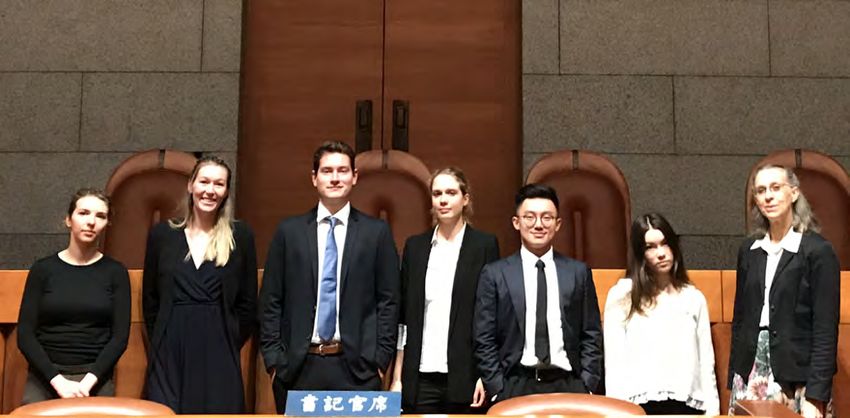
About Hitotsubashi University
      “Hitotsubashi already has a long history of turning out future captains of industry.”
                                       (Business Week)

Throughout the history of modern Japan, Hitotsubashi has prepared the individuals who have
lead Japan’s economic development. Unique among universities in Japan, Hitotsubashi has
retained its concentrated focus on four schools: Commerce and Management, Law, Economics,
and Social Sciences. For this reason, it is sometimes compared to the London School of
Economics and Political Science.

The University is relatively small among nationally prominent universities in Japan, with about
120 faculty, 4,400 undergraduate students, and 2,000 graduate students, fostering close
interaction between faculty and students. It is the only Japanese university to specialize in
social sciences, placing special emphasis on combining practice with theory.

The University believes in the value of international academic exchanges and cooperation and
has bilateral exchange agreements with 87 leading universities and research institutions.

The University’s law school is ranked among the top law schools in Japan. Hitotsubashi Law
School has consistently had the highest bar passage rate of any law school in Japan since
introduction of the current bar examination system in 2006.

 “The curriculum at Hitotsubashi was most enlightening in exposing students to Japanese legal
 practice and culture as a whole. Coupled with field trips to places of legal significance, link-ups
 with firms for internships and the international nature of the courses, the exchange programme
 was, for me, unforgettable.”
                                                                            Chun Wai Poon
                                                            Singapore Management University

           Business Law
            Department
Located at Hitotsubashi’s downtown graduate
campus, HBL is a special business law department
within the Graduate School of Law.

HBL’s goal is to develop legal professionals capable
of initiating, managing, and implementing legal
innovation on a global scale. Class sizes are small and
all students are expected to prepare well and
participate proactively.

Classes combine practice with theory to provide
valuable graduate-level education to working
professionals. To facilitate participation by working
professionals, who are the majority of HBL students,
classes are taught in the evenings and on week-ends.

                                                  2
Essential
         Information
The     one-semester    exchange       program
(September-December) offers students the
opportunity to study in Tokyo, while also
experiencing various other aspects of life in
one of the world’s major capital cities.
Focus on Business Law.
Classes on Japanese, comparative, and
international commercial law provide students
with a broad-based introduction to issues            Field Trips.
involved in global business law.                     As part of the Legal Practice in Japan
No Japanese language is required, although both      course, group visits are arranged to places
Japanese language courses and business law           of interest related to law and business.
courses taught in Japanese are available on a        Whenever possible, these field trips are
non-credit basis for interested students.            arranged for Tuesday afternoons, although
                                                     students are expected to keep their
Outstanding Faculty Combine Practice and             schedules flexible while arrangements are
Theory.                                              pending.
HBL’s regular faculty is comprised of academics          Possible field trips include
distinguished in their respective fields. Many
                                                             •   National Diet of Japan
also have substantial experience working in the              •   Supreme Court
public or private sectors. Both regular faculty              •   Tokyo Stock Exchange
and practitioner adjuncts teach the courses in the           •   Japan Patent Office
Business Law Student Exchange Program.                       •   Japan Federation of Bar
                                                                 Associations
The class on Legal Practice in Japan gives
students an opportunity to learn about the
Japanese legal profession and the practice of law         “Although I thought that I
at leading law firms and corporate legal                  understood the Japanese legal
departments in Japan.                                     system and culture well enough to
                                                          discuss it with students from foreign
Diverse and Small Classes.
                                                          countries, I found the reality was so
Each year’s student body is intentionally kept            different. Being in class with
small, and is generally limited to no more than           students from other backgrounds
twelve students from the outstanding law                  and with different perspectives was
schools that are our exchange program partners            an     interesting     and      useful
in several countries.                                     opportunity        for     me       to
                                                          “internationalize” my perspective
Exchange students attend classes together with            and my communication style.”
Master’s degree students who are living and
working in Japan. Small class sizes enable                Yasushi Shinozaki, HBL Masters
intensive in-class interaction and close                   student in Global Business Law
relationships between students and faculty.

                                                 3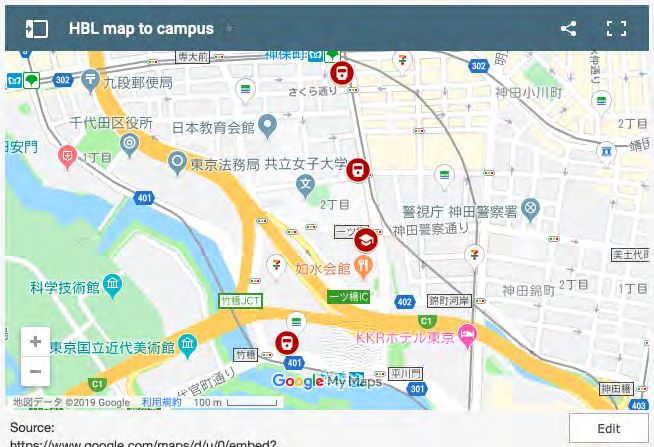
Class of 2019 at the Supreme Court of Japan

        Internship Provides Real World Experience
A part-time unpaid internship at a leading law firm or corporation in Tokyo will be arranged for
each student registering for the Legal Practice in Japan course. The internship provides
practical experience of the Japanese legal environment, making it a critical component of the
“hands-on” approach of our program and the Tokyo experience. It is nearly always the case
that each exchange student obtains an internship in his or her top choice of category: Japanese
law firm, foreign law firm, or corporate legal department.

 “Hitotsubashi’s exchange program was a great break from the usual studying and examination
 style back in Singapore. Instead of written exams, we had to write papers and give presentations
 on topics of our choice. As someone who learns better and more intuitively when learning about
 topics I'm personally interested in, this allowed me to gain a greater understanding of the
 subjects covered in class but on my own terms. It might seem daunting to have to write so many
 papers but rest assured that you'll be able to handle it - we all did, and still had a great time.
 The field trips were well-thought out and provided a greater understanding of different aspects
          of Japan's corporate/ legal systems. The destinations were places we wouldn't have
          been able to visit if the school didn't plan for them.”
                                                                                     Emelia Kwa
                                                                  Singapore Management University

 “I greatly enjoyed my experience                 “The program was outstandingly well organized
 in Hitotsubashi’s business law                   to give students a great opportunity to learn
 program. The courses were well                   more about Japanese law, also in comparison
 curated and my classmates were                   with other jurisdictions, from both a theoretical
 smart and diverse, representing the              and practical point of view. In particular, the
 legal systems of at least seven different        internship gave me the unique opportunity to
 countries. Listening to and engaging             observe the work of Japanese attorneys in my
 with these global perspectives in class          field of interest. I strongly recommend this
 discussions focused on international             program to anyone who is interested in Japanese
 business law topics was, for me, a truly         law and the Japanese culture. It was an
 invaluable and unique experience.”               unforgettable experience for me!”
                               Justin Sha                                          Svenja Schenck
             UC Hastings College of Law                                Goethe University Frankfurt

                                                  4
Exchange Agreements and Admission of Students
Law schools that enter into agreements with HBL can pre-select and nominate up to two
students for admission to the Business Law Student Exchange Program. Those nominations
will ordinarily be honored so long as the necessary documentation is received by March 31.

To date, HBL has entered into student exchange programs with the Columbia University
School of Law, University of California-Hastings College of Law, University of Frankfurt
(Goethe University), Melbourne Law School, and Singapore Management University.

Students are expected to be self-funded or supported by scholarships from their home
countries/schools. No financial assistance is available via HBL. The Business Law Student
Exchange Program can accept a limited number of highly qualified independent students into
its on a space available basis.

                                       Housing
Finding short-term housing in Tokyo can be challenging and expensive. Past students have
found suitable accommodation either on their own or with the support of HBL. A limited
number of dormitory rooms near Hitotsubashi’s suburban campus in Kunitachi (about one hour
by train from the downtown campus) are available and many students pursue that option, which
provides yet another element of Japanese university life and the Tokyo lifestyle.

                               Campus Location

                                             5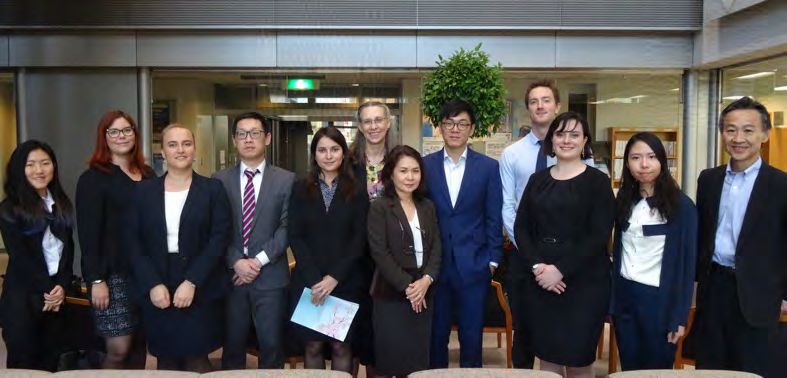
Academic Calendar
Students are expected to arrive in Tokyo at the beginning of September. Following orientation,
the 13-week semester begins in early September and concludes in mid-December, allowing
students to return home before the year-end holiday season. Below is the tentative calendar
(subject to change):
             Date                                             Details
                                       Dormitory Orientation for HBL Exchange Students
 September 7 - 9 (Mon - Wed)
                                        (participation mandatory for dormitory residents)
                                     Program Orientation, Welcome Lunch, Visit to Disaster
      September 10 (Thu)
                                         Preparedness Center (participation mandatory)
       September 11 (Fri)                     Group Sightseeing Activity (optional)
      September 14 (Mon)                               First Day of Classes
      September 21 (Mon)                          National Holiday (no classes)
      September 22 (Tues)                         National Holiday (no classes)
       November 3 (Tues)                   National Holiday (regular classes are held)
      November 23 (Mon)                    National Holiday (regular classes are held)
      December 16 (Tues)                               Last Day of Classes
      December 17 (Weds)                                Final Class Party
       December 22 (Fri)             Term Papers Due (unless earlier date set by instructor)

Outside Events
Some professors arrange opportunities to participate in outside seminars as part of their course
content. Usually these are included in the original course syllabus, although sometimes they
are added later. Students are expected to be flexible with their schedules and prioritize these
opportunities.

When possible, students are informed of outside presentations on current issues of import to
the Tokyo legal community. Joining these events provides students with the opportunity to
network with Japanese and foreign lawyers as well as to gain cutting-edge legal practice tips.

                                                  “The Hitotsubashi business law program is a
                                                  very well-arranged combination of theory,
                                                  discussion with students from different
                                                  jurisdictions, and practical insights. In addition
                                                  to professional enrichment, this exchange
                                                  program gives the possibility to get to know
                                                  people from all around the world, who share
                                                  the common interest in the culture and law
                                                  system of Japan. Especially the internships in
                                                  Tokyo law firms offer outstanding first-hand
                                                  experience. Participating in this program was
                                                  a truly unique and unforgettable experience for
                                                  me.”
                                                                               Hans Trageser
                                                                   Goethe University Frankfurt

                                              6
Credits and Course Load
  A typical course load is six 2-credit subjects, providing students with 12 transferable credits.
  Classroom hours and instruction are normally sufficient for exchange students to obtain credit
  toward graduation from their home institutions, however the transfer of credits to home
  institutions is always subject to the policies and procedures of each institution.

             Fall 2020 Schedule (tentative/subject to change)
TIME           MON                        TUE                          WED                       THU
                                Most field trips will be
13:30
  |
                                scheduled during this
16:00                                    time.
                                   Legal Practice in
16:00                                   Japan
  |                                  (Credits: 2)
17:45                                  (Beyer)
                                                                                           Start-up Law and
          Comparative            International Dispute          Intro to Japanese
                                                                                         Practice: The Silicon
18:20   Employment Law                Resolution                  Business Law
                                                                                             Valley Model
  |        (Credits: 2)               (Credits:2)                  (Credits: 2)
20:05                                                                                         (Credits: 2)
        (Beyer/Nakakubo)            (Greer/Nonaka)                   (Beyer)
                                                                                                (Sasaki)
                                                                                            Corporate Law:
           International             International
                                                                                             Mergers and
20:15      Privacy Law            Entertainment Law
                                                                                             Acquisitions
  |         (Credits: 2)              (Credits:2)
22:00                                                                                         (Credits:2)
           (FitzGerald)                 (Rosen)
                                                                                         (Murdock/Yukevich)

                   Class of 2018 at the Japan Federation of Bar Associations (Nichibenren)

                                                      7
Grading
Although assessment criteria are at the
discretion of individual instructors,
grading at HBL typically focuses on three
elements: class participation, a research
paper and class presentation of research--
graded in roughly equal proportion--rather
than on a single final exam.

This grading method is particularly suited
to learning through a combination of in-
class interactions, in-depth research, and
analytical writing.

  “It was enlightening to be in a
  classroom with students from so many
  countries.     Even though we were
  studying Japanese business law,
  everyone did so in the context of the
  other country’s law that they knew
  (such as Germany or Singapore), as
  well as the style of legal interpretation
                                                           Full Year of Study
  common to their jurisdiction. This                 HBL also offers a full load of graduate level
  diversity in the classroom helped me to            global business law subjects in English
  understand multiple points of view and             during the spring semester. This creates the
  how people see and interpret things                possibility of a full year of study at HBL to
  differently based on experience, culture,          earn a double degree if allowed under the
  etc. Since we all want to do business              terms of an exchange agreement or
  worldwide, this was a precious
                                                     otherwise approved. Please note that the
  opportunity. I feel more connected to
                                                     Business Law Student Exchange Program is
  the world from studying this way.”
                                                     only offered during the September-
  Ryoko Ishino, HBL Masters student
                                                     December semester; we are unable to accept
             in Global Business Law
                                                     students for a single semester of study
                                                     during the April-July semester.

 “The Hitotsubashi exchange gave me a unique chance to understand so much more than the
 black letter framework of Japan’s legal system. I was immersed in the socio-cultural context of
 the law and had the opportunity to compare Japanese law and business practices to other
 countries. I also really enjoyed the opportunity to undertake an internship with a law firm in
 Tokyo, which provided an amazing window into the working life of Japanese and foreign
 lawyers. If you are keen on a Japanese legal career, or if you would like to bring legal insights
 back to your home country, the Hitotsubashi exchange is the perfect way to experience life and
 the law in Japan.”
                                                                               Alice Kennedy
                                                                        Melbourne Law School

                                                 8
Course Descriptions
In most semesters, 6 to 8 subjects are taught in English. Exchange students who require more
than 14 transferable credits should consult the Program Director to find a suitable solution.
Students interested in auditing business law courses taught in Japanese or attending Japanese
language classes should inquire separately.
Comparative Labor/Employment Law Credits: 2
Instructor(s): Beyer/Nakakubo
This course examines the fundamentals of employment law, comparing primarily Japan and the
U.S., with other jurisdictions informing the comparison from time to time. Beginning with an
overview of the employment systems of Japan and the U.S., the course goes on to make
specific comparisons of a number of aspects of labor and employment law.
Corporate Law: Mergers and Acquisitions Credits: 2
Instructor(s): Murdock/Yukevich
This course introduces students to key legal aspects of mergers and acquisitions transactions
between Japanese companies and foreign companies. We will look mainly at cross-border
acquisitions of non-listed targets by Japanese companies (outbound), with some coverage of
sales of or divestitures by Japanese companies to foreign buyers (inbound), and acquisitions of
publicly-listed foreign companies. The course will have a practical orientation, with focus on
how deals are actually negotiated and closed, and difficult issues resolved.
International Dispute Resolution Credits: 2
Instructor(s): Greer/Nonaka
This course will focus on selected topics in dispute resolution involving Japan and Asia,
including the interpretation and drafting of contract provisions, dispute resolution procedures
both within and outside Japan, and negotiation, litigation, and international commercial
arbitration as means of resolving disputes. There will be a focus on real world case studies
involving dispute resolution between Japanese and non-Japanese parties.
International Entertainment Law Credits: 2
Instructor(s): Rosen
This course will focus on the application of legal matters, such as contracts, torts, copyright
and trademark, to the entertainment industry. A central concern of the course will be separating
the artistic entity from the legal entity. The course will compare practices in the United States
with those of the Japan and other countries, and consider whether a “global standard” exists in
the world-wide entertainment market.
Introduction to Japanese Business Law Credits: 2
Instructor(s): Beyer
To help equip students for transnational work involving Japan, this course will introduce the
Japanese legal system, specific areas of law relating to business in Japan, and contemporary
business issues.
9Course Descriptions (continued)
Legal Practice in Japan Credits: 2
Instructor(s): Beyer
This course will introduce students to legal
practice in Japan through background
readings and through guest lectures by a
number of Japanese legal practitioners,
such as practicing lawyers and members of
corporate legal departments. This course
is a prerequisite for students who wish to
undertake an internship at a law firm or
corporation in Japan.
Special Topics: International Privacy Law Credits: 2
Instructor(s): FitzGerald
This course will provide students with an overview of privacy law and data protection
principles, how nations interpret these principles, and the practical application of comparative
privacy and data protection law in modern business. Students will develop an understanding of
privacy law through examination of laws of Asian, European and North American nations, and
gain an appreciation of how global privacy law and data protection continues to evolve.
Special Topics: Law for Start-ups Credits: 2
Instructor(s): Sasaki
The so called “Silicon Valley Model” has become the global standard start-up model. This
course will provide students with an overview of the principles of the Silicon Valley Model, the
laws on which it is based, and the practice of those laws. We will discuss specific issues
relevant to start-ups, such as allocation of founders’ possessive stock, convertible debt and
equity financings, venture capital financing, and exit transactions. We will also examine how
the legal issues faced by startups are different than those of more mature businesses.
Directed Research Credits: 2
Instructor(s): HBL Faculty
A student who wishes to conduct research in
English on a topic of Japanese or Asian law
that is not covered by existing English
course offerings may do so upon securing
the agreement of an ICS faculty member to
act as adviser to such independent research.
In such case the student, in consultation with
the faculty adviser, shall create a reading list
on the topic and shall produce a written
report to be submitted to the faculty adviser
for evaluation and grading.
10Faculty
Professors
Vicki L. Beyer, Director, Business Law Student Exchange Program/Director, Global Business Law Program
Comparative employment law/Comparative corporate governance
University of Nebraska at Omaha (BA, 1980); University of Washington (MA, 1987); University of
Washington School of Law (JD, 1990); Bond University (LLM, 1994)
Formerly Asst. Professor of Law at Bond University (1990-1994); Program Director and Assoc. Professor of
Law at Temple University Law School Program in Japan (1994-2000); In-house lawyer (2000-2017).
Yuriko Inoue
Intellectual property law
University of Tokyo (BA, 1986), University of Tokyo (LLB, 1990)
Visiting Professor at the Institute of Information, Amsterdam University (2006, 2007-2008).
Hiroya Nakakubo
Labor and employment law
University of Tokyo (LLB, 1980); Harvard Law School (LLM, 1990)
Visiting Scholar at University of Pennsylvania Law School (1989-1990), University of Washington Law
School (1997), Cornell Law School (2010, and University of Glasgow (2013), and Visiting Professor at
Goethe University Frankfurt (1999).
Chihiro Nunoi, Director, Global Business Law Program
Comparative corporate law
Hitotsubashi University (LLB, 1979); Hitotsubashi University (MA, 1981)
Visiting Scholar at Bonn University (1986-1987) and Munich University (1993-1994) in Germany.
Zenichi Shishido
Comparative corporate governance
University of Tokyo (LLB, 1980); University of Tokyo (PhD, 2007)
Visiting Professor at Columbia Law School (1998-1999), Harvard Law School (2005). Visiting Professor at
UC Berkeley (Boalt Hall) on an ongoing basis.
Masao Yoshimura
Taxation law
University of Tokyo (LLB, 1999)
Formerly taught at Yokohama National University (2002-2012).
Kei Amemiya (Professor from Practice —partner at Morrison and Foerster)
Competition Law
Chuo University (LL.B. 1989); University of Michigan (LL.M. 1998).
Masakazu Iwakura (Professor from Practice—senior partner at Nishimura & Asahi)
Mergers & Acquisitions
University of Tokyo (LLB, 1985); Harvard Law School (LLM, 1993)
Visiting Professor at Harvard Law School (2007, 2013).
Associate Professor
Keisuke Seki
Patent law and policy
Tokyo University of Science (BPharm, 2004); University of Tokyo (MSc, 2006); University of New
Hampshire School of Law (LL.M., 2014), Japan Patent Office (2006-2019).
For full profiles of HBL faculty, please refer to the HBL website at
http://www.law.hit-u.ac.jp/bl/english/#anchor_faculty.
11Adjunct Professors and Guest Lecturers
• Pieter S. de Ganon (Morrison & Foerster) – Legal Aspects of IP Strategy
• Evan M. FitzGerald (U.N. University) – Legal English, International Privacy Law
• Joel Greer (ZeLo Law Firm) – International Dispute Resolution
• Wataru Higuchi (Anderson Mori & Tomotsune) – Current Issues in Financial Regulation
• John Inge (Orrick, Herrington & Sutcliffe) – Legal Aspects of IP Strategy
• Arshad Karim (Twitter) – International Contract Drafting
• Peter Kilner (Clifford Chance) – International Contract Drafting
• Joel Lee (Automation Anywhere) – International Contract Drafting
• Uwani Martin (Natixis Japan Securities Co., Ltd.) – Japanese Securities Law
• Mitsuo Matsushita (Nagashima Ohno & Tsunematsu) – Comparative Competition Law
• Mork Murdock (Squire Patton Boggs) – Mergers and Acquisitions
• Takahiro Nonaka (DLA Piper) – International Dispute Resolution
• Dan Rosen (Chuo University) – International Entertainment Law; American Business Law
• Yuriko Sagara (Nakamura Law & Patent Office) – Legal Aspects of IP Strategy
• John Y. Sasaki (JSV Foreign Law Office) – Law for Start-Ups
• Jeff Shimamoto (U-NEXT Co., Ltd.) – International Contract Drafting
• Allan Smith (RGA Reinsurance Co.) – International Competition Law
• Yoshihiro Takatori (Orrick) – International Competition Law
• Stan Yukevich (Morrison & Foerster) - Mergers and Acquisitions
For information on the Business Law Student Exchange Program, contact:
Professor Vicki L. Beyer
Program Director
Hitotsubashi University
Graduate School of Law
Business Law Department
2-1-2 Hitotsubashi, Chiyoda-ku
Tokyo 101-8439 JAPAN
Tel. +81-3-4212-3140
Fax +81-3-4212-3149
E-mail: vicki.beyer@r.hit-u.ac.jp
12You can also read


