Business plans for small-scale mining in the Democratic Republic of the Congo - CTC - training of mining cooperatives and state services in the ...
←
→
Page content transcription
If your browser does not render page correctly, please read the page content below
Business plans for small-scale mining in the
  Democratic Republic of the Congo

  CTC - training of mining cooperatives and
  state services in the province of South Kivu

Nathalie Sterbik – nathalie.sterbik@bgr.de
Contents

1) Mining in the DRC
2) Artisanal and Small-scale Mining
3) CTC-Project
4) Needs for capacity building
5) Need for attracting capital
6) Example of the Kalimbi Mine
7) Lessons learned
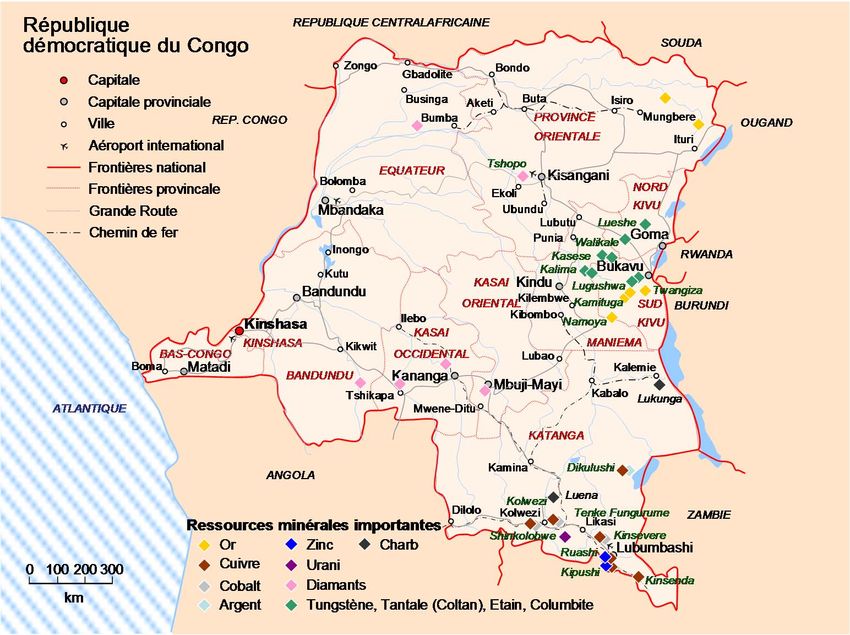
Mining in the Democratic Republic of the Congo

                                                   CTC
                                                   Project
                                                   area

Sterbik Nathalie - AIMS Aachen – May 28th, 2015
Mining in the Democratic Republic of the Congo
DRC depends heavily on
Abt. 28 bn USD its mining sector
the GDP
Share of
Mining
44%
Others 55,8% of its GDP
56%
77,3% of its goods exports
1/6th of formal employment
DRC share Cobalt Diamonds Tin
of the 65,6% 15,2% 1,4%
world
production Tantal Copper Gold
(2012) 21,5% 3,4% 0,97%
Sterbik Nathalie - AIMS Aachen – May 28th, 2015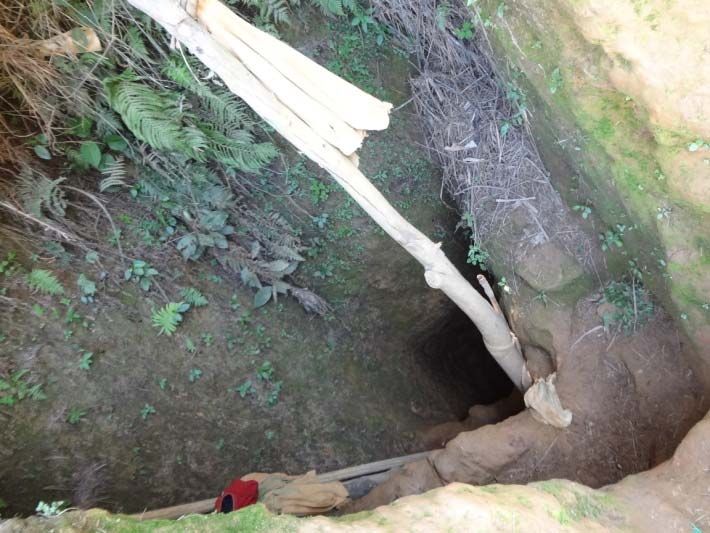
Importance of Artisanal and Small-scale Mining in DRC

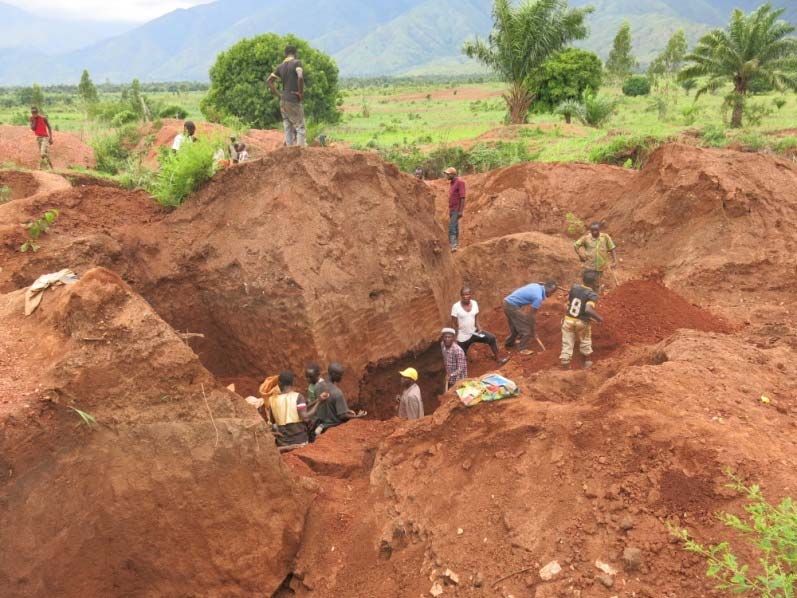
     900,000 people work in ASM (est. 8% of the Congolese population
   depends directly or indirectly on it)
     80% of the tantalum and tin production, 95% of the diamonds
   (2005-2007)

                                                  18%

          Distribution
           of mining
          employment                                    MSM-LSM
            in DRC                                      ASM

                           82%

Sterbik Nathalie - AIMS Aachen – May 28th, 2015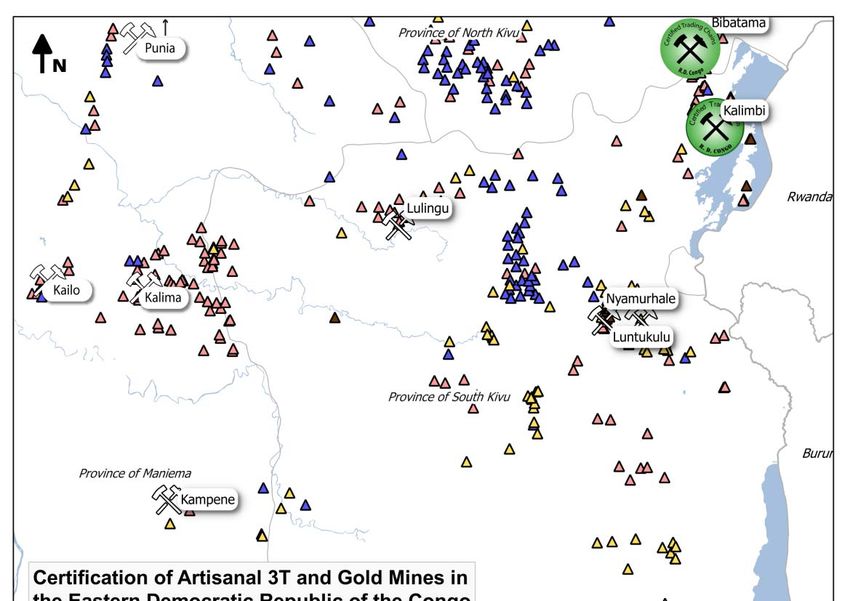
Difficulties of the ASM sector in DRC
   Poor OHS and working conditions
   Low productivity
   Difficult market access
   Negative impacts on the social and natural environment
   Still linked to armed groups and violence

Sterbik Nathalie - AIMS Aachen – May 28th, 2015
The conflict minerals issue: 3T and Gold

Sterbik Nathalie - AIMS Aachen – May 28th, 2015
BGR project in DRC
Project: Certified Trading Chains – a national
certification mechanism
Partners: Ministry of Mines, DRC; and its
relevant departments and services in the Eastern
provinces.
Goals (2009-2021):
Control of the Mining Sector in Eastern Congo
Formalization and Legalisation of Artisanal Mining
Increase of Tax Revenue from Mining Sector
Based on 5 principles: transparency and
traceability, working conditions, OHS, community
development and environment
Sterbik Nathalie - AIMS Aachen – May 28th, 2015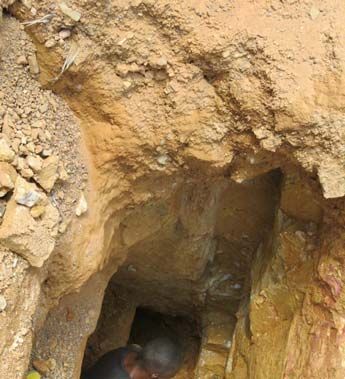
CTC Successes
Products
(http://www.fairphone.com/)
CTC Compliant
Mine in South Kivu (Kalimbi)
[Tin for Fairphone]
Mine in Katanga (Mayi Baridi)
[Tantalum for Fairphone]
Mine in North Kivu (Bibatama)
CTC Baseline audits
7 Audits since 2012
15 Audits in 2015
Nathalie Sterbik, BGR
Hannover, 13.11.2014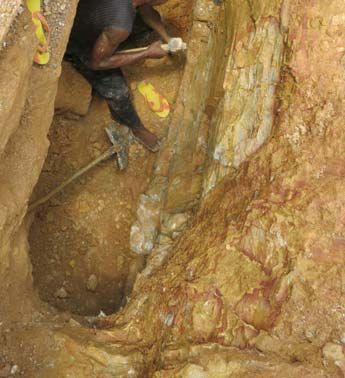
Needs for capacity building for state services and cooperatives
    Occupational Health and Safety
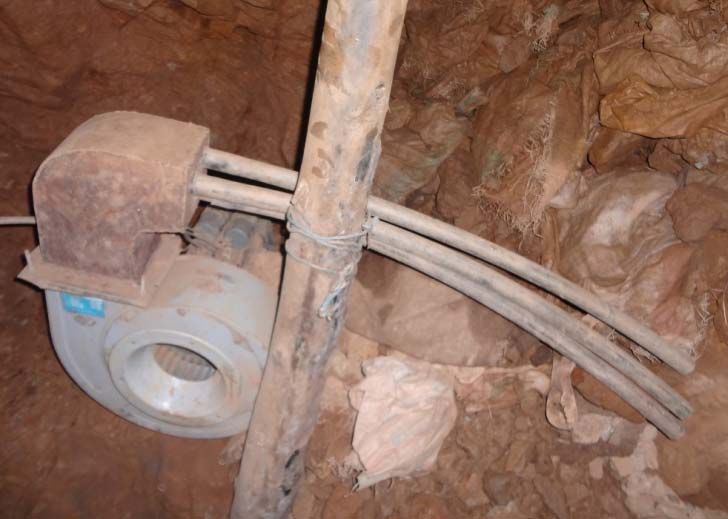
    Ventilation of underground workings
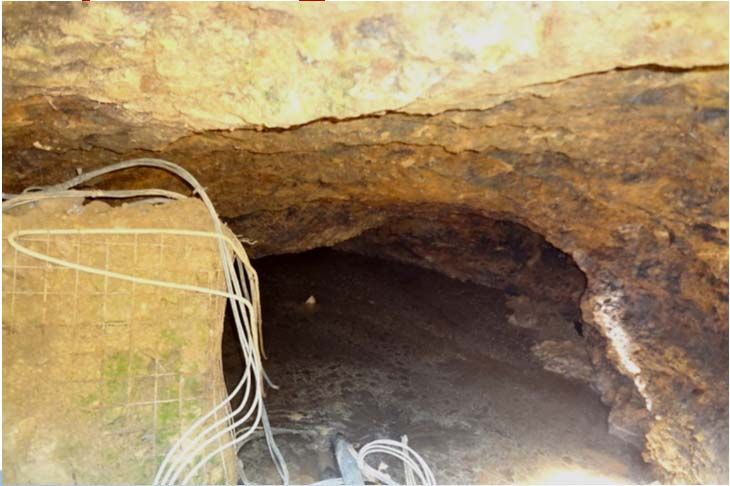
    Roof and Ground control in underground workings
    Drainage of underground workings
    Mineral processing
    Environment protection
    Insufficient operational planning

Sterbik Nathalie - AIMS Aachen – May 28th, 2015
Attracting capital for mining cooperatives via good business plans
Clarify Make a general inventory of their
business situation
idea and
goals
Establish a course of activities
Business
Measure plans Plan to
progress attain
over time Decision- objectives
making tools Seek financing through investors,
banks or donors
Weaknes
ses of the Formalize into small-scale mines
business and increase their overall socio-
idea economic level
Sterbik Nathalie - AIMS Aachen – May 28th, 2015Example of the Kalimbi mine
Presentation Geography Mining Reserves Future Necessary
of the and geology history and and development investments
cooperative of the mine activities resources of the mine and returns
Sterbik Nathalie - AIMS Aachen – May 28th, 2015Lessons learned for the BGR
Training well received by participants
Overestimation of turnover and underestimation of capital and
operating costs
Insist more on cash flow planning
Lack of knowledge about quantity and quality of the
reserves/resources
Offer support in prospecting and exploration
Lack of understanding of commodity price fluctuations and investment
conditions, as well as sustainability
More training about mining economy relevant issues
Sterbik Nathalie - AIMS Aachen – May 28th, 2015Conclusion and outlook
Business plans are an important first step for mining cooperatives in
order to develop business ideas and to attract capital
Holistic business plans generate possibilities to include safety and
environmental aspects early in the planning
Improvement of ASM planning capacities and increase of self
confidence
Build trust between the different actors (gov. services, NGOs, ASM
sector, banks) especially for DRC
Sensitize local microfinance institutions to issues of ASM
Create opportunities for investors, banks or donors
Provide transition possibilities to other livelihoods
Sterbik Nathalie - AIMS Aachen – May 28th, 2015Thank you for your attention! Contacts: Juergen.Vasters@bgr.de Gudrun.Franken@bgr.de Uwe.Naeher@bgr.de Sterbik Nathalie - AIMS Aachen – May 28th, 2015
References
    Berke C., Martin N., Pulkowski J., Vasters J. and Wagner M.: Rohstoffe in der
  DR Kongo, Potenziale für die Entwicklung? Kfw Entwicklungsbank and BGR,
  2007, 111p
    BGR: Vorkommen und Produktion mineralischer Rohstoffe – ein
  Ländervergleich, BGR Publications, 2014, 132p, available on www.deutsche-
  rohstoffagentur.de
     Oxford Policy Management: The impact of mining in the Democratic Republic
  of Congo, Performance to date and future challenges, OPM with synergy,
  October 2013, 34p
    SNL Metals & Mining: Raw Materials Data, Stockholm, databank, 2015
    UN Group of Experts: Final Report on the Democratic Republic of the Congo,
  Letter dated 12.12.2013, Resolution 1533 (2004), 51p
     Vasters J.: Problemanalyse des Artisanalen- und Kleinbergbausektors, BGR
  internal report, 2010, 11p
    World Bank, forthcoming report on DRC, June 2015

Sterbik Nathalie - AIMS Aachen – May 28th, 2015
You can also read


