C BC Cancer Colon Screening Colonoscopy Standards - Colonoscopy
←
→
Page content transcription
If your browser does not render page correctly, please read the page content below
: Colonoscopy

                               C
BC Cancer Colon Screening
Colonoscopy Standards
Date and Version: April 2020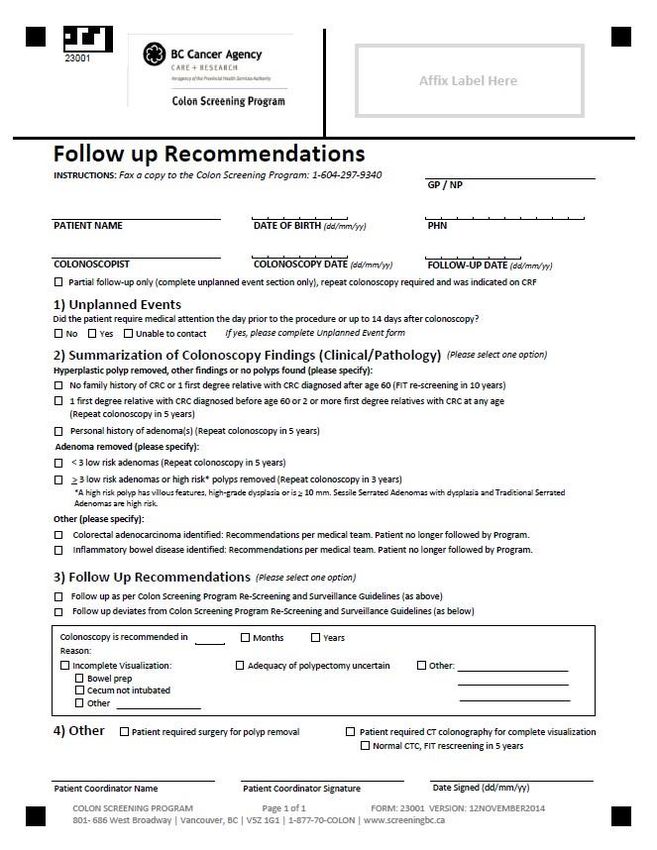
Colon Screening Program: Colonoscopy Standards

Colonoscopy Standards

Colon Screening Program
…………………………………………………………………………………………………………………………

This report was produced by the Colon Screening Program.

Preferred citation:
Colon Screening Program Colonoscopy Standards. BC Cancer, 2020.

For more information please contact:
Colon Screening Program

801-686 West Broadway

Vancouver, BC

V5Z 1G1

Web:      www.screeningbc.ca/colon
Email:    screening@bccancer.bc.ca
Phone: 1-877-70-COLON (26566)
Fax:      1-604-877-6103

                                                                  Page 1
Colon Screening Program: Colonoscopy Standards
Acknowledgements
BC Cancer would like to thank everyone who assisted in the development and refinement
of the Colon Screening Program’s Colonoscopy Standards.
Author
Dr. Jennifer J. Telford, BC Cancer
Contributors
Dr. Scott Cowie, Fraser Health Authority
Dr. Rob Enns, Vancouver Coastal Health
Dr. Paul Mullins, Northern Health Authority
Dr. Carla Nash, Interior Health Authority
Dr. Denis Petrunia, Island Health
Laura Gentile, BC Cancer
About BC Cancer
BC Cancer, an agency of the Provincial Health Services Authority, provides a comprehensive
cancer control program for the people of BC in partnership with regional health authorities.
This includes prevention, screening and early detection programs, research and education,
and care and treatment.
BC Cancer’s mandate is a three-fold mission:
To reduce the incidence of cancer
To reduce the mortality rate of people with cancer
To improve the quality of life of people living with cancer
This mission drives everything we do, including providing screening, diagnosis and care,
setting treatment standards, and conducting research into causes of, and cures for cancer.
Page 2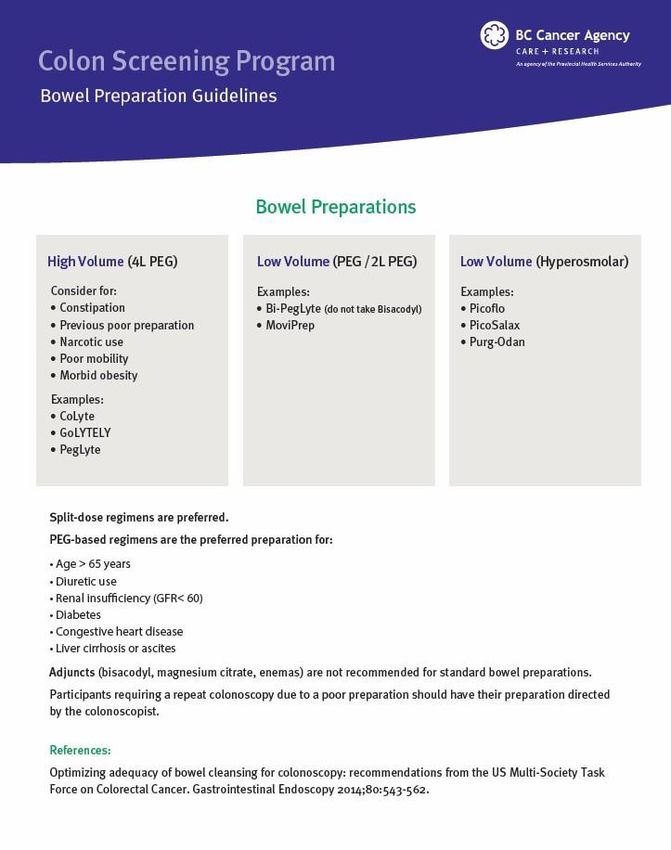
Colon Screening Program: Colonoscopy Standards

Table of Contents

 Introduction                 1.1   Colon Screening Program                                  4
                              1.2   Purpose of the Standards                                 4
                              1.3   Sources of Information                                   5
                              1.4   General Principles                                       5

 Hospital and Endoscopy      2.1    Pre-Colonoscopy Participant Assessments                  6
 Unit Standards              2.2    Bowel Preparation                                        6
                             2.3    Informed Consent                                         7
                             2.4    Antithrombotic Therapy                                   7
                             2.5    Need for Prophylactic Antibotics                         9
                             2.6    Protocol for Endoscope Cleaning                          9
                             2.7    Protocol for Conscious Sedation                          9
                             2.8    Monitoring Protocol                                      9
                             2.9    Resuscitation Equipment                                  10
                             2.10   Personnel Trained in Resuscitation                       10
                             2.11   Post-Colonoscopy Participant Instructions                10

 Physician Standards          3.1   Physician Standards                                      11
                              3.2   Direct Observation of Procedural Skills                  11

 Colonoscopy                  4.1   Serious Adverse Events                                   12
 Performance Standards        4.2   Bowel Preparation                                        12
                              4.3   Cecal Intubation Rate                                    12
                              4.4   Adenoma Detection Rate                                   13
                              4.5   Withdrawal Time                                          13
                              4.6   Complete Adenoma Resection and Retrieval                 13
                              4.7   Colorectal Cancers Diagnosed Outside of the Program      14

 Adherence to Screening       5.1   Screening and Surveillance Guidelines                    15
 and Surveillance             5.2   Deviation from Guidelines                                17
 Guidelines                   5.3   Other Significant Findings                               18
                              5.4   Hereditary Colorectal Cancer                             18

 Colonoscopy Continuous       6.0   Colonoscopy Continuous Quality Improvement               20
 Quality Improvement

 Medical Record               7.1   Medical Record Retention Policy                          22

 References                   8.0   References for Colonoscopy Standards                     23

 Appendix                     A     Assessment Form                                          25
                              B     Follow-Up Recommendation Form                            29
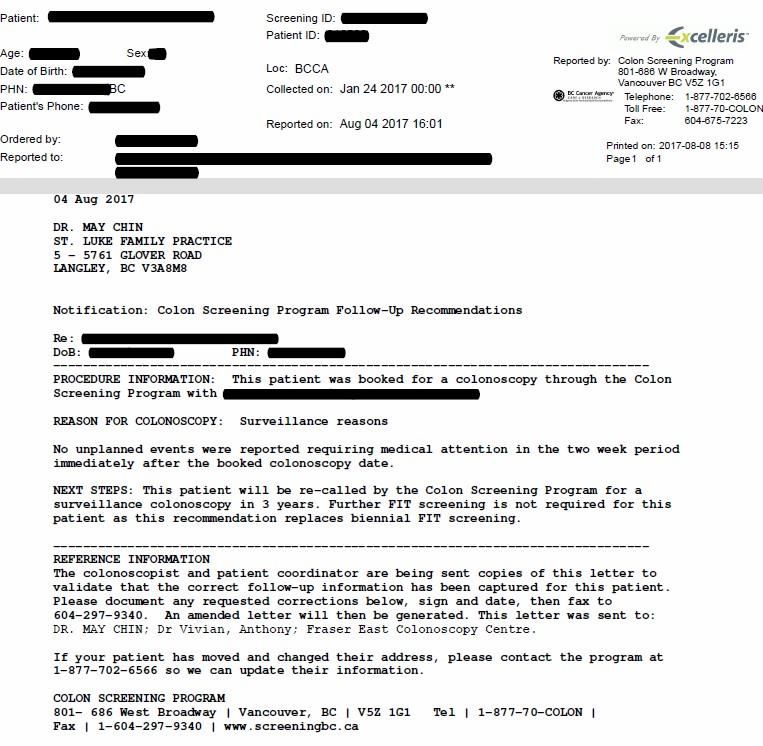
                              C     Sample Follow-Up Recommendation Letter                   30
                              D     Colonoscopy Reporting Form                               31
                              E     DOPS Policy, DOPS Forms, and Grade Descriptors           32
                              F     Colonoscopy Dictation Guidelines                         40
                              G     Unplanned Events Form                                    41
                              H     Positive FIT, Negative Colonoscopy Guidelines            42
                              I     Bowel Prep Algorithm                                     44

 Log Revision History                                                                        45

                                                                                          Page 3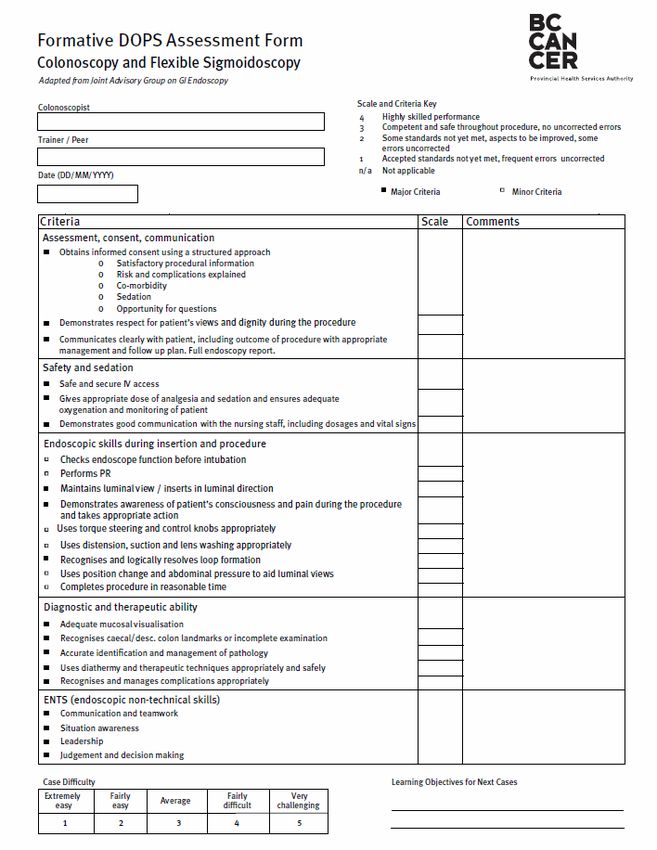
Colon Screening Program: Colonoscopy Standards
1. Introduction
1.1 Colon Screening Program
Colorectal cancer (CRC) is the third most common cancer and the second leading cause
of cancer death in Canada and in other developed countries 1. The primary goal of the
Colon Screening Program is to detect and remove colonic adenomas that are the
precursor lesions of CRC. Detection and resection of asymptomatic CRC at an early
clinical stage will be an added benefit. Ultimately, this will reduce the incidence and
mortality from CRC.
1.2 Purpose of the Standards
The purpose of developing Colonoscopy Standards is to maximize participant safety and
program efficiency and efficacy. There are modifiable factors, which affect the rate
of colonoscopy-related complications and the rate of missed polyps and cancers.
Standardization of colonoscopy quality with a goal of continuing quality improvement
can address these factors. Furthermore, by improving the communication amongst health
care providers and participants regarding appropriate screening and surveillance
intervals, the rate of unnecessary testing will be decreased.
The following items are important determinants of colonoscopy quality and will be
addressed in the colonoscopy standards.
Hospital and endoscopy unit standards
Pre-colonoscopy participant assessment
Protocol for endoscope cleaning
Protocol for conscious sedation
Post-colonoscopy participant instructions
Physician standards
Documented training/experience with performing colonoscopy
Direct Observation of Procedural Skills
Colonoscopy performance standards
Serious adverse events
Bowel preparation quality
Cecal intubation rate
Adenoma detection rate
Complete adenoma resection and retrieval
Standardized colonoscopy report
Page 4
Colon Screening Program: Colonoscopy Standards
Adherence to surveillance guidelines
Participant satisfaction
The quality of colonoscopies performed will be evaluated through a standardized
colonoscopy report, a follow-up participant phone call, pathology review and review
of interval cancers diagnosed following colonoscopy.
1.3 Sources of Information
The sources of information for this document were derived from the published
literature. Articles were identified from MEDLINE, Cancer Care Ontario Colonoscopy
Standards, Canadian Association of Gastroenterology and American Society for
Gastrointestinal Endoscopy guidelines, American College of Gastroenterology
guidelines, American Gastroenterological Association guidelines, and NHS Joint
Advisory Group on GI Endoscopy.
1.4 General Principles
Minimize colonoscopy related complications
Minimize missed polyps/cancers
Optimize follow-up screening and surveillance
Page 5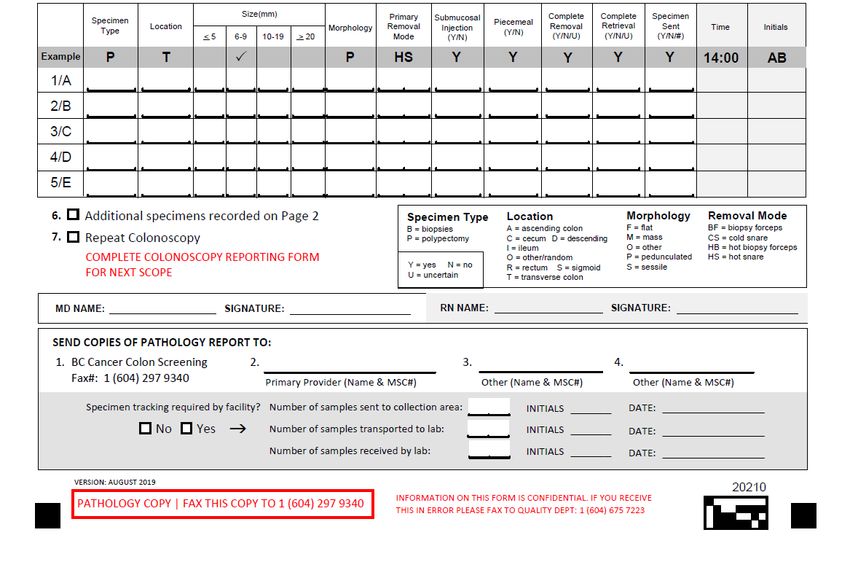
Colon Screening Program: Colonoscopy Standards
2. Hospital and Endoscopy Unit Standards
Institutions participating in the Colon Screening Program will be evaluated for the
following: appropriate pre-colonoscopy assessment and post-colonoscopy discharge
instructions, endoscope cleaning protocol, and conscious sedation protocol.
Participation in the Global Rating Scale (GRS) is required with submission of the action
plans to the Health Authority Colonoscopist Lead 2. The Canadian version of the GRS is at
www.mdpub.org/grs/ and a username and password can be obtained at QP-E@cag-
acg.org.
The wait time benchmarks are as follows:
within 60 days for a participant with an abnormal FIT result (abnormal result date to
colonoscopy date)
within six months for a participant with a family history of colorectal cancer or personal history
of neoplastic lesions due for surveillance when the surveillance interval is one year or more
(due date to colonoscopy date)
within 60 days for a participant who has been recommended to return for an additional
colonoscopy within a year (due date to colonoscopy date)
2.1 Pre-colonoscopy Participant Assessment
Program participants will be evaluated by regional health authority staff prior to the
colonoscopy. The assessment will include documentation of co-morbid medical
conditions that may increase a participant’s risk during bowel preparation, conscious
sedation and colonoscopy. See Assessment Form (Appendix A).
The health authority staff will provide education to the participant on colonoscopy,
including potential adverse events, and give instructions regarding the bowel preparation.
There will be specific alerts in the pre-colonoscopy assessment to prompt a discussion or a
participant consultation with the colonoscopist prior to scheduling the colonoscopy. See
Pre/Post Colonoscopy Standards.
2.2 Bowel Preparation
Participants should be provided with written preparation instructions as per the Bowel
Preparation Algorithm in Appendix I.
Fleet phospho-soda is contraindicated as per Health Canada recommendations 4.
As outlined in the Algorithm, bisacodyl is not recommended in standard bowel
preparations as it does not improve bowel cleansing and there is a possible association
with the development of ischemic colitis.
Studies have shown that split-dose bowel preparations, in which the second half of the
bowel preparation is administered within six hours of the colonoscopy, improve the
quality of the bowel preparation as compared to bowel preparations administered the
Page 6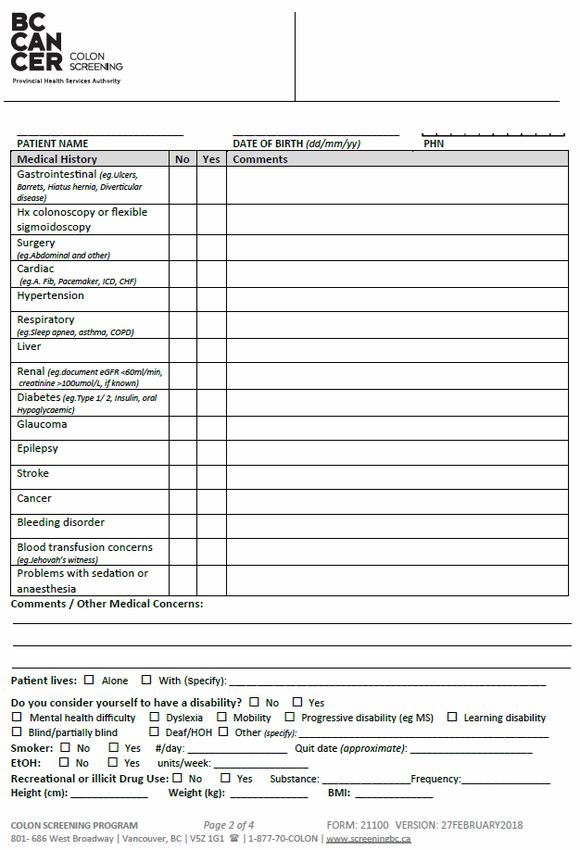
Colon Screening Program: Colonoscopy Standards
day prior to colonoscopy and this has led to a significant increase in the adenoma
detection rate5.
Polyethylene glycol (PEG) based regimens are the preferred preparation for:
Age > 65 years
Diuretic use
Renal insufficiency (GFR < 60)
Diabetes
Congestive heart failure
Liver cirrhosis or ascites
If a colonoscopy is incomplete due to a poor bowel preparation, then the colonoscopist
should specify the bowel preparation for the next colonoscopy and re-book the
participant in a Colon Screening Program slot. After a failed preparation, an
individualized bowel preparation will be required. On the Colonoscopy Reporting Form,
the colonoscopist will tick the box for “Repeat Colonoscopy”. Local processes should be
used for re-booking the patient. The colonoscopist is responsible for ensuring the
patient is re-booked.
2.3 Informed Consent
Health authority staff will review the health authority’s colonoscopy consent form with
the participant, citing approximately 5/1,000 people will have a serious complication 6.
Complications include having a reaction to the bowel preparation or medication used
for sedation, cardiopulmonary events, infection, bleeding and perforation. The risk of
dying from colonoscopy is less than 1/14,000 7. There is also a risk of missing a colorectal
cancer or high-risk polyp. This occurs in less than 1/10 cases 8. The participant will be
given the opportunity to ask questions and be offered written information on
colonoscopy including potential adverse events to review. The colonoscopist will obtain
informed consent prior to the procedure.
2.4 Antithrombotic Therapy9
Antithrombotic agents are medications that prevent blood clot formation and can be
divided into anticoagulants and antiplatelet agents. These medications may increase a
participant’s risk of bleeding following colonoscopic polypectomy. Recommendations
state that polypectomy should not be performed while a participant is on anti-
thrombotics; biopsies are permitted. Non-steroidal anti-inflammatory drugs (NSAIDs)
such as ibuprofen and naproxen are not prescribed to prevent clot formation but as a
side effect they do inhibit platelet function and increase the bleeding time. Prospective
studies have concluded that aspirin and NSAIDs can be safely continued for colonoscopy
and polypectomy.
Whether a medication is discontinued prior to undergoing colonoscopy involves
balancing the risk of bleeding following polypectomy and the risk of clotting if the
antithrombotic medication is held. Participants on antiplatelet agents (aside from
Page 7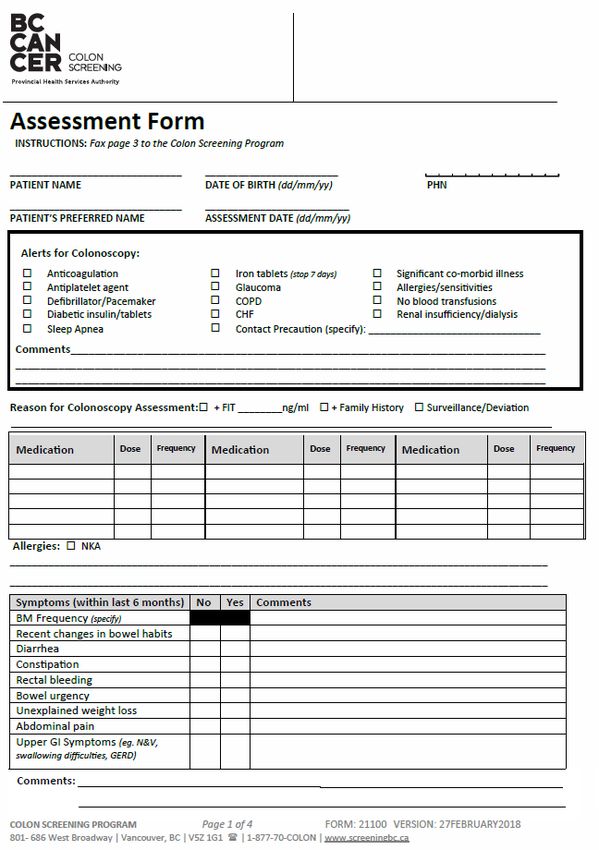
Colon Screening Program: Colonoscopy Standards
aspirin and NSAIDs), anti-thrombin agents and anticoagulants should be reviewed by a
physician prior to the colonoscopy to decide timing of the colonoscopy, discontinuation
of the antithrombotic agent, the need for bridging anticoagulation and when the
antithrombotic agent can be restarted. This is the responsibility of the colonoscopist ;
however, the decisions regarding discontinuation of anti-thrombotics, need for bridging
therapy and resumption of anti-thrombotics may be at the recommendation of the
participant’s primary care provider, cardiologist, neurologist and/or thrombosis clinic .
Two scenarios that have arisen in the Colon Screening Program and recommended
actions are below.
1. If a participant arrives for their scheduled colonoscopy, prepared, but having
neglected to hold the antithrombotic as recommended, the colonoscopy should
still be undertaken. If a polyp is discovered, then the procedure will be re-
scheduled for polypectomy with the anti-thrombotic held. If a mass lesion is
discovered, then biopsies can be performed. It is the colonoscopist's
responsibility to ensure the participant is re-booked for the colonoscopy.
2. If a participant cannot safely discontinue an anti-thrombotic agent as the risk of
thrombosis is too high, then the colonoscopy should be undertaken while the
participant continues the anti-thrombotic medication. This most commonly
occurs following coronary stent placement and the requirement for
uninterrupted anti-thrombotics is time-limited. If a polyp is discovered, then the
procedure will be re-scheduled for polypectomy with the anti-thrombotic held.
If a mass lesion is discovered, biopsies can be performed. It is the
colonoscopist's responsibility to ensure the participant is re-booked for the
colonoscopy.
The following are examples of anticoagulants and antiplatelet agents with the Canadian
brand names in brackets. New antithrombotic agents may be available in the near future
so this list should not be considered exclusive:
Anticoagulants
Warfarin (Coumadin)
Heparin
Low-molecular weight heparin
o Enoxaparin (Lovenox)
o Dalteparin (Fragmin)
Fondaparinux (Arixtra)
Dabigatran (Pradax)
Rivaroxaban (Xarelto)
Apixaban (Eliquis)
Desirudin (Iprivask)
Page 8Colon Screening Program: Colonoscopy Standards
Antiplatelet Agents
Aspirin
Cilostazol (Pletal)
Thienopyridine agents
o Clopidogrel (Plavix)
o Ticlopidine (Ticlid)
o Prasugrel (Effient)
o Ticagrelor (Brilinta)
2.5 Need for Prophylactic Antibiotics10, 11
Routine antibiotic prophylaxis is not recommended prior to colonoscopy. Antibiotic
prophylaxis prior to colonoscopy is recommended for participants undergoing
continuous peritoneal dialysis to prevent peritonitis. A single dose of ampicillin plus an
aminoglycoside may be given intravenously just prior to the colonoscopy.
Intraperitoneal antibiotics the night prior to colonoscopy is an alternative strategy. The
abdomen should be emptied of fluid prior to colonoscopy.
2.6 Protocol for Endoscope Cleaning
Hospitals and endoscopy units participating in the Colon Screening Program will be
required to document adherence to vendor guidelines for colonoscope cleaning and
maintenance, and adherence to hospital infection control standards with periodic
monitoring. It is recommended that automated machine, not manual processes, be used
for cleaning of endoscopes.
The use of simethicone during colonoscopy reduces the bubbles in the colon thereby
improving visibility. Simethicone does not appear to be an infection control issue.
2.7 Protocol for Conscious Sedation
Conscious sedation should be offered to all participants undergoing colonoscopy unless
it is considered to be medically contraindicated by the colonoscopist. The participants
should understand that they may decline sedation. Each institution providing
colonoscopies for the Colon Screening Program will need to ensure the necessary
protocol, equipment and personnel are present in order to provide safe and effective
conscious sedation.
2.8 Monitoring Protocol
During colonoscopy with conscious sedation, monitoring of blood pressure, heart rate,
oxygen saturation, level of consciousness and level of discomfort is required. The
participant should be monitored post-procedure until stable. Each institution providing
colonoscopies for the Colon Screening Program will need to ensure the appropriate
monitoring protocol is in place.
Page 9Colon Screening Program: Colonoscopy Standards
2.9 Resuscitation Equipment
Oxygen source, airway (oral, endotracheal tube), laryngoscope, defibrillator and
Advanced Cardiac Life Support protocol medications should be readily available.
2.10 Personnel Trained in Resuscitation
At least one physician with current certification in Advanced Cardiac Life Support should
be available within 5 minutes.
2.11 Post-Colonoscopy Participant Instructions
The participant will be provided with an instruction sheet relaying the results of their
procedure, when to seek medical attention for potential colonoscopy related
complications and who to contact.
Health authority staff will phone each participant 14 days post-colonoscopy to assess for
any unplanned events that may have occurred the day prior to colonoscopy and
following colonoscopy. The Health authority staff will discuss any pathology results with
the colonoscopist and relay re-screening or surveillance recommendations to the
participant.
Health authority staff will complete the Follow-up Recommendations Form (Appendix B)
and fax it to the Colon Screening Program. The Program will generate a letter based on
the Follow-up Form, which will outline the next recommended screening test and
interval for the participant. This letter will be sent to the primary care provider, the
colonoscopist and the health authority. See Appendix C for a sample letter.
If a colorectal cancer is identified, then the colonoscopist will organize the appropriate
investigations for staging, and if necessary, a surgery and oncology referral, or the
colonoscopist will refer the participant back to the primary care provider for the primary
care provider to make these arrangements. There may be other indications for the
colonoscopist to continue to care for the participant. For example, if high-risk or unusual
pathology is identified, if inflammatory bowel disease is identified or if the participant
has symptoms that require further investigation.
Page 10Colon Screening Program: Colonoscopy Standards
3. Physician Standards
3.1 Physician Standards
Colonoscopists participating in the program will be evaluated on the following:
Formal colonoscopy training.
Continuing colonoscopy experience with a minimum of 200 colonoscopies per year
averaged over three years.
Competence in biopsy, snare polypectomy (with and without cautery), submucosal
injection, polyp retrieval, tattooing and endoscopic hemostasis of post-polypectomy
hemorrhage.
Colonoscopy privileges at a British Columbia hospital.
In good standing with the College of Physicians and Surgeons of British Columbia.
Participation in continuing colonoscopy medical education and quality improvement
programs including Direct Observation of Procedural Skills (DOPS) (complete every
three years).
Completion of Colonoscopy Report Forms for program colonoscopies.
Meets performance benchmarks as outlined in Section 6.
The Colonoscopy Reporting Form, Appendix D, must be used to record details of the
procedure. This form is completed in addition to the hospital’s standard dictated or synoptic
report. Physician colonoscopists unwilling to provide the level of detail outlined in the
Colonoscopy Reporting Form cannot be part of the program.
It is the responsibility of the health authority to review annually whether a colo noscopist
meets the standards as outlined above and to determine if privileges to perform Colon
Screening Program colonoscopies will be granted for the coming year. The health authority
has responsibility for managing what, if any, actions may result when participating
colonoscopists do not meet the standard.
Colonoscopists will bill MSP with their usual process for colonoscopy and consultation as
required.
3.2 Direct Observation of Procedural Skills (DOPS)
The Direct Observation of Procedural Skills (DOPS) is a formative assessment of colonoscopy
skills developed by the Joint Advisory Group for Gastrointestinal Endoscopy to ensure high
quality colonoscopy was performed in the UK Bowel Cancer Screening Program. DOPS has
been validated in the UK for both trainees and independent endoscopists 12. The DOPS tool
consists of four domains that are graded by 2 independent observers assessing at least 2
colonoscopies. Grades 3 and 4 are considered acceptable. Colonoscopist DOPS Assessors have
completed a DOPS Assessor Course. The DOPS can be completed during a colonoscopist’s
regular endoscopy slate and does not require additional equipment. The DOPS policy, DOPS
form, grading system and description of grades are in Appendix E. Colonoscopists can register
for DOPS by requesting the DOPS Request form from ColonScreeningQuality@bccancer.bc.ca
and submitting the completed form.
Page 11Colon Screening Program: Colonoscopy Standards
4. Colonoscopy Performance Standards
The quality of colonoscopies performed will be evaluated in a continuing manner.
Several quality indicators will be assessed including serious adverse events, bowel
preparation, cecal intubation rate, complete adenoma resection and retrieval,
adenoma detection rate and adherence to surveillance guidelines. Individual and
aggregate results will be reported annually in the Colonoscopist Quality Report.
4.1 Serious Adverse Events
The Colon Screening Program will monitor for colonoscopy-related complications.
Serious adverse events are defined as events resulting in hospitalization, blood
transfusion, repeat colonoscopy, interventional radiology procedure, other
interventions, surgery, or death.
The overall rate of serious adverse events should be less than 5/10006. The perforation
rate should be less than 1/1000 6,7 for all colonoscopies performed at institutions
participating in the program.
There are recommendations that screening colonoscopies should have a perforation
rate of less than 1/2000. Most colonoscopies performed for the Colon Screening
Program are to evaluate a positive FIT, and the majority of these participants will
require a polypectomy, which may increase the rate of perforation three-fold.
4.2 Bowel Preparation
An adequate bowel preparation is associated with increased cecal intubation and
adenoma detection rates. If inadequate, further investigations need to be arranged, for
instance a repeat colonoscopy with a more intensive bowel preparation.
Categories of bowel preparation quality:
Excellent = no more than small bits of adherent fecal matter
Good = small amounts of fluid or fecal matter not interfering with exam
Fair = adequate to detect all polyps > 5mm
Poor = inadequate to detect all polyps > 5mm
4.3 Cecal Intubation Rate
Cecal intubation is defined as insertion of the colonoscope beyond the ileocecal valve
into the caput coli enabling complete visualization of the medial wall of the cecum
proximal to the ileocecal valve 8.
The expected adjusted cecal intubation rate is ≥ 95% for screening colonoscopies and
the unadjusted cecal intubation rate is ≥ 90% 13. Adjusted cecal intubation rate does not
include colonoscopies terminated due to an inadequate bowel preparation or severe
colitis, but does include those terminated due to an obstructing lesion.
Page 12Colon Screening Program: Colonoscopy Standards
Photo documentation of the cecum is required.
If the cecum is not intubated, further investigations need to be arranged within 60 days;
this is the responsibility of the colonoscopist. Repeat colonoscopy is strongly
recommended. If repeat colonoscopy cannot be completed, then CT Colonography is
another option.
Biopsies of the terminal ileum to document a complete colonoscopy is discouraged.
4.4 Adenoma Detection Rate
A high adenoma detection rate is associated with fewer post-colonoscopy colorectal
cancers and death due to colorectal cancer 14.
Adenoma detection rate depends on successful cecal intubation, an adequate bowel
preparation and appropriate withdrawal time. However, when these indicators are held
constant, the most important predictor of adenoma detection rate is the colonoscopist.
Ensuring high quality withdrawal technique to maximize visualization of the colonic
mucosa by distending, cleaning, suctioning fluid, examining the proximal side of folds
and re- examining colon segments is essential to optimizing adenoma detection.
The adenoma detection rate of individual colonoscopists will be compared to the mean
adenoma detection rate for the entire program and will be adjusted for patient gender,
age and FIT value.
4.5 Withdrawal Time
A longer withdrawal time is associated with an increased adenoma detection rate 15.
The minimum colonoscope withdrawal time for colorectal cancer screening is 6 minutes,
not including time to perform polypectomy.
The withdrawal time will increase depending on various factors including colon length,
bowel preparation quality and haustral prominence. Timing colonoscope withdrawal
begins once cecal intubation is confirmed.
An endoscopist’s mean withdrawal time is based on procedures in which no intervention
was performed and withdrawal time does not need to be recorded for procedures in
which polypectomies are undertaken.
4.6 Complete Adenoma Resection and Retrieval
Incomplete adenoma resection is thought to be associated with interval cancers 16. All
polyps should be completely excised from the colon and rectum with the possible
exception of typical hyperplastic rectal polyps. If piecemeal resection of a high risk polyp
is required then a repeat colonoscopy to evaluate for adequacy of resection in 6 months
is recommended 17.
Snare polypectomy is more likely to completely resect a polyp than biopsy forceps. Cold
Page 13Colon Screening Program: Colonoscopy Standards
snare polypectomy is an excellent choice for polyps less than 1 cm in size as it decreases
the risk of perforation and has not been shown to increase the risk of post-polypectomy
hemorrhage. Submucosal injection of saline or other solution prior to snare
polypectomy of a sessile polyp may also reduce the risk of perforation. Similarly, many
experts are using blended current for polypectomy rather than pure coagulation in an
attempt to reduce the incidence of post-polypectomy perforation. The newer
electrosurgical generators produce high frequency pulses of cutting current and a
prolonged coagulation current to achieve hemostasis without deep tissue injury.
Reasonable effort should be made to retrieve all polyp fragments to submit for
pathologic assessment.
4.7 Colorectal Cancers Diagnosed Outside of the Screening Program
Screening Program participants will be monitored for the diagnosis of colorectal cancers
outside of the screening program. A non-screen detected colorectal cancer is defined as
cancer diagnosed in the time interval between the date of the participant’s last FIT and
the date they were due for their next screening. A post-colonoscopy colorectal cancer is
a colorectal cancer diagnosed in the time interval between the date of the participant’s
last colonoscopy and the date they were due for their next colonoscopy or FIT.
Page 14Colon Screening Program: Colonoscopy Standards
5. Screening and Surveillance Guidelines
5.1 Screening and Surveillance Guidelines
5.1.1. Following a negative (no adenomas or sessile serrated lesion [SSL]) colonoscopy:
Average risk participants who had a positive FIT result but a negative
colonoscopy will re-enter FIT screening in the 10th year following colonoscopy 18.
See Appendix H for further information.
Participants with one first degree relative with CRC diagnosed under the age of
60 years or ≥2 first degree relatives with CRC diagnosed at any age will have a
repeat colonoscopy in five years 19.
Adenoma or SSA/P identified at last prior screening episode, repeat colonoscopy
in five years 18.
For average risk participants who have previously had a low risk adenoma or
SSA/P resected and a normal colonoscopy at the 5 year surveillance interval, the
colonoscopist may elect to extend the interval for the next colonoscopy out to
10 years at their discretion 18.
Further investigations of a positive FIT followed by a negative colonoscopy may be
indicated in a participant with upper gastrointestinal symptoms or iron deficiency
anemia and will be at the discretion of the participant’s physician.
5.1.2. Following a colonoscopy with removal of an adenoma or SSL19:
Repeat colonoscopy in five years for a low risk adenoma or SSL.
Repeat colonoscopy in three years for a high risk adenoma or SSL or ≥ 3 low risk
adenomas or SSLs.
A high risk adenoma or SSA/P includes the following:
o High grade dysplasia
o Villous features
o Size ≥ 10 mm
o Sessile serrated lesion ≥ 10 mm in size
o Sessile serrated lesion of any size with dysplasia
o Traditional serrated adenoma of any size
Page 15Colon Screening Program: Colonoscopy Standards
Piecemeal resection of a high risk adenoma or SSL:
o Repeat colonoscopy in 6 months to document complete excision. If the
pathologist is able to document complete excision on the pathologic
specimen than repeating the colonoscopy within 6 months is not necessary
and the surveillance interval is determined using the criteria above. If there
is no evidence of residual neoplastic tissue, then the next colonoscopy is 3
years from the original colonoscopy. For lateral spreading tumors, even once
complete excision is established, more frequent surveillance may be
indicated at the discretion of the colonoscopist.
5.1.3. Numerous Polyps Removed
Below are two instances when surveillance at an interval less than three years should be
considered19.
More than 10 adenomas at one exam:
Once the colon is cleared of polyps, the patient should return for surveillance
colonoscopy in one year. Subsequent surveillance intervals will depend on findings at
the one year surveillance colonoscopy and any recommendations from the Hereditary
Cancer Program or other specialist. More than 10 adenomas could indicate a genetic
mutation and referral to the Hereditary Cancer Program should be considered (see
section 5.4).
Serrated Polyposis Syndrome:
Hyperplastic polyps are typically small, occur in the left side of the colon and do not
increase an individual’s risk of CRC. Larger, proximal and numerous hyperplastic polyps
are classified as Serrated Polyposis Syndrome (formerly Hyperplastic Polyposis
Syndrome).
Serrated Polyposis Syndrome is defined by one of the following three criteria:
1. > 5 serrated polyps proximal to the sigmoid colon of which ≥ 2 are ≥ 1cm.
2. 30 serrated polyps of any size distributed throughout the colon.
3. A first-degree relative with Serrated Polyposis Syndrome and serrated polyps
proximal to the sigmoid colon.
Serrated Polyposis Syndrome increases an individual’s risk of colorectal cancer. More
frequent colonoscopic surveillance is indicated (1-2 years).
Page 16Colon Screening Program: Colonoscopy Standards
5.1.4. Following a colonoscopy where cancer is identified 19:
Referral for staging and treatment should be arranged through the usual practice in the
community. The colonoscopist would either:
Arrange staging and treatment and advise the primary care provider this has
been done or;
Refer the participant back to the primary care provider for the primary care
provider to arrange staging and treatment.
5.1.5. Following an incomplete (negative) colonoscopy and negative CT colonography:
If CT colonography is performed and is negative, then re-screening with FIT should
resume in five years.
5.1.6. Following a positive FIT in a participant not yet due for colonoscopy/repeat FIT:
The participant will be referred for colonoscopy. Two potential scenarios are below:
Participant in a colonoscopy surveillance program for a personal history of
neoplastic polyps or a high risk family history of colorectal cancer who has a
positive FIT.
Participant who had a positive FIT followed by a colonoscopy in which no
neoplasm was identified and the next recommended screening is FIT in 10 years.
The participant undergoes FIT before they are due and it is positive.
Colonoscopy is protective for ten years and previous guidelines based on data using the
guaiac fecal occult blood test stated that a positive test following a negative
colonoscopy could be ignored. However, given the improved performance of FIT, more
recent guidelines have recommended that colonoscopy be offered to patients with an
early FIT that is positive. These recommendations were graded as weak and based on
low quality evidence. However, a further peer-reviewed publication has also
demonstrated a risk of post-colonoscopy colorectal cancer in this group. Despite the risk
of colorectal cancer for participants with a positive FIT who are not yet due for
colonoscopy, data does not support the addition of FIT to colonoscopy surveillance in
patients with a personal history of neoplastic polyps or a family history of colorectal
cancer. There are harms associated with over-screening and the best defense against
post-colonoscopy colorectal cancer is ensuring the initial exam is high quality.
5.2 Deviation from Guidelines
There may be individual variation in colonoscopy surveillance recommendations
following adenoma excision based on various factors including the quality of the bowel
preparation and concern regarding the completeness of polypectomy or a participant’s
risk. In these situations, the surveillance interval is left to the colonoscopist’s judgment.
There is no circumstance in which FIT should be performed at an earlier or later interval
than recommended by the guidelines in Section 5.1.
Page 17Colon Screening Program: Colonoscopy Standards
The only reasons for a participant to leave the Colon Screening Program are age >74
years, a diagnosis of colorectal cancer, or a diagnosis of ulcerative or Crohn’s disease.
Individuals with Lynch Syndrome or Attenuated Familial Adenomatous Polyposis require
screening for other malignancies and should also be managed outside the Colon
Screening Program by a colonoscopist with expertise in hereditary colon cancer
syndromes. All other participants should continue to be screened and surveyed in the
program, and if their screening needs to be individualized, then this can be done by
citing and explaining the deviation on the follow- up form. Participants can be seen for
office visits at the colonoscopist’s discretion while still participating in the Colon
Screening Program.
5.3 Other significant findings
Colonoscopies performed within the Colon Screening Program may reveal significant
findings beyond the scope of the program. For instance, participants diagnosed with
anal intraepithelial neoplasia or squamous cell carcinoma of the anus, carcinoid tumors,
gastrointestinal stromal tumors, or Peutz-Jehger polyps. In this situation, the
colonoscopist, should either arrange follow-up or guide the primary health care provider
in the appropriate management.
These participants will remain in the Colon Screening Program and be re-called at the
appropriate interval for colorectal cancer re-screening or surveillance as outlined in
section 5.1.
5.4 Hereditary Colorectal Cancer
Referral to the Hereditary Cancer Program may be indicated for Colon Screening
Program participants with high-risk colonoscopy findings or a high-risk family history. It
is the responsibility of the colonoscopist to guide the primary health care provider in
making the referral. Further information regarding the Hereditary Cancer Program
referral criteria are available on the BC Cancer website.
Participants with 10 or more neoplastic polyps (adenomas, sessile serrated
adenoma/polyps, traditional serrated adenomas) during their lifetime may have
a hereditary polyposis syndrome and require more frequent colonoscopy
surveillance.
Serrated Polyposis Syndrome increases an individual’s risk of colorectal cancer.
More frequent colonoscopic surveillance is indicated (1 - 2 years). Serrated
Polyposis Syndrome is defined by one of the following three criteria:
o > 5 serrated polyps proximal to the sigmoid colon of which ≥ 2 are ≥1cm.
o 30 serrated polyps of any size distributed throughout the colon.
o A first-degree relative with Serrated Polyposis Syndrome and serrated
polyps proximal to the sigmoid colon.
Possible Lynch Syndrome:
o Personal history of:
colorectal cancer ≤ age 40
Page 18Colon Screening Program: Colonoscopy Standards
colorectal cancer ≤ age 50 AND no family history known due to
adoption
a Lynch syndrome related cancer at any age with IHC-
deficient/MSI-H result (report required)
2 Lynch syndrome related cancers, with at least 1 colorectal
cancer and a cancer ≤ age 50
o Family history that includes:
a close relative with personal history as above, OR
2 first degree relatives with a Lynch syndrome related cancer,
both ≤ age 50 and including at least 1 colorectal cancer, OR
3 or more Lynch syndrome related cancers, involving more than
1 generation, with at least 1 colorectal cancer and at least 1
cancer diagnosed ≤ age 50 (Lynch syndrome related cancers
include: colorectal, endometrial, ovarian, gastric, small bowel,
hepatobiliary, pancreatic, kidney, ureter, brain tumours,
sebaceous gland adenomas, or pathologically-confirmed
colorectal adenoma ≤ age 40)
Page 19Colon Screening Program: Colonoscopy Standards
6. Colonoscopy Continuous Quality Improvement
The goal of the Colon Screening Program is to provide safe colorectal cancer screening
and prevention in a cost-effective manner for the population of British Columbia. To
ensure safe and efficient provision of colonoscopy screening, regular monitoring of
colonoscopy outcome data against established standards is essential 22-24. Identification
of results below benchmarks offer the opportunity for immediate improvement.
Colonoscopy procedure data will be captured at the time of the procedure on the
Colonoscopy Reporting Form.
Performance indicators evaluated include the following:
Adjusted cecal intubation rates
o Benchmark ≥ 95%
Unadjusted cecal intubation rates
o Benchmark ≥ 90%
Adenoma detection rates
o Benchmark: The upper 95% confidence interval for an individual
colonoscopist's ADR should be greater than the mean ADR of all BC
colonoscopists.
Adenoma resection rates for polyps < 20 mm in size 24
o ≥ 98%
Adenoma retrieval rates
o Benchmark: ≥ 90%24
Unplanned events
o All colonoscopies for Colon Screening Program participants with
unplanned events will be reviewed and serious adverse event aggregate
rates monitored.
o Serious adverse events less than 5/1000 for Colon Screening Program
participants and perforation rate of less than 1/1000 for all
colonoscopies.
o Unplanned events the day prior to colonoscopy and within 14 days post-
procedure will be captured by the health authority staff during the
phone interview.
Follow-up recommendations based upon the pathology report will be monitored
to assure surveillance intervals are in keeping with the published guidelines.
Participant and physician satisfaction surveys will be administered at regular
intervals.
Wait times for colonoscopy 3
o Abnormal FIT result (date of FIT result to colonoscopy)
Page 20Colon Screening Program: Colonoscopy Standards
Benchmark: 60 days
o Initial family history screen (date of referral to colonoscopy)
Benchmark: 6 months
o Surveillance (date of previous procedure and recommended interval
to colonoscopy)
Recommended surveillance interval < 1 year benchmark: 60 days
Recommended surveillance interval ≥ 1 year benchmark: 6 months
Page 21Colon Screening Program: Colonoscopy Standards
7. Medical Records
7.1 Medical Record Retention Policy
The hospital site is the primary record holder for documentation pertaining to
colonoscopy. Each hospital site follows their policies with respect to record retention
and documentation. The Colon Screening Program is a secondary user of the forms and
records that are completed for program participants. Patients and providers requesting
copies of their screening record will be directed to obtain copies from the facility where
the interaction occurred.
Page 22Colon Screening Program: Colonoscopy Standards
8. References
1. Canadian Cancer Society (CCS). Canadian Cancer Statistics 2015, http://
www.cancer.ca/en/cancer-information/cancer-101/canadian-cancer-statistics-
publication/?region=bc
2. McIntosh D, et al. The Global Rating Scale – Canada. Can J Gastro 2013;27:74-82.
3. Patterson WA, et al. Canadian consensus on medically acceptable wait-times for
digestive health care. Can J Gastro 2006;20:411-423.
4. “Fleet Phospho-soda laxative” Recalls and safety alerts. Health Canada. February 2009.
5. Johnson, David A., et al. Optimizing adequacy of bowel cleansing for colonoscopy:
recommendations from the US multi-society task force on colorectal cancer.
Gastroenterology 147.4 (2014): 903-924.
6. Levin TR, et al. Complications of Colonoscopy in an Integrated Health Care Delivery
System. Ann Intern Med 2006:145(12); 880-887.
7. Rabeneck L, et al. Bleeding and perforation after outpatient colonoscopy.
Gastroenterology 2008;135:1899-1906.
8. Heresbach D, et al. Miss rate for colorectal neoplastic polyps: a prospective, multicenter
study of back-to-back video colonoscopies. Endoscopy 2008;40(4):284-290.
9. Baron TH et al. Management of antithrombotic therapy in patients undergoing invasive
procedures. N Engl J Med 2013;368;2113-24.
10. Piraino, B et al. ISPD position statement on reducing the risk of peritoneal dialysis
related infections. Peritoneal Dialysis International 2011;Vol. 31:614-630.
11. Khashab, Mouen A., et al. Antibiotic prophylaxis for GI endoscopy. Gastrointl Endosc
81.1 (2015): 81-89.
12. Barton JR et al. The validity and reliability of a Direct Observation of Procedural Skills
assessment tool: assessing colonoscopic skills of senior endoscopists Gastrointest
Endosc 2012;75:591-7.
13. Kaminski M, et al. Quality indicators for colonoscopy and risk of interval colorectal
cancer. New Engl J Med 2010;362:1795-1803.
14. Corely D, et al. Adenoma detection rate and risk of colorectal cancer and death. N Engl
Med 2014;370:1298-1306.
15. Barclay RL, et al. Colonoscopic withdrawal times and adenoma detection during
screening colonoscopy. New England Journal of Medicine 2006; 355(24):2533.
16. Pabby A, et al. Analysis of colorectal cancer occurrence during surveillance colonoscopy
in the dietary Polyp Prevention Trial. Gastrointestinal Endoscopy 2005. 61(3):385-391.
17. Lieberman DA, et al., Guidelines for colonoscopy surveillance after screening and
polypectomy. Gastroenterology 2012;143:844
18. Guidelines and Protocols Advisory Committee (GPAC). Colorectal Cancer Screening in
Asymptomatic Patients. March 2013, www.bcguidelines.ca
Page 23Colon Screening Program: Colonoscopy Standards
19. GPAC guidelines. Follow-up of colorectal cancer or polyps. March 2013,
http://www2.gov.bc.ca/gov/content/health/practitioner-professional-resources/bc-
guidelines
20. Robertson DJ, et al. Recommendations on fecal immunochemical testing to screen for
colorectal neoplasia: a consensus statement by the US Multi-Society Task Force on
Colorectal Cancer. Gastroenterology 2017;152:1217-1237.
21. Kim NH, et al. Yield of repeat colonoscopy in asymptomatic individuals with a positive
fecal immunochemical test and recent colonoscopy. Gastrointest Endosc 2019;89:1037-
1043.
22. Armstrong DA, et al. Canadian Association of Gastroenterology consensus guidelines on
safety and quality indicators in endoscopy. Canadian Journal of Gastroenterology
2012:26(1):17-31.
23. Rex DK, et al. Quality indicators for colonoscopy. Gastrointestinal Endoscopy
2015;81(1):31-53.
24. Rembacken B et al. Quality in screening colonoscopy: position statement of the
European Society of Gastrointestinal Endoscopy (ESGE). Endoscopy 2012; 44: 957– 968
Page 24Colon Screening Program: Colonoscopy Standards
Appendix A - Assessment Form
Page 25Colon Screening Program: Colonoscopy Standards
Page 26Colon Screening Program: Colonoscopy Standards
Page 27Colon Screening Program: Colonoscopy Standards
Page 28Colon Screening Program: Colonoscopy Standards
Appendix B - Follow Up Recommendation Form
Page 29Colon Screening Program: Colonoscopy Standards
Appendix C - Sample Follow Up Recommendations Letter
Page 30Colon Screening Program: Colonoscopy Standards
Appendix D – Colonoscopy Reporting Form
Page 31Colon Screening Program: Colonoscopy Standards
Appendix E - DOPS Assessment Form and Grade Descriptors
Policy Title: Reporting of Direct Observation of
Procedural Skills (DOPS) to Colon Screening Program
Quality Management Committee
Section: Quality Management Reference No.
Effective: 14 Dec 2016 Revision:
1. SCOPE
DOPS Assessors
Colonoscopists participating in the Colon Screening Program
Health Authority appointed Colonoscopy Leads
Colon Screening Program Staff
Medical Director, Colon Screening
2. POLICY
Direct Observation of Procedural Skills (DOPS) is a peer assessment of colonoscopists’
performing colonoscopy for the Colon Screening Program. Responsibility for colonoscopists’
performance review, privileging and credentialing remains with the Regional Health
Authorities
DOPS reviews are conducted under Section 51 of the BC Evidence Act, for the purpose of
quality improvement within the Colon Screening Program.
The Colon Screening Program will be transparent about its purpose, collection and handling
of information.
For each DOPS review, two trained DOPS Assessors will simultaneously and independently
observe a colonoscopist perform two consecutive colonoscopies. For each observation,
each DOPs Assessor will complete a validated DOPS assessment. This will result in four
written assessments for each DOPS review performed. The assessment form will be faxed
to the Colon Screening Program and then given by the DOPS Assessor to the colonoscopist.
The assessment form will not be retained by the DOPS Assessor.
DOPS Assessors will provide feedback to colonoscopists undergoing DOPS. The Colon Screening
Program and DOPS Assessors will provide information on continuing education opportunities as
part of quality improvement to colonoscopists participating in DOPS.
Page 32Colon Screening Program: Colonoscopy Standards
The Colon Screening Program Quality Management Committee will receive and review
aggregate data.
DOPS Assessors will report concerns identified in DOPS Assessments to the Health
Authority appointed Colonoscopist Lead (CL) in that colonoscopist’s Health Authority (HA).
The CL will review the concern at the Colon Screening Program Quality Management
Committee (QMC).
The recommendations from the QMC will be communicated to the colonoscopist as part
of quality improvement. As appropriate, concerns will be reported to the HA senior
medical administration.
The College of Physicians and Surgeons of BC should be alerted if a colonoscopist is
physically or mentally impaired and unable to perform colonoscopy at the time the DOPS is
performed.
The Colon Screening Program will not share results of the DOPS Assessment when
reporting concerns to the HA or the College of Physicians and Surgeons of BC. This
information will be kept confidential at the BC Cancer Colon Screening Program. It is the
colonoscopist’s decision to share their DOPS Assessment with their HA.
3. RELATED POLICIES
N/A
4. RESPONSIBLE PARTY
Medical Director, Colon Screening Program
Screening Operations Director, Colon Screening Program
Approved by Colon Quality Management Committee on December 14, 2016.
Page 33Colon Screening Program: Colonoscopy Standards
Page 34Colon Screening Program: Colonoscopy Standards
Page 35Colon Screening Program: Colonoscopy Standards
Page 36Colon Screening Program: Colonoscopy Standards
Page 37Colon Screening Program: Colonoscopy Standards
Page 38Colon Screening Program: Colonoscopy Standards
Page 39Colon Screening Program: Colonoscopy Standards
Appendix F - Colonoscopy Dictation Guidelines
Standardized reporting systems facilitate quality improvement. Clear documentation
facilitates communication amongst health care providers and participants.
Quality indicators for colonoscopy reporting have been identified by expert consensus 3.
A comprehensive colonoscopy report includes:
Participant demographics
Pre-assessment including co-morbid illnesses
o e.g. ASA classification, anti-thrombotic agents, defibrillator
Indication for colonoscopy
o e.g. positive FIT, screening, surveillance, family history
Medication type and dose used for conscious sedation
Type and timing (day prior, same day, split dose) of bowel preparation
Bowel preparation quality
Cecal intubation with photo documentation
Indication of completeness of visualization of the colonic mucosa
Assessment of the degree of difficulty of the procedure
Participant comfort
Withdrawal time
Documentation of findings
o Polyp location, morphology, size, method of removal, and completeness
of removal and retrieval
Unplanned events
o Use of reversal agents for conscious sedation
o Control of bleeding
o Immediate post-procedure interventions
Recommendations for follow-up
o Relayed to the participant prior to discharge
o Review of pathology specimens may alter recommendations and should
be clearly documented at that time
Page 40Colon Screening Program: Colonoscopy Standards
Appendix G - Unplanned Event Form
Page 41Colon Screening Program: Colonoscopy Standards
Appendix H -
Positive FIT, Negative Colonoscopy Guidelines, 3 April 2014
Following a positive FIT and a negative high-quality colonoscopy in an average risk
individual, FIT screening should resume in 10 years. This decision is based on the
following:
1) Cohort studies demonstrate that a negative colonoscopy is protective against
the development of CRC for at least 10 years.
Singh, H et al. Risk of developing colorectal cancer following a negative
colonoscopy examination: Evidence for a 10-year interval between
colonoscopies. JAMA 2006;295:2366
Imperiale, T et al. Five-year risk of colorectal neoplasia after negative screening
colonoscopy. NEJM 2008;359:1218
Brenner, H et al. Does a negative screening colonoscopy ever need to be
repeated? Gut 2006;55:1145
2) Consensus statements by expert panels recommend that following a positive
FIT and a negative colonoscopy that screening be resumed in 10 years.
Leddin, D et al. Canadian Association of Gastroenterology position statement on
screening individuals at average risk for developing colorectal cancer: 2010. CJG
2010;24:705
European Commission. European guidelines for quality assurance in colorectal
cancer screening and diagnosis - first edition. [Internet]. Luxenbourg:
Publications Office of the European Union; 2011 Feb. Available from:
http://bookshop.europa.eu/en/european-guidelines-for-quality-assurance-in-
colorectal-cancer-screening-and-diagnosis-pbND3210390/
Other Provincial screening programs also have a 10 year interval
3) The experience in the Colon Screening pilot program, Colon Check.
The initial plan in Colon Check was to re-screen participants who had a positive
FIT and negative colonoscopy with FIT at 10 years
This plan was met with concerns at a national level due to questionable
colonoscopy quality and fears that cancers would be missed
Ultimately, participants in Colon Check with a positive FIT and a negative
colonoscopy were re-screened with FIT at 2 years
Results (preliminary analysis)
494 participants had a positive FIT and negative colonoscopy
None have developed an colorectal cancer (Cancer Registry)
136 have undergone a second FIT 2 years later
o 84% had a negative FIT and 16% had a positive FIT
o 14 with a positive FIT have undergone colonoscopy
o None had cancer
Page 42Colon Screening Program: Colonoscopy Standards
o 8 had a normal colonoscopy
o 5 had 1-2 small tubular adenomas
o 1 had 2 adenomas > 9 mm
4) The PPV of the FIT for detection of neoplasia in BCs Colon Screening Program
(50%) is in keeping with the benchmark by the Canadian Partnership Against
Cancer’s quality indicators (≥50%) and other studies assessing FIT.
Summary:
The decision to resumes screening in 10 years following a negative colonoscopy is
supported by the evidence available and expert recommendations. The incidence of
colorectal cancer is an important outcome measure in the Colon Screening Program and
the program will be able to monitor cancers that develop in participants in the
screening program that were not detected on a screening test.
Page 43Colon Screening Program: Colonoscopy Standards
Appendix I – Bowel Preparation Algorithm
Page 44Colon Screening Program: Colonoscopy Standards
Colonoscopy Standards Change Log Revision History
Version Date Action Pages affected Details
1.0 05 November Created All New release
2013
1.1 16 October Updated 9, 19, 20, & 21 2.5 Need for Prophylactic
2015 Antibiotics, Benchmarks, and References
1.2 22 March Updated 1, 3, 4, 6, 7, 8, 9, Dr. Telford updated standards.
2016 10, 11, 12, 13, 16,
Appendix A – Non Program colonoscopy
17, 18, 19, 20, 26,
data collection tool removed
27, 33,
Appendix C – new sample form
Appendix D – latest version of CRF
1.3 7 September Updated All Dr. Telford updated standards.
2017
Patient coordinator language changed
to health authority staff
Section 2.2, Section 2.6, 2.11, 4.1,
4.5, 4.6, 4.7 (new), 5, 5.1, 6
Appendices updated as appropriate
Updated TOC and added appendix
I, updated appendix E
Formatted and updated references
1.4 30 January 2018 Addition 22 Added Medical Records section
New Branding
Updated Assessment form
1.5 20 April 2020 Updated Sections: 2.2, 2.4, 4.4, 4.7, 5.1, 6 and 8.
Page 45You can also read


