CARCINOMA MAMMARIO HER 2+ - Novità sul trattamento (neo)adiuvante Enna, 01/03/2019 Dott.ssa Cristina Raimondi - Aiom
←
→
Page content transcription
If your browser does not render page correctly, please read the page content below

FORPERSONALUSE ONLY

CARCINOMA MAMMARIO HER 2+

Novità sul trattamento (neo)adiuvante

                      Enna, 01/03/2019
                      Dott.ssa Cristina Raimondi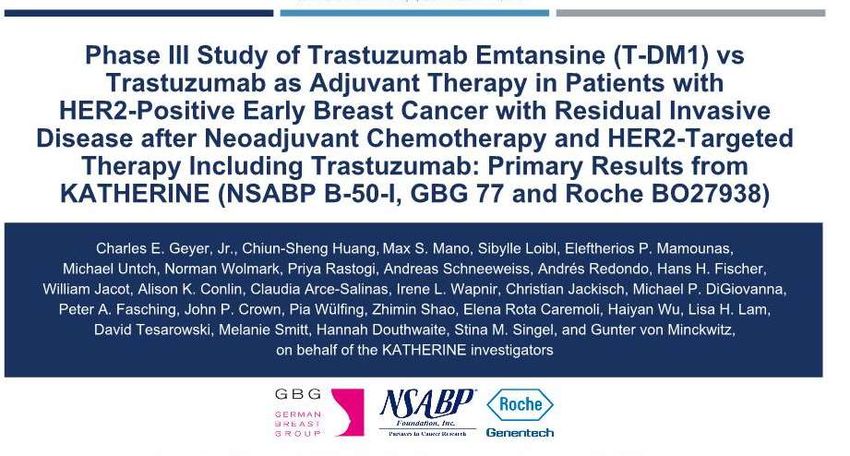
FORPERSONALUSE ONLY

  Evolution of neoadjuvant therapy

     Reserved for patients with inoperable, locally advanced
     BC to enable surgery1
     lChemotherapy
     lEndocrine therapy
                               Used for patients with inoperable, locally
                               advanced BC or for those with operable BC
                               at high risk of recurrence1,2
                               lTargeted therapies
                               lChemotherapy
                               lEndocrine therapy

1.Cain H,et al. ClinOncol (RColl Radiol)2017; 2. TeshomeM & Hunt KK. SurgOncol ClinN Am2014.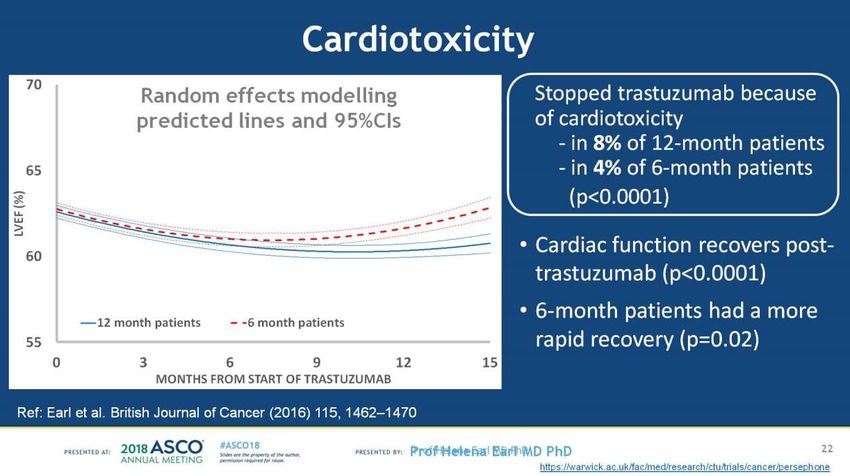
FORPERSONALUSE ONLY

  Neoadjuvant treatment supports various aspects
  of eBC management
   Increases opportunity for BCS and less radical axillary dissection1,2

   Reduces surgical morbidity1,2

   Enables early response assessment3

   Complements assessment of prognosis together with other risk factors4

   Allows more time for genetic testing and consideration of surgical options4,5

   Supports faster regulatory approval of new drugs5,6

1.KaufmannM, et al.Ann SurgOncol2012; 2. Abt NB,et al. JAMASurg2014; 3. Prowell TM,et al. NEJM2012;4. Cain H, et al. ClinOncol2017;5.FDA 2014. Guidance for Industry: pCRin
neoadjuvant treatment ofhigh-risk eBC; 6. EMA Anticancer Guidelines, 2014, Appendix4.
FORPERSONALUSE ONLY

    A multi-disciplinary approach is key to providing
    a comprehensive treatment plan for patients
                                                                                                    Discussions of
          Surgical, medical
                                                                                                    the benefits of
      and radiation oncologists
                                                                                               neoadjuvant vs. adjuvant
        involved in treatment
                                                                                                 treatment from each
             plan design
                                                                                                speciality’s standpoint

                                                                                                   Early involvement of
          Staging studies may
                                                                                                   plastic surgeons and
            be needed before
                                                                                                     geneticists further
           treatment initiation
                                            Additional imaging studies/interventions may be   facilitates the treatment plan
                                                necessary to better define the extent of
                                                loco-regional disease and plan therapy

Chatterjee A & Erban JK. Gland Surg 2017.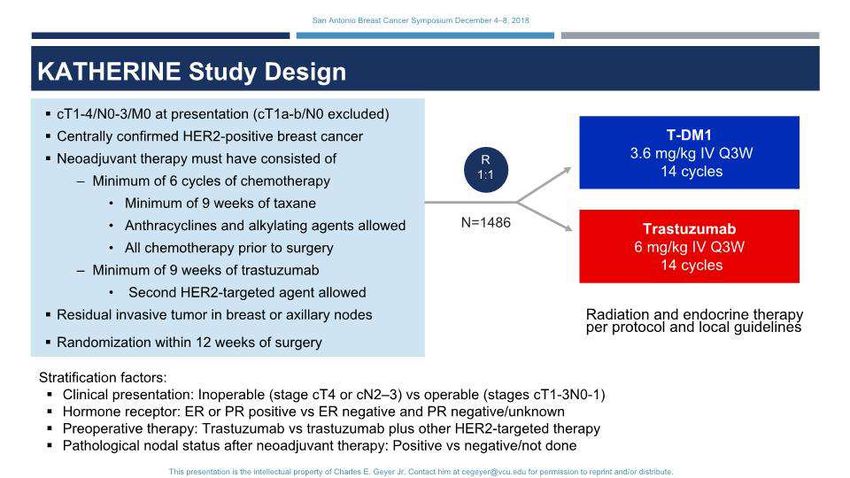
FORPERSONALUSE ONLY

  EBCTCG Meta-analysis: mortality rates

                            Breast cancer mortality                                                                                All-cause mortality
                                                60                                                                                                  60
                                                         4756 women, 1329 deaths15 year loss 0.7%                                                            4756 women, 1604 deaths15 year loss 0.3%
                                                         (95% CI 2.7, 4.1)RR 1.06 (95% CI 0.95,                                                              (95% CI 3.2, 3.8)RR 1.04 (95% CI 0.94,      Adjuvant
                  Breast cancer mortality (%)

                                                50       1.18)Log-rank p = 0.31                                                                     50       1.15)Log-rank p = 0.45

                                                                                                                          All-cause mortality (%)
                                                                                                                                                                                                          41.2%
                                                                                                    Neoadjuvant
                                                40            Neoadjuvant                              34.4%                                        40             Neoadjuvant
                                                                                                                                                                                              31.9%
                                                              Adjuvant                                                                                             Adjuvant
                                                                                           28.5%                                                                                                        Neoadjuvant
                                                30                                                   Adjuvant                                       30
                                                                                                                                                                                                          40.9%
                                                                                                      33.7%                                                             19.4%                  31.0%
                                                                    18.1%                  26.6%
                                                20                                                                                                  20

                                                                         16.2%                                                                                                17.8%
                                                10                                                                                                  10

                                                 0                                                                                                   0
                                                     0                   5                  10         15                                                0                    5                10          15
                                                               Time since trial entry (years)                                                                      Time since trial entry (years)

  EBCTCG Meta-analysis of ten randomised trials (1983-2002)in BC* showed that mortality rates are similar with
  neoadjuvant or adjuvant chemotherapy only

Adapted from Early BreastCancer Trialists' Collaborative Group (EBCTCG);LancetOncol. 2018 Jan;19(1):27-39
* All breast cancer subtypes included in the analysis; it was not an HER2-positive specific analysis.NACT, neoadjuvantchemotherapy; RR, rate ratio.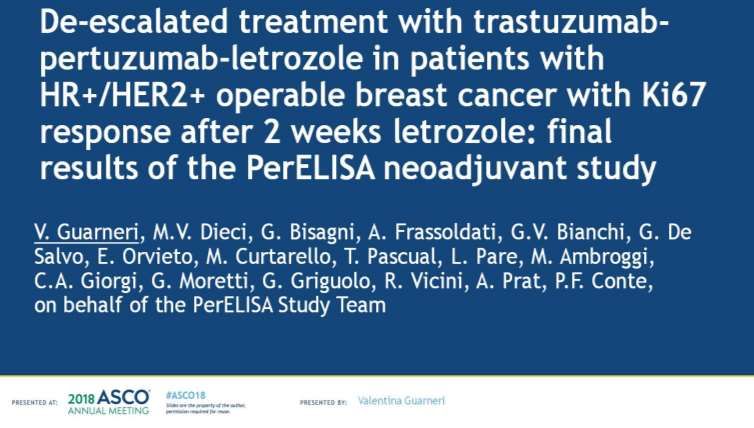
FORPERSONALUSE ONLY

NOAH: study of neoadjuvant chemotherapy with trastuzumab followed
by adjuvant trastuzumab versus neoadjuvant chemotherapy alone in HER2+
LABC or inflammatory BC

                                                      HER2-positive LABC                                                                 HER2-negative LABC
                                                       (IHC 3+ or FISH+)                                                                     (IHC 0/1+)

                                              n=115                                                   n=113                                                 n=99
                                  T + AP                                                    AP                                                      AP
                               q3w x 3 cycles                                          q3w x 3 cycles                                          q3w x 3 cycles

                                   T+P                                                       P                                                       P
                               q3w x 4 cycles                                          q3w x 4 cycles                                          q3w x 4 cycles

                             T q3w x 4 cycles                                              CMF                                                     CMF
                          + CMF q4w x 3 cycles                                         q4w x 3 cycles                                          q4w x 3 cycles

                         Surgery followed by                                     Surgery followed by                                      Surgery followed by
                            radiotherapy*                                           radiotherapy*                                            radiotherapy*

                             T continued q3w                                                   Primary endpoint: event-free survival
                                to week 52

              AP = doxorubicin (60 mg/m2), paclitaxel (150 mg/m2); T = trastuzumab (8 mg/kg loading dose then 6mg/kg); P = paclitaxel (175 mg/m2).
              *Hormone receptor-positive patients will receive adjuvant tamoxifen
              LABC = locally advanced breast cancer; CMF = cyclophosphamide, methotrexate and fluorouracil

Graphical elaboration from text data Gianni L, et al. Lancet 2010; 375: 377-84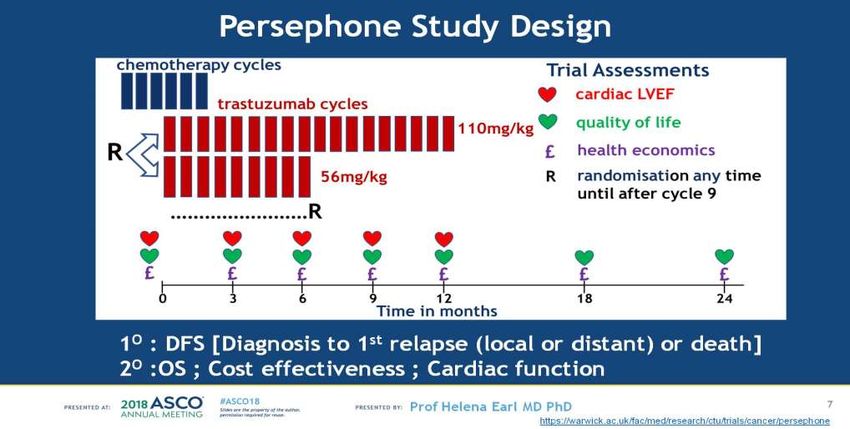
FORPERSONALUSE ONLY

  NOAH: Neoadjuvant outcomes
  improved with the addition of HER2-targeted therapy
                 Pathological responses to treatment

                                                                        HER2-              p                      50            p = 0.0007
                                                           p           negative          value
                     HER2-positive disease               value*        disease             †                                                               p = 0.001
                                                                                                                  40        43%
                      With              Without                         Without

                                                                                                        pCR (%)
                 trastuzumab         trastuzumab                     trastuzumab                                                                        38%
                    (n=117)             (n=118)                         (n=99)
                                                                                                                  30
      bpCR          50 (43%)            26 (22%)         0·0007        17 (17%)           0·37                    20                        22%
      tpCR         45 (38%)            23 (19%)          0·001        16 (16%)           0·52                                                                        19%
      OR‡         102 (87%)            87 (74%)          0·009        70 (71%)           0·62
                                                                                                                  10
      Data are n (%). bpCR=pathological complete response in breast tissue. tpCR=total                            0
      pathological complete response (in breast and axillary nodes). OR=overall response. *For
      comparison of HER2-positive disease groups. †For comparison of without trastuzumab                                With H            Without H    With H     Without H
      groups. ‡Complete and partial clinical responses.                                                                (n = 117)          (n = 118)   (n = 117)   (n = 118)
                                                                                                                                  bpCR                        tpCR

Graphical elaboration from table data Gianni L, et al. Lancet 2010.
bpCR, pathological complete response in the breast; EFS, event-free survival; H, Herceptin; tpCR, total pathological complete response.
NOAH Long term outcomes
                        Increased pCR rates with trastuzumab added to chemotherapy resulted in
                      improved EFS, but 42% of patients experienced disease recurrence at 5 years
                                                                         50
                                                                                                   p = 0.001
                                                                         40

                                                                                         38%

                                                               pCR (%)
                                                                         30

                                                                         20
                                                                                                                  19%

                                                                         10

                                                                                       n = 117                   n = 118
                                                                          0
                                                                                       With H                   Without H
                                                                                                     tpCR
Graphical elaboration from table data Gianni L, et al. Lancet 2010; 375: 377–84.
bpCR, pathological complete response in the breast; H, Herceptin; tpCR, total pathological complete response.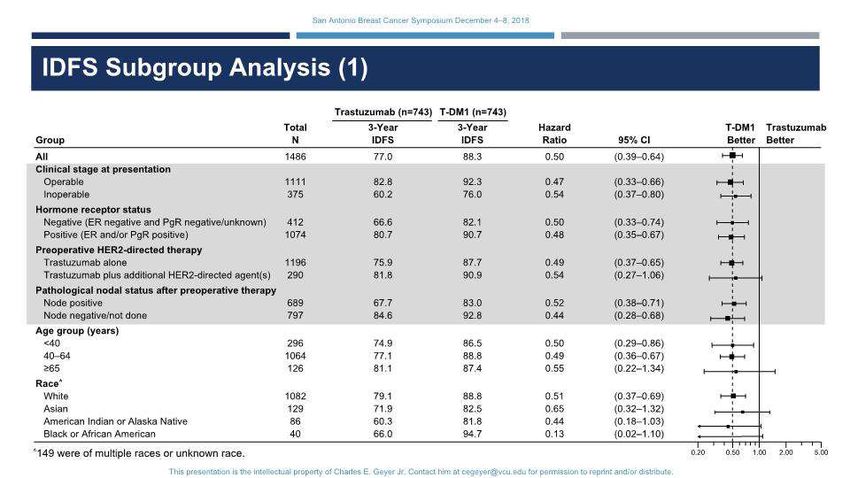
NOAH Long term outcomes

                         Increased pCR rates with trastuzumab added to chemotherapy resulted in
                       improved EFS, but 42% of patients experienced disease recurrence at 5 years

                            Summary of efficacy endpoints

                                                                                                   HER2                   100
                                                 HER2 Positive                                    Negative
                                                                                                                           90                                            42%
                         Trastuzumab
                              plus                                                                                         80
                         chemotherap        Chemotherap                                        Chemotherap
                                y             y alone                                 P          y alone                   70
                            (n=117)           (n=118)            HR (95% CI)        value         (n=99)

                                                                                                                EFS (%)
                                                                                                                           60
   5 year event-free     58% (48-66)         43% (34-52)       0·64 (0·44-0·93)     0·016       61% (50-70)
   survival
                                                                                                                           50
                                                                                                                           40             With H
   5 year overall
                         74% (64-81)         63% (53-71)      0·66 (0·43-1·01)     0·055       76% (66-84)                                Without H
   survival                                                                                                                30
   5 year relapse-                                                                                                         20
                         65% (54-73)         47% (36-57)      0·58 (0·38-0·90)     0·012       67% (56-77)
   free survival*
                                                                                                                           10       HR 0.64 (95% CI 0.44, 0.93); p = 0.016
   5 year breast
   cancer-specific       77% (69-85)         64% (55-73)      0-59 (0·37-0·92)     0·021       79% (70-86)                 0
   survival                                                                                                                     0        1        2       3          4         5
   Data are % (95% CI). HR=hazard ratio. *in patients who had surgery after neoadjuvant systemic therapy                                        Time (years)
   (HER2-positive:
Graphical           trastuzumab
          elaboration             plus chemotherapy
                       from table data Gianni L, et al. n=98,
                                                        Lancetchemotherapy  alone
                                                               Oncol 2014; 15:    n=90; HER2-negative: n=83).
                                                                               640–47.
bpCR, pathological complete response in the breast; H, Herceptin; tpCR, total pathological complete response.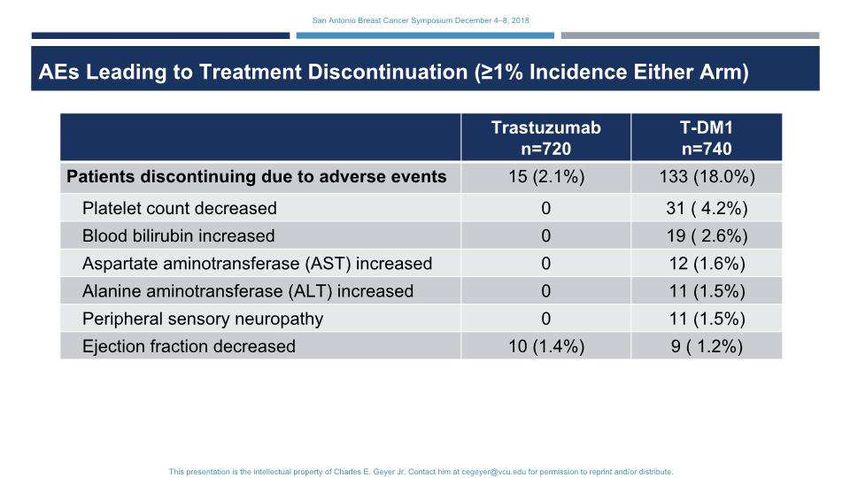
NeoSphere: Phase II study of efficacy and safety of neoadjuvant PH in
           women with locally advanced,inflammatory, or early HER2+ breast cancer
                                     Neoadjuvanttreatment                                                                Adjuvant treatment
                                           q3w x 4                                                             until completion 1 year ofTrasttreatment

                        Arm A                                                                                                                             •Inclusion criteria
                                                                                                                                                               •Femalepatients≥18 years of
                              Trastuzumab + docetaxel(n = 107)                                                           Trastuzumab + FEC                     age
                                                                                                                                                               •Operable*,locally advanced‡or
                        Arm B                                                                                                                                  inflammatory§breast cancer
                                                                                                S                                                              •HER2-positive (IHC 3+ or IHC
                       Pertuzumab + trastuzumab+ docetaxel(n =                                  U                        Trastuzumab + FEC                     2+ and FISH+/CISH+)
                                         107)                                                   R                                                              •Primarytumours>2 cm.
N = 417

             R          Arm C
                                                                                                G                                                         •Exclusion criteria
                                                                                                E                                                              •Metastaticdisease (stage IV),
                                                                                                R                                                              bilateral breast cancer or other
                            Pertuzumab + trastuzumab (n = 107)                                  Y                   Trastuzumab +[docetaxel→FEC]
                                                                                                                                                               malignancy
                        Arm D                                                                                                                                  •Previous anti-cancer therapy
                                                                                                                                                               •Impaired cardiac, liver or
                               Pertuzumab + docetaxel (n = 96)                                                           Trastuzumab + FEC                     renalfunction.

                                                                                                                                                                                                  For personal use only
          Gianni L, et al.Lancet Oncol2012; 13(1): 25-32. (study protocol available with the publication online).
NeoSphere: Objectives
•Primary
–To assess the pCR rate at the time of surgery
•Arm A (HT) vs. Arm B (PHT)
•Arm A (HT) vs. Arm C (PH)
•Arm B (PHT) vs. Arm D (PT).
•Secondary
–To evaluate the safety profiles of each regimen,including neoadjuvant and
adjuvant treatment
–To determine the time to clinical response, time to response, disease-free survival
and progression-free survival
–To evaluate biomarkers
–To compare the rate of breast-conserving surgery for all patients with T2–3
tumours for whom mastectomy was planned at diagnosis
–To make a preliminary assessment of the efficacy of neoadjuvant treatment with
For personal use only
pertuzumab and docetaxel.
Gianni L, et al.Lancet Oncol2012; 13(1): 25-32. (study protocol available with the publication online).NeoSphere: Pertuzumab and trastuzumab plus docetaxel
significantly increased the pCR rate vs. other arms
p = 0.0198
50 p = 0.0141 p = 0.003
pCR, %95% CI 40
30 45.8
20
29.0
10 24.0
16.8
n = 107 n = 107 n = 107 n = 96
0
Arm A Arm B Arm C Arm D
For personal use only
HT PHT PH PT
H, trastuzumab; P, pertuzumab; pCR, pathological complete response; T, docetaxel.
Gianni et al. Oral presentation SABCS 2011- available athttp://sabcs11.m2usa.com/sabcs.html- Last access October 2013; Gianni L, et al. Lancet Oncol 2012; 13(1): 25-32.FORPERSONALUSE ONLY
APPROCCI ALTERNATIVI ALLA CHEMIOTERAPIA
Neoadjuvant treatment with trastuzumab and pertuzumab plus palbociclib and fulvestrant
in HER2-positive, ER-positive breast cancer (NA-PHER2): an exploratory, open-label,
Phase 2 study
Gianni L. et al, Lancet Oncology 2018
First-Line Trastuzumab plus an Aromatasi Inhibitor, with or without Pertuzumab, in Human
Epidermal growth factor receptor 2-positive and Hormone Receptor-positive metastatic or
Locally advanced Breast cancer (PERTAIN): a randomized, open-label, phase II trial
Rimawi M. et al, J Clin Oncol 2018
Conclusioni: differenza di 3,1 mesi in PFS mediana(18.9 mesi per il braccio con P+T+AI vs 15.8 mesi)
In favore dell’ associazione con doppio blocco anti-HER2FORPERSONALUSE ONLY
STRATEGIA CON DOPPIO BLOCCO
(Lapatinib + Trastuzumab)
Lapatinib with trastuzumab for HER2-positive early breast cancer (NeoALTTO): a randomised,
open –label, multicentre, phase 3 trial
Baselga J. et al, Lancet 2012
Preoperative chemoterapy plus trastuzumab, lapatinib, or both in human epidermal growth
factor receptor 2-positive operable breast cancer:
results of the randomized phase II CHER-LOB study
Guarneri V. et al, J Clin Oncol 2012FORPERSONALUSE ONLY STRATEGIA CON DOPPIO BLOCCO (Lapatinib +Trastuzumab) Molecular Heterogenity and Response to Neoadiuvant Human Epidermal Growth Factor Receptor 2 targeting in CALGB 40601, a randomized, phase III trial of Pacltaxel plus trastuzumab with or without Lapatinib Carey LA et al, J Clin Oncol 2016 Lapatinib as a component of neoadjuvant therapy for HER2-positive operable breast cancer (NSABP protocol B-41): an open-label, randomised phase 3 trial Robidoux A. et al, Lancet Oncol 2013
FORPERSONALUSE ONLY

Targeted neoadjuvant therapy in the HER-2-positive breast cancer patients:
a systematic review and meta-analysis
Ma W et al., Onco Targets Ther 2019 Jan

CONCLUSION: Efficacy of lapatinib was less than that of trastuzumab, but incidence of
adverse effect of lapatinib was higher than that of trastuzumab.
Combination of chemoterapy plus both lapatinib and trastuzumab could significantly
increase PCR and tPCR in breast cancer patients, but rate of breast conservation,
event-free survival, and overall survival was not significantly improved.
Incidence of diarrhea, hepatic toxicity and skin rash was significantly increased in the
groups using lapatinib
FORPERSONALUSE ONLY

Front Oncology 2018 may
Debiasi M et al
Efficacy Anti-HER2 agents in combination with adjuvant or neoadjuvant chemotherapy
for early and locally advanced HER2-positive breast cancer patients: A Network Meta-Analysis

Conclusion: this network meta-analysis suggests that dual anti HER-2 blockade with trastuzumab
 plus either lapatinib or pertuzumab are probably the best treatment options in the
(neo)adjuvant setting for HER2-positive breast cancer patients in terms of OS gain.
Mature OS results are still expected for the Aphinity trial and for the sequantial use of
Trastuzumab followed neratinib, the treatment that showed the best performance in terms
of DFS in our analysis.
FORPERSONALUSE ONLY

  STRATEGIA CON DOPPIO BLOCCO
  CON ALTRI AGENTI ANTI HER2
Dual blockade with Afatinib and trastuzumab as neoadjuvant treatment for patients with
Locally advanced or operable breast cancer receiving taxane-anthracycline containing
Chemoterapy-DAFNE (GBG-70)
Hanusch C. et al, Clin Cancer Res 2015
Tassi di pCR pari al 49%

NSABP FB-07: A phase II randomized trial evaluating neoadiuvant therapy with weekly
paclitaxel (P) plus Neratinib (N) or Trastuzumab (T) or neratinib and trastuzumab (N+T)
Followed by doxorubicin and cyclophosphamide (AC) with postoperative T in women with
Locally advanced HER2-positive breast cancer
Jacobs S. et al, Cancer Res 2016
Tassi di pCR pari al 50%
FORPERSONALUSE ONLY

  EFFICACIA di T-DM1 nel setting neoadiuvante
Neoadjuvant trastuzumab, pertuzumb and chemotherapy versus trastuzumab emtansine
plus pertuzumab in patients with HER2-positive breast cancer (KRISTINE): a randomized,
open-label, multicentre, phase 3 trial
Hurvitz SA. et al, Lancet Oncol 2018

Lo studio ha randomizzato 444 pazienti con Ca mammario HER2-positivo a ricevere
➢6 cicli di T-DM1 in associazione a Pertuzumab
➢6 cicli di Trastuzumab + Pertuzumab + Docetaxel + Carboplatino
Conclusioni: sebbene la combinazione con T-DM1 sia complessivamente meglio tollerata,
il tasso di pCR nel braccio con T-DM1 (44% vs 56%; p=0.016) è risultato inferiore al braccio di cht
Associata al doppio blocco anti-HER2, arrestando lo sviluppo del farmaco in questo setting
FORPERSONALUSE ONLY

BO28407 (KAITLIN):
Phase III, two-arm adjuvant trial of trastuzumab + pertuzumab + taxane
vs. T-DM1 + pertuzumab

                                                                          Taxane
                                 S                        AC/FEC
   HER2-positive and node-       U                                            Trastuzumab + pertuzumab
         positive or             R
      HR-negative EBC
                                         R
                                 G
          N = 2500               E
                                 R                        AC/FEC                  T-DM1 + pertuzumab

                2014                 2015                          2016                     2017
First patient in Q1                                                   Last patient in Q4

 AC, doxorubicin/cyclophosphamide; FEC, 5-fluorouracil/epirubicin/cyclophosphamide; HR, hormone
 receptor.
 www.clinicaltrials.gov/ct2/show/NCT01966471.
FORPERSONALUSE ONLY • Less pCR in HER2 + and HR+ disease after neoadjuvant chemo based therapy • Efficacy of dual anti HER2 blockade can help reducing intensity of chemo • Ki67 drop after short term endocrine therapy as a biomarker of endocrine sensitivity in HR+/HER2- disease
FORPERSONALUSE ONLY

Primary objective: pCR rate (breast and axilla)
Secondary objective: Breast clinical objective RR (by US)
Breast conservative surgery rate
Safety
Biomarker analysis
FORPERSONALUSE ONLY

Quali novità nel 2018?
      • Escalation and De-Escalation trials

                    1) To hit the target with more drugs (escalation)
                    for patients who need more:

                    -Adjuvant TDM1 if no pCR (KATHERINE)

                    2) To hit the target with the hope to de-escalate
                    therapy for patients who need less:
          TARGET
                    -De escalating or omitting CHT (PerELISA)
                    -De-escalating anti HER2 therapy (Persephone/
                    PHARE/ShortHer/SOLD)
FORPERSONALUSE ONLY Adjuvant trastuzumab: the pivotal phase III studies Adapted from Lambertini M et al Expert Rev Anticancer Ther 1 7(1):61-74
FORPERSONALUSE ONLY

Adjuvant trastuzumab improves DFS
(HERA 11 years follow up)

Adapted from D Cameron et al. Lancet 389 (10075), 1195-1205. 2017 Feb 17.
FORPERSONALUSE ONLY

Chemotherapy Schemes in Trastuzumab trials
• Sequential (Post antrhacyclines +/- taxanes )
 trastuzumab for 12 months following completion of chemotherapy (HERA trial)

• Concurrent post antrhacyclines chemotherapy –trastuzumab
for 12 months started in combination with a taxane following completion
of antrhacyclines (NASBP B31, NCCTG N9831, BCIRG)

• Concurrent pre antrhacyclines chemotherapy-trastuzumab for 9-10 weeks
started in combination with a taxane prior to antrhacycline chemotherapy (FinHER)
Ad un follow up mediano di 62 mesi in particolare nelle pts trattate
 con docetaxel l’ aggiunta di T per 9 w ha mostrato significativa riduzione
del rischio di recidiva a distanza

 1. Smith I et al., Lancet. 2007 Jan 6;369(9555):29-36; 2. Piccart-Gebhart MJ et al., *N Engl J Med. 2005 Oct 20;353(16):1659-72; 3. Romond EH et al., *N Engl J Med. 2005 Oct 20;353(16):1673-84; 4.
 Slamon D et al, *N Engl J Med. 2011 Oct 6;365(14):1273-83; 5. Joensuu H et al, J Clin Oncol. 2009 Dec 1;27(34):5685-92. *This article is copyrighted by the Massachusetts Medical Society. All rights
 reserved. It is provided for your personal informational use only
FORPERSONALUSE ONLY

Disegnato per valutare la non inferiorità di 6 vs 12 mesi di trattamento con T
aggiunto alla CHT (approccio sequenziale o concomitante).
T per 6 mesi è risultata associata ad un incremento del 28% del rischio di ricaduta
I risultati consolidano i 12 mesi di T come standard di trattamento
FORPERSONALUSE ONLY
FORPERSONALUSE ONLY
              ASCO        2017

Dal 2007 al 2013 ha arruolato 1254 pts (stadi I, IIA/B e III)
Studio di non inferiorità di T settimanale x 9 w vs 1 y
Incidenza di tossicità cardiaca significativamente più bassa
nel braccio di trattamento breve
FORPERSONALUSE ONLY STUDIO SOLD Joensuu H, Fraser J, Wildiers H, et al. JAMA Oncol. 2018 May 31. Effect of Adjuvant Trastuzumab for a Duration of 9 Weeks vs 1 Year With Concomitant Chemotherapy forEarly Human Epidermal Growth Factor Receptor 2-Positive Breast Cancer: The SOLD Randomized Clinical Trial. Ha randomizzato 2174 pazienti a ricevere Docetaxel 3w+T weekly x 9w→ FEC x3 vs stesso regime CHT seguito da T x 1y Pur dimostrando una differenza assoluta di DFS a 5 anni di solo il 2.5% tra i bracci (90.5% 1 anno vs 88% 9 settimane) NON dimostra la NON INFERIORITA’ DEL TRATTAMENTO BREVE
FORPERSONALUSE ONLY
FORPERSONALUSE ONLY

Follow up mediano di 5.4 mesi
FORPERSONALUSE ONLY

Quali novità nel 2018?
FORPERSONALUSE ONLY

           Shorter adjuvant HER2 blockade?
• Less cardiotoxicity in all trials with less Trastuzumab

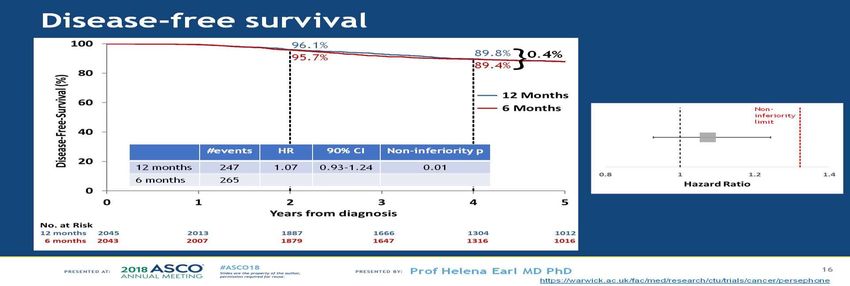
• The matter of «non inferiority margin»
→ which is the clinically acceptable loss of efficacy?

• Less relevant question today, we are more interested in reducing CHT

• It is not clear who benefits from reduced HER2 blockade

• Persephone trial reduces in someway anxiety for women
 who has to stop Trastuzumab early
FORPERSONALUSE ONLY Escalation To hit the target with more drugs (escalation) for patients who need more: - Adjuvant TDM1 if no pCR (KATHERINE) - Studio ALTTO - Studio APHINITY - ExteNET - KAITLIN
FORPERSONALUSE ONLY
FORPERSONALUSE ONLY
FORPERSONALUSE ONLY
FORPERSONALUSE ONLY
FORPERSONALUSE ONLY
FORPERSONALUSE ONLY
FORPERSONALUSE ONLY

Grade ≥3 AEs with ≥1% incidence in either arm
6

5
                                                                                                                                                                 Trastuzumab(n = 720)                    T-DM1(n=740)

4
    Patients, %

3

2

1

0
                  Platelet count           Hypertension            Radiation skin injury       Peripheral sensory          Neutrophil count            Hypokalaemia              Fatigue                     Anaemia
                   decreased                                                                      neuropathy                 decreased

    Despite a higher incidence of decreased platelet count (thrombocytopenia) in theT-DM1arm, rates of Grade
                                  ≥3 haemorrhage were similar between groups*

                              * Grade≥3 haemorrhage rates: 0.4%T-DM1arm, 0.3%Trastuzumabarm. One fatal intracranial haemorrhage was reported in theT-DM1arm.
                                                                                                                                            AE, adverse event.        vonMinckwitzG, et al. NEnglJ Med 2018 Dec 5. [Epubahead of print]
FORPERSONALUSE ONLY
KATHERINE: Overall summary
KATHERINE is the first trial to demonstrate a significant benefit with a therapy optimisation by changing to
targeted chemotherapy in patients with residual disease after neoadjuvant therapy in HER2-positive BC
Study met its primary objective, with a 50%
reduction of the risk of an IDFS event withT- Safety profile of T-DM1 was consistent with
DM1vs.Trastuzumab(HR 0.50; 95% CI = 0.39, previous trials
0.64; p < 0.0001)
Magnitude of IDFS benefit was consistent across
These results will likely form the foundation of a
all subgroups, including HR status, nodal status
new SoC in this population
and prior dual HER2 blockade
The benefit:risk of T-DM1 is transformative for patients with HER2-positive eBC who have residual disease
following completion of neoadjuvant therapy
BC, breast cancer; CI, confidence interval; eBC, early breast cancer; HR, hazard ratio; IDFS, invasive disease-free survival. vonMinckwitzG, et al. NEnglJ Med 2018 Dec 5. [Epubahead of print]FORPERSONALUSE ONLY 81% of pts completed Trastuzumab 71% of pts completed T-DM1
FORPERSONALUSE ONLY
FORPERSONALUSE ONLY

•The residual disease was HER2 driven?
•Should T-DM1 be recommended after Pertuzumab?
•Should Pertuzumab be continued?
•The matter of toxicity: 14cyclesof T-DM1...
•What if we need to stop T-DM1?
•Who benefits more/less? Predictive biomarkers?
•Brain met?

                                               46
FORPERSONALUSE ONLY •The residual disease was HER2 driven? The risult demonstrates that residual disease was often still HER2-driven •Should T-DM1 be recommended after Pertuzumab? No direct data, and I would not continue pertuzumab with T-DM1 now BUT, inspite of Marianne results, Pertuzumab could possibly add to T-DM1 •Should Pertuzumab be continued? If a patient does not have pCR inspite of pertuzumab,it is unlikely that continuing pertuzumab would be better than as witch,given modest improvement in Aphinity •The matter of toxicity: 14 cyclesof T-DM1... For some patients,this will mean more than a year of anti-HER2 treatment HOWEVER, the results were achieved with 14cycle swhich should be the standard approach 47
FORPERSONALUSE ONLY

•What if we need to stop T-DM1?
If a patient having trouble with toxicity, she may need to stop sooner but I
woul push for at least one full year of anti HER2 treatment

•Brain met?
•Unfortunately,there was no impact whatsoever on the incidence of brain
metastases

•Is there a role of Neratinib in pts with residual disease?
Data forT-DM1 in Katherine directly address residual disease setting are
strong
No data for Neratinib after T-DM1

                                                           48
FORPERSONALUSE ONLY STUDIO ALTTO Piccart-Gebhart M,et al. Optimization Trial. J Clin Oncol 2016;34:1034-1042 Adjuvant Lapatinib and Trastuzumab for Early Human Epidermal Growth Factor Receptor 2-Positive Breast Cancer: Results From the Randomized Phase III Adjuvant Lapatinib and/or Trastuzumab Treatment Braccio: T+CHT o T da solo Braccio: lapatinib + CHT o L da solo Braccio: T→L (sequenza dei 2 agenti) Braccio T+L+CHT Tra giugno 2007 e luglio 2011 sono state arruolate 8381 pts. L’ analisi prevista dopo un follow up mediano di 4.5 anni, ha evidenziato una riduzione del 16% del rischio di recidiva confrontando L+T vs T. Una riduzione del 4% è stata osservata confrontando T→L vs T Le pts trattate con L hanno sperimentato+effetti collaterali.Cardiotossicità in tutti i bracci Lapatinib non è approvato per l’utilizzo nel setting adiuvante
FORPERSONALUSE ONLY

  STUDIO ExteNET
Martin M. et al. Lancet Oncol 2017

Neratinib after trastuzumab-based adjuvant therapy in HER2 positive
breast cancer (ExteNET): 5-years analysis of a randomised,
double-bind, placebo-controlled phase 3 trial

Lo studio ha analizzato l’ aggiunta in successione al regime adiuvante
con chemioterapia e trastuzumab di Neratinib (N), una piccola molecola con azione
inibitrice irreversibile del dominio tirosinchinasico di HER2, HER1 e HER4.
Neratinib ha un profilo di farmacodinamica e farmacocinetica differente da Lapatinib
E’ stato dimostrato un vantaggio signiticativo in termini di DFS
A giugno 2018 N è stato approvato da EMA per il carcinoma mammario operato
ormono+ e HER2+ nel setting adiuvante, per 1 anno di terapia con N al termine
del regime con Trastuzumab
FORPERSONALUSE ONLY

                 APHINITY

Adjuvant Pertuzumab and Herceptin IN Initial TherapY
                 of breast cancer

                                                       For personal use
                                                                   only
FORPERSONALUSE ONLY
APHINITY: Phase III trial of pertuzumab,
trastuzumab and chemotherapy in the adjuvant setting
6–8 cycles
Arm 1 Chemotherapy*
Trastuzumab
Central
confirmation of
Surgery
HER2 status R Pertuzumab
N = 4808 10-year
6–8 cycles Follow-up
Arm 2 Chemotherapy*
Trastuzumab
Placebo
Anti-HER2 therapy for a total of 1 year (52 weeks)
Graphical Elaboration from text data from References
1. www.clinicaltrials.gov/ct2/show/NCT01358877; 2. von Minckwitz G, Baselga et al. Cancer Res 2011;
71(15 December suppl.): Abstract OT1-02-04FORPERSONALUSE ONLY
APHINITY
3–4 FEC or FAC q3w → 3–4 T +H/+HP 4 AC or EC → 3–4 T +H/+HP
– 5-FU 500-600 mg/m2 – AC (or EC) q3w or dosedense q2w with G-CSF
– epirubicin 90–120 mg/m2 (doxorubicin support
50 mg/m2 is acceptable) • doxorubicin 60 mg/m2 (epirubicin 90–120
ANTHRACYCLINE-BASED mg/m2)
– cyclophosphamid 500–600 mg/m2
CHEMOTHERAPY
– docetaxel 75–100 mg/m2 q3w [oder paclitaxel 80 • cyclophosphamid 500–600 mg/m2
mg/m2 weekly] – docetaxel 75–100 mg/m2 q3w [or paclitaxel 80
mg/m2 weekly]
6 TC q3w +H/+HP
NON-ANTHRACYCLINE- – docetaxel 75 mg/m2
BASED CHEMOTHERAPY – carboplatin AUC 6 (max. dose 900 mg)
ER and/or PgR +: hormonal agents should be started at the end of chemotherapy consisting of tamoxifen or an aromatase inhibitor for
post-menopausal patients; or tamoxifen with or without ovarian suppression or an aromatase inhibitor with ovarian suppression for pre-
menopausal patients.
Hormonal therapy should be given for at least 5 years in accordance with the protocol recommendations.
Radiotherapy is to be given as clinically indicated at the end of chemotherapy in accordance with protocol recommendations
Graphical Elaboration from text data from www.clinicaltrials.gov/ct2/show/NCT01358877;FORPERSONALUSE ONLY APHINITY: Study endpoints • Primary endpoint: • Invasive disease-free survival (at 3 y) between treatment arms. • Secondary endpoints: • Invasive disease-free survival including second non-breast cancer • Disease-free survival • Overall survival • Recurrence-free interval • Distant recurrence-free interval • Cardiac and overall safety • Health-related quality of life. www.clinicaltrials.gov/ct2/show/NCT01358877; von Minckwitz G, et al. Cancer Res 2011; 71(15 December suppl.): Abstract OT1-02-04 (and associated poster presentation).
FORPERSONALUSE ONLY

  OVERVIEW
  • The Phase III APHINITY study demonstrated that adjuvant PERJETA–Herceptin + chemo
    significantly improved IDFS compared with Herceptin-placebo + chemo, reducing the
    risk of recurrence or death by 19%; HR 0.81 (95% CI 0.66–1.00; p = 0.0446) in HER2-
    positive eBC1
  • At the time of the primary analysis, treatment effect was driven by high-risk
    subgroups, defined as node-positive or hormone receptor-negative (la differenza a 3
    anni è stata > evidente nel gruppo delle ptz N+)
  • Diarrhoea (retrospective analysis of diarrhoea events in the safety population) was the
    most common AE reported

Bines J, et al. Abstract P1-13-07, Wed 6 Dec, 5:00–7:00 pm, Poster Session 1, Hall 1
FORPERSONALUSE ONLY
CONCLUSIONS
• Pertuzumab adiuvante in associazione con chemioterpia e trastuzumab è
stato approvato dall’ EMA per le pazienti con carcinoma mammario HER2
positivo ad alto rischio di recidiva (linfonodi positivi e recettori ormonali
negativi)
• In Italia attualmente è in classe Cnn
Bines J, et al. Abstract P1-13-07, Wed 6 Dec, 5:00–7:00 pm, Poster Session 1, Hall 1FORPERSONALUSE ONLY INNOVAZIONE, recenti trials ACCESSIBILITA’ farmaci già saggiati in altri settin SOSTENIBILITA’ depotenziamento terapie INFORMAZIONE IN ONCOLOGIA
You can also read


