Care Transitions Improvements Reduces 30-Day All-Cause Readmissions Saving Nearly $2 Million
←
→
Page content transcription
If your browser does not render page correctly, please read the page content below
Success Story

  Care Transitions Improvements Reduces 30-Day
  All-Cause Readmissions Saving Nearly $2 Million
                                      EXECUTIVE SUMMARY
                                      Researchers estimate that in just one year, $25 to $45 billion is spent
                                      on avoidable complications and unnecessary hospital readmissions,
                                      the result of inadequate care coordination and insufficient
                                      management of care transitions.

                                      While increasing its efforts to reduce its hospital readmission rate,
                                      the University of Texas Medical Branch (UTMB) discovered that it
                                      lacked standard discharge processes to address transitions of care,
                                      leading to a higher than desired 30-day readmission rate. To
                                      address this problem, UTMB implemented several care coordination
                                      programs, and leveraged its analytics platform and analytics
                                      applications to improve the accuracy and timeliness of data for
                                      informing decision making and monitoring performance.
    HEALTHCARE ORGANIZATION
                                      This combination of approaches proved successful, resulting in:
    Academic Medical Center

    PRODUCTS
                                            14.5 percent relative reduction in 30-day all-cause
                                            readmission rate.
         Health Catalyst® Analytics         $1.9 million in cost avoidance, the result of a reduction in
         Platform and broad suite           30-day all-cause readmission rate.
         of analytics applications
         Readmission Explorer
                                      HOSPITAL READMISSIONS
                                      Hospital readmissions are costly and can have negative
                                      consequences for patients. Readmissions totaled $7 billion in
                                      aggregate hospital costs for four high-volume conditions: acute
                                      myocardial infarction (AMI), heart failure (HF), chronic obstructive
                                      pulmonary disease (COPD), and pneumonia.1

                                      Inadequate care coordination, including insufficiently managing care
                                      transitions, has been estimated to account for $25 to $45 billion in
                                      wasteful spending through avoidable complications and
                                      unnecessary hospital readmissions.2 To reduce readmission rates,
                                      hospitals must improve the effectiveness of transitions of care,
                                      including addressing breakdowns in communication, and improving
                                      patient education and clinician accountability.3

Copyright © 2018 Health Catalyst                                                                              1
UTMB has a long history of advancing health sciences education,
                                           research, and patient care. It was the first academic health center in
                                           Texas and is home to the state’s first schools of medicine, nursing,
                                           and allied health sciences. For 125 years, the university has
                                           maintained a forward-thinking spirit that has enabled it to serve its
                                           students, its patients, and people in Texas and beyond in innovative
                                           ways. In keeping with this focus, UTMB searched for ways to
                                           improve care for its patients by reducing hospital readmission rates.

                                           OVERCOMING A LACK OF CONSISTENCY AND TRANSPARENCY
                                           UTMB recognized that it had a higher than desired 30-day
                                           readmission rate that was most likely a result of its lack of standard
                                           processes for discharge and transitions of care from hospital to
     Using teach back and
                                           home. Additionally, the organization faced several challenges in
     disease-specific patient
                                           lowering readmission rates that were related to information and care
     education has made a
                                           coordination.
     real difference in the
     patient’s understanding of            For instance, UTMB lacked the necessary data to be able to identify
     their care and has                    the patients at highest risk for readmission, nor could it pinpoint the
     improved patient                      factors contributing to readmission. Patient education materials were
     satisfaction with nursing             also not standardized, resulting in variation in the information the
     and physician                         patient received—no clear processes were in place to ensure the
     communication.                        patient understood the materials offered. Patients were sometimes
                                           overwhelmed with complex discharge instructions, leading to
         Brianna Salinas, MSN, RN, CNL
                Patient Care Facilitator
                                           medication mismanagement or an unclear understanding of what
                                           signs and symptoms indicated that they should seek care from their
                                           healthcare provider. The process for scheduling a hospital follow-up
                                           appointment varied by care unit, resulting in inconsistent discharge
                                           follow-up appointments for patients. All of these factors made it
                                           difficult for patients to do the things necessary to help themselves
                                           recover and avoid the need for additional healthcare interventions.

                                           For the hospital and providers, obtaining accurate data on
                                           readmission rates required multiple steps. This complexity delayed
                                           the availability of data by 90 days, negatively impacting UTMB’s
                                           ability to use this information to identify potential issues and
                                           proactively make improvements.

Copyright © 2018 Health Catalyst                                                                                    2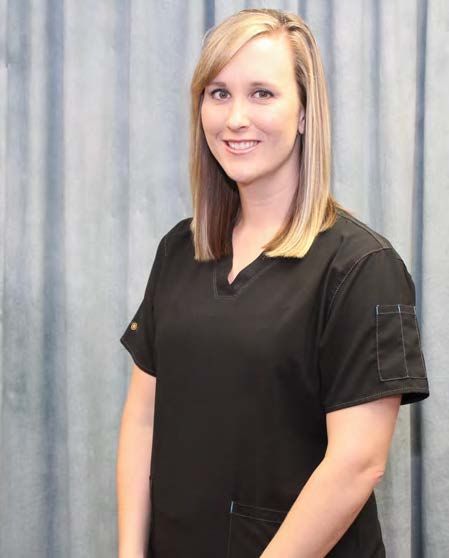
DATA-DRIVEN, COLLABORATIVE APPROACH TO ENHANCING
                                           CARE DELIVERY
                                           After identifying the barriers, it faced in attempting to reduce
                                           readmissions, UTMB determined it needed to standardize its
                                           discharge processes, address transitions of care, improve access to
                                           the data and analytics required to identify opportunities for
                                           improvement, and improve the ability to monitor its effectiveness in
                                           reducing unnecessary readmissions.

                                           CARE collaborative standardizes processes and improves
                                           care transitions
                                           UTMB established the CARE (Controlling Avoidable Readmissions
     Having real-time
                                           Effectively) collaborative to reduce unnecessary hospital
     information has given us
                                           readmissions through coordination of care, improved access to
     the opportunity to track
                                           primary care, behavioral healthcare, and specialty care, and
     progress and help us be
                                           improved utilization of standard processes and technology.
     more accountable to
     confirming that the patient           The multidisciplinary CARE collaborative includes a physician
     has a follow-up                       champion and key stakeholder participation from nurse leaders,
     appointment that meets                physicians, patient care facilitators, case managers, and social
     their needs.                          workers. This group meets monthly to confirm project alignment and
                 Katie Davis, BSN, RN-BC
                                           support, ensuring communication of project priorities, activities, and
                      Nursing Supervisor   progress toward the goal of reduced readmissions. Through CARE,
                                           UTMB established standard processes for documenting patient
                                           complexity and co-morbid diagnoses, thus improving the accuracy of
                                           clinical documentation, and better communicating the patient’s
                                           medical needs.

                                           UTMB also designed and implemented an evidence-based process
                                           for managing care transitions from the hospital to home using
                                           Project BOOST (Better Outcomes for Older Adults through Safer
                                           Transitions)—a set of interventions developed by the Society of
                                           Hospital Medicine. BOOST includes standardized tools to identify
                                           high-risk patients, educate them on their conditions and possible
                                           side effects of medication, schedule follow-up appointments, and
                                           perform medication reconciliation at discharge to make certain that
                                           drugs prescribed at discharge don't harmfully interact with previously
                                           prescribed drugs.4

Copyright © 2018 Health Catalyst                                                                                  3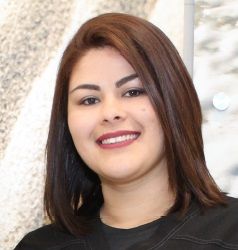
Patient facilitators support care transitions
                                       Understanding the importance of care coordination, UTMB
                                       developed the role of patient care facilitators, who coordinate the
                                       care of patients at high risk for readmission.

                                       Discharge planning begins shortly after the patient is admitted to the
                                       hospital, using the 8P risk assessment screening tool to identify
                                       which patients have the highest risk for readmission. The 8P risk
                                       assessment is completed on the first day of admission for each new
                                       patient and is documented in the EMR. Patients with three or more
                                       of the following indicators are identified as high risk for readmission:

                                          •   Polypharmacy, defined as taking more than ten medications.
     To reduce readmissions, it
     is important to take a               •   Psychological problems, such as depression.
     multidisciplinary approach           •   Principle diagnosis of chronic conditions such as cancer,
     and include the patient.                 previous stroke, HF, or diabetes.
     We all need to be on the             •   Physical limitations, such as malnutrition or deconditioning.
     same page and
     understand the end goal.             •   Poor health literacy, including language barriers or poor
                                              reading skills.
       Ashleigh Thomas, MSN, RN, OCN
                      Nurse Manager       •   Patient support is lacking, such as being homeless, social
                                              isolation, or having no primary care provider.
                                          •   Prior hospitalization, defined as non-elective admission within
                                              the past six months.
                                          •   Potential for palliative care, as indicated by advanced or
                                              progressive, serious illness.

                                       Patient care facilitators receive a list of patients who are at high risk
                                       for readmission each day, as well as a list of patients who have
                                       been readmitted within 30-days of discharge. This list is used for
                                       intensive rounding and case management while the patient is in the
                                       hospital, and to prioritize follow-up phone calls after discharge.

                                       The patient care facilitators actively manage patients who are
                                       screened as high risk, entering a customizable care plan into the
                                       EMR, incorporating evidence-based practice standards. The
                                       standardized interventions include:

                                          •   Early identification of a primary caregiver, if not the patient, for
                                              inclusion in education sessions and discharge planning
                                              discussions.
                                          •   Evidence-based teaching materials regarding disease-specific
                                              chronic conditions such as: diabetes, COPD, HF, or end-stage
                                              renal disease. Available within the EMR, the education

Copyright © 2018 Health Catalyst                                                                                   4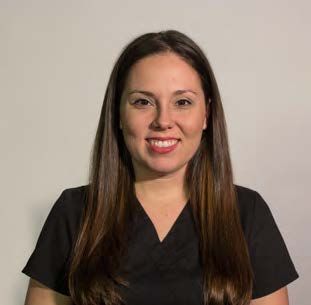
materials are introduced to the patient within 24-hours of
                                                  admission. These materials use the stoplight concept,
                                                  providing both a visual and written reference of when
     There is now more                            patients should contact their providers following discharge
     collaboration among                          from the hospital (green: maintain current plan, yellow:
     providers, and it has built                  caution, red: seek care as soon as possible). Patients are
     bridges between in-patient                   also provided an action plan that outlines what to do and who
     and out-patient services, as                 to contact in the event of worsening or new symptoms.
     well as across specialties.
                                              •   Use of the teach-back method during all patient education
                 Katie Davis, BSN, RN-BC          interventions to validate patient or caregiver understanding of
                      Nursing Supervisor          complex medical information and plan.
                                              •   Medication reconciliation upon admission and prior to
                                                  discharge by a clinical pharmacist, who focuses on eliminating
                                                  any unnecessary medications and simplifying medication
                                                  scheduling to improve adherence.
                                              •   Use of a standardized electronic discharge form within the
                                                  EMR. Providers use the form to outline the discharge follow-up
                                                  plan including the timing of the first appointment and whether a
                                                  specialist or primary care is appropriate.
                                              •   Linking community resources or home health services to those
                                                  patients with social isolation or limited resources.

                                           Recognizing the importance of confirming the patient’s understanding
                                           of the treatment plan and the effectiveness of the teach-back method
                                           on helping improve transitions of care for patients, educational
                                           offerings about the teach-back method are provided hospital-wide for
                                           providers, nurses, and care managers.

                                           Rather than making follow-up appointments at the time of discharge,
                                           follow-up appointments are made using a centralized service within
                                           72-hours after discharge, allowing the patient to go home and get
                                           settled prior to making the appointment. This limits the need to
                                           reschedule or inadvertently scheduling overlapping appointments and
                                           ensures the patient is scheduled with the appropriate service
                                           (primary care, behavioral health care, or specialty care).

                                           Enhanced data for better decisions
                                           To improve the accuracy and timeliness of data for informing decision
                                           making and monitoring performance, UTMB made the decision to use
                                           the Health Catalyst® Analytics Platform and broad suite of analytics
                                           applications, implementing the Readmission Explorer analytics
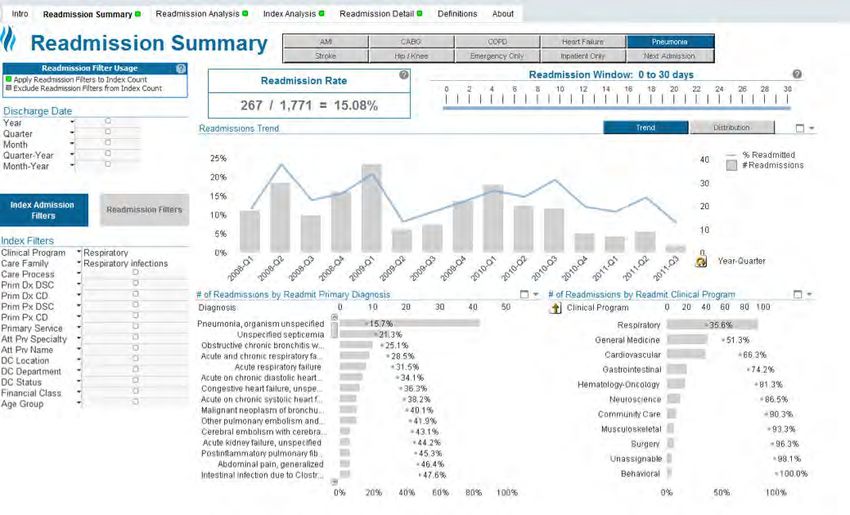
                                           application (see Figure 1).

Copyright © 2018 Health Catalyst                                                                                    5
FIGURE 1: READMISSION
EXPLORER APPLICATION SAMPLE 2
VISUALIZATION. 1
1 Filter by discharge date.
2 Filter by admission
diagnosis. 3
3 Filter by unit, provider,
intervention. 4
4 Readmission trends.
Figure 1: Readmission Explorer application sample visualization
The analytics application provides UTMB visibility into a broad
spectrum of readmission metrics for all-cause readmissions,
unplanned readmissions, and emergency department visits. This
information is updated daily, providing UTMB ready access to
meaningful, actionable data.
Using the analytics application, UTMB can view data by patient
demographics, discharge status, provider, and other metrics. UTMB
uses the analytics application to monitor trends associated with
readmissions, identify normal or special cause variation, and to
pinpoint areas where transitions of care could be further improved,
and unnecessary readmissions further reduced.
For example, when the data indicated that HF patients were one of
the main sources for readmissions, UTMB developed collaborative
relationships with outpatient care management services to develop
a focused plan to facilitate smooth transitions for patients with a HF
diagnosis. Supported by findings of a root cause analysis for the
causes of readmissions, outpatient services provided to HF patients
at high risk for readmission include transition care calls, home visits,
assistance obtaining needed supplies, and continued care
management services as appropriate.
The data obtained from the analytics application is also included on
the organization’s balanced scorecard, used to communicate
progress on 30-day all-cause readmission rate reductions, further
refining processes and continuing to spread best practices across
the system. In addition to using data and analytics, the CARE
Copyright © 2018 Health Catalyst 6collaborative conducts detailed weekly root cause analyses to
identify reasons for readmissions, developing action plans to
address the reasons for readmission events.
RESULTS
UTMB implemented a comprehensive, evidence-based,
multidisciplinary approach to improve transitions of care,
introduced a new role to facilitate effective coordination of care for
patients at risk for readmission, and utilized analytics to better
inform timely decisions. Combined, these changes enhanced the
transitions process and improved both the patient experience and
outcomes. Using this evidence-based, data-driven approach,
UTMB has made substantial improvements in the transitions of
care processes, leading to impressive results:
• 14.5 percent relative reduction in 30-day all-cause
readmission rate.
• $1.9 million in cost avoidance, the result of a reduction in
30-day all-cause readmission rate.
WHAT’S NEXT
Building on its success, UTMB continues to refine its care
transitions program. Future work includes collaborating with long-
term care, skilled nursing facilities, and home health providers to
further refine outpatient transitions, reducing unnecessary, costly
readmissions, providing the necessary care in the most
appropriate care setting.
REFERENCES
1. Fingar, K. & Washington, R. (2015). Trends in hospital readmissions for four
high-volume conditions, 2009-2013, HCUP statistical brief #196. Agency for
Healthcare Research and Quality. Retrieved from https://www.hcup-
us.ahrq.gov/reports/statbriefs/sb196-Readmissions-Trends-High-Volume-
Conditions.pdf
2. Health Affairs Health Policy Brief. (2012). Improving care transitions. Retrieved
from https://www.healthaffairs.org/action/showDoPubSecure?doi=10.1377%
2Fhpb2 0120913.327236&format=full
3. The Joint Commission. (2012). Transitions of care: The need for a more
effective approach to continuing patient care. Retrieved from
https://www.jointcommission.org/assets/1/18/Hot_Topics_Transitions_of_Care.
pdf
4. Society of Hospital Medicine. (n.d.). Advancing successful care transitions to
improve outcomes, Why is it important to improve care transitions? Retrieved
from https://www.hospitalmedicine.org/clinical-topics/care-transitions/
Copyright © 2018 Health Catalyst 7ABOUT HEALTH CATALYST
Health Catalyst is a next-generation data, analytics, and decision
support company committed to being a catalyst for massive,
sustained improvements in healthcare outcomes. We are the
leaders in a new era of advanced predictive analytics for population
health and value-based care. with a suite of machine learning-
driven solutions, decades of outcomes-improvement expertise, and
an unparalleled ability to integrate data from across the healthcare
ecosystem. Our proven data warehousing and analytics platform
helps improve quality, add efficiency and lower costs in support of
more than 85 million patients and growing, ranging from the largest
US health system to forward-thinking physician practices. Our
technology and professional services can help you keep patients
engaged and healthy in their homes and workplaces, and we can
help you optimize care delivery to those patients when it becomes
necessary. We are grateful to be recognized by Fortune, Gallup,
Glassdoor, Modern Healthcare and a host of others as a Best
Place to Work in technology and healthcare.
Visit www.healthcatalyst.com, and follow us on Twitter, LinkedIn,
and Facebook.
Copyright © 2018 Health CatalystYou can also read


