COMMITMENT TO A CURE

cellectis.com
←
→
Page content transcription
If your browser does not render page correctly, please read the page content below
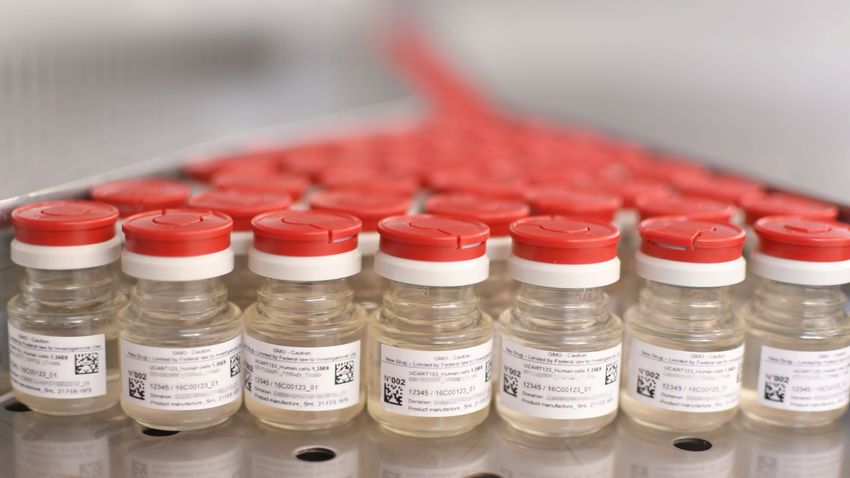
COMMITMENT TO A CURE cellectis.com

FORWARD-LOOKING STATEMENTS

This presentation contains “forward-looking”        the risk that any one or more of our product
statements that are based on our management’s       candidates will not be successfully developed
current expectations and assumptions and on         and commercialized.
information currently available to management.
                                                    Further information on the risk factors that
Forward-looking statements involve known and        may affect company business and financial
unknown risks, uncertainties and other factors      performance, is included in our annual report
that may cause our actual results, performance      on form 20-F and other filings Cellectis makes
or achievements to be materially different from      with the securities and exchange commission
any    future    results,   performance      or     from time to time and its financial reports.
achievements expressed or implied by the
forward-looking statements.                         Except as required by law, we assume no
                                                    obligation to update these forward-looking
The risks and uncertainties include, but are not    statements publicly, or to update the reasons
limited to the risk that the preliminary results    actual results could differ materially from those
from our product candidates will not continue       anticipated in the forward-looking statements,
or be repeated, the risk that our clinical trials   even if new information becomes available in
will not be successful. The risk of not obtaining   the future.
regulatory approval to commence clinical
trials on additional UCART product candidates,      Cellectis proprietary information.
                                                    Not to be copied, distributed or used without
                                                    Cellectis’ prior written consent.

                                                                                                       P2
OUR MISSION

Leverage our leadership in gene editing and CAR-T
   therapy to bring new hope to cancer patients
 through broadly available, off-the-shelf therapies

                                                     P3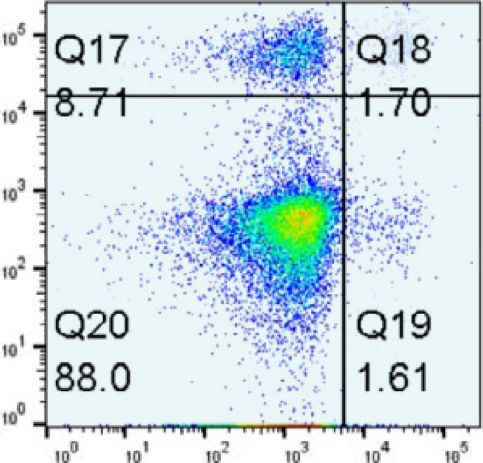
CELLECTIS - COMMITMENT TO A CURE

                                                                                                                                      *

INNOVATION                                                LEADERSHIP                                                      PIPELINE                    MANUFACTURING
Protein engineering for                                   First clinical proof-of-concept for                             Pioneering robust           Scalable, efficient
best-in-class gene editing                                allogeneic CAR-T therapies, first                               first-in-class allogeneic   process to generate
& CAR technologies, cell                                  pediatric ALL patient in 2015                                   CAR T-cell programs         consistent and highly
engineering and culture                                                                                                   for different               potent CAR-T therapies
                                                          Making cancer therapy
technologies                                                                                                              hematological
                                                          cost-effective and                                                                           Two facilities being built
                                                                                                                          malignancies, as well
Innovative and robust                                     available faster to                                                                         to ensure manufacturing
                                                                                                                          as solid tumors (pre-
gene-editing (TALEN®)                                     patients globally                                                                           autonomy
                                                                                                                          clinical)
platform

                                      Reinforced by industry leading partnerships and a strong cash position

          * UCART19 is exclusively licensed to Servier and under a joint clinical development program between Servier and Allogene.

                                                                                                                                                                                   P4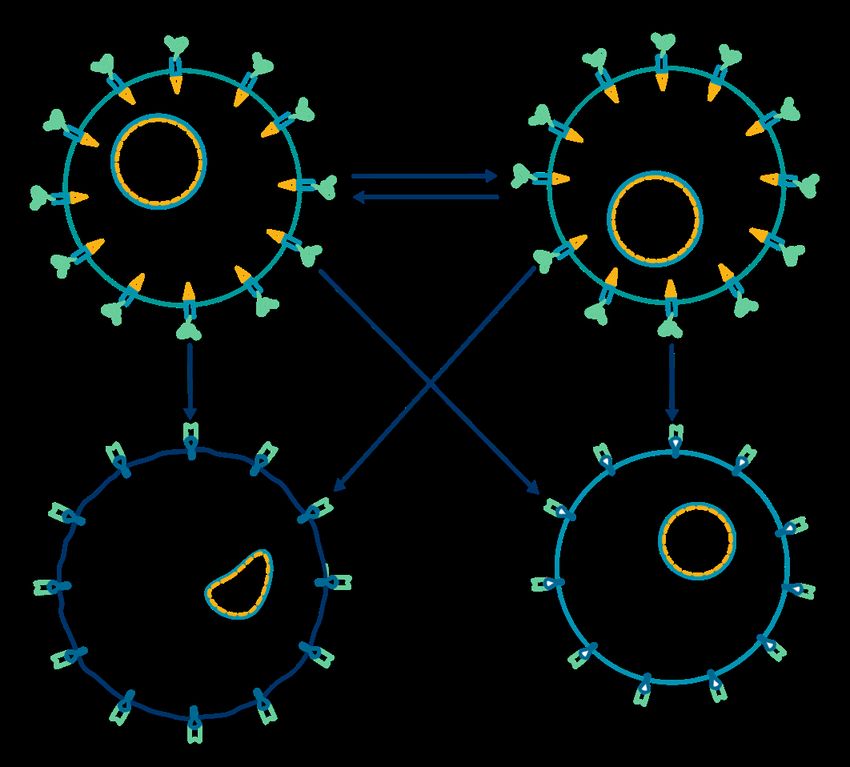
ADVANTAGES OF ALLOGENEIC VS. AUTOLOGOUS CAR-T

Allogeneic process:
                        consistent manufacturing + quality                                              immediate treatment
                                    assurance

          HEALTHY DONOR          SCALABLE                    MASS PRODUCED                 1. CANCER                   2. OFF-THE-SHELF
          APHERESIS              MANUFACTURING               OFF-THE-SHELF                 TREATMENT DECISION          CAR-T THERAPY
                                 OF 100+ DOSES/BATCH         CAR-T THERAPIES

Autologous process:
                                              inconsistent manufacturing + 4-6 weeks before treatment

           1. CANCER TREATMENT               2. CANCER                     3. MANUFACTURING OF A                     4. INDIVIDUAL
           DECISION                          PATIENT APHERESIS             SINGLE PATIENT PRODUCT                    CAR-T THERAPY

                                                                                                                                          P5
TALEN®: BEST-IN-CLASS GENE EDITING

PRECISION                         SPECIFICITY                 EFFICIENCY
targeting within 6 base pairs     recognition site is         TCR-α can be knocked-out with
of any target in the genome       32 base pairs long          over 95% efficacy for engineered
(effective changes)               (avoids errors)             CAR T-cells (ensures yield)

Editing genes allows disabling a functional gene, correcting a gene, or replacing or inserting a DNA
sequence at a chosen location in a genome.

TALEN® has been successfully used in the clinic to solve key challenges with allogeneic CAR-T including
protection from GvHD, mitigation of rejection, chimerism and enhanced safety via a suicide switch.

                                                                                                          P6
UCARTs – ALLOGENEIC CAR T-CELLS THROUGH PRECISION GENE EDITING

                RATIONAL                       EFFECTIVE
               Engineering                     Persistence
        via accurate insertion                 via knock-out of CD52 or
                 of best CAR                   b2-microglobulin

                                     UCART
                          Universal Chimeric
                     Antigen Receptor T-cell

                                               TUMOR CELL

                     SAFE
                                               SMART
            Administration                     Action
    Avoid GvHD via knock-out                   CAR linked to suicide switch and
      of T-Cell Receptor (TCR)                 other cell engineering features (e.g.
                                               PD-1 KO)

                                                                                       P7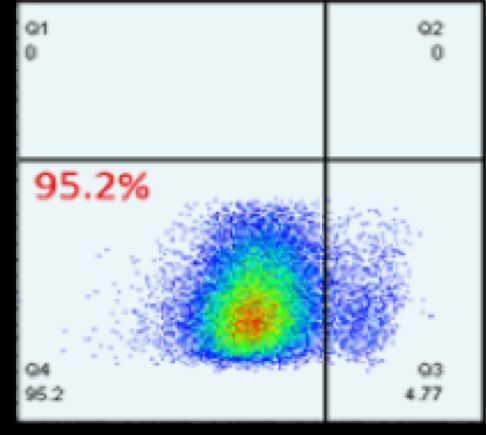
PARTNERSHIPS WITH INDUSTRY LEADERS

       Development & commercialization partners                                 Equity investor

UCART19 (with Allogene)            15 LICENSED TARGETS                    6.57% of outstanding
+ other targets                                                           shares

Up to $1.1B in development         Up to $2.8B in development
milestones                         & sales milestones
                                                                          As of April 30, 2019
Royalties on sales                 Royalties on sales

                       Up to $3.9B in potential milestone payments plus royalties

                                                                                                  P8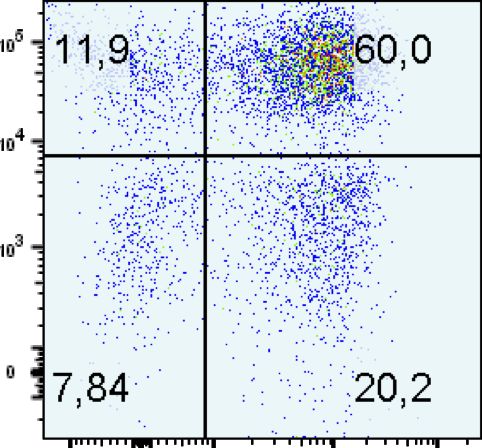
PIPELINE: INNOVATIVE CANCER THERAPIES FOR UNMET NEEDS

  Program               Indication            Target       Pre-clinical                                                     Phase 1       Phase 2 / 3           2019 Anticipated
                                                                                                                                                                Milestones

UCART19*                    ALL               CD19          Mar. 2016        CTA MHRA          Mar. 2017

UCART123                    AML             CD123           Feb. 2017

UCART22                     ALL               CD22          Jun. 2018                                                                                           First dosing expected

ALLO-501*                   NHL               CD19          Jan. 2019

UCARTCS1                    MM                   CS1        Jan. 2019                                                                                           First dosing expected

ALLO-715**                  MM              BCMA            Jun. 2019                                                                                           Trial initiation expected

UCART22                     NHL               CD22

UCART123                     HL             CD123

UCARTCLL1                   AML                CLL1

ALLO-819**                  AML                FLT3

                                                                                                                                                Proprietary development program
* UCART19 and ALLO-501 are exclusively licensed to Servier and under a joint clinical development program between Servier and Allogene.
** Product candidates exclusively licensed to Allogene                                                                                          Licensed development program

                                                                                                                                                                                            P9
PIPELINE TARGETS MULTIPLE UNMET NEEDS IN CANCER

                ALL                                   AML                                MM
                 UCART22                        UCART123         UCARTCLL1           UCARTCS1

                                             Incidence rates per year
                                                                                              48,297

                                                               30,000
                                                                                 30,770
                                                 19,520

      5,960             7,500

        U.S.             E.U.                      U.S.      E.U.                 U.S.          E.U.
                                                   Survival data
                     20%                                  27%                        50%
                     5 years OS* in adults                5 years OS in adults       5 years OS in adults
                     55 years old       OS for stages 2-3
                     in pediatric patients

* Overall Survival

                                                                                                            P10
UCART19*: DESIGN OF PHASE 1 STUDIES IN R/R** ALL***
CD19 is a validated target expressed in B-cell malignancies
Adult ALL (CALM study)
PRIMARY OBJECTIVE SECONDARY OBJECTIVES
Evaluate safety, tolerability, Objective remission rate at Day
maximum tolerated dose 28. Duration of response, time ONGOING
(MTD) and regimen to remission, progression-free DL1**** DL2 DL3
survival
Pediatric ALL (PALL study)
PRIMARY OBJECTIVE SECONDARY OBJECTIVES
Evaluate safety at a fixed Determine the ability to
dose in patients aged ONGOING
achieve molecular remission
between 6 months and 18 at Day 28
DL fixed
years old
* UCART19 is exclusively licensed to Servier and under a joint clinical development program between Servier and Allogene
** Relapsed/Refractory
*** Acute Lymphoblastic Leukemia
**** Dose Level P11UCART19*: PHASE 1 R/R ALL – DATA** PRESENTED AT ASH 2018
Safety: Efficacy:
N=21 82% CR/CRi rate in FCA***-treated patients
67% overall CR/CRi rate
CALM PALL
71% of these patients were MRD-
14% Grade 3-4 Cytokine Release Syndrome Redosing with UCART19 resulted in cell
expansion and MRD- status in 2/3 patients
0% Grade 3-4 neurotoxicity
Peak expansion observed mostly at Day 14
0% Grade ≥2 skin Graft vs Host Disease
* UCART19 is exclusively licensed to Servier and under a joint clinical development program between Servier and Allogene
** Pooled data
*** Lymphodepletion regimen consisting of fludarabine, cyclophosphamide and an anti-CD52 mAb
P12CD123 TARGET: RATIONALE FOR THERAPY
Incidence rates per year High expression on malignant Limited expression on healthy
cells cells
AML HL CD123
30,000
CD123 is expressed
19,520 over 90% on malignant
17,000 cells in AML, and also CD123
8,110 expressed on BPDCN
and Hodgkin’s
lymphoma
U.S. E.U. U.S. E.U. Myeloid progenitor cells, pDCs
P13UCART123 – PHASE 1 STUDY IN AML
Patient characteristics
Age and fitness: R/R in AML Mutation status: Progression: rapid
65 years and older, unfit patients genetically complex progression following relapse
Dose escalation (mTPI*) phase (R/R AML)
28 days between the first 2 patients for each dose**, then 14 days for subsequent patients
ONGOING at
R/R AML Weill Cornell
Up to 18 MD Anderson
patients Moffitt
Dana-Farber DL1 DL2 DL3
Expansion Phase
R/R AML FIRST LINE AML PATIENTS
TOTAL Expected ELN*** Adverse genetic group
PATIENTS
N=64-144 in 2020
N=18-37 N=46-107
* Modified Toxicity Probability Interval Design
** 42 days if aplasia
*** European Leukemia Net
P14UCART123 – PRECLINICAL RATIONALE IN AML
Development rationale:
High expression: blasts, Unmet need: high relapse rate Validated target: CD123 - clinically
independent of mutation status and poor survival in R/R patients validated in autologous CAR T-cell trials
Elimination of AML cells Dose-dependent enhanced survival
% leukemia cells (PB)
% survival
Ara-C PBS TCR αβ KO UCART123 2.5M UCART123 1M
P15CD22 TARGET: RATIONALE FOR THERAPY
Incidence rates per year Expression on malignant cells Potential in disease space
ALL NHL CD22 Relapses following a
115,118 CAR T-cell therapy, with
malignant cells
74,680 CD22 is expressed expressing CD22
on B-cell
malignancies B-ALL patients
7,500 expressing CD22
5,960
Potential combination
U.S. E.U. U.S. E.U. therapy approach
P16UCART22 – PHASE 1 TRIAL DESIGN IN ALL
Patient characteristics
Age and fitness: CD19- & CD19+ ALL Offers a therapeutic solution to patients who cannot receive, or
R/R B-ALL < 65 years high CD22 expressing B-malignant cells relapsed, after autologous CD19 CAR T-cell therapy
Dose escalation (mTPI) phase
28 days between the first 2 patients for each dose, then 14 days for subsequent patients
R/R B-ALL
Up to 18 Starting at
patients MD Anderson
DL1 DL2 DL3
Expansion Phase
TOTAL
Registration phase
N=12 - 30
P17UCART22 – PRECLINICAL RATIONALE FOR ALL
Development rationale:
CD22 expression: in CD19 Unmet need: high relapse rates (CD19-) after Validated target Expandable market: potential
CD19 negative blasts CAR-T treatment, poor survival in R/R patients in ALL and NHL expansion into first-line ALL
Control of tumor progression Enhanced survival
biolum signal (ph/s/sr)
% survival
Vehicle DKO/NT 10x106 cells UCART22 3x10⁶ UCART22 10x106
UCART22
• Is highly efficient at eradicating tumors in vivo
• Result in increased survival in mouse model
P18CS1-SLAMF7 TARGET: RATIONALE FOR THERAPY
High expression Limited expression Monoclonal
Incidence rates per year on malignant cells on healthy cells antibody validation
MM CS1 CS1
Elotuzumab is a monoclonal
antibody targeting CS1
48,297
CS1 expression Elotuzumab is safe and effective
(also known as in MM patients
30,770 SLAMF7) has been
observed to be Elotuzumab in combination with
higher and more lenalidomide and
uniform than BCMA dexamethasone in R/R MM
expression
patients shows:
T-cells, B-cells, macrophages 5.5% CR rate and 35% partial
U.S. E.U. and NK cells
remissions
P19UCARTCS1 – PHASE 1 TRIAL DESIGN IN MULTIPLE MYELOMA
Patient characteristics
Age and fitness:
R/R MM patients < 65 years
Dose escalation (mTPI*) phase
28 days between first 2 patients, then 14 days between each consecutive patient
R/R MM To start at
Up to 18 patients MD Anderson
DL1 DL2 DL3
Expansion Phase
TOTAL Registration phase
N=12-30
P20UCARTCS1 – PRECLINICAL RATIONALE IN MULTIPLE MYELOMA
Dose-dependent enhanced survival Knock-Out of CS1 on CAR T-cells to suppress cross T-cell
reaction between UCARTCS1
UCARTCS1 UCARTCS1
CAR CS1
% survival
CS1 Antigen
Tumor cell T-Cell
time (days)
Day -10: tumor cells injection Day 0: treatment
Preclinical evidence:
Vehicle UCARTCS1 3x10 6
UCARTCS1 10x10 6
• Strong anti-tumor effect in mice
• Potential engraftment enhancement
P21BUILDING THE FUTURE OF ALLOGENEIC CAR T–CELL THERAPY
2019 objectives: 3 proprietary programs in the clinic; 3 partnered programs in the clinic
UCART123 UCART22 UCARTCS1 UCARTCLL1
Phase 1 dosing in R/R and Phase 1 dosing in R/R MM Preclinical for R/R AML
Phase 1 for R/R AML
naive ALL in 2019 Potential in 2019
use in NHL
2019
UCART19* ALLO-501* ALLO-715**
PROOF OF CONCEPT Phase 1 in R/R NHL ongoing
Phase 1 initiation in R/R
UCART
MM expected in 2019
Phase 1 in R/R ALL ongoing
* UCART19 and ALLO-501 are exclusively licensed to Servier and under a joint clinical development program between Servier and Allogene.
** Product candidates exclusively licensed to Allogene
P22TALEN® GENE EDITING – ADVANTAGES
TALEN®:
Driven by protein/DNA Releases DNA ends accessible to DNA repair mechanisms Over 25 years of building a strong
interactions to work on potential to perform gene insertions and corrections through patent portfolio with umbrella
off-site cleavage homologous recombination and gene inactivation through patents on gene editing
non homologous end joining
DNA
sequence
Our nucleases act like
16 RVDs
DNA scissors to edit genes
at precise target sites
Gene insertion or Knock-In (KI) Gene correction Gene inactivation or Knock-Out (KO)
Require homologous recombination
P23OPTIMIZING YIELD THROUGH HIGHEST GENE EDITING EFFICIENCY
High Knock-Out and Knock-In efficiency and specificity
TCRab
TCRab CAR
95.2% single targeted gene Knock-Out ~80% single gene integration
TRAC Knock-Out CAR Knock-In at TRAC Locus
High Specificity High specificity
Prevents GvHD Enables efficiency
Enables efficiency & protection from GvHD
P24POWER OF TALEN® GENE EDITING: MULTIPLEXING GENE REPLACEMENT
Multiple advantages from combined Knock-Out, Knock-In
B2M
TRAC CAR @ TRAC
88% double targeted gene Knock-Out 60% double targeted gene insertion
TCR and B2M CAR insertion at TCR
B2M Knock-Out exposes cells to potential killing NK inhibitor at B2M
by NK cells – which is prevented as shown
Provides protection from NK cell-mediated rejection
Provides protection from GvHD and avoids rejection
P25WITH TALEN® WE CONTROL OFF-TARGET CLEAVAGE
Discrimination between ON and OFF-site prevents OFF-site cleavage
Utilization of engineered RVDs to discriminate HBB* and HBD** loci
preventing unwanted OFF-site cleavage
ON-site Engineered RVD
HBB Natural RVD
Mutation frequency (%)
ON-site/OFF-site > 94% identity
HBD OFF-site
OFF-site
ON-site
* HBB - Hem oglobin subunit beta
** HBD - Hem oglobin subunit delta
P26UCART MANUFACTURING
1 2 3 4 5
1. Frozen 2. Thawed 3. Lentivector 4. TALEN®- 5. Cell 6. Purification 8. Frozen
leukopaks PBMCs transduction mediated gene amplification 7. Fill & Finish UCART
editing products
More than 5 years of experience in allogeneic CAR T manufacturing
Validated gene editing technology for cell manufacturing
5 UCART product candidates manufactured so far
Full QC system in place, 3 wholly-controlled product candidates cleared for 4 clinical trials
by the U.S. Food and Drug Administration
P27BUILDING 2 STATE-OF-THE-ART PLANTS TO SECURE AUTONOMY
SMART – Starting MAterial Realization for CAR-T products
• ~14,000 sqft in-house manufacturing in Paris, France
• Clinical Starting Materials
• Operational "go-live" targeted in 2020
IMPACT – Innovative Manufacturing Plant for Allogeneic Cellular
Therapies
• ~82,000 sqft facility located in Raleigh, NC
• Production of clinical and commercial UCART products
• Operational "go-live" targeted in 2021
P28ANTICIPATED 12-MONTH MILESTONES
12 months
Clinical programs: Manufacturing: Gene editing:
UCART19*: Phase 1 in R/R ALL ongoing in 2019 Focusing on refinements to improve agility Explore applications into new
and capacity to support future commercial areas: solid tumors and outside
UCART123: Phase 1 for R/R AML launch of UCART products oncology space
Expansion phase expected in 2020
Internalizing large parts of our proprietary
UCART22: Expect Phase 1 first patient dosing in manufacturing chain for clinical starting
R/R ALL in 2019
material:
UCARTCS1: Expect Phase 1 first patient dosing SMART plant in Paris, France
in R/R MM in 2019
Building a proprietary GMP, commercial scale
ALLO-501* : Phase 1 in R/R NHL initiated in 1H manufacturing facility in 2019:
2019 IMPACT plant in Raleigh, North Carolina
ALLO-715** : Phase 1 expected in R/R MM in
2H 2019
* UCART19 and ALLO-501 are exclusively licensed to Servier and under a joint clinical development program between Servier and Allogene.
** Product candidates exclusively licensed to Allogene
P29CELLECTIS HIGHLIGHTS
INDUSTRY LEADER IN GENE EDITING & ROBUST PROPRIETARY PIPELINE
ALLOGENEIC CAR T (UCART) TECHNOLOGY
UCART123 – Phase 1 AML ongoing; dose escalation in
First clinical proof-of-concept: UCART19 treated the AML in 2019; wholly- controlled asset
first pediatric ALL patient in June 2015
UCART22 – Phase 1 first dosing in ALL in 2019; wholly-controlled
Innovative gene editing (TALEN®) platform: to generate asset
best-in-class allogeneic CAR T-cells UCARTCS1 – Phase 1 first dosing MM in 2019; wholly-controlled
Bringing innovative off-the-shelf therapies to a broader
asset
market, without treatment delays UCARTCLL1 – Preclinical development for AML; wholly-
controlled asset
BEST-IN-CLASS MANUFACTURING
Scalable, efficient, greater consistency and potency FINANCIAL POSITION:
Two facilities being built to ensure manufacturing autonomy Cash through 2021
PARTNERSHIPS WITH LEADERS: UP TO $3.9B IN ~69.5% ownership of CLXT*
POTENTIAL MILESTONES PLUS ROYALTIES
UCART19 – Licensed to Servier (U.S. rights to Allogene) and
other undisclosed targets
15 licensed targets to Allogene
* As of March 31, 2019
P30THE CELLECTIS GROUP
~69.5%* ownership
NASDAQ: CLLS NASDAQ: CLXT
EURONEXT GROWTH: ALCLS $85.7M cash as of March 31, 2019
$425M** cash as of March 31, 2019 Based in Minnesota, USA
Expected to fund operations through 2021 Consumer focused
Based in Paris, France, New York & Raleigh, USA High value asset
Patient focused
Gene editing is the link
* As of March 31, 2019
** Including $85.7M of cash, cash equivalents and current financial assets from Calyxt for plant activities
P31THANK YOU Cellectis S.A. 8, rue de la Croix Jarry 75013 Paris – France Cellectis, Inc. 430 East 29th Street 10016 New York, NY – USA Cellectis Biologics, Inc. 2500 Sumner Boulevard 27616 Raleigh, NC – USA investor@cellectis.com
You can also read


