CAREERS GUIDE 2019 Prepared by the University of the Sunshine Coast Law Students' Association - USC Law Students' Association
←
→
Page content transcription
If your browser does not render page correctly, please read the page content below

2019

CAREERS
GUIDE
Prepared by the University of the Sunshine
Coast Law Students' Association

| CAREERS GUIDE                                       PAGE | 02

                     2019

                     CAREERS GUIDE

                     We would like to thank our sponsors for 2019 for
                     making the publication of the Careers Guide
                     possible. We are grateful for the strong
                     connections that we have in the local legal
                     profession and would like to thank the following
                     sponsors and organisations for their continued
                     support of the USC Law Students’ Association:

                                 The College of Law
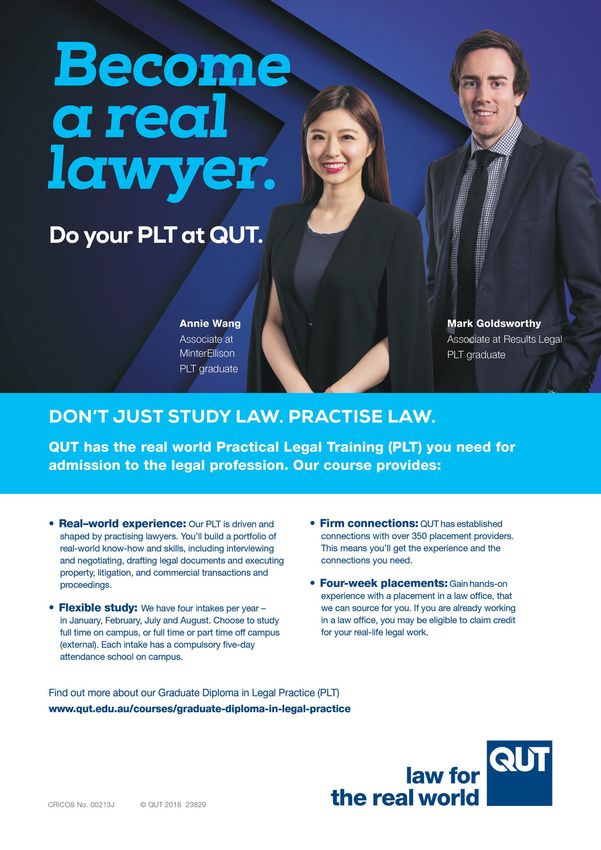
                        Queensland University of Technology PLT
                                    MinterEllison
                                McCullough Robertson
                                 Bond University PLT
                                  New Era Lawyers
                                 Maurice Blackburn
                           USC Career Development Team
                     We would also like to make special mention to the
                     USC Career Development Team for their guidance
                     and assistance in preparing this guide.
                     The USC Law Students’ Association published the
                     Careers Guide as a general resource for students
                     to utilise. The information that has been provided
                     in this document is to be used as a guide only;
                     students should undertake their own research for
                     specific information produced by firms. The
                     Association accepts no liability for any errors or
                     omissions in the information provided in the
                     publication.

THANK YOU            © Copyright of the University of the Sunshine
                     Coast Law Students’ Association
IN THIS ISSUE                              CAREERS GUIDE.

4    A MESSAGE FROM                 16   WRITING A RESUME
     THE PRESIDENT                       A guide to perfecting a resume
     A brief address

5    THE APPLICATION                20    EXAMPLE RESUME
     PROCESS                             A detailed walk through what
     A breakdown of the clerkship        is required in a resume and
     process                             why?

9    WRITING A COVER                23   CAREERS OUTSIDE
     LETTER                              PRIVATE PRACTICE
     A guide to the art of cover         A brief look at other careers
     letter writing                      outside of law

14   EXAMPLE COVER
                                    26    OVERSEAS PRACTICE
     LETTER                               Reykjavik is the capital and
                                          largest city of Iceland.
     An example of a cover letter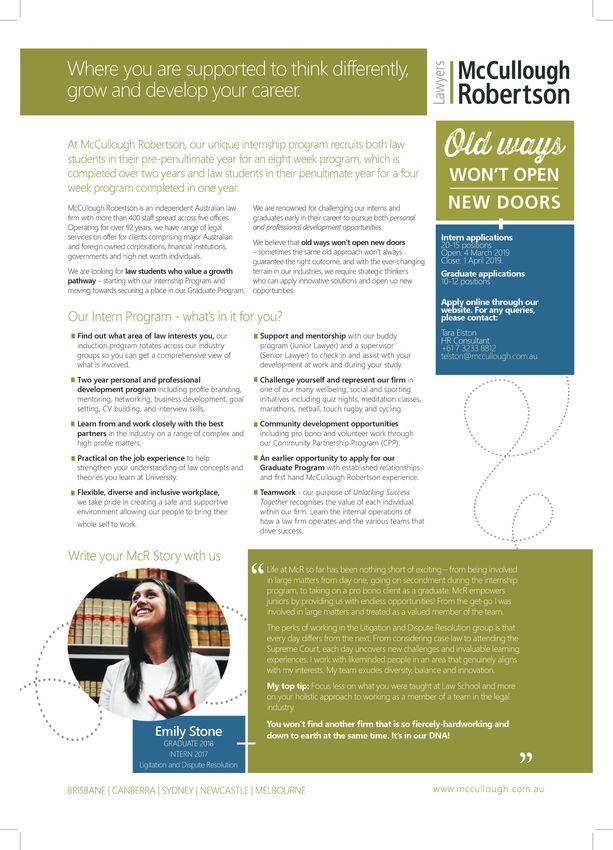
CAREERS GUIDE                                           PAGE | 04

A MESSAGE FROM THE
PRESIDENT

The USC Law Students’ Association is excited to
publish its very first Careers Guide for law
students. The Association is dedicated to
educating students about possible career
pathways through the publication of the Careers
Guide and the facilitation of our annual Careers
Event. This Guide is designed to provide you with
an overview of the clerkship process and practical
legal training, in particular, as well as general
information about applying for a job in the legal
profession. You will find tips on how you can
structure your cover letter and resume and how to
prepare for interviews and networking evenings.
We have included information from a number of
local law firms and practical legal training
institutions, which we encourage you to use to
your advantage. The Association has worked hard
to provide this publication for your benefit so it is
with great pleasure that I commend this
publication to you. I look forward to hearing your
feedback. Yours sincerely,

Tanisha Watts
President
CAREERS GUIDE                                                                             PAGE | 05

THE
APPLICATION
PROCESS

The application process for applying for a clerkship can be quite time consuming and
tedious so it is important that you allow yourself adequate time to prepare your application.
The Queensland Law Society Legal Graduate Employment and Vacation Clerkship Guidelines
is a resource that the QLS publish every year which sets out the key dates for clerkships and
graduate applications for participating firms. We recommend that you familiarise yourself
with this resource and also ensure that the firms that you are interested in applying for
adhere to the QLS Guidelines. To access the guidelines, go to
http://www.qls.com.au/For_the_profession/Your_legal_career/Legal_Graduate_Employment_a
nd_Vacation_Clerkship_Guidelines)

                                           Key Dates
Clerkships - January 2020
1. Wednesday, 12 June– Applications Open
2. Wednesday 12 July – Applications Close at 5:00pm
3. Monday 12 August - Interviews Commence
4. Friday 20 September – Offers made from participating firms
5. Saturday, 21 September– Offers must be accepted or declined by 5pm AEST
6. Monday, 20 January 2020 - First Day

                                                                  Practical Legal Training
Graduate Positions                                                           Start Dates
                                                                For College of Law,
1. Monday, 25 March – QLS Career Expo                           See - https://www.collaw.edu.au/learn-with-us/our-
2. Monday, 5 August – Applications Open                         programs/practical-legal-training-
3. Monday, 19 August – Applications Close at 9am AEST           programs/practical-legal-training-course-dates
4. Monday, 16 September– Offers made from participating firms   For QUTG DLP,
5. Tuesday, 17 September– Offers must be accepted or declined   See - https://www.qut.edu.au/courses/graduate-
by 5pm AEST                                                     diploma-in-legal-practice
                                                                For BOND
                                                                See -
                                                                https://bond.edu.au/program/graduate-
                                                                diploma-legal-practice-online
CAREERS GUIDE                                                                      PAGE | 02

A-Z APPLICATIONS
For vacation clerkships and graduate positions, the
process to applying is generally follows this
structure:

    1. Attend QLS Careers Expo, network with
    representatives from law firms;

    2. Submission of application online, which
    normally consists of a cover letter, resume,
    academic transcript and completion of
    online profile/questionnaire;

    3. Complete online personality, analytic,
    and psychometric testing;

    4. For some top and mid-tier firms, attend                   SUPPORT
    a cocktail evening; and

    5. Attend interview(s), which will include a      Most students will be completing their applications

    number of problem-solving, behavioural            whilst studying full time and this will require a high

    and knowledge-based questions.                    level of time management and extra preparation.
                                                      Please ensure that you are also looking after
                                                      yourself and if, at any time, you feel overwhelmed,
USC CAREERS                                           know that you can contact Student Wellbeing on
                                                      07 5430 1226 or email them at
DEVELOPMENT                                           studentwellbeing@usc.edu.au

Career Development is also available to provide
guidance and advice throughout the application
process for clerkship and graduate applications.
The Careers Advisors in this department are able
to provide feedback on your cover letter(s) and
resume and practice interview questions with you.
You can submit the documents to be checked
online or book in for an appointment
https://www.usc.edu.au/learn/studentsupport/care
ers-and-employment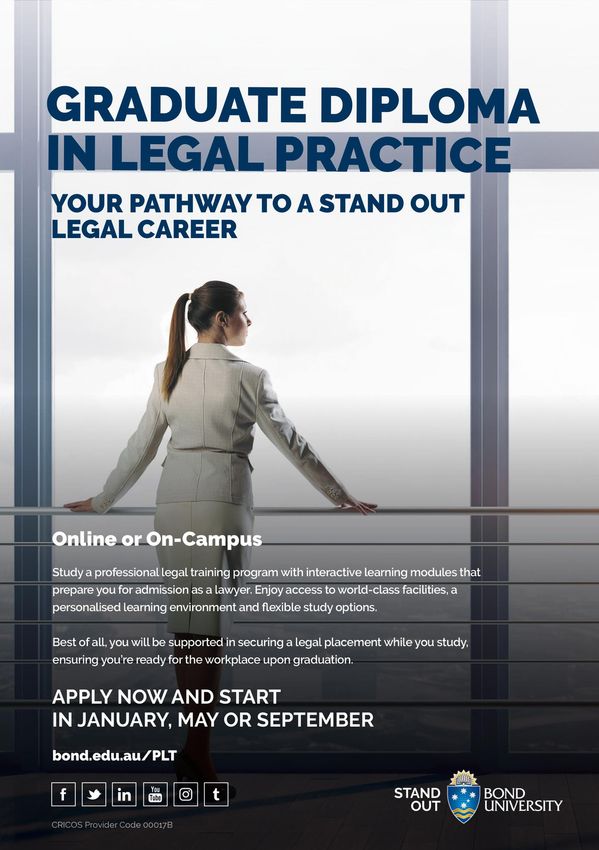
CAREERS GUIDE                                                                           PAGE | 07

A-Z APPLICATIONS
                                                       USC Career Development Services provide advice
                                                       and support for:
                                                       ·       Career decision-making and planning, in
                                                       partnership with experienced Advisers
For vacation clerkships and graduate positions, the    ·       Enhancing employ ability through a range of
process to applying is generally follows this          activities designed to make you an industry ready
structure:                                             professional
                                                       ·       Becoming industry ready with opportunities
     1. Attend QLS Careers Expo, network with
                                                       to network and learn from industry professionals
     representatives from law firms;
                                                       ·       Developing strong and effective job
                                                       applications
     2. Submission of application online, which
                                                       ·       Gaining professional experience through
     normally consists of a cover letter, resume,
                                                       work experience and volunteering
     academic transcript and completion of
                                                       ·       Mapping industry trends and opportunities
     online profile/questionnaire;
                                                       to provide accurate, relevant and timely
                                                       information to students
     3. Complete online personality, analytic,
     and psychometric testing;
                                                       Current students can access all services and
                                                       resources via Student Hub. USC Career
     4. For some top and mid-tier firms, attend
                                                       Development have worked with Grad Australia to
     a cocktail evening; and
                                                       produce a Law Careers Guide, which can be found
                                                       here: https://bit.ly/2N3SylL
     5. Attend interview(s), which will include a
     number of problem-solving, behavioural
     and knowledge-based questions.
                                                                      SUPPORT

USC CAREERS
                                                           Most students will be completing their applications
                                                           whilst studying full time and this will require a high

DEVELOPMENT
                                                           level of time management and extra preparation.
                                                           Please ensure that you are also looking after
                                                           yourself and if, at any time, you feel overwhelmed,
                                                           know that you can contact Student Wellbeing on
The Career Development Service at USC is
                                                           07 5430 1226 or email them at
available to assist you to develop your
                                                           studentwellbeing@usc.edu.au
understanding, skills, and confidence in career
planning to set yourself up for success in your
profession. They do this by supporting you
throughout your university journey to enhance
your employable skills, effectively articulate these
skills to employers, be successful in the workplace
and connect you with industry professionals for
networking and skill development opportunities.
Helping you transition from student to an
employable, industry-ready professional is their
key mission.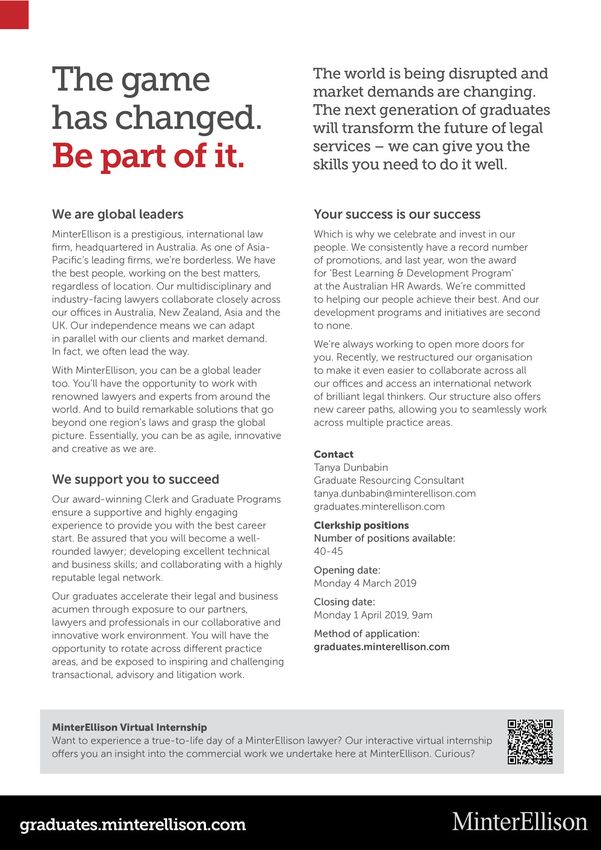
| CAREERS GUIDE                                                                     PAGE | 09

                  WRITING A
                  COVER LETTER

                  When you submit an application to an employer, you should always
                  include a cover letter. Most graduate positions will request a cover
                  letter as part of the application process, however, having a cover
                  letter prepared will enable you to easily tailor each application to
                  the specific employment opportunity and firm. Cover letters win
                  interviews, not jobs. Without including a tailored covering letter,
                  your application may go straight to the ‘no’ pile. In the competitive
                  world of graduate recruitment, recruiters often review hundreds of
                  applications, all applying for one role. A good cover letter can
                  create a point of difference for you. The key, as with your resumé,
                  is to make it easy for the recruiter to read.

                  A cover letter should:
                  1. Show the employer why you are applying for the position;
                  2. Capture the employer’s interest – make it easy for them to see
                  why your application is worth reading;
                  3. Detail your relevant experience(s) – aligned with what they are
                  seeking;
                  4. Convince the employer you are the right candidate for the job –
                  demonstrate you have the skills, personal attributes and
                  knowledge to do the job.

                                 We Would like to thank USC Career Development for preparing this information.
HOW TO WRITE A
                  COVER LETTER
                                     123 Anywhere St., Any City, State 1234 • 07 1234 5678

            Dear Sir/Madam,
            Employers will be looking for key points in your cover letter including:
            -      Are you positive, enthusiastic and motivated? This is crucial!
            -      Do you meet the key criteria listed on the ad?
            -      Will you fit in with the team/culture of the firm? What research have you completed into the firm and
            how familiar are you with the services they provide?
            -      Do you have the relevant experience or knowledge?
            -      Are you a good communicator?
            -      The way you write your application will tell an employer volume about your ability to communicate
            professionally.

            What Information should be included?
            - Your contact details.                                             Show the firm how these transferable skills are
            - Date of the application.                                          relevant to the role you are applying for and how you
            - The person to whom you are addressing the                         will add value to the firm.
            application to and their details: Title, Role and Firm.             - A paragraph about your relevant professional
            - A subject line (refer to the position title/job                   experience (employment overview).
            reference number for which you are applying).                             o Show the firm that you have done your
            - A persuasive introductory paragraph, including:                   research on them and ensure that you communicate
            Your current year of study, where you found the                     how your experience, skills and knowledge are related
            advertisement, other relevant qualifications or                     to the role which you are applying for. Highlight your
            experience highlighting your suitability for the role.              achievements and be specific about your involvement
            Show the firm why they should consider you for                      in projects.
            the role.                                                           - If you have included several attachments, a
            - A paragraph about your relevant technical                         statement outlining what you have included with the
            experience (education and training).                                cover letter (resumé, document addressing key criteria,
            - A paragraph about your relevant skills and                        academic transcript, etc).
            abilities (transferable and personal attributes)                    -     A strong, positive closing sentence.

We Would like to thank USC Career Development for preparing this information.
                                                                                                                                  PAGE | 10
STRUCTURE OF A
COVER LETTER
123 Anywhere St., Any City, State 1234 • 07 1234 5678
What Should a Cover Letter Look Like?
1. Try to fit the cover letter on one page.
2. Use an “easy to read” font like Calibri, Verdana, or Arial or in 11 or 12 point. Use the same font across your
entire application for a more professional impression.
3. If a hard copy is required, print the document for best quality. When applying for jobs online, submit a PDF
version of the document. This will ensure that variations in software will not impact the formatting of your
document.
4. Your cover letter should be different for each role you apply for. Tailor it to suit the position and Firm.
5. Proof read your cover letter; Spelling, typographical and grammatical errors are not acceptable.
6. Ensure your name, contact number and emial address are at the top of the letter.
Paragraph One
- The role you are applying for; how did you first hear of this firm, where was the job advertised or who
informed you of the opening? Show genuine enthusiasm and passion through your wording.
- Your current profession / industry in which you work and overview of relevant experience (if possible)
- Your current year of study, level of education/qualifications.
- Your motivation for applying to this role.
- Try to show the firm at least 2-3 positives that align directly with the firm, their culture, services and / or
vision.
We Would like to thank USC Career Development for preparing this information.
PAGE | 12STRUCTURE OF A
COVER LETTER
Paragraph Two
- List one or two of your best projects/accomplishments at work or university (make it relevant to the role).
- Provide detail to ensure the reader has a good grasp of the extent of your involvement in the project. Use
action verbs.
- Did you work autonomously or as part of a team.
- Did you meet your key performance indicators (KPIs).
- What was the reasoning behind this project? Why was it built/implemented? How did its completion
positively influence your stakeholders?
- Who managed the change? Was there a change management strategy?
- What was the result of your work?
- If you aren’t sure what technical skills you should be highlighting in this section, use the advertisement or
job description to assist you.
- Write in past tense for projects and accomplishments you have completed, keep to present tense for
activities and projects currently underway.
Paragraph Three
- Note your key skills and strengths relevant to the position, provide context detailing 'where' and 'how' you
used these.
- If there is a real gap in your skills or experience, highlight what you are doing to address this. You can
highlight areas for development and include; courses or personal development training, work experience,
voluntary work, reading materials, mentoring activities and industry networking. This suggests your
weaknesses are only short term challenges that can be overcome.
- Keep it relevant!
Paragraph Four
- Finish the cover letter with a concise sentence, reaffirming your enthusiasm for the role and express your
desire to expand on your skills and qualifications in an interview.
We Would like to thank USC Career Development for preparing this information.
PAGE | 13What Should a Cover Letter Look Like?
Your name (Jack Ryan)
Date (dd-mm-yyyy)
Phone number, Email
LinkedIn URL
Addressee’s Full Name (Ms Sally Ann)
Their Position Title (Human Resources Manager)
Firm Name (Smith & Wright)
Dear (Mr or Ms and use their first full name):
RE: Smith & Wright 2020 Graduate Program
I am writing in application for the Smith & Wright 2020 Graduate Program role advertised on
the Smith & Wright website on 12 March 2019. I am currently in my penultimate year of study
towards a Bachelor of Laws at University of the Sunshine Coast, with a cumulative GPA of 6.5.
Throughout my studies I have been involved in a number of extra curricular activities; including
the USC Law Students’ Society in the Office of Treasurer, an active Member of Amnesty
International on campus and as an Archives Officer with Legal Aid Queensland.
I am applying for the Smith & Wright Graduate role as I am focused on partnering with clients,
developed through extensive customer service employment during my studies. Smith &
Wright’s strategy to develop a holistic view of the client’s organisation and provide innovative
solutions is something which I am passionate about. During my office as Treasurer of the USC
Law Students’ Association (LSA), I developed and implemented a new method for securing and
tracking industry partnerships, utilising the Internetrix Platform. Implementation of the process
required me to train LSA Board Members in the use of the tracking software. This process
allowed the LSA to secure greater sponsorship for initiatives to assist USC students.
For the past two years I have been employed as an Archives Officer with Legal Aid Queensland.
This role has allowed me to gain experience in a legal setting, utilise document tracking systems
in accordance with legislative requirements. I utilised this opportunity to further develop my
practical legal skills by offering to assist with interviewing clients, preparing briefs for counsel
and drafting legal documents. During one initial client interview I conducted for a traffic offence
case, I established a number of facts about the environmental conditions in which the accident
occurred, which proved pivotal in closing the case. (These paragraphs are ideal for using the
STAR model to provide an example of utilising these skills to assist with a case successfully).
I have excellent written and oral communication skills with experience in communicating with a
diverse range of internal and external clients developed through my volunteering and
employment experience. My technical knowledge of the law and communication skills are
evidenced through my successful captaining of the USC Mooting Team, which won gold in the
2017 SEQLD Mooting Competition and my second place overall in the Uni Law Games in 2018.
I am committed to partnering with clients to deliver innovative solutions, as a critical thinking
and tenacious law graduate, I believe I can add value to any legal team. I look forward to
meeting you and providing further information in an interview.
Yours sincerely,
Jack Ryan
We Would like to thank USC Career Development for preparing this information.
PAGE | 14| CAREERS GUIDE PAGE | 16
WRITING A
RESUME
Where to Start?
Remember that resumes can be different for different people, you
do not need to have every section which you see in a template in
your personal resume. Ensure that you keep information in your
resume relevant to the firm, and the role which you are applying
for.
Once you have decided on a template and formatting, simply put
some information in each section even if it does not flow in any
logical order, you can work on this later. Having some information
in each section will help you to gain confidence with the document
and will assist you to remember more about your experience and
specific achievements. Use examples from different parts of your
life; university study, volunteer work (law firms like to see
community engagement), paid employment and sports. After you
have done your mind dump, it is time to review your content. This
part is key, because you want the information to be relevant to the
role you are applying for at the time, and you want your application
to stand out because of the quality of the experience you have
demonstrated in your application. Highlight those tasks and
achievements which demonstrate higher levels of skill,
responsibility, knowledge or value added to the business. With
bullet points listing your key tasks, ensure that they align with what
the employer states in the job advertisement that they require.
There is specific information below about what content you should
have in each section of your resume. But for now, remember that
your resume is a document to market you, it needs to be written in
a professional manner to help demonstrate your professionalism
and communication skills. Now review your ideas and turn them
into statements which ‘demonstrate’ your skills and knowledge
applicable to the job. You do this by showing the employer, not
telling. Provide an example for each skill listed to reinforce your
point. Real-life examples will give your statements increased
credibility.
We Would like to thank USC Career Development for preparing this information.| CAREERS GUIDE PAGE | 17
Advanced Resume Tips
Mirror the language used by the recruiting firm. Using the language
used by the organisation may assist with creating a link between
yourself and the organisation, the employees shortlisting will
recognise the language and be familiar with it. Should the recruiter
be utilising recruitment key word searching software, this technique
will make sure that your key terms are recognised by the system.
Re-frame your resume, recruiters typically spend less than 30
seconds on their first view of an application to shortlist. Ensure that
the language you use is concise and positive. Use professional
language. For example, in place of ‘job’ or ‘work’ use ‘employment’.
Consider using ‘fast paced environment’ in place of ‘high stress’ or
‘busy’ work environment. Turn a busy work environment into a
positive; ‘being employed in an environment where I was managing
multiple deadlines has assisted in the development of my time
management and organisational skills.’
Write a Professional Profile section, this section is the first
information on your resume under your name and contact details.
The purpose of a profile is to entice recruiters to continue to read
the rest of your resume. An effective Professional Profile section
will highlight key areas of study, experience and skills relevant to
the role. You may indicate an area of law you are particularly
interested in, ensuring it is relevant to the firm you are applying to.
Showing how you can add value to the organisation is vital in this
section, include results which you have achieved relevant to the
role you are applying for.
Show how your values are aligned with those of the organisation
you are applying to. This is particularly important where
organisations rely heavily on their value proposition to enhance
their employment or marketing brand. It can be the firm’s point of
difference, and it can be your applications point of difference. It is
important to demonstrate how your values are aligned to the
organisations, through examples, not simply stating that your
values are aligned with the firm’s.
We Would like to thank USC Career Development for preparing this information.| CAREERS GUIDE PAGE | 18
Little Things That Make a Big Difference
Consistency is Key
When you are reviewing your resume ensure that you have
consistent formatting throughout your document. Including font
size and style, spacing between sections and before and after
headings. Ensure all your headings are formatted the same way and
that they stand out to make it easy for recruiters to be able to jump
to the section in which they are interested.
Contact Details
Contact Details: Have your name and phone number listed on every
page of your resume (and cover letter/selection criteria) so that
recruiters always know whose resume they are looking at and how
to contact you.
Personal Details
Australian legislation prohibits employers asking for personal
information such as date of birth, marital status, health and
religion. Avoid providing this and other information which is not
relevant to your ability to perform the role, such as, your address
and photos. To avoid any bias this type of information should not
be listed on your resume.
Text Formatting
An easy trap to fall into is having large lists of bullet points
identifying your skills and experience. Avoid large lists of bullets 6 –
10 for each role or experience should be ample. Also avoid large
blocks of text, it is unlikely that recruiters will read long lists of
bullets or large blocks of text.
Page Breaks
Pay attention to where page breaks are in your document, avoid
page breaks in the middle of lists or paragraph text. Try and format
your document so that page breaks are between sections.
We Would like to thank USC Career Development for preparing this information.PAGE | 20 CAREERS GUIDE
Resume Breakdown
We Would like to thank USC Career Development for preparing this information.PAGE | 21 CAREERS GUIDE
Resume Breakdown
We Would like to thank USC Career Development for preparing this information.CAREERS GUIDE PAGE | 23
CAREERS OUTSIDE OF PRIVATE PRACTICE
Becoming a legal practitioner is only one way to apply the legal skills gained by studying a law degree. A
law degree develops a students ability to think critically, undertake legal research and build a general
knowledge of how Australian law is applied in practice. The skills and knowledge learned can be
transferred into a variety of alternate career pathways outside of private practice.
*Please note that all pay scales are only an indicative value provided from www.payscale.com/AU and should not be relied upon as definite values.
Accounting Academic
Students studying law at the University of the If you have a passion for research and enjoy
Sunshine Coast are able to complete double the process of writing, academia may be the
degrees in many fields, one of them being a career path suitable for you. Lecturing and
Bachelor of Laws and a Bachelor of Commerce tutoring is only one facet of this field, with a
(Accounting). This provides students the possibility large focus on research, writing papers for
to pursue a career path in the legal industry or in reputable journals and presenting your work
the commerce industry, however the skills do nationally and internationally.
intersect in a variety of different roles. An The process generally requires that students
accountant assists their clients with the have achieved a high level of academic
preparation of financial records. This includes excellence and continued further study (i.e
assisting with tax declarations, auditing, financial honours, masters, doctorate) and have
investigation, investment adviser, financial founded strong relationships within their
management and providing expert reports for use University community. As an aspiring academic
in litigation. you will be required to build your personal
Accountants have a broad opportunity to gain portfolio, publish articles and have skills as an
employment and have the ability to work with educator. A large majority of academic jobs
reputable market leaders. The big four EY, KPMG, will require applicants to hold at least a
Deloitte and PwC all recruit law graduates to their masters or PhD.
team. PwC in particular has declared that they
intend to be one of the world’s top 20 legal
providers by 2020. If you would like to put your
legal skills to use in the financial industry, this may
be an alternate pathway for you.
Holding a law degree is not a sufficient
qualification to practice as an accountant. You will Government Sector
need to study a Bachelor of Accounting or an A lawyer employed by the government will
equivalent. In addition to completing a degree, you provide advice and act on behalf of
are required to hold an active membership with government ministers and agencies. This
the Institute of Public Accountants (IPA), Certified sector includes all public service roles in
Practising Accountants Australia (CPA), or government agencies and public bodies of
Chartered Accountants Australia and New Australia. Some of the departments and
Zealand. agencies are:
- Crown Solicitors Office
The average chartered accountant salary is
- Commonwealth and State Director of
$71,000.
Public Prosecutions
- Department of Foreign Affairs and TradeCAREERS GUIDE PAGE | 24
CAREERS OUTSIDE OF PRIVATE PRACTICE
- Department of Prime Minister and Cabinet. - Manage an office in your home
Graduate or intern positions are offered by most electorate and in the house of parliament.
departments and can be a gateway into To be elected to parliament, you must first be
developing your legal skills further, away from associated with an electorate that you wish to
private practice. represent, as a political party member or as an
independent member.
Politics
Whilst to be a parliamentarian, you are not
required to hold any qualifications, a broad
education and skillset will assist in this career
pathway. Former Prime Minister, Malcom Turnbull,
Opposition leader, Bill Shorten, Julie Bishop and
Nick Xenophon, are accomplished Australian Community Sector
politicians and hold a Bachelor of Laws. The skills
The community sector encompasses a variety of
that you develop in your law degree are
organisations across all different sectors. These
transferrable to politics.
organisations pursue a range of charitable
Most politicians generally have established
pursuits through service delivery, grant making
successful careers in other fields including law,
and other endeavours such as advancing health,
business, agriculture, economics, industrial
justice, education, social welfare and religion.
relations or community services. They may also
Working for a charity provides you with the
have had previous experience in council or on
opportunity to bring together your passion, legal
community committees and boards.
mind, education and the opportunity to make a
If you are intending to be a Parliamentarian, the
difference.
role requires you to:
The type of organisation you work for will dictate
- Present issues for debate and discussion in
your role.
Parliament
Employment examples:
- Propose and debate new legislation and
· Community Legal Centers
changes to existing legislation
· Non-governmental organisations
- Investigate matters of concern to the public
· Public Interest Advocacy Centre Service
or particular interest groups
· Aboriginal legal services
- Present petitions on behalf of concerned
· Human rights law centres
interest groups
· National Pro Bono Resource Centre
- Serve on parliamentary committees or
· Voiceless
inquiries
Salary can range between $40,000 - $60,000.CAREERS GUIDE PAGE | 26
New Zealand England and Canada
If you are a registered to To practice in Canada, your
practice in Australia, you can Wales qualifications are required to
also practice in New Zealand in If you are intending to head to be evaluated by the National
accordance to the Trans- the United Kingdom, you will Committee on Accreditation
Tasman Mutual Recognition Act have to complete the in order to get a Certificate of
1997. You will need to be Qualified Solicitors Training Qualification. The Committee
registered by the relevant court Scheme. This involves a determine an applicant's
in New Zealand. multiple-choice test and a capacity to practice in
practical exam to assess your Canadian Law.
legal skills. You must first be
admitted in Australia.
Singapore
In order to practice in
Singapore, you are required
to be:
1. A qualified person; and
2. A permanent resident. Hong Kong
A qualified person must be in
the top 70% of their class
from one of the following
Overseas Any admitted lawyer from
across the globe that wishes
to seek practice in Hong Kong,
Practice
universities: only requires to sit the
1. Australian National Overseas Qualified Lawyers
University Examination. After passing the
2. Flinders University exam, a 3-month residency
3. Monash University agreement needs to be
4. Murdoch University entered into.
5. University of Melbourne
6. University of New South
Wales
7. University of Queensland
8. University of Sydney Singapore (2) USA
9. University of Tasmania You may practice in Singapore To practice in the United
10. University of Western by passing the Singapore bar States of America, you will be
Australia exam, undertaking 5 months required to pass a bar exam.
If you obtain your degree of training in Singaporean Each state has a different
from a university not on the Law and then a 6 month exam similar to Australia’s
above list, you can apply for training contract with a law state practicing legislation. To
an exemption to this rule and firm. sit the exam, you must show
must take on an additional 6 The alternative path is if you that your degree is of the
months legal experience. have 3 years practicing same capacity as an American
experience you are only law degree and do one year of
required to sit the Foreign study at an eligible law school.
Practitioner Exam.You can also read


