Cataract Surgery Understanding Your Options - Northwest Eye Surgeons
←
→
Page content transcription
If your browser does not render page correctly, please read the page content below

Cataract Surgery Understanding Your Options

Our Practice | Our Vision:
Improving the quality of people’s lives

        Thank you for trusting your eye care to
      Northwest Eye Surgeons. We want to help
      you achieve your best vision because the
      quality of your vision affects the quality of
       your life. Since 1986, we’ve personalized
          patient care with valued physician
      partnerships in a warm patient-centered
         environment. We ensure the highest
        quality care through effective patient
            communication, collaborative
            co-management, experienced
        physicians and advanced technology.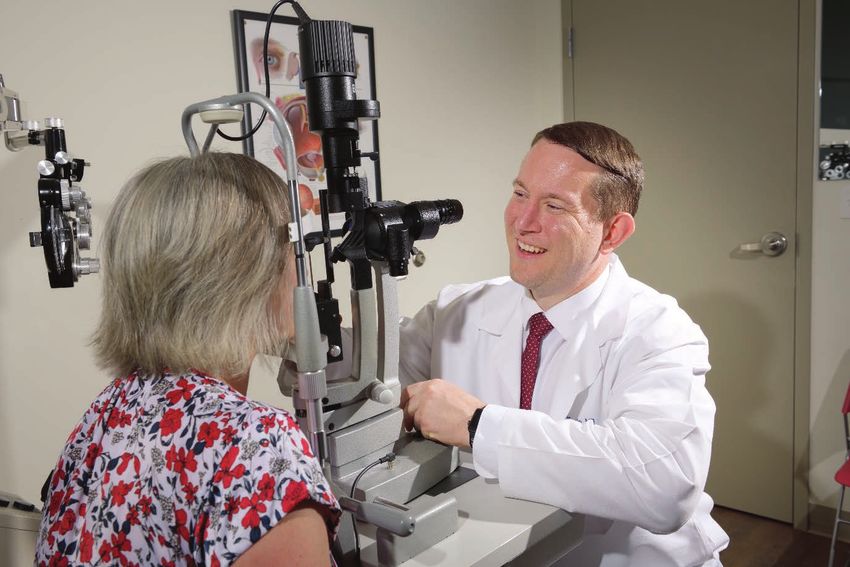

Aaron Kuzin, MD

Partnering for Your Care
We believe that when you are stable following your surgery, your care can be co-managed by your
family eye doctor, if you choose to do so, in partnership with our team of experts. This practice is called
co-management and is widely used in other medical and surgical specialties.

Co-management is recognized by the American Academy of Ophthalmology, American Society
of Cataract and Refractive Surgery, American Academy of Optometry and American Optometric
Association, as acceptable care in specific circumstances. All agree that co-management, in an
atmosphere of mutual trust, shared learning and constant communication, can be the most successful
way to optimize patient care.

Trusted Expertise
Our staff includes specialized ophthalmic surgeons and optometric physicians who are board-certified
and fellowship-trained. Our physicians are skilled in the most current techniques and have clinical and
surgical experience in a wide range of ophthalmic surgical services.

Advanced Technology
We offer the most advanced technology available including femtosecond laser-assisted cataract
surgery (FLACS) and lens implants for vision correction used for refractive cataract surgery. In addition,
we also offer SMILE advanced laser vision correction and LASIK refractive procedures.

Convenient Access
Northwest Eye Surgeons provides full-spectrum medical surgical eye care for infants to adults and
specializes in cataract, cornea, glaucoma, pediatric, refractive, strabismus, eyelid surgery, oculofacial
plastics, and retina services. We have 6 clinics and 4 outpatient surgery centers conveniently located
throughout the greater Puget Sound area.

                                        Excellence
                                        Every Time
                                         You deserve an excellent
                                    experience, every time. Whether
                                     it’s improving steps to monitor
                                         results or answering your
                                    questions after a procedure, your
                                     physician team is committed to
                                        responding to your needs.

                                                                                                              5
Our Mission:
    Northwest Eye Surgeons is the premier ophthalmic referral practice in
    the Northwest, providing the most technologically advanced medical
    and surgical care in a warm, patient-centered environment.

    Your Physician Team Experience
    Dedicated to Providing the Best Care

    Physician Teams
    We take a team approach to care. This approach to your care maximizes your team’s experience,
    strengths and skills to provide you with expert treatment. Our surgical teams consist of nationally
    recognized ophthalmic surgeons (MD), optometric physicians (OD), nurses, technicians and support
    staff that collaborate with you and your family eye doctor to correct your vision.

    What to Expect at Your Consultation
    At your consultation, you will meet your physician team and depending on the type of condition or
    procedure, your visit may include meeting directly with the eye surgeon or members of the optometric
    team for evaluation, testing, or measurements. Our physician teams will be able to answer your
    questions to ensure you are comfortable with your vision correction plan.

    What to Expect on Surgery Day
    Surgical procedures are scheduled on a separate day following a consultation with your surgeon. When
    you arrive, please check in at the surgery front desk. A surgery coordinator will greet you and review
    patient consent forms required for surgery. Please leave valuables at home. Wear loose, comfortable
    clothing. Bring all your eye drops with you on the day of surgery for review.

    After you check in, your team will review your health history, make any other assessments needed, and
    start an IV. Your eye will be numbed and you may be given a sedative to help you relax, and then we’ll
    move you to the operating room. The cataract surgery procedure usually lasts 15 minutes but may take
    longer depending on your specific procedures.

    After surgery, you will wait in the recovery area until you are stable. You must pre-arrange for someone
    to take you home after surgery—you may not drive yourself home. To obtain the best outcomes, follow
    your postoperative instructions and return for your scheduled postoperative appointments.

6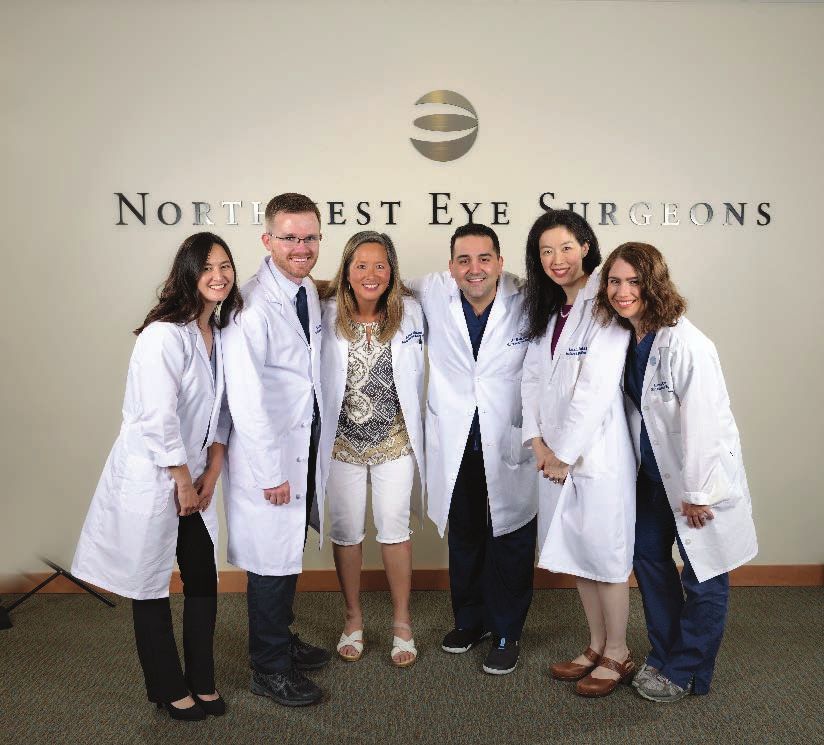
Renton Physician Teams: From left, Sarah E. Sandhaus, OD, FAAO, Paul E. Israelsen, MD,
                             Agnes S. Huang, MD, MSEE, Ali S. Mainayar, OD, Susan Liu Hoki, MD, Alana N. Curatola, OD

    Optometrist
  A Doctor of Optometry       What to Expect From Your Team:
(OD) who provides primary     Pre- and Post-Op Care
  or medical eyecare and      Together, your Northwest Eye Surgeons physician team
 vision care, performs eye    and your family eye doctor will consult on the best
  exams to detect vision      options for your care, before and after your surgery. We
 problems, and prescribes     recommend you talk with your eye doctor as you consider
     corrective lenses.       options to correct your vision. Upon request, your family
                              eye doctor will co-manage your care after surgery,
                              including prescribing glasses if you need them. Northwest
                              Eye Surgeons does not prescribe glasses. We can also
                              manage your postoperative care as needed.

                              After your surgery, we send a summary report to your
                              family eye doctor. After subsequent visits with your family
                              eye doctor, he/she will also submit a detailed report to
 Ophthalmologist              Northwest Eye Surgeons, so we can carefully follow your
A specialist surgeon and      progress.
 Medical Doctor (MD) in
 the branch of medicine       We’re available for consultation at any time following your
concerned with the study      surgery. You can learn more about our physician teams of
 of, and the medical and      surgeons and optometrists at nweyes.com.
  surgical treatment of
 disorders and diseases
        of the eye.

                                                                                                                7
Our Cataract Services
A cataract is a cloudiness that develops in the lens of your eye over time.
Similar to how fog or dirt can accumulate on a window and limit the view
through the glass, blurred vision from a cataract causes difficulty with
reading small print, depth and color perception, and may cause glare or
poor night vision. Cataracts are commonly age-related, however trauma,
UV exposure, medications and medical conditions can all be leading
factors which may cause cataracts.
Symptoms of cataract may include:
• Blurred or cloudy vision
• Faded colors
• Headlights, lamps, or sunlight may cause glare or appear too bright
• Poor night vision
• Double vision or multiple images in one eye (this symptom may clear as the
cataract gets larger)
• Blurry vision despite new eyeglasses or contact lenses
When a new eyeglass prescription does not provide sufficient clarity of vision, cataract
surgery may be the effective solution. Your family eye doctor can help you make
the right decision. If you choose cataract surgery, your physician team will carefully
consider your current eyeglasses prescription and your lifestyle, to help give you the
optimal visual outcome.
Laser Cataract Surgery
1 2 3
Step 1: Incision Step 2: Lens Removal Step 3: Implantation
To remove your cataract, your Using a laser, your surgeon An artificial lens called an IOL,
surgeon will make an incision in will break up the clouded lens or intraocular lens, will then be
your cornea and lens capsule. and remove it with ultrasound implanted to correct your vision.
technology.
8Benefits of Cataract Surgery
Cataract surgery replaces the cloudy
lens and gives you the clear vision for:
• More independence
• Confidence in everyday activities
• Safety
• Reduced falls
• Greater enjoyment of social
activities, passions and hobbiesAfter my surgery, what looked like looking through a dirty or
smoke-colored glass, became crystal clear. It’s given me the
best of both worlds—both the professional and the quality of life
outside of work. I see clearly. I see 20/20. It’s amazing and you
can’t put a price tag on that.
-Rosemarie, Vision Correction patient
Vivid colors are the most amazing to me. My husband and I travel a
great deal, going to see interesting places and beautiful art. Now, I
really see the world in all its brilliance! I also notice a big difference
when driving or riding in a car. After surgery, I was more relaxed
because I could actually see the road better.
-Diane, Vision Correction patient
I like to live on the edge, and a lot of things we like to do together
demand good eyesight. I noticed a deterioration in my eyesight until
finally, I couldn’t recognize the face of my own wife. I had cataract
surgery with Vision Correction in both eyes and now I can see as
well as I used to. I feel young. My eyes are perfect now.
-Steven, Vision Correction patient
active rock climber, juggler and mountain biker
10Cataract Surgery with Vision Correction: A Customized Solution to Fit Your Lifestyle Using advanced technologies and all laser surgery, we offer Cataract Surgery with Vision Correction to complement your visual needs, accommodate your lifestyle, and reduce your need for glasses. Cataract Surgery with Vision Correction is a customized solution for you. No more “one-size-fits-all” cataract surgery. Not all patients are candidates for Cataract Surgery with Vision Correction and only your surgeon can determine if Vision Correction is an appropriate solution for you. Cataract Surgery with Vision Correction includes additional surgical correction of vision to reduce dependence on glasses and is not covered by most insurance companies because it is not considered “medically necessary.” Insurance does cover a portion of standard cataract surgery to correct your vision enough to use glasses. Patients who choose Cataract Surgery with Vision Correction will need to pay an extra out-of-pocket cost, in addition to deductibles, copays or co-insurance costs.
Cataract Surgery with Vision Correction Comparison
                      Cataract Surgery with           Cataract Surgery with             Cataract Surgery without
                      Vision Correction 2             Vision Correction 1               Vision Correction

     How will my      Corrects vision at multiple     Corrects vision at one            Corrects vision with glasses.
     vision be        distances—far (driving,         type of distance. Most            Glasses will be needed to
     impacted?        etc.) and close vision both     people choose far vision          see at all distances—far
                      intermediate (dashboard,        (driving, etc.) and use           (driving, etc.), intermediate
                      computer, tablet) and near      glasses for close vision both     (dashboard, computer,
                      (reading, phone). Corrects      intermediate (dashboard,          tablet) and near (reading,
                      astigmatism (sharpens           computer, tablet) and near        phone).
                      vision)                         (reading, phone).

                      You’ll see at multiple          Corrects astigmatism
                      distances—far (distance,        (sharpens vision)
                      driving, etc.) and close
                      (computer, dashboard,           You’ll see either far
                      reading). Some patients         (distance, driving, etc.) or
                      cannot be corrected for         close (computer, dashboard,
                      reading and near detail.        reading), but not both.

     Will I still     Occasionally. Glasses may       Yes. You’ll see at the distance   Yes, glasses will be needed
     need to wear     be needed for prolonged         you choose to correct, either     for best vision at all
     eyeglasses?      reading, small print, or fine   far (driving) or near (reading,   distances.
                      detail. May also be needed      etc.), but not both.
                      for some other tasks when
                      you need perfect vision.        Glasses will be needed for
                                                      the vision you don’t choose
                                                      to correct, and possibly
                                                      when you need perfect
                                                      vision at the corrected
                                                      distance.

     What advanced    Advanced multi-focal lenses     Advanced mono-focal single        Basic Lens implant
     technologies     and depth of focus lenses,      vision lenses, precision
     are used?        precision measurements,         measurements, astigmatism         Laser cataract surgery
                      astigmatism correction with     correction with laser or lens     used in some cases when
                      laser or lens implants, and     implants, and laser cataract      medically indicated. Laser
                      laser cataract technology.      technology.                       will not correct vision in
                                                                                        these cases.

     What are the     Advanced lenses and             Advanced lenses and               Basic lens implants help
     benefits?        technology to customize         technology to customize           vision to be restored with
                      vision at multiple distances    vision at one distance            glasses at all distances

                      Reduced dependence on           Reduced dependence on
                      glasses                         glasses

                      1 year satisfaction promise     1 year satisfaction promise

     Does insurance   Additional Vision Correction    Additional Vision Correction      Covered by Insurance
     cover?           not covered by insurance        not covered by insurance
                                                                                        HSA or FSA accepted
                      HSA or FSA accepted             HSA or FSA accepted
                                                                                        Care Credit eligible
                      Care Credit eligible            Care Credit eligible

12
The surgery was wonderful—it’s nothing to be afraid of. It doesn’t
take much time. I have this new vision in my eyes and it’s like an
awakening. I could see again like when I was a kid. I say that I was
blind, and now I can see again, and that’s the truth. It’s the most
wonderful thing that ever happened. It just opens a new world
for you.
-Terry, Vision Correction patientOur Specialty Eye Services
In addition to cataract surgery, we offer full spectrum care, treatment and
surgery in the following areas.
Refractive Surgery
We provide the most advanced laser vision correction and refractive lens-based procedures to precisely
correct and optimize your vision. Our laser vision correction offerings include SMILE (SMall Incision
Lenticule Extraction), LASIK (Laser In Situ Keratomileusis), and PRK (Photorefractive Keratectomy).
In addition, we offer lens-based refractive surgery with RLE (Refractive Lens Exchange) and ICL
(Implantable Collamer Lens). RLE is a viable option to reduce dependence on glasses or contact lenses
for patients who do not qualify for other forms of refractive surgery. This replaces the natural lens of the
eye when cataracts are not present. Patients will need to pay additional out-of-pocket costs as these
surgeries and advanced technology tools are considered elective.
Glaucoma
Glaucoma is a condition that causes progressive damage to the optic nerve
and can result in vision loss or blindness. Most commonly, pressure builds up
in the eye and damages the optic nerve. Regular periodic examinations and
specialized testing can detect glaucoma early, and is the only way to prevent
Normal Eye Glaucoma irreversible loss of vision.
When glaucoma is diagnosed, our doctors analyze this information and work
with you and your family eye doctor to determine the best course of treatment.
Glaucoma may be controlled with eye drop medications to lower eye pressure,
or with laser or surgical procedures. Our fellowship-trained glaucoma
specialists perform the latest in MIGS (Minimally Invasive Glaucoma Surgery)
and can customize treatment depending on the type and severity of glaucoma.
Cornea
Damage to the cornea, the front surface of the eye, can occur at any age
from injury, infection, aging or other health-related problems. This may cause
pain, decrease vision or blindness. Our cornea fellowship-trained specialists
are experts in medical and surgical treatment of corneal diseases such as
keratoconus, Fuchs endothelial dystrophy, infections and traumatic injuries. We
are the first in the Pacific Northwest to offer cornea collagen cross-linking and
Normal Cornea Keratoconus have performed more than 1,000 cross-linking procedures (KXL). As specialists
in keratoconus treatment, we also offer intrastromal corneal ring implants
(INTACS) as well as new laser topography-guided PRK that can decrease astigmatism and improve vision
following cross-linking. In addition, we perform the latest techniques in corneal transplantation, partial
cornea replacement with DMEK, DSEK, DALK and full thickness standard and laser corneal transplants.
Pediatrics and Strabismus
Our pediatric specialists work with children and their families on developmental eye problems,
congenital cataracts, inherited diseases and infectious eye diseases. We take great care to involve the
child’s family in the assessment and treatment of the child’s eye problem, and team with the child’s
physician and family eye doctor to ensure a positive outcome.
Strabismus is the misalignment of the eyes, with one eye focusing straight ahead and the other turning
in, out, up or down, which can cause blurred or double vision. It is most common in children, but also
occurs in adults. Your child’s vision may improve with early diagnosis and proper treatment including
exercise, eye drops, patching and glasses. If surgery is needed, our surgeon will work with you, your
family eye doctor or family physician to maximize your child’s safety and the procedure’s effectiveness.
14Retina, Vitreous and Uveitis
Damage to the retina at the back of the eye is caused by disease, such as diabetes, illness, infection,
injury or aging. Many blood vessels nourish the retina. When retinal vessels leak or become obstructed,
vision can become blurry or lost completely. The vitreous is the gel-like fluid in the eye, which can also
affect the retina as you age. Uveitis is the term for inflammation in the eye, and can pose a serious
threat to vision, as well as cause painful, recurrent symptoms.
Our doctors will work with your eye care doctor and, using state-of-the-art diagnostics, determine the
best course of treatment for your specific problem. Our skilled surgeons and staff are experienced in
treating and managing all types of vitreo-retinal problems using medications, and laser and surgical
methods.
Eyelid Surgery and Facial Rejuvenation
In some cases, the structures of your eyelids can inhibit your vision. Performed on an outpatient basis,
eyelid surgery can reduce excess skin and fat in the upper or lower eyelid, remove eyelid tumors, correct
poor eyelid position or droop, or treat infections or injuries to the eyelid. We also offer other cosmetic
procedures for facial rejuvenation, including injections to smooth fine facial wrinkles and improve the
skin’s appearance.
Payment & Insurance
Northwest Eye Surgeons’ facilities are Medicare certified and we are a provider for many commercial
insurance carriers and managed care organizations. Often medical insurance covers eye surgery,
while vision insurance just covers eyeglasses and general eye exams. We accept cash, check, VISA,
MasterCard and Care Credit for payment. Healthcare Savings Accounts (HSA) and Flexible Savings
Accounts (FSA) often can be used to pay for our services. Check with your payer for details.
Payment in full or insurance assignment is required prior to surgery. Please be prepared to fulfill any
financial obligations on the day of your visit. We encourage you to contact your insurance provider
to determine your coverage prior to your initial visit. Our insurance specialists are available to answer
questions you may have. Please call 800.826.4631 for billing and insurance assistance.
Thank you for your trust.
We appreciate the opportunity to work together with you and your family
eye doctor to help you achieve your best vision. We’re available to answer
your questions and honored by your trust. Please visit nweyes.com to learn
more about our physician teams and specific medical eye conditions.
15Thank you for choosing
for your medical eye care.
Seattle - Northgate Sequim
332 NE Northgate Way (Level 2) 795 N. 5th Ave.
Seattle, WA 98125 Sequim, WA 98382
Smokey Point Renton
16404 Smokey Point Blvd. Suite 303 1412 S.W. 43rd St. Suite 310
Arlington, WA 98223 Renton, WA 98057
Mount Vernon Whatcom Eye Surgeons Bellingham
1306 Roosevelt Ave. 2075 Barkley Blvd. Suite 205
Mount Vernon, WA 98273 Bellingham, WA 98226
URL nweyes.com • TF 800.826.4631 • E info@nweyes.comYou can also read


