Celtic 2020onwards Contact SKUK Ltd - Sea Kayak and Paddle manufacturers - Sea Kayaking UK
←
→
Page content transcription
If your browser does not render page correctly, please read the page content below

Celtic 2020 onwards                                  Contact
                                      sales@seakayakinguk.com Tel:+44 (0)1407765550

Innovative Paddle technology

 Sea Kayak and Paddle manufacturers       SKUK Ltd
                                                                               1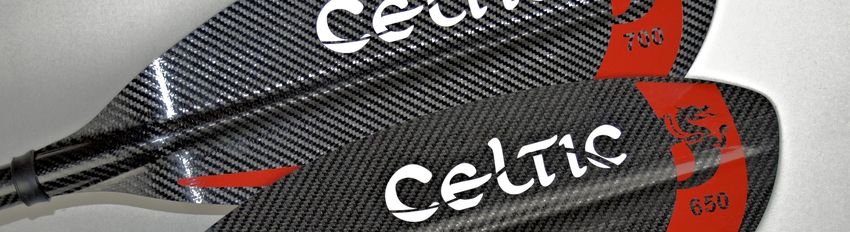
SEA KAYAKS AND PADDLES
                              We manufacture paddles in
                              carbon, nylon and plastic.

                              1pc and 2pc paddles but
                          specialize in 4pc paddlok paddles

Tel +44 (0)1407765550                 e-mail celtic@seakayakinguk.com
All trade enquiries need to contact Nigel Dennis on the above e-mail address

                                                                               2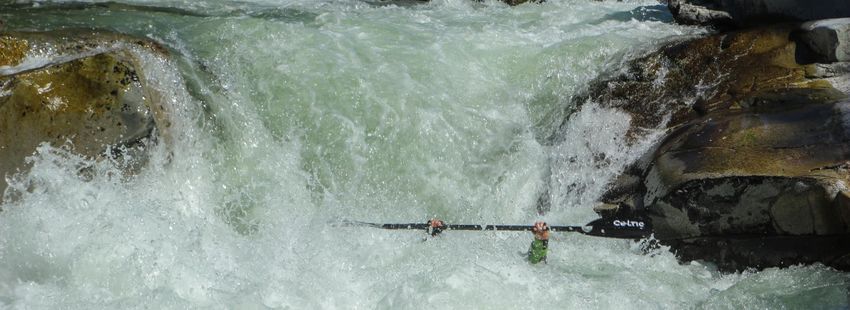
SEA
                              Kinetic Touring – Norddkap –
                              Archipeligo – Mania – etc …….

                              WHITE WATER

                              Your old Lendal blades will fit our
                               shafts and our shafts will fit your
                                         old blades.

If you have been paddling the original
Scottish Lendal paddles over the last 20
    years or so, then you have been
paddling “Celtic” we still manufacture
   most of the original range of Lendal
                 paddles
                                                                     3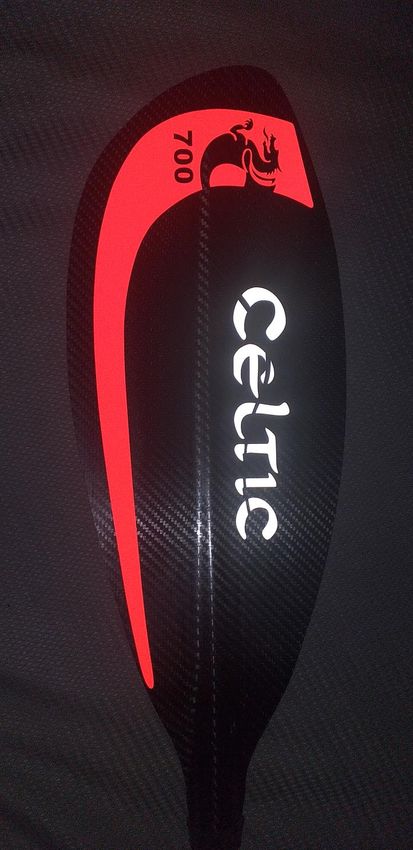
Flexibility

                                      Fiberglass shaft and SF blades

A 1pc paddle has the blades glued straight into the shaft. This paddle will be the lightest paddle in our range
and the most flexible. We manufacture paddles with both fiberglass and carbon shafts. The Carbon is the
strongest and lightest but the fiberglass shaft will be the more flexible of the two.

                            For example a standard glass shaft @120cm long
                                weighs 252gr and 211gr for a carbon shaft

For those who want a more flexible paddle, we build the 1pc with the fiberglass shaft and the SF blades.

                                                                                                                  4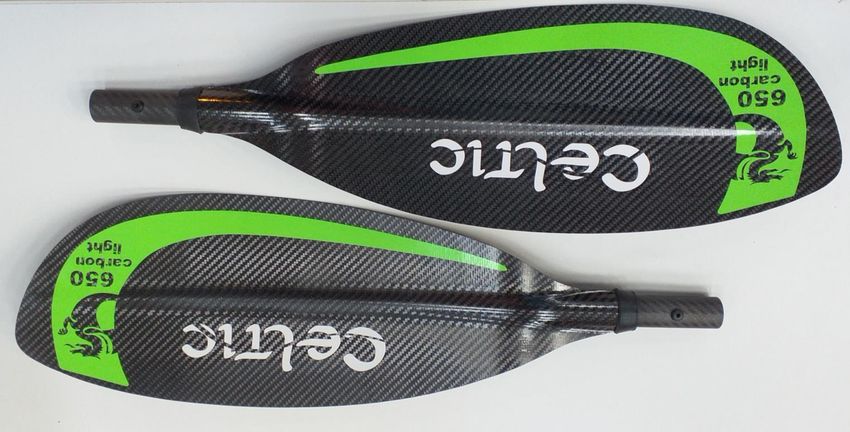
2pc, 3pc and 4pc paddles
                                                                       3pc, a shaft with
                                                                     detachable blades.
                                                                     A good option if you
                                                                     want a more flexible
                                                                           paddle.

  A 2pc paddle. This paddle is
  ever so slightly lighter than a
  4pc. The blades are glued in
              place.

                                        The 4pc is our chosen standard paddle. Can break
                                     down into approx. 500mm lengths. Replace one blade
                                    if needed. Use alternative blade designs and shapes on
                                     the same shaft. This is the same price as a 2pc paddle.

                                                                                               5
We specialise in Sea Kayak paddles, Surf, White Water and Pack Rafting. Our patented system allows us to
manufacture paddles that break down so blades can be replaced or changed as required.

We make 1pc, 2pc, 3pc and 4pc paddles.
A 1pc paddle will be lighter and more flexible
A 2pc paddle gives you the option of using it left handed, right handed and storing a spare paddle on the
kayak. It also gives the option to have a paddle that you can vary the length.
A 3pc gives you the option of interchanging paddle blades, it keeps the flexibility but reduces the overall
length for storage and transportation.
A 4pc gives you the added option over the 2pc of being able to take the blades off. Different blade sizes
or designs can then be fitted to your shaft. Most 4pc paddles will fit into hand luggage on a plain for
instance.

For shipping the only option we don’t recommend is the 1pc. This will cost more than twice the amount of
money to ship than the other options.

The standard paddle blades come in fours blade areas 575, 600, 650 and 700 square cm

There are four decisions to make when ordering a paddle. Please read the following, we hope this will
help. Any questions please e-mail sales@seakayakinguk.com

                                                                                                           6
Everyone loves a Celtic

 STEP 1 Choose your paddle length, straight or
               cranked shaft.
When measuring the overall length of our paddles you measure down the spine
                               of the paddle.

                                                                              7
PADDLE LENGTHS & BLADE AREAS (Sea)

NOTE: The paddle sizing guide below only gives you a suggested length of
paddle and blade size. We would also recommend that some time is
spent on the water looking at technique and trying straight or Modified
Crank shafts. Straight shafts are easier to use and far more popular than
cranked.

These recommended paddle lengths are for use with kayaks that average
21inch to 22inch beam.

Your paddling style will also dictate the design of paddle. A long paddle
will mean you have a lower angle stroke.

                                                                            8
PADDLE CHOICE FOR THE EXPEDITION SEA KAYAKER.                                  The average advanced paddler has a strike rate of approx 60 per minute
                                                                                  when the paddle lengths correspond to the enclosed table.( a strike is
Much attention has been given to equipment and kayak design. In my                every time a blade hits the water)
opinion little thought has been given to the suitability of customising the
paddle to suite paddling style, injury prevention and optimising efficiency       People with differing frame sizes require different shaft sicknesses. As a
over a prolonged distance taking into consideration different weather             way of standardising I have taken the standard diameter of shaft as being
conditions and variable loads being carried. The following is not aimed at        suitable for a medium sized frame. I would recommend that a shaft
competing athletes but recreation kayakers who need an efficient                  measuring in diameter for small framed people. (See table) Large framed
technique and a suitable paddle.                                                  people sometimes get tendonitis in their control hand. This is often due to
                                                                                  the shaft being too small a diameter. This can easily be rectified by
It is also concluded that the paddle sport industry is not providing an           padding out the shaft.
adequate paddle range for the smaller kayaker. There is currently a
considerable increase in the number of females coming into sea kayaking           Most small framed paddlers would do well to use a smaller blade area
and many of these are purchasing inappropriate paddles. This research             than they would normally use when working on developing an efficient
was initiated by the need to identify suitable paddles for small framed           forward paddle technique. Move up a size when the technique is good.
people who undertake expedition sea kayaking.
                                                                                  INJURIES:-
The table below has been put together by collating information over a for
teen month period. This table should be used as a guide, for paddle               Inappropriate paddles were found to caused the following injuries:-
choice by the average person.
                                                                                  Rotational cuff tendonitis.
NOTE:- None of the research related to Inuit style blades. FINDINGS:-
                                                                                  Tendinitis of the hand.
The table was collated by observing paddle technique, linking it to an
increase in performance together with an energy efficient stroke.                 Tendinitis of the forearm – wrist.
All participants were initially videoed paddling forwards using their own         Shoulder Bursitis (calcific Tendinitis)
paddle. Details of their paddle were recorded in order to make a                  Incorrectly sized paddles are also a contributing factor to causing partial
comparison once the specification of the customised paddle had been               or dislocated
finalised. The participants were then videoed paddling with the new
recommended blade.                                                                shoulders. Large blade areas combined with poor technique are the main
                                                                                  cause.
One of the more surprising findings was that forward paddling technique
improved considerably without any coaching once an appropriate                    The paddle is a leaver that is used by the kayaker to drive the kayak
paddle was used. I would now recommend that an in depth coaching                  forwards. The longer the leaver the greater a force will be placed on
session should not take place until a suitable paddle has been identified.        joints, mussels and tendons. This together with incorrectly sized paddle
Once technique and strength has been improved, sometimes the paddler              blades (area) will increase the chances of developing any of the above
can increase the blade area without compromising technique.                       conditions.
When deciding on paddle length and blade area, you have two options:-             Rotational cuff tendonitis: can be caused by using a paddle that is either
                                                                                  too long or and with blades that are too large in area for the kayaker. For
A longer paddle with a smaller blade area.                                        people who suffer from this condition I recommend reducing both the
                                                                                  blade area and paddle length. The blade area needs to be considerably
A shorter paddle with a larger blade area.                                        smaller than the kayaker would normally paddle with. Only after a period
                                                                                  of time, provided the tendonitis improves should you increase the blade
If after using the table to determine paddle length, you feel that the blade      size. Rotational cuff tendonitis is caused by damage to three small muscles
area is still too large then an alternative to a smaller blade is to reduce the   and their tendons. These three tightly hold the ball and socket joint of the
shaft length.                                                                     shoulder joint together. These run from the top of the shoulder blade to the
                                                                                  top of the arm bone.
If a paddle designed for efficient use in calm conditions was shortened by
2/3 cm. It would make a considerable difference in the amount of energy           Tendonitis of the hand: This is sometimes helped by using a larger diameter
required to maintain an efficient forward paddling technique. You would           shaft. )
effectively be changing down a gear. The table shows a suggested length
of shaft to blade size. If you prefer a larger blade area then shorten the        Tendonitis of the wrist or forearm: customising your paddle can help this
shaft.                                                                            condition. (as described for rotational cuff tendonitis) or try a modified
                                                                                  cranked shaft with a 65 deg feather. It is then possible to paddle without
                                                                                  flexing your wrist, but you may have to adapt your forward paddling
                                                                                  technique, paddling with straighter arms.
                                                                                  The hand is controlled by muscles, tendons and nerves. Forearm muscles
                                                                                  are connected to the hand by tendons that run across the wrist and into
                                                                                  the hand. The tendons that control your thumb unlike others run through
                                                                                  sheaths. The tendons are                                                9
enclosed in these sheaths and when they become irritated extra synovial
fluid is produced which lubricates and feeds the tendons. The sheath               Attention needs to be given to correct foot and back rest adjustment.
cannot expand to accept this extra fluid, this results in the fluid pushing
hard on the tendon which in turn becomes inflamed. Over time this                  Forward paddling technique will vary in differing weather conditions but
causes the sheath to thicken resulting in even less room for the tendon the        I believe it is essential to optimise efficiency and this is only possible with
condition now becomes chronic causing further swelling and pain.
Immobilization and rest is needed. Again oversized paddles, overuse and            the correct choice of paddle.
in some cases compressed sheaths caused by tight latex rubber cuffs will
cause this condition.
Shoulder Bursitis: this is primarily caused by overuse of the shoulder, but        Written by Nigel Dennis
also by oversized paddles. The bursa sac lies between the underside of the
shoulder blade and the rotator cuff tendons. The sac comprises of
specialized cells that produce joint fluid, called synovia fluid. The fluid also
lubricates the sac and tendons. When aggravated it promotes fluid
production. This in turn makes the condition worse causing swelling that
becomes painful to the touch.
THE CORRECT CHOICE OF PADDLE TOGETHER WITH GOOD TECHNIQUE
WILL GO A LONG WAY TO MINIMISE THE ABOVE CONDITIONS.
RECOMMENDA TIONS:-
The sea kayaker adopts either of the following options:-
Purchase a set of two paddles. Both the same length but one having
smaller blades. The paddler can then change down a gear by dropping
to a smaller blade when weather conditions deteriorate.
Purchase a one piece paddle with interchangeable blades.
POSIBLE OPTIONS:-
A paddle blade that is adjustable. ie telescopic.
For Coaches a split paddle with the option of assembling it with the
following options:- Left handed, right handed and unfeatherd.
OTHER CONSIDERATIONS:- A shorter paddle will generally mean an
increase in stroke rate. A longer paddle will enable the kayaker to have a
slower paddle rate. Both will result in the same kayak speed but the shorter
paddle will promote acceleration. The padlock system provides kayakers
and coaches with the opportunity of experimenting and using split
paddles as the main paddle with no wear on the joint.
OTHER RECOMMENDATIONS:-
Although a customised paddle will make a huge difference we should
also pay attention to customising the seat, in particular the angle of the
seat. The seat may have to be raised at the rear in order to help assist the
paddler lean forwards.

                                                                                                                                                                     10
PADDLE SIZING GUIDE
Height of paddler Length of Blade design Large blade Small blade Size of paddler
paddle. Shaft diameter
6ft 2in+ 185cm 218-222 Nordkapp/Kinetik 215-220 217-222 Large
Standard shaft with 750 700
padding
6ft 0in 180cm 214-220 Nordkapp/Kinetik 212-217 215-220 Medium / Large
Standard shaft 750 700
5ft 10in 175cm 210-216 Kinetik / Kinetic small 210-215 212-217 Medium / Large
Standard shaft 750 700
5ft 8in 170cm 208-215 Kinetik / Kinetic small 208-213 210-215 Medium
Standard shaft 700 650
5ft 6in 165cm 207-214 Kinetik Small 208-213 209-214 Med / Small
Standard shaft 700 650
5ft 4in 160cm 203-212 Kinetik Small 207-212 209-214 Med / Small
Narrow shaft 650 600
5ft 2in 155cm 190-210 Kinetik Small 203-208 205-210 Small
Narrow shaft 650 600
11Some need shafts stronger
than others!
STEP 2 choose type of shaft.
1pc, 2pc, 3pc or 4pc.
Three options: Standard straight / Standard straight narrow / Standard cranked.
12SHAFTS
We have the options of straight and modified cranked shafts. The straight shafts are offered in fibreglass or
carbon. The fibreglass shafts are heavier but cheaper. The Carbon shafts are lighter, stronger but more
expensive. We recommend the carbon shafts for intermediate to advanced paddlers. All shafts are reinforced
as necessary.
The standard straight shafts come in two diameters. The narrow diameter shaft is specifically for the smaller
paddler with small hands.
The standard carbon shaft is advised for Surf and White Water
It is important to purchase the right specification of paddle. This will depend on your body size, the width of
the kayak and intended use. ie Surf, White Water or Sea. In order to help you decide on the size of paddle
that you need please see the articles on paddle sizing and forward paddling:
For 2pc and 4pc paddles we offer the choice of three joints.
The Paddlok – A joint with no length adjustment.
The Leverlok - A nylon joint that offers 10cm of length adjustment
The Vari-Paddlok - A joint that incorporates a button that locks with a Paddlok key and offers 6cm of
adjustment in length. The Paddlok joints are slightly lighter than the Leverlok. All these joints can be set for
the left or right handed paddler and the feather can be adjusted.
13The fiberglass shaft is plain black
with what appears to be a wrap on
the outside of the shaft,
Heavier – More flexible - Cheaper
HOW CAN I
TELL IF IT’S A For example a standard glass shaft @120cm long
weighs 252gr and 211gr for a carbon shaft
CARBON
OR A
FIBERGLASS
To identify a Carbon shaft look at the
SHAFT weave. You can see a light grey and
a black weave in the cloth
Lighter – Stiffer – More expensive
14Standard shaft diameters
Shaft Options Outside diameter of a standard shaft is 29.3 mm
Outside diameter of a narrow shaft is 27mmeter
Carbon Straight
Classic glass straight
Pro Sea Touring Carbon Standard
Crank Carbon only Standard diameter only
Narrow
(New) Ultra strong modified (New) Carbon straight shaft (New) Glass straight shaft,
crank shaft made with +95% with increased wall thickness with increased wall thickness
Carbon available with for increased durability for increased durability
Leverlok or Vari Paddlok
centre joints. Suitable for all conditions Suitable for most conditions
✓ Sea Touring ✓ Sea Touring
✓ Tide Races ✓ Tide Races
✓ Surf ✓ Pack Rafting
✓ Pack Rafting ✓ Whitewater Grade 3
15
✓ Whitewater Grade 3 to 4Additional shaft hand grips
A retro fit grip kit. This can be easily fitted to any 2pc, 3pc and 4pc paddles. This is an optional extra
16Step 3 Choice of centre joints NOTE: For 2021 the spigots on the
centre joints will be carbon in the
Carbon shaft but we will use the
New Kayjak sport spigot in the
fiberglass shaft.
Leverlok Paddlok Vari Paddlok
The Leverlok gives you 10cm The Paddlok joint is the The Vari Paddlok joint offers
of adjustment. This is the most simplest and cheapest joint 6cm of adjustment in length,
popular joint. It allows you to joint. Offering a fixed length you can also vari the feather
adjust the length of the paddle, left or right handed. and set it for Left or right
paddle, the feather and handed paddlers. Easier to
make the 4pc left or right stow as a split.
handed. This joint is 13gr
heavier than the Vari Paddlok
If you are ordering the Leverlok or the Vari Paddlok then you should allow the paddle to be
made shorter than you usually paddle with. If you shorten the paddle length, then you make it
easier to paddle. This helps when tired or paddling into strong wind. So for example if you
choose the leverLok and you use a 210 paddle order a 206 – 216 or 208 – 218. Both the Leverlok
and the Paddlok cost the same.
17Centre joint LeverLok spigots
Spigot used for the Carbon shaft centre joint
Spigot used for the Fiberglass shaft centre joint
18At an extra cost we offer custom blade shapes including
all the original Lendal range of blades.
Step 4 choose your blade design, material and blade area
Our standard sea touring blade is the Kinetic Touring.
White Water we offer a choice of blade design.
Pack Rafting we offer a choice of blade design.
19Paddle Blade Options
The standard range or Custom paddle shapes.
20
20Blade Information
Weight - Blade set in grammes +/- 3%
Paddle blade design Primary Usage SF LF N12 CC Standard CC Light Area Width cm Length cm
Cybi Bach Sea Touring - Children 620 730 560 16.5 50
Kinetik touring 600 Sea Touring 650 770 560 490 600 17 50
Ribbed Blades
Kinetik touring 650 Sea Touring 690 830 570 500 650 18 50
Kinetik touring 700 Sea Touring 750 850 590 510 700 19 50
Archipelago Sea Touring - recreation 660 780 570 500 650 17 50
Nordkapp Sea Touring 760 860 600 520 725 19.5 50
Reef Surf 850 600 520 715 19 50
Power Whitewater 820 590 510 625 19.75 48.5
Xti Whitewater 870 860 675 21.5 48.5
al
dr
Fusion - Polymer Whitewater - Surf 860 850 700 20.5 47.5
he
Mania Whitewater/Packrafting 870 860 650 19.75 48.5
Di
Blade Materials Weight Durability Stiffness
SF - Short fibre Polymer 2 2 1.5
LF - Long fibre Polymer 4 4 3
N12 - Nylon 12 - Glass filled 3 5 3
CC Standard - Carbon - Glass Composite 1.5 3.75 3.5
CC Light - Carbon - Carbon Kevlar 1 3.5 5
21Choose your blades
Design Blade Material Blade area square mm
The standard blade for the • Carbon • 600
sea. THE KINETIK TOURING
• Carbon Light • 650
Or
• N12 (Nylon) • 700
A custom blade shape. An
extra fee of £10 is charged for • SF (Plastic) • Custom blade areas
a custom design. See custom
blade design. 575cm and 750cm
22Sea Touring Blades – Material Options
Pro Carbon Classic Nylon Classic Polymer
Light, stiff and powerful the Strong, super tough and the Polymer blades, light blades
Pro Paddlers choice ultimate durability. Great for for recreational paddling,
clubs and Kayak Schools lakes and rivers. These are
also more flexible than Nylon
and Carbon
23Pro range Carbon
Paddles that take you places 2pc 3pc & 4pc
Standard Carbon blades
Touring / Surf / Tide Races
Carbon Light Blades
Touring
24New sticker color for Carbon Light paddles
25Our blade stickers are reflective
26Technical information
Carbon standard blade weights Carbon light blade weights
600 851gr 600 782gr
650 905gr 650 817gr
700 921gr 700 831gr
STANDARD PADDLE LENGTHS FOR 4pc
Straight weights
Standard diameter PaddLok centre joint
208-210-212
212-214-216
LeverLok centre joint
208-218
Narrow diameter Paddlok centre joint
204 – 206 – 208
LeverLok centre joint
200 – 210
Standard shaft diameters
Outside diameter of a standard shaft is 29.3 mm
Outside diameter of a narrow shaft is 27mm
27Junior, youth Paddles
SHAFTS
Standard fiberglass narrow shaft with a Leverlok
Carbon
Length 165-175
185-195
Blades
Gremlin
Kinetic Touring 575
Logic
Look at our Echo, an excellent youth sea kayak.
28All paddles come with drip rings and paddlok key as needed.
Paddle blades are secured to the shaft with our
Paddlok system
• Change your blade size
• Replace just one blade
29Due to the forces on a surf or White Water
shaft, all shafts are made of carbon
White Water, surf and Pack Rafting
1pc or 3pc White Water. 4pc Emergency White Water paddle.
4pc,5pc or 6pc Pack rafting paddles
3031
Celtic Packrafting Paddles
                                       The combination of our Paddlok
                                       system coupled with the length
                                       adjusting Leverlok centre joint
                                       enables the entire range of our
                                       Paddle blades to be utilised for
                                       Packrafting. Coupled with a
                                       suitable length adjustable shaft you
                                       have one paddle with many uses

   Mania 4 & 5 Piece   Multi Paddle 6 Piece              Pro Power Carbon

                                                                            32
6pc Pack Rafting paddle 5pc Pack Rafting paddle
A fixed length paddle with detachable hand This paddle is 208-218 Leverlok with a
grips so you can turn your paddle into two detachable centre spigot so the paddle can
one sided paddles for use as a canoe be packed into a 510cm bag
paddle
33Whitewater, surf & Packrafting Blade Options
Pro Carbon Classic Nylon Classic Polymer LF
Carbon White Water Blades Strong, super tough and the Polymer blades, injected with
ultimate durability. Nylon long glass fibres. Durable,
blades unlike glass blades do tough, our entry level
not suffer from edge wear or Whitewater and Packrafting
fractures These blades will blade.
give a lifetime of use. Ideal for
rock hopping and rivers.
34White Water, surf and Pack Rafting
standard blade shapes
Fusion Mania & Reef Kinetic Touring
Power XTI
Custom Blades (£12 Extra charge)
35An emergency White Water
paddle. This paddle comes in a
dry bag. This will fit under the rear
deck of most white water kayaks.
4pc Glass shaft Mania blades, 45
degree feather, left or right hand
Paddlok key
Dry Bag
27
36Celtic Paddles uses our patented Paddlok system. This allows us to
manufacture 2,3 and 4pc paddles. The 4pc paddles when
assembled provides a ridged paddle that can be broken down
and carried as hand luggage when flying.
Other advantages.
• Change your blade size
• Replace just one blade
• All paddles are adjustable in
both length and feather
CELTIC PADDLES MANUFACTURES PADDLES FOR THE REST OF THE
WORLD USING THE PADDLOK SYSTEM 37MAINTANANCE
All joints need to be taken apart from time to time. The PaddLok button
needs to be flushed out with fresh water. As all joints involve pushing a
spigot into a shaft. You inevitably get a grey carbon past made from the
dust created by the assembling the paddle. The dust then gets wet and
over time forms a past that sets and it becomes very difficult to seporte
the blades and shaft. You need to take the paddle apart and flush out
with fresh water if being stored for a long time.
PaddLok buttons can be easily replaced
38https://www.flickr.com/photos/celticpaddles/albums
39Get in touch
• For sales and further information, contact us on sales@seakayakinguk.com
• Contact us by phone
• Accounts +44 1407 765550
• Sales and Enquiries – trade and retail +44 1407765550
• Celtic Paddles Ltd, Unit 1A Canada Gardens, Holyhead, LL65 1SA, UK
• Vat Registration No 826080440
• Registered Company 4990086
• Company Director – Nigel Dennis
• Sales manager – Yanina Reid sales@seakayakinguk.com
• Accounts and office manager – Joanne Roberts accounts@seakayakinguk.com
• Trade accounts please contact Nigel Dennis orders@seakayakinguk.com
40You can also read


