CGS REPORT CARD 2020 Join the future for lifelong learning - Responsive. Empowering. Accessible - Unisa
←
→
Page content transcription
If your browser does not render page correctly, please read the page content below

CGS REPORT CARD 2020

Join the future for
lifelong learning.

Responsive. Empowering. Accessible
Introduction
The College of Graduate Studies (CGS) forms part of Unisa’s Research, Postgraduate Studies,
Innovation and Commercialisation Portfolio and comprises the School of Interdisciplinary
Research and Graduate Studies, the School of Transdisciplinary Research and
Graduate Studies, the Ethiopia Regional Learning Centre and the Postgraduate
Administration Department. Multi, inter and transdisciplinary research is at the
core of all our activities, thereby providing a unique range of opportunities
for Master’s and Doctoral research under high-quality supervision.

We work with other colleges and in partnership with other universities and have a wide
range of national and international networks through our academic staff.

In addition, we host the prestigious National Research Foundation/Department of
Science and Technology South African Research Chair in Social Policy and the
UNESCO/UNISA Africa Chair in Nanosciences and Nanotechnology.

As Unisa’s answer to the national imperative to increase the number
of Doctoral graduates and provide for high-calibre researchers, CGS is also
responsible for the administrative, registration and examination processes and the
facilitation of the research training of some 12 000 Master’s and Doctoral candidates who
represent a large slice of the research potential in South African universities. Our aim is to assist the
colleges where these students are registered and to increase the number of successful graduates
from this cohort to ensure our competitiveness among emerging economies. With research
methodology as a central platform of CGS, the College has developed a suite of research
training programmes that are delivered through workshops, colloquia, video conferences
and virtual research environments. It reaches out to candidates in Unisa’s regional centres,
from Gauteng to Akaki, Ethiopia. Many of the offerings are general, but some are tailor-
made to fit the precise demands of specific fields of research.

The CGS Postgraduate Administrative Department deals with the applications,
admissions and registrations of about 45 000 students registered for
postgraduate qualifications, namely Postgraduate Diplomas, and Honours,
Master’s and Doctoral degrees, as well as with the assessment coordination
for Master’s and Doctoral dissertations and theses.

                                                                                                            01
Our vision
Our vision as the College of Graduate Studies is to be a leader in providing excellent
research support for postgraduate students and supervisors and to be a leader in
Interdisciplinary research

Our mission
Our Mission in the College of Graduate Studies is to:

•   Strive to undertake interdisciplinary research and knowledge development, guided by fostering a high level
    of integrity, quality, rigour and ethics among postgraduate students and supervisors.
•   Contribute to society by producing Master’s and Doctoral Graduates of sound character, versatile ability and
    knowledge.
•   Meet the research needs of the society by nurturing collaborative relationships with relevant stakeholders through
    engaged community research.
•   Provide training to postgraduate students and supervisors in research methodologies covering all research traditions.
•   Promote the use of African epistemologies and indigenous knowledge research.

What does CGS do at Unisa?
Provides a central hub for Master’s and Doctoral support within Unisa, South Africa and Africa to fulfil the
national imperative of producing high quality postgraduates who will be the dominant drivers of new
knowledge production within the higher education and science innovation system.

•   Nurtures a research community whose primary purpose is to sustain Master’s and
    Doctoral researchers within a supportive academic environment.
•   Promotes and facilitates interdisciplinary research.
•   Fosters academic integrity through the use of similarity index detecting software.
•   Inculcating an African perspective in postgraduate support.
•   Creating a vibrant intellectual space for research innovation, debate and
    creative thinking.
•   Producing research and helping Master’s and Doctoral candidates
    publish.

                                                                                                                            02
Committed Staff
The College Management

                                                                    EXECUTIVE DEAN
                                                                    Prof Lindiwe Zungu

 Quality Assurance &         School of              School of       Postgraduate Student    Ethiopia Regional    DST/NRF SARChI           UNESCO UNISA
   Enhancement           Interdisciplinary      Transdisciplinary      Administration       Learning Centre     Chair in Social Policy        ITL/NRF
       (QA&E)          Research & Graduate    Research & Graduate         (PGAD)               DIRECTOR          Prof Jimi Adesina         Africa Chair in
        HEAD             Studies (SIRGS)        Studies (STRGS)          DIRECTOR            Dr Tsige Aberra                               Nanosciences
 Dr Memme Makua             DIRECTOR               DIRECTOR          Ms La-Portia Matjila                                                & Nanotechnology
                       Prof Patrick Ngulube      Prof Tennyson                                                                           Prof Malik Maaza
                                                   Mgutshini

                                                                                                                                                         03
Committed Staff
Employment Equity (Race Count)              Academics vs Admin Staff           Gender Chart

70                                          140                                140

60                                          120                                120

50                                          100                                100

40                                          80                                 80

30                                          60                                 60

20                                          40                                 40

10                                          20                                 20

 0                                           0                                  0
     African    Coloured   Indian   White            Academic          Admin            Female   Male

       Female

       Male

                                                                                                        04
Postgraduate Students Graduations
Unisa produce more work-equipped graduates than any other institution in the country and, indeed, on the continent, belies the main thrust of Unisa’s societal mission: make a true impact on lives,
communities and society, helping to build a kinder yet more efficient world, and using academic muscle to bolster both the African and gender agendas. The University awarded a total of 12 176
Postgraduate Qualifications in 2019, a testimony to the rich variety of study options and levels available at the university. This include 7 128 postgraduation diplomas , and 5 048 advanced qualifications
in the honours, master’s and doctoral categories.

Unisa Ethiopia Regional Learning Centre Graduates

                                                                 2020 Graduates                                     Total                                               MOSHE Sponsored
 Programme                      Graduates until 2019
                                                                 (12 November)                    Graduates                    Percentage                     Graduates                    Percentage
 Doctoral                                 286                            56                           342                          41%                            213                          99%
 Master’s                                 340                            10                           350                          42%                             3                            1%
 Honours & PGD                             75                             3                            78                           9%
 Undergraduate                             50                             5                            55                           7%
 TOTAL                                    751                            74                           825                         100%                           216                          100%

            Age Group                                                                 Gender                                                                        Race

                   2%
                                                                                                                                                    3%
                                                                                                                                                                10%
                                                                                                                                                  2%

                                                                                                                                                                                                     African
       27%                                      25 - 29                         38%
                                                                                                                        Female                                                                       White
                                                40 - 65
                                                                                                                        Male                                                                         Indian
                                                18 - 24                                            62%
                        71%                                                                                                                                                                          Coloured
                                                                                                                                                                          85%

                                                                                                                                                                                                               05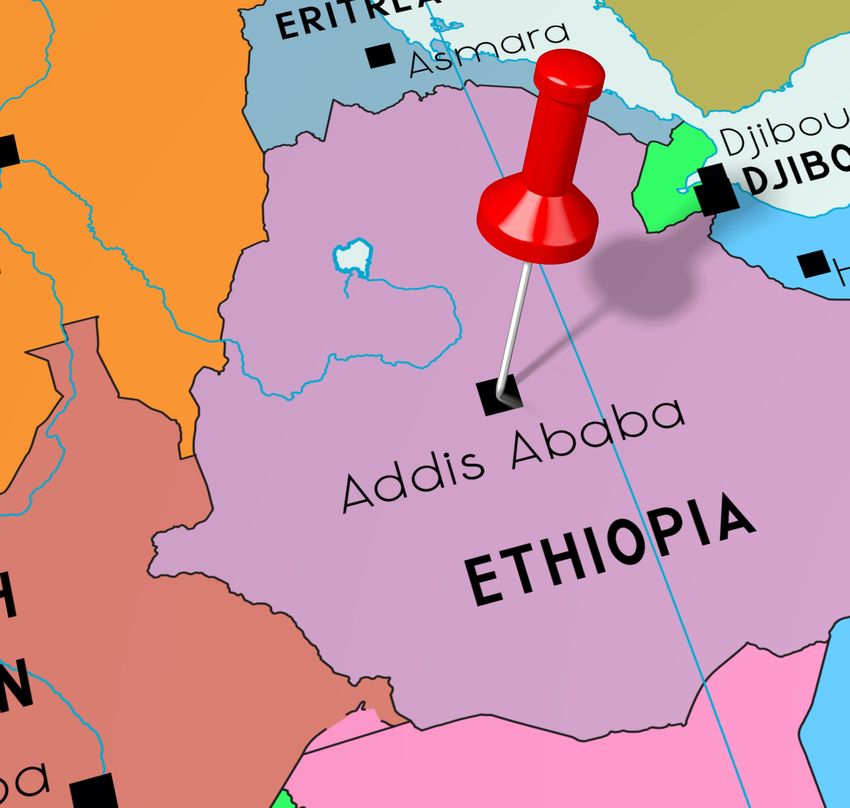
CGS Research
National Research Foundation (NRF) Ratings December 2020

    Name                                                    Rating                                   Expiry                                 Gender                                    Race
    Prof Jimi Adesina                                          B3                                    2023                                       Male                                   Black
    Dr Elnerine Greeff                                         Y2                                    2023                                   Female                                    White
    Prof Patrick Ngulube                                       C1                                    2023                                       Male                                   Black
    Prof Lindiwe Zungu                                         C3                                    2021                                   Female                                     Black

Strategic Partnerships                                                  •   US$10 000: SSRC/Carnegie Endowment Next Generation              •    The development of an online solution for compulsory
                                                                            Social Science in Africa Fellowship: Ms Kimberley Usher              Masters’ and Doctoral students’ supervision and
•     The United Nations Research Institute for Social Development,     •   R130 000: NIHSS African Pathways Scholarship. Recipient: Mr          monitoring for:
      Geneva, Switzerland                                                   Madalitso Phiri                                                      - Specific online research support platform to Master’s and
•     The Council for the Development of Social Science Research        •   French-Southern Africa multilateral joint Nano-MSC initiative           Doctoral students
      in Africa (CODESRIA)                                                  (75k Euros, 2021-2022) (Prof Maaza)                                  - Supervisor /student interactions (student uploads research
•     The Sam Moyo African Institute for Agrarian Studies, Harare,      •   German DAAD-Africa Regional Postgraduate Programme                      activities and supervisor uploads feedback)
      Zimbabwe                                                              (Full amount to be confirmed, 2021 – 2023) (Prof Maaza)              - Transparent Master’s and Doctoral research processes and
•     UNESCO                                                            •   Swedish ISP-Africa Postgraduate Programme (271152$, 2021                workflow (with built in email alerts)
•     NRF                                                                   – 2024) (Prof Maaza)                                                 - Quality assurance & Automation in reporting of student /
•     DHET                                                                                                                                          supervisor engagements
•     Mine Qualifications Authority                                     UNISA accelerated online postgraduate research
                                                                        programme (Prof Mgutshini)                                          Investigation of the effectiveness of SARS-COV- 2
•     Minerals Council of South Africa
                                                                        VALUE OF GRANT:                                                     preventive measures implemented by the South African
•     Mine Health and Safety Council
                                                                        • 5 million rands over 6 months (July – February 2021)              Mining Industry (Prof Zungu)
                                                                        PROJECT GOAL:                                                       VALUE OF GRANT:
External Grants
                                                                        • Developing a new cohort of skilled postgraduate students in       • R763,000 over 40 days (July- August 2020)
                                                                           research methodology, academic writing and grant writing         PROJECT GOAL:
•     R3.5 million grant for 2020: Department of Science and
                                                                                                                                            • To develop the leading practices that will assist the Minerals
      Innovation & National Research Foundation for the SARChI
                                                                        Development of Masters and Doctoral students’                          Council members to prevent exposure to SARS- COV-2 and
      (South African Research Chairs Initiative) Chair (Prof Adesina)
                                                                        supervision and monitoring dashboard (Dr Makua)                        the transmission of COVID-19
•     US$1 500: Young African Researchers in Agriculture research
                                                                        VALUE OF GRANT:
      grant “Livelihood Smallholder Farmers. Recipient: Mr Newman
                                                                        • 1.9Million rands over 6 months (July – February 2021)
      Tekwa”
                                                                        PROJECT GOAL:
•     US$1 500: Young African Researchers in Agriculture research
      grant “Livelihood impact of COVID-19 on Smallholder
      Farmers”. Recipient: Dr Clement Chipenda

                                                                                                                                                                                                          06
CGS Appointments & Honours
2020

•   Prof Jimi Adesina was appointed as a member of the South African Government’s Expert Group for the ‘Development of a Country report on the measures implemented to combat the impact of
    COVID-19 in South Africa’
•   Prof Jimi Adesina was appointed by the United Nations Institute for Economic Development and Planning to design and direct the capacity building programme for African policymakers (Social Policy
    for Development Planners in the context of COVID-19)
•   Prof Jimi Adesina was appointed the Convenor of the NRF Rating Specialist Committee for Anthropology, Development, Geography, Sociology and Social Work
•   Prof Jimi Adesina was invited by the University of Bremen’s (Germany) Global Dynamics of Social Policy to produce the Country Report on Nigeria’s Social Policy Response
    to COVID-19
•   Prof Jimi Adesina was invited by the French government as an expert at a two-day High-Level Expert Meeting on the Establishment of a Global Fund – Social Protection for All
•   Prof Jimi Adesina delivered a keynote address/public lecture at the ISS (Erasmus University Rotterdam), Netherlands at an international conference on Critical Perspectives on
    Social Policy in Developing Countries
•   Prof Jimi Adesina delivered a public lecture at the London School of Economics (London, UK) as part of the Cutting Edge Issues in Development Thinking & Practice 2020/21 series
•   Prof Jimi Adesina supervised four Doctoral students to completion in 2020 and is awaiting the examination results for a fifth Doctoral student
•   Prof Malik Maaza was appointed as Editor in Chief, African Physical Reviews (UNESCO & IAEA International Centre for Theoretical Physics)

                                                                                                                                                                                                         07
Recognitions and Awards
2020
•   Three CGS staff members have been named on a list of the top 2% of                •   Professor Malik Maaza, incumbent of the UNESCO-Unisa Africa Chair
    the most-cited scientists in various disciplines globally. Based on data from         in Nanosciences and Nanotechnology, was awarded the Order of
    Elsevier’s Scopus, the abstract and citation database, the report was prepared        Mapungubwe in Silver by President Cyril Ramaphosa at an award ceremony
    by Professor John Ioannidis of Stanford University and his team and published         on 25 April 2019 at the Sefako Makgatho Presidential Guesthouse.
    in the journal PLOS Biology. (Prof Malik Maaza, Professor and
    incumbent of the UNESCO-Unisa Africa Chair in Nanosciences                        •   In June 2019, Prof Lindiwe Zungu (ED: CGS) received her state-of-the-art
    and Nanotechnology, College of Graduate Studies; Dr                                   NSTF-South32 titanium trophy, representing a ‘feather in her cap’ as the
    Kaviyarasu (Kevi) Kasinathan, Senior Research Fellow                                  winner of the 2018/2019 TW Kambule-NSTF Award: Researcher. Her
    of the UNESCO-Unisa Africa Chair in Nanosciences and                                  research outputs have impacted positively on the promotion of worker’s
    Nanotechnology, College of Graduate Studies & Mr Ali                                  health and safety – including her guidelines for the re-design of safety
    Talha Khalil, Fellow, UNESCO-Unisa Africa Chair in                                    clothing for women in mining.
    Nanosciences and Nanotechnology)
                                                                                      •   Prof Malik Maaza of CGS received the International Commission for Optics’
                                                        Prof Maaza
                                                                                          Galileo Galilei 2019 Medal, adding it to his impressive collection of national
                                                                                          and international recognitions. What makes this award doubly special is
2019
                                                                                          that this is the first time in the award’s illustrious 35-year history that the
•   Prof Lindiwe Zungu (Executive Dean: College of Graduate Studies)
                                                                                          recipient is from Africa.
    was awarded the TW Kambule-NSTF Researcher Award at the
    NSTF-South32 Awards in 2019. This was in recognition
                                                                                      •   Unisa’s Professor Lindiwe Zungu, Executive Dean of the College of Graduate
    of work done to cater to the health and safety needs
                                                                                          Studies, was recognised at the 2019 GLAMOUR South Africa Women
    of miners, with a focus on women. The work included
                                                                                          of the Year Awards that took place in November 2019. This
    developing guidelines to assist the South African mining
                                                                                          achievement proves beyond a shadow of a doubt that
    industry to improve the health and safety of women in
                                                                                          transforming the world is hard-work, but that it can be
    underground mining.
                                                                                          glamorous, too. Professor Zungu has been acclaimed for
                                                         Prof Zungu                       her role in breaking barriers to create positive change in
                                                                                          the fields of science and technology.
•   Recent Unisa graduate, Dr Takalani Madima-Cele (a Doctoral student under the
    UNESCO-Unisa Chair in Nanoscience and Nanotechnology)was acknowledged
    as one of the exceptional young women scientists conducting research in                                                                     Prof Zungu
    sub-Saharan Africa at the L’Oréal-UNESCO For Women in Science Awards in
    Nairobi, Kenya, at the end of last year and was one of 14 brilliant young women
    researchers awarded a research grant at this event. Through this remarkable
    initiative, accomplished women researchers are recognised and rewarded for
    their outstanding contribution in the scientific field.

                                                                                                                                                                            08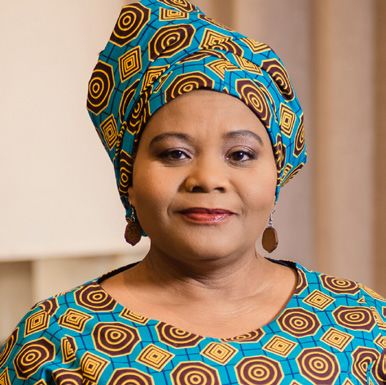
CGS Research Support for PG Students
School of Interdisciplinary Research & Graduate Studies (SIRGS) Highlights
•   Streamlining M&D Workshops: The research training workshop content was reviewed by the head of graduate studies
    and college representatives to ensure that all students, irrespective of their geographical location, will receive the same support.
    Previously, workshops favoured those in close proximity to the main and Florida campuses, as well those close to some
    regional service centres. The honours and postgraduate diploma workshops were officially added to the programme. This move
    translated to: 122 212 Master’s &Doctoral students reached across all colleges, inclusive of international students; 639 639
    Ethiopian Students were reached as part of the dedicated workshops on Saturdays and 15% of the Honours + PG Diploma
    student populations were reached.
•   Social Media: During the lockdown, social media formed part of the support interventions, and Facebook as well as Ms Teams
    were used optimally to support students. MS Teams was adopted as the medium to facilitate the workshops for staff and students.
    MS Teams:
    M&D Students – 2 319 were reached | Ethiopia Learning Centre – 43 users | Honours and Postgraduate diplomas – 516 users
    Facebook:
    M&D –1.9k are following this group | Honours – 596 are following this group
    CGS YouTube Channel:
    A repository for recorded research training workshops and events was implemented and has racked up close to five hundred subscriptions and more than ten thousand views.
    Mailboxes activity:
    M&DRW@unisa.ac.za more than 3 500 emails | honoursRTW@unisa.ac.za close to 600 emails | UCGS@unisa.ac.za more than 1400 emails (inclusive of M&D registration and other CGS entities)
•   Ethics Colloquium: CGS collaborated with the Research Integrity Directorate & the Psychology Department to host an ethics colloquium, which was later followed by research ethics workshops and
    interventions. These helped the students – especially those in the proposal phase – to understand what research ethics entails and to fill in the right forms for ethical clearance. This intervention assisted
    the ethics committee in the colleges and ensured that there would be fewer enquiries and comebacks from students’ proposals.
•   CGS Virtual Open Day: CGS hosted two virtual open days for prospective PG students. More than 1 500 attended and participated in the two events. M&D held a workshop on the research outline
    document that forms part of the application documentation. A standard template was designed and adopted across all the colleges to ensure that prospective students all use the same template.
•   Indigenous Epistemology Seminar Series: This series of seminars was in line with commemorating Heritage Day in South Africa between 22 and 25 September 2020. 552 attended the seminars
    and 519 viewed the recorded sessions. The presenters were from Unisa, Wits and other universities on the African continent, as well as the USA.
•   Staff capacity workshops: Five workshops were facilitated for supervisors to enhance their postgraduate supervision skills. Supervisors from across all the colleges attended the five online
    interventions.
•   Non-Examination workshop: An online workshop was presented to capacitate Non-Examining chairs. The M&D administration section took part in the presentation and highlighted the
    administrative side of NEC.
•   Publishing from M&D projects: Workshops on publishing from M&D projects were facilitated for staff and students. This was in preparation for the upcoming amendments to the M&D procedures, in
    terms of which publications will form part of the examination process.
•   Streamline originality checking workshops: A series of four workshops were facilitated for M&D students, along with an additional four workshops for supervisors. Recordings of the sessions were
    shared on the YouTube channel and the college received fewer queries on Turnitin-related matters after this intervention. Collaboration with the Research Integrity Office was successful in delivering on
    academic integrity and ethics in general.
•   2nd annual PG Research Indaba: CGS collaborated with the NSRC to deliver the 2nd annual Postgraduate Research
    Indaba. This was a platform upon which the university, from the office of the Vice-Chancellor to all student
    support services, was able to interact with Unisa’s postgraduate students.

                                                                                                                                                                                                               09
CGS Research Support for PG Students
School of Transdisciplinary Research & Graduate Studies (STRGS) Highlights
• PhD-by-Publication: A PhD-by-publication concept note was developed and presented to
the Intercollege Postgraduate Studies Committee. Inputs on the implementation model of the
programme are being solicited from the various Colleges.
• Online Accelerated Postgraduate Support Programme: Successful implementation
this programme, with activities commencing on 7 September 2020 and running up to 22
January 2021. The Programme designed specific support intervention activities that worked
to (i) accelerate excellence in postgraduate research support; (ii) improve learner support by
promoting an enabling postgraduate support system; (iii) foster online academic support/
programmes to promote lifelong higher education for all, as well as knowledge creation • Social Entrepreneurship Café: The launch, on 26 October 2020, of a strategic
that is nationally responsive and globally relevant; and (iv) inculcate an African perspective in partnership between Unisa’s STRGS, Facebook and Dignify Africa to offer students access
postgraduate support. to a course on Social Media Marketing. It is a first-in-the-world offering at the cutting edge
of training and development. The course took the form of a WOOC – a WhatsApp Open
Online Classroom. This intervention offered students learning on their mobile devices, making
use of WhatsApp as a platform and incorporating digital and audio-visual elements into the
learning product.
• Launch of research collaboration effort: The successful launch of a programme
series that works to offer students enrolled in the Accelerated Online Postgraduate Support
Programme a mentored journey into publishing.
Prof Rosemary Moeketsi Prof Tennyson Mgutshini Prof Lindiwe Zungu
• Learner analytics and community of scholarship: Development and initial
• Academic Integrity MOOC: Successful implementation of the Academic Integrity MOOC implementation of learner analytic findings and provision for the launch of larger-scale
intending to foster academic integrity for Masters and Doctoral (M&D) programmes by research in this field, with approval from the relevant Ethics Committees at Unisa.
providing training in academic writing and originality verification software, both of which are
crucial for the improvement of throughputs and completion rates. The MOOC blast sessions • Further DHET Funding: An application for further funding from DHET is receiving
commenced on 27 October and ran up to 25 November 2020. consideration and we expect formal feedback by March 2021.
Prof Elnerine GreeffCGS Research Support for PG Students
Ethiopia Regional Learning Centre Highlights
• The Bilateral Agreement between the Government of Ethiopia and UNISA was renewed
in the course of the year.
• The Ethiopia Centre rented premises that are accessible to students.
• Total number of students registered in the year was 629 – of these, 94% are M&D
students.
• The Ethiopia Centre graduated 74 students. Of these, 56 earned their Doctoral degrees,
while 10 students graduated with Master’s degrees.
• The Centre facilitated the M&D workshops offered by CGS. (The pandemic has influenced
all workshops, causing them to be conducted online.)
• By the end of the workshops, proposal defence sessions had been held for all newly
admitted M&D students.
• In collaboration with various sections of the university, M&D students were assisted in
developing their academic writing skills and in how to publish in peer-reviewed journals.
• Staff members’ fixed-term contracts were renewed with improved conditions of
employment.
• All staff members job descriptions were reviewed. This helped to align the KPAs and
weights of JD with IPMS documents.
• Library and ICT support services were granted to students, mitigating the impact of the
pandemic.
Prof Lindiwe Zungu and
Mrs Dvumisile Senzosenkosi
Hlophe-Sikhondze
honoured at Unisa’s
graduation in Ethiopia
11CGS projects
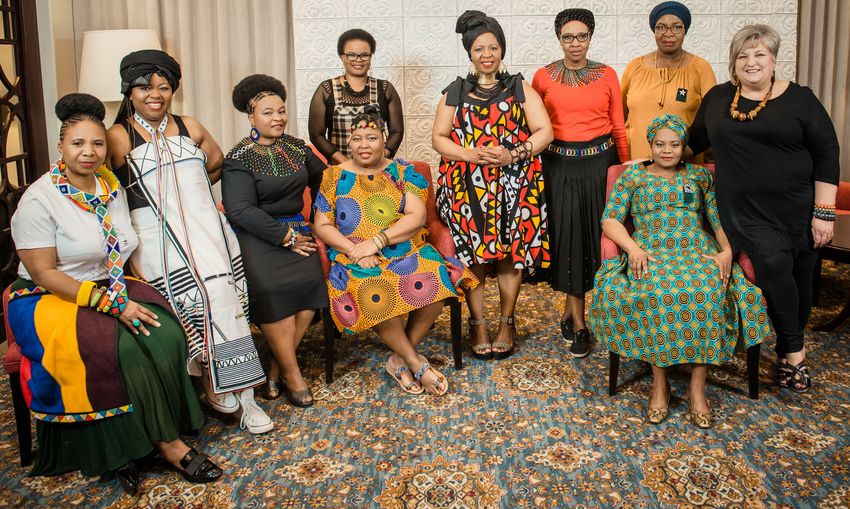
One of the critical and successful initiatives introduced by the Executive Dean in 2020 was the Oxford Women Leadership Development Training Programme that aimed at empowering CGS women with
Leadership and management skills. The programme was designed to improve the skills of current leaders to comprehend challenges and gender tendencies within the workplace and promote the critical skills
of aspirant leaders seeking to lead, influence, and mentor.
This 6 weeks’ intensive online programme provided an opportunity for women in leadership at the College of Graduate Studies to build on their self-acceptance, self-management and self-development
skills to enable them to lead their teams effectively to their optimal potential. The programme will contribute to the goals and progress of the department to achieve greatness. Through attendance of this
programme, delegates were empowered with skills, expertise and knowledge to address many of the barriers that women must overcome in order to pursue their leadership ambitions.
The following are women who successfully completed the leadership training programme in CGS in 2020:
1. Prof Lindiwe Zungu – Executive Dean: College of Graduate Studies
2. Dr Memme Makua – Head: Quality Assuraance & Enhancement, CGS
3. Prof Khanyisile Mbatha – Manager: Community Engagement & Outreach Projects, CGS
4. Ms La-Portia Matjila – Director: Postgraduate Administration Department (PGAD), CGS
Strong women aren’t simply born. They are
5. Ms Elena Swanepoel – Deputy Director: Postgraduate Administration Department (PGAD), CGS made by the storms they walk through.
6. Ms Lindi Madiseng – Supervisor: Postgraduate Administration Department (PGAD), CGS
7. Ms Penny Ngcobo – Manager: Postgraduate Administration Department (PGAD), CGS
8. Ms Thembeka Tshikhudo – Acting Manager: Postgraduate Administration Department (PGAD), CGS
12Message from the Executive Dean
The 2020 academic year was a year unlike any other. It was characterised by the most catastrophic societal
and public health emergencies that the globe has ever been faced with over a century. First reported in January
2020, the corona virus or COVID-19, as it is medically known, had, established itself as the deadliest modern-
day virus. As the enormity of the Covid-19 challenge became apparent, businesses including the Higher
Education sector scrambled to adjust their practices to uncertainty caused by the global pandemic. Beyond its
health impact, the epidemic caused serious disruptions in the provision of education globally and in the same
instance, it exposed serious disparities in educational provision especially between marginalised rural populations
and their more connected urban counterparts. The scourge of COVID-19 pandemic did not only threaten the
financial sustainability of businesses, including the higher education sector, but necessitated the need for an
aggressive overhaul of postgraduate research support to a comprehensive online support programmes. The
latter was critical to ensure for our college and is directly aligned to UNISA’s strategic imperative of Enhancing
Research on the African Continent and Globally. Despite challenges brought about by the global pandemic, as
a college we emerged victorious in accelerating our college mandate – of promoting Postgraduate research
performance and the generation of innovative outputs by UNISA’s postgraduate students represents a critical
performance area, one that requires very targeted attention especially within a Post COVID-19 environment.
This was made possible because of the overwhelming collective efforts by all staff members who continued
to work tirelessly under extreme conditions to deliver on the mandate of the college. The level of support and
commitment we received from so all staff members in the college, was truly humbling. Although the weight of
responsibility felt overwhelming at times because of the national restrictions posed by the COVID-19 pandemic,
as the Executive Dean, it was also a huge privilege to be at the very heart of an amazing collective effort.
As Bishop Desmond Tutu eloquently puts it…” Do your little bit of good
where you are. It is those little bits of good put together that overwhelm
the world…” This is what pulled us through in our college during the most
challenging times in 2020.
If everyone is moving forward together,
then success takes care of itself.
132021 Postgraduate Student Update
Only online registrations will be accepted. No walk-in/Self-Help registrations.
Honours & PGD qualifications
All qualifications are closed for application.
Students can track their applications at:
https://www.unisa.ac.za/sites/corporate/default/Apply-for-admission/Apply-for-admission-to-study:-application-tool
Once an offer has been made to a student, he or she must accept or decline the offer via the link:
https://www.unisa.ac.za/sites/corporate/default/Apply-for-admission/Apply-for-admission-to-study:-application-tool
A student can register for a qualification only once the offer has been accepted.
For any enquiries, send an e-mail to the following e-mail addresses, as indicated at the link:
https://www.unisa.ac.za/sites/corporate/default/Register-to-study-through-Unisa/Undergraduate-&-honours-qualifications
• College of Accounting Sciences: cashons@unisa.ac.za
• College of Agriculture and Environmental Sciences: sciencehons@unisa.ac.za
• College of Education: eduhons@unisa.ac.za
• College of Economic and Management Sciences: econhons@unisa.ac.za
• College of Human Sciences: artshons@unisa.ac.za
• College of Law: lawhons@unisa.ac.za
• College of Science, Engineering and Technology: sciencehons@unisa.ac.za
Graduate School of Business Leadership:
SBL@unisa.ac.za
Hons/PGD registration dates:
https://www.unisa.ac.za/sites/corporate/default/Register-to-study-through-Unisa
Registration for CTA 1 and CTA 2 students:
https://www.unisa.ac.za/sites/myunisa/default/Announcements/Registration-for-CTA-1-and-CTA-2-students
142021 Postgraduate Student Update
Only online registrations will be accepted. No walk-in/Self-Help registrations.
Master’s and Doctoral qualifications
Applications for the 2021 academic year closed on 6 November 2020. However, qualifications where there are still spaces
available will indicate this fact on the online application platform. If the qualification does not appear on the list, it is fully
subscribed. The next application period will open in mid-September 2021 for the 2022 academic year.
Students can expect the outcome of their applications, at the latest, during the first week of March 2021.
The M&D contact e-mail address is: MandD@unisa.ac.za
M&D registration dates:
https://www.unisa.ac.za/sites/corporate/default/Register-to-study-through-Unisa/Master%27s-&-doctoral-degrees
Master’s and Doctoral Research examinations
For any enquiries about the M&D research component examinations, please send an e-mail to Resexcoord@unisa.ac.za
15Follow us on social media
CGS: @unisaresearch | ETHIOPIA: @UnisaEthiopia
FB GROUPS: M&D Honours Research Training Workshop & M&D Research Training Workshops
UNISACollegeOfGraduateStudies
@UnisaRandI
www.unisa.ac.za/cgs
16You can also read


