Changes in food value chains and opportunities for agricultural and rural transformations - Ferdi
←
→
Page content transcription
If your browser does not render page correctly, please read the page content below
Changes in food value chains and opportunities for
             agricultural and rural transformations
                          Alain de Janvry and Elisabeth Sadoulet
                      University of California at Berkeley and FERDI
                         with Tanguy Bernard and Kyle Emerick

FERDI workshop on “Agricultural value chain development and smallholder competitiveness”, Paris November 15, 2018

                                                                                                                    1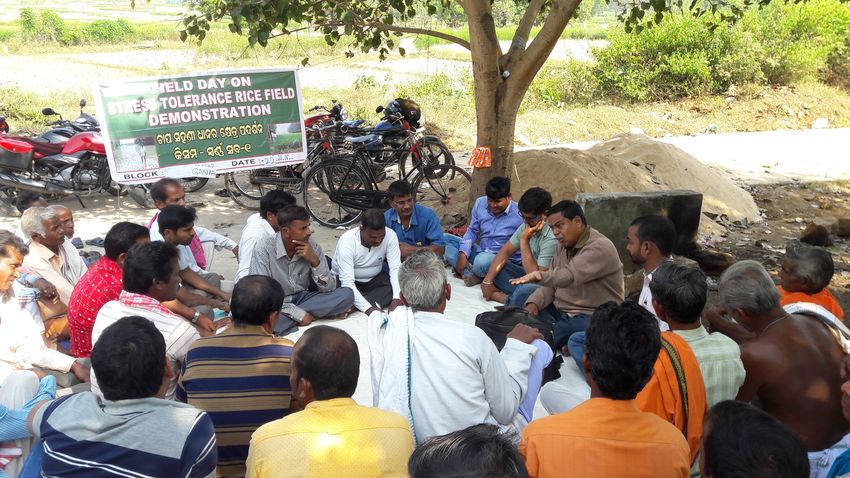
Outline
1.The puzzle of continued incomplete use of agriculture for
  development
2.Rapid value chain development for high-value products
3.Opportunities and threats for smallholder farmers
    a. Forms of inclusion of SHF in VC: contracts and wages
    b.Old and new constraints to inclusion
4.VC development as an instrument of modernization and
  transformation
5.Examples of impact of VC development on SHF modernization
    a. Quality recognition and modernization: Senegal
    b.Private sector extension and modernization: Odisha
6.Conclusion: Toward a program for SHF competitiveness in VC
       Coordination/assets/contracts/private agents/
       transformations

                                                           2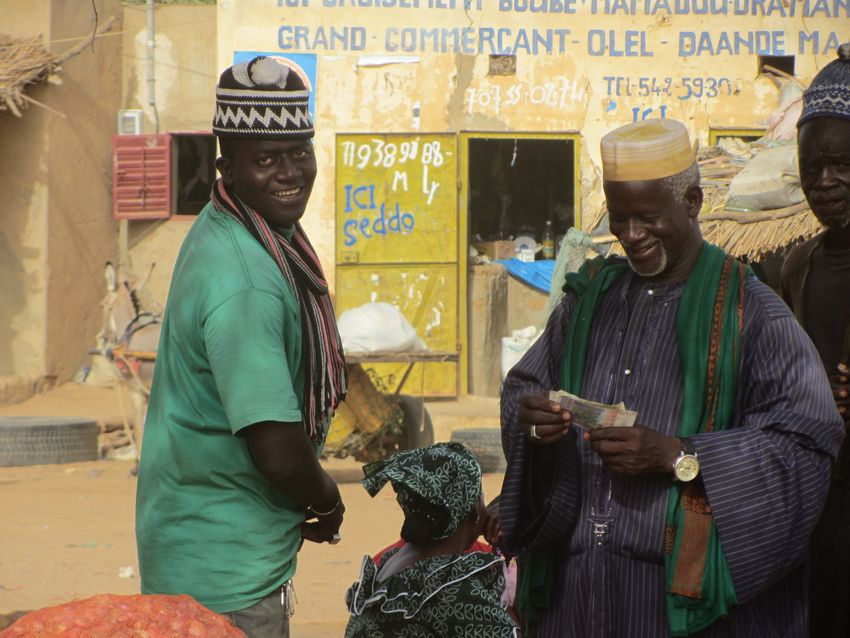
1. The puzzle of continued incomplete use of agriculture for
                              development
• Main message of WDR 2008: agriculture-based countries
  (most SSA) must invest more in agriculture for growth, food
  security, and poverty reduction, esp. in context of MDG1 and
  climate change
• Observe an increase in public investment in Ag in context of
  food crisis: from 3 SSA countries meeting the CAADEP goal
  of 10% of public budget to Ag in 2007, to 10 in 2009; 60%
  increase in ODA to Ag in 2007-09 period
• But effort not sustained: down to 2 CAADEP-10% countries
  in 2014. Sharp decline in investment in Ag R&D in SSA
• Widening gaps in fertilizer use, cereal yield, and irrigation
  between SSA and Rest of the World
• Yet, a majority of world extreme poor households are in SSA
  (a rising share), are rural, and depend on agriculture

                                                                  3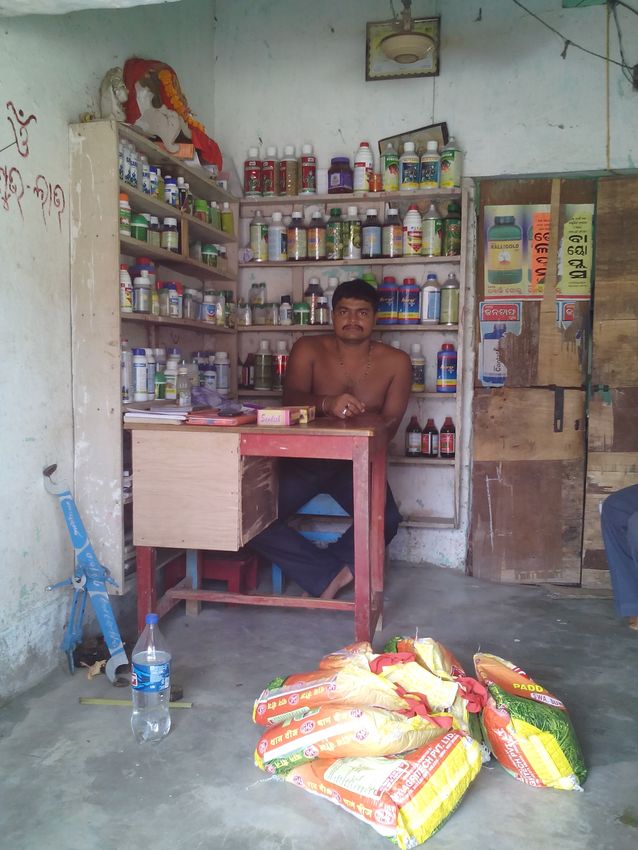
• And rising agro-pessimism and public neglect of Ag
• Yet, WDR 2008 message on more investment in Ag still
  advocated by WB, FAO, IFAD, many bi-laterals
• Hypothesis: Low effective return to public investment in Ag
  discourages investment
    o World Bank (Goyal & Nash) explanation for low return:
      public investment diverted to unproductive subsidies
    o Alternative interpretation: low success with
      technological upgrading in smallholder farming
• Hence propose:
    o Support Value Chain Development (VCD): public-private-
      civil society coordination
    o Promote SHF participation to Value Chains
    o Use VC participation as an instrument for modernization
      and transformation

                                                                4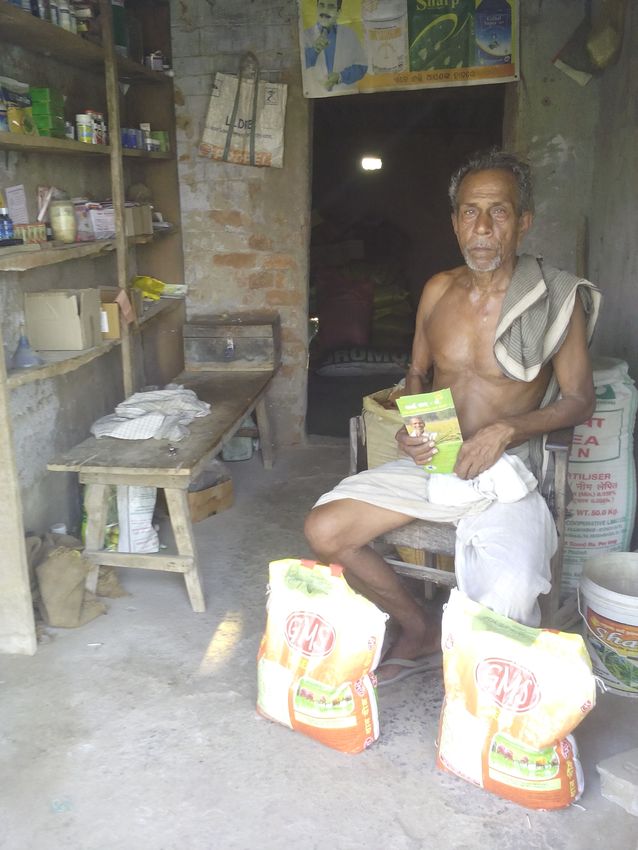
2.Rapid value chain development (VCD) for high-value
  products
                              250

                                                                                              1970

                              200                                                             1990

                                                                                              2016
         Exports, $ million

                              150

                              100

                               50

                                0
                                    Fruit and Vegetables   Meat and Meat Preparations   Coffee+Tea+Cocoa+Sp

   World exports of high value products, 1970, 1990, 2016
                                          Source: http://www.fao.org/faostat/en/#data/TP

      Rapid globalization of VC in high value products

                                                                                                              5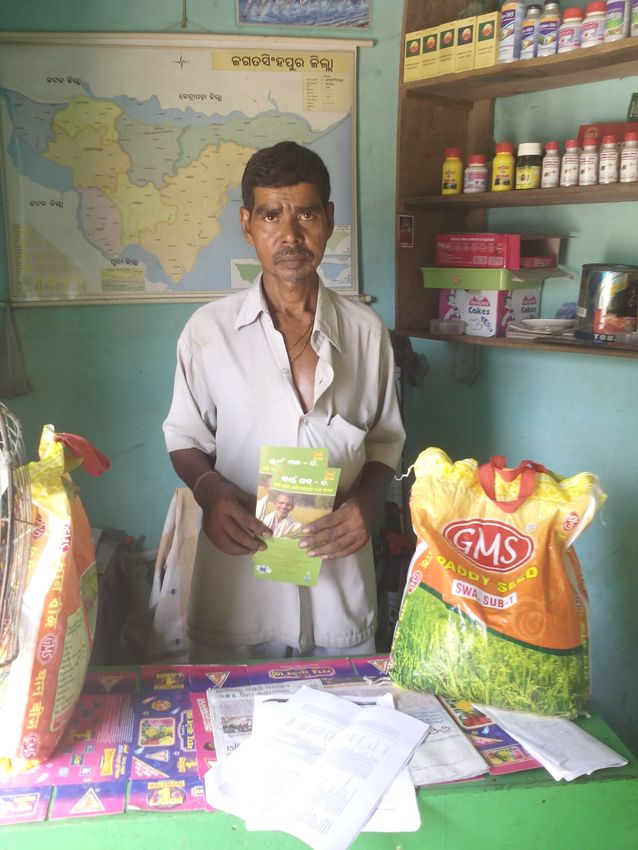
Africa: Rapid expansion of exports of coffee-tea-cocoa and of fruits and
                              vegetables

                                                                           6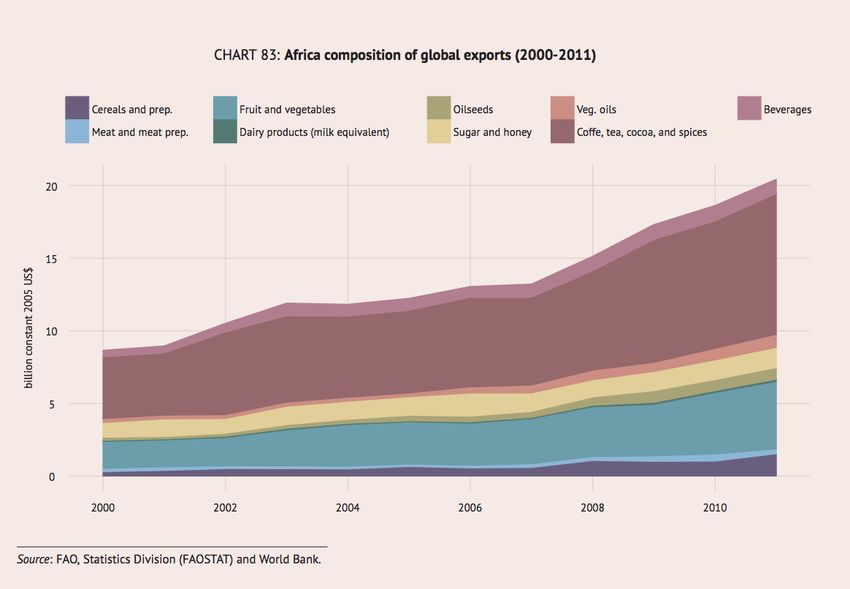
6000

                                    Coffee+Tea+Cocoa+Sp
      5000                          Fruit and Vegetables

      4000

      3000

      2000

      1000

         0
             1970
                    1972
                           1974
                                  1976
                                         1978
                                                1980
                                                       1982
                                                              1984
                                                                     1986
                                                                            1988
                                                                                   1990
                                                                                          1992
                                                                                                 1994
                                                                                                        1996
                                                                                                               1998
                                                                                                                      2000
                                                                                                                             2002
                                                                                                                                    2004
                                                                                                                                           2006
                                                                                                                                                  2008
                                                                                                                                                         2010
                                                                                                                                                                2012
                                                                                                                                                                       2014
                                                                                                                                                                              2016
                  Western Africa. Export value, 1970=100
Also rapid expansion of supermarkets (quality standards) and consumption of
             processed foods, importantly delivered by imports

                                                                                                                                                                                     7
3.Opportunities and threats for smallholder farmers
participation to VC: Old and new constraints
3.1.Forms of inclusion of SHF in VC: contracts and wages
Four options for agroindustry/agroexporters/supermarkets to
procure supply:
• Spot markets, through intermediaries
• Vertical integration
• Outgrower contract farming with medium farmers, preferred
supplier intermediary
• “Productive alliance”: contract between a smallholder
Producer Organization and a commercial partner
• “Aggregation schemes”: contract between an agroindustry
and SHFs
8Byerlee and Haggblade-Alternative business models for smallholder agriculture:
à Shows importance of market structure, PO, contracts, interlinked transactions, labor
market with vertical integration
93.2. Old and new constraints to inclusion
Persistent old challenges to smallholder competitiveness
• Land assets
o Incomplete property rights: insecurity of access to land
and lack of collateral
• Non-land assets
o Credit and insurance market failures: microfinance
revolution not a solution for agriculture, lack of risk sharing
instruments
o High transactions costs on markets
o Lack of bargaining power
10Additional new challenges to smallholder competitiveness
• Economies of scale in production: management skills,
precision farming
• Large economies of scale in participation to value chains:
input supply, contracting on markets, processing of harvest,
transport and storage
• Large economies of scale in quality recognition and
certification: SPS standards, grading, timing, traceability
• High administrative skill requirements: Information on
dynamic markets, rapidly changing technology
• Costs in contract farming: high cost of individual outgrower
contracts, lack of bargaining power, discipline in collective
action, and potential hold up by commercial partner
• Importance of spillover effects: clusters and infrastructure
corridors (multiple equilibria)
114.VC development as an instrument of modernization and
transformation
4.1.VCD as an instrument for modernization
Modernization
• Direct effects:
o Access to markets, more favorable prices, quality
recognition
o Access to resources through resource-providing
contracts: credit, inputs, information, technical
assistance, quality control, price guarantees
• Indirect effects: behavioral changes, re-optimization
o Additional investments
o Adoption of new technologies, modernization
124.2.VCD as an instrument for transformations
Stages of transformation Processes
Asset building Access to land and human capital for the
landless and sub-family farmers
Green Revolution Adoption/diffusion of HYV seeds and fertilizers
for staple crops
Agricultural Transformation Access to water for irrigation
Ag diversification toward high value crops
Development of value chains and contracting
Rural Transformation Mechanization and land concentration
Development of land and labor markets
Growth of a rural non-farm economy (RNFE)
Structural Transformation Rural-urban migration
Urban-based industrialization and services
VCD for the AB-GR-AT-RT-ST sequence
135.Examples of impact of VCD on SHF modernization
Question: Can VCD induce technology adoption and modernization?
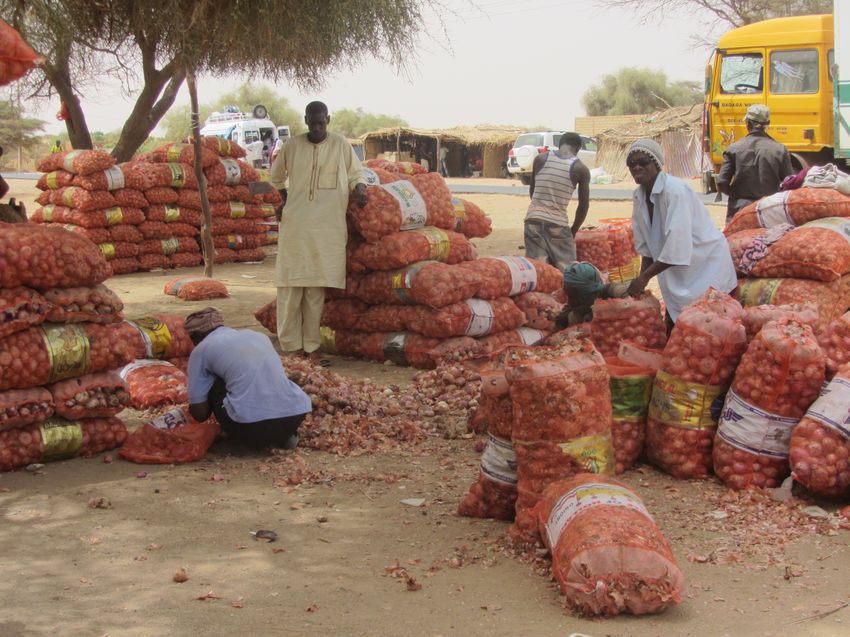
Example 1: Third party certification: quality recognition for onions in
Senegal (Bernard et al., 2017)
• Domestic onions not competitive with onions imported from Holland
• 7 months import ban and 35% import tariff: high cost on consumers
• Meant to help domestic producers keep access to domestic market and
achieve competitiveness, especially through quality enhancement
• Intervention: VCD through introduction of quality recognition: scales and
labels with grades
• Context: distant market (Podor), merchant power (banabanas and coaxers),
strong VC coordination (regional development agency SAED and local
University Gaston Berger)
• Current sale (control): by full bags and hence on volume .Use urea for
large but perishable onions
• Experiment:
14• Universal training on quality enhancing technologies (SAED, Gaston
Berger University)
• Treatment: 34 villages informed on scales and labeling at planting time
• Control: 34 villages informed on presence of scales and labels
15Sorting onions for quality recognition in Podor
16• Results
o Direct (VCD): increase in price for high quality onions
o Indirect (behavioral responses):
§ All farmers increase sorting as can see presence of scales and
labels upon arriving at market
§ 9% decline in incidence of use of volume-enhancing urea
§ 27% increase in incidence of use of weight-enhancing NPK
§ 300% increase in kg/ha of NPK
o Outcomes
§ 16% increase in likelihood of onion being of high quality
§ 6-9% increase in price received (pass-through to farmers)
§ 11% increase in net income/ha
• Conclusion
o Reverse Akerlof lemons effect: good products drive bad out of market
o VCD leads to modernization: technological change in production and
sorting in marketing practices
17Example 2: Enhancing the role of agro-dealers as agents of technology
diffusion (Emerick et al., 2018): role of private sector in VCD
• Public extension system fails to reach a large majority of SHF in Odisha,
India
• Traditional extension: AEOs give information and seed minikits to
selected lead farmers, who are in turn expected to pass information to other
farmers through their social networks
o But problem of incentive for lead farmers
• Dealer-based extension: AEO gives information and minikits to agro-
dealers, who invite client farmers to purchase the new seeds
o Incentive compatible with profit-making in repeated game with clients
(truthful information)
18• Design of randomized controlled experiment: diffusion of SwarnaSub1
flood tolerant rice seed variety
• Main outcome: adoption by farmers in corresponding block
19Odisha: AEO training of lead farmers and agro-dealers
20Agro-dealers in Odisha
21Results
• Dealer-extension increases adoption by 55%
• Dealer-extension better at targeting farmers in flood-prone areas
• No evidence that dealer-extension benefits more large and wealthy farmers
• SS1 seeds more available with dealers in treatment blocks
• Treatment dealers 25% more likely to mention SS1 to clients
Conclusion
VCD with information roles for agro-dealers supports SHF inclusiveness and
modernization
226.Conclusion: A program for SHF competitiveness in VC
• Agriculture still vastly under-used for development
• Under-use likely due to poor performance in attempting to use
it: slow progress with modernization of SHF agriculture
• Rapid VCD creates opportunities and threats for SHF
competitiveness and welfare
• Important to help SHF achieve inclusion and competitiveness
in VC
• Major ingredients to this program
o Vertical coordination in VCD
o Access to assets for SHF: resource-providing contracts
o Fixing markets for quality recognition
§ Third-party certification
§ Productive alliances
o Mobilizing private agents for VC inclusiveness: ag-dealers
o Using VCD for agricultural and rural transformations
23You can also read


