Children and Young People's Plan 2019 2021 - Co. Clare Children and Young People's Services Committee
←
→
Page content transcription
If your browser does not render page correctly, please read the page content below
Co. Clare Children
and Young People’s
Services Committee

Children and Young People’s
            Plan 2019 - 2021

Inter-agency working to improve the lives of children,
        young people and families in Co. Clare
Foreward
Welcome to the Clare Children and Young People’s Plan 2019-2021 (CYPP) developed by the Clare
Children and Young People’s Services Committee (CYPSC).

Our new Plan 2019-2021 is ambitious and aims to improve the relationships between inter-agency
services in Co. Clare to address the needs of children, young people, families and communities.

The vision of our CYPSC is that all children and young people of Clare are valued, thriving, safe, content,
have equal opportunity, are respected in their lives and are connected to their communities.

This Plan is testimony to the commitment shown by of local stakeholders who strive towards making
this vision a reality for children and young people in our County.

We believe that children, families and communities should be actively involved in the decisions that
affect their lives. We are committed to working with them to maximise their dignity, autonomy and
self-determination whilst providing services that are timely and appropriate for their specific needs. In
order to deliver on this ambition, our core principles have been set out in this plan to guide us on our
decision-making for the coming years:

       a)      Demonstrate leadership
             •   Identify pieces of work / initiate action where we can show leadership
             •      Demonstrate leadership on improving outcomes for children and young people
       b) Facilitate interagency collaboration
             •      Clarifying roles and responsibilities of stakeholders
             •      Clarifying internal leadership and authority
       c)        Enable a voice for children and young people
       d)        Being evidence-informed
       e)        Prioritise identified gaps (avoiding duplication)
       f)        Optimise available resources
       g)        Ensure quality responses

The Action Plan reflects a set of informed actions gathered from local knowledge, shaped by evidence
whilst using the combined knowledge of members of strategic partners working within the wider
community of County Clare. The goals and targets set out in the Action Plan are realistic, attainable and
meaningful.

I look forward to assessing its success through the established working groups and seeing the improved
outcomes for children and young people in Clare.

I would like to thank all who contributed to the development of the CYPP 2019-2021 in particular Mr.
Ger Brophy, CYPSC Chairperson (2016-2017).

I would also like to thank all our partners and stakeholders, including the children, families and young
people who have made such a valuable contribution to the development of our new CYPP 2019-2021.

 Dr. Caroline Cullen
 Chairperson Clare Children and Young People’s Services Committee

Clare Children and Young People’s Plan 2019-2021                                                         3
Contact Contents
Section 1: Introduction 6
1.1 Background to Children and Young People’s Services Committees 6
The Clare Children and Young People’s Services Committee welcomes comments, views and opinions
about our Children and Young People’s Plan. 1.2 Who we are 7
1.3 CYPSC achievements to date 10
Please contact: Sinéad Collopy sinead.collopy@tusla.ie W 065 6863928
1.4 CYPSC strategic linkages and key relationships 11
Copies of this plan are available on: www.cypsc./clare 1.5 How the Children and Young People’s Plan was developed 12
Section 2: Socio - Demographic Profile of Co. Clare: Introduction 13
2.1 Demography 15
2.2 Economy 21
2.3 Education 27
2.4 Health 33
2.5 Safe and protected from harm 40
Section 3: Overview of Services to Children and Families: Introduction 46
3.1 Key services for children & families in Co. Clare 47
3.2 Analysis of services for children and families in Co. Clare 48
Section 4: Local Needs Analysis in Co. Clare 52
4.1 How did the socio - demographical data inform the needs analysis? 52
4.2 Consultation data emerging from the Clare needs analysis
and development plan (2017) 53
4.2.1 Consultation findings 0-4 year olds 55
4.2.2 Consultation findings for 5-12 year olds 57
4.2.3 Consultation findings for 13-18 year olds 60
4.2.4 Consultation findings for 19-24 year olds 63
4.3 An analysis of the consultation findings in relation to service provision 65
Section 5: Summary of Children and Young People’s Plan for Co. Clare 67
Section 6: Action Plan for Co. Clare Children and Young People’s Services Committee 68
Section 7: Monitoring and Review 78
Appendices 79
• CYPSC Terms of reference
• CYPSC Subgroup Terms of references
• List of schools that participated in the 2017 children’s consultation
• Samples of work submitted by the children as part of the under 12’s
consultation 2017
4 Clare Children and Young People’s Plan 2019-2021 Clare Children and Young People’s Plan 2019-2021 5
List of Tables & Figures                                                                              Glossary of terms
Fig. 1      CYPSC membership structure                                                          9     BOBF       Better Outcomes Better Futures, National Policy Framework. DCYA 2014-2020
Fig. 2      CYPSC Committee membership                                                          9     CAMHS      Child and Adolescent Mental Health Services
Fig. 3      CYPSC Subgroup Structure                                                            9     CFL        Connecting for Life H.S.E Mental Health Strategy
Fig. 4      CYPSC governance linkages                                                           11    CFSN       Child and Family Support Network CHO area
Fig. 5      CYPSC Strategic Development Process (2016 – 2019)                                   13               Community Health Organisation CYPP
Fig. 6      Population aged 0-24 2016 ( AIRO Baseline Report, 2017 )                            22               Children and Young People’s Plan DCYA
Fig. 7      Ethnicity by age ( AIRO Baseline Data report 2017                                   16               Dept. Of Children and Youth Affairs
Fig. 8      Private Rented Market 2016                                                          25    DHPLG      Dept. Of Housing, Planning and Local Government
Fig. 9      Lone Parent families by area 2016                                                   26    DEIS       Delivering Equality of Opportunity in Schools
Fig. 10     Educational attainment levels general population 2016                               28    DES        Dept. Of Education and Skills
Fig. 11     Primary only educational attainment, 2016                                           29    CLDC       Clare Local Development Company
Fig. 12     Primary school absenteeism rates 2016                                               30    DOH        Dept. Of Health
Fig. 13     Secondary school absenteeism rates 2016                                             31    DEASP      Dept. Of Employment Affairs and Social Protection
Fig. 14     Leaving Certificate Retention Rates, 2015                                           32    DRCD       Dept. Of Rural and Community Development
Fig. 15     Percentages of mothers breastfeeding 2017                                           34    CYS        Clare Youth Service
Fig. 16     Referrals to CAMHS Mid-West 2016                                                    35    ECCE       Early Childhood Care and Education
Fig. 17     Rate of Self-Harm in males (under 25), 2016 (NSRF, LHO)                             37    ESL        Early School Leaving
Fig. 18      Rate of Self-Harm in females (under 25), 2016 (NSRF, LHO )                         38    LCETB      Limerick and Clare Education and Training Board
Fig. 19     Domestic Violence Barring Orders, 2015 (Courts Service)                             41    EWS        Educational Welfare Services FET
                                                                                                                 Further Education and Training FRC
Fig. 20     Garda Youth Diversion Referrals, 2015 (IYJS)                                        43
                                                                                                                 Family Resource Centre
Fig. 21     Hardiker Model                                                                      48
                                                                                                      HI         Healthy Ireland, A framework for improved Health and Well-being 2013-2015
Fig. 22     Overview of services identified in the 2017 study                                   49
                                                                                                      HPI        Health Promotion and Improvement
Fig. 23     Services identified in the overview of services study 2017                          49
                                                                                                      HIQA       Health Information and Quality Authority
Fig. 24     Hardiker levels of service provision                                                50
                                                                                                      HSE        Health Service Executive
Table 1:    Co. Clare socio-demographic overview                                                14
                                                                                                      IPPN       Irish Primary Principals’ Network
Table 2:    Age breakdown by electoral areas, 2016 Census data                                  17
                                                                                                      LCDC       Local Community Development Committee
Table 3:    Traveller population in Co. Clare. 2016                                             18
                                                                                                      LECP       Local Economic and Community Plan
Table 4:     Distribution of population by band on the Haas- Pratachkte Index , 2016            21
                                                                                                      LHO        Local Health Organisation
Table 5:    Areas classified as disadvantaged in Co. Clare, 2016                                22
                                                                                                      Meitheal   Collaborative model forming a multi-disciplinary team around the child, Tusla
Table 6:    Youth unemployment by county, 2019                                                  24
                                                                                                      NAPDP      National Association of Principals and Deputy Principals
Table 7:    People who received a treatment intervention in the Mid-West 2018                   36
                                                                                                      NDS        National Drugs Strategy
Table 8:    Age profile under 25 years of people who received a treatment intervention
                                                                                                      NEETS      Refers to Young people who are Not in Employment, Education or Training
            in the Mid- West 2018                                                               36
                                                                                                      NEPS       National Educational Psychological Service
Table 9:    Average rate of suicide per 1000,000, Tusla West Areas
            ( National Office for Suicide Prevention, November 2018 )                           39    NGO        Non-Government Organisation
Table 10:   Breakdown of persons under 19 years registered with a disability 2016               40    NOSP       National Office for Suicide Prevention
Table 11:   Referrals into the Co. Clare Tusla Duty/Intake Team year end 2018                   44    NSDF       National Service Delivery Framework for Tusla NSRF
                                                                                                                 National Suicide Research Foundation MWRDATF
Table 12:   Numbers of open cases to Co. Clare Child Protection & Welfare Teams year end 2018   44
                                                                                                                 Mid-West Regional Drug and Alcohol Task Force OMYCA
Table 13:   Number of referrals to Prevention Partnerhsip and Family Support year end 2018      45
                                                                                                                 Office of Minister for Children and Youth affairs PHN
Table 14:   Age breakdown of 0-25 years old residing in Knockalisheen Direct Provision Centre   45               Public Health Nurses
Table 15:   Numbers of residents in the Lisdoonvarna Direct Provision Centre                    45    PPFS       Prevention Partnership and Family Support
Table 16:   Breakdown of CYPSC consultation participants 2016/20176                             54    SCP        School Completion Programme
Table 17:   Summary of findings & recommendations : 0-4 year olds                               56    SICAP      Social Inclusion Community Activation Programme
Table 18:   Summary of findings & recommendations : 5 – 12 year olds                            58    SPHE       Social Personal Health Education
Table 19:   Summary of findings & recommendations : 13 – 18 year olds                           61    Tusla      Tusla Child and Family Agency
Table 20:   Summary of findings & recommendations : 19 – 24 year olds                           64

6                                                  Clare Children and Young People’s Plan 2019-2021   Clare Children and Young People’s Plan 2019-2021                                           7
Section 1:                                                                                               1.2: Who we are
Introduction                                                                                             Children and Young People’s Services Committees National Steering Group
                                                                                                         The main function of the CYPSC National Steering Group is to support the effective operation and
The purpose of the Children and Young People’s Services Committees is to secure better outcomes for
                                                                                                         practical implementation of CYPSC at local level.
children and young people through more effective co-operation and collaboration by existing services
and through interventions at local level.                                                                The CYPSC National Steering Group addresses issues and obstacles that need resolution at national
                                                                                                         level. The Chair of the CYPSC National Steering Group is a member of the Children and Young People’s
CYPSC work towards the five national outcomes for children and young people in Ireland. These are
                                                                                                         Policy Consortium and utilises that forum to promote the work of CYPSC and escalate any pertinent
that children and young people:
                                                                                                         issues that require a national response.
       1. Are active and healthy, with positive physical and mental wellbeing
                                                                                                         The CYPSC National Steering Group provides guidance and advice on strategic, policy and operational
       2. Are achieving full potential in all areas of learning and development                          issues relevant to the local committees.
       3. Are safe and protected from harm
                                                                                                         Membership of the Steering Group comprises of senior representatives from
       4. Have economic security and opportunity
       5. Are connected, respected and contributing to their world                                              •   Tusla-Child and Family Agency,
                                                                                                                •   Health Service Executive,
Each Committee develops and implements an interagency 3 year Children and Young People’s Plan for
the County (CYPP), which is designed to improve outcomes for children and young people in their area            •   City/County Councils,
based on the 5 National Outcomes for children and young people in Ireland.                                      •   Education and Training Board Ireland,
                                                                                                                •   Community and Voluntary sector,
The Clare CYPP includes:
                                                                                                                •   Department of Children and Youth Affairs,
                                                                                                                •   Department of Education and Skills,
                                                                                                                •   Department of Housing, Planning, Community and Local Government,
                                                                                                                •   A young person aged 18-24 years,
                                                                                                                •   Personnel from local CYPSCs (Chairperson, vice Chairperson and CYPSC Co-ordinator),
                                                                                                                •   The National Co-ordinator for CYPSC and an Independent Chairperson.

                                                                                                         Membership of the Clare CYPSC
                                                                                                         CYPSC membership comprises of senior management from the statutory, community and voluntary
                                                                                                         providers in any county, that are working to provide services and to deliver better outcomes for
                                                                                                         children and young people aged 0 to 24 years. The CYPSC chairperson is drawn from Tusla Child and
1.1: Background to Children and Young People’s Services Committees
                                                                                                         Family Agency with the CYPSC Vice Chairperson drawn from the local authority. See figure 1 for CYPSC
The Office of the Minister for Children and Youth Affairs (OMCYA), now the Department of Children and    membership. A copy of the Clare CYPSC Terms of Reference and Terms of Reference for all the CYPSC
Youth Affairs, established the Children and Young People’s Services Committees (formerly Children’s      subgroups can be found in the appendix section of the plan.
Services Committees) in 2007 with the purpose of improving outcomes for children and families at
                                                                                                         The Clare CYPSC Coordinator is a CYPSC representative on the Clare Comhairle na nÓg steering committee
local and community level. Since then CYPSC have increased incrementally in number and are a key
                                                                                                         and will be developing communication protocols between the Comhairle steering committee and
structure identified by Government to plan and co-ordinate services for children and young people,
                                                                                                         CYPSC steering committee.
aged 0 – 24 years, in every county in Ireland.
                                                                                                         Other youth based infrastructures such as the Clare Youth Services Younger Voices group, school based
CYPSC bring a diverse group of agencies across the statutory, community and voluntary sectors in local
                                                                                                         student councils, Scouting Ireland youth representative structures may also be explored as vehicles
county areas together to engage in joint planning of services for children and young people. All major
                                                                                                         for youth participation on the CYPSC structures in adherence with the principles of the supporting the
organisations and agencies working locally on behalf of children and young people are represented.
                                                                                                         Lundy model of youth participation. The Clare CYPSC endeavours to offer a space at the table for young
These committees work to improve the lives of children, young people and families at local and
                                                                                                         people, give young people a voice, be open to young people holding positions of influence on the CYPSC
community level through collaborative planning and improved service delivery.
                                                                                                         and being an audience for the young people of Co. Clare to bring their issues and recommendation to.
Better Outcomes, Brighter Futures: The National Policy Framework for Children and Young People 2014–
2020 underscores the necessity of interagency working and tasks Children and Young People’s Services
Committees with a key role in this regard.

8                                                    Clare Children and Young People’s Plan 2019-2021    Clare Children and Young People’s Plan 2019-2021                                                    9
Clare CYPSC Chairperson
Comhairle na nÓg steering
Dr. Caroline Cullen committee communication
Tusla mechanism in place
Mid-West Area Manager
Outcome 4 & 5
Outcome 1: Outcome 2: Outcome 3:
Connected, Respected
Active & Healthy Learning & Safe & Protected from & Economically Secure
Subgroup Development Harm Subgroup
Subgroup Subgroup
Ms. Margaret Slattery Mr. Kees Duson
Clare Youth Services Ms. Sharon Dilger Ms. Aine Mellett Family Resource Centre
IPPN Tusla PPFS Manager Rep.
Fig. 1: CYPSC membership structure
Practice South Youth
Co. Clare
Deputy Chair Play Strategy sharing East Clare volunteering
Chairperson Comhairle na nÓg Working planning Interagency project
Mr. Damien McMahon Healthy Safe planning
Dr. Caroline Cullen steering committee Relationships Group Alternate group Parenting Group Restorative
group
Coordinator Clare communication Working
Education
working
practices
Area Manager Advisory working
Homeless Action Team mechanism in place Group group
Tusla Mid-West Children in Care
Group group
Clare County Council
Tusla
Family
Health Service Ms. Aine Mellett Clarecare Clare County
An Garda Resource
Executive
(PPFS Manager)
Siochana
Childcare
Centre Rep
Fig. 3: Co. Clare Children and Young People’s Services Committee
Ms. Jacinta Committee
Ms. Sian Mr. Mick Parry Subgroup Structure & Chairpersons
Swann Inspector Mr. Kees Duson
Harris (General Manager) Ms. Yvonne
Family Support David Killaloe
Senior Clinical Manager
Mr. David Dineen Finnerty Broderick / Ballina FRC
Psychologist
(Education & Welfare Manager
Services)
I.P.P.N
Clare Local Limerick and
Ms. Sharon N.A.P.D Development Clare Youth Clare Education
Dilger Probation
Vacancy Company Services and Training
(Principal) Service
to be Board
Ms. Darina Ms. Margaret
Ms. Mary Ms. Irene
filled Greene Slattery Vacancy
Dunlea Gilmore
SICAP C.E.O to be
Fitzgerald Coordinator
(Principal)
filled
Fig. 2: Co. Clare Children and Young People’s Services Committee membership
10 Clare Children and Young People’s Plan 2019-2021 Clare Children and Young People’s Plan 2019-2021 11
1.3: CYPSC achievements to date                                                                                              The Clare CYPSC has also established subgroups aligned to the five national outcomes and working
                                                                                                                             group structures to oversee the delivery of actions contained within the plan and feedback to the CYPSC
The Clare CYPSC was established in 2016. The Clare CYPSC has received two main funding streams                               on any challenges that may arise during the implementation phase. Each subgroup and working group
over the past three years: seed funding from the Department of Children and Youth Affairs and Healthy                        has established its own terms of reference and is chaired by a member of the CYPSC. (see appendices).
Ireland Funding from the Department of Health. The table below highlights a number of interagency                            From 2016 – 2019, the Clare CYPSC has supported the development of interagency initiatives across the
initiatives that the CYPSC has initiated and/or supported through these main funding streams. The Clare                      county to the value of €243,000.
CYPSC allocated financial support on the basis that the initiatives adhered to the CYPSC priority areas
and principles. Each CYPSC subgroup acts as the governance structure over the seed fund and ensures
monitoring and feedback mechanisms are in place once funding support is agreed. The Clare CYPSC                              1.4: CYPSC strategic linkages and key relationships
has been working in partnership with the Clare LCDC whereby we have submitted joint Healthy Ireland                          Since the establishment of Local Community Development Committees (LCDC), CYPSC and LCDC
funding applications in 2018 and 2019.                                                                                       relationships have developed. The Local Community Development Committees (LCDC) – Children & Young
                                                                                                                             People’s Services Committees (CYPSC) Guidance Document (2016) describes how Local Community
                           Clare CYPSC Seed funded initiatives                                                   Amount      Development Committees (LCDC) and Children and Young People’s Services Committees (CYPSC)
                                      2016 – 2019                                                               2016-2019    should work together and sets out how engagement between the structures should be progressed.

     •   *(Socio-economic data analysis baseline report for Co. Clare)                                          €67,000      Figure 4 indicates the governance structure for CYPSC including the relationship between the CYPSC
     •   Incredible Years Parent and Baby programme                                                                          Children and Young People’s Plans and the LCDC Local Economic and Community Plans (LECP).
     •   Ennis Youth Leadership Programme
     •   Circles of Security Adoption Initiative
     •   Therapeutic Horse Rising Programme
     •   *Clare Local Development LEADER Youth Needs Analysis Study
         (CYPSC led initiative)
     •   *“Explore, Play, Learn” parent and child showcase events: Promoting learning in the home through
         Aistear
     •   Circles of Security practitioner training
     •   *Baseline study on the needs and experiences of families in South East Clare where drugs and/or
         alcohol misuse has been a factor in the home
     •   *Parent Planner App designed
     •   *Supporting immigrant children to engage in community arts initiatives
     •   *Restorative practices training/seminar for agencies across Co. Clare
     •   *Youth Health and Wellbeing Service: Research efficacy of a sample of current models in existence
     •   *Affordable access to sports for families: Jersey and boots “Swap Shop” initiative promoted with
         clubs in the county in partnership with the Clare Sports Partnership
     •   *Countywide profile of parenting initiatives with recommendations for future coordination
     •   Youth led anti-bullying initiative – North Clare

                   Initiatives marked with an * were initiated and led by the Clare CYPSC.

                *Clare CYPSC Healthy Ireland funded initiatives                                                  Amount
                                2018 – 2020                                                                    2018 – 2020
 •       Mind Body and Soul health promotion initiative – Intergenerational project                            €176,000
 •       Imagination Playground DEIS Schools Initiative: Promoting play and development for children under
         12 years (5 schools received the Imagination Playground resource for their school)                                           Fig 4. CYPSC governance and relationship between LCDC LECP and CYPSC CYPP
 •       Trauma Informed Healthy Safe Relationships Toolkit for young people in the Care system:
         Interagency working group in Clare & Limerick in place.
 •       Up scaling of the Imagination Playground scheme to include Early Years Services based in positive
         evaluation of the 2018 fund: 14 schools & Early Years Services across the county to receive the                     Continued efforts to strengthen these strategic alliances needs to be fostered and supported by CYPSC
         resource in partnership with Clare County Childcare Committee. By 2020, over 7,000 children will be                 and the LCDC at local level.
         accessing the resource across the county.
 •       Edible gardens nutrition project: Ennis Family Homeless Hub – Interagency working group in place.
 •       Supporting mental wellbeing for families parenting under pressure in temporary accommodation.
         The model designed and piloted with families accessing homeless support services in Clare.
         Recommendations from the pilot to be delivered to mental health service providers nationally and
         locally. Interagency working group in place.

                   *In 2017 CYPSC Healthy Ireland funding was administered by the Clare LCDC

12                                                                    Clare Children and Young People’s Plan 2019-2021       Clare Children and Young People’s Plan 2019-2021                                                   13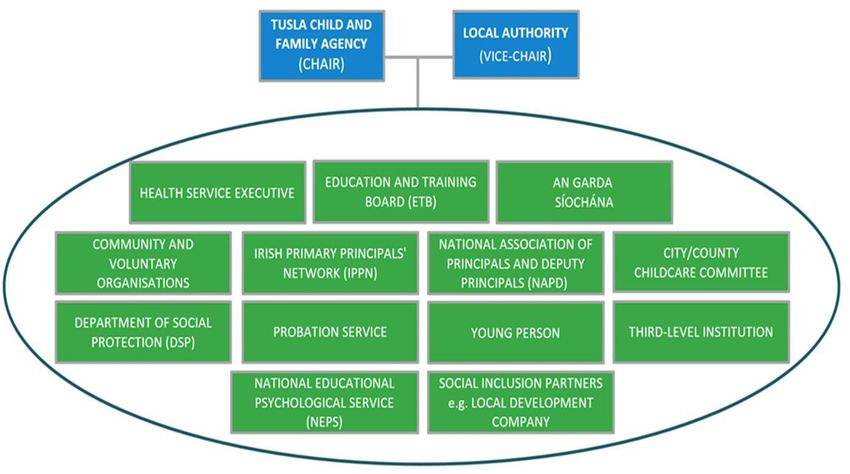
1. How the Children and Young People’s Plan                                                  Section 2:
                     was developed in Co. Clare
                                                                                                          Socio-Demographical Profile
                                 Strategic development process:
     September 2016 – February 2017                         May 2017 – February 2018
                                                                                                          of County Clare
                                                        Under 12’s consultation with national schools.    Introduction: Background to Co. Clare
         6 month community/stakeholder                Permission granted to replicate the DCYA National
              consultation process                     Youth Consultation Survey (2,300 response rate     County Clare (Irish: Contae an Chláir) is a county in Ireland, in the Mid-West Region and the province of
                                                            from students aged 8 - 12 years old)          Munster, bordered on the West by the Atlantic Ocean. The county town and largest settlement is Ennis.

                                                                                                          Clare is north-west of the River Shannon covering a total area of 3,400 square kilometres (1,300 sq.
                                                                                                          mi). Clare is the 7th largest of Ireland’s 32 traditional counties in area and the 19th largest in terms
                                                       LEADER funding and CYPSC seed funding jointly      of population. Co. Clare is noted for its agriculture, tourism and, highly scenic and environmentally
                                                        commissioned a thematic needs analysis of all
       Formation of the CYPSC Steering group                                                              important landscapes.
                                                      CYPSC consultation data gathered and a mapping
                                                                of current service provision              It is home to the Burren National Park and is renowned for both its physical and cultural heritage (ref:
                                                                                                          County Clare development plan 2011-2017 p.21).

                                                                                                          The County has an extensive Atlantic coastline, all of which is included on the Wild Atlantic Way. This
     Facebook/Instagram sponsored survey
                                                             Action planning process designed             recent marketing initiative by Fáilte Ireland has been successful in adding to Co. Clare’s already strong
 targeted at parents living in Co. Clare and young
                                                                and endorsed by the CYPSC                 coastal tourism industry.
      people aged 13 – 25 living in Co. Clare
                                                                    Steering Committee
               (900 response rate)
                                                                                                          There are also tourism sector opportunities along Clare’s southern boundary, the Shannon Estuary,
                                                                                                          on the shores of Lough Derg on the County’s eastern border, and throughout the inland areas which
                                                                                                          maintain traditional, rural ways of life.
  Typeform survey targeted at service providers
    through the H.S.E/Tusla/CBO’s and schools                 AIRO baseline report signed off             Shannon Airport is located in the south of the County and there are substantial employment opportunities
 (109 response rate)Parent/young person/service              by the CYPSC Steering Committee              within the Galway – Ennis – Shannon – Limerick corridor. Add to this that Co. Clare is very accessible by
             provider focus groups
                                                                                                          air, road, and rail and it is clear why tourism is a sector of great importance and opportunity (SICAP
                                                                                                          Programme Clare Local Development Company 2018 – 2022)

                                 Strategic development process:                                           Commerce and trade are the greatest sources of employment in the County. Outside of the industrial/
                                                                                                          business, retail and administrative employment centres of Shannon, Ennis and Kilrush, tourism and
        March 2018–June 2018		                                July 2018–January 2019                      agriculture are two of the primary industries in the County. (ref: County Clare development plan 2011-
                                                                                                          2017 p.22).
  Stakeholder events were held where over 100
 cross sector service providers who participated         External facilitation for the CYPSC Steering     Co. Clare has a considerable ageing population who are residing primarily in rural areas, as well as a
 in facilitated workshops, worked on developing      Committee to develop Terms of Reference and assist   growing under 25 years old population residing in more urban centres. Population decline in rural
   actions stemming from issues raised through          in identifying priority actions for subgroups
                                                                                                          areas has been impacted by transport challenges as well migration to urban centres for greater
             the consultation processes.
                                                                                                          employment and training opportunities. Despite facing population dispersal challenges, Co. Clare has
                                                                                                          one of the highest rates of volunteerism in the Country. Community identity has been built in rural
                                                                 Four subgroups established               Clare around the County’s traditional parishes and town lands of which there are more than 2,000.
       Cross sector team briefings conducted                     with core membership from                This shared community identity has helped align the many diverse identities of the County’s sporting
       to consult further on proposed actions                  the CYPSC Steering Committee               clubs (particularly GAA) and organisations (farming, political and cultural). Research conducted by the
                                                                  and broader stakeholders                Clare Rural Development Forum estimates that fundraising for sporting, community, school, church
                                                                                                          and cultural purposes exceeds €100,000 annually on average for each parish or €3.2 million for the 32
                                                                                                          parishes in rural Clare. The community asset base would extend to multiples of this. In most of rural
                                                                                                          Clare, the extent of community-owned assets exceeds that of State owned assets.
            A draft of proposed actions                          January 2019-April 2019
           were presented to the CYPSC                          Subgroups met to develop                  Whilst Co. Clare faces challenges regarding rural depopulation and areas of rural disadvantage, the
               Steering Committee                           Terms of Reference and action plans
                                                                                                          County has a long history of parish level community development which fosters a strong sense of
                                                                                                          identity amongst the young people in the County.

14                                                   Clare Children and Young People’s Plan 2019-2021     Clare Children and Young People’s Plan 2019-2021                                                     15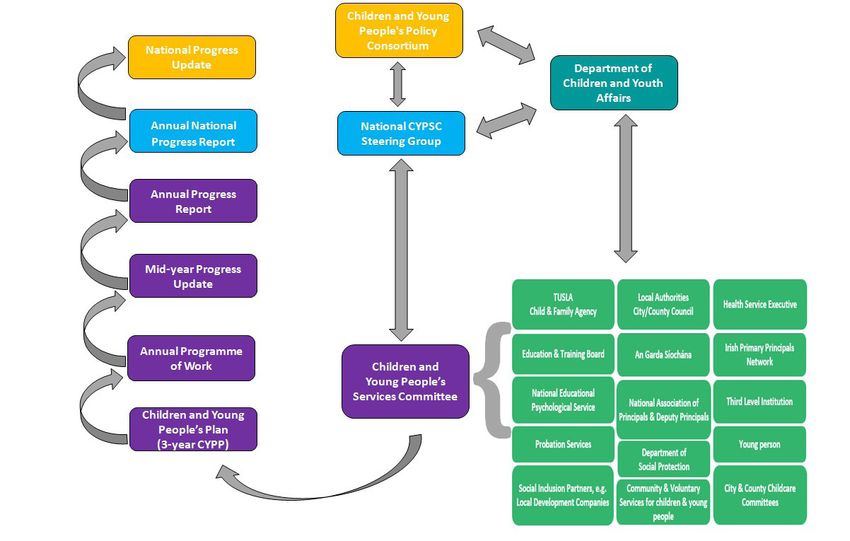
Socio-demographical profile: background                                                                                        2.1: Demography
Section 2 provides a socio demographical overview of Co. Clare focusing on the following five indicators:
                                                                                                                               All the statistical charts that provide a regional and national comparative in the Co. Clare Children and
         2.2        Demography                                                                                                 Young People’s Plan are colour coded in order to provide a clear visual whereby the Co. Clare statistic is
         2.3        Economy                                                                                                    highlighted on the graph.
         2.4        Education
         2.5        Health                                                                                                     Most pertinent data emerging:
         2.6        Security                                                                                                       •    74% of young people under the age of 24 years live in urban areas in the County
The All-Island Research Observatory (AIRO) at Maynooth University were commissioned by the Clare                                   •    Children aged 5-12 years old is the largest age group in the County
CYPSC to undertake a detailed mapping and statistical analysis of the socio-demographic trends within                              •    By 2031 31% of the population will be made of 18-24 year olds
a Children’s and Young People’s Services Committee (CYPSC) area.                                                                   •    Clare has a higher than state average of people coming from the Traveller community
The analysis was based on a combination of 2016 Census indicators from the Central Statistics Office                           According to Census 2016, there were 118,817 people residing in Clare in April 2016. This demonstrates
(CSO) and from a variety of other authoritative child related data sources in Ireland. All Census indicators                   a population change and increase of 1.4% between 2011 and 2016. Clare had the second highest
were based on either a Small Area (SA) or Electoral Division (ED) level. The study had a particular focus                      population growth in the Mid-West region. Shannon (3.1%) had the highest population growth in Clare.
on children’s data and the final output provided a clear and accurate evidence base to support the                             Most relevant to these findings is that fact that 33% of the population in Clare were aged 0-24 years
development and monitoring of a CYPSC strategic work programme. A full copy of the AIRO baseline                               in 2016. The 5 – 12-years old group have the highest proportion at 12%. This supports the projected
data report can be downloaded on www.cypsc/clare . Section 2 provides an overview of the most                                  growth in youth and young adults from 2016 to 2031.
pertinent data emerging from the AIRO report.
                                                                                                                               However, the high average population growth may mask significant intergenerational (1981-2016)
One of the greatest challenges in relation to generating an accurate socio-demographic profile for the                         decline across much of the County. While the large corridor from Ennis, through Shannon, to Limerick
County is in obtaining County level statistics across a range of agencies. Mid-West data was only publicly                     and Killaloe, experienced population growth of 61% between 1981 and 2016, the more rural parts of
available for certain indicator sets.                                                                                          Clare experienced population decline of 3%.
Table 1 offers a demographical summary of the statistics gathered focusing (where available) on data                           In terms of population structure, rural Clare contains 29% of the county’s population but 40% of the
pertaining to the 0-24 year old population cohort.                                                                             county’s population aged ‘65+’. Only 26% of the county’s young people live in rural areas. (Clare Rural
                                                                                                                               Development Strategy 2026). Figure 6 highlights the areas of Ardnacrusha (East Clare) and Sixmilebridge
   Table 1: Co. Clare socio-demographical overview (2016 C.S.O data unless otherwise stated)
                                                                                                                               (South East Clare) as being areas with the highest population of 0-24 year olds.
 Indicator                               Measure – Local and National Comparator                                               The proximity of Limerick City to Ardnacrusha for employment purposes and Sixmilebridge gaining
 Child and youth population 0-24 years   11,276 (33%)     ;             1,583,004 (33.2%) Total Clare population = 118,817     a commuter rail link to Limerick as well as it being close to the Shannon Industrial Estate, may be
                                                                                                                               contributing factors to the high youth statistics in these two specific areas.
 Child population 0-17 years             9,152 (25.7%) ;                 1,190,502 (24%)

 Young adult population 18-24 years      2,124 (7.2%)         ;          392,502 (8.2%)

 Infant mortality                        7 infant deaths occurred in 2016 equating to 4.7 per 1,000 births. By 2018 this
                                         figure had dropped to 3.7 (5). National: 3.3 per 1,000 births

 Child mortality                         7 deaths of children aged 1year-19 years (6 deaths occurring in the 15 years-19
                                         years category) in 2018.
                                         5 registered deaths of young people aged 20-24 years. Child and youth deaths 1-24
                                         years equate to 1.3% of the 866 registered deaths in 2018

 Ethnicity                               4,507 (10.5%)    ;               National 14.4%

 Non-Irish national children and young   3,936 (9%)       ;               National 13.2%
 People

 Family structure                        17.6% of Clare families are lone parents ; National 20%

 Parental education level                The percentage of children under 18 whose mother has attained (a) primary 3.6%, (b)
                                         secondary 56.1%,
                                         (c) third-level education 38.2%

 Traveller children and young people     571 (1.3%)               ;      National 0.7%

 Separated children seeking asylum       0

16                                                                    Clare Children and Young People’s Plan 2019-2021         Clare Children and Young People’s Plan 2019-2021                                                      17
Age breakdown by electoral areas
                                                                                                                      (2016 Census data)

                                                                                                   0-4 years                                           18-24 years
                                                                                   Shannon             2,328                              Shannon           1,874

                                                                                   Killaloe            1,895                              Killaloe          1,498

                                                                                   West Clare          2,263                              West Clare        2,056

                                                                                   Ennis               2,124                              Ennis             2,473

                                                                                                      (Total 7,901 or 6.6%)                                (Total 8,610 or 7.2%)

                                                                                                 5-12 years                                Projected growth/decline 2031
                                                                                   Shannon            3,2777                             0-4 years         ( - 26% )
                                                                                   Killaloe           2,954                              5-12 years        ( -15% )
                                                                                   West Clare         3,818                              13-17 years       ( +10% )
                                                                                   Ennis              4,206                              18-24 years       (+31% )

                                                                                                     (Total 14,255 or 12%)                                (Total 8,610 or 7.2%)

                                                                                                                              13-17 years
                                                                                                               Shannon           1,874

                                                                                                               Killaloe          1,498

                                                                                                               West Clare        2,056

                                                                                                               Ennis             2,473

                                                                                                                                 (Total 18,469 or 7.1%)

                                                                                                 Table 2: Age breakdown by electoral areas (2016 Census data)

     Fig 6: Population aged 0-24, 2016, AIRO Report

18                           Clare Children and Young People’s Plan 2019-2021   Clare Children and Young People’s Plan 2019-2021                                                   19
Ethnicity Population 0-24
Travellers
Ennis Rural 262
Doora 65
Ennis No.1 Urban 47
Ennis No.2 Urban 60
Clareabby 109
Ennistymon 120
Clenagh (Shannon) 89
2016 Census shows 905 Travellers living in Clare. They predominately live in the Ennis area, Ennistymon
and Shannon.
Table 3: Traveller population in Co. Clare 2016 (Social Inclusion and Community Activation
Programme 2018 – 2022)
63% of the traveller population are aged 0-24.
• White Irish Traveller: 571 (1.5%)
• Other White Background: 2,643 (7%)
• Black or Black Irish: 726 (1%)
• Asian or Asian Irish: 567 (1.4%)
Findings in relation to specific groups show that 83.5% of population identified as ‘White Irish’. For
ethnic groups 1% can be identified as ‘Black or Black Irish’ which is higher than the Mid-West Regional
Average and 1.5% as ‘White Irish Travellers’ which is slightly higher than the State and Mid-West Regional
averages. Ennis had the highest proportion of travellers, half of the total travellers in Clare. Shannon and
West Clare are also considerably higher than other areas in the county.
The largest proportion of young people from an ethnic background in Co. Clare, are classified in the
census as “Other White background” which would account for largely Eastern European populations.
34% of people classified as “Other White background” in the census, are under the age of 24 years. Clare
Immigrant Support Centre (CISC) estimate the Roma community in Clare to have increased from 200 in
2014 to 220 in 2017. All live in Ennis.
20 Clare Children and Young People’s Plan 2019-2021 Clare Children and Young People’s Plan 2019-2021 212.2 Economy
Most pertinent data emerging:
• Areas of high deprivation are contained to primarily parts of Ennis town,
parts of West Clare and parts of Ennistymon town in North Clare.
• Kilrush and Ennistymon have the highest levels of youth unemployment in the County
• Clare has the eighth highest number of homeless people in the State
• The highest proportion of privately rented houses in the County are in Kilrush, Killaloe and
Ennistymon.
Two of the four Electoral Divisions (EDs) in Ennis Town record considerable levels of deprivation, and
there are further concentrations of deprivation in other urban neighbourhoods in Newmarket-on-
Fergus and Shannon. One-in-eight people in County Clare (12.5%) live in an ED that is classified as
‘deprived’ or ‘very deprived.’
A furthermore sizeable proportion of people (28.5%) live in areas that are below average on the affluence
and deprivation index as seen on the table below.
Table 4: Distribution of population by band on the Haas- Pratachkte Index in Co. Clare, 2016
Label No. Persons % of Country Population
V. Deprived 7,426 6.2%
Deprived 11,067 9.3%
Below Average 33,897 28.5%
Above Average 50,649 42.6%
Affluent 15,191 12.8%
Fig 7: Ethnicity by age, 2017, AIRO report Very Affluent 587 0.5%
When the County Clare data on affluence and deprivation is analysed over time (since 2006), it shows
that deprivation is persistent; those areas that were classified as deprived and below average ten years
ago continue to be the most deprived areas in the county. These areas also manifest the highest levels of
self-declared health problems. In relation to economic security approximately16.1% of children living
in the Mid-West in Ireland are at risk of poverty. Based on Pobal HP Deprivation Index, 2016, there is a
population of 15, 572 (12.3%) residing in areas classed as being ‘disadvantaged’ or ‘very disadvantaged’
in Clare. Of those residing in these areas, 4,428 (30.4%) were aged under 24 years. A total of 17.6% of
families in Clare were lone parents in 2016 with Ennis having the highest proportion (18.8%). Certain
communities in West Clare, Ennis, the town of Ennistymon and village of Newmarket-on-Fergus are
highlighted in the table below as the areas of highest deprivation.
22 Clare Children and Young People’s Plan 2019-2021 Clare Children and Young People’s Plan 2019-2021 23Areas classified disadvantaged/very disadvantaged 2016 Labour force unemployment Rate 2016 – 2019
Pobal HP Deprivation Index
There has been a steady decline in people on the Live Register in Clare.
The total number of claims in July 2017 was 6,127, down from 10,708 in July 2011. There is a lower
proportion of younger working age cohort (20-29 years) in Clare compared to the state average. Kilrush
and Ennistymon are two areas of particular concern. As of July 2017, there were 697 young people
(under 25 years) on the Live Register in Clare. This figure represents approximately 6.2% of the total live
register recipients in the area. The majority of these young people are recipients at Ennis (20.5%) SWO
and Tulla (11.2%) SWO with a lower number in Ennistymon (8.2%) SWO and Kilrush (4.9%) SWO.
Clare is ranked as 20th nationally in relation to rates of youth unemployment in 2016. Whilst youth
unemployment figures are slowly declining nationally, standing at 12.7% in 2019, the numbers of young
people unemployed for longer than 12 months is concerning. In Clare, 443 young people under 25 years
old are in receipt of Jobseekers Allowance, 37% of those being unemployed over 12 months in 2019
(See Table 6)
Table 5: Areas classified as disadvantaged in Co. Clare, 2016, AIRO report
24 Clare Children and Young People’s Plan 2019-2021 Clare Children and Young People’s Plan 2019-2021 25Table 6: Youth unemployment by county, 2019
(Parliamentary questions raised on behalf of the National Youth Council of Ireland (NYCI)
Housing Fig 8: Private Rented Market, 2016, AIRO report
In 2016, there were 179 young people under the age of 25 on the social housing waiting list in Clare. This
figure represented a rate of 20.8 per 1,000 young people under the age of 25. It was the eighth highest
in the state. Lone parent families
As of May 2019, there were 50 young people under the age of 18 years registered as homeless with their A total of 17.6% of families in Clare were lone parents in 2016, with Ennis having the highest proportion
parents. Clare has the eighth highest number of homeless persons in the State. The proportion of residents (17.4%). This figure is marginally below the state average of 18.5%. Shannon town has the second
in certain areas of the County that are dependent on private rented accommodation is decidedly higher highest number of lone parents in the county.
than the State average which stands at 18.2% and the Mid-West average of 15%. Ennistymon (28.3%),
Killaloe (28.9%), Ennis (23.7%) have the highest rates of private rented accommodation in Co. Clare.
26 Clare Children and Young People’s Plan 2019-2021 Clare Children and Young People’s Plan 2019-2021 272.3 Education
Most pertinent data emerging:
• In 2014/15, 9.3% of the students in mainstream primary schools in Clare were absent for 20
or more days which is below the state average of 10.4%. In 2014/15, 13.6% of the students
in mainstream post primary schools in Clare were absent for more than 20 days. This is below
state average of 17.3% and second lowest in the State.
• In 2016, the total students that sat the Leaving Certificate examination in Clare was 1,199. Of
this figure, 82.5% or 989 of the students progressed to third level. Broad findings in relation to
the national outcome area show that a total of 11.3% (8,814) of the population in Clare had no
formal or primary only education, yet a total of 31.6% of the population in Clare had third level
education in 2016.
• West Clare (Kilrush) had the lowest proportion of population with third level education and
the highest population of people (21.76%) with primary only education.
• In the year 2015/16, there were 4,357 childcare places in Clare. This figure includes enrolled
and vacant spaces and equates to a rate of 181.3 spaces per 1,000 children aged 0 -4 years
residing in Clare. Relative to other local authorities, this was the fifth lowest rate in the State.
Fig 9: Lone Parent families by area, 2016, AIRO report
28 Clare Children and Young People’s Plan 2019-2021 Clare Children and Young People’s Plan 2019-2021 29Fig 11: Primary only educational attainment, 2016, AIRO report
Fig 10: Educational attainment levels general population, 2016. AIRO report
30 Clare Children and Young People’s Plan 2019-2021 Clare Children and Young People’s Plan 2019-2021 31Fig 12: Primary school absenteeism rates 2016, AIRO report Fig 13: Secondary school absenteeism rates 2016, AIRO report 32 Clare Children and Young People’s Plan 2019-2021 Clare Children and Young People’s Plan 2019-2021 33
2.4 Health

                                                                                                         Most pertinent data emerging:
                                                                                                             •       Young people seeking drug treatment services are primarily aged between 20-24 years old

                                                                                                             •       Clare has the 5th highest rate of suicide in the country

                                                                                                             •       There were 515 children and young people registered with an intellectual disability in the
                                                                                                                     Mid-West region and 64 children and young people registered with a physical disability in
                                                                                                                     Clare

                                                                                                             •       Breastfeeding rates in Clare are lower than the State average

                                                                                                         Self- Reported Health Status of the Clare population
                                                                                                         (Irish Health Survey C.S.O, 2015)
                                                                                                                 –       Very Bad: 21 or 0.05%
                                                                                                                 –       Bad: 88 or 0.22%
                                                                                                                 –       Fair: 633 or 1.61%
                                                                                                                 –       Good: 5,605 or 14.29%
                                                                                                                 –       Very Good: 31,638 or 80.64%
                                                                                                                 –       Not Stated: 1,250 or 3.18%

                                                                                                         Attending antenatal care
                                                                                                         86.2% of expectant mothers residing in Clare attended antenatal care in the first trimester. This is lower
                                                                                                         than state average of 88%. However, it has increased from 64.7% in 2010.

                                                                                                         Infant mortality rates
                                                                                                         In 2016, 7 infant deaths occurred in Clare, this represents an infant mortality rate of 4.7 per 1,000 births.
                                                                                                         This rate is higher than the State average of 3.3 and the Mid-West Regional average of 3.6.

                                                                                                         Low birth weight
                                                                                                         In 2015, there were 81 infants born in Clare weighting less than 2,500 grams. This figure represented
                                                                                                         5.5% of the total births in 2015. This proportion was slightly lower than the state average of 5.9%.

                                                                                                         Public Health Nurse Visits
                                                                                                         In 2015, 96.9% of babies in Clare were visited within 72 hours of being discharged from hospital.

                                                                                                         Breastfeeding
                                                                                                         In 2015, there were 584 mothers from Clare who exclusively breastfed on discharge from hospital. This
                                                                                                         figure equates to 40.1% of all discharged mothers in that year. This is lower than the state average of
                   Fig 14: Leaving Certificate Retention Rates, 2015, AIRO report                        47.7%

                                                                                                         In June 2017, 46.7% in the Clare LHO of mothers visited by the public health nurse for the first time were
Co. Clare is marginally below the Mid-West average in relation to Leaving Certificate retention rates.   reported to be breastfeeding exclusively and 33.2% of mothers at their three-month visit.

34                                                    Clare Children and Young People’s Plan 2019-2021   Clare Children and Young People’s Plan 2019-2021                                                         35
Immunisation Rates
In 2015, 93% of the children in the Clare LHO had received their 12-month vaccinations at 12 months.
This proportion was above the State (91%) and HSE Mid-West (90%) regional average. 95% had received
their vaccinations at 24 months. This proportion is slightly lower than the State average of 96% and
above the Mid-West Regional average of 35%. However, Clare meets the national target of 95%.
Referrals to CAMHS
In 2016, there were 2,081 children and young people referred to Child and Adolescent Mental Health
Services (CAMHS) in the H.S.E Mid-West area (CHO Area 3). 140 were not admitted into the service in
CHO 3 due to not meeting service criteria. County level data was not available from the H.S.E. This lack of
publicly available county level data is a challenge for the CYPSC when it comes to planning a response
to identified need in a specific area.
Fig 16: Referrals to CAMHS Mid-West 2016, AIRO report
Fig 15: Percentages of mothers breastfeeding, 2017, AIRO report
36 Clare Children and Young People’s Plan 2019-2021 Clare Children and Young People’s Plan 2019-2021 37Treatment for Substance Misuse
In 2018, 76 young people under the age of 25 presented for treatment support from Co. Clare. This was
25% of the total number of referrals for the County with 76% of those presenting falling into the 20-24
year old age category. The most common drugs identified by those seeking treatment were;
1. Alcohol
2. Heroin
3. Cannabis
4. Cocaine
Sex Total Clare Limerick Tipp/East Limerick
Male 977 210 568 199
Female 483 83 309 91
Total 1463 293 879 291
Transgender 0 0 0 0
Table 7: People who received a treatment intervention in the Mid-West, 2018. H.S.E , MWDAF
Grouped Age Total Clare Limerick Tipp/East Limerick
17 years or under 73 10 42 21
18-19 65 8 39 18
20-24 207 58 109 40
Table 8: Age profile under 25 years of people who received a treatment intervention
in the Mid- West, 2018, H.S.E MWDAF (Mid-West Drug and Alcohol Forum)
CSMT (Community Substance Misuse Team) aims to assist youths, families and communities to develop
effective and supportive coping strategies to deal with substance misuse in the Mid-West. In 2018
they received 38 referrals for Co. Clare, 28 for young people under 25 years old and carried out 220
interventions.
Rates of self harm and suicide
Self- harm figures for males (79.5) and females (162.3) under 24 years are well below the State averages
of males (161.6) and females (253.2) as reported by the NSRF (National Suicide Research Foundation).
The suicide rates for Co. Clare however are in contrast to the low self harm figure. Co. Clare has the 5th
highest rate of suicide in the country, the third highest in the Tusla West area as per Table 9. Nationally,
the highest age category for suicide is categorised as 45-54 year olds at 12.6%. Presuming Clare is
following the national trend, parental suicide may be a factor given the age range reported.
Fig 17: Rate of Self-Harm in males (under 25), 2016, NSRF
38 Clare Children and Young People’s Plan 2019-2021 Clare Children and Young People’s Plan 2019-2021 39Table 9: Average rate of suicide per 1000,000, Tusla West Areas
(National Office for Suicide Prevention, November 2018)
Ireland 8.8 average
Tipperary North 13.9
Cavan 13.8
Clare 13.4
Leitrim 12.4
Galway CB 11.1
Sligo 10.8
Galway Co. 10.2
Donegal 10.2
Roscommon 9.8
Limerick Co. 9.5
Limerick C.B 8.8
Mayo 8.2
Disability
The most recent Census of Population returns reveal that in County Clare, there are 15,369 persons with
a disability representing almost 13% of the population. The rate is higher for females than males; this
is associated with longer life expectancy among females. Most people with a disability have more than
one condition, with the most common forms of disability being ‘a condition that substantially limits one
or more basic physical activities.’
The prevalence of disability is strongly correlated with age; just over five percent of children have a
disability, while almost thirty percent of persons aged over sixty-five have a disability. There are also
geographical variations within the County, with the West having higher levels, and the town of Kilrush
emerging as having the highest rate of all towns in Clare (Healthy Clare Strategic Plan 2019 – 2021)
National Intellectual/Physical Disability Database (HIQA)
– County registrations as published by HRB
– Intellectual: 177
• Population 0-24 with a disability: 2,636
– 6.7% of total population
– 7.1% State average
– 11th lowest in the State
Fig 18: Rate of Self-Harm in females (under 25), 2016, NSRF
40 Clare Children and Young People’s Plan 2019-2021 Clare Children and Young People’s Plan 2019-2021 41• Total Disabilities: 15,369
– Difficulty in learning, remembering or concentrating: 24.4% (3,750)
– Psychological or emotional condition: 17.8% (2,739)
– Difficulty in working or attending school/college: 33.6% (5,163)
– An intellectual disability: 10.2% (1,574)
There were 515 children and young people registered with an intellectual disability in the Mid-West
region and 64 children and young people registered with a physical disability in Clare. The breakdown
below demonstrates that the percentage of children and young people identifying with an intellectual
or physical disability increases with age.
0 -4 Years 5 – 9 Years 10 – 14 Years 5 -19 Years
Intellectual 0% 25.4% 30.5% 43.5%
Physical 0% 15.6% 39.1% 45.3%
Table 10: Breakdown of persons under 19 years registered with a disability, 2016, AIRO report
2.6 Safe and Protected from harm
Most pertinent data emerging:
• Clare has one of the highest rates of referral in the State to Garda Youth Diversion
• Programmes
• 117 young people reside in direct provision accommodation in Co. Clare ( as of February
2018)
• 38% of referrals into Tusla in 2018 were categorised as medium.
• 138 young people from Clare are in the Care system.
The number of barring orders granted in Clare has declined since 2015 from a high of 197 to 172 as of
December 2018 (Courts Service data).
Fig 19: Domestic Violence Barring Orders, 2015, AIRO report
42 Clare Children and Young People’s Plan 2019-2021 Clare Children and Young People’s Plan 2019-2021 43Garda Youth Diversion Referrals
In 2015, 353 young people aged under 18 years were referred to the Garda Youth Diversion scheme in
Clare. This figure equates to a rate of 12.4 per 1,000 young people aged under 18 years. Relative to other
divisions, this was the third highest rate in 2016.
In 2018, there were a total of 409 youth referrals to the Garda Youth Diversion Programme in Co. Clare
(data provided by the Ennis Garda District Office). The geographical breakdown of the referrals are as
follows: ·
• Ennis – 322 youth referrals
• Sixmilebridge – 21 youth referrals
• Shannon – 48 youth referrals
• New-Market-on-Fergus – 4 youth referrals
• Tulla – 2 youth referrals
• Killaloe – 46 youth referrals
In 2018 there were 20 JLO referrals to Garda Project. 12 young people did not engage. Fig 20 below
highlights Co. Clare as having one of the highest referral rates to the Garda Youth Diversion Project in
the State. (Source: Ennis Garda District Office).
Fig 20: Garda Youth Diversion Referrals, 2015 (IYJS), AIRO report
44 Clare Children and Young People’s Plan 2019-2021 Clare Children and Young People’s Plan 2019-2021 45Tusla referrals and pathways Table 13: Number of referrals to Prevention Partnership and Family Support year end 2018
As of December 2018, there were 138 young people in Care from Co. Clare. 41 young people who had
left Care were availing of a Tusla funded Aftercare Service at the end of 2018. Data pertaining to the
PPFS - Prevention Partnership and Family Support Midwest
geographical spread of referrals across the County was not available at the time of publishing. The Meitheal
Prevention, Partnership and Family Support (PPFS) Programme is a comprehensive programme of early
as at 30-12-YY 2016 2017 2018
intervention and preventative work which has been undertaken by Tusla. The aim of the programme
is to prevent risks to children and young people arising or escalating through building sustainable Number of Meitheal Requests (received during the reporting period) - 53 88
intellectual capacity and manpower within Tusla and partner organisations to perform early intervention Access Pathways
work. By 2019, the PPFS team in Co. Clare had its full complement of staff consisting of one Senior PPFS
Direct Access - 29 70
manager, one Senior Child and Family Support Network Coordinator and two Child and Family Support
Network Coordinators. Table 13 provides a breakdown of referral pathways and requests for family Social Work Diversion - 4 3
support under this programme in the Mid West from 2016 – 2018. Social Work Step-Down - 20 15
Table 11: Referrals into the Co. Clare Tusla Duty/Intake Team year end 2018 Family Support Services
as at 30-12-YY 2016 2017 2018
Referral Priority Child Welfare Physical Sexual Awaiting Neglect Emotional Total
Number of Children Referrals to Family Support Services
/ Report Type Concern Abuse Abuse Categorisation Abuse 6295 5454 2141
(during the reporting period)
High 50 10 9 0 15 17 101 Number of Children in Receipt of a Family Support Service
6373 5297 1426
(at the end of the reporting period)
Medium 335 42 29 11 25 81 523
Source: TULSA Publication Performance Reports, (YEAR), Performance and Activity Data, December (YTD) 20YY
Low 473 45 42 3 40 115 718 (Tusla Annual Report, 2018)
Not Set 5 0 0 9 1 0 15 Direct Provision
Total 863 97 80 23 81 213 1357 Co. Clare has two direct provision facilities which houses families and single people seeking asylum
in Ireland, one in Knockalisheen direct provision centre in Meelick, Co. Clare and the other in The King
(Tusla Annual Report, 2018) Thomond Hotel in Lisdoonvarna Co. Clare. The International Protection Accommodation Service
(I.P.A.S.S) who operate under the Department of Justice Equality and Law Reform, have the statutory
remit to provide accommodation for asylum seekers in Ireland. Due to the transient nature of direct
Table 12: Numbers of open cases to Co. Clare
provision, it is challenging to ascertain the population of asylum seekers in the centres at any given
Child Protection & Welfare Teams year end 2018
time. A new Direct Provision Centre opened in Lisdoonvarna in February 2018. 116 adults and children
reside in the hotel at the time of publishing.
Referral Priority Allocated Awaiting Total
/ Status Allocation
Table 14: Age breakdown of 0-25 years old residing in Knockalisheen Direct Provision Centre
High 42 7 49
Youth age rage 0-4 years 5-12 years 13 – 17 years 18 – 25 years
Medium 66 10 76 Knockalisheen 17 18 8 31
Low 95 14 109 (Source: IPASS, Department of Justice, 2019)
Not Set 0 0 0 Table 15: Breakdown of residents in the Direct Provision Centre, Lisdoonvarna
Total 203 31 234 Adults 73
(Tusla Annual Report, 2018) Children under 18 43
Families (2 Parent) 8 – 30 children
Single people 18
46 Clare Children and Young People’s Plan 2019-2021 Clare Children and Young People’s Plan 2019-2021 47Overview of Services to Children and 3.1 Key services for children & families in Co. Clare
Families in Co. Clare *A more detailed directory of services for Co. Clare can be found at www.cypsc.ie/clare/resources .
Organisation / Service Statutory or Universal or
Agency Voluntary Targeted
Section 3: Introduction or Both
In the following section, the range of service provision available to the 0 – 24 years age cohort in Co. Health Service Primary Care Services, Statutory Both
Clare is examined, employing the Hardiker model to present the spectrum from universal services to Executive HSE Health Promotion & Improvement Services,
progressively more targeted and specialised services. Section 3.1 will give a brief overview of the key Public Health Nursing Service,
services that operate for children and families in Co. Clare. Clinical Psychology Service,
Child & Adolescent Mental Health Services (CAMHS)
Section 3.2 outlines the findings of a collaborative study which was funded by the LEADER Rural Clare Drug & Alcohol Service HSE
Development Programme 2014 – 2020 and undertaken by the Clare Local Development Company Mid-West, Clare Adult Mental
Health Services,
(CLDC) and the Clare Children and Young People’s Services Committee (CYPSC) between November
Clare Early Intervention and School Age Team
2017 and March 2018. As part of this study, an overview of services to children and families in Co. Clare
was commissioned. Services were invited to self -report, aligned to the Hardiker model, as to what Limerick & Clare LCETB Further Education, LCETB Youth Skills, LCETB Post Primary Statutory Both
supports they offer children and families. Education & Schools, LCETB Youth Reach Ennis
Training Board LCETB Youth Reach Miltown Malby, LCETB Youth Reach Kilrush
The study is a representation of services that engaged with the commissioned researcher in 2017/2018.
It is not an exhaustive list of services available and certain services may have opted out from including Probation Youth Probation Service Statutory Targeted
Services Adult Probation Service
their data in the study.
Department of Ennistymon office, Kilrush office, Ennis office, Tulla office Statutory Both
Social Protection
An Garda Garda Youth Diversion Programme Ennis Statutory Both
Siochána Garda Youth Diversion Programme Shannon
Juvenile Liaison Officer
There are 17 Garda Stations operating across Co. Clare
Clare County Rural, Community & Tourism Development, Arts and Recreation, Statutory Universal
Council Library, Housing, Business, Economic development, Planning,
Environment, Water & Wastewater, Waste and Recycling, Roads &
Transport
Department of Clare Education Centre, Statutory Both
Education National Educational Psychology Service (NEPS),
117 primary and special schools in Co. Clare, 17 post primary schools
in Co. Clare
Key community Clarecare, Voluntary Both
& voluntary ISPCC,
sector services Clare Youth Services,
operating a Clare Haven Services,
service in Co.
Clare Immigrant Support Centre,
Clare
Clare County Childcare Committee,
Clare Local Development Company,
Clare Crusaders,
The Brothers of Charity
Obair Newmarket-on-Fergus,
Respond Housing,
Simon Community,
Threshold,
Novas Community Substance Misuse Team,
East Clare Community Cooperative Ltd,
St. Vincent de Paul
Bedford Row Project,
Springboard Family Support Service
48 Clare Children and Young People’s Plan 2019-2021 Clare Children and Young People’s Plan 2019-2021 49You can also read


