Queensland Transport Strategy - OUR 30-YEAR PLAN FOR TRANSPORT IN QUEENSLAND - Queensland Government ...
←
→
Page content transcription
If your browser does not render page correctly, please read the page content below
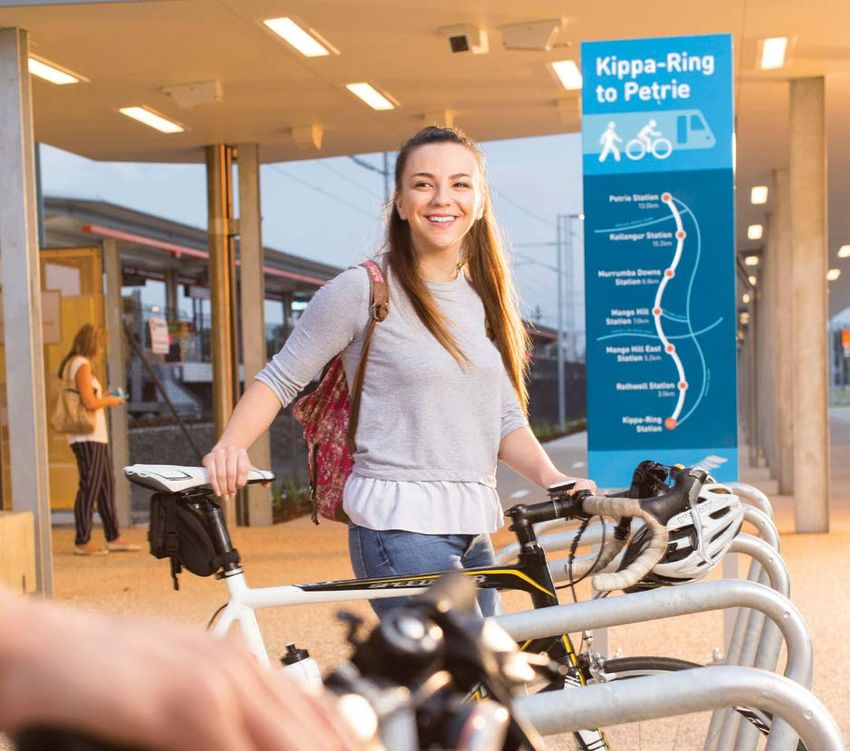
Queensland Transport Strategy
OUR 30-YEAR PLAN FOR TRANSPORT IN QUEENSLAND
Foreword
      Safe, efficient, accessible and sustainable transport      These outcomes are important for guiding what we
      benefits every Queenslander. We all rely on our            do as a government and for the many industry partners
      transport system, whether it be to access jobs and         who have a growing role in developing and operating
      services, connect us with family and friends or to move    transport services and infrastructure.
      goods around the state. It sustains our economy,
                                                                 This strategy will also be complemented by an Action
      brings us together and contributes to the liveability
                                                                 Plan, due for release in 2020, detailing how we are
      of our communities.
                                                                 working towards achieving our vision for the Queensland
      Transport in Queensland is changing. New transport         transport system of the future.
      services are emerging and innovative technologies, like
      automated vehicles (AVs), are already being tested on
      our roads. Over the next 30 years, the pace of change
      will only increase.
      As a result, long-term planning is vital to ensuring we
      have the best possible transport system. We need to be
      clear on what Queenslanders want from the transport
      system so that new services and technologies are
      harnessed for the maximum benefit of all.
      The transport sector has an opportunity to carry its
      weight and contribute to achieving emissions reductions.   The Honourable Mark Bailey MP
      The decisions we make today will shape the transport       Minister for Transport and Main Roads
      system of the future.
      The Queensland Transport Strategy is the Queensland
      Government’s 30-year vision for the transport system. At
      the centre of our strategy are Queenslanders, with five
      customer-focused outcomes and that will guide how we
      respond to future change:
      1. Accessible, convenient transport
      2. Safe journeys for all
      3. Seamless, personalised journeys
      4. Efficient, reliable and productive transport
         for people and goods
      5. Sustainable, resilient and liveable communities.

2   Queensland Transport Strategy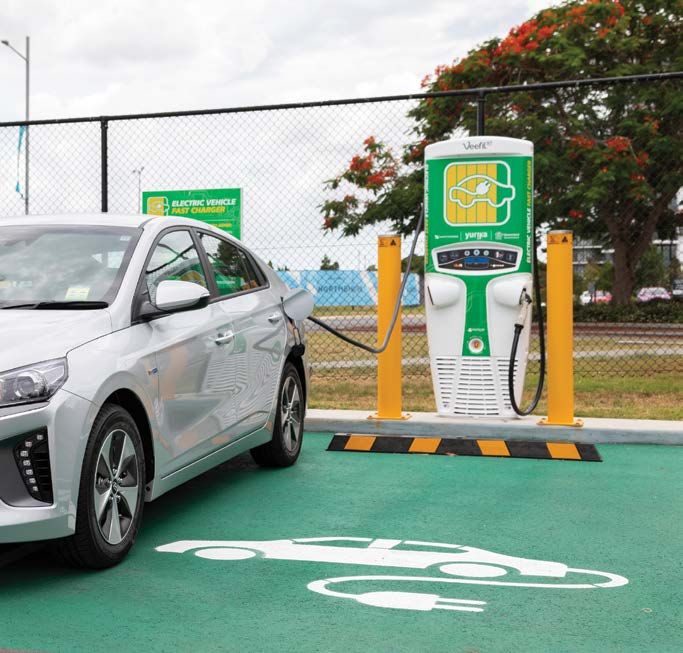
Executive summary
      Queensland is on the cusp of exciting changes in our         will be more urgency to ensure accessible services are
      transport system, with significant opportunities within      available. Public and shared transport modes will play         Personalised and accessible trips
      our grasp to harness emerging technologies and services      an increasingly important role, particularly demand            Highly accessible demand responsive transport
      to improve the use of existing roads and transport           responsive transport services and high frequency, high         will enable people to travel in their local area, to
      systems. New ways of transporting people and goods,          capacity links, such as Brisbane’s Cross River Rail, to        transport hubs and local amenities. Rather than
      such as electric vehicles, low and zero emission vehicles,   provide the access to the jobs and services of tomorrow.       being set to a timetable, these shared services
      demand responsive transport, automated vehicles and                                                                         are personalised and are available when they are
                                                                   An accessible, safe and efficient transport system
      drones will contribute to a safer, greener and more                                                                         ordered. Dynamic services like these have the
                                                                   will be supported by the government increasingly
      efficient future.                                                                                                           potential to significantly enhance transport coverage
                                                                   acting as an enabler and regulator of transport and
      We need to respond to these changes now, to position         mobility, supporting new and innovative services and           and access in outer suburbs and regional centres.
      Queensland to make the most from new technologies            technologies.                                                  Demand responsive transport is currently being
      and services to reduce congestion, improve reliability                                                                      trialled in Logan, with more trials to be held soon.
                                                                   The Queensland Transport Strategy provides
      and achieve emissions reduction. Our future direction
                                                                   a 30-year vision for the transformation of the state’s
      depends on the choices that we make for transport today.
                                                                   transport system that will have flexibility in responding
      More people are choosing to call our state home,             to customer preferences, global trends and emerging
      which is helping to grow our economy. It’s expected that     technologies. It puts customers first and articulates our
      Queensland's population will grow from 4.8 million in        plan for maximising the benefits of future changes for
      2016 to 7.1 million by 2041. In South East Queensland,       all Queenslanders. It is aligned to the State Infrastructure
      the population is predicted to grow by 56.2 per cent         Plan and Our Future State: Advancing Queensland’s
      between 2016 and 2041, over twice the rate of the rest of    Priorities.
      Queensland. This growth will have significant impacts on
                                                                   An Action Plan will be developed to accompany the
      our transport system.
                                                                   Strategy, detailing initiatives that are being explored
      In 2019, South East Queenslanders took about 520,000         and currently underway. This will ensure that our work
      public transport trips every day. This is anticipated to     continues to support a customer and future-focused
      grow to about 1.6 million trips per day by 2050. As the      transport system.
      proportion of older Queenslanders increases, there

3   Queensland Transport Strategy
Executive summary
      Through smart use of new technologies, we can provide
      a convenient, efficient and accessible transport system
      that meets the diverse needs of all Queenslanders. It will
      be seamless, integrated and anticipate – rather than just
      respond to – those needs.
      Transport will be safer and more efficient. Improved use
      of smart technologies and access to real time information    Safe roads and efficient delivery
      will enable customers to make more informed transport        Vehicle technology has become increasingly                 Using AVs to deliver freight will lower the cost
      choices. Optimised transport network operations will lead    advanced to improve safety. In future, many vehicles       of transporting goods, as well as improving access
      to reduced congestion and improved transport reliability.    will be partially or completely self-driving. This will    to international markets.
      Innovative technologies will be used to optimise freight     greatly improve safety and efficiency, through reducing
      journey times and keep costs low, particularly by                                                                       Queensland is also leading the way in drone
                                                                   the potential for crashes related to driver error and
      improving first- and last-mile access.                                                                                  development and has attracted major international
                                                                   fatigue, which account for approximately 90 per cent
                                                                                                                              investment to establish this innovative industry in
      The transport system will provide improved and               of road incidents in Australia. In 2020, Queensland
                                                                                                                              the state. While they already play an important role in
      affordable transport access options for people with          will be home to Australia’s largest connected vehicle
                                                                                                                              road maintenance and operations, in the future drones
      disabilities, older Queenslanders and people who do          trial – the Ipswich Connected Vehicle Pilot – which will
                                                                                                                              could also be used for everything from food to spare
      not have a driver’s licence. These improvements will be      involve up to 500 participants, with their own vehicles
                                                                                                                              part deliveries and will handle an increasing amount
      underpinned by automated vehicle technologies and            retrofitted with Cooperative Intelligent Transport
                                                                                                                              of first- and last-mile freight.
      emerging service models, such as demand responsive           Systems (C-ITS) technologies.
      and shared transport services.

4   Queensland Transport Strategy
Executive summary
      More affordable transport options will be available, along
      with more payment options, providing customers with
      the ability to purchase monthly transport subscriptions
      across different transport services to meet their
      travel needs and suit their lifestyles. This emerging,
      subscription-based transport service – known as Mobility
      as a Service – will provide highly personalised and             Electric and green
      integrated journey planning, booking and payments.              The future is electric. Low and Zero Emission Vehicles   Through a Queensland Government
      Services can be ordered online and will be available on         (LZEVs), that is Electric Vehicles (EVs) and hydrogen    partnership, Brisbane-based company Tritium
      demand. Journeys across car, bus, rail, bike, ferry and         Fuel Cell Electric Vehicles (FCEVs) present an           has grown to be a global leader in electric vehicle
      possibly even air travel will be seamlessly integrated.         opportunity for transport to contribute to emissions     technology, with chargers deployed in 26 countries.
      This will greatly improve accessibility, convenience and        reductions and improved air quality. By 2050, internal   Tritium now employs more than 200 staff, with all
      affordability and will provide a viable alternative to costly   combustion engines powered by fossil fuels will be       research, development and manufacturing of electric
      car ownership for many Queenslanders.                           in the minority, as people increasingly shift to more    vehicle fast chargers undertaken at the company
                                                                      affordable and sustainable vehicles. The Queensland      headquarters in Brisbane.
      The future of transport in Queensland is exciting. It           Government is partnering with industry to build
      will provide valuable outcomes for Queenslanders and            capability, create new jobs and benefit the state with
      improve the liveability of our communities. The transport       new low and zero emission technologies.
      network will be integrated, accessible, environmentally
      sustainable and more convenient, and we will all benefit
      from improved safety, efficiency and affordability.

5   Queensland Transport Strategy
6 Queensland Transport Strategy
Contents
                                    Transport that puts Queenslanders first                                                   8

                                    Harnessing exciting opportunities for transport in Queensland                             12

                                    Strategic outcome 1 – Accessible, convenient transport                                    24

                                    Strategic outcome 2 – Safe journeys for all                                               30

                                    Strategic outcome 3 – Seamless, personalised journeys                                     36

                                    Strategic outcome 4 – Efficient, reliable and productive transport for people and goods   42

                                    Strategic outcome 5 – Sustainable, resilient and liveable communities                     48

                                    Our role in the transport system of the future                                            54

                                    Delivering our 30-year strategy                                                           62

7   Queensland Transport Strategy
Transport that puts
                                    Queenslanders first

8   Queensland Transport Strategy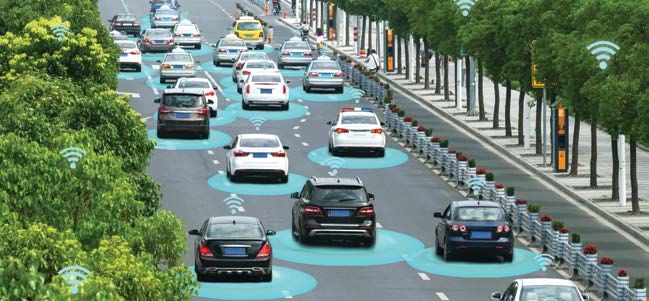
Transport that puts
Queenslanders first
Around the world, exciting changes are putting Five outcomes for a future-focused Our Future State: Advancing Queensland’s Priorities
people at the centre of the transport system. New (Figure 1) has been used to guide the development of the
and innovative technologies are improving safety transport system strategic outcomes. Each of these outcomes is supported
and accessibility, while also providing faster options The Queensland Transport Strategy has been developed by directions, which explain how the outcome will be
for businesses to move their goods to markets and to ensure Queensland is ready to embrace achieved over the next 30 years (Figure 2).
directly to customers. New services are also creating the exciting changes for transport on the horizon. The five strategic outcomes are also aligned to the
more personalised options for customers to plan
We have developed five strategic outcomes to support a medium-term transport system objectives detailed
their travel and access transport when and where
future-focused transport system over the next 30 years: in the Transport Coordination Plan 2017–2027.
they want it.
1. Accessible, convenient transport To achieve these outcomes, government will increasingly
Throughout Queensland, people and businesses
need to partner with industry and other stakeholders to
have embraced these changes through smartphone 2. Safe journeys for all
ensure these changes benefit the whole state.
journey planning, new rideshare services and
3. Seamless, personalised journeys
real-time freight monitoring. Journeys and freight
movements are becoming faster and safer thanks 4. Efficient, reliable and productive transport
to GPS vehicle tracking and smart highway signage for people and goods
technology.
5. Sustainable, resilient and liveable communities.
As a society, we could not have imagined some of
these changes or technologies three decades ago,
but customers have embraced them and are already Give all
Create jobs in a our children
experiencing their benefits. International trends strong economy a great start
suggest more developments are around the corner, • Create jobs
• Increase private sector
• Increase the number
of babies born healthier
and while we cannot predict what all the changes investment
• Engage more young
• Increase childhood
immunisation rates
might be, we can be ready to adapt and embrace Queenslanders in education,
training or work
• Improve wellbeing prior
to school
them to support the creation of a single integrated
transport network that is accessible to everyone. Be a responsive
Our Keep
Queenslanders
government Future State healthy
The Queensland Transport Strategy is the Department
• Make Queensland
of Transport and Main Roads’ 30-year vision to meet Government services Advancing • Increase the number
of Queenslanders with
easy to use
Queensland’s a healthy body weight
the needs of Queenslanders and maximise the Priorities
• Reduce suicides
benefits of change for households, businesses and
the wider community. Keep
Protect the communities
Queenslanders are at the heart of this strategy – the Great Barrier Reef safe
people who depend on our transport system for work, • Reduce Queensland’s
contribution to climate
• Reduce the rate of
crime victims
leisure, tourism and to access services, as well as the change
• Improve water quality
• Reduce rates of
youth reoffending
businesses that rely on it to move goods around the
state and connect to overseas markets.
Figure 1: The Queensland Government’s objectives for the community
9 Queensland Transport Strategy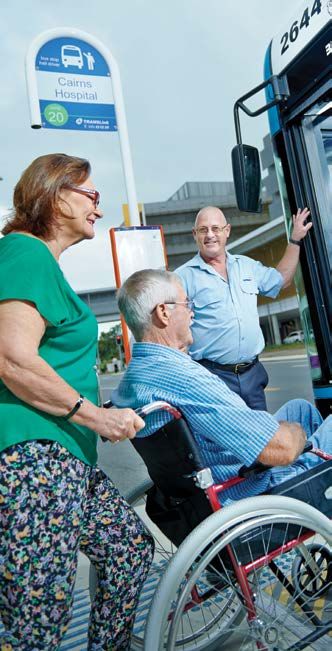
Department of
                                                                                           Queensland Transport Strategy
             Transport and Main Roads

                             Transport system               Strategic
             Vision                                                                                            Directions
                                objectives                  outcomes

         Creating            Community                   1. Accessible,            • Enabling the introduction of new mobility providers
         a single            connectivity                   convenient               and technology
         integrated                                         transport              • Prioritising investment in shared transport services
         transport                                                                   and infrastructure
         network                                                                   • Delivering new capacity on our roads to improve journey
         accessible to                                                               times and reliability
         everyone                                                                  • Ensuring transport is accessible for all

                             Safety and                  2. Safe                   • Using new technology to improve our roads to
                             security                       journeys                 achieve zero deaths
                                                            for all                • Improving personal security on the transport network
                                                                                   • Protecting the cyber security of the transport system and
                                                                                     customers

                             Customer                    3. Seamless,              • Enabling integrated journey planning, information
                             experience and                 personalised             and payments
                             affordability                  journeys               • Planning, facilitating and partnering to enable more
                                                                                     on-demand transport
                                                                                   • Making interchanging more convenient and seamless,
                                                                                     digitally and physically
                                                                                   • Providing world-class, innovative customer services
                                                                                     and community connection

                             Efficiency and              4. Efficient,             • Reducing the cost of transport for households and businesses
                             productivity                   reliable and           • Enabling a new generation freight and shipping network
                                                            productive             • Minimising road congestion using smart technology
                                                            transport for
                                                            people and
                                                            goods

                             Environment and             5. Sustainable,           •   Improving the attractiveness of places on the transport network
                             sustainability                 resilient              •   Making active transport more convenient and attractive
                                                            and liveable           •   Transitioning to a net zero emissions transport system
                                                            communities            •   Enhancing the resilience of the transport networks to the
                                                                                       effects of climate change
       Figure 2: Queensland Transport Strategy strategic outcomes and directions
10   Queensland Transport Strategy
Transport that puts
Queenslanders first
A long-term strategy that A strategy that meets the needs that the strategic outcomes help deliver the Queensland
Government’s broader priorities.
complements other planning of Queenslanders
Our Future State: Advancing Queensland's Priorities
The Queensland Transport Strategy complements other Our customers and the community are at the core of outlines the Queensland Government's objectives
strategic planning documents by setting longer term what we do, which is why the Queensland Transport for the community, highlighting key priorities both
outcomes and directions (Figure 3). It is one of five Strategy focuses on what Queenslanders need and want. for now and the future. Transport and Main Roads is
strategic infrastructure documents, which provide a clear contributing to these priorities through the Queensland
The outcomes also support the Queensland
direction for strategic infrastructure decisions across Transport Strategy strategic outcomes and associated
Government’s objectives for the community. An efficient
the energy, transport, digital, water and social asset directions and initiatives. Linkages between the
and productive transport system enables increased
classes. A key objective of the strategic infrastructure Queensland Government’s objectives and the
private sector investment and will create jobs in a strong
documents is to take forward the intentions of the State Queensland Transport Strategy strategic outcomes and
economy, keeps communities safe, is accessible for
Infrastructure Plan across each infrastructure class. directions position Transport and Main Roads to best
all and protects the natural environment including our
The Queensland Transport Strategy is our overarching iconic Great Barrier Reef. That is why it is so important contribute to Our Future State (Figure 4).
30-year vision for the future transport system for
Queensland and will guide all future plans and strategies.
State 5.
Infrastructure Keep Give all
Sustainable, Keep
Plan Queenslanders resilient and our children communities
healthy liveable a great start safe
l dir Lo communities
na ec n
io tio g
Queensland Transport n
-te for t
TM t
or a
Strategy
R
n f orm
rm he
tra tran
ctio sf
Strategic policy direction setting
dire m tran
1.
nsf spor
Long-term ~30 years
2.
orm t system
Protect the Create jobs in a Accessible,
er
ation
Safe journeys
Long-t
Great Barrier Reef strong economy convenient
TMR vision transport for all
al
Creating a single
TMR integrated transport
Transport
Strategic network accessible Coordination
Plan to everyone Plan
2019–2023 2017–2027 4.
Organisational Transport Efficient, 3.
objective setting objective setting reliable and Be a responsive
Short term Mid term productive Seamless,
0–4 years ~10 years
transport for personalised government
people and journeys
Sho s goods
rt m c t iv e
for tr id-term obje MR
a nsp or t a n d T
Figure 3: Strategic transport planning documents Figure 4: Alignment between strategic outcomes and Queensland Government objectives for the community
11 Queensland Transport StrategyHarnessing exciting
opportunities for transport
in Queensland
12 Queensland Transport StrategyHarnessing exciting opportunities
for transport in Queensland
Global and local trends are creating new Global trends are reshaping transport Increasing environmental concerns are necessitating
opportunities for transport in Queensland and a focus on how we can make more sustainable forms
changing the transport task. Around the world, Emerging trends are creating opportunities for of transport, such as shared transport, walking and
there is an increasing need to make better use Queenslanders, our society and our economy cycling, more attractive and affordable.
of resources, manage environmental impacts (Table 1). These trends include more efficient use
of resources, increasing digitisation and greater These trends also have implications for how Transport
and respond to significant changes in the global
personalisation of services. While some of these are and Main Roads functions. With new services increasingly
economy. In Queensland, our economy is growing
not new, their increasing prevalence and being developed by the private sector, the role of
and more people are choosing to call our state home.
interconnectedness makes them significant. government will increasingly transition to be an enabler
Collectively, these trends are resulting in new
of these new services rather than a direct provider. This
transport services, demand for more trips and For transport, megatrends are creating new will mean partnering more with the private sector and
a range of other impacts. opportunities and demands on the transport system, being agile and responsive to change.
Through smart use of new and emerging including for services, infrastructure and operators. For
technologies, we can position the transport system example, the need for efficiency is placing greater focus
to meet the future needs of Queenslanders – creating on how we can better use our existing infrastructure,
an integrated system that anticipates, rather than as well as investing in new links.
just responds to, customers’ needs. Technology is
already transforming how people and goods move,
whether through on-demand transport, cooperative
and automated vehicle (CAV) technology or using
drones to deliver parcels. It is also providing improved
transport access options for people with disabilities,
older Queenslanders and people who may not have a
driver’s licence. Further changes will improve safety,
efficiency and convenience, ultimately saving people
and businesses time and money.
The Queensland Transport Strategy will enable
Transport and Main Roads to harness these
opportunities in partnership with industry and
other stakeholders. There are many things that
are uncertain – that is the nature of change. What
is certain is that Queensland will have a transport
system that embraces the positive opportunities
change can bring and meets the needs of customers
and the community. By planning for, and carefully
managing change, everyone will share the benefits.
At the same time, we can address existing and future
transport network challenges.
13 Queensland Transport StrategyTable 1: Global megatrends and transport response1
How the transport system
Trend Fast fact
is responding
More from less • Using existing networks better
Growth in population and consumer demands are intensifying Shared transport refers to any form of transport
• Encouraging more sustainable travel
the need to better manage our resources. where multiple customers use the same vehicle,
behaviours
such as train, bus, light rail, ferry and rideshare.
Planetary pushback • Investing in more environmentally Public transport is a type of shared transport.
Evidence is building of our effect on the planet. Investing sustainable forms of transport
in more sustainable solutions is an increasing priority. • Focusing on ensuring the network is resilient
to climate change impacts
Asian Ascendancy • Ensuring freight access to trade gateways
The epicentre of global economic growth is shifting to Asia, • Addressing increased demand across the
driving trade and economic activity in Australia. network
Forever young • Ensuring the network is accessible to all
Many populations are ageing across the globe, placing a • Harnessing new services to improve
greater urgency on ensuring services are accessible to all. accessibility
Digital immersion • Better understanding customer needs
Automation and data driven capabilities are creating opportunities • Making better information available to
to better integrate and connect systems, goods and people. customers
Porous boundaries • Making new transport services available to
Traditional boundaries that separate buyers and sellers of customers
goods and services are dissipating with new models including • More affordable transport from shared
peer-to-peer markets and sharing economies increasing. vehicles and services
Great expectations • More personalised forms of transport
As we experience the benefits of innovation and improved services
in one facet of our lives, our expectations in others increase.
How Transport and Main Roads is responding
• Putting customers and the community first • Building an innovative, flexible culture
• Being an enabler of mobility • Being agile and responsive
• Ensuring sustainable funding
1
CSIRO 2012, 'Our future world: Global megatrends that will change the way we live' report
14 Queensland Transport StrategyHarnessing exciting opportunities
for transport in Queensland
Local trends are placing new demands This highlights the need for continued investment in Figure 6: Key transport and land use trends in Queensland
transport infrastructure and services between Brisbane
on Queensland's transport system and its surrounding regions. Queensland SEQ to grow by
Queensland itself is changing and this is placing new population to
Importantly, these growth patterns differ by region. For 56.2 per cent
demands on the transport system. As our economy example, while SEQ’s population is forecast to grow by grow from between 2016 and 2041,
grows, more people and goods are moving around the 56.2 per cent between 2016 and 2041, some other regions 4.8 million over twice the rate
state. In the 30 years to 2019, our population has nearly face population decline.9 This has implications for the in 2016 to of the rest of
doubled from 2.8 million to almost 5.1 million.2 Between type of transport that will be needed in each region 7.2 million Queensland9
2016 and 2041, it will increase by almost 50 per cent to and the most effective and efficient ways to connect by 20413
7.2 million (Figure 5).3 Our population is also getting Queenslanders. Key transport and land use trends are
older. The share of the population over the age of 65 is outlined in Figure 6.
predicted to grow from 13.7 per cent in 2016 to
20 per cent in 2041.4 If these current trends continue, These trends inform our vision for the transport system
the forecast number of trips across the state is expected of the future. The outcomes we have set are designed
to rise by 58.2 per cent over this time, with the physical to address the opportunities and challenges associated Over 200
accessibility of services becoming increasingly critical.5 with these changes while ensuring we remain focused 60 per cent
on what matters most to customers.
million
of new dwellings passenger trips
The volume of goods being moved across the state is
in SEQ to be infill made annually across
also rising. An estimated 930 million tonnes of goods
development between Queensland (between
were transported across Queensland in 2017-18. Current 9,000,000 2017 and 204110 July 2018 and June
projections indicate the freight task will increase by
approximately 465 tonnes to 1395 million by 2035.6 This
8,000,000 2019)11
means more demand for road, rail and – potentially – air 7,000,000
space and the need for strong links to trade gateways. 6,000,000
Current Queensland Treasury forecasts indicate state 5,000,000
employment growth of over 1 million between 2020-21 4,000,000
and 2040-41.7 This growth will place pressure on our 3,000,000
transport networks, increasing demand for freight and Around
2,000,000 Volume of goods
passenger transport. 1,000,000 moved projected to 65 per cent
increase by of goods are moved
Employment will grow at different rates across the state.
2016 2021 2026 2031 2036 2041
50 per cent by road annually in
For example, the number of SEQ residents working
by 20356 Queensland6
in Brisbane but residing in its surrounding regions is
Projected population, Greater Brisbane Projected population, Queensland
forecast to double to over 516,000.8 Figure 5: Queensland and Greater Brisbane population projections9
2
Australian Bureau of Statistics (ABS) 3101.0 Australian Demographic Statistics, June 1989; June 2019. 7
QGSO, Labour and employment - Economic projections 2018, Available at: https://www.qgso.qld.gov.au/statistics/theme/economy/labour-
3
Queensland Government population projections, medium series, 2018 edition; Australian Bureau of Statistics, Population by age and sex, employment/economic-projections
regions of Australia, 2016 (Cat no. 3235.0) 8
Regional Employment Projections Data Tables, 2010-11 to 2040-41, Queensland Treasury
4
Queensland Government population projections, medium series, 2018 edition; Australian Bureau of Statistics, Australian demographic 9
Queensland Government population projections, 2018 edition; Australian Bureau of Statistics, Population by age and sex, regions of
statistics, Jun 2017 (Cat no. 3101.0). Australia, 2016 (Cat no. 3235.0)
5
Transport Energy & Environment and Pekol Traffic and Transport 2017, Queensland Transport facts 10
Department of Infrastructure, Local Government and Planning, ShapingSEQ: South East Queensland Regional Plan 2017
6
Transport Energy & Environment and Pekol Traffic and Transport 2019, Queensland Transport Facts 11
The Department of Transport and Main Roads, 2019, Annual Report 2018-2019. Available at: https://www.publications.qld.gov.au/dataset/
annual-report-2018-2019-transport-and-main-roads/resource/e2e33266-db66-4afd-acae-bf741c4d179c
15 Queensland Transport StrategyNew services and technologies will The Queensland Government has worked with CSIRO’s repetitive and well defined tasks. Higher incomes
Data61 to produce The Innovation Imperative to could result from expanding consumer demand for
provide exciting possibilities determine what our future jobs could be. The report has new products and services, especially those where
New services and technologies, including software found there are substantial opportunities to generate we persuade, negotiate with or care for others. Future
advancements, energy storage, data analytics and the new jobs, higher incomes and improved lifestyles for technology and future transport technology can improve
growth in the sharing economy, present opportunities Queenslanders. New jobs could emerge in design, the lifestyles and jobs of Queenslanders.
to address the transport needs of Queenslanders and data and robotics while freeing up time by automating
deliver a safer, more efficient, sustainable and convenient
transport system. Some of the most significant changes
are summarised in Figure 7.
Many of these new services and technologies are still in New transport services
their infancy, and even more will emerge over the next
30 years. The focus of this strategy is to develop the right
conditions to harness the opportunities they bring.
In focus: Passenger drones
On-demand New services Car share and Mobility as
Passenger drones are beginning to be trialled transport that enable journeys bike share that a Service
internationally, with exciting developments being removing the need to be shared reduce the enabling journeys to be
predicted. At this stage, the technology is largely for timetables need to pay planned and paid for via
untested and implementations are experimental. for ownership a single platform
Transport and Main Roads will continue to monitor
the technology and consider possible applications
and benefits for Queensland. New transport technologies
Greater Electric vehicles Smart systems New forms
automation and more sustainable to enable improved of mobility
including cars, buses fuel sources network flow like drones and personal
and trains mobility devices
Figure 7: Overview of innovative transport services and technologies
16 Queensland Transport StrategyHarnessing exciting opportunities
for transport in Queensland
Mobility as a Service could transform As a new transport ecosystem develops, it is
important that services are integrated and make sense Fast fact
how Queenslanders access transport to customers. An emerging service model – known as
The popularity of new transport services, such as Mobility as a Service – can address this by seamlessly
Mobility as a Service aggregates infrastructure,
on-demand transport and car sharing, is increasing combining all available transport options and active
services, technology and information. It brings
around the world, including in Queensland. transport, and allowing customers to compare, plan,
together transport operators and third parties,
purchase and track their end-to-end journeys through
On-demand transport enables customers to access allowing a seamless provision of service,
a single platform (Figure 8). Already being trialled in
shared transport when and where they want. Currently, information, booking, payment and customer
cities and regions in Europe, Mobility as a Service could
most public transport services run to a scheduled relationship management services between
deliver personalised, seamless journeys, particularly for
timetable on fixed routes, even if few customers are transport types.
those who rely on multiple forms of transport to make
using them during off-peak times. New technologies their journeys.
now enable transport providers to dynamically optimise
a route, reducing traffic delays. Shorter waiting and
In focus: Individual ride-sourcing services
boarding times make the system more efficient. Flexible Fast fact in regional Queensland
and demand responsive, point-to-point services are being
piloted in Queensland and around the world to refine the
Shared vehicles could reduce household transport Customers in regional Queensland are benefitting
technology and make it easy for customers to use.
expenditure by up to 60 per cent depending on the from new ride-sourcing services.13 Uber (an on-
Across Queensland, more customers are choosing to deployment model.12 demand ride-sourcing service) has been introduced
share vehicles and journeys. For example, car and bike
in several regional centres along the coast from
share services enable customers to access pooled cars or
Cairns to the Gold Coast and west to Toowoomba,
bikes when they want and only pay for what they use.
enabling customers to access services via their
Pooled rideshare services are becoming increasingly phone. It is one of many personalised transport
popular. They allow customers to share journeys services emerging across Queensland, providing
when travelling to nearby destinations and present new ways for customers to get around.
opportunities to efficiently use resources and more
environmentally sustainable travel choices. These
services can also make transport more accessible and
affordable by reducing the need to own a vehicle.
12
Data61 2018, Time Travel: Megatrends and scenarios for Queensland Transport out to 2048, CSIRO Data61.
13
Commonwealth of Australia, Department of Infrastructure and Regional Development 2016, Trends, Transport and Australia’s Development to 2040 and Beyond
17 Queensland Transport StrategyMobility service providers
Plan journey
Purchase
journey or travel
subscription MaaS MaaS MaaS
service provider service provider service provider
Access real-time
information
Transport options
Active transport Public transport Personalised Car access Driverless
transport
Walking Own bike Bus Tram Taxi Car parking Car rental Own car Own car
Individual Fixed One way
P2P bike share Train Ferry ride-sourcing car share car share P2P parking Single person
City bike and Demand Pooled Floating P2P
escooter share responsive PT ride share car share car share Pooled ride
Infrastructure facilities
Main roads Local roads Private roads Parking Railways Tram/light rail Water transport
Figure 8: Overview of Mobility as a Service (Source: Modified from MaaS Australia)
18 Queensland Transport StrategyHarnessing exciting opportunities
for transport in Queensland
New technology will enable International trends suggest fully automated vehicles
could be available in Queensland within a decade and be In focus: Understanding the potential
a safer, more efficient and in widespread use within 30 years. The safety, efficiency impacts of AVs in regional Queensland
productive Queensland and time-saving benefits they could deliver worldwide
have been estimated at $5.6 trillion a year.14 AVs have the
Emerging transport technologies will improve the The Queensland Government commissioned a
potential to reduce fatalities and hospitalisations and
outcomes of our transport system for the community, project to model and analyse the potential impacts
help address urban congestion, which could otherwise
economy and environment. Automation is one of the most of the introduction of AVs and new mobility
cost Brisbane over $5.9 billion a year by 2030.15 Greater
significant of these developments and has the potential models in regional Queensland. While AVs offer
automation could also increase the capacity of the rail
to improve journey safety, efficiency and convenience opportunities, some models suggest they could
network, particularly in South East Queensland.
for both passenger and freight movement. potentially also have some negative outcomes,
To fully reach their potential in urban areas, AVs will need such as increased congestion.
Many train systems around the world are already partially
to be well integrated with mass transit options. Effective
or fully automated, enabling more frequent services, as The findings of the Queensland Government
regulation will be required to ensure AVs complement
trains can run closer together. research are that AVs offer significant transport
existing mass transit modes and become a positive part
benefits for regional Queensland. The key will be
Increasingly, most new cars and trucks are also partially of the broader transport system, rather than increasing
to integrate them into the regional Queensland
automated through features such as sensor technology congestion and overall journey times.
transport system in a way that supports and
and automatic emergency braking. However, vehicle
encourages options like ridesharing and
manufacturers and technology companies around the
connections to mass transit, where available.
world are now trialling higher levels of automation, with
the potential for road vehicles to become fully automated.
By combining automation with vehicle-to-vehicle
communication and ‘smart roads’ (Figure 9),
AVs could improve safety and help make journeys
more efficient and reliable.
Figure 9: Connected vehicles communicate with other vehicles
and infrastructure
14
Morgan Stanley 2013 Blue Paper – Autonomous Cars Self-Driving the New Auto Industry Paradigm
15
BITRE Working Paper 74, 2015.
19 Queensland Transport StrategyElectric vehicles will help the transition
to Queensland’s low-carbon future
Low and Zero Emission Vehicles (LZEVs), that is Electric
By 2025 EVs will
Vehicle (EVs) and hydrogen Fuel-Cell Electric Vehicles cost the same
(FCEVs), present exciting opportunities for Queensland. as equivalent fossil fuel
Driven by efforts to reduce greenhouse gas emissions and vehicles to buy
advancements in battery power, the number of EVs sold
globally has grown considerably since 2010
(Figure 10). In 2019, there was a 132 per cent increase in
battery EVs registered in Queensland from 908 to 2,115
vehicles.16 This number is expected to continue to grow $3.75–$5 per 100km
rapidly, as are sales across Australia and globally. to run an EV (for electricity costs of 25c kWh)
LZEVs provide an opportunity for the transport sector
to contribute to significant emissions reductions.
Figure 10: Annual global plug-in vehicle sales and share 20
Particularly if charged from renewable sources, LZEVs can
help to greatly improve the sustainability of Queensland’s
transport sector, which in 2016 contributed 14.7 per cent
of the state’s greenhouse gas emissions.17
Operating costs are 60 to 90 per cent lower than
traditional cars, potentially making EVs a more affordable
transport option in the long-term. The cost of driving
an EV per 100km equates to $3.75 to $5 when charged
at 25 cents per kWh.18 Alternatively, charging using a
home solar system would reduce this cost even further
to almost zero. The Queensland Government is already
partnering with industry to support and enable the
transition to EVs.
Other emerging zero and low emission fuels, such
as hydrogen, are being monitored and supported by
Transport and Main Roads for potential applications in
Queensland.
The Queensland Hydrogen Industry Strategy was
launched in 2019. The Strategy includes a $15 million 16
Department of Transport and Main Roads, Data Analysis - Engineering and Technology 19
Department of State Development, Manufacturing, Infrastructure and Planning,
industry development fund to support hydrogen projects branch. Queensland Hydrogen Industry Strategy 2019-2024, Available at: https://www.dsdmip.qld.
gov.au/resources/strategy/queensland-hydrogen-strategy.pdf
in Queensland. This includes initiatives such as the 17
Department of Environment and Science, State of the Environment 2017. Available at:
https://www.stateoftheenvironment.des.qld.gov.au/home 20
EVvolumes.com 2020, http://www.ev-volumes.com/country/total-world-plug-in-vehicle-
CSIRO pre-feasibility study for an ammonia to hydrogen volumes/
18
Queensland Government, Compare electric vehicle costs, site last updated: 1 July 2019,
demonstration plant in Gladstone.19 Available at: https://www.qld.gov.au/transport/projects/electricvehicles/about/compare
20 Queensland Transport StrategyHarnessing exciting opportunities
for transport in Queensland
In focus: Enabling EVs in Queensland
The Queensland Government, in collaboration with
Yurika,21 local councils and other partners, has
rolled out the Queensland Electric Super Highway
network – the world’s longest EV superhighway
within a single state.
The network of EV fast charging stations runs from
Cairns to Coolangatta, and west to Toowoomba. This
is just one of the ways the Queensland Government
is supporting the introduction of EVs, with a range
of initiatives outlined in The Future is Electric:
Queensland’s Electric Vehicle Strategy.
Cairns
Tully
Townsville
Bowen
Mackay
Carmila
Marlborough
Rockhampton
Miriam Vale
Childers
Maryborough
Cooroy
Gatton Brisbane
Toowoomba Gold Coast
Coolangatta
21
A subsidiary of Energy Queensland
21 Queensland Transport StrategyCompletely new transport technologies Innovation to address some
In focus: Advancements in transport
will advance Queensland further technology and more jobs for Queenslanders of today’s challenges
A range of other emerging transport technologies also New services and technologies in transport will help
present opportunities for Queensland. Drones could help New forms of transport technology are bringing jobs address many of the challenges we currently face,
move goods, or even people, more efficiently, reducing to Queensland. In March 2018, Boeing announced including congestion, accessibility, service reliability,
emissions, congestion and freeing up road space for Queensland as the base for its largest automated safety and network resilience (Table 2). Through existing
other uses.22 Personal mobility devices, such as electric systems development program outside of the and planned investments, Transport and Main Roads
scooters and bikes, can make active transport more United States. will continue to upgrade roads and other transport
attractive in both regional areas and cities, and improve infrastructure across the state, invest in mass transit
liveability. In addition to direct transport benefits, these This will increase Boeing’s existing Queensland and deliver new services. However, over time, innovation
new technologies will bring more jobs to Queensland, workforce of 1500 – located at Townsville, may improve or change the way these core services
supporting households and boosting regional Brisbane, Amberley and Oakey – by an additional are delivered.
economies. 131 jobs. These jobs will help advance new drone
development and realise the benefits these can The importance of planning
Smart system technology is also enabling more
intelligent management of the transport system. By using
bring for Queensland businesses.23 for 30 years
sensors and monitoring equipment we can better manage This is just one of many ways technology shifts will With the transport system undergoing such
the road network and provide drivers with information create up to one million new jobs over the next two transformation, a clear long-term strategy is more
on alternative routes in the case of incidents. As this decades.24 important than ever. By setting clear outcomes, we can
technology advances, there will be opportunities to ensure that change is harnessed to provide a transport
further optimise the transport system. system that customers and the community want.
For example, AVs could dynamically change their routes Regardless of the changes technology and innovation
and enable customers to conveniently change transport may bring, Queenslanders will know that they have
modes to ensure optimal travel, while also helping accessible, convenient transport options with seamless
to reduce journey times and congestion and improve and personalised journeys, have a productive and
reliability across the network. Transport and Main efficient transport network and have sustainable,
Roads will continue to work closely with other levels resilient and liveable communities. These are the
of government and the private sector to ensure that, outcomes that will endure and be used to guide
in providing these benefits, data and privacy are investment in the transport system.
protected and cyber security is strengthened.
22
C. Samaras and J. Stolaroff, Drone Delivery Good for the Environment? Special Report, Smithsonian Magazine, 14 February 2018, Available at: https://www.smithsonianmag.com/innovation/drone-delivery-good-for-environment-180968157/
23
Queensland Government 2018, Boeing partnership backs Queensland as global aerospace powerhouse Media Release
24
CSIRO 2018, The Innovation Imperative report, Available at: https://data61.csiro.au/en/Our-Research/Our-Work/Future-Cities/Planning-sustainable-infrastructure/Q-Foresight
22 Queensland Transport StrategyHarnessing exciting opportunities
for transport in Queensland
Table 2: Key challenges and possible solutions
Key challenge How new services and technology can help
Journey times and reliability (connected communities) • Mobility as a Service can help make shared transport
As our cities and regional centres grow, journey times and more convenient and seamless, reducing single occupant
reliability can be affected. Left unchecked, the avoidable cost of car use.
congestion in Brisbane alone could rise from $2.3 billion in 2015 • Shared AVs can help make better use of existing road
to $5.9 billion in 2030.25 capacity by enabling more efficient running.
Road safety (safety) • AVs could reduce fatalities on the road network by up
One serious injury or fatality on our roads is one too many. In to 90 per cent by mitigating risks of driver fatigue and
rural and regional areas, road safety remains a major challenge. human error.26
In urban areas, improving the safety of vulnerable road users, • New services and technology could provide innovative
including pedestrians and cyclists, is a particularly significant solutions to safety, advancing Transport and Main Roads'
challenge. approach to road safety management.27
Customer access (accessibility) • On-demand transport can help Queenslanders access
Transport services must be accessible for everyone. This means transport services when and where they want.
ensuring customers can get where they want, and that services • Extensive user testing of the accessibility of new
and infrastructure can be accessed by every Queenslander. technology and infrastructure projects can ensure
Ensuring accessibility requires understanding limiting factors usability and suitability.
such as socio-economic background and location of residence.
In addition, being an enabler of services requires consideration
for the needs of people with many types of disability, including
physical, vision, hearing, intellectual and psycho-social, as well
as linguistically diverse people with disability, and children with
disability.28
Transport costs (efficiency, productivity and affordability) • New technologies, such as drones and delivery bots, can 25
BITRE 2015, Traffic and Congestion Cost Trends for Australian Capital Cities, Available
Queensland's freight task is increasing – a trend that is improve first- and last-mile access and reduce freight at: https://www.bitre.gov.au/publications/2015/is_074
projected to continue. Ensuring sufficient infrastructure capacity costs by up to 40 per cent.30 26
McKinsey & Company 2015, Global Media Report 2015 – Global industry overview
See the 4 guiding principles in Safer Roads, Safer Queensland: Queensland's Road
to support this growth, and addressing pinch points on the • Increased automation in supply chains can deliver further
27
Safety Strategy 2015-2021. Available at: https://www.tmr.qld.gov.au/Safety/Road-
network, will reduce the cost of moving goods. In 2015–16, the cost savings in freight. safety/Strategy-and-action-plans.aspx
average Queensland household spent 15 per cent of income • Shared transport can help lower transport costs by 28
Australian Government 2017, The Whole Journey: A guide for thinking beyond
on transport.29A more efficient transport system can improve reducing the need for vehicle ownership. compliance to create accessible public transport journeys. Also see - Queensland's State
affordability. Disability Plan 2017–2020.
29
6530.0 Household Expenditure Survey, Australia ( 2015–16), Australian Bureau of
Environmental sustainability (sustainability) • LZEVs can help reduce transport greenhouse emissions Statistics
30
McKinsey 2016, Parcel delivery: The future of last mile
Queensland’s total transport emissions have increased • Shared AVs can help lower greenhouse gas emissions 31
Australian Government 2019, State and Territory Greenhouse Gas Inventories 2017:
by 26 per cent from 2005 to 2017.31 The transport network is per person by reducing the number of vehicles per person. Australia’s National Greenhouse Account. Commonwealth of Australia. http://www.
also exposed to some inevitable, long-term effects of climate • Priority port master planning and improved monitoring environment.gov.au/system/files/resources/917a98ab-85cd-45e4-ae7a-bcd1b914cfb2/
change, such as more severe weather events.The Queensland systems are assisting in securing the long-term health files/state-territory-inventories-2017.pdf
Queensland Climate Transition Strategy 2017, Available at: https://www.qld.gov.au/__
Climate Transition Strategy prioritises development of a Zero Net and resilience of the Great Barrier Reef.
32
data/assets/pdf_file/0026/67283/qld-climate-transition-strategy.pdf
Emissions Transport Roadmap to ensure that the functioning of • Integration of active transport infrastructure and services 33
See Queensland's Cycling and Walking Strategy documents, Available respectively
the transport system aligns with Queensland's goal of zero net can increase sustainable transport options.33 at: https://blog.tmr.qld.gov.au/cycling/ and https://www.tmr.qld.gov.au/Travel-and-
emissions by 2050.32 transport/Pedestrians-and-walking/Queensland-Walking-Strategy
23 Queensland Transport StrategyAccessible, convenient
transport
STRATEGIC
1
OUTCOME
24 Queensland Transport StrategySTRATEGIC OUTCOME 1 Accessible, convenient transport
The transport system is central to Queensland’s Directions that support this strategic outcome
liveability and economic prosperity. We all rely on
transport to get to places of work and education,
access services, move goods and travel around the
state. Enabling people and goods to get where they
want in a timely and reliable manner is essential.
While this task remains unchanged, the way it is Enabling the introduction Prioritising investment Upgrading roads and Ensuring transport is
achieved is changing. No longer is it just about of new mobility providers in shared transport services delivering new capacity accessible for all
customers choosing a particular form of transport and technology and infrastructure to improve journey times
– instead, it is increasingly about customers and reliability
choosing the most convenient journey, even if that
involves multiple forms of transport. Customers What this outcome means
now have more choice than ever before, with for Queenslanders
rideshare and community transport services, new
on-demand services and soon, AVs, which will This outcome means Queenslanders can expect: The road network will support new forms of transport,
make journeys faster and more reliable. such as AVs and LZEVs, through sensor technology and
• high-quality, well maintained road and rail charging stations. Shared – where multiple customers
Accessibility is not just about enabling the networks that connect communities and support travel in the same vehicle – will be prioritised on the road
provision of different types of services. Ensuring high-demand passenger movements and network, with research indicating these will deliver more
accessibility requires understanding limiting transporting bulk goods efficient, reliable and cheaper journeys.34
factors such as socio-economic background and • timely and reliable transport services through
location of residence. Furthermore, being an prioritisation of shared transport on busy roads and It is anticipated that as a high capacity mode, rail will
enabler of services requires consideration of the the use of new technology on rail and bus networks remain important to move people and goods across
needs of people with many types of disability, Queensland. In busy urban and regional corridors,
• accessible transport for all, through upgraded including Brisbane, the Gold Coast and Sunshine Coast,
including physical, vision, hearing, intellectual services, vehicles and infrastructure, partnering with
and psycho-social, as well as linguistically diverse rail and busway corridors will continue to underpin
industry and innovative service delivery solutions. the public transport system, particularly to access
people with disability, and children with disability.
Road and rail networks are the backbone of our state. employment and suburban centres.
Making sure everyone has convenient transport From north to south and east to west, they connect
options will still require the design and delivery With convenient interchanges and simpler journey
every community in Queensland. These networks will planning and ticketing systems (see Strategic
of an accessible, efficient and reliable road and continue to play a critical role in providing access for the
rail network, but it will increasingly involve a Outcome 3), rail will seamlessly integrate with other
movement of people and goods in rural, regional and forms of transport, delivering improved connectivity for
wider range of services and more personalised urban Queensland.
transport. By optimising the planning, design customers. Rail will also support the movement of bulk
and delivery of infrastructure and enabling new Regardless of future changes, roads and mass goods and containerised goods, particularly on high
services in partnership with industry, we can be a transit lines continue this critical role in moving people demand corridors, such as to ports, where it is more
responsive government and ensure the transport and goods, especially in our regions which contribute efficient than road transport. In some cases, greater
network provides Queenslanders with accessible, so much to the state’s economy. separation of passenger and freight rail networks will
convenient transport. be necessary to support this.
34
TransPosition 2016, Conceptual sensitivity modelling and analysis on the introduction of AVs. Report prepared for the Department of Transport and Main Roads by TransPosition.
25 Queensland Transport StrategySTRATEGIC OUTCOME 1
Across all modes, infrastructure will be well-maintained
to enable journeys that are efficient and reliable. With In focus: Innovative approaches Fast fact
a road network extending more than 33,000 kilometres to transport accessibility
and a rail network of 7220 kilometres, new technologies
will provide better insights into network condition.35 For Between now and 2041, the forecast number
example, drones will be used to inspect road and rail New ideas are emerging that can help make of trips across the state is expected to grow by
links and provide real-time images to maintenance crews transport more accessible for customers with a 58.2 per cent if the current trend continues.36
and sensor technology will provide real-time insights disability. For example, students in Singapore have
on the performance of roads, railway lines and vehicles. developed an app that provides voice guidance
Comprehensive network screening algorithms and for visually impaired and elderly customers when
advanced analytics providing anticipatory estimates for using the transport system. It combines real-time
infrastructure deterioration will also enable repairs to be transport data and GPS to tell a customer when,
undertaken before faults occur. These technologies will for example, their bus is approaching or they
help create a more reliable and efficiently maintained need to disembark, based on the journey they are
transport system. making. Technological innovations such as these
will improve the everyday journey experience for
Everyone will have access to timely and reliable transport customers with a disability.
services. In rural, regional and urban communities,
journey times will be efficient, consistent and reliable
so that customers can travel with confidence. On-road
shared transport will have improved priority, such as
dedicated transit lanes on busy roads and technology
that prioritises delayed services.
New rail signalling technology will reduce equipment
failures and enable greater network automation,
delivering reliability benefits for both freight and
passengers. Additional capacity on congested parts of
the network, particularly in central Brisbane, will improve
journey times and reliability by alleviating bottlenecks.
Transport will be physically and geographically
accessible, as well as affordable. Upgraded infrastructure
and facilities, such as stations, trains and buses, will
enable customers with a disability and older people to
easily access transport services. On-demand services will
provide greater geographic coverage, enabling customers
to request pick-up and drop-off locations that suit them,
rather than relying on fixed routes.
35
Queensland Government 2019, State Infrastructure Plan Part B: Program – 2019 update
36
Centre for Transport Energy & Environment and Pekol Traffic and Transport 2017, Queensland Transport facts
26 Queensland Transport StrategyYou can also read


