CHINA STRATEGY NSW INTERNATIONAL ENGAGEMENT STRATEGY - SEPTEMBER 2014
←
→
Page content transcription
If your browser does not render page correctly, please read the page content below
CHINA STRATEGY
NSW INTERNATIONAL ENGAGEMENT STRATEGY

SEPTEMBER 2014
FOREWORD

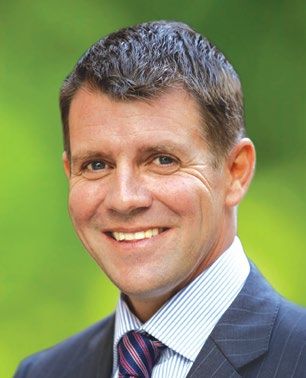
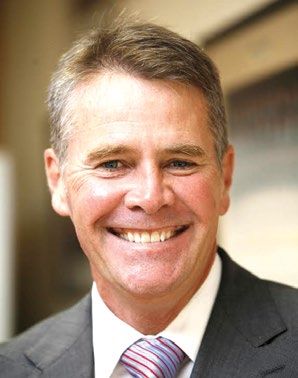
    The Hon. Mike Baird MP   The Hon. Andrew Stoner MP
    Premier of NSW           Deputy Premier of NSW

    NSW greatly values our strong and growing
    relationship with China and its people.
    China is our largest trading partner, our most
    valuable tourism market, our greatest source
    of international students and an increasingly
    important source of investment into NSW.
    This strategy for engaging with China
    outlines how NSW will build and strengthen
    our partnership with China.
    It is relationships at all levels - agreements
    between governments, working business
    partnerships, knowledge sharing between
    our education and research institutions,
    cultural connections and individual personal
    relationships - which are the basis for mutually
    beneficial economic activity.

2
EXECUTIVE SUMMARY
The NSW Government will focus its efforts in The preparation of clear, short and achievable
the following areas to grow our relationship statements of government intent for each
with China across trade, investment, of our priority markets is a priority action
education and tourism: under the NSW International Engagement
1. Build on longstanding relationships and Strategy (2013).
grow our partnerships with China This strategy for engaging with China is
2. Attract Chinese investment, particularly a working document providing practical
in NSW infrastructure projects direction for the NSW Government
across our trade, investment, resources,
3. Double the value of Chinese tourism to education, tourism, agriculture, cultural and
NSW by 2020 infrastructure agencies.
4. Maximise benefits from an Australia-China
It will be regularly updated and reviewed
Free Trade Agreement
in response to new opportunities and to
5. Promote Sydney as a leading financial support the delivery of NSW 2021 targets.
services centre and Renminbi trading hub
6. Strengthen the position of NSW
agriculture and resources in China
7. Maintain our leading market share in
education, and
8. Grow export of NSW innovation.
1CHINA - A PRIORITY MARKET FOR NSW
China is one of the strongest and most
important partners for NSW across trade,
investment, education and tourism
China has a large and
growing economy
In the next decade China is predicted to
overtake the USA to become the world’s
largest economy. The Chinese population is
also the world’s largest at 1.3 billion people, 19%
of the global population (World Bank, 2013).
23% China’s economic growth has averaged 10%
per annum over the last three decades and is
expected to further expand at 7% per annum
(IMF, 2014). The next five years are likely to see
China’s predicted share an increased demand for high-value goods and
services. Building on our existing trade and
of world GDP by 2025 investment successes, NSW is well placed to
(OECD 2014) meet this opportunity.
China is our number one
trading partner
Two-way trade between NSW and China is
approximately $30 billion per annum and trade
has grown by an average of 9% per annum over
the last five years (ABS, 2014).
NSW exports $6 billion worth of goods to
China each year with major products including
resources, textiles and pharmaceuticals.
Australia exports $6.7 billion worth of services
$30b
to China, with the largest being education and
travel services (ABS, 2014).
Chinese business investment in Australia
exceeds $20 billion and is growing rapidly
(ABS, 2013). Australia and the USA are the
top destinations for Chinese investment.
Two-way merchandise trade Chinese firms have primarily invested in mining
between NSW and China and energy.
2China and NSW enjoy
strong ties
57,000
NSW has the strongest cultural, historical
and social ties with China of any Australian
jurisdiction. The growing business and
community relationships between NSW
Chinese students
and China form the basis of the connection
between the two economies. studied in NSW in 2013
The number of NSW residents with Chinese
ancestry continues to grow and now comprise
8% of the NSW population. Chinese languages
are the most common non-English languages
spoken in NSW, with 136,000 people speaking
Cantonese and 139,000 people speaking
Mandarin (ABS, Census 2011).
Chinese students account for the largest
$1.45b
number of international enrolments in
NSW, making up 30% of total international
enrolments in our State. More Chinese
students study in NSW than in any other State, Annual expenditure by
with 57,000 students studying in NSW in 2013
(Austrade, 2014). Chinese tourists in NSW
Importantly, China is our largest and most
valuable tourist market. 13% of international
tourists to NSW are from China (DNSW, 2014).
At the end of March 2014, over 419,000 Chinese
visitors travelled to NSW, and each visitor spent
on average $3,450. The majority (67%) visited
NSW for a holiday and one in seven visitors
came to NSW to visit friends and relatives.
NSW is now very accessible to China with
419,000
direct air links to Shanghai, Hong Kong,
Guangzhou, Beijing and Chengdu/Chongqing.
A similar time zone between NSW and China
helps facilitate travel and communication Chinese tourists visit
between the destinations. NSW each year
3ESTABLISHED CONNECTIONS WITH CHINA
NSW has longstanding connections with
Chinese provinces and existing platforms
to facilitate ongoing strengthening of the
economic relationship
Longstanding ties
between Governments
NSW and China have nurtured longstanding investment opportunities in professional
government ties through Sister State services, advanced manufacturing,
Relationships, Memorandums of Understanding infrastructure, education, new energy,
(MoUs) and related architecture. bio-medical and agriculture.
A NSW-Guangdong Sister State Relationship An MoU between NSW and the China
was signed in 1979 (by the former Premier Overseas Exchange Association (also
Neville Wran and the former Governor Xi known as Qiao Ban) was signed in Sydney
Zhong Xun, the father of the current President in November 2012 to assist the study of the
of China) and is one of the oldest, most active Mandarin language in NSW, and increase
and most effective relationships of its type. cultural and arts exchange visits between
In 2014, NSW and Guangdong celebrate 35 China and NSW.
years of the Sister State Relationship and will
renew the commitment with specific initiatives There are a number of additional local
for future focus. government relationships between NSW
and China, as well as the relationship
A NSW-Guangdong Joint Economic Meeting
between the Port of Newcastle and the
(JEM) is held every two years to bring together
Port of Qinhuangdao.
businesses and identify trade and investment
opportunities between NSW and Guangdong.
The next JEM will occur in Sydney in
September 2014. The Governor of Guangdong
NSW has a strong presence
will attend and lead a business delegation. in China
A NSW-Shanghai Friendship Cooperation The NSW Government has representation on
Agreement signed in 2008 and the Sydney- the ground in China to assist NSW exporters,
Shanghai Financial Services MoU signed identify and advise potential Chinese investors,
in 2010 has helped foster even closer and profile NSW as an education and tourism
relationships between our two jurisdictions in destination.
the financial services area.
The NSW Premier, Deputy Premier and
A NSW-Beijing Sister State Relationship Ministers have conducted high-level business
was signed in 2012 to develop exchanges missions to China, averaging two missions
and co-operation in areas such as business, per year since 2011. The importance of State
culture, education, science and technology Owned Enterprises in the Chinese economy
and environmental protection. and the high respect for political leaders means
An MoU was signed between NSW and Beijing that NSW Government-led business missions
in 2013, relating to trade and economy, to China are highly effective. Missions by the
culture, education, science and technology, Premier are particularly effective at “opening
tourism and sport. In particular, both parties doors” for businesses to follow up
have agreed to cooperate on trade and on trade and investment opportunities.
4NSW Government offices and Sister State Relationships across China
NSW-Beijing Metropolitan
Sister State Relationship Shenyang
Beijing
Jinan
Qingdao
Zhengzhou
Shanghai
Wuhan
Chengdu
NSW-Shanghai Friendship
Chongqing
Co-operation Agreement
NSW GOVERNMENT OFFICES
TRADE/INVESTMENT Guangzhou Shenzen
TOURISM Hong Kong
NSW-Guangdong
EDUCATION Sister State Relationship
5TARGETING OPPORTUNITIES IN CHINA
NSW will build on existing trade and
investment successes and identify new
opportunities aligned to our competitive
advantages and China’s emerging demand
Understanding economic Our competitive advantages that support trade
and investment with China include:
change and demand in China • stable and diverse economy
China has an export oriented economy and
• close and accessible regional neighbour
requires resources to build infrastructure
and supply energy for its manufacturing • highly skilled multicultural workforce
sector. New opportunities are arising for • innovative, knowledge-based industries well
NSW expertise in China to support the positioned to respond to China’s priorities
restructure of its economy to higher value
manufacturing, services and a focus on • sound regulatory environment
environmental sustainability. • internationally recognised research and
China’s economic reforms will bring further development credentials
urbanisation and demand for goods and • appealing tourism destination and
services from the growing middle class. experience
The current Chinese economic Five Year Plan • vibrant Chinese community, and
(2011-2015) targets a shift to sustainable,
internally driven growth fuelled by local • clean, green and safe source of high
consumption and innovation, service sector quality food.
development and economic diversification.
This will provide increased opportunities for
NSW to grow exports of both merchandise Targeting the market
and services to China.
and sectors
His Excellency, Mr Xi Jinping, President of China,
has recently identified his desire to strengthen China is made up of many markets. As shown
the trade relationship with Australia beyond in the Table, NSW will focus on priority sectors
mining, proposing increased co-operation on in locations aligned to the opportunities. These
infrastructure, information technology and will change over time as new opportunities
energy conservation (APEC Forum, 2013). emerge.
The features of the cities where NSW will focus
trade and investment efforts are identified in
Building on NSW’s the following sections below.
competitive advantage Guangzhou & Shenzhen, Guangdong Province
NSW is a safe and internationally competitive The Pearl River Delta has figured as one of the
place to invest. Our economy is in a strong great engines of Chinese manufacturing and
position, with a Triple-A credit rating, 22 years export led growth since opening up and reform
of uninterrupted economic growth and a commenced in 1978. The province had a growth
current growth in economic activity of 4.7%. rate of 7.5% in 2012, and accounts for over 12%
of national output. Per capita GDP levels in the
province are higher than the national average.
6NSW priority sectors across China
INVESTMENT TRADE AND INVESTMENT TRADE
Advanced Professional Clean
Infrastucture ICT Agribusiness Resources Tourism^ Education*
Manufacturing Services Technology
Guangzhou 3 3 3 3 3 3 3
Shanghai 3 3 3 3 3 3 3 3
Beijing 3 3 3 3 3 3 3 3 3
Hong Kong 3 3 3 3 3 3
Wuhan 3 3 3 3 3 3
Shenzhen 3 3 3 3 3 3
Chengdu 3 3 3 3
Chongqing 3 3 3
Shenyang 3 3 3
Zhengzhou 3 3
Qingdao 3 3 3
Jinan 3 3 3
* Education – is a focus in many other cities across China, including: Ningbo, Hangzhou Bay, Xian, Zhangjiagang and Hainan.
^ Tourism – is a priority in many other cities across China, including: Tianjin, Nanjing, Hangzhou, Suzhou, Dalian and Ningbo.
Shanghai
Shanghai has the second highest per capita the city. Much of the heavy manufacturing
GDP in China. Half a million people move into was moved out of the city during the 2008
the city every year, meaning it is on track to Olympics, however the city remains prone to
have 30 million residents by 2020. heavy smog, largely through lack of strong
winds and significant car usage. Beijing also
Shanghai’s economy divides almost equally has the world’s second largest urban subway
between services and manufacturing, with a system.
large agriculture sector. Shanghai hosts the
largest of China’s stock exchanges and is a Hong Kong Special Administrative Region
major financial centre. Hong Kong remains a major global finance
centre, with 90% of its GDP generated in
Beijing
the services sector. In 2012 the economic
Beijing, the capital of China, is home to growth in Hong Kong was 3%. Strong rule of
the central government and a population law and a highly transparent regulatory and
of just under 20 million people. Beijing
business environment, along with very low
has the highest GDP per capita in China in
taxation, means it is still a highly competitive
excess of $16,400 (China Economy Research
finance centre.
Institute, 2014). Beijing has a mixed economy
of services and some hi-tech manufacturing, Other major cities in China, such as Chengdu,
largely concentrated in the business zones Chongqing and Jinan are the fastest growing
around the universities in the north west of cities within China.
7PRIORITY ACTIONS
The NSW Government will focus effort in
priority areas and sectors to grow our trade
and investment relationship with China
The actions identified in this strategy for NSW will continue to build on these
engaging China have been developed in longstanding relationships and grow our
consultation with NSW Government agencies cultural and economic connectivity. NSW
and with advice from industry through the will actively cultivate and promote increased
NSW Export and Investment Advisory Panel. engagement and business activities through
its Sister State Relationships and MoUs.
The following actions have been identified
to grow NSW trade, investment, tourism and NSW has a Multicultural Business Advisory
educational links with China. Panel that provides high-level and strategic
advice to the NSW Government through the
1
Minister for Trade and Investment and the
Build on longstanding Minister for Communities and Citizenship
on measures to strengthen our trade and
relationships and grow our investment relationships and to encourage
partnerships with China growth in NSW business activity
in international markets.
The relationship between Australia and
Multicultural NSW supports Chinese
China has been built by generations of
community development programs and
government leaders, business entrepreneurs
social and cultural events with funds allocated
and organisations, research partnerships,
through a grants program.
community, individual and student exchanges.
The relationship between Australia and China The NSW Government has actively supported
is now strong and complementary. local celebrations of Chinese culture such as
‘Chinese Culture Days’ and multiple Chinese
The Chinese community is one of the oldest New Year celebrations including lighting the
immigrant groups in Australia, first recorded sails of the Opera House red.
from 1827. Now, almost 50% of the Chinese
born community in Australia live in NSW
(ABS Census, 2011). NSW greatly values the
contribution the Chinese community makes
to our state.
8The NSW Government will continue to work
with the Australian Government to help ACTION 1
strengthen the relationship with China and
The NSW Government will grow our
ensure NSW activities complement national
partnerships with China by:
priorities.
• increasing our engagement with China
This includes continuing to work with the
at a provincial level
Department of Foreign Affairs and Trade to
leverage diplomatic and cultural activities • conducting regular trade and investment
that will strengthen links between NSW and missions to China and targeting VIP
China. NSW Trade and Investment will work government and business stakeholders
in conjunction with Austrade, particularly to visit NSW
around a Free Trade Agreement. Destination
• building on our existing Sister
NSW will continue to work closely with
State Relationships and MoUs with
Tourism Australia.
Guangdong, Shanghai and Beijing
Aligned with the Federal Government’s with specific practical initiatives for
Economic Diplomacy Initiative (2014), collaboration and knowledge sharing
the State Government will take the lead in areas of mutual benefit
on engagement at a provincial level within
• deepening our understanding of
China.
each other’s country through cultural
exchanges in arts and sports
• growing our cultural connections through
support of community development
programs, and
• teaching Mandarin and Cantonese in
our schools and facilitating exchanges
between our education institutions.
9PRIORITY ACTIONS
2 Attract Chinese
investment, particularly
in NSW infrastructure
China Merchants Group
investment in the
Port of Newcastle
projects
The NSW Government has embarked on a In April 2014 the NSW Government
four year $61 billion infrastructure investment agreed to lease the Port of Newcastle
program. The government is also rebuilding for 98 years to a consortium which
NSW with a plan to unlock an additional $20 comprises Hastings Funds Management
billion for investment into NSW infrastructure. and China Merchants Group.
Our extensive pipeline of infrastructure
The long-term lease will deliver gross
projects will require private sector involvement
proceeds of $1.75 billion. This outstanding
and investment.
result means an extra $1.5 billion will
There is an immediate opportunity for Chinese be invested in NSW infrastructure, with
firms as the NSW Government welcomes 30% to be directed toward projects in
international best practice and foreign rural and regional NSW. Hastings Funds
investment. The NSW Government will use Management and China Merchants Group
its networks in Australia and China to ensure are equal partners in Port of Newcastle
that firms are aware of emerging investment Investments.
opportunities in NSW.
China Merchants Group has a 140-
year history as an owner and operator
of ports and transport businesses. It
has been operating in the trading and
retail sector in Australia for more than
20 years. In 2010, it acquired leading
Australian-based container pallet
logistics provider, Loscam.
ACTION 2
The NSW Government will attract Chinese
investment into our infrastructure projects
by:
• increasing and targeting our promotion
of opportunities to Chinese firms, and
• c
onducting regular trade and investment
missions to China.
10Priority Source Markets for Tourism
Shenyang
Beijing
Tianjin Dalian
Qingdao
Jinan
Wuxi
Xian Suzhou
Nanjin
Shanghai
Hangzhou
Ningbo
Wuhan
Chengdu
Chongqing Wenzhou
Fuzhou
NORTHERN MARKETS Xiamen
Foshan Guangzhou
Huizhou
Dongguan Shenzhen
EASTERN MARKETS
SOUTHERN MARKETS
CENTRAL/WESTERN MARKETS
3 Double the value of
Chinese tourism to NSW
by 2020
1. Extend marketing activity into more
geographic source markets
2. Support aviation and route development
NSW is Australia’s market leader, with a 60% to keep pace with demand
share of Chinese visitors and a 40% share of 3. Target high performing consumer
visitor nights. There is potential to double segments
overnight visitor expenditure by Chinese
visitors in NSW by 2020 as international travel 4. Improve the quality and range of visitor
becomes affordable for a growing middle experiences
class. NSW’s Chinese tourism exports are 5. Increase consumer promotion
forecast to reach $2.1 billion by 2020.
6. Develop trade distribution networks
To capitalise on opportunities presented by
7. Expand commercial and government
China over the next decade, Destination NSW
partnerships, and
has prepared a China Tourism Strategy 2012-20
and identified eight strategic directions: 8. Increase resources to facilitate growth.
11PRIORITY ACTIONS
There have been a number of achievements in
line with the China Tourism Strategy 2012-20: ACTION 3
• To improve convenience for Chinese The NSW Government will, through
tourists an agreement has been reached Destination NSW, continue to implement
with Cabcharge and National Australia the China Tourism Strategy 2012-20 by:
Bank (NAB) so that Sydney taxis accept
• working with airline, wholesale, retail and
China’s largest payment network, UnionPay
online travel partners to undertake co-
credit cards
operative marketing activities in China to
• There are now 41 flights per week from increase visitation to Sydney and NSW
China to Sydney with the most recent
• rebuilding the website for Chinese
addition being Sichuan Airlines which
visitors (sydney.cn) which will be hosted
commenced direct flights from Chongqing
in China with new content and increased
and Chengdu to Sydney in December 2013,
download speed
adding more than 50,000 seats per year
• hosting a China Travel Mission in March
• NSW has partnered with three large
2015 to showcase Sydney and NSW
Chinese wholesalers to develop a major
tourism products to key trade and travel
campaign to promote new NSW single-
media, and
state packages in May 2014, and
• developing partnerships to package and
• A record number of almost 10,000
promote travel to Vivid Sydney as well as
Chinese tourists visited Sydney during
other key events in NSW.
Vivid Sydney in 2014 following integrated
marketing campaigns between airline and
trade partners.
Future marketing and development activity
will be focused on primary tourism hubs
within Eastern, Southern, Northern and
Central/ Western China, with allocation of
resources to facilitate consumer and trade
development activities.
41
Flights from China
to Sydney per week
124 Maximise benefits from
an Australia-China Free
Trade Agreement
The anticipated signing of a Free Trade
Agreement between Australia and China will ACTION 4
improve market access and generate new
The NSW Government will work with
opportunities. The NSW Government has
industries likely to benefit from an
worked closely with the Federal Government
Australia-China Free Trade Agreement
to promote the interests of NSW businesses in
to ensure the competitive benefits are
this agreement.
understood and realised by:
While the agreement is still being negotiated, • identifying actions to support our
increased co-operation in trade and industries to immediately capitalise on
investment is expected in the following areas: the opportunities once the agreement
• Agribusiness – particularly associated with is in place
dairy, beef, wheat, wool, wine, fruit and • facilitating communication of benefits
vegetables to NSW businesses through briefings
• Financial Services – particularly associated and information, and
with banking, insurance, securities, funds • partnering with industry to lead trade
management and private equity, wealth missions in areas where an increased
management and investment, and competitive advantage exists.
• Legal Services – resulting from the mutual
goal of strengthened cooperation in the
legal profession given the role of legal
services in facilitating two-way trade and
investment.
The government has a role to play in
communicating the benefits of a Free Trade
Agreement to industry and to support the
realisation of the benefits. At the highest level,
this will include trade missions to China to
leverage the opportunities.
For example, reducing the current tariffs on
dairy exports from Australia has been a priority
in the negotiations and a reduction in tariffs
would directly benefit the NSW dairy industry.
This will have flow-on benefits to the broader
agribusiness sector, such as technology,
logistics and management services.
China is also the biggest purchaser of raw wool
from Australia and it is anticipated a Free Trade
Agreement will also see reductions in tariffs
and resulting benefits for our wool industry.
NSW will work to maximise the mutual and
practical benefits for both China and NSW in
the short, medium and longer term resulting
from a Free Trade Agreement.
13PRIORITY ACTIONS
5 Promote Sydney as a
leading financial services
centre and Renminbi
trading hub
The NSW financial services sector is our
largest sector contributing $57 billion to Sydney chosen as the
the NSW economy (ABS, 2012-13). Australian headquarters
Sydney is the financial capital of Australia and for China’s top five banks
increasingly recognised as a leading financial
services centre in the Asia Pacific. The NSW
Agricultural Bank of China
Government development at Barangaroo
will take Sydney’s financial services sector Bank of China
to a new level and provide a new location
for international banks. Bank of Communications
The five largest Chinese commercial banks China Construction Bank
have their Australian headquarters in Sydney,
as does the People’s Bank of China and China Industrial and Commercial Bank
Union Pay. of China
The Chinese middle class is growing and
seeking wealth management services. NSW has
a world-class wealth management industry. An Industry is ready and is actively championing
opportunity exists for this industry to create the cause with a working group comprising
wealth management products for distribution the following members: ANZ Bank, Australian
into China and to encourage investment into Securities Exchange (ASX), Australian
existing wealth management platforms in NSW. Bankers’ Association (ABA), Australian
China is implementing important reforms Treasury, Bank of China, BNP Paribas, China
in its banking and financial sector, such as Construction Bank (CCB), Commonwealth
the liberalisation of interest rates, launching Bank of Australia, Hong Kong Monetary
Authority, HSBC, Industrial and Commercial
privately owned banks and moving towards
Bank of China (ICBC), JP Morgan, King &
Renminbi convertibility. Financial experts
Wood Mallesons, National Australia Bank,
(ANZ Bank, 2014) predict that Renminbi will
Reserve Bank of Australia, Standard Chartered
dominate in Asia and become a genuine rival
Bank and Westpac.
to the US dollar as a global reserve currency.
Significant deals have already progressed.
In NSW, we are working with industry to
For example, Bank of China Sydney and
increase awareness across the sector of the
Hancock Mining signed an agreement allowing
rapid pace of change in China and the need
for Hancock Prospecting to settle directly
to think strategically and be ready for the
transactions denominated in Renminbi.
opening up of China’s capital markets. We are
promoting the opportunities for our businesses Currently less than 1% of Australia’s trade
doing direct trade with China to reduce their with China is settled in Renminbi (CIFR,
costs and risks by trading in Renminbi. 2014). There is significant opportunity for
this percentage to increase as our trade
Sydney is ready to be a Renminbi trading hub relationship grows and China begins to
and for the designation of a clearing bank to liberalise its financial markets.
be located in Sydney. The relevant Government
bodies, including the Federal Government,
Reserve Bank of Australia (RBA) and NSW
Government are prepared and enthusiastic
about the opportunity.
14Connecting financial markets ACTION 5
in Shanghai and Sydney The NSW Government will promote Sydney
as a leading financial services centre and
Sydney will host the 3rd annual Sydney- Renminbi trading hub by:
Shanghai Financial Services Symposium • promoting our financial services
on 18 November 2014, demonstrating capabilities including wealth
the NSW Government commitment to management to China
developing ‘deeper and more liquid’ • establishing connections between the
markets. financial services sectors in Sydney and
Shanghai, and
The Symposium will coincide with the • partnering with industry in a new
G20 Leaders Forum and the Sydney China “Sydney for Renminbi” initiative which
Business Forum on 17 November 2014. involves:
The Boao Forum for Asia, which will be – establishment of a Sydney Renminbi
held in Sydney in June 2015, provides Working Group to provide leadership
a further opportunity to profile the on the practical next steps for the
financial services sector in NSW. development of the Renminbi market
in Sydney
– demonstrating Sydney’s commitment
to the growth of the Renminbi as a
leading international currency
– supporting the Australian
Government in securing a clearing
bank for Sydney, and
$57 billion – promoting opportunities for our
businesses to do direct trade with
China to reduce their costs and risks
Contribution made by Financial
by trading in Renminbi.
Services to the NSW economy
15PRIORITY ACTIONS
6 Strengthen the position
of NSW agriculture and
resources in China
Agriculture
With a growing demand for “clean” high Investments from China in the NSW mining
quality agricultural commodities, China is sector have led to a growth in exploration,
seeking long term, sustainable investment in employment and mining services. With the
agriculture including: boom in global supply, commodity prices
have dropped and companies have sought
•
grains and cotton cropping, especially
to increase mining productivity in order to
barley, sorghum and soy
remain competitive.
•
red meat production including farm,
feedlot and processing capacity
•
healthy foods such as macadamias, ACTION 6
cherries, blueberries, table grapes The NSW Government will support the
and citrus growth of agricultural exports by:
•
technology transfer in research in • promoting NSW as a clean, green and
aquaculture, water management and soil safe source of high quality food products
nutrition, and • identifying niche opportunities for
manufactured foods especially in the nut,
•
dairy, particularly drinking milk and infant
chocolate, salty snacks and ready to eat
milk formula. meal categories
The NSW Government is investigating • continuing to develop relationships
alternative financing models and ways of between NSW and Chinese agricultural
attracting investment into agriculture. researchers both at university and at the
government level, and
Chinese investors are seeking long term
• harnessing NSW expertise in grassland
investments to secure export supply.
management, aquaculture and water
China has demonstrated a willingness to monitoring with respect to quality and
engage NSW management and expertise in the usage.
agricultural enterprises in which they invest. The NSW Government will grow resource
exports to China by:
Resources • communicating mine investment
China’s demand for NSW mineral and energy opportunities to potential Chinese
investors through production of a NSW
resources is growing. For example, China’s
wide Minerals Audit in 2014, investment
demand for coal grew from 1.5 billion tonnes in review reports on targeted commodities,
2000 to 4 billion tonnes in 2012. In 2013, NSW and access to decades of geological data
exported 35 million tonnes of coal to China,
• promoting NSW sector and mineral
worth around $2.8 billion (DTIRIS, 2014). assets at China’s largest mining congress
As China grows its manufactured goods and expo, China Mining 2014-15, and
exports industry, it relies heavily on importing • continuing to streamline mining approval
raw materials from its neighbours. This processes and removal of duplication
demand for resources is likely to increase in amongst regulators of mining projects.
line with China’s projected economic growth.
167 Maintain our leading
market share in education
NSW has the largest share of the Australian The number of TAFE NSW students enrolled
international education market and attracted in 2014 have increased by 15%, exceeding
57,000 Chinese students in 2013. The growth the national measures. The relationship is
in international student enrolments from strengthened through 26 agreements in 12
China is currently 6% per annum. Chinese provinces.
The Higher Education (University) Sector The NSW ELICOS (English Language) sector
in NSW has by far the largest number of enrolments are also on the rise with a 35%
Chinese student enrolments with over increase in the number of Chinese students
28,000 enrolments in 2014. in non-award courses in 2014.
NSW Government schools are the largest The Department of Education and
provider of international education for the Communities has a wide presence in China.
schools sector in Australia. Chinese student The reach of NSW Government Schools and
enrolment grew 12% (2014), compared to the TAFE NSW across China includes Sister School
national growth of 7.8%. More significant is the Relationships, MoUs and partnerships.
increase in Chinese student commencements
in 2014 of 26.7% in NSW, compared to the
national figure of 14.9%.
Priority Locations for NSW Education (TAFE & Schools)
Hellongjiang
Jilin
Xinjiang Liaoning
Nei Mongol
Hebei
Shanxi
Shandong
Qinghai
Gansu
Henan Jiangsu
Shaanxi
Xizang
Sichuan Anhul
Hubel
Zhejiang
Chongquing
Hunan
Fujian
Guizhou
Taiwan
Yunnan
EXISTING EDUCATION LINKS Guangxi Guangdong
TAFE NSW
NSW GOVERNMENT SCHOOLS
17PRIORITY ACTIONS
8 Grow export of
NSW innovation
While education services continue to be Innovation & Research
a mainstay of the economic relationship
NSW has a culture of innovation which is
between China and NSW, there are a number
supported by its world-class universities
of challenges arising from a strong Australian
and research institutes with outstanding
dollar and growing competition from tertiary
strengths across a variety of fields including
institutions around the world. The NSW
next generation communications, energy
Government is currently investigating options
technology, robotics, biotechnology, eResearch,
to continue to support the industry, including
health and medical research.
the opening of on-shore campuses in China
and targeting students seeking specialised NSW is home to many innovations used around
training at centres of excellence. the world - including hearing implants, Wi-Fi
technology, Google Maps and the Jameson
Cell, used for separating minerals in mining.
NSW research institutions provide consortia and
ACTION 7 businesses with access to expertise and cutting
The NSW Government will support NSW edge R&D infrastructure including large-scale
education service exports in an increasingly facilities for testing and prototyping. NSW is
competitive market by: home to 11 universities, two of which are ranked
in the top 100 in the world (Academic Ranking
• exploring on-shore campuses in China of World Universities, 2014).
• g
rowing opportunities under the existing NSW has specialised collaborative research
MoUs, and centres, including:
• identifying new agreements between • Australian Research Council Centres of
NSW and China. Excellence – hubs of research expertise
in fields such as photonics, quantum
computing, cognition and climate science
• Cooperative Research Centres – research
organisations and industry working together
in areas including capital markets regulation,
hearing, asthma and digital services
• CSIRO laboratories – including astronomy,
ICT, life sciences and energy, and
• National ICT Australia (NICTA) - Australia’s
leading dedicated ICT research and
commercialisation body.
18NSW has world-class research infrastructure • Beijing Zhongguancun Science Park
which is accessible to local and international (Z-Park) recently established an office in
industry: Sydney and is currently working with the
• Australian Nuclear Science and Technology University of Technology Sydney on its first
Organisation (ANSTO) – Australia’s only open lab focused on ‘big data’ and is also in
nuclear research reactor discussions with the University of NSW
on a water treatment project, and
• Australian Microscopy and Microanalysis
Research Facility • An MoU with the Chinese Ministry of Science
and Technology with Traditional Chinese
• Australian National Fabrication Facility -
Medicine a key focus.
nano, micro and photonics fabrication
• National Imaging Facility (NIF) - medical Creative Industry Services
imaging capabilities
In May 2014, NSW organisations representing
• National Measurement Institute - Australia’s film and architecture participated in the
peak measurement body responsible for China International Fair for Trade in Services
biological, chemical, legal, physical and (CIFTIS), one of the largest trade exhibitions in
trade measurement, and services in the world. Building on the 2013 MoU
• Bioplatforms Australia – genomics, between the NSW Government and the Beijing
proteomics, metabolomics, and Municipal Government, the mission showcased
bioinformatics. the creative industries services sector, which is
estimated to generate around $19 billion a year
Clean Technology for NSW.
China is increasingly focused on environmental
sustainability.
NSW has world leading sustainable ACTION 8
developments underway like Barangaroo, our
new financial services centre in Sydney’s CBD The NSW Government will support the
which will be carbon neutral, water positive and growth of innovation exports by:
generate zero waste. • p romoting NSW clean technology and
The success of our green building industry creative industry capabilities
in Australia is a result of Australia’s strong • identifying new opportunities for
building code and our green building rating collaboration between NSW and China,
system (NABERS) which measures energy and
efficiency, water usage, waste management and • p artnering with the Australian Institute
indoor environment quality. of Architects to co-host a forum for
Existing linkages to collaborate and share small-medium sized architectural firms
knowledge between NSW and China on clean looking to operate in the Chinese market.
technology include:
• Australia’s Information and Communications
Technology Research Centre of Excellence,
NICTA, which is currently promoting its air
quality prediction system into the mainland
China market
19IMPLEMENTATION PLAN
WHAT NSW WILL DO LEAD
Action Build on longstanding relationships and grow
1 our partnerships with China by:
• increasing our engagement with China at a provincial level
• conducting regular trade and investment missions to China and targeting VIP government
and business stakeholders to visit NSW
Department
• building on our existing Sister State Relationships and MoUs with Guangdong, Shanghai of Premier
and Beijing with specific practical initiatives for collaboration and knowledge sharing in
& Cabinet
areas of mutual benefit
• deepening our understanding of each other’s country through cultural exchanges in arts
and sports
• growing our cultural connections through support of community development programs,
and
• teaching of Mandarin and Cantonese in our schools and facilitating exchanges between our
education institutions.
Action Attract Chinese investment, particularly in Department
2 NSW infrastructure projects by: of Trade and
Investment,
Regional
• increasing and targeting our promotion of opportunities to Chinese firms, and Infrastructure
• conducting regular trade and investment missions to China.
and Services
Action
Double the value of Chinese tourism to NSW by 2020
3
• working with airline, wholesale, retail and online travel partners to undertake co-operative
marketing activities in China to increase visitation to Sydney and NSW Destination
• rebuilding the website for Chinese visitors (sydney.cn) which will be hosted in China with NSW
new content and increased download speed
• hosting a China Travel Mission in March 2015 to showcase Sydney and NSW tourism
products to key trade and travel media, and
• developing partnerships to package and promote travel to Vivid Sydney as well as other
key events in NSW.
Action Maximise benefits from an Australia-China
4 Free Trade Agreement by:
Department
• working with industries likely to benefit from the Australia-China FTA to ensure the
of Trade and
competitive benefits are understood and realised by NSW businesses
Investment,
• identifying actions to support our industries to immediately capitalise on the opportunities Regional
once the agreement is in place Infrastructure
• facilitating the communication of benefits to NSW businesses through briefings and and Services
information, and
• partnering with industry to lead trade missions in areas where a competitive advantage is
evident.
20WHAT NSW WILL DO LEAD
Action Promote Sydney as a leading financial services centre
5 and Renminbi trading hub by:
• promoting our financial services capabilities including wealth management to China Department
• establishing connections between the financial services sectors in Sydney and Shanghai, of Trade and
• partnering with industry in a new “Sydney for Renminbi” initiative which involves: Investment,
– establishment of a Sydney Renminbi Working Group to provide leadership Regional
on the practical next steps for the development of the Renminbi market in Sydney Infrastructure
– demonstrating Sydney’s commitment to the growth of the Renminbi as a leading and Services
international currency
– supporting the Australian Government in securing a clearing bank for Sydney, and
– promoting opportunities for our businesses to do direct trade with China to reduce
their costs and risks by trading in Renminbi.
Action Strengthen the position of NSW agriculture and
6 resources in China by:
• p romoting NSW as a clean, green and safe source of high quality food products Department
• identifying niche opportunities for manufactured foods especially in the nut, chocolate, of Primary
salty snacks and ready to eat meal categories Industries
• c ontinuing to develop relationships between NSW and Chinese agricultural researchers
both at university and at the government level Department
• h arnessing NSW expertise in grassland management, aquaculture and water monitoring of Trade and
with respect to quality and usage Investment,
• c ommunicating mine investment opportunities to potential Chinese investors through Regional
production of a NSW wide Minerals Audit in 2014, investment review reports on targeted Infrastructure
commodities, and access to decades of geological data and Services
• p romoting NSW sector and mineral assets at China’s largest mining congress and expo,
China Mining 2014-15, and
• continuing to streamline mining approval processes and removal of duplication amongst
regulators of mining projects.
Action
Maintain our leading market share in education by:
7 Department of
Education and
• exploring on-shore campuses in China
Communities
• growing opportunities under the existing MoUs, and
• identifying new opportunities for forming agreements between NSW and China.
Action
Grow export of NSW innovation and professional services by:
8 Department
of Trade and
Investment,
• p romoting NSW clean technology and creative industry capabilities Regional
• identifying new opportunities for collaboration between NSW and China, and Infrastructure
• partnering with the Australian Institute of Architects to co-host a forum for small-medium and Services
sized architectural firms looking to operate in the Chinese market.
21You can also read


