Lucie Chopard Chinese Porcelain enters the Louvre: A Collector, his Dealers, and the Parisian Art Market (c. 1870-1912)
←
→
Page content transcription
If your browser does not render page correctly, please read the page content below
ISSN: 2511–7602
                                                          Journal for Art Market Studies 2 (2020)

Lucie Chopard
Chinese Porcelain enters the Louvre: A
Collector, his Dealers, and the Parisian Art
Market (c. 1870-1912)

ABSTRACT                                                  in which Grandidier recorded details for
                                                          each piece in his collection. The Grandidi-
This study focuses on the relationship                    er collection helps to define the Parisian
between Ernest Grandidier and the art                     art market and its actors by providing an
dealers who helped him to build the most                  ensemble of over 6,000 pieces, gathered
important collection of Chinese ceramics                  between the late 1860s and 1912. Leaving
in France. The history of this incredible                 apart the question of the collector’s taste,
collection – today considered as the larg-                the close study of the purchases helps us to
est one of Chinese ceramics in France and                 identify new dealers, enhances our under-
kept at the Guimet museum in Paris - is rel-              standing of others and provides the quan-
atively unknown. Often underestimated by                  tity and typology of the pieces they supply.
the Louvre administration during the nine-                Progress in the field of the study of the
teenth and twentieth centuries, the Grandi-               Parisian art market will provide more data
dier collection continues to be absent from               and allow for a better comprehension of
the major studies dedicated to the history                the complex interaction between scholars,
of the Louvre museum. From 1894 to 1912,                  collectors, art dealers and museums which
Grandidier was the sole keeper of his col-                facilitated a meeting between the French
lection and the only one to preside over his              cultural milieu and Asian art in the second
collection’s display and acquisitions. The                half of the nineteenth century.
collection archives contain two notebooks

Nowadays, research on Asian collections in France during the nineteenth century focus-
es on the major figures of Henri Cernuschi (1821-1896) and Emile Guimet (1836-1918),
who founded their own Parisian museums, now devoted to Asian art.1 At the end of the

1    For the current status, see Ting Chang, Travel, collecting, and museums of Asian art in the nineteenth-cen-
     tury (Farnham: Ashgate, 2013); Ting Chang, Emile Guimet’s Network for Research and Collecting Asian

https://www.fokum-jams.org; https://creativecommons.org/licenses/by-nc/4.0/; DOI 10.23690/jams.v4i2.124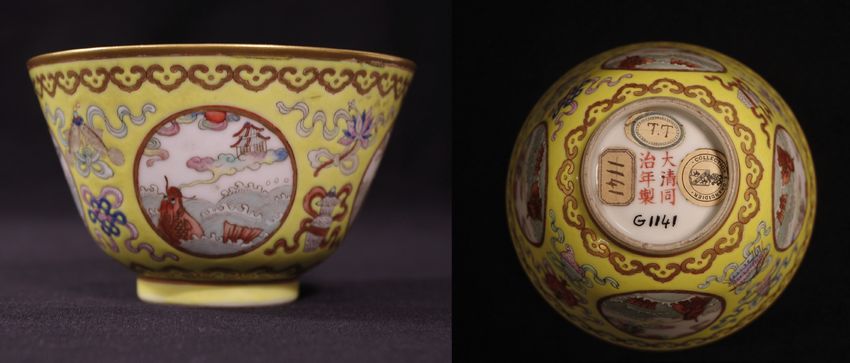
Journal for Art Market Studies 2 (2020) Lucie Chopard
Chinese Porcelain enters the Louvre: A Collector, his Dealers, and the Parisian Art Market (c. 1870-1912)

nineteenth century, other collections of East Asian art were displayed in Paris: private
collections, such as Edmond de Goncourt’s2 (1822-1896), as well as public ones3 such as
the Louvre. Regarded as the preeminent French museum, the Louvre officially started
to collect Asian art in 1893.4 In the process, an important group of Chinese porcelain was
donated to the French State: the collection of Ernest Grandidier (1833-1912). Born and
raised in a wealthy Parisian family, he had started to collect Chinese porcelain in the
1860s and continued to accumulate pieces until his death in 1912.

The history of this incredible collection – today considered as the largest one of Chinese
ceramics in France and kept at the Guimet museum in Paris - is relatively unknown.5
Often underestimated by the Louvre administration during the nineteenth and twenti-
eth centuries, the Grandidier collection continues to be absent from the major studies
dedicated to the history of the Louvre museum.6 Moreover, the study of the history of
collecting Chinese ceramics in Paris during the second half of the nineteenth century
has been affected by the predominance of Japonism in France, which favours the study
of the history of collections of Japanese works of art.7 In this slightly biased context, the
study of the provenance of the items collected by Ernest Grandidier, more than 6,000
pieces, deserves a meticulous investigation of the collector and his interactions with deal-

      Art (ca. 1877-1918), in Charlotte Guichard, Christine Howald and Bénédicte Savoy, eds., Acquiring cultures.
      Histories of World Art on Western Markets (Boston, Berlin: De Gruyter, 2018), 209-222; and Silvia Davoli,
      Comparing East and West: Enrico Cernuschi’s Collections of Art Reconsidered, in Susan Bracken, Andrea
      M. Gáldy and Adriana Turpin, eds., Collecting East and West (Newcastle upon Tyne: Cambridge Scholars
      Publishing, 2016), 41-59.
      This paper derives from a conference paper I presented on 7 November 2019 in Berlin as part of the
      workshop “‘Pillage is formally prohibited...’’ Provenance Research on East Asian Art #3”, organised by
      the Museum für Asiatische Kunst, the Technische Universität Berlin and the University of Glasgow. I am
      grateful to Mrs. Deléry, curator at the Musée Guimet, for her assistance with the photographs presented
      here.

2     See Chang, Travel, collecting and museums, and Dominique Pety, Les Goncourt et la collection: de l’objet
      d’art à l’art d’écrire (Genève: Droz, 2003).

3     Few studies deal with Asian collections in museums outside of Paris. See Musée national de céramique,
      Sèvres, L’odyssée de la porcelaine chinoise (Paris: Réunion des musées nationaux, 2003); and Pauline
      D’Abrigeon, La collection extrême-orientale du musée Adrien Dubouché de Limoges, in Cahiers de l’Ecole
      du Louvre, 6, (2015), 43-52.

4     The collection of East-Asian art created in the Department of Decorative Arts in 1893 mainly consisted,
      during the first years, of Japanese prints and objects.

5     Jean-François Jarrige, Du Musée du Louvre au Musée Guimet, in Les donateurs du Louvre (Paris: éditions
      de la RMN, 1989); Xavier Besse, La Chine des porcelaines (Paris: Edition de la Réunion des musées nation-
      aux, 2004); and Wan-Chen Chang, The Chinese Ceramic Collection of Ernest Grandidier, in Marie-Cathe-
      rine Rey, ed., Paris 1730-1930: A taste for China (Hong Kong: Kangle ji weshua shiwushu, 2008), 110-115.

6     Recently, see: Jacques Giès, Les arts asiatiques au Louvre, in Geneviève Bresc-Bautier, Yannick Lintz,
      Françoise Mardrus and Guillaume Fonkenell, eds., Histoire du Louvre (Paris: Louvre éditions, Fayard,
      2016), vol. II, 460-461.

7     For an up-to-date bibliography, see Béatrice Quette, ed., Japon japonismes (Paris: MAD, 2018) and Ge-
      neviève Lacambre, A l’aube du japonisme. Premiers contacts entre la France et le Japon au XIXe siècle
      (Paris: Maison de la culture du Japon à Paris, 2018).
                                                                                                                 2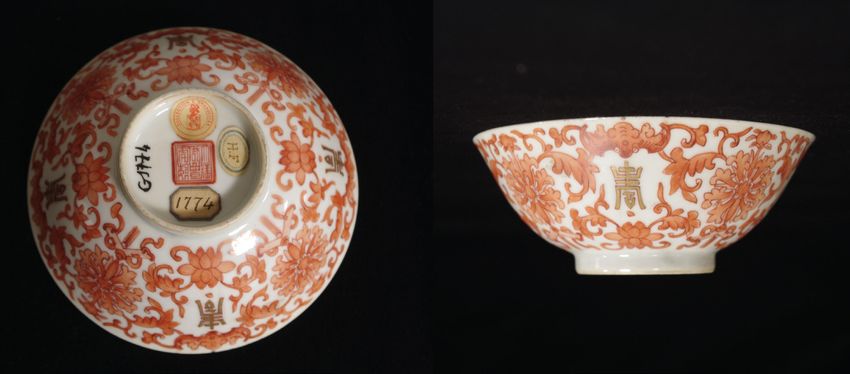
Journal for Art Market Studies 2 (2020) Lucie Chopard
Chinese Porcelain enters the Louvre: A Collector, his Dealers, and the Parisian Art Market (c. 1870-1912)

ers.8 This field of research involves reflection about the location, the date, the people and
the mechanisms involved in the acquisitions, highlighting links between the Parisian art
market and the Louvre. It is a good example of the “entangled histories of museums and
art markets” noted by Bénédicte Savoy and Charlotte Guichard.9

A Collection admitted to the Louvre

Ernest Grandidier started collecting during the late 1860s, first taking an interest in
books, then gradually moving on to Japanese ceramics and Chinese porcelain.10 He gave
up collecting Japanese ceramics in 1899, instead concentrating his interest on Chinese
objects which represent the biggest part of the collections.11 This paper focuses precisely
on this latter collection: consisting primarily of porcelain from the Qing dynasty (1644-
1912), together with a few examples from the Ming (1368-1644), Yuan (1279-1368) and
Song (960-1279) dynasties (fig. 1). Some of them are now recognized as masterpieces,12
while others are of lesser quality.

    Identification of the pieces according to              Number of acquisitions (nb. of inventory
    Grandidier (1912)                                      numbers)
    China, Qing, Kangxi                                    1776
    China, Qing, Yongzheng                                 459
    China, Qing, Qianlong                                  1839
    China, Qing, Jiaqing                                   79
    China, Qing, Daoguang                                  127
    China, Qing, other periods                             8
    China, Ming                                            493
    China, Yuan                                            8
    China, Song or Yuan                                    16
    China, Song                                            84

8       As noted in Christine Howald and Alexander Hofmann, Introduction, in Journal for Art Market Studies 3
        (2018), 3.

9       Charlotte Guichard and Bénédicte Savoy, Acquiring Cultures and Trading Value in a Global World. An
        Introduction, in Charlotte Guichard, Christine Howald and Bénédicte Savoy, Acquiring Cultures, 4.

10      For an overview and bibliography, see Lucie Chopard, Ernest Grandidier, in Collectionneurs, collecteurs et
        marchands d’art asiatique en France 1700-1939, Paris, INHA, forthcoming (online).

11      According to my comparison of the old inventories of the collection (kept at the Musée Guimet) and two
        notebooks where Grandidier recorded his ceramics (now in the Archives nationales, 20144787/13), I pre-
        sume the collection consisted of 4,919 inventory numbers for Chinese ceramics and only 698 for Japanese
        ones. There might actually be more pieces in the collection (no more than ten or twenty), but I have not
        found concrete evidence of their existence yet and it is known that moving and renumbering was under-
        taken after the collector’s death. I plan to provide an extensive study of the Japanese acquisitions in my
        PhD thesis.

12      An online database presents the masterpieces of the collection: https://www.guimet-grandidier.fr/html/4/
        index/index.htm (accessed on 28 April 2020).

                                                                                                                3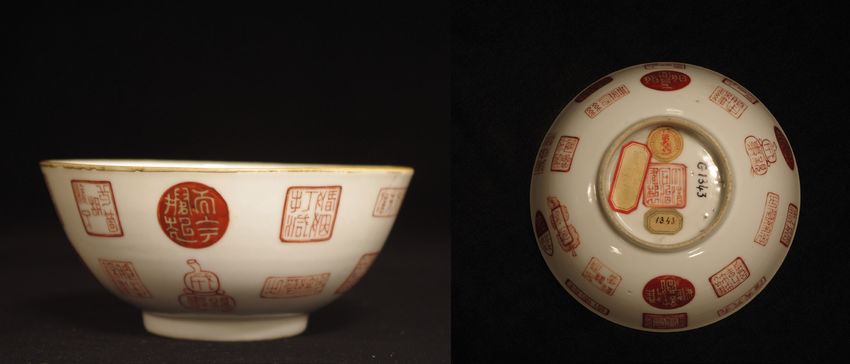
Journal for Art Market Studies 2 (2020) Lucie Chopard
Chinese Porcelain enters the Louvre: A Collector, his Dealers, and the Parisian Art Market (c. 1870-1912)

 Identification of the pieces according to                 Number of acquisitions (nb. of inventory
 Grandidier (1912)                                         numbers)
 China, Han                                                1
 China, unknown                                            29
 Japan                                                     698
 Unknown                                                   172
 Other provenance                                          4
 Total                                                     5,793

 Fig.1: Chart presenting the repartition of the pieces of the collection depending on designa-
 tions given by Ernest Grandidier (1912) ©Lucie Chopard

In 1894, Grandidier donated his entire collection of Chinese porcelain to the Louvre.13
The sheer volume of items, over three thousand pieces, made the donation a considera-
ble enrichment of the decorative arts collection. Furthermore, the original conditions for
the donation were noteworthy: first, the collector required that the museum allocate a
sum of 6,000 francs per annum in order to enhance the collection bearing his name; sec-
ond, that he be appointed keeper, and third, that he be granted independent status with-
in the Department of Decorative Arts at the Louvre. The Grandidier collection became
a part of this department “par sa nature” (due to its nature). Thus, the newly appointed
keeper Grandidier should have been subordinate to the Chief Keeper of the Department.
Instead, through demanding independent status, Grandidier reported directly to the
Director of the museum.

Before the collection’s arrival, only a few Chinese objects were to be found within the
museum: there were disparate collections, such as enamels, ceramics and Chinese
objects preserved in the ethnographic museum of “Musée de Marine du Louvre”14 and
scattered objects such as Chinese ceramics from the Thiers collection.15

Against this background, the choice of donating the largest collection of Chinese ceram-
ics in France to the Musée du Louvre may be surprising. However, in 1894, no French
museum was specifically dedicated to Asian art16 and the Louvre presented a symbol of
significant social recognition for the collector. In a report dated 1893 to the Director of
the Museum, Albert Kaempfen (1826-1907), one of the Louvre’s keepers, Emile Molinier
(1857-1906), summarized the reasons which, in his opinion, justified the acceptance of
the donation of the Grandidier collection. According to him, the collection was “a com-
plete ensemble”, presenting chronological, formal and decorative diversity. It was also

13    Archives nationales (A.N.), 20144787/13.

14    Geneviève Bresc-Bautier, L’art asiatique, «le déballage d’un sac de marin», in Grande Galerie. Le journal
      du Louvre, 17 (2011), 44 –46.

15    See Collection d’objets d’art de M. Thiers, léguée au Musée du Louvre (Paris, 1884); and Geneviève
      Bresc-Bautier, Yannick Lintz, Françoise Mardrus et Guillaume Fonkenell, eds., Histoire du Louvre (Paris:
      Louvre éditions et Fayard, 2016), vol. 2, 359-360.

16    The Guimet Museum in Paris (opened in 1889) was dedicated solely to the history of religions. It displays
      East Asian objects alongside Egyptian and Roman artefacts. The Cernuschi Museum opened in 1898.

                                                                                                                  4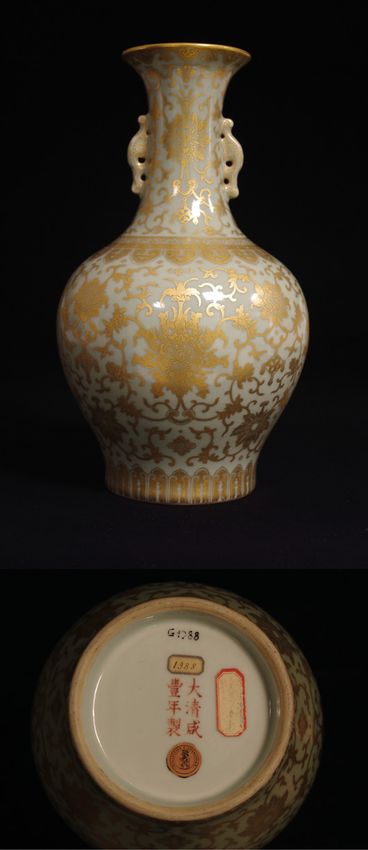
Journal for Art Market Studies 2 (2020) Lucie Chopard
Chinese Porcelain enters the Louvre: A Collector, his Dealers, and the Parisian Art Market (c. 1870-1912)

worthy of being displayed in the museum: the pieces were ancient, the shapes pleasant
and the decoration rich and well-preserved. Moreover, the collection was famous and
included similar objects to those of the South Kensington Museum in London and the col-
lection at the Dresden museum17 – the last one a key reference to the intense rivalry and
circulation of ideals between European museums at the time.18 Molinier’s final argument
underlines the importance attributed to the Grandidier collection as a source of models
to be used by French artists and industries:19 this was also the view of the collector. At
the time, the debate about decorative arts and the search for renewal through ancient
objects had become slightly outdated, but still continued here.20

Parisian acquisitions

Tracking down the collector’s acquisitions

From 1894 to 1912, Grandidier was the sole keeper of his collection and the only one to
preside over his collection’s display and acquisitions. The accounts of the meetings of the
Louvre’s advisory committee21 reflect limited discussion on acquisitions and a typically
unanimously favourable opinion: no one seems to have contested – or to have dared to
contest - the choices of the keeper who still regularly donated Chinese porcelain to the
museum until his death.

The collection’s archives contain two notebooks22 in which Grandidier recorded details
for each piece in his collection. The documents are structured in four columns, where
the collector reported the inventory number of the object, its summary designation, its
source, and its purchase price or, if applicable, its assumed value. However, this source
should be approached with caution: Grandidier sometimes gives approximate prices and
does not always indicate the precise source of the objects. Pending further clarification to
be provided later in my research, and given that according to my initial surveys, most of

17    A. N., 20144787/13, Rapport à Monsieur le Directeur des Musées Nationaux et de l’Ecole du Louvre au su-
      jet de la collection Grandidier, E. Molinier, 21 November 1893: “La collection réunie depuis plus de vingt
      ans par M. Grandidier se présente comme un tout complet, comme une réunion méthodique à laquelle
      il y aura bien peu de retouches à faire pour la rendre parfaite. [...] Il est inutile, je crois, Monsieur le Di-
      recteur, de m’attarder à faire une longue description d’une collection particulière auprès de laquelle les
      séries du même genre que renferment le musée de Dresde et le Musée de South Kensington, à Londres,
      palissent étrangement et paraissent presque insignifiantes”.

18    Pascal Griener, L’histoire des collections, in Revue de l’art, 200 (2018), 70-71.

19    This role of inspiration for contemporary productions, assigned to works of art in general, was very im-
      portant for Molinier.

20    Rossella Froissart-Pezone, Les collections du musée des Arts décoratifs de Paris: modèles de savoir tech-
      nique ou objets d’art?, in Chantal Georgel, La jeunesse des musées (Paris: Ed. de la Réunion des musées
      nationaux, 1994), 83.

21    A. N., 20170157/30-37.

22    A. N., 20144787/13.

                                                                                                                    5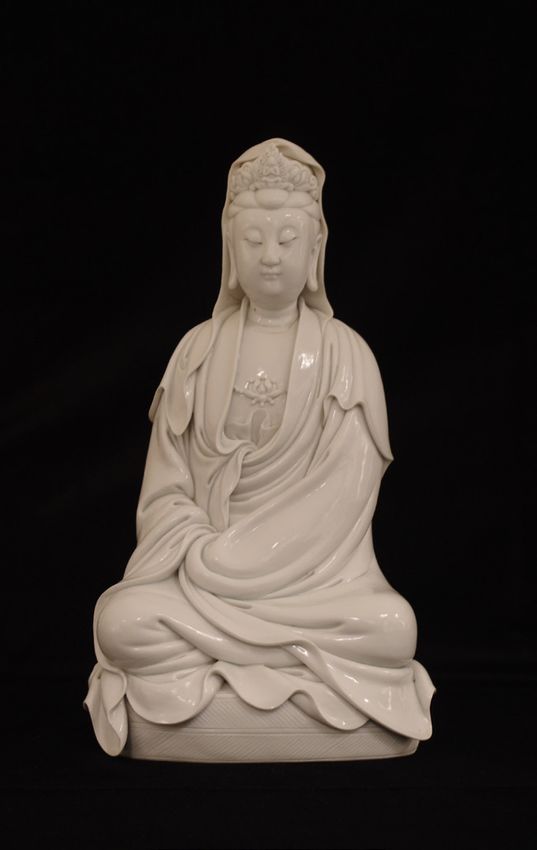
Journal for Art Market Studies 2 (2020) Lucie Chopard
Chinese Porcelain enters the Louvre: A Collector, his Dealers, and the Parisian Art Market (c. 1870-1912)

the information in the notebooks is accurate, I have relied on them to provide an over-
view of the origin of the Chinese porcelain pieces in the collection.

Based on the archives, we can see that the acquisitions came from various sources in
terms of both Chinese and Japanese collections: public auctions, purchases from dealers,
or donations. After the collection was placed in the Louvre, Grandidier also recovered
pieces already present in the museum’s collection and installed them in his showcases,
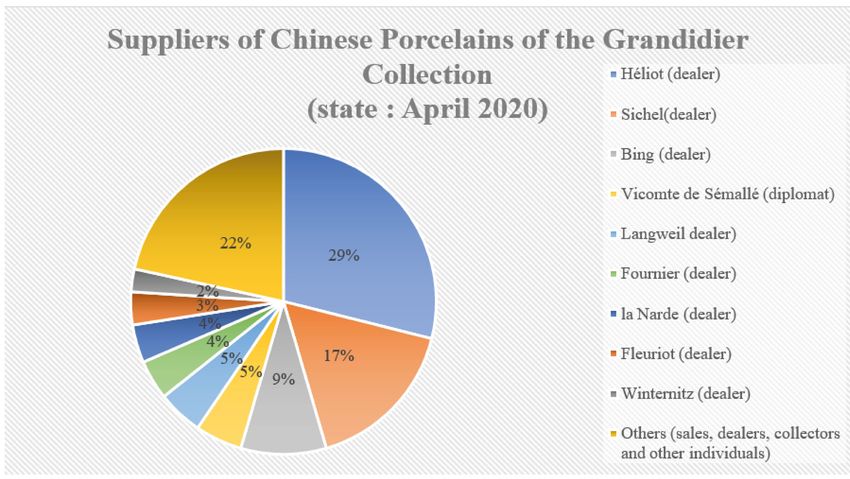
and he received various donations. Regarding the entire collection, the majority of the
pieces appear to have been purchased from “dealers” (fig. 2).23 This category covers

Fig.2: Chart presenting the repartition of the pieces of the collection depending on suppliers in-
dicated in the collector’s notebooks ©Lucie Chopard

anybody claiming to be trading in antiques and/or owning a shop in Paris – the note-
books only mention family names with no further information concerning the terms of
the purchase, except for prices. The identification of those dealers and of the art sales
suggest that Grandidier primarily acquired porcelain pieces in Paris. Only three purchas-
es occurred elsewhere, in Brussels, and not a single one in London.

In regard to the date of the acquisitions, the problem is still complex today: at first
glance, it may be assumed that acquisitions were recorded in the notebooks as they were
made. However, by comparing the information in the archives with the records in these
two documents, it appears that the first part of the notebooks was filled in retrospective-
ly, and that it was only after that Grandidier started to record his acquisitions in a more
systematic way.24 However, it is still possible to date many purchases and donations more
or less accurately by using the dates of public auctions and the life dates of the people

23    The others were established collectors, diplomats and a missionary returning from China, art auctions
      and various persons unknown at this stage of my research.

24    This part is described in detail in my PhD thesis.
                                                                                                              6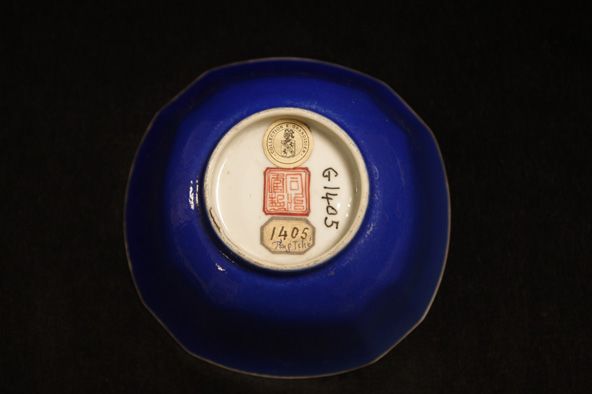
Journal for Art Market Studies 2 (2020) Lucie Chopard
Chinese Porcelain enters the Louvre: A Collector, his Dealers, and the Parisian Art Market (c. 1870-1912)

involved. It is also possible to reconstruct the content of the first donation of 1894, which
is still a work in progress. On the basis of current knowledge, it appears that Grandidier
purchased the pieces corresponding to the first four thousand inventory numbers of
the collection between the end of the 1860s and 1894, and the remaining two thousand
between 1894 and 1911.

The Parisian art market for Chinese ceramics

Studies of the Parisian art market are still rare, especially in the domain of works of art.25
Regarding the market for Chinese artefacts, studies usually deal with “Asian art” in gen-
eral and approach Japanese and Chinese objects together,26 with only few publications
focusing on Chinese objects.27 A significant part of what is known today comes from such
valuable sources as the Goncourt Journal28 or the memoirs of Raymond Koechlin.29 The
study of art catalogues and auction archives contrasts with the importance attributed to
some actors by Goncourt and Koechlin whose publications remain subjective. From all
these studies some “big names” in the field emerge such as Bing, Goncourt, Desoye, etc,
but hardly ever famous works of art. The Grandidier collection helps to define this mar-
ket and its actors by providing an intact ensemble of over 6,000 pieces gathered between
the late 1860s and 1912. Leaving apart the question of the collector’s taste, a close study
of the purchases helps us to identify new dealers, enhances our understanding of others
and provides the quantity and typology of the pieces they supplied.

Among the identified dealers in Chinese ceramics,30 a majority was not specialized in
Chinese or Asian art. They were mainly French, some of them Dutch selling antiques

25    Charlotte Vignon, Duveen Brothers and the Market for Decorative Arts, 1880-1940 (New York: The Frick
      Collection, 2019); Manuel Charpy, Le théâtre des objets. Espaces privés, culture matérielle et identité bour-
      geoise, Paris, 1830-1914, PhD thesis, Université François Rabelais de Tours, 2010 (unpublished).

26    Léa Saint-Raymond, Les collections d’art asiatique à Paris (1858-1939): une analyse socio-économique, in
      Marie Laureillard and Cléa Patin, eds., A la croisée de collections d’art entre Asie et Occident, du XIXe siècle
      à nos jours (Paris: Hémisphères Editions, 2019), 229-247.

27    Wen-Chen Chang, The Chinese Art Market in Paris in the Nineteenth Century: Beyond Japonism, in Ma-
      rie-Catherine Rey, ed., Paris 1730-1930: A taste for China , 94-97; Léa Saint-Raymond, La création séman-
      tique de la valeur. Les ventes aux enchères d’objets chinois à Paris (1858-1939), in Michel Espagne and Li
      Hongtu, eds., Chine France - Europe Asie. Itineraires de concepts (Paris: Editions Rue d’Ulm, 2018), 217-239.
      Several studies deal with specific topics, such as the circulation and the sales of looted artefacts of the
      Summer Palace: see Christine Howald and Léa Saint-Raymond, Tracking dispersal: auctions sales from
      the Yuanmingyuan loot in Paris in the 1860s, in Journal for Art Market Studies, 2 (2018) (DOI 10.23690/
      jams.v2i2.30).

28    Edmond et Jules (de) Goncourt, Journal des Goncourt: mémoires de la vie littéraire (Paris, R. Laffont, 1989
      [1851-1896]).

29    Raymond Koechlin, Souvenir d’un vieil amateur d’art de l’Extrême-Orient (Paris, E. Bertrand, 1930).

30    Identified dealers (research still in progress): Jules Allard, the Beurdeley family, Siegfried Bing, Jules
      Boasberg, Edouard Chappey, Mrs. Chaumont, P. Derode, [Mr] Dillon, [Mr] Duvauchel, Mrs. Fleuriot, An-
      toine et Guillaume Fournier, Armand Samson Gompertz, Emile et Mrs Guérin, [Mr] Guilaine, Mrs Hatty,
      Tadamasa Hayashi, Laurent Héliot, Mr. and Mrs. Langweil, Mr. Lhussier, Mr Louirette, Mr Lowengard,
      Mr. Malinet, [Mr] Miallet, MM. Monbro, Antoine de la Narde, Nathan Salomon, MM. Samson, Rienhard
                                                                                                                   7
Journal for Art Market Studies 2 (2020) Lucie Chopard
Chinese Porcelain enters the Louvre: A Collector, his Dealers, and the Parisian Art Market (c. 1870-1912)
in Paris, like Sarluis who was based in The Hague. Only one Chinese dealer was identi-
fied: Tien-Pao, whom Goncourt frequented and mentioned in his Journal.31 Grandidier’s
acquisitions involved two generations of dealers: one centred on the Sichel brothers,
Laurent Héliot and Siegfried Bing, and another, later, dominated by Florine Langweil.
This shift seems to have taken place in the 1890s, and it coincided with a spectacular rise
of prices for Chinese porcelains. This observation appears to be compatible with Koech-
lin’s description of a “new wave” of dealers going along with the taste for ancient Chinese
ceramics in the early twentieth-century.32
Three dealers were Grandidier’s main suppliers: Laurent Héliot (1848-1909), later en-
tering into partnership with his son Gaston Héliot33 (1879-1936), who supplied almost
a third of his collection of Chinese porcelain34 (28,9% of inventory numbers), the Sichel
brothers (Auguste, Philippe and Otto) with 16,5% and Siegfried Bing (1838-1905) with
9% (fig. 2). The other main dealer regarding the Grandidier collections was Antoine de
la Narde (1839-19?) who provided fewer Chinese porcelain pieces than the three others
but much of the Japanese ceramics.35 Laurent and Gaston Héliot, the Sichel brothers and
Bing alone represent in total more than half of Ernest Grandidier’s acquisitions of Chi-
nese porcelain between 1870 and 1912. The volume of goods and of money involved is
impressive, with more than 990,000 francs paid by the collector to these three dealers.
Next are the Viscount Robert de Semallé (1849-1936), formerly stationed in China, whose
contribution to the Grandidier collection is mainly represented by an impressive set of
snuff bottles that explains the huge number of these items in the collection, and a dealer,
Florine Langweil36 (1861-1958), with 5% of the collection each. Among the remaining sup-
pliers we can mention “Fournier”, the name of a dynasty of Parisian dealers37 with 4,2%
of the collection, Antoine de la Narde with 4%, Mrs. Fleuriot with 3,5% and S. Winternitz,
Sarluis, Jacques Seligmann, Auguste, Philippe and Otto Sichel, A. Slaes, Tien-Pao, Mr and Mrs Wannieck,
F. Willems, S. Winternitz.
31 Goncourt, Journal, t. II, 777 and 804.
32 Koechlin, Souvenirs, 62.
33 After the death of Laurent Héliot in 1909, his son continued to sell Chinese porcelain to Grandidier, pos-
sibly with his brother. I presume Gaston worked in his father’s business for years before that as he was
considered his true successor at the time (see for example “Exposition d’art chinois”, in Excelsior, 9 June
1914, 4).
34 Here I consider gifts and purchases listed in the notebooks because I am aiming to establish which
objects were in their possession. I refer to the inventory numbers and not the number of objects since it
seems that porcelain sets (such as garniture and pairs) were bought together for the documented ones.
35 Lucie Chopard, Antoine de la Narde, in Collectionneurs, collecteurs et marchands d’art asiatique en France
1700-1939, Paris: INHA, forthcoming (online).
36 Not much is known about this important personality on the Paris art market. For the current state of
research, see Elizabeth Emery, La Maison Langweil and Women’s exchange of Asian Art in Fin-de-siècle
Paris, in L’Esprit créateur 56/3 (2016), 61-75. Florine Langweil began by working with her husband at the
end of the nineteenth century, then continued to work independently after he left her.
37 Catalogue des anciennes porcelaines de Sèvres, de Saxe, de Chine et du Japon, objets d’art et de curiosité
composant la collection de feu M. Fournier Père, Vente Hôtel Drouot, 2-6 mars 1885, Me Paul Chevallier
commissaire-priseur, M. Charles Mannheim expert.
8Journal for Art Market Studies 2 (2020) Lucie Chopard
Chinese Porcelain enters the Louvre: A Collector, his Dealers, and the Parisian Art Market (c. 1870-1912)
with 2,4%. The other suppliers are much less important, each of them providing less than
2% of the collection and a total 25,5% of the entire collection.
This distribution highlights the importance of Héliot, a dominant dealer of the period
who is not very well studied, and of the Sichel brothers, whose family name is cited most
often in connection with Philippe’s trip to Japan in 1874 and the account of his journey.38
Similarly, Bing is more often mentioned in the context of his leading role in Japonism’s
dissemination than for his role in purchases of Chinese art.
Dealers and collector: a relationship
Supply, strategy and the eye: being an art dealer at the time
The identification of the objects in the Grandidier collection which passed through each
of the three major dealers (Héliot, Sichel, Bing) helps to better understand the focus of
their dealing activities. In addition to their civil status, their addresses, and their de-
scription found in the pages of the Annuaire-Almanach du Commerce Didot-Bottin,39 part
of their stock forms a valuable source of information on their work, by revealing their
participation in the flourishing Chinese art trade on the Parisian market and providing
more information on the availability of specific pieces.
Laurent Héliot seems to have started his commercial activities in Paris in the 1870s. Over
the course of his life, his trade takes place from 62, rue de Clichy, and later at 34, rue de
Berlin. The letterhead of his invoices always mentions a specialization in Chinese art, es-
pecially Chinese porcelain. He died in 1909 after more than forty years in the trade.40 His
contribution to the Grandidier collection of Chinese porcelain comprises 1,490 purchases
and two gifts. These transactions took place until 1911: in all probability, his sons carried
on their father’s trade after his death.41
Auguste (1838-1886), Philippe (?-1899), and Otto (1846-1891) Sichel were three brothers
from Germany who started their commercial activities in Paris in the 1870s. Their pro-
fessional links are not well known: it is possible that they had already worked together
for some time.42 On the basis of the available documents, it is difficult to separate the
purchases Grandidier made from each of the Sichel brothers, because of his habits of
38 Philippe Sichel, Notes d’un bibeloteur au Japon (Paris, E. Dentu, 1883). See Max Put, Plunder and Pleasure:
Japanese art in the West, 1860-1930 (Leiden: Hotei publ., 2000).
39 Annuaire-almanach du commerce, de l’industrie, de la magistrature et de l’administration: ou almanach
des 500.000 adresses de Paris, des départements et des pays étrangers: Firmin Didot et Bottin réunis, (Paris:
Firmin-Didot frères, 1857-1908).
40 Lucie Chopard, Laurent Héliot, in Collectionneurs, collecteurs et marchands d’art asiatique en France 1700-
1939, Paris, INHA, forthcoming (online).
41 The details of this activity are not well known. See Chopard, Laurent Héliot.
42 Lucie Chopard, Auguste, Philippe et Otto Sichel, in Collectionneurs, collecteurs et marchands d’art asia-
tique en France 1700-1939, Paris, INHA, forthcoming (online).
9Journal for Art Market Studies 2 (2020) Lucie Chopard
Chinese Porcelain enters the Louvre: A Collector, his Dealers, and the Parisian Art Market (c. 1870-1912)
only mentioning family names. In all likelihood he bought pieces from all three brothers:
he purchased some pieces during the auction of Auguste’s collection in March 188643 and
continued to buy after Auguste’s death, indicating a trading relationship with the two
remaining brothers. Well-known and studied for their trade in Asian art,44 they also dealt
in European works of art.45 Grandidier bought pieces from Philippe Sichel until 1898.
Siegfried Bing is the best-known of these three dealers. A strong promoter of Japonism
and Art nouveau46, his activities took place in various Paris locations and on the other
side of the Atlantic. Grandidier bought more Chinese than Japanese ceramics from him
until 1902.
Comparing the pieces purchased from each of these three dealers (fig. 3) and bearing in
mind the global distribution of the pieces of the collection,47 it comes as no surprise that
the objects the three of them sold to Grandidier were considered to be from the Kangxi
(1661-1722) and the Qianlong periods (1735-1796).
Identification of the pieces ac- Acquisitions Acquisitions Acquisitions
cording to Grandidier (1912) from Héliot (no. from Sichel (no. from Bing (no.
of inventory of inventory of inventory
numbers) numbers) numbers)
China, Qing, Kangxi 602 331 131
China, Qing, Yongzheng 135 85 65
China, Qing, Qianlong 405 292 185
China, Qing, Jiaqing 15 9 14
China, Qing, Daoguang 12 28 13
China, Qing, Xianfeng 0 0 2
China, Qing, Tongzhi 0 3 0
China, Ming 200 51 26
China, Yuan 6 0 1
China, Song or Yuan 3 4 3
China, Song 41 10 5
China, unknown 5 3 4
Japan 34 28 129
43 Catalogue des objets d’art et ameublement... appartenant à M. Auguste Sichel, vente Hôtel Drouot, 1-5 mars
1886, Me Paul Chevallier commissaire-priseur, M. Charles Mannheim expert.
44 Put, Plunder and Pleasure.
45 Chopard, Auguste, Philippe et Otto Sichel.
46 Gabriel Weisberg, Edwin Becker and Evelyne Possémé, eds., The origins of l’art nouveau: the Bing empire,
(Amsterdam, Paris, Antwerp, Ithaca, N.Y: Van Gogh Museum, Musée des Arts décoratifs, Mercatorfonds,
2004).
47 Here, I consider once again the identification of pieces as proposed during the nineteenth century.
10Journal for Art Market Studies 2 (2020) Lucie Chopard
Chinese Porcelain enters the Louvre: A Collector, his Dealers, and the Parisian Art Market (c. 1870-1912)
Identification of the pieces ac- Acquisitions Acquisitions Acquisitions
cording to Grandidier (1912) from Héliot (no. from Sichel (no. from Bing (no.
of inventory of inventory of inventory
numbers) numbers) numbers)
Unknown 33 19 63
Other provenance 1 (Siam) 0 1 (Annam?)
Total of procurements 1491 863 642
Fig. 3: Chart presenting the purchases of Chinese porcelains by Héliot, Sichel and Bing, ac-
cording to the pieces’ dating given by the collector ©Lucie Chopard
They also sold porcelain of the Yongzheng (1722-1735), Jiaqing (1796-1820) and Daoguang
(1820-1850) periods. Five items stand out in curious isolation: two pieces of ceramics
from the Xianfeng period (1850-1861) from Bing (fig. 4 and 5) and three from the Tong-
hzi period (1861-1875) bought from the Sichel brothers (fig. 6, 7 and 8). Few pieces from
these periods are part of the collection: Grandidier considered the production of those
reigns to be of poor artistic value.48
Fig. 4: Bowl, China, kilns of Jingdezhen (Jiangxi)
Qing dynasty, Xianfeng period (1851-1861), porcelain, 5,5 x 12,6 cm, mark “Da Qing Xianfeng nian
zhi”
Paris, musée des Arts asiatiques – Guimet, inv. G1774 ©Lucie Chopard
Chinese ceramics from the nineteenth century may have been attributed to the eight-
eenth century49 because of the taste of the period which may have pushed some dealers
to backdate their items in order to increase their attractiveness – and their prices - or
because of a lack of expertise. Regarding the five abovementioned ceramics that were
bought from the Sichel brothers, there was no doubt about their date at the time of
48 Grandidier, La Céramique chinoise, 224.
49 For example, inv. G93 and inv. G273 were dated to the Qianlong period by Grandidier, but are now con-
sidered to be productions of the Xianfeng period.
11Journal for Art Market Studies 2 (2020) Lucie Chopard
Chinese Porcelain enters the Louvre: A Collector, his Dealers, and the Parisian Art Market (c. 1870-1912)
purchase because they have a reign mark on their base.50 Héliot seems to have sold a few
more pieces from the Ming dynasty than the others: he supplied more than 40% of the
Ming pieces in the collection. Few pieces are dated from the Song and Yuan dynasties:
the productions of this period were of little interest to Grandidier. Nevertheless, he
collected a small number of them, most likely to reflect
the general history of Chinese porcelain in his collec-
tion.51
The three dealers sold ceramics of high and low quality,
but most of the highlights in the collection came from
Héliot and the Sichel brothers. For example, two por-
celain pieces regarded as masterpieces at the time and
reproduced by heliogravure in the collector’s publication
of 1894 came from their business: the delicate Guanyin
figure in monochrome white52 from the Dehua kilns in
Fujian (fig. 9) was bought from the Sichel brothers and
the ten thousand flowers vase53 which had escaped from
Grandidier’s clutches at the Camondo auction54 was
bought the same year from Héliot. The Sichel brothers
distinguished themselves by providing a higher per-
centage of high-quality pieces with regard to their total
number of items. The difference in the quality of the
porcelain traded by these dealers may possibly be due
to their sources of supply, to their knowledge or to their
Fig. 5: Vase, China, kilns of
“eye”, considered as the ability to identify a masterpiece
Jingdezhen (Jiangxi), Qing dy-
amongst an assemblage of good pieces.55 In the case of
nasty, Xianfeng period (1851-
Sichel, Bing and Héliot, the lack of personal and busi-
1861), porcelain, 31 x 18 cm,
mark “Da Qing Xianfeng nian
ness archives preserving precise information prevents a
zhi” detailed study of their sources of supply. We know that
Paris, musée des Arts asia- Siegfried Bing was buying in Asia,56 and at least two of
tiques – Guimet, inv. G1988 the Sichel brothers had been in Japan,57 a country where
©Lucie Chopard Chinese porcelain circulated and where collecting Chi-
50 The pieces inv. G1774 and inv. G1988 show a Xianfeng mark, G1141, G 1343 and G1405 a Tongzhi mark.
51 Grandidier, La Céramique chinoise, 5.
52 Statuette, inv. G535. Reproduced in Grandidier, La Céramique chinoise, Pl. X.
53 Vase, inv. G3344. Reproduced in Grandidier, La Céramique chinoise, Pl. XXXVI.
54 Résumé du catalogue d’une belle collection..., [vente Camondo], vente Galerie Georges Petit, 1-3 février
1893, Me Paul Chevallier commissaire-priseur, expert M. Eug. Féral, M. Durand-Ruel et M. Charles Man-
neim, s.l., s.d., and Archives de Paris (A. P.), D48E3/78.
55 For some reflections about the eye of art expert and the current status of connoisseurship, see Charlotte
Guichard, Introduction to the special issue of Revue de Synthèse, 132/1, (2011).
56 Vignon, Duveen Brothers.
57 Put, Plunder and Pleasure, 35.
12Journal for Art Market Studies 2 (2020) Lucie Chopard
Chinese Porcelain enters the Louvre: A Collector, his Dealers, and the Parisian Art Market (c. 1870-1912)
nese ceramics has a long tradition. They also bought at auction, a well-known practice of
art dealers of the time.58
The dealer: a key contributor?
Social relationships and business networks played an important role in the Paris art mar-
ket by connecting individual actors and Parisian museums. At the centre of this network,
the relationship between the collector and the dealer was one of the key market and
social drivers. While these relations were cordial, and sometimes friendly, it should not
be forgotten that they took place over a long period of time and were able to evolve: the
minutes of the auctioneers, consulted over several decades, clearly show us that all these
market players interacted for sometimes over thirty years.59 In his Journal, Goncourt had
already noted the evolution of dealers from merchants of “bric-à-brac” to “gentlemen
dressed by our tailors”, using Auguste Sichel as an example.60 The proximity between
collector and dealer is evident in an anecdote reported by Alfred Grandidier in his
Mémoires where he explains that his brother invited Philippe Sichel to his castle near
Paris, the Château de Fleury-Mérogis, and that the dealer used the opportunity to
convince him to sell the estate in order to buy more porcelain for his collection.
Fig. 6: Bowl, China, kilns of Jingdezhen (Jiangxi), Qing dynasty, Tongzhi period (1862-1874),
porcelain, 6,5 x 10,5, mark “Da Qing Tongzhi nian zhi”
Paris, musée des Arts asiatiques – Guimet, inv. G1141 ©Lucie Chopard
Whether entirely accurate or not, this anecdote reveals that Philippe Sichel remained in
Alfred’s memory as an important supplier and maintained a close relationship with his
brother. It was also Philippe Sichel to whom Grandidier turned in 1894 when his collec-
tion was donated to the Louvre. Two experts were mandated to value the Grandidier
58 Camille Mestdagh, Ameublement et luxe au temps de l’éclectisme : le commerce et l’œuvre des Beurdeley,
in Natacha Coquery et Alain Bonnet, eds., Le commerce du luxe – le luxe du commerce. Production, exposi-
tion et circulation des objets précieux du Moyen Âge à nos jours (Paris, Mare et Martin, 2015), 278-287.
59 See for example results presented in Léa Saint-Raymond, Les collections d’art asiatique à Paris. Mrs. Dou-
cet, Durlacher, Fournier, etc., were main buyers for years.
60 Goncourt, Journal, vol. 2., 650-651.
13Journal for Art Market Studies 2 (2020) Lucie Chopard
Chinese Porcelain enters the Louvre: A Collector, his Dealers, and the Parisian Art Market (c. 1870-1912)
collection and to decide its financial worth. The collector chose Sichel,61 while the Louvre
Museum invited Siegfried Bing to appraise the collection.62 As these two experts were
also Grandidier’s main suppliers, the situation appears somewhat ethically questionable
from a modern perspective.
Auctioneer’s minutes also highlights the role of dealers as intermediaries. Grandidier
was strangely absent from some major sales, yet he reported in his notebooks purchases
made at sales he did not attend, for example the Goncourt sale on March 1897.63 The
Fig. 7: Bowl, China, kilns of Jingdezhen (Jiangxi), Qing dynasty, Tongzhi period (1861-1875),
porcelain, 6 x 13,5 cm, mark “Da Qing Tongzhi nian zhi”
Paris, musée des Arts asiatiques - Guimet, inv. G1343 ©Lucie Chopard
number of such cases raises questions about the role of dealers as intermediaries, in the
light of the previous considerations about their relationship with the collector. Mer-
chants may be commissioned to buy some items on
behalf of a client during a sale. A close study of the
hammer price and the one paid by the collector should
reveal more information about the commission re-
ceived by the dealer for his services and yield further
clues about the relationship between Grandidier and
his dealers. This type of research may provide us with
Fig. 8: Bowl, China, kilns of
Jingdezhen (Jiangxi). Qing dynas- new insights into scholarly knowledge of Chinese
ty, Tongzhi period (1861-1875), porcelain at the end of the nineteenth century. The
6,5 x 12,5 cm, mark “Tongzhi earliest studies of these items in France took place
nian zhi”. Paris, musée des Arts during the second half of the century, with an important
asiatiques - Guimet, inv. G1405
©Lucie Chopard
61 A. N., 20144787/13.
62 A. N., 20144787/13.
63 Objets d’art japonais et chinois, peintures, estampes, composant la collection des Goncourt, vente Hôtel
Drouot, 8-13 mars 1897, commissaire-priseur Me G Duchesne, expert M. S. Bing, (s.l., s.d), and A. P.,
D42E3/82.
14Journal for Art Market Studies 2 (2020) Lucie Chopard
Chinese Porcelain enters the Louvre: A Collector, his Dealers, and the Parisian Art Market (c. 1870-1912)
involvement by collectors in the process.64 The close links between Grandidier and his
dealers, as demonstrated by the number of items bought and the large sums of money
that were paid, are likely to have played a significant role in the development of his
scholarly knowledge of Chinese porcelain.
As keeper of his collection at the Louvre, and bene-
fiting from his reputation and independent status,
Grandidier brought the Paris market for Chinese por-
celain and the museum closer together. He seemed
to trust only a few dealers and bought new porcelain
pieces on a regular basis. While Chinese porcelain
entered the Louvre, the choice of objects was made
first by the dealers, then by the collector-cum-keep-
er. This study focuses on the relationship between
Ernest Grandidier and the art dealers who helped
him to build the most important collection of Chinese
ceramics in France. By bringing together the dealers
and their objects, we can gain new understandings
about their trade and abilities. As such, the Grandi-
dier collection is a real trove of knowledge which
can be used to further our study of the Parisian and
Fig. 9: Statuette of Guanyin, China, French art market of the time: Grandidier collected
kilns of Dehua (Fujian) a wide range of ceramics from the early Song and
Qing dynasty, Kangxi period (1662- Yuan dynasties to the contemporary period, in var-
1722), XVIIth century, porcelain, 31
ious forms and styles of decoration. This approach
x 18 cm, seal “He Chaozong”
complements the study of the auction procès-verbaux
Paris, musée des Arts asiatiques –
which does not address the question of intermediar-
Guimet, inv. G535
©Lucie Chopard
ies between the collector and the art object. It also
partially overcomes the lack of surviving private
archives for most of the dealers. Progress in the field
of Paris art market studies will provide more data and allow for a better comprehension
of the complex interaction between scholars, collectors, art dealers and museums which
facilitated the convergence between the French cultural milieu and Asian art in the
second half of the nineteenth century. While this article takes a monographic approach,
due to the few available studies devoted to the subject, comparative approaches already
promise to be fruitful.
Lucie Chopard is a PhD student at the laboratoire Saprat - EA 4116, Ecole Pratique des
Hautes Etudes - PSL, Paris.
64 See Pauline D’Abrigeon, Des sciences naturelles à l’histoire de l’art: la porcelaine chinoise dans les classi-
fications françaises du XIXe siècle, in Histoire de l’art 82 (2018), 109-122; and Lucie Chopard, La Céram-
ique chinoise d’Ernest Grandidier: Ecrire une histoire de la porcelaine chinoise en 1894, in Sèvres 27,
(2018), 76-86.
15You can also read


