Chow-Yang Lee An interview with an Icon Interview by Stephen L. Doggett - FAOPMA
←
→
Page content transcription
If your browser does not render page correctly, please read the page content below
I
C
O
N

       Chow-Yang Lee
       An interview with an Icon
       Interview by Stephen L. Doggett

      I
          ntroduction: In the first six issues of           of Malaysia and moved to the US to take up a very
          FAOPMA Magazine, I have been privileged           prestigious Professorial position at the University
          to interview several notable figures in the       of California.
       industry, the majority being owners of very
       successful pest management companies. This           I first became aware of Chow-Yang (and our
       issue, we take a break from focusing on icons in     other now close colleague, Dr. Dini Miller) in 2004
       business and feature the most successful and         when we spoke in a session at an international
       influential researcher in the field of urban pest    conference held in Brisbane, Australia. However, I
       control who has ever existed in the Asian region.    was not officially introduced to Chow-Yang until
       Prof Chow-Yang Lee, in an incredibly stellar         some six years later, when we were both speaking
       career that is certainly a long way from over, has   at the NPMA PestWorld meeting in Hawaii. Later
       already published more than 240 peer reviewed        bed bugs brought us together (how would
       papers, supervised four postdocs, 15 Ph.D., 29       anyone guessed this?), and we have collaborated
       M.Sc. students, and more than 80 honors degree       on several projects, including the first academic
       students, and won multiple awards for his vast       book for 50 years on bed bugs with Dini Miller,
       achievements. Recently he left his home country      Advances in the Biology and Management of
                                                            Modern Bed Bugs. I am very pleased and proud
                                                            to interview my colleague and close friend, Prof
                                                            Chow-Yang Lee, as the Icon for this issue of the
                                                            FAOPMA Magazine.

                                                   Note that Prof Chow-Yang Lee is the
                                                    Keynote speaker for the upcoming
                                                    FAOPMA-Pest Summit 2020 Virtual
                                                       Conference, 18-19/Nov/2020.
                                                  Registration is only $USD50. For more
                                                 information on the meeting and details
                                                of the program and other speakers, go to:
       Speaking at the Global Bed Bug Summit in          www.faopma.com/2020
                              Denver, USA, 2018.

    10 || FAOPMA Newsletter - October 2020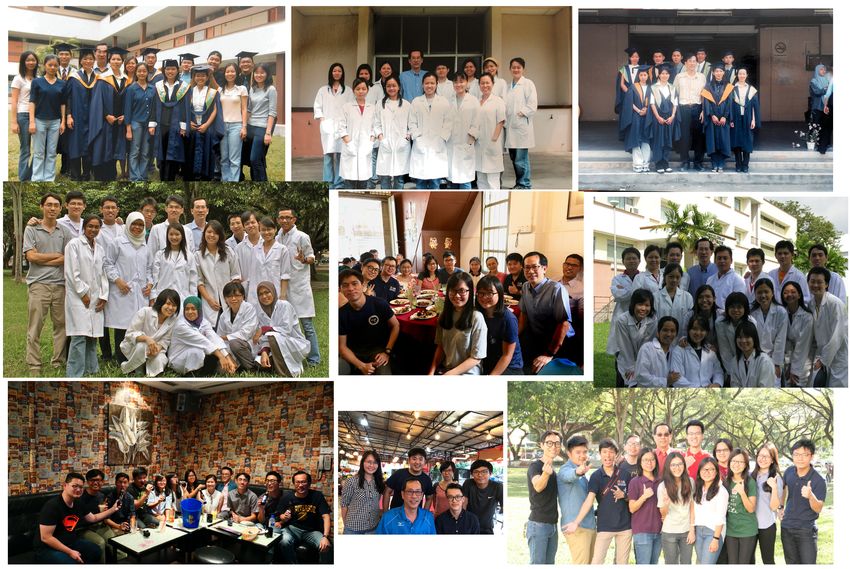
I
                                                                                                                   C
                                                                                                                   O
                                                                                                                   N

                    The portrait photos of all Chow-Yang’s former PhD students.
Name: Chow-Yang Lee                                   Malaysia (USM) as a lecturer and started working
Position: Professor and Endowed Presidential          in the field of urban and industrial entomology.
Chair in Urban Entomology, University of              My faculty research program over the past
California                                            20 years have centered heavily on urban pest
Years in pest control research: 27 years              management through research on the ecological,
                                                      behavioral, and physiological adaptations of pests
Please review your history in urban pest              especially in the areas of insecticide resistance
control research, including your research             and its underlying mechanisms, phylogenetics,
focus and the pests you have worked on?               population genetics, ecology, behaviour, and
                                                      environmental physiology of urban and structural
I started my Ph.D. in 1993 under the mentorship of
                                                      insect pests such as termites, cockroaches, pest
the late Dr. Han-Heng Yap, researching insecticide
                                                      ants, mosquitoes, and bed bugs.
resistance in field populations of German
cockroaches in Malaysia. At that time, it was the
hottest research topic in urban entomology.           Can you summarize the range of publications
With exception to a paper published in 1988 in        you have had over the years?
Japan, little was known about this important          I have a diverse publication record over the years.
issue in Asia. Dr. Yap was a leading authority in     I am a firm believer of the broad-based research
mosquito vector control in Asia. During my Ph.D.,     approach. Over the last 25 years, my students
I completed part of my thesis at Cardiff University   and I have worked on diverse research topics in
in the laboratory of Dr. Janet Hemingway, a world     urban entomology. These invaluable experiences
authority in insecticide resistance in mosquitoes.    have made me versatile in research planning,
After my Ph.D. in 1996, I joined Universiti Sains     finding funding sources, conducting and guiding

                                                                                          WWW.FAOPMA.COM   || 11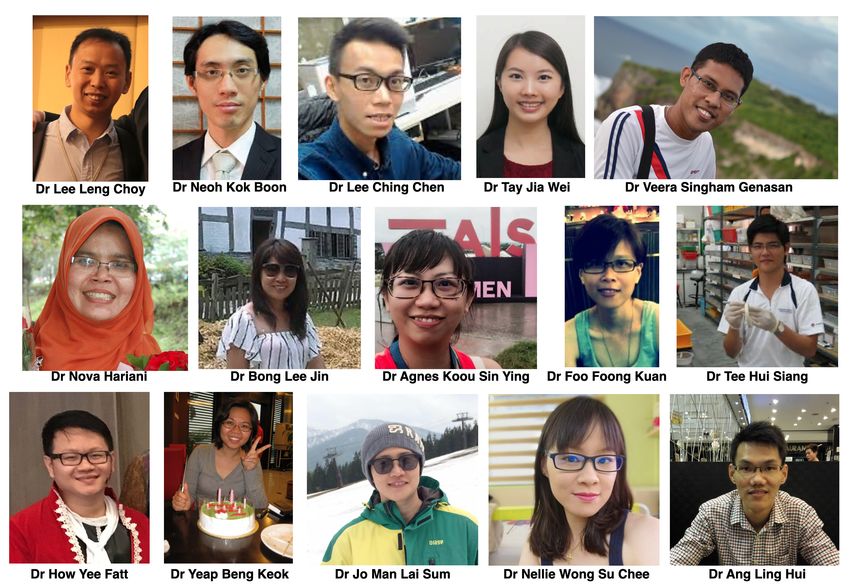
I      research, and publishing research findings.                 principle of conducting urban entomology
C      About 80% of my publications centered around
       biology, ecology, management strategies, and
                                                                   research in their field of expertise. I went to
                                                                   Purdue University to learn molecular tools on
O      phylogenetics of urban and public health insect
       pests such as cockroaches, termites, bed bugs,
                                                                   phylogenetics and population genetics in 1997
                                                                   and 2002 under Drs Gary Bennett and Michael
N      pest ants and mosquitoes, while the remaining are           Scharf, and the University of Florida in 1999 to
       on my broader interests on insect morphology,               learn termite research methods in Dr. Nan-Yao Su’s
       systematics and physiology of smaller insect                laboratory.
       orders.
                                                                   Besides that, it is essential to transcend across
       Tell the readers about some of your                         to other research areas and disciplines to do
       collaborations with the pest control industry,              good science. None of us are supposed to know
                                                                   everything; hence we collaborate. Over the last
       the various associations, and colleagues
                                                                   20 years, I also was fortunate to have several great
       from around the world?
                                                                   international and local colleagues whom I could
       Most of us were trained in a very narrow area;              collaborate with good outcomes, including your
       for example, mine was in insect toxicology.                 good self, Drs Chin-Cheng Scotty Yang (formerly
       After joining USM, I was lucky to have met a                of Kyoto University, soon joining Virginia Tech),
       few important mentors. They had offered to me               Tsuyoshi Yoshimura (Kyoto University, Japan),
       to spend time in their labs to learn the basic              Yoshitaka Kamimura (Keio University, Japan),

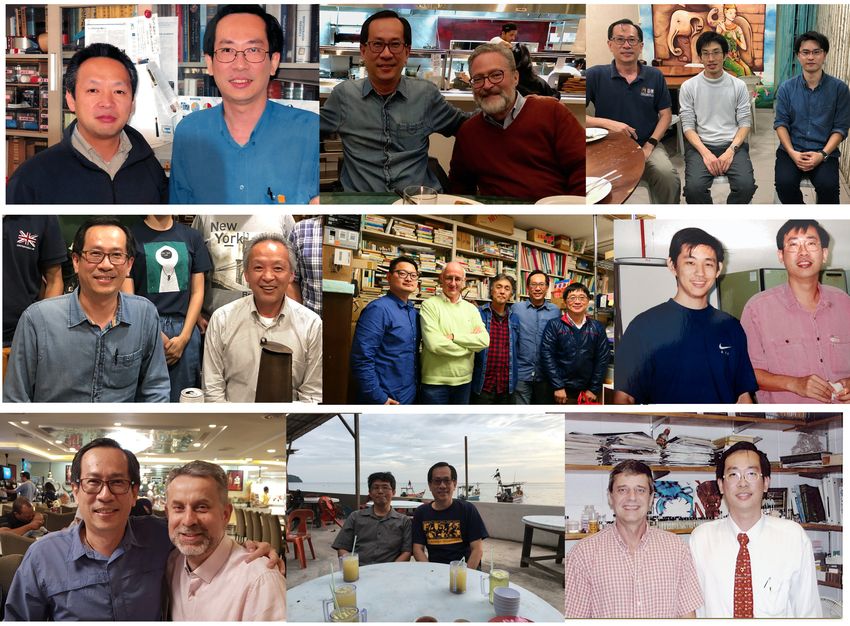
                                    These are some of Chow-Yang’s closest research collaborators.

    12 || FAOPMA Newsletter - October 2020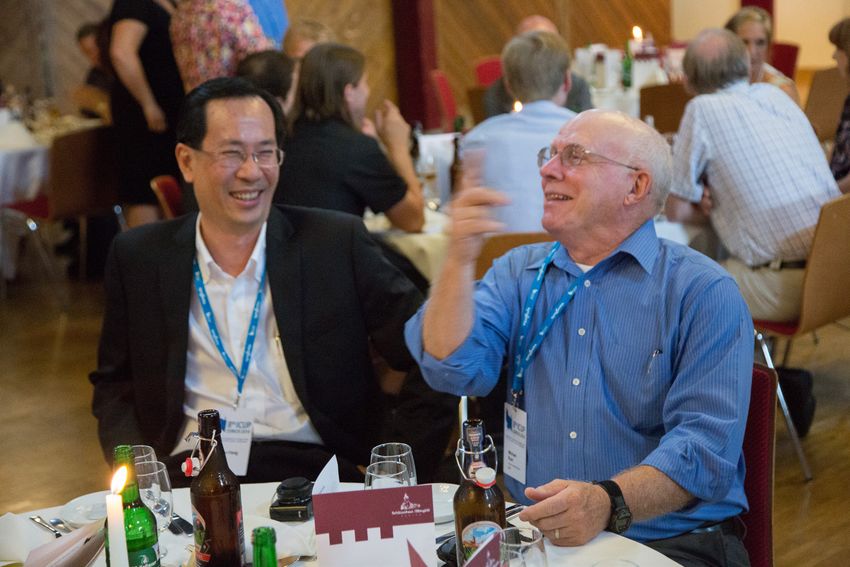
Kok-Boon Neoh (National Chung Hsing                                                                                I
University, Taiwan), Veera Singham
Genasan (Universiti Sains Malaysia),
                                                                                                                   C
Michael Lenz (formerly of CSIRO,
Australia), Michael Scharf (Purdue
                                                                                                                   O
University, USA) and Arthur Appel                                                                                  N
(Auburn University, USA).

Besides colleagues from academia, I
have the opportunity to work with many
great friends from the pest management
industry in Asia. I started conducting
training workshops for pest management
professionals in the mid-1990s. After
that, I became very involved with the
organization of pest management               As a child, Chow-Yang dreamed of being a singer and he
conventions. Together with the Malaysian                still sings a mean Ol’ Blue Eyes number!
Pest Management Association (formerly
known as Pest Control Association of                   on the individuals who champion the cause.
Malaysia) and Singapore Pest Management                I was lucky to have known these passionate
Association, and after 2008, Thailand Pest             individuals in the pest management industry in
Management Association, Indonesia Pest Control         Asia to help move the industry forward to the
Association, and Pest Control Association of the       next level. They include the late Major G. Surajan,
Philippines, we organized seven highly successful John Ho-Ohara, Andrew Chan, Sharon Kee, Ng
Pest Summit conventions (2003 Langkawi, 2006           Say Kiat, Dr. Raymond Lee, Nor Hisham Badri,
Singapore, 2008 Bangkok, 2010 Bali, 2012 Boracay, Anuar Ahmad, Richard Ng, Fong Kim Hon, Ang
2014 Kuala Lumpur, 2016 Singapore). I also was         Tan Loong, Stephen Liu, Suchart Leelayouthyotin,
involved in the organization of FAOPMA Penang          Niran Siriaphorntham, Supanut Kiatyingpracha,
2015 and the inaugural and the most successful         Jessy Aquino, Jess Asistin, Hector Binweek,
FAOPMA-Pest Summit to date in Chiang Mai in            Sahata Simanungkalit, Motokazu Hirao, Junichiro
2017.                                                  Katayama, Taro Kanazawa, Madam Huang
                                                       Xiaoyun, Pascal Cai, Erh-Lieh Hsu, Nancy Lee, and
The success and the vigor of an association lie        many others.

                                                         I also had the opportunity to engage
                                                         with the Malaysian pesticide regulatory
                                                         agency (Pesticide Control Division)
                                                         and coordinated the preparation
                                                         of teaching modules to train pest
                                                         management personnel that eventually
                                                         led to the certification program (pesticide
                                                         applicator license) for pest management
                                                         professionals in Malaysia in 2004. I also
                                                         sat in the National Technical Committee
                                                         on Household Pesticides and Termite
                                                         Management Committee with Standard
                                                         Malaysia (formerly known as SIRIM),
                                                         setting national test methods for various
Enjoying a saké with former FAOPMA President, Junichiro household insecticide products and
                 Katayama, Kyoto, 2016.                  guidelines for termite management,
                                                       respectively.

                                                                                          WWW.FAOPMA.COM   || 13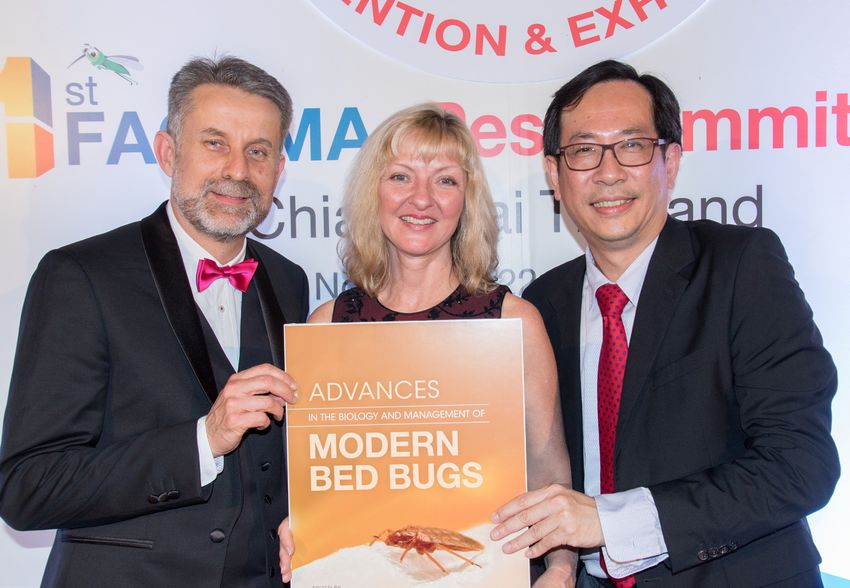
I                                                            papers they published are the recognitions of
C                                                            the hard work that they put in through graduate
                                                             schools, similar to those trophies/certificates
O                                                            that a child received for his/her efforts in sports
                                                             or studies. Seven former Ph.D. students are
N                                                            presently holding professorial and research
                                                             positions in academic/research institutions,
                                                             while the remaining are in the chemical and
                                                             pest management industry. With exception
                                                             to a few who had found their greener pasture
                                                             elsewhere, all former M.Sc. students stayed
                                                             working in the pest management industry, either
                                                             working for multinational chemical companies,
                                                             pest management companies, or running their
                                                             own pest management companies in Malaysia,
                                                             Singapore, Japan, Vietnam, Thailand, etc.

                                                            What is your most proud achievement during
                                                            your time in research?
                                                            When I was younger, the proudest achievement
                                                            was when the research resulted in a peer-
                                                            reviewed journal paper. However, after the
                                                            number of papers go beyond 100, what an
                                                            achievement means to me changed. Don’t get
                                                            me wrong; peer-reviewed publications are an
                                                            important aspect of the research process. It is also
                                                            the ultimate validation of any research findings.
                                                            However, these day, it is what I do and how I
       Inspecting a termite mound with Joshua Rao impacted and changed the lives of the students
                from PCI, Bangalore, India, 2013.           I mentored and nurtured, especially those who
                                                            came from less privileged families, that is more
       You have supervised many students over the           important.
       years. Have many of these students stayed
       within the urban pest control industry, and
       what are they doing now?
       Students are the greatest assets that I have in my
       academic career. As a teacher, each student I have
       mentored is like a child as it takes a minimum of
       3 years to nurture an M.Sc. student and 3–6 years
       for a Ph.D. student. No two students are alike.
       Students often come from diverse cultural and
       economic backgrounds, their personalities are
       different, they differ in their personal values, and
       very often they differ in how they perceive and
       interpret information. These factors influence
       their understanding of scientific problems as
       well. My philosophy of mentoring graduate and        Hugging a kangaroo at the 2015 FAOPMA
       undergraduate students is to discover individual              conference, Penang, Malaysia.
       research strengths and weaknesses and to tailor
       my mentoring to each individual student. The

    14 || FAOPMA Newsletter - October 2020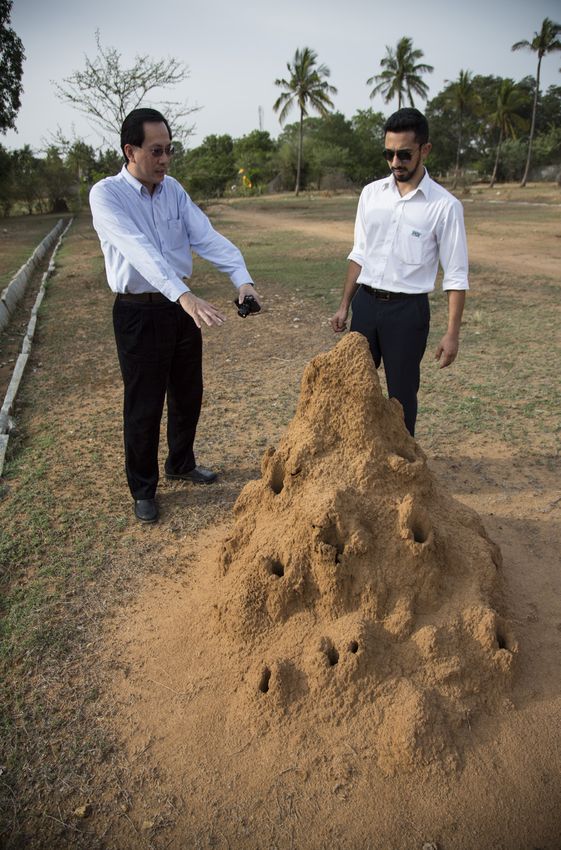
I
                                                                                                                 C
                                                                                                                 O
                                                                                                                 N

             Throughout his career, Chow-Yang was blessed with many good students.

How has your research translated into                 the ineffectiveness of pitfall traps on tropical
operational activities for pest managers in the       bed bugs could potentially affect the monitoring
field?                                                outcomes in an IPM program, besides discovered
There are many research outcomes that have            the biological reasons behind it. Dr. B.K. Yeap,
directly or indirectly translated into operational    another former Ph.D. student, synonymized
activities for pest managers. Here are a few more     Coptotermes vastator in the Philippines as
direct ones. My students’ insecticide resistance      Coptotermes gestroi (the Asian subterranean
research on German cockroaches in Malaysia/           termites), reducing the needs to test products
Singapore and on Aedes aegypti mosquito in            on two Coptotermes species in Southeast Asia.
Singapore has provided resistance management          Dr. L.J. Bong, who did her Ph.D. research on rove
options to the pest management industry in            beetle, unravelled many interesting biological
the region. Besides, when termite bait was            characteristics of the new urban insect pest
introduced in Malaysia and Singapore in the late      and its potential control strategies. Her control
1990s, we were the first to discover that termite     options are now being adopted by some local
baits are ineffective against higher termites (or     municipalities in Malaysia whenever there are
fondly known as garden termites). After this          outbreaks of rove beetles. Dr. Jo Man, who
discovery, the PMPs in southeast Asia only sell       completed her Ph.D. research on sustainable
baiting services to manage the lower termites         pest management for healthcare facilities in
(Coptotermes spp). My former student, Dr. C.C.        Singapore, came up with an IoT-based mobile
Lee (presently in Tunghai University, Taiwan), also   online reporting system for the pest management
discovered the biological reasons why bait failed     industry.
to impact higher termites in his PhD research.
Another student, Chris Kim, demonstrated how

                                                                                        WWW.FAOPMA.COM   || 15
I
C
O
N

       Enjoying a joke with close colleague Mike Rust. Chow-Yang took over Mike’s position at the University
                              of California after his retirement. Zurich, Switerland, 2014.
       I would like to focus on your early career and         seats allocated. Luckily my hard work paid off, and
       the challenges you faced as an ethnic Chinese          I managed to secure a place to pursue a science
       Malaysian in Malaysia. Can you please discuss          degree in USM.
       some of the inequalities you faced while at
       school?                                                Is the inequality you experienced one of the
       I am a Malaysian, born in Malaysia, and know very reasons you moved to the US? What were the
       well from a young age that I had to work triple        others?
       hard to be on the top of the game because of the       Many people asked me this question – You
       affirmative action policy and quota system. From       are no longer young. At your age, why did you
       young, I learned to be pragmatic, not to blame or      uproot and move to the US despite having
       be unhappy over a policy or system that I have no achieved the pinnacle of the academic career
       control over, but instead to work hard and strive to in Malaysia? First, the University of California
       be on the top 1–2%. My late father taught me this Riverside (UCR) entomology program is the top
       – a cockroach can survive in a harsh environment       2 finest entomology programs in the world.
       by adapting itself to feed on anything organic         Dr. Walter Ebeling, an entomology professor
       (including paper), or it can choose to leave that      at the University of California, coined “Urban
       environment to forage to a new location. When          Entomology as a sub-discipline of entomology”
       I was in my high school in the 1980s, there were       with the publication of the seminal textbook
       only five public universities in Malaysia (compared of the same title in 1975. Historical-wise, this
       to 20 universities now). Hence, the competition        is THE place where the urban entomology
       to gain a place in a public university was fierce      lineage started. UCR is also the birthplace of the
       because of quota system affected the number of         integrated control concept (proposed by Vern

    16 || FAOPMA Newsletter - October 2020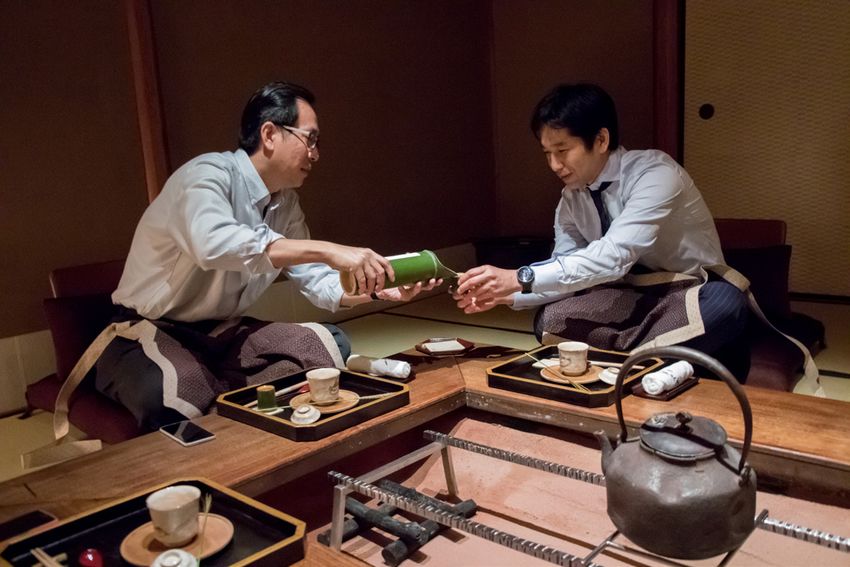
Stern and several other entomologists                                                                              I
in 1959) that subsequently became
integrated pest management (IPM).
                                                                                                                   C
Second, it is a dream come-true to
be able to work in an entomology
                                                                                                                   O
department and collaborate with many                                                                               N
world-renowned colleagues who are
leaders of their fields of research. Third,
being at the University of California, the
opportunity to recruit and work with so
many talented students from all around
the world is undoubtedly hard-to-resist.
Of course, there are other reasons, but
they are no longer relevant, so there is
no need to elaborate anymore.
                                             Having the makeup done by Dini Miller before a filming
Now that you have moved some                                            session.
14,000km away, are you still working
with the Asian urban pest control                     back to Asia after the pandemic to continue my
industry and how?                                     research collaborations and engagement with the
I have a vast network of friends and colleagues       pest control industry.
in Asia. I will continue to work with the pest
control industry in Asia. This summer, thanks         How has the COVID-19 pandemic affected your
(but no thanks) to the pandemic that prohibited       research and teaching since moving to the US?
me from traveling back to Asia, I have been           The pandemic has affected my research and
busy conducting webinars with several pest            teaching. I started my position at UCR on July
management associations in Asia, including those 1, 2019. It took me more than six months to set
from China, India, Malaysia, and Singapore. One       up the lab, commissioning lab equipment and
of the webinars conducted by the Singapore Pest       supplies, and recruiting graduate students. By
Management Association had attracted more             the time the lab was ready to go full swing on
than 800 participants. I will resume my travel        research, the pandemic hit. In mid-March 2020,
                                                                 California issued a stay-at-home order
                                                                 that led to the university mandating
                                                                 all research activities to stop (except
                                                                 essential tasks such as maintaining
                                                                 insect and plant cultures). During that
                                                                 period, no undergraduate students
                                                                 were allowed on the campus, and they
                                                                 had to follow their courses online. It
                                                                 was stressful for me because I only had
                                                                 less than two weeks to turn around my
                                                                 lectures that were originally meant to
                                                                 be delivered in-person, to that of an
                                                                 online approach that my students could
                                                                 continue to learn effectively. Beginning
                                                                 mid-June, we could resume our research
                                                                 activities, although the campus remains
                                                                 off-limit to undergraduate students
 Enjoying a glass of red wine with Rob Fryatt from the UK at (hence we are unable to hire any
                PestWorld, Honolulu, Hawaii, 2010.               student helpers this summer). I have a

                                                                                          WWW.FAOPMA.COM   || 17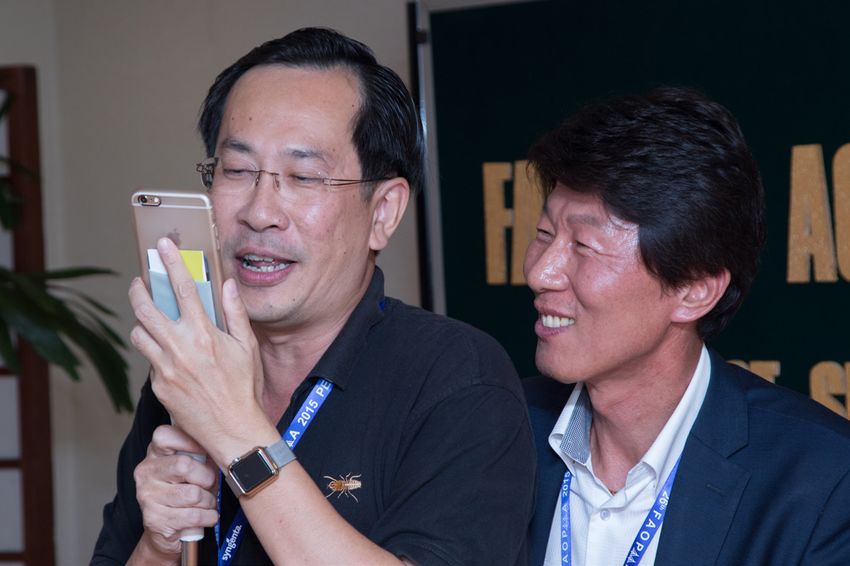
I                                                                       work towards creating a unified online
C                                                                       training course that is relevant to the
                                                                        region it represents. A comprehensive
O                                                                       database referral center can also be
                                                                        initiated to provide pests and pest
N                                                                       management strategies to the pest
                                                                        management associations it serves.

                                                                        What were the biggest changes
                                                                        in the urban pest control industry
                                                                        that you observed during your time
           Chow-Yang admiring the colours of India, Goa, 2013.          working with the industry?
                                                                      When I started working with the pest
       new postdoc scientist, a Ph.D. and an M.S students management industry in Malaysia and Singapore,
       and a staff research associate in my laboratory     there were hardly any entomology graduates
       now, and I am happy that we are making progress. working in this industry. Most players self-taught
                                                           or self-learned the pest control operation; sadly,
       Entomology degrees are now on the decline           many of them were spray-jockeys with limited
       at Universities throughout the world, where         knowledge on pest biology and ecology and
       do you think the next generation of technical       pesticide science. They pretty much just ‘spray
       managers will come from?                            and pray’, hoping that whatever that they were
       There is no doubt that there has been a             doing will kill the pests. Fast forward 20 years to
       significant decline in the number of universities   the present day, the pest management industry
       offering entomology degrees. Still, there remain    in Southeast Asia has a better professional
       many good institutions in Asia (for example,        image now, dotted with so many graduates
       Universiti Sains Malaysia, Kasetsart University     in entomology and biological science with
       Thailand, University of the Philippines Los Banos,  qualifications ranging from bachelor to Ph.D.
       National Taiwan University, National Chung          degrees. The personnel are better trained and
       Hsing University Taiwan), Europe (for example,      have better grasps of basic pest biology and
       University of Sheffield, University of Reading,     pesticide science. In retrospect, we have to thank
       London School of Hygiene and Tropical Medicine) these leaders of the industry who started this
       and North America (at least 40 institutions in the  trend of hiring entomology graduates – Stephen
       US alone) offering entomology degrees at both       Liu (Ridpest, Malaysia), Richard Ng (NLC General
       undergraduates or graduate level or both.           Pest, Malaysia), John Ho-Ohara (formerly Aardwolf
                                                           Pestkare, Singapore), and Suchart Lee (King
       What role does FAOPMA have in ensuring that         Service Center, Thailand). Interestingly, those few
       there is technical excellence in the industry to    graduates who were the first to be recruited 20
       the future?                                         years ago, remain with the industry and are now
       FAOPMA, as a coalition of pest management           holding key management positions - Dr. Lee Leng
       associations, should work together with other       Choy, Juliana Soo, Julie Na, Regine Lim, Lim Min
       similar coalitions such as CEPA and NPMA to         Hui, and Eric Cheah Fook Keong.
       establish a strong alliance voice globally. Barring
       some minor differences, we have so much to          What have been the biggest challenges the
       learn from each other. We should embrace our        industry has faced during your time?
       diversity and practice social inclusion. FAOPMA     There are two major challenges that I could
       has taken the right step of producing high quality, think of right away. First, it is price undercutting.
       content-rich, and technically savvy FAOPMA          Because of fierce competition, many companies
       magazine (the credit should go to the Chief and     undercut their price and overcome the low cost
       Co-editor of the magazine). Next, FAOPMA could      by short-changing their clients. Price undercutting

    18 || FAOPMA Newsletter - October 2020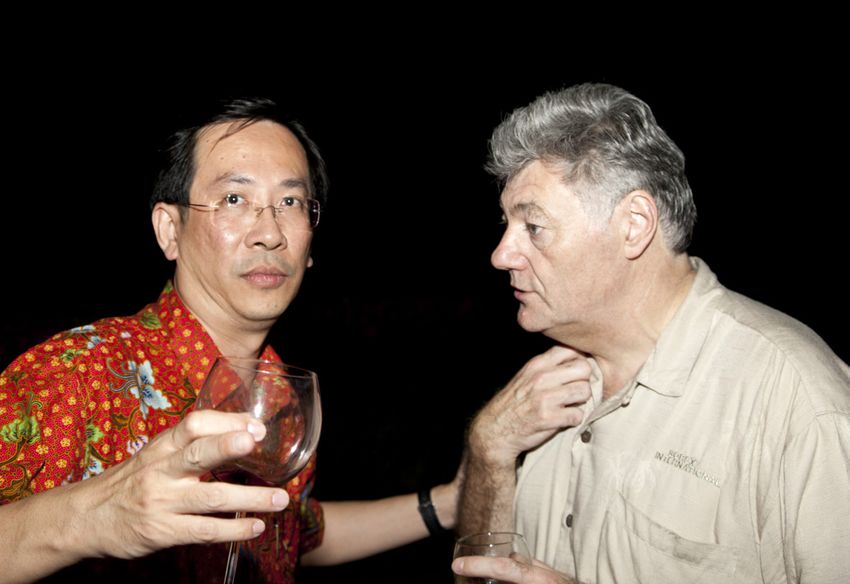
I
C
O
N
Chow-Yang with colleagues Stephen Doggett and Dini Miller, just prior to the release of Advances in
the Biology and Management of Modern Bed Bugs, Chiang Mai, Thailand, 2017.
is not only a problem in Asia but also in North industry will have to invest in smart detection
America. Second, it is the rampant and injudicious system to minimize the need for extensive
use of insecticides. Because of the availability human resources to service their pest monitors.
of cheap generic insecticide products in the Other usual challenges that may remain to haunt
region, pest control personnel will not hesitate industry include price undercutting, insecticide
to use double or even triple the recommended resistance, increased cost of doing business, and
rates. This not only led to the rapid development fierce competition. Pest management companies
of insecticide resistance in some urban pest will have to find creative ways to create their blue
populations such as German cockroaches, bed ocean niches; failing which they will continue to
bugs, mosquitoes, and flies, but it could also lead fiercely compete and undercut prices to survive in
to unwanted environmental impact in the long the bloody ocean.
run.
Thank you Chow-Yang for a wonderful
What are the major challenges the pest control interview!
industry will face in the future?
As mentioned above, Prof Chow-Yang Lee is
There has been a significant workforce shortage the Keynote speaker for the upcoming FAOP-
for pest management operation. The number of MA-Pest Summit 2020 Virtual Conference,
pest management companies in Southeast Asia 18-19/Nov/2020. Registration is only $USD50.
has risen almost 3X its number over the last 20 For more information on the meeting and de-
years. The rising labor cost is also exacerbating tails of the program and other speakers, go to:
the issue. In the long run, the pest management www.faopma.com/2020
WWW.FAOPMA.COM || 19You can also read


