ABEST21 e-News No.113, January-March 2021
←
→
Page content transcription
If your browser does not render page correctly, please read the page content below
ABEST21 e-News
                          No.113, January-March 2021
                                ABEST21 International
       THE ALLIANCE ON BUSINESS EDUCATION AND SCHOLARSHIP FOR TOMORROW,
                             a 21st century organization
       TEL. +81-3-3498-6220          FAX. +81-3-3498-6221            Editor: ITOH Fumio

“Due to the spread of the COVID-19 pandemic, we have conducted all meetings online for avoiding
the so-called “Three Cs” -- Closed places with poor ventilation, Crowded places and conversations
in Close proximity.”

I. ABEST21 Office Report
===========================================
January
・19th: Conducting Online QIS Seminar
・20th: Conducting Online SCR Seminar
・21st: Conducting the 3rd “Online Workshop for Assuring the Quality of the online Education”
・22nd: Conducting Online KZR Seminar
・28th: Holding the Online Peer Review Committee 2021 Meeting
・29th: Conducting Online KAIZEN Seminar
February
・Coordination with the applicant schools on PRT Comments Reports (Drafts)
・18th: Conducting the 4th “Online Workshop for Assuring the Quality of the online Education”
・25th and 26th: Holding the Online Peer Review Committee 2021 Meeting
March
・02nd: Holding the Online Auditing Committee 2021 Meeting
・11th: Holding the Online Accreditation Committee 2021 Meeting
・16th: Holding the Online Board of Trustees 2021 Meeting
・18th: Conducting the 5th “Online Workshop for Assuring the Quality of the Online Education”
・23rd: Holding the Online General Assembly 2021 Meeting
・26th: Participating the Online MEXT Meeting

                                               1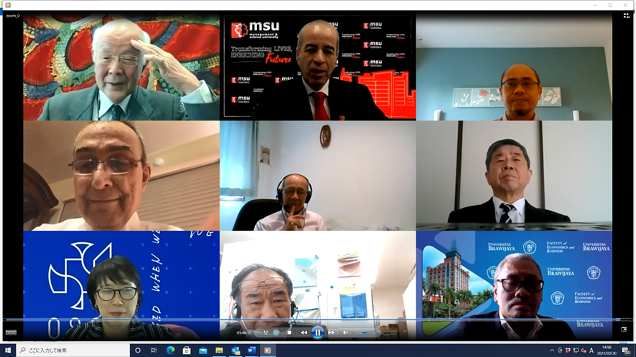
II. General Information
===========================================
  Given the travel restrictions due to the spread of COVID-19, all meetings were conducted online
as planned. The same level of outcome as with the onsite meetings was achieved.
1.Online Auditing Committee Result
  On Tuesday, March 2, 2021, ABEST21 Financial Statements for the 8th Term were audited by the
auditor in charge, followed by the Online Auditing Committee consisting of the three auditors as
below which took place from 3 p.m. Tokyo time. It was confirmed that all of the important points in
the statement of changes in the net assets, list of
assets, and income and expenditure statement
were indicated appropriately.
Auditors:
・Chair Prof. Dr. Xu Hua (University of Tsukuba,
  Japan)
・Prof. Dr. Gagaring Pagalung (Universitas
  Hasanuddin, Indonesia)
・Prof. Dr. Nor’Azam Mastuki (Universiti Teknologi
  MARA, Malaysia)

2.ABEST21 Online Board of Trustees Meeting Result
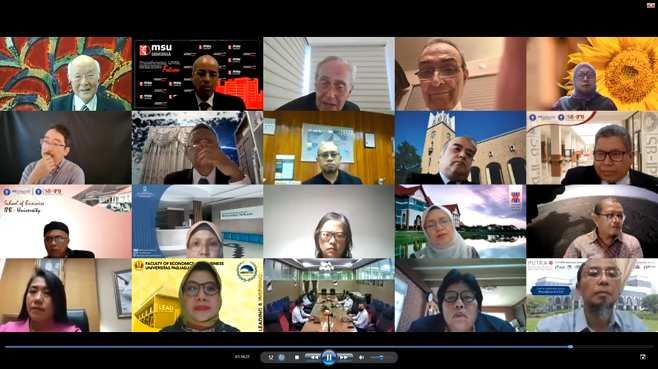
   On Tuesday, March 16, 2021,
ABEST21 Online Board of
Trustees Meeting was held.
Based on the materials provided
in advance, and following the
detailed explanation by the Chair
and the exchange of opinions,
the activity report for 2020, the
financial statements for the 8th
Term,      budget    for   2021,
accreditation results for March
2021, and election of new board

                                                2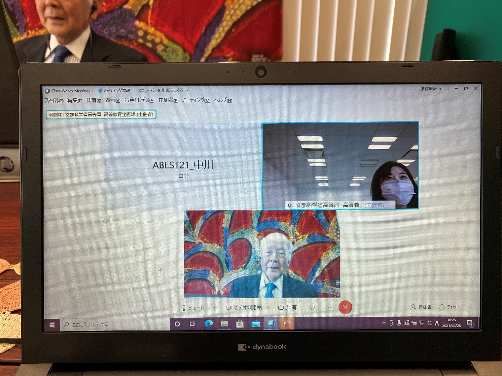
members due to the termination of the period for the current members were discussed. All items
were ratified.

3.ABEST21 Online General Assembly 2021 Result
  On Tuesday, March 23, 2021,
ABEST21 General Assembly 2021
was held online due to the
COVID-19 pandemic. Detail of
the items including the activity
report for 2020, the financial
statements for the 8th Term,
budget for 2021, and election of
new board members were
explained by the representative
board of trustees based on the
materials provided in advance.
After various discussions, all items were ratified.

4.The ABEST21 Executive Committee members
     (Term: from April 1, 2021 to March 31, 2023)
President and CEO:
・Prof. Emeritus Dr. ITOH Fumio (ABEST21, Japan)
Vice Presidents:
・Deputy Dean Emeritus Ilker Baybars, Ph.D. (Carnegie Mellon University, USA)
・Prof. Dr. Oleg Vikhanskiy (Dean, Lomonosov Moscow State University, Russia)
・Prof. Robert Sullivan, Ph.D. (University of California San Diego, USA)
・Prof. Dr. Ali Khatibi (Dean, Management and Science University, Malaysia)

 ITOH Fumio                 Ilker Baybars      Oleg Vikhanskiy   Robert Sullivan   Ali Khatibi

Managing Directors:
・Visiting Prof. Dr. KAWANO Hirotaka (Kyoto University, Japan)
・NAKAGAWA Yuka, MBA (ABEST21, Japan)

                                                      3
 KAWANO Hirotaka     NAKAGAWA Yuka
Auditors:
 ・Chair: Prof. Dr. Xu Hua (University of Tsukuba, Japan)
 ・Prof. Dr. Gagaring Pagalung (Universitas Hasanuddin, Indonesia)
 ・Prof. Dr. Nor’Azam Mastuki (Universiti Teknologi MARA, Malaysia)

     Xu Hua         Gagaring Pagalung   Nor’Azam Mastuki

 Advisors:
 ・Lawyer Prof. Dr. TANAMURA Masayuki (Waseda University, Japan)
 ・Licensed Tax Accountant HORIE Sadayuki (Director of Horie Certified Tax Accountant Office, Japan)

TANAMURA Masayuki    HORIE Sadayuki

 ABEST21 Executive Committee
 ・Prof. Emeritus Dr. ITOH Fumio (ABEST21, Japan)
 ・Deputy Dean Emeritus Ilker Baybars, Ph.D. (Carnegie Mellon University, USA)
 ・Prof. Dr. Oleg Vikhanskiy (Dean, Lomonosov Moscow State University, Russia)
 ・Prof. Robert Sullivan, Ph.D. (University of California San Diego, USA)
 ・Prof. Dr. Ali Khatibi (Dean, Management and Science University, Malaysia)
 ・Visiting Prof. Dr. KAWANO Hirotaka (Kyoto University, Japan)
 ・NAKAGAWA Yuka, MBA (Manager, ABEST21, Japan)

 5.Holding of the Online International Symposium
   The international symposium on ABEST21 Joint Research Project No. 8-“Humanizing Management
 Education for Sustainable Economic Development in Asia Pacific” which was originally scheduled in
 March 2020 was cancelled due to the spread of COVID-19. We are planning to hold a panel
 discussion on the survey results of Joint Research Project No. 8 on June 10, 2021 with the support of
 United Nations University Institute for the Advanced Study of Sustainability. Director Shinobu Yume
 Yamaguchi, Ph.D., UNU Institute for the Advanced Study of Sustainability will be invited as a keynote

                                                  4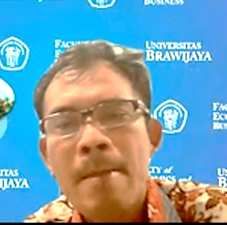
speaker.

6.Online Report to MEXT on Accreditation Results
  On Friday, March 26, 2021, ABEST21 Accreditation Results for March 2021 were reported online to
the Ministry of Education, Culture, Sports, Science and Technology (MEXT) of Japan, based on the
summary “Aiming to enhance the Quality of Management Education in a Globalized Society, March
26, 2021” submitted in advance. The number of
accredited programs were as follows; 1 for Japanese
university based on field-specific accreditation, 13 for
9 non-Japanese universities on APAS, and 2
departments of 2 universities on AAAS, totaling 14
programs for 12 universities and 2 departments for 2
universities. The accreditation report summary was
submitted to the MEXT Press Club and the
accreditation results were announced to the
accredited schools.

III. ABEST21 Note for Tomorrow-No. 46
===========================================
“Evaluating the Faculty’s Educational and Research Activities”
ABEST21 President ITOH Fumio
  The partial amendment of ABEST21 Accreditation Standards this time takes into consideration the
fact that the faculty’s “teaching ability in terms of education and research” is transforming as the
online education becomes more popular under the COVID-19 pandemic. The mission of a faculty
member remains the same whether the lecture is given “face-to-face” or “online”. In this modern age
where the educational and research environment is rapidly developing, needless to say, the faculty
members are expected to further enhance their “teaching ability in terms of education and research”.
Educational and research activities at universities consist of three fields; 1) “Research”, 2)
“Education”, and 3) “Community Services”. Thus when evaluating the faculty’s educational and
research activities in the accreditation, quantitative and qualitative assessments are required for the
activities in these respective fields. However, while quantitative evaluation is easy because we can
count the number of activities, qualitative evaluation is very difficult. The reason is because the aim

                                                  5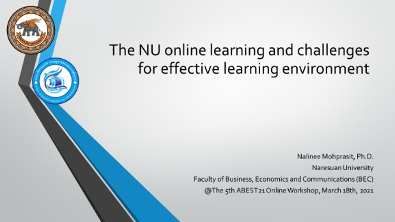
of education is to nurture human resources capable to meet the needs of the society, based on the
purpose or mission of the university. So it is not an easy task to measure how much is achieved;
there is no specific scale. This is why the evaluations on the faculty’s “research”, “education” and
“community services” must rely on comprehensive evaluation on the educational and research
achievements. For example, young faculty members tend to concentrate on his/her own research
theme to pile up research achievements rather than using the time to utilize the research results for
community services. On the other hand, the elder members show relatively more achievements in
the community services. Therefore it is important to evaluate the “teaching ability in terms of
education and research” in a comprehensive manner for the whole faculty organization, rather than
looking into the activities of each faculty member. It is of course important to assess the activities in
each field. However, the quality of education must be measured in light of the mission of the
organization, i.e. the belief or philosophy for raising human resources, which are unique and cannot
be measured by a common or identical scale. Here are specific issues for each field.
  As for the first field “research”, the quantitative evaluation generally depends on the research
achievement list prepared by respective faculty members. In the list we mainly see the number of
published academic books and papers, or the number of presentations made at academic
conferences, which are used to evaluate the faculty’s research activities. However, it is very difficult
to set a scale for their qualitative evaluation. In general some useful indexes can be the number of
quotes from the faculty’s academic output used by other researchers, or academic awards for their
achievements, or even the external research funds obtained for the research activities. However,
these indexes only show that the research activities are reaching a certain level; it is still necessary to
assess the activities in a comprehensive manner.
  Concerning the second field “education”, generally the readily understood scales for quantitative
evaluation are the number of classes or credits taught by the faculty member. It is seen that the
more classes are taught, the more the faculty is involved in nurturing human resources which is the
purpose of education. Also, contribution to education is regarded high when more variety of subjects
are taught or the number of credits given are larger. However, the most important point is to assess
how much expertise and skills the students have acquired through the class or seminar. It is to see to
what level the students have improved their capacity and ability by developing their intelligence and
personality through course participation. Thus, at universities the “students’ class evaluation” for
each subject at the end of each semester is used as one of the important criteria. Based on the
factors such as whether the class was conducted according to the syllabus, whether the most
up-to-date materials have been used, whether the expertise and skills were acquired, the students’
evaluations are used to measure the quality of the faculty’s educational activities.
  As for the third field “community services”, the evaluation is based on how much the faculty
member is returning his/her fruit of education and research activities to the continuity and
development of social academic culture. The form of activities vary in wide range, and the extent of
community services covers broad areas. For example, participation in the work of the
governmental/public committees or giving lectures at various organizations are included. To assess
these activities, we must consider the type, content, importance, etc. in a comprehensive manner.
Traditionally, the faculty’s education and research activities were evaluated merely through the
number of academic publications and papers because it is easy to make quantitative evaluation.
However, considering the recent issues such as natural disasters, global warming, globalization of

                                                    6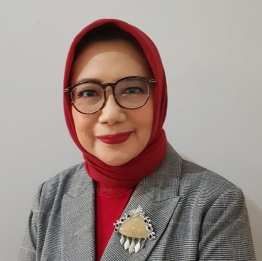
economy, etc., the area of faculty’s “community services” must be assessed from various viewpoints.
  Since faculty members are engaged in the three fields of activities, “research”, “education” and
“community services” with their own and individual purposes and missions, certain criteria exist for
each of them. This is why it is difficult to adopt a common scale to measure their activities. We are
obliged to evaluate all the activities comprehensively.

IV. ABEST21 Voice for Tomorrow-No. 6
===========================================
“Globalising Management Education at the School of Business, Western Sydney
University, Australia”
Dean Amir

The School’s strategy is to internationalise its research, student and staff
bodies, curriculum, courses, and partnerships.
Research
The School has developed research partnerships with universities in
China, North/East Asia, South-East Asia, South Asia, Europe and North
America. Those partnerships enable WSU researchers and researchers of
the partner universities to establish joint international research projects,
applying for internationally competitive research grants and publishing in
leading international journals.
Students
As one of the leading business schools globally, we attract international students from all over the
world. International students account for more than twenty per cent of the School’s entire student
cohort.
We endeavour to produce global citizens with global perspectives and global competencies. Our
students have opportunities to participate in various student mobility programs to gain international
experience and knowledge. In 2019, 124 students participated in the 11 New Colombo Program
(NCP) in six countries and regions, including Hong Kong, China, India, Singapore, South Korea, and
Vietnam. We intend to send a group of students to Japan in 2021 or 2022, funded by an NCP
scholarship.
Staff
The School embraces diversity and internationalization. Our staff come from various countries across
the world. Our leadership team also reflects the diversity, with executive team members having
different cultural backgrounds, including Australia, Pakistan, Sri Lanka, China, and the Philippines.
Cultural diversity has played a critical role in supporting international students during the COVID-19
pandemic. The School formed an international team with a rich cultural diversity to provide ongoing
support to international students with different ethnic backgrounds. The members of the team were
assigned to support students from regions including Africa, Bangladesh, China/Mongolia/Hong Kong,
Canada/USA, Europe, Fiji, India, Iran/Middle East, Indonesia/Malaysia/Thailand, Japan,
Laos/Myanmar/Vietnam/Cambodia, Nepal, Pakistan, Philippines, South Korea, and Sri Lanka based

                                                   7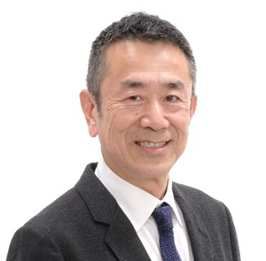
on their own cultural background and/or their knowledge about the nominated region. The cultural
awareness and regional knowledge possessed by the team members ensured effective
communication with these students.
Curriculum and Courses
We incorporate into our curriculum components such as international business, international
management, international marketing, as well as international work-integrated learning (WIL) and
international cultural immersion experiences.
Partnerships
The School of Business has established institutional partnerships in many countries and regions such
as Japan, China, Vietnam, Pakistan, Taiwan, Macao, Sri Lanka, South Korea, Singapore, and India.

V. Quality Assurance-“Assessing Today for Tomorrow”-
===========================================
“There will be no problem if the School exists in a vacuum. However, in the society where the real
environment is changing, improving the educational and research activities is essential in order for
the School to survive as a “Going Concern.”
===========================================
1.Online Peer Review Committee Discussion Result
  During the COVID-19 pandemic
the online Peer Review Committee
for ABEST21 Accreditation was held
on January 28, February 25 and 26,
2021. Based on the materials
provided in advance, the Peer
Review Team Leader reported the
results of the online discussion.
Following an active Q&A session, all
of the results reported were ratified
and reported to the Accreditation
Committee.

2.Online Accreditation Committee Discussion Result
  Following the report from the
Peer Review Committee (PRC) on
accreditation     results,     the
Accreditation Committee was held
on March 11, 2021. Using the
materials provided in advance,
PRC Chair and Vice Chair reported
the discussion results at the PRC.
After exchange of opinions, the

                                                 8
recommendation for accreditation was ratified and schools to be accredited were recommended to
the ABEST21 Board of Trustees.

3.Schools accredited in March 2021
   The online Board of Trustees meeting held on Tuesday, March 16, 2021 ratified the schools to be
accredited as recommended by the Accreditation Committee. The accreditation result was reported
to the MEXT of Japan online on Friday, March 26. The accredited schools for March 2021 were as
follows; 1 program of Japanese university based on field-specific accreditation, 13 programs for 9
non-Japanese universities on APAS, and 2 departments of 2 universities on AAAS, totaling 14
programs for 12 universities and 2 departments for 2 universities, specifically as follows.
A: Japanese university
1. Professional Graduate School in Business Administration
1) Graduate School of Management, Kyoto University, Japan
B: Non-Japanese university
1: APAS (ABEST21 Program-based Accreditation System)
(Master of Management)
1) School of Economics and Business, Universitas Telkom, Indonesia
2) PPM School of Management, Indonesia
3) Faculty of Economics and Business, Universitas Bengkulu, Indonesia
4) Faculty of Economics and Business, Universitas Jenderal Soedirman, Indonesia
5) Faculty of Economics and Business, Universitas Udayana, Indonesia
6) Faculty of Business and Economics, Universitas Islam Indonesia, Indonesia
7) MBA-Faculty of Accountancy and Management, Universiti Tunku Abdul Rahman, Malaysia
8) MBA-Corporate Governance, Faculty of Accountancy and Management, Universiti Tunku Abdul
    Rahman, Malaysia
9) MBA-Corporate Management, Faculty of Business and Finance, Universiti Tunku Abdul Rahman,
    Malaysia
(Master of Human Resource Development)
10) Postgraduate School, Universitas Airlangga, Indonesia
(Bachelor of Management)
11) Faculty of Economics, Universitas Islam Sultan Agung, Indonesia
12) Faculty of Business and Economics, Universitas Islam Indonesia, Indonesia
(Bachelor of Accounting)
13) Faculty of Economics, Universitas Islam Sultan Agung, Indonesia
2. AAAS (ABEST21 Academic Unit-based Accreditation System)
1) School of Business, Institut Perutanian Bogor University, Indonesia
2) Faculty of Business Management and Professionals Studies , Management and Science University,
    Malaysia

4.March 2021 Online Certificate Granting Ceremony
  Normally the Certificate Granting Ceremony takes place at the ABEST21 General Assembly held
every March. However, due to the spread of COVID-19 the ceremony will be held online individually
according to the schedule below.

                                                9
・May 25th :Kyoto University, Japan
              Universitas Airlangga, Indonesia
・May 26  th
            : Universitas Telkom, Indonesia,
              Universitas Jenderal Soedirman, Indonesia
              Universitas Islam Sultan Agung, Indonesia
・May 27  th
            : PPM School of Management, Indonesia
              Universitas Bengkulu, Indonesia
・June 1 st
            : Institut Pertanian Bogor University, Indonesia
              Universitas Udayana, Indonesia
              Universitas Islam Indonesia, Indonesia
・June 2nd :Management and Science University, Malaysia
・June 9th :Universiti Tunku Abdul Rahman, Malaysia

5.KAIZEN Award Online Ceremony
   Starting this year, we will grant the KAIZEN Award for accredited schools with excellent
achievements. The award is granted to schools which show steady enhancement of educational
quality by processing the KAIZEN issues analyzed in the SCR according to the Action Plans. This is
checked through the desk review and onsite visit for the progress report on KAIZEN Report. With the
ratification of the PRT, Peer Review Committee, Accreditation Committee and the Board of Trustees,
the KAIZEN Award plaque will be granted to 4 schools on the following dates.
・May 26th : Universitas Surabaya, Indonesia
・June 2nd:SBI Graduate School, Japan
・June 8th:Universitas Indonesia, Indonesia
              Institut Teknologi Bandung, Indonesia

6.Holding of 2021 ABEST21 Accreditation Seminar
  The ABEST21 Accreditation Seminar for 2021 will be held online as below. The time is 15:00-16:30
(Tokyo time) with Zoom host ABEST21. Please check the ABEST21 website bulletin board for details.
・May 13th : Online “Quality Improvement Strategy (QIS)” Seminar
・May 18th : Online “KAIZEN Report” Seminar
・May 28th : Online “Self-Check/Self-Evaluation (SCR)” Seminar

7.Partial Amendment (draft) of Accreditation Standards
   “Accreditation Standards” of ABEST21 are partially amended almost every 3 years. The last
amendment was in March 2017 targeting to simplify each of the standards. As a result the number of
standards was increased to 28, with 142 criteria. Although the self-evaluation guidelines for each
item were clarified, the analysis became simpler. Aiming to enhance the educational quality under
the rapidly changing environment, some of the related criteria were integrated in order to deepen
the content of self-evaluation.
   At the November 2019 Peer Review Committee in Singapore, the 7th amendment was decided
followed by approx. 18-month discussion by the Amendment Committee. The draft was approved in
February 2021 by the Peer Review Committee and the Accreditation Committee, and finally ratified

                                                10
by the ABEST21 Board of Trustees on March 16.
In addition to the integration of the criteria, the standards concerning Faculty Development and
Staff Development which are essential for quality enhancement of educational and research
activities have been systematized. Also a new standard was set concerning the quality assurance of
online education which many schools have introduced due to the COVID-19 pandemic. As a result
the number of standards was integrated into 22 from the former 26, and the number of criteria was
reduced to 85 from 142. The new standards are 1) Academic Unit Management, 2) Staff
Development, 3) online Education, and 4) Faculty Development. We will submit this amendment
draft to MEXT for approval.
Accreditation Standards Amendment Draft
Existing Standards Proposed Standards
I Internal Quality Assurance I Internal Quality Assurance and Management
1 Academic Unit Management
1 Administration and Governance 2 Governance
2 Self-Check/Self-Evaluation 3 Self-Check/Self-Evaluation Analysis
3 Improvement of education and research
Environment
4 Staff Development
II Mission Statement II Mission Statement
4 Mission Statement 5 Mission Statement
5 Mission Imperatives
6 Financial Strategies 6 Financial Strategies
III Educational Programs III Curriculum
7 Learning Goals 7 Learning Goals
8 Curriculum Policy 8 Curriculum Policy and Management of
Curriculum
9 Management of Curriculum
10 Improvement of educational Quality 9 Quality Improvement of Curriculum
10 Online Education
11 Diploma Policy 11 Diploma Policy and Learning Outcomes
12 Learning Outcomes’ Review
13 Globalization of Educational Programs 12 Globalization of Curriculum
IV Students IV Students
14 Student Profile 13 Admission Policy and Student Selection
15 Admission Policy
16 Student Selection
17 Student Support 14 Student Encouragement and Support
18 Student Incentive
19 Student Diversity 15 Student Body Diversity
V Faculty V Faculty
20 Faculty Structure 16 Faculty Structure
21 Faculty Qualifications 17 Faculty Qualifications
22 Maintenance of Education and Research 18 Maintenance of Education and Research
Environment Environment
1123 Responsibilities of Faculty members 19 Faculty Development
24 Faculty Diversity 20 Faculty Diversity
VI Educational Infrastructure VI Educational Infrastructure
25 Educational Infrastructure 21 Educational Infrastructure
26 Globalization of Educational Infrastructure 22 Globalization of Educational Infrastructure
VI. Quality Improvement -“Building Network for Tomorrow”
===========================================
“In the age of increasing globalization, it is a great challenge for the schools to create and
maintain first-class educational programs in management. But no single institution can maintain all
the required and ever-changing resources at hand nor continually keep those resources updated. It
is important for us to work together to leverage our complementary resources on a global scale.”
===========================================
1. Report of the 3rd Workshop for Assuring the Quality of Online Lectures
On Thursday, January 21, 2021, the 3rd ABEST21 Online Workshop “Assuring the Quality of the
Online Lectures” was held with Assistant Prof. Dr. Dodie Tricahyono, Universitas Telkom, Indonesia,
and Associate Prof. Veena Jadhav, SP Jain School of Global Management, Singapore as Speakers.
The Workshop was organized as follows:
Moderator:
・Associate Professor Danaipong Chetchotsak, Ph.D.
Faculty of Engineering, Khon Kaen University, Thailand
Speakers:
・Assistant Professor Dodie Tricahyono, Ph.D.
School of Economics and Business, Universitas Telkom, Indonesia
“COVID-19, Online Learning and Quality Assurance at MM Telkom University”
・Associate Professor Veena Jadhav, Ph.D.
SP Jain School of Global Management, Singapore
“Assuring the Quality of Online Lectures.”
Participants:
・President Dr. ITOH Fumio, ABEST21, Japan
・Dean Prof. Dr. Amir Mahmood, Western Sydney University, Australia
・Adjunct Associate Prof. Catherine Shibala, Hitotsubashi University, Japan
・Associate Prof. Danaipong Chetchotsak, Ph.D., Khon Kaen University, Thailand
・Assistant Prof. Dodie Tricahyono, Ph.D., Universitas Telkom, Indonesia
・Senior Lecturer Dr. Gancar C. Premananto, Universitas Airlannga, Indonesia
・Assistant Prof. Dr. Hen Kai Wah, Universiti Tunku Abdul Rahman, Malaysia
・Prof. Dr. Huam Hon Tat, Putra Business School, Malaysia
・Director Nalinee Mohprasit, Ph.D., Naresuan University, Thailand
・Associate Prof. Dr. Siti Zaleha Sahak, Universiti Teknologi MARA, Malaysia
・Lecturer Dr. Suthasinee Susiva, Burapha University, Thailand
12・Associate Prof. Dr. Veena Jadhav, SP Jain School of Global Management, Singapore
・Senior Lecturer Dr. Werner R. Murhadi, Universitas Surabya, Indonesia
Dr. Dodie Tricahyono introduced
difficulties that the students are facing
during the COVID-19 pandemic,
including financial problems and
infrastructure quality. Also, he
introduced MM Telkom University’s
“Outcome Based Education curriculum
(OBE Curriculum)” system. After that,
he showed some solutions that the school has carried out for students such as selective discount
tuition fee and developing OBE curriculum. After his presentation, workshop members discussed
how to confirm performance of their students in online class and how to support lecturers for
operating the OBE curriculum system, and other issues.
Dr. Veena Jadhav introduced the
uniqueness of SP Jain School of Global
Management global campuses, and their
online system called “Engaged Learning
Online (ELO)”. Also, she shared the
school’s experience of collecting
feedback from students in online
education. After her presentation, workshop members discussed the “ELO” system and how to make
up for the lack of experience-based learning using the ELO system, and other issues.
2. Report of the 4th Workshop for Assuring the Quality of Online Lectures
On Thursday, February 18, 2021, the 4th ABEST21 Online Workshop “Assuring the Quality of the
Online Lectures” was held with Associate Professor Danaipong Chetchotsak, Ph.D., Faculty of
Engineering, Khon Kaen University, Thailand, and Vice Director Yeshika Alversia, Faculty of
Economics and Business, Universitas Indonesia, Indonesia as Speakers. The Workshop was
organized as follows:
Moderator:
・Associate Professor Dr. Yudi Fernando, Ph.D.
Faculty of industrial Management, Universiti, Malaysia Pahang
Speakers:
・Associate Professor Danaipong Chetchotsak, Ph.D.
Faculty of Engineering, Khon Kaen University
“Ensuring quality of the online teaching at KKU”
・Vice Director Yeshika Alversia
Faculty of Economics and Business, Universitas Indonesia
“Online Lectures and Issues to be improved for Assuring the Quality of the School’s Learning
System”
13Participants:
・President Dr. ITOH Fumio, ABEST21, Japan
・Vice Dean Dr. Abdul Ghofar, Universitas Brawijaya, Indonesia
・Adjunct Associate Prof. Catherine Shibala, Hitotsubashi University, Japan
・Associate Prof. Danaipong Chetchotsak, Ph.D., Khon Kaen University, Thailand
・Assistant Prof. Dodie Tricahyono, Ph.D., Universitas Telkom, Indonesia
・Senior Lecturer Dr. Gancar C. Premananto, Universitas Airlannga, Indonesia
・Assistant Prof. Dr. Hen Kai Wah, Universiti Tunku Abdul Rahman, Malaysia
・Senior Lecturer Dr. Idqan Fahmi, IPB University, Indonesia
・Senior Lecturer Dr. Jayne Bye, Western Sydney University, Australia
・Director Nalinee Mohprasit, Ph.D., Naresuan University, Thailand
・Program Manager Dr. Rosly Othman, Universiti Sains Malaysia, Malaysia
・Associate Prof. Dr. Siti Zaleha Sahak, Universiti Teknologi MARA, Malaysia
・Vice Director Yeshika Alversia, Universitas Indonesia, Indonesia
・Associate Prof. Dr. Yudi Fernando, Universiti Malaysia Pahang, Malaysia
Dr. Danaipong Chetchotsak
discussed how to ensure the quality
of the online teaching based on his
experiences. He introduced one of
teaching technics called LOVE Model
(Hussadintorn Na Ayuttaya and
Koopsap, 2017) with example of his
classes implementing the LOVE
Model. Also, he discussed the effectiveness of implementing gamification in order to enhance
students’ motivation for study. He ended his presentation by pointing out that some students,
especially 2nd year students, prefer onsite classes. After his presentation, workshop members
discussed the effectiveness of gamification for their classes and other issues.
Vice Director Yeshika Alversia
introduced the Learning Objectives
and Quality Assurance of Learning
of their school. Also, she shared the
challenges that the school has
faced, including technical problems,
making online classes more
interactive and engaging, ensuring
integrity in exam and quizzes, and thesis-related issues. After her presentation, workshop members
discussed more details about the integrity issues.
3. Report of the 5th Workshop for Assuring the Quality of Online Lectures
On Thursday, March 18, 2021, the 5th ABEST21 Online Workshop “Assuring the Quality of the
14Online Lectures” was held with Vice Dean Dr. Ainur Rofiq, Faculty of Economics and Business,
Universitas Brawijaya, Indonesia, and Director Nalinee Mohprasit, Ph.D., Faculty of Business,
Economics and Communications, Naresuan University, Thailand as Speakers. The Workshop was
organized as follows:
Moderator:
・Associate Prof. Dr. Veena Jadhav
SP Jain School of Global Management, Singapore
Speakers:
・Vice Dean Dr. Ainur Rofiq
Faculty of Economics and Business, Universitas Brawijaya, Indonesia
“Online Education Practices during Pandemic COVID-19: Experiences from UB”
・Director Nalinee Mohprasit, Ph.D.
Faculty of Business, Economics and Communications, Naresuan University, Thailand
“NU online learning and challenges for effective learning environment”
Participants:
・President Dr. ITOH Fumio, ABEST21, Japan
・Vice Dean Dr. Ainur Rofiq, Universitas Brawijaya, Indonesia
・Associate Prof. Danaipong Chetchotsak, Ph.D., Khon Kaen University, Thailand
・Assistant Prof. Dodie Tricahyono, Ph.D., Universitas Telkom, Indonesia
・Senior Lecturer Dr. Gancar C. Premananto, Universitas Airlannga, Indonesia
・Assistant Prof. Dr. Hen Kai Wah, Universiti Tunku Abdul Rahman, Malaysia
・Prof. Dr. Huam Hon Tat, Putra Business School, Malaysia
・Senior Lecturer Dr. Idqan Fahmi, IPB University, Indonesia
・Prof. Dr. IWAI Chiaki, Aoyama Gakuin University, Japan
・Director Nalinee Mohprasit, Ph.D., Naresuan University, Thailand
・Program Manager Dr. Rosly Othman, Universiti Sains Malaysia, Malaysia
・Associate Prof. Dr. Siti Zaleha Sahak, Universiti Teknologi MARA, Malaysia
・Associate Prof. Dr. Veena Jadhav, SP Jain School of Global Management, Singapore
・Vice Director Yeshika Alversia, Universitas Indonesia, Indonesia
・Assistant Prof. Dr. Zabeda Bt. Abdul Hamid, International Islamic University Malaysia,
Malaysia
Dr. Ainur Rofiq outlined the
current situation with online
education provided by
universities in Indonesia based on
statistical data. The data showed
that during the COVID-19
pandemic more than 65% classes
offered by universities in Indonesia were conducted online. The major problem that they have faced
is poor internet connection for both lectures and students. In order to improve online education
environment, UB has tried to conduct synchronized classes and plans to introduce “Standard Work
15Procedures” in their laboratories. After his presentation, workshop members discussed how to
improve quality of online lectures, especially examination classes. Some participants shared their
experience on conducing online examination using “Google classroom”.
Dr. Nalinee Mohprasit discussed
how to solve problems that
students face during COVID-19
pandemic. The top three
problems are financial problems,
access to online learning, and
lack of online learning skills. She
explained that the university has
offered discount for the tuition fee for all students to solve their financial problems. For improving
internet environment, the university provides them with mobile sim cards. Also, she introduced
“ADDIE Model” that has been almost a standard for professionally developed, high quality distance
education programs and explained that the ADDIE Model is also used in corporate e-learning and
training (Bates, 2019). After her presentation, workshop members discussed whether lecturers will
be able to have freedom to innovate their class design in the online environment.
4. The 38th Japan Council for Nurturing Global Management Professionals
The Council meeting will take place online from 10:30 on Thursday, May 13, 2021. This time
reports will be provided from MEXT Professional Graduate School Office and the Waseda Business
School (Professional Graduate School). Zoom host: ABEST21
5.Introduction of the new Deans
Dean Prof. Dr. Mohmad Adam
Faculty of Economics, Universitas Sriwijaya, Indonesia
Profile
Universitas Sriwijaya is a state university in Palembang, South Sumatra,
Indonesia. Faculty of economics, Universitas Sriwijaya was founded in
1953. Lecturing activities were initially held at Bukit Besar, Palembang
campus, then in 1993 the activities were moved to the new campus in
Inderalaya, Ogan Komering Ilir Regency. Currently, the Faculty of
Economics has developed its study programs starting from Diploma
level, Bachelor Degree and Master to Doctoral Degree. The current
Dean of the Faculty of Economics is Professor Dr. Mohamad Adam, S.E,
M.E.
Website: www.unsri.ac.id
Message from the dean
It is an honor for the Faculty of Economics, Universitas Sriwijaya to be granted an international
accreditation and become a member of ABEST21. By becoming part of ABEST21, Faculty of
Economics, Universitas Sriwijaya has the opportunity to expand networks and meet colleagues at the
international level. Our commitment to improve the quality of education is very helpful in the
16re-accreditation process of National Accreditation Board for Higher Education (BAN-PT). This
commitment also helps us to continuously improve the quality of our graduates and supports us to
become world class university.
Dean Prof. Dr. Nunuy Nur Afiah
Faculty of Economics and Business, Universitas Padjadjaran, Indonesia
Dear distinguished colleagues and ABEST21 Management,
I hereby introduce myself, Prof. Dr. Nunuy Nur Afiah, CA, as the new
Dean of Faculty of Economics and Business, Universitas Padjadjaran
(FEB UNPAD). I am a professor in governmental accounting in
Accounting Department, FEB UNPAD.
In today’s educational development landscape, globalization has played
a central role. Learning and research activities should not be separated
in territorial boundaries, collaboration between institutions around the
world will increase. One institution can delve into another’s best
practice but needs to adapt it to its internal conditions. At FEB UNPAD, we have embraced this
challenge with the spirit to combine our Individual, Organizational, and Network (ION) perspectives.
Our participation in ABEST21 has been helping us sharpen our map to develop the organization in
the last decade. KAIZEN development philosophy has been adapted by ABEST21 members to make
measurable continuous improvements. Besides, our role in various ABEST21 activities and also
cooperation with some of the ABEST21 members have given us valuable experiences to develop our
capabilities. I am committed to continuing my predecessor’s to strengthen FEB UNPAD's existence in
ABEST21. I hope we can work closely.
Dean Prof. Dr. Hua Xu
MBA Program in International Business, Humanities and Social Sciences,
Graduate School of Business Sciences, University of Tsukuba, Japan
Hua Xu received B.Eng. and M.Eng. degrees in Electrical Engineering
from Northeastern University, China, in 1982 and 1985, respectively,
and his Dr. Eng. degree in Information Engineering from Hiroshima
University, Japan, in 1993. He worked with Hiroshima University as a
Research Associate and Associate Professor from 1993 to 1998. Since
1998, he has been with the Graduate School of Business Sciences,
Humanities and Social Sciences, the University of Tsukuba, Tokyo,
Japan, as an Associate Professor, and Professor. He is interested in the
research on the theories of dynamic systems such as dynamic
optimization theory and dynamic game theory, and their applications in business aspects. The term
"dynamic" used in the dynamic systems means "temporal". A dynamic system is defined as a system
whose states change over time. The dynamic optimization theory and dynamic game theory have
found the applications in the ever-changing business world, for example, in the areas of operations,
finance, and marketing. Moreover, he is also interested in the research on risk analysis and risk
management in business, especially the implementation of risk management process in identifying
business risks, measuring and evaluating business risks, and treating business risks.
17Dean Prof. Dr. KOBAYASHI Hideyuki
SBI Graduate School, Japan
Hello, I am Hideyuki Kobayashi from SBI Graduate School. Before
getting my current job, I worked for Toyota Motor Corporation for a long
time. At Toyota I did design engineering for 15 years, product planning
for 5 years, and target costing for 15 years. Then I moved to SBI
Graduate School in July 2016. At SBI Graduate School, I teach
Operations Management, Managerial Accounting, and Business
Planning Exercise.
My main concern is the work of the middle management in a company. I
believe in its importance from the experience of seeing the field where
middle-up and down management advocated by Ikujiro Nonaka is effectively practiced. Operations
in which the middle management plays an active role are difficult to observe from the outside and
therefore difficult to imitate. I believe that the difference in performance among multiple companies
with similar competitive strategies is due to the difference in operations. This idea is consistent with
Raffaella Sadun's claim.
The trigger for my moving from business to education was that I volunteered as a tutor for a child
next door who was absent from school. Studying should be fun for everyone, regardless of age. I will
continue to devote myself without forgetting this original intention.
18You can also read


