Technology, R&D, Education and Economy for Africa - EAI-CERAp INTERNATIONAL CONFERENCE ON - Cerap-Inades
←
→
Page content transcription
If your browser does not render page correctly, please read the page content below
EAI-CERAp INTERNATIONAL CONFERENCE                     ON

Technology, R&D, Education
  and Economy for Africa
          Heden Golf Hotel

   March 21-22, 2018 | Abidjan, Côte d’Ivoire

                                       Institut Universitaire Jésuite

                       1
TABLE OF
CONTENT

CONFERENCE SPONSORS …………………………………………………….                                                                                      3

WELCOME MESSAGE…………………………………………………………..                                                                                        4

OPENING CEREMONY.........................................................................................                      5

STEERING COMMITTEE KEY MEMBERS.....................................................                                            6

FROM THE DESK OF THE DIRECTOR GENERAL OF CÔTE D’IVOIRE
TOURISM.................................................................................................................
                                                                                                                               7

KEYNOTE SPEAKERS..........................................................................................                     8-10

PROGRAM OVERVIEW.......................................................................................                        11

PROGRAM IN FULL..............................................................................................                  12-13

CONFERENCE COMMITEES..............................................................................                             14-15

CONFERENCE VENUE.........................................................................................                      16

NOTES.......................................................................................................................   18-19

ABOUT EAI..............................................................................................................        20

                                                                        2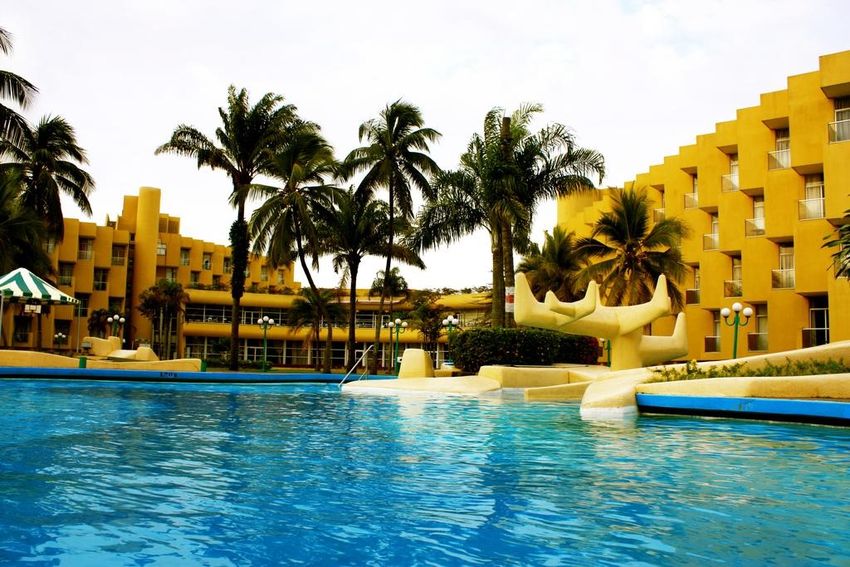
CONFERENCE
SPONSORS

                 Institut Universitaire Jésuite

             3
WELCOME
MESSAGE

                        AKWABA/ WELCOME
I wish to welcome you to the very first edition of the International
Conference on “Technology, R&D, Education and the
Economy” (TREE for Africa 2018), sponsored by the Jesuit University
Institute (CERAP/IDDH) and the European Alliance for Innovation
(EAI). TREE 2018 is taking place in Abidjan, Côte d’Ivoire, with the full
support and sponsorship of the Ministry of Higher Education and
Scientific Research, of Côte d’Ivoire Tourism (CT) and of the local
scientific community. So it is my pleasure at the onset of this welcoming
message to express my heartfelt gratitude to the Minister of Higher
Education and Scientific Research,professor BAKAYOKO-LY Ramata,
as well as the Director General of Côte d’Ivoire Tourism, Mr Jean-Marie
SOMET who both understand the importance of science, technology and
education as means of sustainable and shared prosperity.
Africa is a land of paradox. While the continent has very substantial reserves of arable land, water,
hydropower and mineral wealth, most countries in Africa rank among the poorest in the world and African
economies are plagued with high unemployment and poverty rate. At reflection, such a situation is
understandable once one realizes that in the current knowledge economy what matters is no longer raw
material but knowledge that creates value. Given this, the Technology, R&D, Education and Economy
(TREE) Conferences aim at providing a space for an Africa centered international debate about how science
and technology could bring about sustainable development through relevant education. TREE is an
interdisciplinary conference that favors empirical research and mathematical model building for sustainable
development. Although the primary focus of the conference is the sustainable development and prosperity
for Africa, best practices from other parts of the world are most welcome as a way to enrich the debate.
TREE explores how innovation helps create added value and insures development and how African
countries can build on traditional knowledge in various sectors to develop frugal innovation: in agriculture,
health and medicine, nutrition, arts, handicraft, etc. To that extent, the main theme would explore the
linkages between innovation, Development and traditional knowledge. Topics that would then be covered
include innovation and food security, drug resilience, education, cybersecurity, governance and corporate
social responsibility.
At this point, please allow me to officially welcome both of our keynotes speakers, Professor Walter Park,
Chair of the PhD program at American University (Washington DC), Professor Mammo Muchie, DST-NRF
Research Chair at Tswane University of Technology in South Africa. They are joined by an incredible and
talented group of researchers from a dozen different countries: Côte d’Ivoire, Ghana, Malawi, Burkina Faso,
Niger, Nigeria, Ethiopia, the United States of America, Italy, Spain, etc.
To all of you who are visiting Côte d’Ivoire for the first time, I hope that you will also take advantage to
discover the beauty of Côte d’Ivoire, this wonderful land of hospitality and to appreciate the charm of its
people with the help of Côte d’Ivoire Tourism.
  Once again, thank you very much for attending this conference. I look forward to your contribution and I
                    wish to all of us a very successful and fruitful conference! Thank you!

                                                          Francois Pazisnewende KABORE, SJ, PhD
                                                                        General Chair of TREE 2018
                                           Director of the Jesuit University Institute (CERAP/IDDH)

                                                    4
OPENING
CEREMONY

        Prof. BAKAYOKO LY Ramata                                      Jean-Maire SOMET
     Minister of Higher Education of Cote d'ivoire          General manager of Côte d’Ivoire Tourisme

                                                                       Walter G. Park
Fr. François Pazisnewendé KABORE, SJ, PhD                     Co-Chair of TREE for Africa 2018,
     General Chair of TREE for Africa 2018               Professor of Economics and PhD Program Director,
     Director of the Jesuit University Institute          Department of Economics, American University,
                                                                       Washington DC, USA

  Prof. KATI COULIBALY Seraphin                                       Prof. AKA Bedia François
    Technical Program Committee chair                                        PhD Track Chair

                                                     5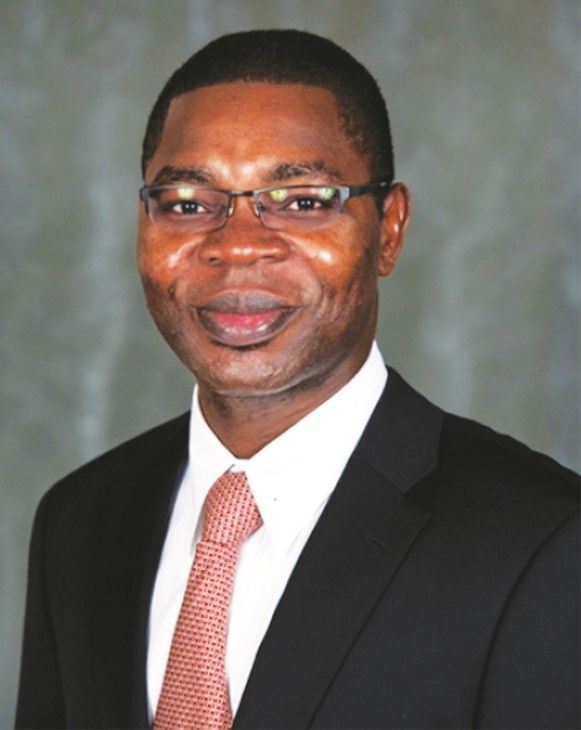
Steering committee
Key members

                                    François Pazisnewende Kaboré, PhD
Dr. Kaboré is the Director of the Jesuit University Institute at the Center for Research and Action for Peace (CERAP/IDDH)
and Manager of the MBA program in entrepreneurship of the same institute in Abidjan (Ivory Coast). In addition to his
administrative duties, Dr. Kaboré keeps teaching commitments in economics, statistics, governance, and Knowledge
economics. During summer 2016, Dr Kaboré was back in Washington DC as a research fellow at the Woodrow Wilson Center.
Indeed, from 1012 to 2014, he was visiting research professor at the School of Foreign (SFS) of Georgetown University where
he taught undergraduate and graduate courses (Economic Analysis of Sub-Saharan Africa, Statistics, econometrics, Science
Technology and Development). He has also taught and lectured in the following institutions: American University (USA),
Sophia University (Japan), Center for Economic Catch Up (Seoul National University, Korea), Catholic University of Central
Africa (Yaoundé, Cameroon). The professional experience of Dr. Kaboré includes consultancy at the World Bank's
Sustainable Development Network (Washington DC), at the World Intellectual Property Organization (WIPO) in Geneva.
Dr Kaboré’s area of research is knowledge economics, innovation, technology transfer, intellectual property rights (IPR) and
development. He has published book chapters and articles in various academic journal such as “Sciences et Techniques”,
Revue Suisse de Recherche Scientifique, La Civilta Catolica, The African Journal of Science, Technology, Innovation and
Development, etc. Dr Kabore holds two BA (Philosophy and Math-Economics), a MA in Economics, two graduate certificates
(theology and pedagogy), and a PhD in Economics. Dr. Kaboré is currently working to set up a regional Business School in
West Africa.

                                     Prof. KATI COULIBALY Seraphin
Professor Professor at the Laboratory of Nutrition and Pharmacology since2009, Professor Kati-Coulibaly has been the
Chairman of the Steering Committee of the Strategic Support Program for Scientific Research (PASRES) from June 2012 to
June 2017. Professor Kati-Coulibaly is a Member of the Board of Directors of AFRICARICE (Audit Committee) Since 2014
and Member of the Board of Management of the National Office of Rice Development (ONDR). Member of the Board of
Directors of the Interprofessional Fund for Research and the Agricultural Council (FIRCA) (Audit Committee) From 2015 to
2017, he was Member of the Board of Directors of the Ivorian Institute of Tropical Technology (I2T) of 2015 to 2016.
Professor Kati-Coulibaly was also Member of the Steering Committee of the Agricultural Productivity Program in West Africa
(PPAAO / WAAPP) from June 2012 to June 2017 and Member of the Board of Management of the Ivorian Center Anti
Pollution ( CIAPOL), from 2014 to 2016. Member of the National Committee for Nuclear Biological and Chemical
Radiological Risk Management (NRBC) from 2014 to 2016.
Member of the Board of Directors of the National Center for Agricultural Research (CNRA) (Audit Committee2018)
It is also a focal point of the LEAP-AGRI Program on the financing of research projects in Africa jointly by the African Union
and the European Union ) from May 2012 to October 2016, he is currently Member of the Scientific Council of the Pasteur
Institute of Côte d'Ivoire (IPCI) Since May 2017 and Associate Member of the International Conference of Heads of
Universities and Scientific Institutions of French Expression (CIRUISEF). Member of the Supervisory Board of ADERIZ
(Since February )

                                            Prof. AKA Bedia François
Professor AKA Bédia is a full professor in Economics. He teaches in the TRAPCA program (Trade Policy Training Center) in
Arusha, Tanzania (course on Trade Policy Modeling Techniques). He has completed several expert mandates in crucial areas
such as social protection, analysis of poverty, inequality and well-being, trade liberalization, at Laval University, Canada;
STATEC, the Statistical Institute of the Grand Duchy of Luxembourg, the University of Luxembourg, the CREA (Consortium
for Economic Research in Africa, Nairobi, Kenya), the Algerian Ministry of Economy and Finance, and at the Algerian
Ministry of Commerce.
He was the Director of Economic Conditions and Forecasting (DCPE) of the Ministry of Economy and Finance of Côte
d'Ivoire. He is currently in charge of the Laboratory of Analysis and Modeling of Economic Policies (Lamp) of the Research
Center for Development, Alassane Ouattara University, Bouaké. And also Head of the Doctoral School of the Faculty of
Economics and Development, Alassane Ouattara University, Bouaké.

                                                            6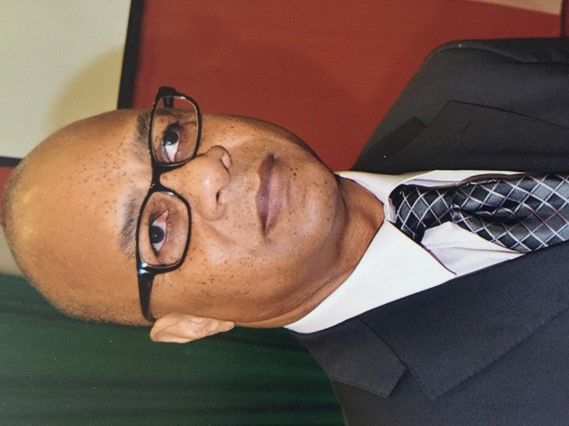
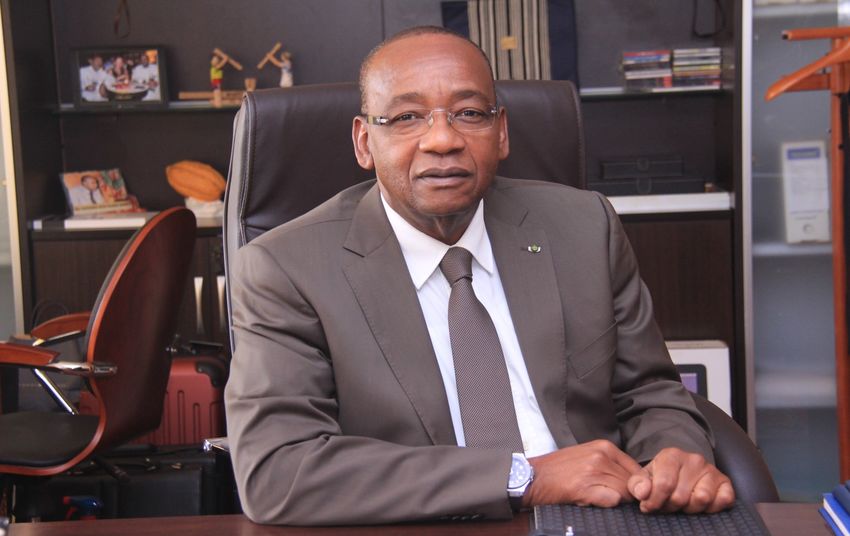
From the desk of
The General MANAGER
of Côte d’Ivoire Tourisme

                                            AKWABA

Given the very strong competition that characterizes the
sector of tourism, visible innovation is characterized by new
technologies, especially in the area of virtual and computer
technology.
However, innovation is so multifaced that it covers diverse
innovative areas. Hence, this international conference of
“Technology, R&D, Education and Economy (TREE 2018 for
Africa) that allows a good number of visitors to discover the
“destination Côte d’Ivoire” is in line with the long overdue
reflexion on the different forms of innovation, namely in
tourism.

As a matter of fact, this international conference is an
opportunity to innovate, simply through a better grasp of
traditional knowledge, so to speak. It is worth mentioning
without mimetism, a priori or clichés that traditional
knowledge is not yet sufficiently explored. It however, represents, particularly for Côte
d’Ivoire, this land of hospitality, new opportunities that should encourage the structured
development of different types of tourism: memory tourism, cultural tourism, religious tourism,
environmental tourism, etc… sustainable tourism with its various flavors such as solidarity
tourism, fair tourism, tourism that is friendly to the local people, to the socio-cultural values, to
the environment and to the planet.

So, thank you for the opportunity that you have given the National Office of Tourism to be part
of this conference. Thank you for providing us with solutions to create the structural conditions
that would improve competitiveness everywhere. Last but not least, thank you for challenging us
to think differently and creatively and thus to discover new frontiers.

                                                                                 Jean- Maire SOMET
                                                            General manager of Côte d’Ivoire Tourisme

                                                 7
KEYNOTE
SPEAKERS

                                            Walter G. Park
    Professor of Economics and PhD Program Director, Department of Economics,
                     American University, Washington DC, USA

Bio:     Walter G. Park is a Professor of Economics at American University, Washington, D.C. He holds a B.A.
degree from the University of Toronto, M.Phil from Oxford University, and Ph.D from Yale University. His main
fields of research are intellectual property rights and research and development (R&D), with a focus on
international issues, such as trade and foreign direct investment. His publications appear in Economic Inquiry,
Journal of Economic Behavior and Organization, Journal of International Business Studies, Research Policy,
Review of World Economics, World Economy, World Patent Information, and in book chapters published by
Academic Press, Elsevier Science, and Springer Verlag, among others. He has developed indicators of intellectual
property protection, which are widely cited and used by other researchers.
He currently serves on the Advisory Editorial Board of Research Policy and is a special sworn employee at the
U.S. Department of Commerce, Bureau of Economic Analysis. Since 2004, he has been working with the
Controlling Office of the European Patent Office on developing forecasting models of international
patenting. Since 2012, he has been a contributor to the Commitment to Development Index produced by the
Center for Global Development. He has also been a consultant to Industry Canada, the Organization for Economic
Cooperation and Development, U.S. Department of Energy, World Bank, and World Intellectual Property
Organization.
He has taught for more than twenty years and has taught a wide range of courses: Microeconomics,
Macroeconomics, International Trade, International Finance, Industrial Economics, and Econometrics, and at all
levels – bachelors, masters, and doctoral. He has also taught an online course in Development Economics for a
certificate master’s program, and co-taught an intensive course on IPRs and economic development for young
professionals at the Indian Institute of Technology, Indore, as part of the Global Initiative of Academic Networks
(GIAN).

Title: Innovation, creativity, and intellectual property rights
Abstract
This paper provides empirical evidence on the impact of copyright strength on the incentives of U.S. multinational
firms to transfer technologies and invest abroad. Copyright protection in the host countries has a positive
association with foreign direct investment and licensing in the information industries. The effect is stronger for
firms that have greater shares of copyright sales in the domestic (U.S.) market, indicating that foreign copyright
protection matters relatively more to those industries that demonstrate greater dependence on copyright protection
at home. Expansions in the size of a host country’s creative industry encourages U.S. multinational firms in
complementary industries (that is, industries beyond the traditional copyright sector) to expand their capital stock
and research and development (R&D). This study shows that copyright regimes have the potential to spur
industrial development and facilitate the technological development of developing countries.

                                                       8
KEYNOTE
SPEAKERS

                                  Prof. Mammo Muchie, PhD
                          Professor, Faculty of Management Sciences
                        Tshwane University of Technology, South Africa

Bio:        Professor Mammo Muchie did his undergraduate degree in Columbia University, New York, USA and his
postgraduate MPhil and DPhil in Science, Technology, and Innovation for Development (STI&D) from the
University of Sussex, UK. He is currently a DST-NRF research chair in Innovation Studies at the Faculty of
Management Sciences, Tshwane University of Technology and a rated research Professor. He is a fellow of the
South African Academy of Sciences, the African Academy of Sciences and the African Science Institute. He is
also currently adjunct Professor at the Adama Science, Technology University, Arsi University, Addis Ababa
University and University of Gondar, Ethiopia. He is a faculty associate professor at SPRU and Senior Research
Associate at the TMD Centre of Oxford University. He was part of the founding members of the Globelics
initiative and participates as board member and actively contributes to the Globelics Doctoral Academy. He is the
founder as Chief Editor of the African Journal on Science, Technology, Innovation and Development that has been
running since 2009 (www.tandfonline.com/toc/rajs20/current). He is also editor of the Globelics Journal of
Innovation and Development (http://www.tandfonline.com/RAID). He helped also in the founding of AfricaLics
(www.Africalics.org) He is part of the founding scientific board members of the network that connects North
Africa, with the Middle East and southern Europe (www.medalics.org) and Indialics. He is scientific advisor of
the Africa Innovation Summit. Perhaps one of the most significant contributions to promote the emerging field on
innovation studies in Africa was the South African research Chairs Initiative (SARChI). The first chair on
innovation studies supported by the DST/NRF in South Africa was awarded to Prof. Muchie to promote doctoral
and post-doctoral research in Africa. He is chairman of the Network of Ethiopian scholars (www.nesglobal.org)
and is chief editor of the open access electronic journal The Ethiopian Electronic Journal for Research &
Innovation Foresight (Ee-JRIF) (www.nesglobal.org/eejrif). He was a co- founder of The GKEN-Global
Knowledge Exchange Network, the African Unity for Renaissance, the African Talent hub and the African Union
Youth for Change (AUY4C). He is also editor of the Journal of Agriculture and Economic Development,
Associate Editor of the Journal of Economics and Institutions, University of Malaysia, Journal of Social
Epistemology, and many others. He is also an editorial member of the Thinker Magazine and he is also the chief
editor of a new TUT Journal of Creativity, Innovation and Social Entrepreneurship (JCISE). .Professor Muchie has
widely published in the areas of international political economy, development economics of innovation and the
making of African systems of innovation and new technologies and development. Since 1985, he has produced
over 400 publications, including books, chapters in books, and articles in internationally accredited journals and
entries in institutional publications. He has done community service through the media: Television, Morning Live,
Radios and articles in newspapers regularly in South Africa and internationally.

                                                        9
KEYNOTE
SPEAKERS

Title: R & D Application to Apply Traditional Knowledge for
African Integrated and Sustainable Development
Abstract
The traditional knowledge resources that emerged from ancient societies like Africa’s ancient Khmet,
Egypt, Ethiopia, Persia and China have combined often philosophies, values, ethics and wisdom that
have passed the test of time. These knowledge approaches that imbed culture, values, ethics, principles,
caring, sharing, nostalgia, emotion and all other variables that enrich the quality of being and the
ontological density of life have been rendered shallow by the intellectual dominance of a very
instrumental, positivist, externalising and separating knowledge production approach where the observer
and the observed are seen to occupy different positions in the knowledge creation processes. The
observer is external to the observed and what is observed is often recognised to be free from the
thoughts, recognition and interrelatedness of the observed matter or reality of observation. This type of
knowledge production displaced the rich knowledge process with ways of knowing that included
revelation, ethics, ontology, epistemology and axiology that defy one plus one is two. The traditional
knowledge shared logic that is not linear or instrumental expressing knowledge with a kind of
epistemic virtue that opposed epistemic vice, adding often to knowledge production deontological,
consequential and virtue ethics opening the space for deeper knowledge content that can be read as
inclusive and even innovative.
 There is much indigenous/traditional knowledge that exists in Africa. Most of the African people live
in rural areas where they use traditional medicine. There is a need to excavate this rich traditional
knowledge and integrate it with modern science, technology, and engineering and innovation
knowledge. Currently, there is a huge gap between R & D driven science and technology knowledge
and tradition driven indigenous knowledge. There is a need to integrate these two knowledge worlds.
The traditional knowledge has to benefit from R & D and intellectual property rights protection just like
the modern science and technology and innovation based knowledge. It must be included systematically
in the education curriculum and system. Those that promote R & D driven science and technology
knowledge have to also appreciate and value the rich traditional knowledge to open the possibilities for
the direct application of traditional knowledge resources in promoting African integrated and
sustainable development.

The keynote will address this gap that currently exists by finding practical methods to include traditional
knowledge by applying R & D and intellectual property protection with modern science and technology
knowledge to enrich and diversify the knowledge economy at a time when the world is in the 4th
industrial revolution. If we find novel ways of applying R & D to traditional knowledge from Africa’s
rich agriculture, medicine, water, arable land, raw materials and minerals, the opportunity to find a high
speed highway to be part of the 4th industrial Revolutions’ knowledge and digital society may transpire
and Africa can enter into the knowledge with its own synthesis of both traditional and modern
knowledge.

                                                  10
PROGRAM
OVERVIEW
DAY 1: WEDNESDAY MARCH 21, 2018
8:00- 8:30 Welcome and registration
8:30– 9:30 Open session:
9:30 – 10:15 Keynote Speech 1
10:15- 10:45 Coffee break
10:45- 12:30 Session 1: Innovation, Intellectual Property, R&D
12:30 – 14:00 Lunch + Break
14:00- 14:45 Keynote Speaker 2
14:45- 16:30 Session 2: Management and sustainable development
17:00-19:00 Dinner at Riviera
DAY 2: THURSDAY MARCH 22, 2018
8:00- 8:30 Welcome and registration
8:30- 9:15 Invited Speaker 1
9:15– 11:00 Session 3: on creative education
11:00- 11:15 Coffee break
11:15– 13:00 Session 4: Innovation and Traditional knowledge
13:00 – 14:00 Lunch + break
14:00 – 16:30 Session 5:Education, Innovation, Security
16:30-17:00 Closing session
17:00- 18:00 Getting ready for social event
18:00- 21:00 Social Event at CERAP-Cocody
DAY 3: FRIDAY MARCH 23, 2018
Touristic visit Yamoussoukro
11PROGRAM
DAY
In FULL
1
8:00 - 8:30 Welcome and registration
Open session:
Professor BAKAYOKO-LY Ramata, Minister of Higher Education of Côte d’Ivoire
Prof THIAM Assane, representive of the minister
Mr SOMET Jean-Marie, General manager of Côte d’Ivoire Tourisme
8:30 - 9:30 Fr. François Pazisnewendé KABORE, PhD. General Chair of TREE for Africa 2018, Director of the Jesuit University Insti-
tute
Walter G. Park, PhD. Co-Chair of TREE for Africa 2018, Professor of Economics and PhD Program Director, Department of
Economics, American University, Washington DC, USA.
Prof. KATI-COULIBALY Séraphin, Technical Programm Committee chair
Prof. AKA Bedia François, PhD track chair
Keynote Speech 1: Innovation, creativity, and intellectual property rights
9:30 - 10:15 Walter Park, Professor of Economics and PhD Program Director, Department of Economics, American University, Washington DC,
USA.
10:15- 10:45 Coffee break
What drives regional scientific integration in Africa? Evidence from publications
Chair:Malick BAKAYOKO
Innovation, Intellectual
DOSSO Mafini
Property, R&D
Open Mathematics, Traditional Knowledge and Intellectual Property in the era of the fourth industrial revolu-
Session 1:
tion: Challenges and Opportunities in Niger
10:45- 12:30
SIDI Zakari
Between strategy sabotage: A faux pas, Technophobia , or Ghanaian thing
KPINPUO Stephen
12:30 -14:00 Lunch / Break
Keynote Speaker 2- R & D Application to Apply Traditional Knowledge for African Integrated and Sustainable Development
14:00- 14:45 Mammo Muchie, DST- NRS, (Department of Science & Technology-National Recordable System) Research chair in Innovation
Studies at the Faculty of Management Sciences, Tshwane University of Technology
Using Technological Innovation and Corporate Social Responsibility to Connect Africa’s Smallholder Farmers to
Management and sustainable
Chair: Natewende SAWADOGO
the Global Sustainable Agriculture Economy
AMENAWON Christine Igharo
development
Session 2:
14:45 - 16:30
An innovative model of training and collaboration in the mining sector
OUEDRAOGO Morou François
Basic income grant as innovative social policy against poverty and inequalities in Côte d’Ivoire
Eugène KAMALAN, Prof. AKA Bedia François, Prof. PRAO
17:00 - 19:00 Social event
12PROGRAM
DAY
OVERVIEW
2
8:00 - 8:30 Welcome and registration
8:30 - 9:15 Invited Speaker 1:
KATI COULIBALY, former Director General of Scientific Research and Technology
Integration of the Google Suite for Education in competency based ICT training for Bachelor students:
Empirical findings from the IAG-CoRECE project
Chair: Fabio PETRONI
SIDI Zakari Ibrahim
Creative Education
Session 3:
Fostering Entrepreneurship Education in Africa: Presenting the Orchestration of a Pan-African University
9:15 - 11:00 Alliance
Alisa SYDOW
Entrepreneurship Hysteresis and Persistence in Higher Education A quasi-experiment on academic innova-
tion
François Pazisnewendé KABORE
11:00 - 11:15 Coffee break
Chair: Eugène KAMALAN
Innovation and Traditional
Ancient techniques and traditional medicine in Sub-Saharan Africa: the case of black-smith in metallurgy of
iron
KIENON-KABORE Hélène
knowledge
Session 4:
11:15 - 13:00 Teachers's perception of mothers longues usages
UZOMA Chima
Smart specialization in Sub-Saharan Africa: new perspectives for innovation-led territorial development
DOSSO Mafini
13:00 - 14:00 Lunch /Break
Cybersecurity and legal innovations
Education, Innovation, Security
DIARRA Rosalie
Chair: Mafini DOSSO
Information System Development in Resource Constraint Setting: A Case Study from Malawi
Session 5:
Martin MSENDEMA
14:00 - 16:30
Optimization of proactive routing with latency minimization in SDNnetworks
KEUPONDJON Armel
Wireless voip implementation using asterisk pbx and open source sofphone
Euclid ODJIDJA
Closing session:
16:30 - 17:00 General Chair
TPC Chair
17:00 – 18:00 Break/Getting ready for social event
18:00 – 21:00 Dinner at CERAP- Cocody
13Conference
Commitees
STEERING COMMITEE
Imrich Chlamtac, Bruno Kesler Professor, University of Trento, Founding president of CREATE-NET, Italy (Chair)
Francois Pazisnewende Kabore, PhD., Jesuit University Institute, Côte d’Ivoire (Member)
SCIENTIFIC COMMITTEE
General Chair
Francois Pazisnewende Kabore, PhD., Jesuit University Institute, Côte d’Ivoire
General Co-Chair
Prof. Walter Park, American University, USA
Technical Program Committee Chair
Prof. Kati Coulibaly, University of Cocody, Côte d’Ivoire
Publicity & Social Media Chairs
Agnès Kraidy, Government Official News Paper (Fraternity Matin)
MA Basile Ouedraogo, Jesuit University Institute, Côte d’Ivoire
Publications Chairs
Natewinde Sawadogo, PhD., University of Ouaga II, Burkina Faso
Dr. Annette Ouattara, Swiss Center for Scientific Research (CSRS), Côte d’Ivoire
Local Chair
Prof. Aka Bedia, University of Bouaké, Côte d’Ivoire
Web Chair
MA Basile Ouedraogo, Jesuit University Institute, Côte d’Ivoire
Workshops Chairs
Fred David McBagonluri, PhD., Ashesi University, Ghana
Dr. Eugene Kamalan, University of Bouaké, Côte d’Ivoire
Posters and PhD Track Chair
Prof. Aka Bedia, University of Bouaké, Côte d’Ivoire
Other members
Toni Bourama, PhD, Virginia State University (USA)
Eveline Compaoré, PhD, INERA (Burkina Faso)
Dominique Foray, PhD, Ecole Polytechnique (Switzerland)
Prof. Goula Bi Albert, Nangui Abrogoua University (Côte d’Ivoire)
Dr Francesca Musiani, CNRS (France)
Fred Mc Bagonluri, PhD, Ashessi University (Ghana)
Dr Abel N’djomon, UCAC Yaounde (Cameroon)
Dr Pierre Papon, CNRS (France)
Charles Udomsaph, PhD, Georgetown University
14Conference
Commitees
Arsene Brice, Bado, Institut Universitaire Jesuite (CERAP/IDDH)
Kaja Jasinska, University of Delaware, USA
Hugues KOUADIO, ENSEA, Côte d’Ivoire
Benedict Kang-Yup, Jung Sogang University, Korea
Mar Martínez, GIZ, Bolivia
Mahsa Gholizadeh , US Bureau of Economic Analysis, USA
Annette OUATTARA, Swiss Center for Scientific Research (CSRS), Progranne d'Appui Stratégique à la Recherche
Scientifique en Côte d’Ivoire, Université Nangui ABROGOUA
Wonkyu Shin, Development Institute, Korea
Frank Edgard ZONGO, University of Ouaga I, Burkina Faso
KORGO Barnabe, UCAO,UUA, Côte d’Ivoire
Stephen KPINPUO, School of Business and Law, University for Development Studies, Ghana
Mafini DOSSO, European Commission DG JRC
OUEDRAOGO Morou François, Institut Teng Tuuma Geoscience de Ouagadougou ITTGO, Burkina Faso
STEPHANIE YAVO, CESAG, Senegal
DIARRA Rosalie, Jesuit University Institute, Côte d’Ivoire
Prof. Denise HOUPHOUET-BOIGNY, Ambassador of Côte d'Ivoire to the UNESCO, Paris, France
15Conference
VENUE
HEDEN GOLF HOTEL
Heden Golf Hotel is located at the Riviera neighbourhood, 30 minutes away from the Felix
Houphouët-Boigny international Airport and 10 minutes away from the city Center. The hotel
is built on one of the most beautiful and peaceful site of Abidjan, and overlooks the Ebrie
Lagoon.
Address: Cocody Riviera Golf, Abidjan Côte D'Ivoire
16www.treeforafrica.org
#TREE2018
17NOTES
18NOTES
1920
You can also read


