STUDY IN CANADA STAY IN CANADA - CANADIAN UNIVERSITY PATHWAYS 2020 - Source
←
→
Page content transcription
If your browser does not render page correctly, please read the page content below

STUDY IN CANADA
STAY IN CANADA
C A N A D I A N   U N I V E R S I T Y   P A T H W A Y S   2 0 2 0

2

CONTENTS

4    Why Canada

6    Toronto

8    Vancouver

10   Canadian Pathways

12   How It Works

14   Progress Chart

15   Schedule

16   Improve Your Academic Skills

18   Choose Your University

19   Colleges & Universities

20   Our Partners: Institution, Minimum
		   Requirements & Tuition

22   FAQ

23   Questionnaire

                                          3
WHY CANADA?
    welcoming international students from all over the world

    Canada is famous for its welcoming people and great quality of life, ranking
    3rd best country to live in according to polls in 2019. So, it’s not surprising that
    international students are coming here in bigger numbers every year. Let’s look
    at what makes Canada such an attractive choice for students.

    CANADA OFFERS A GREAT QUALITY OF LIFE                                   CELEBRATING DIVERSITY IN ALL ITS FORMS
    With an enviable quality of life and a reputation for being             The famous Canadian hospitality is alive and well, along
    respectful of the rights of individuals and communities, it’s           with their reputation for being warm and friendly. The
    easy to see why Canada would be your number one choice.                 people are known for having a welcoming culture that
    The cost of living is also lower here than it is the US, UK and         embraces diversity, and it is one of the safest countries for
    some European countries.                                                international students.

4
INTERNATIONALLY RECOGNIZED EDUCATION                      EMBRACE THE DIVERSE, NATURAL LANDSCAPE
Not only is education affordable in Canada, you’ll also   There’s nowhere like Canada. Explore beautiful beaches,
experience the latest technology and cross-disciplinary   the Rocky Mountains and Niagara Falls to begin with, but
studies. Develop your teamwork, critical thinking and     don’t forget to also experience the numerous national parks,
communication skills to boost your future job prospects   lakes and fjords. Whether you’re a water lover or a hiking
with a globally recognized diploma.                       enthusiast, you’re sure to be entertained all year round!

                                                                                                                         5
TORONTO

    One of the most culturally diverse cities on the planet, over half of Torontonians were born
    outside of Canada. They bring a mix of vibrant cultures to the city, where you can find amazing
    restaurants and even beaches! EC Toronto is located just off of the famous Yonge Street.

    LIVING COSTS IN TORONTO
    Recommended budget to cover basic costs for transport, food and entertainment at EC Toronto: approximately CAD $330-$350 per week.

       Coffee / cappuccino                                          Bottle of water/Soda
                                   $3.00 – $5.70                                                  $1.30 – $3.00                    Fast food combo meal   $9.00 – $14.00
       (Starbucks)                                                  (0.33 litre)

       Meal, inexpensive                                            Fitness club                                                   Public transport       $3.25 (one-way);
                                   $15.00 – $25.00                                                $40.00 – $85.00
       restaurant                                                   (monthly, 1 adult)                                             (local transport)      $152.00 (monthly pass)

    Please note that all costs are estimated averages only and are subject to change without notice. Source: www.numbeo.com/cost-of-living.

6
Why we love EC Toronto STUDY
Get the best view of the city with a trip up CN Tower or
Free language workshops include Writing Wonders
explore the Yonge & Eglinton area right next to the school,
and Breaking News, among many more!
full of shops and restaurants. Of course, you have to check
out a Toronto Blue Jays baseball game while you’re here, or General English (20/24/30)
even try out Canada’s favourite sport: hockey! English for Work (20 GE + 10 Special Focus)
On the weekend see the iconic Niagara Falls or visit New English in the City (20 GE + 10 Special Focus)
York City or Montreal. Academic Semester/Year (20/24/30)
Juan, Student Services Manager Cambridge Exam Preparation (30)
The activities above are a sample and subject to change. Exam Preparation IELTS/TOEFL/TOEIC (20)
University Pathway Programme (24/30)
One-to-One
SLEEP
HOMESTAY: standard | comfort
RESIDENCE: superior
SUMMER RESIDENCE: comfort
SHARED APARTMENT: comfort | standard
AND MORE...
University Admissions Service
Cambridge, IELTS, TOEFL, TOEIC test centre
INCLUDED WITH YOUR COURSE
e Access to EC Online from booking
e Online Placement Test
e Orange Carpet Experience
e Extra language workshops and activities
e Social and cultural programme
e Free WiFi
ACCESS TO
IWBs throughout
Library
Yonge & Eglinton Self-study room
Subway
Eglinton Park Student lounge
EC Toronto Microwave ovens
Cafe in building
WHO ARE YOUR CLASSMATES?
Nationality Mix
24% Korean 6% Mexican
20% Brazilian 4% Colombian
16% Japanese 3% Swiss
7% Turkish 20% Other (45)
QUICK FACTS
Age Mix
22 14.5 330 29 16
Classrooms Average Capacity Student Minimum
class size computers age 16-17, 18-20, 21-25, 26-30, 31-40, 41-50, 51+
Based on student weeks 2018/19
7
VANCOUVER

    Vancouver is like the Los Angeles of Canada. A stunning, friendly West Coast city, it offers culture,
    outdoor adventure, shopping and entertainment, all against the beautiful backdrop of the Pacific
    Ocean and the Coast Mountains range. Learn English in Vancouver if breathtaking views and an
    active lifestyle are what you’re after. Study in the centre of downtown Vancouver, close to Gastown.

    LIVING COSTS IN VANCOUVER
    Recommended budget to cover basic costs for transport, food and entertainment at EC Toronto: approximately CAD $330-$350 per week.

       Coffee / cappuccino                                          Bottle of water/Soda
                                   $3.75 – $5.70                                                  $1.25 – $3.00                    Fast food combo meal   $9.00 – $11.00
       (Starbucks)                                                  (0.33 litre)

       Meal, inexpensive                                            Fitness club                                                   Public transport       $2.50 – $3.00 (one-way);
                                   $13.00 – $20.00                                                $35.00 – $70.00
       restaurant                                                   (monthly, 1 adult)                                             (local transport)      $95.00 – $130.00 (monthly pass)

    Please note that all costs are estimated averages only and are subject to change without notice. Source: www.numbeo.com/cost-of-living.

8
Why we love EC Vancouver STUDY
Hike to Quarry Rock in Deep Cove for beautiful views or dangle
We offer extra help and conversation sessions
from the ceiling while flying across Canada in a ride called FlyOver
at different levels so you can get more individual
Canada. Visit Capilano Suspension Bridge Park where you can try
help while you’re here!
adventures like the Cliffwalk and Treetops. You can enjoy shopping
at the Richmond Night Market and many farmers markets. General English (20/24/30)
On the weekend you can go up the mountains to Whistler or English for Work (20 GE + 10 Special Focus)
visit British Columbia’s capital city, for gorgeous sights like the English in the City (20 GE + 10 Special Focus)
Butchart Gardens! Academic Semester/Year (20/24/30)
Eric, Student Services Coordinator Cambridge Exam Preparation (30)
The activities above are a sample and subject to change. Exam Preparation IELTS (20)
University Pathway Programme (24/30)
One-to-One
SLEEP
HOMESTAY: standard | comfort
SHARED APARTMENT: comfort | superior
AND MORE...
English Plus: Farmstay
University Admissions Service
Cambridge test centre
INCLUDED WITH YOUR COURSE
e Access to EC Online from booking
e Online Placement Test
e Orange Carpet Experience
caption
e Extra language workshops and activities
e Social and cultural programme
e Free WiFi
The Orpheum theatre
ACCESS TO
EC Vancouver
IWBs throughout
Library
Pacific Centre
Self-study room
Harbour Centre
Student lounge
Steam Clock
Kitchen area
WHO ARE YOUR CLASSMATES?
Nationality Mix
22% Korean 7% Mexican
20% Brazilian 4% Colombian
15% Japanese 3% Taiwanese
11% Swiss 18% Other (34)
QUICK FACTS
Age Mix
19 14.5 285 23 16
Classrooms Average Capacity Student Minimum
class size computers age 16-17, 18-20, 21-25, 26-30, 31-40, 41-50, 51+
Based on student weeks 2018/19
9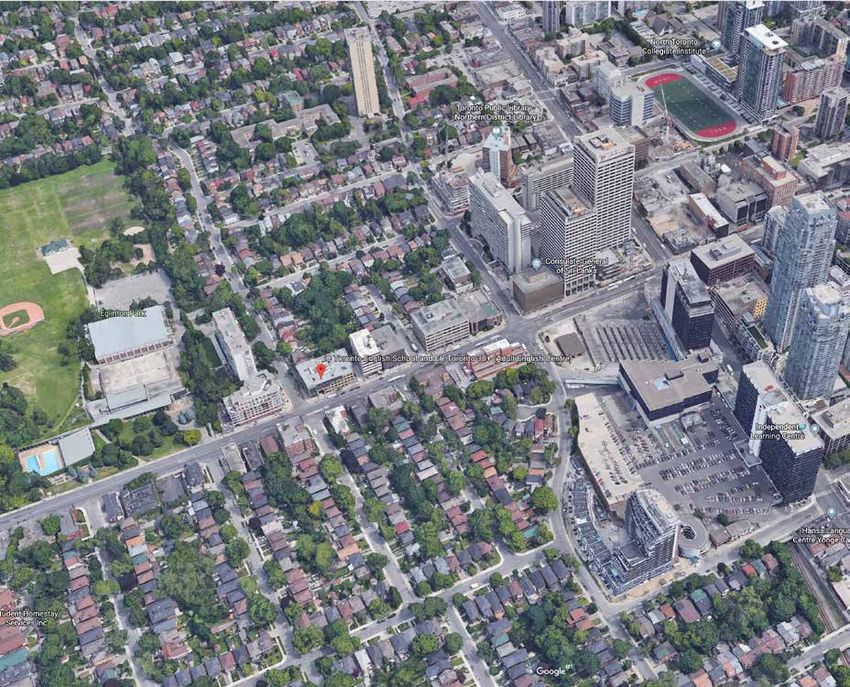
CANADIAN PATHWAYS
     what is canadian university pathways?

                                                                   1
     Did you know that your dream of studying and staying in           ENTER A UNIVERSITY OR COLLEGE
     Canada is possible and achievable? If you are studying            WITHOUT TOEFL OR IELTS
     at EC Toronto or EC Vancouver, our Canadian University            When you reach the university’s required
     Pathways program will get you there!                              English level with EC, you will be admitted
                                                                       to your chosen partner university without a
     Our program provides you with access to a wide range of           TOEFL or IELTS exam. This means less stress
     universities and colleges to choose from across Canada,           for you!
     including some of the country’s most highly ranked

                                                                   2
     institutions.                                                     GAIN INTERNATIONAL LIFE
                                                                       EXPERIENCE
     Once you graduate from a Canadian university, you are
                                                                       Besides the academic improvements, you
     eligible for a work permit for up to three years. With this
                                                                       will get international life experience. You will
     permit, you can then apply to become a permanent
                                                                       develop professional contacts within the
     resident in Canada.                                               industry, practice the knowledge you have
                                                                       acquired and live like a local in Canada.

                                                                       LEARN HOW TO IMPROVE YOUR

                                                                   3
                                                                       ACADEMIC SKILLS
                                                                       Amplify your professional English skills and
                                                                       boost your vocabulary. You will learn how to
                                                                       improve your grammar points and how to be
                                                                       confident when speaking in public. All this
                                                                       will help prepare you to succeed in the global
                                                                       community.

                                                                   4
                                                                       AMAZING OPPORTUNITIES
                                                                       Canada is a multicultural country, with a
                                                                       rapidly growing economy, which means
                                                                       there are more opportunities to work and do
                                                                       business there. If you are interested in gaining
                                                                       permanent residency in Canada, this program
                                                                       can help you to be eligible for it.

                                                                   5
                                                                       EARN A CANADIAN DIPLOMA
                                                                       OR CERTIFICATE
                                                                       With a diploma or certificate from a widely
                                                                       recognized Canadian institution, and an
                                                                       international academic experience, you will
                                                                       significantly boost your career potential.

10
your pathway to success
11HOW IT WORKS
canadian university pathways
ABOUT THE PROGRAM
Canadian University Pathways offers you a flexible way to
enter a Canadian university or college. You will have access
to Bachelor or Masters degrees, as well as Diplomas and
Post-Graduate certificates.
ENGLISH TEST
Take our English Test on: www.ecenglish.com/en/englishtest
and find out your English level.
REQUIRED LEVEL
The minimum required level to start the Pathways Program
is Upper-Intermediate.
If required, you can take the General English course until
you reach Upper Intermediate.
General English – 20 lessons (15 hours per week).
You will progress 1 level per 14 weeks.
Semi-Intensive English – 24 lessons (18 hours per week).
You will progress 1 level per 12 weeks.
Intensive English – 30 lessons (22.5 hours per week).
You will progress 1 level per 10 weeks.
PATHWAYS PROGRAM
The Pathways program has 2 options:
UNIVERSITY ADMISSIONS SERVICE
Semi-Intensive program - includes 24 lessons (18 hours Our team is committed to helping you get into the university
per week) comprised of 20 lessons of English for Academic of your choice. You will receive personal guidance and
Purposes (EAP), plus 4 special focus lessons of English for support in choosing a university or college, completing the
Academic Purposes Workshops. application process, determining your current English level,
Intensive program - includes 30 lessons (22.5 hours per and helping you reach the required level of English to join
week), comprised of 20 lessons of English for Academic your chosen university or college.
Purposes (EAP), plus 4 lessons of English for Academic
Purposes Workshop, and 6 lessons of any elective classes EXPERIENCE UNIVERSITY LIFE
offered by EC Toronto or EC Vancouver. While you study English at your EC school, you will have
a chance to attend classes at a university. This is the
START DATES perfect opportunity for you to see what student life and the
The Pathways Program has specific start dates. Please classroom experience is like in Canada, helping you become
check our calendar on page 13. a better student.
12your journey 1
to pathways ONLINE ENGLISH TEST
Take the online English test (25
multiple choice questions) on
our EC website:
www.ecenglish.com/en/englishtest
2
PATHWAYS QUESTIONNAIRE
Send the completed Pathways
Questionnaire and your English Test
result to our Pathways department.
3
REACH YOUR ENGLISH GOAL
Improve your English skills in one
of our EC schools in Toronto or
Vancouver.
4
ENTER UNIVERSITY OR
COLLEGE
Once you reach the required
English level, enter a university or
college without TOEFL/IELTS.
5
ENJOY YOUR NEW FUTURE
Your new skills and
qualification will open the
doors to your new future!
START DATES: JANUARY FEBRUARY MARCH APRIL MAY
2020 Monday 6 Monday 10 Monday 16 Monday 20 Monday 25
JUNE AUGUST SEPTEMBER OCTOBER NOVEMBER DECEMBER
Monday 29 Monday 3 Monday 7 Monday 12 Monday 16 Monday 21
The Canadian Pathways/EAP course starts every 5 weeks. Students attending courses below the Upper-Intermediate level are
not restricted to the above dates. These students can begin on any Monday.
13PROGRESS CHART
your progress, our promise
If you study Intensive English with us, 30 lessons per week for ten weeks, and fully commit to
your learning program, we believe you will progress at the rate shown on the chart below.
All you need to do is:
Be fully committed to your course.
Attend a minimum 90% of lessons.
Submit your homework on time.
Participate. Be motivated. Be responsible for your learning.
Our rate of progress is based on the success of our actual students. We analyzed
thousands of our students’ placement and exit tests*, resulting in the progress rate noted on
the chart below.
If you do not progress as expected, we willgive you additional lessons, help and support
at no extra cost to maximise your outcomes.
General English | Semi-Intensive English University Pathway Programme
IELTS 3.0 – 3.5 4.0- 4.5 4.5 – 5.0 5.0 – 5.5 5.5 – 6.0 6.0 – 6.5
Starting Number Pre Upper Pre
Elementary Intermediate Advanced**
Level of Weeks Intermediate Intermediate Advanced*
Elementary* 50 60
Pre
40 48
Intermediate*
Intermediate* 30 36
Upper
20 24
Intermediate*
Pre
10 12
Advanced*
Advanced** 10 12
*To reach Pre-Advanced level – This is the level most universities and colleges require
** An additional 10-12 weeks is needed for universities who require an Advanced level of English
30 lessons per week
24 lessons per week
*Analysis covered a 12-month period in 2016/2017, and included all EC students who took a placement and exit test.
**Students who do not progress and wish to receive the EC Promise of extra lessons and support must contact their Director of Studies
at least one week prior to departure. Other terms and conditions apply. Speak with your EC contact for more details.
14WEEKLY SCHEDULE
toronto
INTEGRATED SKILLS
Develop your vocabulary, grammar and pronunciation through interactive activities. 12 lessons per week.
TARGETED SKILLS
Develop the 4 core elements of language learning: speaking, listening, reading and writing, maximising
your progress to bring you to fluency. 8 lessons per week.
PATHWAYS SPECIAL FOCUS
You’ll focus on areas such as: writing assignments, listening to lectures, taking effective notes, and
preparing and giving presentations. 4 lessons per week.
GENERAL ENGLISH SPECIAL FOCUS
Students can choose from a variety of classes, to focus on an everyday language skill of their choice,
for the real world. 6 lessons per week.
This sample schedule from EC Toronto shows and example of classes and activities*
Monday Tuesday Wednesday Thursday Friday Saturday Sunday
08:15 – 09:45 Integrated Stop by the Integrated Hang out Integrated New York Trip Visit to the
Skills Art Gallery Skills in High Park Skills (Starts at $369) Royal Ontario
of Ontario Museum
9:45 – 10:00 Break Break Break
10:00-11:30 Integrated Homework Integrated Vocab In Integrated
Skills Club Skills Context Skills
Workshop
11:30 – 11:45 Break Break Break
11:45 – 13:15 General English Homework General English Vocab In Context General English
Special Focus Club Special Focus Workshop Special Focus
13:15 – 13:30 Break Break Break Break Break
13:30 – 15:00 Free Writing Pathway English Pronunciation Pathway English Conversation
Workshop Special Focus Workshop Special Focus Club Workshop
15:00 – 15:15 Break Break EC Tour
and Dinner
15:15 – 16:45 Targeted Targeted
Skills Skills
16:45 – 17:00 Break Break
17:00 – 18:30 Targeted Targeted
Skills Skills
Evenings International Blue Jays Game Momentos Free Bowling Leave for
Student Meet Up (starts at $25) Student Party Night New York Trip
Schedules for classes and activities are subject to change.
Optional Free Student Activities Suggested free time activities
Optional Free Workshops Paid Optional EC activities
15IMPROVE YOUR
ACADEMIC SKILLS
core classes: monday to friday
The core classes focus on academic skills and language to LISTENING
prepare for entering a Canadian college or university. Listen to academic lectures to understand key information
and language. Learn note-taking methods.
The class focuses on how to digest and interpret academic
texts and lectures, including note-taking and building
READING
academic vocabulary.
Read excerpts from authentic textbooks. Learn to predict
content, identify key features of the text, and respond
critically to the topic and ideas. Learn note-taking methods.
CRITICAL THINKING
Discuss and evaluate academic topics. You will also evaluate
your own work and that of others, making judgments about
the value of information and drawing conclusions from data.
VOCABULARY
Look at key aspects of academic vocabulary and cover
useful vocabulary learning strategies.
Students produce four academic pieces, two speaking
and two writing projects per 5-week period.
PRESENTATION SKILLS
Pull information together in a logical order, create clear
visual aids and use appropriately, speaking clearly and
with confidence, knowing your audience and pitching a
presentation at the appropriate level.
DISCUSSIONS
Participate in and lead academic discussions and seminars.
Learn communication strategies for maintaining an
academic conversation, eliciting and providing ideas based
on research and personal opinions.
ACADEMIC WRITING
Produce academic reports and essays worthy of a Canadian
college or university. Understand the scope of and plan the
assignment, research and assess sources, organize your
thoughts, write the assignment, proofing and assessing your
work, using feedback to improve.
RESEARCH SKILLS
Understanding the remit of the research, finding materials
and sources, managing your time and your resources,
presenting your results.
16english for academic purposes workshop
Meet twice a week to hone your study skills. These include MINI LESSON
an array of skills which tackle the process of organizing Start: Reading, audio or video input; teacher instruction
and taking in new information, retaining information, and vocabulary input.
and working on or dealing with group or individual
Connection: activating students’ prior knowledge.
assignments. The class will study methods to aid the
Teaching: presentation of the actual skill or topic.
retention of information; time management; planning
assignments; concentration techniques; and efficient Active engagement: giving students time for
supported practice of the skill.
note taking while gathering external data or research.
Link: helping students figure out how the topic
pertains to their individual written piece.
STATUS UPDATE
5 to 10 minutes: The teachers evaluate how the students
are progressing.
Status Update is a quick check-in to find out where
your students are in the writing process — pre-writing,
drafting, revising, editing, evaluating, or publishing.
WRITING
20 to 45 minutes: Students work individually.
The majority of the writing workshop is devoted to
simply giving students time to write. During this time,
teachers can confer with individual students, observe
and help.
EXAMPLES OF
ADDITIONAL WORKSHOPS SHARING
If you choose the 30 lessons Pathways course, you 10 to 15 minutes: Students can share their work
can take 6 lessons per week of additional workshops. and become more comfortable speaking English
Here are some examples of the workshops we offer: in public.
ENGLISH FOR WORK It can be tempting to skip this last element of the
Learn the language of business. Develop your writing workshop, but don’t! It can be the most valuable
business English and ability to interact with part of the class, other than the writing time itself. As
international colleagues and clients. students grow comfortable sharing, they are willing
to take more risks and dive deeper into the process.
GLOBAL AWARENESS
Students tend to get great ideas here as they are most
Develop your understanding of different cultures, and
influenced by one another.
how communication varies between them.
EXAM SKILLS
Focus on improving the skills you need for taking
standardized exams such TOEFL, TOEIC and IELTS.
17CHOOSE YOUR UNIVERSITY
Learn the difference between college and university, as well as the certificates for each program you choose.
Below you will find a brief overview of the available courses for you, their duration, approximate tuition and
minimum requirements. There is a perfect partner university for you, depending on your level of English and
required outcome for your educational goals.
College University College University
Diploma or Bachelor Bachelor Postgraduate Master’s Degree
Spotlights • Career-oriented, • More academic, • Career-oriented, • Advanced knowledge
more practical and study-based and more practical and of a specialised body of
hands-on training research-oriented hands-on training theoretical and
environment applied topics
• High employment • Opportunity to
rates • Larger institution/ expand your • Thesis required for
class sizes network with program graduation
• Smaller
professionals in the (some have course-based
institution/class • Worldwide
course option)
size recognition or
degree • Learning from
• Learning from
skilled and
skilled and • Higher chance
experienced
experienced of getting credit
professionals
professionals accepted when
transferring
Program Duration • Diploma: 2-3 years
• Bachelor’s degree: • 4 years • 1-2 years • 1-2 years
4 years
Approximate
Tuition Fees •
$
14,000-18,000 •
$
16,000-27,000 •
$
16,000-18,000 •
$
20,000+
(per year, in CAD$)
Admission • High school • College diploma or • Official university
• High school
Requirements
diploma and diploma and university degree transcript and graduation
transcript transcript and transcript certificate (in original
language and English)
• C average • B average • B average (75%) for
(65%) for diploma* (75%) for degree* degree* • B average (75%) for degree*
• B average • Proof of English • Proof of English • Proof of English
(75%) for degree* proficiency – EC proficiency – EC proficiency – EC
Certificate with Certificate with Certificate with required
• Proof of English
required level required level level or TOEFL/IELTS
proficiency – EC
or TOEFL/IELTS or TOEFL/IELTS required score
Certificate with
required score required score
required level • GRA/GMAT scores (some
or TOEFL/IELTS masters)
required score
• Resumé/CV
• Statement of intent
• 2-3 recommendation
letters
*Requirements vary depending on programs and colleges/universities.
18COLLEGES & UNIVERSITIES
QUEBEC
CEGEP De La Gaspesie
College Superieur de Montreal
Herzing College
LaSalle College Montreal
Lester B. Pearson School Board
Montreal College of Information Technology
EC VANCOUVER
EC MONTREAL
HALIFAX
BRITISH COLUMBIA
OTTAWA
Acsenda School of Management
Alexander College
EC TORONTO
Canadian Tourism College
Douglas College NOVA SCOTIA
Fairleigh Dickson University ONTARIO Mount Saint Vincent
John Casablancas Institute Algonquin College University
Kwantlen Polytechnic University Brock University
Langara College CEA Centennial College
LaSalle College Vancouver Conestoga College
Red Academy Vancouver George Brown College
Royal Roads University Georgian College
Sprott Shaw College Lakehead University
Sterling College Niagara College
Thompson Rivers University Red Academy Toronto
University Canada West Seneca College
University of Northern British Columbia Sheridan College
VanArts Toronto School of Management
Whistler Adventure School University of Guelph
19OUR PARTNERS
INSTITUTION, MINIMUM REQUIREMENTS & TUITION
BRITISH COLUMBIA
Location Institute Conditional EC Level Application Approx.
Eligibility Completion Processing Time Tuition cost
(Pathway) (from when application (per year)
is sent from EC)
Vancouver ENG 099 Upper-Intermediate
Alexander College 1 day $17,000
Associate Degree Pre-Advanced
Fairleigh Dickinson Pre-University $33,000 –
Upper-Intermediate 2 weeks
University Pre-Master $40,000
Certificate Diploma Upper-Intermediate
$17,000 –
LaSalle College 1 week
$25,000
Bachelor Pre-Advanced
$12,000 –
Spro Shaw College Certificate Diploma Upper-Intermediate 3 days
$15,000
Level 1 Programs Upper-Intermediate
Vancouver $28,000 –
1 week
Film School $53,000
Level 2 Programs Pre-Advanced
Vancouver
$24,000 –
Institute of Media Diploma Upper-Intermediate 1 week
$38,000
Arts (VanArts)
University $20,000 –
Bachelor Master Pre-Advanced 1 week
Canada West $25,000
Victoria Royal Roads Bachelor
Pre-Advanced 5-6 weeks $23,000
University Pre-Master
Prince George University of
Pre-Advanced
Northern British Bachelor 1 week $18,000
> ELS 50
Columbia
Kamloops Certificate Diploma
Thompson Rivers $16,000 –
Bachelor Master Pre-Advanced 1 week
University $21,000
of Education
QUEBEC
Montreal $14,000 –
Herzing College Diploma Pre-Advanced 1 weeks
$22,000
$17,000 –
LaSalle College Certificate Diploma Pre-Advanced 1 weeks
$25,000
CEGEP De La $15,000 –
Diploma Pre-Advanced 1 weeks
Gaspesie $17,000
Collège Supérior Upper
Diploma 2 weeks $22,000
de Montreal Intermediate
20ONTARIO
Location Institute Conditional EC Level Application Approx.
Eligibility Completion Processing Time Tuition cost
(Pathway) (from when application (per year)
is sent from EC)
Toronto Centennial College Certificate Diploma Pre-Advanced 3 days $16,000
Kitchener Certificate Diploma
Conestoga College Bachelor Pre-Advanced 4 weeks $16,000
Post Graduate
Toronto Advanced>EAP
Diploma
George Brown level 8
5 weeks $16,000
College Bachelor Advanced>EAP
Post Graduate level 9
Barrie Certificate Diploma
Georgian College Bachelor Pre-Advanced 3 weeks $16,000
Post Graduate
Niagara Certificate Diploma Pre-Advanced
Niagara College 5 days $16,000
Bachelor
Advanced
Post Graduate
Toronto Seneca College Certificate Diploma Pre-Advanced 3-4 weeks $16,000
Oakville $16,000 –
Sheridan College Certificate Diploma Pre-Advanced 2 weeks
$21,000
Guelph Pre-Advanced> $22,000 –
University of Guelph Bachelor 3-4 weeks
ELCP Level 9 $27,000
Thunder Bay Lakehead Bachelor
Pre-Advanced 2-3 weeks $19,000
University Master
Sarnia Certificate Diploma
Lambton College Bachelor Pre-Advanced 2-3 weeks $16,000
Post Graduate
St. Catharines $23,000 –
Brock University Bachelor Pre-Advanced 2-3 weeks
$25,000
NOVA SCOTIA
Halifax Mount Saint Bachelor
Vincent Pre-Advanced 1 weeks $17,000
University Pre-Master
21FAQ
Q1 What is the Canadian Pathway Program?
The Canadian Pathway Program is a direct entry English program into a college or
university in Canada that EC has a pathway agreement with. Students must take
our English for Academic Purposes (EAP) program to be eligible for direct entry
with one of EC’s partner institutions. This way, there is no requirement for IELTS
or equivalent test.
Q2 How many weeks do you need to study to enter a university or college?
Depending on the student’s current English level, they may need 10, 20 or 30
weeks. Before starting their Canadian Pathways/EAP course, we recommend
students take a few additional weeks of General English to revise their English,
while settling into their new surroundings.
Q3 Is there an English test?
There are 2 ways that students may enter Canadian Pathways/EAP:
1. Take our EC online test so our admissions team can assess how many
weeks of EAP a student needs to reach their desired entry level for one
of our pathway partners, or
2. Present a recent IELTS test (or acceptable equivalent) to prove their
current English ability.
Q4 What is the timetable like in Canadian Pathways/EAP?
The Canadian Pathways/EAP Program is offered as Semi-Intensive or Intensive,
giving students a total of 18 hours per week or 22.5 hours per week, respectively,
5 days per week. Please note that timetables are subject to change, so for current
timetables please refer to partners.ecenglish.com or get in touch with your local
EC representative.
Q5 Is it possible to take another English course before Canadian Pathways/EAP?
Yes. Students may take any number of other English courses entering
Canadian Pathways/EAP.
Q6 Are there specific start dates for the Canadian Pathways/EAP?
Yes. Toronto and Vancouver have start dates every month.
Please refer to either ecenglish.com or partners.ecenglish.com for start dates.
22QUESTIONNAIRE
This is meant for advising purposes only. It does not guarantee conditional admission.
Please scan and email this form to VeronikaShaytarova@ecenglish.com.
An EC Pathways Counsellor will send you a list of program recommendations.
What is your tuition budget per year?
Name:
$15,000 – $20,000
Date of Birth: DD | MM | YYYY
$21,000 – $30,000
Email:
$31,000+
Do you want to apply for a post-graduation work permit after you
finish college/university in Canada? Level of Education Completed?
Yes No In High School now
High School
My area of interest is:
(i.e. Marketing, Civil Engineering, Tourism, etc. ) University - My Program was:
Please be specific. We will prepare detailed information for you.
Master Degree - My Program was:
I am interested in a:
2 – 3-year Diploma
What is your work experience?
4-year Bachelor Degree
(including part-time or internships)
1-year Postgraguate Specialization
Preferred Location in Canada:
Toronto
Montreal
Vancouver
Do you have a TOEFL or IELTS score?
No Preference
When do you want to begin your studies in Canada?
Will you consider studying in a small city in Canada?
September
Yes No
May
The advantages are:
• Lower cost of living.
January
• chools in smaller cities often have specialized programs
S
that are not offered in Toronto or Vancouver.
Year:
• Often, you receive more attention and support from the
schools in smaller cities.
23You can also read


