MANAGEMENT REPORT Structural change in the German retail sector - Ambiente (Frankfurt)
←
→
Page content transcription
If your browser does not render page correctly, please read the page content below
MANAGEMENT REPORT Structural change in the German retail sector
CONTENTS

Foreword.  .  .  .  .  .  .  .  .  .  .  .  .  .  .  .  .  .  .  .  .  .  .  .  .  .  .  .  .  .  .  .  .  .  .  .  .  .  .  .  .  .  .  .  .  .  .  .  .  .  .  .  .  .  .  .  .  .  .  .  .  .  .  .  .  .  .  .  .  .  .  .  .  .  .  .  .  .  .  . 1

Status Quo of the german retail sector.  .  .  .  .  .  .  .  .  .  .  .  .  .  .  .  .  .  .  .  .  .  .  .  .  .  .  .  .  .  .  .  .  .  .  .  .  .  .  .  .  .  .  .  .  . 2

Positive revenue development in the german retail sector .  .  .  .  .  .  .  .  .  .  .  .  .  .  .  .  .  .  .  .  .  .  .  .  .  .  .  .  .  .  .  .  .  .  .  .  .  .  .  .                                                                      2

Digitalisation of communication.  .  .  .  .  .  .  .  .  .  .  .  .  .  .  .  .  .  .  .  .  .  .  .  .  .  .  .  .  .  .  .  .  .  .  .  .  .  .  .  .  .  .  .  .  .  .  .  .  .  .  .  .  .  .  .  .  .  .  .  .  .  .                           2

Online growth as a challenge for stationary retailers.  .  .  .  .  .  .  .  .  .  .  .  .  .  .  .  .  .  .  .  .  .  .  .  .  .  .  .  .  .  .  .  .  .  .  .  .  .  .  .  .  .  .  .  .                                                           2

The upheaval in the retail landscape and the challenges it poses .  .  .  .  .  .  .  .  .  .  .  .  .  .  . 2

The structural change in retail sector. .  .  .  .  .  .  .  .  .  .  .  .  .  .  .  .  .  .  .  .  .  .  .  .  .  .  .  .  .  .  .  .  .  .  .  .  .  .  .  .  .  .  .  .  .  .  .  .  .  .  .  .  .  .  .  .  .  .                                 2

How online channels transform the stationary trade .  .  .  .  .  .  .  .  .  .  .  .  .  .  .  .  .  .  .  .  .  .  .  .  .  .  .  .  .  .  .  .  .  .  .  .  .  .  .  .  .  .  .  .  .                                                             3

How does online business change consumer behaviour?.  .  .  .  .  .  .  .  .  .  .  .  .  .  .  .  .  .  .  .  .  .  .  .  .  .  .  .  .  .  .  .  .  .  .  .  .  .  .  .  .                                                                         5

The development of trade – a perspective until 2025 .  .  .  .  .  .  .  .  .  .  .  .  .  .  .  .  .  .  .  .  .  .  .  .  .  .  .  .  . 6

Germany benefits from a stable economy and development in consumer spending.  .  .  .  .  .  .  .  .  .  .  .  .  .  .  .  .  .                                                                                                                      6

Three scenarios for the development of online trade .  .  .  .  .  .  .  .  .  .  .  .  .  .  .  .  .  .  .  .  .  .  .  .  .  .  .  .  .  .  .  .  .  .  .  .  .  .  .  .  .  .  .  .  .                                                            6

Growth in trade in the digital world.  .  .  .  .  .  .  .  .  .  .  .  .  .  .  .  .  .  .  .  .  .  .  .  .  .  .  .  .  .  .  .  .  .  .  .  .  .  .  .  .  .  .  .  .  .  .  .  .  .  .  .  .  .  .  .  .  .  .  .                               6
The balance between the digital world and stationary trade. .  .  .  .  .  .  .  .  .  .  .  .  .  .  .  .  .  .  .  .  .  .  .  .  .  .  .  .  .  .  .  .  .  .  .  .  .  .                                                                         6

Digital opportunities invigorate stationary trade .  .  .  .  .  .  .  .  .  .  .  .  .  .  .  .  .  .  .  .  .  .  .  .  .  .  .  .  .  .  .  .  .  .  .  .  .  .  .  .  .  .  .  .  .  .  .  .  .                                                  6

Solutions for the retail sector.  .  .  .  .  .  .  .  .  .  .  .  .  .  .  .  .  .  .  .  .  .  .  .  .  .  .  .  .  .  .  .  .  .  .  .  .  .  .  .  .  .  .  .  .  .  .  .  .  .  .  .  .  .  .  .  . 7

Interview with Boris Hedde.  .  .  .  .  .  .  .  .  .  .  .  .  .  .  .  .  .  .  .  .  .  .  .  .  .  .  .  .  .  .  .  .  .  .  .  .  .  .  .  .  .  .  .  .  .  .  .  .  .  .  .  .  .  .  .  .  .  . 8

With tradition for the future .  .  .  .  .  .  .  .  .  .  .  .  .  .  .  .  .  .  .  .  .  .  .  .  .  .  .  .  .  .  .  .  .  .  .  .  .  .  .  .  .  .  .  .  .  .  .  .  .  .  .  .  .  .  .  .  .  . 9

Messe Frankfurt – world trade with tradition. .  .  .  .  .  .  .  .  .  .  .  .  .  .  .  .  .  .  .  .  .  .  .  .  .  .  .  .  .  .  .  .  .  .  .  .  .  .  .  .  .  .  .  .  .  .  .  .  .  .  .                                                9

Consumer goods fairs are important for the retail trade .  .  .  .  .  .  .  .  .  .  .  .  .  .  .  .  .  .  .  .  .  .  .  .  .  .  .  .  .  .  .  .  .  .  .  .  .  .  .  .  .  .                                                                 9

Trade fairs offer solutions to the issues faced by stationary trade.  .  .  .  .  .  .  .  .  .  .  .  .  .  .  .  .  .  .  .  .  .  .  .  .  .  .  .  .  .  .  .  .  .                                                                              9

FOREWORD
The retail sector ting shopping experiences. With this Management Report,
has undergone we also want answer some of the most urgent questions
huge changes surrounding the retail sector for you: how is digitalisation
over the past influencing the retail landscape?
few years. The Can we avoid the digital changes retail is undergoing? How
world around can the digital transformation be used as an opportunity
us is developing to strengthen your own business? On the following pages,
more and more you will learn how competitive or complementary the online
into one that retail sector and stationary retail trade can be.
can be descri- We will also give you inspiration as to how you can position
bed using an your company in a world where online channels are exerting
acronym: VUCA. an ever stronger influence. Our study partner, the renowned
Volatile, uncer- IFH Institute in Cologne, has undertaken a comprehensive
tain, complex evaluation of the data landscape.
and ambiguous.
This is evident in the world of retail in particular In an interview, Boris Hedde, Managing Director of the IFH
with the increasing presence and constant march and leader of the study ‘The Status Quo of the Retail Sector
of digitalisation. Digital business models set new in Germany’ explains his view of the things that are chan-
standards with regard to product availability, ging in the structure of the retail sector in Germany. You will
price transparency, service and advice. The statio- learn at first hand what kinds of impetus could also prove
nary retail trade can and must learn from these if decisive for your industry.
it wants to survive in the long term against
online providers. At Messe Frankfurt, we feel a sense of responsibility to
support you in today’s VUCA world. As a mirror for indus-
The increasing turnover and share of turnover in the online try trends and market development, we want to help our
sector make it more difficult for stationery retailers to keep visitors to actively shape the transformation and experience
their inner city shops afloat. Many consumers prefer using it. With our trade fair world for consumer goods, we provide
Internet retailers as they offer factors such as comfort, in- clear perspectives for you in an ambiguous world. In this way,
dependence from shop opening times and a varied product you can steer your companies in a confident manner, reduce
range. The consequences of this change are particularly complexity to central control levers and align the digital
clear when it comes to the specialist trade sector. trading world with stationary trading.
As Messe Frankfurt, we view securing the future viability We hope that you enjoy reading this Management Report.
of the retail sector and engaging in dialogue with the digital
world as a central element of our mission. The Manage-
ment Report 2019 will therefore give you an insight into the
changes that have taken place in the recent past, as well as
the current situation and the future. From the point of view
of Messe, we want to provide the retail sector with impetus Detlef Braun
and highlight how you can win against online trade by crea- Member of the Executive Board of Messe Frankfurt
1
THE STATUS QUO OF
THE GERMAN RETAIL
SECTOR
Positive revenue development in primarily in product categories such as clothing, books
the German retail sector and electrical appliances, will increasingly expand to other
industries in the coming years. This applies in particular to
The mood as far as the German retail sector is concerned the specialist trade: with a 47 per cent share of turnover in
is a positive one because German consumers are happily 2017, it is still a major player in the retail sector, but is losing
spending their money and are in a buying mood. This is out proportionately. Stationary retailers are thus taking up
reflected in the development of total revenue for retailers in the challenge of offering consumers emotional shopping
2017. Domestic consumption amounted to 595 billion euros, experiences at the point of sale in order to counteract the
accompanied by positive sales growth. This corresponds to cannibalisation that occurs due to online retailing.
a growth rate of 4.2 per cent compared to the previous year.
The online/offline competition *
In total, sales growth between 2000 and 2017 amounted to
EUR 154 billion.
The perception in the stationary retail trade: the clear winner
of this growth dynamic is the online retail sector, whose
share of turnover accounted for EUR 58 billion (9.7 per cent)
of total sales. However, the increasing share of turnover
attributed to online trade leads to cannibalisation effects
in the retail sector. It leads to a shift away from stationary
trading to sales via online channels.
Digitalisation of communication
Online trade not only accelerates the change in the structure THE UPHEAVAL IN THE
of the German retail sector, but also leads to decreasing
shopping frequencies in stationary trade. The digitalisation
of the retail landscape is bringing about a noticeable change
RETAIL LANDSCAPE
in consumer and purchasing behaviour. Consumer demands
on stationary purchases are increasing. The ubiquitous avai-
AND THE CHALLENGES
lability of smartphones gives customers a good overview of
what’s on offer and saves them valuable time when making IT POSES
specific purchases. Gaps in supply are closed by unimpeded
access online, which is reflected in the falling demand in
stationary retail. The structural change in retail sector
Following a pronounced period of stagnation since 2000,
Online growth as a challenge for the German retail sector has exhibited positive growth since
stationary retailers 2010. At the same time, online trade
continues to grow at a double-digit rate to the tune
In the year 2000, approximately 1 billion euros were traded of EUR 4-5 billion per annum. However, the initially strong
in the online retail sector. In 2017, less than 20 years later, online growth is declining noticeably.
sales are already at 58 billion euros. These include not only A comparison of the 2000-2009 and 2010-2017 periods
newly tapped markets, but also substitutes for markets that shows that expectations of online business are becoming
were originally served via stationary trading. It can be assu- more realistic and that the initial boom is slowly abating. The
med that online retailing, which so far has been successful absolute figures show that both retail and digital sales are
2 * Source: IFH Köln GmbH study ‘The Status Quo of the Retail Sector in Germany’, 2018
growing as a result of increasing consumer spending.                                   shops, the decline in turnover in stationary retail can be com-
Upon closer analysis, however, we see that this positive                               pensated for if factors such as quality and product selection
forecast conceals a structural change in the retail landscape.                         as well as regional aspects are taken into account. Cumulative
The structure of retailers is gradually changing. It is apparent                       revenues from online and offline trading are therefore cons-
that the number of retailers has been declining since 2000. In                         tant in these regions. Specialist trade is also more strongly
2000 there were more than 400,000 retail companies, whereas in                         affected by the effects of digitalisation in inner city areas
2017 the number of retailers fell to less than 300,000.                                than the retail trade in general. This can be attributed to the
                                                                                       fact that customers or potential consumers today can make
In the stationary retail sector in particular, the number of                           use of the wealth of information available on the Internet.
companies is falling significantly as small companies are                              There is therefore a declining need for advice from third par-
increasingly being replaced by medium-sized and large retai-                           ties. Direct access to products in the online shopping world,
lers or chain stores. This is mainly due to the fact that smal-                        as well as the confidence gained through in the advice and
ler business operations are less and less able to withstand                            information offered on the Internet, are possible factors for
the price and supply competition that is increasingly fuelled                          the increasing tendency to purchase online.
by the dynamic online world. Particularly noticeable is the
                                                                                       Retail industry (in billion euros) *
decline in specialist trade. Since 2000, there has been a
decline of more than 12 per cent in the number of specialist
retail companies.

How online channels transform
the stationary trade
The central catalyst for structural change is increasing digi-
talisation and the increasing share of turnover in the online
sector. This share of turnover leads to the cannibalisation of
sales in the retail sector. Consumers who were still buying
from stationary retailers in the recent past are now increa-
singly making use of the substitutive offers of online market
places and online retailers. A positive aspect, however, is
that stationary retailers also know how to use online chan-
nels for their own purposes. Online shops are increasingly                             Online trading (in billion euros) *

being established that correspond to local retail offerings
and are integrated into their sales channels. This is reflected in
the fact that the turnover of the online shops of stationary
retailers has increased since 2010 from EUR 7 billion to EUR
18 billion in 2017.

Nevertheless, it is difficult for small retailers to withstand the
speed of digitalisation. The leap into the sales channels of
the digital world is often marked by the generally predomi-
nant sector economy and the respective sector’s affinity to
online trading. Inner city areas are classically characterised
by a high density of stationary retailers. Offline sales, and
thus sales achieved through conventional stationary trading,
have declined slightly in these areas. By integrating online

* Source: IFH Köln GmbH study ‘The Status Quo of the Retail Sector in Germany’, 2018                                                                     3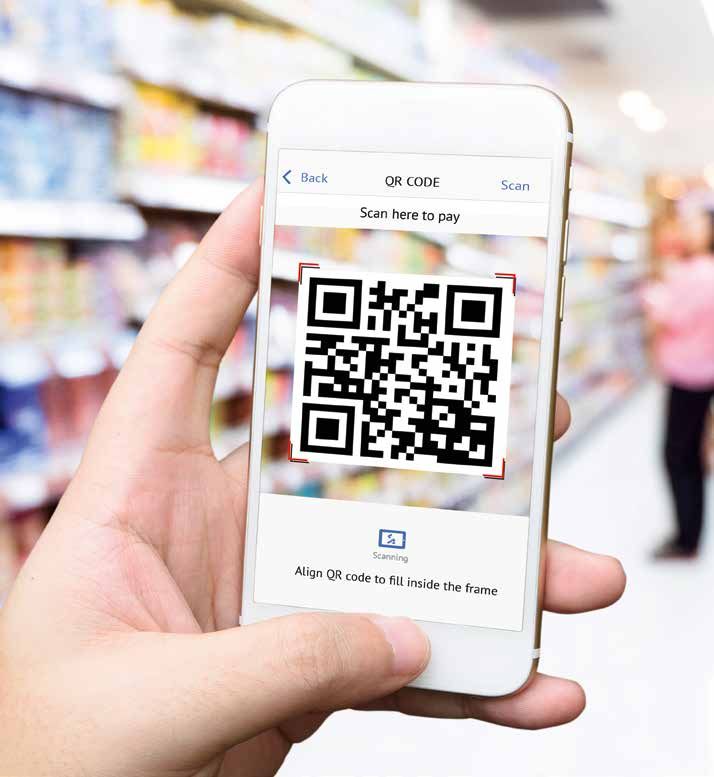
An in-depth and cross-industry analysis shows that fashion/
    accessories and consumer electronics/electrical appliances
    currently play a leading role in terms of absolute turnover
    and that the remaining sectors dominate the digital world.
    Going forward, however, the food, DIY and garden/living/
    furnishing sectors will show the strongest growth.

    Parallel to the increasing growth of online trade, a significant
    decline in the number of points of sale can be seen. The
    assumption that online trading exerts an influence on the
    structure of stationary trading would thus appear to be con-
    firmed to a certain extent. In the period from 2010 to 2017
    there were over 100,000 shop closures in Germany. It is inte-
    resting to note, however, that there are individual niches in
    which small-scale specialist retailers and franchise concepts
    are in part resisting the trend of businesses closing down.

    Number of points of sale (development of absolute figures) *

4   * Source: IFH Köln GmbH study ‘The Status Quo of the Retail Sector in Germany’, 2018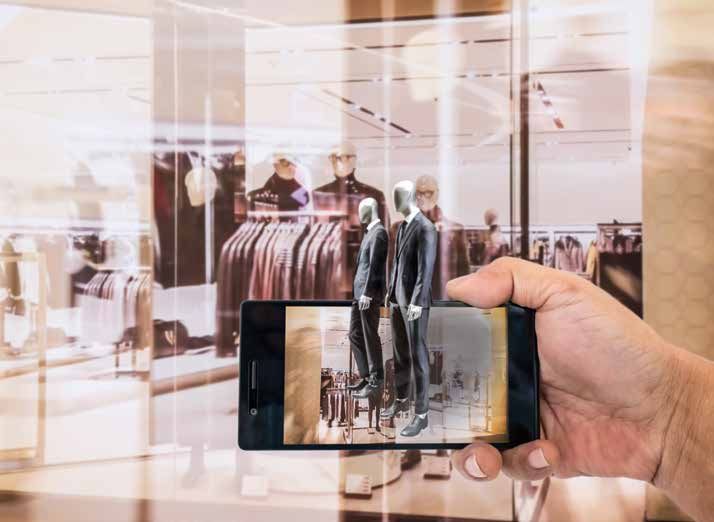
How does online business change
consumer behaviour?
It is undisputed that online trade contributes significantly                           It can be assumed that a comparable effect can also be
to the erosion of the specialist trade landscape. However,                             achieved if shopping facilities are available in the vicinity
the question arises as to what motivates customers to support                          of the customer‘s home. Here, too, customers experience
the shift to online trading and strengthen it, whether consci-                         their desired time savings along with the simplicity and
ously or unconsciously? For the modern customer who likes                              speed that consumers are accustomed to experiencing on
using the Internet, there are three main reasons why they allow                        the Internet in this day and age. By way of comparison,
their shopping experience to take place in the digital world:                          the targeted concentration of shopping opportunities that
                                                                                       are found in e.g. shopping centres are used less frequently.
                                                                                       An additional challenge for the retail trade that arises from
Change in purchasing frequency in per cent *                                           consumer behaviour is the change in the sense of entitlement
                                                                                       and a change in consumer expectations. It is apparent that
                                                                                       young demographic groups such as the ‘Smart Natives’
                                                                                       place much higher demands on companies and their services.
                                                                                       The factors of information, variety and availability as well as
                                                                                       shopping experience and advice have considerable leverage
                                                                                       on the decision as to whether customers visit stationary
                                                                                       retailers or not. These are typical aspects that, due to the
                                                                                       ubiquitous access to avoidable shopping and product worlds
                                                                                       on the Internet, place even higher expectations on the retailer/
                                                                                       specialist retailer.

                                                                                       Level of aspiration for stationary purchases in per cent *

   1. Delivery service: customers can get their needs met
   regardless of time and place. It is the responsibility of
   the online provider to make the products and services
   available where the customer needs them.

   2. Time savings: in the world of stationary retail, local
   conditions per se assume that the customer is prepared
   to make the journey to the stationary retailer for the
   shopping experience. In the digital world, on the other
   hand, the customer saves the journey and the time                                   This could lead to the impression that online trading should
   associated with it.                                                                 only be perceived as negative. However, retail in the digital
                                                                                       world is not an exclusive substitute for stationary retail. In
   3. Simplicity and speed: an aspect very closely linked                              many cases, digital merchants open up markets that were
   to the time savings is the speed at which a customer                                previously not at all accessible or only accessible after
   can place an order in today‘s digital world. In just a                              overcoming extreme hurdles. Online trading is able to com-
   few mouse clicks, customers can navigate intuitively                                pensate for regional disparities and gaps in supply thanks
   from the product portfolio to the shopping basket to                                to its ubiquitous nature. However, there remains a minor
   a completed order process.                                                          disadvantage in this respect too. The already low demand in
                                                                                       stationary retailing in less densely populated regions is even
                                                                                       lower than has been the case to date.

* Source: IFH Köln GmbH study ‘The Status Quo of the Retail Sector in Germany’, 2018                                                                      5
THE DEVELOPMENT OF TRADE –
    A PERSPECTIVE UNTIL 2025

    Germany benefits from a stable economy                           Three scenarios for the development
    and development in consumer spending                             of online trade
    The most important influencing factor here is the economic       Assuming that the growth gap between retail spending and
    development in relation to private consumer spending. After      consumer spending does not widen any further, there are
    GDP exceeded the three per cent mark again, the German           three possible scenarios when it comes to the sales develop-
    economy continues to grow. Since German consumers show           ment of the stationary retail trade.
    little evidence of being influenced by international political
    and economic crises when it comes to consumption, the
    forecast for private consumption shows an average growth         Growth in trade in the digital world
    rate of 2 per cent. The growth rate of the retail sector will
    therefore also be strengthened in the future, with consu-        One assumption is that the growth momentum of online
    mers not only investing in meeting their basic needs, but        trading will remain high. This is the case when providers in
    also placing a high value on consumption as an emotional         the online sector present strong, innovative drivers that are
    experience.                                                      accepted by consumers. At the same time, stationary pro-
                                                                     viders are not exploiting their opportunities and possibilities
    The continuing double-digit annual growth rates for online       in terms of generating new impetus. Thus significantly more
    trade show that there is also no end in sight to this develop-   and older consumers are starting to use online shopping.
    ment in the digital world. Online sales will continue to rise
    and thus endanger those of stationary retailers. In addition,    The balance between the digital world
    the development of the respective markets and industries         and stationary trade
    and the decline in the importance of the specialist trade also
    have an influence on the development of stationary sales.        Based on the fact that we repeatedly see innovative providers
                                                                     providing impetus on the part of both online and stationary
                                                                     retailers, a balanced picture emerges for the future of online
                                                                     and offline sales. By linking the channels, cross-channel
                                                                     services (e.g. Click & Collect) can help providers to increase
                                                                     stationary purchases. The use of smartphones and mobile
                                                                     commerce should support online shopping and stationa-
                                                                     ry shopping. Ultimately, this growth dynamic in the digital
                                                                     world is also supported by generational development, whe-
                                                                     reby new groups of buyers continue to be acquired.
                                                                     As people grow older, online shopping increasingly
                                                                     becomes a matter in terms of consumer habits.

                                                                     Digital opportunities invigorate
                                                                     stationary trade
                                                                     If new impetus from the stationary retail trade meets little
                                                                     impetus from online retail trade, a further variation of the
                                                                     future sales development of online commerce becomes
                                                                     apparent. More stationary purchases are achieved through
                                                                     cross-channel services and smartphones. Since hardly any
                                                                     new online shoppers are being acquired, online buying
                                                                     intensity is increasing only slightly here.

6
SOLUTIONS FOR THE RETAIL SECTOR

For many retailers, the time has come to rethink
their business concepts as part of the march of
digitalisation. Here, it is not only new services
and high-quality design in terms of shop cons-
truction that needs to convince, but individual
multi-channel concepts that can help withstand
the pressure of online competition also need to
be introduced. However, the individuality of the
trader must not be lost in the process. Offline and
online offerings should therefore go hand in hand.

An increasing number of stationary retailers are reinventing
themselves, and it is local department stores managed by
their owners in particular that are making their mark here.
Modifications to the shop design are intended to appeal
to young and affluent consumers. Conversely, this means
that there is a risk of alienating older customer groups who
grew up with traditional department stores. In an era whose
hallmark is technological progress, however, many people
are known to yearn for personal encounters and special
experiences, and they should be able to rediscover these in
modern store concepts.

In addition to innovative shop fittings, consumers in the sta-   However, multi-channel concepts can also combine the
tionary retail sector should also experience improved service.   advantages of stationary trading with the advantages of the
Customer events, gastronomic offerings and services such         online world. Innovative retailers have recognised this
as personal shoppers increase retailers’ revenues, which are     opportunity and present their products in digital shop win-
in turn invested in further attractive customer campaigns.       dows. This enables passers-by to browse through product
This shows that only those who invest in existing store          ranges and discover items on the spot via a digital display.
concepts, events and services can survive under the pressure     A smartphone can then be used to scan a QR code, which
of online trade.                                                 in turn links back to a mobile shop and allows customers
                                                                 to complete their purchases right there and then. The shop
                                                                 window and the online shop thus combine to form a 24/7
                                                                 shopping experience.

                                                                 The development of online retailers who supplement their
                                                                 online platforms with stationary sales outlets is also interes-
                                                                 ting. This primarily involves the interlocking of online and
                                                                 stationary retail to create an omnipresent purchase offer that
                                                                 is available around the clock. The challenge for retailers is to
                                                                 create ecosystems in which customers, brands and products
                                                                 can communicate with each other. This ensures that consu-
                                                                 mers have access to an authentic world of experience that a
                                                                 purely online platform could never provide. The stores can
                                                                 also be used for personal consultations and local events that
                                                                 arouse emotions and build trust.

                                                                                                                                    7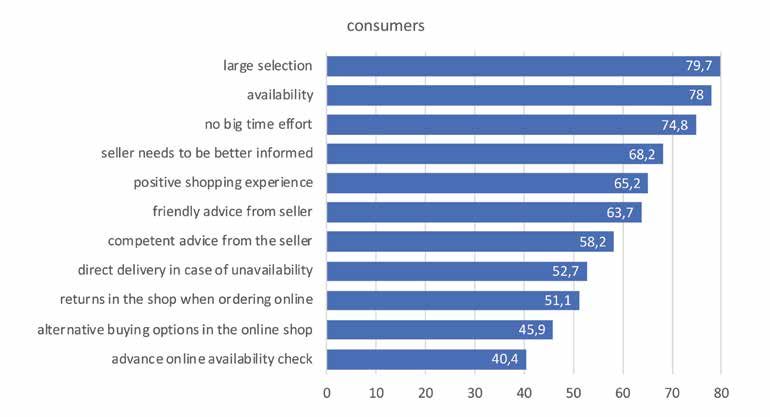
INTERVIEW WITH BORIS HEDDE
    The stationary retail trade today must be more                        What can or must the trader, whether department store
    than just a point of sale, because shopping needs                     or specialist retailer, pay attention to today in order to
    to become more and more of an experience for                          be competitive?
    the customer. Traders must therefore differentiate                    The customer holds all the power. Understand them and
    themselves from the masses and counter their                          their behaviour and you‘ll understand how to serve them
    competitors’ online trading offer. The study ‘The                     better. The strategy of product range diversity can no longer
    Status Quo of Retailing in Germany’ by the IFH                        be a purely stationary one. A wide range of products can be
    Institute in Cologne, which was commissioned                          found on the net. It is therefore important to consider other
    exclusively for Messe Frankfurt‘s consumer goods                      aspects. It is on the one hand about convenience, where the
    fairs, answers the relevant questions and highlights                  focus is on process transparency, simplification and service
    opportunities for development. Boris Hedde,                           – all in the name of convenience. However, on the other
    Managing Director of IFH Köln GmbH, answers                           hand, it is also about the shopping experience. The focus
    further questions.                                                    here is on the themes of inspiration, involvement, emotio-
                                                                          nalisation and local ties. Pulling all these elements together
                                                                          in the correct way, tailor-made for the target group, will be
    As an experienced trade researcher, what was the most                 crucial for long-term success.
    surprising result of this study for you?
    In the often subjective discussion about the importance of            What are your conclusions about the industries
    digitalisation and the future of retail, the current study makes it   involved in consumer goods trade fairs?
    possible to support our gut feelings with numbers. For me, the        We have seen in the study that it is particularly small specialist
    decisive finding here was that the retail sector as a whole has       trades that are affected by these developments. It has also
    experienced growth thanks to a boost from increased consumer          become apparent that products ranges in inner cities in
    spending, particularly in the last three years, and this applies      particular have been exhibiting declining growth rates. The
    to both online and offline business. This runs contrary to the        smaller the retail formats, the greater the reduction process.
    forecasts that applied a few years ago. Only in the case of small-    This is important for consumer goods fairs because their
    scale retailers is the time window for adapting to developments       visitors are wholesalers, online retailers, distance sellers and
    in digitalisation bigger than the forecast in 2014. Despite           also smaller specialist retailers. Based on the tradition and
    this, if we look at the forecasts in the study, there is ever in-     verifiable relevance of the trade fairs for the trading world
    creasing pressure to take action. The industry would be well          that is dominated by SMEs, there is great potential to offer
    advised to step up its efforts in the context of digitalisation.      support. This is because, as a point of contact for information
                                                                          and as a networking platform, trade fairs can take on new
                                                                          functions and offer participants new added value.
    In your study you talk a lot about online/offline compe-
    tition. What does the future look like in this respect?               What can trade fairs do to support trade and
    Is online trading the enemy of stationary trading or are              how can traders benefit from trade fairs?
    there completely new developments?                                    Similar to the development that we see in the overall retail
    At a time when consumer behaviour must be the strategic               market, the focus will no longer be limited to the breadth
    guideline, it is important to take consumer cross-channel be-         of products. Rather, the aim is to make visitors to the trade
    haviour into account. It is necessary to become aware of the          fairs aware of the strategies with which to counter structural
    strategy with which one can participate in the development.           change. On the one hand, we have social megatrends as
    The advancement of online platforms means that providers              strategic starting points, but
    are not only faced with the question of whether they need a           on the other hand digitalisa-
    strategy with their own online shop and what it might look            tion in general and at the POS
    like. Much more pertinent is to examine how customers can be          have to be addressed in order
    reached digitally and at the same time be guided into visiting        to show trade fair visitors,
    the stationary shop. Growth may also be possible through              who include predominantly
    the strategic use of sales platforms. There is a broad spectrum       SMEs, options they can use
    of options, which means an analysis of the competition with           to secure their future.
    a focus on online/offline is not sufficient. The consumer is
    demonstrably becoming more comfortable. As a result, even
    stationary locations are now much more in competition with
    each other. This development is challenging for all providers,                                Boris Hedde,
    but it does also offer space for new cooperation strategies.           Managing Director of IFH Köln GmbH

8
WITH TRADITION FOR THE FUTURE
Messe Frankfurt – world trade
with tradition
Due to its favourable geographical location, known
to be at the crossroads of important long-distance
trading routes, the first trade fairs in Frankfurt were
established in the early Middle Ages. Many people
from different countries came to Frankfurt to trade in
various goods such as wine, cloths, furs, metal and
spices. Visits to trade fairs in the Middle Ages alrea-
dy served the purpose of allowing people to see and
touch new products and to haggle and have face-to-
face discussions with international dealers. At that
time, merchants tended to visit Frankfurt in the spring
and autumn, thus laying the foundation for the basic
scheduling structure of modern consumer goods fairs
even as early as the 14th century. A tradition that has
been maintained to the present day while also incor-
porating the most modern aspects of trading.
Consumer goods fairs are important for
the retail trade
When it comes to presenting innovations and new
developments to a broad audience, trade fairs are of
high priority for companies. Trade fairs offer an excel-
lent platform to present products and give them the
attention they deserve. Over the course of time, trade
fairs have undergone some changes. This is due to the
fact that in the digital age, many marketing methods
such as the presentation of the product portfolio, the
customer approach or customer interaction have been
shifted to the Internet.
Trade fairs offer solutions to the issues
faced by stationary trade
As can be deduced from the developments described
above, retailers today face the daily challenges of
arousing desire and creating incentives to buy. Con-
sumer goods fairs can provide innovative and novel
concepts that aim to develop new shopping experien-
ces in stationary retail. Trade fairs, for example, offer
innovative concept solutions for the point of sale and
present business models that are characterised by
experiences. Platforms and special shows reveal how
retailers can transform their own businesses into a
concept store. Lectures and workshops provide exci-
ting practise-based insights and highlight best-practi-
ce models and lifestyle trends that visitors can transfer
to their own corporate world.
9Background information on Messe Frankfurt
Messe Frankfurt is the world’s largest trade fair, congress and event organiser with its own exhibition grounds. With more
than 2,500* employees at 30 locations, the company generates annual sales of around €715* million. Thanks to its far-rea-
ching ties with the relevant sectors and to its international sales network, the Group looks after the business interests of
its customers effectively. A comprehensive range of services – both onsite and online – ensures that customers worldwide
enjoy consistently high quality and flexibility when planning, organising and running their events. The wide range of ser-
vices includes renting exhibition grounds, trade fair construction and marketing, personnel and food services.
With its headquarters in Frankfurt am Main, the company is owned by the City of Frankfurt (60 percent) and the State
of Hesse (40 percent). For more information, please visit our website at: www.messefrankfurt.com
* Preliminary figures for (2018)
Kontakt: IFH Köln GmbH Kontakt: Press office Ambiente Tendence
Dürener Straße 401 b Tel.: +49 69 75 75 - 6076
D-50858 Köln E-Mail: presse.ambiente@messefrankfurt.com
Tel.: +49 (0) 221 943607-0 www.ambiente.messefrankfurt.com
www.tendence.messefrankfurt.com
Kontakt: Press office Heimtextil Kontakt: Press office Christmasworld Paperworld
Tel.: +49 (0)69 75 75 – 6520 Tel.: +49 69 75 75 - 6394
E-Mail: presse.textil@messefrankfurt.com E-Mail: press.christmasworld@messefrankfurt.com
www.heimtextil.messefrankfurt.com press.paperworld@messefrankfurt.com
www.christmasworld.messefrankfurt.com
www.paperworld.messefrankfurt.com
Publisher: Messe Frankfurt Exhibition GmbH
Ludwig-Erhard-Anlage 1
60327 Frankfurt am Main
Messe Frankfurt Exhibition GmbH
Legal responsibility: Thimo Schwenzfeier,
Heimtextil Press Spokesman
Layout: BAUM & GARTEN GmbH
© Heimtextil, Messe Frankfurt Exhibition GmbH, 2019You can also read


