For FUTURE VISIONS Neuroprotection Neuroanesthesia & Neurorehabilitation - Safar Center for Resuscitation Research
←
→
Page content transcription
If your browser does not render page correctly, please read the page content below

18th Annual Safar Symposium

for
FUTURE VISIONS
          Neuroprotection
        Neuroanesthesia &
        Neurorehabilitation

                   40th Peter and Eva Safar Lecture
                   for the Sciences and Humanities
                   Ed Boyden, PhD
                   Massachusetts Institute of Technology

                   Tools for analyzing and
                   repairing the brain
    Wednesday May 19, 2021 | 8 am to 4:30 pm | Virtual
    Thursday May 20, 2021 | 9 am to 12:30 pm | Virtual
Schedule of Events
Wednesday, May 19, 2021
 Future Visions for Neuroprotection, Neuroanesthesia & Neurorehabilitation
    8
     am-11:30 am      Scientific lectures
 11:30 am
			Awards presentation
		12 pm-1 pm          40th Peter & Eva Safar Annual Lectureship
			                   in Medical Sciences and Humanities

                Multi-Departmental Trainees’ Research Day
 2 pm-3:45 pm
			                   Trainees’ abstract presentations
         4:00 pm
        		            Awards presentation

Thursday, May 20, 2021
                    WISER Simulation Lecture Session:
              Challenges in Maintaining Simulation Excellence
       		 pm
    9 am-12:30        Simulation presentations

      Safar Symposium Planning Committee
The 18th Annual Safar Symposium is hosted by Patrick M. Kochanek,
MD, MCCM, director of the Safar Center for Resuscitation Research,
and Aman Mahajan, MD, PhD, MBA, chair of the Department of
Anesthesiology and Perioperative Medicine. Committee members are:

         Christa Brown, MA                    Patrick M. Kochanek, MD
   Clifton W. Callaway, MD, PhD             John O’Donnell, DrPH, CRNA
        Robert S.B. Clark, MD                  Paul E. Phrampus, MD
       C. Edward Dixon, PhD                     Amy K. Wagner, MD
       Anthony E. Kline, PhD                         Yan Xu, PhD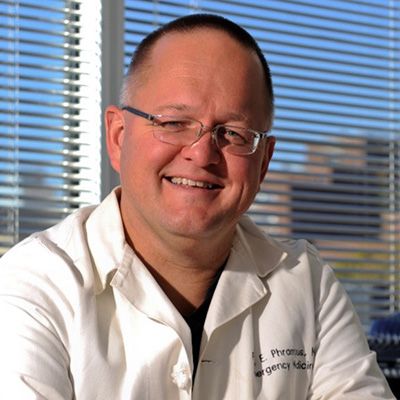
Peter & Eva Safar Lectureship
The lectureship honors the late Peter Safar,
MD, and his wife Eva for their professional
and personal contribution to the scientific
community. His pioneering efforts and
accomplishments in emergency medicine,
critical care medicine, resuscitation research, and
disaster re-animatology have saved countless
lives and gained international recognition.
In 1961, Peter founded and served as chair of the
Department of Anesthesiology and Critical Care
Medicine of the University of Pittsburgh School
of Medicine, where he was the Distinguished
Professor of Resuscitation Medicine for 24 years.
He founded and served as the director of the
International Resuscitation Research Center at the University of Pittsburgh. In
recognition of Peter Safar’s contributions to the field of resuscitation science,
the Center was renamed the Safar Center for Resuscitation Research by his
successor. In 1980, the Peter and Eva Safar Lectureship was established by
Peter M. Winter, MD, chair of the Department of Anesthesiology and Critical
Care Medicine from 1979 to 1996.

                                Past Lecturers                   *Nobel Prize winners
1st
        John J. Bonica, MD                21st
                                                  John B. Anderson
2nd     John W. Severinghaus, MD          22nd    Michal Schwartz, PhD
3rd     Nicholas M. Green, MD             23rd    Lyn Yaffe, MD
4th     *Hans A. Bethe, PhD               24th    Edward Lowenstein, MD
5th     James E. Eckenhoff, MD            25th    James C. Grotta, MD
6th     Victor F. Weisskopf, PhD          26th    Anthony Atala, MD
7th     Otto K. Mayrhofer, MD             27th    David M. Gaba, MD
8th     Ake N. Grenvik, MD, PhD           28th    John W. Olney, MD
9th     Edmond I. Eger II, MD             29th    Fritz Sterz, MD
10th    Freeman J. Dyson                  30th    Frank Shann, MD
11th    John Francis Nunn, MB, ChB, PhD   31st    Hugo Van Aken, MD, PhD, FRCA
12th    Thomas Fredric Hornbein, MD       32nd    Gabriel G. Haddad, MD
13th    Yung Shieh, MD                    33rd    John T. Povlishock, PhD
14th    John G. Wade, MD                  34th    Gerald F. Gebhart, PhD
15th    S. William A. Gunn, MD, MS        35th    Hans Friberg, MD, PhD
16th    Henrik H. Bendixen, MD            36th    J. Marc Simard, MD, PhD
17th    Marcus E. Raichle, MD             37th    Donna M. Ferriero, MS, MSC
18th    Donald P. Wolf, PhD               38th    Lewis S. Nelson, MD
19th    *Bernard Lown, MD                 39th    David G. Nichols, MD, MBA
20th    Bo Siesjö, MD, PhD                40th    Ed Boyden, PhD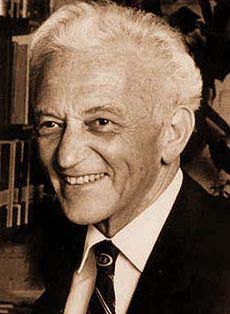
Program: Wednesday, May 19
 Future Visions for Neuroprotection, Neuroanesthesia & Neurorehabilitation

Moderators:     Clifton W. Callaway, MD, PhD
                Professor and Executive Vice Chair, Department of
                Emergency Medicine
                Ronald D. Stewart Endowed Chair of Emergency
                Medicine Research, University of Pittsburgh
                Ericka Fink, MD, MS, FCCM
                Associate Professor, Critical Care Medicine, Pediatrics,
                and Clinical and Translational Science
                UPMC Children’s Hospital of Pittsburgh

8:00 – 8:15     Opening Comments
                Patrick M. Kochanek, MD, MCCM
                Grenvik Professor and Vice Chair
                Department of Critical Care Medicine
                Director, Safar Center for Resuscitation Research
                University of Pittsburgh School of Medicine

8:15 – 8:35     Mark E. Schurdak, PhD
                Director of Operations, University of Pittsburgh Drug
                Discovery Institute
                Associate Professor, Computational and Systems
                Biology, University of Pittsburgh
                Application of Quantitative Systems Pharmacology to
                Identify Novel Targets and Therapeutic Approaches
                for Traumatic Brain Injury
8:35 – 8:45     DISCUSSION

8:45 – 9:05     Emanuela Keller, MD
                Professor of Medicine, Intensive Care and Emergency
                Medicine, Neurocritical Care
                University Hospital of Zurich, Switzerland
                Future Visions for Neuromonitoring in
                Neurocritical Care
9:05 – 9:15     DISCUSSION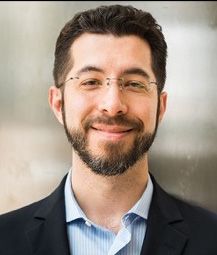
9:15 – 9:35     Jonathan Elmer, MD, MS
                Assistant Professor, Emergency Medicine, Critical Care
                Medicine, and Neurology
                University of Pittsburgh School of Medicine
                Big Data and Continuous EEG Monitoring after
                Cardiac Arrest
9:35 – 9:45     DISCUSSION

9:45 – 10:00    BREAK #1
10:00 – 10:20   Sapna R. Kudchadkar, MD, PhD, FCCM
                Associate Professor, Anesthesiology and Critical Care
                Medicine, Pediatrics, and PM&R
                Associate Vice Chair for Research
                Johns Hopkins University School of Medicine
                The Future for Rehabilitation in Neurocritical Care
10:20 – 10:30   DISCUSSION
10:30 – 10:50   Neil Munjal, MD
                NIH T32 Post-Doctoral Scholar, Pediatric Critical Care
                Medicine, UPMC Children’s Hospital of Pittsburgh
                Machine Learning Predicting Mortality and Morbidity
                in Children with Neurological Injury in the Pediatric
                Intensive Care Unit
10:50 – 11:00   DISCUSSION
11:00 – 11:20   Adam R. Ferguson, MS, PhD
                Director of Data Science Brain and Spinal Injury Center
                Associate Professor, Department of Neurological
                Surgery, Weill Institute for Neuroscience
                University of California, San Francisco
                Leveraging Data Science for Discovery and
                Translation in Traumatic Brain Injury
11:20 – 11:30   DISCUSSION
11:30 – 11:45   Patrick M. Kochanek, MD, MCCM
                Presentation of the:
                  Nancy Caroline Fellow Award
                  S. William Stezoski Award for Technician Excellence
                Morning Session Closing Remarks
11:45 – 12:00   BREAK #2

40th Peter & Eva Safar Annual Lectureship in Medical Sciences & Humanities

12:00 – 1:00    Ed Boyden, PhD
                Professor, Brain and Cognitive Sciences, Media Arts
                and Sciences, and Biological Engineering
                Massachusetts Institute of Technology
                Y. Eva Tan Professor in Neurotechnology
                McGovern Institute and HHMI
                Tools for Analyzing and Repairing the Brain
1:00 – 2:00     LUNCH BREAK

                Multi-Departmental Trainees’ Research Day

2:00 – 2:05     Opening Comments
                Patrick M. Kochanek, MD, MCCM
                Grenvik Professor and Vice Chair
                Department of Critical Care Medicine
                Director, Safar Center for Resuscitation Research
                University of Pittsburgh School of Medicine
2:05 – 2:15     Move to Breakout Rooms
2:15 – 3:45     Trainee Presentations
4:00            Patrick M. Kochanek, MD, MCCM
                Presentation of Awards
Symposium Speaker Profiles
Ed Boyden, PhD
Dr. Ed Boyden leads the Synthetic Neurobiology
Group, which develops tools for analyzing and repairing
complex biological systems—such as the brain—and
applies the tools systematically to reveal ground truth
principles of biological function as well as to repair these
systems.
He uses technologies that include expansion microscopy,
which enables complex biological systems to be imaged with nanoscale
precision; optogenetic tools, which enable the activation and silencing
of neural activity with light; and robotic methods for directed evolution
that are yielding new synthetic biology reagents for dynamic imaging
of physiological signals, such as neural voltage. He also uses novel
methods of noninvasive focal brain stimulation along with new methods
of nanofabrication that use shrinking of patterned materials to create
nanostructures with ordinary lab equipment.
Dr. Boyden is co-director of the MIT Center for Neurobiological Engineering
that aims to develop new tools to accelerate neuroscience progress. He has
given TED talks, delivered lectures at the World Economic Forum, and co-
founded four startup companies.
A 2018 Investigator of the Howard Hughes Medical Institute, he has
received numerous awards and recognitions for his groundbreaking work.
In 2019 alone, he was elected a member of the National Academy of
Sciences and received the Croonian Medal, the Lennart Nilsson Award, the
Warren Alpert Foundation Prize, and the Rumford Prize.
His brain-science related awards include the Canada Gairdner International
Award, the Breakthrough Prize in Life Sciences, the BBVA Foundation
Frontiers of Knowledge Award, the Carnegie Prize in Mind and Brain
Sciences, the Jacob Heskel Gabbay Award, and the Grete Lundbeck Brain
Prize.
Earlier in his career, he was the recipient of the NIH Director’s Pioneer
Award, received the NIH Director’s Transformative Research Award on
three occasions, and the Perl/UNC Neuroscience Prize. He was named to
the World Economic Forum Young Scientist list and to the Technology
Review World’s “Top 35 Innovators under Age 35” list in 2006. He is also
an elected member of the American Academy of Arts and Sciences, theNational Academy of Inventors, and the American Institute for Medical and
Biological Engineering.
Dr. Boyden received his PhD in neurosciences from Stanford University as a
Hertz Fellow. He discovered that the molecular mechanisms used to store
a memory are determined by the content to be learned. In parallel to his
PhD, he co-invented optogenetic control of neurons, which is now used
throughout neuroscience.
Starting college at age 14, he studied chemistry at the Texas Academy of
Math and Science at the University of North Texas, where he worked on
origins of life chemistry. At MIT he graduate at 19 with three degrees in
electrical engineering, computer science, and physics while working on
quantum computing in Neil Gershenfeld’s group. He has contributed to
over 160 peer-reviewed papers and 190 granted patents and has given
over 500 invited talks on his group’s work.
Long-term, Dr. Boyden hopes that his work on understanding how the
brain generates the mind will help provide a deeper understanding of the
human condition. And perhaps, in the future, help humanity achieve a
more enlightened state.
Jonathan Elmer, MD, MS
Dr. Jonathan Elmer is assistant professor of Emergency
Medicine, Critical Care Medicine and Neurology at
the University of Pittsburgh School of Medicine. His
research focuses on improving outcomes of cardiac
arrest survivors. Dr. Elmer’s work centers on knowledge
creation in three domains: elucidating the effect of
neurocritical care and its delivery systems on patient
outcomes; advancing the science of neurological
prognostication and post-arrest risk stratification; and developing
robust methods for analysis of continuous, correlated physiological and
electroencephalographic data. Clinically, he attends in the neurovascular
and neurotrauma intensive care units and on the Post-Cardiac Arrest
Service at UPMC Presbyterian Hospital.Adam R. Ferguson, MS, PhD
Dr. Adam Ferguson is an associate professor in the Brain
and Spinal Injury Center at the University of California
San Francisco and the Zuckerberg San Francisco General
Hospital, and jointly appointed principal investigator at
the San Francisco VA Healthcare System. His interests
span basic neuroscience to large-scale clinical data
science and precision medicine. He directs a translational
data-science research team as well as a bench-based
neuroscience laboratory focused on neurotrauma. Dr. Ferguson serves
as founding principal investigator and co-director of multicenter cloud-
based open data commons efforts for spinal cord injury (odc-sci.org)
and traumatic brain injury (odc-tbi.org). He also serves as principal data
scientist in the VA Gordon Mansfield Spinal Cord Injury Consortium, a
federated translational modeling project; and is a core member of large-
scale clinical precision medicine research projects known as Transforming
Research And Clinical Knowledge for TBI (TRACK-TBI) and SCI (TRACK-SCI).
Together these data assets of more than 10,000 individuals represent
multiple species tracked on over 20,000 biological/clinical variables +
genomics + high-resolution imaging. He has substantial experience
leveraging cloud technologies for neuroscience data management and
analytics to support new discoveries in both basic neurobiology and
clinical science. He has authored over 150 peer-reviewed papers and has
served as PI on numerous federal grants and awards.
Emanuela Keller, MD
Dr. Emanuela Keller is an associate professor for
intensive care at the University of Zurich, where she
heads the Neurointensive Care Unit at the University
Hospital of Zurich. After graduating from the University
of Zurich, she undertook research fellowships at the
Institute of Physiology University of Zurich and later on
in cardiology at Hammersmith Hospital London. She
completed her clinical training in internal medicine and
intensive care medicine in Zurich. After another research fellowship at the
neurocritical care unit of the Department of Neurology at the Heidelberg
University Hospital, Dr. Keller worked to extend and professionalize the
neurosurgical intensive care unit at University Hospital Zurich. In 2015
and 2018, Dr. Keller participated in the fellowships ELAM (Executive
Leadership in Academic Medicine) at Drexel University and in the ClinicalInformatics Board Review Course of the American Medical Informatics
Association for training in academic leadership and health informatics. Her
research is focused on new methods to estimate cerebral hemodynamics
and oxygenation by applying optical spectroscopy and clinical research
informatics. This work has resulted in numerous publications and
lectures as well as more than US$7 million third-party funding during her
academic career. She has received several patents for her inventions, and
founded a spin-off company for the industrialization of newly invented
neuromonitoring devices, which was awarded the EUREKA Innovation
Award by the European Union in 2016.
Sapna Kudchadkar, MD, PhD, FCCM
Dr. Sapna Kudchadkar is an associate professor of
Anesthesiology and Critical Care Medicine, Pediatrics,
and Physical Medicine and Rehabilitation at the Johns
Hopkins Hospital. She received her BA in Biochemistry
and French at Washington University and MD at the
University of Chicago. She completed residencies in
Pediatrics and Anesthesiology, followed by fellowships
in Pediatric Critical Care and Pediatric Anesthesiology
at Johns Hopkins. After clinical training, she completed a PhD in Clinical
Investigation at the Johns Hopkins University Bloomberg School of Public
Health where she was awarded the Sommer Scholar Award for PhD
candidates who “exemplify scientific excellence, energy, ambition, political
acumen and a determination to change the world” through public health
research. Her clinical and research focus is functional outcomes after
pediatric critical illness and major surgery and the interplay of sedation
optimization, sleep promotion, delirium prevention, and early mobilization
in pediatric ICU care. She is the founder and director of the Johns Hopkins
PICU Up! Program, which has been implemented in pediatric ICUs
internationally. Dr. Kudchadkar is the lead PI for the Prevalence of Acute
Rehabilitation for Kids in the PICU (PARK-PICU) study, which includes more
than 200 international sites. At Johns Hopkins, is the associate vice chair for
Research in Anesthesiology and CCM and the director of Pediatric Critical
Care Research. She is a senior associate editor of the journal Pediatric
Critical Care Medicine.Neil Munjal, MD
Dr. Neil Munjal is a dual-trained pediatric intensivist
and child neurologist and is currently completing an
NIH T32 post-doctoral scholarship at the Safar Center for
Resuscitation Research at the University of Pittsburgh.
With a background in computer science, Dr. Munjal’s
clinical interest is in the applications of machine learning
to ICU medicine, specifically high-resolution predictive
modeling, decision support, and causal inference.
Mark E. Schurdak, PhD
Dr. Mark Schurdak is director of Operations at the
University of Pittsburgh Drug Discovery Institute (UPDDI),
and associate professor of Computational and Systems
Biology. He has a PhD in pharmacology from Baylor
College of Medicine, and over 20 years of experience in
the development and implementation of assays for high-
throughput screening (HTS), high-content screening,
and hit-to-lead (HtL) campaigns in the biotech and large
pharmaceutical companies. While in the Neuroscience Department at
Abbott Laboratories, Dr. Schurdak led efforts to identify novel therapeutic
targets and drugs for pain management, developing and implementing
HTS and HtL screening campaign for numerous projects. Over the last
nine years at the UPDDI, he has been developing Quantitative Systems
Pharmacology (QSP), an approach to drug discovery that integrates
clinical, computational and experimental analyses to gain a comprehensive
understanding of disease pathology with which to inform effective
therapeutic approaches for disease management, and also has been
leading the application of QSP to neurodegenerative diseases including
Huntington’s Disease, Alzheimer’s Disease and traumatic brain injury.Program: Thursday, May 20
WISER Simulation Lecture Session:
Challenges in Maintaining Simulation Excellence
Moderators: Christa Brown, MA
Director, Educational Development, Winter Institute
for Simulation, Education and Research
University of Pittsburgh
John O’Donnell, DrPh, CRNA
Professor and Chair, Department of Nurse Anesthesia
Director, Nurse Anesthesia Program
University of Pittsburgh School of Nursing
Senior Associate Director, Winter Institute for
Simulation and Education Research
9:00 Welcome
Patrick M. Kochanek, MD, MCCM
Grenvik Professor and Vice Chair, Department of Critical
Care Medicine, Director, Safar Center for Resuscitation
Research, University of Pittsburgh School of Medicine
9:05 – 9:20 John O’Donnell, DrPh, CRNA
Professor and Chair, Department of Nurse Anesthesia
University of Pittsburgh
Getting WISER During a Pandemic
9:20 – 9:30 DISCUSSION
9:30 – 9:50 Joseph Liu, CHSE, MD
Associated Professor
Vice Director of Emergency Department
Peking Union Medical College Hospital, China
iTEACHER: Faculty Development Project on
Emergency Residency Training in China
9:50 – 10:00 DISCUSSION10:00 – 10:20 Usapan Surabenjawong, MD
Department of Emergency Medicine
Faculty of Medicine, Siriraj Hospital, Mahidol University
The COVID Challenges and the New Normal in Thai
Simulation
10:20 -10:30 DISCUSSION
10:30 – 10:45 BREAK
10:45 – 11:05 Janice C. Palaganas, PhD, APRN, ANEF, FNAP, FAAN, FSSH
Chief Executive Officer, The Institute for
Interprofessional Innovations
Assistant Professor of Anaesthesia, Massachusetts
General Hospital, Department of Anesthesia, Critical
Care, & Pain Medicine, Harvard Medical School
Whaddarya? Cultural Considerations in Simulation
and Interprofessional Education
11:05 – 11:15 DISCUSSION
11:15 – 11:35 Robert Armstrong, MS
Executive Director, Sentara Center for Simulation and
Immersive Learning, Eastern Virginia Medical School
Leaning into the Future
11:35 – 11:45 DISCUSSION
11:45 – 12:05 Jannet Lee-Jayaram, MD, CHSE
Associate Director, SimTiki Simulation Center
Assistant Professor of Pediatrics
University of Hawaii, John A Burns School of Medicine
Facilitator Training on Demand
12:05 – 12:15 DISCUSSION12:15 – 12:30 Morning Wrap Up / Highlights
Paul Phrampus, MD
Medical Director, Wolff Center at UPMC
Medical Director, Patient Safety for
UPMC Health System
Director, Winter Institute for Simulation, Education
and Research
Professor, Emergency Medicine and Anesthesiology
University of Pittsburgh and UPMC
Closing Comments
Patrick M. Kochanek, MD, MCCM
Grenvik Professor and Vice Chair
Department of Critical Care Medicine
Director, Safar Center for Resuscitation Research
University of Pittsburgh School of Medicine
Simulation Speaker Profiles
Robert Armstrong, MS
Robert Armstrong is passionate about leveraging
modeling and simulation technologies to improve
patient safety and outcomes. He serves as an assistant
professor within the School of Health Professions and as
executive director of the Sentara Center for Simulation
and Immersive Learning at Eastern Virginia Medical
School (EVMS) in Norfolk, Virginia. He is also the program
director for the National Center for Collaboration
in Medical Modeling and Simulation, and EVMS director of Corporate
Relations. Bob served as the president of the Society for Simulation in
Healthcare in 2020. He is a graduate of the U.S. Naval Academy and Naval
Postgraduate School, retiring from the U.S. Marine Corps as a Lieutenant
Colonel in 2005.Jannet Lee-Jayaram, MD, CHSE
Dr. Jannet Lee-Jayaram is the associate director
of the SimTiki Simulation Center at the University
of Hawaii John A Burns School of Medicine and a
Certified Healthcare Simulation Educator. She has been
teaching using simulation with Pediatric Advanced
Life Support since 2005, has designed and facilitated
pediatric simulation for medical students, residents and
interprofessional hospital staff both in the classroom
and in-situ. She worked with her director and staff to prepare SimTiki for
the Society for Simulation’s certification in research, teaching/education,
assessment, and fellowship programs. She is a course director for the
faculty simulation educational methods course, a facilitator internationally
and locally for faculty development courses, and is the associate director
for the international fellowship in simulation-based education at SimTiki. As
a learning community mentor for the medical school, Dr. Lee-Jayaram has
developed novel simulation curricula for the students, along with facilitator
training and faculty development for the faculty mentors. She is a pediatric
emergency medicine physician at the Kapiolani Medical Center for Women
and Children and is Chair of the Code Blue Committee and manages
quarterly in-situ mock codes.
Joseph Liu, MD, CHSE
Dr. Joseph Liu is an Emergency Medicine physician at
Peking Union Medical College Hospital (PUMCH), which
is one of the best hospitals in China. He is the assistant
director of the Emergency Department and directs the
Emergency Medicine residency training program. He is
also an associated professor of Peking Union Medical
College. Dr. Liu is the vice director of the Education
Department and the Simulation Training Center at
PUMCH. The American Heart Association training site, which is one
important parts of the simulation training center, was founded in 2009.John O’Donnell, DrPH, CRNA
Dr. John O’Donnell is professor and chair of the
Department of Nurse Anesthesia and has been director
of the Nurse Anesthesia Program at the University of
Pittsburgh for the past 27 years. He is also the senior
associate director of the Winter Institute for Simulation,
Education and Research (WISER), one of the best known,
fully accredited interprofessional simulation centers in
the world. Dr. O’Donnell was inducted as one of the first
CRNAs to be a fellow of the Society for Simulation in Healthcare in 2019
and was elected treasurer of this 4500-member interprofessional society in
2020. He has served in multiple positions on the State and National levels
of the AANA, was recently elected to the Board of Directors of the Council
on Accreditation of Nurse Education Program and was the AANA National
Program Director of the Year in 2006. He was honored with the University
of Pittsburgh Chancellor’s Distinguished Teaching Award in 2012 and
named Pittsburgh Magazine’s Nurse Educator of Year in 2017. Dr. O’Donnell
has more than 100 publications to his credit and has received more than
$3.5 million in research and training grants across his career. He is currently
working with a team of engineers on a new augmented reality simulator
called BodyExplorer™ and has formed Lumis Corp. in order to bring this
new device to market.
Janice Palaganas, BSN, MSN, PhD
Dr. Janice Palaganas is a simulationist, behavioral
scientist, humanitarian, patient safety advocate,
academician and clinician. She has held many roles over
the last two decades including clinical positions, hospital
and university administrator, educator, researcher,
mentor, and consultant. Her current affiliations are with
Massachusetts General Hospital (MGH) Institute of Health
Professions at Harvard Medical School in the Department
of Anesthesia, Critical Care, and Pain Medicine, and the Center for Medical
Simulation (CMS).
Dr. Palaganas has developed a passion in teamwork from her background
as an emergency nurse, trauma nurse practitioner, director of emergency
and critical care services, and faculty for schools of medicine, nursing,
allied health, management, and emergency medicine. As a behavioral
scientist and former clinician and administrator, her interest is centered
on healthcare simulation-based and practice-based simulation as aplatform for interprofessional education (IPE). She has served as a member
of the National Academy of Medicine’s (Institute of Medicine) report on
measuring the impact of IPE on practice. Her primary role is to develop
educators in an IPE setting. She has led many prominent instructor courses,
educating educators in simulation and IPE globally and has developed
many online environments including CMS’s interprofessional virtual
campus as the principal investigator of a Josiah Macy Jr. Foundation grant.
She has shaped the fields of simulation and IPE, led the development of
the Society for Simulation’s (SSH) Accreditation and Certification Program,
edited two textbooks in simulation, authored several chapters in simulation
and IPE, seminal articles and field-changing research including the national
study for high-stakes assessment using simulation.
In addition, she chairs the Credentialing Commission of SSH overseeing
Accreditation, Certification, Academy of Fellows, Dictionary, and Code
of Ethics. She is a fellow for the Academy of Nurse Educators, American
Academy of Nursing, National Academy of Practice and was part of the
inaugural group of the Academy of Fellows for Simulation in Healthcare.
She is co-podcaster on “DJ Simulationistas….’sup?” and “SimFails.” She has
been an invited keynote speaker and visiting professor in 30 countries and
directs the first PhD in Health Professions Education focused on Healthcare
Simulation at MGH.
Paul Phrampus, MD
Dr. Paul Phrampus is the director of the Peter M. Winter
Institute for Simulation, Education and Research (WISER).
He is a professor in the Departments of Emergency
Medicine and Anesthesiology of the University of
Pittsburgh School of Medicine. Dr. Phrampus is the
medical director for Patient Safety of the UPMC Health
System and is an active member of the Quality Patient
Care Committee of the UPMC Board of Directors. He
is a fellow of the Society for Simulation in Healthcare and a Certified
Professional in Patient Safety.
Dr. Phrampus has overseen the expansion of WISER capabilities by
developing a distributive management model for the WISER main campus
as well as the satellite centers deployed throughout the UPMC Health
System. He is a past president of the Society for Simulation in Healthcare
and a member of the University of Pittsburgh’s Academy of Master
Educators. He has been active in education for many years and wonnumerous awards as a faculty educator. He seeks to increase the efficiency
and effectiveness of learning and developing methods to improve the
safety and quality of healthcare delivery.
His international education endeavors have included academic institutions
and hospitals in Australia, Costa Rica, Chile, China, Germany, India,
Indonesia, Israel, Italy, Japan, Malaysia, Mexico, Norway, Philippines, Saudi
Arabia, South Korea, Singapore, and Thailand. He has extensive experience
with computer systems and electronics, interests that he developed during
his seven years of service in the United States Navy.
Usapan Surabenjawong, MD
Dr. Usapan Surabenjawong is an Emergency Medicine
physician at the Siriraj Hospital at Mahidol University
in Salaya, Thailand. In 2016, she was a research fellow
for simulation at WISER. She is the course director of
the integrating airway workshop and simulation-based
program for 5th and 6th year medical students and a
committee member of the Thai Simulation Society.The Safar Center for Resuscitation Research gratefully
acknowledges the support of our sponsors:
Dr. Ake N. Grenvik Endowed Chair in Critical Care Medicine
Department of Anesthesiology & Perioperative Medicine
Department of Critical Care Medicine
Department of Emergency Medicine
Department of Neurological Surgery
Department of Physical Medicine & Rehabilitation
University of Pittsburgh School of Medicine
UPMC
Peter M. Winter Institute for Simulation, Education and Research
www.Safar.Pitt.eduYou can also read


