(CIMP) Coláiste De Lacy Critical Incident Management Plan - Version 5A: 2020
←
→
Page content transcription
If your browser does not render page correctly, please read the page content below
Coláiste De Lacy
Critical Incident Management Plan
            (CIMP)
            Version 5A: 2020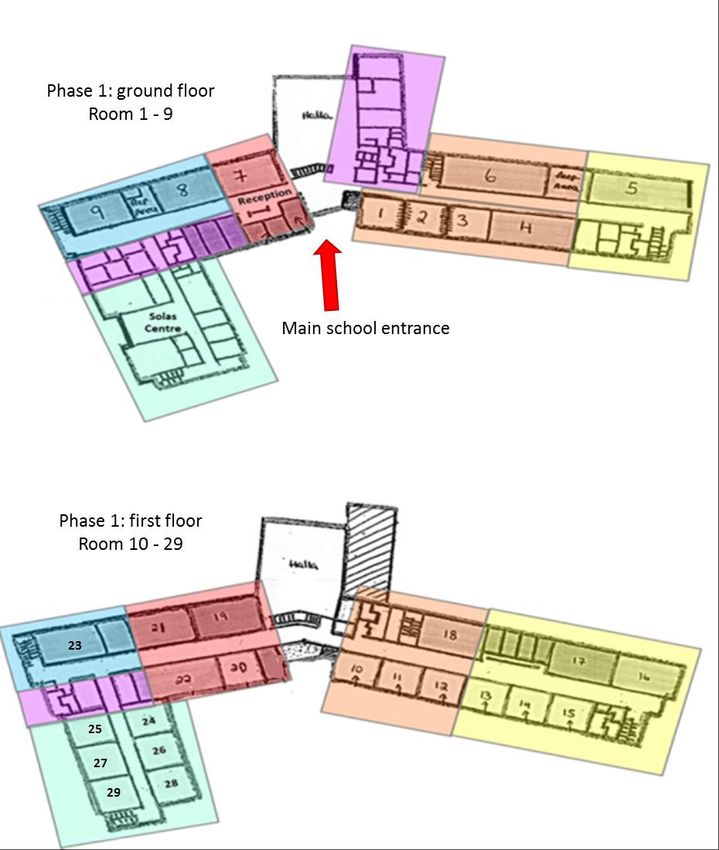
Introduction
Coláiste De Lacy aims to protect the wellbeing of its students and staff by providing a safe and
nurturing environment at all times. The Board of Management have drawn up this Critical
Incident Management Plan (hereafter referred to as the CIMP) following a consultative
process. The plan was devised with reference to advisory material from the Department of
Education and Skills (hereafter referred to as the DES). This plan refers to the response taken
by this school should a Critical Incident occur. As each Critical Incident will require the school
to respond in a manner appropriate to the particular incident at that time, this CIMP is intended
to serve as a general outline of procedures to be followed in the event of a Critical Incident
occurring.
A Critical Incident Management Team (hereafter referred to as the CIMT) will be established
and reviewed on an annual basis to steer the development and implementation of this plan.
This policy should be read in conjunction with the NEPS document; Responding to Critical
Incidents, NEPS Guidelines & Resource Materials for Schools (2016) available from the school
or https://www.education.ie/en/Schools-Colleges/Services/National-Educational-
Psychological-Service-NEPS-/Responding%20to%20Critical%20Incidents.pdf .
In the event that a Critical Incident occurs on the Ashbourne Education Campus common
grounds or approach road, then the Principal of the four Campus schools (Coláiste De Lacy,
Gaelscoil Na Mí, Ashbourne Educate Together National School and Ashbourne Community
National School) will meet first to discuss the impact on and the response from each of the
respective schools. Each Principal will then follow the CIMP of their own individual school as
appropriate.
Definition
Coláiste De Lacy recognises a critical incident to be any incident or sequence of events which
overwhelms the normal coping mechanisms of the school and/or disrupts the running of the
school and/or attracts public/media attention on the school. Types of critical incidents may
include:
The death of a member of the school community through illness, a sudden/accidental
death, by a deliberate act of violence or by suicide
1
A serious accident involving pupils or staff either onsite or offsite
The disappearance of a member of the school community
A physical attack on staff member(s) or student(s)
A fire or explosion in the school
Serious damage to the school through flooding or vandalism
An intrusion into the school
Threats of harm to students, personnel and/or facilities
Outbreak of a communicable illness or disease
Serious accident or tragedy in the wider community
Use of weapons or explosives in or near the school
Civil disturbances including terrorism
Critical incidents may involve one or more students or staff members, or members of the local
community. The above list of examples is not exhaustive.
Aim of the CIMP
The aim of this CIMP is to help school management and staff to react quickly and effectively
in the event of an incident, to enable the school to maintain a sense of control and to ensure
that appropriate support is offered to students and staff. An effective CIMP should ensure that
the effects on the students and staff will be limited. It should enable the school to effect a return
to normality as soon as possible.
Creation of a coping supportive and caring ethos in the school
While the purpose of this policy is to outline procedures to be followed in the aftermath of a
critical incident, it is essential that all in the school community follow an overall preventative
approach. The school has put systems in place to build resilience in both staff and students,
thus preparing them to cope with a range of life events. These include measures to address both
the physical and psychological safety of the school community. The following list of examples,
while not exhaustive, have been identified as key elements in a school based preventative
approach:
2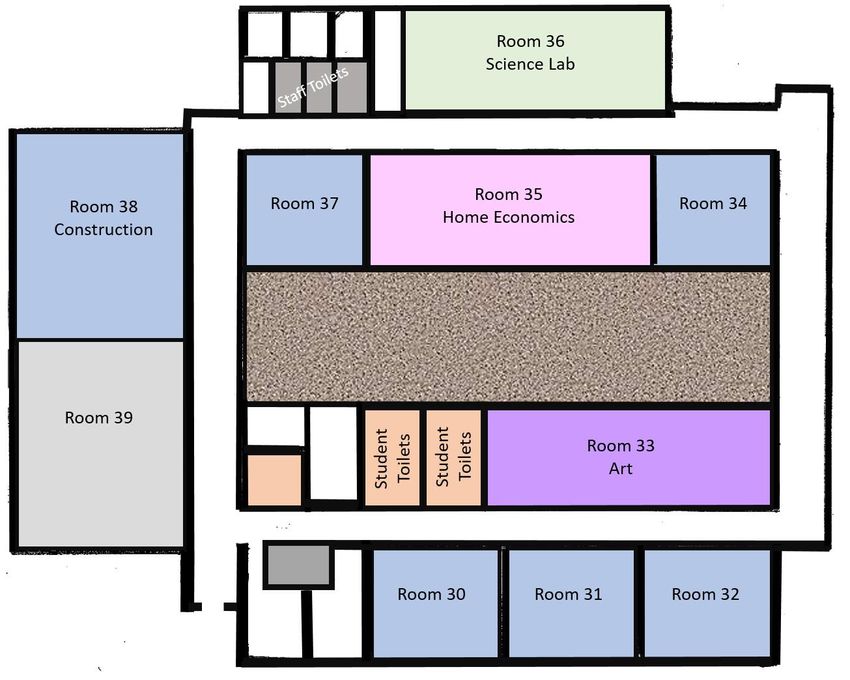
Physical Safety:
Coláiste De Lacy has developed a Covid-19 Response Plan in addition to the schools Health
and Safety Statement (including a Fire & Emergency Evacuation Plan). The following are
examples of some measures taken regarding ensuring the physical safety of members of the
school community:
Evacuation plan developed and clearly visible around the school
The school has external doors on time locks to ensure that visitors must present at
reception and be signed in
Regular fire drills occur followed by review and evaluation
Fully functional and regularly serviced Fire Alarm System
Fully functional and regularly serviced Intruder Alarm System
Weekly Health and Safety checks of school building and site
Regular Health and Safety audits
Fire exits and extinguishers regularly checked
Supervision in the morning before school (from 8:30am), at break time, and lunchtime
Sign in/Sign out systems for students at main reception area
Sign in/Sign out systems for all visitors at main reception area
Risk Assessments carried out on all rooms and school activities
Synopsis of the Code of Conduct (with behavioural expectations for the creation of a
safer environment) in all student Dialanns (journals)
Child Protection Training for all staff on an annual basis
Psychological Safety:
The management and staff of Coláiste De Lacy aim to use available programmes and resources
to address the personal and social development of students, to enhance a sense of safety and
security in the school and to provide opportunities for reflection and discussion. Some of the
measures taken by the school to ensure the psychological wellbeing of the school community
include:
Clann/Caomhnóir and Year Head system (Tutor groups banded on core base classes).
Social, personal and health education (SPHE) is integrated into the work of the school.
SPHE lessons are timetabled for all students at the same time during the week to
facilitate themed events and co-curricular planning. Psychological safety is addressed
3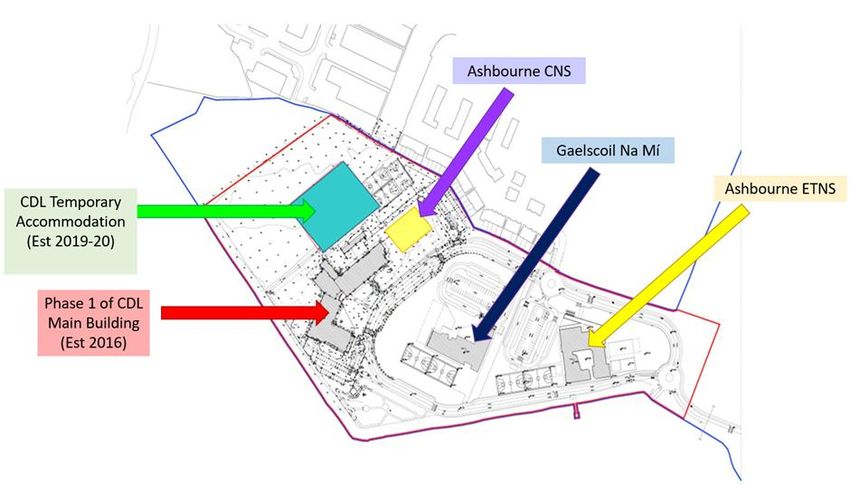
in other parts of the curriculum by addressing issues such as grief and loss;
communication skills; stress and anger management; resilience; conflict management;
problem solving; help-seeking; bullying; decision making and alcohol and drug
prevention. Promotion of mental health is included in this provision
Staff have access to training for their role in SPHE
Timetabled Enrichment lessons where first year students are explicitly taught about
learning habits and growth mindset (BLP)
The values and principles of the school are clearly communicated to and constantly
reinforced for students at Tionól (whole school assembly) and Clann Time (tutor time)
Staff receive annual training in the Child Protection Procedures and Guidelines. The
details of how to proceed with suspicions or disclosures are familiar to all staff
Child Protection Designated Liaison Person (DLP) and Deputy DLP are appointed and
notification is displayed inside the front door of the school building
The school provides the recommended 400+ hours of Wellbeing at Junior Cycle and
annually reviews the Wellbeing Programme at Junior Cycle to meet the various needs
of each year group. As part of the school Wellbeing programme, a weekly review of
learning and the Wellbeing Journey has been included in the student dialann to facilitate
reflection and discussions with the Caomhnóir
Information is provided on mental health in general and such specific areas as signs and
symptoms of depression and anxiety. A list of supports is listed in the student dialann.
The school is linked with the Jigsaw Meath Schools Programme and has facilitated a
lot of mental health awareness and training, included Peer Education programmes in
Mental Health and Anti-Bullying. Further developments are planned regarding mental
health awareness and training for staff, students and parents/guardians.
Many themed weeks, events and activities take place each year which raise awareness
and promote mental health and wellbeing, e.g. Mindfulness Week, Active Week,
Friendship Week, Multicultural Day, Awards Programme, RSE Programme for 3rd year
students, support night for parents attended by Wriggle (providers of the management
service for student iPads), supports for parents/guardians of exam students, curriculum
information booklets, exam information booklets for parents, Cyberbullying
Workshops for students, Internet Safety Workshops for students, Drugs and Alcohol
Workshops for students provided by Community Garda…etc.
4
Some staff and parents/guardians have received formal training in suicide prevention
through the HSE SafeTALK and ASIST training programmes.
The school has a dedicated Anti-Bullying team who have received training and are
extremely active in implementing preventative and education strategies. The school has
a clear policy on bullying and deals with bullying incidents in accordance with this
policy
The Student Support Team meet on a weekly basis and discuss concerns. Referrals to
outside agencies occur where appropriate, e.g. NEPS, Tusla, LAR, SUST, schools
Check & Connect Programme…etc.
Many staff are trained in the Check & Connect Programme and regularly meet assigned
mentees to provide advocacy, support and guidance
Students who are identified as being at risk are referred to the designated staff member
(e.g. Caomhnóir, Year Head, Learning Support Teacher/Coordinator, Guidance
Counsellor, Deputy Principal, Principal), concerns are explored and the appropriate
level of assistance and support is provided. Parents are informed, and where
appropriate, a referral is made to an appropriate agency.
Staff are informed about how to access personal support for themselves through the
Employee Assistance Services and the Staff Wellbeing (Resources) on MS Teams
channel. (CDL Staff – Wellbeing)
The school has a qualified Learning Support teacher and a Co-ordinator for the Solas
Centre (ASD Class)
Social Skills Development groups organised by the SEN Department
Induction programme for new staff
Extensive transition programme for all first year students
Managed Service on all student iPads
The school offers a broad range of extra-curricular activities on an annual basis for
students (to be reviewed based on COVID-19/HSE recommendations best practices for
facilitation of extra-curricular activities)
Development of links with a range of external agencies e.g. HSE Drugs Counselling
Service, LAR Programme (Laytown, Ashbourne and Ratoath Foróige Programme in
conjunction with the Garda Youth Diversion Programme), Jigsaw Meath…etc.
5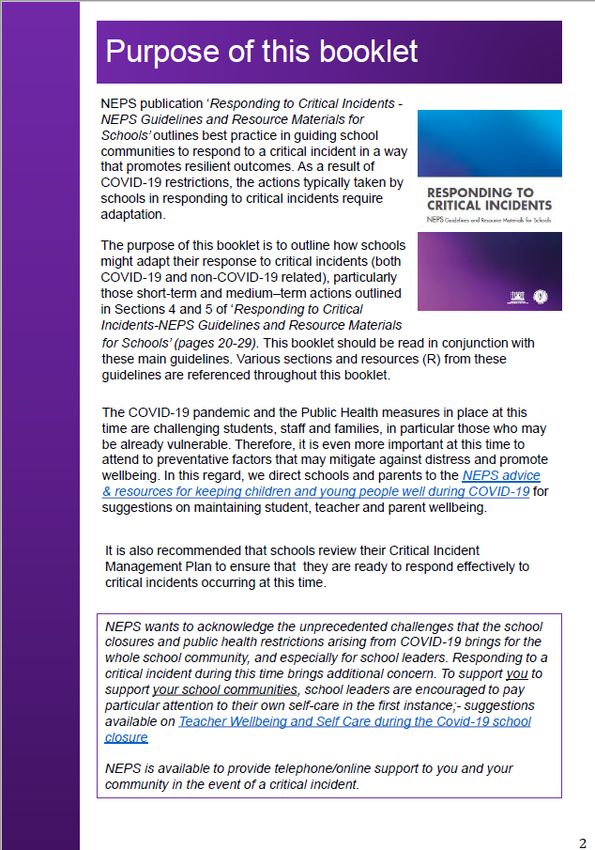
Critical Incident Management Team (CIMT)
A CIMT has been established in line with best practice. The members of the team were selected
on a voluntary basis and will retain their roles for at least one school year. The members of the
team will meet annually to review and update the policy and plan. Each member of the team
has a dedicated critical incident folder access to the secure CIMP MS Team. This contains a
copy of the policy and plan and materials particular to their role, to be used in the event of an
incident.
The members of the CIMT for Coláiste De Lacy are as follows:
Janice Uí Bheoláin (School Principal)
Deputy Principal
Blaithín Ó h’Eochaidh (School Secretary)
Brian Heavey (School Caretaker)
Roisín Whelan (SPHE Co-ordinator)
Niamh Murray (SEN Co-ordinator)
Rowan Gillick (Solas Centre Co-ordinator)
Nick Killian (Chairperson of BOM)
Ciaran Finn (Representative of PTA)
Aoife Callinan (Guidance & Counselling)
Other LMETB staff will be informed in the event of a critical incident e.g. Carmel McEvoy
(Critical Incident Liaison for LMETB), the Chief Executive of LMETB and the Director of
Schools for LMETB.
Best Practice in Managing Critical Incidents
The key to managing a critical incident is planning. NEPS Psychologists report that schools
that have developed school policy and a CIMP are able to cope more effectively in the
aftermath of an incident. Having a plan enables staff to react quickly and effectively to maintain
a sense of control. It may also ensure that normality returns as soon as possible and that the
effects on the students and staff are limited.
Research suggests that an effective response by the school during the first 48 hours is
crucial.
6
To ensure this occurs Coláiste De Lacy will carry out the following:
    1. Annual review of the CIMP and CIMT
    2. Maintain an up to date list of contact numbers for staff, parents/guardians of students
       and the emergency support services
    3. Maintain a texting system for staff and parents/guardians so that information can be
       conveyed should a Critical Incident happen outside of normal school hours
    4. Copies of the CIMP (containing a list of contact details and a map of the school
       building) will be retained on the CIMP MS Team and in the Principal’s Office
    5. In the case of school tours, the tour leader will compile an information pack to include:
       name of the tour leader, a list of all participating teachers and pupils, contact numbers
       for teachers and pupils, relevant medical information on pupils and permission forms
       from parents in case of a medical emergency, insurance details and copy of itinerary. A
       copy of this file will be left with the Principal and in the Administrative Office prior to
       departure. A school mobile phone will also be made available to staff for
       international/residential outings and trips
    6. All staff will be made aware of the Health and Safety Statement, the Fire Evacuation
       Procedures, the location of defibrillators and the names of those trained in their use and
       in First Aid. These lists will be posted near the defibrillators, in the staffroom, in the
       Administrative Office and attached to this document
    7. Staff will be reminded of these procedures at the initial staff meeting annually and a
       soft copy of the CIMP will be uploaded to the CIMP Channel on the Staff MS Team.

7
Procedures to be followed in the event of a Critical Incident on the Ashbourne Education
Campus

In the event that a Critical Incident occurs on the Ashbourne Education Campus common
grounds, drive way or approach road, then the Principals of the four Campus schools (Coláiste
De Lacy, Gaelscoil Na Mí, Ashbourne Community National School, and Ashbourne Educate
Together National School) will meet first to discuss the impact on and the response from each
of the individual schools and on the collective campus community. Each Principal will then
follow the CIMP of their own individual school as appropriate. A co-ordinated approach may
be necessary (depending on the type of Critical Incident). For example: in the event of a road
traffic accident or a serious injury/death on the campus, then a co-ordinated response may be
necessary.

Procedures to be followed in the event of a Critical Incident in Coláiste De Lacy

      During Covid-19, the school will implement the guidance provided by NEPS in the
     document Responding to Critical Incidents during School Closures and Public Health
    Restrictions arising from Covid-19 (NEPS, 2020). A copy of this short document, which
        outlines action plans for Day 1 & 2+ and resources is included in Appendix 5A.

8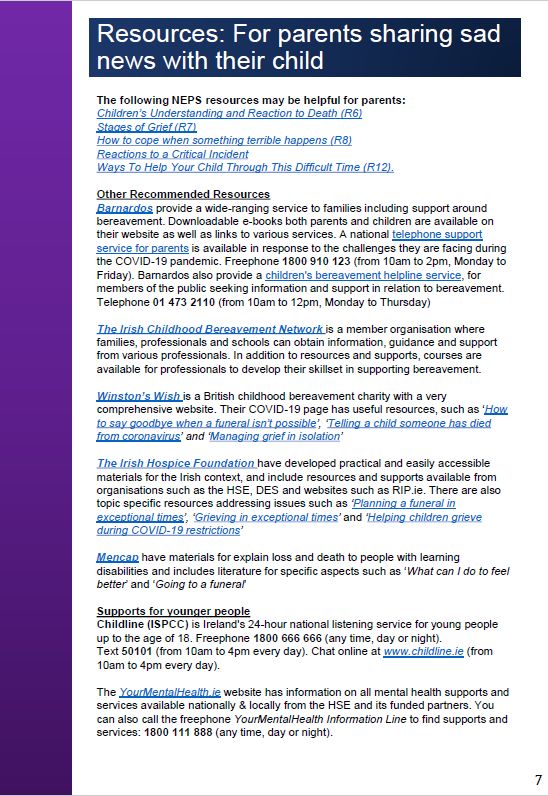
Procedures to be followed in the event of a Critical Incident in Coláiste De Lacy (continued)
On notification of a Critical Incident, the Principal will convene the CIMT to:
Ascertain the facts
Convene Critical Incident Management Team (CIMT) meeting (in school or virtually
MS Teams CIMT)
Make contact with the families concerned (where appropriate)
Consider which agencies need to be contacted and contact appropriate agencies (e.g.
NEPS, DES)
Agree on a statement of facts for staff, pupils, parents/guardians and the media. Inform
the relevant parties as appropriate and ensure that the agreed statement is delivered to
staff and students in a clear, appropriate and consistent manner
Inform Staff, students, BOM, Parents Association, local priest (where appropriate),
LMETB Critical Incident Liaison person, Director of Schools, CE LMETB. Regarding
students, class groups/Clanns are better than larger assemblies
Contact Principals in other schools, where appropriate and ask for Guidance
Counsellors to be available if needed to attend on site. Remind Principals of the
importance of confidentiality until information shared with the school community and
request no comments to media etc. as all must come through the school Principal where
the CI has occurred
Plan a whole staff briefing considering supervision arrangements
Consult staff and students if there is an event scheduled such as educational outing,
sports competition etc.
Identify high risk pupils
Agree the text of a letter/text message or communication to be sent to parents
Discuss how to deal with the Media. The Principal will deliver all statements to the
news and media
Appoint one/two persons to deal with phone calls
Delegate appropriate responsibilities to the CIMT members and organise
timetable/supervision rota for the day
Appoint two/three members of staff to meet with parents attending the school after the
news of the CI has been made public and advise them of the appropriate next steps
9 Organise support and rooms for counselling and assistance where appropriate. Consider
which rooms will be allocated to school personnel, which rooms will be allocated to
external agencies and which rooms will be allocated to students as a ‘quiet room’.
Organise supervision for the ‘quiet room’ and set up a sign in/sign out procedure for
same. A similar room may be set up for staff. The allocation of rooms will depend upon
the capacity of the school to organise safe and socially distanced spaces during Covid-
19
Consider letters of consent/phone calls to parents for students to access the services of
the school psychologist
Appoint a member of the CIMT to compile a list of all students who access the services
of the guidance counsellors/school psychologist/external agencies
Endeavour to maintain the regular school routine, if possible
When appropriate arrange for representatives from the school to visit the home(s) of
the person(s) concerned
Agree the next meeting time for the CIMT/key staff
Arrange a follow up staff meeting at the end of the day
If absolutely necessary, a decision regarding a possible temporary closure of the school
will be made by the CE, Director of Schools and/or the Principal.
Supplementary Procedures in the event of death:
Inform staff and pupils of the funeral arrangements
Arrange involvement in the liturgy if agreed with the bereaved family. Consider
different religions in the school when deciding which students should attend (if any)
etc.
Facilitate staff and pupils’ response e.g. book of condolence, BOM, LMETB, Parents
Association, Student Council vote of sympathy, flowers, guard of honour (if current
guidance around funerals during Covid-19 allows)
Support distressed pupils and staff
Ensure counselling service is available
Care of the deceased person’s possessions in keeping with parents/guardians’ wishes
Facilitate return to school of siblings and close friends
10 Monitor siblings and friends of the deceased and engage in regular communication with
their parents/guardians
Update and amend school records and inform the DES
Confidentiality and good name considerations
Management and staff of Coláiste De Lacy have a responsibility to protect the privacy and
good name of people involved in any incident and will be sensitive to the consequences of
public statements. Members of school staff will bear this in mind, and seek to ensure that
students do so also, e.g. the term ‘suicide’ will not be used unless there is solid information that
death was due to suicide, and that the family involved consents to its use. The phrases ‘tragic
death’ or ‘sudden death’ may be used instead. Similarly, the word ‘murder’ should not be used
until it is legally established that a murder was committed. The term ‘violent death’ may be
used instead.
Follow Up Actions
The Principal and the CIMT will engage in follow up work in the weeks, months and years
following a critical incident. The purpose of this follow up will be to help the school community
cope with the impact of the event in the longer term and to monitor those individuals with
ongoing difficulties. The school will also take decisions regarding reviewing the Critical
Incident Policy and plan memorials where appropriate.
Following a Critical Incident, it is expected that there will be ‘normal’ distress among a number
of students, especially close friends or relatives. Within approximately six weeks most students
will have returned to normal functioning. However, if students continue to show significant
signs of distress a number of weeks after the incident, they may need to be referred on to other
external agencies. The CIMT will decide on the appropriate steps that need to be taken for
particular students on an individual basis.
11Medium Term Actions regarding a CI
It may sometimes be the case that that first day following a critical incident is quite calm as
people may be in shock. However, it is widely recognised that day two may be a day when
more support is needed as the news begins to sink in. The CIMT will continue to meet each
day until the school returns to normal functioning
The CIMT will also consider the following:
Preparation for the return of a bereaved student
Discussions around a memorial for a particular student. A representative from the
school will liaise with the relevant family in this regard
Discussion around upcoming events that the deceased student would have been part of
including: awards ceremonies, how to manage exam results, Graduation and Debs
nights etc
Discuss the management of exam results and the return of practical work submitted to
the SEC. The SEC will be notified of the need to attend to the issuing of results of a
deceased student
Return personal belongings to the family or families
Mark the school’s calendar in advance with the anniversary date. Anniversaries may
trigger emotional responses in students or staff and they may need additional support
at this time. The school may decide to acknowledge the anniversary and will link with
the family on any proposed commemoration
Sensitivity around birthdays, Christmas, Mother’s day, Father’s Day…etc.
Review & Evaluation of the CIMP
Following a Critical Incident, the CIMT will evaluate the school’s response to the Critical
Incident and will amend the CIMP where appropriate. A selection of review and evaluation
questions which will be utilised include:
What went well?
Where were the gaps?
What was most helpful?
What was least helpful?
12 Have all necessary onward referrals to support services been made?
Is there anything outstanding that requires follow up or review?
Consultation and Communication regarding the Plan
All staff were consulted and their views canvassed in the preparation of this plan. The PTA
were also consulted and asked for their comments. Our school’s final plan in relation to
responding to critical incidents has been presented to all staff. All new and substituting staff
will be informed of the details of the plan by the Principal/Deputy Principal. Staff will be
reminded regularly that the Critical Incident Folder is located at all times in the main office at
the school.
This policy has been ratified by the Board of Management on Monday 21st September 2020.
13Appendix 1A: List of Relevant Contact Details CIMT Member Role Contact Details Janice Uí Bheoláin School Principal Barry O’Higgins Deputy Principal Blaithín Ó h’Eochaidh School Secretary Brian Heavey School Caretaker Roisín Whelan SPHE Co-ordinator Niamh Murray SEN Co-ordinator Rowan Gillick Solas Centre Co-ordinator Nick Killian Chairperson of BOM Ciaran Finn Representative of PTA Aoife Callinan Guidance & Counselling 14
Appendix 1B: List of Other Relevant Contact Details

 Other Contacts                 Address                        Contact Details

 Ambulance Services                                            999 or 112

 Ashbourne Primary Care       Unit 12 Killegland Walk,         01-6914600
 Centre                       Declan Street,
                              Ashbourne,
                              Co Meath
 Connolly Hospital            Mill Road,                       01-6465000
                              Abbotstown,
                              Dublin 15
 Our Lady of Lourdes Hospital Windmill Road,                   041-9837601
 Drogheda                     Moneymore,
                              Drogheda,
                              Co Louth
 Ashbourne Garda Station      Frederick Street,                01-8010600
                              Ashbourne,
                              Co. Meath
 Ashbourne Fire Station       Rath Cross,                      01-8352444
                              Ashbourne,
                              Co Meath
 Gaelscoil Na Mí:             Ashbourne Education Campus,      01-8353480
 Clár Ní Mhaoláin             Killegland,
                              Ashbourne,
                              Co Meath
 Ashbourne ETNS:              Ashbourne Education Campus,      01-8357493
 Barbara Nugent               Killegland,
                              Ashbourne,
                              Co Meath

 Ashbourne Community            Ashbourne Education Campus,    086-8522068
 National School:               Killegland,
 Jenny Byrne                    Ashbourne,
                                Co Meath

 Donaghmore-Ashbourne GAA       Killegland West,               01-8499140
                                Ashbourne,
                                Co Meath
 Martin O’Brien (CE of LMETB)   LMETB Administrative Office,   046-9068200
                                Abbey Road,
                                Navan,
                                Co. Meath
 Director of Schools, LMETB     LMETB Administrative Office,   046-9068200
                                Abbey Road,
                                Navan,
                                Co. Meath

15
Carmel McEvoy (LMETB CI LMETB Administrative Office, 046-9068200
Liaison Person) Abbey Road,
Navan,
Co. Meath
Vanessa Duffy (NEPS NEPS, 041-9876940
Psychologist) Department of Education and
Skills,
Donore Road Industrial Estate,
Drogheda,
Co Louth
Fr Derek Darby Parochial House, 01-8350406
Main Street,
Ashbourne,
Co Meath
Tom Bradley (Bus Inspector) Bus Eireann Regional School 01-8302222
Transport Office, 01-7034996
Area Office,
Broadstone,
Dublin 7
Ashbourne Community School: Dublin Road, 01-8353066
Susan Duffy/Ciaran Stewart Deerpark,
Ashbourne,
Co Meath
State Examinations Cornamaddy, 0906-442700
Commission Athlone,
Co. Westmeath
St Mary’s NS (Ashbourne): Race Hill, 01-8351299
Paul O’Connor Dunreagh,
Ashbourne,
Co Meath
St Declan’s NS: Bourne Avenue, 01-8350594
Cian Kearins Ashbourne,
Co Meath
Gaelscoil Na Cille: Archerstown, 01-8351600
Síle Uí Ghacháin Ashbourne,
Co Meath
St Patrick’s NS (Ardcath): Ardcath, 01-8354043
Fiona Daly Garristown,
Co Dublin
Cushenstown NS: Cushenstown, 01-8354215
Brenda Wall Ashbourne,
Co Meath
St Mary’s NS (Garristown) Garristown, 01-8354505
Hugh Daly Co Dublin
HSE Covid-19 Contact Number 1850 241850
Jigsaw Meath 25 Brews Hill, 046-9071702
Dillonsland,
Navan,
16Co Meath
Jigsaw Dublin 15 Blanchardstown Centre, 01-8905810
Blanchardstown,
Dublin 15
HSE Area Offices (Meath) Community Social Work 046-9097817
Services,
Enterprise Centre,
Navan,
Co. Meath
Community Social Work 046-9078830
Services,
Child and Family Centre,
Navan,
Co. Meath
Community Social Work 01-8024102
Services,
Dunshaughlin Health Care
Unit,
Dunshaughlin,
Co. Meath
HSE Area Office (Dublin North) Health Centre, 01-8164200
Cromcastle, 01-8164244
Coolock,
Dublin 5
HSE Area Offices (Dublin North Social Work Office, 01-8772300
Central) 22 Mountjoy Square,
Dublin 1
Social Work Office, 01-8467236
Ballymun Health Centre,
Dublin 11
HSE Area Offices (Dublin North Health Centre, 01-8567704
West) Wellmount Park,
Finglas,
Dublin 11
Social Work Department, 01-8825000
Rathdown Road,
Dublin 7
HSE Area Offices (Louth) Social Work Department, 042-9392200
Local Health Care Unit,
Wilton House,
Stapleton Place,
Dundalk,
Co. Louth
Ballsgrove Health Centre, 041-9838574
Ballsgrove, 041-9838163
Drogheda, 041-9870111
Co. Louth
Miriam Hilliard (Head SENO) Department of Education and 041-9846533
Skills,
Donore Road Industrial Estate,
17Drogheda,
Co Louth
David Newton (CDL SENO) National Council for Special 046-9091362
Education c/o Government
Buildings,
Kilcarn,
Navan,
Co Meath
Tony Walsh (EWO) Túsla c/o Government
Buildings,
Kilcarn,
Navan,
Co Meath
Department of Education and Marlborough Street, 01-8896400
Skills North City,
Dublin 1
Spectrum.Life: EAS Consultants 1800 411 057
(Previously Inspire) Text: “Hi” to 087-3690010
TUI 73 Orwell Road, 01-4922588
Rathgar,
Dublin 6
Get Fresh LTD (School Get Fresh (Vending) LTD, 074-9190294
Catering) Dunwiley,
Billy McGill Stranorlar,
Co Donegal
18BOM Contacts Role Contact Details Nick Killian Chairperson Amanda Smith LMETB Rep Deirdre Geraghty Smith LMETB Rep Yvonne Finn BOM Nominee James O’Meara BOM Nominee Janice Uí Bheoláin Secretary to the Board Conor Brennan Staff Nominee Stephanie Spillane Staff Nominee Ian Davy Parents Nominee Valerija Borovkova Parents Nominee Barry O’Higgins Guest to the BOM Blaithín Ó h’Eochaidh Admin Support PTA Contacts Role Contact Details Melanie Kialka Secretary 19
Appendix 2: Health & Safety Information
Staff who have received Defibrillator Training and/or First Aid Training. The defibrillator
is located at reception.

                                                                  Defib        First Aid
 Staff Member                Room      Contact Details
                                                                  Training     Training
 Conor Brennan                 n/a                                    Y            Y
 Emma Daly                     n/a                                    Y            Y
 Sylvia Daly                   n/a                                    Y            Y
 TJ Freney                     n/a                                    Y            Y
 Rowan Gillick               SOLAS                                    Y            Y
 Angela Guinan                 n/a                                    Y            Y
 Gareth Hall                   n/a                                    Y            Y
 Brian Heavey                  n/a                                    Y            Y
 Fiona Madden                  n/a                                    Y            Y
 David Maguire                 n/a                                    Y            Y
 Della Mannion                 n/a                                    Y            Y
 Blaithín Ó h’Eochaidh         n/a                                    Y            Y
 Stephanie Spillane            n/a                                    Y            Y

Students/Staff Needing Assistance during an Emergency Evacuation

 Staff Member/Student                        SNA if applicable

20
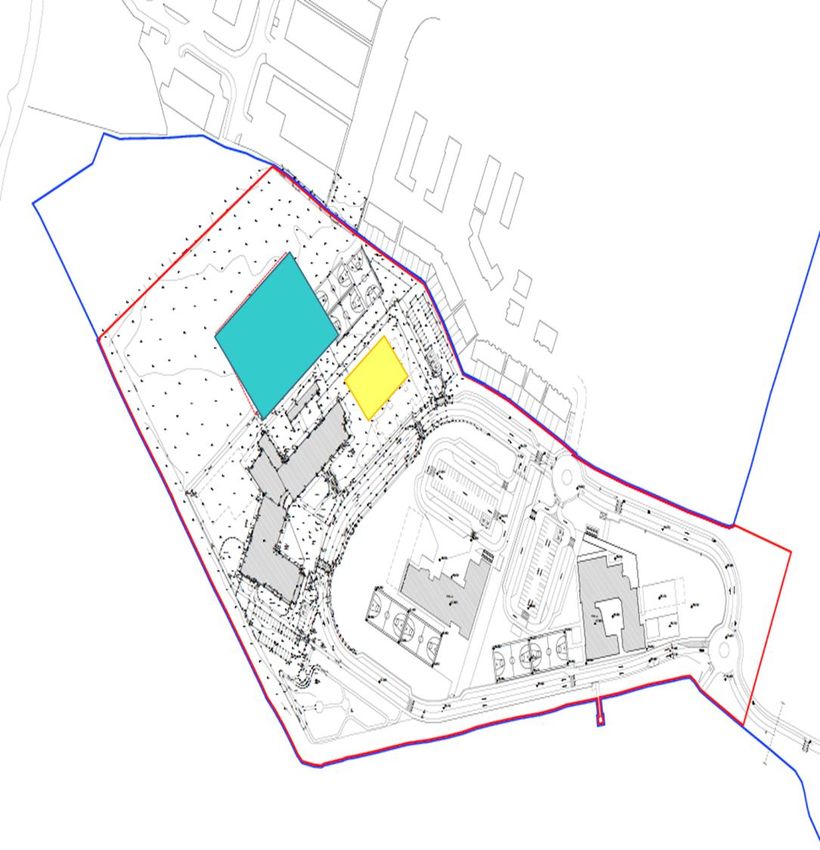
Appendix 3: School Layout School Building (Phase 1) 21
School Building (Temporary Accommodation)

22
23
Appendix 4: Sample Roles and Responsibilities

Team leader: (School Principal)
Role
     • Alerts the team members to the crisis and convenes a meeting
     • Coordinates the tasks of the team
     • Liaises with the Board of Management; DES; NEPS; SEC
     • Liaises with the bereaved family
(Note – The Deputy Principal of the school will take the role of Team Leader in the event that
the Principal is absent)

Garda liaison: (School Principal)
Role
     • Liaises with the Gardaí
     • Ensures that information about deaths or other developments is checked out for
     accuracy before being shared

Staff liaison (School Principal)
Role
     • Leads briefing meetings for staff on the facts as known, gives staff members an
     opportunity to express their feelings and ask questions, outlines the routine for the day
     • Advises staff on the procedures for identification of vulnerable students
     • Provides materials for staff (from their critical incident folder)
     • Keeps staff updated as the day progresses
     • Is alert to vulnerable staff members and makes contact with them individually
     • Advises them of the availability of the EAS and gives them the contact number

Student liaison (Deputy Principal/Caomhnóir)
Role
     • Co-ordinate information from staff about students they are concerned about
     • Alerts other staff to vulnerable students (appropriately)
     • Provides materials for students (from their critical incident folder)
     • Maintains student contact records (R1).

24
• Looks after setting up and supervision of ‘quiet’ room where agreed
• Monitors attendance of students
• Arranges Supervision
• Reschedules lessons if necessary
• Assists Principal
• Elicits feedback from colleagues and monitors data from staff to identify students of
concern
Community/agency liaison (School Deputy Principal)
Role
• Maintains up to date lists of contact numbers of
- Key parents, such as members of the Parents Council
- Emergency support services and other external contacts and resources
• Liaises with agencies in the community for support and onward referral
• Is alert to the need to check credentials of individuals offering support
• Coordinates the involvement of these agencies
• Reminds agency staff to wear name badges
• Updates team members on the involvement of external agencies
Parent liaison (School Principal/Deputy Principal)
Role
• Visits the bereaved family with the team leader
• Arranges parent meetings, if held
• May facilitate such meetings, and manage ‘questions and answers’
• Manages the ‘consent’ issues in accordance with agreed school policy
• Ensures that sample letters are typed up, on the school’s system and ready for adaptation
• Sets up room for meetings with parents
• Maintains a record of parents seen
• Meets with individual parents
• Provides appropriate materials for parents (from their critical incident folder)
25Media liaison (School Principal)
Role
• In advance of an incident, will consider issues that may arise and how they might be
responded to (e.g. students being interviewed, photographers on the premises, etc.)
• In the event of an incident, will liaise where necessary with the SEC; relevant teacher
unions etc.
• Will draw up a press statement, give media briefings and interviews (as agreed by
school management)
Administrator (School Secretary)
Role
• Maintenance of up to date telephone numbers of
-Parents or guardians
-Teachers
-Emergency services
• Takes telephone calls and notes those that need to be responded to
• Ensures that templates are on the school’s system in advance and ready for adaptation
• Prepares and sends out letters, emails and texts
• Photocopies materials needed
• Maintains records
Record keeping (School Secretary)
In the event of an incident each member of the team will keep records of phone calls made and
received, letters sent and received, meetings held, persons met, interventions used, material
used etc.
The school secretary will have a key role in receiving and logging telephone calls, sending
letters, photocopying materials, etc.
26Appendix 5: Sample Action Plans & Templates Critical Incident Management Team: Sample Roles Template Role Name Phone Team leader: Janice Uí Bheoláin 086 4102507 Garda liaison Janice Uí Bheoláin 086 4102507 Staff liaison Student liaison Community liaison Parent liaison Media liaison Janice Uí Bheoláin 086 4102507 Administrator Blaithín Ó h’Eochaidh 086 4102507 27
Short term actions – Day 1
Task                                                      Name
Gather accurate information                               Team Leader

Who, what, when, where?                                   Team Leader

Convene a CIMT meeting – specify time and place clearly   Team Leader

Contact external agencies                                 Team Leader

Arrange supervision for students                          Deputy Principal

Hold staff meeting                                        All staff

Agree schedule for the day                                Team Leader & CMIT

Inform students – (close friends and students with learning Learning Support Teacher &
difficulties may need to be told separately)              Co-ordinator of Solas Centre
Compile a list of vulnerable students                     ALL STAFF
                                                          Deputy Principal
Prepare and agree media statement and deal with media     Team Leader

Inform parents                                            Team Leader

Hold end of day staff briefing                            Team Leader

28
Medium term actions - (Day 2 and following days)
Task Name
Convene a CIMT meeting to review the events of day 1 Team leader
Meet external agencies Team Leader
Meet whole staff Team Leader
Arrange support for students, staff, parents Team Leader/Deputy
Principal
Visit the injured Team Leader & Caomhnóir
Liaise with bereaved family regarding funeral arrangements Team Leader
Agree on attendance and participation at funeral service Team Leader
Make decisions about school closure BOM/CE
29Follow-up – beyond 72 hours Task Name Monitor students for signs of continuing distress Class teachers Liaise with agencies regarding referrals Plan for return of bereaved student(s) Plan for giving of ‘memory box’ to bereaved family Decide on memorials and anniversaries BOM/Staff, parents and students Review response to incident and amend plan Staff/BOM 30
Appendix 5A: NEPS Guidance for Responding to Critical Incidents
during School Closures and Public Health Restrictions arising from
Covid-19

31
32
33
34
35
36
37
38
Appendix 6: Sample Template for Meeting Rooms

 Critical Incident Rooms
 In the event of a critical incident, the following rooms are designated for the indicated
 purposes
 Room Name:                         Designated Purpose:
 Board Room                         Main room for CIMT / CIMT MS Teams

 Halla                              Meetings with whole staff / CIMT CDL Staff Team

 Meditation Room/Library            Meetings with students (depends on the size of the
 Guidance Office                    group)
 Rm 1-3                             Meetings with parents (depends on the size of the
                                    group)
                                    MS Teams Meeting
 Rm 1-3                             Meetings with media

 Support Rooms/Meditation Room Individual sessions with students
 Guidance Office
 Board Room                         Meetings with other visitors

               Please Note that the NEPS document; ‘’Responding to Critical
                   Incidents; NEPS Guidelines and Resource Materials for
                 Schools (2017)’’ & Responding to Critical Incidents during
                School Closures and Public Health Restrictions arising from
               COVID-19 contains really useful templates, prepared scripts,
               communications, short/medium/long term actions, supports
                                       for staff…etc.

               A hard copy of this document accompanies this CIMP. Digital
                      copies are available on MS Teams-CDL Staff or:

                          https://www.education.ie/en/schools-
               colleges/services/national-educational-psychological-service-
                                neps-/critical-incidents.html
39
You can also read


