École North Oyster School - Parent & Student Handbook 2019 2020 - North Oyster Elementary
←
→
Page content transcription
If your browser does not render page correctly, please read the page content below
École North Oyster School

Parent & Student Handbook 2019 – 2020
École North Oyster School
http://northoyster.ca        13470 Cedar Rd. Ladysmith BC V9G 1H6
                             (T): 250-245-3330     (F): 250-245-2386
Principal:            John Cunnian              John.Cunnian@sd68.bc.ca
Vice Principal:       Ed Young                   Edward.Young@sd68.bc.ca
Secretary:            Christine De Vries        cdevries@sd68.bc.ca
  Office Hours: 8:00 a.m. to 3:30 p.m. Monday to Friday

                         Mondays                                         Tuesday thru Friday
                   8:30 a.m. – 1:17 p.m.                                   8:30 a.m. – 2:17 p.m.

   8:30 – 10:15      Instruction (105 minutes)                 Instruction (105 minutes)

  10:15 – 10:30      Short Recess (outdoor play)               Short Recess (outdoor play)

  10:30 – 11:45      Instruction (75 minutes)                  Instruction (75 minutes)

  11:45 – 12:16      Long Recess (outdoor play)                Long Recess (outdoor play)

  12:16 – 1:17       Instruction (62 minutes)                  Instruction (62 minutes)

  1:17               Dismissal (every Monday)                  Instruction continues (60 minutes)

  2:17                                                         Dismissal (Tuesday to Friday)

                      Principal’s September Message to Students and Families
Bonjour, nuw’ilm, and welcome to another exciting school year at École North Oyster School! We are grateful
that we learn, play and work at this great school site located on the traditional and unceded territory of the
Stz’uminus people. All of us in our school community hope that our students have a safe and enjoyable school
year full of learning. A special welcome to our new students and their families! You are joining a positive and
supportive school community.

At École North Oyster School, our mission statement is to “To create a community partnership within a safe
environment that will inspire well-rounded, lifelong learners.” As a part of our community, you can help us with
this mission by reading our Parent and Student Handbook, as well as staying up-to-date by reading our school
newsletters. Both can be found on our website (https://no.schools.sd68.bc.ca/students-parents/), and you can
subscribe to our newsletters so that they get sent to you. Also, please ensure to keep the school informed of any
important information or changes about your child so that we can best support them. As a community partnership,
we will make sure to keep you informed as well.

We look forward to another successful school year!

Best regards,
Mr. John Cunnian, Principal
John.Cunnian@sd68.bc.ca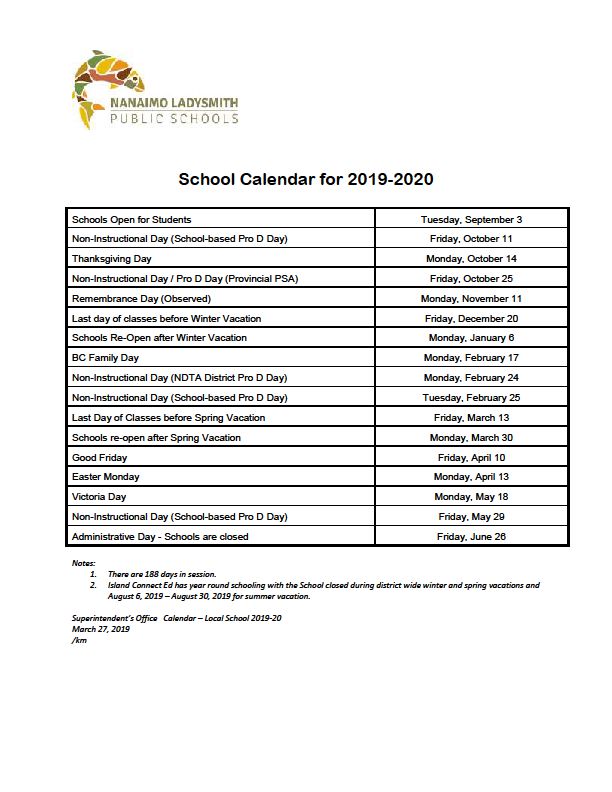
Éc ol e N O RT H O YS TE R El em en t ar y
                                13470 Cedar Road, Ladysmith, B.C. V9G 1H6
                                  Tel: 250 245 3330 Fax: 250 245 2386
                                            northoyster.ca

                                North Oyster Mission Statement
 To create a community partnership within a safe environment that will inspire well rounded, life long
                                              learners.
    Créer une association des différents membres de la communauté scolaire au sein d'un milieu
       sécurisant où les élèves aspireront à devenir des apprenants à part entière pour la vie.

North Oyster strives to instill a love of learning, the ability to self-regulate, to process information, to
think critically and creatively, and to acknowledge and celebrate differing abilities and backgrounds.
North Oyster students are nurtured to become resourceful global citizens of tomorrow. A child's
education is a shared responsibility between home and school. Support and encouragement are
essential to ensure that a child reaches his/her potential. An educational program that is balanced can
foster the development of the whole child - intellectually, socially and physically.

                          The Right Opportunity in the Right Environment

Children need to assume an active role in their learning. They learn in various ways and at different
rates. We know also that learning is both an individual and a group process. At North Oyster we value
success and build it in for every child. Commitment and cooperation between school and home are
the key.

                                         Open Communication

Parents and teachers need to establish and maintain open communication. Effective communication
means taking the issue right to the source: Please feel free to phone, e-mail or come in and talk with
us about any concerns you may have – bring a friend if you like. As partners in your child’s education,
we must each feel comfortable conveying our observations and concerns while listening actively to
what the other party is saying. A child's needs are best served when home and school cooperate in an
open and ethical manner. Over the year, teachers will inform parents of the goings-on at school. If
there is a concern, the teacher contacts the parent, sometimes the office as well. When parents have
concerns, they should first contact the teacher (by note / phone call / e-mail) to arrange a time to meet
and discuss in person. Sometimes issues are referred to school administration. In every case, the
utmost in terms of confidentiality and respect are assured and expected.

                                Parents’ Advisory Council (PAC)

The Parents’ Advisory Council (PAC) is the central link between parents and the school. By definition,
every parent is automatically a member of the PAC. Parents are strongly encouraged to get involved
in PAC activities as this benefits all students. The PAC organizes special events and fundraising
activities. The PAC executive consists of a President, a Vice-President, a Treasurer, a Secretary, two
Directors and a school representative to the District-PAC (DPAC). The North Oyster PAC asks parents
to LIKE and follow their Facebook page. E-mail: northoysterpac@gmail.com
Code of Conduct 2019-2020
Purpose:
To promote a climate of mutual respect and understanding where all have equal dignity and
rights
To establish and maintain a safe, caring, and orderly environment for purposeful learning
To clarify and publish expectations for student and parents/ guardians’ behaviour at school,
going to and from school, and while attending any school function or activity at any location
To promote appropriate and respectful digital citizenship for all online activities including
research and the use of social media
To outline our school-wide Behaviour Management Plan
Expectations and Responsibilities
Acceptable Behaviour for École North Oyster Students
Respecting self, others, the learning and physical environment
Attending school regularly and on time
Engaging in purposeful learning activities
Helping to make the school a safe, caring and orderly place
Informing a staff member or other trusted adult in a timely manner of incidents of bullying,
harassment or intimidation
Understand, use and follow the Habits of the Heart (empathy, integrity, curiosity, self-confidence
and reflection).
Students will remember that school is a public space. Students will dress in weather and activity
appropriate and safe clothing. Clothing must not contain profane, violent, discriminatory or
derogatory logos or words
Students may wear hats at appropriate times
Unacceptable Behaviour for École North Oyster Students
Examples of such undesirable behaviour would include but are not limited to:
Behaviours that…
Interfere with the learning of others
Interfere with the social-emotional well-being of others
Interfere with an orderly environment
Create unsafe conditions
Acts of…
Physical violence
Destruction of others’ work or property
Retribution against a person who has reported an incident
Bullying, harassment, or intimidation
Illegal acts, such as…
Possession, use or distribution of illegal or restricted substances
Possession or use of weapons
Theft of or damage to property
Harassment, intimidation, and bullying…
Are behaviours which disrupt a student’s ability to learn and interfere with the school’s ability to maintain
an appropriate learning environment. Therefore, harassment, intimidation and bullying, constitute
serious misconduct which warrants appropriate intervention should it occur and the implementation of
educational programs and administrative measures which are designed to prevent it from occurring.
Bullying can be physical or verbal, or can involve social alienation. It can be direct or indirect.Direct Bullying can include:
Open assault such as: hitting, punching, kicking, throwing things, jostling, poking and spitting
Verbal taunts or open and overt threats to harm the other individual
Indirect Bullying can include:
Teasing, criticism, gossiping, spreading malicious rumours, threatening to withdraw friendship,
social isolation or exclusion from the group
Using media/technology to publish hateful or discriminatory messages
When determining whether a specific behaviour is bullying, consider if it is: targeted, repeated over
time, intended to hurt, or involves a power imbalance. Harassment, intimidation and bullying are
intentional written, verbal or physical acts that may:
Harm a person or damage another person’s property
Seriously impact another person’s social-emotional well-being
Have the effect of substantially interfering with another student’s education
Be severe, persistent, or pervasive and create an intimidating environment
Have the effect of substantially disrupting the orderly operation of the school
Bystanders (to bullying) may have consequences if they don’t accept the responsibility of
reporting incidences to teachers or supervisors.
Consequences:
When disciplinary action is required to address unacceptable conduct, the consequences will be
preventative, educative and restorative in nature.
Wherever possible, students will be engaged in the development of meaningful consequences
for violations of the code of conduct using Collaborative and Proactive Solutions and/or
Restorative Practices
The discipline will be age-appropriate, individualized, and meaningful for the students so as to
help them move towards self-discipline and self-control in the future.
Notifications:
École North Oyster and the SD 68 Board supports the Provincial Standards for Codes of Conduct
Order M 208 with respect to discrimination as set out in section 7 (discriminatory publication)
and section 8 (discrimination in accommodation, service, and facility) of the Human Rights Code,
RSBC 1996, c. 210.
École North Oyster and the SD 68 Board may have the responsibility to advise other parties of
serious breaches of the code of conduct including: parents/ guardians, school officials, police,
and other agencies.
École North Oyster and the SD 68 Board will take all reasonable steps to prevent retaliation
against a student who has been responsible in making a complaint of a breach of the code of
conduct.As partners in education, we can all expect that:
Students will:
arrive on time, rested and ready to learn
work diligently and complete assigned work
bring a positive attitude and a sense of optimism to school each day
demonstrate the behaviour expectations outlined in the North Oyster Code of Conduct
Parents will:
encourage their child to do his/her best to succeed
ensure the child attends regularly and arrives on time
ensure the child arrives rested, fed, clean, dressed for the day's weather, ready to learn
support the child in following the educational program the school has designed for him/her
empower the child with resiliency, and a sense of responsibility towards self and others
work with school staff to best support the child in their learning
tell the office about changes to your contact information (phone number, e-mail, address,
etc.)
Teachers will:
act as positive role models and preserve the dignity of every pupil in their charge
provide engaging learning activities and assess student progress
teach, monitor and reinforce behavioural expectations
adapt the student’s program according to individual need
collaborate with staff and parents on developing an individual educational plan (IEP) when
necessary
initiate requests to access Learning Services Support staff as needed
provide two written reports to parents as well as engaging in ongoing communication
throughout the year
The Principal will:
oversee all educational programs and instructional practices within the building
ensure appropriate student placement and programming
exercise authority in matters of student conduct during school-related activities both on
and off the premises
Student Rights and Responsibilities:
Students are to behave safely and responsibly at all times, displaying good manners and consideration
for others. The following are student rights and responsibilities.
I have a right to learn.
I have a right to hear and be heard.
I have a right to be respected.
I have a right to be safe.
I have a right to privacy and to my own personal space.
All rights carry with them a responsibility…
It is my responsibility to listen to instructions, to complete assignments and to allow those
around me to work as well.
It is my responsibility to listen politely while others are speaking.
It is my responsibility to be conscious of my own actions and aware of the feelings of others.
It is my responsibility to use appropriate language.
It is my responsibility to respect the personal property of others, and to respect their right
to privacy.Our Philosophy of Discipline
To punish a child is to arouse resentment and make him/her uneducable. The essence of discipline is
finding effective alternatives, which leave the child’s dignity intact, teach him how he has violated others’
rights and teach him to do better. … H. Ginnott, Teacher and Child
Personal Electronic Devices
As the prevalence of electronic technology continues to expand in our society, so have the implications
for personal electronic devices in school. At North Oyster we encourage healthy, active living with
physical play and pro-social interaction. Hand-held electronic games tend to curtail social interactions
and reduce physical activity. Our policy is identical to other elementary schools in that all electronic
devices, including hand-held games, cellular telephones, mp3 players, iPads and iPods should
be turned off during the school day except under direct teacher supervision. Parents, your
support is greatly appreciated in reinforcing this policy. Please note that schools take no responsibility
for lost or damaged personal electronic devices.
Elementary School Procedures
1. Parents are asked to give us a call (250 245 3330) whenever you know in advance that your
child is going to be late or absent. Our 24-hour answering machine will record your message
at any time of day or night.
2. Elementary-aged children are required to remain on school property throughout the school day
and under the supervision of responsible adults. Students are not permitted to leave the school
grounds unless signed out at the office by the parent or caregiver. No student is permitted to
be inside the building unsupervised.
3. Upon arrival, students remain outside until the bell. Students are met by the teacher at their
designated entry door. On rare occasions of extremely wet weather, an announcement will be
made inviting all students to come inside to their classrooms. Best thing is to dress for the
day’s weather and expect to spend recess time outdoors.
4. Students may use the reception telephone provided they have a telephone pass issued by
their teacher. Students are not permitted to make social arrangements via the school
telephone. Please ensure your child’s pick up arrangements are made prior to sending them
to school and please communicate these arrangements to your child’s teacher when they differ
from your child’s usual routine. We do, of course, understand that sometimes circumstances
necessitate last minute changes. In this case, please phone the office.
Volunteers in the School
School volunteers must have an approved criminal record check on file with the office. If you would like
to volunteer with our students, please ensure you follow the procedures below to obtain your criminal
record check. As this process can take time, we encourage parents who may wish to volunteer with us
throughout the year to complete a check as soon as possible.
Parent Volunteer Drivers - SD68 Policy 4410
We rely on our parent volunteers to drive students to events through the year. Volunteer drivers are
required first to register with the school office and complete the Volunteer Driver Form. Volunteer
drivers must:
have an approved criminal record check on file with the office
have an approved driver’s abstract on file with the office (to obtain an abstract at no charge,
call ICBC and have them fax it or email it to the school)
complete a volunteer driver form
be 21 years of age and in good health hold a valid full B.C. Driver's license (not an N) and vehicle insurance with a minimum of
$200,000 liability
ensure each child under 9 has a booster seat
keep children out of the front seat of vehicles equipped with passenger-side airbags
Attendance
Regular attendance and punctuality are important indicators of social responsibility. Students
arriving late miss out on important learning opportunities and disrupt the learning of others.
Schools must maintain precise records of attendance and punctuality.
Parents sometimes ask whether it's okay for their children to miss school time to go on a family
holiday. Please remember, particularly in French Immersion, that the majority of a child’s
learning occurs through face-to-face discussions in class and group interaction. Regular
attendance is important for second language development. Time away from school cannot be
easily made up by doing worksheets and text book exercises. Prolonged absences for any
reason other than illness are generally discouraged. This being said, we fully recognize that
certain trips can provide tremendous learning opportunities. Ultimately, we leave it up to the
parent to weigh the pros and cons of any extended absence.
Early Warning Detection System
For student safety, North Oyster uses the Early Warning Detection System to determine as soon as
possible the whereabouts of any student who does not arrive in the morning.
The Early Warning Detection System relies heavily on parents remembering to phone us in advance
(250-245-3330) if you know your child is going to be late or absent. Our answering machine will
record your message 24 hours a day. You can also send a note or let us know in advance.
Unless we know the reason for your child’s absence, our staff will phone home to inquire. This is a
big job at our large school, so thanks in advance for remembering to call us first.
Parents It is very important to let us know immediately whenever there are changes to:
o phone number(s), address, e-mail
o emergency contacts
o custody orders
o medical conditions
o a significant family situation that might impact your child’s learning at school
Homework
Homework refers to any task that a student is asked to complete outside of school hours. This can
include unfinished work, projects, reading or practicing math facts and spelling words. Instilling
conscientious work habits at home is important for the years ahead. Parents are strongly encouraged
to be proactive in providing a quiet work place and supervising prompt and proper homework
completion. You can help your child develop great study habits just by showing interest in and looking
over their work, asking questions, scheduling a regular homework time on weeknights, keeping in touch
with the teacher, and above all, praising your child for all his/her efforts. A very small amount of
homework may occasionally be assigned in the primary classes (K-Grade 3). Usually “homework” in
the younger grades is just a little bit of nightly reading, counting and possibly spelling. Assigning
homework in the intermediate grades is at each teacher’s discretion. New research is showing that
homework is not perhaps as beneficial as we once thought it was and so some teachers may choose
not to assign it. However, as a guideline, students in grades 4-6 can anticipate about half an hour of
homework and grade 7s can expect upwards of one hour of homework or study time, to review and
organize the day’s material and to read, read, READ for vocabulary development.Reporting to Parents Our reporting process has moved to one of ongoing communication. A written progress report will be issued in February and a summative report will be issued in June. Teachers will also communicate progress to you on an ongoing basis, throughout the school year. Where applicable, student achievement is assessed according to provincial Performance Standards in each area of the curriculum. You can find more information about BC’s new curriculum at https://curriculum.gov.bc.ca/. For the written reports, students’ progress will be noted on a competency scale, rather than via letter grades. Healthy Eating Policy Schools, parents and the community all share the responsibility of instilling healthy eating habits in children. Health conscious and well-nourished children are better equipped to learn and are more likely to engage fully in learning and take advantage of the educational opportunities available. We ask that students bring only healthy snacks and lunches to school. Please see the Canada Food Guide for examples of foods that children should choose most often. Make the Most of your Day at North Oyster The extra-curricular activities schools offer depend on the availability of staff sponsors and community volunteers. North Oyster students are encouraged to take an active part in any extra-curricular offerings and to abide by school rules while doing so. Activities such as clubs and sports can occur during the school day or after school. Activities involving students outside of school hours require signed parental consent as well as signed parental permission for travel. Interventions for Students School-based team (SBT): SBT meetings are held as needed for staff to generate strategies to support individual children with learning needs that require adaptations or modifications to their program. Parents are encouraged to communicate to the teacher whenever there is a concern over the child’s overall progress at school. Learning Support: School Support Teachers provide small group instruction in reading, writing and mathematics. A student may be referred by their teacher to School-based Team and work with Learning Support Staff. Flexible Learning Groups: Students achieving at differing levels in reading and mathematics receive instruction in flexible groups that are tailored to meet their needs and learning styles. This includes reading groups and literature circles, as well as math groups. Learning groups are created by teachers and delivered by teachers, education assistants, parent volunteers and buddy class partners. ELL (English Language Learning): A student whose mother tongue is not English is eligible to receive ELL support to gain familiarity with proper verb tenses, pronunciation and idioms and expressions they can expect to encounter in the school setting. This service is also offered to extend vocabulary and build awareness and experience in the school setting. ELL students report gaining confidence to speak out, validate and share the knowledge they bring from home. Health Care: There is no nurse at the school. Health Care Professionals do not work in public schools. If you have specific questions relating to health or hygiene, please call the VIHA Health Unit at 250- 755-6200 or dial 811. Medication at School: Sometimes children require prescription medication during the school day. Please do not allow your child to carry or leave drugs at school. Medications should be handed by the parent directly to the office staff along with appropriate instructions. Arrangements are made for staff to administer medications to students. Parents simply complete a Medications form in the office. If your child requires special medical attention of any kind, please provide details on the student information form.
Counselor / Child Youth and Family Support Worker (CYFSW): Counselors and CYFSWs provide
a range of pro-active and intervention services. Working in tandem with the School-based Team, they
help develop and implement behaviour and safety plans to support students at risk, and on occasion
may refer families to community resources beyond the school. Counseling services include:
being a member of the School-based Team
managing behaviour plans, identifying and implementing appropriate supports and
empowering students in managing behaviour change
providing individual and group counseling, including crisis intervention
liaising with parents and staff, facilitating referrals to access support from appropriate outside
agencies
providing support and resources for developmental, remedial and preventative programs
promoting personal development and social skills through esteem building, social
responsibility, goal setting, problem solving and decision making
assisting in transition processes from pre-school to kindergarten and from grade 7 to
secondary
Library Services/“Learning Commons”: The school library plays a central role in children’s
education and constitutes an integral part of our School Plan for Literacy. The North Oyster Library
(“Learning Commons”) houses resources in both French and English in formats including print, video,
DVD, multimedia, which address the research and leisure reading requirements of our students. The
library collection numbers thousands of titles covering the entire elementary curriculum plus many
interests of children from Kindergarten to Grade 7. A section of the collection also offers books of
interest to parents. Parents are welcome to borrow books for themselves and for their children. All
classes visit the library with our teacher-librarian at least once a week.
Fine Arts: A music specialist provides vocal music instruction to students from Kindergarten to Grade
7.
Computer Lab: The computer lab is equipped with a modern network of desktop computers and
educational software. All classes are regularly scheduled into the lab to allow students to develop
technology skills. We also have access to both chromebooks and ipads to support learning.
District Learning Services: The school district strives to provide a full range of Learning Services
including School Psychologists, Speech and Language Pathologists, Behaviour Support, Autism
specialists and Alternate Education Programs.
Fire/Earthquake Procedures
Fire Drill: Schools are required to conduct emergency evacuation drills a number of times throughout
the year. Students practice evacuating the school in an orderly fashion and gathering at the designated
assembly area for attendance and further instructions.
Earthquake Drill: Earthquake drills are conducted regularly as well. Students practice the duck, cover
and hold on procedure and then evacuate outdoors once it is safe to do so. Staff, students and visitors
gather in the designated assembly area.Calendar – 2019-2020 Visit our electronic ‘web calendar’ for the most current information and events such as field trips, team practices and game schedules, etc.The North Oyster web calendar is at: https://no.school.sd68.bc.ca and the school district website at https://www.sd68.bc.ca/about/calendar
INFORMATION FOR STUDENTS WHO RIDE SCHOOL BUSES
Special Notes to Parents
1. Be certain that your child(ren) is at the bus stop on time and that pets are left at home.
2. Provide the necessary protection for your child(ren) when going to the bus.
3. Be sure your child(ren) is properly dressed and prepared for inclement weather.
4. Remember that the proper conduct of your child(ren) is your responsibility.
5. Parents and guardians are responsible for any damage to a bus caused by their child(ren).
6. Encourage your child(ren) to obey all traffic rules and school bus regulations.
7. Students are to use only their assigned bus and regular bus stops unless alternate arrangements have been made in writing.
8. Parents/guardians are reminded that they are responsible for their children’s safety until they board the bus in the morning and after they leave the bus in the
afternoon.
9. Parents and students should be aware that buses are equipped with video cameras to monitor student behavior.
Rules for Students Who Ride School Buses
1. The bus driver is in charge.
2. Smoking, eating or drinking are not permitted on the bus.
3. Students should take their seats quickly and remain seated while the bus is in motion.
4. The aisle of the bus must be kept clear at all times.
5. Leaving waste or other rubbish on the floor or throwing it from the windows of the bus is not permitted.
6. Extending arms, legs or head out of the bus windows is extremely dangerous and is not permitted.
7. Students should be at the bus stop five (5) minutes before the scheduled pick up time; the bus will not wait for those who are late.
8. Students must stay in bus loading zones while waiting and will load and unload the bus in an orderly manner.
9. Remain on the shoulder of the road after getting off the bus until the bus leaves and disperse when safe to do so.
10. If the bus does not arrive within 20 minutes of the scheduled time students should return home.
11. Damage to the bus or equipment should be reported to the driver as soon as possible.
12. Students are not to cross in front of a bus.
13. Students may not have anything in their possession that may cause injury to anyone else on the bus.
14. Students are not permitted to use cellular phones or headphones/electronic devices during the loading or unloading process.
15. If riding a bus equipped with seatbelts, seatbelts must be used at all times.
Disciplinary Guidelines
1. Offenses Elementary Students Secondary Students
First ● Warning ● Warning
Student and parent(s) Student and parent(s)
must sign a bus must sign a bus
behaviour report form. behaviour report form.
Second ● Suspension of privileges ● Suspension of privileges
- 2 school days - 5 school days
Third ● Suspension of privileges ● Suspension of privileges
- 5 school days - 15 school days
Fourth ● Suspension of privileges ● Suspension of privileges
for balance of school year for balance of school year
2. Vandalism
Suspension involving vandalism will not normally be lifted until restitution has
been made.
Student Transportation Policy
School District 68 (Nanaimo-Ladysmith) will provide transportation, or pay transportation assistance allowance, for students living beyond the established walk limits
defined by the Ministry of Education.
Eligibility
Kindergarten to Grade 12 students who are enrolled at their home school, or the francophone program who live beyond the walk limits.
Walk Limits
Grades 1-3 pupils living beyond 4 kilometres (2 ½ miles) from school will be eligible for transportation.
Grades 4-12 pupils living beyond 4.8 kilometres (3 miles) from school will be eligible for transportation.
All Grades 1-12 pupils may be required to walk up to 3.2 kilometres (2 miles) to the nearest bus stop.
Note: Kindergarten mid-day service will be provided only where enrolments warrant busing. Kindergarten students must be accompanied both to
and from the bus stop by a responsible adult.You can also read


