Coming Together in Skokie - A Celebration of the Assyrian People Book Selections and Events
←
→
Page content transcription
If your browser does not render page correctly, please read the page content below
Coming Together
    in Skokie

    A Celebration
       of the
   Assyrian People

Book Selections and Events
  January - March 2012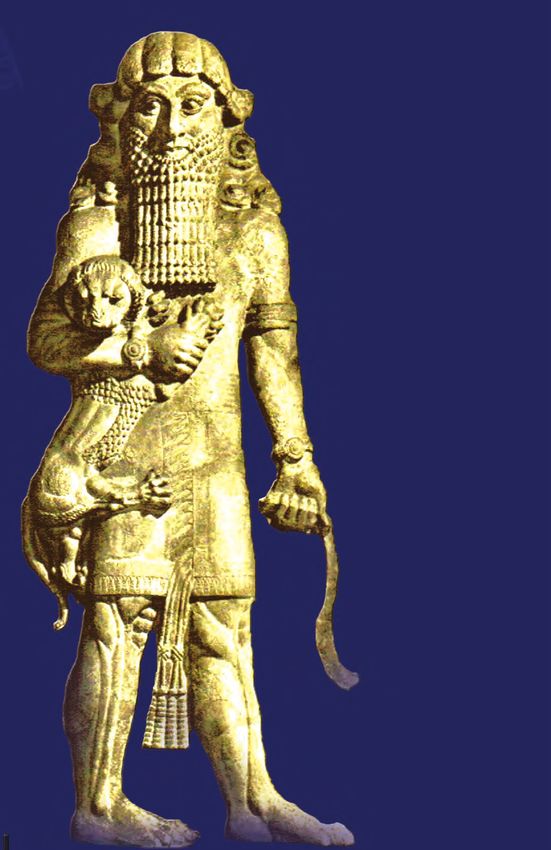
HIGHLIGHTED BOOKS

         Gilgamesh: a New Rendering in English Verse by David Ferry
         The Epic of Gilgamesh is the oldest recorded work in world
         literature. The daring quests for immortality by Gilgamesh
         and his friend Enkidu were preserved on stone tablets. Poet
         David Ferry’s version of this epic is not a literal translation,
         but instead, is a new adaption of this classic tale—one that
         is wholly accessible to the modern reader. Ferry’s lyrical style
         makes this ancient work come to life and demonstrates the
         universality of the themes of this epic tale.

         Home Is Beyond the Mountains by Celia Barker Lottridge
         In this story of unimaginable loss and profound courage, a
         young Assyrian girl loses her family while fleeing her home in
         the face of war. By knitting together a new family, she finds the
         strength to survive. With the help of her dedicated orphanage
         director, she makes the incredible five year journey back to
         her home. Based on historical events, this story tells the tale
         of the Assyrian flight from Persia at the end of World War I.

         Children of War: Voices of Iraqi Refugees by Deborah Ellis
         Author Deborah Ellis steps away from fiction in her compila-
         tion of firsthand accounts of children displaced by war in Iraq.
         These heartbreaking stories remind the reader of universal
         truths such as joy, fear, hate, love and forgiveness. A poignant
         reminder that those who suffer from the atrocities of war are
         still with us; children who had no hand in creating this war
         must somehow find a way to survive.

          Sahra = Moon
          Written and illustrated by Romil and Victor Benyamino
          This illustrated children’s book written in Assyrian and English
          is a playful bedtime story that takes children on a journey
          into the wilderness to discover animals and experience
          events that take place at night.

2
WELCOME LETTERS
Dear Skokie Community:
I am pleased that Coming Together in Skokie continues for another year. The
Village is deeply committed to this important and unique collaboration between
many different community groups, as it presents the opportunity for everyone to
take part in a valuable learning experience. It is my hope that the entire commu-
nity will participate in the 2012 Coming Together in Skokie project.
This year, Coming Together in Skokie highlights the Assyrian culture. The great
epic Gilgamesh shows that our ancestors dealt with many of the same challenges
we face today, the value of friendship, how to become a better person, and
mortality. Home Is Beyond the Mountains, by Celia Barker Lottridge illustrates
the strength and courage of a young Assyrian girl who loses her family and home
during World War I. Again, the committee also has selected additional entertain-
ing and inspiring books that will provide children and adolescents with a view
of the Assyrian culture. The more we know about other cultures, countries and
people that are different from us, the greater our compassion and the stronger
our community.
I look forward to participating in many of the Coming Together in Skokie pro-
gram activities, and also hope to meet many Skokie residents who participate.
The committee has worked tirelessly to develop a wide variety of activities and
events this year, and Susan and I are grateful for the many community partner-
ships that make Coming Together in Skokie possible, with special thanks to the
Skokie Public Library, Niles Township High School District 219, Skokie Park Dis-
trict, Niles Township Schools ELL Parent Center, Holiday Inn North Shore/Skokie,
Sanford-Brown College, Oakton Community College, the Oriental Institute and
the many representatives of the Assyrian culture for their valuable contributions.
Sincerely,
George Van Dusen, Mayor
Village of Skokie
3Dear Neighbors:
The Village of Skokie is a community rich in diversity. Our residents hail from many
different countries and speak more than 90 languages and dialects. This exciting
mixture of cultures offers an opportunity to build knowledge, awareness, and
appreciation for all of our neighbors.
Two years ago, Niles Township High School District 219, Skokie Public Library, the
Village of Skokie, the Holiday Inn North Shore/Skokie, and the Indian Community
of Niles Township initiated a unique program called Coming Together in Skokie to
explore in depth a different culture each year through reading and discussing a com-
mon book, and enjoying a host of other exciting activities. The event takes place
during a six-week period from January through March. Our first two projects show-
cased the Asian Indian and Filipino communities. Thousands of residents attended
book sessions, lectures, dramas, and musical events for each celebration.
This year CTIS spotlights the rich culture of the Assyrian community. Adding their
support and resources to this project are Oakton Community College, the Skokie
Park District, Skokie elementary and middle schools, the Niles Township Schools ELL
Parent Center, the Assyrian Universal Alliance Foundation, the Assyrian Chaldean
Syriac Student Movement, the Assyrian National Council of Illinois, Assyrian
American Civic Club of Chicago, the Niles North and Niles West Assyrian Clubs, the
Oriental Institute, Sanford-Brown College, and more.
Four books have been chosen. The great epic poem Gilgamesh, translated by David
Ferry, is the first known recorded literature discovered among the archaeological
ruins of Assyrian King Ashurbanipal’s great library. Authors Cecilia Barker Lottridge,
Home Is Beyond the Mountains, and Deborah Ellis, Children of War, will visit Skokie
to speak with elementary, high school and college students, as well as the gen-
eral public. Sahra=Moon is a lovely children’s bedtime story in both Assyrian and
English. It is written by Romil Benyamino and illustrated by Victor Benyamino. The
Skokie Public Library, and other schools and institutions, will host several reading
discussions. We invite you to read these books and discuss them at the library, or in
your own groups. The Library has a supply of each book along with kits to enhance
the reading experience. They are also on sale at Barnes & Noble at Westfield/Old
Orchard. The many planned activities, including signing up for a tour of the Oriental
Institute, are free, and appeal to both children and adults.
An afternoon of cultural offerings serves as the official kick-off for Coming Together
in Skokie on Sunday, January 29, 2012, 2:30 p.m. at Niles West High School.
Learn more about an ancient culture that has withstood conflict and time. Discover
more about our Assyrian neighbors who live with us in our very special community.
Coming Together in Skokie Founding Members
4Dear Skokie Community:
The Assyrian community is honored to be the chosen culture for Coming
Together in Skokie. This unique project introduces us to the many different cul-
tures that coexist in our Village. It is only through knowledge that we can
understand each other, and through that understanding, live together in peace
and harmony.
Assyrians are descendants of one of the world’s oldest civilizations. Our ancestors
made great contributions to mathematics, literature, art, and architecture. Many,
however, do not know who we are, or where we came from. That is because
there is no current-day nation of Assyria.
The Assyrian Empire was located in what is now modern-day Iraq. Many differ-
ent countries fought over our land. Our people scattered throughout the world.
Although we emigrated to many countries, our language, religion, and traditions
have remained strong and vibrant.
We look forward to showing you our rich heritage during this year’s Coming
Together in Skokie.
Sincerely,
The Assyrian Community
5ABOUT THE AUTHORS
David Ferry is a translator and a prize-winning American poet who
has brought his gift for language to world
classics and met with huge critical ac-
claim. Perhaps due to his personal literary
success, his translations are known for
their beauty as well as scholarly accuracy.
Gilgamesh is the first of his poem-transla-
tions, but certainly is no exception. Having
no background in ancient language, Ferry worked with word-for-word
translations to create a more lyrical rendering in English verse. Born
in 1924, he was married to literary critic Anne Ferry until her death in
2006.
Celia Barker Lottridge became a children’s au-
thor after longing to “tell stories” all her life. As
a child she traveled to many places and always
found a home in the local library. She even be-
came a librarian! Lottridge is keenly interested
in the oral tradition and teaches courses in
storytelling. Born in Iowa, her travels have led
to her current residence in Toronto, Ontario,
Canada. Lottridge is an award-winning author
of 19 books for children, including our selection for Coming Together
in Skokie, Home Is Beyond the Mountains.
Deborah Ellis is the award-winning author
of 14 books for youth and adults. Her best
known series, The Breadwinner, was inspired
by an interview with a mother in a
refugee camp in Afghanistan. She is passion-
ate about sharing the stories of people living
in developing nations and increasing aware-
ness through anti-war activism. Ellis is a
philanthropist. Her financial support enables organizations such as
Street Kids International and Women for Women to offer assistance
and education to people in need. Ellis lives in Cochrane, Ontario,
Canada where she was named to the Order of Ontario in 2006.
6Romil and Victor Benyamino are second
generation Assyrian-Americans living in
California. Their parents, father from Iran and
mother from Iraq, moved to the United States
as teenagers. Although the brothers grew up
in a typical American community, their parents worked hard to instill in them
an Assyrian identity. This identity drives their work. Creators of benyamino.
com, they are passionate about sharing Assyrian culture and entertainment
with their divided nation. When they aren’t creating fun and interesting con-
tent for their website, Romil is a chemistry researcher and Victor is a graphic
design student. Sahra=Moon is their first children’s book.
SPEAKER BIOGRAPHIES
Homer Ashurian: Born in Urmia, Iran. Received his M.A. in Archaeology,
majoring in Assyriology. High school principal in Tehran. Elected to Iranian
Parliament in 1975. He was curator of Cultural Museum of Tehran. He ed-
ited Kirkha (“The Scroll”) and Shvila (“The Way”) of The Assyrian Youth Cul-
tural Society. Currently CEO of the Assyrian Universal Alliance Foundation.
Vincent van Exel: Graduate student in Near Eastern Archaeology in the
University of Chicago’s Department of Near Eastern Languages and Civiliza-
tions. He has excavated extensively in Syria and Turkey.
Edward Odisho: Edward Odisho is an Assyrian born in Kirkuk/Iraq. He is
currently Professor Emeritus, Northeastern Illinois University. Holds a Ph.D.
in speech sciences and linguistics and has published 9 books, 6 of which
are at the Library of Congress. Has also published scores of research papers
in different international journals.
Vasili Shoumanov: Orientalist and former wrestling champion of Russia.
Graduated from St. Petersburg State University with M.A. in History of East-
ern Civilizations. Editor-in-chief of Atra (“Homeland”), 1990-1996. Author
of The Russian-Assyrian Dictionary and Assyrians in Chicago. High school
wrestling coach. Currently works at AUAF library.
Christopher Woods: Associate Professor of Sumerian in the Oriental
Institute, Department of Near Eastern Languages and Civilizations, and
the Program on the Ancient Mediterranean World, University of Chicago.
Received his B.S. from Yale University, his Ph.D. in Assyriology from Harvard
University, and was a Junior Fellow in the Harvard Society of Fellows before
joining the faculty of the University of Chicago in 2002.
7Used with permission, the Oriental Institute THE HISTORY OF THE ASSYRIAN PEOPLE
Today’s Assyrians are descendants of ancient Mesopotamia, one of the world’s
earliest civilizations, which began to develop around 3500 BC. The land cor-
responds to present-day Iraq, located between the valleys of the Tigris and
Euphrates Rivers. The area, frequently called the Fertile Crescent, was bounded
by Turkey’s mountains in the north, the mountains of Iran to the east, and the
deserts of Syria and Arabia in the west and south.
Northern Mesopotamia, settled by Assyrians, offered good land for farming,
adequate rainfall, and stone for building. Akkadians claimed the northern part
of the central plain. Its fertile soil lacked water, stimulating the development
of irrigation. Soil also was used to make clay tablets upon which scribes wrote.
Sumerians lived in the south where fish and fowl were plentiful. Reeds found by
the river were used for building houses.
These early civilizations formed a series of city-states in which kings ruled and
priests oversaw temples dedicated to the many gods they worshipped.
Although ancient Assyrians came to power in 1900 BC, their influence peaked in
900 BC. Under their reign, a highly sophisticated civilization with great respect
for literature, the sciences, art, and law flourished. Assyrians built the cities
of Nineveh and Ashur. Their last great king, Ashurbanipal, created a splendid
library. Many of its clay tablets are preserved and exist in museums around the
world, especially at the British Museum in England.
8In 612 BC, enemies conquered the Assyrian capital city of Nineveh. In later
years, they were under constant siege by the Babylonians, Persians, and other
invaders.
Assyrians were among the first to accept Christianity. During the rise of Islam,
they continued to be persecuted, and many fled to Turkey’s Hakkiari Mountains
until 1915 when they were driven out by the Ottoman Empire.
American Christian missionaries came to Hakkiari and the Iranian city of Urmia
to initiate religious programs during the 1800s. They helped the Assyrians
establish schools, to educate both boys and girls, and they built the first
university in the Middle East. Printing presses were brought in so Assyrians
could communicate with the outside world. After World War I, massacres
forced many Assyrians to leave their homes.
In 1921, Iran opened the gates for the Assyrian refugees to return to their
homeland. Again, they prospered, developing villages, farming their land.
Turkey, however, refused to permit those who had lived in Hakkiari to return.
Many Assyrians were forced into refugee camps in Baghdad, Iraq. In 1933, after
the massacre in Simeil, Iraq, Assyrians fled all over the world, seeking safe
haven until the day they could once again have their own country.
Assyrians who emigrated to the United States actively participate in their
communities. Their culture and heritage remain vibrant and strong.
9BOOK DISCUSSIONS
Come and share your thoughts with us:
Wednesday, February 1 Tuesday, February 21
Parent-Child Book Discussion: Home Is Book Discussion: Gilgamesh
Beyond the Mountains 7:30 p.m. Skokie Public Library
7 p.m. to 8 p.m. Skokie Public Library
Thursday, February 23
Tuesday, February 28 Book Discussion: Gilgamesh
Celia Barker Lottridge discusses 10 a.m. Skokie Public Library
Home Is Beyond the Mountains
5 p.m. NTS ELL Parent Center Wednesday, March 21
6:30 p.m. Highland School Book Discussion: Gilgamesh
10 a.m. Skokie Public Library
Wednesday, February 29
Book Discussion: Children of War Thursday, March 22
12:30 p.m. - 1:45 p.m. Book Discussion: Gilgamesh
Oakton Community College 7:30 p.m. Skokie Public Library
Skokie Campus, Room P103
Wednesday, March 7
Deborah Ellis will discuss her book
Children of War
10:30 a.m. Niles North High School
7 p.m. Skokie Public Library
Friday, March 9
Deborah Ellis will discuss her book
Children of War
10:30 a.m. Niles West High School
1:30 p.m. NTS ELL Parent Center
Thursday, March 15
Book Discussion: Children of War
7:30 a.m. Niles West High School
3:30 p.m. Niles North High School
10DISCUSSION QUESTIONS
Home Is Beyond the Mountains
1. Samira suffers many great losses, from family deaths to the loss of her
home. Does Samira grieve? What enables her to continue on? How
would you recover from this kind of devastating loss?
2. How will taking on so many adult roles so early in life change Samira’s
development into an adult?
3. How does Miss Shedd make sure that the children bond with their
“families” before the trip back home across the mountains? What
makes a family?
4. Why does Miss Shedd ask the children to write rules for the Hamadan
Orphanage? Do you think the rules they write are good? What rule
would you put on the list?
5. At the end of the book, Samira decides to go back to her village while
her brother chooses not to go. How is Samira’s refugee experience as a
girl different from her brother’s? What would you have chosen? Why?
6. Is the ending of the book what you expected? Why or why not?
7. What are your hopes for Samira and the other orphans in the book?
8. Clearly, “home” is a major theme in the book. What does “home”
mean to a displaced population and their cultural identity? What does
this book teach you about the Assyrian diaspora and the effects of
being far from home?
11DISCUSSION QUESTIONS
Children of War: Voices of Iraqi Refugees
1. If you only had three words to describe your impression of this work,
what would these three words be?
2. What was going through your mind when you were reading about
these children suddenly losing their homes and parents and having to
relocate to other places?
3. Were there events or scenes in the book that were hard for you to
read? Why?
4. What did you learn about the effects of war after reading this book?
5. Have you or someone you know experienced anything similar to what
these children are going through?
6. Are there lessons to be learned from these children’s stories? What are
they?
7. Some of the children in the book speak about the American people in
a negative way. What are the reasons for that? What would you say to
these children in order to change their view of Americans?
8. Having finished this book, do you feel hope for the children? Why or
why not?
9. What is one thing you’ll remember about this book?
10. What do you think was the author’s motivation for writing this book?
11. Did this book change your views in some way? Explain.
12. Are the issues in the book controversial? In what way?
12DISCUSSION QUESTIONS
Gilgamesh
1. Gilgamesh was composed more than 4,000 years ago. Is it still relevant
to us today? In what ways?
2. This epic tells the stories of two heroes: Gilgamesh and Enkidu. How do
their individual stories compare or contrast with each other?
3. Gilgamesh doesn’t achieve immortality, he can’t save his friend’s life,
and he loses the plant that restores youth. Do you think that Gilgamesh
is a failure? Why do you think this story has survived through time?
4. Does Gilgamesh change over the course of
the story? If so, how? Why is that impor-
tant?
5. The tablets containing the standard version
of Gilgamesh were found in the ruins of
an Assyrian king’s library. Do you think the
poem contains useful lessons for leaders?
6. Gilgamesh includes several responses
people have to their own mortality. What
are these responses and what are their
limitations?
7. There are three worlds in Gilgamesh: the
City, the Wild, and the Divine. How are
these worlds distinguished and where do
they intersect? What are the good and bad
points of each? Where do Gilgamesh and
Enkidu fit?
8. What do you make of the ending of the
poem? Is it at all satisfying?
9. In what ways does Gilgamesh prefigure later
literary works such as Homer’s epics and stories in the Bible?
13SPECIAL EVENTS All events are open to the general public. Register for Skokie Public Library events at calendar.skokielibrary.info, or call (847) 673-3733 (for adult events) or (847) 324-3149 (childrens events). Event Locations: • Highland School, 9700 Crawford, Skokie • National Louis University, 5202 Old Orchard Road, Skokie • Niles North High School, 9800 Lawler Ave., Skokie • Niles West High School, 5701 Oakton St., Skokie • Niles Township Schools ELL Parent Center, 9440 Kenton Ave., Skokie • Oakton Community College, Des Plaines Campus, 1600 E. Golf Road, Des Plaines • Oakton Community College, Skokie Campus, 7701 N. Lincoln Ave., Skokie • Oriental Institute, University of Chicago, 1155 East 58th St., Chicago • Sanford-Brown College, 4930 Oakton St., Skokie • Skokie Park District, Oakton Community Center, 4701 Oakton St., Skokie • Skokie Public Library, 5215 Oakton St., Skokie Kickoff Celebration Members of the Assyrian community are pleased to present this celebration of Assyrian culture, including a brief historical summary, art exhibit, Assyrian wedding practices, dancing, and the personal journeys of Assyrian students. Sunday, January 29, 2012 2:30 p.m. Exhibition of Assyrian Art Opens, networking 3:15 p.m. Cultural Program Niles West High School Assyrian Art Traveling Exhibition A traveling exhibition featuring art, sculpture, maps and cultural artifacts from Assyrian culture. This exhibit will begin January 29 at Niles West, travel to Niles North, and then to the Skokie Public Library. Please contact the locations for exhibit dates: Niles West/North (847) 626-2051 and Skokie Public Library (847) 673-3733. Presentation: Assyrians, the Indigenous Mesopotamians The history of the Assyrians as the indigenous people of Mesopotamia (modern Iraq), including their language, culture and contributions to the Mesopotamian and world civilizations. Presenter Edward Odisho is a Professor Emeritus from Northeastern Illinois University. Wednesday, February 1 7 p.m. Skokie Public Library, Mary Radmacher Meeting Room 14
SPECIAL EVENTS

Parent-Child Book Discussion: Home Is Beyond the Mountains
Kids in grades 4-8 along with an adult are invited to a special book discus-
sion of Home Is Beyond the Mountains by Celia Barker Lottridge. A story of
unimaginable loss and profound courage, 9-year-old Samira loses her family
while fleeing her home in the face of war during World War I.

Wednesday, February 1 (Register beginning January 2)
7 p.m. - 8 p.m.
Skokie Public Library, Youth Services Program Room

Craft Studio Featuring Assyrian Craft
Learn to make an Assyrian-inspired craft. For kids in grades 4-8.

Wednesday, February 8
4:30 p.m. - 5:30 p.m.
Skokie Public Library, Craft Room

Assyrian Festival
Join Assyrian students and community members for a festival of
music, dance, food, and fun. $5 entrance fee includes food and
entertainment. Children under 5 are free.

Friday, February 10
6 p.m. - 9 p.m.
Oakton Community College, Skokie Campus, Room P103

Assyrian Day at Niles West
This all-day celebration of the Assyrian culture will include
performances by the Assyrian students of Niles West.

Wednesday, February 15
Throughout school day
Niles West High School, Information Resource Center (IRC)

Craft Studio Featuring Assyrian Craft
Learn to make an Assyrian-inspired craft. For kids in grades 4-8.

Wednesday, February 15
4:30 p.m. - 5:30 p.m.
Skokie Public Library, Craft Room

                                                                               15
SPECIAL EVENTS Pajama Storytime Featuring Sahra=Moon Put on your pajamas and join us under the stars as we feature Sahra=Moon by the Benyamino brothers, this year’s picture book for Coming Together in Skokie. For ages 2-7 with parent or caregiver. Wednesday, February 15 7 p.m. - 7:30 p.m. Skokie Public Library (Register starting February 1), Youth Services Program Room Understanding Gilgamesh Learn about the meaning, history, and cultural context of the Standard Baby- lonian Epic of Gilgamesh with Christopher Woods, associate professor at the University of Chicago. He will also address the connections between Gilgamesh and other works of Mesopotamian literature, its representation in the visual arts, and its legacy. Thursday, February 16 7 p.m. Skokie Public Library, Mary Radmacher Meeting Room The Significance of the Epic of Gilgamesh Hollace Graff, professor of philosophy/Co-Chair of Humanities and Philosophy at Oakton Community College and Tom Bowen, professor of philosophy at Oak- ton Community College, will discuss why the discovery of the Epic of Gilgamesh changes our understanding of Western culture. Tuesday, February 21 12:30 p.m. - 1:45 p.m. Oakton Community College, Des Plaines Campus, Room 1610 Book Discussion - Gilgamesh Gilgamesh book discussion will be moderated by Library staff and include a repre- sentative from the local Assyrian community. Tuesday, February 21 7:30 p.m. Skokie Public Library, Book Discussion Room Assyrian Day at Niles North This all-day celebration of the Assyrian culture will include performances by the Niles North Assyrian Club. Wednesday, February 22 Throughout school day Niles North High School, IRC 16
SPECIAL EVENTS

Reading Night at Sanford-Brown
A reading night for Sanford-Brown students and their children, discussing Home
Is Beyond the Mountains.

Wednesday, February 22
7 p.m.
Sanford-Brown College

Pajama Storytime and Craft
Pajama storytime featuring Sahra=Moon and an Assyrian craft (parents and
children ages 2-7).

Wednesday, February 22
7:30 p.m.
NTS ELL Parent Center

Book Discussion - Gilgamesh
Gilgamesh book discussion will be moderated by Library staff and include a repre-
sentative from the local Assyrian community

Thursday, February 23
10 a.m.
Skokie Public Library, Book Discussion Room

A Celebration of Assyrian Culture
Celebrate Assyrian culture by participating in an interactive dance performance,
sampling Assyrian cuisine, and enjoying children’s activities.

Saturday, February 25
10 a.m. - 12 p.m.
Skokie Park District, Oakton Community Center

Music of Mesopotamia: Classical Guitar and
Setar
Lily Afshar, the first woman to earn a Ph.D. in classical
guitar performance in the United States, will perform
on guitar and setar and address the historical context of
music and instruments throughout Mesopotamia and
neighboring regions.

Sunday, February 26
3 p.m. (get free tickets at 2:30 p.m.)
Skokie Public Library, Petty Auditorium

                                                                             17
SPECIAL EVENTS Featured Author: Celia Barker Lottridge Author Celia Barker Lottridge will discuss her book Home Is Beyond the Mountains. Tuesday, February 28 5 p.m. NTS ELL Parent Center 6:30 p.m. Highland School (This event will also include Assyrian singing, dancing, and food.) Book Discussion - Children of War Book discussion of Children of War by Deborah Ellis. Wednesday, February 29 12:30 p.m. - 1:45 p.m. Oakton Community College, Skokie Campus, Room P103 Discussion with Medical Professional The Assyrian Club students will hear from Dr. Belmina Michael on her journey to the United States and her professional success in the medical field. Wednesday, February 29 3:30 p.m. - 4:30 p.m. Niles West High School, Room TBD Second Homeland: Film and Panel Discussion Following the film, which explores the city of Urmi, related topics will be explored by Celia Barker Lottridge, author of Home Is Beyond the Mountains, based on the true story of her great-aunt who served as a missionary to orphaned Assyrian children in World War I; and Homer Ashurian, CIO of the Assyrian Universal Alliance Foundation. Wednesday, February 29 6 p.m. Skokie Public Library, Petty Auditorium Assyrians in Chicago History Homer Ashurian, CIO of the Assyrian Universal Alliance Foundation and Vasili Shoumanov, author of Assyrians in Chicago, will speak about Assyrians and their lives in Chicago. Thursday, March 1 11 a.m. - 12:30 p.m. Oakton Community College, Skokie Campus, Room P103 18
SPECIAL EVENTS

Splendors of Assyria
From their sumptuous capitals in northern Iraq, the Assyrians
ultimately subjugated two of the cradles of civilization:
Mesopotamia and Egypt. Vincent van Exel of the Oriental
Institute at the University of Chicago will introduce the art,
archaeology, and history of the Neo-Assyrian empire, as well as
its royal propaganda, religious ideologies, and military prowess.

Thursday, March 1
7 p.m.
Skokie Public Library, Mary Radmacher Meeting Room

Featured Author: Deborah Ellis
Deborah Ellis leads a discussion of her book, Children of War:
Voices of Iraqi Refugees, and the experiences of young Assyrians
who have been displaced.

Wednesday, March 7
10:30 a.m.     Niles North High School Auditorium
7 p.m.		       Skokie Public Library, Mary Radmacher Meeting Room

Friday, March 9
10:30 a.m.      Niles West High School Auditorium
1:30 p.m.       NTS ELL Parent Center

Saturday, March 10
10 a.m.		       National Louis University Global Fair

Book Discussion - Children of War
A book discussion of Children of War by Deborah Ellis.

Thursday, March 15
7:30 a.m.        Niles West High School, IRC
3:30 p.m.        Niles North High School, IRC

Book Discussion - Gilgamesh
Book discussion will be moderated by Library staff, including a representative from
the local Assyrian community.

Wednesday, March 21
10 a.m.
Skokie Public Library, Book Discussion Room

                                                                               19
SPECIAL EVENTS
Book Discussion - Gilgamesh
Book discussion will be moderated by Library staff, including a representative
from the local Assyrian community.
Thursday, March 22
7:30 p.m.
Skokie Public Library, Book Discussion Room
Photo Courtesy of the Oriental Institute
Tour the Ancient Wonders of the Oriental Institute
Coming Together in Skokie is providing a tour of the Oriental Institute on
February 18, 2012. Bus transportation to and from the museum will be
provided. You must sign up in advance for this tour, and only registered
participants will be allowed to board the buses, beginning at 9:30 a.m. The
buses will leave promptly at 10 a.m. Register with a Library card number at
calendar.skokielibrary.info, or call (847) 673-3733 by February 9 to register.
Buses will leave from and return to Skokie Public Library.
The Oriental Institute at the University of Chicago is a research center and
museum devoted to the archaeology, languages, and history of civilizations
in the ancient Near East. Founded in 1919, the Institute is an internationally
recognized center for the study of the civilizations of
Assyria, Mesopotamia, Egypt, Nubia, Anatolia, Persia
and ancient Israel. The Oriental Institute’s world-
class museum displays art and artifacts from Oriental
Institute excavations across the Near East, as well as
rotating exhibits.
oi-uchicago.edu • 1155 East 58th Street, Chicago
20AUTHOR APPEARANCES
DEBORAH ELLIS
Wednesday, March 7
10:30 a.m. Niles North High School Auditorium
7 p.m. Skokie Public Library
Friday, March 9
10:30 a.m. Niles West High School Auditorium
1:30 p.m. Niles Township Schools ELL Parent Center
Saturday, March 10
10 a.m. National Louis University
CELIA BARKER LOTTRIDGE
Tuesday, February 28
5 p.m. Niles Township Schools ELL Parent Center
6:30 p.m. Highland School
Wednesday, February 29
6 p.m. Skokie Public Library, Petty Auditorium
21ASSYRIAN TRADITIONAL FESTIVALS & HOLIDAYS KHA B’NEESAN: April 1 is the Assyrian New Year. The festival lasted 12 days in which the king’s past year’s performance was evaluated, and he strengthened his ties to the people. The Assyrian New Year is believed to have started after the great flood that occurred 4,750 years before Christ, making the current year 6761. BA’OOTA D’NINVAYE: Literally “request, prayer, rogation …of the Ninevites”. This is the fast of the people of Nineveh following Jonah’s (Yonan’s) visit when the entire city repented. We observe this day because it shows the greatness of our ancestors, who turned to God after one sermon by Jonah. KALOO SULAQA: “Kaloo” means bride; “Sulaqa” means ascension. After Jesus ascended to heaven, he left the Church on earth. The Church is considered the bride. Little girls dressed as brides go from house to house. After ascension, Jesus instructed His apostles to go and preach the Word. This going from house to house apparently symbolizes the Church (brides) doing that. SOMIKKA: The word is derived from “sowma” (a fast or abstinence from food). Traditionally, children go from house to house asking for goodies just the way Halloween is practiced in the U.S. However, Somikka is a religious ceremony at the beginning of Lent, before Easter, and was intended to collect money to help poor families afford the expenses incurred for Easter. NOOSARDIL: “Water sprinkled to the god”. Commonly pronounced “Musardi”, it occurs on the seventh Sunday after Pentecost to celebrate the beginning of summer. On this day, Christians (and sometimes their non-Christian neighbors), pour water on each other to denote baptism. YOMA D’SAHDE (Assyrian Martyr Day): Honors the sacrifice of thousands of in- nocent Assyrians who were tortured and murdered between August 5 through 12, 1933 in Northern Iraq, particularly in Simeil. SHARA: Festivals celebrating the birthday of a Saint under whose name churches are built in the Assyrian inhabited areas of the Middle East. Examples are Mar Giwargis (Saint Georges), Mar Awdishoo (Saint Awdishoo), and Mart Maryam (Saint Mary). Several sheep would be sacrificed, their meat cooked in large pots and served to feed the participants. DOOKHRANA: Remembrance. Celebration of a saint’s death in a church named for him. People gather in this church and make special food called mirtookha, girdo, and harrisa. 22
ASSYRIAN PHRASES

Dakhee wit?               How are you?
Baseema, Spai eewin.      Thank you. I am well.
Moodi le shimmukh?        What is your name?
Shimme ______ eele.       My name is _________.
Qaidamtookh brikhta.      Good morning.
Poosh b’shaina.           Goodbye.
Aika ke khayyit?          Where do you live?
Ke khayyin go Skokie.     I live in Skokie.

Baaba                     Father		           Yimma		               Mother
Akhoona                   Brother		          Khaata		              Sister
Sawoona                   Grandfather        Nanoonta		            Grandmother
Navigga                   Grandson		         Navigta		             Granddaughter
Mamoona                   Uncle (paternal)   Umta			               Aunt (paternal)
Khaluwa                   Uncle (maternal)   Khalta			             Aunt (maternal)
Gawra or Bar Zawga        Husband		          Bakhta or Bat Zawga   Wife
Malpana or Raabi          Teacher		          Madrashta		           School
Baita                     House		            Bet Kreehe		          Hospital

Here is a simple way to make an Assyrian dish that uses few ingredients
and is perfect for cold weather.

Kipteh (Rice Meatballs in a thick tomato basil soup)
Serves 4. Recipe provided by Olivia Thomas
Rice Meatballs:
1 lb. ground beef		        1/4 tsp. each, salt and black pepper
1/4 cup long grain rice    1/2 tsp. dried basil

Tomato Basil Soup:
4 cups water			                 1/4 cup diced green pepper
1/4 cup finely chopped onion    1/4 cup diced celery
1/2 tsp. dried basil		          1/2 tsp. paprika
1/4 tsp. salt			                1/4 tsp. black pepper
2 medium tomatoes, chopped (or 16 oz. can of diced tomatoes)

Method:
1. Place all soup ingredients together in a medium or large pot and bring to a
   boil.
2. Mix rice meatball ingredients together in a bowl.
3. Form golf ball size rice meatballs (one rice meatball is always made in the
   shape of a cross.
4. Drop meatballs in the soup and bring all to a boil.
5. Lower the temperature. Cover the pot and simmer for 45 minutes to 1
   hour.

                                                                              23
ASSYRIAN CULINARY TRADITIONS
Breakfast
Speera A flat, thick omelet made with fresh farm eggs, milk and
a variety of fresh herbs (parsley, dill, chive, basil, thyme).
Served with fresh baked lawasha or gardaia, fresh baked
round about a 1/2” thick of whole wheat bread, or soft-
ened lawasha, a flat sheet of crisp whole wheat bread that
is stored and/or consumed as a cracker in dry form, or soft-
ened, by rehydrating the bread with a sprinkling of water.
Guopta Tomerta Literally means “buried cheese.” It is made using rich,
creamy, non-homogenized sheep milk, stored in a large
pottery with a long neck which is sealed, covered and
buried in a cool area of the garden. It develops a sharp,
rich flavor. Cheese with or without jam is rolled inside of
softened lawasha and enjoyed with a cup of black or white
(with milk) strong tea. This rolled lawasha is called durmak.
Lunch
Daweh A yoghurt drink.
Dolmeh Stuffed grape or cabbage leaves filled with meat, rice and
vegetables.
Gurgur This dish uses burghul, converted cracked whole wheat,
about the size of long grain rice, cooked with fresh or dry
cubes of lamb, chicken, or partridge. A platter with a vari-
ety of fresh herbs is served along with lawasha, bread.
Dinner
Booshala A thick, cooked yoghurt soup, served hot or cold, cooked
with silka, Swiss chard, satra, mountain thyme/oregano,
shibbit, dill, onion, dried hot pepper, gurgur, whole wheat
or rizza et matwateh, village/mountain rice. Served with
bread, lakhma/gardaia or lawasha.
Snacks/Dessert
Chai Samovar-brewed black tea with sugar served in small
glasses. Served with gaozeh and kishmeesheh, dried fruits
and nuts
Kadeh Flat pastry made with whole wheat and butter, filled with
a flour and butter roux, sweetened with naipokhta, raisin
syrup.
24NOTABLE ASSYRIANS
King Ashurbanipal Son of King Esarhaddon, the last great king of the Neo-
Assyrian Empire (668 B.C.- 627 B.C.). He established
the first systematically organized library in the ancient
Middle East, the Library Ashurbanipal, which survives in
part today at Nineveh.
Queen Semiramis Assyrian queen of Shamshi-Adad V (ruled 824 B.C.- 811
B.C.), King of Assyria and ruler of the Assyrian Empire.
Legends say she built the Hanging Gardens of Babylon.
Hormuzd Rassam (1826-1910) A native Assyrian Assyriologist, British
diplomat and traveller who made important discover-
ies, including the clay tablets that contained the epic of
Gilgamesh, the world’s oldest known literature.
Mar Shimun Benyamin (1887-1918) The Catholic Patriarch of the Assyrian
Church of the East, he was the spiritual and political
leader of the Assyrians in the 20th century.
Joel Warda Editor and publisher of the Assyrian American Courier,
president of the Assyrian National Association and
author of many articles and books.
Freydun Atouraya (1891-1926) An Assyrian physician, poet, journalist.
Born in Urmia, Iran, he founded the Assyrian Socialist
Party, which was the first Assyrian political party.
Joseph Durna (1889-1958) An Assyrian activist, lawyer and journalist.
President of the Assyrian American National Association
for 19 years and editor of the Assyrian STAR.
Homer Ashurian Born in Urmia, Iran. Received his M.A. in Archaeology,
majoring in Assyriology. High school principal in Tehran.
Elected to Iranian Parliament in 1975. He was curator
of Cultural Museum of Tehran. He edited Kirkha (“The
Scroll”) and Shvila (“The Way”) of The Assyrian Youth
Cultural Society. Currently CEO of the Assyrian Universal
Alliance Foundation.
Anna Eshoo U.S. Representative (D), California 14th congressional
district since 1993.
John Nimrod (1922-2009) An Assyrian, minority rights activist and
Illinois State Senator(R).
Andre Agassi Retired professional tennis player and former number
one player in the world. He is considered by critics and
players as one of the greatest tennis players of all time.
25SUGGESTED READINGS
Check discover.skokielibrary.info for available copies.
To learn more about the Epic of Gilgamesh:
The Buried Book: The Loss and Rediscovery of the Great Epic of Gilgamesh
by David Damrosch
The Epic of Gilgamesh: A New Translation, Analogues, Criticism
by Benjamin R. Foster
Gilgamesh: Translated from the Sîn-leqi-unninni Version
by John Gardner and John Maier
The Epic of Gilgamesh: The Babylonian Epic Poem and Other Texts in Akkadian
and Sumerian by Andrew George
Gilgamesh by Stephan Grundy
Gilgamesh: A Novel by Joan London
Gilgamesh: A Verse Narrative by Herbert Mason
Gilgamesh: A New English Version by Stephen Mitchell
The Epic of Gilgamesh by N.K. Sandars
Gilgamesh the King by Robert Silverberg
He Who Saw Everything: A Verse Translation of the Epic of Gilgamesh
by Robert Temple
To learn more about Assyrian culture:
Fiction:
Mount Semele by Ivan Kakovitch
Our Locked Door by Mishael Lazar Issa
The Crimson Field by Rosie Malek-Yonan
Nonfiction:
Assyrians: The Continuous Saga by Frederick A. Aprim
Indigenous People in Distress by Frederick Aprim (editor)
The Assyrian Homeland Before World War I by Youel A. Baaba
Civilizations of Ancient Iraq by Benjamin R. Foster and Karen Polinger Foster
The Sound System of Modern Assyrian (Neo-Aramaic) by Edward Odisho
Modern Assyrian (Aramaic) Language between Speech and Writing: Linguistic
Examination by Edward Odisho
The History of Assyria by A.T. Olmstead
Ancient Mesopotamia by A. Leo Oppenheim
Ancient Iraq by George Roux
The Might That Was Assyria by H.W.F. Saggs
Assyrians in Chicago by Vasili Shoumanov
Books for younger readers:
Santa Claus in Baghdad and Other Stories About Teens in the Arab World
by Elsa Marston
The Epic of Gilgamesh retold by Geraldine McCaughrean
The Assyrian Empire by Don Nardo
Boona, the Little Assyrian Boy by Sarah Sayad Paz
26COMMITTEE
Assyrian Universal Alliance Foundation
Assyrian Chaldean Syriac Student Movement
Assyrian National Council of Illinois
Assyrian American Civic Club of Chicago
Niles North and Niles West Assyrian Clubs
Village of Skokie
Skokie Public Library
Niles Township High School District 219
Skokie Park District
Oakton Community College
Indian Community of Niles Township
Filipino/American Community
Niles Township Schools ELL Parent Center
Highland School
District 68
District 73
District 73.5
The Oriental Institute
Sanford-Brown College
National Louis University
Holiday Inn North Shore/Skokie and Business Community
Cover artwork: Pastor Younan Shiba is an Assyrian artist, sculptor and graphic
designer from Iraq. He and his family live in Niles.
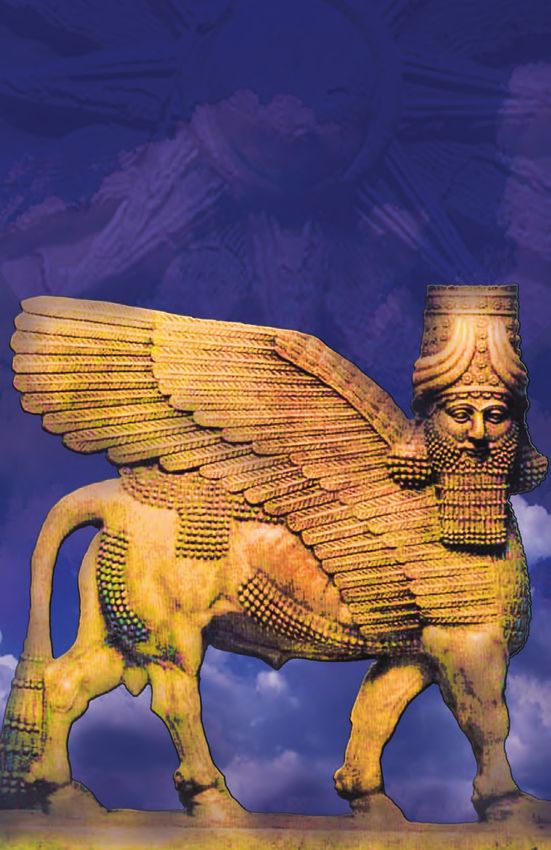
About the artwork: (Front Cover) Gilgamesh grasping a lion, which to some
represents mastering untamed nature. (Back Cover) Lamassu, the head of a
human, body and ears of a bull, and the wings of a bird.
27You can also read


