Comparison of the Measurement of Long-Term Care Costs between China and Other Countries: A Systematic Review of the Last Decade - MDPI
←
→
Page content transcription
If your browser does not render page correctly, please read the page content below
healthcare
Review
Comparison of the Measurement of Long-Term Care
Costs between China and Other Countries:
A Systematic Review of the Last Decade
Qingjun Zeng 1 , Qingqing Wang 2 , Lu Zhang 1 and Xiaocang Xu 1,3, *
 1    School of Economics, Chongqing Technology and Business University, Chongqing 400067, China;
      zqj@ctbu.edu.cn (Q.Z.); melodyzl@163.com (L.Z.)
 2    Research Center for Economy of Upper Reaches of the Yangtse River, Chongqing Technology and Business
      University, Chongqing 400067, China; wqq199412@163.com
 3    Department of Actuarial Studies & Business Analytics, Macquarie University, Sydney 2109, Australia
 *    Correspondence: cangxiaoxu@ctbu.edu.cn

 Received: 1 April 2020; Accepted: 27 April 2020; Published: 29 April 2020

 Abstract: Background: The rapid aging of populations in some countries has led to a growing number
 of the disabled elderly, creating a huge need for Long-Term Care (LTC) and meeting its costs, which
 is a heavy economic burden on the families of the disabled elderly and governments. Therefore,
 the measurement of Long-Term Care (LTC) costs has become an important basis for the government
 to formulate Long-Term Care (LTC) policies, and academic research on Long-Term Care (LTC) costs
 is also in the process of continuous development and deepening. Methods: This is a systematic
 review that aims to examine the evidence published in the last decade (2010–2019) regarding the
 comparison of the measurement of Long-Term Care (LTC) costs between China and other countries.
 Results: Eighteen Chinese studies and 17 other countries’ studies were included in this review. Most
 Chinese scholars estimated long-term care costs based on the degree of disability among the disabled
 elderly. However, the studies of European and American countries are more and more in-depth
 and comprehensive, and more detailed regarding the post-care cost of specific diseases, such as
 Parkinson’s disease, Alzheimer’s disease, and epilepsy. Conclusion: In future academic research, we
 should fully consider the human value of long-term care providers and further study the differences
 in the long-term care costs of different chronic diseases. In China’s future policymaking, according
 to the experience of Germany, Sweden, and other countries, it may be an effective way to develop
 private long-term care insurance and realize the effective complementarity between private long-term
 care insurance and public long-term care insurance (LTCI).

 Keywords: Long-Term Care (LTC); long-term care costs; disabled elderly; institutional care; home care

1. Introduction
     The increasingly aging population has highlighted the urgency of the crisis in healthcare services
for the elderly in China in recent years. According to World Population Prospects (2019), published
by the Department of Economic and Social Affairs of United Nations (WPP2019), population aging
is expected to increase rapidly (South Korea, 38.1%; Japan, 37.7%; Italy, 36.0%; Germany, 30.0%; and
China, 26.1%) by 2050 [1]. According to CSY (China Statistical Yearbook, 2019), the elderly population,
aged 65 or above, reached 167 million in 2018, accounting for 11.9 percent of the total population.
The ODR (old-age dependency ratio) climbed from 9.9% in 2000 to 16.8% in 2018 [2]. The average life
expectancy in China is expected to reach 81.52 years in 2045–2050, which is close to the average of
83.43 years in developed countries (WPP2019). Among them, the number of disabled elderly due
to chronic diseases [3], industrial or agricultural environmental pollution [4–7], accidental injuries,

Healthcare 2020, 8, 117; doi:10.3390/healthcare8020117                       www.mdpi.com/journal/healthcare
Healthcare 2020, 8, 117 2 of 16
and natural aging is increasing sharply. Accordingly, the demand for LTC (Long-Term Care) services
and its cost for the elderly are growing rapidly [8,9]. However, the provision of LTC (Long-Term Care)
services such as policy formulation, operational models, and, especially, fund-raising lag far behind in
China. As a result, the “Healthy China Strategy” has been proposed in the Report of the 19th National
Congress of China.
Long-Term Care (LTC) refers to the various supportive personal and social services needed by
people who are unable to take care of themselves for a long time. The existing definitions differ in the
causes of incapacitation and the content of services, leading to the definition of LTC being somewhat
vague. For instance, the World Health Organization (WHO) considers LTC to be “a system of care
activities carried out by informal caregivers (family, friends or neighbors) and professionals (health
and social services) to ensure that those who do not have full self-care capacity continue to enjoy a
higher quality of life” [10]. The National Institute on Aging (NIA) indicates that “Long-term care
involves a variety of services designed to meet a person’s health or personal care needs during a
short or long period of time. These services help people live as independently and safely as possible
when they can no longer perform everyday activities on their own” [11]. The Health Insurance
Association of America (HIAA) defines long-term care more broadly, stating that Long-Term Care
(LTC) refers to “the care provided to people with chronic diseases, cognitive impairment, such as
Alzheimer’s disease or in a disabled state, that is, functional impairment, over a long period, which
is made up of medical services, social services, home services, delivery services, or other support
services” [12]. The difference between the HIAA’s and NIA’s definitions of “Long-Term Care (LTC)” is
mainly reflected in three aspects. Firstly, the causes of service demand can include physical impairment
and cognitive impairment. Secondly, the categories of services include both services involving the
basic needs of the elderly, such as personal care and daily living, and extended and supportive services,
such as healthcare and psychological care. Thirdly, the long-term care service forms can be either
home nursing, that is, professional nursing personnel door-to-door service, or institutional nursing,
that is—including in nursing homes—apartments for the elderly and other non-hospital professional
nursing institutions for professional care. The definition of LTC by the HIAA has been widely used in
academic discussions and the construction of the long-term care service system in China. Therefore,
this paper makes some special definitions regarding LTC. Firstly, the target group of LTC service is
only defined as the elderly, although children are not excluded from the definition of LTC. Secondly,
the service categories of LTC include both daily care and healthcare after hospital care. Therefore, the
differences between the postoperative care costs of different diseases can also constitute a discussion
topic regarding the cost of LTC. Thirdly, the care forms of LTC consist of institutional care, community
care, and home care. Even in recent years, some countries, such as China, have tried many innovations
for the continuous improvement of long-term care service systems. For example, despite the name
of “hospital”, a “hospital for the elderly” is essentially a nursing institution similar in nature to
nursing homes.
Long-term care systems have made great progress in developed countries since the 1960s. The LTC
system in the UK is less dependent on public funds than in most other European countries. Its LTC
services are financed by the National Health Service (NHS) and local governments [13]. In Japan,
the Long-Term Care Insurance (LTCI) system was implemented in 2000 to cope with the growing
costs of LTC. The applicant can decide the care level according to the amount available, and care
beyond the fixed amount must be undertaken privately [14–16]. Sweden established a tax-based LTC
system in the 1970s. Every city must provide help if the care demands of an individual cannot be
satisfied [17]. In general, the scope of LTC and ability to meet the cost of providing it have been limited
since a severe economic crisis in the 1990s. As a consequence, those countries will face substantial
sustainability problems in providing LTC in the future. In China, the demand for LTC services has
increased dramatically due to the aging population. The number of people aged 65 and above increased
from 96 million in 2003 to about 150 million in 2018 [18]. However, the supply of LTC services, such
as fund-raising, lags far behind. However, the government have introduced a series of policies andHealthcare 2020, 8, 117 3 of 16
measures, such as the pilot of LTC insurance (LTCI), to establish a comprehensive LTC service system,
in recent years.
The major difference between the U.S. and the other countries was the level of public funding,
which was universally provided in Sweden, Denmark, and the Netherlands but only provided publicly
by the U.S. to the disabled and indigent population or in a limited way to individuals after a hospital
stay. The level of public funding is nearly 100% for Denmark, Sweden, and the Netherlands but only
72.9% in the United States [19]. As a result, the total U.S. long-term care spending paid out of pocket by
patients and/or families in 2011 was $45.5 billion [20]. Cash for care programs have been reported to be
a part of all three European countries’ LTC publicly provided programs, but this was not the case in
U.S., which does not yet have a national model for these programs. Additionally, the U.S. LTC system
lacked coverage for a large number of citizens compared to the systems of other OECD countries,
where the major flaws of their LTC systems were the excessive costs and poor sustainability.
Compared with the systems in European and American countries, China’s Long-Term Care (LTC)
system started late and developed relatively slowly. For example, China’s government-led public
Long-Term Care Insurance (LTCI) has only been officially piloted in 15 cities, including Qingdao,
Chongqing, and Shanghai, since 2016. Therefore, it is very important for China to learn from the
valuable experience of Germany, Sweden, and other European and American countries that started
to implement the Long-Term Care (LTC) system in the 1990s, as well as their relevant theoretical
research. This review aims to examine the evidence published in the last decade (2010–2019) regarding
the measurement of Long-Term Care (LTC) costs between China and other countries, and through
the comparisons, to explore the academic space for further research, with a hope to provide policy
recommendations for the construction of China’s Long-Term Care (LTC) system.
2. Materials and Methods
This review was carried out to explore related studies published in the last decade (2010–2019)
regarding the comparison of the measurement of Long-Term Care (LTC) costs between China and
other countries.
2.1. Literature Search Source
Our review was carried out to show the measurement of Long-Term Care (LTC) costs in related
studies. The databases mentioned in our review mainly were: Web of Science, Medline, SCOPUS,
EBSCO, PubMed, and CNKI (China). The following combinations of terms were used, with the Boolean
phrase "and/or", to maximize the scope and type of material referred in the search: “Long-Term Care
cost” OR “LTC cost”. The search was carried in Chinese and English. We also added a Chinese research
database named VIP (China) to look for any studies that might be missing.
2.2. Data Extraction Criteria
Preliminary inclusion criteria: the selection criteria for publications were as follows: (1) studies on
the measurement of Long-Term Care (LTC) costs; (2) research conducted in China and other countries,
which should be strictly separated to facilitate subsequent analysis; and (3) research published from
January 2010 to December 2019. Publications based on opinions or comments, editorials, and summaries
of meetings were not included.
Exclusion criteria: these included articles reporting on the results of a qualitative study, quantitative
analyses, surveys, feasibility studies, relationship measurements, satisfaction studies, “what-if”
analyses, and data collection techniques. Publications based on opinions or comments, editorials, and
summaries of meetings were not included. The results were initially extracted by one researcher and
then cross-checked by another to ensure that all data had been screened and reviewed. If there was
a difference of opinion between the two researchers, a third researcher was invited to express their
opinion and finally reach an agreement. All publication information was exported to the Excel database
via Endnote, and duplicate sections were removed. We followed some previous special definitionsHealthcare 2020,8,8,117
Healthcare2020, x 4 4ofof1716
the Excel database via Endnote, and duplicate sections were removed. We followed some previous
regarding LTC as described previously in this paper. Finally, 18 Chinese studies and 17 other countries’
special definitions regarding LTC as described previously in this paper. Finally, 18 Chinese studies
studies were retained for the review.
and 17 other countries' studies were retained for the review.
The information extracted from all the included publications was as follows: time frames,
The information extracted from all the included publications was as follows: time frames, study
study methodology (design, purpose, participants, and tools), samples, and key conclusions. All the
methodology (design, purpose, participants, and tools), samples, and key conclusions. All the
analysis
analysisresults
resultswere
wereanalyzed
analyzed in
in the
the following
following process (as shown
process (as shown in
in Figure
Figure 1).
1).
Figure 1. Flow diagram of study selection (PRISMA). Note: Moher D, Liberati A, Tetzlaff J, Altman
DG, The1.PRISMA
Figure Group of
Flow diagram (2009) [21].
study selection (PRISMA). Note: Moher D, Liberati A, Tetzlaff J, Altman
DG, The PRISMA Group (2009) [21].
2.3. Quality Assessment
2.3. Quality Assessment
Study quality was independently assessed by the two researchers using the Risk of Bias
Assessment
Study Tool for was
quality Non-Randomized
independentlyStudies (RoBANS)
assessed [22]. researchers
by the two The criteria using
includedthethe
Riskselection
of Biasof
participants, confounding variables, intervention measurements, the blinding of outcome
Assessment Tool for Non-Randomized Studies (RoBANS) [22]. The criteria included the selection of assessments,
the incompleteness
participants, of outcomevariables,
confounding data, and selective outcome
intervention reporting. Each
measurements, thecriterion
blinding wasofevaluated
outcomeas
“low risk of bias”,
assessments, “high risk of bias”,
the incompleteness or “unclear”.
of outcome data, In cases
and of disagreement,
selective each caseEach
outcome reporting. was discussed
criterion
with a third researcher. The quality of the included studies is summarized in Table 1.
was evaluated as “low risk of bias”, “high risk of bias”, or “unclear”. In cases of disagreement, each
case was discussed with a third researcher. The quality of the included studies is summarized in
Table 1.Healthcare 2020, 8, 117 5 of 16
Table 1. Quality of studies.
Blinding of Incomplete Selective
Selection of Confounding Intervention
Risk of Bias Outcome Outcome Outcome
Participants Variables Measurement
Assessment Data Reporting
Jin et al. [23], 2010 • 4 • • ※ •
Lu [24], 2013 • 4 4 • • •
Feng et al. [25], 2013 • 4 • • • •
Hu [26], 2015 4 • ※ • 4 4
Yuan [27], 2018 • 4 ※ • ※ •
Liu & Zhong [28], 2018 • 4 ※ • • 4
Xu et al. [29], 2019 • • 4 • • •
Fengyue&Junko [30], 2018 • ※ ※ • ※ •
Yu et al. [31], 2015 • 4 ※ • 4 ※
Fan et al. [32], 2016 • 4 ※ • • •
Qun [33], 2013 4 4 • • • •
Li et al. [34], 2018 • 4 ※ • ※ •
Jin, Li, et al. [35], 2018 ※ 4 • • ※ ※
Yang et al. [36], 2016 • 4 • • • •
Lu et al. [37], 2017 • • ※ • • •
Huang et al. [38], 2012 • 4 ※ • 4 •
Song et al. [39], 2016 • 4 • • • •
Fen et al. [40], 2017 • 4 ※ • • ※
Ryan Greysen [41], 2017 • 4 ※ • • 4
Lagergren et al. [42], 2018 • • ※ • ※ •
Sharada et al. [43], 2018 • 4 • • 4 •
Larissa S et al. [44], 2012 • 4 • • ※ •
Mitsuhiro S et al. [45], 2018 • • ※ • • •
Hajime T et al. [46], 2019 ※ 4 4 • ※ 4
Greg A et al. [47], 2015 • ※ ※ • • •
Ramon L et al. [48], 2018 • • ※ • • •
Julieta et al. [49], 2016 • 4 ※ • • •
Saori et al. [50], 2017 • ※ • • • •
Edward et al. [51], 2016 • 4 • • • ※
Vicky et al. [52], 2017 ※ 4 4 • 4 •
Julie [53], 2019 • 4 • • ※ •
Shota Hamada et al. [54], 2019 • 4 ※ • • •
Peter et al. [55], 2015 • • ※ • 4 4
Maria et al. [56], 2017 4 4 4 • • 4
Leena et al. [57], 2017 • 4 • • ※ •
Notes: • Low risk of bias; 4 High risk of bias; ※ Unclear.
3. Results
3.1. A Preliminary Review of the Relevant Literature
It was found that three-quarters of the studies were made up of quantitative research, while
qualitative research only accounted for one quarter. Moreover, the qualitative method was used in
most research in China, while quantitative methods could be found in nearly every article in other
countries, in which the acceptance by and understanding of the readers could be better.Healthcare 2020, 8, 117 6 of 16
From the publication point of view, the journals that published the most related papers were BMC
Health Services Research, Geriatrics & Gerontology International, PLOS One, Public Health Nursing, Nursing
Research (Chinese), and Chinese Health Economics (Chinese), respectively. Among them, BMC Health
Service Research and PLOS One were tied at 15% each, and Geriatrics & Gerontology International and
Public Health Nursing each had 10%. Besides, it was interesting that some of them were nursing and
health, biology, physics, and other comprehensive journals, which are not pure medical journals.
3.1.1. Classification by Country Studied
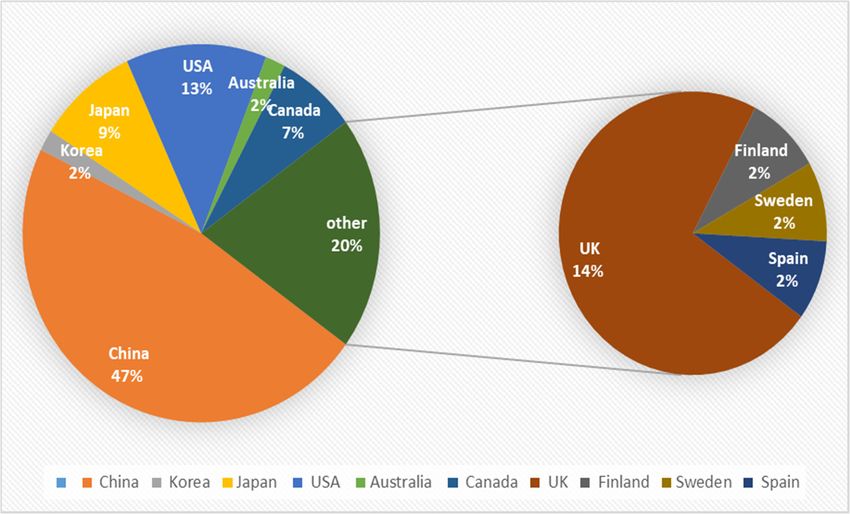
The classification of articles published regarding the measurement of LTC (Long-Term Care) costs
Healthcare
in 2020,
different 8, x
countries is presented in Figure 2. 7 of 17
Figure
Figure 2. Classification of
2. Classification of publication
publication by
by country
country studied.
studied.
It can be seen from Figure 2 that the pie chart on the left is divided into eight parts according to
It can be seen from Figure 2 that the pie chart on the left is divided into eight parts according to
the research object for LTC in related articles. It was clear that China has become the most popular
the research object for LTC in related articles. It was clear that China has become the most popular
research object, accounting for nearly half of all the published articles, and the study of LTC in the UK
research object, accounting for nearly half of all the published articles, and the study of LTC in the
ranked the second. Meanwhile, the United States came in third place, accounting for 14% of the pie
UK ranked the second. Meanwhile, the United States came in third place, accounting for 14% of the
chart. It can be observed that there is a small circle on the right, composed of Spain, Sweden, Germany,
pie chart. It can be observed that there is a small circle on the right, composed of Spain, Sweden,
and Finland.
Germany, and Finland.
3.1.2. Classification by Publication Year
3.1.2. Classification by Publication Year
The classification of articles published on LTC (Long-Term Care) costs across the timeline of the
The classification of articles published on LTC (Long-Term Care) costs across the timeline of the
study (2010–2019) is presented in Figure 3.
study (2010–2019) is presented in Figure 3.pie chart. It can be observed that there is a small circle on the right, composed of Spain, Sweden,
Germany, and Finland.
3.1.2. Classification by Publication Year
Healthcare 2020, 8, 117 7 of 16
The classification of articles published on LTC (Long-Term Care) costs across the timeline of the
study (2010–2019) is presented in Figure 3.
Figure 3.
Figure Classification of
3. Classification of publication
publication by
by year.
year.
It can be seen from Figure 3 that the amount of research on LTC is not large in general and
currently in a declining state, with peaks in 2017 and 2018. Nevertheless, it has shown a wavy upward
trend. The attention of some scholars had been attracted to LTC since 2010. After a brief decline in
2014, it peaked in 2017 and 2018. Based on the analysis above, it can be inferred that more and more
scholars at home and abroad have devoted themselves to the research of long-term care costs since 2014
and gradually achieved excellent results. The result could be attributed to the increasing emphasis
on nursing in various countries. At the same time, it was reflected that the development of social
structures in various countries is becoming more and more perfect.
3.2. Measurement of Long-Term Care Costs in China
In 2010, the cost accounting of home care programs was shown by Jin et al. [23], and the research
into long-term care costs is getting more and more diversified (as shown in Table 2).
Table 2. Literature related to the measurement of Long-Term Care (LTC) costs in China.
Rank Author, Date Methodology Sample Key Conclusions
The government should increase
Nine general service teams
the price of home care services
Semi-structured of the Yin hang
1 Jin et al. [23], 2010 and include it into medical
interview community health service
insurance to meet the cost
center of Shanghai
compensation of home care.
The long-term care security
The annual long-term care
Microsimulation system makes resources flow
2 Lu [24], 2013 social insurance payment
method from high-income groups to
rate from 1995 to 2010
low-income groups.
Demand for long-term care in
Community-dwelling
Feng et al. [25], Shanghai led to a surge in
3 ADL and IADL elderly in Shanghai,
2013 long-term care costs between
1998–2008
1998 and 2008.Healthcare 2020, 8, 117 8 of 16
Table 2. Cont.
Rank Author, Date Methodology Sample Key Conclusions
Long-term care costs for the
Data on disabled elderly
4 Hu [26], 2015 Markov model elderly will soar in China in the
people in China
future.
Sample survey data of China should pay attention to
Multiple logit
5 Yuan [27], 2018 disabled elders in the three the financial pressure borne by
regression analysis
provinces of the northeast fund providers.
It is imperative to establish a
Liu and Zhong [28], CHARLS data for 2011,
6 Markov model national long-term care social
2018 2013, and 2015
assistance system.
It is predicted long-term care
The data of disabled
Bayesian quantile costs for each disability state of
7 Xu et al. [29], 2019 elderly people in China
regression the elderly in China will rise
from 2003 to 2016
sharply from 2020 to 2050
Controlling labor costs and
Fengyue and Junko First-class nursing patients
8 Field investigation reducing material costs are the
[30], 2018 in China
keys to reducing the LTC costs.
It is suggested that the value of
Nursing project prices in nursing technical labor services
9 Yu et al. [31], 2015 Comparative Study Chongqing 2014 and should be properly reflected
Guangdong 2006 when formulating the price of
nursing projects.
A primary care patient in a
LTC costs can be included in the
Field survey and tertiary hospital in
10 Fan et al. [32], 2016 scope of medical insurance
expert consultation Chongqing from January
reimbursement.
to March 2013
Top three elderly-hospitals The adjustment of LTC service
11 Qun [33], 2013 Comparative Study
in Beijing (China) prices has a long way to go.
The constructed pricing model
2012 edition of the medical of nursing service projects can
Essential thoughts
12 Li et al. [34], 2018 service price item measure the value of LTC
of RBVS
specification work manual services and fully reflect the
LTC costs.
Labor cost is a major factor in
Jin, Li, et al. [35], Multiple linear 42 service items in
13 the cost of long-term care
2018 regression Shanghai
services.
The total cost of institutional
Yang et al. [36], A policy evaluation 51 elderly of nursing care is far less than the cost of
14
2016 of new models patients general hospital inspections and
other routine expenses.
Public long-term care policies in
Multiple linear Elderly chronic patients in China should focus on the
15 Lu et al. [37], 2017
regression the urban area of Hefei distinction between institutional
care and home care.
Through home care cost
accounting, the government can
Comparison of the costing
Huang et al. [38], Multi-status provide information for the
16 methods around the world
2012 transition model government based on the family
with Taiwan, China
cost data for the elderly with
different functional levels.
To be cost-effective, community
Community and
Song et al. [39], care services should target
17 Comparative study institutional care survey
2016 patients with a medium physical
data
disability.
8500 residents aged over Formal care provision in
60 in Jiang Ning Road Shanghai was not determined
18 Fen et al. [40], 2017 Logistic model
were randomly selected by ADL scores but was instead
and observed in 2014 more related to income.Healthcare 2020, 8, 117 9 of 16
Most Chinese scholars estimated long-term care costs based on the degree of disability among
the disabled elderly. For example, Lu [24], Feng et al. [25], Hu [26], and Yuan [27] calculated the basic
LTC costs based on the Activities of Daily Life (ADL) classification of mild, moderate, and severe
dysfunction. In addition, Liu and Zhong [28] compared the LTC costs generated by patients with
different ADL function obstacles with the living allowances in urban and rural areas, which could be
a new reference for the long-term care cost system. Xu et al. used the Bayesian quantile regression
method to measure the high, medium, and low levels of long-term care cost prediction for each
disability state of the elderly in China from 2020 to 2050 [29].
Other Chinese scholars focus on how to integrate the human value of nursing staff into the
measurement system for long-term care costs, so as to achieve the goal of the scientific and reasonable
measurement of long-term care costs. The value of nurses was noticed in the studies of Fengyue and
Junko [30], Yu et al. [31], and Fan et al. [32], which discussed the LTC costs in Chongqing, Guangdong,
and other provinces in China. Qun [33] compared the LTC costs in nine provinces of China with those
in Texas, U.S. Li et al. constructed a pricing model for nursing service projects that can measure the
value of LTC services and fully reflect the LTC costs [34]. With the development of the nursing industry,
a variety of nursing services could be offered by nursing institutions, communities, and even in homes,
aside from hospitals. The process of providing home care services in a community of Shanghai was
discussed by Du et al. [35]. They calculated the cost of five plates, including manpower, materials,
and another three big plates, and it was found that the current charge for the home care services could
not cover the necessary expenditures.
The comparison of long-term care costs under different forms of care (such as institutional care,
community care, and home care) has become another important topic of academic discussion regarding
the development of elderly care institutions in China. Yang et al. [36] and Lu et al. [37] revealed that
the total cost of institutional care is far less than the cost of general hospital inspections and other
routine expenses. The direct and indirect costs of home care were calculated by Huang et al. [38] and
Song et al. [39]. It can be concluded from their research that institutional care is suitable for patients
whose daily life is marked by high dependence, while home or community care could be a better
option for the less dependent. Then, a survey of the influencing factors for the utilization and cost of
formal care in the elderly community of Shanghai was conducted by Fen et al. [40], who found that
professional home care was more cost-effective compared with the care provided by family members.
In a word, LTC-related research is a relatively new concept in China. With the pilot practice of the
LTCI system in Qingdao, Shanghai, Chongqing and other places, LTC-related research has begun to
rise. However, due to the lack of official statistics and uniform standards of LTC costs, these studies
have many difficulties, especially in empirical studies.
3.3. Measurement of Long-Term Care Costs in Other Countries
Developed countries such as those in Europe and the United States have paid attention to
long-term care costs earlier, and the research objects were more diversified and comprehensive
(as shown in Table 3). It was found by Ryan Greysen [41] that the LTC costs for the elderly with the
highest level of functional disorders were 77% higher than for those without functional disorders.
Lagergren et al. [42] predicted the future LTC costs in Japan and Sweden based on age, gender, and
degree of ADL dysfunction.Healthcare 2020, 8, 117 10 of 16
Table 3. Literature related to the measurement of LTC costs in other countries.
Rank Author, Date Methodology Sample Key Conclusions
Create a
Functional impairment is
nationally-representative
Generalized linear associated with increased
sample of 16,673 Medicare
model; gamma Medicare costs for post-acute
Ryan Greysen [41], hospitalizations for 8559
1 regression model; care and may be an unmeasured
2017 community-dwelling
goodness-of-fit but important marker of
seniors from 2000 to 2012
analysis long-term costs that cut across
using the Health and
conditions.
Retirement Study (HRS).
Japanese data on LTC
The sustainability of LTC
assessments in nine
systems is a high priority in
Weighted Japanese municipalities,
Lagergren et al. Japan and Sweden, and better
2 logarithmic, linear grouped. A corresponding
[42], 2018 decision support is needed to
regression Swedish dataset from eight
guide policy in this area of the
varied municipalities was
welfare state.
collected in 2002 and 2007.
Between 1994 and 2013,
7271 PD patients who met Healthcare costs attributable to
Logistic regression; study inclusion criteria PD increase in the year
Sharada et al. [43],
3 propensity score were identified in linked following diagnosis and are
2018
matching CPRD-HES; 7060 were higher for patients with
matched with controls in indicators of advanced disease.
the United Kingdom (UK).
Dementia poses a substantial
additional burden on the
Claims data from the AOK
Wilcoxon test; the German social security system,
Larissa S et al. [44], Bavaria Statutory Health
4 generalized linear and female dementia patients
2012 Insurance fund of 9147
model need to be a key target group for
dementia patients in 2006
health services research in an
aging society.
The societal cost of dementia in
The Survey of Long-Term Japan appeared to be
Mitsuhiro S et al. Multiple regression
5 Care Benefit Expenditures considerable. Interventions to
[45], 2018 analysis
in Japan mitigate this impact should be
considered
169 patients with
Cross-section As the number of patients with
Hajime T et al. [46], Alzheimer’s disease or
6 analysis on time Alzheimer’s disease increases,
2019 mild cognitive impairment
series direct social costs will increase.
in Japan
Care trajectories after stroke
3811 veterans hospitalized
were associated with stroke
for ischemic stroke in
Greg A et al. [47], Polynomial severity and functional
7 Veterans Health
2015 regression model dependency and then
Administration facilities in
had a dramatic impact on
2007
subsequent costs.
Hospital care costs were
significantly higher than for
All patients with first-ever
Ramon L et al. [48], Multiple regression stroke over the long term and
8 incident ACLVI from 2002
2018 model were similar after the inclusion
to 2012
of the costs of
institutionalization.
This study is the first to provide
699 patients diagnosed long-term cost estimates for
Julieta et al. [49], Kaplan–Meier and treated for CRC in CRC treatment, by stage at
9
2016 method 2000–2006 (Spanish, diagnosis and phase of care,
Barcelona). based on data from clinical
practice in Spain.
The cost of preparing the PPE
Saori et al. [50], Questionnaire Facilities affiliated with the needed for the preventive
10
2017 survey Kyoto Prefecture measures varied among the
facilities.Healthcare 2020, 8, 117 11 of 16
Table 3. Cont.
Rank Author, Date Methodology Sample Key Conclusions
Increasing length of stay to
Expected prognosis of optimize IV thiamine
Edward et al. [51], Markov chain patients under alternative replacement will place
11
2016 model admission strategies over additional strain on acute care
35 years in the UK but has potential UK public
sector cost savings.
The increase in the need for care
Vicky et al. [52], Multivariable Adults aged over 65 in
12 with BMI gives rise to additional
2017 logistic regression England
costs in social care provision.
At three years postoperatively
All patients who had versus preoperatively, episodes
received primary bariatric of care and costs reduced
13 Julie [53], 2019 ABF model
surgery in a Tasmanian substantially, particularly for
public hospital people with
diabetes/cardiovascular disease.
There was no apparent
Shota Hamada et al. Generalized linear 1324 residents who were association between the level of
14
[54], 2019 regression models admitted in 2015 in Japan long-term care needs and drug
costs.
This analysis adds new
information about the breadth
Peter et al. [55],
15 Double tail test Ontario, Canada of end-of-life healthcare, which
2015
consumes a large proportion of
Ontario’s healthcare budget.
Demographic, societal, and
The elderly aged 65 years health changes could
Maria et al. [56],
16 Time-series design and above of 28 European considerably affect LTC needs
2017
countries from 2004 to 2015 and services, resulting in higher
LTC related costs.
The elderly aged 70 years Costs of LTC decreased as
Leena et al. [57], Cox proportional
17 and above in 2002–2013 in sheltered housing replaced
2017 hazard models
Finland. institutional LTC.
As the research on long-term care is more and more in-depth and comprehensive, the research on
long-term care costs was more detailed regarding the post-care costs of specific diseases. Some studies
on the LTC costs of Parkinson’s disease [43–45], Alzheimer’s disease [46–48], colorectal cancer [49],
and viral gastroenteritis [50] were conducted. In addition to cancer, which has been a problem for
a long time, even research on the LTC costs of alcoholism was carried out by Edward et al. [51].
Overweightness is a public health problem all over the world, and obesity has become a common
disease. Thus, Vicky et al. [52] calculated the differences in LTC costs associated with BMI in UK and
found that the larger the body mass index, the higher the related costs were. Julie [53] discovered that
the cost of care could be decreased after bariatric surgery in Australia. Besides, the LTC cost might
be affected by the payment policies of the government, which has been proved by the work of Shota
Hamada et al. [54].
Comparisons of long-term care costs under different forms of care, such as institutional care and
home care, are also a focus of research in developed countries. Peter et al. [55] compared the LTC costs
for high-income people with those for the farmers in institutional care and proved that the LTC cost
for farmers was much less. In order to explore whether the increase in the elderly population will
make long-term care costs rise, the trajectory of long-term care in 28 European countries was explored
by Maria et al. [56], and it was found that the cost reduced as the expenditure of the government on
health services was increased. At the same time, the elderly over 65 had turned to home care, which
reflects the cost-effectiveness of home care to some extent. Leena et al. [57] studied the cost of all-day
use on long-term care from 2002 to 2013 in Finland, and it was discovered that the cost in the shelters is
much lower than that in nursing institutions.Healthcare 2020, 8, 117 12 of 16
4. Discussion
With the acceleration of the population aging process in most countries, long-term care has
gradually been accepted by the global community. After more than 20 years of research and practice,
developed countries have generally recognized that the long-term care service system should be
effectively separated from the medical system, and a relatively independent long-term care service
system should be established. At the same time, developed countries, especially Germany, Japan,
and the United States, have initially established long-term care service systems supported by public
long-term care insurance system as the main body, and service standards and norms, supplemented by
the active participation of family members, social workers, and volunteers. In view of the rapidly aging
society in China, it is imperative to actively explore the establishment of an independent long-term care
service system. However, China’s social pension and nursing function mechanism has not been paid
enough attention to and developed well, especially in the sense that medical insurance does not pay
long-term nursing expenses. As a result, high nursing expenses are unbearable for ordinary families.
Therefore, our review systematically searched the articles on the measurement of long-term care costs
from 2010 to 2019, and compared China with other countries, hoping to further expand the academic
space for the study of long-term care costs in China in the future and to provide an important policy
basis for the government to build a sustainable long-term care service system.
In 2010, cost accounting for home care programs was shown by a study published in the Nursing
Journal of the Chinese People’s Liberation Army [23], and research into long-term care costs is getting
more and more diversified. Until 2017 and 2018, the peak number of articles had been published
so far, which means that the study of long-term care costs is gradually becoming more and more
acceptable. It is acknowledged that, at the same time, academic circles at home and abroad are also
quietly changing. Besides, it can be observed that qualitative research methods are applied in most
studies in China, while studies around the world mainly use quantitative research methods, and the
number of related articles around the world has exceeded those in China. It is believed that much
related research on long-term care in various countries will appear in well-known journals at home
and abroad in the future. The research objects are more extensive, and the content is more detailed.
The establishment of long-term care systems in various countries is no longer empty talk.
In terms of specific research content or research perspectives, China and other countries show
some similarities and differences.
Firstly, most Chinese scholars estimated long-term care costs based on the degree of disability
among the disabled elderly [24–27]. Moreover, Xu et al. used the Bayesian quantile regression method
to measure the high, medium, and low levels of long-term care cost prediction for each disability state
of the elderly in China from 2020 to 2050 [28], which could be a new reference for the long-term care
cost system. On the other hand, there are also a large number of relevant studies based on the degree of
ADL dysfunction in European and American countries [41,42]. In fact, studies on long-term care costs
in European and American countries were carried out earlier. For example, Martin [58] predicted the
future costs for long-term care costs in the United Kingdom, with analysis also based on the degree of
disability. It can be seen that both the studies in China and in other countries estimated long-term care
costs based on the degrees of disability among the disabled elderly, which implies that the accurate
prediction of the scale of disabled and semi-disabled elderly will be important in the measurement of
long-term care costs in China in the future.
Secondly, both China’s and other countries’ scholars are starting to pay attention to how to integrate
the human value of nursing staff into the measurement system for long-term care costs, so as to
achieve the goal of the scientific and reasonable measurement of long-term care costs [30–32]. However,
the studies of European and American countries are more and more in-depth and comprehensive,
and more detailed regarding the post-care cost of specific diseases, such as Parkinson’s disease [43–45],
Alzheimer’s disease [46–48], colorectal cancer [49], and viral gastroenteritis [50].
Thirdly, the long-term care costs under different forms of care (such as institutional care, community
care, and home care) have become another important topic of academic discussion regarding theHealthcare 2020, 8, 117 13 of 16
development of elderly care institutions in China [36–40] and other countries [55–57]. By comparison,
the relevant research in China is still a simple analysis of the comparison of long-term care costs
under different forms of care, but the relevant research in other countries has begun to delve into the
expectations and comparison of long-term care costs of different forms of care among patient groups
with different income or education levels [55].
In conclusion, the scientific measurement of long-term care costs is an important basis for the
government to formulate a long-term care policy in response to the aging population. Through the
comparison between China and other countries in this review, we found that the measurement of
LTC costs is more and more refined, which is mainly reflected in two aspects: the comparison of
LTC costs after discharge for different chronic diseases, and the comparison of LTC costs for different
nursing methods. This also provides us with the countermeasures to solve this problem in the future.
Firstly, the accurate prediction of the scale of disabled and semi-disabled elderly is important for the
measurement of long-term care costs in China in the future. Secondly, the human value of long-term
care providers should be taken into account, and the differences of long-term care costs due for different
chronic diseases should be further studied. Moreover, the comparison of long-term care costs based on
different care methods (institutional care, home care, or community care) is also an important basis for
policymaking. Facing increasing long-term care costs, fund-raising has become a key aspect in the
construction of the long-term care service system. According to the experience of the USA, Sweden,
and other countries, in the long run, public long-term care insurance (LTCI) separated from medical
insurance may not be enough to fully cope with the surging long-term care costs [59]. Therefore,
introducing social capital, developing private long-term care insurance (LTCI) in the private market,
and realizing the effective complementarity between private long-term care insurance (LTCI) and
public long-term care insurance (LTCI) may be an effective pathway [60].
At present, to cope with the increasing cost of LTC, some countries have implemented and
gradually improved LTCI systems, which can be divided into two types. The first is the Nordic “welfare
state” model of comprehensive public welfare, which is obviously not suitable for China’s specific
national conditions. The second is the “corporatist-welfare” model, which emphasizes the equivalence
of LTCI rights and obligations and is more in line with China’s current national conditions [12]. Firstly,
publicly providing LTC to all of its citizens without regard to the individual need for public assistance
is the basis of the LTC system in Sweden. However, it is an extremely expensive system that is
fraught with the potential for abuse [19]. Secondly, home care may be cheaper than institutional care.
For instance, Sweden and some OECD countries in Europe focus on providing home care versus
institutional care. However, LTC public funding was almost exclusively provided in institutions due
to the vast majority of LTC being provided by family and friends in USA. This is similar to in China,
where most of the LTC now consists of home care and community care. In addition, how to allocate
the value of LTC services, such as the manpower value of service providers, is also an important
consideration in the future development of the LTC system in China.
5. Conclusions
This review includes 20 Chinese articles and 22 articles from other countries. Through comparison,
this review draws some valuable conclusions for future academic research and policymaking. In future
academic research, we should fully consider the human value of long-term care providers and further
study the differences in long-term care costs due to different chronic diseases. This review was limited
by the amount of current research on this topic, the search strategy utilized, the number of databases
searched, and researchers’ and publication bias that may have affected the value and accessibility of
the research recognized. We will continue to improve in future research.
Author Contributions: Conceptualization, X.X.; methodology, L.Z.; software, X.X.; formal analysis, Q.Z.;
investigation, Q.W.; resources, L.Z; data curation, L.Z.; writing—original draft preparation, Q.Z; writing—review
and editing, X.X.; visualization, X.X.; supervision, W.F.; project administration, Q.Z.; funding acquisition, Q.Z.
All authors have read and agree to the published version of the manuscript.Healthcare 2020, 8, 117 14 of 16
Funding: This research was funded by the MOE Project of Key Research Institute of Humanities and Social
Sciences of Research Center for Economy of Upper Reaches of the Yangtse River “Commercial circulation team
funding project”, grant number No: CJSYTD201701, China Chongqing Education Commission Humanities and
Social Sciences Research Project, grant number No: 19SKGH089, and Open subject of Collaborative Innovation
Center for Urban Industries Development in Chengdu-Chongqing Economic Zone, grant number No: KFJJ2019029.
Acknowledgments: We thank Timothy Kyng and Fei Guo at Macquarie University for their thoughtful guidance.
Conflicts of Interest: The authors declare no conflict of interest.
References
1. Department of Economic and Social Affairs of United Nations. World Population Prospects (WPP2019). 2019.
Available online: https://www.un.org/development/desa/zh/news/population/world-population-prospects-
2019.html (accessed on 5 January 2020).
2. National Bureau of Statistics of China. China Statistical Yearbook 2019. Available online: http://www.stats.
gov.cn/tjsj/ndsj/2019/indexch.htm (accessed on 20 January 2020).
3. Xu, X.; Chen, L. Influencing factors of disability among the elderly in China, 2003–2016: Application of
Bayesian quantile regression. J. Med. Econ. 2019, 22, 605–611. [CrossRef] [PubMed]
4. Xu, X.; Xu, Z.; Chen, L.; Li, C. How Does Industrial Waste Gas Emission Affect Health Care Expenditure in
Different Regions of China: An Application of Bayesian Quantile Regression. Int. J. Environ. Res. Public Health
2019, 16, 2748. [CrossRef] [PubMed]
5. Chen, L.; Zhuo, Y.; Xu, Z.; Xu, X.; Gao, X. Is Carbon Dioxide (CO2) Emission an Important Factor Affecting
Healthcare Expenditure? Evidence from China, 2005–2016. Int. J. Environ. Res. Public Health 2019, 16, 3995.
[CrossRef] [PubMed]
6. Huang, X.; Xu, X.; Wang, Q.; Zhang, L.; Gao, X.; Chen, L. Assessment of Agricultural Carbon Emissions
and Their Spatiotemporal Changes in China, 1997–2016. Int. J. Environ. Res. Public Health 2019, 16, 3105.
[CrossRef]
7. Xu, X.; Huang, X.; Huang, J.; Gao, X.; Chen, L. Spatial-Temporal Characteristics of Agriculture Green Total
Factor Productivity in China, 1998–2016: Based on More Sophisticated Calculations of Carbon Emissions.
Int. J. Environ. Res. Public Health 2019, 16, 3932. [CrossRef]
8. Xu, X.; Huang, X.; Zhang, X.; Chen, L. Family Economic Burden of Elderly Chronic Diseases: Evidence from
China. Healthcare 2019, 7, 99. [CrossRef]
9. Zeng, L.; Xu, X.; Zhang, C.; Chen, L. Factors Influencing Long-Term Care Service Needs among the Elderly
Based on the Latest Anderson Model: A Case Study from the Middle and Upper Reaches of the Yangtze
River. Healthcare 2019, 7, 157. [CrossRef]
10. WHO. Home-Based and Long-Term Care, Report of a WHO Study Group; WHO Technical Report Series 898;
World Health Organization: Geneva, Switzerland, 2000.
11. The National Institute on Aging (NIA). Available online: https://www.nia.nih.gov/health/what-long-term-
care (accessed on 11 April 2020).
12. Wei-dong, D. Long Term Care Insurance: A Rational Choice of Old-age Security in China. Popul. J. 2016, 2,
72–81. (In Chinese)
13. Robinson, R.; Dixon, A. United Kingdom Health Care Systems in Transition; European Observatory on Health
Care Systems: Copenhagen, Denmark, 1999.
14. Campbell, J.C.; Ikegami, N. Long-term insurance comes to Japan. Health Aff. 2000, 19, 26–39. [CrossRef]
15. Hiraoka, K. Long-Term Care Insurance and Welfare Mix in Japan; Ochanomizu Joshi Daigaku Jinbunkagaku
Kiyo, Ochanomizu University: Tokyo, Japan, 2001; Volume 54, pp. 133–147.
16. Tsutsui, T.; Muramatsu, N. Care needs certification in the long-term care insurance system of Japan. J. Am.
Geriatr. Soc. 2005, 53, 522–527. [CrossRef]
17. Lagergren, M. The systems of care for frail elderly persons: The case of Sweden. Aging Clin. Exp. Res. 2002,
14, 252–257. [CrossRef] [PubMed]
18. Chen, L.; Zhang, X.; Xu, X. Health Insurance and Long-Term Care Services for the Disabled Elderly in China:
Based on CHARLS Data. Risk Manag. Healthc. Policy 2020, 13, 155–162. [CrossRef] [PubMed]Healthcare 2020, 8, 117 15 of 16
19. Paul, D.D.S., III; David, P.; Schaeffer, K.C. Long-term care policy: What the United States can learn
from Denmark, Sweden, and the Netherlands. In Proceedings of the Business & Health Administration
Proceedings, Chicago, IL, USA, 22–24 March 2017; pp. 223–236.
20. Freundlich, N. Long-Term Care: What Are the Issues? Robert Wood Johnson Foundation. 2014.
Available online: http://www.rwjf.org/content/dam/farm/reports/issue_briefs/2014/rwjf410654 (accessed
on 18 September 2016).
21. Moher, D.; Liberati, A.; Tetzlaff, J.; Altman, D.G.; The PRISMA Group. Preferred Reporting Items for
Systematic Reviews and Meta-Analyses: The PRISMA Statement. PLoS Med. 2009, 6, e1000097. [CrossRef]
22. Kim, S.Y.; Park, J.E.; Lee, Y.J.; Seo, H.J.; Sheen, S.S.; Hahn, S.; Jang, B.H.; Son, H.J. Testing a tool for assessing the
risk of bias for nonrandomized studies showed moderate reliability and promising validity. J. Clin. Epidemiol.
2013, 66, 408–414. [CrossRef]
23. Liu, J.; Lu, W.; Xu, Q.; Wang, Z. Cost accounting of home care items in community health service centers.
Nurs. J. Chin. People’s Lib. Army 2010, 27, 736–738. (In Chinese)
24. Chen, L. Financial support and fair guarantee of long-term care costs in China. Financ. Res. 2013, 39, 73–85.
(In Chinese)
25. Feng, Q.; Zhen, Z.; Purser, J. Trends in ADL and IADL disability in community-dwelling older adults in
Shanghai, China, 1998–2008. J. Gerontol. B Psychol. Sci. Soc. Sci. 2013, 68, 476–485. [CrossRef]
26. Hong-wei, H. Demand assessment and forecast of China’s elderly Long-Term Care services. China Popul. Sci.
2015, 3, 79–89. (In Chinese)
27. Li, Y. Calculation and analysis of the scale of long-term care funds for disabled elders in China. Popul. J.
2018, 40, 78–85. (In Chinese)
28. Liu, X.; Zhong, R. Estimation of the cost of social assistance for the elderly in the “dual hardship” of Chinese
cities. J. Anhui Norm. Univ. (Hum. Soc. Sci.) 2018, 46, 97–106. (In Chinese)
29. Xu, X.; Chen, L. Projection of Long-Term Care Costs in China, 2020–2050: Based on the Bayesian Quantile
Regression Method. Sustainability 2019, 11, 3530. [CrossRef]
30. Fengyue, L.; Junko, O. Financing elderly people’s long-term care needs: Evidence from China. Int. J. Health
Plan. Manag. 2018, 33, 479–488. [CrossRef]
31. Yu, X.; Deng, A.; Hu, Y.; Wu, C.; Qiu, J.; Guo, W. Comparative analysis of the price of nursing items between
Chongqing’s medical service price specification (2014 version) and Guangdong’s current medical service
price specification. Chin. Health Econ. 2015, 34, 50–53. (In Chinese)
32. Zeng, F.; Ye, H.; Luo, Y. Cost accounting of primary care in the surgical system of a tertiary hospital in
Chongqing. Chongqing Med. 2016, 45, 2156–2157. (In Chinese)
33. Zhang, Q.; Yao, H.; Chen, Y. Necessity of price adjustment of comprehensive medical service items in China
from the perspective of low nursing fees. China Health Econ. 2013, 32, 20–22. (In Chinese)
34. Li, L.; Song, Z.; Zheng, S. Research on pricing model of nursing service items based on health economics and
RBRVS. Nurs. Res. 2018, 32, 55–59. (In Chinese)
35. Du, L.; Feng, L.; Peng, Y.; Wang, C.; Xie, C.; Chen, D.; Cao, Y.; Ding, H. Cost accounting and analysis of
influencing factors for long-term care services in Shanghai. Chin. Health Econ. 2018, 37, 41–44. (In Chinese)
36. Yang, W.; He, J.; Mossialos, E. Financing institutional long-term care for the elderly in China: A policy
evaluation of new models. Health Policy Plan. 2016, 31, 1391–1401. [CrossRef]
37. Lu, B.; Liu, X.; Yang, M. A budget proposal for China’s public long-term care policy. J. Aging Soc. Policy 2017,
29, 84–103. [CrossRef]
38. Huang, F.; Wu, C. A study of long-term care demand of the elderly in China: Based on multi-status transition
model. Econ. Res. J. 2012, 2, 119–130.
39. Song, B.; Sun, Q.; Li, Y.; Que, C. Evaluating the Sustainability of Community-Based Long-Term Care
Programmes: A Hybrid Multi-Criteria Decision Making Approach. Sustainability 2016, 8, 657. [CrossRef]
40. Li, F.; Fang, X.; Gao, J.; Ding, H.; Wang, C.; Xie, C.; Yang, Y.; Jin, C. Determinants of formal care use
and expenses among in-home elderly in Jing’an district, Shanghai, China. PLoS ONE 2017, 12, e0176548.
[CrossRef]
41. Ryan, G.S.; Irena, S.W.; John, B.; Kenneth, E.C. Functional Impairment: An unmeasured marker of post-acute
Medicare costs in seniors. HHS Public Access 2017, 65, 1996–2002.
42. Marten, L.; Noriko, K.; Yasuhiko, S. Future Costs of Long-term Care in Japan and Sweden. Int. J. Health Serv.
2018, 48, 128–147.Healthcare 2020, 8, 117 16 of 16
43. Sharada, W.; Mihail, S.; Tzu-Chun, K.; Travis, S.T.; Silke, W.; Rod, S.T.; Anette, S. Short- and long-term cost
and utilization of health care resources in Parkinson’s disease in the UK. Mov. Disord. 2018, 33, 974–981.
44. Larissa, S.; Petra, M.; Reiner, L.; Sonja, W.; Hilmar, M.; Peter, M.; Elmar, G.; Rolf, H. Excess costs of dementia
disorders and the role of age and gender—An analysis of German health and Long-term care cost claims
data. BMC Health Serv. Res. 2012, 12, 165.
45. Mitsuhiro, S.; Akira, N.; Ryo, S.; Baku, I.; Toshiaki, B.; Kimio, Y.; Masaru, M. The estimated cost of dementia
in Japan, the most aged society in the world. PLoS ONE 2018, 13, e0206508.
46. Hajime, T.; Atsuko, K.; Akira, K.; Shinji, M. Increase in direct social care costs of Alzheimer’s disease in Japan
depending on dementia severity. Geriatr. Gerontol. Int. 2019, 19, 1023–1029.
47. Greg, A.; Susan, O.; Mathew, J.R.; Laura, J.M.; Linda, S.W.; Joanne, K.D.; Michael, S.P.; Neale, C.
Care Trajectories of Veterans in the 12 Months After Hospitalization for Acute Ischemic Stroke. Circ. Cardiovasc.
Qual. Outcomes 2015, 8, 131–140.
48. Ramon, L.; Dominic, P.J.H.; Kathleen, G.N.; Emily, D.; Peter, M.R. Hospital and Institutionalization Care
Costs after Limb and Visceral Ischemia Benchmarked Against Stroke: Long-Term Results of a Population
Based Cohort Study. Eur. J. Vasc. Endovasc. 2018, 56, 271–281.
49. Julieta, C.; Xavier, C.; Eduard, M.; Pietro, C.; Josep, M.; Francesc, C. Long-term costs of colorectal cancer
treatment in Spain. BMC Health Serv. Res. 2016, 16, 56.
50. Saori, F.; Tatsuro, I.; Takeo, N. Variations in status of preparation of personal protective equipment for
preventing norovirus gastroenteritis in long-term care facilities for the elderly. J. Eval. Clin. Pract. 2017, 23,
1203–1210.
51. Edward CF, W.; George, S.; Zulfiquar, M. The Long-Term Cost to the UK NHS and Social Services of
Different Durations of IV Thiamine (Vitamin B1) for Chronic Alcohol Misusers with Symptoms of Wernicke’s
Encephalopathy Presenting at the Emergency Department. Appl. Health Econ. Health Policy 2016, 14, 205–215.
52. Vicky, R.C.; Nick, C.; Jane, W.; Richard, F.; Harry, R. Estimating the variation in need for community-based
social care by body mass index in England and associated cost: Population-based cross-sectional study. BMC
Public Health 2017, 17, 667.
53. Julie, A.C.; Martin, H.; Daniel, D.; Matthew, G.; Barry, H.; Ian, J.; Alison, V.; Alexandr, K.; Amanda, N.;
Stephen, W.; et al. Long-Term Inpatient Hospital Utilization and Costs (2007–2008 to 2015–2016) for
Publicly Waitlisted Bariatric Surgery Patients in an Australian Public Hospital System Based on Australia’s
Activity-Based Funding Model. Pharm. Econ. 2019, 3, 599–618.
54. Shota, H.; Taro, K.; Nobuo, S.; Shinya, I.; Nanako, T.; Jiro, O.; Masahiro, A. Drug costs in long-term care
facilities under a per diem bundled payment scheme in Japan. Geriatr. Gerontol. Int. 2019, 19, 667–672.
55. Peter, T.; Walter, P.W.R.; Peter, W.; Yu, Q.; Bai, S.; Bronskill, D. The Health Care Cost of Dying: A Population
Based Retrospective Cohort Study of the Last Year of Life in Ontario, Canada. PLoS ONE 2015, 10, e0121759.
56. Maria, M.; Jacopo, L.; Maria, M.; Marco, B.; Maria, P.; Walter, R.; Gianfranco, D. Trajectories of long-term care
in 28 EU countries:evidence from a time series analysis. Eur. J. Public Health 2017, 27, 948–954.
57. Leena, F.; Marja, J.; Jutta, P.; Mari, A.; Jani, R.; Pekka, R. Trends in the use and costs of round-the-clock
long-term care in the last two years of life among old people between 2002 and 2013 in Finland. BMC Health
Serv. Res. 2017, 17, 668.
58. Martin, K.; Les, M.; Ben, R. Future costs for long-term care cost projections for long-term care for older people
in the United Kingdom. Health Policy 2006, 75, 187–213.
59. Kim, H.; Jung, Y.I.; Kwon, S. Delivery of institutional long-term care under two social insurances: Lessons
from the Korean experience. Health Policy 2015, 119, 1330–1337. [CrossRef]
60. Lin, H.; Prince, J. The impact of the partnership long-term care insurance program on private coverage.
J. Health Econ. 2013, 32, 1205–1213. [CrossRef]
© 2020 by the authors. Licensee MDPI, Basel, Switzerland. This article is an open access
article distributed under the terms and conditions of the Creative Commons Attribution
(CC BY) license (http://creativecommons.org/licenses/by/4.0/).You can also read


