Comprehensive Maintenance, Reusable Pallet, and Logistics Redesign Cuts Waste, Increases Reusable Packaging Lifespan, and Reduces CO2 Impact ...
←
→
Page content transcription
If your browser does not render page correctly, please read the page content below
CASE STUDY

Comprehensive Maintenance, Reusable
Pallet, and Logistics Redesign Cuts
Waste, Increases Reusable Packaging
Lifespan, and Reduces CO2 Impact
Anheuser-Busch is the world’s largest brewer, with        MEASURABLE
the vision of bringing people together for a better       IMPROVEMENTS:
world by building a company to last, brewing beer,
                                                          • 8% increase in brewery
and building brands that will continue to bring             efficiency
people together for the next 100 years and
                                                          • 3.8k hecta-liter reduction in
beyond. This includes global sustainability                 product waste
commitments focused on smart agriculture, water
                                                          • 33% Increase in load
stewardship, circular packaging and climate action.
                                                            capacity
Faced with a combination of operational and
                                                          • 54% reduction in
supply chain challenges in the production and
                                                            transportation cost
transportation of two leading beer brands, AB
                                                          • 25% reduction in packaging
InBev (ABI) invested in a comprehensive program
                                                            material supply loads
of preventative maintenance, pallet redesign, and
                                                          • 30% reduction in CO2
logistics redesign that not only improved
                                                            Emissions (nearly 42 tons/
environmental and business performance, but also            year)
extended the lifespan of reusable packaging
                                                          • Extended keg lifespan
components.

Reusable Packaging Association | www.reusables.org | www.switchtoreusables.org
The Challenge The Solution (continued)
Throughout 2017, ABI experienced considerable Inflow of kegs requiring maintenance/repair to
operational challenges due to keg leakage. One ensure production support
particular pain-point was supporting the production
of the Estrella and Montejo brands in 1/2 BBL kegs Pallet heat-treatment to comply with
due to the complex nature of the supply process for international shipment regulations
these brands. This issue resulted in lost sales,
Keg palletization and trailer loading
increased transportation expense, and decreased
operational efficiency. The brewery was Transport and Customs clearance
experiencing significant failure rates of kegs that
were introduced into the production line, and ABI In the optimized network, pallets are heat-treated at
was also paying for three separate legs of the same facility that the kegs are serviced/
transportation. repaired, thus allowing a consolidated process of
palletizing kegs directly onto heat-treated pallets
The Goal before loading them onto a trailer. The pallet itself
was re-designed, increasing the capacity of each
Identify an operational solution that would reduce load from 480 units to 640 units. Once the
keg leakage and transportation costs, comply with packaging materials are loaded, they are shipped
international shipment and customs regulations, directly to Tuxtepec, eliminating the need for
and support ABI sustainability goals. additional materials and shipping to/from a third
location.
The Solution
Critical to the initiative was implementation of a
The Impact
keg preventative maintenance program. This The comprehensive reusable packaging strategy
required dedicated CapEx funds to replace old or deployed at AB InBev cut waste, cost, and their
compromised keg components with new, higher- CO2 footprint. Investment in the preventative
quality parts in order to prevent keg leakage and maintenance program for reusable kegs coupled
maintain production efficiency with minimal waste. with pallet redesign allowed AB InBev to
From there, an optimized network supply and consolidate heat-treatment and palletization of
demand strategy was developed to significantly ready-to-use kegs at a single location (vs. two
reduce transportation cost. Combining these two previously) and increase pallets per load by 33%.
initiatives not only resulted in reduced waste, cost, Brewery efficiency increased 8%, transportation of
and operational downtime, but also resulted in a rejected/returned kegs was eliminated, finished
large reduction of Anheuser-Busch's CO2 footprint. goods transportation costs were reduced by 54%
and CO2 impact decreased by 30%. This approach
To implement the optimized reusable packaging not only improved environmental and business
transport model, ABI designed a process based performance, it also extended the lifespan of the
around delivering serviced/repaired kegs directly to reusable packaging components used by
the Tuxtepec brewery. To carry out this vision, Anheuser-Busch.
several sub-components needed to be fully vetted:
Reusable Packaging Association | www.reusables.org | www.switchtoreusables.org 2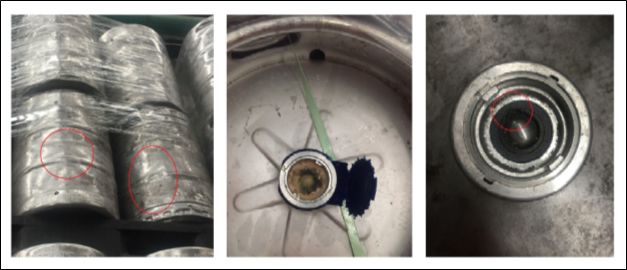
“As the world’s largest brewer, Anheuser-Busch InBev is constantly working toward the highest level of
 quality and service to our customers, while doing so in the most efficient and cost-conscious manner
 possible. This process change allowed us to more effectively manage a specific flow for our keg float and
 has impacted other areas of our supply chain as well. Innovative process implementations such as this will
 be key as we continue striving toward our 2025 Sustainability Goals. We are honored to be recognized by
 the Reusable Packaging Association for this initiative.”

 -- Andrae Kirkland, Sr. Analyst - Reverse Logistics, Anheuser-Busch InBev

                            Defective Kegs Before Preventative Maintenance Program

        Logistics Prior to Program Implementation                   Logistics After Program Implementation

Reusable Packaging Association | www.reusables.org | www.switchtoreusables.org                                3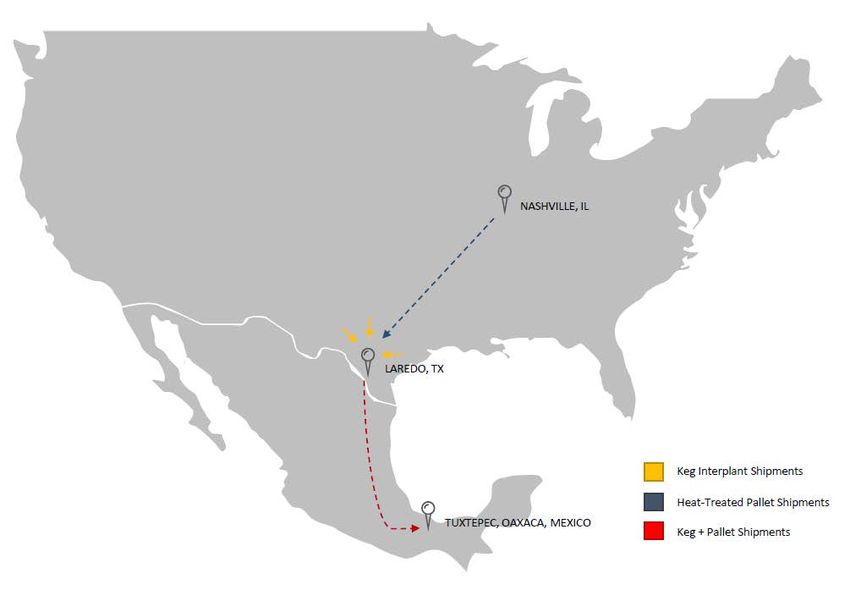
About Anheuser-Busch InBev
                               Anheuser-Busch InBev is a publicly traded company (Euronext: ABI) based in
                               Leuven, Belgium, with secondary listings on the Mexico (MEXBOL: ANB) and
                               South Africa (JSE: ANH) stock exchanges and with American Depositary Receipts
                               on the New York Stock Exchange (NYSE: BUD). Our Dream is to bring people
                               together for a better world. Beer, the original social network, has been bringing
                               people together for thousands of years. We are committed to building great brands
                               that stand the test of time and to brewing the best beers using the finest natural
                               ingredients. Our diverse portfolio of well over 500 beer brands includes global
                               brands Budweiser®, Corona® and Stella Artois®; multi-country brands Beck’s®,
                               Castle®, Castle Lite®, Hoegaarden® and Leffe®; and local champions such as
                               Aguila®, Antarctica®, Bud Light®, Brahma®, Cass®, Chernigivske®, Cristal®,
                               Harbin®, Jupiler®, Klinskoye®, Michelob Ultra®, Modelo Especial®, Quilmes®,
                               Victoria®, Sedrin®, Sibirskaya Korona® and Skol®. Our brewing heritage dates
                               back more than 600 years, spanning continents and generations. From our
                               European roots at the Den Hoorn brewery in Leuven, Belgium. To the pioneering
                               spirit of the Anheuser & Co brewery in St. Louis, US. To the creation of the Castle
                               Brewery in South Africa during the Johannesburg gold rush. To Bohemia, the first
                               brewery in Brazil. Geographically diversified with a balanced exposure to
                               developed and developing markets, we leverage the collective strengths of nearly
                               200,000 employees based in more than 50 countries worldwide. For 2017, AB
                               InBev’s reported revenue was 56.4 billion USD
                               (excluding JVs and associates).

                               About the Excellence in Reusable Packaging Award
                               The Reusable Packaging Association (RPA) Excellence in Reusable Packaging
                               award recognizes companies and organizations that have developed and
                               implemented innovative and measurable reusable packaging solutions in a
                               business-to-business supply chain. 2018 marks the seventh year for this annual
                               award program. Submissions are reviewed by an independent panel of judges
                               who are not members of the RPA. RPA is a non-profit trade organization
                               representing and promoting the common business interests of member suppliers
                               and users of reusable packaging products and services. RPA promotes the use
                               and value of reusable transport packaging systems, which offer product quality,
                               economic, and environmental benefits to supply chains.

Reusable Packaging Association | www.reusables.org | www.switchtoreusables.org                                       4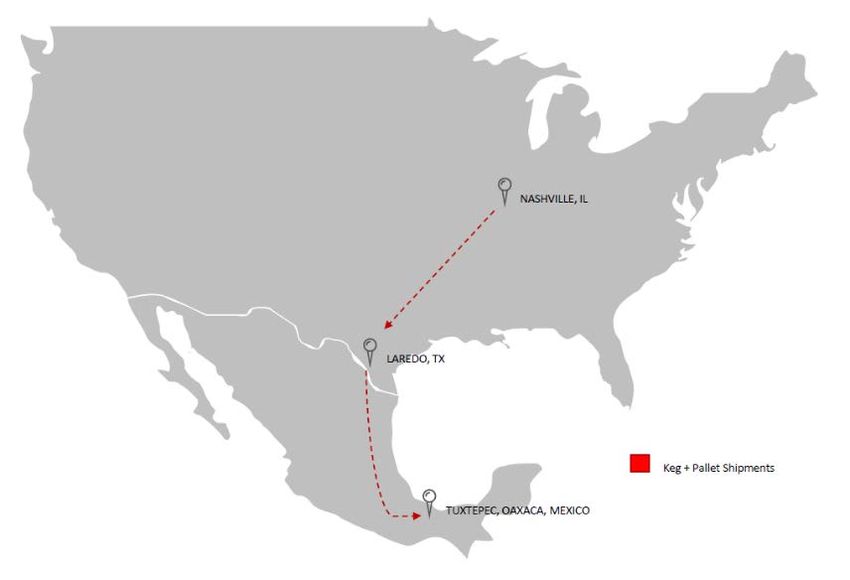
You can also read


