Consolidating Gains Displaced Women's Housing Land and Property Rights in Africa - Norwegian Refugee Council (NRC)
←
→
Page content transcription
If your browser does not render page correctly, please read the page content below
Consolidating Gains Displaced Women’s Housing Land and Property Rights in Africa

                                                                                   Consolidating
                                                                                           Gains
                                                                       Displaced Women’s Housing Land
                                                                            and Property Rights in Africa

                                                                                                            1
NRC´S WORK WITH THE
AFRICAN UNION
In 2013, NRC signed a comprehensive
Memorandum of Understanding (MoU)
with the African Union Commission (AUC)
to closely collaborate on humanitarian
issues. The signed MoU articulated
the role that the AUC and NRC could
play jointly, inter alia, enhancing the
capacity of the AUC, African Union
(AU) member states, and the Regional
Economic Communities (RECs) to reduce
risk of humanitarian disaster situations,
respond to humanitarian emergencies,
document displacement related issues
and situations, strengthening policy
on the rights of the displaced, and
strengthening international dialogue
on displacement related issues. It also

and consultation. The Pan African Liaison

harmonised and coordinated approach
to regional institutions and partners in
Africa between 2013 and 2019. The Pan

oversaw the attainment of the objectives
as outlined in the signed MoU between

and the operations thereof have since

East Africa and Yemen.

© Copyright
Norwegian Refugee Council
February 2021

ACKNOWLEDGEMENTS
Thanks are due to everyone who
participated in the researching of this
report, in particular the staff of the
Information, Counselling and Legal
Assistance Programme of the Norwegian
Refugee Council in East Africa and
Yemen, and in Central and West Africa
(especially Cameroon, Central African

Republic of Congo, Ethiopia, Nigeria,
Somalia and South Sudan) and, HQ

Rosales and Katrien Ringele, Global HLP

and Jim Robinson, and Regional ICLA
Advisers; Evelyn Aero and Tina Gewis
and Martin Clutterbuck. Particular thanks
go to Claire Merat, Fethia Ismail, Anne

Q. Jackson Jr., Abdirisak Aden Ahmed,
Mohamed Liban, Shezane Kirubi and
many other members of the NRC ICLA
team in East Africa, and Central and
West Africa who provided valuable input
throughout the various stages of the
research.
Consolidating Gains Displaced Women’s Housing Land and Property Rights in Africa

Consolidating Gains
Displaced Women’s Housing Land and Property
Rights in Africa

 PART I. INTRODUCTION                                                              02

 A. Summary                                                                        03
 B. Methodology                                                                    04
 PART II: LEGAL AND POLICY FRAMEWORK                                               06

 A. International and Regional Law                                                 07
 i.   ICCPR, ICESCR, & CERD                                                        07
 ii. Universal Islamic Declaration on Human Rights (1981)                          08
                                                                                        PHOTOGRAPHS
 iii. Cairo Declaration on Human Rights in Islam (1990)                            09   Norwegian Refugee Council (NRC)
 iv. The Pinheiro Principles                                                       10
 v. African Charter for Human Rights (Banjul Charter) & the Protocol                    FRONT COVER
    to the African Charter on Human and Peoples’ Rights on the
                                                                                        children to Niger when Boko Haram
    Rights of Women in Africa (Maputo Protocol)                                    12   attacked her town in November 2014.
 vi. African Union Convention for the Protection and Assistance                         Photo by Hajer Naili/NRC
     of Internally Displaced Persons in Africa (“The Kampala
     Convention”)                                                                  13   INSIDE COVER
                                                                                        Khot and her three months old baby
 vii. The Sustainable Development Goals (SDGs) and the 2030
                                                                                        named Dau, after his grandfather.
      Agenda                                                                       14   Photo by Tiril Skarstein / NRC

                                                                                   16
                                                                                        AUTHOR
 i.   Central African Republic (CAR)                                               16   Evelyn Aero
 ii. Cote d’Ivoire                                                                 17
 iii. Ethiopia                                                                     18   DESIGN AND LAYOUT
                                                                                        Rizwan Jiwani
 iv. Nigeria                                                                       19
 v. Federal Republic of Somalia                                                    21   This document has been produced
 vi. South Sudan                                                                   23

 C. Shari’a law                                                                    25

 D. Customary law                                                                  26
                                                                                        The contents of this document are solely
 PART III. KEY FINDINGS                                                            28   the responsibility of the Norwegian
                                                                                        Refugee Council and can under no
 PART IV: CONCLUSIONS AND RECOMMENDATIONS                                          32   circumstances be regarded as reflecting
                                                                                        the position of Canada Fund for Local
 A. Conclusions                                                                    32   Initiatives (CFLI)
 B. Recommendations                                                                33
                                                                                        The Norwegian Refugee Council
 PART V. ANNEX                                                                     36   (NRC) is an independent, international,
                                                                                        humanitarian non-governmental
 Annex A: NRC Publications on Displaced Women’s HLP Rights in                           organisation which provides assistance,
 Africa                                                                            36   protection and contributes to durable
                                                                                        solutions for refugees and internally
 Endnotes                                                                          38   displaced people worldwide.

                                                                                                                                   01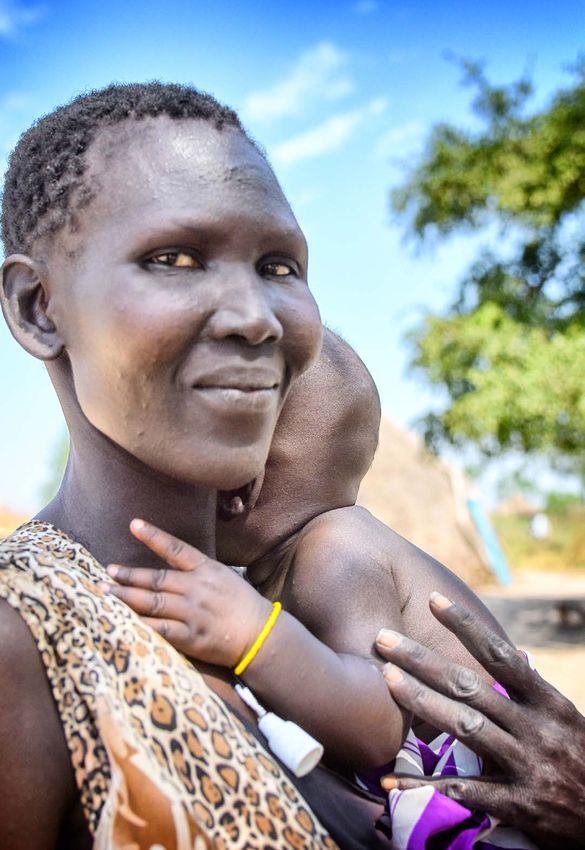
Consolidating Gains Displaced Women’s Housing Land and Property Rights in Africa

     PART I.
     INTRODUCTION
     Globally women still own less land and have less secure rights over
     land than men. Women make up on average less than 20 percent of                       Globally women still own
                                                                                           less land and have less
     agricultural labor force.1                                                            secure rights over land
     work in agriculture. In sub-Saharan Africa, 60 to 70 percent of employed
                                                                                           than men. Women make
     women work in agriculture.2
                                                                                           up on average less than
                                                                                           20 percent of the world’s
                                                                                           landholders, but make up
     institutional and host community capacity, - and all impede inclusive                 an estimated 43 percent
     development. An important component of addressing these challenges                    of the agricultural labor
     remains an important facet of the treatment of housing, land, and property            force.
     to ensure that the needs and voices of displaced women are heard, and
     included in the land agenda - moving forward.

     Additionally, displaced women and girls in Africa are mostly discriminated

     customary law and cultural practices remove women from enjoying
     economic rights and challenges their livelihood through ripping off the
     rights to own housing, land or property (HLP). This is prevalent, when

     These rights are essential to promote durable solutions, as majority of
     the displaced populations want to return home after peace resolutions

     engaged in the provision of information, counselling and legal assistance

     services also provide guidance on how displaced persons can claim
     rights and continuously advocate for promotion of HLP rights among
     displaced women.

     In 2019, the African Union commemorated the 10th Anniversary of the
     Kampala Convention, a binding legal instrument on the protection

     services, provide general protection and assistance, and facilitate access
     to registration and personal documentation under Article 9 and 13

     during the domestication process.

02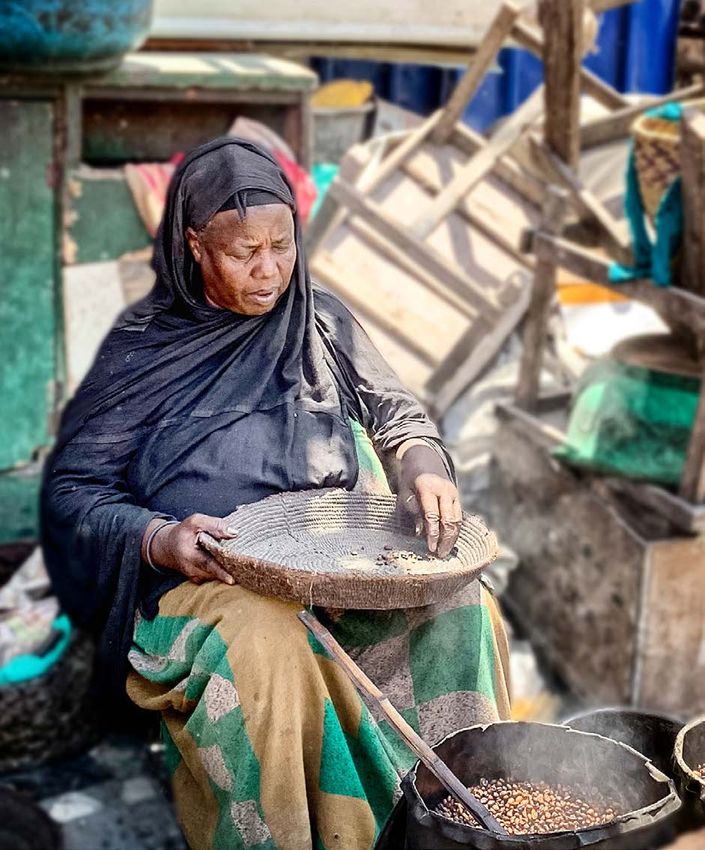
Consolidating Gains Displaced Women’s Housing Land and Property Rights in Africa

                                                 Caption: Florance, poses for a photo with the landscape of her beautiful village in
                                                            the background in Ituri Province of the Democratic Republic of Congo.
                                                                                                        Photo by Itunu Kuku/NRC

A. SUMMARY

  Supporting displaced women to change their lives through land governance
  as well as property rights are critical in securing economic independence.
  The analysis of the HLP rights of displaced women indicates the need for
  major work within societies in order to address the discrimination that
  displaced women undergo from enjoying their land rights that paves the
  way for protection of their socio-economic rights. Although efforts have
  been devoted to addressing gender concerns in policies and programs,
  much more work is needed.

  through national and international advocacy. The project provided
  well-researched legal, policy and practical recommendations for the
  humanitarian community, including practitioners, donors, governments

  information, counselling and legal assistance (“ICLA”) activities related to

  The analysis and recommendations were based both on assessments of

  In response to promoting a gender-sensitive approach to humanitarian

  and recommended practical solutions to African governments in which
  challenges were observed. This initiative sought to consolidate the gains
  made, and to document challenges faced by displaced women living in

                                                                                                                                       03
Consolidating Gains Displaced Women’s Housing Land and Property Rights in Africa

     and practical recommendations for stakeholders to better understand and

     solutions to displacement.

     The evidence for the project was generated from the countries in which
     NRC is currently or has been operational. NRC´s research and legal
     assistance work in many of the African countries has uncovered several
     unseen challenges for women, both from discriminatory laws as well as

     laws. It also highlights the need to engage women and local communities
     to better understand how customary and religious law intersects with
     traditions and how to support women within this sphere.

     are different in various countries and can rapidly change through times,
     incorporating a detailed policy review has enhanced previously observed
     conclusions and recommendations. The outcome of the policy review

     national laws or practices to ease challenges faced by displaced women.

     women in selected African countries where NRC is currently operational.

     through a gender lens, - guiding the development of recommendations
     on how to promote the protection of displaced women, - and respect for
     the right to housing, land and property (HLP).                                        Caption: Nyedine, a widow who has
                                                                                           3 children and fled to Makien town,
                                                                                           South Sudan due to conflict.
                                                                                           Photo by Maheder Haileselassie / NRC

 B. METHODOLOGY

     interventions of the Norwegian Refugee Council (NRC) Information
     Counselling and Legal Assistance (ICLA) work in Africa, thus their work

     and advocacy responses to help women overcome the obstacles they face

     Information for this report was gathered through a combination of

     of displacement in Africa, the study is drawn from East Africa, Central
     Africa and West Africa. Focus countries included, Central African Republic,

     individual interviews with government, civil society, program staff and
     partners, and other key stakeholders.

04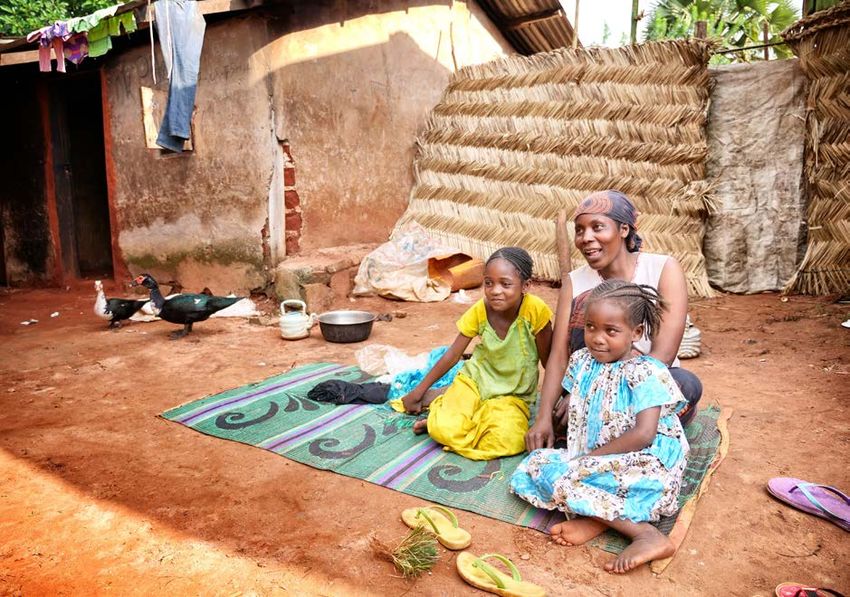
Consolidating Gains Displaced Women’s Housing Land and Property Rights in Africa

references information reported, it is important to understand that this is
how the author perceived the situation; and it is unsurprising that there

and rights have begun to evolve during the highly disruptive periods of

displacement, and where humanitarian response programmes are being
implemented. Hence a survey, to complement information based on our

HLP rights of displaced women in Africa, challenges and opportunities,
and recommendations for improvement and learning, which builds on

inform advocacy, - and policy reform.

                                                          Caption: Kugar, lives in a grass thatched house located at the Southern
                                                           part of Mankien in Mayom county, Northern Liech State, South Sudan.
                                                                                                  Photo by Ingrid Prestetun / NRC

                                                                                                                                    05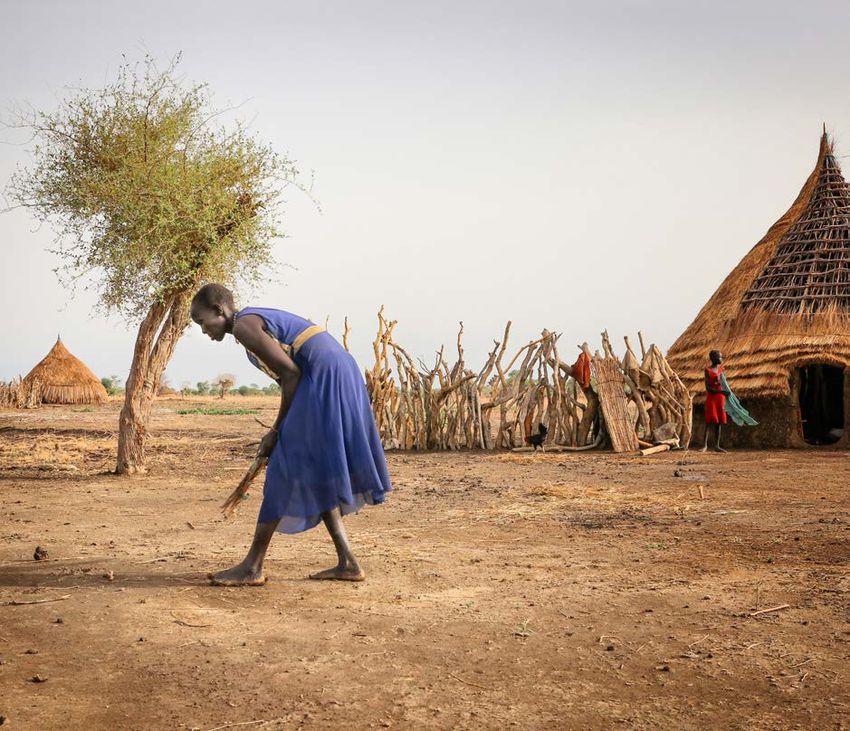
Consolidating Gains Displaced Women’s Housing Land and Property Rights in Africa

     PART II.
     LEGAL AND POLICY FRAMEWORK

     several sources, including statutory, customary, and religious regimes.                The legal framework
     Considering international norms and rights, and local, regional or national            should emphasise
     policies are needed to address HLP rights. These frameworks allow                      principles in support of
                                                                                            women’s land rights. It
     While changing or formulating a policy for enabling women enjoy and                    is therefore important
     access HLP, it is also important for national, regional or local governments           that HLP policies and
     to adapt progressive legal and policy frameworks. Without a sound legal
                                                                                            legal frameworks
     framework, the policies will be unfeasible, and vice versa.
                                                                                            are supported by a
     The legal framework is a powerful and crucial tool to support the                      stable institutional
                                                                                            framework that ensures
     hand in hand with the formulation or change of policies. Legislation                   their establishment,
                                                                                            and facilitates and
     HLP rights and to support the policy objectives of a national, regional                exercises stakeholder
     or local government. The legal framework should emphasise principles                   participation.

     policies and legal frameworks are supported by a stable institutional

     stakeholder participation. The role of laws on Housing Land and Property
     is to implement and enforce policy, and provide effective administrative
     and regulatory mechanisms at appropriate levels.

                                                           Caption: Oumou and Awaou sit with their mother Roukaya in the
                                                          compound of their house in Berberati. Photo by Itunu Kuku / NRC

06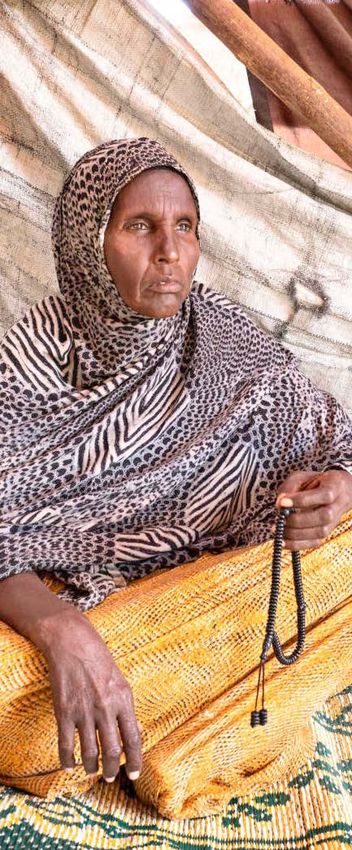
Consolidating Gains Displaced Women’s Housing Land and Property Rights in Africa

A. INTERNATIONAL & REGIONAL LAW

   i.   ICCPR, ICESCR, & CERD

                                                  the International Covenant
                                                          3

        on Economic, Social & Cultural Rights (ICESCR) and the International
        Covenant on Civil and Political Rights (ICCPR). A detailed discussion

        available elsewhere
        most salient points.

        security of tenure) is protected by Article 11(1) of the ICESCR, and
        includes an obligation on the part of states to, at a minimum, refrain        Caption: Clementine speaks to
                                                                                      displaced women gathered in Mora,
        from violating such rights through their actions, and to take reasonable      Far-North Region of Cameroon during
        measures to prevent foreseeable violations by non-state actors.               a discussion organised by NRC on
                                                                                      housing, land and property rights.
                                                                                      Photo by Itunu Kuku / NRC

        right to adequate housing consists of the following elements5:

        1. Legal Security of Tenure (which guarantees legal protection against forced eviction, harassment
           and other threats);

        3. Affordability;

        6. Location; that provides access to employment opportunities, education and health services and
           social facilities and;

        Additionally, the right to tenure security cannot be subject to any
        form of discrimination, further underscored by the Convention on the

        to a broad spectrum of tenure forms, including ownership, rental,
        informal settlements, and customary usage.6 The Convention Against

        binding7

        Human Rights8
        Islam9
        response to a “Western” notion of human rights.

                                                                                                                            07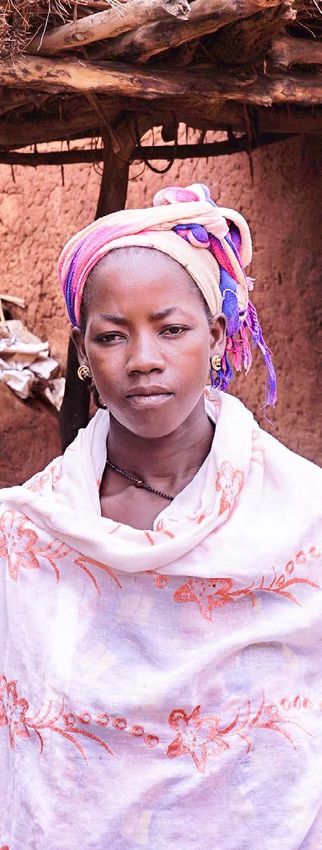
Consolidating Gains Displaced Women’s Housing Land and Property Rights in Africa

     ii. Universal Islamic Declaration on Human Rights (1981)10
                                                                                           The Islamic Declaration
                                                                                           emphasises both equality
        individual and every people has the inalienable right to freedom in                of all persons, and thus
                                                                                           both men and women,
        entitled to struggle by all available means against any infringement or            as well as the right to
        abrogation of this right; and every oppressed individual or people has             own property: Every
        a legitimate claim to the support of other individuals and/or peoples
                                                                                           individual and every
        in such a struggle.11
                                                                                           people has the inalienable
                                                                                           right to freedom in all
        opportunities and protection of the Law.12                                         its forms, physical,
                                                                                           cultural, economic and
        Every person is entitled to own property individually or in association
                                                                                           political.
        with others. State ownership of certain economic resources in the
        public interest is legitimate.13

        and Related Matters; (b) Each of the partners in a marriage is entitled
        to respect and consideration from the other, (c) Every husband is
        obligated to maintain his wife and children according to his means,
        (d) Every child has the right to be maintained and properly brought up
        by its parents …, (h) Within the family, men and women are to share

        natural endowments, talents and inclinations, bearing in mind their
        common responsibilities toward their progeny and their relatives and,
        (i) No person may be married against his or her will, or lose or suffer
        diminution of legal personality on account of marriage.

        lives, (b) Receive the means necessary for maintaining a standard of
        living which is not inferior to that of her spouse, and, in the event of
        divorce, receive during the statutory period of waiting (iddah) means

        herself as well as for the children she nurses or keeps, irrespective of

        accordance with the terms of the Law. This right is in addition to her
        right to seek divorce through the courts, (d) Inherit from her husband,
        her parents, her children and other relatives according to the Law,

        with regard to any information that he may have obtained about
        her, the disclosure of which could prove detrimental to her interests.

        And a similar responsibility rests upon her in respect of her spouse

08
Consolidating Gains Displaced Women’s Housing Land and Property Rights in Africa
iii. Cairo Declaration on Human Rights in Islam (1990)
of the Organisation of Islamic Cooperation (“OIC,”
formerly the Organisation of the Islamic Conference),
including Somalia and Nigeria, which is one of our
collective voice of the Muslim world, and ensuring [sic]
to safeguard and protect the interests of the Muslim
world in the spirit of promoting international peace
and harmony among various people of the world;”
Somalia has been a member since 1969.
controversy among the human rights community, it
and includes the following relevant protections for
subjects, and the most loved by Him are those who
are most useful to the rest of His subjects, and no
of piety and good deeds.16
in human dignity, and has rights to enjoy as well as
duties to perform; she has her own civil entity and
name and lineage.17 Human beings are born free, and
no one has the right to enslave, humiliate, oppress or
God the Most-High.18
Additionally, everyone shall have the right to legitimate
aims without monopolisation, deceit or harm to oneself
or to others.19 Everyone shall have the right to own
entitled to the rights of ownership, without prejudice to
interest and upon payment of immediate and fair
20
distinction between the ruler and the ruled. The right
to resort to justice is guaranteed to everyone.21`
Caption: Young female IDP woman who
attended an evictions forum in Baidoa, Somalia.
Photo by Abdulkadir Abdirahman/ NRC.
09Consolidating Gains Displaced Women’s Housing Land and Property Rights in Africa
iv. The Pinheiro Principles
The Pinheiro Principles underscore the importance of women and
housing, land and property restitution. The Pinheiro Principles provide
restitution practitioners, as well as states and UN and others agencies,
institutional and technical implementation mechanisms for housing
guidance regarding how to ensure the right to housing and property
restitution in practice and for the implementation of restitution laws,
rights, humanitarian, refugee and national standards.
Caption: Afro-vet group in Twic East, South Sudan ready to start a business. Access
to land is key to sustainable livelihoods. Photo by Tiril Skarstein / NRC
10Consolidating Gains Displaced Women’s Housing Land and Property Rights in Africa
Principle 2- The right to housing and property restitution:
and/or property of which they were arbitrarily or unlawfully deprived, or to be compensated
for any housing, land and/or property that is factually impossible to restore as determined by an
independent, impartial tribunal.
right, and is prejudiced neither by the actual return nor non-return of refugees and displaced
persons entitled.
Principle 3: The right to non-discrimination:
language, religion, political or other opinion, national or social origin, property, disability, birth
or other status.
law
Principle 4: The right to equality between men and women:
and access to housing, land and property.
practices recognise the joint ownership rights of both male and female heads of the household as
practices do not disadvantage women and girls. States should adopt positive measures to ensure
Principle 5: The right to be protected from displacement:
Everyone has the right to be protected against being arbitrarily displaced from his or her home,
land or place of habitual residence.
these protections to everyone within their legal jurisdiction or effective control.
method of war.
non-State actors. States shall also ensure that individuals, corporations, and other entities within
their legal jurisdiction or effective control refrain from carrying out or otherwise participating
in displacement.
11Consolidating Gains Displaced Women’s Housing Land and Property Rights in Africa
Principle 3 introduces the general overarching recognition of the
right to non-discrimination and the rights of displaced persons to Principle 3 introduces
the general overarching
recognition of the right
must the restitution process not discriminate, but, - that states must to non-discrimination
and the rights of
displaced persons to
and female heads of households, the importance of which is stated in equal treatment, while
Principle 4 hones in
more closely on ensuring
gender equality. Together,
these two principles
rights holders or when they are provided with formal title to housing
or other property ownership rights, leaving women without legal
must the restitution
control over what should also be treated as their property. This bias
is often most visible when women are regarded as the ‘head of the
process not discriminate,
but, - that states must
man. To avoid this, the Principles call for recognition of joint ownership actively ensure gender
rights within families. As such, restitution programmes should seek equality.
to women and/or joint ownership rights when restitution claims are
considered by the relevant judicial bodies.22
v. African Charter for Human Rights (Banjul Charter) & the Protocol
to the African Charter on Human and Peoples’ Rights on the
Rights of Women in Africa (Maputo Protocol)
Most African countries have assumed obligations under regional
(the Maputo Protocol).23 The Maputo Protocol notes that despite the
continue to be victims of discrimination and harmful practices, and
rights, as well as provisions to ensure greater representation of women
in decision-making processes.
The Maputo Protocol emphasises the importance of land and natural
with access to water and land as part of the right to food security, and
over productive resources such as land and guarantee their right to
among women.”
12Consolidating Gains Displaced Women’s Housing Land and Property Rights in Africa
vi. African Union Convention for the Protection and Assistance
of Internally Displaced Persons in Africa (“the Kampala
Convention”)
The African Union Convention for the Protection and Assistance of
adopted by African governments in 2009, entered into force on
and responsibilities which include the responsibility to promote
national measures to “prevent or mitigate, prohibit and eliminate
root causes of internal displacement as well as provide for durable
solutions,”
protection of law.
displacement, and recognises that people may be displaced for reasons
categories of arbitrary displacement also include “displacement as a
result of harmful practices” and “displacement caused by … violation of
human rights.”26
Caption: Community members in Ituri
Province of the Democratic Republic of
Congo line up patiently to receive the
to justice for violations of HLP rights.27 As applied to the circumstances cash assistance that they will use to
faced by women in Africa, the state has the obligation to prevent them construct houses.
from being forced from their homes and/or land because of harmful Photo by Itunu Kuku / NRC
customary practices and violations of their human rights.
internally displaced persons are received, without discrimination
of any kind and live in satisfactory conditions of safety, dignity and
special assistance, and stipulates that the states will provide special
heads of households and mothers with children, and will take special
other related abuses.”28
13Consolidating Gains Displaced Women’s Housing Land and Property Rights in Africa
vii. The Sustainable Development Goals (SDGs) and the 2030 Agenda
and girls; and ensure the lasting protection of the planet and its natural
resources. The 2030 Agenda creates conditions for sustainable, inclusive
and sustained economic growth, shared prosperity, and decent work
for all, considering different levels of national development and
The countries in focus in this report have been working towards the
Table 1: Summary of the status of International and Regional Instruments
International Country Status
Instrument
International Central African Republic (CAR)
Covenant on Cote d’ Ivoire
Economic, Social Ethiopia
and Cultural
Nigeria
Rights (ICESCR)
Somalia
South Sudan
International Central African Republic (CAR)
Covenant on Cote d’ Ivoire
Civil and Political Ethiopia
Rights (ICCPR)
Nigeria
Somalia
South Sudan
Convention on Central African Republic (CAR)
the Elimination 1971
of Racial Cote d’ Ivoire
Discrimination Ethiopia
(CERD).
Nigeria
Somalia
South Sudan
Convention Central African Republic (CAR)
Against Cote d’ Ivoire
Elimination of Ethiopia
Discrimination
Nigeria
Against Women
Somalia
(CEDAW)
South Sudan
14Consolidating Gains Displaced Women’s Housing Land and Property Rights in Africa
Caption: Displaced women gather in Mora, Far-North Region of Cameroon
for a discussion organised by NRC on housing, land and property rights.
Photo by Itunu Kuku / NRC
International Country Status
Instrument
African Charter Central African Republic (CAR)
for Human Rights 1986.
(Banjul Charter)
and the Protocol
to the African Cote d’ Ivoire
Charter on Human 1992.
and Peoples’
Rights on the
2011.
Rights of Women
Ethiopia
in Africa (Maputo
Protocol)
2018.
Nigeria
1983.
2004.
Somalia
South Sudan
African Union Central African Republic (CAR)
Convention for Cote d’ Ivoire
the Protection Ethiopia
and Assistance
Nigeria
of Internally
2012
Displaced
Somalia
Persons in Africa
2019.
(“the Kampala
Convention”) South Sudan
15Consolidating Gains Displaced Women’s Housing Land and Property Rights in Africa
B. DOMESTIC STATUTORY, SHARI’A AND CUSTOMARY LAW
i. Central African Republic (CAR)
Central African Republic’s family law (Code de la Famille,
1997) regulates HLP issues such as inheritance.
In case a couple is legally married without a prenuptial
agreement then the legal regime29 of la communauté réduite
30
agreement.31 It is important to note that one characteristic of a
ownership of community property, regardless of the actual
economic contribution each spouse makes to the community.
of the marriage, whether by death or dissolution.
) and the wife
32
or husband has the right to half of the estate of the deceased
to the owning spouse. In the division of these possessions (and
succession in general), the surviving wife or husband is third
in line (after the children and parents). No distinction is made Caption: Female refugee who fled her
village in Central African Republic to
inheritance.33 seek refuge in Cameroon poses for a
photo at the reception centre.
Photo by Itunu Kuku/ NRC.
surviving spouse to stay in the main residence for at least two
years after the demise of the deceased spouse until succession
the husband is the head of the household. The wife replaces
her husband as head of the family in case he is incapacitated,
absent, separated from his family or has voluntarily abandoned
In 2010, the Ministry of Social Affairs, National Solidarity and
Family initiated a process to compare the family law with
relevant national and international legislation and highlight
possible contradictory or discriminatory provisions. Several
this
was discussed at length and amendments were proposed.
Provisions on succession and inheritance were not deemed to
be discriminatory against women. However, the high number of
co-habiting couples and lack of legal protection of partners was
highlighted as a concern. The status of proposed amendments
to the law is currently unclear.36
16Consolidating Gains Displaced Women’s Housing Land and Property Rights in Africa
Caption: Zara, a displaced woman in Mora, Far-North Region of
Cameroon shares her experiences during a discussion organised by NRC
on housing, land and property rights. Photo by Itunu Kuku / NRC
ii. Cote d’ Ivoire
the minority, particularly in rural areas. Thus in
history, post-independence economic development most households the ownership and management
policy and policies of recent governments. The of property, by custom, falls to men.
institutions that govern land are divided into two
Additionally, article 1 of the law concerning
rural land
and the customary system. This has been described
are permitted to become landowners” of land
customary and statutory systems overlap and
belonging to the rural land domain. However,
sometimes collide.37 Land registration has proved
this law states that non-Ivoirians can access land
through rental agreements or long-term leases.
The law also provides guidance on the conversion of
While the government had hoped to register all
it states that land ownership is established through
this target is unlikely to be achieved because of
38
and later a title deed, which can be an individual or
The 2000 Constitution of the Republic of Côte collective document. Unfortunately, this is, almost
d’Ivoire guarantees all people the right to property.
Under the inheritance law, both girls and boys
39 In terms of order of succession, according to the
the primary heir. The law establishes village land
that men were the head of their family, and could
choose where the family lives. The head of the
Gestion Foncière Rurale) to investigate land claims.
family also had the right to manage and to dispose
of marital property.
often non-functional. In addition, the committees
The 2013 revision of the code states that marital are not representative, generally lacking guidelines
property is managed jointly between spouses. for composition of membership and there are no
observed that husbands continue to administer
Further still, the 1998 Rural Land Law has not
marital property. This is due to the lack of
awareness and understanding of the new law,
terms.
law only applies to statutory marriages, which are
17Consolidating Gains Displaced Women’s Housing Land and Property Rights in Africa
iii. Ethiopia
While ownership of land stays with the state, Ethiopian
citizens are guaranteed the right to the use of land, free of
charge, and protected against eviction and displacement.
Key federal instruments are the Constitution of the Federal
Democratic Republic of Ethiopia and the Federal Rural Land
Administration and Land Use Proclamation No. 456/2005.
Ethiopian land rights. The Right to Property is provided for
citizen has the right to the ownership of private property. Unless
prescribed otherwise by law on account of public interest, this
compatible with the rights of other citizens, to dispose of such
property”, for the purpose of this article, shall mean any tangible
or intangible product which has value and is produced by the
labour, creativity, enterprise or capital of an individual citizen,
associations which enjoy juridical personality under the law,
empowered by law to own property in common.
The Federal Rural Land Administration Proclamation No. Caption:
89/1997 made clear that “Land is a common property of the from Walgak town, South Sudan. Photo
nations, nationalities and peoples of Ethiopia [and] shall not be taken at Nguenyyiel camp in Gambella,
Ethiopia.
Photo by Maheder Haileselassie / NRC
that regional land laws must ensure the free assignment of
holding rights to all citizens, and guarantee protection against
right to use rural land for agricultural purposes, and could be
This proclamation
The Federal Rural Land Administration and Land Use
Proclamation No. 456/2005 repealed Proclamation No. 89/1997,
and provides greater detail about categories of holding rights.
a clear indication of intent for citizens to have documentary
evidence of their use rights, records of which are to be kept by
some government administration.
While ownership of the land remains with the state, the use
right itself can be leased, used as collateral, or transferred via
inheritance. These rural land use rights held by farmers,
pastoralists, and semi-pastoralists have no time limit, and any
holder who is evicted for a public purpose must be compensated
for any improvements made to the land.
18Consolidating Gains Displaced Women’s Housing Land and Property Rights in Africa
iv. Nigeria
Following independence, the Nigerian State
implemented property rights reforms that
aimed to integrate the various sources of
from customary rules, religious laws, and
The Land Tenure
Law of Nigeria, 1962
Northern Nigeria as “native” and gave power
over property rights to the Minister for Lands
and Surveys.
The 1978 Land Act vested control over land
governments.
and own immovable property is protected by
Subsurface rights remain with the state
by the law, and in such cases an individual
is entitled to both compensation and a legal
The 1999 Constitution of Nigeria guarantees
all citizens and prohibits discrimination on
While this appears to satisfy
Customary rules and practices are used to
resolve disputes and govern everyday life
throughout the country, but they are not
formally incorporated into statutory law.
In many instances, individuals cannot enjoy
de jure protections provided by statutory law
given the de facto legal system operating at Caption: Aissata from Tori village in Mali,
the local level. This is particularly true for fled to Bankass with her three children when
armed men attacked her village.
Photo by Vinabé Mounkoro/NRC
19Consolidating Gains Displaced Women’s Housing Land and Property Rights in Africa
v. Federal Republic of Somalia
The three regions of the Federal Government of women, the aged, the disabled and minorities who
have long suffered discrimination get the necessary
support to realise their socio-economic rights.61
Somaliland is a self-proclaimed state, unrecognised
by the international community, but has functioned The state shall promote the positive traditions
fairly independently since 1991. Puntland functions and cultural practices of the Somali people, whilst
autonomously, but is not seeking independent striving to eliminate from the community customs
statehood like Somaliland. South Central is a and emerging practices which negatively impact
collection of troubled regions, including the capital the unity, civilisation and wellbeing of society.62
of Mogadishu.
for redress of violations of human rights. Redress
of violations of human rights must be available in
rights that are theoretically available to women courts that the people can readily access.63
throughout the country are fairly similar. The
Provisional Constitution of the Federal Republic
of Somalia, the Constitution of Puntland, and
the Constitution of Somaliland, are all based on
and sustainable manner. The Federal Government
shall develop a national land policy, which shall
be subject to constant review. That policy shall
throughout the country. These include family laws
(in particular laws related to marriage and divorce), its resources; (b) the guarantee of land ownership
inheritance laws, and land and property laws. and registration; (d) that any land and property
Such laws determine who has control over assets, dispute is resolved promptly and satisfactorily for
who has the ability to make economic decisions in all; and (f) that the land and property market is
their own name, and who can own, administer, regulated in a manner that prevents violations of
transfer or inherit property. In general, all three the rights of small land owners.
The Puntland Constitution
before the law, the right to life and dignity, the right rights of independence, socio-economic and
to be free from discrimination, and the right to own political rights are protected in accordance with
Federal, Somaliland, and Puntland Constitution 66
All citizens of
are included below.
Under the Federal Republic of Somalia, be discriminated by colour, religion, citizenship,
Provisional Constitution (adopted August 1,
2012), women must be included, in an effective language and ethnicity. The constitution safeguards
way, in all national institutions, in particular the rights of the minority groups.67 Every person
all elected and appointed positions across the
three branches of government and in national his/her opinion.68
independent commissions. All citizens, regardless Every citizen shall have the right to have his/
her own property, within the framework of the
opinion, clan, disability, occupation, birth, or dialect law. Any unlawful act is prohibited. No personal
commission or property levy may be imposed
Every person has the right to personal security, and that is not in compliance with the law.69 Every
person shall have the right of securing his body
forms of violence, including any form of violence and personal dignity.70 The Constitution ensures
against women, torture, or inhumane treatment. the rights and liberty of every person.71
Every person has the right to own, use, enjoy, sell
and transfer property.60 It shall be ensured that Every person shall have the right to institute legal
before lawfully constituted courts.72
20Consolidating Gains Displaced Women’s Housing Land and Property Rights in Africa
Additionally, the Puntland Policy Guidelines on 76
Displacement73 commit to protecting all citizens The articles which relate to fundamental rights
against arbitrary displacement; promoting and freedoms shall be interpreted in a manner
the search for durable solutions to causes of consistent with the international conventions on
displacement; and facilitating either the voluntary human rights and also with the international laws
return, resettlement, integration or re-integration referred to in this Constitution77.
Further still, every person shall have the right
discriminate against women, and that responds to have his dignity, reputation and private life
respected.78 The rights, freedoms and duties laid
primary duty and responsibility to prevent and by men and women save for matters which are
protect people from arbitrary displacement, to
Government shall encourage, and shall legislate
and humanitarian assistance and to identify for the right of women to be free of practices which
their person and dignity. Women have the right to
own, manage, oversee, trade in, or pass on property
protection and assistance from the Puntland in accordance with the law. In order to raise the
level of education and income of women, and
the same rights and freedoms as all other nationals also the welfare of the family, women shall have
and, in particular, should not be discriminated
home economics79 and to have opened for them
against in the enjoyment of any rights and freedoms
on the grounds that they are internally displaced. vocational, special skills and adult education
Measures undertaken to address particular schools.80
assistance and protection needs of specific The Draft Somaliland IDP Policy Framework
echoes the protections of its Constitution, and
further includes ambitious measures to guard
headed households, persons with disabilities and against arbitrary displacement, protections to
older persons, do not constitute discrimination if, prevent forced evictions, and recognises that
needs. needs that the government pledges to address. In
The Somaliland Constitution ensures that all
and obligations before the law. Precedence and own land and property, to be assisted with property
discrimination on grounds of ethnicity, clan registration, dispute resolution, and restitution,
and to be assisted with improving living conditions
81
at the same time programmes aimed at eradicating
long lasting bad practices shall be a national Somalia Interim protocol on Land
obligation. distribution for housing refugees, returnees and
In order to ensure that the economic system does IDPs, 2019 provides for priority in land allocation,82
when allocating land, priority shall be given to
or a small section of the public, and to avoid the vulnerable groups, including but not limited to,
creation of economic classes consisting of those
who are prosperous and those who are not, and widowed, the elderly, or chronically ill persons.
the widening of the economic gulf between the
urban and rural communities, the state shall ensure
21Consolidating Gains Displaced Women’s Housing Land and Property Rights in Africa
Somalia under the Constitution, other applicable national
National Eviction Guidelines, 2019 provides laws and international human rights instruments;
safeguards in undertaking eviction83. All evictions and (b) appropriate measures shall be taken to ensure
evictions shall not render individuals, groups of to those unable to provide for themselves and, in
persons or communities homeless or vulnerable particular, women, children, persons with disabilities
to violation of their human rights guaranteed or chronic illness, and the elderly.
Caption: IDP woman sorting grains at Xasilinta IDP Camp,
Mogadishu Somalia. Photo by Abdirahman Yusuf / NRC
22Consolidating Gains Displaced Women’s Housing Land and Property Rights in Africa
Caption: Duom who lives in Twic East in Jonglei, South
Sudan farming her land, an indication that land is vital for
sustainable livelihoods. Photo by Tiril Skarstein/ NRC
vi. South Sudan
South Sudan has adopted very progressive to decent housing” and that “no one shall be evicted
Transitional Constitution 2011, amended 2013, his or her home demolished save in accordance
the Land Act and the Local Government Act, all with the law”. This provision protects both men
inherit land and property. The Constitution also protection from forced evictions. In addition, it
calls on all levels of government to enact laws to obliges the government to take measures to achieve
combat harmful customs and traditions, which the progressive realisation of the right to housing
undermine the dignity and status of women.
woman to rely on her husband or male relatives
The Constitution has several articles that are for shelter.
The Land Act (2009), passed by the Southern Sudan
Legislative Assembly in 2009,87 regulates land
of the law without discrimination as to race, tenure and protects land rights in South Sudan.
It recognises that “all land in Southern Sudan is
creed, political opinion, birth, locality or social owned by the people of Southern Sudan and its
status”. This provision of the Constitution prohibits usage shall be regulated by the Government”. The
private land and 3) community land. As mentioned
earlier, public land is owned collectively by the
men” and it also calls on all levels of government people of South Sudan and is held in trust by the
to “enact laws to combat harmful customs and government, typically in freehold. Private land
traditions which undermine the dignity and status
of women”.
of time).
Community land is held jointly by the community
property and share in the estates of their families and regulated by the community chief, leader,
and deceased spouses.86 The Constitution also elders and/or king according to local customary
recognises in article 28 that “every person shall have law. Each type of land is regulated by different
rules and administered by different actors, making
by law”. This provision applies to women and
to understand.
recognises the right for “every citizen to have access
23Consolidating Gains Displaced Women’s Housing Land and Property Rights in Africa
The Land Act includes many of the same provisions as the
regulated by law and as stipulated in article 32 (1) of the
of internally displaced persons, returnees and other categories
of persons whose rights to land were or are affected by the war.
together with any surviving legal heir or heirs of the deceased
important article within the Land Act for women as it clearly
given to this via the linkage to the Constitution included at the
end of the section. The Land Act therefore provides a basis for
for the facilitation of reintegration and resettlement processes
on the issue of land and property).
Caption: Kuang is milking a cow in
Most recently, there has been an attempt to address these
Twic East, South Sudan. HLP rights are
shortcomings in the Land Policy which is to provide guidance key for one to be able to set up a farm.
on how to make land rights a reality for all South Sudanese. The Photo by Tiril Skarstein / NRC
draft Land Policy addresses gender bias and discrimination. It
recognition and protection of those rights, remains limited
throughout Southern Sudan.
through their marital or childbearing status and dispossession
of widows, daughters, and divorced women is common. There
is tension between competing notions that customary rules and
practices should adapt to changing socioeconomic circumstances
and those who resist change, fearing its impact on tradition and
and practice, particularly in rural areas.
24Consolidating Gains Displaced Women’s Housing Land and Property Rights in Africa
C. SHARI’A LAW
all women under Islam, and operates from the pragmatic position that, - in Islamic teachings are one
of the most respected
of rights and truth by Muslim men and women alike; and the majority of sources of rights and
women practicing Islam want the rights Islam accords them. However, truth by Muslim men
and women alike; and
the majority of women
holders to access those rights. Further still, within Islamic jurisprudence,
practicing Islam want
the rights Islam accords
together with the writings of Islamic jurists provide an inheritance them.
Allah chargeth you concerning (the provision for) your children: to the male the equivalent of the portion
of two females, and if there be women more than two, then theirs is two-thirds of the inheritance, and
if there be one (only) then the half. And to each of his parents a sixth of the inheritance, if he has a son;
and if he has no son and his parents are his heirs, then to his mother appertaineth the third; and if he
has brethren, then to his mother appertaineth the sixth, after any legacy he may have bequeathed, or
debt (hath been paid).
Your parents and your children: Ye know not which of them is nearer unto you in usefulness. It is an
injunction from Allah. Lo! Allah is Knower, Wise. And unto you belongeth a half of that which your wives
leave, if they have no child; but if they have a child then unto you the fourth of that which they leave,
after any legacy they may have bequeathed, or debt (they may have contracted, hath been paid). And
unto them belongeth the fourth of that which ye leave if ye have no child, but if ye have a child then the
eighth of that which ye leave, after any legacy ye may have bequeathed, or debt (ye may have contracted,
hath been paid). And if a man or a woman have a distant heir (having left neither parent nor child), and
he (or she) have a brother or a sister (only on the mother’s side) then to each of them twain (the brother
and the sister) the sixth, and if they be more than two, then they shall be sharers in the third, after any
legacy that may have been bequeathed or debt (contracted) not injuring (the heirs by willing away more
than a third of the heritage) hath been. … They ask thee for a pronouncement. Say: Allah hath pronounced
for you concerning distant kindred. If a man dies childless and he have a sister, hers is half the heritage,
and he would have inherited from her had she died childless. And if there be two sisters, then theirs are
two-thirds of the heritage, and if they be brethren, men and women, unto the male is the equivalent of
the share of two females. Allah expoundeth unto you, so that ye err not. Allah is the Knower of all things.
to other relatives and the number of children they have. The standard
a greater inheritance share to men because of the responsibility they
must take for female family members.
Another argument is that Islamic law provides for inheritance, where
Somalia, article 2 of the Federal Constitution of
Somalia states that “No law can be enacted that is not compliant with the
of Somaliland reads, “The laws of the nation shall be grounded on and
25Consolidating Gains Displaced Women’s Housing Land and Property Rights in Africa
There is the explicit
recognition in the Qur’an
practices have been assimilated into the customary law system,88 - and of women’s rights to
property acquired through
than customary law) must be followed. purchase, inheritance,
mahr (property
transferred to the wife
Muslim women—unmarried, married, divorced, or widowed—have from the husband as
security for marriage), and
other transactions.
transferred to the wife from the husband as security for marriage), and
other transactions. There are no restrictions on the property a muslim
woman can purchase out of her earnings, on the gifts she may receive
89
general rights for women in Islamic law to gain, retain and manage
access to inherited land and their lesser shares in comparison with men,
inheritance remains an important source of access to land for women.90
D. CUSTOMARY LAW
customary laws are recognised in international human rights law, there
is also a growing realisation that customary law, customs and practices
if not closely scrutinized can lead to the infringement of human rights,
Somalia, Xeer is the set of
rules and obligations developed between traditional elders to mediate
and has the capacity to change and evolve based on the circumstances
and needs of a particular time and place.91
However, Somalia is a largely male-dominated society, and women do
forming and interpreting customary law,92 which continues to include
to marry a male relative of her deceased husband), higsiian (where a
(the forced marriage of a girl into another clan as part of a compensation
payment or inter-clan peace settlement).93
On the other hand, in Nigeria, customary rules, norms and practices
around HLP rights vary by geographic location and ethno-linguistic group.
As in many countries, the relationship between statutory (written) law,
religious law, and customary laws, including norms, rules and practices
26Consolidating Gains Displaced Women’s Housing Land and Property Rights in Africa
majority of individuals who identify as members of the Kanuri Shuwa
Arab, Hausa, and Fulani ethno-linguistic groups reveal that even between
between families. In some cases, gender norms that restrict other aspects
In Cote d’ Ivoire, customary institutions and laws dominate land matters,
especially in rural areas characterised by the “virtual absence of state
law and unpredictable interventions of administrative authorities.”
owner of unregistered land “concerning almost all of the pastoral and
agricultural land; and the dispenser of private property (by licensed
registration) and the dispenser of rights of land usage (by concession)”.
Since then statutory law alone has governed all forms of land transaction
and transfer.
rights in the majority of the country, particularly in rural areas. A rural
land law (loi relative au domaine foncier rural)96, passed in 1998, set out
to incorporate customary law into statutory law after these customary
land tenure systems proved unable to manage the increasing number and
97
The law included two very important
Caption: Two women pose for a photo
after cash distribution exercise for
It provides landowners with a ten-year period in which they can assert construction of houses.
Photo by Itunu Kuku/ NRC
98
In Central African Republic, women seek access to justice for HLP
disputes from customary systems. The chief of the locality is generally
accepted as the authority for disputes of a civil nature. Interviewees
intervention depends on the level of authority he asserts in the community
since he has no means to enforce his decision. Majority of chiefs accept
In the case of a non-legalised marriage, options for an evicted wife/
legalised marriages and co-habitation in Central African Republic are
over property that was purchased by the husband or built by the couple,
but generally considered the property of the husband. In the absence
over property will depend on her ability to demonstrate proof that she
contributed to the purchase or construction of the house. Clearly, this is
27Consolidating Gains Displaced Women’s Housing Land and Property Rights in Africa
PART III.
KEY FINDINGS
Overwhelmingly, the
main obstacles for
women’s access to
countries, and while there are several initiatives attempting to support justice for HLP rights are
repressive social norms
barriers, especially those that relate to gendered norms regarding the that limit both women’s
balance of power between men and women. These rights are not just
understanding of their
violated and abused by warring parties, but by their own families and
rights and the options
communities.
for seeking redress when
rights are denied. This is
compounded by poverty
of their rights and the options for seeking redress when rights are denied. and socio-economic
This is compounded by poverty and socio-economic disadvantages; high disadvantages; high
rates of illiteracy and the lack of awareness of rights, resources, social rates of illiteracy and
support and economic means.
the lack of awareness of
rights, resources, social
support and economic
limited number of laws or the delay in passing bills drafted to eliminate means.
discrimination against women may take long or remain pending before
several parliaments in Africa “because of its cultural implications.” Further
still, the gender dimension is rarely considered by traditional and local
dispute resolution mechanisms. Patriarchal attitudes and deep-rooted
stereotypes regarding the roles and responsibilities of women and men
persist in all spheres of life, which prevents women from owning land
and any provisions in the law offer little protection in practice as women
are often at the mercy of male family members with regard to land.
Moreover, displaced women in Africa face several obstacles that prevent
them from claiming their rights, and many stem from chronic poverty,
and the male dominated traditions and cultures that underpin African
men can justify the decisions they take to maintain dominant positions
several rights including HLP rights available to them under both formal
and informal legal frameworks. Majority of women have little voice or
protection in the customary and religious justice processes, as they are
decision-makers in the case of the disputes, and often from speaking for
themselves if they have grievances.
informal justice system are stymied by the somewhat ad-hoc nature of
the legal institutions, in that there is still general uncertainty as to what
for women across Africa, access to informal justice mechanisms is often
28Consolidating Gains Displaced Women’s Housing Land and Property Rights in Africa
limited if traditional elders are male. Even if women are able to get to
the court, they continue to face obstacles related to the discriminatory
nature of several harmful cultural practices and religious norms, often
rights, particularly within the marital household, is domestic violence.
In Nigeria, women are responsible for 70 to 80 percent of all agricultural
labor in the country, and according to federal and state law, they have
law to land and property ownership in Nigeria, women rarely inherit
land and typically cannot obtain land rights on their own. This is the
situation in both customary law in the south and Islamic law in the north
that discriminate against wives and daughters in land inheritance, but
there are important distinctions.99
Additionally, this report indicates that the phenomenon of displacement
norms of the access and use of HLP rights in Africa. In particular, the
the powers of men and women are affected by factors such, drawing Caption: Aisha, is a mother of 7
children. She recently returned home
after spending the past 4 years in
to note is that due to fear of being ostracised, some of the coping strategies displacement.
adopted by the women to handle these changes may have positive effects Photo by Hajer Naili/ NRC
on the survival of the family, but often result in negative repercussions
from their husbands.
Central African Republic (CAR), as in many other
on their relationship with a man. Husbands are entitled by law to decide
places of familial residence and wives usually have little say in HLP
are often in the name of the husband or a male relative. Several reports
indicate that single, divorced or widowed women could be allocated
land for residential or agricultural purposes. However, it would seem
that when and if this happens such women are only regarded as land
users, and not owners. For Central African women inheritance is often
the only way to accumulate HLP assets. Central African Republic family
law does not discriminate against women with regard to inheritance
rights. However, there are serious concerns with regards to women´s
the increased numbers of women-headed households as a result of men
for displaced women is eviction from the family home.
In displacement, the reversal in the gendered role of economic providers
breadwinners, and had a stronger claim to decision-making power and
29Consolidating Gains Displaced Women’s Housing Land and Property Rights in Africa
of humanitarian assistance, these power dynamics have implications
on the respect of rights in displacement. With humanitarian actors
increasingly identifying women as heads of household, the role of women
as primary breadwinners is being challenged. While women remain
socially subordinate to men, displacement is making them less dependent
on men for access to economic resources and other means of production.
In contrast, while most women found that working was good in so far
as it allowed them to care for their children, in Somalia women did not
view having to work under current conditions as a positive development.
This is unsurprising, as working outside the home is simply an additional
and detracts from the time they need for their household and family
duties. There is no general trend of men assisting with domestic work or
childcare, even if they are unemployed. Furthermore, women reported
places, at checkpoints as they access their places of work or business.
South Sudan
contributors to the social and economic survival and wellbeing of
households and communities. Although women are the majority producers
of the food families consume, patriarchal norms have bestowed power
over Housing, Land and Property (HLP) to men. Women have a subordinate
position. This position prevents them from enjoying their HLP rights Caption: Mary fled from her village
in South-West Cameroon and is
and participating in HLP reforms, particularly at a decision-making currently living in the bush near Buea,
level. The majority of women in Africa want to have their voices heard, Cameroon.
Photo by Tiril Skarstein/NRC
decision-makers they can speak to in order to claim their HLP rights and
still have marriages with respect; to be economically empowered, and
to seek justice when they have been wronged.
Further still, women are aware of their HLP rights under statutory,
argue that Islamic law discriminates against women (at least as compared
to more “Western” individualistic discourse), Islamic teachings remain
one of the most respected and widely understood sources of rights and
truth amongst all Muslim women. In Somalia
of their HLP rights under Islam as a worthy achievement, as it provides
more protections and rights than they are currently able to access.
In Ethiopia
in the names of both the husband and wife (if assigned to a married
couple), because both names are included in the actual green book that
is issued.100 However, the registry book that remains with the government
includes only the name of the head of household, which is typically the
claim to land in general, and because access to rural land depends on
residency in a particular kebele, women who divorce or become widows
and who have to leave their marital land will not be allocated land. It
during a study101 in Ethiopia said that she and her husband had owned
land in the area with papers that would have given her the right to sell
30You can also read


