CONSUMER GOODS PROTOTYPING - WITH POLYJET TECHNOLOGY - PURPLE PORCUPINE
←
→
Page content transcription
If your browser does not render page correctly, please read the page content below

Consumer
                          Goods
                          Prototyping
                          With PolyJet Technology
Game Controller Project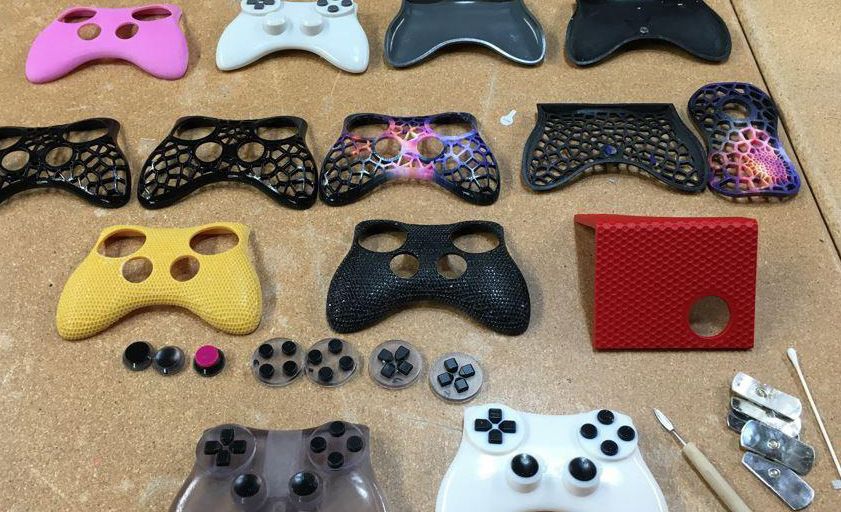
2 2

                           Exploring Creative Prototyping
                           in Consumer Goods

                           Prototyping for consumer goods often involves          options available for PolyJet™ — from flexible to
                           a balance between producing multiple design            rigid, opaque to transparent — make realistic-
                           iterations in a short amount of time, yet achieving    feeling prototypes even easier to achieve.
                           a high level of realism for each piece. This process   Multiple print heads also improve color realism.
                           has typically limited designers, making multiple       With traditional prototyping, options for coloring
                           iterations expensive and time consuming. Now, with     are limited to laborious processes like hand-
                           technology like the Stratasys® PolyJet 3D printers,    painting. The J Series makes it simple to print
                           designers don’t have to choose between creating        multiple models in multiple colors in just one step.
                           many prototypes and creating accurate ones.            Additionally, the J Series is PANTONE Validated™,
                           With the Stratasys J Series: J55, J826, J835 and       so designers can select the exact colors desired for
                           J850, a part requiring multiple material types can     their piece.
                           be finished in one print. And the numerous material
      Controller
 Document
 Game            Project
          Title Here
3 3

                           The Challenge
                           To begin, Shuvom Ghose, Stratasys Software,
                           Go-To-Market Team, put himself “in the shoes of
                           a small, fast-moving Industrial Design team trying
                           to iterate and pitch a new product.” The main
                           priorities for a project like this would be to create
                           a presentable product within a short timeline. But
                           starting from scratch often means trial and error,
                           so for this endeavor, it was important to be able to
                           visualize many designs in a short period of time.
                           The J Series was ideal for Shuvom’s project due to
                           its multimaterial capabilities.

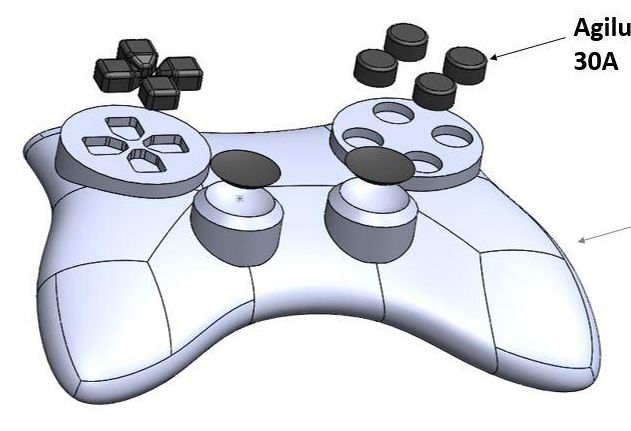
                                                                                   Figure 1: With the J Series, it only took
                                                                                      a single five-hour print to produce a
                           The Right Feel                                               multimaterial controller prototype,
                                                                                    with rigid VeroWhite for the body and
                           After Shuvom created a general shape for his              rubberlike Agilus30™ for the buttons.
                           model, he wanted to enhance the tactile realism.
                           For a game controller, this meant materials of
                           differing shore values built into one piece. Shuvom
                           explained that material choice “makes a huge
                           difference to the realism of your model, especially
                           if you’re prototyping high-end consumer goods
                           that have to feel expensive.”
                           With the J850, it only took a single five-hour print
                           to produce a multimaterial controller prototype,
                           with rigid VeroWhite™ for the body and rubber-like                                                  Figure 2: Shuvom created
                                                                                                                               a dozen different colored
                           Agilus30™ for the buttons. (Figure 1)
                                                                                                                               models in just two days.

                           The Right Look
                           But the design wasn’t complete without color.
                           As he tested different versions of his prototype,
                           Shuvom created a dozen different colored models
                           in just two days. (Figure 2)
                           Using modular designs made it easy to test
                           different colors and patterns, and because of
                           the multimaterial capabilities, Shuvom could print
                           several designs in different colors at once, which
                 Project

                           expedited the prototyping process. In fact, he was
          Title Here

                           able to test so many different designs that Shuvom
      Controller

                           says he started running out of ideas.
 Document
 Game
4

                          The Result
                          Shuvom created more than 10 different iterations
                          of his game controller, with variations in color,
                          texture, and modular design, in just one week.
                          He was able to quickly weed out designs that
                          didn’t work and make adjustments where needed,
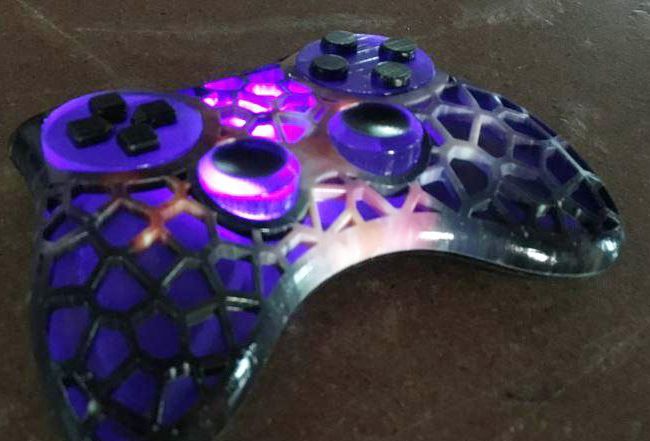
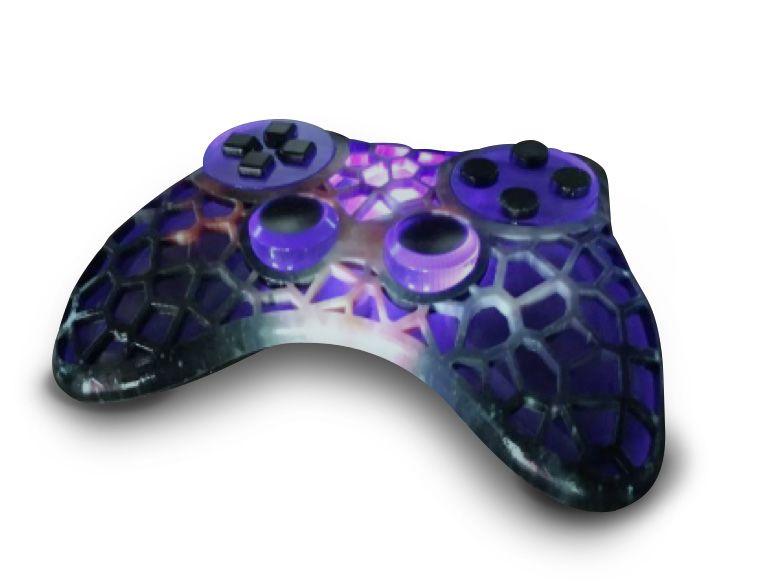
                          helping him arrive at his final version: a hard,
                          transparent body with rubber-like buttons and a
                          fully-customized, multicolor shell.
                          The final controller prototype uses both Vero™ and
                          Agilus30, which bond together during printing
                          without needing an adhesive.

                          The Future of Realistic Prototyping
                          Unlike traditional methods of creating realistic
                          models, parts created with the J Series require
                          almost no final touchups or finishing steps like
                          sanding or assembly. And because the printer can
                          run around the clock without supervision, the need
                          for active labor is drastically reduced.
                          The J850 allows designers to prototype with a
                          single operation — parts with multiple materials or
                          colors only need one fabrication step instead of
                          several, speeding up the production process.
                          This technology makes it economically feasible to
                          create many design iterations before pitching the
                          final product. For designers hoping to see their
                          ideas approved and expanded, this is invaluable.

                          Stratasys Headquarters
                          7665 Commerce Way,                                         1 Holtzman St., Science Park,
                          Eden Prairie, MN 55344                                     PO Box 2496
                          +1 800 801 6491 (US Toll Free)                             Rehovot 76124, Israel
Game Controller Project

                          +1 952 937-3000 (Intl)                                     +972 74 745 4000
                          +1 952 937-0070 (Fax)                                      +972 74 745 5000 (Fax)

                          stratasys.com
                          ISO 9001:2015 Certified

                          © 2020 Stratasys. All rights reserved. Stratasys, the Stratasys Signet logo, PolyJet, Agilus30, Vero, VeroWhitePlus and
                          Vero PureWhite are trademarks or registered trademarks of Stratasys Ltd. All other trademarks are the property of their respective owners.
                          Product specifications are subject to change without notice. CP_PJ_Game Controller_0720a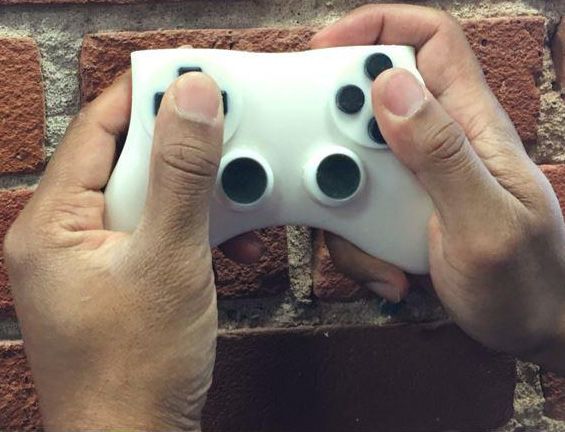
You can also read


