CONTINUING PROFESSIONAL DEVELOPMENT (CPD) GUIDELINES FOR CPD COURSE PROVIDERS
←
→
Page content transcription
If your browser does not render page correctly, please read the page content below
CONTINUING
                                            PROFESSIONAL
                                            DEVELOPMENT
                                            (CPD)
                                            GUIDELINES
                                            FOR CPD
                                            COURSE
                                            PROVIDERS

S/N   Version History      Date Issued      DATE OF ISSUE:
1           1           6 November 2013
2           2             24 March 2014

3           3            26 August 2016
                                            17 MARCH 2021
4           4           6 September 2016
5           5            12 January 2018

6           6            29 October 2018

7           7           13 September 2019
8           8             17 March 2021
Continuing Professional Development Guidelines (CPD)
For CPD Course Providers
CONTINUING PROFESSIONAL DEVELOPMENT (CPD) GUIDELINES
FOR CPD COURSE PROVIDERS
1. Introduction
1.1 Developments within the real estate agency industry move at such a pace that no
professionals should be content to rest on the knowledge and skills gained through their
education, training and experience in the past. As the economy undergoes disruption
brought about by technology, not only must salespersons keep abreast of the latest
knowledge and skills, they must also be equipped to handle the increasingly disruptive
business environment. The public expects no less from the real estate professionals
whom they engage to be knowledgeable and to provide timely, accurate, comprehensive
and reliable advice. The Council for Estate Agencies (CEA), shares these expectations.
1.2 The objective of the mandatory Continuing Professional Development (CPD) framework
is to ensure that real estate Key Executive Officers (KEOs) and salespersons have the
skillsets and critical competencies to carry out their duties effectively. It is integral in
ensuring that KEOs and salespersons continue to keep their knowledge and skills
current with industry and regulatory developments. The mandatory CPD framework
remains a key component of CEA’s regulatory framework to achieve a higher
professional standards of the real estate agency industry and aims to equip KEOs and
salespersons with the ability to evolve with the changing industry landscape and
enhances the professionalism of the industry.
1.3 From 1 October 2019 onwards, every KEO, practising director/partner and salesperson
will be required to undertake a minimum of six credits per annual CPD cycle, of which
four of these credits must be from courses related to professional competencies and two
credits must be from courses related to generic competencies. The minimum of six
credits is also a renewal licensing/registration condition stipulated in the Estate Agents
(Licensing and Registration) Regulations 2010. Failure to comply will affect the
registration status of KEO, practising director/partner and salesperson and may lead to
their removal from the Public Register.
2. Who can apply to be Course Providers for Professional Competencies?
2.1 Eligible CPD course providers for the real estate agency industry include the following:
i. Government Agencies
ii. Local Tertiary Institutions
iii. National Continuing Education & Training (CET) Centres
iv. Real Estate and Related Industry Associations
v. CEA Approved Course Providers (ACPs)1
vi. Estate Agents
2.2 Estate agents that conduct in-house training should exercise due diligence and carry out
stringent checks to allow only salespersons under their organisation to attend the
courses approved as courses for Professional Competencies. Estate agents should
1ACPs are course providers approved by CEA to conduct the preparatory course for Real Estate Salespersons
(RES) and Real Estate Agency (REA) examinations. More information on the list of CEA ACPs can be found on
CEA website.
Version 8.0 Page - 2 - | 18 17 March 2021Continuing Professional Development Guidelines (CPD)
For CPD Course Providers
properly manage attendance of in-house CPD courses and ensure that only
salespersons under their organisation are allowed to: i) sign up for in-house CPD
courses; and ii) register their attendance on the day of the CPD course.
3. What are the Guidelines for Developing a Course for Professional Competencies?
3.1 CPD is one of the key components of CEA’s regulatory framework to achieve higher
professional standards of the real estate agency industry and aims to equip KEOs and
salespersons with the ability to evolve with the changing industry landscape and
enhances the professionalism of the practitioners within the industry. In developing CPD
courses for professional competencies, course providers should take into consideration
the following:
3.1.1 Courses should be relevant and provide real value to salespersons to ensure that
KEOs and salespersons have the skillsets and critical competencies to carry out
their duties effectively.
3.1.2 Every course should be customised to meet the specific needs of salespersons in
their professional development. Course providers should not dilute the course
content of professional competencies by bundling such contents with that of
generic competencies subjects.
3.1.3 The course objectives should be clearly defined and comprehensive to the target
group of participants, with specific learning outcomes.
3.1.4 Course providers should adopt a holistic approach and develop useful and
comprehensive courses rather than putting out courses with narrow focus topics.
As an illustration, instead of a course on mediation skills, course providers could
customise a course that covers the whole process, starting from complaints
management, to mediation and arbitration in the context of the dispute resolution
scheme, and include relevant case studies.
3.1.5 Course providers are responsible to provide quality training to participants. CPD
trainers are expected to have the necessary knowledge and conduct the lessons
effectively and competently to enhance participants’ learning outcomes. Each
course provider shall have an adequate number of trainers and proper scheduling
before conducting a course so that training quality is not compromised.
3.1.6 Course providers are required to produce their own training materials. If the
training materials contain materials taken from elsewhere, e.g. slides replicated
from the slides belonging to another entity, providers must seek the approval of
the entity and acknowledge the source of information in their course materials.
They must not reproduce materials wholesale taken from some other entity as this
infringes on copyright. It is also the responsibility of course providers to ensure
accuracy of training materials and maintain quality of the course.
3.2 As set out in the Professional Competencies reference guide (see Annex A), courses
should be developed according to knowledge areas essential to the conduct of estate
agency.
Professional Competencies
3.2.1 Courses related to professional competencies offer salespersons opportunities to
develop and deepen their knowledge in estate agency work. These will be grouped
Version 8.0 Page - 3 - | 18 17 March 2021Continuing Professional Development Guidelines (CPD)
For CPD Course Providers
into three categories: Laws and Regulations, Property Markets, and Other Real
Estate Knowledge.
• P1: Laws and Regulations focuses on developing and enhancing the
professional ethics of KEOs and salespersons and promoting their knowledge
of the Estate Agents Act and Regulations, and other relevant laws and
regulations. It also aims to raise the professional standards of KEOs and
salespersons through learning best practices relating to estate agency work
and deepening of knowledge of CEA’s practice guidelines.
• P2: Property Markets is designed to equip and deepen KEOs and
salespersons’ understanding of the essential knowledge required for them to
effectively perform estate agency work in the various property markets.
• P3: Other Real Estate Knowledge is aimed at expanding KEOs and
salespersons’ ancillary knowledge for salespersons to effectively provide
sound advice to their clients. It covers a wider spectrum of real estate
knowledge and seeks to equip KEOs and salespersons with the appreciation
and understanding of broader real estate knowledge such as major emerging
trends.
P1: Laws and P2: Property P3: Other Real Estate
Regulations Markets Knowledge
• Estate Agents Act, • Residential • Sustainable Living
Regulations & • Commercial Environment
Guidelines • Industrial • Appreciation of other
• Other Laws & • Foreign real estate knowledge
Regulations
3.2.2 The CPD framework also features mandatory courses that KEOs and
salespersons have to attend to deepen their knowledge essential for their estate
agency work. The mandatory courses could be on government regulations relating
to property transactions and estate agency work, including latest regulatory
changes and updates.
3.2.3 Further elaboration of the Professional Competencies is provided in our reference
guide under Annex A. The reference guide aims to provide an overview of the
essential knowledge and competencies that are required for KEOs and
salespersons in their respective areas of work.
Generic Competencies
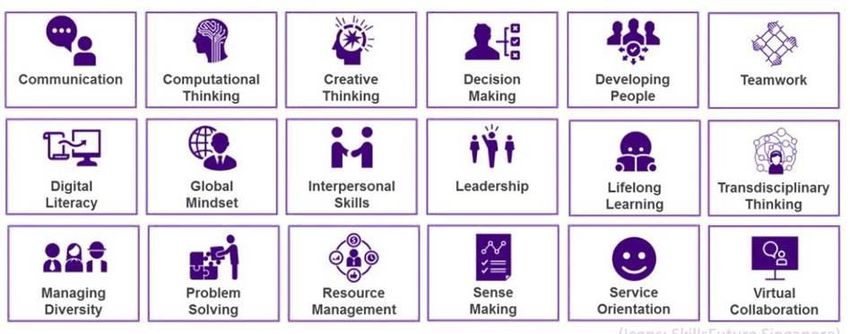
3.2.4 Courses related to generic competencies will contribute towards KEOs and
salespersons’ overall personal development and sharpen their soft skills. These
are grouped into 18 categories, aligned with Singapore Skills Framework’s list of
Generic Skills and Competencies (GSC), including those on leadership, digital
literacy, communication, and creative thinking.
Version 8.0 Page - 4 - | 18 17 March 2021Continuing Professional Development Guidelines (CPD)
For CPD Course Providers
(Source: SkillsFuture Singapore)
3.2.5 Generic Competency courses include those offered by SkillsFuture Singapore
(SSG) and Estate Agents’ in-house training courses that are in line with
Singapore Skills Framework’s list of GSCs. CEA recognises that Estate Agents
do provide in-house training for their salespersons. In-house courses that are in
line with Singapore Skills Framework’s list of GSCs can be recognised. KEOs
and salespersons may refer to SSG’s website for a suggested list of SkillsFuture
courses.
3.2.6 Further elaboration of the GSCs is provided in our reference guide under Annex
A. The reference guide provides a common reference to guide KEOs and
salespersons in developing and sharpening the relevant skillsets essential to
perform effectively as a salesperson.
4 What Requirements do CPD Course Providers have to meet?
4.1 All CPD course providers who intend to conduct courses for Professional Competencies
are required to meet the following criteria:
Qualified CPD Course Trainers
4.1.1 CPD course providers are to ensure that CPD trainers engaged by them fulfil the
following eligibility criteria. All applications for approval as a CPD course trainer
shall be submitted together with the CPD course via My CPD Portal (As according
to guidelines 5.3). The application shall be accompanied by all relevant and
supporting documents stipulated by CEA in para 4.1.2. CEA will assess whether
the trainers are qualified to teach the course when the CPD course provider
submits the course for CEA’s approval via My CPD Portal.
4.1.2 All CPD trainers must:
(i) Have at least five years of instructional experience in conducting similar
activities or have at least five years of working experience as practitioners in
the real estate agency industry within the last 10 years;
(ii) Attain full WSQ Advanced Certificate in Training and Assessment (ACTA) or
WSQ Advanced Certificate in Learning and Performance (ACLP).
Version 8.0 Page - 5 - | 18 17 March 2021Continuing Professional Development Guidelines (CPD)
For CPD Course Providers
Exemption from ACTA/ACLP requirement and 5 years instructional or working
experience
4.1.3 Subject to the assessment of the course provider that a trainer is found suitable to
conduct a CPD course related to Professional Competencies, the course provider
may apply to CEA for the trainer to be exempted from the requirements specified
in para 4.1.2 (i) and 4.1.2 (ii) if he is a:
(i) Trainer from government agencies, tertiary institutions and professional
bodies (e.g. The Law Society of Singapore, Consumer Association of
Singapore); or
(ii) Trainer who has previous experience teaching similar subjects in local
recognised tertiary institutions; or
(iii) Trainer who hold professional qualifications and work in a related field to the
estate agency industry, like lawyers and accountants; or
(iv) Trainer in other professions who are subject matter experts.
Adequate Facilities and Equipment
4.1.4 Course providers shall provide adequate and suitable physical facilities and
equipment that meet the participants’ needs and support the effective conduct of
the CPD courses. They shall conduct regular reviews of their physical facilities and
infrastructure to ensure that they remain adequate. The onus is on the course
providers to ensure that the venues meet the health and safety requirements of
the relevant authorities (e.g. fire safety and permissible use of premises)
and furnish the necessary approvals and supporting documents to CEA.
Quality of Course
4.1.5 Courses should be relevant and provide real value to salespersons. It should be
customised to meet the specific needs of salespersons in their professional
development. The course objectives should be clearly defined and comprehensive
to the target participants and the learning outcomes must be specific. Course
providers must have a key personnel who is responsible for the management of
the quality of the course and the key personnel should possess relevant training
experience or experience in managing similar courses.
4.1.6 The contents and information in the course materials must be up-to-date, accurate
and keep pace with the latest policies and regulations governing property
transactions and estate agency practice. If a course provider does not meet
expectations in this aspect, CEA reserves the right to withdraw their eligibility to
run subsequent CPD courses related to Professional Competencies.
4.1.7 Course providers should conduct regular reviews on the effectiveness of course
trainers. Course providers should seek feedback from participants and carry out
assessment of the quality of the course contents and trainers engaged by them.
CEA should be informed if there is adverse feedback from participants on the
course contents or trainers, and course providers are to share improvement plans
with CEA to address adverse feedback from course participants.
Course Attendance Registration System
Version 8.0 Page - 6 - | 18 17 March 2021Continuing Professional Development Guidelines (CPD)
For CPD Course Providers
4.1.8 Course providers should implement a secured system to register a participant’s
entry to and departure from the course venue, such as asking him/her to sign in
and out manually or through electronic means. Participants should not be allowed
to attend the course after a grace period of not more than 15 minutes after the
start of the course.
4.1.9 Course providers are to comply with the Personal Data Protection Committee
(PDPC) Advisory Guidelines on collection, use and disclosure of NRIC numbers
that would come under effect on 1 September 2019. In line with the provisions of
the Personal Data Protection Act 2012, course providers must ensure that they
give notification of the purpose for and obtain consent from individuals on the
collection, use and disclosure of their NRIC number, in particular, the disclosure
of NRIC numbers and other personal data to CEA as and when required to. Course
providers should ensure that they do not use or disclose personal data including
NRIC numbers for any other purposes that are not required by CEA or directed by
the individual.
Issuance of Certificate of Attendance
4.1.10 There must be proof of attendance issued to participants after completion of the
CPD course. Proof of attendance can be in the form of:
i. Certificate of Attendance issued; or
ii. Letter of Confirmation of Attendance; or
iii. Email Confirmation
4.1.11 These certificates or letters of confirmation should indicate clearly the name of
salesperson, title of course, course classification, credits as approved by CEA and
date(s) of attendance.
4.1.12 As the intent of the CPD training is to promote and maintain both professionalism
and competency, salespersons are encouraged to attend a balanced mix of
training courses on different subject matters for diversified learning. Unless there
are significant policy changes during the same CPD cycle, repeated attendance
records of salespersons who attend CPD courses under the same topic by the
same trainer/provider more than once within a CPD cycle will not be counted
towards the CPD requirements.
4.1.13 As the objective of CPD framework is to ensure that salespersons equip
themselves with professional knowledge that is current and relevant,
salespersons are not allowed to carry forward excess CPD credits to the following
year.
Feedback from Participants
4.1.14 Course providers should conduct regular reviews on the effectiveness of course
trainers by seeking feedback from participants and carry out assessment of the
quality of the activity contents and trainers deployed by them. Course providers
are required to seek feedback from participants of the CPD course by using the
post-course evaluation form specified by CEA. They shall ensure at least 60% of
participants for each course complete the post-course evaluation form. Course
providers are expected to share the feedback report with CEA in the event when
an adverse feedback is received.
Version 8.0 Page - 7 - | 18 17 March 2021Continuing Professional Development Guidelines (CPD)
For CPD Course Providers
Record Keeping Requirement
4.1.15 Course providers are required to maintain proper and accurate record keeping of
course details (including course name/date/venue, attendance records, course
feedback, credits, course materials and trainers) for at least three years. Course
providers are required to submit these course records to CEA for verification
when requested.
In addition, course providers are required to upload the attendance records to
the My CPD Portal in a format specified by CEA within three working days from
the completion of the course.
Publicity of CPD Courses
4.1.16 Course providers shall ensure that all course-related publicity is accurate and
relevant. Course providers are allowed to market or promote these activities to
the industry via SMS and email if consent has been obtained in accordance to
the requirements under the Personal Data Protection Act (PDPA) 2012. Course
providers shall not employ undesirable methods to promote their course or
conduct any form of recruitment activities such as marketing their products and
services.
4.1.17 CEA will accord CPD credits for courses under the Professional Competencies.
CPD course providers conducting Professional Competencies are required to
obtain CEA’s approval before the CPD course can be conducted.
4.1.18 KEOs will accord the CPD credits for courses under the Generic Competencies.
KEOs have the responsibility to ensure that their salespersons comply with the
regulatory requirements of the CPD scheme. KEOs need to assess the relevance
of courses/activities undertaken by their salespersons are in line with Singapore
Skills Framework’s list of GSCs.
4.1.19 Course providers may use the following statement in their marketing materials
for approved CPD courses: For Professional Competencies: “awarded x CPD
credits under Professional Competencies”. For Generic Competencies: “y CPD
credits under Generic Competencies based on CEA’s guidelines”.
Inspection and Audit Checks
4.1.20 From time to time, CEA’s officers or authorised representatives may conduct
inspections and/or audits on the course providers. Course providers are required
to allow CEA staff to attend any of the approved courses free of charge for quality
assurance checks. CEA may conduct inspection of CPD courses without prior
notice. Course providers shall comply with the requests of the inspecting officers
or representatives and provide relevant information and supporting documents
when required by CEA, its inspecting officers and/or representatives.
5 How to Submit for Approval?
5.1 Course providers are required to log in to the My CPD Portal to submit the detailed
content for each course application related to Professional Competencies. The
Version 8.0 Page - 8 - | 18 17 March 2021Continuing Professional Development Guidelines (CPD)
For CPD Course Providers
application shall be accompanied by all relevant and supporting documents as
stipulated by CEA including trainers’ qualifications, CV, and ACTA certificate of trainers,
and briefing materials. The course objectives should be clearly defined and
comprehensive to the target participants. CEA may ask for presentation materials from
course providers on their proposed courses before approval and award of CPD credits.
5.2 Each CPD course application will be charged a prevailing assessment fee. No partial
payment / instalment is allowed. Full payment is required at the point of application.
Assessment outcome is final and any appeal for reconsideration will be treated as a new
application and subject to payment of the assessment fee. This include applications that
are beneficial to the real estate agency industry but do not meet the existing prescribed
criteria.
5.3 The required documents are as follows:
i. Full course materials / training slides;
ii. Detailed CV of trainers (including relevant academic/professional qualifications and
relevant experience in conducting similar activities) and ACTA certificate of trainers;
iii. Details on record keeping procedures; and
iv. Details of PayNow payment of course assessment fee.
Application to become a Course Provider
5.4 The application process is outlined in Annex B - Process Flow Chart and described
below.
5.4.1 All course providers that intend to conduct courses related to Professional
Competencies are to note that a one-time pre-registration with CEA is necessary
before proceeding with payment and submission of all required documents.
Course providers have to meet the eligibility criteria stipulated in para 2.1.
Course providers can submit the application request to feedback@cea.gov.sg
with subject header .
5.4.2 After receiving the user name and password, course providers are to log in to the
My CPD Portal to submit the application. Course provider may refer the My CPD
Portal User Manual for Course Providers available in CEA’s website.
5.4.3 The mode of payment is via PayNow only. Applicants will have to complete the
payment and upload the screenshot of the transaction as proof of payment, at
the point of submitting the course application.
5.4.4 Applications will only be processed upon receipt of payment and complete
submission of documents as stated in para 5.3.
5.4.5 CEA may request for more information and/or briefing during the processing of
the application. CEA will evaluate the course based on the coverage of the
proposed activity including whether the trainer is qualified to conduct the course.
5.4.6 CEA reserves the right to reject course materials with outdated content at the
point of submission and re-submission may be considered as a fresh application.
5.4.7 CEA reserves the right, at its discretion, to register, categorise, request
modification, or remove a CPD course under CEA’s CPD scheme. A proposed
CPD course may not be approved if in CEA’s opinion, it contradicts the principles
Version 8.0 Page - 9 - | 18 17 March 2021Continuing Professional Development Guidelines (CPD)
For CPD Course Providers
of the regulatory regime or is not conducive in any way to the professional
development of KEOs and salespersons (e.g. teaching on taking advantage of
policy loopholes, how to beat the system), or found to be of sub-standard quality.
This is also applicable to already approved CPD activities, as well as courses
related to Generic Competencies, should there be adverse feedback received
from participants or infringement of the conditions prescribed in the CPD
guidelines.
5.4.8 After assessment of the application, CEA will provide the course provider with
the application outcome, together with the payment invoice. Approved CPD
courses are to adhere to the stipulated requirements.
5.4.9 Course providers should not conduct the course without CEA’s approval or after
the validity period of the approved course.
5.4.10 Course providers who intends to conduct courses related to Generic
Competencies need not seek prior approval from CEA. However, course
providers should ensure that the courses are in line with Singapore Skills
Framework’s list of Generic Skills and Competencies. KEOs have the
responsibility to ensure that their salespersons comply with the regulatory
requirements of the CPD scheme and KEOs need to assess the relevance of the
generic competencies’ courses undertaken by their salespersons and ensure
that the courses comply with CEA’s requirements as set out in the CPD
Guidelines in CEA’s website.
6 What are the Requirements for Conduct of E-Learning Activities?
6.1 To encourage diverse learning beyond classroom setting, course providers are
allowed to conduct e-learning courses. There is no restriction on the number of e-
Learning courses that a salesperson can participate within a CPD cycle.
Development of E-Learning System
6.1.1 Course providers who are keen to provide e-learning CPD courses have the
flexibility to develop their own in-house capability or engage a vendor to offer e-
learning. The delivery of the e-learning course must be adequate in facilitating
learning and understanding of the topic or subject matter by participants, for
example through voice explanation or interactive learning modes to enhance
understanding, and not just a compilation and display of slides.
Duration of Modules
6.1.2 To maximise the attention span of participants, the e-learning course should be
broken down into suitable bite-sized modules with each module not exceeding 45
minutes, e.g. a two-hour course can be broken down into four modules of 30
minutes each.
Assessment
6.1.3 It is important that participants meet the learning outcomes of the e-learning course.
The course should therefore comprise an assessment at the end of all the modules
and participants are required to attain a passing rate of 80% before they are
awarded the e-certificate of attendance. The certificate date will be the date that
Version 8.0 Page - 10 - | 18 17 March 2021Continuing Professional Development Guidelines (CPD)
For CPD Course Providers
the participant passes the assessment. For the assessment, questions (and
options in the case of MCQs) have to be randomised for each participant.
Feedback from Participants
6.1.4 Course providers are required to seek feedback from each participant of the e-
learning course by providing an online post-course evaluation form in the format
specified by CEA. The system shall ensure that participants complete the online
post-course evaluation before they are issued the certificate of attendance.
Providers are required to submit to CEA the consolidated feedback report (with
information on the average rating for each of the assessed items, all written
comments, and actions to be taken to improve the activity) every three months.
Course Registration
6.1.5 The system shall allow for online registration and payment for the convenience
of participants. While the course provider can allow for registration and payment
at its premise, provision of an online mode will give greater flexibility to
participants as they need not be physically present at the course provider’s
premise, and is in line with the convenience that e-learning provides.
Access to E-Learning System
6.1.6 The system shall provide for basic identification of the user (e.g. user logs in with
CEA registration number and password). CEA encourages the use of webcam
for identification as a good practice.
6.1.7 The system shall allow participants unlimited access to the e-learning CPD
course modules for a minimum duration of 3 months upon signing up for each e-
Learning course. The system shall track the participants’ completion of the e-
learning modules and activity.
Application to Conduct E-Learning Course
6.1.8 Course providers shall submit the application to conduct the e-learning course
via the My CPD Portal, in the same way as for a classroom-based course.
Course providers are required to indicate that it is an e-learning course and
provide details on the course administration under “Description of Course” in the
course application details via the My CPD Portal.
Course providers are required to upload the following documents in the application:
i. Trial account for CEA with at least eight weeks’ access or copy of the e-learning
content;
ii. Full course materials and outline of the course contents;
iii. Name and detailed CVs of e-learning course developers including proof of relevant
academic/professional qualifications and relevant experience in developing similar e-
learning courses; and
iv. Details of PayNow for payment of course assessment fee.
Council for Estate Agencies
Updated as at 17 March 2021 (version 8.0)
Version 8.0 Page - 11 - | 18 17 March 2021Continuing Professional Development Guidelines (CPD)
For CPD Course Providers
Annex A
REFERENCE GUIDE ON PROFESSIONAL AND GENERIC COMPETENCIES
1 The new CPD Framework (see Table 1) will take effect from 1 October 2019, for the
2019/2020 CPD cycle onwards. This reference guide serves to provide an elaboration of the
topics covered under the Professional Competencies and the descriptors of the Generic
Competencies.
2 The new CPD framework aims to facilitate salespersons in keeping abreast of the
latest changes in policies and procedures relating to the property transaction process and
ensure that they are equipped with the necessary knowledge and skillsets to thrive in the new
digital environment. It includes a more structured approach to guide salespersons in achieving
deeper technical knowledge and skillsets to, among others, perform duties in different types
of property markets. It is a key initiative of the Real Estate Industry Transformation Map and
is the result of a collaborative effort between CEA and the estate agency industry.
3 Courses related to Professional Competencies offer salespersons opportunities to
develop and deepen their knowledge in estate agency work. These will be grouped into three
categories: laws and regulations, property markets, and other real estate knowledge.
4 Courses related to Generic Competencies will contribute towards salespersons’
overall personal development and sharpen their soft skills. These are grouped into 18
categories, including those on leadership, digital literacy, communication, and creative
thinking.
Table 1: New CPD Framework
Professional Competencies Generic Competencies
Laws and Property Other Real Estate 18 Generic Skills and
Regulations Markets Knowledge Competencies
• Estate Agents • Residential • Sustainable (As defined under the Singapore
Act & • Commercial environment Skills Framework Generic Skills and
Regulations & • Industrial • Appreciation of Competencies)
Ethics • Foreign other real
• Other laws & estate • Communication
regulations knowledge • Computational Thinking
• Creative Thinking
• Decision Making
• Developing People
• Digital Literacy
• Global Mindset
• Interpersonal Skills
• Lifelong Learning
• Leadership
• Managing Diversity
• Problem Solving
• Resource Management
• Sense Making
• Service Orientation
• Teamwork
• Transdisciplinary Thinking
• Virtual Collaboration
Version 8.0 Page - 12 - | 18 17 March 2021Continuing Professional Development Guidelines (CPD)
For CPD Course Providers
5 Tables 2 to 4 illustrate the key knowledge and skills that a salesperson should be
equipped with in order to perform the job task required in the respective categories under the
Professional Competencies. The knowledge indicated in the examples builds on the
knowledge acquired in the Real Estate Salesperson examination syllabus, and is not
exhaustive.
Table 2: Laws and Regulations – Topics and Possible Knowledge Areas
P1: Laws and Regulations
Salespersons are expected to be conversant with the laws and regulations in order to carry out
their duties professionally and ethically. Salespersons must also be cognisant of other laws which
have direct or indirect impact on the real estate market.
Topics under CEA’s Estate Agents Act, Regulations & Guidelines
• Estate Agents Act and Regulations
• Code of Ethics and Professional Client Care (CEPCC)
• Code of Practice for Estate Agents (COPEA)
• CEA’s Practice Guidelines and Practice Circulars
• Professional Service Manual
• Dispute Resolutions and Arbitration
• Disciplinary cases
Possible knowledge areas:
• An understanding of the duties of estate agents in respect of management and supervision,
estate agent card, claims and complaints, and retention of documents and records.
• Dealing with situations where conflict may arise and ensuring compliance to the Estate Agents
Act and Regulations.
• Develop ethics as the underlying basis for the conduct of estate agency work.
• Understand the Advisory Guidelines for Personal Data Protection for the Real Estate Sector
and Do Not Call Provisions, and ensure compliance in the course of estate agency work.
• Recognise the role of estate agent and salesperson in the prevention of Money Laundering and
Countering the Financing of Terrorism (AML-CFT) and to ensure compliance with the AML-CFT
guidelines by performing checks for every transaction.
Topics under Other Laws & Regulations
• Central Provident Fund (CPF) Act and policies
• Comply with the Advertising Standards Authority of Singapore (ASAS)’s Singapore Code of
Advertising Practice (SCAP)
• The Law Society of Singapore’s Conditions of Sale 2012
• Planning Act and Development Control policies
• Land Titles (Strata) Act and the related collective sales rules and regulations
Possible knowledge areas:
• Be cognisant of CPF Act including advising clients on the use of CPF monies for purchase of
properties and refund of CPF monies in the case where the sales proceeds are not enough to
make the full required CPF refund, before completing of transactions.
• Comply with the Advertising Standards Authority of Singapore (ASAS)’s Singapore Code of
Advertising Practice (SCAP) when putting up advertisements for property transactions.
• Be cognisant of Planning Act including Master Plan zoning, plot ratio, height control, change of
use rules and regulations, etc., especially for properties with redevelopment potential or lands.
• Be well versed with the Land Titles (Strata) Act with regard to the laws on collective sales.
Version 8.0 Page - 13 - | 18 17 March 2021Continuing Professional Development Guidelines (CPD)
For CPD Course Providers
Table 3: Property Markets – Topics and Possible Knowledge Areas
P2: Property Markets
Salespersons should deepen their understanding of the essential knowledge to effectively perform
estate agency work in the various property markets.
Topics under Residential Property Market
• HDB (including Executive Condominiums)
• Private
Possible knowledge areas:
• Market drivers, factors affecting demand and supply.
• Types of residential properties and their characteristics.
• Marketing process for residential properties.
• Polices relating to the purchase of new HDB flats and Executive Condominiums.
• Polices and processes relating to the resale of HDB flats and Executive Condominiums, sale of
condominiums, apartments and landed residential properties.
• Financing of HDB flats and Executive Condominiums, and purchase of private properties.
• Policies and processes relating to the subletting of HDB whole flat/rooms.
• URA’s regulations on leasing of residential properties with regard to minimum duration of
tenancy, maximum occupancy and partitioning.
• Advise on the terms in the tenancy agreement to the landlord/tenant.
• Policies and guidelines governing the landed properties including redevelopment
considerations.
• Policies relating to different mode of sales of private residential properties, e.g. en bloc /
collective sales, tender, bank/mortgagee sale and auction.
• Understanding the impact of the other Government agencies’ policies on residential
transactions, e.g. LTA’s Road Line Plan.
Topics under Commercial Property Market
• Office
• Retail
• Shophouses
• Medical suites
Possible knowledge areas:
• Market drivers, factors affecting demand and supply.
• Types of commercial properties (e.g. office spaces, retail spaces, shophouses) and their
characteristics.
• Policies relating to sale of commercial properties.
• Policies and processes on sale, resale, and leasing of commercial properties.
• Marketing process for commercial properties.
• Financing on purchase of commercial properties.
• Policies relating to different modes of sales of commercial properties e.g. en bloc/collective
sales, tender, bank/mortgagee sale and auction en bloc/collective sales, tender,
bank/mortgagee sale and auction.
Topics under Industrial Property Market
• JTC industrial properties
• Private industrial properties
Possible knowledge areas:
• Market drivers, factors affecting demand and supply.
• Types of industrial properties under Master Plan zoning (e.g. Business Park, Business 1,
Business 2) and their characteristics.
• Policies affecting industrial properties.
Version 8.0 Page - 14 - | 18 17 March 2021Continuing Professional Development Guidelines (CPD)
For CPD Course Providers
• Process on sale and leasing of industrial properties.
• Marketing process for industrial properties.
• Financing on purchase of industrial properties.
• Understanding JTC and URA’s policies on industrial properties.
• Policies relating to different mode of sales of private industrial properties, e,g. en bloc/collective
sales, tender, bank/mortgagee sale and auction.
Topics under Foreign Properties
• By jurisdiction
Possible knowledge areas:
• Types of properties and their tenure/leases in different jurisdictions, and factors affecting the
real estate markets in these jurisdictions.
• Laws and policies relating to the sale and lease of foreign properties in different overseas
jurisdictions.
• Financing on purchase of foreign properties.
Table 4: Other Real Estate Knowledge – Topics and Possible Knowledge Areas
P3: Other Real Estate Knowledge
Salespersons should deepen and broaden their real estate knowledge beyond their domain
segment and to keep abreast of other real estate information and trends which may be relevant to
the conduct of their estate agency work.
Topics under Sustainable Living Environment
• Built environment and infrastructure (e.g. Facilities and strata management; Green Mark,
Quality Mark and Construction Quality Assessment System (CONQUAS))
• Urban sustainability and planning (e.g. Urban planning)
• Heritage conservation (e.g. Building conservation)
Possible knowledge areas:
• Management and maintenance of buildings and facilities.
• Understanding of BCA’s Green Mark, Quality Mark and CONQUAS.
• Understanding of URA’s Conservation Guidelines for buildings (e.g. shophouses, bungalows,
institutions) that have been gazetted for conservation.
• Understand the broader issues on how cities are evolving and re-adapting in changing times.
Topics under Other Real Estate Knowledge
• Valuation
• Property finance and investments
• Taxation
• REITs
Possible knowledge areas:
• Understanding of different property valuation methods.
• Understanding of real estate financing.
• Understanding of property related taxes.
• Understanding of REITs in Singapore.
Version 8.0 Page - 15 - | 18 17 March 2021Continuing Professional Development Guidelines (CPD)
For CPD Course Providers
6 Generic Competencies are transferable skills which complement salespersons in
acquiring professional competencies. Table 5 lists the 18 Generic Skills and Competencies
that salespersons can refer to, in guiding them in their professional and personal growth.
Table 5: Descriptors of Generic Skills & Competencies
Communication
Convey and exchange thoughts, ideas and information effectively through various mediums and
approaches.
Computational Thinking
Develop and use computational models, tools and techniques to interpret and understand data,
solve problems and guide decision-making.
Creative Thinking
Adopt a fresh perspective to combine ideas or information in new ways and make connections
between seemingly unrelated fields to create new ideas and applications.
Decision Making
Choose a course of action from various alternatives using a reasoned process to achieve
intended goals.
Developing People
Help others to learn and develop their capabilities to enhance their performance and achieve
personal or professional goals.
Digital Literacy
Use ICT tools, equipment and software to create, evaluate and share information digitally
with others.
Global Mindset
Awareness of diversity across global cultures and markets; Seek opportunities to adopt successful
practices and ideas.
Interpersonal Skills
Manage relationships efficiently and communicate with others effectively to achieve mutual
consensus and outcomes.
Leadership
Lead others to achieve objectives in the most effective way; Provide an inclusive workplace that
cultivates workplace relationships and teamwork, and foster the development of others.
Lifelong Learning
Seek out opportunities to enhance one’s knowledge and skills; Access and acquire new
knowledge and skills actively for continual learning.
Managing Diversity
Work well with people from different ethnic, social, cultural and educational backgrounds and
understand the concerns and interests of diverse work groups.
Problem Solving
Generate feasible and efficient solutions to solve problems and capitalise on new opportunities.
Resource Management
Efficient and effective deployment and allocation of resources when and where they are needed;
Include planning, allocating and scheduling of resources to tasks, which typically include
manpower, machines, money and materials.
Sense-Making
Organise and analyse data and information accurately to identify relationships and detect patterns
and trends to gain insights for decision-making.
Version 8.0 Page - 16 - | 18 17 March 2021Continuing Professional Development Guidelines (CPD)
For CPD Course Providers
Service Orientation
Commit to exceeding both internal and external customers’ needs; Proactively identify customer
needs and sustain a culture of service excellence within the organisation
Teamwork
Work collaboratively and effectively with others to contribute to group efforts to achieve identified
objectives.
Transdisciplinary Thinking
Understanding of concepts across multiple disciplines, with the capacity to synthesise the
knowledge and insights to guide decisions and foster cooperation.
Virtual Collaboration
Use online collaborative communication tools to work as teams to accomplish tasks or projects.
(Source: SkillsFuture Singapore)
Version 8.0 Page - 17 - | 18 17 March 2021Continuing Professional Development Guidelines (CPD)
For CPD Course Providers
Annex B
CPD COURSE APPLICATION PROCESS FLOW CHART
FOR PROFESSIONAL COMPETENCIES
CEA receives CPD course application from course provider who intends to
conduct courses related to Professional Competencies.
CEA checks for completeness Not complete Course provider to rectify. CPD
of documents submitted. assessment put on hold.
YES
Not in order
CEA checks for successful payment and
correct amount of assessment fee paid.
YES
CEA proceeds with CPD assessment. [Processing Time is 6-8 weeks
upon receipt of complete application.]
Assessment Outcome: Approved or Not Approved as CPD
course under Professional Competencies
CEA provides course provider with assessment outcome,
together with payment invoice.
After each run of the approved course, course provider uploads
attendance records to My CPD Portal within 3 working days, and
consolidated feedback report within 2 weeks.
Version 8.0 Page - 18 - | 18 17 March 2021You can also read


