Correctional Services - gwinnettcounty, georgia
←
→
Page content transcription
If your browser does not render page correctly, please read the page content below
Correctional Services

gwinnettcounty, georgia
gwinnettcounty

Board of Commissioners

                            Charlotte Nash                                        Shirley Lasseter                                   Lynette Howard

                   Commission Chairman                                   District 1 Commissioner                            District 2 Commissioner

                                                  Mike Beaudreau                                                  John Heard

                                          District 3 Commissioner                                      District 4 Commissioner

County Administration

                                                   Glenn Stephens                                                Aaron Bovos

                                           County Administrator                                    Deputy County Administrator/CFO

Chairman Charlotte Nash and Commissioners Lynette Howard and John Heard took office in 2011.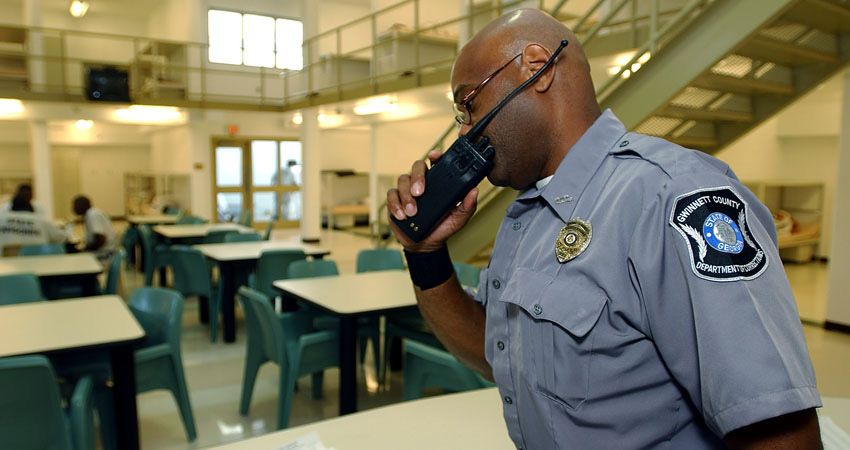
ONTENT   02
          Mission,Vision,Values

         05
          History

         06
          A New Era in
          County Corrections

         07
          Security Division

         09
          2010 at a Glance

         10
          Support Services
          Division

         11
          Statistical
          Information

          Engage Gwinnett
          Update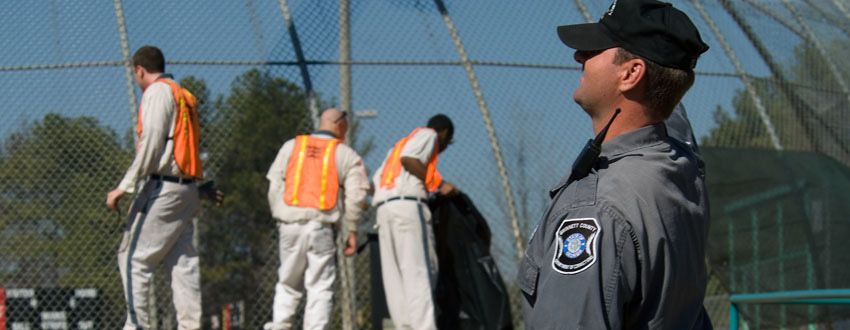
2010 Annual Report • 01

Mission
Mission

The mission of the Department of Corrections is to promote community safety by maintaining a safe and secure environ-
ment that encourages positive change and provides quality services that make a difference.

                                                             Vision
Vision
Our vision is to be a model of excellence in the field of Corrections.

                                                             Values
Values

The values that best represent the core principles of the Gwinnett County Department of Corrections are integrity, profes-
sionalism, and respect.

02 •                                                         gwinnettcounty • Department of Correctional Services
Warden
Department of
Security and Care and Treatment/ Business Office Administrative Support PSU/Training
Correctional Services Field Operations Accreditation Business Officer Associate IV Correctional
Deputy Warden Deputy Warden Officer
Business Services Administrative
Associate III Support Associate Lieutenant
II
Security Business Services
Correctional Officer C&T/Accreditation Associate II (2)
Captain Adm/Cmpl Captain
WAP Coordinator
Business Services
Associate II
Morning Shift Day Shift Evening Shift Field Operations Offender Services
Correctional Officer Lieutenant Correctional Officer Lieutenant Correctional Officer Lieutenant Correctional Officer Lieutenant Correctional Officer
Lieutenant
Field Operations Correctional
Correctional Correctional Correctional Correctional Correctional Correctional Correctional
Services Officer Sergeant
Officer Sergeant Officer Sergeant Officer Sergeant Officer Sergeant Officer Sergeant Officer Sergeant Officer Sergeant
Coordinator
Correctional
Correctional
Officer
Officer
Correctional Correctional Counselor (4)
Correctional Correctional Correctional Correctional Correctional Correctional
Officer Corporal Officer Corporal Correctional
Officer Corporal Officer Corporal Officer Corporal Officer Corporal Officer Corporal Officer Corporal Correctional
(2) (2) Officer
Officer
Caseworker
Correctional Correctional Correctional Correctional Correctional Correctional Building Religious Services and
Officer Senior Officer Senior Officer Senior Officer Senior Officer Senior Officer Senior Correctional Volunteer Coordinator
Services
(9) (6) (11) (11) (12) (9) Officer Senior Chaplin
(9) Assoc II
Classification Unit – AM
Correctional Correctional Classification Officer
Correctional Correctional
Officer Officer Correctional Officer Senior Correctional
Officer
(4) (2) Officer (2) (10) Officer
Classification Unit – PM
Classification Officer
Work Alternative Correctional
Officer (1) Correctional
Program Driver Officer
(3)
Food Services Manager
Correctional
Food Services
Officer Supervisor (7)
(Sanitation
Officer) Prison Health Services
(Contract Staff)
Work Alternative Care and Treatment
Driver (2) Correctional Job
Training Coordinator
Assistant WIA
Coordinator
Educational Programs
GED Teacher (PT)
2010 Annual Report • 03
History of Wardens

Clyde N. Phillips					1939 – 1971
Fred Banks 					1971 – 1981
Gary Lancaster					1981 – 1987
Michael Barkhurst					1987 – 1992
Sandra Blount     				1993 – 1996
James L. Kraus					1996 – 2008
David W. Peek		   				 2008 – Present
                                                                                            David Peek
                                                                                     Warden/Department Director

Warden and Administration
Warden/Department Director 			                      David Peek
678.407.6007

Deputy Warden 					                                 Darrell Johnson
678.407.6005

Captain 						                                      Donald Dagen
678.407.6031                                                                                Darrell Johnson
                                                                                            Deputy Warden
Lieutenant – Professional Standards 			             Gary Gordijn
678.407.6011

Employee Awards
Employee of the Quarter
This award is presented quarterly to the employee who has distinguished him or
herself above all others during the quarter.
                                                                                             Donald Dagen
1st Quarter – 2010    Business Service Associate Azhar Abbasi                                  Captain
2nd Quarter – 2010    Officer Benjamin Galimore
3rd Quarter – 2010    Officer Joe James
4th Quarter – 2010    Corporal Kenneth Harris

Employee of the Year – Officer Benjamin Galimore
(cover photo)

This award is presented annually to one of the individuals named Employee of the
Quarter based on the same criteria as the quarterly award.

                                                                                              Gary Gordijn
                                                                                   Lieutenant – Professional Standards

04 •                                                       gwinnettcounty • Department of Correctional Services
History

Gwinnett County has operated a correctional facility since at least the 1930s. In 1957, a new 112 bed prison, referred to
as the public work camp, or PWC, was constructed on Swanson Drive. The work performed by the inmates primarily con-
sisted of patching potholes in paved roads, building and repairing wooden bridges, and cutting grass on public property. The
department also operated a farm, slaughterhouse, cannery, and smokehouse that provided food for the inmate population.
In 1984, the prison was expanded by 120 beds and became known as the Correctional Institution, or CI. The expansion
included a day room, indoor isolation cells, and additional office space. The expansion was jointly funded by the Georgia
Department of Corrections as part of a program to relieve inmate overcrowding in the state prison system.

In 1985, the Board of Commissioners consolidated Police Services, Fire and Emergency Services, Correctional Services, Ani-
mal Control, and Emergency Management into a single Department of Public Safety. In 1989, modular housing units were
added to the Correctional Institution and used to house pre-trial detainees on behalf of the Sheriff ’s Department.This action
was taken in response to a federal lawsuit regarding living conditions in the overcrowded Gwinnett County Jail. Detainees
were housed in the Correctional Institution until a new jail opened in 1991.

After the new jail opened, the modular housing units vacated by the pre-trial detainees were used to implement a new
Work Release Program that allowed defendants to maintain private employment while spending their non-working hours in
custody. When the new jail opened in 1991, the Correctional Services Division assumed control of the old jail located on Hi-
Hope Road and converted it into a Diversion Center to house its Work Release Program and Work Alternative Program.

After several months of renovation, the Diversion Center opened in March 1992 with 170 beds and 18 employees. With the
removal of work release residents from the Correctional Institution, the inmate capacity there increased to 262.

In 1993, the Board of Commissioners abolished the Department of Public Safety and created four new public safety depart-
ments, including the Department of Correctional Services. Due to increasing need for bed space at the Diversion Center,
two modular housing units were added in 1995, increasing the number of work release beds to 230.

2010 Annual Report                                                                                                       • 05

A New Era in County Corrections

In 1998, the County developed plans to build a new state-of-the-art correctional facility to replace the existing Correctional
Institute and Diversion Center. In exchange for a state construction grant in the amount of $3.2 million, the County added
128 inmate beds to the original design and allocated the additional beds to the Georgia Department of Corrections for a
period of 10 years.

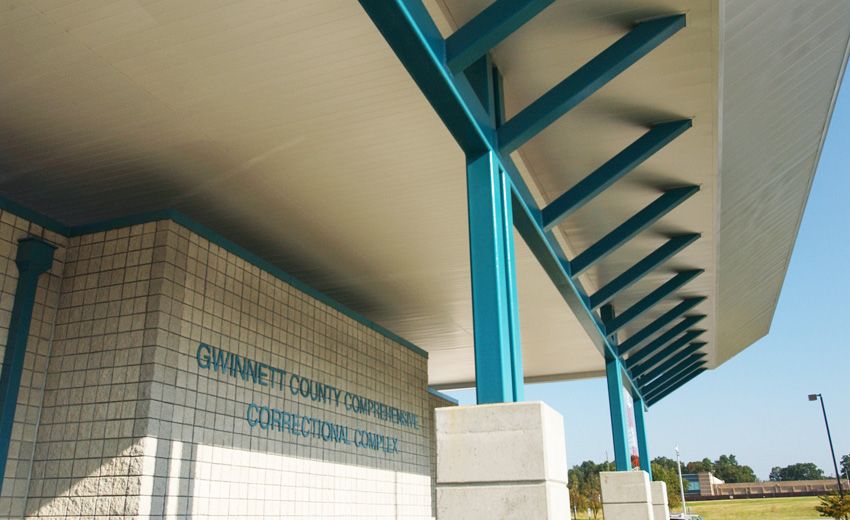
In July 2000, a groundbreaking ceremony took place at the site of the planned 800-bed Comprehensive Correctional Com-
plex. After several years of planning and construction, the correctional complex opened at partial capacity on September 12,
2002, and then at full capacity in 2004. The complex is located at 750 Hi-Hope Road in Lawrenceville. The new facility cost
$21 million to build, and it remains the largest County-owned correctional facility in Georgia. In 2009, the facility became the
first government-owned prison in Georgia to earn national accreditation through the American Correctional Association.

Staffing and Organization

The 2010, the operating budget for the Department of Correctional Services funded 139 authorized positions – 122 sworn
and 17 civilian; 14 positions were vacant at the end of the year due to attrition and a hiring freeze.

Department Director
The Department of Correctional Services is directed by a warden, who is appointed by the County Administrator. The
warden directs departmental operations and is responsible for ensuring that the department’s policies, procedures, and
standards support the County’s vision.

Division Directors
The department is normally comprised of two divisions, Security and Support Services. Each division is directed by a deputy
warden who reports to the warden and is responsible for managing all operations within his or her division. Because of the
previously mentioned loss of staff, it was necessary to make temporary changes to the department’s organizational structure
in 2010. Rather than two divisions each headed by a deputy warden, all departmental operations were consolidated under
the direction of the warden and one deputy warden.

06 •                                                           gwinnettcounty • Department of Correctional Services
Security Division

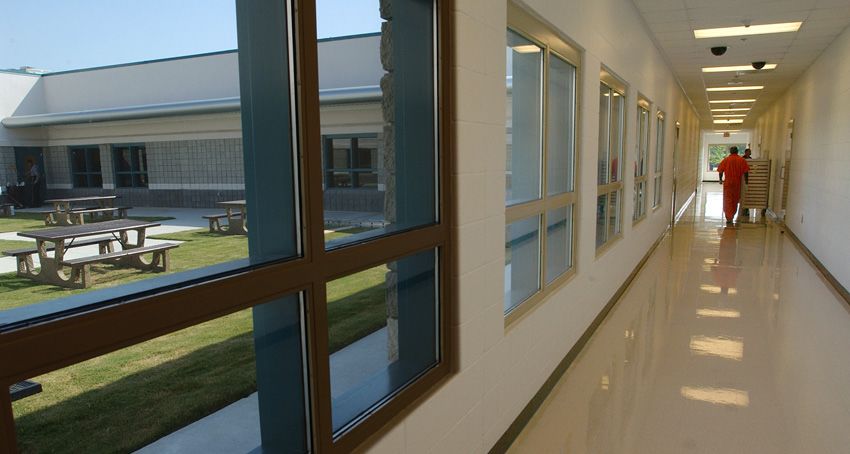
The Security Division is responsible for operating the Compre-
hensive Correctional Complex and administering the offender
labor program. Employees assigned to the Security Division
maintain custody of all offenders, provide direct supervision
in inmate housing areas, enforce rules and maintain discipline,
maintain strict control and accountability of keys, tools, and
hazardous products, and prevent and control contraband.

Incarceration and Labor Program
The department applies modern correctional management
techniques to provide care and custody for minimum and me-
dium security inmates. Under an agreement with the Georgia
Department of Corrections (DOC), 128 of the department’s
512 inmate beds are reserved for state inmates while the
remaining beds are available for County inmates sentenced
directly by Gwinnett County judges.

In exchange for housing inmates for the Georgia DOC, Gwin-
nett County receives $20 per diem for each state inmate
housed and realizes the benefit of the inmates’ labor.

To further offset the costs of housing prisoners, inmates serving
time provide a supplemental labor force to Gwinnett County.
Inmates perform janitorial, landscaping, maintenance, and other
services at many County-owned facilities, including the Gwin-
nett Justice and Administration Center and County parks.

The Comprehensive Correctional Complex is rated for in-
mates classified as minimum or medium security. In accor-
dance with rules established by the Georgia Board of Cor-
rections, minimum security inmates may work outside of the
facility under the supervision of civilian employees who have          During 2010, offenders provided
completed an approved training course. Medium security in-              146,910 hours of labor valued
mates may also work outside of the facility, but only under the              at over $1.5 million.
direct supervision of a certified correctional officer.

Most inmate workers from the correctional facility are super-               During 2010, offenders
vised by a correctional officer assigned to the department’s          picked up 35,430 bags of litter from
Field Operations Unit. Officers drive inmates to various work       3,543 miles of Gwinnett County roads.
sites around the county and supervise their work. Depart-
ments and agencies that supervise their own minimum se-
curity inmates pick up their assigned inmate workers in the               2010 Average Population
morning, supervise their work activities, and return them to             Correctional Institution: 412
the correctional complex in the afternoon.                                   Work Release: 86
                                                                                  Total: 498

2010 Annual Report                                                                                           • 07
Security Division Work Release Program The Work Release Program provides a semi- incarceration sentencing alternative that al- lows defendants, called residents, to maintain regular employment in the private sector while serving their non-working time in cus- tody. The program allows residents to retain their jobs in the community, support their families, and pay taxes while keeping them out of trouble when not working. Residents are required to pay administrative and daily fees to offset the cost of the program, in ad- dition to the payment of any court-ordered child support payments, fines, and probation fees. A unique feature of this program is that it allows judges to incarcerate parents who habitually fail to pay child support without depriving the parent of his or her employ- ment. During 2010, the Work Release Pro- gram housed an average of 85.5 residents and collected $366,974 in administrative and daily fees. In addition, the program col- lected $105,724 in child support payments and $66,189 in cour t-ordered fines and probation fees. Work Alternative Program The Work Alternative Program allows first offenders to perform community service work in lieu of serving time. Offenders sen- tenced to the program are not incarcerated but report to the department on a daily basis as ordered by the sentencing court. Participants are supervised by part-time ci- vilian employees as they remove litter from roadsides and perform other non-skilled work for County departments, government agencies, and nonprofit organizations. The program is partially funded through admin- istrative and daily fees paid by the offenders. During 2010, participants provided 36,270 community service hours worth approxi- mately $262,958 and paid $89,031 in daily and administrative fees. 08 • gwinnettcounty • Department of Correctional Services
Security Division

2010 at a Glance

                         Total inmate labor hours                               110,640

                         Value of work performed by inmates                   $1,287,850

                         Total Work Alternative Program hours                    36,270

                         Value of community service work                       $262,958

Inmate Classification
Once a person is sentenced to serve time in a county or state prison, he or she must be classified. Inmates are assigned to
specific security classifications based on their sentence and criminal history.

The security classifications established by the Georgia Board of Corrections are maximum, close, medium, minimum, and
trusty. The Gwinnett County Comprehensive Correctional Complex is designed to house only minimum and medium secu-
rity inmates. Medium security inmates generally are characterized as having no major adjustment problems and are allowed
to work outside the institution under constant supervision. Minimum security inmates tend to abide by prison regulations
and present a minimal risk of escape. These inmates are often allowed outside the institution under the supervision of
trained civilians.

During 2010, the Classification Unit processed 1,580 inmates and 458 work release residents.

2010 Annual Report                                                                                                    • 09
Support Services Division The Support Services Division is responsible for inmate care and treatment, food service, maintenance, technical support, fiscal management, offender counseling, education, and vocational training. Counselors and Caseworkers Counselors and caseworkers serve as the liaison between offenders and the department. Counselors and caseworkers are responsible for conducting orientation for newly arriving offenders, addressing the rehabilitative needs of offenders, maintain- ing case files, and coordinating schedules. Food Services Inmate kitchen workers, under the supervision of four civilian employees, prepared 536,131 meals in 2010 at an average per- meal cost of $1.27. Meals meet dietary standards established by the Georgia Department of Corrections and the American Dietetic Association. Financial Services The Fiscal Management Unit is responsible for payroll, accounts receivable and payable, employee clothing inventory, office supplies, offender accounts, inmate commissary, and state subsidy billing. Inmate Job Training and Education Since 1997, Gwinnett County has partnered with the Atlanta Regional Commission to operate a vocational training program for inmates. This grant-funded program is recognized by the Georgia Department of Labor and has a record of success in reducing recidivism. The program has received numerous awards, including the National Association of Counties’ Achieve- ment Award as a distinguished job-training program in the United States and the Governor’s Award for the most innovative job-training program in Georgia. During 2010, the program provided 4,139 hours of vocational training to inmates, 24 inmates completed vocational classes, 27 received a Georgia Work Ready Certificate, and 19 completed basic computer skills training. Fifty percent of program participants found full-time employment upon their release from custody. For the many inmates who have alcohol and/or drug addictions, Alcoholics Anonymous and Narcotics Anonymous pro- grams are offered on-site and facilitated by volunteers. The department also provides self-help programs on topics such as anger management, family violence, victim impact, and voluntary religious services. 10 • gwinnettcounty • Department of Correctional Services
Daily Operating Costs
$65
$63.47
$63.47
$60
$59.43
$59.43
$55
$52.00
$52.00 $53.39
$53.39
$50
$48.11
$48.11
$45
$43.66
$43.66 $44.14
$44.14 $44.84
$44.84
$40
Dollars
$35
$30 $36.71
$36.71
$27.98
$27.98
$26.57
$26.57
$25 $25.04
$25.04
$20
$15
$14.91
$14.91
$10 $10.92
$10.92
$5
$0
2004 2005 2006 2007 2008 2009 2010
Daily Operating Costs Net Daily Operating
Per Offender Costs Per Offender
Operating Budget and State Subsidies
$14
$13 $13.29
$13.29 $13.03
$13.03
$12.77
$12.77 $12.87
$12.87
$12
$11.78
$11.78 $11.85
$11.85
$11
$10.90
$10.90
$10
Dollars in Millions
$9
$8
$7
$6
$5
$4
$3
$2
$1.80
$1.80 $1.68
$1.68 $1.64
$1.64
$1.64 $1.51 $1.64
$1 $1.51
$0.90
$0.90 $0.90
$0.90
0
2004 2005 2006 2007 2008 2009 2010
Operating State
Budget Subsidies
2010 Annual Report • 11Value of Offender Labor
$6.0
$5.5
$5.39
$5.39
$5.0 $5.23
$5.23
$4.5
$4.0
Dollars in Millions
$3.86
$3.86
$3.5
$3.0 $3.30
$3.30
$2.5 $2.73
$2.73
$2.57
$2.57
$2.0
$1.5
$1.0
$0.5 $1.29
$1.29
$0
2004 2005 2006 2007 2008 2009 2010
Percent of Operating Costs Offset by Labor and Subsidies
90
80
70 75%
75%
66%
66%
60
Percent
50 53%
53%
50%
50%
40
39%
39%
37%
37%
30
28%
28%
20
10
0
2004 2005 2006 2007 2008 2009 2010
12 • gwinnettcounty • Department of Correctional ServicesCorrections
Update
The Law Enforcement and Judiciary Work Group recognized the potentially tremendous detrimental impact that re-
ductions in the law enforcement and justice system would have on our community. They recommended maintaining all
current service levels.
The 2011 budget was adopted at an amount that maintains the current level of service. Subsequent actions by the Board
of Commissioners to balance the 2011 budget can be found at www.gwinnettcounty.com.
Explore outsourcing operations for Corrections, Gwinnett Justice and Administration entry (not courtroom) security,
building maintenance, the animal control facility, civil process servers.
This recommendation is under review.
If funding in this area of responsibility must be reduced and reductions are made on a percentage basis, the percentage
goal in this area should be set at the least proportionate reduction possible. The committee acknowledged that more
limited cuts in this area might result in a need for greater percentage cuts in other less “core” service areas, which is
the intention of the recommendation.Within each official’s or department’s budget and area of responsibility, the reduc-
tions should be prioritized by that official, department manager, or the person most familiar with the operations of the
department and with a view towards impacting core services as little as possible.
Through the County’s Business Planning Process, each agency and department has identified those core functions that must
continue in order to maintain services at status quo. As a whole, County departments and agencies have also identified
their own service and fiscal priorities, voluntarily offering $5.7 million in reductions in 2011 on top of prior-year reductions
already in place. Should reductions be required in this area, officials and department managers will be consulted so that the
full impact of any funding decisions can be fully explored and evaluated prior to being implemented. The 2011 budget was
adopted at an amount that maintains the current level of service.
To see the complete list of recommendations and the actions taken, please visit
www.EngageGwinnett.com
2010 Annual Report • 13
Please consider the environment before printing this report.
gwinnettcounty
Department of Correctional Services
750 Hi-Hope Road
Lawrenceville, GA 30043
www.gwinnettcounty.comYou can also read


