Learning Objectives - Reimbursement Policy and Medical Records Documentation
←
→
Page content transcription
If your browser does not render page correctly, please read the page content below

2/1/2021
Reimbursement Policy and
Medical Records Documentation
Presented by:
Kimberly Haas, CPC
Clinical Policy & Reimbursement Analyst
Moda Health Plan
Friday, February 5, 2021, 11:00 – 12:00 noon
Health Care Compliance Association (HCCA)
Portland Regional Healthcare Compliance Virtual
Conference
1
Learning Objectives
Identify appropriate documentation which can be
used to support billed services.
Define the correct way to make legal additions or
corrections to the medical record.
Identify common documentation problems that lead
to denials and how to avoid them.
2
1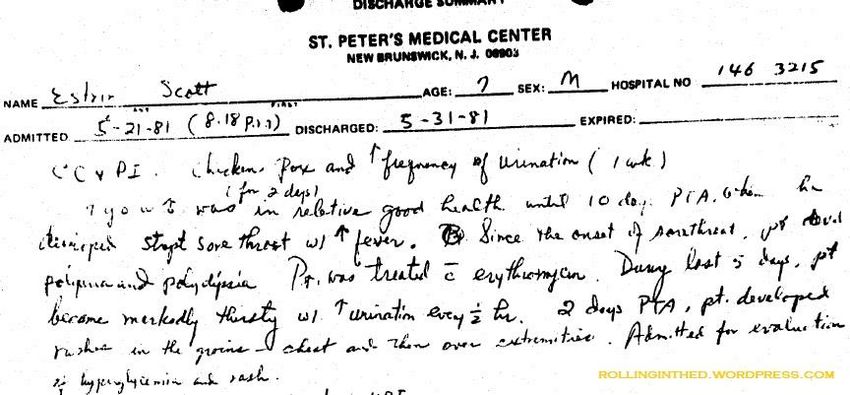
2/1/2021
Learning Objective # 1
Identify appropriate
documentation which can be
used to support billed services.
3
Documentation to Support Billed
Services
Documentation may need to be submitted to support billed
procedure codes when:
The health plan requests records for review during adjudication.
A procedure code was denied with a bundling edit and you are
submitting an appeal because you believe the service is eligible
for separate reimbursement.
Your office receives a records request from a Medicare Recovery
Audit Contractor (RAC) or Certified Error Rate Testing (CERT)
auditor.
4
2
2/1/2021

       Question for Participants:

       What are some other situations
        when your office may need to
      submit documentation to support
          billed procedure codes?

5

       Coding verification to support
    reimbursement of billed procedure
                   codes:

       Supporting documentation
       for all billed services must be
       contained in the patient’s
       written medical record.

6

                                               3
2/1/2021

                        Legal standard:

               If it’s not documented,
                     it wasn’t done.

7

           Participant Survey Question:

    Regarding the statement:
              “If it’s not documented, it wasn’t done”:
    A. I am very familiar with this statement, and we consistently follow it
       at our office/company in our documentation and billing practices.
    B. I am very familiar with this statement, but at my office/company we
       could do better in following it in our documentation and billing
       practices.
    C. I have heard this statement before, but don’t think of it often.
    D. I have never heard this statement before.

8

                                                                                     4
2/1/2021
Effect on business revenue:
If it’s not documented, it’s not done.
If it’s not done, it cannot be billed.
If it’s billed and it’s not documented, then it’s
not done, and no reimbursement can be given.
9
Items which are part of the medical record:
Physician orders
Visit notes
Operative report
Written interpretation and report:
Sleep study
X-ray, MRI, CT scan, ultrasound, etc.
EKG
Medication administration and/or infusion records
Nurses notes
Physical therapy visit notes
10
5
2/1/2021
Items NOT considered part of the medical
record: Part 1
Notations (typed or handwritten) on:
o Claim.
o Fax cover sheet.
o Copy of the records request letter.
Statements during phone conversations discussing
the claim.
Statements in emails.
Appeal letters and/or reconsideration requests.
11
Items NOT considered part of the medical
record: Part 1, comments
All notations or statements in these locations or
documents are useful to:
Explain the coding, such as why specific procedure
code or modifier (e.g., 52 or 22) was used.
To call the reviewer’s attention to what happened
and/or what information to look for within the
medical record.
The documentation within the medical record itself
must agree with and support these statements and
notations in order to support the billed procedure
codes and reimbursement for them.
12
6
2/1/2021
Items NOT considered part of the medical
record: Part 2
Appointment books, schedules, ledgers, logs
(electronic or handwritten)
o These items show what was planned or scheduled,
but not what actually happened during patient care.
o These items are not part of the patient’s medical
record. They are part of the provider’s business
documentation.
13
Items NOT considered part of the medical
record: Part 3
Charge logs, supply logs, pharmacy logs, sheets of
supply stickers, etc.
o These items show what was checked out for the
patient or taken to the patient’s exam room or care
area. They do not document that the item was used
during care of the patient.
▪ Unused supplies are not billable.
▪ Items opened and dropped/contaminated are not
billable.
o These items are not part of the patient’s medical
record. They are part of the provider’s business
documentation.
14
7
2/1/2021
The medical record documentation
must contain appropriate and
sufficient information to clearly show:
All the elements of the procedure code
description were fully performed.
The requirements for separate
reimbursement from other billed
procedure codes have been performed
and/or met.
15
Example: Elements of Procedure
Code Description
63081 = Vertebral corpectomy (vertebral body resection),
partial or complete, anterior approach with decompression
of spinal cord and/or nerve root(s); cervical, single segment
Elements that must be documented:
Which vertebral segment was involved? (Required: cervical)
Amount of the vertebral body resected. (Either partial or
complete is acceptable).
The surgical approach used. (Required: anterior)
That the spinal cord and/or nerve root was decompressed.
16
8
2/1/2021

     Example: Requirements for separate
              reimbursement
     Source:
     CMS. National Correct Coding Initiative Policy Manual. Chapter 4
     Surgery: Musculoskeletal System, § E, “Arthroscopy,” subsection 4

     “With 3 exceptions (which are described in Chapter IV, Section E
     (Arthroscopy), Subsection 7), an NCCI PTP edit code pair
     consisting of 2 codes describing 2 shoulder arthroscopy
     procedures shall not be bypassed with an NCCI PTP-associated
     modifier when the 2 procedures are performed on the ipsilateral
     shoulder. This type of edit may be bypassed with an NCCI PTP-
     associated modifier only if the 2 procedures are performed on
     contralateral shoulders. ”

17

       14 Possible Shoulder Arthroscopy
               Procedure Codes

18

                                                                               9
2/1/2021

     How many possible combinations of
     2 shoulder arthroscopy procedures?

        14 shoulder arthroscopy procedure codes
                            X
                      (multiplied by)
        14 shoulder arthroscopy procedure codes
                            =
              196 possible combinations of
       two shoulder arthroscopy procedure codes

19

          How many CCI PTP edits for
     combinations of 2 shoulder arthroscopy
                 procedures?

20

                                                       10
2/1/2021
Example: Requirements for separate
reimbursement
Source:
CMS. National Correct Coding Initiative Policy Manual. Chapter 4
Surgery: Musculoskeletal System, § E, “Arthroscopy,” subsection 7
“Shoulder arthroscopy procedures include limited
debridement (e.g., CPT code 29822) even if the limited
debridement is performed in a different area of the same
shoulder than the other procedure. With 3 exceptions,
shoulder arthroscopy procedures include extensive
debridement (e.g., CPT code 29823) ... ”
Continued on next slide…
21
Example: Requirements for separate
reimbursement
Source:
CMS. National Correct Coding Initiative Policy Manual. Chapter 4
Surgery: Musculoskeletal System, § E, “Arthroscopy,” subsection 7
Continued from previous slide -
“…even if the extensive debridement is performed in a different
area of the same shoulder than the other procedure. CPT codes
29824 (Arthroscopic claviculectomy including distal articular
surface), 29827 (Arthroscopic rotator cuff repair), and 29828
(Biceps tenodesis) may be reported separately with CPT code
29823 if the extensive debridement is performed in a different
area of the same shoulder. ”
22
112/1/2021
NCCI PTP edit code pair consisting
of 2 codes describing 2 shoulder
arthroscopy procedures
23
Example: Requirements for separate
reimbursement
Source:
CMS. National Correct Coding Initiative Policy Manual. Chapter 4
Surgery: Musculoskeletal System, § E, “Arthroscopy,” subsection 4
Elements that must be documented:
Arthroscopy of both shoulders was performed on the same
day/same surgical session. (Likely?)
Removal of foreign body was from one shoulder (left or
right).
Debridement of structures performed in the opposite
(contralateral) shoulder.
Operative report must address work done in both shoulders.
For example: “…portals of the right shoulder were closed.
Attention was then turned to the left shoulder, and…”
24
122/1/2021
Example: Requirements for separate
reimbursement
Source:
CMS. National Correct Coding Initiative Policy Manual. Chapter 4
Surgery: Musculoskeletal System, § E, “Arthroscopy,” subsection 4
Example of claim coding to match the documentation:
29819-RT
29822-LT
Comment: Only submit this coding if work on both
shoulders was performed and clearly documented in the
operative report.
25
Learning Objective # 2
Define the correct way to make
legal additions or corrections to
the medical record.
26
132/1/2021
Amended Medical Records
Late entries, addendums, or corrections to a
medical record are legitimate occurrences in
documentation of clinical services. A late entry,
an addendum, or a correction to the medical
record, bears the current date of that entry and is
signed by the person making the addition or
change.
Source: Noridian1
Noridian Medicare. “Documentation Guidelines - Amended Records.” Medicare
B News, Issue 207, October 14, 2003. June 27, 2014.
.
27
Late Entry to the Medical Record
A late entry supplies additional information that was omitted
from the original entry.
The late entry:
Bears the current date.
Is added as soon as possible.
Is written only if the person documenting has total recall of
the omitted information.
Example: A late entry following treatment of multiple trauma
might add: “The left foot was noted to be abraded laterally.”
Noridian1
28
142/1/2021
Addendum to the Medical Record
An addendum is used to provide information that was not
available at the time of the original entry.
The addendum:
Is added as soon as the new information becomes
available. (“…should also be timely…”)
Bears the current date the new information is added.
Bears the reason for the addition or clarification of
information being added to the medical record.
Example: An addendum could note: “The chest x-ray report
was reviewed and showed an enlarged cardiac silhouette.”
Noridian1
29
Correction to the Medical Record
(paper medical records)
When making a correction to the medical record:
Never write over, or otherwise obliterate the passage
when an entry to a medical record is made in error.
Draw a single line through the erroneous information,
keeping the original entry legible.
Sign and date the deletion, stating the reason for
correction above or in the margin.
Document the correct information on the next line or
space with the current date and time, making reference
back to the original entry.
Noridian1
30
152/1/2021
Correction to the Medical Record
(electronic medical records)
When making a correction to the medical record:
Correction of electronic records should follow the
same principles of tracking both the original entry
and the correction with the current date, time and
reason for the change.
When a hard copy is generated from an electronic
record, both records must be corrected.
Noridian1
31
Correction to the Medical Record
(any format - paper or electronic medical records)
Any corrected record submitted must make
clear:
The specific change made.
The date of the change.
The identity of the person making that
entry. [e.g. name and licensure]
Noridian1
32
162/1/2021
According to CMS
& Noridian Medicare:
Adding to existing documentation
(except as described in late entries,
addendums and corrections) is
considered falsification of medical
records.
Noridian1
33
According to CMS
& Noridian Medicare:
Corrections to the medical record legally amended
prior to claims submission and/or medical review will
be considered in determining the validity of services
billed. If these changes appear in the record following
payment determination based on medical review,
only the original record will be reviewed in
determining payment of services billed to Medicare.
Noridian1
34
172/1/2021
Is it too late?
(to make an amendment)
If corrections or additions need to be made
after a payment determination (denial) has
been made based on medical review,
then the changes should still be made if they
are clinically significant,
even though the amendment will not improve
the reimbursement of the claim/procedure
code(s).
This Photo by Unknown Author is licensed under CC BY-NC
35
Purpose of the Medical Record
1. Record and document the patient’s medical
condition (symptoms, care given, response to
treatment) for current and future care and
healthcare clinicians.
2. Serve as a legal record of what happened.
3. To verify and support third-party reimbursement of
services and procedure codes (from commercial,
worker’s compensation, or government insurance
plans).
36
182/1/2021
Participant Survey Question:
Which of the following is NOT required when making an
addendum?
A. Document the date and time the change or addition is made.
B. Remove the original documentation that was in error.
C. State in the addendum the reason why the change or addition is
being made.
D. Document the name and licensure of the person making the
addendum to the medical record.
37
Participant Survey Question:
When making an addendum, when should the entry be
made if reimbursement is desired?
A. As soon as possible.
B. Preferably before the claim is submitted.
C. Before a denial is received.
D. When preparing to send the appeal.
E. Before the provider has a chance to forget information from the
patient encounter.
F. A, C, E.
G. D, E.
H. A, B, C, E.
I. All of the above.
38
192/1/2021
Learning Objective # 3
Identify common documentation
problems that lead to denials and
how to avoid them.
39
Problem:
Illegible Medical Records
This Photo by Unknown Author is licensed under CC BY-NC-ND
This Photo by Unknown Author is licensed under CC BY
40
202/1/2021
Problem:
Illegible Medical Records
Medical records can be rendered illegible by:
Poor handwriting.
Obscuring portions of the record. Examples:
White out.
Black marker.
Use of highlighter pens (often read as black marker on copy or fax).
Post-it note covering portions of the record.
Poor printer/copy quality.
Problems with fax transmission.
o Remember that faxed records are essentially an electronic copy of
the original.
o Copy quality issues apply.
o Copies of copies especially do not fax well.
This Photo by Unknown Author is licensed under CC BY
41
Problem:
Illegible Medical Records
What is the acceptable standard?
All entries must be legible to another reader to a
degree that a meaningful review may be conducted.
If the records cannot be read after review by three
different persons, the documentation (or any
unreadable portion) is considered illegible.
This Photo by Unknown Author is licensed under CC BY
42
212/1/2021
Problem:
Illegible Medical Records
Not acceptable:
It is not acceptable to obscure portions of the record in any way (e.g.
white-out, black-out marker, post-it note covering, etc.).
This renders that portion of the record illegible and is an alteration of the
medical record.
When records are received with information obscured, services may be
denied because:
o A portion of the records are illegible and/or unreadable.
o The records have been altered.
o The reviewer is unable to verify that they have complete and accurate
information upon which to base their determination.
(This comment does not apply to sanitizing social security numbers or other non-medical
HIPAA-protected information from the documents submitted.)
43
Problem:
Illegible Medical Records
Billed charges:
E1399 (Durable medical equipment, miscellaneous)
K0739 (Repair or nonroutine service for durable medical equipment other than
oxygen equipment requiring the skill of a technician, labor component, per 15
minutes)
Reviewer’s comments:
The newly submitted documentation included the
physician order for some of the charges but the signature
and date were difficult to read and illegible due to
copying, so it cannot be determined what items were
ordered. The documentation also included an invoice, but
this was the manufacturer’s invoice and not the requested
patient invoice.
This Photo by Unknown Author is licensed under CC BY
44
222/1/2021
Problem:
Illegible Medical Records
The consequence of illegible records:
When illegible records are received, the services are
considered not documented and therefore non-
billable and cannot be reimbursed.
Illegible records = Not documented = Denial
This Photo by Unknown Author is licensed under CC BY
45
Problem:
Incomplete medical records submitted
When records are requested, it is important
that you send all associated documentation
This Photo by Unknown Author is licensed
under CC BY that supports the services billed within the
timeframe designated in the written request.
The documentation of all services rendered is
absolutely necessary in order for a claim to
be properly evaluated.
Noridian1
46
232/1/2021
Problem:
Incomplete medical records submitted
The "burden of proof" remains with the
provider to substantiate services and/or
supplies billed.
Source:
“Documentation Guidelines for Medicare Services.” Noridian Medicare. September 15,
2013. May 18, 2017 https://med.noridianmedicare.com/web/jeb/cert-
reviews/mr/documentation-guidelines-for-medicare-services
Noridian2
47
Problem:
Incomplete medical records submitted
If there is no documentation, then there is no
justification for the services or level of care billed.
Additionally, if there is insufficient documentation on
the claims that have already been adjudicated by
Medicare, reimbursement may be considered an
overpayment and the funds can be partially or fully
recovered.
Noridian1
48
242/1/2021
Problem:
Incomplete medical records submitted
If the requested documents and information are not
received within the required timeframe, the record is
deemed not to exist, and the services not
documented.
If the documentation is incomplete or insufficient to
support the services, then the service or item will be
considered as not documented.
Moda Health Reimbursement Policy # RPM039
49
Problem:
… somebody else keeps the records
for those services. Go ask them ...
This Photo by Unknown Author is licensed under CC BY-NC-ND
50
252/1/2021
Problem:
… somebody else keeps the records
for those services. Go ask them ...
At times some providers choose to house test reports
or other elements of the documentation at a different
location from the billing office or facility.
This may happen with claims from/for:
Interpretation and report of tests performed in the
hospital (e.g. radiology studies, EKG, etc.)
Ambulatory Surgery Centers (ASC) facility fees.
Laboratory services.
51
Problem:
… somebody else keeps the records
for our services. Go ask them ...
Best practice instructions:
Because the billing provider is required to submit
documentation to support billed charges upon request, it would
be best practice if both the physician and the facility keep a copy
of the relevant reports in their records so that it is readily
available when needed.
Source:
FCSO Medicare. “Documentation.” The Florida Medicare B Update, third quarter 2006
(vol. 4, no. 3), pg. 3.
52
262/1/2021
Problem:
… somebody else keeps the records
for our services. Go ask them ...
Your office is responsible for obtaining a copy of the
needed records from the other location/provider and
submitting them within the timeframe specified in the
request.
When the response to a medical records request
indicates the billing provider does not have a copy of the
records to support the billed services/codes and
instructs the health plan to contact another provider for
the needed records, the services will be denied as not
documented.
Moda Health Reimbursement Policy # RPM039
53
Problem:
Time not documented properly
For any time-based procedure
codes
(codes with descriptions that
specify an increment of time
such as minutes or hours)
the duration of the service
must be clearly documented
in the medical record. This Photo by Unknown Author is licensed under CC BY-NC
54
272/1/2021
Problem:
Time not documented properly
If more than one procedure code is
billed for the same date of service
(e.g. multiple therapeutic codes or
E/M combined with a procedure),
then in order to fully support all of
the billed services the time must be
separately documented for each
specific procedure or time-based
service. This will clearly document
what portion of the total visit was
This Photo by Unknown Author is licensed under CC BY-SA
spent performing each of the billed
codes.
55
Problem:
Time not documented properly
This Photo by Unknown Author is licensed under CC BY-NC
Acceptable time documentation:
Specific number of minutes.
Example: “Manual therapy to lumbar spine x 15
minutes.”
Listing begin-time and end-time for service.
Example: “E-stim to cervical neck, 09:30 – 09:45.”
56
282/1/2021
Problem:
Time not documented properly
This Photo by Unknown Author is licensed under CC BY-NC
Unacceptable time documentation:
Time must be reported in full one-minute increments. Any
fractions of less than one-minute will not be considered in the
review.
0.5 min
57
Problem:
Time not documented properly
This Photo by Unknown Author is licensed under CC BY-NC
Unacceptable time documentation:
Documenting time in terms of “units”.
Examples: “One unit of pulsed ultrasound was administered.”
“Ther Ex 1 unit.”
Documenting time using a range.
Example:
“Therapeutic activities x 6 – 12 minutes as appropriate per
assessment and symptoms.”
58
292/1/2021
Problem:
Time not documented properly
This Photo by Unknown Author is licensed under CC BY-NC
Unacceptable time documentation:
Documenting a quantity but not specifying the
measurement or increment used.
Example: “97110 Exercises x 2”
No time mentioned at all.
Example:
Checking or circling “NMR” or “TE” on a chart form with no
additional information documented.
59
Problem:
Time not documented properly
This Photo by Unknown Author is licensed under CC BY-NC
Time not documented = Service not documented = Denial
If the duration of the time-based service is not clearly and
properly documented in the medical record, then the
service is not supported due to incomplete documentation;
the procedure code will be denied as not documented.
60
302/1/2021
Problem:
Key information is missing
Records may be
submitted for the visit
or procedure, but if
key information is
missing, the service
may still be considered
“not documented” or
This Photo by Unknown Author is licensed under CC BY-ND
“not supported.”
61
Problem:
Key information is missing
Required Information – Missing Information –
Medical Record Entries must: Medical Record Entry With:
Be signed by the rendering Entry is missing the provider
provider with: signature.
Full name Or the signature does not
Licensure indicate a licensure.
Date Or the signature is not dated
Time and timed.
62
312/1/2021
Problem:
Key information is missing
For more information about signature requirements, see:
• “Documentation Guidelines for Medicare Services.” Noridian Medicare.
September 15, 2013. May 18, 2017
https://med.noridianmedicare.com/web/jeb/cert-
reviews/mr/documentation-guidelines-for-medicare-services
• Noridian Medicare. “Signature Requirements.” Last accessed May 18,
2017. https://med.noridianmedicare.com/web/jeb/cert-
reviews/signature-requirements .
• CMS. “Signature Attestation Statement.” Medicare Program Integrity
Manual. Publication 100-08, chapter§ 3.3.2.4.C. 3,
63
Problem:
Key information is missing
Required Information – Missing Information –
Medical Record Entries must: Medical Record Entry With:
Be specific to the patient. No patient name listed in header
or footer.
Indicate the date of service. Date of service not listed or
indicated, although services are
documented with provider
signature.
Time – See separate item above. Time – See separate item above.
Orders for tests, infusion drugs, Claim for home infusion antibiotics
DME items, or other services for 10/1/2020 – 10/31/2020.
must be dated on or before the Physician orders submitted are for
date of service for those items that drug and amount but dated
11/4/2020.
64
322/1/2021
Problem:
Key information is missing
Required Information – Missing Information –
Medical Record Entries must: Medical Record Entry With:
Order or requisition is signed and The requisition sheet does not
dated by the ordering provider. have a signature from the ordering
provider.
Time – See separate item above. Time – See separate item above.
Measurements or amounts must The measurement of a lesion or
be documented when code wound is not documented. Or the
selection is based on weight of the uterus removed is
measurements. not documented.
Lesion removal.
Wound repair codes.
Hysterectomy codes.
65
Problem:
Date of service doesn’t match
The date of service on the claim needs to match the date of service
in the medical records.
When the date of service on the claim is different than the date of service
in the record this can cause a denial for “not documented” on the date
billed.
Here are some situations with special date of service requirements:
Maternity – Antepartum care & postpartum care (59425, 59426, 59430) are
billed with the date of delivery.
Split surgical care (modifiers 54 & 55). Post operative care (-55) is billed with
the surgical code and the surgical date of service.
DME – Date of service = date of delivery
This Photo by Unknown Author is licensed under CC BY-NC
66
332/1/2021
Problem:
No proof of delivery
This Photo by Unknown Author is licensed under CC BY-NC
Proof of delivery is needed for any tangible supply or item which is
not a professional service. This includes but is not limited to:
DME, supplies, self-administered drugs, home infusion therapy
supplies, orthotics, etc.
Methods of Delivery Proof of delivery (POD) is a
Delivery directly to the member/patient Supplier Standard.
or authorized representative (includes Suppliers are required to
patient pick-up at the office). maintain proof of delivery
Delivery via shipping or delivery service. documentation in their files,
and to provide the
Delivery of items to a nursing facility on documentation upon
behalf of the member/patient. request. (Noridian)
67
Problem:
No proof of delivery
This Photo by Unknown Author is licensed under CC BY-NC
For more information about proof of delivery (POD)
requirements, see:
Noridian Medicare. “Proof of Delivery.” Last accessed September 27, 2017.
https://med.noridianmedicare.com/web/jddme/topics/documentation/proof-
of-delivery .
Noridian Medicare. “Avoiding CERT denials for Proof of Delivery.” Last
accessed 8/22/2017. https://med.noridianmedicare.com/web/jddme/avoiding-
cert-denials-for-proof-of-delivery .
Noridian Medicare. “Proof of Delivery - Requirements for Signature and
Date.” Last accessed 8/22/2017.
https://med.noridianmedicare.com/web/jddme/policies/dmd-articles/proof-
of-delivery-requirements-for-signature-and-date .
68
342/1/2021
Problem: Cloning of medical record
entries
This Photo by Unknown Author is licensed under CC BY-NC
69
Problem: Cloning of medical record
entries
Medical records documentation is
considered cloned when:
Multiple entries in
This Photo by Unknown Author is licensed
under CC BY-SA-NC
a patient chart are
identical or similar
to other entries in
the same chart.
70
352/1/2021
Problem: Cloning of medical record
entries
Medical records documentation is
considered cloned when:
Entries in the medical record
are identical or similar from
patient to patient to patient,
without expected unique
variations. It would not be
expected that every patient
had the exact same
problem, symptoms, and
required the exact same
This Photo by Unknown Author is licensed under CC BY-NC-ND treatment.
71
Problem: Cloning of medical record
entries
Medical records documentation is
considered cloned when:
Information from
previous entries of the
same provider or other
providers is pulled
forward into the current
entry, particularly when it
is not updated or not
relevant to the current
encounter.
72
362/1/2021
Problem: Cloning of medical record
entries
In other words,
copying and pasting
pulling forward information
the use of macros or templates
could all be considered cloning.
This Photo by Unknown Author is licensed under CC BY-SA
73
Problem: Cloning of medical record
entries
A real-life example:
74
372/1/2021
What is the acceptable standard?
All documentation in the medical record must:
Be specific to the patient.
Be specific to the situation at the time of the encounter.
Accurately reflect the services performed.
Support the necessity for the services.
Clearly identify who performed the services and
assessments documented.
Clearly identify the author of each note or entry.
Clearly identify the date and time the entry was made.
75
Cloned entries damage the
integrity of the medical record
Cloned medical records entries are not reliable as an
accurate record of the events and services depicted.
Cloned documentation is considered a misrepresentation
of the events and services in that entry and a falsification
of the medical record. (Source: FCSO Medicare. “Cloning of Medical
Notes.” The Florida Medicare B Update, third quarter 2006 (vol. 4, no. 3), pg. 4.)
When cloned documentation is found, the accuracy and
validity of the entire entry is damaged. Other entries in the
record may also become suspect. (Source: McKimmy, Roger, MD,
Oregon Medical Board Vice Chair. “The Pitfalls of Electronic Medical Records.”
Oregon Medical Board Report. Vol. 124, No. 4, Fall 2012: pp. 1, 8-9.
http://www.oregon.gov/omb/Newsletter/Fall%202012.pdf. )
76
382/1/2021
Consequences of cloned medical
record documentation:
Services are considered not documented
when cloned documentation is found or
identified, and services will be denied due
to the lack of supporting documentation.
If services have previously been allowed,
refund requests and recoupment of
payment may occur.
77
Questions?
This Photo by Unknown Author is licensed under CC BY
78
392/1/2021
Contact information:
Kimberly Haas, CPC
kimberly.haas@modahealth.com
79
All graphics are publicly searchable free clip art
or
are sourced from Bing online pictures search under
creative commons results.
80
40You can also read


