Financial Inclusion Strategy for Torfaen 2016 2021 - November 2016
←
→
Page content transcription
If your browser does not render page correctly, please read the page content below
Financial Inclusion Strategy
         for Torfaen
         2016 - 2021

                       November 2016

1|Page
Introduction
Tackling poverty has long been a priority in Torfaen, especially during these times of austerity.
Whilst people are struggling to make ends meet and make their money go further, continuing
to improve financial inclusion is essential.

A wide range of financial services are currently being delivered in Torfaen and this strategy
developed in partnership with the Welfare Reform Project Group seeks to build upon these.
The strategy helps to identify gaps in service provision to ensure that services are co-
ordinated, streamlined and accessible to people through clear referral routes.

Improving people’s ability to manage money is important, but it only forms part of the solution.
Low income is often the primary reason why someone is unable to meet their financial
obligations, so unless their income can be increased, financial skills will be of only limited
value.1

Research has shown that households on low incomes often pay a poverty premium, spending
more of their budget on essential items than those on higher incomes. 2 A person’s credit
rating and inability to pay up front, can significantly affect the price of goods and services.
People on low incomes must often rely on ‘sub-prime’ credit shops, high cost mail order
catalogues and prepayment utility meters, which are marketed to people on low incomes who
cannot access mainstream alternatives.3

So in conjunction with promoting financial skills and streamlining access to services, this
strategy will also focus on ways to maximise income, encourage households to be more
active consumers and take better responsibility for their money.

What is Financial Inclusion?
Financial Inclusion is primarily about assisting people who are struggling to manage their
money on a day to day basis, or who have difficulty accessing financial services, by helping
them to:

•      Access advice and support
•      Increase their skills, knowledge and confidence to manage money
•      Access financial products and services

These aims will underpin the delivery of this Financial Inclusion Strategy, to ensure that
residents in Torfaen are sufficiently equipped to deal with the economic and financial
challenges that they face.

2|Page
Vision

         Improve financial assistance and support
                  for the residents of Torfaen

Priorities

                            People
                          Identify the
                          most at risk

         Policy                                  Place
    Ensure policies                          Highlight areas
       dovetail                                  of risk

                           Provision
                         Deliver a range
                           of services

3|Page
National Context
28%
19%
4|PageWelfare Reforms
Since 2013, the UK Government has introduced a range of measures which have resulted in many
working age households seeing a reduction in their income and significant alterations to the way
their benefits are paid. The extent to which these changes affect individual households varies, but
the disruption caused is substantial, especially for the more vulnerable members of the community,
who require greater support and assistance to understand the new processes and procedures.
To mitigate against the impacts of the reforms, it will be imperative to target individuals in need of
additional support and provide them with the skills and support necessary to manage during these
challenging times.
Fuel Poverty Strategy and Energy Efficiency Strategy
The Welsh Government has published two strategies to address fuel poverty and energy
inefficiency.
The fuel poverty strategy focusses on eradicating fuel poverty within the home through advice,
information and behaviour changes.
The energy efficiency strategy aims to reduce energy use and carbon emissions through the
implementation of energy efficiency measures.
Refreshing the Financial Inclusion Strategy Child Poverty Strategy
for Wales 2016
The revised Strategy identifies the Welsh
The Strategy takes account of economic Government approach for tackling Child
changes and welfare reforms, setting out Poverty in Wales, to ensure a consistent
how it will address the following themes: and ongoing focus on children and young
people.
access to affordable credit;
access to financial information; The strategy is not a standalone
building financial understanding and document and will be delivered via the
capability. Tackling Poverty Action Plan.
Building Resilient Communities: Taking forward the Tackling Poverty Action Plan
In 2012, the Welsh Government published a Tackling Poverty Action Plan, which is updated on an
annual basis. The 2015 update recorded progress against the objectives of the action plan and
provided an opportunity for a refreshed approach to tackling poverty in Wales, setting out new
commitments that reflect growing trends and making links with new legislation and strategies that
affect the poverty agenda. The action plan focusses on 3 themes:
preventing poverty
Local Context
helping people into work
improving the lives of people living in poverty
5|PageLocal Context
18% of primary
school pupils
eligible for free
school meals
1/5 of children in
Torfaen are living
in low income
household
22% of
households have
no-one in work
24% of households
have no access to a
car or van
2500 Discretionary
Housing Payments
awarded in 2015/16
6|PageA number of organisations in Torfaen provide financial advice and assistance, but these are wide ranging and specialist skills and expertise can vary. Some services provide only generic assistance, often as part of an ongoing package of support, whilst other agencies provide support to individuals in specific circumstances e.g. registered social landlords providing assistance to their own tenants. Finally there are a few specialist agencies that provide highly skilled support, but often have limited capacity or restricted referral routes and eligibility criteria. The wide range of services available in Torfaen is encouraging, but it also creates additional challenges, with many residents and referral agencies often struggling to identify the most suitable service for the specific needs of an individual. There can also be long waiting times to access some services, which can create extra delays for people who need assistance urgently. So to effectively address any gaps in provision and increase the understanding of the services available, this strategy will seek to provide greater co-ordination and more consistency of information, to ensure that there is greater collective awareness of the assistance and support available. 7|Page
550 people in
Torfaen accessed a
Priority 1: People food bank in
December 2015
91,075 residents, 21,329 (16+) have no qualifications4
3,038 lone parents, 1,281 not in employment5
16.5% of school pupils are eligible for free school meals6
1834 pupils receive
free school meals
Torfaen Council works closely with its partners to identify households
at risk of poverty and experiencing hardships, to enable more targeted
intervention to be provided.
In recent years Torfaen has seen significant improvements in some of the areas that can
contribute to reducing poverty:
Percentage of Pupils eligible for Free School % of school leavers not In Employment,
Meals7 Education or Training8 (Yr. 11 & Yr. 13)
•2013/ 2.5
17.4% •2013
2014 7
•2014/ 2.2
16.9% •2014
2015 7.7
•2015/ 1.9
16.5% •2015
2016 4.7
% who are claiming
out-of-work benefits9
•June
3.3
2014
•June
2.5
2015
•June
2.3
2016
We need to continue to work together to ensure that services recognise where people are
financially excluded and what services are available to assist them.
8|PageGAPS
Specialist financial inclusion service provision is often oversubscribed and can take
time to access.
Specialisms vary between providers, so increasing knowledge about the different
provision that is available will be important.
Greater co-ordination of service provision will ensure that support is streamlined and
people can access the right support at the right time.
Referral routes are not always clear, increasing the risk of people not accessing the
most appropriate support for their needs, or not accessing support at all.
Terminology can be confusing and needs to be simplified and rationalised.
Work to influence government policy to make assistance more equitable.
Many residents are paying poverty premiums because they cannot afford to pay
upfront for services.
Other key service providers to understand and promote access to Financial Inclusion
services
Early education and awareness raising about financial exclusion
9|Page24% of residents in
North Torfaen have
no access to a car
or van
Priority 2: Place
3 areas (LSOAs) are amongst the most deprived in Wales10
Travel costs create
Weekly earnings are 6.5% lower than the Welsh average and
a poverty premium
13.5% lower than the Cardiff average 11
for many low
24% of residents do not have access to a car or van
income families
It currently costs £8 a day to travel from North to South12
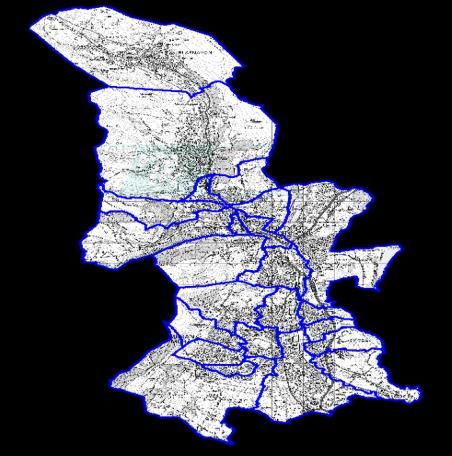
Torfaen has pockets of deprivation, with a number of areas ranked
the most deprived within Wales. Some communities are very remote, with public transport
often causing a significant barrier, limiting access to goods and services and often resulting
in less choice and higher premiums.
A number of projects have been delivered in some of the more deprived areas of Torfaen,
which have helped to transform these communities:
£10m Flying Start
Funding in the last 5
years & £6.3m
Families First Funding
spent in the last 5
years
£7.2m Communities
£340,000 of
First Funding & £18m
Discretionary Housing
Supporting People
Payments made in
Grant funding spent
2015/16
in the last 5 years
£29m was spent in £155m spent by
Abersychan & Registered Social
Blaenavon Renewal Landlords to meet
Areas between 1999 the Welsh Housing
& 2009 Quality Standard
£8m spent on private
sector housing
energy efficiency
schemes in last 5
years.
10 | P a g eGAPS
Access to services and support can vary depending on a resident’s location
Employment opportunities are more limited, especially in the north of the borough, so
many have to travel to work
Public transport can be expensive, often hindering people’s ability to access services
and employment opportunities
Property conditions vary in different parts of the borough, creating homes that are
expensive to heat and hard to maintain. Yet funding to undertake Neighbourhood
Renewal improvements has been reduced and replaced with loans, which many
households on low incomes would be unable to repay.
Some social housing stock is located away from towns, so access to shops, food etc.
limited, often prices are higher in local shops, transport costs impact on families etc.
Job Centre Plus are located in Pontypool and Cwmbran, so residents in the north have
to travel to attend, which costs money that the most deprived residents cannot afford.
Poverty at a community level is not clear cut and some communities as a result lose
out on investment.
11 | P a g eOver 1600 people
given Discretionary
Housing Payments in
2015/16.
Priority 3: Provision
Torfaen Welfare Reform Project Group
Over 5600 children
Torfaen Benefits & Money Advice Network have received Flying
Start services since
Gwent Welfare Reform Partnership 2011.
Torfaen Supporting People & Homelessness Inclusive Forum
In order to assist households access the help they require, a robust knowledge of the services
available is essential. Following the introduction of welfare benefit reforms, the importance of
identifying available services and increasing provision has been vital.
Through the work of the Welfare Reform Project Group, many of these services have now
been identified and mapped and the local authority and its partners have taken steps to
increase and develop the provision of assistance within Torfaen. However more work needs
to be done to co-ordinate activity, identify shared priorities and to target resources and service
delivery according to needs.
Dedicated
teams created
to support RSL
tenants
Better links
Investment in
between
food banks &
different
crisis support
services
Promoted
Services Increased
financial,
local regulated
budgetting and
lenders /credit employment
unions support
Young people
Greater levels
supported
of investment
back into
into CAB
employment
services
or education
12 | P a g eThe challenge that currently exists is to ensure that a consistent and co-ordinated approach
is adopted for promoting available services and developing clear referral routes, so that those
in the greatest need can access the assistance they require quickly and easily. Greater
understanding is also needed of the specialisms of each service, so that residents access the
most appropriate assistance for their particular situation.
The role of the Torfaen Welfare Reform Project Group and partners is pivotal in co-ordinating
strategic priorities and actions that help reduce duplication and ensuring that resources are
used most effectively.
GAPS
Specialist provision is often oversubscribed and can take a while to access, which
creates a delay, causing additional suffering to individuals
Support provision fluctuates between providers with a limited number of specialists in
key areas, so a better understanding is needed of which agencies would be most
suitable in a particular situation.
There are not always sufficient links between services and provision
Referral routes are not clear for professionals so often inappropriate support is being
provided to the most vulnerable
Prospective service users are often not aware of what services are available and who
to go to.
Key service providers are not always aware of what is available and don’t signpost.
Services are not aligned and co-ordination across Torfaen does not take place.
Clearer information and communication on the range of services available is not in
place to help people choose the service that is right for them.
13 | P a g eIn 2015/16,
Torfaen Council
provided a
£140,000 ‘top-up’
Priority 4: Policy towards the
delivery of
To successfully tackle poverty, it is vital to eradicate not just the Discretionary
symptoms, but the underlying causes of poverty.13 There has been a Housing
strong emphasis in national policy on changing people’s behaviours Payments
to help alleviate poverty, but much less prominence to addressing
the key drivers of poverty such as the number of jobs in the
economy, low wages, a delay or cut in benefits, occasional
expenditure (new school uniform, a term’s home to school transport) access to and the
affordability of goods and services.14
Some of the underlying causes of poverty cannot be addressed at a local level, but by working
together across different sectors to review processes and policies, Torfaen can continue to
ensure that systems and situations compliment rather than impede each other.
Aligning services within the tackling poverty programmes
Torfaen has already implemented a programme of collaboration across Communities First,
Families First and Flying Start, leading to a number of efficiencies and duplication reductions.
There are also plans for further alignment of these poverty funding streams with the
Supporting People Programme, providing an opportunity for a more coherent response to
funding reductions and the increased demand for services.
Explore the introduction of conditionality clauses
Assisting people who are in financial hardship must be a partnership arrangement and there
is scope to introduce greater conditionality upon people who access support and assistance
in Torfaen, so that we work together to alleviate financial difficulties.
Review Policies and Procedures to reduce the risk of poverty premiums
Some policies can inadvertently place additional financial pressures on households who are
in financial hardship. Affordability calculations and the ability for persons to pay up front or in
advance for services should be fully considered.
Torfaen needs to review the services it provides to ensure that this is avoided, or that
alternative options are made available.
14 | P a g eGAPS
Affordability assessment levels and calculations can vary between different partners
Invest to Save solutions need to be more developed more strategically to prevent even
greater debt accumulating to the state e.g. homeless prevention cheaper than
homelessness
Discretionary Housing Payments should be provided in conjunction with support to
ensure that money is not lost through poor budgeting skills.
More conditionality needs to be built into service provision
Linkages between organisations, policy and practice must be made
Better sharing of key data to better support people
Earlier intervention should take place to educate and train people about financial
capabilities, budgeting and what is affordable.
15 | P a g eWhat will we do to address the gaps?
The Financial Inclusion Strategy for Torfaen 2016 - 2021 helps capture our commitment
for working together through a focus on:
People
Places
Policy &
Provision
By prioritising work in these areas we hope to achieve our vision:
Improve financial assistance and support
for the residents of Torfaen
This will help ensure that residents in Torfaen are sufficiently equipped to deal with the
economic and financial challenges that they face
Delivery of this strategy will be monitored through the Welfare Reform Project Group reporting
to the Torfaen Public Services Board. Progress will be measured against the following
actions:
Maximise immediate help and support
Target workless households
Identify those 'at risk' of moving into poverty
Co-ordinate bespoke communication/messages
Any further information required about this document please do not hesitate to
contact Torfaen County Borough Council Housing Services on 01495 762200.
16 | P a g eInfographics 23% of Wales in Poverty Communities, Equality and Local Government Committee, June 2015, Inquiry into Poverty in Wales: Poverty and Inequality, National Assembly for Wales. Available at http://www.assembly.wales/laid%20documents/cr-ld10252/cr-ld10252-e.pdf [Accessed 09/08/16] 23% of Wales in Poverty & 33% social tenants in povety, 28% of PRS (up from 19%) Tinson. A & MacInnes. T, Monitoring Poverty and Social Exclusion in Wales 2015, Joseph Rowntree Foundation. Available at https://www.jrf.org.uk/report/monitoring-poverty-and-social-exclusion-wales-2015 [Accessed 09/08/16] 65% increase in credit union membership since 2010 Financial Inclusion Strategy for Wales 2016, March 2016, Welsh Government Available at http://gov.wales/topics/people-and-communities/communities/debt/?lang=en [Accessed 09/08/16] 15% of people could not read the balance on a bank statement & ¼ of people say they prefer to live for today rather than plan for tomorrow Financial Capability Strategy for Wales Available at http://www.fincap.org.uk/wales_strategy [Accessed 09/08/16] 18% of primary school pupils eligible for free school meals InfoBase Cymru - Available at http://www.infobasecymru.net/IAS/themes/children,youngpeopleandeducation/compulsoryeducation/profile?profileI d=30 [Accessed 12/05/16] 1/5 (22.4%) of children in Torfaen are living in low income families InfoBase Cymru - Available at http://www.infobasecymru.net/IAS/themes/children,youngpeopleandeducation/children/tabular?viewId=1666&geoId =1&subsetId= [Accessed 09/08/16] 24 (23.6) % of households have no access to a car or van InfoBase Cymru - Available at http://www.infobasecymru.net/IAS/themes/2011census/travel/tabular?viewId=971&geoId=1&subsetId= [Accessed 09/08/16] 22% of households have no-one in work (annual population survey 2014) Statistics Wales – Welsh Government. Available at https://statswales.gov.wales/Catalogue/Business-Economy-and- Labour-Market/People-and-Work/Workless-Households/worklesshouseholdsinwales-by-age-variable-householdstatus- year [Accessed 09/08/16] 2500 people awarded Discretionary Housing Payment in 2015/16 Welsh Government - CTRS Speed of Processing (SoP), Council Tax Collection Rate and Disc. Housing Payments Key Performance indicators - 2015/16 – Torfaen Council 17 | P a g e
References

1
 Winckler, V. Money, money, money – why we need a fresh approach to financial inclusion, Bevan Foundation, 2015.
Available at http://www.bevanfoundation.org/commentary/money-money-money/ [Accessed 26/02/16]

2
 Winckler, V. Three ways to reduce the cost of living Bevan Foundation, 2015. Available at
http://www.bevanfoundation.org/commentary/reduce_cost_living/ [Accessed 26/02/16]

3
  Strelitz, J. & Kober, C. The Poverty Premium: How poor households pay more for essential goods and services, Save
the Children and Family Welfare Association, 2007. Available at http://www.savethechildren.org.uk/resources/online-
library/the-poverty-premium-how-poor-households-pay-more-for-essential-goods-and-services [Accessed 09/08/16]

4
 Census 2011, Available at https://www.nomisweb.co.uk/census/2011/KS501EW/view/1946157402?cols=measures
[Accessed 09/08/16]

5
 Census 2011, Available at https://www.nomisweb.co.uk/census/2011/KS107EW/view/1946157402?cols=measures
[Accessed 09/08/16]

6
 All pupils eligible for free school meals, by local authority, region and year, Statistics Wales – Welsh Government.
Available at https://statswales.gov.wales/Catalogue/Education-and-Skills/Schools-and-Teachers/Schools-Census/Pupil-
Level-Annual-School-Census/Provision-of-Meals-and-Milk/pupilseligibleforfreeschoolmeals-by-localauthorityregion-
year [Accessed 09/08/16]

7
 All pupils eligible for free school meals, by local authority, region and year, Statistics Wales – Welsh Government.
Available at https://statswales.gov.wales/Catalogue/Education-and-Skills/Schools-and-Teachers/Schools-Census/Pupil-
Level-Annual-School-Census/Provision-of-Meals-and-Milk/pupilseligibleforfreeschoolmeals-by-localauthorityregion-
year [Accessed 09/08/16]

8
 Known not be in Education, Training or Employment – Career Wales. Available at
http://www.careerswales.com/prof/server.php?show=nav.3850 [Accessed 09/08/16]

9
 Percentage who are claiming out-of-work benefits – Office of National Statistics. Available at
https://www.nomisweb.co.uk/reports/lmp/la/1946157402/report.aspx [Accessed 09/08/16]

10
  Welsh Index of Multiple Deprivation – Welsh Government. Available at http://wimd.wales.gov.uk/ [Accessed
09/08/16]

11
  Average gross weekly earnings by Welsh local areas and year (£) - Annual Survey of Hours and Earnings, Office for
National Statistics. Available at https://www.nomisweb.co.uk/reports/lmp/la/1946157402/report.aspx [Accessed
09/08/16]

12
     Stagecoach Prices Available at https://www.stagecoachbus.com/tickets [Accessed 17.03.16]

13
  Coote, A. et al, Tackling the systemic causes of poverty, Joseph Rowntree Foundation, 2015. Available at
https://www.jrf.org.uk/report/tackling-systemic-causes-poverty [Accessed 09/08/16]

14
  Winckler, V. Has tackling poverty become too paternalistic? 2015. Available at
http://www.bevanfoundation.org/commentary/7264/ [Accessed 09/08/16]

18 | P a g e
You can also read


