Cotting School Reopening Plan 2020-2021
←
→
Page content transcription
If your browser does not render page correctly, please read the page content below
Cotting School Reopening Plan
                                2020-2021
                     Prepared for August 14, 2020 Submission to the
             Massachusetts Department of Elementary and Secondary Education

Cotting School Mission: To enable students with special needs to achieve their
            highest learning potential and level of independence.

                            www.cotting.org/fall-2020-reopening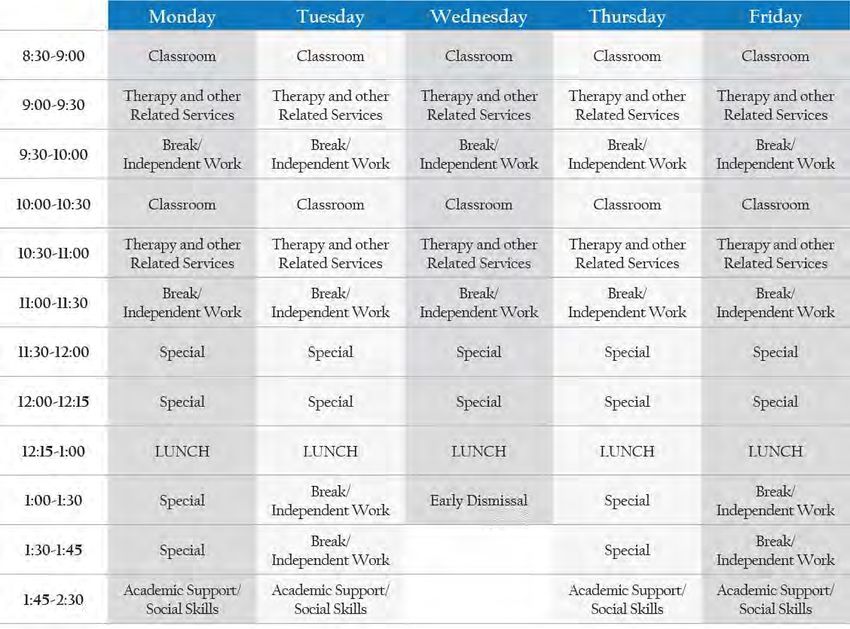
Table of Contents
Letter from the Superintendent 2
Executive Summary 5
Cotting Day In-Person Learning Model 14
Cotting Day Hybrid Learning Model 20
Cotting Day Remote Learning Model 21
Remote Learning Plan Components 21
Sample Remote Schedule 22
Remote Learning Plan Procedures 23
Technology Platforms and Supports 23
Video Meeting Guidelines 25
Community Safety 25
Procedures for Attendance and Participation 27
Curriculum and Instructional Materials 27
Alignment of Academic Work to State Standards 28
Issuing Grades 28
Family Communication Plan 28
HOPEhouse at Cotting School In-person Learning Model 29
HOPEhouse at Cotting School Hybrid Learning Model 33
HOPEhouse at Cotting School Remote Learning Model 33
Out of School Time Plan 35
Student Supports and Professional Learning 35
Student Wellness Supports 35
Training & Support for Students, Families and Staff 37
School Year Calendar 2020-2021 39
Other Information from Cotting School 40
Medical Protocol for Cotting Students and Staff in the Context of COVID-19 40
Certification of Health and Safety Requirements 46
1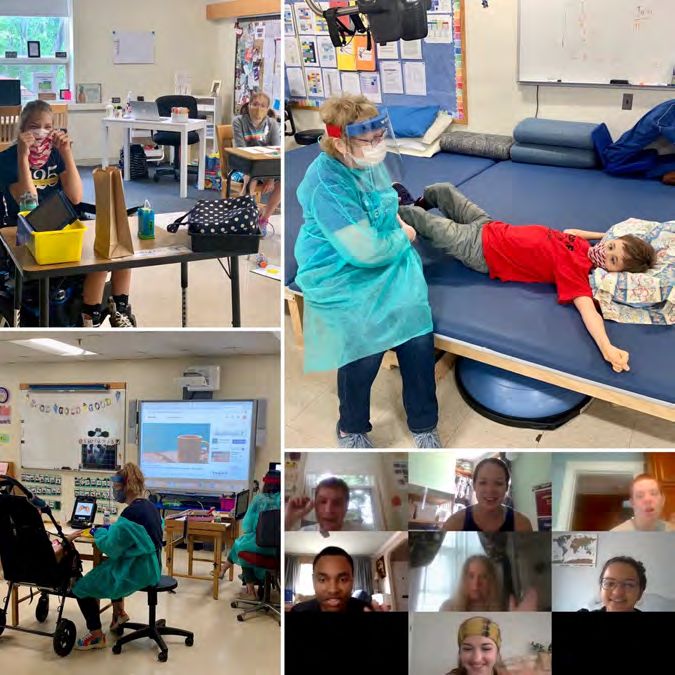
Letter from the Superintendent

August 14, 2020

We are pleased to submit our detailed plan to the Massachusetts Department of Elementary and
Secondary Education (DESE) for providing high quality comprehensive educational and
therapeutic services to students at Cotting School for the 2020 - 2021 school year. This plan was
developed by our Senior Administrative team, in collaboration with other faculty members, and
has the full endorsement of Cotting School’s Board of Trustees.

Cotting School, founded in 1893, is a leader in providing comprehensive educational and
therapeutic services to children and young adults with a broad spectrum of learning and
communication disabilities, physical challenges and complex medical conditions at our
Lexington, Massachusetts campus. Here, Cotting’s highly- skilled professional staff focuses on
the “whole child” by creating uniquely targeted interventions designed to increase student
independence. At Cotting School, students and their families become part of a “comprehensive
classroom” within an extended learning community. Cotting School’s valuable partnerships with
students and families, staff, public funding agencies, donors, and volunteers enable our students
to realize their highest potential in academic achievement, skill development and
social-emotional maturity.

By definition, all students at Cotting School are “high needs,” therefore critically in need of
services. That said, given their complex medical needs, we need to carefully move toward full
reopening through a phased-in approach. (Sadly this was brought home to our community during
the two preceding years (prior to COVID19), when three of our students lost their lives due to
illnesses tied to their complex medical conditions.)

                                                                                                2
Since mid-March when Cotting School moved to distance learning, senior Cotting School staff
members have met on a weekly basis with our medical director, Dr. Elizabeth Harstad from
Boston Children’s Hospital. In addition, Cotting established a reopening team, shared ideas with
two other schools (Perkins School for the Blind and Crystal Springs School) and participated in
the MAAPS Reopening Group.
Although the response of our parents to remote learning was positive, as indicated by the survey
responses below, we know that in order to fully meet the needs of our students we need to take
careful and safe steps to return to in-person education. It should be noted that at the height of our
remote learning services this past spring we were offering over 400 live sessions per week to 110
students.
Our parents were presented with the following statements:
My child’s team has been accessible and responsive during this period of school closure - 89.4%
strongly agreed or agreed (94 responses)
Communication from Cotting School during this period has been clear and helpful - 93.7%
strongly agreed or agreed (94 responses)
My child felt supported by their school community during this period of distance learning. -
88.3% strongly agreed or agreed (94 responses)
In addition, a survey of our parents informed our decisions about employing a phased model
which moves from hybrid to in-person full-time on campus learning. 60% of our parents were
comfortable with 5 full days of on campus services. While this is a majority of our families, it
simultaneously speaks to our need to proceed carefully. In addition 25% of our families were
interested in 2 to 3 days of in-person learning, and 17% have chosen to continue with full-time
distance learning.
This plan is designed to both ramp up and ramp down in-person services as circumstances
change due to COVID-19. Using lessons learned from our successful extended school year
(ESY) program (July 6, 2020 through August 7, 2020), we are presenting a plan which best
meets the needs of our medically fragile student population in as safe a manner as possible.
During all five (5) weeks of our ESY program in the summer of 2020, Cotting provided students
with both remote and on-campus services. On each day of the week (Monday - Thursday) on a
rotating basis approximately 25% of our students attended classes and received therapeutic
services on campus. On all school days (Monday - Friday) students also received remote learning
3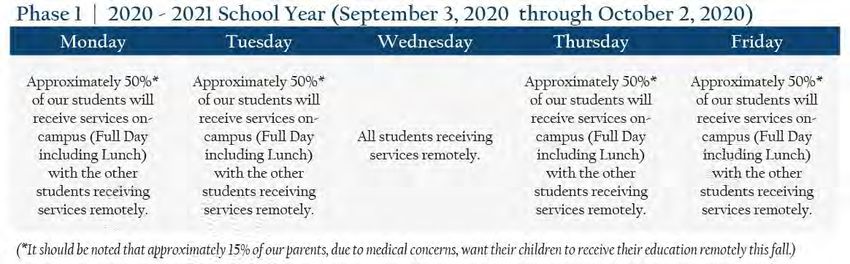
services. Given the complex needs of working with a medically fragile population, we carefully
followed CDC and DESE guidelines.

Our ESY services established the groundwork for our fall plan. Loading and unloading busses,
providing occupational, physical and communication therapies, and offering in class socially
distance education for students with complex special needs was challenging. We were able to
successfully operate at 25% capacity. We plan to build on that model in September and expand
our services to 50% capacity, beginning on Thursday, September 3, 2020.

It is our belief that this phase-in approach best meets the needs of our students at Cotting School
and it allows us to expand and contract our on-campus services as dictated by COVID-19. We
eagerly await expanded testing, and ultimately a vaccine, that enables us to bring all students
together on campus.

In closing, we look forward to working in partnership with our families, students, staff and
DESE in providing exemplary services to our students.

Sincerely,

David Manzo
President

                                                                                                  4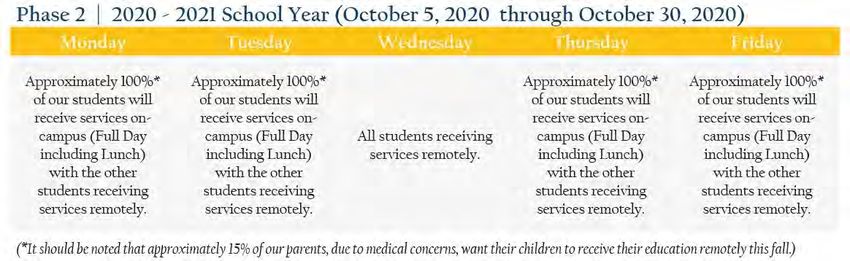
Executive Summary
Since we closed abruptly on March 12th in response to the growing COVID-19 pandemic
concerns we have had our eye on reopening as soon as it is safe to do so. We are very proud of
the agility with which we responded to the closure and our ability to be together with students
again as soon as March 16th in a remote environment. Since that day, we have continuously
evaluated our remote learning plans in an effort to provide the richest school experience we
could for our students. We have simultaneously worked with
DESE, DPH, maaps, colleagues at other schools, Cotting
School’s Medical Director, and most importantly, our own
Cotting team to develop a plan to be ready for in-person
learning as soon as possible.

The plans that follow outline our vision for the coming school
year. We understand that each family and staff member has
unique considerations for coming back to school. In recent
weeks, Massachusetts has done a good job of containing the
spread of the virus and the state is moving to opening more
broadly. But, we also appreciate that there is still a lot we do
not know about the trajectory of this virus. Therefore, we
have developed plans that allow for flexibility, both at an
individual level as well as a community level. We are hopeful
about offering more in-person learning beginning in
September, but have metrics and plans in place that would
allow us to scale back our in-person activities in response to increased COVID-19 activity in
Massachusetts.

                                      This is a very complex process and one that has
                                      significant concerns for our vulnerable students. We are
                                      encouraged by the way both students and staff responded
                                      to the new safety measures in place for the ESY program
                                      this summer and will build on that success. Together
                                      with the guidance from DESE and DPH, we can respond
                                      to the strong desire from all members of the Cotting
                                      Community for more in-person instruction this fall. This
coming school year won’t look like any we have experienced in our 127-year history, but if any
school can do this, Cotting Can!

                                                                                                  5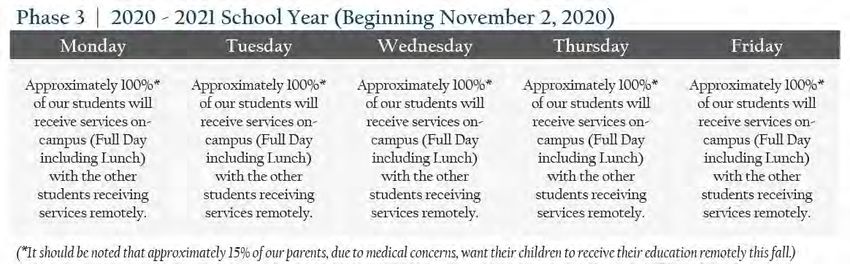
Acknowledgements
Everything we do at Cotting School is based on teamwork. Developing our reopening plans is no
exception. All of the Cotting School staff have been incredibly helpful, creative and thoughtful in
developing and carrying out our remote learning plans and contributing to our reopening plans.
Special thanks goes to the following members of our Reopening Team:
Virginia Birmingham, Physical Therapy Team Leader
Sejal Costa, Director of Post-Secondary Pathways
Amy Houghton, Occupational Therapy Team Leader, Feeding Team Lead
Althea Ioakimidis, Human Resources Manager
Bridget Irish, Chief Operating Officer
Krista Macari, Chief Academic Officer
David Manzo, President
Jeanine Meredith, Director of Curriculum and Instruction
David Peduto, Facilities Director
Michele Passanisi, Director of Nursing
Patti Salmonson, Director of Technology
Leah Thibodeau, Special Education Coordinator
Pam Varrin, Family Support Coordinator
Amy Vraibel, Assistant Director of Nursing
Thank you, too, to our many partners:
Dr. Elizabeth Harstad, Medical Director
Dr. Meredith Close, Medical Fellow
MAAPS
Perkins School for the Blind
Crystal Springs School
Department of Elementary & Secondary Education
Lexington DPH
Finally, our most profound thanks to our Cotting Falcons Family. Our students, families and
Board of Trustees have demonstrated incredible resilience, patience, and cooperation with us as
we have learned and navigated this together. Thank you for your support and trust.
6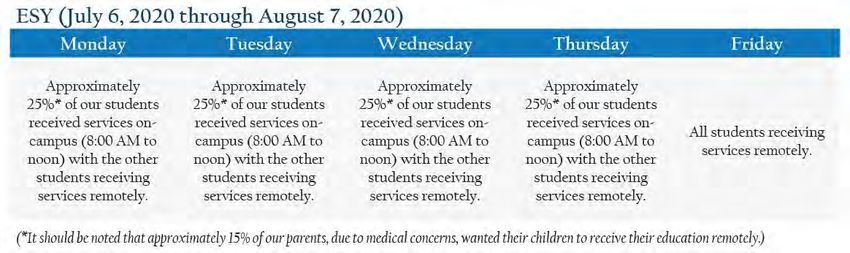
Cotting School Decision Process and Inputs
Principles and Goals
1. The safety and security of our students and staff will be our first priority in all of our
decision-making. With so much unknown about COVID-19, we will continue to monitor
the situation closely and seek advice from medical and public health professionals.
Additionally, we will consider the social-emotional health of our community, especially
our students, and continue to evaluate ways to maintain our experience of connection to
one another and our campus in as many ways as possible.
2. A process that allows for constant and consistent communication, with feedback and
assessment so that we can evaluate and adjust all of our models to better serve our
community.
3. A plan that allows flexibility to scale up and down our in-person presence in response to
health metrics and ongoing safety guidelines.
4. Special focus on the challenges of delivering critical services to students, particularly as it
relates to therapies and community inclusion.
5. Acknowledgement of the physical and emotional strain of learning and teaching at home,
while also caring for other family members, work and concerns.
6. Attention to an ongoing process to assess learning gaps, progress and regression and
plans to address those needs.
7. Ongoing professional development for staff as we continue to enhance our strong
technology skills, adopt best practice teaching, instruction and supervision, and learn the
best ways to assess students across remote and in-person environments.
8. Includes planned time to connect as a community for sharing, learning, reflecting, and
fun so that we can remember the joy that comes with being a FALCON!
State Guidance on the Reopening of School
The Governor and the Massachusetts Education Commissioner paved the way for the reopening
of schools in their initial June 4th guidance regarding summer school programs.They encouraged
schools to use this summer experience as a small pilot programs and focused their attention on
the most vulnerable students, which they defined as:
“a. Students with disabilities, particularly those who receive summer services as a
provision of their Individualized Education Programs (IEPs)
b. Students who have been off track or only intermittently engaged prior to and/or
during the period of school closures
c. Vulnerable students who may be at risk socially or emotionally due to the school
closures”
7
After further reviewing this initial summer guidance, we believed Cotting School could meet the
safety standards outlined, our facilities would support the spacing requirements, we could
procure appropriate safety equipment, and we could learn a great deal from the experience about
protocols for a fall opening. Most importantly, though, we believed that our students and staff
would greatly benefit from the opportunity to be back on campus. Our decision to open our
Summer ESY program was met with large support from both families and staff.
During the month of June, we developed careful policies and procedures, as well as staffing
plans and schedules to optimize students’ time on campus one day each week and limit their
interactions with other students and staff members. Staff members, students and parents were all
oriented and trained, and all of our practices were re-evaluated regularly during the summer
program. We opened a hybrid Summer ESY program on July 6, 2020, during which we greeted
25% of our students each day, Monday-Friday, for five weeks. Our commitment to reopening
this summer allowed us to evaluate our space and protocols in real time. We believe that our
experience during our ESY program prepared us well to effectively meet the needs of our
students starting in September.
On Thursday, June 25, 2020, Governor Baker announced the State guidelines for reopening
schools in the fall. Massachusetts Department of Elementary and Secondary Education (DESE)
guidance followed that announcement and can be found here .
The MA DESE guidance sets forth the several guidelines for public schools, including but not
limited to the following:
● All students in grades 2 through 12 will wear face-masks in school;
● All students and staff will stay three to six feet apart;
● We should organize students at the middle and high school levels by cohorts to minimize
interaction.
8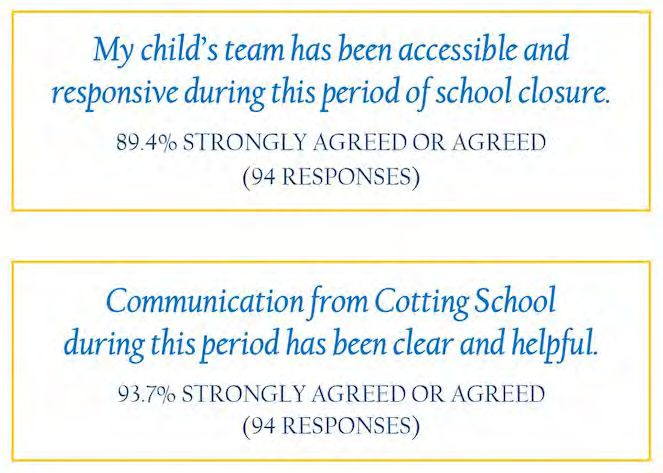
Furthermore, the State has asked schools to prepare plans for remote learning, full in-person
learning, and a hybrid of the two models. With the confidence of now having delivered each of
the above, we are sharing our updated plans with you. We are fully aware that this pandemic
situation remains fluid. We have developed plans that will allow us to respond to the evolving
circumstances by scaling up or down as necessary. We also know, from experience and feedback
from our staff and families, that we will continue to modify our plans to best serve our
community. At all times, the safety of our students, staff and community will be at the forefront
of our decision-making process.

Continued Phased Approach to Opening 2020-2021

If we are successful with Phase 1, we plan to expand our services. This decision will be made in
concert with our medical director, our administrative team, and evaluation of COVID19 trends
within Massachusetts.

                                                                                                   9
It is our belief that this phase-in approach best meets the needs of our students at Cotting School
and it allows us to expand and contract our in-person services as dictated by COVID-19. Since
100% of our student population is considered vulnerable and medically fragile, we believe the
phased approach will allow us to evaluate all of the services we offer carefully so that we do not
overwhelm our medical supports, building space or staffing. We will continue to adjust our
policies and practices to provide a safe and engaging school experience for all of our students.
Parent Survey Results
Cotting conducted two parent surveys, one prior to the summer and the second during our
summer program after most families had an opportunity to experience an in-person return.
Consistent with the feedback we received before the summer, parents are eager to resume in
person services. This speaks to the difficulty of replicating services in a remote setting, as well as
the confidence Cotting families have in the safety measures developed by the school.
● 60% of families willing to send students 5 days
● 25% of families willing to send students 2-3 days per week
● Prioritized classroom instructions, therapies, and vocational programs
Staff Survey Information
Cotting staff was surveyed prior to the start of the ESY program. An overwhelming majority of
staff were prepared to make the shift from remote to in-person in the summer. Those who cited
childcare and safety concerns have had an opportunity to address those issues. Furthermore,
Cotting School has updated all personnel policies to account for the impact of COVID-19 on
staff health and attendance issues.
10Medical Protocols
We developed medical protocols in consultation with our Medical Director, experts at Children’s
Hospital, Lexington Department of Public Health in preparation for our July 6 summer opening.
These policies were further enhanced with the release of DESE’s Protocols for Responding to
COVID-19 scenarios of 17 July. These protocols consisted of:
● A daily attestation questionnaire to be completed before coming on campus
● Daily Health Screening for all students and staff before entering the building by
members of the Cotting Medical Department
● Requirement for all members of our community to wear a mask at all times, with
special considerations and preparations to account for students who would have
difficulty wearing a mask consistently
● Ample supply of PPE for all staff and students, training for proper usage, and
guidelines for what PPE should be worn in a variety of Cotting settings
● Procedures for staff and students who become symptomatic during the school day,
including establishment of an isolation room for any student who became
symptomatic during the school day
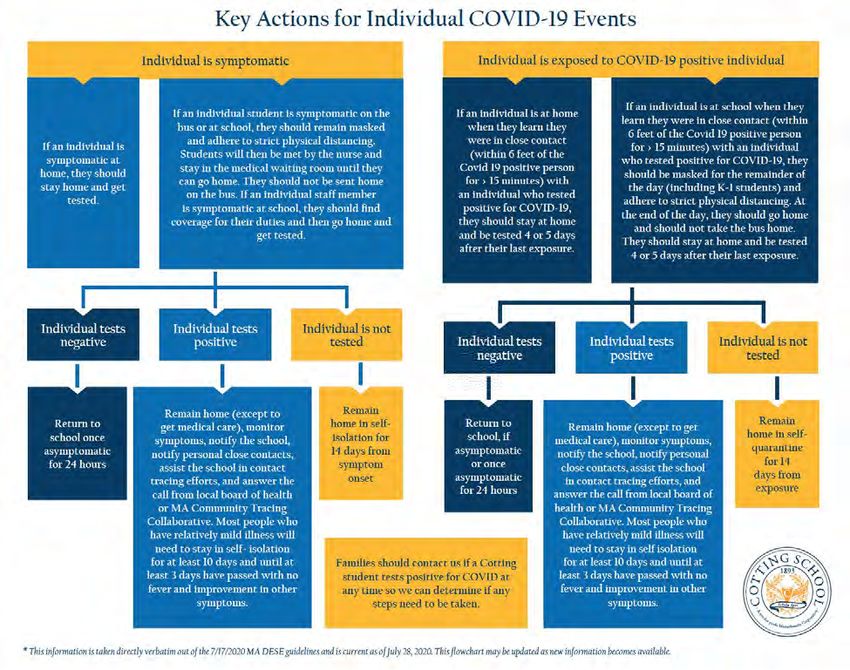
● Procedures for staff and families should they become symptomatic, COVID-19
positive, or experience close exposure to someone COVID-19 positive
● Contact tracing
● Community communication about confirmed cases
● Building cleaning, sanitizing, and signage for proper physical distancing
The opportunity to offer in-person services to students this summer allowed us to fully
implement our protocols, collect feedback from families and staff, and adjust and enhance our
process to be clearer and easier to follow.
In addition to the COVID-19 specific protocols, the Medical Department has adjusted their
process to assist students with all of their medical needs. In order to keep safe distancing in the
Medical Department, students will be seen by appointment for all toileting and personal care.
Medications are delivered to the classroom and nurses will travel to classrooms to evaluate a
student who is not feeling well.
Mental Health Support
This pandemic has taken its toll on all of us, but all members of the Cotting Community have
remained resilient, engaged and generally positive because of our strong sense of connection to
one another and our school community. Teachers, Therapists and Administrators did regular
11outreach to families beyond the online classroom times. Furthermore, members of our Mental
Health Team offered regular parent support groups and learning opportunities.
As we return this fall, we plan to continue all of our student counseling services in whatever
format works best for the student (remote or in-person). Additionally, we will have members of
our Mental Health Team in the building to support any student who needs it during their
transition back to school or for any other reason. Our commitment to ongoing parent support
meetings and 1:1 conversations will also continue so that we can support parents through this
unsettling time and as they grapple with their individual decisions about sending their children to
school.
Therapy: Physical, Occupational, and Speech Language
As the Parent Survey confirmed, receiving therapy services in a remote model is difficult.
Cotting School therapy departments will prioritize therapy appointments for students during all
in-person days. Staff will also be available to support any student who is learning in the remote
environment. Students and their families will also continue to receive additional practice
opportunities and other activities during their times at home in a hybrid model.
Lunch and Feeding
As was the practice this summer, students will continue to bring all food and feeding equipment
from home for their use at school. All food should be in ready-to-eat-form and dirtied dishes will
be sent home with the student. Members of the Cotting School Feeding Team, which consists of
therapists and other trained direct care staff, will move to the classrooms to feed students at the
appropriate times. These staff members will have access to the extra PPE required while working
with students while they are eating and not able to wear a mask.
Simple school lunches will be provided for any student who needs one or forgets a lunch. Fruit,
yogurt, beverages, and other supplements will be available each day. As Cotting School moves
through the phases of reopening, we will increase the availability of school lunches to students
and staff. We also plan to phase in the reopening of the dining room for student and staff lunches
during our Phase 3.
12Technology Supports
Since our initial close, and ongoing since, Cotting School has been in regular contact with
students, families, and staff to ensure they have the access to technology they need. When
necessary, Cotting has supplied families with technology loans. Cotting School’s technology
team continues to provide timely training and individual support.
HOPEhouse at Cotting School
HOPEhouse at Cotting School is a 5-day residential residential program for teaching functional
and independent living skills. We have evaluated the reopening of this program based on
information gathered from in-person learning during 2020 ESY programming, and in the context
of our facilities and staffing plans. With a current enrollment of 7 students, HOPEhouse is
planning to operate in-person on a full time (Monday – Friday) basis beginning in September,
2020. Six of seven students participated in ESY services. Students received instruction and
practice in cleaning and hygiene skills, including frequent hand washing, social distancing and
wearing masks for extended periods of time.
Beginning in September 2020, HOPEhouse will limit the number of students and staff going into
the building and will have restricted access to the community. HOPEhouse is a transitional living
and learning program, however the program will eliminate the community-based aspects of the
program until it is safe to be in the community more consistently. Limiting transitions to and
from the school (home to school) will decrease exposure and risk of COVID-19 infection. All
students expected to attend in the fall will have private bedroom/bathrooms for personal use.
The physical environment in the building provides ample space in the kitchen, game room, living
room and classroom area for all to practice appropriate social distancing.
Cleaning protocols will be in place for daily practices to include every shift change, every private
bedroom/bathroom once a day, before and after use of any area/equipment and a thorough
disinfecting/cleaning to all common areas two times a day. A professional cleaner will clean
daily and staff and students will conduct regular disinfecting protocols that have been established
on various areas/equipment utilized both prior and after use. Overnight staff will focus on
cleaning protocols established for common areas of the building during overnight hours.
Medical screening will be provided by the Cotting School’s medical department and an isolation
area is available in the main building and at HOPEhouse, if needed. PPE supplies will be on
hand, including masks, gloves, gowns and face masks with proper use protocols in place.
13Cotting Day In-Person Learning Model
Based on recent parent survey data, approximately 60% of families
would be willing to send their child back to Cotting for full school
days five days per week in September. Another 25% felt comfortable
with in-person learning two-three days per week. The following
protocols and procedures would be implemented to maintain safety
for our community during in-person learning:
● Students and staff will enter via separate entrances
● Upon arrival, all staff and students will be screened with a
temperature check with a non-contact thermometer
● Parents must sign written attestations each day their child will
be on campus to report any symptoms in the past 24 hours
Screenings will be consistent with most current DESE, CDC
Arrival
and DPH guidelines
● As part of the attestation, parents/guardians must
acknowledge they know and understand any Massachusetts
travel restrictions
● Parents and van drivers are expected to wear a mask on
campus during arrival and dismissal
● Students will continue to use the restrooms one at a time
● Members of the maintenance department will clean and
Bathroom Facilities
sanitize student restrooms at regular intervals throughout the
day and as needed
● Each class will have a designated dismissal area spread across
the front entrance to the school
● As vans and passenger cars arrive, staff will be notified to
Dismissal
escort students to the vehicle
● Parents and van drivers are expected to wear a mask on the
Cotting campus during arrival and dismissal
● Students will continue to receive individual counseling
session remotely until Phase 3 of Cotting School’s reopening
Health & Counseling
● Whenever possible, these sessions will be scheduled during a
student’s remote day for privacy issues. When that is not
14possible or practical, the student will have access to a private
space for their zoom session with their counselor
● Health classes will continue to be held via remote learning
and will be phased into the in-person environment after the
school has moved to Phase 3 of reopening
● Students will bring their lunch from home
● Most classes will eat in their classroom rather than the
lunchroom
● Necessary therapeutic staff will assist classrooms based on
student needs
Lunch ● Feeding members will have access to additional PPE when
needed
● Simple school lunches will be available for those who need it
or in the event a lunch is forgotten
● Fruit, yogurt, beverages and other supplements will be
available on an as need basis
● The Medical Department will see students on a regular
schedule to attend to all personal care needs while providing
adequate spacing in the Medical Department
● Students who request Medical support outside of a scheduled
visit should call down the the Medical Department for a nurse
to come to assess the student
● If a student feels unwell or begins to demonstrate any
symptoms, the teacher or other staff member will call to the
Medical Department for a nurse to come assess the student
● Medications and G-tube feedings will be administered in the
Medical Department classroom or during a scheduled visit to the Medical
Department
● Nurses will have masks, gloves, gowns, face shields and other
PPE necessary and have training for its use and disposal
● Per the COVID-19 Medical Protocols, Cotting School will
establish a separate isolation room for any student who
develops symptoms associated with COVID-19
● Nurses will do regular follow up calls to staff and students
who are feeling unwell, are in quarantine, or who test positive
for COVID-19 to be sure that they can adequately update
Cotting Administration and the Cotting community
15*For specific protocols related to COVID-19, see the COVID-19
Medical Protocols
● Desks/work spaces will be spaced 6’ apart
Physical Classroom ● Students will have their own materials to use
Environment ● Anything that may be shared will be disinfected between use
● Daily cleaning and sanitizing will occur
● Remedial Specialists at Cotting School will continue to
deliver classroom instruction remotely until Phase 3 of
Remedial Services
Cotting School’s reopening to limit exposure to both students
and staff
● Staff and students will remain on campus
● Students will remain in homerooms except for therapies,
medical visits and adapted physical education
● Families can choose to stay remote only so the schedule will
Schedule be accessible whether in person or remotely
Modifications
● Students will not mix with other classes for intervention
blocks or specials
● Lunch will be in the classroom for most homerooms until
Phase 3 of Cotting School’s reopening plan
● Because Specialists at Cotting School see all students, they
will continue to deliver classroom instruction remotely until
Phase 3 of Cotting School’s reopening to limit exposure to
Specials (visual arts,
performing arts, both students and staff
industrial arts, ● Specialist will deliver any equipment or supplies to
science, history/social classrooms (for use on in-person days) or home (for any
studies, adapted scheduled remote days)
physical education) ● Cotting School will prioritize those classes that require more
supplies and/or staff support to students on days students are
scheduled for in-person learning
● Staff must sign written attestations each day they are on
campus to report any symptoms in the past 24 hours
● As part of the attestation, staff must acknowledge they know
Staff
and understand any Massachusetts travel restrictions
● Screenings will be consistent with most current DESE, CDC
and DPH guidelines
16● Staff are required to wear face masks
● Face shields, gloves and gowns are available for all staff
● Staff will receive appropriate training on proper use and
disposal of PPE
● Staff orientation will take place remotely during the two days
prior to the opening of school. The orientation model will take
advantage of live Zoom meetings, recorded presentations, and
activities intended to ensure Cotting Staff members are fully
trained on Cotting School’s most updated policies and
procedures
● Cotting will continue to pay careful attention to the
Staff Orientation
attendance and participation of all staff
● Sessions will be recorded for staff members hired during the
school year or for staff who need refresher training in any
area
● Cotting School’s schedule allows for Professional
Development from 1:30 p.m. to 3:30 p.m. each Wednesday
during the school year and as needed
● Whenever possible, students will be expected to wear masks
at all times, except when eating or drinking
● Students are expected to provide their own masks/face shields
● Cotting will provide disposable masks for students who need
Students
one
● Teachers will organize masks breaks for students as needed,
providing an appropriate space and supervision for each
student’s needs
● We will avoid the sharing of personal technology devices in
school
● Each individual student will have a specific device available
for use while on site
Technology Supports
● Students who currently have a Chromebook on loan from the
school will be responsible for bringing them back and forth to
school for both live in-person classes and accessing any of the
remote learning materials from home
Therapy ● Therapy Departments will prioritize therapy appointments for
Departments
17students’ in-person days
● Students will be escorted to and from therapy sessions and all
therapy appointments will be held in therapy rooms and other
spaces suitable to appropriate distancing
● Therapists will have access to appropriate PPE for the work
they do with students, including masks, face shields, gowns
and gloves and will receive training for its use and disposal
● Additional staff members will be available to sanitize all
equipment after each student
● During any hybrid phases, students may continue to receive
some therapy sessions through the remote learning
environment and may participate in some group therapy
sessions
● Students who will only receive services through the remote
environment will continue to receive all therapy sessions
remotely
● Student and families will continue to have access to recorded
sessions, links to activities and individualized therapy plans to
supplement scheduled therapy sessions
● Parents and van drivers are expected to wear a mask on
campus
● Districts will provide transportation or work with the parents
on transportation
● Each sending district will implement their safety and cleaning
Transportation
protocols
● Parents, van drivers and monitors will remain in their
respective vehicles
● Vehicles on campus will be loaded and unloaded while
adhering to 6’ of social distancing as well as wearing masks
● Cotting school will not permit visitors in the building during
the school day, with limited exception
● School maintenance contractors who need to access the
building for any emergency repair will be screened prior to
Visitors
arriving, be escorted in the building, and will not be in contact
with students or staff
● All IEP meetings, Transition meetings, and parent meetings
will take place via Zoom
18● Admissions visits will continue to take place via Zoom. At
such time as the family/Cotting is nearing its final decision on
Admissions, the student and family may be invited to tour the
school outside of regular school hours
● Whole group classes will be lead by a vocational team
member remotely until Phase 3 of Cotting School’s reopening
● Students in the Upper School and Capstone program levels
will be provided opportunities for 1:1 job coaching
Vocation ● Movement around the building will be limited to one student
with one job coach
● Staff and students will remain on campus
● Vocational opportunities that can be done on campus will be
developed and implemented
Families will also have the option of receiving all instruction and services remotely. In that case,
a combination of synchronous and asynchronous learning activities will be made available to the
student on the day their class is scheduled to be in person. This will allow the students
participating remotely to join their classmates as appropriate throughout the school day as well as
receive therapeutic and related services remotely.
19Cotting Day Hybrid Learning Model
Based on recent parent survey data, approximately 82% of families
will be willing to send their child back to Cotting for at least two days
per week in September. In a hybrid model, students will be divided
into two cohort groups. In-person attendance will be increased in
phases over time according to safety conditions and the status of the
pandemic in our community. Families will also have the option of
receiving all instruction and services remotely as described above.
Phase 1
Each cohort will attend in-person two days per week (either Monday-Tuesday OR
Thursday-Friday) and attend remotely the remaining three days. All students will attend remotely
on Wednesdays.
For the in-person days, all of the protocols and procedures outlined for in-person learning will be
followed. For remote days, the student’s Distance Learning Plan will be followed.
Cotting School will increase the number of in-person days as soon as conditions are deemed safe
enough to do so in consultation with our medical director and local health officials.
20Phase 2
Each cohort will attend in-person four days per week (Monday-Tuesday AND Thursday-Friday).
All students will attend remotely on Wednesdays.
Cotting School will increase the number of in-person days as soon as conditions are deemed safe
enough to do so in consultation with our medical director and local health officials.
Phase 3
In Phase 3, all students will be able to attend in person for five full school days.
Cotting Day Remote Learning Model
Based on recent parent survey data, 17% of families are
interested solely in remote learning for the upcoming school
year. Additionally, the remote learning option will be available
to all students as a component of the hybrid model and as
needed during the school year should school need to move to
full remote instruction due to an increase in COVID-19 cases or
as determined by local and state officials.
Remote Learning Plan Components
● Daily live video meetings with the classroom teacher, therapists, counselors, and tutors in
accordance with the students IEP service delivery schedule.
● Regular activities and assignments provided by the students IEP team. These can include
live video lessons, pre-recorded videos, emails, work packets, worksheets, web
21subscription access, and other projects. Activities will be assigned via Google classroom,
Google site or daily email.
● The student will receive live video lessons in specials such as science, social studies, art,
physical education, industrial arts, health, and performing arts.
● For Middle School, Upper School and Capstone, the Vocational Department will provide
live group video sessions per week. Upper School and Capstone will also have the
opportunity for individual work experiences. Case Managers will provide customized
activities appropriate for the student to practice work skills at home.
● Academic Support with a staff member will be available four times per week for students
who need assistance completing assignments or other instructional tasks.
● Students will have opportunities for social skills development and social groups in the
afternoon.
Sample Remote Schedule
22Remote Learning Plan Procedures
Technology Platforms and Supports
Remote classes will continue to be held using the Zoom platform. Students will receive
individual schedules that contain links to each class. Students are encouraged to use a family
owned (or district issued) computer, laptop or tablet for remote learning whenever possible. If a
family does not have a computer, laptop or other device for the student to use to access remote
learning, a chromebook will be loaned to the family. Internet access is essential to the current
learning plans. Families are asked to notify the Cotting School Technology Department with any
internet access concerns. Cotting will assist any family that has connectivity issues. Google
Classroom will continue to be the primary platform for staff to student communication of
assignments.
● When participating remotely, students are encouraged to use a
family owned computer, laptop or tablet whenever possible.
Student Devices ● If a family does not have a computer, laptop or other device for the
student to use to access remote learning, a chromebook will be
loaned to the family.
● All administration, teachers & therapists have laptops and are able to
move from onsite to remote easily.
● Office support staff have taken their desktop computers home. If
they need to work onsite occasionally, a temporary laptop will be
Staff Devices
deployed.
● Support staff who normally don’t have a personal laptop or Cotting
issued laptop, but are now running zoom meetings, have been issued
laptops.
● Cotting School will continue to offer end user support through
helpme@cotting.org The Technology Dept will make every effort to
Tech Support for answer requests within 24 hours.
Staff ● Tech support through 1:1 Zoom meetings or calls is available.
● The Tech Support Website will continue to be available to all, and
updated regularly.
● Cotting School will continue to offer end user support through
Tech Support for helpme@cotting.org The Technology Dept will make every effort to
Families/Students answer requests within 24 hours.
● Tech support through 1:1 Zoom meetings or calls is available.
23● The Tech Support Website will continue to be available to all, and
updated regularly.
● Training will be available to families, to include topics such as:
○ Accessing Student Google Accounts
Training for Families ○ Accessing Distance Learning Folder
○ Google Classroom
○ Zoom Best Practices
● Google Classroom
● Learning A-Z (Reading A-Z, RazKids, Vocab A-Z, Headsprout)
Core Digital Learning ● IXL Math
Resources to Support
● BrainPOP & BrainPOP Jr.
All Learning Models
● News2You
● Flipgrid
● Google Classroom training, both Intro and Intermediate
● Zoom Meetings Training & Best Practices, attendance, recording
meetings, etc.
● Creating files and folders on Drive. Saving docs in folders. How to
find files and folders when you can't remember names of files or
folders. How to see who has modified a file (Revision History). How
to ensure people can view the file but not change it.
Teacher Support and ● Creating a Short survey with Google Forms, using google forms for
Professional data collection
Development ● Teacher & Therapist survey results from May indicate staff want to
learn more about:
○ Learning A-Z (Reading A-Z, RazKids, Vocab A-Z and
Headsprout)
○ News2You
○ SMART Notebook
○ Flocabulary Lite
○ BrainPop & BrainPOP JR new features
● Parent survey results indicate most families do not need any
additional technology tools at home for remote learning. Cotting will
Assistive Technology
continue to communicate regularly with families to ensure that all
students have the necessary supports.
Filtering Off Campus ● Cotting School currently pipes the blocked site list from our regular
24security system over to the URL blocker in Chrome in addition to
enforcing SafeSearch, blocking malicious sites, insecure content,
mixed content, enforcing restricted mode on YouTube, turning off
incognito etc.
● Currently testing our ability to run our onsite filtering through
at-home Cotting owned chromebooks.
● Cotting’s infrastructure is strong and stable.
● We recently upgraded our Verizon Fios to speed tier 1 GB. This will
Infrastructure
support increased Zoom meetings that will potentially be happening
in the building throughout the day.
● Each Classroom has been set up with the equipment needed to allow
remote students to join the in-person class to participate in
Providing synchronous learning through a Zoom meeting.
Synchronous
● While onsite, a student has the capability to join a therapy
Learning
session, or other class, through a Zoom meeting, while
staying in their homeroom classroom to minimize exposure.
Video Meeting Guidelines
Video meetings are an important part of Cotting School’s Distance Learning Plan and allow
in-person interactions with students that are essential for connection and learning. The following
guidelines are intended to help our community navigate this new way of interacting as
successfully as possible. Every student is different and will respond to video meetings according
to their individual strengths and challenges. While these guidelines may not apply to every
student in the same way, they are meant to outline some common expectations.
Community Safety
● Video meeting links should never be posted publicly or shared outside the Cotting
community.
● Staff are instructed to use the Waiting Room feature as a standard security measure to
control access to meetings.
● Passwords will be embedded in meeting links.
● If our student is eating during a meeting, please have them turn off their video function in
consideration of students with food sensitivities.
25● If our student has a seizure disorder or other health care needs that could result in an
emergency, an adult should always be within earshot of the student while they are
participating in the video meeting.
Student Roles:
● The aspects of a student’s learning profile that can make it challenging to participate in
any kind of lesson continue to be a challenge with video meetings. These can include
attention, expressive and receptive language skills, social skills, emotional regulation,
behavioral needs, visual skills, and motor abilities.
● This is expected! Teachers and therapists are used to addressing these needs in school.
While it is difficult to address them in the same ways via video, we know that students
may demonstrate a range of behaviors including getting up from their seat, making
off-topic comments, and disengaging in other ways.
● Students should feel comfortable taking as much “wait time” as they need to respond.
● It’s okay for students to move, get up, walk around, stand, or sit during the meeting.
They do not need to be perfectly still and visible in front of the screen the entire time
Parent Roles:
● Parents should not feel pressured for things to go perfectly or even smoothly! This is a
new environment for everyone. Parents are encouraged to find a comfortable routine with
a level of participation that meets both their needs and the needs of the student.
● It is not necessary for parents to continuously redirect or prompt the student during
virtual meeting sessions.
● It’s okay if a student cannot fully participate in or complete the activity.
● It’s okay if a parent does not sit with a student during a virtual activity. If a student is
comfortable alone during the meeting, that is fine. (If the student has a seizure disorder or
other healthcare needs that could result in an emergency, a parent should remain nearby.)
● If a student with complex communication needs is unable to provide a response, a parent
can first provide wait time and then model an appropriate response on the student’s
communication device.
● Parents should make use of the mute feature to decrease background noise.
Staff Roles:
● Our goal is to provide an opportunity for students to connect with teachers and peers.
● We want to address target skills to the best of our ability. For many students,
communication skills are one of the most important areas.
26● We want to promote emotional well-being by keeping students engaged and stimulated to
the greatest degree possible.
● We are continuing to familiarize students with the new routines & rules of using video
meetings. It is not just an extension or generalization of the classroom. Even if the
activities we do are similar, all of the conventions and expectations are different. It takes
time to learn what works best for being together virtually.
● Teachers can direct student responses and interactions. They will give appropriate wait
time, prompting, and modeling.
● Teachers can mute all the participants as needed to decrease noise, including any
vocalizations or other sounds that might be disruptive. This is a common practice with
group meetings.
● Teachers will be mindful of the time, beginning and ending meetings on time.
● We want to have some fun! We want to provide time for students to have time to enjoy
being with their teachers and friends.
Procedures for Attendance and Participation
A spreadsheet will be created for each student in each homeroom class. Access will be given to
all staff (teachers, specialists, therapists and remedial staff) working with students in each
homeroom class. Staff will be expected to track attendance and update the document daily and/or
weekly as to whether the student attends each individual class. Assignments during live
instruction and to complete at home will be provided. Staff will be expected to track
assignments and assignment completion on the same spreadsheet. Program level supervisors
will monitor this spreadsheet. In the event when attendance and/or participation for a student
requires attention, the supervisor will connect with the student’s family and staff to address
attendance and/or participation.
Curriculum and Instructional Materials
Achieve 3000, Learning A-Z (Reading A-Z, Raz-Kids, Vocab A-Z,
Headsprout), SIPPS, PCI, Core Words, IXL, Scholastic News, NewsELA,
English-Language Arts Brainpop/Brainpop Jr., Flocabulary, News2You, EPIC Books, Bookshare,
Common-Lit, HelpKidzLearn, Accessible Literacy Learning (ALL)
Curriculum, Teacher-Made Materials, FlipGrid
Math U See, IXL, MCAS Reference Materials, Reflex Math, Khan
Mathematics
Academy, HelpKidzLearn, EQUALs Curriculum, Teacher-Made Materials
Brainpop/Brainpop Jr., Cotting School STE Curriculum (adapted from
Science, Technology &
Massachusetts Frameworks) , Mysteryscience.com, Teacher-Made
Engineering
Materials,
27Scholastic News, EPIC Books, News2You, Brainpop/Brainpop Jr.,
Social Studies
NewsELA, Teacher-Made Materials
Go Noodle, Calm.com, Unique Learning Systems, GCF Free,
HelpKidzLearn, LCE (LIfe-Centered Education), Teacher-Made Materials
Life Skills/Transition/
(including checklists and observational data sheets and workplace safety
Vocational
communication that comes from the Commonwealth of Massachusetts),
Flipgrid
Alignment of Academic Work to State Standards
Cotting School Academic work in the area of English-Language Arts, Mathematics, Science
Technology and Engineering and Social Studies is directly aligned with the Massachusetts
Frameworks during both in person and remote learning. It should be noted that curriculum is
modified, as needed, to meet the instructional needs of students as outlined in their IEPs. Student
accommodations and learning styles are also taken into account when developing and
implementing instruction.
Issuing Grades
Cotting Students receive credit for each academic subject through a pass/fail model. In addition,
teachers and therapists report quarterly on each student’s goals and objectives, as outlined in the
IEP. Information reported is a combination of formal and informal data as well as teacher
observations. Progress within structured academic programs, to determine program effectiveness
as a whole and for each individual student, is charted through program specific evaluations and
teacher observation. This data is interpreted and reviewed quarterly by classroom teachers,
therapists and Cotting’s Instructional Leadership Team
Family Communication Plan
28Cotting School will maintain regular communication with families during remote learning
including:
● Ongoing email communication with all team members.
● At least monthly email check in with parents from program level administrators.
● Phone calls and video conferences available by appointment.
● Shared classroom and individual schedules for all learning activities.
● Weekly parent support meetings via zoom.
● Monthly PAC meetings via zoom.
HOPEhouse at Cotting School In-person Learning Model
HOPEhouse at Cotting School is a 5-day residential residential program
for teaching functional and independent living skills. Evaluation of
reopening of this program is based on information gathered from in-person
learning during 2020 ESY programming, and in the context of our
facilities and staffing plans. With a current enrollment of 7 students,
HOPEhouse is planning to operate in-person on a full time (Monday –
Friday) basis beginning in September, 2020. Six of seven students
participated in ESY services. Students received instruction and practice
in cleaning and hygiene skills, including frequent hand washing, social
distancing and wearing masks for extended periods of time.
● Students and staff will enter via the front door at HOPEhouse.
Upon arrival, all staff and students will be screened with a
temperature check with a non-contact thermometer
● Parents must sign written attestations for their child prior to
Monday arrival to report any symptoms in the past 24 hours.
Screenings will be consistent with most current DESE, CDC
Arrival
and DPH guidelines
● As part of the attestation, parents/guardians must
acknowledge they know and understand any Massachusetts
travel restrictions
● Parents and van drivers are expected to wear a mask on
campus during arrival and dismissal
Bedroom/Bathroom ● Students will be assigned private bedrooms with personal
Facilities living space and bathrooms. Daily cleaning and disinfecting
29will be provided by a professional cleaner, staff and students,
and as designated by the EEC Cleaning Schedule.
● Each student will be escorted by staff for dismissal
● As vans and passenger cars arrive, staff will be notified to
Dismissal escort students to the vehicle
● Parents and van drivers and expected to wear a mask on the
Cotting campus during arrival and dismissal
● Students who receive counseling services will continue to
Counseling receive individual counseling session remotely until Phase 3
of Cotting School’s reopening
● Nurses will have masks, gloves, gowns, face shields and other
PPE necessary and have training for its use and disposal
● Per the COVID-19 Medical Protocols, Cotting School will
establish a separate isolation room for any student who
develops symptoms associated with COVID-19
Medical Department ● Nurses will do regular follow up calls to staff and students
who are feeling unwell, are in quarantine, or who test positive
for COVID-19 to be sure that they can adequately update
Cotting Administration and the Cotting community
*For specific protocols related to COVID-19, see the COVID-19
Medical Protocols
● Desks/work spaces will be spaced 6’ apart
Physical ● Students will have their own materials to use
Classroom/Common ● Anything that may be shared will be disinfected between use
Living Areas ● Daily cleaning and sanitizing will occur as designated by EEC
Cleaning Schedule.
● For students who receive services from Cotting School
Remedial Specialists services will be delivered individually
Remedial Services
through remote instruction until Phase 3 of Cotting School’s
reopening to limit exposure to both students and staff
● Staff and students will remain on campus, in the HOPEhouse
Schedule building, with use of outdoor facilities
Modifications ● Families can choose to stay remote only so the schedule will
be accessible whether in person or remotely
30Specials (visual arts, ● Not applicable to HOPEhouse students accept for adapted
performing arts, physical education, which will be remote until phase 3 of
industrial arts, Cotting School’s reopening
science, history/social
studies, adapted
physical education)
● Staff must sign written attestations each day they are on
campus to report any symptoms in the past 24 hours
● As part of the attestation, staff must acknowledge they know
and understand any Massachusetts travel restrictions
● Screenings will be consistent with most current DESE, CDC
Staff
and DPH guidelines.
● Staff are required to wear face masks
● Face shields, gloves and gowns are available for all staff
● Staff will receive appropriate training on proper use and
disposal of PPE
● Staff orientation will take place remotely during the two days
prior to the opening of school. The orientation model will take
advantage of live Zoom meetings, recorded presentations, and
activities intended to ensure HOPEhouse Staff members are
fully trained on Cotting School’s most updated policies and
procedures
● Cotting will continue to pay careful attention to the
Staff Orientation
attendance and participation of all staff
● Sessions will be recorded for staff members hired during the
school year or for staff who need refresher training in any
area
● Cotting School’s schedule allows for Professional
Development from 1:30 p.m. to 3:30 p.m. each Wednesday
during the school year and as needed
● Whenever possible, students will be expected to wear a mask
at all times, except when eating or drinking
● Students are expected to provide their own masks/face shields
Students
● Cotting will provide disposable masks for students who need
one
● Teachers will organize mask breaks for students as needed,
31providing an appropriate space and supervision for each
student’s needs
● We will avoid the sharing of personal technology devices in
school.
● Each individual student will have a specific device available
for use while on site.
Technology Supports
● Students who currently have a Chromebook on loan from the
school will be responsible for bringing them back and forth to
school for both live in-person classes and accessing any of the
remote learning materials from home.
Therapy ● All therapies will be provided through remote services until
Departments Phase 3 of Cotting School’s reopening.
● HOPEhouse will not permit visitors in the building with
limited exception.
● Students will not be permitted to leave and return to
HOPEhouse during the week without prior consent from the
nurse and Program Director.
● To ensure the health of all students and staff, parents and
other family members will not be invited into the building.
● School maintenance contractors who need to access the
Visitors building for any emergency repair will be screened prior to
arriving, be escorted in the building, and will not be in contact
with students or staff
● All IEP meetings, Transition meetings, and parent meetings
will take place via Zoom
● Admissions visits will continue to take place via Zoom. At
such time as the family/Cotting is nearing its final decision on
Admissions, the student and family may be invited to tour the
school outside of regular school hours
● Whole group classes will be lead by a vocational team
member remotely until Phase 3 of Cotting School’s reopening
Vocational ● Students will be provided opportunities for 1:1 job coaching
Programming ● Movement around the building will be limited to one student
with one job coach
● Staff and students will remain on campus
32You can also read


