COVID-19 Pandemic and the Impact on SEA Healthcare Market - IQVIA.com
←
→
Page content transcription
If your browser does not render page correctly, please read the page content below
COVID-19 Pandemic and the
Impact on SEA Healthcare Market
Version 1 –Current as of 20th April 2020

April 2020

© 2020. All rights reserved. IQVIA® is a registered trademark of IQVIA Inc. in the United States, the European Union, and various other countries.
This white paper is our initial thinking,
based on available data, on how
COVID-19 is impacting the healthcare
environment in Southeast Asia

As the Human Data Science company, IQVIA is
ready to help reduce the impact of COVID-19
today, while driving healthcare forward.

                                              1
We used IQVIA’s proprietary data and our expert network as the
primary basis for this assessment
Context
IQVIA proprietary data Stakeholder insights Epidemiology database
(from February, 2020)
National Sales Audit Data, Local Country • Interview with key stakeholders, market • Epidemiological data from publicly
• Product: prescription drug (Rx) and participants and industry executives in available research from WHO,
consumer health (CH) each of the Southeast Asian (SEA) academic institutions, and government
• Channel: hospital, clinic and pharmacy markets agencies
• Sell-in: drug sales data collected from • IQVIA ran an online survey with n=350 • Data as of April 3rd 2020
manufacturers and distributors HCP responses across SEA markets
• Sell-out: drug sales data collected from
retail pharmacies / clinics
• Healthcare providers (HCP): includes
both public and private sectors
Our subsequent white papers will incorporate latest available information, as and when available
Copyright © 2020 IQVIA. All rights reserved. IQVIA | SEA | COVID-19 Impact on Healthcare | Whitepaper 2Table of Contents
+ Current COVID-19 status in SEA
+ Impact on Products and Healthcare
1. Fluctuating demand for health products
2. Decline of healthcare services utilization
3. Unpredictability in the supply chain
+ Impact on life sciences investments
4. Falling private investment
5. Reactive equity market
+ 6. Changing ways-of-working
+ Next steps
3The region has changed significantly since January 31st 2020 Back-drop • >320 Mn1 people (~50% of population) in SEA are practicing physical distancing measures • Singapore’s GDP has contracted by 2.2% in 2020 Q1 • International Monetary Fund (IMF) has revised projected 2020 GDP growth for ASEAN- 5 (Indonesia, Malaysia, Philippines, Thailand and Vietnam) from +4.8% to -0.6% • >15 Mn2 people have lost their jobs as a result of business halting • >US$140 Bn has been set aside by governments in SEA to limit the economic impact from the pandemic on their country Note: 1) Includes Cambodia, Laos, Singapore, Malaysia, Thailand, Vietnam and parts of Indonesia, Myanmar and Philippines where partial lockdown is implemented in major cities only; 2) Only includes Indonesia and Thailand Source: Singapore Ministry of Trade and Industry, Bloomberg, IMF, The Jakarta Post, Bangkok Post, South China Morning Post, The Diplomat, Tilleke & Gibbins, The Nation Thailand Copyright © 2020 IQVIA. All rights reserved. IQVIA | SEA | COVID-19 Impact on Healthcare | Whitepaper 4
February saw active containment measures in SEA, and this is
the focus of IQVIA’s data assessment
Current COVID-19 status in SEA: timeline
Feb 1, 2020 Mar 1, 2020 April 1, 2020
3.5k Financial Stimulus
Mobilization Active Containment “Circuit Breaker”1
DATA ASSESSMENT FOCUS
2.5k Active Containment Measures
# of confirmed cases
Endemic country travel restrictions
Circuit Breaker
Local quarantine measures MY
Circuit Breaker
1.5k Economic stimulus TH, PH Circuit Breaker
“Circuit Breaker” SG, TH, MY, VN SG
Endemic
1k country
travel Endemic
restrictions country Economic
SG, MY, VN, travel stimulus
PH restrictions Endemic country TH, VN,PH, ID (II)
Thermal Local ID travel restrictions
0,5k screening quarantine Local quarantine Local quarantine TH Circuit Breaker
Circuit Breaker
ID,VN
Across the measures measures measures Economic stimulus PH
region SG, MY, VN ID, PH TH SG, MY, ID
0
0-wk 1-wk 2-wk 3-wk 4-wk 5-wk 6-wk 7-wk 8-wk 9-wk 10-wk
(Jan 25 ’20) (Feb 1 ’20) (Feb 8 ’20) (Feb 15 ’20) (Feb 22 ’20) (Feb 29 ’20) (Mar 7 ’20) (Mar 14 ’20) (Mar 21 ’20) (Mar 28 ’20) (Apr 4 ’20)
Indonesia (ID) Malaysia (MY) Philippines (PH) Singapore (SG) Thailand (TH) Vietnam (VN)
Note: 1) Local quarantine measures such 14-day stay at home notices 2) “Circuit breakers” are defined as elevated set of safe measures to pre-empt the trend of increasing local transmissions to reduce interactions in public and private spaces
Source: Johns Hopkins University Center for Systems Science and Engineering (JHU CCSE), Various Ministry of Health information updates, IQVIA analysis
Copyright © 2020 IQVIA. All rights reserved. IQVIA | SEA | COVID-19 Impact on Healthcare | Whitepaper 5In SEA, post-launch points of impact for healthcare systems and
the life sciences industry are emerging as 6 key macro trends
Context
GLOBAL POST-LAUNCH COVID-19 POINTS OF IMPACT
Future healthcare system and
Medicines demand and supply Engagement with healthcare
pharmaceutical industry
issues professionals
environment
MACRO TRENDS
SEA COVID-19
Fluctuating demand for health Decline of healthcare services Falling private
products utilization investment
Unpredictability in the supply Changing ways-of-working Reactive equity
chain within the industry market
COVID-19 has had far-reaching effects on national health systems and healthcare services. More significantly, well established socio-
political and economic ways of working have been disrupted in the name of public health and safety. We find ourselves in a new era.
Copyright © 2020 IQVIA. All rights reserved. IQVIA | SEA | COVID-19 Impact on Healthcare | Whitepaper 6Table of Contents
+ Current COVID-19 status in SEA
+ Impact on healthcare
1. Fluctuating demand for health products
2. Decline of healthcare services utilization
3. Unpredictability in the supply chain
+ Impact on life sciences investments
4. Falling private investment
5. Reactive equity market
+ 6. Changing ways-of-working
+ Next steps
7In February 2020, drugs and consumer health products
procurement saw a greater than expected increase
Drugs delivered to Points-of-Care (Sell-in)
Change in Monthly Purchases (Rx) Change in Monthly Purchases (CH)
(USD Mn) (USD Mn)
400 460
2020 Rx 2020 CH 100 Mn USD
100 Mn USD
3 year average Rx position 440 3 year average CH position
CH
380 11% variance 420 18% variance
from average from average
position 400 position
Rx
360 Rx 380
360
CH
Historic CH trendline
340 340
3 year average
3 year average 320 CH position
Rx position
320 300
Jan Feb Jan Feb
Observations
• Based on historical average, a decrease of ~9% in purchases from • Based on historical average, a decrease of ~1% in purchases from
Jan’20 to Feb’20 was expected Jan’20 to Feb’20 was expected
• However, purchases instead increased with a variance of 11% • However, purchases increased with a variance of 18% from its
from expected sales expected sales, highlighting a larger impact on CH products
Note: 1) Consumer Health (CH) is defined as products which do not require a prescription and were never considered as Rx drugs. Can also be known as Over the Counter (OTC).
Source: National Sales Audits, IQVIA analysis
Copyright © 2020 IQVIA. All rights reserved. IQVIA | SEA | COVID-19 Impact on Healthcare | Whitepaper 8For prescription drugs, >70% of the increase came from
respiratory, hospital and genitourinary products
Rx drugs
Change in Monthly Purchases (Feb ’19 vs Feb ’20) (ATC 1 prescription drug)
+45%
+31% +29% +25% +24% +21% +21% +21% +19% +19%
+13% +12% +9%
+1%
-19%
(R) (K) (G) (B) (C) (L) (H) (A) (D) (T) (M) (J) (N) (V) (S)
Respiratory Hospital Genitourinary Blood Cardiovascular Oncology Systemic Metabolism Dermatology Diagnositc Musculo- Anti- Nervous Various Sensory
solutions related hormones & alimentary agents skeletal infectives system organs
R K2 G • Respiratory experienced the highest growth in sell-in, growing by
Top 3 Products1
Observations
Anticholinergic
+81% Fat emulsions +125% Oestrogens +49%
45% YoY in Feb, followed by Hospital solutions and Genitourinary
w/ B2 agonists classes
Antileukotriene +74% Protein solutions +100% Gonadotrophins +38% • Within the Respiratory class, the main contributors within them
were anti-asthmatics (anticholinergic, antileukotriene, anticholinergic
Anticholinergic +37% Dialysis solutions +99% Labour inhibitors +26% w/ B2 agonists)
Note: 1) Based on top 3 ATC 4 within top 3 growing ATC 1; 2) Hospital solutions include intravenous solutions, injection solutions/infusion additives, irrigating solutions, dialysis solutions and perfusion solutions
Source: National Sales Audits, IQVIA analysis
Copyright © 2020 IQVIA. All rights reserved. IQVIA | SEA | COVID-19 Impact on Healthcare | Whitepaper 9In Consumer Health, ~60% of the increase was driven by
vitamins, urinary and reproductive health, and eye care
Consumer Health
Change in Monthly Purchases (Feb ’19 vs Feb ’20) (Consumer Health)
+46% +45%
+26% +25% +24% +22%
+16% +16% +15% +13% +9% +9%
-2%
-10%
-15% -15%
(OTC 04) (OTC 12) (OTC 07) (OTC 08) (OTC 14) (OTC 13) (OTC 01) (OTC 03) (OTC 10) (OTC 06) (OTC 02) Others1 (OTC 05) (OTC 09) (OTC 11) (OTC 17)
Vitamins, Urinary Eye care Ear care Weight loss Calming, Cough, Digestive Circulatory Skin Pain relief Tonics & Mouth care Anti- Habit
minerals & sleeping & cold & remedies products treatment stimulants nauseants treatment2
& reproductive mood respiratory
supplements enhancing
OTC 04 OTC 12 OTC 07 • Vitamins, minerals and supplements was the top growing CH
Top 3 Products3
Observations
Vitamin C +192%
Gynecological
+626% Ocular lubricants +890% area, growing by 46% YoY in Feb, followed by Urinary &
antiseptics reproductive and Eye care classes
Vitamin C Other eye care
+150% Oral contraceptives +543% +117% • Vitamin products (B & C) drove the overall vitamins, minerals &
combinations products
Male urological Eye supplements category, likely in an attempt to boost immunity
Vitamin B +138% +72% +115%
products anti-allergics
Note: 1) Includes homeopathic and non-classifiable products 2) Habit treatment include products like anti-nail biting and anti-smoking and others used for treatment of habits 3) Based on top 3 products within top 3 growing OTC 1
Source: National Sales Audits, IQVIA analysis
Copyright © 2020 IQVIA. All rights reserved. IQVIA | SEA | COVID-19 Impact on Healthcare | Whitepaper 10Products for acute conditions saw the largest change, across
Consumer Health and prescription drugs
Acute vs Chronic
Change in Jan-Feb CH1 sell-in (Chronic conditions) Change in Jan-Feb CH1 sell-in (Acute conditions)
2019 2019
Top growing areas Top growing areas
2020 -1% 2020
-2% Mineral Supplements +47% Vitamins Supplements +49%
+10% Pain Relief +15% +17% Urinary/Reproductive +33%
Circulatory Products +14% Cough, Cold & Respiratory +11%
• CH sell-in for chronic conditions was expected to decrease from Jan • CH sell-in for acute conditions was expected to remain stable from Jan
to Feb but an increase of 10% was observed, mainly driven by to Feb but an increase of 17% was observed, mainly driven by growth
growth in sell-in for vitamins and tonics in sell-in for vitamins and tonics
Change in Jan-Feb Rx2 sell-in (Chronic conditions) Change in Jan-Feb Rx2 sell-in (Acute conditions)
2019 2019
Top growing drugs Top growing drugs
2020 -11% 2020
-7% Blood Pressure Drugs +26% Gonadotrophins +120%
Antileukotriene Drugs +25% +4% Viral Vaccines +55%
0%
Insulins +12% Bacterial Vaccines +30%
• Rx sell-in for chronic conditions was expected to decrease from Jan • Rx sell-in for acute conditions was expected to decrease from Jan to
to Feb but no change was observed, mainly driven by growth in Feb, but an increase of 4% was observed, mainly driven by growth in
sell-in for blood pressure drugs sell-in for gonadotrophins
Source: National Sales Audits, IQVIA analysis 1 CH = Consumer Health 2Rx = Prescription
Copyright © 2020 IQVIA. All rights reserved. IQVIA | SEA | COVID-19 Impact on Healthcare | Whitepaper 11Singapore and Vietnam contributed more than other markets to
the health product demand changes seen in February
Countries
Change in Monthly Procurement of Health Products (Rx and CH) 2019 - 2020 (Sell-in, USD Mn)
40%
Might be partly driven by Philippines
30%
Vietnam change in lunar new year2
2020 Jan to Feb % Change
20%
Malaysia
10%
0% Singapore
-10%
-20% Thailand
-30%
-40% 50 Mn USD
-50%
-45% -40% -35% -30% -25% -20% -15% -10% -5% 0% 5% 10% 15% 20% 25% 30%
2019 Jan to Feb % Change
Observations
• 1Based on historical trends, SEA countries typically experience a variance of 10% based on their YoY changes from Jan to Feb
• 2Spike in purchases in Vietnam could partly be driven by the Vietnamese Lunar New Year, in January 2020 this year vs February 2019
• Singapore was mainly driven by increased purchases due to the early outbreak of the first patient cohort
Note: 1) Based on changes across 2017, 2018, 2019
Source: National Sales Audits, IQVIA analysis
Copyright © 2020 IQVIA. All rights reserved. IQVIA | SEA | COVID-19 Impact on Healthcare | Whitepaper 12Pharmacies procured more than other points-of-care providers
Fluctuating demand for health products: channels
Change in Jan to Feb drugs sell-in (Channels)
2019 2019 2019
Size1 Malaysia Size1 Singapore Size1 Vietnam
2020 2020 2020
-20% -25% -28%
Clinics 19% +14% 34% +22% 2% +119%
-6% -3% +91%
-21% -28% -47%
Hospitals 46% +10% 43% +19% 60% +57%
-11% -9% +10%
-4% -15% -33%
Pharmacy 35% +26% 23% +28% 38% +79%
+22% +13% +46%
Observations
“Pharmacies expect huge growth in sales “As more people buy drugs to improve “Pharmacies may see increase in
as people rush to purchase health their immune system, pharmacies can medicine sales as patients are avoiding
supplements during this period” expect to see increase in sales” hospitals”
Note: 1) Size refers to the proportion of annual drugs sales sell-in for 2019
Source: National Sales Audits, IQVIA analysis
Copyright © 2020 IQVIA. All rights reserved. IQVIA | SEA | COVID-19 Impact on Healthcare | Whitepaper 13Public hospitals appear to have stocked up, most likely in
anticipation of higher patient flow
Fluctuating demand for health products: hospital channels
Change in Jan to Feb drugs sell-in (Hospitals)
Size1 2019 Size1 2019 Size1 2019
(Within
Thailand (Within
Philippines (Within
Vietnam
2020 2020 2020
hospital hospital Hospital
channel) channel) channel)
+1% -1% -46%
Public
80% -17% 43% +62% 77% +60%
hospital
-16% +61% +14%
-11% +18% -50%
Private
20% +2% 57% -9% 23% +51%
hospital
-9% +9% +1%
Observations
“Government hospital will have less “Government hospital is experiencing a “Drugs sales may increase as government
patient flow as they limit number of high increase in patient traffic during this allows 2 months of medication, compared
patients to reduce congestion in hospitals” virus outbreak” to 1 month previously”
Note: 1) Size refers to the proportion of annual drugs sales sell-in for 2019
Source: National Sales Audits, IQVIA analysis
Copyright © 2020 IQVIA. All rights reserved. IQVIA | SEA | COVID-19 Impact on Healthcare | Whitepaper 14Table of Contents
+ Current COVID-19 status in SEA
+ Impact on healthcare
1. Fluctuating demand for health products
2. Decline of healthcare services utilization
3. Unpredictability in the supply chain
+ Impact on life sciences investments
4. Falling private investment
5. Reactive equity market
+ 6. Changing ways-of-working
+ Next steps
15Of HCPs surveyed, 50% expect up to 6 months before normal
patient loads resume from the current decrease in patient visits
Patient flow
Decrease in patient visits Extended period of time before Increase in prescription
(Out-Patient) patient load resumes to normal duration
4 to 6
>60% ~2x
months
• 2 out of 3 hospital doctors are • ~50% of doctors think that it will • ~25% of doctors have 2x their
experiencing >60% decrease in take 4 to 6 months to resume standard prescription duration to
patient visits normal operations reduce patient visits
“Patients are avoiding hospitals and “Countries have different levels of “Although patient volumes are down,
are only coming in if they have severe screening, hence imported cases still we will prescribe medication for a
symptoms” remain a problem” longer period”
- Doctor - Oncologist - Physician
Thailand Hospital Malaysia Hospital Vietnam Hospital
Source: IQVIA HCP survey n= 350, IQVIA analysis
Copyright © 2020 IQVIA. All rights reserved. IQVIA | SEA | COVID-19 Impact on Healthcare | Whitepaper 16In-patient numbers have also seen a decline with significant
impact expected on medical tourism
Falling demand for care: HCP practice
Expected impact on treatment practice Expected impact on elective surgeries1 Expected impact on medical tourism2
(% of doctors, n= 350) (% of doctors of n= 350) (% of doctors, n= 140)
-74% Decreased greatly -71% Indonesia -100%
Decrease in in-patient visits
(-61% to -100%)
Singapore -75%
Decrease in patient referrals -36% Decreased moderately -13%
from other specialists (-31% to 60%)
Malaysia -61%
-29% Stable -10%
Delay in diagnosis
(0%) Thailand -59%
-28% Decreased slightly -4%
Postponement of surgeries Philippines -55%
(-1% to -30%)
Decrease in number of -21% Increased -2% Vietnam -48%
biopsy/diagnosis conducted (>0%)
Observations
• In order to reduce the risk of getting • To utilize medical resources for • Travel restrictions have led to
infected, patients are reducing their COVID-19 treatment and reduce risk decrease in medical tourism for HCPs
visits to the HCPs of infecting, most elective surgeries in SEA and most HCPs expect low
have been postponed level of medical tourism post-lockdown
Note: 1) Only include HCPs performing elective surgeries; 2) Only include HCPs with medical tourists
Source: IQVIA HCP survey (n=350)
Copyright © 2020 IQVIA. All rights reserved. IQVIA | SEA | COVID-19 Impact on Healthcare | Whitepaper 17Table of Contents
+ Current COVID-19 status in SEA
+ Impact on healthcare
1. Fluctuating demand for health products
2. Decline of healthcare services utilization
3. Unpredictability in the supply chain
+ Impact on life sciences investments
4. Falling private investment
5. Reactive equity market
+ 6. Changing ways-of-working
+ Next steps
18Distributors surveyed reported shifts in supply chain
management for some essential drugs
Disruption in supply: pharmaceutical companies
“Countries are importing essential medicines and
Distributors surveyed reported
Increased imports providing it to hospitals including anti-viral drugs and
of essential drugs 75% expedited acquisition of essential
drugs, through import routes
equipment. Hydroxychloroquine ran out of stock
quickly once announced as a potential COVID
treatment”
Distributors surveyed experienced “We limit the number of ordering for each hospital so
Managed hospital
crisis demand
20% temporary crisis response
that we can distribute to all hospitals. We can't let
any hospital stock up more than normal”
rationing of essential medicines
“There is more focus on supply chains, ensuring
Pharma companies Pharma companies are working to several months of finished goods, and one year
looking at longer term 60% have adequate supply of APIs1 of API supply; manufacturing capacity shifts to
products at supply risk”
supply sustenance and finished products
Note: 1) APIs = Active Pharmaceutical Ingredients
Source: IQVIA HCP survey, IQVIA analysis
Copyright © 2020 IQVIA. All rights reserved. IQVIA | SEA | COVID-19 Impact on Healthcare | Whitepaper 19Drug procurement was concentrated to a week across some
markets, and event linked actions can be expected in the future
Disruption in supply: channel purchases in Malaysia
Change in Malaysia weekly channel purchases (Week-on-week change)
300% First case of local
Number of cases in
Pharmacy transmission
250% Malaysia doubled from 8
Hospital happened on 7th Feb
to 16 in 1 week
200% Clinic
First Malaysian to be Negative week on week
150% infected was reported trend from 15th Feb to 29th
on 4th Feb Feb
100%
50%
0%
-50%
-100%
11-Jan 18-Jan 25-Jan 1-Feb 8-Feb 15-Feb 22-Feb 29-Feb
Observations
• All 3 channels experienced a spike in sell-in from the previous week on the week ending 8th Feb
• Pharmacies stocked up about 6 times the average weekly sell-in value of chronic medications such as hypertension and high-cholesterol drugs in preparation
of an increased prescription duration and supply concerns
• Negative weekly change is expected to last for longer period before an increase in channel purchases can be observed
Note: Baseline started on 11th Jan 2020
Source: National Sales Audit, IQVIA analysis
Copyright © 2020 IQVIA. All rights reserved. IQVIA | SEA | COVID-19 Impact on Healthcare | Whitepaper 20Off-take/purchases seems to have led procurement of CH
products, but more data is needed to derive a trend
Disruption in supply: sell-in vs. sell-out in Singapore
Pharmacy sell-in vs sell-out Singapore (CH) Pharmacy sell-in vs sell-out Singapore (Rx)
(Normalized) (Normalized)
250 250
CH Sell-in Rx Sell-in
CH Sell-out Rx Sell-out
200 200
Time lag between
CH sell-out and
WHO sell-in
150 Local 150 Local
announced Shorter lags transmissions
transmissions
PHEIC compared to CH reported
reported
100 ~2 weeks 100
50 50
0 0
30-Dec 6-Jan 13-Jan 20-Jan 27-Jan 3-Feb 10-Feb 17-Feb 24-Feb 2-Mar 30-Dec 6-Jan 13-Jan 20-Jan 27-Jan 3-Feb 10-Feb 17-Feb 24-Feb 2-Mar
Observations
• Daily CH sell-out peaked on 14th Jan for while sell-in for peaked on 31st • Rx sell-out have a shorter time lags with Rx sell-in
Jan 2020 showing a ~2 week time lag
• Rx sell-in is supply led, correlating to epidemiology trends with peaks in
• CH sell-in behavior is demand led, with sell-in picking up after periods of sell-in seen before sell-out
high sell out
Note: 1) Sell of a Major Pharmacy Chain
Source: National Sales Audit, Pharmacy Sell-out (non-National Sales Audit), IQVIA analysis
Copyright © 2020 IQVIA. All rights reserved. IQVIA | SEA | COVID-19 Impact on Healthcare | Whitepaper 21Overall, the impact on major supply chain stakeholders is
variable
Retail dynamics 2020 - 2021
Social Social
Baseline distance Quarantine distance 2 Recovery Second-wave Resilience
High
Increase of Increasing
shortages Increased demand /
online retailers
Impact (baseline = 100)
regulations for stockpiling
Rush on
pharmacy 2 Limited 1-year impact,
Rush on 1-3 years change likely
pharmacy
Increasing
demand
Lower demand due to
consumer stockpiling
Low
Wholesaler Retail Pharmacy Manufacturer
“Manage the Crisis” “Solve the near-term” “Adapt to new realities”
• Re-align resources to deliver immediate demands • Understand demand levels following Q1 Rx behaviour • Determine optimal location for API sourcing/production
• Manage demand of COVID-19 related treatments and disease progress and manage stock • Assess opportunities for adopting new/existing models (mail
• Respond to extended prescriptions and upsurge in • Assess parallel trade with export bans order/ homecare, reduced deliveries, virtual trials etc.)
consumer market purchasing • Manage the implications of delayed and future • Manage potential economic downturn triggered by COVID-19
• Engage customers through non f2f channels launches especially where supply chain service
provision forms part of the proposition
Source: IQVIA Global Supplier & Association Relations insights (April 2020)
Copyright © 2020 IQVIA. All rights reserved. IQVIA | SEA | COVID-19 Impact on Healthcare | Whitepaper 22Table of Contents
+ Current COVID-19 status in SEA
+ Impact on healthcare
1. Fluctuating demand for health products
2. Decline of healthcare services utilization
3. Unpredictability in the supply chain
+ Impact on life sciences investments
4. Falling private investment
5. Reactive equity market
+ 6. Changing ways-of-working
+ Next steps
23Equity markets rewarded companies in medical supplies and
technologies in light of additional government funding
Responding capital market: healthcare sector vs. others
YTD return for each sector across SEA region1
Only sector to grow due to Medical 40%
increased demand for supplies and
technologies
medical equipment such as
Personal Protective
Equipment
Non-energy Energy Process Life & Health Technology Healthcare Retail
Minerals Minerals Finance Industries Insurance Pharma Services services Communications Trade
-3%
-12%
-15% -14% -14%
-16% -16%
-19% -19% -19% -19% -19% -18% -18%
-22% -21% Weighted average YTD return of
-25% -25% all sectors is -19.5%
-28% -27%
-31%
Consumer Consumer Transportation Industrial Electronic Commercial Distribution Other Producer Consumer Utilities
Durables Services Services Technology Services Services insurance Manufacturing Non-
durables
General sectors Healthcare-related sectors
Note: 1) SEA YTD sector’s return is based on weighted average of YTD sector’s return from Indonesia, Malaysia, Singapore, Thailand and Vietnam (data as of 13th Apr 2020)
Source: Publicly available stock market indicators from TradingView; IQVIA analysis
Copyright © 2020 IQVIA. All rights reserved. IQVIA | SEA | COVID-19 Impact on Healthcare | Whitepaper 24Table of Contents
+ Current COVID-19 status in SEA
+ Impact on healthcare
1. Fluctuating demand for health products
2. Decline of healthcare services utilization
3. Unpredictability in the supply chain
+ Impact on life science investments
4. Falling private investment
5. Reactive equity market
+ 6. Changing ways-of-working
+ Next steps
25Hospitals seem to be preparing for the disease in different ways
Level of perceived preparedness of hospital
Perceived level of preparedness1 of Hospitals across SEA
(% of HCPs, n = 350)
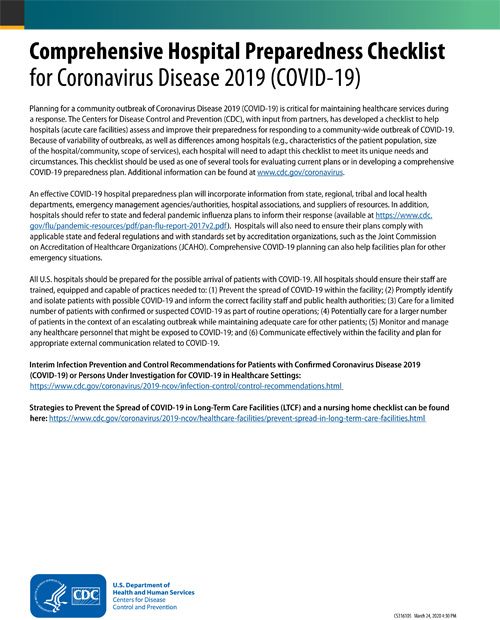
1Preparedness defined as per Comprehensive Hospital Preparedness
100% Checklist for Coronavirus Disease 2019 (COVID-19)
taken
45% • Taken actions across ≥ 8 categories listed in
US CDC recommended “Checklist”
• Taken actions between 4 to 7 categories
26% listed in US CDC recommended “Checklist”
• Taken actions in ≤ 3 categories listed in
29% CDC recommended “Checklist”
HCP Survey
n = 350
Note: 1) Based on survey result from HCPs regarding the perceived preparedness of their hospitals in adopting CDC Comprehensive Hospital Preparedness Checklist
Source: IQVIA HCP survey; IQVIA analysis
Copyright © 2020 IQVIA. All rights reserved. IQVIA | SEA | COVID-19 Impact on Healthcare | Whitepaper 26Technology adoption in healthcare is being accelerated, though
with mixed results
Changing way-of-working: business operations
Telemedicine Delivery E-Detailing
Doctors in Indonesia are Malaysia's Health Ministry is Doctors seeing 50+ social media
diagnosing and treating patients providing free delivery for (WhatsApp, FB, WeChat, etc.)
remotely, using online medicines by post for follow up based contacts per day from
healthcare systems1 patients2 medical representatives3
Daily online free consultation increased to 2X Ensure continued adherence to treatment HCP engagement needs to be managed to
IMPACT
More than 500,000 free coronavirus while practicing social distancing and to help ensure they are supported in treating and
consultations till now ease the burden of patients who required caring for behaviour rather than experiencing
follow-up medication information overload
Source: 1. Reuters; 2.Straits Times; 3.IQVIA Survey
Copyright © 2020 IQVIA. All rights reserved. IQVIA | SEA | COVID-19 Impact on Healthcare | Whitepaper 27IQVIA will continue to monitor the impact of COVID-19 in
Southeast Asia as the situation continues to evolve…
Looking ahead
Health Healthcare Healthcare Business
products services financing strategy
• Will sell-out trend • How will government • How will investors • Will more doctors move
experience spikes in continue to increase change their investment to video consultation
uptake as shown in the hospital capacity as strategies as COVID-19 and e-prescription to
sell-in trend? COVID-19 cases rise pandemic continues? continue to monitor and
treat their patient caseload?
• How will pharma • How will HCPs ensure • How will investors
companies cope with a overall health outcomes respond to safeguard • Will online pharmacies
possible shortage of for non-COVID patients their existing portfolio continue to grow and
API1? do not decline? and ensure sufficient outperform offline
liquidity? pharmacies?
• Will sell-in for acute • How will private and
conditions continue to public healthcare • Will shift to online HCP
increase more than sell- sectors collaborate to engagement impact
in for chronic conditions? ensure adequate successful detailing
healthcare access? compared to F2F
interactions?
We will be providing an update on these topics in our next whitepaper coming soon…
Note: 1) APIs = Active Pharmaceutical Ingredients
Copyright © 2020 IQVIA. All rights reserved. IQVIA | SEA | COVID-19 Impact on Healthcare | Whitepaper 28For additional questions, service, or support please contact us asia@iqvia.com @IQVIA_AsiaPac @IQVIA.AsiaPac IQVIA Asia Pacific
Appendix

           30
IQVIA National Audit Data used and methodology
National Audit Data: The overview of sell-in and sell-out data in local countries. Data is organized using tags such as
‘Product’ (Sales by volume and value) or ‘Channel’ (details of distribution e.g. hospital, clinic, pharmacy)
• Prescription products are classified using ATC classification.
• Consumer health products cover products from Over the Counter drugs, Personal Care, Patient Care and Nutrition
categories
Geographic scope of the data used in this report: Singapore, Malaysia, Thailand, Indonesia, Vietnam, Philippines for
both Rx and CH products
Definition Frequency Data source description Measures used for analysis
Sell-in Monthly Details on sales of products by manufacturers, distributors of prescription drug (Rx) and
Consumer Health (CH).
Value (USD)
Sell-out Monthly Details on sales of products dispensed at retail and hospital pharmacies. This includes both
prescription and non-prescription products.
Healthcare Ad-hoc Qualitative and quantitative market research of 350 healthcare providers, from both public and
providers private sectors -
survey
Copyright © 2020 IQVIA. All rights reserved. IQVIA | SEA | COVID-19 Impact on Healthcare | Whitepaper 31Definitions of sell-in and sell-out data
Sell-in vs. sell-out
Direct Sales
Retail
Pharmacy
Manufacturer Wholesaler Patient
Direct Sales Hospital
Pharmacy
• IQVIA data provides insight into the supply of products across countries
• Data collection methods and results vary by country as audit data collection and production are entirely local processes, subject to local
market conditions and data availability
• Volumes of packs delivered through channels are collated and total raw numbers of units are determined; projection (if required) is then
applied to ensure that the final number represents 100% of the audited channel
• Depending on the audit data collection point and channel measured, the data relates to either ‘sell-in’ or ‘sell-out’
Copyright © 2020 IQVIA. All rights reserved. IQVIA | SEA | COVID-19 Impact on Healthcare | Whitepaper 32SEA countries have planned ahead to overcome the expected
market slowdown with various stimulus packages across sectors
Impact on public health initiatives
Stimulus packages across SEA Region
Stimulus I Stimulus II Stimulus III Key highlights of the stimulus package
$561 Mn $33.2 Bn $5.1 Bn • Increase spending in infrastructure and support food, aviation and tourism sector
(Feb 18) (Mar 26) (Apr 7) • Need for more support for the medical workers such as increasing allowance
$4.6 Bn $58 Bn • Dedicated funds for healthcare to buy new equipment's and recruit more medical staff
(Feb 27) (Mar 27)
• Tax benefits, lower interests rates and financial support to SME’s
$12 Bn $15 Bn • Need for spending on healthcare infrastructure and provide cheaper and more
(Mar 12) (Mar 30)
convenient test kits
• Fiscal and non-fiscal incentives for manufacturing, import/export and supply chain sector
$725 Mn $8 Bn $1.8 Bn
(Mar 13) (Mar 18)
• 3rd stimulus will be prioritized for healthcare industry, to ensure sufficient hospital needs and
(Feb 24)
medical devices
$1.6 Bn • Increased spending on infrastructure and financial benefits including tax breaks/easy loans
(Mar 4) • Need for more investment in more efficient diagnostics kits in Vietnam
$3.9 Bn • Funds for purchase of testing kits, medical devices, protective gears and other healthcare needs
(Mar 30)
Source: Secondary research; IQVIA analysis
Copyright © 2020 IQVIA. All rights reserved. IQVIA | SEA | COVID-19 Impact on Healthcare | Whitepaper 33End of document
You can also read


