CPA Canada Preparatory Courses Student Guide
←
→
Page content transcription
If your browser does not render page correctly, please read the page content below
CPA Canada Preparatory Courses
Student Guide

 Updated April 2021 for Semester 3, 2021

 This guide is specific to the following courses:
  •   Non-core courses
           o   Introductory Financial Accounting
           o   Introductory Management Accounting
           o   Economics
           o   Statistics
           o   Business Law
           o   Information Technology
  •   Non-redesigned core courses
          o Advance Financial Reporting
          o Corporate Finance
          o Intermediate Management Accounting
          o Performance Management
 For all other courses, refer to the Student Guide for redesigned preparatory courses.

              Chartered Professional Accountants of Canada, CPA Canada, CPA
 are trademarks and/or certification marks of the Chartered Professional Accountants of Canada.

          © 2021, Chartered Professional Accountants of Canada. All Rights Reserved.
                                         2021-03-30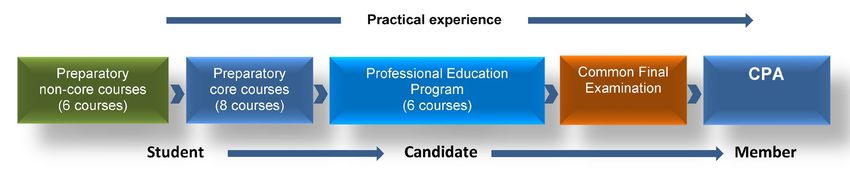
Table of contents
Welcome to the CPA certification program ...................................................................... 5
Your journey: Student Candidate Member .......................................................... 5
CPA preparatory courses overview ................................................................................. 6
Harmonized Education Policies ................................................................................... 6
Description of courses ................................................................................................. 6
Non-core courses ........................................................................................................ 8
Non-core course time and commitment expectations .............................................. 8
Core courses ............................................................................................................... 8
Core course time and commitment expectations ..................................................... 9
Online learning .............................................................................................................. 10
Getting started ........................................................................................................... 10
Academic Honesty Quiz ............................................................................................ 10
Training Contract Quiz ............................................................................................... 10
Transfer credits ............................................................................................................. 10
Internationally educated students ...............................................................................11
Internationally designated professionals .....................................................................11
Conditional acceptance ............................................................................................. 12
Course exemptions.................................................................................................... 12
Your responsibilities ...................................................................................................... 12
Joining a profession ................................................................................................... 12
Taking charge of your studies .................................................................................... 12
When you can use the CPA designation .................................................................... 13
Professional conduct ................................................................................................. 13
Code of ethics............................................................................................................ 13
Academic honesty ..................................................................................................... 14
Plagiarism .............................................................................................................. 14
Penalties ................................................................................................................ 14
Plagiarism examples .............................................................................................. 15
Study/work groups ..................................................................................................... 15
Changes to your information...................................................................................... 17
2 CPA Canada Preparatory Courses Student Guide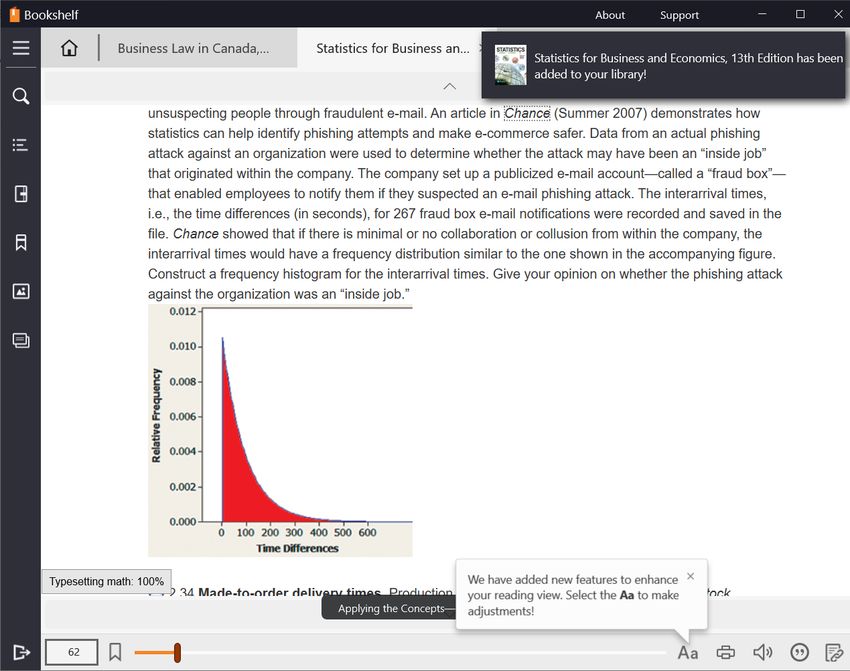
Learning management system and computer requirements ......................................... 17
           Content delivery ......................................................................................................... 17
           Hardware requirements ............................................................................................. 17
           Operating system requirements................................................................................. 17
           Software requirements............................................................................................... 18
           Other requirements .................................................................................................... 18
           Technical support ....................................................................................................... 18
           Setting up email forwarding ....................................................................................... 18
           Time zones ................................................................................................................ 19
        Your support team ......................................................................................................... 19
           Facilitators ................................................................................................................. 19
           Class facilitators ........................................................................................................ 20
           Marking facilitators/markers ....................................................................................... 20
           Provincial/regional staff.............................................................................................. 21
        Weekly activities ............................................................................................................ 22
           Non-core courses ...................................................................................................... 22
           Core courses ............................................................................................................. 23
           Submission deadlines and late or partial submissions .............................................. 23
           Submitting projects and quizzes ................................................................................ 24
              Project submissions ............................................................................................... 24
              Quiz submissions ................................................................................................... 24
           Resources and learning materials ............................................................................. 25
           Classroom and webinar learning ............................................................................... 27
           Classroom and webinar behaviour ............................................................................ 27
        Other resources ............................................................................................................ 28
           Excel Refresher Videos ............................................................................................. 28
           Calculator Practice Problems .................................................................................... 28
           CPA Way case writing videos .................................................................................... 29
           Project feedback ........................................................................................................ 29
           Culture courses ......................................................................................................... 29
              Culturally Inclusive Exams and Facilitation in Accounting ...................................... 29
              Introduction to Indigenous Culture ......................................................................... 30

CPA Canada Preparatory Courses Student Guide                                                                                                   3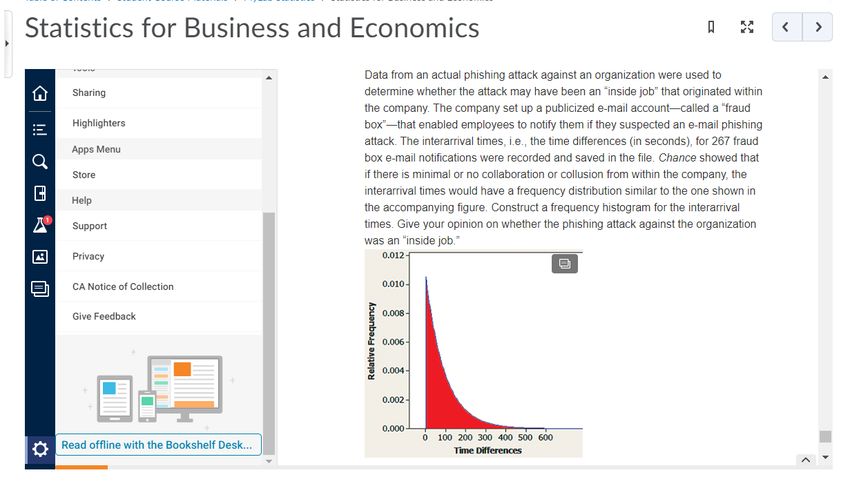
Examinations ................................................................................................................. 30
       Course examinations ................................................................................................. 30
       Eligibility to write the course examination .................................................................. 31
       Overall course grades................................................................................................ 32
       Calculators................................................................................................................. 32
       Examination software ................................................................................................ 32
       Disputes related to projects ....................................................................................... 32
       Fee considerations .................................................................................................... 33
       Exam re-marks .......................................................................................................... 33
    Managing your courses ................................................................................................. 34
       Course enrolment ...................................................................................................... 34
       Examinations ............................................................................................................. 34
       Withdrawing from a course ........................................................................................ 34
       Course fees and student dues ................................................................................... 34
       Important dates.......................................................................................................... 34
       Extensions and academic accommodations .............................................................. 35
          Extensions for online activities ............................................................................... 35
          Academic accommodations ................................................................................... 35
       Skills for success ....................................................................................................... 35
          English proficiency ................................................................................................. 35
          Microsoft Excel and Word ...................................................................................... 35
          Power BI................................................................................................................. 36
          Examination software ............................................................................................. 36
       Statements of Completion ......................................................................................... 37
       Uploading and sharing Statements of Completion with a Mozilla Backpack .............. 38
       Next steps.................................................................................................................. 39
    Appendix A .................................................................................................................... 40
    Appendix B .................................................................................................................... 41
    Appendix C.................................................................................................................... 42

    Note: This document is general in nature and intended to be used for reference only. It
    does not contain specific information about regional policies. If you require more
    detailed information, please contact your regional office (see the contact list in
    Appendix A) or review the regional guide (if available).

4                                                                                          CPA Canada Preparatory Courses Student Guide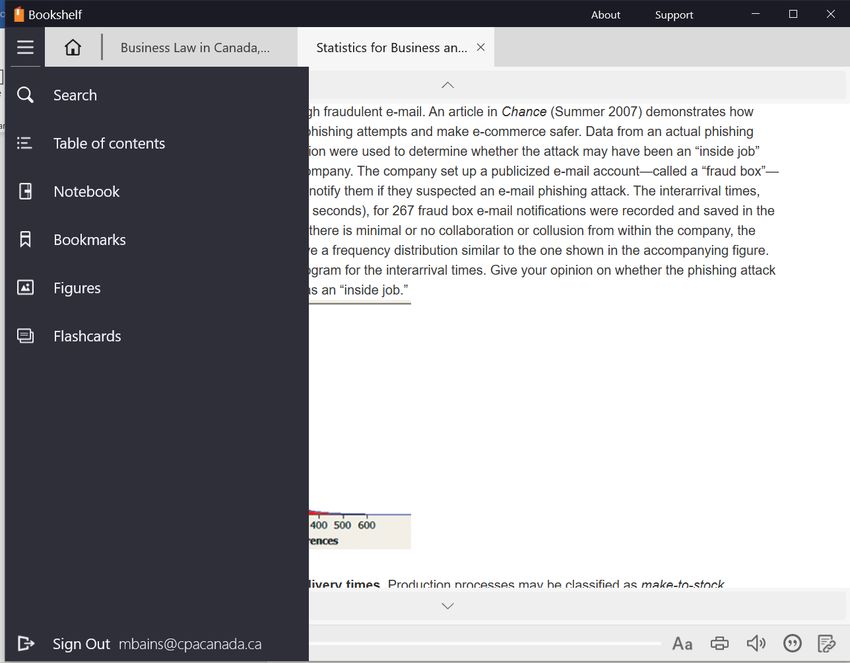
Welcome to the CPA certification program
Your journey: Student Candidate Member
The CPA certification program is built on three pillars of education:
• The CPA preparatory courses and the CPA Professional Education Program
(CPA PEP)
• Practical experience
• The Common Final Examination (CFE)
CPA Canada refers to people in the different stages of certification as follows:
• Student: anyone enrolled in CPA preparatory courses
• Candidate: anyone enrolled in the CPA PEP
• Member: anyone who has met the education, experience, 1 and examination
requirements for CPA certification and been formally accepted into membership
by a provincially regulated CPA body
The diagram below illustrates this journey. Along with their practical experience,
students take six preparatory non-course courses and then eight preparatory core
courses. Then, candidates take six CPA PEP courses before completing the
Common Final Examination. Finally, they become CPA members.
1A minimum of 30 months (24 months in Quebec) of experience is required, as identified in the CPA
Practical Experience Requirements document. CPAs must abide by a code of conduct, are required to
participate in lifelong professional development, and are subject to uniform standards of entry into the
profession.
CPA Canada Preparatory Courses Student Guide 5
CPA preparatory courses overview

    Harmonized Education Policies

    CPA Canada’s Harmonized Education Policies outline the national guidelines regarding
    the implementation of policies for admission, administration, courses, examinations, and
    other policies for CPA preparatory courses.

    The specific regulations and bylaws of the provincial/regional bodies take precedence
    (where applicable) over these general guidelines and requirements. Contact your
    regional office for specific requirements.

    Description of courses

    The CPA preparatory courses focus on developing the prerequisite technical
    competencies outlined in the CPA Competency Map, essential to entering the CPA PEP.
    They are intended for those who have an undergraduate degree in a discipline other
    than accounting and lack some or all of the necessary prerequisites of the CPA PEP.
    The only academic prerequisite for enrolling in the CPA preparatory courses is the
    completion of a minimum of 30 credit hours 2 or equivalent education at a post-
    secondary institution.

    There are 14 CPA preparatory courses:
        •   Four preliminary non-core courses to develop basic competencies in
            management and financial accounting, economics, and statistics, which provide
            a foundation for the core courses
        •   Eight core courses to develop technical competencies in intermediate and
            advanced financial accounting, corporate finance, audit and assurance, personal
            and corporate taxation, management accounting, and performance management
        •   Two non-core courses in the areas of business law and information technology

    The CPA preparatory courses are designed to allow students to complete them in an
    accelerated and condensed manner. The courses are delivered on a part-time basis to
    offer students maximum flexibility, using a blend of online learning and self-study with
    additional options for webinar or classroom lectures. Delivery options vary among
    regions.

    Students only need to complete the courses they require. These courses may not be
    transferable for credit to a post-secondary institution.

    Admittance into the CPA PEP requires 120 credit hours or equivalent post-secondary
    education. Students with an undergraduate or master’s degree but fewer than 120 credit

    2 Credit hours represent the time required to earn credit for the course. Generally, a three-credit course

    requires 33 hours of contact time (such as lectures) or 132 hours of student engagement time (lectures,
    tutorials, practice activities, testing or assessment, or preparation).

6                                                                            CPA Canada Preparatory Courses Student Guide
hours may attain the outstanding credit hours through the completion of the CPA
        preparatory courses. The following credits will be recognized for CPA preparatory
        courses:

                             Preparatory course                      Credits      Type
                Introductory Financial Accounting (IFA)             3          Non-core
                Introductory Management Accounting (IMA)            3          Non-core
                Economics (ECO)                                     3          Non-core
                Statistics (STA)                                    3          Non-core
                Intermediate Financial Reporting 1 (IF1)            3          Core
                Intermediate Financial Reporting 2 (IF2)            3          Core
                Advanced Financial Reporting (AFR)                  3          Core
                Corporate Finance (COF)                             3          Core
                Audit and Assurance (AUA)                           3          Core
                Taxation (TAX)*                                     3          Core
                Intermediate Management Accounting (MAA)            3          Core
                Performance Management (PMA)                        3          Core
                Business Law (BUL)*                                 3          Non-core
                Information Technology (ITE)                        3          Non-core
                Total                                               42
        *Canadian TAX and Canadian BUL

        Students must achieve a minimum grade of 50% in non-core courses and 60% in core
        courses, with an overall average grade of 65% on the core courses, for admittance
        into the CPA PEP.

        The order in which you take your preparatory courses is important, as some courses are
        prerequisites for others. More information is provided below as well as in the
        CPA Preparatory Courses Syllabus, which also contains information about topic
        coverage in each of the courses.

        The CPA preparatory courses are competency based. They emphasize development of
        the key areas of knowledge and the enabling competencies required of accountants and
        senior financial managers, including:
            •     Professional expertise in accounting and related areas
            •     Interpretive, judgmental, and analytical skills
            •     Management of change in the technologies, processes, and structures of
                  organizations
            •     Use of complex information systems in decision-making

CPA Canada Preparatory Courses Student Guide                                                     7
Non-core courses

    Introductory Financial Accounting and Introductory Management Accounting are
    prerequisites for all core courses. All students must have either recognized academic
    credits or equivalent course credits in both introductory accounting courses before
    proceeding with any core course.

    Introductory Management Accounting can be taken concurrently with, but not prior to,
    Introductory Financial Accounting.

    Non-core courses have open enrollment. This means you can register for any non-core
    course at any time and take as long as you need to complete it, as long as you attempt
    that course’s examination within one year of the course start date. The start date of non-
    core courses is defined as the completion date of full registration for that course.

    Students who do not complete the final examination within the one-year time limit will
    fail the course, and an attempt will be charged. Students will be required to retake the
    course to be eligible for another examination attempt.

    There are five exam offerings in each course within a year. A schedule of exam dates is
    available on the CPA Canada website (CPA Preparatory Courses Calendar).

    Non-core courses are self-study courses. Students will receive access to their study
    materials once their registration is complete. A notification email will be sent out once a
    student is granted access to the material.

    The evaluation of non-core courses will be based 100% on the final exam. Students will
    need to achieve 50% to pass the exam and the course.
    Non-core course time and commitment expectations

    The time commitment for the non-core courses is dependent on how quickly you wish to
    complete the course. For example, students electing to complete their course within a
    12-week period can expect to spend five to 10 hours per week on the non-core courses,
    depending on their prior accounting knowledge. However, students who are less familiar
    with accounting concepts or who wish to accelerate their course and take less than 12
    weeks to complete the course could spend upwards of 15-20 hours or more.

    Core courses

    The CPA preparatory core courses do not have open enrollment. Instead, they are
    provided on a semester basis. For details on course start dates and exam dates, please
    see the CPA Canada website (CPA Preparatory Courses Calendar).

8                                                                 CPA Canada Preparatory Courses Student Guide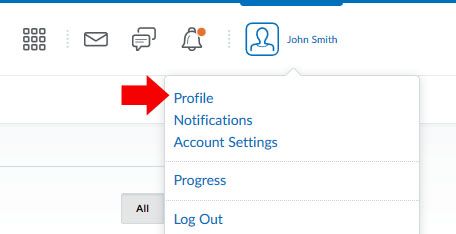
Core courses may be taken out of order, provided the prerequisites for each course
        have been met. Course prerequisites are as follows:
            Course                                     Prerequisites
          IF1                 IFA and IMA
          IF2                 IFA, IMA, and IF1
          AFR                 IFA, IMA, IF1, and IF2
          COF                 IFA and IMA
          AUA                 IFA, IMA, IF1, and IF2
          TAX                 IFA, IMA, IF1, and IF2
          MAA                 IFA, IMA, and COF (IF1 and IF2 are recommended but not required)
          PMA                 IFA, IMA, and MAA
        The preparatory core courses are in the process of being redesigned and will be
        launching over 2021 and 2022. The implementation timeline for the redesigned core
        courses is as follows:
            •   February 2021: Intermediate Financial Reporting I, Intermediate Financial
                Reporting II, and Taxation
            •   May 2021: Audit and Assurance
            •   February 2022: Advanced Financial Reporting and Intermediate Management
                Accounting
            •   May 2022: Corporate Finance, Performance Management, and Information
                Technology (this will become a core course at this time)
        If you are taking a redesigned core course, please refer to the Student Guide for the
        redesigned core courses.

        The non-redesigned core courses will continue to have the following grade breakdown:
            •   Quizzes: 12%
            •   Projects: 18%
            •   Course examination: 70%
        Core course time and commitment expectations

        The non-redesigned CPA preparatory core courses are mostly self-study and
        condensed to be completed within an accelerated time frame of six weeks (whereas a
        traditional post-secondary course is usually offered over 13 to 15 weeks). For that
        reason, students must have taken Introductory Financial Accounting and Introductory
        Management Accounting or their equivalents through the CPA preparatory courses or
        another recognized institution so that they have the accounting basics before attempting
        any of the accelerated six-week courses.

        Students must be prepared to spend the necessary time required for these courses. On
        average, 12 to 15 hours a week of study is required to be successful in these
        accelerated courses. However, students who are less familiar with accounting concepts
        could spend upward of 20 hours or more. Students who clear their schedules before

CPA Canada Preparatory Courses Student Guide                                                       9
starting a CPA preparatory core course and are familiar with the information contained
in this student guide are more successful in their studies.
Online learning
Getting started
Before you can access the online materials, you must complete the Academic Honesty
and Training Contract quizzes.
Academic Honesty Quiz
CPA Canada expects students to adhere to academic honesty standards in both the
preparatory courses and the CPA PEP. The Academic Honesty Quiz is a tutorial that
presents a series of scenarios and several actions that you could take in response to
each scenario. You will be required to read the scenarios and identify the behaviours
relating to academic honesty that CPA Canada considers acceptable.
Plagiarism — the unauthorized and/or uncredited use of others’ intellectual property —
is considered a serious offence and may result in penalties. There is likewise a no-
tolerance policy toward cheating of any sort. Students are expected to conduct their
studies with professionalism and integrity. Where there is any doubt, students should
contact their region/province for guidance (Appendix A). There is more detailed
information about plagiarism later in this guide.
Training Contract Quiz
The Training Contract Quiz represents a contract of agreement between you and CPA
Canada. It contains a series of questions about your responsibility within the program
along with expectations that you are expected to understand and agree to relating to
CPA proprietary materials, plagiarism, software responsibilities, CPA property, and
penalties for failing to comply. Many of these items are discussed in further detail in this
document. All students must complete this contract.
Transfer credits
Each regional CPA office publishes a Transfer Credit Guide that is used to determine
which courses taken at a post-secondary institution are equivalent in content to the CPA
preparatory courses. To gain an exemption from a CPA preparatory course, you must
provide an official transcript from a post-secondary institution indicating completion of
the course(s) that adequately cover the content as described in the CPA Competency
Map. Transcript assessments are performed by each provincial body and are only valid
for one year from the date of review. Contact your regional office for more information
about transfer credits (Appendix A).
10 CPA Canada Preparatory Courses Student GuideAll core CPA preparatory courses or equivalents at a post-secondary institution
must have been completed within 10 years of when the student applies for CPA
PEP. There are no currency requirements for the non-core courses.
Internationally educated students
Credit hours or equivalent education obtained from post-secondary institutions that are
recognized in the International Handbook of Universities (published by the International
Association of Universities) or by a similar recognition service will be accepted.
Canadian study permits are required for all temporary residents studying in Canada.
Course exemptions can be granted for internationally educated students for Introductory
Financial Accounting, Introductory Management Accounting, Economics, and Statistics
if both of the following criteria are met:
• A specific equivalency standard cannot be determined, but it is deemed that the
student should have sufficient coverage in the foundation topic area as related to
CPA Canada’s requirements.
• Transcripts are submitted that indicate completion of applicable courses at a
minimum international grade conversion of 50% or higher for non-core courses
and 60% or higher for core courses.
A core course exemption is granted for completion of the equivalent subject through an
accredited education institution at a standard that can be verified according to coverage
of substantially all the topics at the required CPA knowledge level. Detailed
documentation that outlines specific course coverage, applicable texts, and evaluation
criteria must be submitted. Students should refer to the “Entry” column of the CPA
Competency Map Knowledge Supplement for detailed requirements at the prerequisite
level.
Please note that Canadian content is required for courses on business law and taxation.
Internationally designated professionals
In situations where a student possesses an international accounting designation
associated with the International Federation of Accountants (IFAC), potential eligibility
and placement for the CPA PEP require the following:
• Completion of equivalent prerequisite Canadian taxation and Canadian business
law courses
• Review and consideration of an undergraduate or graduate university degree and
the designation and level of related practical experience
Additional documentation must be submitted, including details and verification of
practical experience as related to the competencies, as well as review processes at
committee levels. Confirmation of acceptance can take considerable time.
CPA Canada Preparatory Courses Student Guide 11Conditional acceptance
Conditional admission will only be granted to applicants who have satisfied the
requirements of a minimum of one year (30 credits) of post-secondary study in any
discipline from a diploma or degree program at a recognized post-secondary institution
but have not been formally granted the credit hours. Students admitted conditionally will
not receive course results or be able to enrol in subsequent courses until they provide
proof that they have completed one year (30 credits) of post-secondary studies.
For conditional acceptance based on credit hours, students must provide an official
transcript from their post-secondary institution indicating that they have completed a
minimum of 30 credit hours (one year).
Conditional acceptance may be granted for credit hours only. Students who are enrolled
in a CPA preparatory course may enrol in a subsequent course conditionally pending
the release of the prerequisite course grades.
Any conditional entry requirements that are not met will result in a course withdrawal
with no refund.
Course exemptions
An exemption will be granted for a CPA preparatory core course if the student has taken
an equivalent course and passed with a mark of at least 60%. An exemption will be
granted for a CPA preparatory non-core course if the student has taken an equivalent
course and passed with a mark of at least 50%. If the student has taken two or more
prerequisite courses for exemption from a preparatory course, the student must have
received the minimum grade requirement for each individual course taken. Practical
experience will not be considered as a basis for a CPA preparatory course exemption.
Your responsibilities
Joining a profession
The CPA certification program is designed to prepare students to join a respected
profession. In the certification program, students are expected to uphold the same
values as the profession’s members. Refer to your regional office’s code of ethics for
more detail, normally found on its website.
Taking charge of your studies
The CPA preparatory courses are competency based and accelerated in timing, which
means students might notice differences between these courses and courses at a post-
secondary institution.
Not all courses have a lecturer or anyone telling students what they need to do, what
they need to read, or where to find additional information. Resources such as student
12 CPA Canada Preparatory Courses Student Guidenotes, practice problems, and videos are available. Students are encouraged to use
these resources to ensure their individual success. Students are expected to have
appropriate study skills, a sense of responsibility, self-motivation, and discipline, all of
which are necessary for an independent course of study. Additionally, students will find
the non-redesigned core courses are more fast paced due to the condensed time frame
of six weeks as opposed to a typical 13- to 15-week course at a post-secondary
institution. As a result, on average, students can expect to spend 12 to 15 hours
studying each week (and up to 20 hours or more if unfamiliar with accounting concepts)
to keep up with the weekly delivery and required components of each course to be
successful.
When you can use the CPA designation
Students may not, under any circumstances, use the designation “CPA” or any other
title suggesting that they are Chartered Professional Accountants. Please refer to the
regional guidelines on use of titles for students. The term “CPA Student” is also not an
appropriate title for students enrolled in the CPA preparatory courses.
Professional conduct
The CPA profession takes academic integrity and misconduct seriously. The way
members, candidates, and students conduct their activities reflects on the CPA
designation and affects the level of respect accorded to the profession.
Academic misconduct includes plagiarism, the enabling of plagiarism, theft of another or
former student or candidate’s work, and unethical behaviour such as lying or cheating.
Before starting the CPA preparatory courses, all students must complete the Academic
Honesty and Training Contract quizzes, described in the section of this document on
online learning.
Read the following two sections on the code of ethics and academic honesty to ensure
you fully understand what is expected in terms of professional conduct. You are also
encouraged to follow the links on your regional office’s website for more information on
professional conduct and academic integrity.
Code of ethics
Those who do not abide by the code of ethics may be subject to the disciplinary process
and have their registration deleted.
All students, candidates, and members are required to abide by their provincial Act,
bylaws, and codes of ethics, which you can find on your regional office’s website.
CPA Canada Preparatory Courses Student Guide 13Academic honesty
During your studies in the CPA preparatory courses and the CPA PEP, you are expected
to maintain the highest standards of academic honesty. While each course has some of
its own unique requirements and standards, academic honesty applies equally to all
students. Plagiarism — the unauthorized and/or uncredited use of others’ intellectual
property — is a serious offence and may result in penalties including suspension or
dismissal from the courses or program. There is likewise a no-tolerance policy on
cheating of any sort. You are expected to conduct your studies with professionalism and
integrity, as outlined in the following section on study/work groups. If you have any
questions about proper conduct, contact your regional office for guidance.
Plagiarism
CPA Canada represents highly qualified professionals who demonstrate an ongoing
commitment to providing the highest standards of accounting, ethics, and best business
practices, and thus takes ethics violations very seriously. As stewards of the public trust,
students, candidates, and members are expected to maintain a high level of integrity
and ethical standards.
Plagiarism in any form is considered a serious offence. All cases of suspected
plagiarism will be investigated, are taken very seriously, and will have significant
consequences that will impact the education journey and possibly the career of the
individuals involved. Students and candidates are reminded that they are expected to
always maintain the highest standards of academic honesty, including in the completion
of their course work, writing exams and reporting practical experience. Ultimately, it is
your responsibility to ensure that you do not commit an act of plagiarism.
Penalties
CPA Canada does not tolerate plagiarism in any form. Students who are found guilty of
plagiarism are subject to penalties/consequences that may include but are not limited to
the following:
• The finding being noted in the student/candidate database
• A failing mark in the course
• A committee hearing to determine good character
• Enrolment in an ethics course
• Suspension or expulsion
The regional office responsible for the investigative process also reserves the right to
levy any additional penalties or contact other regulatory bodies as required. Any
questions regarding the plagiarism policy should be directed to your regional office (see
Appendix A for contact information).
14 CPA Canada Preparatory Courses Student GuidePlagiarism examples
Plagiarism is a form of copying. It occurs any time someone copies material without
acknowledging the source. More specifically, plagiarism occurs whenever a student
does any of the following:
• presents work that has been authored in part or in whole by another person
• presents the words, images, or data of another person as the student’s own,
without reference to the original author or source
• presents work that contains unreasonably long quotes, even when properly cited
• presents work that in any way compromises the integrity of the evaluation
process
• presents work that is substantially similar to another person’s work
• presents work that contains any portion of the CPA-provided solutions or
feedback guides in the examinations or assignments (cannot be submitted as a
part of an assignment or revision)
• shares CPA preparatory course files with others
• purchases work that has been authored in part or in whole by another person
and presents that work as the student’s own
CPA Canada defines plagiarism to include the use of materials posted to study resource
websites or platforms such as Course Hero, Chegg, OneClass, Quizlet, WhatsApp
groups, Kijiji, and so forth. Any instance of use of these types of materials will be
flagged by plagiarism detection software and subject to investigation. The
provision of materials (posting of content) to these websites or platforms before, during,
or after your enrolment in the program/module is also considered plagiarism and will be
investigated accordingly.
If you are copying from a valid source (such as the CPA Canada Handbook), be
sure to properly cite it.
CPA Canada utilizes plagiarism detection software. Students found guilty of plagiarizing
or cheating on any projects or quizzes risk receiving a grade of zero in the course,
having their student registration suspended, and being deregistered as a student.
Study/work groups
Studying or working in groups is encouraged and recognized by CPA Canada as
beneficial to learning. It encourages students to interact with their peers in the courses
and allows them to build contacts within the profession. Working with others can offer
many benefits to both students in classroom settings and students taking courses
through distance learning.
It can be difficult for friends and family to appreciate the dedication, time commitment,
and hard work required to be successful in a fast-paced education program, but your
CPA Canada Preparatory Courses Student Guide 15peers in the courses can definitely understand. Having contacts to talk to about
progress and difficult concepts and to share ideas about projects and quizzes can be
invaluable for keeping a positive frame of mind and achieving success in the program.
You are encouraged to use the course discussion board as a platform for collaboration
with your peers prior to composing your own responses. In addition, you are
encouraged to use the discussion board to connect with your peers, ask questions
about course materials, and respond to your peers’ questions and comments.
Collaboration can include the discussion of technical topics, research, and the
discussion of general approaches to assignments.
Collaboration does not involve sharing files or templates with peers. This would be
considered plagiarism or enabling plagiarism. Unless explicitly stated otherwise,
students are expected to compose their responses to course projects independently.
Answers to quiz, assignment, and project questions must be produced individually,
unless expressly noted.
It is important to understand the difference between collaboration and cheating,
especially when participating in a group. While helping each other understand concepts
or questions is acceptable, students should never share their answers with one another.
Doing so enables plagiarism by allowing others to earn marks without completing the
work themselves, and impedes their learning process because they do not have the
opportunity to apply the concepts and ideas they are learning. Therefore, students are
expected to exercise caution when collaborating with one another.
All work submitted for any course assignment must be original work done by that
student during that session for that course. Submitting work copied from another source
is a violation of the Education Policy. Refer to your regional office’s website (see
Appendix A) for a copy of its Education Policy.
Course discussion boards can be used initially to share contact information or let others
in your cohort know of your interest in joining a study group. Please use the
appropriately designated section of the discussion board for this and do not post in the
content sections of the board. Courteous and professional conduct is expected in study
groups. Students often find that connections made while taking the CPA preparatory
courses are maintained through the CPA PEP and into their professional careers.
If you find that a study group is not leading to success or positive engagement with the
course materials, you should leave that study group and either attempt to find a new
one or work individually. Facilitators are always available to assist, so you should never
feel that you have no one to run ideas by or ask questions of. It is best to leave a
negative or non-functioning group.
Although studying in groups is acceptable, you are encouraged to use the course
discussion boards for communication to ensure that quiz and project answers are not
shared.
16 CPA Canada Preparatory Courses Student GuideChanges to your information
Students are responsible for notifying their regional office about changes in
circumstances or information, such as the following:
• Address change
• Employer change
• Name change
Learning management system and computer requirements
Content delivery
The CPA preparatory course materials are delivered via Brightspace, an online learning
management system developed by software company D2L.
All students will be registered as Brightspace (D2L) users before the start of each
course and will receive an email with their login name and password. Within
Brightspace (D2L), students will find the weekly student notes, practice problems, class
materials (slides and problems), resource materials, and other documents. Students will
complete projects in each core course that will be reviewed by a facilitator. Brightspace
(D2L) also contains a discussion board where students will communicate with each
other to further their understanding of the course materials. Students are encouraged to
check Brightspace (D2L) frequently to make use of the online resources. Course
updates and announcements will be posted on Brightspace (D2L).
Any student who withdraws from a CPA preparatory course will have their access to
Brightspace (D2L) revoked.
The specific requirements to access Brightspace (D2L) are listed below.
Hardware requirements
• PC-based computers only — no Apple, PowerPC, or tablet computers will be
allowed during examinations, even if they run Windows (with the exception of any
future assessments done through Brightspace (D2L) as a result of COVID-19, in
which Apple, PowerPC, and tablet computers are permitted)
• 1 GB minimum of RAM
• 100 MB of free hard-drive space (required to run applications)
• An available USB port
Operating system requirements
• Microsoft Windows 7, 8, or 10
CPA Canada Preparatory Courses Student Guide 17Software requirements
• Microsoft PowerPoint 2010 or newer version
• Microsoft Word 2010 or newer version
• Microsoft Excel 2010 or newer version
• Microsoft Power BI (a Windows operating system is required; for more
information about Power BI, see Appendix B)
• JavaScript enabled
• Cookies enabled
• Acrobat Reader
Other requirements
• Sound card with speakers or headphones
• Internet access (high-speed Internet is strongly recommended)
• Firefox (latest version), Internet Explorer (version 11 or higher), or Chrome (latest
version)
Note: If you are having issues in Brightspace (D2L), please use Firefox and/or Chrome,
as they are the most reliable browsers in which to use Brightspace (D2L).
Technical support
If you require technical assistance, please visit the CPA Student Support Web Portal to
create a ticket, or search the Knowledge Base for any articles related to Brightspace
(D2L).
Setting up email forwarding
Students can forward Brightspace (D2L) messages to an external email account in
order to be notified immediately of any important alerts. To set up this feature, follow the
steps below:
1. Once logged in to Brightspace (D2L), click the down arrow beside your name and
select “Account Settings.”
2. Under the “Account Settings” tab and “General Settings” header, update your system
email to the external email you wish to use.
3. Click the “Email” tab. Under the “Forwarding Options” header, click the checkbox
that reads “Forward incoming messages to an alternate email account.” Ensure the
external email you want to forward messages to is shown under “Email Address.”
4. Select a forwarding option, then click “Save and Close.”
18 CPA Canada Preparatory Courses Student GuideBrightspace (D2L) cannot receive emails from external email accounts. You will be
forwarded copies of Brightspace (D2L) messages and cannot respond by direct reply. In
order to respond, you must log in to Brightspace (D2L) and use the email function within
the system.
Time zones
It is important to set your time zone in Brightspace (D2L) by following the steps below:
1. Once logged in to Brightspace (D2L), click the down arrow beside your name and
select “Account Settings.”
2. Under the “Account Settings” tab, select “Time Zone” and set the time zone for the
area you are in.
This will allow you to see when scheduled activities and deadlines occur in your local
time. The default time zone is Eastern Time, so unless you change this setting, your
quiz and project submission deadlines will reflect Eastern Time and may be incorrect.
Your support team
Several individuals are available to provide support in the CPA preparatory courses.
Facilitators
In each non-redesigned core course, students will be assigned an online facilitator.
At the beginning of the semester, facilitators will welcome students to the course and
provide useful tips for success. They will support students via the discussion board and
email throughout the course up to the day of the course examination.
For issues of a personal nature or those related to the application of policies, students
should email their regional office.
To ensure privacy and security, facilitators will not provide non-Brightspace (D2L) email
addresses or telephone numbers.
Facilitators are not able to provide assistance with quizzes or projects and should not be
approached for help with either of these deliverables. However, if students have a
concern that there is an error or unclear aspect in a quiz or project, they should advise
their facilitator of the issue. The facilitator will look into the issue and will post any
updates or clarifying information to Brightspace (D2L).
CPA Canada is dedicated to a quality learning experience for all students. As such,
students are encouraged to email their facilitator if they are unsatisfied with the quality
of their learning experience. If students are unable to resolve their differences with the
facilitator, they should email their regional office (refer to Appendix A for contact
information).
CPA Canada Preparatory Courses Student Guide 19Class facilitators
Some regions may continue to offer in-person lectures for non-redesigned core courses.
Where available, class facilitators lead the lectures for the core courses. They lead the
lectures in person, through live webinars, or via recorded lectures provided in
Brightspace (D2L). These facilitators provide interpretation and teaching comments on
the slides and in-class problems provided for each week of core course content.
Marking facilitators/markers
The marking facilitator or marker is the person who will review students’ projects, similar
to how a manager or supervisor reviews work. When providing feedback, they will
complete a marking key, identifying whether students have met the required objectives
of the project. Marking facilitators or markers assess how students perform on projects.
In some cases, the facilitator and marking facilitator or marker will be the same
individual.
20 CPA Canada Preparatory Courses Student GuideSupport team What they will expect from
member What to expect from them students
Facilitators • Help students locate • Post questions about
information and technical topics on the
understand new discussion board
concepts
• Respond to peers’
• Mark project questions and
submissions (in some comments on the
cases, a marking discussion board
facilitator or marker
• Submit projects and
may be used)
quizzes on time
• Respond to questions
• Review the discussion
via email within
board daily, and respond
24 hours
to emails in a timely
• Monitor and facilitate manner
discussions on the
discussion board
Class • Provide instruction on • Be active learners during
facilitators course content and the lectures
work through in-class
problems
Marking • Assess projects against • Submit a comprehensive
facilitators the marking key response for the projects
• Follow the guidelines in
the Project Formatting
document
Provincial/regional staff
The provincial/regional bodies also have employees dedicated to supporting students
throughout the CPA certification program. Please refer to Appendix A for contact
information.
CPA Canada Preparatory Courses Student Guide 21Weekly activities
Non-core courses
For non-core courses, the time commitment per week is dependent on how quickly the
student wishes to complete the course. For example, students electing to complete their
course over a 12-week period can expect to spend five to 10 hours per week on the
course depending on their prior accounting knowledge. However, students who are less
familiar with accounting concepts or who wish to accelerate their course and take less
than 12 weeks to complete the course could spend upwards of 15-20 hours or more per
week. The online learning materials include the following:
• Student notes
• Practice problems
• Quizzes
• Pearson MyLab or Revel access (a collection of online homework, tutorial, and
assessment products)
Student notes are accessible in Brightspace (D2L); however, depending on the PC, the
notes may be easier to view in the Bookshelf application, which is designed to make
learning easy, intuitive, and fun. See Appendix C for instructions on accessing
Bookshelf.
Note: The Pearson eTextbook for Business Law is now on the Revel platform instead of
a MyLab. Instructions on how to navigate on that platform are available on the Revel
site.
Quizzes are marked automatically in Brightspace (D2L); marks are made available after
the quiz response is submitted. It is recommended that students take screenshots of the
questions before submission in the event they are not able to see the quiz after it has
been submitted.
To perform well in the non-core courses, students must spend time solving problems
and checking their answers carefully to test their understanding. To maximize learning,
students should attempt to answer the practice questions before looking at the
solutions.
Quizzes for non-core courses can be submitted after the student has studied the
relevant material. It is recommended that students complete the quizzes regularly in
order to better assess their ongoing learning and to allow time to review feedback on
their submissions.
Non-core quizzes are not mandatory and are not counted for marks, but it is strongly
recommended that students complete all their quizzes.
22 CPA Canada Preparatory Courses Student GuideCore courses
For non-redesigned core courses, students should expect to spend between 12 and 15
hours (and up to 20 hours or more, depending on their accounting knowledge) each
week to complete the online learning materials. The online learning materials for the
non-redesigned core courses include the following:
• Lecture slides
• In-class problems
• Student notes
• Practice problems
• Quizzes
• Projects (which cover multiple weeks of content)
Quizzes are marked automatically, and marks are made available according to the
course schedule in Brightspace (D2L). Facilitators will review projects in detail within
two weeks of the due dates and provide feedback via a marking key uploaded to the
Brightspace (D2L) dropbox.
Submission deadlines and late or partial submissions
All deadlines are quoted in Pacific Time. Students will need to translate the deadlines
into their local time zone. (See the instructions for setting the local time zone in
Brightspace (D2L) in the section of this document on time zones.)
Quizzes are due each Friday at 11:55 p.m. Pacific Time for the core courses.
Quizzes are not mandatory, but it is strongly recommended that students complete all
their quizzes because they count for 12% of their final grade. Students will receive a
zero for each quiz they do not complete. Students who choose not to complete the
quizzes and then fail the course will not have another opportunity to complete the
quizzes. Practice MCQs are available in Week 6 of the course. These do not count for
marks, and the results are not tracked in the Grades section of Brightspace (D2L).
Projects are due on specified Saturdays (detailed in each course) at 11:55 p.m. Pacific
Time. Students must follow the guidelines in the Project Formatting document provided
in the Project section on Brightspace (D2L). Project solutions are released to students
eight days after submission. These solutions are a suggested or model version for
students to use.
Projects are mandatory. Students must complete projects on time or they may be
disqualified from writing the course examination. Facilitators will not provide feedback
on or review late projects. In extenuating circumstances (such as a death in the family
or a serious medical condition), students may request an extension. A heavy workload
or a lack of Internet connection are not usually considered extenuating circumstances.
To request an extension, please contact your regional office (facilitators do not have the
CPA Canada Preparatory Courses Student Guide 23authority to grant extensions). Refer to Appendix A for regional contact information. All
extension requests must be supported by third-party documentation.
Given the time required to complete the projects, it is recommended that you not leave
them until the week of the due date. The concepts being tested are based on the weekly
content, so it is better to work on the project regularly each week, completing each
question as it is covered in the course material. This will help you retain more
knowledge and develop better application skills. Students who complete the project the
week it is due are often rushed and therefore do not make the best use of this learning
opportunity and tend to not be as successful. Students who do not put forth a valid
attempt to complete the project will not have their projects accepted. This may result in
withdrawal from the course without a refund.
Submitting projects and quizzes
If students experience technical difficulties while submitting a project, they should visit
the CPA Student Support Web Portal (see contact details on the Brightspace (D2L)
course home page) or contact their regional office (see Appendix A for contact
information).
Project submissions
• Word and Excel files must be named as follows: LastnameFirstname-Project#
(for example, “SmithJane-Project1.docx” or “SmithJane-Project1.xls”).
• All project documents must be uploaded to the Brightspace (D2L) dropbox (refer
to the Student Dropbox Guide for instructions).
• Within 10 days of the project deadline, the marking facilitator or marker will
provide the marking key for projects using the dropbox and complete the Grades
section for the assignment.
• Note: Multiple submissions to the dropbox are allowed. For example, students
can submit both Word and Excel files, and/or students can resubmit corrected
files up to the due date and time. Only the most recent submission will be
retained for marking purposes.
Quiz submissions
• No dropbox submission is required. Complete each week’s quiz in Brightspace
(D2L) by the deadline.
• Facilitators do not provide feedback on quiz questions. Quiz debriefs are
generally made available one day after each quiz deadline. See the calendar in
Brightspace (D2L).
• Practice MCQs are available in Week 6. You will receive the solution and
feedback automatically after submitting, providing you have completed the end-
of-course survey.
24 CPA Canada Preparatory Courses Student GuideYou can also read


