CPDP2019 DATA PROTECTION AND DEMOCRACY - COMPUTERS, PRIVACY & DATA PROTECTION - Webhosting made ...
←
→
Page content transcription
If your browser does not render page correctly, please read the page content below
12th INTERNATIONAL CONFERENCE
30 JAN - 1 FEB 2019  BRUSSELS, BELGIUM
COMPUTERS, PRIVACY
& DATA PROTECTION
CPDP2019
DATA PROTECTION
AND DEMOCRACY

W W W . C PDPCONF ER ENCES.OR G

Organisation of CPDP2021 SCIENTIFIC COMMITTEE
DIRECTORS Rocco Bellanova, University of Amsterdam (NL)
Franziska Boehm, Karlsruhe Institute of Technology, FIZ Karlsruhe – Leibniz Institute for Information Infrastructure (DE)
Ian Brown, Research ICT Africa (SA)
Paul De Hert (Vrije Universiteit Brussel LSTS, Tilburg University TILT), Director and Founder
Paul De Hert, Vrije Universiteit Brussel LSTS (BE), Tilburg University TILT (NL)
Rosamunde Van Brakel (Vrije Universiteit Brussel LSTS), Managing director
Willem Debeuckelaere, Ghent University (BE)
Dara Hallinan (FIZ Karlsruhe – Leibniz Institute for Information Infrastructure), Programme director
Claudia Diaz, Katholieke Universiteit Leuven (BE)
Michael Friedewald, Fraunhofer Institut Für System- Und Innovationsforschung ISI (DE)
DAILY COORDINATORS Serge Gutwirth, Vrije Universiteit Brussel LSTS (BE)
Marit Hansen, Independent Centre For Privacy Protection ULD (DE)
Mireille Hildebrandt, Radboud Universiteit Nijmegen (NL) & Vrije Universiteit Brussel LSTS (BE)
Thierry Vandenbussche (Privacy Salon)
Dennis Hirsch, Ohio State University Moritz College of Law (US)
Diana Dimitrova (FIZ Karlsruhe – Leibniz Institute for Information Infrastructure)
Gus Hosein, Privacy International (UK)
Kristina Irion, Institute for Information Law (IViR), University of Amsterdam (NL)
CORE PROGRAMMING COMMITTEE Els Kindt, Katholieke Universiteit Leuven Center for IT & IP Law (BE)
Eleni Kosta, Tilburg Institute for Law, Technology and Society TILT (NL)
Daniel Le Métayer, Institut National de Recherche en Informatique et en Automatique INRIA (FR)
Paul De Hert (Vrije Universiteit Brussel LSTS, Tilburg University TILT)
Ronald Leenes, Tilburg Institute for Law, Technology and Society TILT (NL)
Dara Hallinan (FIZ Karlsruhe – Leibniz Institute for Information Infrastructure)
José-Luis Piñar, Universidad CEU-San Pablo (ES)
Rosamunde Van Brakel (Vrije Universiteit Brussel LSTS)
Charles Raab, University of Edinburgh (UK)
Imge Ozcan (Vrije Universiteit Brussel LSTS)
Marc Rotenberg,Center for AI and Digital Policy (US)
Diana Dimitrova (FIZ Karlsruhe – Leibniz Institute for Information Infrastructure)
Ivan Szekely, Central European University (HU)
Magda Brewczyńska (Tilburg Institute for Law, Technology, and Society TILT)
Frederik Zuiderveen Borgesius, Radboud University & IViR Institute for Information Law (NL)
EXTENDED PROGRAMMING COMMITTEE
Luca Belli (Fundação Getulio Vargas Law School)
Dennis Hirsch (Ohio State University Moritz College of Law)
Malavika Jayaram (Digital Asia Hub)
LOGISTICS AND REGISTRATION
Ronald Leenes (Tilburg University TILT)
Omer Tene (International Association of Privacy Professionals)
PANEL COORDINATORS MEDICONGRESS
Medicongress Services CREATE
Alessandra Calvi (Vrije Universiteit Brussel LSTS) Noorwegenstraat 49 • 9940 Evergem Noorwegenstraat 49 • 9940 Evergem
Katerina Demetzou (OO&R Business and Law Research Centre) Belgium • Phone: +32 (09) 218 85 85 Belgium • T +32 (0) 9 330 22 90
Olga Gkotsopoulou (Vrije Universiteit Brussel LSTS) www.medicongress.com www.create.eu • info@create.eu
Lina Jasmontaite (Vrije Universiteit Brussel LSTS)
Ana Fernandez (Vrije Universiteit Brussel LSTS)
Sajedeh Salehi (Vrije Universiteit Brussel LSTS)
Andrés Chomczyk Penedo (Vrije Universiteit Brussel LSTS)
LOGISTICS AND ADMINISTRATIVE SUPPORT
Bram Visser (Vrije Universiteit Brussel LSTS)
Simone Casiraghi (Vrije Universiteit Brussel LSTS)
Ashwinee Kumar (Vrije Universiteit Brussel LSTS)
Goergios Bouchagiar (University of Luxembourg)
Nikolaos Ioannidis (Vrije Universiteit Brussel LSTS) www.privacysalon.org
Guillermo Lazcoz (Universidad del País Vasco (UPV/EHU)
Design © Nick Van Hee – www.nickvanhee.be
COMPUTERS, PRIVACY & DATA PROTECTION 2 ENFORCING RIGHTS IN A CHANGING WORLD COMPUTERS, PRIVACY & DATA PROTECTION 3 ENFORCING RIGHTS IN A CHANGING WORLD
5th INTERNATIONAL CONFERENCE 4 INTERNATIONAL
5th INTERNATIONAL CONFERENCE
th
CONFERENCE 4th INTERNATIONAL CONFERENCE
3RD INTERNATIONAL CONFERENCE
29 & 30 JANUARY 2010 l BRUSSELS BELGIUM 3RD INTERNATIONAL CONFERENCE
INFO & REGISTRATION
INTERNATIONAL CONFERENCE
25 26 27 JANUARY 2012 l BRUSSELS BELGIUM 25 26 27 JANUARY 2011 l BRUSSELS BELGIUM 25 26 27 JANUARY 2011 l BRUSSELS BELGIUM PRIVACY & 29 & 30 JANUARY 2010 l BRUSSELS BELGIUM
COMPUTERS, PRIVACY
COMPUTERS, PRIVACY & 25 26 27 JANUARY 2012 l BRUSSELS BELGIUM COMPUTERS, WWW.CPDPCONFERENCES.ORG
CO M PU T E R S , PR I VAC Y & DATA PR OT EC T I O N
COMPUTERS, PRIVACY &
DATA PROTECTION COMPUTERS, PRIVACY &
DATA PROTECTION COMPUTERS, PRIVACY
European &
Data Protection:
DATA PROTECTION
An Element of
T +32 2 629 20 93 • info@cpdpconferences.org
DATA PROTECTION
European Data Protection:
In Good Health?
DATA PROTECTION & DATA PROTECTION
Choice An Element of
DATES
COMING OF AGE European Data Protection:
In Good
January 16th- 17th 2009
16 & 17 JANUARY 2009 l DEBUREN BRUSSELS BELGIUM
Choice
WWW.CPDPCONFERENCES.ORG
European Data Protection: WWW.CPDPCONFERENCES.ORG LANGUAGE
English W W W . C P D P C O N F E R E N C E S . O R G
COMING OF AGE
WWW.CPDPCONFERENCES.ORG
AUDIENCE
INFO
Health?
INFO
Data protection authorities and officials, Art. 29 Working group members, academics,
T +32 2 629 20 93 • info@cpdpconferences.org
T +32 2 629 20 93 • info@cpdpconferences.org civil liberties organisations, magistrates, barristers, legal consultants, lobbyists,….
DATES
W W W . C P D P C O N F E R E N C E DATES
S.ORG Info
T 0032 2 629 20 93 • info@cpdpconferences.org W W W . C P D P C O N F E R E N C E S . O FEE
RG
CPDP 2012: 25-26-27 January 2012
210 euros. Conference of 2 days including handouts, coffee breaks and lunches.
CPDP 2011 25 26 27 January 2011
Data Protection in
LANGUAGE For accommodation
European Privacy Day 2011 Friday 28 January 2011 ACCREDITATION
English W W W . C P D P C O N F E R E N C Ewww.resotel.be/cpdp
S.ORG For Belgian magistrates and lawyers, accreditation has been requested.
LANGUAGE
AUDIENCE Fee
LOCATION
English General fee 250 euro, Student- & PhD-fee 130 euro
A Profiled World ?
Data protection authorities and officials, academics, civil liberties organisations,
Vlaams-Nederlands Huis deBuren
magistrates, barristers, legal consultants, lobbyists, representatives of ICT and
AUDIENCE Accreditation Leopoldstraat 6, 1000 Brussels, Belgium
security companies, etc.
for IAPP-certified professionals 14 CPE-Points T +32 (0) 2 212 19 30 • info@deburen.eu • www.deburen.eu
Data protection authorities and officials, academics, civil liberties organisations,
REGISTRATION FEES for Belgian lawyers 12 Points
magistrates, barristers, legal consultants, lobbyists, representatives of ICT and for Dutch lawyers 4 PO-points (Juridisch PAO- en Congresbureau) ITINARY
General 500 € for 3 days (Early Bird 470 €)
security companies, etc. for Belgian magistrates requested Brussels’ Central Station: 10 minutes’ walk from deBuren,
Academic 350 € for 3 days (Early Bird 320 €)
Leopoldstraat, near Opera La Monnaie.
Student 125 € for 3 days (Early Bird 110 €) REGISTRATION FEES
public transport
NGO 100 € for 3 days (Early Bird 85 €)
• General** 315 € Stop ‘De Brouckère’ (close to Monnaie and Leopoldstr.):
• Early Booking** 285 € (registration before 10 December 2010) - underground lines 1A & 1B and underground trams 23, 52, 55, 56, 81;
Each day is a self-contained conference and you can register to attend 1, 2 or all 3 days.
• Student 180 € - busses 29, 60, 63, 65, 66, 71.
For 3 days of participation we have an early bird fee until 30th of December 2011.
Includes lunches, coffee breaks and side events Stop ‘Beurs/Bourse’: Busses 34, 48, 95, 96.
(registration required, entrance fee for Privacy Party not included) car
CANCELLATION POLICY
**incl. 1 copy of the CPDP 2011 Conference Book, published after the conference Paying car parks ‘Schildknaap/Ecuyer’ and ‘Munt/Monnaie’.
A full refund will be given on cancellations at least 30 days before the event takes place. An
administration charge of € 50 will be made for all cancellations until 4th of January 2012. ACCREDITATION A10
VIA / E40
KOEK (OOS
ELBE TEND
RG E&
GENT
Any cancellation made after 4th of January 2012 will not receive a refund. Cancellation
) NORD
Accreditation requested for IAPP-certified professionals, for Belgian lawyers, STATION
requests are only accepted by sending an e-mail message to congresbureau@fed.knmg.nl.
for Dutch lawyers, and for Belgian magistrates. ROGIER
Verbal cancellations will not be accepted. BOTANIQUE
LOCATIONS
ACCREDITATION MUNT
MONNAIE
DEBUREN
Accreditation requested for IAPP-certified professionals, for Belgian lawyers, for CPDP 2011 Location
T
TRAA
N
MADOU
LAA
NGSS
for Dutch lawyers, and for Belgian magistrates, for Dutch medical professionals. Les Halles de Schaerbeek (Grande Halle (6,237m2), Petite Halle (380m2),
BEURS GARE
Kaaitheater, Akenkaai 2, 1000 Brussels, Belgium
CH
BOURSE GRAND CENTRALE
SPA
KONI
PLACE
AN
WET
Rue Royale-Sainte-Marie 22, 1030 Brussels, Belgium (www.halles.be) www.kaaitheater.be
RD
LOI
LE
VA
ROYA
ULE
LOCATIONS AB STUDIO A4 /
BO
E411
RUE
A26 (NAMU
/
E19 E25 (LIÈGE R)
(ANVE
RS) )
for CPDP 2012 Itinerary
R.E.: Grietje Goris, iPAVUB, M 110, Pleinlaan 2, BE-1050 Brussels, Belgium
R.E.: Grietje Goris, iPAVUB, M 110, Pleinlaan 2, BE-1050 Brussels, Belgium
for the Side Events
Les Halles de Schaerbeek (Grande Halle, Petite Halle, La Cave), 15 minutes walk from North Station MIDI
Beursschouwburg STATION
Rue Royale-Sainte-Marie 22, 1030 Brussels, Belgium (www.halles.be)
Centre for European Policy Studies (CEPS) Public transport: Stop metro IJzer; Tram 51; bus: 47, Noctis N18
R.E.: Grietje Goris, iPAVUB, Pleinlaan 2, BE-1050 Brussels
for the Side Events Recyclart (Heizel-De Brouckère); bus: 129, 190, 212, 213, 214, 230, 231, 232, 233,
LOUISE
BOZAR (Rue Ravenstein 23, 1000 Brussels) • Facultés universitaires Saint-Louis • Permanent 235, 240, 241, 242, 243, 246, 250, 251, 260 en 355;
Representation of the Republic of Poland to the European Union • Les Halles de Schaerbeek.
Car: Inner City Ring, Leopold II-tunnel, between Rogier & Basiliek,
W W W.CPDPCONFERENCES.ORG
W W W.CPDPCONFERENCES.ORG exits Sainctelette & Ijzer
CPDP2010_32.indd 16-17 26/01/10 14:53
CPDP CONFERENCE BOOKS
Books based on papers presented at previous CPDP conferences:
• NEW Dara Hallinan, Ronald Leenes, Paul de Hert, Data Protection and Privacy, Vol. 13, Data Protection and
Artificial Intelligence, Oxford : Hart Publishing, 2021. (https://www.bloomsburyprofessional.com/uk/data-pro-
tection-and-privacy-9781509941759/)
• Dara Hallinan, Ronald Leenes, Serge Gutwirth, Paul De Hert, Data Protection and Privacy, Vol. 12, Data Protection
and Democracy, Oxford : Hart Publishing, 2020. (https://www.bloomsburyprofessional.com/uk/data-protec-
tion-and-privacy-9781509932740/)
• Leenes, R., Van Brakel, R., Gutwirth, S. and P. De Hert, Data Protection and Privacy, Vol. 11, The Internet of Bodies,
Oxford : Hart Publishing, 2018 (https://www.bloomsburyprofessional.com/uk/data-protection-and-priva-
cy-9781509926206/)
• Leenes, R., Van Brakel, R., Gutwirth, S. and P. De Hert, Data Protection and Privacy: The Age of Intelligent
Machines, Oxford: Hart Publishing, 2017 (https://www.bloomsburyprofessional.com/uk/data-protection-and-priva-
cy-9781509919345/)
• Leenes, R., Van Brakel, R., Gutwirth, S., and P. De Hert, Computers, Privacy and Data Protection: Invisibilities &
Infrastructures. Dordrecht: Springer, 2017 (http://www.springer.com/gp/book/9783319507958)
• Gutwirth, S., Leenes, R. and P. De Hert, Data Protection on the Move, Dordrecht: Springer, 2016 (www.springer.
com/gp/book/9789401773751)
• Gutwirth, S., Leenes, R. and P. De Hert, Reforming European Data Protection Law, Dordrecht: Springer, 2015 (www.
springer.com/law/international/book/978-94-017-9384-1)
• Gutwirth, S., Leenes, R. and P. De Hert, Reloading Data Protection, Dordrecht: Springer, 2014. (www.springer.com/
law/international/book/978-94-007-7539-8)
• Gutwirth, S., Leenes, R., De Hert, P. and Y. Poullet, European Data Protection: Coming of Age Dordrecht: Springer,
2012. (www.springer.com/law/international/book/9-)
• Gutwirth, S., Leenes, R., De Hert, P. and Y. Poullet, European Data Protection: In Good Health? Dordrecht: Spring-
er, 2012. (www.springer.com/law/international/book/978-94-007-2902-5)
• Gutwirth, S., Poullet, Y., De Hert, P. and R. Leenes eds. Computers, Privacy and Data Protection: an Element of
Choice. Dordrecht: Springer, 2011. (www.springer.com/law/international/book/978-94-007-0640-8)
• Gutwirth, S., Poullet, Y., and P. De Hert, eds. Data Protection in a Profiled World. Dordrecht: Springer, 2010. (www.
springer.com/law/international/book/978-90-481-8864-2)
• Gutwirth, S., Poullet, Y., De Hert, P., de Terwangne, C., and S. Nouwt, eds. Reinventing Data Protection? Dordrecht:
Springer, 2009. (www.springer.com/law/international/book/978-1-4020-9497-2)
COMPUTERS, PRIVACY & DATA PROTECTION 4 ENFORCING RIGHTS IN A CHANGING WORLD COMPUTERS, PRIVACY & DATA PROTECTION 5 ENFORCING RIGHTS IN A CHANGING WORLD
WEDNESDAY 27 JAN 2021

                                                                                                                                                                                                                                             WEDNESDAY 27 JAN 2021
                                        WEDNESDAY 27TH JANUARY 2021
                                                    Please note that this is a preliminary version of the programme.

                        27.1    GRANDE HALLE ONLINE                                 ONLINE 1                                  ONLINE 2                           ONLINE 3                             ONLINE 4
                        8.30    Welcome and Introduction
                                by Paul De Hert
                        8.45    Closed Session                                      Closed Session                            Closed Session                     Closed Session                       Algorithmic Criminal Justice
                                                                                                                                                                                                      organised by CPDP

                        10.00   Coffee break                                        Coffee break                              Coffee break                       Coffee break                         Coffee break
                        10.30   Getting AI right – can data                         Ready for the next “Dieselgate”           To record or not to record?     Global Youth Privacy: Amplifying        The end of data retention:
                                protection help safeguard other                     in data protection: the new reality of    COVID-19, body temperature      Youth Needs & Voices                    Long live the protection of
                                fundamental rights?                                 collective redress in the EU              screenings and the GDPR’s mate- organised by Privacy Salon              fundamental rights?
                                organised by FRA                                    organised by Euroconsumers                rial scope organised by CPDP                                            organised by University of Liege

                        11.45   Panel TBC                                           User Choice and Freedom                   Data Protection by Design and by   The role of OECD in Latin            The use of AI in state surveillance:
                                organised by TBC                                    through Portability and                   Default in the Post-Covid World    America: the dynamics of             Challenges for privacy
                                                                                    Interoperability Rights?                  organised by IRI (Swedish          regulatory convergence in            organised by TILT
                                                                                    organised by EFF                          Research Institute)                personal data protection
                                                                                                                                                                 organised by Data Privacy Brazil

                        13.00   Lunch                                               13.00 I spy with my little eye, some-     Lunch                              Lunch                                Lunch
                        14.15   EU Digital Strategy: A holistic                     thing beginning with... F: intelligence   Global AI Governance:              Data Protection (R)Evolutions in     Civilian oversight for the use
                                vision for a digital Europe?                        agencies and fundamental rights           Perspectives from Four             the BRICS Countries                  of surveillance technology
                                organised by CPDP                                   organised by Privacy Platform (Renew      Continents                         organised by FGV                     organised by VUB Chair in
                                                                                    Europe) [ENDS 14.15]                      organised by NCIS                                                       Surveillance Studies
                                                                                    14.15 Closing the GDPR enforcement
                                                                                    gap and looking at the enforcement
                                                                                    model of the future
                                                                                    organised by BEUC

                        15.30   Coffee break                                        Coffee break                              Coffee break                       Coffee break                         Coffee break
                        16.00   E2EE: Stuck Between a Rock                          Connecting the dots: Privacy,             Data Protection in Africa          DPA‘s Supervision and                Towards Developing
                                and a Hard Place                                    data, racial justice                      organised by CPDP                  Complianceof ICT, Cloud and          Comprehensive Privacy Controls
                                organised by Microsoft                              organised by LSE                                                             Communications‘ providers            that Minimizes Risks
                                                                                                                                                                 organised by EDPS                    organised by UIUC USA

                        17.15   Enhancing Personal Data                             New Police Surveillance                   Augmented Compliance:              US Privacy Law: The beginning        Technical standards bringing
                                Protection through Digital                          Technologies: Combatting the              the case of Algorithmic            of a new era                         together data protection with
                                Sovereignty                                         Science Fiction Collectively              Impact Assessment                  organised by FPF                     telecommunications regulation,
                                organised by EDPS                                   organised by EDRI                         organised by EDHEC                                                      digital regulations and procure-
                                                                                                                                                                                                      ment organised by IEEE

                        18.30   Panel TBC                                           Granular of holistic approach?            Ready for a crisis: accelerated    Rethinking ‘openness’ in the
                                                                                    Enforcing privacy rights in               digitalization in education        context of artificial intelligence
                                                                                    complex ICT ecosystems                    organised by VUB Data              organised by CIPPM Bourne-
                                                                                    organised by PDP4E                        Protection on the Ground           mouth

                        19.45   CPDP LATAM SIDE EVENT
THURSDAY 28TH JANUARY 2021
Please note that this is a preliminary version of the programme.
28.1 GRANDE HALLE ONLINE ONLINE 1 ONLINE 2 ONLINE 3 ONLINE 4
8.45 Closed Session Privacy in Automated and Children’s Rights in the Digital Panel TBC Panel TBC
Connected Vehicles Environment: Risks, Opportunities,
organised by Secredas and Responsibilities
organised by LIDERLAB
10.00 Coffee break Coffee break Coffee break Coffee break Coffee break
10.30 Collectivize Facebook - A Pre-Trial: Toward an International Accord Standard for consent: still a Securing personal data: Using health data in
Transforming Facebook and other on AI organised by Centre for dream or a soon-to-be reality? the “new” normal pandemics: the issues ahead
THURSDAY 28 JAN 2021
THURSDAY 28 JAN 2021
trillion-dollar companies into new AI and Digital Policy organised by INRIA organised by ENISA organised by Panelfit
transnational cooperatives under
user control
organised by Privacytopia
11.45 Shifting Responsibilities: The Emotional AI in Smart Cities Collateral Damages of Cybersecurity for Europe: Exposure Notification During the
Challenges of Joint-Controllership organised by Chuo University Enforcement - Digital Fostering rights through COVID-19 Pandemic: reconciling
organised by Facebook Services Act, Network technology fundamental rights and Public
Enforcement Act, and Loi Avia organised by Cybersec4Europe Health with legality attentive data
organised by PinG and DAV science organised by LEADS/NIST
13.00 Lunch Lunch Lunch Lunch Lunch
14.15 Oversight and enforcement: AI Audits: Black Box vs. Algorithm-assisted decision- Protecting Consumers in the Dark by design: regulating
Taking stock of design choices White Box perspectives making in the public sector: Data Society: It’s the Enforcement, manipulation in online
and trade-offs organised by Haifa University Govern algorithms, while Stupid! environments
organised by Mozilla governing by algorithms organised by Digital Clearing- organised by SnT
organised by Microsoft house
15.30 CNIL-INRIA Privacy Award, EPIC Coffee break Coffee break Coffee break Coffee break
Champion of Freedom Award
16.00 Place vs flows: how will data Automated decision-making: Social media monitoring and Where are the missing data Privacy, globalization and inter-
sovereignty impact technology towards effective remedies in a movement tracking of political dis- subjects? Democratising data national data transfers: towards a
organised by Intel changing world? sidents. The end of political protection through participation new paradigm after Schrems II?
organised by LCII asylum in the EU? organised by SPECTRE organised by CEU San Pablo
organised by LSTS-DIGIACT
17.15 Title TBC Artountability: Accountability, Violent Extremism, Vulnerability Multi-party data sharing An Expert Take on Schrems II –
organised by Apple AI, and Art and the Limits of Confidentiality and data subject rights: From the Experts from Schrems II
organised by Leiden University organised by VUB FRC how to accelerate organised by The Cordell
accountable data sharing? Institute for Policy in Medicine &
organised by CSLR Law (an Institute of Washington
University in St. Louis)
18.30 Rights in the Digital World: How can regulation help build 40 years of data protection Title TBC Rights in the Digital World:
How Technology Supports Data trustworthy artificial Intelligence? and many more to come: organised by Epic How Technology Supports Data
Protection Through Innovative organised by Workday Convention 108 and 108+ Protection Through Innovative
Privacy Preserving Technologies organised by Council of Europe Privacy Preserving Technologies
organised by Google organised by GPA’s Digital Citizen
and Consumer Working Group /
DCCWG
FRIDAY 29TH JANUARY 2021
                                                          Please note that this is a preliminary version of the programme.

                         29.1    GRANDE HALLE ONLINE                                         ONLINE 1                                 ONLINE 2                               ONLINE 3                                         ONLINE 4
                         8.45    Closed Session                                              Closed Session                           Panel TBC                              Closed Session                                   Panel TBC

                         10.00   Coffee break                                                Coffee break                             Coffee break                           Coffee break                                     Coffee break
                         10.30   Practicalities of Compliance                                AI & humanitarian action:         Privacy of Contact Tracing Apps in            Fundamental rights                               Junior Academic Session
                                 with EU International Transfer                              Raising the standards?            Pandemic, The Role of Giant Data              implications of recent trends in                 organised by CPDP
                                 Rules following Schrems II                                  organised by Brussels Privacy Hub Collectors, and EU Sovereignty                digital forensics
                                 organised by CPDP                                                                             organised by TU Darmstadt                     organised by University of
                                                                                                                                                                             Luxembourg

                         11.45   Panel TBC                                                   Is ‘no’ still ‘no’ in an online world?   Radical insights – the fight against   The Effective Supervision                        Academic Session on the
                                 organised by TBC                                            Discussing non-consensual                online radicalisation and its data     of Law Enforcement Authorities:                  COVID-19 crisis
                                                                                             distribution of intimate images          protection implications                A Reality or A Myth?                             organised by CPDP
                                                                                             and deepfakes                            organised by EDEN                      organised by MATIS
                                                                                             organised by Belgian Institute for
                                                                                             the Equality of Women and Men

                         13.00   Lunch                                                       Lunch                                    Lunch                                  Lunch                                            Lunch
                         14.15   Automated Gender Attribution:                               AI Regulation in Europe &                Government Access to Data              ‘Smile for the camera, you are                   EDPL Young Scholar Award
                                 It’s a Boy! It’s a Girl! Said the                           Fundamental Rights                       after Schrems II, Brexit, and          being watched’. Workplace                        organised by EDPL
FRIDAY 29 JANUARY 2020

                                                                                                                                                                                                                                                            FRIDAY 29 JANUARY 2020
                                 Algorithm                                                   organised by AI Ethicist                 the CLOUD Act                          surveillance: enforcing workers’
                                 organised by CPDP                                                                                    organised by Cross-Border Data         rights
                                                                                                                                      ForumPanel                             organised by European Trade
                                                                                                                                                                             Union Institute

                         15.30   Coffee break                                                Coffee break                             Coffee break                           Coffee break                                     Coffee break
                         16.00   Data Governance Act: Data                                   Analysis of private                      International data transfers:          Toward research access                           Senior Academic Session
                                 protection meets competition,                               communications in the fight              what shall we do to avoid a            for platform data                                organised by CPDP
                                 IP rights, and innovation                                   against child sexual abuse online        Schrems III?                           organised by IVIR
                                 organised by Uber                                           organised by KU Leuven                   organised by NOYB

                         17.15   A Fireside Reunion: Data                                    Artificial Intelligence and              Modern Digital Identity: Plumbing, Data Portability, Competition,                       Junior Academic Session II
                                 Protection at a Time of                                     discrimination risks in the health       Permissioning, and Privacy         Privacy, and Cybersecurity                           organised by CPDP
                                 Uncertainty                                                 sector                                   organised by IoT Privacy Forum     organised by Georgia Tech
                                 organised by IAPP                                           organised by iHUB/Radboud
                                                                                             University

                         18.30   Closing remarks
                                 by Paul De Hert (VUB) and Wojciech Wiewiorowski (EDPS)

                                         COMPUTERS, PRIVACY & DATA PROTECTION           10    ENFORCING RIGHTS IN A CHANGING WORLD                                       COMPUTERS, PRIVACY & DATA PROTECTION   11   ENFORCING RIGHTS IN A CHANGING WORLD
WEDNESDAY 27 JAN 2021
WEDNESDAY 27 JAN 2021
WEDNESDAY 27th JANUARY 2021 14:15 – EU DIGITAL STRATEGY: A HOLISTIC VISION FOR A DIGITAL EUROPE?
Organised by CPDP
Moderator Jules Polonetsky, FPF (US)
Please note that this is a preliminary version of the programme.
Speakers Finn Lutzow-Holm Myrstad, Norwegian Consumer Council (NO); Thomas Boué, BSA (BE); Karolina Mojz-
esowicz, DG Just (EU); Mireille Hildebrandt, VUB (BE)
INTRODUCTORY SPEECH BY EU COMMISSIONER FOR JUSTICE DIDIER REYNDERS
CPDP2021 PANELS AT GRANDE HALLE ONLINE The EU digital strategy sketches an ambitious approach to sculpt Europe’s digital future - covering areas and issues as diverse
as the digital economy and value extraction from industrial data, to the impact of digital transformation on the environment,
to the shaping of open and democratic societies. Yet, the optimal content and implementation of digital policy in Europe - of
08:30 - Welcome and Introduction by Paul De Hert in Grande Halle any form - is always subject to fierce contestation. A policy as ambitious as the EU Digital Strategy is no exception. In this
regard, this high-level panel will seek to explore the space of the EU Digital Strategy and, in particular, will consider the fol-
lowing questions:
8:45 – CLOSED SESSION
• What are the key goals of the strategy, how will they be implemented, and how will this impact exiting EU law and policy?
• To what degree does the strategy effectively balance the competing interests implied in digitisation and data processing?
10:00 – Coffee Break • What factors will influence the successful implementation of the strategy?
• What impacts should/will the strategy have beyond Europe’s borders?
10:30 – GETTING AI RIGHT – CAN DATA PROTECTION HELP SAFEGUARD OTHER
15:30 – Coffee Break
FUNDAMENTAL RIGHTS?
Organised by EU Agency for Fundamental Rights (FRA) 16:00 – E2EE: STUCK BETWEEN A ROCK AND A HARD PLACE
Moderator Frederike Kaltheuner, Mozilla (UK)
Organised by Microsoft
Speakers David Reichel, FRA (EU); Sophie Kwasny, Council of Europe (INT); Lilian Edwards, Newcastle University
Moderator Christian Wiese Svanberg, Danish National Police (DK)
(UK); Pagona Tsormpatzoudi, Mastercard (BE)
Speakers Scott Charney, Microsoft (UK); Susan Landau, Tufts University (US); Christine Runnegar, Internet Society
As artificial intelligence (AI) and related technologies are being in nearly all areas of our lives, discussions around the regu- (AU)
lation of AI have remained at the forefront of the political agenda. One key aspect of these discussions is the impact – both
For more than two decades, the debate over End-to-End (E2E) Encryption has defied simple solution. The deployment of E2E
positive and negative – of AI on fundamental rights, including, but not limited to, privacy, data protection and non-discrim-
encryption impacts a range of complementary and competing interests, including privacy, security, civil liberties, national
ination. They are also increasingly highlighting how AI could affect a range of other fundamental rights, from freedom of
security, public safety, and ICT innovation. While societies often seek policy solutions that balance such competing interests,
assembly and expression to the right to an effective remedy.
encryption technology is, in a word, binary: E2E encryption is either breakable or it is not. As such, its use – or its restriction
This panel will provide an opportunity to reflect on how legally binding fundamental rights standards can be protected – will affect important societal values in ways both good and bad. And since governments often have different agencies and
through existing data protection law. Building on evidence from FRA’s study on AI and fundamental rights, panelists will be individuals addressing these values (e.g., privacy/data commissioners, law enforcement personnel), they may offer conflict-
invited to discuss how the existing data protection laws and potential future regulatory frameworks can best protect funda- ing guidance on the way forward, thus highlighting the need for better communication and coordination between those
mental rights in the development and use of AI. interested in E2E encryption, including representatives from government, private companies, academia, and civil society.
The panel will frame and discuss the fundamental dilemmas this complex gives rise to.
• How to ensure that AI is compliant with fundamental rights?
• To what extent can data protection requirements address all fundamental rights? • Encrypted devices and encrypted communications present different problems to law-enforcement investigations and
• DPIAs: are they effective to address rights beyond data protection? different challenges in terms of ensuring security to the public. Of the most serious illegal activity that occurs online,
• What does transparency really mean? do encrypted devices or encrypted communications present the greatest difficulty to law enforcement? What are the
types of threats posed? What solutions do researchers and industry propose for enabling law-enforcement investiga-
tions?
11:45 – TITLE TBC
• How do we ensure public safety, national security, and privacy when much of our economic, business, and social activity
has moved online?
13:00 – Lunch Break • Aside from access to encrypted communications and locked devices, what tools and techniques are needed by law
enforcement agencies to conduct investigations in a digital world?
• How can we find a coordinated approach between lawmakers, companies, and academia to come up with an alternative
to the “going dark debate” that serves all parties?
COMPUTERS, PRIVACY & DATA PROTECTION 12 ENFORCING RIGHTS IN A CHANGING WORLD COMPUTERS, PRIVACY & DATA PROTECTION 13 ENFORCING RIGHTS IN A CHANGING WORLD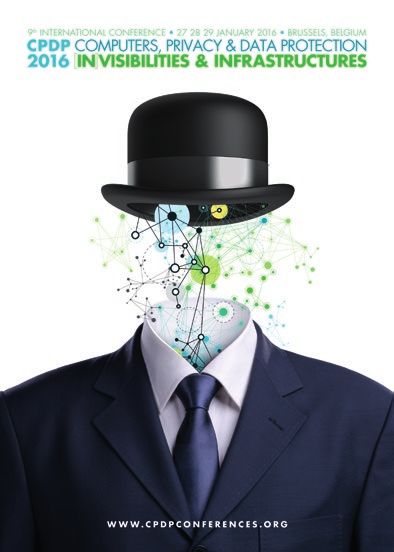
WEDNESDAY 27 JAN 2021
WEDNESDAY 27 JAN 2021
17:15 – ENHANCING PERSONAL DATA PROTECTION THROUGH DIGITAL CPDP2021 PANELS AT ONLINE 1
SOVEREIGNTY
Organised by EDPS
Moderator Sjoera Nas, Privacy Company (NL) 8:45 – CLOSED SESSION
Speakers Thomas Zerdick, EDPS (EU); Stéphane Dumont, Gendarmerie Nationale (FR); Marco-Alexander Breit,
German Federal Ministry for Economic Affairs and Energy (DE)
10:00 – Coffee Break
Digital sovereignty refers to Europe’s ability to make autonomous technological choices in the digital domain, while fostering
digital innovation. The European Commission has identified digital policy as one of the key priorities of her 2019-2024 term
and has stated that Europe must achieve ‘technological sovereignty’ in critical areas. The October 2020 European Council 10:30 – READY FOR THE NEXT “DIESELGATE” IN DATA PROTECTION:
stressed that to be digitally sovereign, the EU must, inter alia, reinforce its ability to define its own rules, and to develop and THE NEW REALITY OF COLLECTIVE REDRESS IN THE EU
deploy strategic digital capacities and infrastructure. One primary objective therefore is to ensure that the processing of
Organised by Euroconsumers
personal data happens in line with EU values and privacy legislation, such as the General Data Protection Regulation (GDPR).
Moderator Marco Scialdone, Università Europea di Roma and InnoLawLab (IT)
One such example, “Gaia-X” strives to set up a high-performance infrastructure for Europe, aiming at an open, digital ecosys- Speakers Ursula Pachl, BEUC (BE); Bart Volders, ARCAS LAW (BE); Laura Somaini, winner My Data Is Mine Award
tem, which could allow (personal) data sharing in a secure and compliant manner. While Gaia-X could be a necessary element
In 2020 the EU adopted a new law on collective redress which will allow citizens in all EU countries to go to court as a group if
of EU industrial policy, additional actions may be necessary to create an EU technology policy, which follows neither a model
they have suffered the same damage, something consumer groups have been advocating for since more than 30 years. Data
of state controlled development, nor a model of market libertarianism.
protection is one of the areas specifically covered in the new law. Consumer organisations have been pioneers in this area
• How is the progress and the public and private sector support for EU sovereign Infrastructures such as Gaia-X? in those countries where collective redress was already allowed under national law, as demonstrated by the class actions
• Which instruments do we need for Digital Sovereignty, e.g. in the domain of Software (EU Public License and other launched in 2018 in Spain, Portugal, Italy and Belgium against Facebook. Now the possibility to claim collective redress for
open source)? data protection damages becomes a reality across the EU. What does this mean for consumers? How will this new collective
• How can EU entities develop Insourcing strategies for innovation in the EU, e.g. by changing public procurement? redress instrument be designed? And how will the compensation for a breach of privacy rights be defined?
• How could Digital Sovereignty benefit privacy and protection of personal data?
• What are the main elements of the new EU directive on injunctions and collective redress?
• What are the possibilities and benefits it brings to consumers when it comes to the protection of their personal data and
18:30 – CLOSED SESSION
their privacy?
• What are the main challenges for collective redress in the area of data protection?
• What mechanisms can be envisaged to define the compensation for data protection damages?
19:45 – CPDP LATAM SIDE EVENT: NEW REGULATIONS, CROSS-BORDER DATA
FLOWS, AND COVID19 IN LATIN AMERICA
11:45 – USER CHOICE AND FREEDOM THROUGH PORTABILITY AND
Organised by FGV-Rio Law School - Fundação Getúlio Vargas Law School (BR)
INTEROPERABILITY RIGHTS?
Moderator Luca Belli, FGV-Rio Law School (BR)
Speakers Katitza Rodriguez, EFF Policy Director for Global Privacy (PE); Renato Leite Monteiro, Data Privacy Brasil Organised by EFF
(BR); Pablo Palazzi, Co-Director of Center for Technology and Society Universidad de San Andrés (AR); Hannah Draper, Moderator Ian Brown (UK))
Open Society Foundations (INT); Nelson Remolina, Superintendent for the Protection of Personal Data (CO); Miriam Speakers Christoph Schmon, Electronic Frontier Foundation/EFF (US); Ala Krinickyte, NOYB – European Center
Wimmer, National Data Protection Agency (BR) for Digital Rights (AT); Rossana Ducato, University of Aberdeen (UK); Olivier Dion, OneCub (FR); Dita Charanzová,
MEP (EU)
This side event will explore the latest data protection advancements, trends, and challenges in Latin America. Particular
attention will be dedicated to new data protection frameworks in the region, challenges for cross border data flows, and the Our online experience is designed by platforms having power of user and their data. A key mechanism to give users genu-
impact of the COVID-19 pandemic on data protection. ine choice is to give them control over their experience through interoperability and data portability measures. The GDPR
already gives users a right to data portability, which is designed to put individuals at the centre of the data economy. How-
This debate aims at opening the path to CPDP Latam (www.cpdp.lat), a new Latin American platform to discuss privacy, data
ever, this right is not enforced and several factors hinder its success, most importantly the lack of interoperability among
protection and technology. CPDP LatAm encompasses the Latin American editions of the Computers, Privacy and Data Pro-
different platforms. The upcoming Digital Services Act could tackle this issue and change the rules of the game. The aim of
tection (CPDP) conference, the MyData conference, and Privacy Law Scholars Conference (PLSC). The 1st Latin American
the panel is to focus on portability and interoperability rights in a changing world. Presenting perspectives from academia,
edition of the CPDP conference will be held in July 2021 in Rio de Janeiro, at Fundação Getulio Vargas.
enforcement, policy and start-ups, the panelists will explore the gaps in legislation and give insights in what is needed for
This side event will focus on key issues to be further explored by CPDP LatAm 2021, which will be dedicated to Data Protec- a free internet.
tion in Latin America: Democracy, Innovation and Regulation.
• What role can the rights to data portability and interoperability play in the data economy and what are the limits?
• Cross-Border Data Flows • Why is data portability so challenging to enforce?
• New Data Protection frameworks in LatAm • How can rights and standards enable SMEs to compete with incumbent platforms and what are the right economic
• Data protection best practices and worst practices in LatAm incentives to build the necessary digital infrastructure?
• International data transfers and adequacy mechanisms • What can the Digital Services Act and the Data Act do to make portability and interoperability rights truly effective?
COMPUTERS, PRIVACY & DATA PROTECTION 14 ENFORCING RIGHTS IN A CHANGING WORLD COMPUTERS, PRIVACY & DATA PROTECTION 15 ENFORCING RIGHTS IN A CHANGING WORLD
WEDNESDAY 27 JAN 2021
WEDNESDAY 27 JAN 2021
13:00 – I SPY WITH MY LITTLE EYE, SOMETHING BEGINNING WITH... F: in conversation with issues of racial injustice, migration control, and structural exclusion, exploring the exceptionalism, the
INTELLIGENCE AGENCIES AND FUNDAMENTAL RIGHTS excluded, and the exploitative nature of privacy discourse and practice in Europe.
Organised by Privacy Platform (Renew Europe) • When and why do privacy and data protection intersect with racial justice? When do they not?
Moderator Sophie in‘t Veld, Member of European Parliament, Renew Europe (EU) • How are privacy rights and wrongs maldistributed? And with what effect?
Speakers Jan-Jaap Oerlemans, Utrecht University (NL); Edin Omanovic (UK); Nico van Eijk, Review Committee on the • Are surveillance capitalists better positioned to support racial justice efforts than digital rights advocates?
Dutch Intelligence and Security Services (CTIVD) (NL) • What or who needs to change in the current configuration in the realm of privacy and data protection in order to ad-
vance racial justice?
The activities of intelligence and security agencies are rapidly digitalising. New powers to analyse large amounts of data
are being created, and every year, the pile of available information gets higher. Increasing cooperation and exchange be-
tween these agencies is necessary to keep Europe safe, but also has enormous consequences for our right to privacy and 17:15 – NEW POLICE SURVEILLANCE TECHNOLOGIES: COMBATTING
data protection. How can our rights and freedoms be reinforced, in balance with newly gained powers by these agencies? THE SCIENCE FICTION COLLECTIVELY
Scandal after scandal, we see that adequate supervision and enforcement is lacking. Which legal safeguards are supposed
Organised by EDRi
to protect us today, and which gaps are still existing and to be filled, and how? And how does Brexit affect our rights in
Moderator Chloé Berthélémy, EDRi (BE)
intelligence cooperation?
Speakers Yassine Boubout, Vrije Universiteit Brussel (BE); Amba, Kak, AI Now (US); Alyna Smith, PICUM (INT);
Aydan Iyigüngör, FRA (EU)
14:15 – CLOSING THE GDPR ENFORCEMENT GAP AND LOOKING
From tracking protesters to “controlling” migration, law enforcement authorities across the world inscreasingly employ so-
AT THE ENFORCEMENT MODEL OF THE FUTURE
phisticated technologies to do their work. Experiments with data and algorithms purportedly aim to predict crime and assist
Organised by BEUC the criminal justice decision-making system. While facial recognition technologies have attracted public attention and resist-
Moderator Ursula Pachl, BEUC (BE) ance, it is only the tip of the surveillance iceberg. The assumption is that these systems are beneficial because crime fighting
Speakers Andrea Jelinek, European Data Protection Board (EU); Gro Mette Moen, Forbrukerrådet (NO); Jean Gonié, becomes more efficient. This quest for efficiency and innovation fuels the never-ending expansion of police databases as
Snap Inc (US); Gloria Gonzalez Fuster, VUB (BE) supporting infrastructures for those data-hungry technologies. However, despite being pictured as benign tools, impacts on
people’s lives, rights and freedoms is unprecedented, especially for those who already suffer from hyper-surveillance and
The GDPR introduced an innovative enforcement system for tackling cross-border data protection infringements by estab-
over-policing like marginalised communities. This panel analyses the intersection between the deployment of new technolo-
lishing mechanisms for cooperation between DPAs and the consistent application of the rules across the EU. Over two years
gies, intensified surveillance and social justice fights.
since it became applicable, the GDPR now risks becoming a ‘’broken promise’’. The one-stop-shop enforcement mechanism
is showing its shortcomings and enforcement against Big Tech is uncertain. The expectations that the GDPR would tackle • What does the deployment of new surveillance and policing technologies look like in Europe? What is the role of the EU
systemic data protection infringements inherent to the widespread commercial surveillance in our digital world have not in these developments?
materialised. All this is having a negative impact on the protection of millions of consumers across Europe. We are at a turning • How does the use of new technologies interconnect with the ever-growing collection of personal data and the criminali-
point. It is necessary to close this enforcement gap before it is too late. It is also necessary to draw lessons from this experi- sation of certain communities?
ence and start shaping the ideal enforcement model for the future. • How does theses systems pose a danger to people’s rights and freedoms, esp. of marginalised communities?
• How can we encourage civil society, activists and relevant institutions to adopt a comprehensive approach to these
• What is creating the GDPR enforcement gap and how can we address it?
issues and work at their intersection?
• What are the problems with the one-stop-shop mechanism and how can we address them?
• What should be the ideal model for enforcement to protect consumers in the digital world?
18:30 – GRANULAR OF HOLISTIC APPROACH? ENFORCING PRIVACY RIGHTS
• What model would ensure desired balance between EU-level and national enforcement structures, bridging the gap
IN COMPLEX ICT ECOSYSTEMS
between the quintessential territoriality of enforcement and the cross-border nature of digital services?
Organised by PDP4E
Moderator Antonio Kung, PDP4E (FR)
15:30 – Coffee Break
Speakers Naomi Lefkowitz, NIST (US); Member from PRiSE team, KU Leuven (BE); Alejandra Ruiz, TECNALIA (ES);
Massimo Attoresi, EDPS (EU)
16:00 – CONNECTING THE DOTS: PRIVACY, DATA, RACIAL JUSTICE
ICT ecosystems are complex systems of devices, networks, backends operated and managed by multiple stakeholders. They
Organised by LSE are the backbone of infrastructures such as healthcare, smart manufacturing, transport, defense, energy, and others, which
Moderator Seda Gürses, TU Delft (NL) processes massive amounts of personal data. There is no convergence on how ensure the enforcement of privacy rights in
Speakers Yasmine Boudiaf, No Tech for Tyrants (UK); Sarah Chander, European Digital Rights (BE); Nakeema such complex ecosystems. Most approaches are granular in that they focus on implementing privacy controls in every piece
Stefflbauer, FrauenLoop (DE); Nani Jansen Reventlow, Digital Freedom Fund (DE) of the system, while others advocate for a more holistic approach to privacy (inter-organizational privacy) where all compo-
nents share one common set of rules or principles or are based on interoperable frameworks or architectures. This panel
Historically, privacy advocates and data protection professionals envision privacy as a universal right. In practice, however,
aims at finding a solution to this debate, while covering aspects such as risk identification, governance, transparency, the
there are deep inequities in how privacy gets enforced, who can safeguard their privacy, and what privacy means for differ-
engineering of control and protection capabilities, and the role of assurance to ensure trustworthiness.
ent populations. These inequities raise the question of whether a universalist framework befits the lived experience of many
subgroups, especially members of marginalized communities. In this provocative panel, we ask how would an inclusive, col- • Is privacy preserved when composing privacy friendly systems? Should we move away from a one shot, static, monodis-
lective vision of privacy look? A diverse group of practitioners, scholars, and advocates will put privacy and data protection ciplinary and single perspective privacy impact assessment towards a multi-stakeholder perspective?
COMPUTERS, PRIVACY & DATA PROTECTION 16 ENFORCING RIGHTS IN A CHANGING WORLD COMPUTERS, PRIVACY & DATA PROTECTION 17 ENFORCING RIGHTS IN A CHANGING WORLD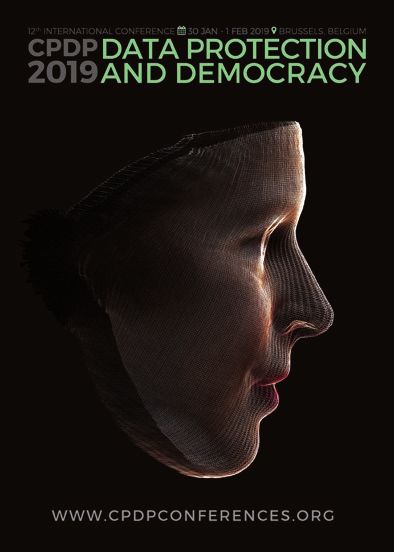
WEDNESDAY 27 JAN 2021
WEDNESDAY 27 JAN 2021
• How can a framework (e.g. the NIST privacy framework) help address the data protection issues raised by the multipli- Data Protection Authority (NO); Achim Klabunde, Advisor to the Supervisor on Data Protection and Technology
cation of actors? Can we use is as a common framework to create an ecosystem practice for privacy rights enforcement, (EPDS) (EU)
for instance in a data space?
Data Protection by Design and by Default (DPbDD) refers to the design and existence of embedded measures and safe-
• Are there specific collaboration needs between stakeholders in the ecosystem, concerning risk management, architec-
guards and mechanisms that effectively protect thepersonal data protections principles, the rights and the freedoms of
ture and engineering practice, and contractual agreements?
the data subject to data protection throughout the processing lifecycle of an application, service or product. In many ways,
• Do we need to define a roadmap on ecosystem practice, including the definition of further regulations and standards
DPbDD can be seen as the sleeping giant of the GDPR: the entire burden of compliance hinges on this article where the data
(on systems of systems, interoperability and assurance)?
controller must design appropriate technological and organizational measures to address not just the core data protection
principles listed in Article 5 but also the rights and the freedoms of the data subject and the requirements of the GDPR in
general. This panel will consider the scope and enforcement of Article 25, particularly in the context of the pandemic and in
the post-pandemic context. The discussion will cover issues including:
CPDP2021 PANELS AT ONLINE 2 • What are the specific roles, responsibilities and liabilities of controllers, processors, hardware and software providers
etc. when it comes to implementing this legal requirement?
• What does the concept of “the state of the art” mean and, who should be responsible for driving it?
• How should controllers demonstrate the effectiveness of a safeguard or measure?
8:45 – CLOSED SESSION • What is the relationship between AI and DPbDD?
13:00 – Lunch Break
10:00 – Coffee Break
14:15 – GLOBAL AI GOVERNANCE: PERSPECTIVES FROM FOUR CONTINENTS
10:30 – TO RECORD OR NOT TO RECORD? COVID-19, BODY TEMPERATURE
SCREENINGS AND THE GDPR MATERIAL SCOPE Organised by The Nordic Centre for Internet and Society (NCIS) at BI Norwegian Business School
Moderator Samson Esayas, the Nordic Centre for Internet and Society (NCIS), BI Norwegian Business School (NO)
Organised by CPDP
Speakers Sofia Ranchordas, University of Groningen (NL); Amar Ashar, Harvard University (US); Angela Daly, Uni-
Moderator István Böröcz, VUB/LSTS (BE)
versity of Strathclyde (UK); Celina Bottino Beatriz, the Institute for Technology & Society of Rio de Janeiro (ITS Rio),
Speakers Nerea Peris Brines, European Data Protection Board (EU); Daniela Galatova, Pan-European University of
Darcy Vargas Foundation, and the Children’s and Adolescent’s Rights Protection in Rio de Janeiro (BR)
Law in Bratislava (SK)
The development and implementation of Artificial Intelligence (AI) within all domains of business, society, and governance
With the onset of the Covid-19 pandemic, body temperature screening, thermal imaging and symptom tracking were some
has accelerated in recent years. Although current debate chiefly focuses on the economic consequences of AI, there is a
of the first measures considered in the combat against Covid-19. For a long time, there have been debates at Member State
growing awareness of the broader societal impacts of AI, especially the unequal ways in which the benefits and harms may
level as to whether thermal imaging and body temperature checks fall under the GDPR scope and the respective national
be distributed across populations and geographies. This panel will bring perspectives from four continents on the societal
implementing laws. Nonetheless, diverse conclusions appear to have emerged by national supervisory authorities, which
impacts of AI, focusing on salient concerns and governance approaches in the respective regions. The aim is to leverage
reflect national differences in the application of the data protection law with respect to the use of automated and non-au-
globally diverse viewpoints, and practical experience, and thereby contribute to the development of a shared understand-
tomated processing means, the definition of processing and the registration/archiving or not of the processed data. With
ing and more harmonized research efforts in addressing the societal impacts of AI technologies.
body temperature screening techniques as point of departure, in this panel we will deliberate how the Covid-19 pandemic
has re-heated the discussion around the GDPR material scope. Salient features in the respective regions, both in terms of the concerns and the mechanisms for tackling them.
• Discuss national Covid-19 measures which may be purely analogue or combine analogue and digital components, enact- • What are the salient concerns and drivers of AI governance in your region?
ed during the pandemic with emphasis on body temperature checks, and assess the importance of non-automation in • How has the policy response been so far?
EU data protection law. • What effect is the COVID-19 pandemic having on the AI governance discourse? Has it intensified the urgency to
• Explore national legislations and opinions issued by the national supervisory authorities in a form of a comparative anal- deploy AI technologies as much as the need for regulatory responses?
ysis and in juxtaposition with the EU institutional response. • What do you think other regions can learn from the initiatives and responses in your region?
• Present and debate remarkable stances and views and explain the observed diversions and similarities. • Is it practical and desirable to think about global AI governance?
• Study the GDPR material scope through the lenses of the pandemic.
15:30 – Coffee Break
11:45 – DATA PROTECTION BY DESIGN AND BY DEFAULT IN THE POST-COVID
WORLD
16:00 – DATA PROTECTION IN AFRICA
Organised by The Swedish Law and Informatics Research Institute (IRI)
Organised by CPDP
Moderator Liane Colonna, The Swedish Law and Informatics Research Institute (IRI), Stockholm University (SE)
Speakers Cecilia Magnusson Sjöberg, The Swedish Law and Informatics Research Institute (IRI), Stockholm Coming soon
University (SE); Athena Bourka, European Union Agency for Cybersecurity (ENISA) (EU); Veronica Buer, Norwegian
COMPUTERS, PRIVACY & DATA PROTECTION 18 ENFORCING RIGHTS IN A CHANGING WORLD COMPUTERS, PRIVACY & DATA PROTECTION 19 ENFORCING RIGHTS IN A CHANGING WORLDWEDNESDAY 27 JAN 2021
WEDNESDAY 27 JAN 2021
17:15 – AUGMENTED COMPLIANCE: THE CASE OF ALGORITHMIC IMPACT CPDP2021 PANELS AT ONLINE 3
ASSESSMENT
Organised by Augmented Law Institute - EDHEC Business School
Moderator Gianclaudio Malgieri, EDHEC Augmented Law Institute (FR) 8:45 – CLOSED SESSION
Speakers Margot Kaminski, Colorado Law (US); Olivier Guillo, Smart Global (FR); Henrik Junklewitz, European
Commission (EU); Björn Fasterling, EDHEC Augmented Law Institute (FR)
10:00 – Coffee Break
The aim of the panel is to show how Data Protection by Design in the GDPR could encourage a holistic Algorithmic Im-
pact Assessment under the GDPR, combining the DPIA requirements with the individual rights related to Automated
Decision-Making. The panel wants to analyse what the concept of Algorithmic Impact Assessment is across different leg- 10:30 – GLOBAL YOUTH PRIVACY: AMPLIFYING YOUTH NEEDS & VOICES
islations and how different layers of automated decisions explanations might contribute to a dynamic DPIA of complex
Organised by Privacy Salon
algorithmic data processing. The role of compliance software might also be pivotal in this process.
Moderator Jasmine Park, FPF (US)
• How an Algorithmic Impact Assessment should look like across different Data Protection Legislations? Speakers Kim Noble (UK); Amelia Vance, Future of Privacy Forum (US); Sonia Livingstone, London School of
• Can Algorithmic DPIA and individual rights in the GDPR be connected in one only tool, as a disruptive and conven- Economics and Political Science (UK)
ient compliance models for all data controllers?
Youth encounter both risks and opportunities online. In a rapidly evolving digital environment, efforts to defend youth priva-
• Can we imagine several layers of explanation of Automated Decision-Making under the GDPR?
cy must delicately balance protecting and empowering youth online while allowing them to gradually develop resilience. This
• Can we “automate” compliance in case of algorithmic decisions?
panel seeks to convene global youth, technology, and privacy experts to discuss existing and emerging global child privacy
protection policies and strategies, key considerations for the public and private sectors, and the need to amplify youth voices
18:30 – READY FOR A CRISIS: ACCELERATED DIGITALIZATION IN EDUCATION in informing and shaping these policies.
[ENDS AT 19:45]
• Why do youth warrant special privacy protections?
Organised by VUB Data Protection on the Groundo • How do youth feel about their privacy and what are their self-expressed needs and desires? How can youth voices be
Moderator Paul Timmers, European University Cyprus (CY) amplified in shaping youth privacy protections?
Speakers Alexandra Giannopoulou, University of Amsterdam (NL); Carrie Klein, Future of Privacy Forum (US); • How is youth privacy being protected globally? (Which ages should receive greater privacy protections, and should the
Michael Gallagher, University of Edinburgh (UK); Felix Seyfart, Berinfor (CH) parent or youth “own” those privacy rights? Should consent-based or rights-based legislation protection youth? Should
youth privacy protections be included in comprehensive consumer privacy frameworks or are additional youth privacy
A notable effect of corona-related confinement measures was the introduction of ‘emergency remote teaching’: educa-
policies necessary?)
tional processes had to be moved online in record time. While a plethora of tools was available, concerns about data pro-
• What youth privacy resources are available for youth, their families, and institutions working on their behalf?
tection and online safety arose instantly. Few educational organisations were ready to make a considered assessment of
the reliability of options under pressure.
11:45 – THE ROLE OF OECD IN LATIN AMERICA: THE DYNAMICS OF
The education sector is in a constant state of flux. It is hard for many educational professionals to keep up with develop-
REGULATORY CONVERGENCE IN PERSONAL DATA PROTECTION
ments, especially technological advances. Recent years have also seen an interest in ‘revolutionizing’ education from the
technology sector, promising to radically improve learning. Organised by Data Privacy Brasil
Moderator Bruno Bioni, Data Privacy Brasil (BR)
• What has the corona crisis done to (digital) education?
Speakers Giovanna Carloni, Centre for Information Policy Leadership/CIPL (UK); Carolina Botero Cabrera,
• How to evaluate EdTech platforms?
Fundación Karisma (CO); Maria Paz Canales, Derechos Digitales (CL); Miriam Wimmer, Ministério da Ciência,
• Privacy as a form of power in schools
Tecnologia, Inovações e Comunicações (BR); Elettra Ronchi, OECD (INT)
• What to expect? The future of Digital Education
Historically, OECD has been a forum for the creation and dissemination of principles for the protection of personal data
and there has been a convergence towards the implementation of these principles globally. The advancement of technol-
ogy brings new legal and regulatory challenges, which are the subject of intense discussion within the OECD. So, in addi-
tion to the guidelines, today among its policy issues are privacy enforcement cooperation, digital identity and electronic
authentication, cryptography, etc. As the global south catches up with Europe in terms of privacy and data protection reg-
ulation and as new countries are welcomed into the club, questions of how the OECD framework can (and should) shape
its policies, as well as what precisely is OECD’s role in issues such as enforcement and mechanisms for transnational data
flow, become pressing. This panel aims to cover these topics.
• What are some of the main points of the renewed agenda of the OECD in terms of personal data protection?
• What is the possible role of the OECD in facing the problem of data protection enforcement in the Global South?
• What is the scope of the OECD’s power in defining public policy in Latin American countries and how does that affect
data protection in the region?
COMPUTERS, PRIVACY & DATA PROTECTION 20 ENFORCING RIGHTS IN A CHANGING WORLD COMPUTERS, PRIVACY & DATA PROTECTION 21 ENFORCING RIGHTS IN A CHANGING WORLDYou can also read


