BEST PRACTICE - T-Systems
←
→
Page content transcription
If your browser does not render page correctly, please read the page content below

BEST
                                                             AUGUST-WILHELM SCHEER
                                                                 WOLFGANG CLEMENT
                                                                      DOROTHEE BÄR
                                                                WOLFGANG WAHLSTER

                        PRACTICE
                                                               REIMUND NEUGEBAUER
BEST PRACTICE 1/ 2017

                                                             FRIEDERIKE BUCHHEISTER
                                                                          MAX MAIER

                        Issue 1 / 2017

                              “WE’RE
                              TIRED OF
                              HEARING
                              IT!”

                               Spare us the wake-up calls!
                               What we need is something
                               entirely different.
e
isi us a rade
ano er om
   air r
         o
a ril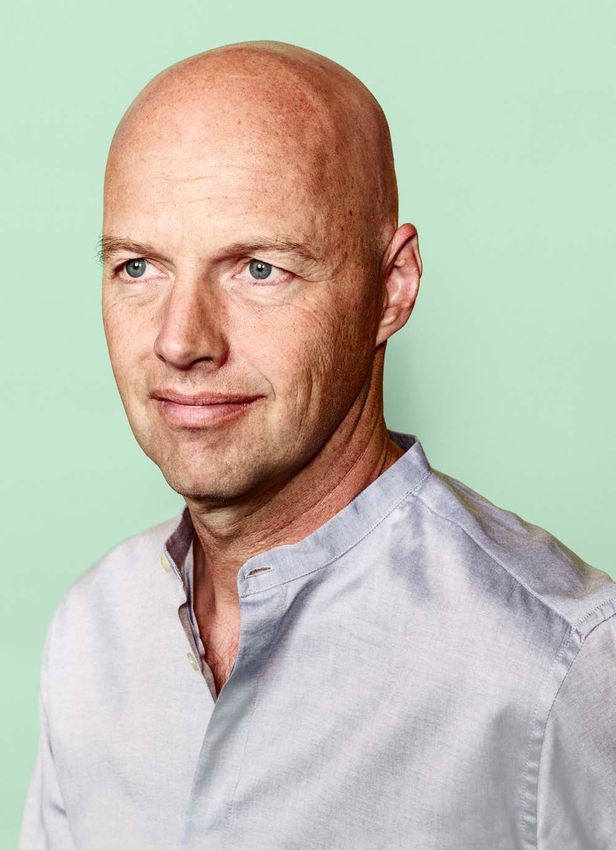
EDITORIAL
                          —3

                                          IN OUR OWN
                                          BEST INTEREST.

                                          Reinhard Clemens,
                                          Member of the Board of Management of
                                          Deutsche Telekom AG, and CEO of T-Systems

                                       The business headlines on the last day of January                 To what extent are we failing to live up to our po-
                                       certainly brought reassuring news. The Ifo Institute         tential? It almost seems that, between German tho-
                                       announced that Germany had reclaimed its crown as            roughness and the much-quoted German angst, we
                                       the “Capital Export World Champion” only one year            lack the courage to put our true greatness on display.
                                       after losing it to China. Germany came back with a           Or does the mere thought of making mistakes, sha-
                                       bang, too: a current account surplus of 297 billion US       ring knowledge or being hacked turn us into prophets
                                       dollars and 8.6 percent of our annual economic out-          of doom? When we hear the words “automation” or
                                       put. Those are the kinds of figures that will make           “artificial intelligence”, do we immediately envision
                                       many observers, neighboring countries and the Euro-          the loss of our jobs or can we think more universally
                                       pean Commission sit up and take notice. But what do          and recognize our opportunities? Are we too hesitant
                                       they really mean? Simple: German engineering is still        to devote venture capital to getting startups and their
                                       a global success story, particularly in our blockbuster      ideas rolling faster?
                                       industries of chemicals, pharmaceuticals, carmaking,              In this issue of Best Practice, we learn how to
                                       machinery and heavy industry. “Computer, electronic          shed our image as a digital non-entity in this era of
                                       and optical products”, however, come a little further        real-time internet, autonomous systems and the Inter-
                                       down on the list. That suggests, quite rightly, that         net of Things from Dorothee Bär, Parliamentary State
                                       pure IT exports have room to grow. In 2004, 10.4 per-        Secretary in the German Federal Ministry of Transport
                                       cent of our exports were ICT products. Today, that           and Digital Infrastructure; Wolfgang Clement, former
                                       number has shrunk to below five percent, in contrast         German Federal Minister of Economic Affairs
                                       to over 25 percent in China. I don’t believe that the        and Labor; Prof. Reimund Neugebauer, President
                                       numbers tell our whole digitization story, though. ICT       of the Fraunhofer Society; Prof. August-Wilhelm
                                       is ticking away in almost all of our exports: from com-      Scheer, long-standing President of Bitkom; and Prof.
                                       bine harvesters and washing machines to machine              Wolfgang Wahlster, President of the German Re-
                                       parts and smart medicine. But that fact is not cap-          search Center for Artificial Intelligence (DFKI). The
                                       tured by the export statistics.                              answers range from soft factors such as accepting,
                                             There are, however, two things that affect all of      embracing, owning and understanding to the hard
                                       us: our industry’s ability to extract value from digitiza-   re-engineering of countless digitization processes
                                       tion and our approach to tackling the serious chal-          that, in many cases, have already been rolled out with
                                       lenges that digital transformation presents. We              the kind of determination that Germany needs. Just
                                       cannot take Germany’s leading position for granted,          not always in the same direction. In that sense, this
                                       either. To explore different ways to defend and main-        issue is no doubt a must-read for every one of us – in
Photo: Deutsche Telekom

                                       tain it, we have invited representatives from industry,      our own best interest.
                                       research and policymaking as op-ed contributors to
                                       analyze the current state of affairs in Germany’s econ-      Best regards,
                                       omy and society from their own perspective and iden-         Reinhard Clemens
                                       tify specific needs and frameworks for action.
THE ROLE MODEL.
YOUNG FEMALE COLLEGE DROPOUT
SEEKS ... AND FINDS HER PLACE AS A
ROLE MODEL. AYA JAFF IS A CELEBRITY
IN THE GERMAN IT SCENE. PARTLY
BECAUSE SHE STANDS OUT AS A
YOUNG WOMAN IN A MALE-DOMINATED
INDUSTRY. AND PARTLY BECAUSE SHE
CAN WRITE CODE AND TALK BUSINESS.
INTRO   The role model
—5       Young female seeks …

                                She set up programming clubs
                                of her own in high school and pen-
                                etrated deeper and deeper into the
                                coding world. As a high-school
                                student, the Iraq-born German was
                                made chief technology officer of
                                Tradity, now one of Germany’s largest
                                stock trading games. Aya Jaff is the
                                vice chairwoman of the executive
                                board of the openBIT innovation
                                network, speaks at conferences and
                                recently studied at Draper University
                                in Silicon Valley on a scholarship.
                                While there, she landed a job at Dirk
                                Ahlborn’s Hyperloop Transportation
                                Technologies after successfully
                                pitching an idea. For now, though, she
                                is focused on getting a degree in
                                Chinese studies and business adminis-
                                tration – after changing her her major
                                from computer science.

                                                                         Photo: Torsten Hönig

INTRO   Flying taxis
—7       Above the streets

                                       Flying, as easy as driving. That has been the focus of Lilium Aviation’s
                                       research for two years. Located in Gilching near Munich, the startup aims
                                       to develop a air taxi that is quiet, battery-powered, carbon-neutral and
                                       able to fly 250 km/h. Its supporters include the European Space Agency
                                       and Skype founder Niklas Zennström. The first life-sized test version of the
                                       Lilium jet is scheduled to take off in spring 2017. It seems that the startup
                                       might be in the right place at the right time. At any rate, Aric Dromi, a
                                       futurologist who advises companies such as Volvo, predicted earlier this
                                       year that we would see flying vehicles before driverless ones.

                             FLYING TAXIS.
                             SOUNDS LIKE SCIENCE FICTION, BUT IT’S COMING
                             SOON: LILIUM AVIATION WANTS TO SEND THE
                             FIRST AIR TAXI INTO THE SKY IN THE NEAR
                             FUTURE. THE TAXI IS DESIGNED TO TAKE OFF
                             VERTICALLY AND BE EASY TO OPERATE. SPECIAL
                             SOFTWARE HELPS PILOTS AND EVEN REJECTS
                                                                                                                       Photo: Lilium GmbH 2016

                             UNSAFE COMMANDS.

INTRO   Ghost hunters
—9       Man or machine?

                           GHOST HUNTERS.
                           BOTS ARE LATTER-DAY GHOSTS. THEY
                           HAUNT THE INTERNET AND SURREPTI-
                           TIOUSLY TAKE CONTROL OF OUR
                           BROWSERS. WHITE OPS, A NEW YORK
                           STARTUP, COMBATS THESE CYBER-
                           CRIMINALS WITH AN INNOVATIVE
                           TECHNOLOGY.

                           Fake advertising costs money and damages reputations. The latest
                           victim: a major German grocery chain. A fake advertising campaign
                           circulating on WhatsApp promised gift cards to lucky shoppers. In reality,
                           the senders were bots gunning for customers’ data. CEO Michael Tiffany,
                           COO Eddie Schwartz and CTO Tamer Hassan (left to right) have developed
                           a systematic solution that not only detects remote-controlled bots, but also
                           stops future attacks from happening. White Ops keeps the details of its
                           technology secret, but the startup’s software can analyze website traffic
                                                                                                          Photo: Saskia Uppenkamp

                           for suspicious behavior and origins and identify bot-generated clicks.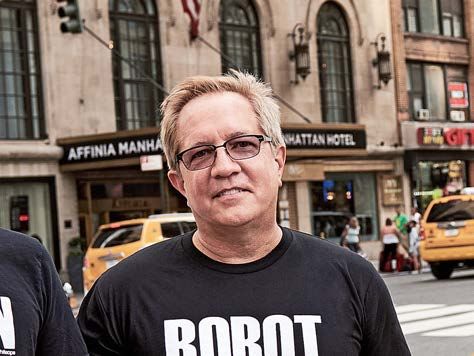
12

                                          18                                   22
DIGITIZATION –                                                                                                                                     38
                                                                                                            30
WHO, WHAT, WHEN, WHERE

12      COALITION OF FORCES.
TEAM BUILDING. Europe’s biggest economic engine needs nothing
less than a national digitization ecosystem if Europe is going to
compete with Asia and America, argues long-serving Bitkom President           30      HOME FOR ARTIFICIAL INTELLIGENCE.
Prof. August-Wilhelm Scheer.
                                                                              DECISIONS, DECISIONS. Prof. Wolfgang Wahlster, President of the
                                                                              German Research Center for Artificial Intelligence, about pre-competitive
18      TOO MANY COOKS.                                                       cooperation and the privilege of picking your own partners.

NEW MODEL. Germany has five ministries wrestling for control of the
digitization agenda. That’s highly ineffective, says former Federal           32      GERMANY’S ANSWER TO SILICON VALLEY.
Minister Wolfgang Clement. A better approach would be to put one
agency in charge of all things digital.                                       STARTUPS. Venture capital has never been “winner takes all”. On
                                                                              the contrary, Germany’s creatives are catching up in the race to attract
                                                                              deep-pocketed investors in local digital hubs.
20      TWO IN ONE.
VEXING VOCABULARY. What exactly are embedded systems? What
do edge computing, Industry 4.0 and integrated industry mean? If you

                                                                                                                                                   32
feel lost in the buzzword jungle, help has finally arrived – in the form of

                                                                                                                                                          Cover: Annett Seidler/Fotolia.com; Photos: Natalie Bothur, Scheer Group, ToKo, Ines Escherich/Fraunhofer, Festo AG,
an entertaining infographic that’s part mind map and part glossary.

22      COMING OUT OF HIDING.
HAVES AND WANTS. State Secretary Dorothee Bär on the ICT infra-
structure program that Germany needs and the question: when will our
mid-market hidden champions make the leap to digital champions?

24      COOKING UP SUSTAINABLE IDEAS.
                                                                              37      WIN-WIN SITUATION.
FROM THE BOARDROOM. Investor Max Maier and T-Systems Director
Digital Division and Telekom Security Anette Bronder talk about wasted        ROAMBEE. The US startup has been powering smart logistics with
                                                                                                                                                          Stocksy.com, Oliver Krato, Berthold Steinhilber

resources, finding customers’ pain points, fear-free digitization and the     T-Systems’ IoT platform since the start of its partnership with Telekom
transformation of kitchen equipment provider Rieber.                          subsidiary T-Systems.

28      LEVELING THE EDUCATION FIELD.                                         38      INNOVATING OUR WAY TO THE TOP.
PIONEER. Sebastian Thrun wants to democratize knowledge                       VISION OF MATURITY. Fraunhofer President Prof. Reimund Neugebauer
and make advanced education available worldwide with his online               about the need to compromise between rapid innovation and German
university Udacity.                                                           thoroughness when taking products from mind to market.
CONTENTS Issue 1/2017
— 11
BP guest authors (from left) – Wolfgang Clement,
Prof. August-Wilhelm Scheer, Dorothee Bär,
Prof. Wolfgang Wahlster, Prof. Reimund Neugebauer
Germany’s startup landscape is vibrant locally.
40 Friederike Buchheister, CIO of CORPUS SIREO.
Investor Max Maier in an interview with Anette
Bronder, T-Systems Director Digital Division and
Telekom Security.
BEST PRACTICES
40 CIO TALK WITH CORPUS SIREO.
INDUSTRY FIRST MOVER. Friederike Buchheister, CIO of one of
Europe’s largest asset managers, about Cyber Defense, what role IT
providers play in entering new markets and why partnership should
always be reciprocal.
24
44 MID-MARKET INNOVATION ENGINES.
ABOUT THIS PUBLICATION
ROLE MODELS. Schmitz Cargobull, Zippel Media and the City of
Monheim, standing in for local government, are driving innovation in Published by: General Managers:
ways that show the opportunities that digitization offers for SMBs, Sven Krüger, Christian Backen, Alexander Uebel
who number 3.6 million in Germany alone. T-Systems International GmbH Production Manager at
Weinsbergstr. 70 HOFFMANN UND CAMPE X:
50823 Köln Sandra Heiske
Publication Manager: Production: Wym Korff
48 INSPIRED BY STAR ALLIANCE. Annette Nejedl Litho: Olaf Giesick Medien-
Executive Editor: produktion, Hamburg
NGENA. How the Next Generation Enterprise Network Alliance is Tatjana Geierhaas Printing: NEEF + STUMME
knitting together a worldwide network of carriers and providing global Editor-in-Chief: Thomas van premium printing GmbH & Co. KG,
Zütphen (responsible for content) Wittingen
access to high-quality services for multinational companies. Organization: Anke Echterling
Art Direction: Tobias Zabell Copyright:
Layout: Claudia Knye © 2017 by T-Systems. Reproduction
50 CLEARING UP CONFUSION. Graphics Manager: Susanne requires citation of source and
Narjes submission of a sample copy. The
Operation Manager: content of this publication does not
SAP S/4HANA. Misunderstood as an ERP release by many companies, Maike Bamberg necessarily reflect the opinion of the
the software is helping RUD, an anti-skid chain specialist, to maximize Translation: publisher.
the benefits of digitization for its customers. Native Speaker
Authors of this issue: Read it yet?
Dorothee Bär, Wolfgang Clement, Best Practice Online:
Sven Hansel, Roger Homrich, www.t-systems.com/bestpractice
52 TEAM OF RIVALS. Michael Hopp, Heinz-Jürgen Köhler,
Sebastian Mainzer, Yvonne Nestler, Downloaded it yet?
ZERO OUTAGE. Chairman Stefan Kasulke about Zero Outage Industry Reimund Neugebauer, August- Scan the code for
Standard, an association that Cisco, IBM, Dell, SAP and others have Wilhelm Scheer, Anja Steinbuch, the Best Practice+
Miriam Theilacker, Wolfgang App or visit:
joined to make T-Systems’ quality standards the industry standard. Wahlster, Thomas van Zütphen itunes.apple.com
Publisher:
HOFFMANN UND CAMPE X
53 HOUSE CALL. A trademark of HOFFMANN Questions and suggestions?
UND CAMPE VERLAG GmbH bestpractice@t-systems.com
Harvestehuder Weg 42
OPEN TELEKOM CLOUD. Companies can learn about T-Systems’ 20149 Hamburg
public cloud a few steps from their front door: the Open Telekom Cloud Tel. (040) 441 88-451
truck will come to them on request. E-Mail: cp@hoca.deProf. August-Wilhelm Scheer has systematically aligned Scheer Holding with the demands of digitization. His company specializes in digital consulting, new software architectures, predictive analytics, personalized products, security and AI. However, as the passionate saxophonist says, he still finds it “a pleasure to live in the analog world – in my hobby and beyond.” “Coalition of forces.” GERMANY, AS EUROPE’S ENGINE, NEEDS A NATIONAL DIGITIZ ATION ECOSYSTEM TO KEEP THE CONTINENTAL ECONOMY VIBRANT AND PREVENT ASIA AND THE US FROM DOMINATING THE SECOND WAVE OF DIGITIZ ATION, TOO. Prof. August-Wilhelm Scheer
FOCUS Digitization – Who, what, when, where
— 13 Top Story_Opinion Piece_Prof. August-Wilhelm Scheer
“WE NEED COURAGE AND THE
WILLINGNESS TO CLEAR SELF-IMPOSED
OBSTACLES FROM OUR PATH.”
MANY OF US ARE TIRED OF HEARING how breathtakingly quickly the
United States and parts of Asia spotted and seized the opportunities pre-
sented by digitization. Europe – and Germany in particular – came to the
game much too late. The continent’s mightiest economic power was
trounced by overnight Goliaths like Apple, Amazon, Airbnb, Intel, Tesla,
eBay, Google, Facebook and Yahoo. That’s ancient history, you might say.
But if we fail to learn from history, we will be doomed to repeat it. Now that
new opportunities are arising, it’s time to act. Germany, being the strong
force in Europe, needs a national digitization ecosystem so that the conti-
nental economy won’t be left watching the incipient second wave of digi-
tization from the sidelines – and have no one to blame but itself.
So what’s stopping us? Where are we tripping over our own feet in
the race to jump on the next wave of digitization? Who should take on
what role in assuming responsibility? And responsibility for what? in the way we work and manufacture will require a transformation of the
Perhaps for ensuring that everyone and everything connected to digitiza- business environment. Industry, for its part, clearly understands the im-
tion in Germany doesn’t just spin in place without touching anything else portance of digitization. Witness the recent election of Dieter Kempf to
Photos: Scheer Group, Natalie Bothur, ToKo, Ines Escherich/Fraunhofer, Festo AG; Illustration: Andrew Timmins
like one gigantic mobile. That’s the only way to spin everything in a new the presidency of the Federation of German Industries (BDI): this former
direction and form a coalition of forces. It’s the only way to develop some president of Bitkom, Germany’s leading IT industry association, now
collective momentum. leads the country’s largest umbrella organization for industrial manufac-
There’s no question Germany is one of the (economic) nations for turers and service providers. Big IT companies are now key players at a
whom this “second chance race” is, if you will, a kind of invitation. And sold-out Hannover Messe, the world’s leading industrial trade fair. The
there’s no question that, in a world dominated by the internet of things, signal this sends out is unmistakable: IT has returned to the fold after
real-time internet and autonomous systems, Germany can build on its tra- being split off at CeBIT 1986. The journey started out slow, but has
ditional strengths in high-end physical products and embedded systems picked up the pace in recent years. At Hannover Messe, digital technolo-
with digitally enhanced products and take a top position in this interna- gies have regained their rightful place as the drivers and enablers of the
tional competition. For that to happen, though, all of Germany must take fourth industrial revolution. And this year’s CeBIT motto, “d!conomy – no
the leap toward a national digitization ecosystem. This leap will have to limits”, is no longer just a vision. It’s real life.
rely on three pillars: heavy investment, deliberate risk-taking and disrup- But what is it that needs to be done – not just to maintain the cur-
tive changes in general market conditions. Germany must not resign itself rently successful industries’ competitive edge as they digitize, but also to
to being a market of buyers. Not again. Our healthy industry represents a encourage entrepreneurs to start new businesses and make them inter-
competitive advantage, and we must marshal all our ideas and energy to nationally successful? Both things are absolutely essential for safeguard-
earn a return on it. It’s not enough to be well informed and lined up in the ing our nation’s prosperity.
starting blocks. We have to start running – now! First, we need to adopt a can-do attitude about digitization. We need
It’s encouraging to see that politicians and business leaders have to clear self-imposed obstacles from our path and courageously set sail
moved on from self-reflection to the realization that we must face the digi- for new digital shores. And we need soft skills of a different kind: skills not
tal transformation head-on. The first steps toward concrete action are only for using new technologies, but also for playing a bigger part in their
coming into view. Policymakers are now quite frank about how changes development and production.3.1
billion euros
in venture capital were invested in Germany in
2015; the US attracted 52.9 billion.
Source: Roland Berger: Going digital: Seven steps to the future
In my opinion, the action that must now be taken to overcome the
challenges and seize the opportunities – i.e. the digitization leap –
requires the participation of five stakeholder groups: politicians, research-
ers, industry, associations and society.
POLITICAL TO-DO LIST IS CLEAR
Policymakers have an obvious role to play: upgrading and expanding the
communications infrastructure, setting clear goals along the way and
initiating projects that are not just concrete, but also, and perhaps more
importantly, ambitious in their goals. Projects such as making gigabit
networks the new standard. Or introducing standardized nationwide sys-
tems that eliminate obstacles in e-government caused by the distribution
of responsibilities among federal, state and local governments. And then
there is a need to assess restrictive data protection rules for their chilling
effect on innovation. German Chancellor Angela Merkel first mentioned
‘data sovereignty’ in this context at the 10th National IT Summit held in
Saarbrücken late last year, demonstrating an open attitude toward new, HOW CAN RESEARCH CONTRIBUTE?
but no less responsible developments. Cooperation has become a key State-funded research institutions have to take their cue from the pace
success factor, too. For example, why can’t federal ministries and state of digitization and push for the rapid incorporation of their findings into
governments better coordinate individual digitization initiatives in order products, processes and real-world applications. Spin-offs must be en-
to have a greater impact together? Our federal system can and should couraged, with incentives for parent institutions of successful ventures.
tolerate this much transparency and cooperation! We must roll out new digital communication platforms for researchers,
Much like the Chief Digital Officer (CDO) coordinates and directs all along with new evaluation procedures to make research findings more
activities intended to ensure a company uses the Internet effectively, we transparent. The evaluation procedures alone would promote the publi-
need digitization ministers to perform the same tasks at the federal and cation of smaller-scale, more focused research and spur the cultivation
state level. In a time when companies nationwide are working hard to of international research networks at the same time. Bright new minds
create synergies, government, of all institutions, must not take too much must enter research fields affected by digitization to accelerate genera-
time or appear to be out of touch. Instead, it must act as the lead investor tional renewal. Vacant positions should be evaluated for their contribu-
and drive the development of key competencies, particularly those tion to digitization and new positions specifically created to ensure
relating to the security and resilience of infrastructure that is critical to generational renewal. This is all the more important given the fact that
our economy. research has proven to be a particularly rich source of opportunities in
Illustrations: Andrew Timmins
These are issues that Berlin urgently needs to address. The public Germany. And that is something that we – perhaps more than any other
sector can play a big role in bringing about new opportunities, after all, country – can put to our advantage. Our internationally acclaimed uni-
by making Germany more competitive through infrastructure improve- versities and non-university research institutions are fertile ground for
ments and establishing a framework for accelerating innovation. The cultivating digitization leaders in a variety of fields, including Industry
creation of new, well-paid jobs would immediately improve our gross 4.0, autonomous systems, artificial intelligence, tactile Internet, 5G,
national product, tax revenues and global economic ranking. security, bioinformatics and health informatics.FOCUS Digitization – Who, what, when, where
— 15 Top Story_Opinion Piece_Prof. Dr. August-Wilhelm Scheer
At the same time, recent significant improvements in partnerships
between industry and government-funded researchers have set the
stage for a much-needed revitalization of Germany’s innovativeness.
Establishing national centers of competence for disciplines such as In-
dustry 4.0, big/smart data, IT security, machine learning, autonomous
systems or smart services would also incentivize startups and drive sales
and service delivery from Germany. This is a point Wolfgang Wahlster
and I emphasized in the Saarbrücken Manifesto for a Digitization Leap,
which we published in time for the 10th National IT Summit.
INDUSTRY INCREASINGLY RELIANT ON SHARING
At least industry seems to have read the writing on the wall. Companies
are recognizing the impact of digitization and aggressively pursuing op-
portunities instead of resorting to unimaginative, but traditionally suc-
cessful standbys. As they shift gears, they have to come to grips with the
fundamental drivers of digital products, processes and business models
and leverage them in a way that benefits their business. That includes
product personalization, self-service, autonomous objects, resource
sharing and the substitution of algorithms for intellectual work (i.e. AI).
Spin-offs can nurture potential new business models that may cannibal-
ize yesterday’s business. One prime example: Moia, a recent venture set
up by Volkswagen, takes the automotive giant down a new path in mobil-
ity services and competes directly with providers like Uber. Another trend
whose significance must not be underestimated is the rise of global digi-
tal platform operators. They have succeeded in penetrating markets
previously dominated by production technology – including carmaking.
First, though, companies need to establish what exactly this trend means
for their own business. Do they want to operate digital platforms them-
selves, or be suppliers? And to what extent are they willing to share their
knowledge, skills and resources?
The challenges also affect the companies themselves in concrete
ways. Developing and implementing new digital business models draws
on three knowledge domains: business, IT and operations technology
– and thus adds an entirely new field to master. Ten years ago, our most
urgent task was just to integrate business and IT; the new third domain
increases the complexity exponentially. In a way, companies are extend-
ing their competencies and their employees’ responsibilities. Software
competence, for example, has already become a critical resource. Digi-
tized companies also need a new leadership culture that focuses more
on teams and supports new forms of intergenerational collaboration.
25 %
of all German companies with
more than 500 employees
have created a CDO role in their organization.
Source: Bitkom Research, November 2016Europe is forecast to
have a shortfall of over
800,000
ICT professionals by 2020.
Source: Roland Berger: Going digital: Seven steps to the future
All these challenges can be overcome, especially since Germany – It only makes sense to apply these niche solutions directly and pri-
unlike the US, UK or France – has preserved its industrial base for the marily to differentiated industries that have strong track records in Ger-
production of physical products and thereby maintained its access to the many, such as the machinery, carmaking and domestic appliance sectors.
international market. That puts us in a prime position to be more com- Complex needs in business analytics, security, artificial intelligence and
petitive in new technologies such as 3D printing, Industry 4.0 and robotics would be particularly promising areas for startups. These young
autonomous systems. Even retail startups are notching up international small companies – as well as established firms – stand to benefit heavily
successes and employing people who one day may start up businesses from young creatives’ extensive training and research experience.
of their own. It’s encouraging to see more and more companies create
and fill CDO positions as a way to focus more on the customer experi- NEW OPPORTUNITIES IN LABOR RELATIONS
ence and new business ideas. Both concepts are paramount in digitiza- So how can associations, labor unions and management representatives
tion, as is the need to manage internal innovation processes instead of participate in the digital transformation and what opportunities might be
outsourcing innovation to others. wasted by clinging to traditional roles? Digitization opens up new areas
of activity for forward-looking associations, including new continuing
ICT INDUSTRY HAS TO FIND ANSWERS education opportunities for members. It must be remembered that a na-
When it comes to the pace of Germany’s digital transformation, the ICT tional digitization ecosystem will only flourish if labor and management
industry has some hard questions of its own to answer. The software actively cooperate to develop flexible work models and establish appro-
sector is a prime example: we need German ICT companies with inter- priate ground rules. Adopting an attitude of denial or even outright rejec-
national heft. Only then can we influence the direction of the global digi- tion could diminish Germany’s significance on the global stage since
tization market. However, nationally successful ICT startups cannot grow new, more flexible structures would immediately emerge elsewhere.
to an international scale without access to a European single digital Change is coming; it will seek the path of least resistance. That’s an
market – a market that currently doesn’t exist. In fact, I am convinced that unalterable law of physics – and human nature.
we need a European program along the lines of Airbus or CERN to make
the leap to international prominence. This approach would also address
the need for heavy development investment in innovations such as cloud
computing, big data analytics, mobile applications or omnichannel ac-
cess. And it would provide a European-wide market to balance out the
skilled labor shortage. So instead of limiting ourselves to these plans for
the future, why don’t we pursue existing opportunities right now? Small
Fle xib il ity
and mid-sized software vendors could ride the coattails of large platform
providers by developing niche solutions for their platform. This is a
proven formula – especially since platform providers need as many part-
ners as possible to capitalize on the long tail effect.
Illustrations: Andrew TimminsFOCUS Digitization – Who, what, when, where
— 17 Top Story_Opinion Piece_Prof. Dr. August-Wilhelm Scheer
“THE DIGITAL WORLD IS NOT GOING TO
SPAWN A NEW UNIVERSE, BUT IT WILL CONSTANTLY
TEST NEW BOUNDARIES.”
This inevitability is another reason why our entire society has to take
this digitization journey together. Now that we’ve roused ourselves in
time, we have to realize that the digital world is not going to spawn a new
universe, but instead will constantly test new boundaries and set new
rules. If we want to navigate this landscape, we must each take respon-
sibility for ourselves and build bridges to others. We must close the digi-
tal divide between young and old and face our fears by being willing to
experiment with new technology. Young people must be open to careers
in the digital age. Lifelong learning must become a matter of course for
everyone. These may be daunting challenges, but we can take heart
from the opportunities presented by digitization. They include new, flex-
ible work models that provide greater freedom for self-actualization as
well as digital assistance systems in vehicles and households that
improve our quality of life, particularly as we grow older. In these areas,
the National IT Summit sent out particularly strong signals last Novem-
ber. Primarily because it made two things clear: how digital infrastructure
enables independent, personalized learning and how using digital
media and learning systems can provide open access to a better under-
standing of the world. What are we waiting for?
bestpractice@t-systems.com
www.t-systems.com/digital-transformationWolfgang Clement was the governor of North
Rhine-Westphalia from 1998 to 2002 before taking
over the “Superministry” for Economic Affairs
and Labor from 2002 to 2005 in the German
federal government. In a 2010 book that Clement
co-authored with former politician Friedrich
Merz, he already asked the question, “What to
do now – Germany 2.0”.
Time for a
superministry.
THE INTERNET AND DIGITIZ ATION ARE AS CRUCIAL WHEN WE LOOK AT OUR LIVES TODAY – are
we really moving toward a gigabit society? Is
TO THE GERMAN AND EUROPEAN ECONOMIES that the honest truth? That’s the party line that
many publications toe. But there are at least as
AS POWER GRIDS AND ENERGY. BUT THESE ISSUES many reasons to doubt that assertion. Do we re-
ally have the resources to catch up and ulti-
DON’T LEND THEMSELVES TO BERLIN’S BUSINESS - mately survive in a digital head-to-head with
Asian innovators or with the US, the clear leader
AS - USUAL STRATEGY: MICROMANAGEMENT BY FIVE in the consumer Internet? The business envi-
ronment in our country and Europe is far from
DIFFERENT MINISTRIES. WHAT GERMANY REALLY grim, but there is an urgent expectation that the
political stewardship of the digitization process
NEEDS IS A RESPONSIBILIT Y MODEL THAT will be changed and – dare I say – professional-
ized no later than after the upcoming parlia-
PROMOTES A UNIFIED DIGITAL STRATEGY, BOTH mentary elections.
Let‘s not forget that Germany’s government
NATIONALLY AND ACROSS EUROPE. has been repeatedly accused of “state failure”
and “loss of control” in recent years. And for
Wolfgang Clement good reason, too. The refugees that began
pouring into our country in late summer 2015
quickly and brutally exposed a gaping adminis-FOCUS Digitization – Who, what, when, where
— 19 Opinion Piece_Wolfgang Clement
trative weakness: the lack of digital integration between public and private responsibility while and digital strategy and the mandate to forge a
among local, state and federal governments as remaining open to new ideas from one another European energy and digital union. It would be
well as between agencies within each tier of and having the courage to experiment. But is wise, however, not to even try to entrust the di-
government. Between the Federal Employment that even possible when three federal minis- rect management of this highly disruptive pro-
Agency and the Federal Office for Immigration tries (Interior, Transport and Digital Infrastruc- cess to a ministry. That’s a recipe for the patch-
and Refugees, for example, between police de- ture, Economic Affairs and Energy) tinker away work policy-making we see today. Instead, this
partments or between social service agencies on the federal government’s Digital Agenda task could be turned over to a body modeled
in different German states. In some cases, this 2014-2017? And as the Federal Science and on the entrepreneurially run Federal Employ-
failure led to dramatic deficiencies that have Health Ministries join the mix, we have at least ment Agency – a Federal Agency for Digital Af-
compromised public safety and wasted consid- five federal ministries trying to impose rights, fairs and Society: self-managed, politically inde-
erable (and valuable) time that could have been responsibilities and regulations onto the digital pendent, constituted under public law and
more fruitfully spent on integration. world? Is that possible without anywhere near staffed in equal parts by representatives of
No wonder the National Regulatory Control enough competence in the educational sector? labor, industry and government.
Council, Germany’s government commission Last, but not least: is it enough to set up a digi-
for reducing red tape, is pushing for a top-level tal agenda for Germany when all the facts and MOBILIZING OUR SHARED ENERGIES
e-government agreement that gives the federal arguments favor the creation of a real Europe- Ideally, our state governments would come to-
government a “digitization budget” for startup an single digital market, a European digital gether to refocus and coordinate their educa-
financing. This approach would, first of all, en- union? A digital union, mind you, that despite tional policies in a way that addresses the bur-
sure smooth communications among all tiers of its (still) embryonic powers, is overseen by a geoning shortage of skilled labor and growing
government, institutions and administrations – “Commissioner for Digital Economy and unemployment in the low-wage sector. What we
an absolute necessity in times like these. And Society”. need are more specialized vocational training
second, but no less important, it would estab- programs; more teachers in schools and high-
lish a binding digital service standard that ap- er-learning institutions; dramatic increases in
plies to all important government services for spending on daycare, schooling, universities,
individuals and companies. Digitization on this “ALL THE FACTS FAVOR THE science and research; and daycare centers,
broad a scale is essential for agile, efficient gov- schools, colleges and universities that are bet-
ernment, will turn Germany and Europe into CREATION OF A EUROPEAN ter equipped in every respect.
even more attractive and competitive places to Our goal must be to mobilize and pool all
do business, and therefore represents a vital SINGLE DIGITAL MARKET.” our energies, both at the state and federal level
economic policy initiative. and in industry, science and policy-making.
E-government that truly meets the This is serious business: it aims to do nothing
demands of our time is only one – admittedly less than create the digital conditions to future-
Photos: Natalie Bothur, Scheer Group, ToKo, Ines Escherich/Fraunhofer, Festo AG; Illustration: Andrew Timmins
important – aspect of our overall political Indeed, everything favors putting our digital proof the German and European economies
responsibility. But is it enough? strategy in the hands of one entity at the national and prepare them for ever-fiercer competition
and European level. There is no doubt that cer- among the major regions of the world. And it
CLEAR RESPONSIBILITIES tain issues belong together: digital infrastruc- requires bold, clear signals. One such signal
To bring home the reality that an all-encom- ture, network expansion, net neutrality, big data, would be the establishment of a Superministry
passing change is already transforming every data security, data privacy and intellectual prop- for a Convergent Energy and Digital Strategy,
aspect of our personal and work lives, erty protection on the Internet. There is also no an associated Federal Agency for Digital Affairs
Deutsche Telekom CEO Tim Höttges has for doubt that we need rules, regulations and instru- and Society, and coordinated state-level edu-
years insisted, with increasing urgency, that ments that can drive the digital transformation of cational and research policies designed to
digitization and connectivity will come to every- our economy and society, avoid mistakes and kick-start our entrance into the digital econo-
thing that can be digitized and connected. We missteps wherever possible, and move us ever my and society.
can no longer choose whether to participate in closer to a Society, Economy and Industry 4.0 –
this process; we can only choose whether to both nationally and across Europe. But that bestpractice@t-systems.com
participate in directing it as best as we can. won’t happen – especially not at the pace that www.t-systems.com/egovernment/
That will demand all our entrepreneurial vitality, competition demands – if we work side-by-side digitization
creativity and energy, from innovators and in- or even against each other. It will only happen if
ventors to startups and small businesses right we work together within a framework of clearly
up to blue chip corporations. And it will require defined political responsibility.
new, more flexible forms of cooperation be- Such responsibility would best be held by a
tween the public and private sector, ideally Federal Economic Affairs Ministry with un-
without blending and blurring the lines equivocal authority over a convergent energyM2M
Automatic transfer
of data between
different types of
devices.
Embedded
systems
Objects are equipped
with extensive
computing power in
a small space.
THE INTERNET OF THINGS PROMISES TO CHANGE
EVERY THING – FROM WORK TO HOME LIFE TO
THE PUBLIC SPHERE. FOR THAT TO HAPPEN,
THOUGH, WE NEED INTELLIGENT TECHNOLOGIES
Edge
SUCH AS MACHINE-TO - MACHINE (M2M) computing
Data is processed in
COMMUNICATIONS AND THE ORGANIZ ATION OF the same device that
VAST QUANTITIES OF DATA IN THE CLOUD. collected it – that is, at
the periphery, or
Heinz-Jürgen Köhler
“edge”, of the cloud.
Illustrations: Andrew TimminsFOCUS Digitization – Who, what, when, where
— 21 Glossary_Internet of Things
INDUSTRIAL
APPLICATIONS
INDUSTRY 4.0
The intelligent integration of product development, production,
logistics and customers. The term was coined by a group that
included Professor Wolfgang Wahlster, the Director and CEO of the
German Research Center for Artificial Intelligence (DFKI).
Smart factory Smart logistics
A factory that is so deeply Supply chain integration aiming to
integrated that it can organize its optimize goods flows and monitor
own production processes. transportation routes in real time.
Smart energy
The integration of all the technology
involved in generating, storing and
transporting energy and managing
Integrated industry consumption.
The step beyond the smart factory.
Products remain connected to the
manufacturer after being shipped
and supply it with data.
CONSUMER
APPLICATIONS
LIFE AND WORK 4.0
Cars communicate with traffic lights; new identity documents are
ordered online; the heater is controlled by smartphone;
the refrigerator orders milk on its own when supplies run out.
Connected solutions in our personal lives are mainly about greater
convenience, but also offer greater safety and efficiency.
Connected car Smart city Smart home
A car that communicates with Intelligent management of urban A house in which all the devices
other vehicles and the traffic systems such as infrastructure, communicate with one another and
infrastructure. This improves energy, resources, data administra- can be monitored and controlled by
safety and efficiency. tion and community participation. a mobile device.
bestpractice@t-systems.com www.t-systems.com/solutions/iotDorothee Bär, Dipl.-Pol., has been the Parlia-
mentary State Secretary for the German Federal
Ministry of Transport and Digital Infrastructure
since December 2013.
“From hidden
champion to
digital champion.”
SMALL AND MEDIUM - SIZED BUSINESSES ARE GERMANY’S MAIN
ECONOMIC ENGINE: AROUND 55 PERCENT OF OUR TOTAL ECONOMIC
OUTPUT COMES FROM SMBS. NE ARLY HALF OF THE WORLD’S HIDDEN
CHAMPIONS HAIL FROM GERMANY. THEY REPRESENT AN ECONOMIC
STRENGTH THAT MUST BE PROTECTED AND PRESERVED FOR THE FUTURE.
OUR INDUSTRIAL CHAMPIONS MUST BECOME DIGITAL CHAMPIONS!
Dorothee BärFOCUS Digitization – Who, what, when, where
— 23 Opinion Piece_Dorothee Bär
LET ME BE UPFRONT – OUR GOAL IS CLEAR:
we want Germany to have the most advanced
digital infrastructure in the world. Only then can
we truly deliver on the promise of digitization.
However, companies have to put digitization
processes in motion. Germany has done well in
this regard – but not well enough. Room for im-
provement remains, particularly among small
and medium-sized businesses (SMBs), who
have yet to realize anywhere near the full poten-
tial of digitization. A KfW study from 2016, for
example, found that around one-third of SMBs
are still in the initial phase of the digital transfor-
mation. Modern digital technologies such as
cloud computing have gained little traction
among large swathes of the SMB sector. These
companies run a real risk of letting the market
pass them by. profitable. Fortunately, the German federal gov- sued a special call for funding applications –
ernment launched a subsidy program at the worth 350 million euros in total – for the
“GOOD ENOUGH” ISN’T GOOD ENOUGH end of 2015 to promote the roll-out of broad- deployment of gigabit-speed Internet in cur-
However, SMBs make up 99 percent of all band services. We have set aside four billion rent industrial districts. In the future, new in-
German companies. No other country has as euros in funding that have been well received dustrial districts will be equipped with fiber
many global market leaders in this size cate- by local governments. optic cables from the start.
gory as Germany. Many are based in rural re- In addition, we intend to do everything in
gions. For Germany to remain successful over our power to build awareness of digitization’s
the long term, these SMBs in particular need “WE WANT GERMANY TO possibilities among SMBs. Together with the
access to gigabit-speed Internet and must Association of German Chambers of Com-
seize the opportunities presented by digitiza- HAVE THE MOST ADVANCED merce and Industry (DIHK), the BMVI has de-
tion. We must set our sights high. “Good veloped an extensive information campaign
enough” won’t do – not when it comes to ex- DIGITAL INFRASTRUCTURE that specifically targets small and mid-market
panding high-speed Internet or driving digiti- enterprises. After successfully kicking off the
zation within companies. IN THE WORLD.” campaign at our ministry this February, we
Photos: ToKo, Natalie Bothur, Scheer Group, Ines Escherich/Fraunhofer, Festo AG; Illustration: Andrew Timmins
Germany is evolving into a gigabit society plan to carry the message across Germany
as it continues to digitize, opening up count- with a nationwide roadshow. Each regional
less new options and opportunities for indus- The telecommunications companies in the stop in the roadshow will provide interactive,
try and society. New forms of communication Network Alliance for a Digital Germany that hands-on information about current and up-
are emerging; products are more personal- was established by the Federal Ministry of coming digital applications.
ized; medical diagnoses and treatments are Transport and Digital Infrastructure (BMVI)
better; traffic is safer; energy consumption is have invested eight billion euros each year in A COMPELLING BUSINESS CASE
lower; and our day-to-day lives are more com- expanding broadband in the last two years Concrete best practice examples will illustrate
fortable overall. alone and are ready to ramp up investment as the possibilities of virtual reality, smart systems,
So what support have politicians provided? needed in the future. We must start focusing learning systems and networked applications
To digitize, all companies – whether small, mid- our collective efforts on the gigabit society to- in Industry 4.0. In the end, we hope companies
sized or large – need a well-functioning, well- day. The BMVI, for its part, has devoted itself to will better understand what digitization can do
developed infrastructure. 70 percent of activities that advance this vision. When nego- and what digital infrastructure is required to do.
households in Germany can already access the tiating the European Electronic Communica- We have to make a compelling business case
Internet with download speeds of 50 mbps or tions Code at the European level, we will for high-speed broadband services and the
more. This is an excellent starting point for our advocate for the creation of a pro-investment possibilities and opportunities offered by digi-
goal of ensuring universal nationwide access environment that harnesses market forces. At tization, particularly for SMBs.
to high-speed Internet by the end of 2018. the same time, we will maintain and continue
Rural and semi-urban regions tend to need to develop programs to promote the deploy- bestpractice@t-systems.com
government intervention the most since broad- ment of gigabit services. For example, in our www.t-systems.com/
band deployment in these regions is often not broadband subsidy program, we recently is- digital-transformationFacts and figures Rieber GmbH & Co. KG is one of the leading providers of kitchen equipment for professional and household use. The Reutlingen- based company employs around 600 people at four manufacturing sites in Germany and maintains subsidiaries for product distribution in Austria, Switzerland, Benelux and the United Kingdom. Rieber is represented by partners in all European nations and many other export countries.
FOCUS                 Digitization – Who, what, when, where
                              — 25                    From the boardroom_Interview_Maier_Bronder

                                                                                                                    .”
                                                                                                      i l        os
                                                                         t o                       fs
                                                     k                ou
                                   r             e a                                                                                E
                                                                                                                               AN RIT Y
                                                                                                                                       TT ,
                                                                                                                                           E

                                 B                                                                                       N D          U

                               “                                                         T
                                                                                                K
                                                                                                       R  I E
                                                                                                                  R
                                                                                                  ER TEL L AR EE F .
                                                                                                                    , A SEC
                                                                                                              B E KO M E
                                                                                                                    E
                                                                                            M A A N D A N D P LOY E L S
                                                                                                                                 G           E     A   RS

                                                                                    M EN SION NIES E EM MOD
                                                                            Q U I D I V I M P A TA K N E S S
                                                                                  P
                                                                       E N E I TA L E T C O O U L D B U S I
                                                                I T CH DIG ARK                SH NEW
                                                            F K        O R     - M        T S      E                                                                         ütp
                                                                                                                                                                                 hen
                                                                     T                  C
                                                         R O IREC N MID ROJE ODUC
                                                                                                                                                                          n Z
                                                                                                                                                                     s va
                                                       E                                                                                                          ma
                                                   WN MS D WEE ON P PR                                                                                      T h o
                                                                                                                                                         w>
                                               , O     E        T         I         N                                                             r v ie
                                          I E R S Y S T N B E I Z AT S C A
                                                                                                                                              t e
So what happens next?
Maier: Next, we plan to model our essential temperature processes with
standard components in order to flexibly open up new applications for
the Rieber solution on Deutsche Telekom’s highly standardized platform.
For example, we want to digitally support the hazard analysis and critical
control point (HACCP) food safety regulations and turn our platform into
the gold standard.
Can Rieber’s success and approach to digitization serve as a
blueprint for other small and medium-sized businesses (SMBs)?
Bronder: Absolutely. Our project with Rieber vividly illustrates how SMBs
can leverage digitization to optimize and rapidly scale their business
model. The very first step is a clear vision, a digitization strategy. I can’t
focus exclusively on the technological challenges or just try to get a
digitization project out the door. Instead, I need to figure out what my
business model would look like in the digital world and then ask myself,
“What technological requirements and partners do I need to make this
happen?” Max Maier has set a good example with his clear ideas.
Maier: Let me break that down for other small and mid-sized business
owners. First, focus on digitizing your products. You’ll have your hands
full with that step. For the remaining piece, the multiplication, bring in
core competencies – and by that I mean: a partner who can deliver what
you need. My biggest lesson from our project is that our mid-market
enterprise is just not equipped to operate IoT platforms.
For investor Max Maier and Anette Bronder, T-Systems Director Digital
Division and Telekom Security, IoT is a bridge from the customer’s pain
“Do what you know!” That’s your recommendation?
points to specific services and solutions.
Maier: It certainly is. Make no mistake about it: if you don’t digitize your
products and processes, your business model will go down the drain. So
take the first step yourself and then bring in a strong technology partner. extensive cloud expertise. Customers prefer talking to one provider
Bronder: Rieber is different from other companies in that Max Maier instead of 20 different ones. We can provide this one-face-to-the-
asked a key question very early on: “Where do I get relevant data along customer experience with support from our partners.
the value chain, and what should I do with it?” Many SMBs don’t even That brings me to the second point. If you want to digitize and extensively
capture data generated by their process. However, customers’ expand process chains in their entirety, you need open, scalable and
application data, their requirements data, holds the key to refining or highly secure platforms like Deutsche Telekom’s multi-IoT platform. As far
modifying a business model for continued success. as the Digital Division goes, we are “small” enough to provide a personal
Maier: And that’s where IoT is truly revolutionary. It lets you start with touch and “large” enough, with the power of a large corporation at our
your customers’ pain points in everything you do – for that matter, it’s back, to meet all our customers’ needs.
what allows you to identify them in the first place – so that you can
develop a service that ultimately benefits your customers. Another big project, Mr. Maier, is your push to transform old
factories into digital hubs. What’s that about?
When you were looking for an IT service provider for your project – Maier: Here at Urban Harbor, we want to provide a space for everyone
which focuses on leveraging IoT to develop smart food containers who believes in digitization, but wants to go about it in a human way.
and provide visibility into Rieber’s process chains – why did you This is all about people, after all. Many of them have deep-seated fears
pick T-Systems? of digitization – fears that we want to alleviate. One fear, for example, is
Maier (laughs): Because I want it to work. But seriously, this kind of that digitization threatens their jobs. In reality, the exact opposite is true.
decision requires trust and a shared vision. At the end of the day, We can only secure jobs if we digitize our cars, kitchen devices, service
I have to share both aspects with people. And for that, you need a processes or whatever.
good relationship.
Bronder: I think two points are key. First, our reliability and commitment Ms. Bronder, what do you think about this approach of bringing
as T-Systems to accompanying customers on their journey. That means together companies in their markets, future fields and
we are ready to sweep obstacles such as technical problems out of the competencies?
way for our customers. But it also means addressing things that you just Bronder: That kind of approach and philosophy isn’t optional. It’s
don’t expect. In these cases, when you are a strategic partner, you need essential. If we took the other route, the “every man for himself”
not only the necessary toolkit, but also a strong commitment and a approach, we would either fail to digitize our businesses or would be
certain level of capability that we can provide as T-Systems and Deutsche left behind. That’s why, at Deutsche Telekom, we’ve always said that no
Telekom: consulting, connectivity, IoT platforms, security solutions and one digitizes on their own. The basic rule of digitization is that you poolFOCUS Digitization – Who, what, when, where
— 27 From the boardroom_Interview_Maier_Bronder
core competencies and change your thinking. Especially because you have to quickly move from a defensive to an offensive position.
yesterday’s competitor may be tomorrow’s partner. There are com - That’s why we interpret our motto, “Digitization simply done,” in both
panies that I both compete with and collaborate with on digitization senses of the phrase.
issues almost every day.
What has to happen for SMBs and big corporations to partner
Why is that true today? more effectively?
Bronder: Because, these days, no one can get away with just implemen- Maier: They have to get past their prejudices about one another.
ting their own technological piece – it’s just not enough. Instead, you
have to start with the customer’s benefit and work from there. First, ask What prejudices do people have about corporations?
yourself: What does the customer need? And only then: How can we Maier: They’re too big and bureaucratic to be effective.
make that possible technologically? Customer requirements keep
growing in complexity, and no one can satisfy them alone. You have to What prejudices do SMBs struggle with?
work with good partners. Bronder: That they still respond too slowly.
Maier: In other words, it’s time to work from the problem, not from
the solution. But the relationship between you two demonstrates the
exact opposite.
In Southern Germany, when people look to the world’s premier Maier: That’s right. Prejudices, after all, are what fools use for reason.
think tank, they say, “Our Silicon Mountains were major players Let me say this about Rieber: We’re an oddity. And we have a vision.
long before Silicon Valley got started.” But now it seems as though Daily meals account for one-third of our environmental footprint. Every
US Internet companies have long since passed us by. How could one of us affects the planet by how we eat. Our individual contribution
that happen? may be small, but when taken collectively, human dietary habits have a
Maier: For decades, we were the world’s industrial technology leader, huge impact on global change. We understand sustainability as meeting
and that made us a little blind. But I don’t see a need to worry as long as humanity’s needs with the fewest possible resources. All while being
we succeed in changing our perspective from technology leadership to environmentally and socially responsible. Not just by looking to what’s
user leadership. Nothing more than a mental leap to another business economically possible, but by standardizing the underlying logistics
model, if you will. That will alleviate those fears I was talking about, too. processes. That’s what sustainable means. We have the unique oppor-
User leadership will bring new business cases, and then I’ll end up tunity to create a huge benefit with IoT for more than 30 million meals
needing more employees, not fewer. consumed in public settings every day in Germany.
Bronder: And that’s exactly what has to be done: to address fears, You see, I’m 68 years old and still want to change the world. I’m doing it
embrace risk-taking, accept mistakes as part of the process. Those are with food supply chains and intelligent facility management nationwide.
the cornerstones of a culture of innovation. There’s another reason I’m taking on waste. And my focus is energy, calories and time.
why Silicon Valley has pulled ahead, too. In Europe, we haven’t really Bronder: Our job as a digitization service provider is to make a concrete
managed to turn one of our traditional strengths into an asset for our idea like Max Maier’s happen. To help him exhaust the full potential
future – we’re known for precision. For details. For excellence. Those of digitization that lies latent in his business. It’s up to us to supply the
things take more time than we can afford these days. Innovation in the necessary energy and innovation. That’s also the founding idea behind
digital world doesn’t give anyone that much time. Today, everything is the Digital Division at T-Systems: to rapidly roll out tomorrow’s digital
about rapid prototyping, customer benefits and differentiation. And, customer visions.
above all, it’s about the value you can deliver to customers. We have to Maier: I learn a lot from Deutsche Telekom about systems and methods
learn to stop being naysayers. Obviously, it’s easier to criticize an idea in organizations. But I dread bureaucracy. Even in brand-new fields such
than to expand on it or simply try it out. But in the fast-paced digital age, as electric cars where, here on the Urban Harbor campus, I’ve brought
together huge corporations like Bosch, Porsche and Deutsche Telekom
with small and medium-sized enterprises, start-ups and even one-man
businesses. Underlying it all is my original business model: property
development and management. I’ve simply combined it with another
business field and with partners who excel in their markets.
I don’t know when this project – which ultimately represents 9,000 jobs
– will provide a full return on its investment. But this approach to
managing a project or an entire company requires stamina and trust in
your partners. That combination is a great formula for traveling into the
digital world. I’m absolutely convinced of that.
Photos: Berthold Steinhilber
BronderA@t-systems.com
www.t-systems.com/bestpractice/rieber
Rieber uses sophisticated supply chains to maximize efficiency www.t-systems.com/solutions/iot
in cooking and serving high-quality food. rieber.de/enYou can also read


