AMSTATNEWS - ALSO: My ASA Story: Katherine Monti Skills and Strategies for Successful Negotiation - American Statistical ...
←
→
Page content transcription
If your browser does not render page correctly, please read the page content below
February 2021 • Issue #524

AMSTATNEWS
The Membership Magazine of the American Statistical Association • http://magazine.amstat.org

                   CELEBRATING
                   BLACK
                   HISTORY MONTH
                           ALSO:
                           My ASA Story: Katherine Monti

                           Skills and Strategies for
                           Successful Negotiation
Seattle
Statistics, Data, and the Stories They Tell

Be on the Program!
       Key Dates for Participants            Key Dates for Attendees
               January 20 – April 1, 2021    May 3, 2021
    Meeting and Event Request Submission     Registration and Housing Open
               March 16 – April 14, 2021     (11:00 a.m. ET)
              General Abstract Submission    June 1, 2021
               February 3 – April 15, 2021   Early Registration Deadline
 Late-Breaking Session Proposal Submission   June 30, 2021
                             July 1, 2021    Regular Registration Deadline
                Draft Manuscript Deadline    July 1, 2021
                                             Housing Deadline

                                             August 7–12, 2021
                                             Washington State Convention Center
                                             ww2.amstat.org/meetings/
                                             jsm/2021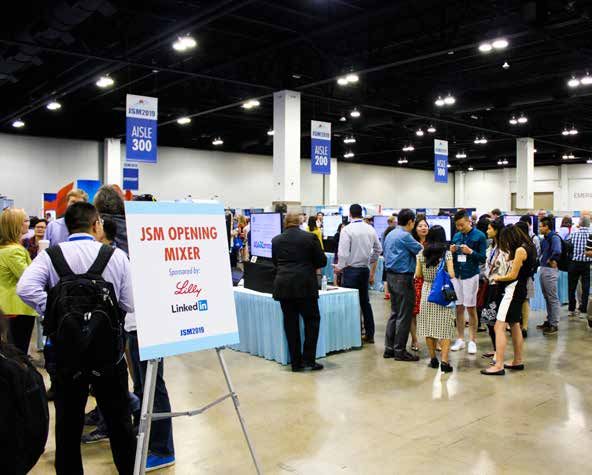
AMSTAT NEWS
              FEBRUARY 2021 • ISSUE #524
                          Executive Director
                      Ron Wasserstein: ron@amstat.org

      Associate Executive Director and Director of Operations
                  Stephen Porzio: steve@amstat.org                                   features
Senior Advisor for Statistics Communication and Media Innovation
                  Regina Nuzzo: regina@amstat.org                                      3      President’s Corner
                        Director of Science Policy                                     5      BBSW 2020 Finds New Ways to Collaborate Virtually
                      Steve Pierson: pierson@amstat.org
                                                                                       6      Special Issue Focuses on Computing in Statistics Education
           Director of Strategic Initiatives and Outreach
                 Donna LaLonde: donnal@amstat.org                                      8      CHANCE Highlights: Issue Looks at Black History Month,
                         Director of Education                                       		       Slot Machines, and Crowd Funding
                    Rebecca Nichols: rebecca@amstat.org
                                                                                       9      ASA Launches Podcast, Practical Significance
                           Advertising Manager
                        Joyce Narine: joyce@amstat.org                                 9      Pfizer/ASA/UConn Distinguished Statistician
                                                                                     		       Colloquium Returns
                           Managing Editor
                     Megan Murphy: megan@amstat.org                                   10      Skills and Strategies for Successful Negotiation
                      Editor and Content Strategist
                         Val Nirala: val@amstat.org                                   12      Podcast Series Tackles Getting a Job
           Production Coordinators/Graphic Designers                                  13      My ASA Story: Katherine Monti
                  Olivia Brown: olivia@amstat.org
                   Megan Ruyle: meg@amstat.org                                        15      FY21 Federal Budget Finalized
                   Contributing Staff Members                                         18      Celebrating Black History Month
             Kim Gilliam • Naomi Friedman • Rick Peterson

       Amstat News welcomes news items and letters from readers on matters
  of interest to the association and the profession. Address correspondence to

                                                                                     columns
  Managing Editor, Amstat News, American Statistical Association, 732 North
  Washington Street, Alexandria VA 22314-1943 USA, or email amstat@
  amstat.org. Items must be received by the first day of the preceding month
  to ensure appearance in the next issue (for example, June 1 for the July issue).
  Material can be sent as a Microsoft Word document, PDF, or within an email.
  Articles will be edited for space. Accompanying artwork will be accepted
  in graphics file formats only (.jpg, etc.), minimum 300 dpi. No material in
  WordPerfect will be accepted.
       Amstat News (ISSN 0163-9617) is published monthly by the American               22        STATS4GOOD
  Statistical Association, 732 North Washington Street, Alexandria VA 22314-           		        Data for Good Can Drive
  1943 USA. Periodicals postage paid at Alexandria, Virginia, and additional
  mailing offices. POSTMASTER: Send address changes to Amstat News, 732
                                                                                       		        COVID Vaccine Confidence
  North Washington Street, Alexandria VA 22314-1943 USA. Send Canadian                 This column is written for those interested in learning about the world
  address changes to APC, PO Box 503, RPO West Beaver Creek, Rich Hill,
  ON L4B 4R6. Annual subscriptions are $50 per year for nonmembers. Amstat
                                                                                       of Data for Good, where statistical analysis is dedicated to good causes
  News is the member publication of the ASA. For annual membership rates,              that benefit our lives, our communities, and our world. If you would
  see www.amstat.org/join or contact ASA Member Services at (888) 231-3473.            like to know more or have ideas for articles, contact David Corliss at
                                                                                       davidjcorliss@peace-work.org.
                       American Statistical Association
                        732 North Washington Street
                      Alexandria, VA 22314–1943 USA
                              (703) 684–1221                                           24 		 STATtr@k
                   ASA GENERAL: asainfo@amstat.org                                     		Students Uncertain but Hopeful About Future
               ADDRESS CHANGES: addresschange@amstat.org
                 AMSTAT EDITORIAL: amstat@amstat.org                                   STATtr@k is a column in Amstat News and a website geared toward
                   ADVERTISING: advertise@amstat.org                                   people who are in a statistics program, recently graduated from a sta-
                  WEBSITE: http://magazine.amstat.org                                  tistics program, or recently entered the job world. To read more articles
                                                                                       like this one, visit the website at http://stattrak.amstat.org. If you have
                              Printed in USA © 2021
                            American Statistical Association                           suggestions for future articles, or would like to submit an article, please
                                                                                       email Megan Murphy, Amstat News managing editor,
                                                                                       at megan@amstat.org.

                                                                   ®
    The American Statistical Association is the world’s largest
    community of statisticians. The ASA supports excellence in
    the development, application, and dissemination of statistical
    science through meetings, publications, membership services,
    education, accreditation, and advocacy. Our members serve in
    industry, government, and academia in more than 90 countries,
    advancing research and promoting sound statistical practice to
    inform public policy and improve human welfare.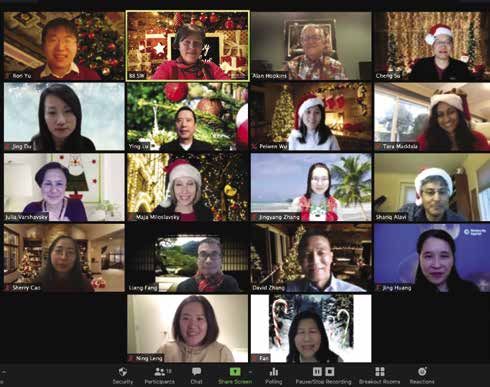
Student
    Competition
    Introduce your K–12
    students to statistics
                                                                 departments
    through the annual
                                                                   25   meetings
    poster and project                                                  Call for Proposals: JSM 2021
    competitions directed                                         		    Late-Breaking Sessions
    by the ASA/NCTM Joint Committee on
    Curriculum in Statistics and Probability. There is no cost
                                                                   26   statistician's view
    to enter either competition.                                        The Steven Miller Controversy:
                                                                  		    A Personal Perspective
    Posters (grades K–12) are due every year on April 1.
    https://bit.ly/38CWczk
    Projects (grades 7–12) are due June 1. https://bit.
    ly/35DMSJL

    Look closely at the rules for the project competition
                                                                 member news
    and rubric for the poster competition.                         28   People News
                                                                   34   Awards and Deadlines
                                                                   35   Section • Chapter • Committee News
                                                                   37   Professional Opportunities

                                                                         Apply for the Annie
                                                                                                 T. Randall Innovator
    Symposium on Data Science                                                                    Award! Page 34
    & Statistics
    Early registration is open! Register today and save.
    https://bit.ly/3smNKfp

    Members Elected
    as Fellows of AAAS
    The following members were unintentionally left off
    the list of AAAS Fellows announced in last month’s
    issue of Amstat News.

    SECTION ON SOCIAL, ECONOMIC,
    AND POLITICAL SCIENCES
                                                                        Follow us on Twitter
    John Maron Abowd, US Census Bureau/Cornell                          www.twitter.com/AmstatNews
    University
                                                                        Join the ASA Community
    Kristen Olson, University of Nebraska-Lincoln                       http://community.amstat.org

                                                                        Like us on Facebook
    SECTION ON INFORMATION, COMPUTING,
                                                                        www.facebook.com/AmstatNews
    AND COMMUNICATION
                                                                        Follow us on Instagram
    Anuj Srivastava, Florida State University                           www.instagram.com/AmstatNews
    If you or someone you know was named a new AAAS                     Subscribe to our YouTube channel
    Fellow in 2020, please let us know.                                 www.youtube.com/user/AmstatVideos

2   amstat news february 2021
president's corner

A Story of Resilience in Troubling Times
G
           reetings, fellow statisticians. Here we are,     one suit I owned that my parents had bought me
           in the throes of our dark winter of 2021. I      and donned a pair of ‘dress shoes’ that totally did
           thought we would be in a better place            not match the suit (tan vs. navy blue). But I wore
when I closed my January note to you with this              them together because I had nothing else to wear
sentence: “Let’s do our part to help society get            and wanted to at least try to ‘look professional.’
through the pandemic and address societal imper-               So there I was at JSM with my long hair, ear-
fections, and let’s do that with our statistical acu-       ring, and mismatched attire, wandering around
men and our hearts.” Alas, that closing statement           like a lost puppy, fascinated every minute by the
appears to be even more relevant today—in mid-              JSM spectacle before me—including all the peo-
January, after the US Capitol insurrection but              ple who, like me, loved statistics. Fortunately for
before the US presidential inauguration—than                me, a wonderful demographer on the faculty at
when I wrote it.                                            the University of California at Los Angeles named           Rob Santos
    I suspect many of us are miserable and stir crazy       Leo Estrada, who was a longtime ASA member
from being confined to our homes, or apprehensive           and well known to the federal statistical system,
due to a job that requires in-person interaction with       took me under his wing at these meetings.
others. Yet most of us are the lucky ones who con-             I met Leo earlier in Ann Arbor when we
tinue to be employed, a blessing too few of us enjoy        worked together on a summer research methods
in society. We have been apprised by our fellow epi-        training program for Latinx graduate students
demiologist experts that the worst of the pandemic          from across the country. He showed me around
is yet to come, especially as more contagious viral         JSM and was especially helpful at mixers, intro-
variants emerge. Moreover, we in the US are in the          ducing me to famous statisticians he knew. I was
midst of unprecedented civil upheaval and racial            pretty shy back then and would not have gone to
strife. I am optimistic that the civil unrest will abate,   those mixers alone.
but that is yet to be seen. And so I begin this second         At one point, Leo introduced me to a fairly
communication to you much as I ended my first,              high-ranking statistician in a federal statistical
encouraging you to help your family, friends, col-          agency using the typical language one draws upon
leagues, neighbors, strangers, and society cope with        for such introductions—nothing special. I will
the challenging, darker days that still that lie ahead.     never forget this. As he introduced me, I raised my
We will emerge stronger for having survived.                hand for a handshake and … the person refused
    A key to surviving and thriving is to draw upon         to reciprocate, even acting a bit annoyed by my
our personal resilience and reach out to others for         mere presence. We awkwardly exchanged oral
support. So, for my president’s corner this month, I        greetings and Leo hastily ushered me to someone
will relate a personal story of resilience from a time      else. Naturally, I was devastated. I fairly quickly
I was in graduate school in the late ’70s.                  exited the event, sequestering myself in my hotel
    I first attended the Joint Statistical Meetings in      room for the evening.
1979 when it was held in Washington, DC. I was                 I suspect this person’s recalcitrance was based
23 years old and only two years earlier had moved           on my appearance, but the reason really did not
from Texas to Ann Arbor, Michigan, for graduate             matter. It hurt. And as a shy kid at a big confer-
school in statistics. Being a native of San Antonio,        ence, I wondered if I had made a huge mistake by
moving to Michigan was the first time I had been            attending. I did not sleep well that evening.
north of Dallas, Texas. Moreover, the 1979 JSM                 This is where resilience emerged. The next
represented my first trip to the nation’s capital. I        morning brought a new perspective. Although I
was awestruck, of course, and totally intimidated           did worry that new encounters risked a repeat of
by all the seasoned statisticians around me. I knew         my terrible experience, I decided I was not going
nothing about being a ‘professional.’ I was just            to let this one instance ruin my JSM anymore
this long-haired hippie type sporting an earring            than it already had. So I went back to the confer-
(long before they became popular) as part of my             ence and met fellow students and some wonder-
evolving Chicano identity. At the JSM, I wore the           ful, seasoned statisticians. This was the start of my

                                                                                                              february 2021 amstat news   3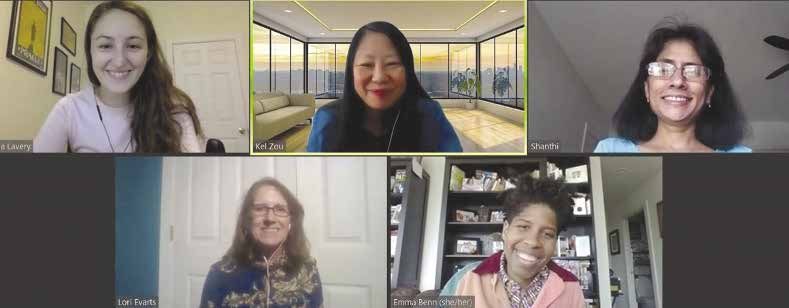
Olivia Brown/ASA
                             Attendees mingle during the Opening Mixer at JSM 2019 in Denver, Colorado. First-time interactions at professional
                             social situations can be difficult. When unproductive interactions occur, draw upon resilience to build a professional
                             network and help others who are challenged.

                 TELL US     national network of friends and colleagues that              times require us to tap those reservoirs to navi-
      Share your stories     would last a lifetime.                                       gate the day-to-day challenges we face and, more
       of resilience with
            the ASA. Tag
                                I leveraged my self-resilience, intense interest in       importantly, help those of us whose wells have
        @AmstatNews          statistics, and desire to meet ‘folks like me’ to move       run low. Helping others replenishes your own
               on Twitter.   past a humiliating experience and embrace my pas-            resilience reservoir, I promise.
                             sion for statistics. And I guess it worked because I            So I have shared my story of resilience with
                             have attended all but a handful of JSMs since then           you. I have many others, of course, including
                             and met some absolutely wonderful human beings               the one and only time I had a panic attack while
                             who happen to be statisticians.                              making a conference presentation. But that is
                                By the way, I do not hold grudges. So, guess              another story, although I now look back on that
                             what? Because we shared a passion for statistics             experience fondly because it helped me grow per-
                             and survey research, I ended up becoming friends             sonally and professionally.
                             with the senior statistician who refused to shake my            I’m sure you have your stories, too, and I
                             hand. I suppose we just needed to understand that            would love to hear them if you would like to
                             we had so much more in common than our appear-               share. As I noted earlier, we have so much more
                             ances predicted.                                             in common than not.
                                Sound familiar? That lesson applies very much
                             today. Our society could use a reality check to realize
                             we are united by our humanity. We ASA members
                             are united by our passion for all things statistical.
                                Returning to the topic of resilience, we all
                             maintain personal reservoirs. Contemporary

4   amstat news february 2021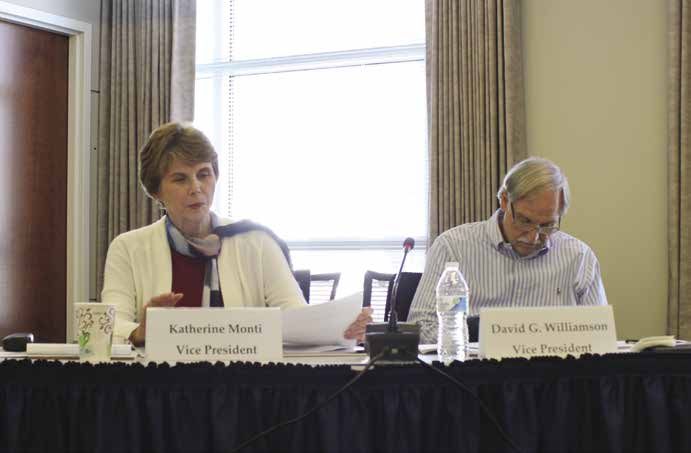
BBSW 2020 Finds New Ways
to Collaborate Virtually
                                                                                   Imola Fodor and Ruixiao Lu

T
         he COVID-19 pandemic
         brought with it many
         challenges that funda-
mentally changed the way we live
and work. The Bay Area Biotech-
Pharma Statistical Workshop
(BBSW)—which is a collabora-
tive initiative supported by com-
panies, academic institutions, and
nonprofit organizations in the
San Francisco Bay Area—adapted
rapidly and found new ways to
collaborate virtually and advance
its mission: to promote connec-
tion, leadership, growth, and
impact of the San Francisco Bay
Area statistics and quantitative
science community.
    While the pandemic pre-
vented a face-to-face event in
2020, two virtual symposiums—
both related to COVID-19—
were held. The first, with the
theme “Embracing Challenges
and Opportunities Posed by           The Bay Area Biotech-Pharma Statistical Workshop (BBSW ) held many online events in
the COVID-19 Pandemic: A             2020, including this end-of-year meeting.
Showcase of Pragmatic Examples
by Clinical Trial Statisticians,”       Whedy Wang of Theravance             in Developing COVID-19
took place August 13–14.             Biopharma opened the second             Therapies,” was held November
Cheng Su of BioMarin, BBSW           day, followed by three presen-          5. Peter Bach of Memorial Sloan
president-elect and conference       tations: “Considerations and            Kettering Cancer Center present-
chair, opened the symposium          Practices in Monitoring COVID-          ed the keynote, “The Inflexible
and delivered the welcom-            19 Impact” by Priscilla Yen of          Paradox of Scientific Research:
ing remarks. Robert Califf of        Amgen; “Safety Assessment for           Urgency Demands Patience.”
Verily/Google presented the          Studies and Submissions Impacted        The rest of the day included the
keynote address, “COVID-19           by COVID-19” by Greg Ball               following four talks: “Designing
and the Evidence Generation          of Merck; and “Summaries of             Efficient Clinical Trials During a
System.” Marcel Wolbers,             COVID-19 Infections in Clinical         Pandemic: Some Personal Lessons
Chin-Yu Lin, Zoe Zhang, and          Trials” by Mary Nilsson of Eli Lilly.   from the RECOVERY Trial”
Xin Li of Roche/Genentech            Additionally, Julia Varshavsky of       by Thomas Jaki of Lancaster
followed with “Statistical and       Occampoint moderated a panel            University; “Statistical Challenges
Executional Considerations for       discussion about how pharma/            of Designing COVID-19
Trials Impacted by the COVID-        biotech navigates COVID-19 and          Therapeutic and Prophylaxis
19 Pandemic.” Finally, Tara          what roles statisticians play.          Trials” by Julia Niewczas of
Maddala of TMbiostats mod-              The second BBSW virtual              AstraZeneca; “Balancing Speed
erated a Q&A session with the        symposium, with the theme               and Evidence in COVID-19
audience and panelists.              “Balancing Speed and Evidence           Trials” by Hemal B. Mehta of the

                                                                                                             february 2021 amstat news   5
Johns Hopkins Bloomberg School
                          of Public Health; and “A Bayesian
                          Design for COVID-19 Trials with
                                                                 Special Issue Focuses
                          Focus on Vaccines Development”         Johanna Hardin and Nicholas Horton, JSDSE Guest Editors
                          by Natalia Mühlemann and Rajat

                                                                 M
                          Mukherjee of Cytel.                               ore than 10 years ago,           They outlined the broad set of
                              To enhance the virtual confer-                Nolan and Temple             computational topics we might
                          ence experience and community                     L a n g ’s      p a p e r,   want students to encounter,
                          building, a significant investment     “Computing in the Statistics            offered ideas about how to teach
                          was made in developing a BBSW          Curriculum,” was published in           them, and discussed ways to share
                          mobile app, which participants of      The American Statistician. In that      pedagogical resources to help fac-
                          both symposiums used to view           influential paper, Deborah Nolan        ulty teach this modern material.
                          conference materials, enter a raffle   and Duncan Temple Lang wrote                The Nolan and Temple Lang
                          drawing, and interact with others      the following:                          paper has been highly cited and
                          in the BBSW community.                                                         prodded the statistics commu-
                                                                  • The nature of statistics is
                              In addition to the two sym-             changing significantly, with       nity to embrace computation as a
                          posia, BBSW organized sev-                  many opportunities to              foundation as important as math-
                          eral virtual meetups through-               broaden the discipline and its     ematics. What has changed in
                          out 2020 on topics such as                  impact on science and policy.      the intervening years? What still
                          using R in the biotech-pharma                                                  needs to change? What’s needed
                          industry, real-world data, and          • To realize this potential,           to implement curricular shifts?
                          career development. The goal              our curricula and educa-                 To further the discussion,
                          of these meetups—to increase              tional culture must change.
                                                                                                         the Journal of Statistics and Data
                          networking and information                While there are opportuni-
                                                                    ties for significant change          Science Education (formerly
                          exchange—was accomplished.                                                     Journal of Statistics Education)
                              In the leadership develop-            in many dimensions, we
                                                                    focus more narrowly on               put out a call for papers that
                          ment area, BBSW launched a                                                     addressed these questions.
                                                                    computing and call for
                          pilot mentorship program—                                                          The response was great, with
                                                                    computing concepts to be
                          project YODA—with five pairs              integrated into the statistics       14 papers and a commentary
                          of mentees and mentors. Plans             curricula at all levels.             from Nolan and Temple Lang
                          are to launch the program more                                                 making up the January 2021
                          broadly based on lessons learned.       • Computational literacy and           special issue.
                          A leadership forum also took              programming are as funda-                Nicholas Horton and Johanna
                          place that focused on developing          mental to statistical practice       Hardin provide an introduction
                          data science capabilities in bio-         and research as mathematics.         to the special issue in “Integrating
                          tech companies.                         • Our field needs to define            Computing in the Statistics and
                              BBSW has started to build             statistical computing more           Data Science Curriculum: Creative
                          strategic alliances with peer non-        broadly to include advance-          Structures, Novel Skills and Habits,
                          profit organizations such as the          ments in modern comput-              and Ways to Teach Computational
                          San Francisco Chapter of the              ing, beyond traditional              Thinking” (https://bit.ly/3c7V7ld).
                          ASA to increase its collective            numerical algorithms.                    Deborah Nolan and Duncan
                          impact. BBSW co-sponsored sev-                                                 Temple Lang reflect on their
                          eral SF ASA events, including the       • Information technologies
                                                                      are increasingly important         original paper and guidance
                          ASA virtual traveling short cours-                                             for the future in “Computing
                                                                      and should be added to the
                          es, “Empowering the Statistician                                               in the Statistics Curricula: A
                                                                      curriculum, as should the
                          with Spark” and “Machine                    ability to reason about com-       10-Year Retrospective” (https://
                          Learning and Deep Learning,”                putational resources, work         bit.ly/2MMa021).
                          and the 2020 SF ASA holiday cel-            with large data sets, and              Alex Reinhart and Christopher
                          ebration. They plan to continue             perform computationally            Genovese provide students with
                          strengthening their partnership             intensive tasks.                   practice (through code review
                          with fellow professional associa-                                              and revision) with necessary
                                                                    We need to teach these topics
                          tions locally and nationally.                                                  skills to understand how sta-
                                                                 in combination with scientific
                              The events in 2020 reached                                                 tistical methods are themselves
                                                                 problems and modern statistical
                          more than 400 participants in the                                              products and part of the statisti-
                                                                 methods that focus on ideas and
                          Bay Area. For more information                                                 cal pipeline in “Expanding the
                                                                 skills for statistical inquiry and
                          about BBSW and to connect,                                                     Scope of Statistical Computing:
                                                                 working with data.
                          visit www.bbsw.org. ■

6   amstat news february 2021
on Computing in Statistics Education
Training Statisticians to Be         and reproducible work—in
Software Engineers” (https://bit.    “Teaching Statistical Concepts
ly/3oF1nnK).                         and Modern Data Analysis
    Mine Çetinkaya-Rundel and        with a Computing-Integrated
Victoria Ellison describe the        Learning Environment” (https://
structure for a comprehensive        bit.ly/3q3nWms).
data science course taught with          Ellen Gundlach and Mark
no prerequisites that helps stu-     Ward highlight a large-scale liv-
dents “plan, acquire, manage,        ing learning community focused
analyze, and communicate the         on data science but available
findings” of large data sets in “A   to students from any major or
Fresh Look at Introductory Data      background in “The Data Mine:
Science” (https://bit.ly/3ouaqb9).   Enabling Data Science Across         to practice in “Web Scraping in
    Thomas Donoghue, Bradley         the Curriculum” (https://bit.        the Statistics and Data Science
Voytek, and Shannon Ellis pres-      ly/3saS4OW).                         Curriculum: Challenges and
ent their approach to data science       Allison Theobold, Stacey         Opportunities” (https://bit.
as creative problem solving with     Hancock, and Sara Mannheimer         ly/3bl8s9j).
a particular focus on practice and   describe—as an alternative to full       Bryan Adams, Daniel Baller,
structures to have students work     courses—workshops designed           Bryan Jonas, Anny-Claude
through repeated complete data       to provide both practical skills     Joseph, and Kevin Cummiskey
                                                                                                                Nicholas Horton
analyses in “Teaching Creative       and computational thinking           express the importance of
and Practical Data Science at        perspective to environmental sci-    multivariable thinking and
Scale” (https://bit.ly/3s6wv1D).     ence researchers who regularly       describe structures for imple-
    Aimee        Schwab-McCoy,       work at the interface of data sci-   menting it early and often
Catherine Baker, and Rebecca         ence in “Designing Data Science      into the curriculum through
Gasper interpret a survey of         Workshops for Data-Intensive         the use of computational tools
the statistics and data science      Environmental Science Research”      in “Computational Skills for
community to identify con-           (https://bit.ly/3pZzyXG).            Multivariable Thinking in
sensus curricular goals and              Frederick Boehm and Bret         Introductory Statistics” (https://
challenges, including how dif-       Hanlon detail a research project     bit.ly/3nm0YW4).                      Johanna Hardin
ficult and important it is to        that gives students practice work-       Matthew Beckman, Mine
effectively teach computational      ing with real social media data in   Çetinkaya-Rundel, Nicholas
thinking, in “Data Science in        “What Is Happening on Twitter?       Horton, Colin Rundel, Adam
2020: Computing, Curricula,          A Framework for Student              Sullivan, and Maria Tackett
and Challenges for the Next 10       Research Projects with Tweets”       motivate the importance of ver-
Years” (https://bit.ly/3s9HG9M).     (https://bit.ly/38pMmAz).            sion control tools in multiple
    Brian Kim and Graham                 Albert Kim and Johanna           courses as a component of repro-
Henke motivate and contex-           Hardin showcase a class project      ducible analysis and data acu-
tualize the need for providing       whose focus expands beyond the       men in “Implementing Version
a day-one programming plat-          data analysis cycle into an itera-   Control with Git and GitHub as
form using Jupyter Notebooks,        tion of the data analysis cycle      a Learning Objective in Statistics
GitHub, and Binder so students       where students reflect on an ini-    and Data Science Courses”
can immediately start analysis in    tial analysis and then repeat the    (https://bit.ly/2LdXPKV).
“Easy-to-Use Cloud Computing         process in “ ‘Playing the Whole          Victoria Woodard and
for Teaching Data Science”           Game’: A Data Collection             Hollylynne Lee describe the
(https://bit.ly/2LxVf26).            and Analysis Exercise with           thought process of students
    Philipp Burckhardt, Rebecca      Google Calendar” (https://bit.       working through data analysis
Nugent, and Christopher              ly/3ou8a3R).                         procedures in an intensive quali-
Genovese describe ISLE—a                 Mine Dogucu and Mine             tative study in “How Students
web-based e-learning com-            Çetinkaya-Rundel outline the         Use Statistical Computing in
prehensive platform for              basics of web scraping and suggest   Problem Solving” (https://bit.
data analysis, collaboration,        classroom activities for students    ly/39fe4zh). ■

                                                                                                         february 2021 amstat news   7
CHANCE HIGHLIGHTS
                          Issue Looks at Black History Month,
                          Slot Machines, and Crowd Funding
                          Amanda Plunkett, CHANCE Executive Editor

                          T
                                   his month, we celebrate                                            Li, Piaomu Liu, and Wenxiu
                                   Black History Month,                                               (Vince) Nan analyze rock music
                                   and this issue of                                                  projects on the popular crowd-
                          CHANCE includes a couple arti-                                              funding website Kickstarter.com.
                          cles in honor of the celebrated                                                 Ernie Walker derives the
                          month in addition to articles on                                            probabilities of winning various
                          other topics. We also have a spe-                                           slot machine jackpots in “Monty
                          cial interview to share with you.                                           Python and the Probability of
                              Rob Kass and CHANCE advi-                                               Winning the Holy Grail.” Find
                          sory editor Sam Behseta interview                                           out if these slot machines are
                          Emery Brown, professor of medi-                                             worth playing and whether
                          cal engineering and computation-                                            Walker won the jackpot in a
                          al neuroscience at Massachusetts                                            recent visit to the casino.
                          Institute of Technology, professor                                              In “Early Statistical Findings
                          of anesthesia at Harvard Medical                                            and Authorship Misattribution:
                          School, and anesthesiologist at                                             An Unsystematic Review of
                                                               CHANCE features an interview with
                          Massachusetts General Hospital.                                             the Literature,” Nigel Smeeton
                                                               MIT and Harvard professor and
                          Brown is a renowned anesthesi- anesthesiologist Emery Brown.                highlights the challenges of cor-
                          ologist statistician recognized for                                         rectly attributing original statis-
                          developing signal processing algorithms for neuro- tics research. He presents examples of work incor-
                          science data analysis and defining the neurophysi- rectly attributed to the wrong author and calls for
                          ology mechanisms of general anesthesia. He was further investigation and documentation via an
                          recently awarded the Swartz Prize for Theoretical accessible misattribution database.
                          and Computational Neuroscience. Kass and Behseta           Does driving to and from familiar destinations
                          talk with Brown about his extraordinary career and without full attention, or colloquially “on auto-
                          the path he took to get there.                          pilot,” put drivers at risk for traffic accidents? Or, are
                              James Dickens details a diversity and inclu- accidents more likely to happen on unfamiliar roads?
                          sion initiative through a data science education Johnathon Ehsani and Brian Tefft investigate these
                          partnership between American University and questions in “Crash Risk and Roadway Familiarity.”
                          DC Public Schools. He provides insight into the            In “Odds of Justice,” Mary Gray discusses pro-
                          successes, challenges, and future directions of the grams to engage underrepresented groups in the
                          program, which could serve as a model for out- statistics field. She also tackles racial discrimination
                          reach programs at other universities.                   and how statisticians may be able to offer solutions.
                              The recent rise in internet-based crowdfund-           In “Book Reviews,” John Wiorkowski reviews
                          ing poses interesting questions about successful the fictional book, Data Games. Christian Robert
                          fundraising strategies, as well as a wealth of data reviews three additional books: Understanding
                          to analyze. Projects raising funds through these Elections Through Statistics: Polling, Prediction,
                          campaigns seek donors, attaining differing out- and Testing; Principles of Uncertainty (Second
                          comes through a potpourri of project designs. In Edition); and Statistics and Analysis of Scientific
                          “Dynamics of Reward-Based Crowd-Funding: Data (Second Edition).
                          Kickstarter Rock Music Projects,” Moinak                   Learn more about CHANCE at https://chance.
                          Bhaduri, Joe Dery, Dominique Haughton, Tao amstat.org/about. ■

8   amstat news february 2021
ASA Launches Podcast, PO
DCAST
Practical Significance
Kim Gilliam, ASA Marketing and Communications Coordinator
and Practical Significance Producer
B
ig news, podcast listeners: Donna LaLonde. The hosts are
Practical Significance, the excited to sit behind the mic, ask PRACTICAL SIGNIFICANCE
ASA’s new monthly pod- the big questions, and communi-
cast, can join Stats + Stories on cate our member stories.
your playlist. Released on January “Podcasts are an extraordinari-
6, Practical Significance endeavors ly popular and effective means for Regarding the platform,
to inspire listeners with compel- communicating. They provide LaLonde shares, “I’m curious
ling stories from statistics and the opportunity to eavesdrop, as and want to learn about a lot of
data science. We’ll feature a it were, on conversations about different subjects and podcasts
diverse and engaging lineup of important topics with experts in help satisfy my curiosity and
ASA members who will share those fields,” says Wasserstein. desire to learn. Some are serious
their passions, professional initia- “We’ll be engaging with people and very structured, others are
tives, and aspirations—a deep whose careers and actions shed informal and much more conver-
dive into the work they love and light on why statistics has great sational, but all provide insights
where it’s taken them. practical significance—and any- into topics and often inspire me
The show is hosted by one who knows me, knows I love to dig deeper into a subject.” She
ASA executive director, Ron to talk. And I really love to talk adds, “Practical Significance is
Wasserstein, and director of stra- with interesting people about our opportunity, and we hope
tegic initiatives and outreach, things they care about.” yours, to learn more about our
amazing community. We plan to
talk about work and accomplish-
ments but also about pastimes
Pfizer/ASA/UConn Distinguished and pursuits outside of work.”
The inaugural episode,
Statistician Colloquium Returns Practical Significance—Episode
1 | Making Meaningful Statis-
The 26th Distinguished tics: An Interview with ASA
Statistician Colloquium webi- President Rob Santos, was
nar will take place April 21 released in January. Santos
from 3–5 p.m. shares compelling details about
The speaker will be Peter his work at the Urban Institute,
Bickel of the University outlines several goals and initia-
of California, Berkeley tives he plans to tackle during
Department of Statistics. The his tenure as association presi-
title of his presentation is “Four dent, and offers an intriguing
Excursions in Genomics.” story about his passion outside
The colloquium will be fol- the profession. We invite you to
lowed by a discussion with Liza information, visit https://bit. listen on Spotify: https://spoti.
Levina from the University of ly/35nLURC. fi/2Xkk4RM and, if you like
Michigan and Purnamrita Questions can be directed what you hear, share the podcast
Sarkar from The University to Dipak Dey at dipak.dey@ with a colleague.
of Texas at Austin. For more uconn.edu. Follow Practical Significance
on Twitter @TheASAPodcast. ■
february 2021 amstat news 9Skills and Strategies for
Successful Negotiation
Jessica Lavery
is a research
biostatistician at
Memorial Sloan
Kettering Cancer
Center. She is also
a part-time student
in the Columbia
University Doctor
of Public Health
program.
Emma Benn is an
associate profes-
sor in the Center
for Biostatistics ”Skills and Strategies for Successful Negotiation,” a panel session at the 2020 Women in Statistics and Data Science
and department Conference, featured Kelly H. Zou (top middle), Shanthi Sethuraman (top right), Lori Evarts (bottom left), and Emma
of population Benn (bottom right) and was moderated by Jessica Lavery (top left).
health science and
A
policy and the panel session titled “Skills
founding director and Strategies for
of the Center for
Successful Negotiation,”
Scientific Diversity
at the Icahn
moderated by Jessica Lavery at
School of Medicine the 2020 Women in Statistics
at Mount Sinai. and Data Science Conference,
featured Kelly H. Zou, Shanthi
Lori Evarts is an Sethuraman, Lori Evarts, and
assistant professor Emma Benn. The panelists
and the director shared their negotiation experi-
of graduate stud- ences from academia and indus-
ies of the Public try and discussed strategies for Figure 1: Live polling results: characterization of negotiation
Health Leadership navigating negotiation.
Program at the To start the session, the pan-
UNC Gillings elists polled the audience mem-
School of Global
bers to find out how they would
Public Health.
characterize negotiation. Sixty
Shanthi
percent viewed negotiation as an
Sethuraman is a opportunity to reach an agree-
senior director of ment, 36 percent as a potentially
global statistical uncomfortable discussion, and
sciences at Eli Lilly 4 percent as an interaction for
and Company. a transaction (e.g., buying a car
or house). The panelists then
Kelly Zou is PStat asked what (if anything) audi-
accredited and the ence members thought was their
head of medical biggest barrier to engaging in Figure 2: Live polling results: barriers to negotiation
analytics and real- negotiation. Results were split
world evidence across lacking the tools, skills, or when is an appropriate time to afraid of how they may be per-
at Viatris.
confidence to negotiate success- negotiate/which things are nego- ceived (20 percent), with only
fully (40 percent); not being sure tiable (33 percent); and being a small percentage of attendees
10 amstat news february 2021responding that they don’t feel
they have barriers to engaging in Further Reading
negotiation (7 percent).
Golbeck, Amanda L., Ingram Olkin, and Yulia R. Gel (Editors).
Opportunities for 2015. Leadership and women in statistics. New York, NY:
Negotiation Chapman and Hall. https://bit.ly/39u7x47
A core theme of the session was
that negotiation is not a one- Bennett, L. Michelle, Howard Gadlin, and Christophe
off event that is finished once Marchand. 2010. Collaboration and team science: A field
you accept a job. Across aca- guide. Bethesda, MD: National Institutes of Health
demia and industry, the panel- https://bit.ly/2LD4sWP
ists highlighted the need to be Lencioni, Patrick. 2002. The five dysfunctions of a team.
able to negotiate for resources,
Hoboken, NJ: Wiley. https://bit.ly/3nocW1f
including salary support, flexible
working arrangements, and pro- Zelnick, Leila. 2015. Negotiating a statistical career, part 1.
motions for students and full- Amstat News 455:16–17. https://bit.ly/38orZE2
time employees in addition to
themselves on an ongoing basis. Zelnick, Leila. 2015. Negotiating a statistical career, part 2.
These negotiations regularly Amstat News 456:20–21. https://bit.ly/3nrXYr6
occur with other individuals Jeong, Martha, Julia A. Minson, Mike Yeomans, and
and units of your organization Francesca Gino. 2019. Research: Being nice in a negotiation
or with external parties. can backfire. Harvard Business Review. https://bit.ly/3ouD5gf
Statisticians and data scien-
tists often need to negotiate with Hughes, Jonathan, and Danny Ertel. 2020. What’s your
nonstatisticians to implement a negotiation strategy? Harvard Business Review.
particular study design or statis- https://bit.ly/3nsJDuC
tical methodology that is accept-
able to both the analyst and the
other party. Additionally, when
minimum you are willing to It’s important to know your-
working to write scientific pub-
walk away with? This will help self and how you might react
lications with others, authorship MORE ONLINE
guide where to compromise and when under pressure. Resources
is something that can and should WSDS presentation
where to stand firm. It’s also for finding this out include
be negotiated at the onset. recordings are available
important to understand what Meyer’s-Briggs Type Inventory to registered attendees
Skills and Strategies for is important to the other party (MBTI) and CliftonStrengths through the conference
Navigating a Negotiation and why, and then figure out (formerly StrengthsFinder). website at https://bit.
how to work with that person Knowing your preferences and ly/3p0U7Df until August 31.
As opposed to being a com-
petition, negotiations can be so you both gain something, skills along with your potential
approached as opportunities to even if it’s not everything you weak spots ahead of time will
reach an agreement. Kelly Zou want. Think about how what help you prepare.
made an analogy for negotia- you want will help (or at least Practice, practice, practice!
tions as optimization problems, in not get in the way of ) what the Evarts suggested rehearsing the
which there are limited resources other party is seeking. conversation with another per-
and negotiations are necessary to The importance of inter- son, particularly a person who
allocate those resources in a way personal relationships cannot knows who you will be negoti-
that is optimal for both sides. be overstated. Identify the key ating with so they can get into
stakeholders in the other party character and provide a realistic
Preparing for a Negotiation and work to build a relationship sounding board.
Step one for any negotiation is to with them before and during
do your homework. Lori Evarts the negotiation. Emma Benn Presenting Your Argument
noted, “If it’s important enough referenced a recent negotiation Going into a negotiation, it’s
to negotiate on, then it’s impor- in which she needed to know important to prioritize your ask.
tant enough to go prepared.” For sports history to make a per- Zou referenced the pyramid
example, there are important sonal connection and develop a principle (see www.barbara-
questions to be answered based rapport with the person she was minto.com), in which the top
on the goals of the negotiation. negotiating with. Don’t be afraid of the pyramid represents what
What do you need to get out to go outside the box to make a you are trying to achieve. Below
of the interaction? What is the personal connection. the top triangle, the remaining
february 2021 amstat news 11three pieces of the pyramid are you,” where the emphasis is on a later date so you can further
the supporting arguments, or framing the negotiation as a consider the other party’s per-
the reasons you are trying to team effort. “We” are engaging spective and needs. When both
achieve that goal, listed in order in a negotiation, rather than “I” parties have had a chance to
of importance. For example, if am trying to get what I want out take some time away from the
you are negotiating for increased of this situation. To use welcom- negotiation, it can be easier to
computing resources, the top of ing and inclusive language, try be objective and work through
the pyramid would be the goal: to avoid saying, “My team needs the negotiation more smoothly.
increased computing resources. …” or “I need … .” Instead, say,
The bottom portions of the pyr- “What can we do here …” Your
Beyond Skills and
EDITOR’S NOTE
amid could be: (1) data sets are ask should be framed in a way
Strategies: Contending
The views expressed
here are the becoming increasingly large; (2) that allows the other party to
with Barriers to
authors’ and do not parallel computing will speed up think they are getting what they Negotiation
necessarily represent analyses; and (3) multiple users want, too. Despite being trained in strate-
those of their
need to access the data at the When thinking about how to gies for mastering negotiation,
employers. there are frequently systemic bar-
same time. The point is to start frame your case, keep in mind
with what you want to ask for, the end user and what they riers that preclude people from
and then transition to the sup- need. For example, this could successfully negotiating in the
porting evidence and reiterate mean patients need a drug to get workplace. Such barriers often
the ask at the end. on the market sooner to improve disproportionately affect people
Communication can shape their health. Acknowledging from underrepresented groups,
the negotiation experience. that you are potentially negoti- including women; those classi-
With the pyramid principle, it is ating on behalf of a larger com- fied as Black, indigenous, and
important to frame the support- munity can inform how you people of color (BIPOC); people
ing arguments in terms of how frame your position. who identify as gender noncon-
your goal helps the other party, forming and/or LGBTQ+; and
using language such as, “If we Closing the Deal non-US citizens whose visas are
have multiple users accessing the Be persistent. Not all negotia- tied to their employment.
parallel computing systems to tions will be solved in a single While there is no single way
analyze large and complex data sitting. Make use of emails, to universally overcome these
sets, your team will have results calls, and video conferencing systemic issues, Benn suggested
quicker and be able to publish to ensure the other party is pointing out biases directly.
more manuscripts this year.” engaged and on board. Given the current climate of
Shanthi Sethuraman refer- Last, Sethuraman empha- racial injustices among other
enced Jerry McGuire’s well- sized not being afraid to ask to inequities, there is heightened
known quote, “Help me help continue the conversation at awareness of how to be inclusive,
providing an opportunity to
speak up when this is occurring.
This may be something you feel
Podcast Series Tackles Getting a Job comfortable doing, or it may be
a situation in which you ask for
Richard Franzese of Certara support from a colleague.
and Glen Wright Colopy of Support from colleagues
Pod of Asclepius will host a and mentors can also come in
three-part career Q&A with the form of bringing someone
an episode each dedicated into the negotiation for you.
to undergraduate, master’s, This uses the power and privi-
and doctoral students. lege another person may have
Questions will range that you do not, whether it’s
from technical require- based on their position, gen-
ments to desirable soft skills der, race, or other characteristic.
and domain knowledge. Importantly, there is a role and
How can I get a job/intern- Franzese and Colopy will responsibility for people who are
ship if they require prior follow up the series with being heard in negotiations to
experience? This highly three episodes that focus on pull up a metaphorical chair that
practical question will be critical and scientific think- their colleagues also have a seat
asked and answered, as well. ing in data science. at the table. ■
12 amstat news february 2021MY ASA STORY
Katherine
Monti
This is a new series featuring ASA members
who share their ASA stories. Our mission is to
collect authentic and meaningful accounts of
member experiences. If you have a story you
would like to share, email the ASA’s marketing
and communications coordinator, Kim Katherine Monti is retired and lives in Elgin, Illinois. She
Gilliam, at kim@amstat.org. was most recently chief statistical scientist at Rho, Inc.
I
first joined the ASA in 1973, when I was a Council of Chapters representative to the board.
graduate student in the department of biosta- Most recently, I was elected as an ASA vice president.
tistics at The University of North Carolina. I
was basically told that if I was going to be a pro-
fessional statistician, then I should join the largest
organization of professional statisticians in the
world. (If you want to be a grown-up statistician,
The more involved you get, the
then … .) So, I joined.
Although I attended JSM most years and had more effective your networking …
been slightly involved through grad school and
the next 16 years in St. Louis, my ASA involve-
ment level ratcheted up when I moved to Boston
in 1991. I joined the chapter’s planning commit- How did I get so involved? I showed up, did what
tee and later was elected secretary, then president. needed to be done, and—the next thing I knew—
By 1995, my career had drifted into the pharma I was appointed or elected to something else. I
world and I was appointed to the executive com- said “yes.”
mittee of the Biopharmaceutical Section, later You might wonder if all this volunteer work has
becoming a section representative to the Council taken time. Yes, indeed, but, overall, it has been
of Sections and eventually section chair. exceedingly worthwhile. The more involved you
Next came ASA committees. My major efforts get, the more effective your networking is, the more
there involved a five-year stint as a member (and you learn, the more friends you make, and the more
chair one year) of the Advisory Committee on you are invited to do. I very strongly suspect my
Continuing Education (the ACCE selects the short election as ASA Fellow was supported by my ASA
courses) and a term on the Fellows Committee, also involvement. And it is extremely satisfying to know
with a one-year chair position. Snuck in between that, in my own way, I have been of service to my
some of those appointments, I was elected as the professional organization.
february 2021 amstat news 13Katherine Monti attends an ASA board meeting as a vice president. She served from 2018–2020, and David Williamson served as vice
president from 2017–2019.
What’s been most rewarding about “job description,” I made one. If there was a need
for updating an operations manual or other docu-
ment and I was there? You guessed it. My finger
my involvement? So many stories! prints are on, to a greater or lesser extent, the assign-
ment of chapters to districts and regions (https://
So little space! I’ll pick three. bit.ly/3nwWKee), the tips sheet and FAQ sheet
(https://bit.ly/2XoEhWG) for fellows nominations,
the Biopharmaceutical Section operations manual
(https://bit.ly/3q4lxIo), and the recently updated ASA
One of my greatest honors was being appointed to the constitution and bylaws, to name a few.
Fellows Committee. What an amazing experience it Last but by no means least, one of the greatest
turned out to be. Over my three years on the commit- pleasures has been working with the amazing crew
tee, we reviewed a total of 299 nomination packets. It who inhabit—or at least used to inhabit—ASA head-
just blew me away to see how many statisticians have quarters in Alexandria. Ron Wasserstein inherited
made so many astounding contributions to statistics, some very talented folks when he became executive
to the great human endeavor, and to the ASA. Wow! director about 13 years ago and has brought in some
Next up: my trail of documentation. Trail of other top-notch professionals, creating a highly effec-
what, you ask? Documentation. My contributions to tive team. The support that crew offers is amazing.
the ASA include some sort of improved documenta- Just today, I asked for some information, needing it
tion for just about every corner of the ASA in which quickly, assuming it even still existed. I had the answer
I’ve been active. Maybe I have a fear of failing to do in under 10 minutes! They always pull off JSM, but
what I am supposed to do, but whenever I had a JSM 2020? That worked amazingly well. We are all so
“job” to do, I wanted to know what I was supposed very fortunate as a profession to have such able leader-
to do. When there was nothing that approached a ship and assistance. ■
14 amstat news february 2021FY21 Federal Budget Finalized
Steve Pierson, ASA Director of Science Policy
C
ongress and the Trump Table 1: FY16–FY21 Budgets for NIH, NSF, AHRQ,
administration finalized and the 13 Principal Federal Statistical Agencies
the federal government’s %
fiscal year 2021 (FY21) budgets Change
from
in the waning days of 2020, FY16 FY17 FY18 FY19 FY20 FY21 FY20
nearly three months after the
start of the fiscal year. The Research Agency (amounts in millions of dollars)
National Institutes of Health NIH 32311 34229 37084 39084 41684 42934 3.0%
(NIH), National Science NSF 7463 7472 7767 8075 8278 8487 2.5%
Foundation (NSF), and several
AHRQ 334 324 334 338 338 338 0.0%
federal statistical agencies
received increases of a few per- Statistical Agency (amounts in millions of dollars)
cent, which is encouraging sup- BEA 105.1 103.8 99.0 101.0 108.0 111.9 3.6%
port in the current fiscal envi- BJS 41.0 45.5 48.0 43.0 43.0 45.0 4.7%
ronment (see Table 1).
BLS 609.0 609.0 612.0 615.0 628.0 642.0 2.2%
Many of the statistical agen-
cies are nonetheless facing fis- BTS 26.0 26.0 26.0 26.0 26.0 26.0 0.0%
cal challenges after years of Census 1370.0 1457.0 2814.0 3821.4 7558.0 1103.6 -85.4%
purchasing power loss as they EIA 122.0 122.0 125.0 125.0 126.8 126.8 0.0%
seek to address ever-present
ERS 85.4 86.8 86.8 86.8 84.8 85.5 0.8%
difficulties, including measur-
ing a dynamic economy, popu- NASS 168.4 171.2 191.7 174.5 180.3 183.9 2.0%
lation, or societal conditions; NCES 261.0 258.5 258.5 260.5 263.5 276.5 4.9%
declining response rates; and NCHS 174.4 174.4 174.4 174.4 174.4 175.4 0.6%
modernizing to take advantage
of technological, methodologi- NCSES 58.3 59.7 62.4 64.0 65.0
cal, and other advances (e.g., ORES 25.9 24.0 27.0 35.4 36.08 37.0 2.8%
increasing data availability and SOI 37.8 34.3 33.7 35.9 35.6 37.4 4.3%
data-linking opportunities).
The FY16–FY21 budgets for NIH, NSF, AHRQ, and the 13 principal federal statisti-
The increase of $1.25 bil- cal agencies, including percentage increases over prior year for finalized FY21
lion for NIH sustains a remark- budgets. The NCHS budget was restructured in FY21 to include $14 million that
able bicameral, bipartisan run had been regularly provided through a public fund. The FY16–FY20 budgets
of six straight years of at least were adjusted to make the levels comparable of the years. Relocation costs for
such increases, resulting in 42 BLS in FY20 and FY21 are not included above. FY21 figures are estimates.
percent growth in the NIH
budget since FY15. Congress million (2.2 percent) to $642 Service (ERS). Specifically, law-
also supported the administra- million. An additional $13 mil- makers stated they are “deeply
tion’s requested increases for lion was provided for the BLS concerned about the ongoing
the economic statistical agen- to relocate from its current staffing crisis at NCES” and
cies, which the administration location in Washington, DC, requested “a report outlining
proposed in recognition of the to Suitland, Maryland, where it how the department will increase
importance of “economic statis- will be co-housed with the US staffing at NCES” and an analy-
tics for businesses and everyday Census Bureau and BEA. sis exploring ways to give NCES
citizens to make informed deci- Congress also included in more control over its allocated
sions and confidently invest in the report language accompa- budget. They also directed the
America’s future.” Specifically, nying the appropriations bills BJS “to release data in a time-
the budget for the Bureau of guidance regarding agencies ly manner and in accordance
Economic Analysis (BEA) that have been a focus of ASA with its publication calendar.”
increased $3.9 million (3.6 per- advocacy: National Center for Regarding the ERS and sister
cent) to $111.9 million and the Education Statistics (NCES); USDA agency National Institute
budget for the Bureau of Labor Bureau of Justice Statistics (BJS); for Food and Agriculture
Statistics (BLS) increased $14 and USDA Economic Research (NIFA), lawmakers requested
february 2021 amstat news 15to the administration’s request
to transfer NCES’ assessment
responsibilities—which has a
$165 million budget in FY21—
to a new center and transfer
the appointment of the com-
missioner from the president to
the director of the Department
of Education’s Institute of
Education Sciences. Congress
also maintained the budget
for the ERS and Agency for
Healthcare Research and Quality
(AHRQ), rejecting the admin-
istration proposals to cut their
Figure 1: The budgets of the seven mid-sized statistical agencies normal- respective budgets by 27 percent
ized to their FY09 levels, along with the GDP deflator to account for inflation.
and 25 percent.
Budget restructuring for ERS in FY15 and ORES in FY19 are accounted for in
the graph to allow for comparison over this time period. One-time moving While most statistics agen-
costs in FY16 for BEA are also omitted. [Key: BEA, Bureau of Economic Analysis; cies received modest increases
BJS, Bureau of Justice Statistics; BTS, Bureau of Transportation Statistics; ERS, for FY21, the story is concerning
USDA Economic Research Service; NCSES, NSF National Center for Science and when one considers their budgets
Engineering Statistics; ORES, Social Security Administration Office of Research, over the last dozen years. As shown
Evaluation, and Statistics; SOI, IRS Statistics of Income Division]
in Figures 1 and 2, all but three of
the 12 agencies have lost purchas-
ing power since FY09.
For four of the agencies, the
loss of purchasing power is greater
than 12 percent. The loss of pur-
chasing power due to inflation
is further illustrated in Figure 3,
where the loss is even larger for
the BJS and National Center for
Health Statistics (NCHS) when
compared to FY10. In the case of
BJS, the larger funding in FY10
and FY11 is likely due to short-
term investments to improve the
National Crime Victimization
Survey, which may at least partial-
ly explain the steep drop in FY12.
The large increase in the bud-
Figure 2: The budgets of five larger statistical agencies normalized to their get for the National Center for
FY09 levels, along with the GDP deflator to account for inflation. Census is Science and Engineering Statistics
omitted because of the large changes in the decennial census cycle. Budget (NCSES) in FY14 and FY15, as
restructuring for NASS in FY15 and NCHS in FY15 and FY21 are accounted for
observed in Figure 1, is almost—
in the graph to allow for comparison over this time period. Relocation funding
for BLS is omitted. [Key: BLS, Bureau of Labor Statistics; EIA, Energy Information if not entirely—due to enhance-
Administration; NASS, National Agricultural Statistics Service; NCES, National ments to the Survey of Doctorate
Center for Education Statistics; NCHS, National Center for Health Statistics] Recipients that increased the sam-
ple size from 47,000 to 120,000.
In fact, as explained in a June 2020
the National Academies “con- House report language stated, Amstat News article (see https://bit.
duct symposia to elucidate “The loss of institutional knowl- ly/3blgsHk), the NCSES still faces
the effects of the relocation of edge [ERS] has suffered will take many of the budget challenges
each agency.” This refers to the years to overcome.” as the other agencies despite the
2019 relocation of the ERS and Also newsworthy is what is increase. To that point, an ASA
NIFA from Washington, DC, not in the final budget. For the analysis found NCSES has a bud-
to Kansas City, Missouri. The NCES, Congress did not agree get to staff ratio of $1.1 million
16 amstat news february 2021You can also read


