Eview - World Harp Congress
←
→
Page content transcription
If your browser does not render page correctly, please read the page content below
SPRING 2020 • VOLUME XIII, NO. 6

World Harp congress

  eview   THE OFFICIAL PUBLICATION OF THE
              WORLD HARP CONGRESS, INC.

           14 T H WO R LD
           HAR P CONG R E SS

           14 E G CY N G R E S
           T E LY N AU ’ R BY D

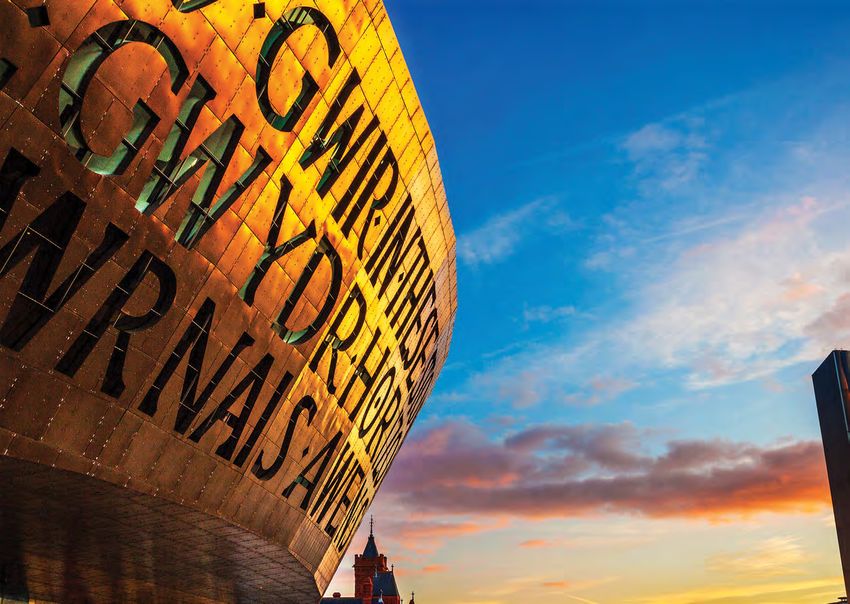
           CA R D I F F, WA LE S
           CA E R DY D D , CY M R U

   P O S T P O N E D TO
   6 -12 A U G U S T 2 0 2 1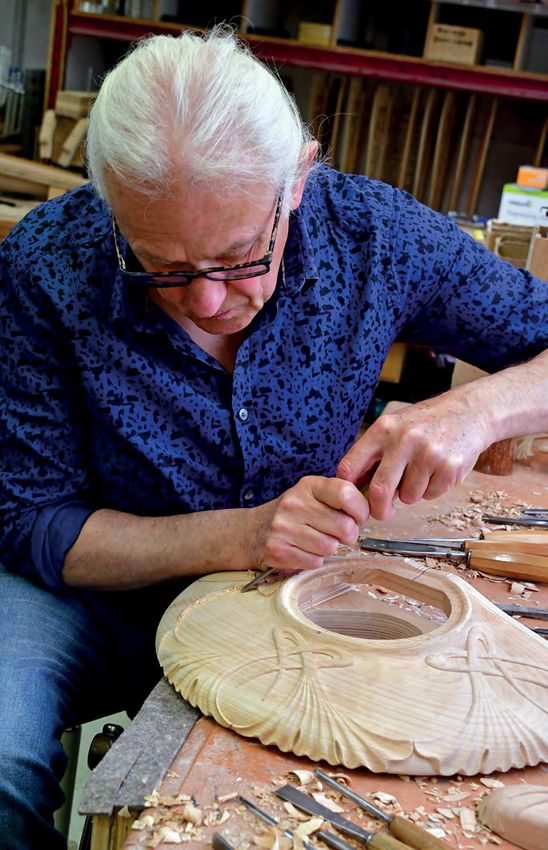
WE ’ R E B U SY AD DI N G
                             DOWN LOADAB LE P D FS …

www.harp.com
The best site for ordering strings, music and harp accessories.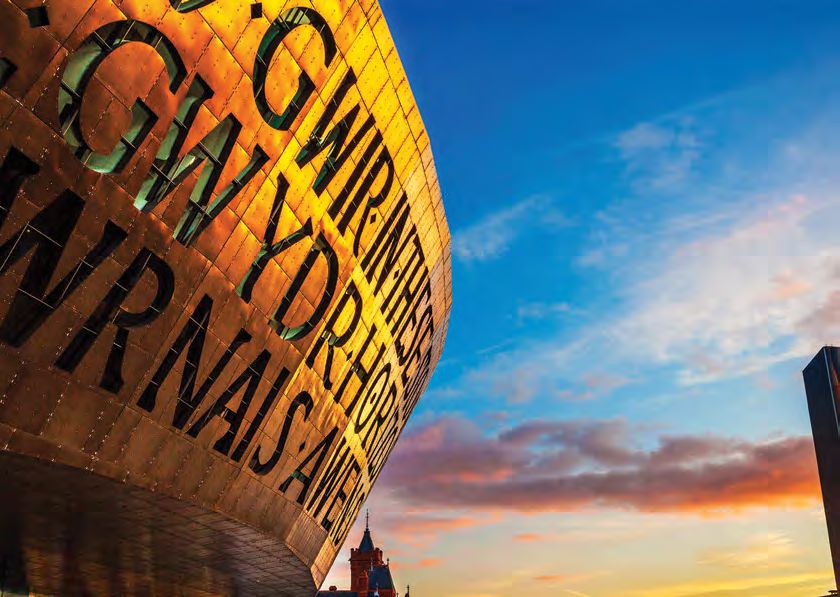
Carve Out Tomorrow

     Camac Centre Paris    Workshop & Offices
           92, rue Petit   La Richerais BP15
     75019 Paris, France   44850 Mouzeil, France

         www.camac-harps.com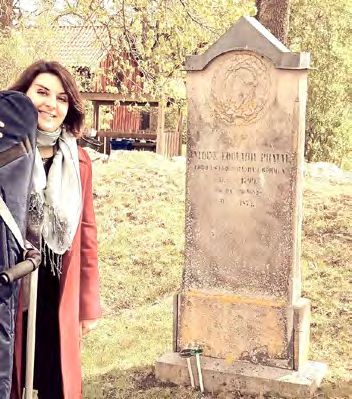
WORLD HARP CONGRESS, INC.
               Founder: Phia Berghout, The Netherlands

  The World Harp Congress was established in 1981 and incorporated in 1982. It
originated from the Harpweeks in The Netherlands, organized by Phia Berghout and
Maria Korchinska, that first met in 1960. The WHC is held every three years around the
world and seeks to promote the exchange of ideas, stimulate contact, and encourage
the composition of new music for the harp.
                                                                                           Phia Berghout
1983 Maastricht, The Netherlands                          2002 Geneva, Switzerland
1985 Jerusalem, Israel                                    2005 Dublin, Ireland
1987 Vienna, Austria                                      2008 Amsterdam, The Netherlands
1990 Paris/Sèvres, France                                 2011 Vancouver, British Columbia, Canada
1993 Copenhagen, Denmark                                  2014 Sydney, Australia
1996 Tacoma/Seattle, Washington, USA                      2017 Hong Kong, China
1999 Prague, The Czech Republic                           2021 Cardiff, Wales, United Kingdom

WORLD HARP CONGRESS, INC.                                 MEMBERS OF THE CORPORATION
Founder: Phia Berghout, The Netherlands                   Daphne Boden, United Kingdom
Founding Chair: Ann Stockton, USA                         Alexandre Bonnet, The Netherlands
Founding Artistic Director: Susann McDonald, USA          Clíona Doris, Ireland
Founding WHC Review Editor: Linda Wood Rollo, USA         Mario Falcao, Portugal/USA
Chair Emerita: Patricia Wooster, USA                      Mercedes Gómez, Mexico
                                                          Kumiko Inoue, Japan
Founding Committee                                        Mieko Inoue, Japan
Phia Berghout, The Netherlands                            Kathy Kienzle, USA
Mario Falcao, Portugal/USA                                Sheila Larchet Cuthbert, Ireland
Kumiko Inoue, Japan                                       Susann McDonald, USA
Marcela Kozikova, Czechoslovakia                          Isabelle Perrin, Norway/France
Susann McDonald, USA                                      Lieve Robbroeckx, Belgium
Sylvia Meyer, USA                                         Natalia Shameyeva, Russia
Robert A. Ouimette, USA                                   Ernestine Stoop, The Netherlands
Lucile Rosenbloom, USA                                    Helga Storck, Germany
Deane Sherman, USA                                        Karen Vaughan, United Kingdom
Ann Stockton, USA                                         Linda Wood Rollo, USA
                                                          Patricia Wooster, USA
                                                          Elena Zaniboni, Italy

BOARD OF DIRECTORS
Chair: Kathy Kienzle, USA                                  Clíona Doris, Ireland
Artistic Director: Isabelle Perrin, Norway/France          Mario Falcao, Portugal/USA
Associate Artistic Director: Karen Vaughan,                Lucrecia Jancsa, Argentina
  United Kingdom                                           Jung Kwak, Korea
Vice-President: Alexandre Bonnet, The Netherlands          Marcela Méndez, Argentina
Vice-President: Mieko Inoue, Japan                         Kaori Otake, Japan/Canada
Vice-President: Mercedes Gómez, Mexico                     Şirin Pancaroğlu, Turkey
Secretary: Lieve Robbroeckx, Belgium                       Nicoletta Sanzin, Italy
Treasurer: Jaymee Haefner, USA                             Ernestine Stoop, The Netherlands
Editor, WHC Review: Isabel Moretón Achsel, Germany         Helga Storck, Germany
                                                           Caryl Thomas, Wales, United Kingdom
Milda Agazarian, Russia                                    Guan Wang, China
Kirsten Agresta Copely, USA                                Patricia Wooster, USA
Ann Benjamin, USA                                          Angela Yau, China
Maria Cristina de Carvalho, Brazil                         Ann Yeung, USA
                                                           Dan Yu, China

HONORARY BOARD OF DIRECTORS
Bernard Andrès, France                                    Sergiu Natra, Israel
Pierre Bartholomée, Belgium                               Paul Patterson, United Kingdom
Marco Betta, Italy                                        Libor Pesek, Czech Republic
Robert Freeman, USA                                       R. Murray Schafer, Canada
Pierick Houdy, France                                     David del Tredici, USA
SPRING 2020 • VOLUME XIII, NO. 6
World Harp congress
eview THE OFFICIAL PUBLICATION OF THE
WORLD HARP CONGRESS, INC.
14 T H WO R LD
HAR P CONG R E SS
14 E G CY N G R E S
T E LY N AU ’ R BY D
CA R D I F F, WA LE S
CA E R DY D D , CY M R U
P O S T P O N E D TO
C O N T E N T S
6 -12 A U G U S T 2 0 2 1
SPRING 2020 • VOLUME XIII • NO. 6
3 WORLD HARP CONGRESS NEWS
Cover design by Petra Bryan. Letter from the Chair
Greetings from the Artistic Director
Greetings from the Fourteenth World Harp Congress Chairs and Program
Overview
Focus on Youth 2020/2021
10 HARP HISTORY
Anton Pratté (1796-1875) – Delphine Constantin-Reznik
Victor Salvi - Harpist. Entrepreneur. Philanthropist.
EDITOR
Isabel Moretón Achsel
14 SPOTLIGHT
ADVERTISING MANAGER
Sonja Westberg Israel Harp Contest 1959-2019 – Julia Rovinsky
GRAPHIC DESIGN/LAYOUT
Playing For and With Dancers – Cynthia Price-Glynn
Petra Bryan
The World Harp Congress Review is pub 19 IN MEMORIAM
lished biannually in November and May Samuel Milligan
and is distributed to over 50 countries. The
ideas and opinions expressed in this
Milica Baric
publication are those of the writers and not Nona Ventura Rosenthal
necessarily those of the World Harp Zlata Bernatović
Congress, Inc.
Memberships to the World Harp
Congress, address changes, and other 23 INTERNATIONAL FESTIVALS AND COMPETITIONS
business matters should be directed to: Singapore HARPFEST 2019
Leanna Johnson, Membership Chair International Harp Competition “Marcel Tournier” in Cosenza
14501 Montfort Drive, #1625
Dallas TX 75254, USA Slovenian International Harp Competition
Email: membership@worldharpcongress.com Nippon Harp Competition and International Festival
The WHC Review is included in membership
dues.
International Harp Competition in Szeged
International Harp Competitions and Festivals At-A-Glance
Advertising in the WHC Review is open to
all harp-related businesses and events as
well as schools and conservatories. Dead 28 NEW MUSIC
lines for ad copy are September 1 and
March 1. Advertising copy, payment and
Rhona Clarke: Seen From Above
inquiries should be directed to: Recent Premieres and Publications
Sonja Westberg
1234 Evans Road, Apt 414
San Antonio Texas 78258 30 NATIONAL NEWS
Email: whcr.ad@gmail.com
News items should be directed to the 41 MEET THE CORRESPONDENTS
official correspondents of each country.
Poland
Editorial letters and photos must be
re
ceived by 15 August (Fall issue) and
15 February (Spring issue). Articles must 42 WORLD HARP CONGRESS CORRESPONDENTS
be submitted by 1 June (Fall issue) and
1 December (Spring issue). Please direct
all material to: 42 INDEX OF ADVERTISERS to the World Harp Congress
Isabel Moretón Achsel, Editor Review
Lange-Hop-Strasse 76
30559 Hannover, Germany
Email: whcr.moreton@gmail.com 43 NATIONAL HARP ASSOCIATIONS OF THE WORLD
ISSN 1542-9415
www.worldharpcongress.org
© 2020 World Harp Congress, Inc.
All rights reserved.
printed on recycled paper
Become a member of the
                                               World Harp Congress
                          Be part of the worldwide harp community and support the only
                          international organization that hosts a full week harp congress
                                       in a different country every three years.
             Membership bene�its include :
              • Subscription to our biennial WHC Review, which includes world-wide harp
                news, interviews, harp history, new music, and international festivals
              • Eligibility for discounted harp insurance through Anderson Harp Insurance Group
              • Timely/Speci�ic Information about upcoming Congresses
              • Opportunities for professionals to perform or present at Congresses
              • Opportunities for students to apply for Focus on Youth, masterclasses,
                mock orchestra audition, and workshops at Congresses
              • Online membership directory
              • Access to International Harp Archives, Audio and Video Lending Libraries,
                Radio Interviews and much more
                                            Please visit the website to become a member:
                                             www.worldharpcongress.com/membership

               Is it time to renew your membership?
                                        Please visit the website to renew you membership:
                                           www.worldharpcongress.com/membership
                If you cannot renew your membership online, you will �ind a registration form
                        for download on the website to send to the Membership Chair at
                                   membership@worldharpcongress.com.
         If you wish to pay in Euros please contact Alexandre Bonnet at harpalexbonnet@gmail.com.

                                                             ANNOUNCEMENT

                                                                                  Congratulations to St. Petersburg, Russia,
                                                                                                host of the
                                                                                        15th World Harp Congress!

                                                                                  The co-chairs will be Sofia Kiprskaya and
                                                                                           Elizaveta Alexandrova.
The Mariinsky Theatre in St. Petersburg, venue of the 15th World Harp Congress.

                                                  www.worldharpcongress.com
WORLD HARP CONGRESS NEWS

                       Letter from                                                          Greetings from the
                       the Chair                                                            Artistic Director

Dear Friends,                                                           Dear Colleagues and Friends,
   We are so sorry to announce the postponement of the 14th                It is with deep sadness that I write this message, as our 14th
Congress in Cardiff. You will find in this issue the wonderful pro-     WHC planned for July in Cardiff has had to be postponed to
gram that the Cardiff team has put together. We hope that seeing        August 2021.
this will encourage those of you who already registered to carry           These past few weeks, the world, our lives and the immediate
your registration to the 2021 Congress. Also, if you have already       future have drastically changed, impacting us all. But when this
purchased airline tickets to Cardiff, you might save money by           unprecedented situation is over we will need more than ever to
transferring the flight dates to 2021 instead of asking for a refund.   bring our music and ourselves together.
   I sincerely hope that you and your families are healthy and             The Cardiff team has done extraordinary work to put togeth-
are managing to cope with this world-wide disaster. I am                er one of the best programs we have ever had. At this point they
especially thinking of those of you who rely on free-lancing for        intend to keep it just as planned,hoping that everyone involved
concerts and gigs to support yourselves and your families. This         will be available for the new dates.
must be especially difficult for you. I hope you are able to find          As a number of you have already paid for registration (and
ways to continue to make music. Many of us are learning new             had probably booked your travel), I would suggest that it will
ways of teaching online so we can stay in touch with our stu-           be best to carry it forward instead of cancelling.
dents. These are probably skills that will sometimes be helpful            In the meantime, I wish you all a positive and fruitful quaran-
when this particular situation is over.                                 tine and look very much forward seeing you in 2021 in Cardiff!
   At the Board of Directors meetings in France last summer             With my warmest regards,
the Board decided on the site of the 15th World Harp Congress.
It will be in St. Petersburg, Russia. The main venue will be the
historic Mariinsky Theatre, one of the most famous concert
venues in the world. Our host committee co-chairs will be Sofia         Isabelle Perrin, Artistic Director
Kiprskaya and Elizaveta Alexandrova. I hope you will start              WHC Board of Directors
planning now to attend this Congress, in one of the most beau-
tiful cities in the world!
   I look forward to seeing many of you next year in Cardiff!
Stay well!

Kathy Kienzle, Chair
WHC Board of Directors

14th World Harp Congress Organizing Committee: Cardiff 2021
Dear World Harp Congress Supporter                                         Consequently, we will be making all tickets and delegate
   Due to the ongoing Covid-19 Coronavirus pandemic, it is              passes already purchased for the 2020 event, eligible for trans-
with great regret that we have taken the decision to postpone           fer to the new dates in 2021, and the Early Bird Ticket Discount
the 14th World Harp Congress due to take place in Cardiff this          Deadline will be extended until 1st April 2021.
July. All performance venues have been closed until further                The welfare of our community of artists, volunteers and audi-
notice following UK and Welsh Government advice.                        ences is our priority throughout this time of uncertainty, and the
    As we are uncertain as to when the situation will change, we        decision has not been made easily. We are aware that many of
have decided to make an early announcement that will allow you,         you will have already incurred travel costs, and we hope that by
our delegates, performers, volunteers, exhibitors, and sponsors, as     making this decision in good time, you will be able to re-arrange
much time as possible to change travel and accommodation plans.         flights and hotels for 2021 without any financial implications.
   There will be a considerable amount of work involved in                 We thank you for your support and patience while we work
rescheduling the Congress and we ask for your patience and              through the finer details, and on behalf of The 14th World Harp
cooperation through this process. We have provisionally secured         Congress Organizing Committee, we wish you all well, and look
alternative dates with our venues in the Summer of 2021 that            forward to welcoming you to Wales in 2021.
will enable a straightforward postponement whilst maintaining                                                     — Caryl Thomas, Chair
this year’s performance schedule as closely as possible.                                                — Catrin Finch, Artistic Director
                                                                                           — Stephen Burkitt-Harrington, Event Director

Review • Spring 2020   3                                                                                     Back to the Table of Contents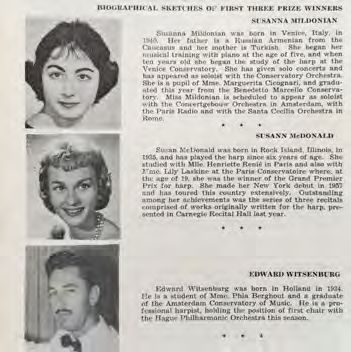
WORLD HARP CONGRESS NEWS

     WORLD
      HARP
    CONGRESS
      2021
      CARDIFF | WALES

      6-12 AUGUST 2021

THE WORLD HARP CONGRESS IN CARDIFF HAS BEEN POSTPONED
TO 6-12 AUGUST 2021 DUE TO THE OUTBREAK OF THE COVID-19 VIRUS.
    N EWS FROM TH E CO-CHAI R S

                                     Wales is the “Land of the        the spectacular Wales Millennium Centre, St David’s Hall and
                                     Harp”, and Cardiff, it’s         the new Royal Welsh College of Music and Drama building,
                                     thriving and cosmopolitan        which will play host to the Congress.
                                     capital city. In the past          There will be special exhibitions in some of our wonderful
                                     decades it has been              museums, a chance to hear different harps and musicians from
                                     completely rejuvenated,          every corner of the globe, and if you are a harpist, a chance for
                                     and today regularly plays        you to join in and be a part of this most memorable celebration.
                                     host to international              We feel very privileged to be leading a wonderful, artistic
cultural, political and sporting events. Cardiff and Harp             team of internationally renowned harpists and colleagues, and
Festivals are synonymous - having hosted two World Harp               together we will create a Congress to be remembered.
Festivals in the 1990s, the 7th European Harp Symposium in              We look forward to welcoming you to Cardiff in August 2021!
2007 and the Lyon and Healy Awards in 2013.                             Information regarding all aspects of attending the Congress,
  Harps and harpists will take over Cardiff for the week. We          can be found on the website www.whc2021.wales.
have wonderful old and new venues in which we will hold                                — Catrin Finch and Caryl Thomas, Co-chairs of
world class concerts, exhibitions, and masterclasses, including                             the World Harp Congress 2021 in Cardiff

PR E LI M I NARY PROG RAM H IG H LIG HTS

CLAR SACH /WOR LD

    We are delighted that our program includes music to interest and entertain all harpists and that our program of clarsach and
    world harps is diverse and imaginative. There is a WHC Clarsach Ensemble ‘Come and Play’ daily rehearsal session with Eira
    Lyn Jones, concluding with a performance at the end of the week, and recital performances by Corrina Hewat, Savourna
    Stevenson and Lauren Scott. And we are thrilled to showcase world music from Tunisia, Senegal, Bolivia, Colombia, Turkey,
    Tyrol, Paraguay, Syria, Finland, Scotland and Ireland, featuring such contrasting instruments as the kora, the bandoneon, the
    llanera, the kantele, qanun and the çeng,

                             Corinna Hewat                            Lauren Scott

    Eira Lynn Jones                              Savourna Stevenson

4     Review • Spring 2020                                                                                Back to the Table of Contents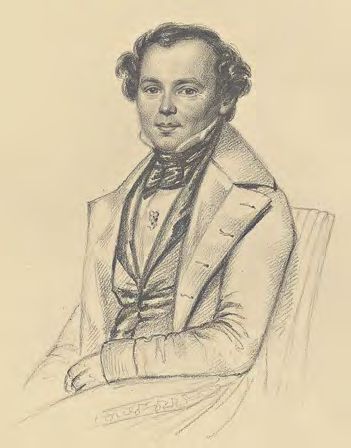
WORLD HARP CONGRESS NEWS

   EVE N I NG CONCE RTS

     Opening Party with Gwyneth Wentink and Remy van Kesteren.

     A World of Harps, featuring Maya Youssef (Syria) qanun; Sara Susso,
     (Gambia) kora; Leonard Jacome (Venezuela) llanara; Hermanos
     Corbalan (Paraquay) paraguayan harps; Hiroko Sue (Japan) koto; and
     folk group Calan (Wales).
                                                                                                                                    Remy Van Kesteren

     Catrin Finch and Anneleen Lenearts, respectively, play a newly
                                                                                                         Gwyneth Wentink
     commissioned harp concerto by Sally Beamish and the Glière Harp
     Concerto, with the BBC National Orchestra of Wales.

     An evening of Double harp concertos by Elias Parish Alvars, Gerardo
     Tamez, Sally Beamish and Karl Jenkins featuring Sofia Kiprskaya &
     Agnes Clement, Mercedes Gomez & Lucretia Jancsa, Catriona McKay
     & Chris Stout, Jana Bouskova & Ieuan Jones.
                                                                                        Sara Susso                                    Calan
     A Jazz Spectacular with Park Stickney, Pia Salvia, Ophelia Grimm,
     Rossitza Milevsca, Amanda Whiting, Chube and Brenda Dor-Groot.

     A visit to St Fagans for traditional harp music, singing, dancing, and
     storytelling presented by Welsh folk artists.

     The Harp in Opera Gala Concert with Sir Bryn Terfel, Alexander
     Boldachev, the six Royal Harpists, a surprise ensemble, and the Orchestra
     of Welsh National Opera.
                                                                                                               Catrin Finch                Anneleen Lenaerts
     There will be Pre and Post performances every evening featuring among
     others Rachel and the Red Socks, Maja Kauhanen, Ranagri, Esther
     Swift, and Ensemble Sangineto.
                                                                                         MITCH JENKINS

                                                                                                         Catriona Mckay

                                                                                                                                          Sofia Kiprskaya

                                              Amanda Whiting trio         Bryn Terfel

                       Park Stickney

                                                                                                         Jana Bouskova

                                                                                                                                          Ieuan Jones
                                                                          Ranagri
                       Rachel and the Red Socks     Alexander Boldachev

         14TH WHC IN CARDIFF | POSTPONED TO 6 TO 12 AUGUST 2021
         THE COMPLETE PROGRAM CAN BE FOUND AT THE NEW! WEBSITE: WHC2021.WALES
         TWITTER: @WHC2020       FACEBOOK: WORLD HARP CONGRESS 2020

Review • Spring 2020      5                                                                                                   Back to the Table of Contents
WORLD HARP CONGRESS NEWS

     WORLD
      HARP
    CONGRESS
      2021
      CARDIFF | WALES

      6-12 AUGUST 2021

THE WORLD HARP CONGRESS IN CARDIFF HAS BEEN POSTPONED
TO 6-12 AUGUST 2021 DUE TO THE OUTBREAK OF THE COVID-19 VIRUS.
    PR E LI M I NARY PROG RAM H IG H LIG HTS (continued)

    CE LE B R ITY R ECITALS AN D I NTE RVI EWS
    Recitals by some of the world’s most celebrated recitalists, including Sivan
    Magen, Emmanuel Ceysson, Maria Luisa Rayan, Alice Giles, Letizia
    Belmondo, Naoko Yoshino, Sylvain Blassel and Maria Krushevskaya.
    There is also an opportunity to hear Susann McDonald, Linda Wood-
    Rollo and Skaila Kanga in conversation with Kimberley Rowe.

                                                                                              Emmanuel Ceyson          Maria Luisa Rayan
    CHAM B E R M USIC
    Chamber music is well represented with a daily series of Harp Quartets
    and Duos with artists such as Mannheim, Canna, and Clouds Harp
    Quartets, and Duos Julia Rovinsky & Katerina Englichova, Patrizia
    Tassini & Nicoletta Sanzin, and Elizaveta Alexandrova & Lubov
    Tkachenko; also a Harp Plus One Series featuring Violin, Trumpet,
    Bassoon, Guitar and Voice; a daily chamber ensemble recital with guests
    such as The Hermes Experiment, Pelleas Ensemble, Ensemble Caplet,
    The Elysian Trio, and a recital of septet music for the harp featuring
    Chantal Mathieu, Josh Layne, Ian McVoy and Veronika Lemishenko.                           Letizia Belmondo         Esther Swift
    There is also a Thursday morning recital of Chamber Orchestra works
    featuring soloists Anne Marie O’Farrell, Emily Mitchell, Gabriella
    Dall’Olio, Anne-Sophie Bertrand and Liucile Vilimaite.

                                                                                                                 Maria Krushevskaya

                                                                                        Sylvain Blassel

        Patrizia Tassini         Julia Rovinsky            Katerina Englichova     Naoko Yoshino                 Anne-Sophie Bertrand

6     Review • Spring 2020                                                                                Back to the Table of Contents
WORLD HARP CONGRESS NEWS
CONTE M PORARY/ E LECTRO HAR P
Most of these performances will take place in the Richard Burton Theatre
that boasts a state of the art sound and lighting facilities, which will be
used to great effect to create an immersive experience. There are recitals
of contemporary works by Ernestine Stoop, Uno Alexander Vesje,
Caroline Lizotte, and Mai Fukui, while Rhodri Davies and Hélène
Breschand present the experimental harp, and Ghislaine Petit-Volta
introduces us to new developments with the Midi Harp. Uno Alexander Vesje Caroline Lizotte
H ISTOR ICAL HAR P
Our Historical Harp program starts with a recital by Andrew Lawrence-
King and ends with a concert of Baroque Concertos played by Maria
Cleary on the triple harp. Throughout the week there are further recitals
on instruments of historical interest such as the Spanish cross-strung
harp and an early Erard as well as numerous lectures on topics from the Ernestine Stoop HarpDuo
Ravel
ornaments of JS Bach to the history of the Welsh triple harp.
Ghislaine Petit-Volta
JAZ Z HAR P
Jazz Harp is well represented throughout the week, and, as well as the
Tuesday night Extravaganza, there will be performances by Motoshi
Kosako, Hugh Webb, Tara Minton, Julie Campiche, Patrice Fisher,
Christine Lutz and Alina Bzhezhinska. Please look out for jazz
workshops and lectures as well.
Andrew Lawrence King
Brenda Dor-Groot Motoshi Kosako Tara Minton
Rossitza Milevska
GERALD LANGER
Alina Bzhezhinska Patrice Fisher Julia Campeche
Chube
14TH WHC IN CARDIFF | POSTPONED TO 6 TO 12 AUGUST 2021
THE COMPLETE PROGRAM CAN BE FOUND AT THE NEW! WEBSITE: WHC2021.WALES
TWITTER: @WHC2020 FACEBOOK: WORLD HARP CONGRESS 2020
Review • Spring 2020 7 Back to the Table of ContentsWORLD HARP CONGRESS NEWS
WORLD
HARP
CONGRESS
2021
CARDIFF | WALES
6-12 AUGUST 2021
THE WORLD HARP CONGRESS IN CARDIFF HAS BEEN POSTPONED
TO 6-12 AUGUST 2021 DUE TO THE OUTBREAK OF THE COVID-19 VIRUS.
PR E LI M I NARY PROG RAM H IG H LIG HTS (continued)
WOR KSHOPS
There are on offer a wonderful array of workshops, for which delegates
can register prior to the start of the Congress, including Jazz with Stina
Hellberg-Agback, South American rhythms with Alfredo Orlando Ortiz,
Improvisation with Monika Stadler, or try your hand on the Welsh triple
Harp with Robin Huw Bowen, the Japanese Koto with Hiroko Sue and the Alfredo Rolando Ortiz
Paraguayan harp with Sixto Corbalan.
Monika Stadler
LECTU R ES
There is a total of thirty-three lectures included in the program, and all
covering various topics of interest. There are numerous historical talks
on composers, harpists, instruments and performance practices, several
lectures on teaching and well-being, as well as presentations on role of the
harp in film music, a lecture on how to overcome performance anxieties
and how to create that perfect tone. Sixto Corbolan
Robin Huw Bowen
MOVE WE LL, PLAY B ETTE R
Daily interactive workshops helping us to understand the structure of
the harpist’s body and how we use it, with Alexander Technique teachers
Imogen Barford, Fiona Tree, and Dr. Boni Rietveld.
E NSE M B LES AN D OPE N STAG E
There will be harp ensemble performances throughout the day in the Jaymee Haefner
Carne Foyer, and we are thrilled to program ensembles from the UK,
Imogen Barford
USA, Ireland, Singapore, China, Hong Kong, Hungary, Poland, Italy, France
and Malaysia. The Open Stage will be live throughout the week and will
showcase some traditional and innovative performances.
14TH WHC IN CARDIFF | POSTPONED TO 6 TO 12 AUGUST 2021
THE COMPLETE PROGRAM CAN BE FOUND AT THE NEW! WEBSITE: WHC2021.WALES
TWITTER: @WHC2020 FACEBOOK: WORLD HARP CONGRESS 2020
8 Review • Spring 2020 Back to the Table of ContentsWORLD HARP CONGRESS NEWS
MASTE R CLASSES
The Focus of Youth platform is a well-established event at every Congress, and this year, thirty young harpists have been
invited to perform. Young artists are also asked to participate in master classes given by Milda Agazarian, Jaymee Haefner,
Sarah O’Brien, Florence Sitruk, Letizia Belmondo, as well as Heather Downie on the Clarsach, and the Orchestral
Auditions, so popular in Hong Kong in 2017 is being re-run this year again.
FOCUS ON YOUTH
Johanna Ander Ljung Alexandra Bidi Huw Boucher Heather Brooks Maria Bubnova Marcelina Dabek
age 21 age 18 age 17 age 20 age 16 age 17
Sweden France United Kingdom United Kingdom Russia Poland
Yuki Dempo Julia Dietrich Qi Han Janice Hur Mai Kamiyama Amanda Kengor
age 14 age 16 age 20 age 15 age 17 age 18
Japan Germany PR China South Korea Japan USA
Hyejin Kim Rena Kojima Aimee Lam Woojin Lee Melody Leung Eve Lung
age 18 age 22 age 16 age 22 age 21 age 13
South Korea Japan United Kingdom United Kingdom Hong Kong PR China
Victoria Markova Jernej Misic Virginia Pestugia Claire Schuurmans Almos Tallos Kaitlyn Tan
age 16 age 16 age 20 age 16 age 17 age 12
Bulgaria France Italy The Netherlands Hungary Singapore
Claire Thai Anwen Mai Thomas Elena Vallebona Evelien Vaneysendeyk Valerie Wai Ki Sim Renee Yadav
age 20 age 21 age 21 age 18 age 15 age 15
USA United Kingdom Italy Belgium PR China Singapore
THANK YOU FOR SUPPORTING THE FOCUS ON YOUTH PROGRAM IN CARDIFF!
• The Otake Family •
Review • Spring 2020 9 Back to the Table of ContentsHARP HISTORY
Anton Edvard Pratté (1796-1875)
A Bohemian Harpist in Sweden
by Delphine Constantin-Reznik
As founder and artistic director of the Pratté International for example the chief-conductor of the ancestor of my very
Harp Festival and Competition, I had the pleasure to write in orchestra, the Norrköping Symphony Orchestra! In addition to
the previous edition of the WHC review an article about the his music mastery, Pratté was also a talented painter and poet.
first edition of the Festival, that was taking place in May 2019 Despite dramatical sight-loss and various other health issues,
in Norrköping, Sweden. he seemed to have performed concerts on a very high level until
This time, I would like to focus on the personality of the the end of his life, that occurred on his eightieth year, in 1875.
recently rediscovered Swedish harpist and composer Anton The composing style of Pratté is a cross-over between clas-
Edvard Pratté (1796-1875), once described by his contempo- sical elements that remind of Mozart, Haydn, Hummel or
raries as ”the Harp King of the North”, who wrote more than two- Boieldieu and Romanticism, including influences by Beethoven,
hundred pieces and enjoyed an highly-praised career as a harp Weber and the Italian Bel Canto. He is unanimously praised as
virtuoso, both in Scandinavia and Continental Europe, alongside a composer by the critics for “his savoir-faire , his sense for
with other illustrious figures such as Elias Parish-Alvars (1808- instrumentation, full and harmonic, as well as his sense for form”.
1849) and Nicholas-Charles Bochsa (1789- 1856). A critic inter- He wrote concertos, chamber music works with or without
estingly compared Pratté ś playing with the latter, stating that harp, overtures, symphonies, grand oratorios, hunter’s song,
Pratté was “the teacher” and Bochsa “the student”! official pieces for the Swedish Royal Court and his composi-
Anton Edvard Pratté was born as Georg Anton Brát in Haida, tions are also including numerous virtuosic works for solo-
Bohemia (nowadays part of the Czech Republic), into a large harp, often Fantasies based on Opera themes or folk melodies
German-speaking family of marionette/puppet masters. The coming from the European regions and countries where he
Brát family puppet theater company was widely well-known was performing.
and extremely popular, and the childhood of Pratté was more As Pratté was the one playing his compositions, he sadly did
or less an endless touring together with his family all over not seem to have been willing to publish his works during his
Northern Europe. Young Pratté was early on noticed by numer- lifetime. That is why we have been to this day able to uncover
ous newspapers, as “playing wonderfully on his David Harp dur- only a small part of his scores, after we first heard totally by
ing the show interludes”.
During a tour in Sweden and still a teenager, he decided to
run away from a brutal father and a harsh lifestyle, changed his
name to Anton Edvard Pratté and embraced an international
solo career, playing mostly his own compositions.
Countless enthusiastic reviews about Pratté concerts, that
always seemed to have attracted a lot of audience, are to
be found in Swedish as well as international newspapers:
“an authentic and genuine artist, that offers to his audience
elegant and precious compositions, in the best style.” (Wiener
Allgemeine Musikalische Zeitung, 1847), “miraculous tech-
nique”, “deep expression”, ”extraordinary verve and virtuosity”,
”delicate and energetic touch, artistic perfection”, ”impresses in
an indescribable way”, ”a true master, that reaches the point
where any kind of difficulties between the musician and the
instrument ends” (various Swedish newspapers). From all this
information we can see that he was a virtuoso of high calibre,
however there is still a mystery to unfold about with whom and
where he learned to play the harp and compose.
Pratté claimed to have received from the Russian Tsar him-
self the Erard harp that he was carrying around all over Europe
on an especially made carriage. Amazingly enough, despite the
tremendous success he had in most of the European music
capitals and the multiple offers for permanent positions in
major orchestras including the Swedish Royal Opera, Pratté
chose instead to live most of his adult-life in the quiet region
of Eastern Sweden, traveling between different aristocratic
estates where he could stay in exchange of music teaching.
He also was very active in the region as a conductor, being
Anton Edvard Pratté in 1839.
10 Review • Spring 2020 Back to the Table of ContentsCome to meet us in Cardiff
HARP HISTORY
coincidence his name for the first time a couple of years ago,
but our research work is still fully ongoing, as well as being in Exclusive handcrafted
the process of publishing and recording his wonderful music.
Some of his pieces including the harp concerto, performed by wooden music stands
myself, can already be found on Youtube.
His wonderful music can be heard this summer in Cardiff Light & dismountable for the touring harpists
at the World Harp Congress, where I will be giving a lecture- Harp arrangements edited CMeditions
concert about Pratté ś life and work. Welcome!
Made in France
www.clavelmusic.com
Delphine Constantin-Reznik at Anton Pratté’s grave.
Often praised for her warm and powerful sound, her natural musicality
and flawless technique, the french harpist Delphine Constantin-
Reznik belongs without a doubt to one of today´s most prominent
representative of her instrument based in Scandinavia.
She has been occupying for ten years the Principal Harp´s chair of
one of Sweden´s leading orchestras, Norrköping Symphony Orchestra
and is also the artistic director of the Pratté International Harp
Festival and Competition in that same town.
Mrs Constantin-Reznik is also is a very active soloist, who has on
her repertoire most of the major harp Concertos. She is regularly
invited to perform together with such orchestras as the National
Symphony Orchestra of Ukraine, Kharkiv Philharmonic, Minsk
Chamber Orchestra, Argovia Philharmonic, Pori Sinfonietta (Finland),
Dalasinfonietta, and Västerås Sinfonietta (Sweden), Akademisches
Orchester Zurich, and of course her own orchestra, Norrköping
Symphony Orchestra. She also had the great honor to perform the
Parish-Alvars Concertino for two harps on several occasions together
with Catherine Michel.
Mrs Constantin-Reznik is regularly invited to perform recitals and
chamber music concerts with various formations at festivals and
prestigious venues all over Europe and beyond.
www.delphineconstantinreznik.com
www.pratteharpfestival.se
Review • Spring 2020 11 Back to the Table of ContentsHARP HISTORY
Victor Salvi
Harpist. Entrepreneur. Philanthropist.
4 March 2020 marks the 100th birthday of Victor Salvi. This
tribute was published in the program book of the 13th World
Harp Congress Hong Kong 2017 (Evening Concert Series) and is
reprinted by kind permission of Salvi harps. – Ed.
Victor Salvi was the youngest son of the Venetian instrument
maker Rodolfo Salvi, who moved his atelier from Venice to
Viaggiano, a small town in southern Italy with a deep musical
instrument making history. Later, in order to support the musical
career of his eldest son Alberto, Rodolfo moved to Chicago where
Victor was born in 1920. Young Victor was naturally drawn to the
harp, as he grew among them. Rodolfo’s laboratory was already
building harps, as well as other string instruments, and his first Victor Salvi with Lily Laskine (1893-1988).
teacher and sister, Aida, who was a professional harpist with a
Chicago Civic Opera. Also, his older brother Alberto was already
a world-renowned harp soloist and virtuoso by the time Victor
was born. Victor himself became a professional harpist in 1938
when he began touring with our ensemble group playing con-
certs from the Midwest to the East Coast until the United States
entered World War II. He then joined the Navy where he did
routine maintenance work until it was discovered that he was a
harpist and was transferred to Illinois’ Great Lakes Naval Station
to join their concert band. After the war, Mr. Salvi successfully
auditioned and toured the United States as a soloist with the St.
Louis Chamber Ensemble and later performed with the New York
Philharmonic and NBC Symphony Orchestras under such con-
ductors as Toscanini, Szell, Monteux, Mitropoulos, dan de Sabata. Victor Salvi talking to Pierre Jamet (1893-1991).
Once in New York City, he began to think about how the harp attributed the sonority of his instruments to the unique single
could be improved and following his father’s steps he opened a shell constructing of the bodies and the reinforcement by wood-
harp repair shop and then began the designing and building of en ribs. Later, he moved the construction of the harp mechanism
the “new” Salvi. to the village of Sainte Croix, in Switzerland, a town renowned
In 1954, Mr. Salvi, with the collaboration of a few crafts- for precision mechanics, active in watchmaking and precision
men, aspired to create a harp with a different type of sound machinery such as typewriters and music boxes. He is credited
and after much experimentation he constructed his first pro- with contributing numerous significant mechanical advance-
totype. In 1956, he moved to Italy and founded his new com- ments to the harp including the first to have a rust-proof linkage
pany at the 16th century Villa Maria, in Genoa. The Salvi harp system as well as producing a method to strengthen the neck.
was met with increasing suc- His strong belief in research and development is still a corner-
cess and after about a dozen stone of the Salvi company today.
years, the company outgrew In 1987, Mr. Salvi surprised the harp world when he acquired his
the site, and moved north to main competitor, Lyon & Healy Harps, saving his company from a
the Italian region of Piemonte very uncertain future so that it could continue to focus on making
known for its Baroque furni- the Lyon & Healy harp as it had since 1889. Also in the 1980s, the
ture with master carpenters, Salvi company expanded to music publishing, and string manufac-
wood sculptures and inlay- turing by acquiring the British company Bow Brand.
ers. In 1970, Mr. Salvi was Starting with a few skilled workers, with a desire to create
awarded the first prize at the his own harp, the group of harp manufacturing and associated
Exhibition of Crafts (Mostra businesses that Mr. Salvi has assembled over his lifetime is now
del Artigianato) in Florence. over 300 employees worldwide.
In 1974, he moved firm to Over the years, Mr. Salvi acquired the most comprehensive
Piasco, a small town in the collection of antique in the world, including rare harps manufac-
southern Varaita Valley near tured by Cousineau, Nadermann, Renault, Erard, Egan, Pleyel, as
the city of Turin, where well as the first Lyon & Healy ever constructed, these instruments
Victor Salvi with the great Russian it remains today. As a harp have been given a permanent home in the first museum solely
harpist Vera Dulova (1909-2000). maker and innovator, Mr. Salvi
12 Review • Spring 2020 Back to the Table of ContentsHARP HISTORY
dedicated to the harp at The
Victor Salvi Museum in Piasco.
Through the Victor Salvi
Foundation, works by
renowned individual compos-
ers were commissioned by Mr.
Salvi, including Valeri Kikta
(harp and voice; harp and
cello, harp and violin, harp and
viola), Kenji Bunch (violin and
harp), Zhou Long (flute, harp
and string orchestra), Thomas
Rajna (harp and violin), James
Bassi (harp and chorus), and
Paul Sarcich’s Uncover the harp!
- commissioned for the 50th
Anniversary of Salvi Harps in
2004. The Foundation present-
ed HRH The Prince of Wales
with a specially crafted harp
Victor Salvi working on a harp in the factory.
made in his honor by Salvi
Harps for use by the Royal
Early picture of Victor Salvi. Harpist. He has given also given
grants to the International Harp
Archives at Brigham Young University and promoted many
young harpists with debut recitals and recordings.
Victor Salvi is recognized and respected worldwide for his
innovations and for his support of harpists and harp-related
activities. In 2004 Mr. Salvi was made an Honorary Member of the
Royal College of Music (Hon RAM) by HRH The Prince of Wales.
He was recognized with the Distinguished Award for Service to
the International Harp Community by the World Harp Congress
in 1993 and was celebrated for his contribution to the harp by the
American Harp Society in 2007. In 2013 he was made a Knight of
the Order of Merit of the Italian Republic (Cavaliere dell’Ordine al
Merito della Repubblica Italiana) by the President of the Italian
Republic. He was awarded honorary citizenship in the towns of:
Piasco, Costiglione di Saluzzo, Viggiano, Châteauneuf de Grasse
(in France where he lived), and Cartagena (Colombia). He also
received many other awards and recognitions throughout the
2004 with HRH The Prince of Wales.
world, as an entrepreneur and as a philanthropist.
Mr. Salvi, according to this wishes, now rests in Piasco, next
to his factory, and his harps.
Victor Salvi. Victor Salvi traveling in Germany in the early 1950s.
Review • Spring 2020 13 Back to the Table of ContentsSPOTLIGHT
Israel Harp Contest –1959-2019
by Julia Rovinsky
Do miracles happen at all? Sometimes they do.
Try to imagine Israel in 1959: the Old City of Jerusalem is
under Jordanian control and the existence of the State itself is
still in great danger; hundreds of people are living in tents as
the housebuilding industry can’t manage the numbers of new-
comers. Already, in the beginning of the year, the food rationing
card system is cancelled (which measured 500 gr of meat and
10 eggs per person per month) and it will still be a year before
the first supermarket in Tel-Aviv will open…
And here appears a man who decides that the time has come
for Israel to become a more fully mature and for him this meant
– The Arts.
First three prize winners in 1959: Susanna Mildonian, Susann McDonald, and
Edward Witsenburg.
Last year we celebrated the 60th anniversary of this won-
derful Contest, and all the First Prize Winners of all previous
Igor Stravinsky (left) and Aharon Zvi Propes (middle) in 1962. International Harp Contests had been invited to perform the var-
ied repertoire of musical pieces composed for the harp accom-
His name was Aharon Zvi Propes. Not being a musician panied by the musicians of the Israeli Philharmonic Orchestra.
himself but being a true music lover: he had a rare The Israeli Harp Contest has become the highlight of musical
combination of patriotism -in the naive, idealistic, and non- activity in the field, and contest has set the harp in its appropri-
political sense of the word, and also mundane practicality. And ate position in the world of music. Every three years, the world’s
he offered to hold an International Harp Contest in Israel – the most outstanding harpists gather in Israel, bringing with them
first one in the history of music. the magical sounds of the ancient instrument. The upcoming
The harp is one of the first known musical instruments men- contest will be the 21st, and will take place in October 2021.
tioned in the Bible. The Great Jewish King David was known as
a harp player. Actually, his rise to power started from playing
his magic instrument to delight king Saul. The harp therefore
brings with it not only sounds, but also a story, the story of the
Jewish people and the story of music.
Music is unique as it touches the heart before the words which
come from the brain. It is unique in its capability to bewitch and
enthrall, and in its possibility to bring down walls and open hearts,
just as David, who is known played well, showed us, and as all
music lovers know. It has been thousands of years for the harp’s
enchanted sounds to resonate in the air. The harp is the magical
poet of any ensemble or orchestra. The harp’s soft sound carries its
listeners to other dimensions and the playing of harp strings cre-
ates an beautiful atmosphere that blend the present and the past.
The harp’s shape, beauty and its delicate sound served as
inspiration to many artists including Rembrandt. Marc Chagall Members of the contest jury and prominent visitors during the contest in 1962.
Among them: Tsutomu Mimura, Pierre Jamet, Jacqueline Borot, Lucile Johnson
even designed a gold coin for the contest with the figure of King Rosenbloom, Maria Korchinska, Lucile Lawrence, Phia Berghout, Clelia Giatti
David playing harp. Aldrovandi, Inga Graae, Klaria Szarvas, Joseph Tal, and Aristid von Würtzler.
14 Review • Spring 2020 Back to the Table of ContentsSPOTLIGHT
Sixty years ago, the con-
test was a ground-breaking Born in St. Petersburg, Julia Rovinsky graduated from the Rimsky-
event, it was the harbin- Korsakov St. Petersburg State Conservatory. In 1988 she was a prize
ger of all competitions, the winner of the All-Union Harp Competition in Moscow.
Since immigrating to Israel in 1991 Julia Rovinsky has become a
world’s first ever competi-
central figure on Israel’s concert scene. She appears regularly as a
tion for the harp. Over the soloist with different orchestras, mainly with the Israel Philharmonic
years, even though other Orchestra under the baton of Maestro Zubin Mehta. She also appeared
international and national in many chamber music ensembles and took part in a number of
competitions followed, the leading festivals in Israel and around the world. In 2002 she won the
Prime Minister Prize for best performance of Israeli music.
International Harp Contest
In recent years, Julia Rovinsky has recorded several CD’s, both for
in Israel still remains the solo harp and chamber music and her arrangements for harp are very
most prestigious in this popular in concert scenes all over the world. She is successfully given
field. Above all, the Israeli Master classes in Europe, South and North America and Asia.
Contest provides the best Julia Rovinsky is Principal Harpist of the Israel Philharmonic
stage for talented young Orchestra and Professor at the Buchmann-Mehta School of Music,
Winner of the 1962 contest: Lynne Turner. musicians, the world over, Tel-Aviv University. Since 2016 she is the Music Director of the
International Harp Contest in Israel.
who chose to play this unique instrument.
Last year’s celebration continued for a whole month that
included many celebratory concerts which featured our Festive
Gala Concert, where seven winners of prior competitions gath-
ered on one stage: Lynne Turner and Emily Mitchell from the
United States; Chantal Mathieu and Anaïs Gaudemard from
France; Gwyneth Wentik from The Netherlands; Lenka Petrovic
from Serbia; and our own Sivan Magen from Israel.
L to R: Gwyneth Wentik (1998), Lynne Turner (1962), Emily Mitchell (1979), Julia
Rovinsky (Artistic Director), Anaïs Gaudemard (2012), Lenka Petrovic (2018),
Sivan Magen (2006).
The preceding month we
also organized a concerts
with the Israel Philharmonic
Orchestra featuring Yuying Berklee Harp
Chen from China, the win-
ner of the 19th Contest and by Felice Pomeranz
many other concerts. A guide to improvisation,
Sixty years later, we chord reading, arranging and harmony
proudly take stock of our for lever and pedal harp.
Winner of the 19th Contest: Yuying Chen. achievements. Most of the
greatest and best-known $19.99
harpists in the world are the prize winners of our competi- Available at harp outlets and
tions. Since our inception, more than six hundred contestants www.gildedharps.com
have participated in our twenty contests; they have performed
musical pieces especially created by Israeli composers, thus Introducing our latest publication:
enriching the harp repertoire and the world of music.
We look forward seeing you in October 2021 at the 21st
Contemporary Etudes for Harp
International Harp Contest in Israel. by Felice Pomeranz and the
Berklee Harpists
Available May 30, 2020
Review • Spring 2020 15 Back to the Table of ContentsSPOTLIGHT
Playing For and With Dancers:
What a Harpist Has Learned about Music from Those Who Move to It
by Cynthia Price-Glynn
After nearly 40 years Cynthia Price-Glynn retired as Principal and the musician cannot look at each other for visual cues, or
Harpist with Boston Ballet in 2016. During that time, she also because they are separated like when one is on stage and the
played with the Bolshoi Ballet, Royal Ballet of London, New other is in the orchestra pit. A pulse connects the two – even if
York City Ballet, American Ballet Theater, and more when they it is an agreed-upon silent count.
performed in Boston. A popular saying among musicians is that “there are two
Introduction tempos in ballet – too fast and too slow.” There is an explana-
One of the most memorable compliments I ever received was tion. Ballet tempos are determined by the choreographer’s
from a young man who said “I love hearing the beautiful music vision, the stories and roles that are acted by the dancers, and
you make as you dance with your hands. ”A similar remark was the skills of the dancers. Dancing fast displays brilliant techni-
stated by a dancer with Boston Ballet who said “Your hand cal virtuosity and élan. Dancing to slow music exhibits amazing
movements are as expressive as our bodies.” I was amazed technical control and expressiveness. The solo dancers often
to be told that by playing the harp I was ‘dancing’ as well as have individualistic interpretations and feelings about their
making music. This reminded me of the quote from the cho- roles and steps – which a conductor accommodates with the
pace of the music that supports them. We
all know the technical challenge of playing
music fast in which the phrasing is often
self-evident and automatic. The challenge
to playing slow is primarily musical. The
music can seem naked and exposed. For it to
make sense you have to calculate and feel the
phrasing, purposefully connecting one note
to the next which wind and string instrumen-
talists can do smoothly and expressively with
their breathing and bowing, but can be less
fluent with our plucked notes when there is
so-much-space between notes.
Classical and Romantic ballet cadenzas
usually have no indicated meter and are sup-
posed to feel “free”. I suggest “finding” a mel-
ody and imposing a subtle meter, especially
on cascading arpeggios. This mainframe
helps gauge the evolution of crescendos and
Ballet poses are like music fermatas. Musicians focus on intonation and balance of notes. diminuendos, accelerandos and rallentan-
Dancers focus on the lines they create with their bodies.
dos, and can create a structure, pace, and
reographer and founder of the New York City Ballet Company direction to the cadenza that the dancer can follow and feel. If
George Balanchine: “Ballet is when you hear the dance and see these evolutions are in your head, they will smoothly manifest
the music.” The compliments made me wonder if playing for in your fingers.
and with dancers in ballet and concert dance influenced my In general, I have found that if you play a cadenza really fast it
harp technique and my musicality. Upon reflection I concluded often sounds like an unphrased etude and those listening might
that yes it has – in many ways. This consequence is the result of be impressed by your facility but also often eager for you to get
working with choreographers, with or without a conductor, with through it as quickly as possible (especially in symphony situa-
groups of dancers, and with individual dancers – especially from tions). But if you make music of it, by “finding” a melody, subtle
Boston Ballet ballerina Sarah Wroth. Together she and I spoke pulse, and phrasing, the listeners let you take as long as you want
and performed a presentation at the Boston Harp Festival in because they enjoy and are impressed with your musicality.
2010 that can be viewed on YouTube under the title “The Harp in Phrasing
Ballet”. In that program Sarah outlines what dancers need from It is important to know that whereas musicians count music
musicians in three words: Pulse, Phrasing, and Predictability. by measures, each dancer has an individual way of counting
Pulse the music. In general, they count the phrases – not the bars
An agreed-upon tempo and rhythm is, of course, necessary or in the written meter. Actually, their way of counting seems
to synchronize the musician and the dancer. This pulse can be very musical, whereas, in comparison, our musician way seems
subtle or strong, regular or irregular, metronomic to flexible to mathematical. I suggest you try the dancers’ way with your
very rubato. A conductor is, of course, helpful when the dancer own music. Select a piece or section of a piece, ignore the bar
16 Review • Spring 2020 Back to the Table of ContentsSPOTLIGHT
lines, count all the beats in a phrase, flowing from the first to in your harp part that enable you to constantly be alerted to
the last note. You may be phrasing a melody or the harmonic watch the conductor.
accompaniment that supports it. Do the notes feel connected as Warm-ups
part of a flow that moves? This brings us to another influence In preparation for rehearsals and performances ballet danc-
dance can have on music. ers do very careful and gradual warm-ups of their entire bod-
Is a phrase ending a musical thought or leading into the next ies, which are their instruments-of-expression. They start
one? We classical harpists have a tendency to relax and often holding on to a barre mindfully exercising the small muscles of
slow down at the ends of phrases – as if we are looking back their hands, wrists, feet, and ankles. Next they move the larger
or completing a thought. Yes – of course we must be able to do muscles of their arms, legs, and torsos. After about 30 minutes
that when it is appropriate. But also, be able to play phrases they are ready to bound around the studio using their whole
that push the music ahead, looking forward – not necessarily bodies in leaps, turns, twists, and sprints. These whole-body
getting faster, but with an intention of “I have more to add” warm-ups are often done in a class led by a ballet master and
like another sentence in a conversation. Counting the phrases accompanied by piano music that influences their movements
rather than the measures, can help you feel where you should to be graceful and fluid. What can a musician learn from the
be “looking” – back or ahead. Also, watching
If you need this: “Ahow choreogra-
Midsummer Night’s Dream”, Balanchine choreographer, Pacific Northwest
above? First to respect ALL the muscles, joints, and every part
Ballet
phers and the dancers phrase the music with their movements of our bodies we need to play our instruments-of-expression.
and gestures can illuminate what the music is saying. When Can you think of any part of the body that a pedal harpist
the Mark Morris Dance Company performed Bach’s Double does NOT use? Even our noses are in-use with the need to
Concerto for Violin and Oboe at Tanglewood in 2004, Morris breathe as we play. There are many excellent harp technique
had the singers and instrumentalists books available to guide you in creat-
learn the dance steps. Singer Jose ing your own personal warm-up. I
Lemos was quoted in the Boston suggest aiming for relaxed flexibility,
Globe: “The experience made me coordination, and control – by being
more free. (...) In performing, singers aware-of, and nurturing ALL your
get so caught up in the right notes body parts. Below are some sugges-
(…) and (…) precise rhythm that we tions:
can lose touch with what the music Keep in mind that our fingers start
is about. From Mark and the danc- at the wrist. Moving them engages
ers, I’ve learned to listen to what the lower arm muscles with an elbow
music tells me instead of paying so that is held up by the upper arm
much attention to what I am trying and shoulder and connected to your
to tell it.”1 spine and neck. Follow the move-
Predictability ment of your feet muscles up through
Ballet and Concert Dance are your hips to your spine. Away from a
rehearsed arts, except when every- harp stretch and even massage all of
one is improvising, which is another those muscles – especially the hands
topic. When working with dancer’s If you need this : a modern duet by choreographer Enrique Gustavo Santiago Flores and wrists which are always folding
artistic experimentation and explo- inward when we play. Gently stretch-
ration must be done in rehears- ing them up and backward can help
als – so that by the performance relax those inward muscles.
“A Midsummer Night’s Dream”, Balanchine choreographer,
your music will be predictable and Pacific Northwest Ballet.
Include a warm-up for each finger
reliable for the dancer. That said, separately and in combination with
CHRIS AK
as mentioned above, one benefit each of the others.
of a LIVE orchestra or ensemble Warm-up all over your harp – from
for dance is that the conductor can top to bottom, so that you not only feel
follow and support the individual- the differing demands of playing the
ity of each solo dancer’s interpreta- short high strings all the way down to
tion and, within limits, customize the long wires but you also keep your
the music to allow and serve the soundboard “balanced” from top to
soloist’s personal style. This means bottom … not just in the middle.
the tempos, pauses, and more can Of course, your harp should be
change with every performance kept in optimum condition so it can
according to who or what is hap- be responsive to whatever music you
pening on stage. Therefore, when want to make with it. Also, to under-
playing for ballet or concert dance, stand the demands on your larger
it is important to create and clearly muscles try playing an air-harp, not
mark pedal changes and fingerings
A modern duet by choreographer Enrique Gustavo Santiago Flores.
Review • Spring 2020 17 Back to the Table of ContentsSPOTLIGHT
touching the strings but miming the movements that enable
and energize different kinds of glissandos, étouffées, dynamics,
staccato and legato. When you add plucking the strings play
your warm-up with different moods and intentions: sacred
to bawdy, demure to aggressive, meek to bold, proper to mis-
chievous, delicate to coarse, and more. When you develop this
“vocabulary” of moods with awareness of your whole body you
can select and direct them with your mind to infuse whatever
music you are playing.
I mentioned that dancer’s warm-up to music that influences
and guides the gracefulness and direction of their movements.
So, I suggest that you make your warm-ups musical following
the “recipe” above for cadenzas. Daily warm-ups that respect
your body and nurture your musicality can result in habits and
muscle memories that make playing the harp comfortable and
enjoyable and can lead to your developing an individual style.
Style
As mentioned above, solo dancers develop different personal
styles – from elegant to athletic, lyrical to rhythmic, subtle to
flamboyant. Interpretations of the same ballet role by different
dancers is marvelous and revealing. Often none of a ballet com-
pany’s soloists are better than another, just different from each
other in their personal styles. Witnessing this artistic phenom-
enon has made me celebrate such differences in students and
colleagues. With the large spectrum of possibilities for harp-
ists in today’s world, there are unprecedented opportunities
to explore many different paths and to even develop a unique
style. Of course, this exploration should include the ability to
“fit in”, playing in orchestras or ensembles where the goal and
purpose is collaboration and synchronization. And I hope you
get to explore playing for and with dancers – to see what the
music you are playing looks like.
Conclusion
In ballet and concert dance the splendors of scenery, cos-
tumes, and lighting join music and dance to produce a ‘com-
munity’ in which many skilled people are needed and appreci-
• 2022 12th USA International
Harp Competition,
ated for doing their jobs on-stage, back-stage, and in the pit.
Bloomington, IN This combination of art forms very often inspires spontaneous
bursts of applause from audiences as they “hear the music and
• 2021 7th USAIHC “Ruth see the dance”. These bursts of enthusiasm and appreciation
Inglefield” Composition Contest are felt by the performers and create an energy that make the
• Annual Concert Series audiences an integral part of performances. It is very exciting
• Harp Start Educational Programs
to be part of such events. And remember that as harpists we
are creating a smaller scale yet similar experience as we play
Engage with our mission to music that can be not only heard but also seen as we dance
elevate exceptional harpists with our hands.
to extraordinary heights
through performance, new
music, and education! Endnote:
1 Dyer, Richard, “To perform with Mark Morris, musicians learn new
movements.” Boston Globe, July 1, 2004, page D1.
To donate or find out how
to get involved, please
visit: www.usaihc.org
@usaihc
18 Review • Spring 2020 Back to the Table of ContentsYou can also read


