CPS TRAINING DIRECTORY - 2021/2022 CONTENT - Singapore Police ...
←
→
Page content transcription
If your browser does not render page correctly, please read the page content below
CONTENT

                  About CPS
                  General Training
CPS TRAINING      Information

DIRECTORY Our Courses
             Course Calendar
2021/2022    PS Bytes
                  Contact Us
Content

About CPS
General Training Information
Our Courses
Course Calendar
PS Bytes
Contact Us

About CPS
Introduction

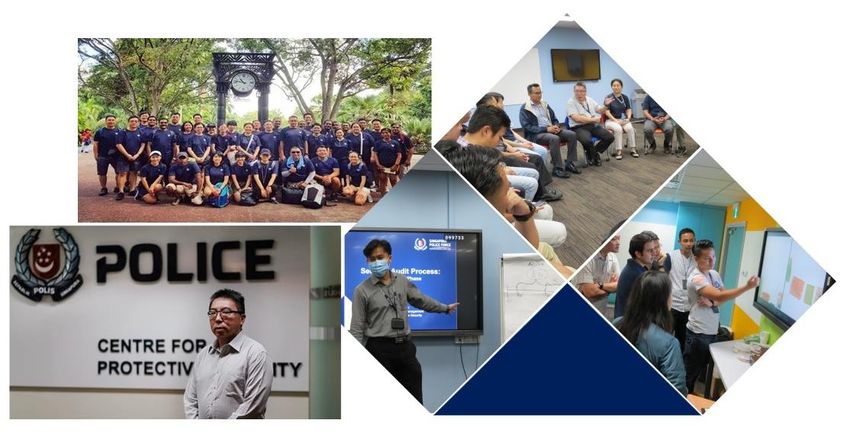
The Centre for Protective Security (CPS) is formed to consolidate capabilities and functions to
support the implementation of Infrastructure Protection and Security Industry Transformation. CPS
brings together relevant regulatory, operational and technical expertise across different Ministry of
Home Affairs (MHA) units to enable a co-ordinated approach to strengthening Singapore’s protective
security landscape.

CPS provides protective security training and advisories to stakeholders and manage key security
programmes like Red Teaming and TOPSIS (Threat Oriented Persons Screening Integrated System)
to enhance the overall capability of Home Team Departments, home-front agencies and key
stakeholders

Our Mission
To enhance the protective security standards in Singapore so as to ensure Singapore's safety and
security. We do this by implementing the Infrastructure Protection Act, transforming the security
industry and building protective security capabilities.
About CPS
Divisions, Key Roles and Functions
There are three divisions in CPS. They are the Infrastructure Regulation Division (IRD), Capability
Development Division (CDD) and Protective Engineering Division (PED). Their key roles and functions are:

                                                    `

Another
Headline
Here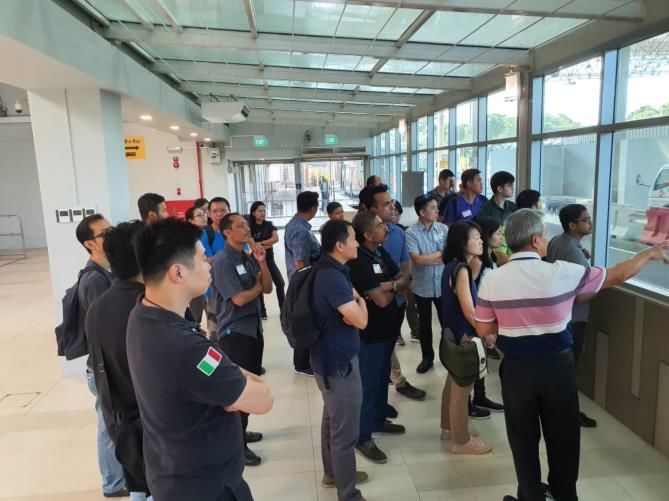
General Training Information
FY2020 in Review
In FY2020, CPS has conducted almost 40 runs of courses and seminars for more than 15 organizations and
agencies in Singapore.

                                       Courses
                                                                             Seminars
                                           466
                                        Participants
                                                                                 1018
                                            26                                  Participants
                                            Runs
                                                                                   13
                                            18                                   Sessions
                                         Agencies

Our Training Methodology
At CPS, we employ a variety of instructional strategies to ensure effective learning. The different instructional
methods allow learners with different learning styles to engage in active learning.

                   Field
                                                 Role
                   Trips
                                                Playing
                               Didactic
                              Questions

       Case             Site              Discussion
      Studies         Exercise            Groups &
                                           Projects           E-Learning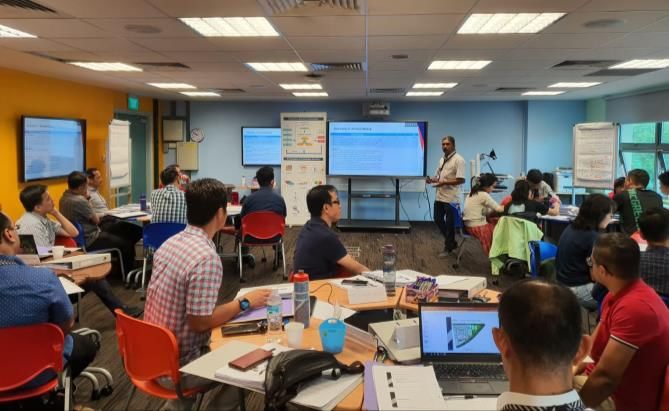
Our Courses
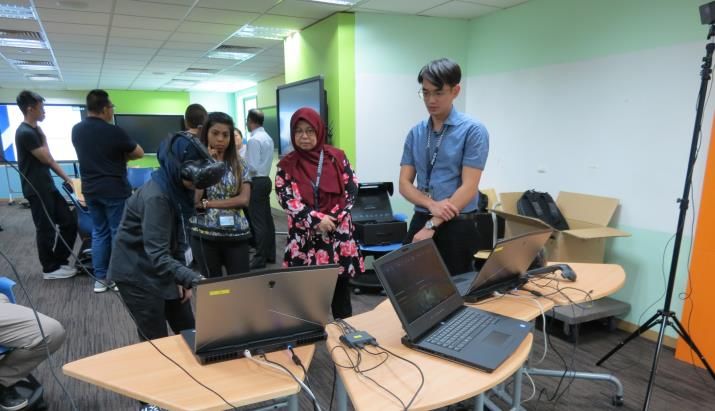
Home Team Protective Security                       Home Team Advanced Protective
Programme (HTPSP)                                   Security Programme (HTAPSP)
This 10-day course aims to provide participants     The HTAPSP is a CPS milestone programme
with knowledge on protective security principles    comprising local and overseas modules. The
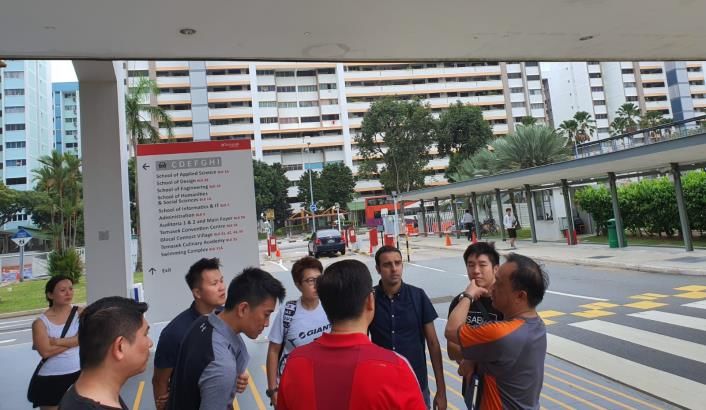
and practices. The course comprises theory and      programme comprises local and overseas site visits to
practical segments to equip participants with the   the land, air, and sea border checkpoints as well as
necessary skillsets to conduct comprehensive        sites identified as hard and soft targets.
risk assessments and develop robust
operational/event security plans. This course is
a pre-requisite for the Home Team Advanced
Protective Security Programme (HTAPSP)              The course is being reviewed as the overseas portion
where there are overseas and local                  cannot be conducted currently due to the Covid
components.                                         situation. CPS is exploring a hybridized learning
                                                    configuration which may impact the course duration
                                                    and dates.

Duration: 2 weeks                                   Duration: 3 weeks

Target Audience: Home Team officers who             Target Audience: Officers who           have
are involved in operational planning and            completed HTPSP.
implementation of the protective security
aspect of routine and contingency
operations.

\

           -
Our Courses
Protective Security of Installations                 Home Team Security Audit
Course (PSIC)                                        Programme (HTSAP)
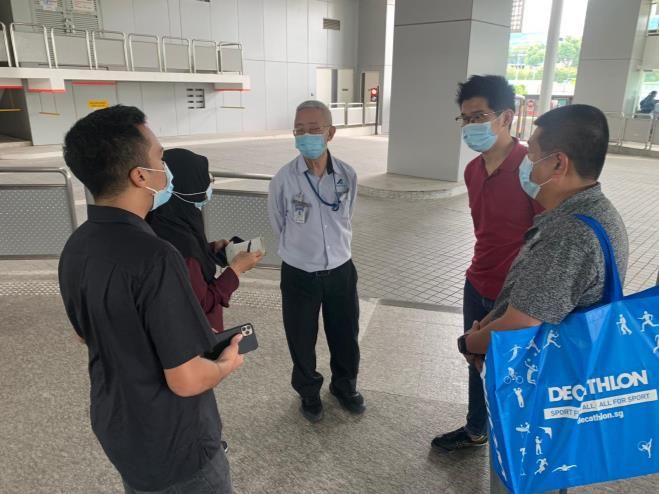
This 5-day course aims to raise appreciation of      The Home Team Security Audit Programme
basic building security practices and provide an     (HTSAP) is a Workforce Skills Qualifications
understanding of the practical means of              (WSQ) accredited course that is designed to equip
enhancing building security for soft targets (e.g.   security audit practitioners with the abilities to
office buildings and shopping centres) in line       conduct a security audit on a building’s existing
with the principles and recommendations              security measures to identify any non-compliance
provided under the Guidelines for Enhancing          and recommend measures to improve the security
Building Security in Singapore (GEBSS).              of the building.

Duration: 1 week                                     Duration: 1 week

Target Audience: Officers who are                    Target Audience: Home Team officers who
involved in the planning and management              are responsible for maintaining the security
of    building    infrastructure projects,           standards of their establishments or are
enhancement of security for soft targets             required to conduct security audits of
and SPF officers managing the Safety and             premises as part of their job requirement.
Security Watch Groups.
Our Courses
Red Teaming Officer Course                         TOPSIS Specialist Course (TSC)
(RTOC)
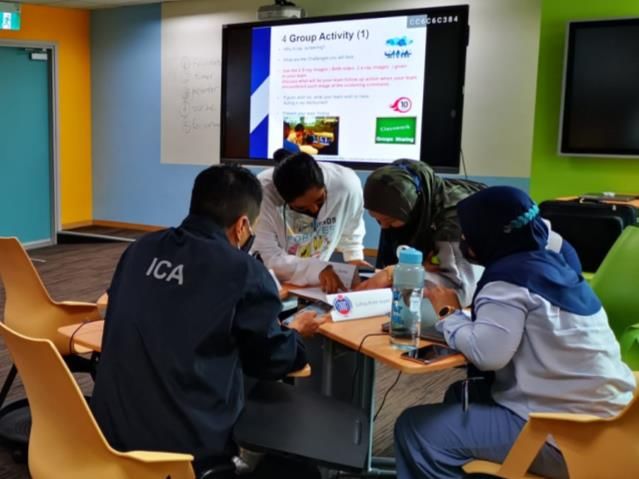
The Red Teaming Officer Course (RTOC) is a         The Threat-Oriented Person Screening Integrated
practitioner’s course for Red Teaming Exercise     System (TOPSIS) Specialist Course (TSC) will
Managers. The course is designed to train          focus on training participants in the skillsets
individuals in the planning and execution of Red   needed to conduct TOPSIS enhanced screening.
Teaming exercises to test the vigilance and        In addition, it will also reinforce participants’
preparedness of security deployments and the       understanding of the TOPSIS concept and the
robustness of protocols. The course comprises      passive observation skillset used to establish an
a theory segment as well as a practical segment    operational baseline and detect Tell-Tale
for course participants to apply their             Indicators. Contextualized TOPSIS frameworks
understanding of Red Teaming principles in a       and SOPs will also be shared with participants to
realistic context. This equips them with the       ensure greater understanding of the screening
necessary skillset and confidence needed to        requirements at their respective checkpoints and
plan and execute Red Teaming exercises in          major events.
their respective organizations.

 Duration: 1 week                                   Duration: 3 days

 Target Audience: Home Team and Home-               Target Audience: TOPSIS trainers in the
 front officers who are responsible for the         Land, Aviation and Sea checkpoint
 planning, design and conduct of Red                domains and security supervisors of
 Teaming        exercises   within    their         personnel screening stations at access
 organizations or are required to conduct           control points of buildings or events.
 quality assurance of the security
 measures deployed at establishments or
 events under their charge.
Our Courses
Advanced Tell- Tale Indicator                                 Home-Made Explosives Course
Detection Course (ATDC)                                       (HME)
The Advanced Tell-Tale Indicator Detection                    The objective of the HME course is to train Home
Course (ATDC) is designed to train                            Team officers on the characteristics of HME, its
participants to understand the physiological,                 precursors and possible mitigation measures
psychological and operational factors that give               against HME threats.
rise to Tell-Tale Indicators (TTIs). This will
allow the participants to better contextualize
how TTIs manifest in different environments or
circumstances. They will also be able to
correlate the modus operandi (MO) of
terrorists to the TTIs that may be exhibited at
the various stages of an attack plan.
Participants will also be able to deepen their
skills in detecting TTI and resolving them
through security questioning (SQ).

The Advanced Tell-Tale Indicator Detection Course
 Duration:
(ATDC)     is 1 designed
                 week         to equip participants to         Duration: 3 days
understand the physiological, psychological and
 Target Audience:
operational     factors Frontline
                          that give supervisory
                                       rise to Tell-Tale       Target Audience: Home Team officers
 level / lower
Indicators  (TTIs). management         level
                     This will allow the       (Eg.
                                           participants  to    who are involved in post-blast
better
 Teamcontextualize
             Leader, how        TTIs manifest
                             Shift             in different
                                      Supervisor,              investigation, training or designing
environments      or circumstances.
 Operations Officer,                   They willoralso be
                            Security Manager                   protective mitigation measures against
able   to  correlate    the  modus    operandi
 equivalent) to middle management level           (MO) of      threats from explosives.
terrorists
 (Eg. Deputy Commander, Assistant at the
           to  the  TTIs   that  may be   exhibited
various stages of an attack plan. Participants will
 Director, Head Operations or Training,
also be able to deepen their skills in detecting TTI
 VP /resolving
and     Head of them
                   Security.
                          through security questioning
(SQ).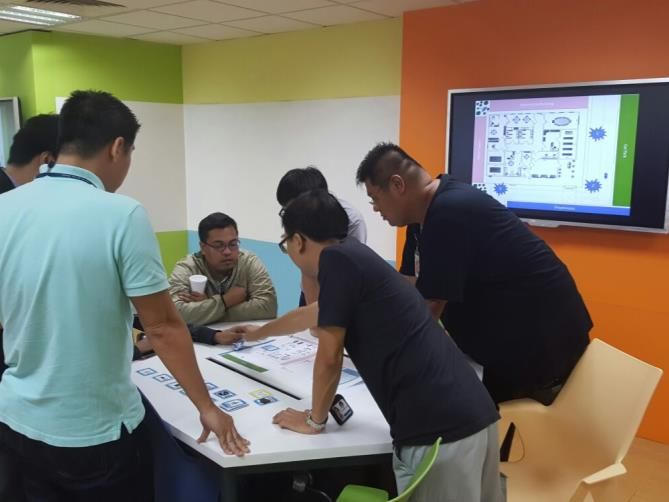
Our Courses
Hostile Vehicle Mitigation Course                   National Authorities Security Audit
(HVM)                                               Programme (NASAP)
The objective of the HVM course is to train Home    This course aims to familiarize frontline officers
Team officers on considerations when deploying      from the Home Team, relevant National
HVM measures for installation protection and        Authorities and partners on the basic awareness
during mass events. Participants would be           of terrorism and the protective security of
introduced to various types of Vehicle Security     hazardous materials. It will also equip them with
Barriers (VSB), its deployment considerations and   the abilities to conduct a security audit on the
the various Crash Test Standard widely adopted by   storage facilities of such hazardous materials in
the security community. They will also undergo a    order to identify any non-compliance and
HVM planning exercise to deploy VSB for an          recommend measures to improve the security of
installation.                                       such storage facilities.

                                                    This course aims to familiarize frontline officers from
 Duration: 2 days                                    Duration:
                                                    the   Home 3Team,days relevant National Authorities and
                                                    partners on the basic awareness of terrorism and the
 Home Team officers who are involved in              Government
                                                    protective           officers
                                                                  security            from materials.
                                                                            of hazardous     the variousIt will also
 security events planning, or are responsible        National
                                                    equip           Authorities
                                                            them with    the abilitiesdealing   with
                                                                                        to conduct     the audit
                                                                                                   a security
 for infrastructure protection.                      regulation
                                                    on the storageoffacilities
                                                                           their ofrespective     Security
                                                                                     such hazardous   materials in
                                                    order   to  identify  any non-compliance
                                                     Sensitive Materials (SSM).                  and  recommend
                                                    measures to improve the security of such storage
                                                    facilities.
Our Courses
(Workshop and Seminar)
Mail Threat Awareness Workshop Outcome Based Contact (OBC)
(MTAW) Clinic (Seminar)
This workshop aims to familiarize registry/mailroom In order to keep up with evolving challenges, the
officers with the main types of mail-borne threats and security industry needs to modernize its approach
train them in handling suspicious mail articles. Apart towards procuring security-guarding services through
from lecture, the workshop has been designed to Outcome-based contracting (OBC). The modules in the
incorporate demonstrations and hands-on skills OBC clinic are designed to guide Government
practice. Procurement Entities (GPEs) on crafting security
outcome-based contracts
Apr Aug Oct Feb
2021 2021 2021 2022
Duration: ½ day Duration: ½ day (online)
Target Audience: Officers who are working in Target Audience: Procurement officers and
the registry office/mailroom handling officers in GPE dealing in security-related
incoming mail articles for their organization. matters of the premise who may be involved in
the security analysis as part the procurement
process. Officers who may be involved in the
tender evaluation for the procurement of
security services.Course Calendar
Course Title Duration Course Dates
Home Team Protective Security Programme (HTPSP) 10 days 13 – 24 Sep 2021
7 – 18 Feb 2022
Home Team Advanced Protective Security Programme 15 days 15 Nov – 3 Dec 2021
(HTAPSP)
Protective Security for Installations Course (PSIC) 5 days 3 – 7 May 2021
28 Jun – 2 Jul 2021
25 – 29 Oct 2021
17 – 21 Jan 2022
Home Team Security Audit Programme (HTSAP) 5 days 4 – 8 Oct 2021
Red Teaming Officer Course (RTOC) 5 days 19 – 23 Apr 2021
5 – 9 Jul 2021
18 – 22 Oct 2021
17 – 21 Jan 2022
TOPSIS Specialist Course (TSC) 3 days 29 Jun – 1 Jul 2021
5 – 7 Oct 2021
Advanced Tell- Tale Indicator Detection Course (ATDC) 5 days 17 – 21 May 2021
2 – 6 Aug 2021
10 – 14 Jan 2022
Home-Made Explosives Course (HME) 3 days 11 – 13 Jan 2022
22 – 24 Feb 2022
Hostile Vehicle Mitigation Course (HVM) 2 days 19 – 20 Oct 2021
National Authorities Security Audit Programme 3 days 1 – 3 Sep 2021
(NASAP)
Mail Threat Awareness Workshop (MTAW) 0.5 days 31 Aug 2021
4 Jan 2022
Outcome Based Contact (OBC) Clinic 0.5 days Apr / Aug / Oct 2021
Feb 2022
Information correct as at 29 Mar 2021. For course registration and other enquiries, pls email
us at SPF_CPS_Training@spf.gov.sgProtective Security (PS) Bytes
-Protective Security Framework
Stage 2
Stage 1
What is Protective Security
Stage 3
Refers to the protection of
Assets from potential
Threats, in a comprehensive
and effective manner, such
that functions can continue
with minimum disruption
There are three stages in the Protective Security Framework. We begin with Threat Vulnerability Risk
Assessment (TVRA) in Stage 1 to determine which assets are at greatest risk against the threats identified.
Next, based on the TVRA, we will determine which mitigation measures would provide the necessary
safeguards to mitigate the threats.
The final stage is Quality Assurance where we want to implement programmes such as audit and red teaming
programmes to evaluate the effectiveness of the security measures implemented and provide feedback to
enhance our mitigation measures or even to refine our TVRA threat scenarios.
10 Principles of Protective Security
The following are 10 principles to consider in designing and implementing protective security measures
Asset Identification Risk Management Approach
Risk assessment should be carried out to identify higher
Identification of assets must be comprehensive –
risk areas so as to prioritize limited resources to bring
an asset not identified will not be protected. exposed risk to acceptable level and manage the residual
risk.
Threat-Oriented Protection Security-Operations Balance
Identification of threats and threat scenarios is Implementation of security measures should not
important to ensure appropriate protection lead to operation paralysis.
measures are deployed to mitigate the threats.
Security by Design Integration of Security Measures
It is more cost effective to incorporate security measures Implemented security measures must work in
into the design of the building than retrofitting security tandem to be effective.
measures into existing structure.
Defence-in-depth Reliability of Security Measures
Multiple layers of protective measures should be deployed It is important to ensure implemented measures are capable
to avoid single point of failure and improve the of accomplishing their intended tasks of addressing specific
threat or its component and more important to understand the
effectiveness and robustness of the protection system.
limitations.
Continuity and Consistency Adaptability to Changes
Each layer of security measure must form a Provision should be made for additional resources
continuous ring of defence, with similar level of to cater to the changing operating environment and
protection. circumstances.Contact Us
Courses Registration
SPF_CPS_Training@spf.gov.sg
OBC Clinic Registration & Enquiries
MHA_Security_OBC_Helpdesk@mha.gov.sg
Other enquiries or feedback
SPF_CPS_Training@spf.gov.sgYou can also read


