CRCA - Chicago Roofing Contractors ...
←
→
Page content transcription
If your browser does not render page correctly, please read the page content below
CRCATODAY
                                                             The Magazine
                                    SUMMER 2021              of Roofing and
                                                             Waterproofing
                                                             in Illinois
                                                             and Beyond

SAFETY & SYSTEMS:
 • OSHA – Funding / Inspector Increase
 • OSHA Roofing Safety Guidelines
 • Four-Wheeled Cart Safety

 Chicago Roofing
 Contractors Association   CRCA TODAY | 4415 W. Harrison St., #540 | Hillside, IL 60162
DM
                                                                               Defense
                                                                               Match

A SMART
ROOF IS
YOUR
BEST DEFENSE!
Integrated into the roofing system
Simple and fast installation
Early warning and timely notification
Reduce roof maintenance costs by up to 70%

             SMARTEX® DM provides immediate
             notification to the area of a breach.
             Be prepared with an intelligent flat roof monitoring system
             that tracks the moisture ingress of roofing systems 24/7
             and contacts you when there’s a breach. Smartex® DM is the
             economical choice for building owners managing flat roof
             constructions, humidity sensitive rooms and pitched roof areas.

Three smart roof monitoring
systems. One perfect for you.
Toll Free: 1.866.282.5325
info@leak-detection.com
CRCATODAY
                                                                                                                            SUMMER 2021

                                                                                                                                              www.CRCA.org

FEATURES
Safety First................................................................ 5
OSHA Looking to Increase Funding . . .
Including More Inspectors.......................................... 7
Using Four-Wheeled Carts in the Roofing Trade–
Part One................................................................... 9
Should Employers Mandate COVID-19 Vaccines?........ 12
Roof Talk................................................................. 14
OSHA, Heat-Hazards, and What Can Be Done to
Prevent Worker Heat Related Illness and
Unnecessary OSHA Citations and Fines..........................16
OSHA Roofing Safety Guidelines:
Worker Safety on Low-Slope Roofs........................... 18
Industry News......................................................... 22
CRCA Contractor Members........................................ 28
CRCA Associate Members.......................................... 30
Dakis & Associates Inc.
1521 Danforth Avenue
Toronto, ON Canada M4J 5C3
T 416.516.7335 F 416.516.9733
Advertising Contact: Contact CRCA’s Office for information at 708-449-3340 or info@crca.org.
CLIENT:
Reprints: CRCA Today has extra Magazine reprints available to CRCA Members for a limited time, limited quantity, for free. Contact info@crca.org. Reprints are available from CRCA headquarters;
International Leak Detection
1-100- $.95/issue; 101-500 - $.90/issue; 501-1000 - $.80/issue; 1000+ - $.70/issue. All shipments FOB 4415 W. Harrison St., Suite 540, Hillside, IL 60162.
NAME:
Online: Archived CRCA Today available at http://www.crca.org, Magazine.
DM – BEST DEFENSE!
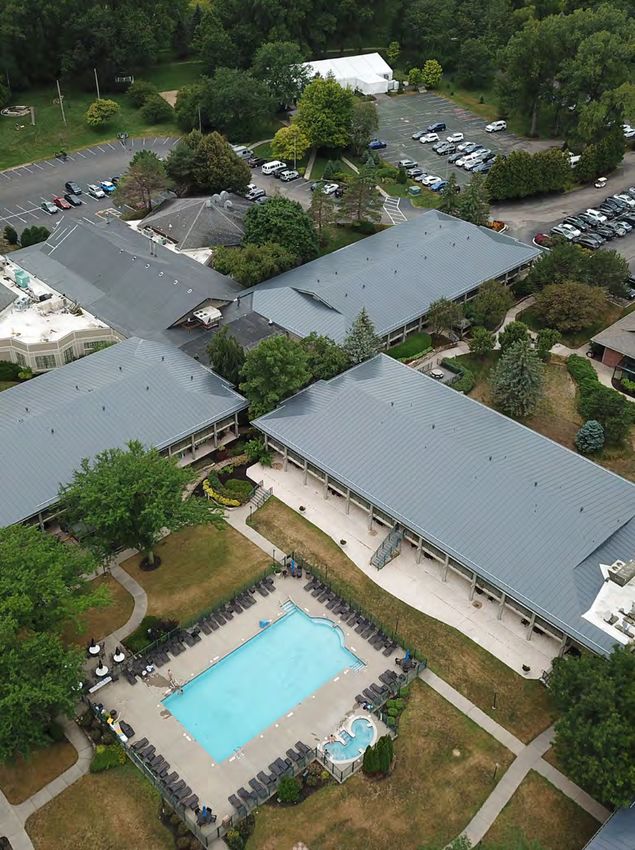
On the Cover: Photo courtesy of Building Technology Consultants, Inc. The roofing system is a Sika Sarnafil Adhered Membrane G410 PVC Fleeceback 60-mil Roofing System installed at the Lake
SPECIFICATIONS:
Geneva Abbey Resort by CRCA Contractor Member Olsson Roofing Company Inc. BTC and Olsson collaborated on this modern solution when replacing the previous shingle system on the multiple roof areas
Trim:   8.5”
throughout     w x 11”
           the resort       h Sika décor system.
                      with the
Bleed: 8.75” w x 11.25” h
Copyright ©2021,
Colours:            CRCA,process
             4-colour       Chicago Roofing Contractors Association
Bleed: full
SUMMER 2021

    CRCA 2021 Board of Directors
                                                                                                              We service your needs with consistent quality, workmanship and knowledge
    Mark Duffy, President
    Elens & Maichin Roofing & Sheet Metal, Joliet, IL

    Mitch Rabin, 1st Vice President
    A-1 Roofing Company, Elk Grove Village, IL

    Jay Adler, 2nd Vice President
    Adler Roofing & Sheet Metal, Inc., Joliet, IL

    Dominic Dunlap, Treasurer
    DCG Roofing Solutions, Inc., Melrose Park, IL

    Kevin Froeter, Secretary
    Sterling Commercial Roofing, Sterling, IL

    Troy Wormley, Immediate Past President                                                                            It’s part of the reason customers come back to us time after time.
    W.B.R. Roofing, Inc., Wauconda, IL
                                                                                                                            Maximize your profits by decreasing your inventory.
    Casey Fraher, Director
    Crowther Roofing & Sheet Metal, Romeoville, IL
                                                                                                                             Reduce man hours - let us fabricate, you install.

    Dan Henshaw, Director
                                                                                                                     98% of our American-made products are made-to-order and are
    G.E. Riddiford, Co., Arlington Heights, IL                                                                      manufactured inhouse. Our products are made from domestic metal
                                                                                                                                and custom crafted to your specifications.
    Larry Marshall, III, Director
    L. Marshall Roofing & Sheet Metal, Inc.                                                                         Contact us today to see how we can streamline your process
    Mark Moran, Director
                                                                                                                                    and maximize your profits!
    Knickerbocker Roofing & Paving Co., Harvey, IL                                                               (231) 861-0050 | info@advarchsm.com | www.advarchsm.com
    Bill O’Brien, Jr., Director
    Combined Roofing Services LLC, West Chicago, IL

    Ryan Petrick, Director
    Ridgeworth Roofing Co., Inc., Frankfort, IL

    Bob Prette, Director
    Tidwell Roofing & Sheet Metal, Elk Grove Village

    Jim Prusak, Director
    Prusak Construction & Roofing, Inc., Bridgeview, IL

    Shawn Sullivan, Director
    Olsson Roofing Company, Inc., Aurora, IL

    Associate Directors
    Joan Crowe, Associate Director
    GAF, Downers Grove, IL

    Jeff DeJong, Associate Director
    Industrial Cork Company, Inc., Elmhurst, IL

    Rebecca Troche, Associate Director
    Lakefront Roofing & Siding Supply, Chicago, IL

    Bill McHugh, Executive Director
    Chicago Roofing Contractors Association, Hillside, IL

    Subscription information:
    To subscribe, visit www.crca.org, click on CRCA Today, subscribe. For article submissions, information,
    contact CRCA at 708-449-3340 or e-mail info@crca.org. To unsubscribe, email info@crca.org,
    unsubscribe to CRCA Today.

    CRCA Today, Volume 10, No. 3 is published quarterly by the Chicago Roofing Contractors
    Association. Information has been obtained from sources believed to be reliable. However, because
    of the possibility of human or mechanical error by our sources, the Chicago Roofing Contractors
    Association does not guarantee the accuracy or completeness of any information and is not
    responsible for any errors or omissions of the results obtained from use of such information. The
    publisher reserves the right to censor, review, edit, reject or cancel any materials not meeting the
    standards of CRCA Today.

    Editorial Contributions: You are invited to share your expertise and perspectives. Before writing,
    visit www.crca.org / magazine, or contact CRCA at info@crca.org for writing guidelines & policies.

4            C R C A T O D A Y /// S u m m e r 2 0 2 1
Safety First
          By CRCA Staff

          P
                   er the National Institute for Occupational Safety                                                                    Smart roofing contractors invest in time and resources
                   and Health (NIOSH), falls remain the leading                                                                         to make the jobsite safer for their employees. They take
                   cause of work-related deaths in construction,                                                                        advantage of the best fall protection equipment, safety
                   estimated to be one in three of the construction                                                                     training and mandate best practices to make sure their
          fatalities. Roofing contractors say “Not Me! It can’t                                                                         workers get home safely each day. As CRCA Health
          happen to us!”, but statistics show that safety is not                                                                        & Safety Committee Co-Chair Kevin Froeter (Sterling
          always the number one priority.                                                                                               Roofing Company) states his company’s motto is “Safety
                                                                                                                                        the Only Choice”. As a people-focused company, Froeter
          What are some examples of where safety in roofing and                                                                         says “Safety is our first priority.”
          construction is lagging?
                                                                                                                                        The committee’s other Co-Chair, Frank Marino (Safety
          •        Small employers with less than 20 workers account                                                                    Check Inc.), has spent his entire career educating on
                   for 75% of the fatal falls between 2015 and 2017.                                                                    roofing safety and helping contractors create a company
                   Some feel that this is due to the lack of resources or                                                               safety culture that becomes second nature with the
                   ability to invest in safety measures as effectively as                                                               workers and staff.
                   larger businesses. (NIOSH)
          •        Hispanic construction workers saw a huge 90%                                                                         One of the pillars in CRCA’s mission is to “provide
                   jump in fatalities, from 2011 to 2019 even though                                                                    for the mutual exchange of practical and educational
                   this segment only accounts for 28% of the workforce,                                                                 information . . .” and this includes safety education.
                   outpacing this segment’s employment growth.                                                                          Learn more about CRCA and the benefits of membership
                   (NIOSH)                                                                                                              by reaching out to info@crca.org or visiting CRCA.org
          •        Fatal falls occur from any level. Per the U.S. Bureau                                                                today.
                   of Labor Statistics (BLS), while fatalities are greatest
                                                                                                                                        References:
                   from over 30 feet, roofing workers get killed from
                                                                                                                                        https://www.cdc.gov/niosh/construction/statistics.html
                   falls from lower heights too.
                                                                                                                                        https://www.bls.gov/opub/ted/2018/fatal-work-
          Fatal work-related falls to a lower level by source and height of fall, 2011–16                                               related-falls-to-a-lower-level-increased-26-percent-from-
                                                   Ladders
                                                   Vehicles
                                                                                              Roofs
                                                                                              Scaffolds, staging
                                                                                                                                        2011-to-2016.htm
                                                   Machinery                                  Trees
                                                   Stairs, steps                              All other sources

                        Over 30 feet

                          26–30 feet
                                                                                                16–20 feet
                          21–25 feet                                                            All other sources: 46
                                                                                                Stairs, steps: 6
                                                                                                Trees: 16
                          16–20 feet                                                            Machinery: 33
                                                                                                Scaffolds, staging: 48
                                                                                                Vehicles: 27
                          11–15 feet                                                            Roofs: 146
                                                                                                Ladders: 109
                            6–10 feet

                        Under 6 feet

                Height not specified

                                         0          100            200        300       400         500           600     700

                                        U.S. Bureau of Labor Statistics graphic
          Click legend items to change data display. Hover over chart to view data.
          Source: U.S. Bureau of Labor Statistics.

d falls to a lower level by source and height of fall, 2011–16

      Ladders      Roofs        Vehicles           Scaffolds, staging                 Machinery       Trees         Stairs, steps                      Su
                                                                                                                                         All other sources   mmer 2021 \\\ CRCA TODAY               5
              29        127                  62                               93                 81         81                      4                   181
866.303.5868 | INFO@COTNEYCL.COM | WWW.COTNEYCL.COM
866.303.5868 | INFO@COTNEYCL.COM | WWW.COTNEYCL.COM
                  MAIN OFFICE: TAMPA
                866.303.5868
                  MAIN OFFICE: COTNEYCL.COM
                               TAMPA
OSHA Looking to Increase Funding . . .
Including More Inspectors
By Frank Marino

                           W
                                             ith new           Thankfully, the president’s proposal is simply that–a
                                             administrations   proposal. In the forthcoming weeks, Congress will
                                             come new          exercise its constitutional power of the purse in crafting
                                             priorities.       appropriations bills that, I hope, will appropriately
                           During the Trump                    prioritize our nations spending” (Safety & Health, 2021).
                           administration, OSHA existed
                           in a state of stagnation. A         Understandably, the current Secretary of Labor, Marty
                           permanent Secretary of OSHA         Walsh, has a much different view of the proposal. He
                           was never confirmed, which          recently stated:
                           resulted in a rudderless ship       “The President’s budget renews the Department
       Frank Marino        with no clear direction. Four       of Labor’s commitment to help America’s workers,
                           years later, things appear to       particularly those from disadvantaged communities,
be a lot different. Not only has President Biden made his      find pathways to high-quality, good-paying jobs. The
pick to head OSHA at the federal level (Doug Parker–the        President’s initiatives also restore the departments
current head of California OSHA), but the administration       capacity to protect the health, safety, rights and financial
has requested a 12% increase in funding for the next           security of all workers. Additionally, the American Jobs
Fiscal Year.                                                   Plan’s investments further enhance the department’s
The request, that was made on May 28, 2021, allocates          ability to meet its mission by creating pathways to
$664.6 million to OSHA for the Fiscal Year 2022.               millions of high-quality jobs and rebuilding our country’s
The agency had revised an enacted budget of $591.2             infrastructure” (Safety & Health, 2021).
million in Fiscal Year 2021 (Safety & Health, 2021).           We will see where this all ends up in the end, but it
Most notably, the current request has proposed a 11.3%         certainly appears that changes are on the way. You can
increase in federal enforcement, from $228.7 million to        read the President’s budget request at dol.gov/sites/
$254.6 million. That enforcement budget includes 155           dolgov/files/general/budget/2022/FY2022BIB.pdf.
new OSHA inspectors. This no doubt will result in more
inspections across the country and across all industries.      References:
To provide some perspective, in Fiscal Year 2019,              Safety & Health Magazine, July 2021
OSHA had the fewest number of inspectors (752), which
                                                               Frank Marino is Vice President at Safety Check Inc., a safety consulting
was the fewest number of inspectors in the past 50 years       firm in the Chicago area and CRCA Associate Member. Marino has
(Safety & Health, 2021). Although there was a slight           extensive experience in roofing safety and is a co-chair of the CRCA
                                                               Health and Safety Committee. He is a member of the Occupational
increase in inspectors in the Fiscal Year 2020, it was still
                                                               Environmental Safety & Health Advisory Board at the University of
a number significantly lower than in previous years.           Wisconsin, working with faculty and safety professionals on curriculum
                                                               development and industry updates. He can be reached at fmarino@
Not everyone is in favor of this proposed increase,            safetycheckinc.com.
which includes the Senate Appropriations Committee
Vice Chair Senator Richard Shelby (R-AL). In a statement
from Senator Shelby, he stated:

“President Biden’s FY22 budget request is a blueprint for
higher taxes, excessive spending and disproportionate
funding priorities the American people can expect
from his administration over the next four years.

                                                                              Summer 2021 \\\ CRCA TODAY                                  7
8 C R C A T O D A Y /// S u m m e r 2 0 2 1
Using Four-Wheeled Carts in the
Roofing Trade–Part One
By University of Washington SHARE Lab

M
              anual carts are being used every day in       The first in this series of manual cart use education will
              the roofing trade to transport materials.     provide an overview of Seven Tips for using four-wheeled
              However, cart handling is a physically        carts in roofing installation as well as why maintenance of
              demanding task and could cause                manual carts is key to your roofing operation.
overexertion when pulling and pushing, a leading cause
of work-related musculoskeletal disorders (WMSDs). In       Manual Cart Usage—Seven Safety Tips
the U.S. construction industry, overexertion from pulling   Below are seven tips provided by the UW Share Lab in
and pushing accounts for about 11.2% of the lost            efforts to educate the roofing community on four-wheeled
workdays caused by WMSDs.                                   carts to prevent injuries and enhance field performance.

Roofing Contractor owners may ask why is this important     1. INSPECT AND MAINTAIN CARTS—Material carts
and how can overexertion impact my company? Per                should be properly maintained. Old carts with
the University of Washington’s Share Lab, a review of          warped axels, loose turntables, worn tires and
commercial roofing contractor injury logs (with more           broken / deformed bearings should be replaced
than 120 employees) found that overexertion caused by          immediately. Operating an old cart with one of these
cart handling created:                                         factors could increase the risk of injury by as much
                                                               as 30% and decrease productivity by 35%. Cart
•   Substantial Economic Burden: Cart Handling directly        Inspection Checklist should include:
    caused seven out of forty WMSDs over a four-year
                                                                •   General State of Repairs: good, reasonable or poor
    period (2015-2018). These injuries caused $65,405
    in medical and indemnity costs, with an average lost        •   Tires: contaminated, pressure, check for wheel
    time and average cost per claim of 21.2 days and                deformity, check for bearing contamination
    over $9,000 respectively.                                   •   Curved Axel: check shortest distance from tire to
•   High Employee Turnover: 71% of overexertion in                  cart frame
    cart handling occurred with new workers, where              •   Turnable: check if rusted or stuck or loose
    57% then left the company after the injury, affecting           (maximum horizontal displacement of handle
    the companies’ ability to build and retain a                    when cart stays stationary)
    young workforce.
                                                            2. ALLOW SUFFICIENT CLEARANCE—Keep and
•   Low Employee Morale: Workers perceived cart                open and clear space for cart operation. A two-foot
    operations as strenuous and attributed low morale          clearance is needed for each side of passage. When
    and reduced productivity to the malfunction of carts.      a ramp or obstacle is present, a worker should allow
                                                               at least two feet to build momentum. The farther back
                                                               the worker starts, the less likelihood of overexertion.

                                                            3. BUILD GENTLE RAMPS—The recommended slope for
                                                               ramp is 4 degrees. Moving a cart over a 4-degree
                                                               (approximately 1:12) ramp presents little addition risk
                                                               than over a flat surface. But a ramp soon becomes a
                                                               hazard when it reaches 8 degrees or more.

                                                            4. SET UP PROPER RAMPS—Ramps should be stable
                                                               running slope and landings without gaps, obstacles,
                                                               and ridges. Secure boards with screws or nails
                                                                        Summer 2021 \\\ CRCA TODAY                       9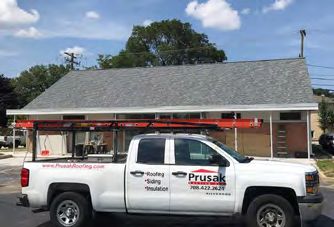
to stabilize and use heavy sheets of membrane to
     bridge gaps. Small changes = big results

5. REDUCE OBSTACLES—Remove any obstacle higher
   than ¾ of an inch (i.e., thickness of one sheet
   of plywood).

6. TEAMWORK—Use a team to pull/push cart loads
   to minimize risk of overexertion. The team size will
   depend on the cart loads and presence of such
   factors as space constraints, obstacles, and ramps.

7. JOB ROTATION—This can prevent workers from
   being exposed to particular ergonomic stressors
   for an extended period of time. Workers should                                University of Washington Sharelab graphic: The results are based on
                                                                                   experiments measuring mean hand force when four-wheeled carts
   be assigned to handle carts no more than 2 hours                              loaded with 500, 750 and 1,000 lbs. were operated by one person
   within an 8-hour shift.                                                                         over 18 ft. of concrete flat floor.

Cart Conditions And Maintenance                                              Time For Cart Replacement?
Roofers rely on carts to handle heavy materials, but                         The general rule of thumb is to replace carts every five
aged equipment can do more harm than good. Using an                          years or when the following occurs before:
aged cart not only increases the risk of overexertion, but
                                                                             •      Contaminated tires
also negatively impacts employee morale. Preventative
                                                                             •      Broken or deformed bearings
maintenance is key and can provide long-term benefits.
                                                                             •      Curved axels
•    Carts that have outlived life expectancy                                •      Loose / Rusted turntables
•    Loose rusted turntables, bent axles, contaminated
                                                                             ROI on Preventative Maintenance
     tired and broken / deformed bearings are usually
                                                                             Some contractors wonder if preventative replacement
     seen after years of service and will adversely
                                                                             is worth the investment. See the information below
     impact performance. See the following diagram
                                                                             collected below from a roofing contractor utilizing 14
     for comparisons of ergonomic and productivity
                                                                             four-wheeled carts for roofing installation:
     performance under three different conditions:
                              CONTINUE USING                           TIRE REPLACEMENT                           CART REPLACEMENT
     COST ITEMS
                                AGED CART                                (Every 5 years)                            (Every 5 years)
 Cost to purchase*       $0                                   $1,478                                       $3,284
 Cost to maintain*       $2,100                               $1,050                                       $350
 Labor cost*             $21,714                              $18,023                                      $14,114
 Injury cost*            $16,351                              $14,716                                      $11,446
 Total estimated         $40,165                              $35,267                                      $29,194
 annual costs
 Estimated Return        Baseline                             $24,491                                      $54,854
 on Investment
 over 5 years
 Notes                   $2,100 = 6 hrs. per cart x 14        $1,478 = $132 EA x 56 tires / 5 years        $3,284 = $1,173 EA x 14 carts / 5 years
                         carts x $25 hourly rate
                                                              $1,050 = 3 hrs. per cart x 14 carts x        $350 = 1 hour per cart x 14 cars x $25
                         $21,714 = 258.5 hrs. of cart use     $25 hourly rate                              hourly rate
                         x 10% on pulling / pushing x 14
                                                              $18,023 = $21,714 x (1–17%), save            $15,851 = $21,714 x (1–35%), save
                         carts x 2 workers x $30 hr. wage
                                                              17% labor time after tire replacement        35% labor time after cart replacement
                         $16,351 = injury cost from
                                                              $14,716 = $16,351 x (1–10%), reduce          $11,446 = $16,351 x (1–30%), reduce
                         cart handling
                                                              10% injury rate after tire replacement       30% injury rate after cart replacement
*Annualized
The results show that cart replacement is the most cost-effective option and can save $54,854 every 5 years over continue to use aged carts.
Graphics and Photo courtesy of UW SHARE Lab
The University of Washington’s Safety and Health Advancement through Research and Education (SHARE) Lab promotes construction safety and health
through evidence-based innovation in research, education, and practices. The SHARE Lab creates new knowledge, learning resources, and practical
solutions through industry partnerships and by using technology intervention. To learn more, visit: https://share.be.uw.edu.
10        C R C A T O D A Y /// S u m m e r 2 0 2 1
necessary equipment and tools available at the
construction site. For example, in a roofing job, think
about all of the different fall hazards, such as holes or
skylights and leading edges, then plan and select fall
PLAN, PROVIDE AND TRAIN—OSHA’s Fall
protection suitable to that work, such as personal fall
Prevention Campaign arrest systems (PFAS).
FALLS ARE THE LEADING CAUSE OF DEATH IN
CONSTRUCTION. In 2018, there were 320 fatal falls PROVIDE the right equipment
to a lower level out of 1,008 construction fatalities Workers who are six feet or more above lower levels
(BLS data). These deaths are preventable. are at risk for serious injury or death if they should
Since 2012, OSHA has partnered with the National fall. To protect these workers, employers must provide
Institute for Occupational Safety and Health and fall protection and the right equipment for the job,
National Occupational Research Agenda (NORA) - including the right kinds of ladders, scaffolds, and
Construction Sector on the Fall Prevention Campaign to safety gear.
raise awareness among workers and employers about Use the right ladder or scaffold to get the job done
common fall hazards in construction, and how falls from safely. For roof work, if workers use personal fall arrest
ladders, scaffolds and roofs can be prevented. systems (PFAS), provide a harness for each worker
PLAN ahead to get the job done safely who needs to tie off to the anchor. Make sure the PFAS
fits, and regularly inspect it for safe use.
When working from heights, employers must plan
projects to ensure that the job is done safely. Begin by TRAIN everyone to use the equipment safely
deciding how the job will be done, what tasks will be Every worker should be trained on proper set-up and
involved, and what safety equipment may be needed safe use of equipment they use on the job. Employers
to complete each task. must train workers in recognizing hazards on the
When estimating the cost of a job, employers should job. Visit OSHA.gov to download OSHA training
include safety equipment, and plan to have all the materials in English, Spanish and other languages.
Summer 2021 \\\ CRCA TODAY 11Should Employers Mandate
COVID-19 Vaccines?
By Trent Cotney
W
hen COVID-19 vaccinations, employees must complete screening
vaccines were questions that could disclose a disability or confidential
rolled out in genetic information, so an overly generous incentive
early 2021, could pressure employees to reveal protected
many people had questions: medical information or could potentially be seen as
What are the requirements? discriminatory to those unable to receive a vaccine for
How much will vaccines medical or religious reasons. A $50 gift certificate is
cost? Will they be effective? usually deemed acceptable, however the EEOC does
But in subsequent months, not provide a specific limit for employers regarding
those questions have been these incentives.
Trent Cotney replaced with new ones:
Will employees be receptive Employers are also permitted to provide employees
to getting vaccinated? And can employers mandate and their family members with educational information
those vaccines? about COVID-19 vaccines and spread awareness about
their benefits.
What the Law Says
One detail that makes the COVID-19 vaccine more
According to the U.S. Equal Employment Opportunity
confusing is its emergency use authorization (EUA)
Commission (EEOC), federal laws allow employers
designation. Some employers believe that since the
to require COVID-19 vaccination for all employees
vaccine does not have full approval from the U.S. Food
physically present in the workplace. However,
and Drug Administration (FDA), as the flu vaccine does,
employers must provide reasonable accommodations
they should not mandate it for employees. However, the
to comply with the Americans with Disabilities Act
Department of Justice, Office of Legal Counsel recently
(ADA), Title VII of the Civil Rights Act of 1964, the
clarified that the vaccine’s EUA status does not prohibit
Genetic Information Nondiscrimination Act, and other
employers from requiring it.
employment considerations. Employers should be
aware, however, that local laws may result in additional Accommodating Employees
restrictions. If you are doing work in Illinois which allows Many employees have been eager to receive COVID-19
employers to mandate vaccines, but are also doing vaccinations, and they are enthusiastic about their
work in other states, make sure to check the state laws employers’ incentives. However, there are many other
to determine if there are employer prohibitions against employees who are either hesitant to receive the vaccine
mandating vaccines. or entirely against it. These reactions can be challenging
In addition, federal laws allow employers to offer for employers who want to ensure that their workplaces
reasonable incentives to employees who receive are safe.
the vaccine and voluntarily provide documentation. Employees may be pregnant, have other medical
This confirmation may be supplied by a healthcare concerns, live with a disability, or take prescriptions
provider, pharmacy, public clinic, or other community that make getting the vaccine problematic. In those
agency. However, employers must keep this vaccination cases, according to the ADA, employers should make
information confidential. every effort to accommodate them. This process may
If employers choose to offer a voluntary vaccine require meeting with such employees individually and
program, the incentives cannot be so extravagant as determining acceptable solutions, such as working
to be seen as coercive. Here’s why: Before receiving remotely, having a private office, or alternating work
12 C R C A T O D A Y /// S u m m e r 2 0 2 1schedules to minimize contact with others. However, system announced the COVID-19 vaccine as a condition
employers must use caution in inquiring about of employment and gave employees two weeks to
employees’ medical issues since the questions could comply. A group of workers then filed a lawsuit against
violate applicable privacy laws. the hospital, but a judge dismissed it.
Other employees may follow a religion that prevents Advice for Employers
them from being vaccinated. According to Title VII of the The COVID-19 pandemic has proven challenging for
Civil Rights Act, employers should respect those beliefs everyone—employees and employers alike. People from
and offer accommodations. all states and backgrounds and political affiliations have
lost family members and friends, suffered health crises,
In addition, employers need to consider workers who seen profits and income fall, experienced isolation,
are union members and review any applicable collective and worried for their futures. As a result, it can be
bargaining agreements. Employers should also check tempting to enact a vaccination mandate to protect your
individual employment contracts for any language business. However, before you adopt a zero-tolerance
related to a vaccine requirement. policy, consider your company culture. If you set a rule
Company and Agency Decisions and insist everyone follow it, you could hurt morale.
Although the vaccine is readily available across the But if you have a hands-off approach, your employees
nation, there are employees of all backgrounds who and customers may be at risk. Consider who your
have yet to be vaccinated. As of August 12, only 59.4% workers are and think about their motivations. You can
of the U.S. population has received at least one dose encourage the vaccination via incentives, but you should
of the COVID-19 vaccination, and 50.6% are fully also accommodate employees who cannot comply.
vaccinated. To many employers, these statistics are Keep in mind that there are also liability concerns. If
alarming since COVID-19 cases are on the rise in many you mandate vaccinations and employees experience
states, especially as the highly contagious Delta variant side effects, they could try to hold you accountable.
continues to spread. However, if you do not set a mandate, workers exposed
Some large companies are beginning to issue mandates. to unvaccinated colleagues could claim a lack of
For example, Walmart announced that specific safety protocols. Whatever policy you decide on, be
employees who travel and all employees who work certain to treat all your employees equally and provide
in the Bentonville, Arkansas headquarters must be fair accommodations, so there can be no claim of
vaccinated by October 4, unless they have exceptions. discrimination or bias. Your priority should always be the
At the end of July, Disney issued a 60-day vaccine safety and health of your business and your people.
deadline to all its U.S. salaried and non-union hourly Disclaimer: The information contained in this
employees. In addition, both Google and Facebook article is for general educational information
have decided that employees must be vaccinated only. This information does not constitute
before returning to the office. Meanwhile, Lyft and Uber legal advice, is not intended to constitute legal
mandated vaccines only for white-collar employees, advice, nor should it be relied upon as legal
setting different policies for workers physically present in advice for your specific factual pattern or
offices and those who deal with the public. situation.
Over the summer, President Biden announced that all
federal employees and federal contractors on project Trent Cotney, CEO of Cotney Attorneys & Consultants, is an advocate for
the roofing industry, and is General Counsel of CRCA and NRCA. For
sites must confirm they are vaccinated or comply with more information, contact the author at 866.303.5868 or go to www.
wearing mask and obtaining regular testing. Many local cotneycl.com.
governments and healthcare facilities have followed suit.
Recent Cases in the News
A large number of employees are standing firm on
their decision not to be vaccinated. This refusal is
putting mandates to the test. Recently, CNN terminated
three employees who came to the office but were
not vaccinated, which violated the company policy.
In addition, more than 150 employees of Houston
Methodist were fired or resigned after the hospital
Summer 2021 \\\ CRCA TODAY 13Roof Talk—Contractor
by demonstrating that we were part of a local,
professional organization.
If You Attend CRCA Events, Can You
Describe a Benefit of Attendance?
The CRCA designs their events to provide attendees with
a chance to learn and share information pertinent to
their business, meet new people in the industry and have
a great time doing it. When we attend CRCA events,
not only do we come away with learning something
new that we can directly apply to our business, but it is
a great way to reconnect with old friends in the business.
Company: Prusak Roofing Inc.
Location: Bridgeview, IL What Value Does CRCA Membership Bring
Business Founded: 1964 to You?
Number of Employees: 7 CRCA membership brings value not only in providing
Joined CRCA: February 2001 us with guidance, information and education about the
local roofing industry, but it also serves as a sales benefit
What Services Does Your Business Offer? when meeting with potential customers. We explain to
Commercial and Residential Installation of roofing, our customers what the CRCA is and how it benefits our
siding and gutters business. Customers appreciate that we seek to expand
our roofing industry knowledge knowing that it will have
Where Do You See Your Business in a positive impact on the work we do for them.
10 Years?
We hope to continue to grow throughout the Chicago
Editors Note: Prusak Roofing is owned by Mike and Jim Prusak. Jim has
area, serving new and repeat customers, and perhaps served as a CRCA director and officer since 2015 and also serves as the
open another branch or two in other states. CRCA Steep and Shingle Committee Chair.
What Is Your Best Business Memory
to Date?
It’s hard to pinpoint a favorite memory, but one that
resonates from time to time is when a past customer calls
to put on another roof for them. Not only are we thrilled
that they reached out to us again, but it is so touching
when they ask about our father, Eugene, who installed
their roof many years ago, or mention our mom,
Dorothy, who answered their calls and questions. It’s
great to be part of a multi-generational family business
with customers who return to us for their second or
third roofs.
How Did You Learn About CRCA?
Our mom, Dorothy, learned about the CRCA from a
mailing. She joined because she believed the CRCA
would provide us with opportunities to learn more
about the local industry, network with other roofing
professionals, and give us credibility with our customers
14 C R C A T O D A Y /// S u m m e r 2 0 2 1Roof Talk—Associate
However, introducing the leak detection concept to the
North American roofing and waterproofing trade 20
years ago would top that. Our success story would not
have been possible though, without the support of our
clients and the amazing and dedicated ILD team!
How Did You Learn About CRCA?
Through our clients in the area that are CRCA members.
If You Attend CRCA Events, Can You
Describe a Benefit of Attendance?
Attending the training seminars at the yearly CRCA
tradeshow and seminars are very informative for me and
our team members. And by exhibiting at the tradeshow,
it allows us to reconnect with many of our client on a
yearly basis.
What Value Does CRCA Membership Bring
to You?
Receiving the ever-changing updates related to the
roofing and waterproofing industry and the support from
Company: International Leak Detection
fellow members.
Location: 2060 E Algonquin Road, Suite 710–
Schaumburg IL 60173 What Advice Would You Give a New
Business Founded: 2001 CRCA Member?
Number of Employees: 15 Get involved at some level in the association and don’t
Joined CRCA: 2009 be afraid to reach out to fellow members for advice or
support. There is a wealth of knowledge with this group.
What Services Does Your Business Offer?
Passive and active leak detection systems for roofing and
waterproofing membranes
Where Do You See Your Business in
5-10 Years?
Continue to provide quality field testing and monitoring
systems to the roofing and waterproofing industry.
What Is Your Best Business Memory
to Date?
Oh, there are many. I would have to go back many
years when I was introduced to the roofing trade as a
young lad. Being part of a crew and working up the
ranks, installing quality roof systems. Although we don’t
smell the smell of asphalt as much anymore, I think that
the saying from my older mentor “once the smell and
smoke of roofing asphalt surrounds you, you will be
hooked for life” holds true!
Summer 2021 \\\ CRCA TODAY 15OSHA, Heat-Hazards, and What Can
Be Done to Prevent Worker Heat
Related Illness and Unnecessary OSHA
Citations and Fines
By Benjamin Lowenthal
W
ith summer regimen; (3) providing water and shade; (4) monitoring
underway, it employees; and (5) an acclimatization protocol that
is important allows employees to gradually increase time spent in hot
for roofing conditions and build up tolerance to working in the heat.
contractors to develop and It is recommended that each roofing contractor take the
implement a plan to address time now, before the full summer heat, to review OSHA’s
heat-related hazards. Using the Heat Index: A Guide for Employers (available
Having a plan in place, and here https://www.osha.gov/SLTC/heatillness/
implementing that plan, will heat_index/pdfs/all_in_one.pdf) and develop a heat
not only protect employees prevention plan, train workers on how to recognize and
Benjamin Lowenthal from heat-related illness but prevent heat-related illness, and track the worksite heat
will also protect roofing index daily and put in place the necessary protective
contractors from unnecessary OSHA citations and fines. measures. Doing so will not only protect your workers
from heat related illness but also protect you from
For over a decade, OSHA has waged its Heat Illness unnecessary and preventable OSHA citations and fines.
Prevention campaign to address heat-related illness
and fatalities in the workplace. And now under the In a 2019 case that attracted national attention,
Biden Administration, heat illness prevention is a key Secretary of Labor v. A. H. Sturgill Roofing, Inc., the
regulatory agenda item for OSHA. Roofing contractors Occupational Safety and Review Commission (OSHRC)
can expect more inspections and citations this summer discussed potential liability to roofing contractors under
for failing to provide adequate heat-related illness the general duty clause for exposing employees to
prevention to their employees. Act now to prevent these excessive heat. In the 2-to-1 decision, OSHRC ruled
unnecessary citations and fines. that OSHA failed to prove the conditions at the job site
demonstrated the existence of an excessive heat hazard
Because there is no specific OSHA standard governing to warrant two OSHA citations issued to Sturgill Roofing
heat-related hazards, OSHA relies upon the general following a worker’s death from heat stroke. Although
duty clause of the Occupational Safety and Health Act the OSHRC ultimately found that OSHA failed to prove
when citing contractors for heat-related hazards. The the existence of an excessive heat hazard at the job site,
general duty clause requires employers to provide their it is worth using Sturgill as a case study and a guide as
employees with a place of employment that “is free how to protect your workers and prevent OSHA citations
from recognized hazards that are causing or likely to for heat related hazards.
cause death or serious harm to employees.” Under the
general duty clause, roofing contractors have a duty to The case originated on August 2, 2012, when A.H.
protect workers from recognized serious heat related Sturgill Roofing, Inc., a commercial roofing contractor
hazards. At a minimum, every roofing contractor should in Dayton, Ohio, was working on re-roofing project at
have in place heat-hazard training and a plan to a PNC branch bank in Miamisburg, Ohio, removing
abate an excessive heat hazard which should include: the existing EPDM membrane and Styrofoam insulation.
(1) loosely worn reflective clothing; (2) a work/rest Sturgill Roofing was using an 11-person crew, including
16 C R C A T O D A Y /// S u m m e r 2 0 2 1three temporary employees from a staffing agency. One (available here https://www.weather.gov/safety/heat-
of the temporary employees, referred to in the case as index).
“MR,” was a 60-year old man with various preexisting
medical conditions, including hepatitis C and congestive The A.H. Sturgill Roofing case highlights the importance
heart failure. of having a heat-related illness prevention plan in
place, and implementing that plan, to prevent employee
When work started that August morning, the temperature heat-related illness and OSHA citations. For roofing
was approximately 72°F with 84 percent relative contractors, it is particularly important to assess whether
humidity. At around 11:40 a.m., after other employees any workers will be working under exposure to full
expressed concern about MR to the foreman and sunshine and whether the NWS heat index and risk level
the foreman saw MR walking clumsily, MR collapsed on any given day require more aggressive protective
and began shaking. The temperature at the time measures to be implemented. Roofing contractors can
was approximately 82°F with 51 percent relative expect more inspections with the rising temperatures this
humidity. Emergency medical personnel were called. summer. Be prepared.
They transported MR to the hospital where his core
body temperature was measured at 105.4°F. MR was Benjamin S. Lowenthal is an associate with Atlanta-based law firm
diagnosed with heat stroke and died three weeks Hendrick, Phillips, Salzman & Siegel and is a licensed lawyer in the
states of Georgia and New York. Lowenthal’s practice includes labor
later. The coroner said MR’s death was caused by & employment matters within the construction industry. He received his
complications from heat stroke. undergraduate B.S. from the University of Georgia and his J.D. and LL.M.
in Environmental Law from the Elisabeth Haub School of Law at Pace
After taking statements from Sturgill Roofing’s foreman University. For more information, contact the author at (404) 522-1410,
bsl@hpsslaw.com or visit www.hpsslaw.com.
and crew and collecting weather data, OSHA issued
two “serious” citations to Sturgill Roofing on January
16, 2013. The first citation alleged a violation of
the general duty clause of the Occupational Health
and Safety Act (OSH Act) for exposing full time and
temporary employees “to the hazard of excessive heat
from working on a commercial roof in the direct sun.”
OSHA alleged that Sturgill Roofing “failed to develop
and implement a heat-related illness prevention program
which adequately addressed appropriate clothing for
working conditions, a formalized work/rest schedule,
worksite monitoring, guidelines for removing employees
from hazardous conditions, and acclimatization for new
or returning employees.”
The principal issues in the A.H. Sturgill Roofing case
were whether weather conditions at the PNC bank
branch where Sturgill Roofing was working on August 1,
2012 presented an excessive heat hazard and whether
abatement measures to reduce a heat hazard were
taken. The discussion of whether there was an excessive
heat hazard to invoke the general duty clause focused
on the National Oceanographic and Atmospheric
Administration’s (NOAA) National Weather Service
(NWS) heat advisory chart. The NWS chart calculates
a “heat index” and the likelihood of heat disorders with
“prolonged exposure” or “strenuous activity” based
on temperature and relative humidity, measuring “how
hot it really feels when relative humidity is factored in
with the actual air temperature.” The NWS heat index
chart identifies four different warning levels: “caution,”
“extreme caution,” “danger” and “extreme danger”
based on ambient temperature and relative humidity
Summer 2021 \\\ CRCA TODAY 17OSHA Roofing Safety Guidelines:
Worker Safety on Low-Slope Roofs
By Mark Siwik, AIA, RRC
Mark Siwik
How building owners can achieve OSHA safety requirements using fall protection and
fall restraint for all who go on their roofs
• Does your roof have a raised warning line 15
feet from its edge? If not, you’re in violation of
Occupational Safety and Health Administration
(OSHA) roofing standards.
• Do you have skylights? If yes, do they have a
guardrail or other protective system? They should,
according to OSHA. Same with roof hatches.
These are just a few examples of new OSHA roofing
safety guidelines introduced in January 2017. They
require “employers to provide protection for each
employee exposed to fall and falling object hazards.”
(Standard 1910.28 (a)(1)). Detail from roofing safety assessment. Red indicates a warning line,
drains within six feet of the roof’s edge, or ladders that need guardrails.
In other words, it’s now the responsibility of the employer
to install rooftop protection measures for everyone The Roofing Safety Zones
who goes up on their roofs. Otherwise, employers can OSHA has designated three work zones on low-slope
eventually get fined . . . or worse. roofs with unprotected edges that are four feet or more
above a lower level:
Below are a few roofing safety items related to OSHA’s
guidelines. Most of the illustrated examples are from a The EXTREMELY HIGH DANGER ZONE (less than six feet
campus-wide (24 buildings) roofing safety assessment from the roof’s edge) requires one of the following:
and related upgrades that Legat Architects led for one of
• Guardrail system
Illinois’ largest community colleges.
18 C R C A T O D A Y /// S u m m e r 2 0 2 1• Safety net system
• Personal fall protection systems (e.g., personal fall
arrest, travel restraint, positioning system)
• 42-inch-high parapet
The VERY HIGH DANGER ZONE (six to 15 feet from
the edge) requires the same precautionary measures.
However, in some circumstances where the work is
“infrequent and temporary,” building owners can use
instead a “designated area” (not just painting a line on
a roof).
Ideally, all roof systems that require maintenance are
located within the HIGH DANGER ZONE (15 feet or
more from the edge) at the middle of the building. This
Placing bright yellow guardrails around the roof’s perimeter can be
zone provides a first line of defense with a 15-foot unsightly. There are ways to achieve OSHA guidelines without doing so. For
warning line. In the Midwest, you cannot simply paint instance, galvanized rails are less visually intrusive. See larger photo above.
a line on the roof—the first light snow would conceal it.
Instead, it should be a line that is 39 to 42 inches high. Guardrails also introduce an aesthetic challenge. For
Typically, lines are yellow so it’s clear to those on the instance, some building owners install bright yellow
roof that they’re not supposed to cross that line without rails around the perimeter of the roof. It meets OSHA
OSHA-required restraints. standards, but it looks like the facility is constantly
under construction and often takes attention away from
OSHA still recommends conventional fall protection other parts of the building. There are many alternative
systems within the high danger zone. Again, if the products that will help building owners meet OSHA
work is “infrequent and temporary,” no fall protection is requirements while avoiding this eyesore.
necessary. However, employers must strictly enforce rules
that prohibit workers from going beyond the 15-foot OSHA states that any ladders that rise 24 feet or more
warning lines. require a fall arrest system (e.g., ladder safety system,
cage, well) attached to them. That applies to both
existing and new ladders. The final deadline for meeting
this requirement is November 18, 2036.
Guardrails create a walkway between a 15-foot warning line and a
ladder at a roof’s edge.
Guardrails and Ladders
Guardrails are a popular roofing safety option. Typically,
rails are installed six feet from the roof’s edge. However,
if there’s something near the edge like a condenser unit
the edge that needs maintenance, guardrails must be
Guardrails and cages are two options for skylight safety. Frosted skylight
placed right up to the edge. glass prevents those on the inside from seeing the safety devices.
Summer 2021 \\\ CRCA TODAY 19Skylights and Roof Hatches
Two popular fall arrest systems are the stationary option (left) and the
one-person carts (right) that weigh more than 700 pounds and can be
moved around a large roof area.
Restraint or fall arrest systems are another alternative for
achieving safe roofs . . . especially for those that have
many openings. For instance, employees can move
around and tie off to a one-person cart. If the employee
Roof hatches require rails on three sides—the hatch cover protects the
falls, the device digs into the roof—you’ll have a repair,
fourth side. This allows the employee to put one hand on a side rail
while using the other to open the gate. but you won’t have any serious injuries.
Skylights and roof hatches (and any hole four feet Stationary fall protection systems can also support
or more above a lower level) need to have a cover employees. However, since the costs of stationary and
or guardrail system around them. Skylights often mobile systems are in the same ballpark, the mobile
have cages, which are not the most attractive option. might be the better option considering that it provides
However, they are easy and affordable. Moreover, more flexibility.
since many skylights use frosted glass, people on the
Another fall restraint system is the roof davit, which
inside cannot see the cages. I recommend that building
provides a cable that personnel can tie to. These have to
owners be cautious about skylights that meet OSHA
be tested every 10 years.
safety requirements—product literature often states these
skylights still need fall protection.
Before you go up high, see beyond the
“footprint” of your next commercial
reroof. Stop at the lightning protection
system.
Balance your roofing experience with
the experience of a lightning protection
specialist.
Move forward efficiently.
20 C R C A T O D A Y /// S u m m e r 2 0 2 1Achieving OSHA roofing safety requirements does not mean that your
building needs to look like a construction site. This community college
facility meets OSHA guidelines, yet the fall prevention and restraint
systems blend in.
At the Height of Roofing Safety
According to the U.S. Department of Labor, out 971
construction-related deaths in 2017, 381 (39%) were
due to falls . . . falls that may have been prevented with
the appropriate safety systems. Statistics like these have
compelled OSHA to enlist building owners in achieving
more stringent safety measures.
Still, I have talked to many building owners who are
surprised that they are responsible for the safety of no
matter who steps onto their roofs.
Who is on your building’s roof right now? Employees?
Contractors? Whoever is up there, they shouldn’t be
unless your facility meets OSHA safety requirements.
Mark Siwik, AIA, RRC is a Building
Envelope Specialist at Legat Architects.
Siwik has led roofing analysis and repair
projects at over 350 facilities. He has also
M.W. POWELL COMPANY
observed construction for many types of
SINCE 1847
buildings during his over 30 years in the
architecture and construction industries.
For more info, contact Legat.com.
Editor’s Note: This article was reprinted
in its entirety with permission from
Legat Architects from a March 9, 2020
electronic publication. The graphic and
photos are courtesy of Legat Architects.
CRCA Member - NRCA Member - MRCA Member - HACIA Member - MBE Certified
All types of low slope roofing
P: 773-247-7438 High-Rise work
F: 773-247-7441
3445 S. Lawndale Ave.
Vegetative Roof Systems
Chicago, IL 60623 Architectural Sheet Metal IL LIC # 104.000206
Summer 2021 \\\ CRCA TODAY 21Industry News
By CRCA Staff
CRCA Announces Fall Events: CRCA’s Contracts & Insurance Committee sponsored an
educational seminar and networking event at Revolution
CRCA Members, if you have not yet updated your Brewing in Chicago in late August. Frank Marino
CRCA.org login since the April new website launch, (Safety Check Inc.) and Trent Cotney (Cotney Attorneys
do so today! This new login gives you access to & Consultants) presented an overview of General Duty
event registration and important members only Clauses from a safety and legal perspective. Watch
content. Logins are now per member individual and CRCA.org for more info and registration for the October
not per company. Contact info@crca.org for help. 14, 2021 Emerging Leader event at TopGolf.
Save the Date for the 38th Annual CRCA
Register for the first in-person CRCA Membership Trade Show & Seminars!
meeting, Tuesday, September 14, 2021 at Pinstripes Cancelled in 2021 due the
in Oak Brook. This CRCA Member event is sponsored pandemic, CRCA members,
by the CRCA Building Envelope Committee and will exhibitors and industry friends
feature a panel discussion on Project Sequencing. are eager to gather in person,
Register today at CRCA.org. The November 9, 2021 January 19-21, 2022 at Drury
Membership meeting will be at Maggiano’s Oak Brook Lane Oak Brook. Watch for registration to open up at
and sponsored by the CRCA Safety Committee. Not a CRCA.org in November!
member yet? Learn more at CRCA.org today!
Carlisle Acquires Henry Company
The CRCA Chicagoland Women in Roofing (CWIR) It was announced on July 19, 2021 that Carlisle is
will partner with CRCA Member Omni Ecosystems on acquiring Henry Company for $1.575 billion. Henry, a
September 23, 2021 for an educational and networking provider of building envelope systems adds to Carlisle’s
event at Omni’s new headquarters at 4131 S. State St., portfolio of construction products. Chris Koch, Carlisle’s
in Chicago. Register today at CRCA.org! Chairman and CEO stated “We are particularly excited
by our recently announced agreement to acquire Henry
CRCA’s Industry Day Golf Outing a Success Company, a best-in-class provider of building envelope
The threat of rain did not dampen any of the over 280 systems that control the flow of water, vapor and energy
CRCA Golfers and guests at the annual Industry Day Golf to optimize building sustainability. Henry Company
Outing at Silver Lake Country Club. CRCA thanks the over has an 80+ year history of well-recognized and
50 sponsors and many volunteers who participated in this trusted brands. Not only is Henry Company expected
event that has been held for over 60 years. to contribute meaningfully to our financial results, but
Visit https://www.crca.org/Events/Golf-Outing to for a the company will also enhance our efforts to bring
complete list of event sponsors, event winners and photos! our customers energy-efficient building products and
advance our sustainability goals to achieve positive
stakeholder outcomes. We look forward to welcoming
the Henry Company team to Carlisle.”
Also in July, Henry also reported that Chris Korn has
joined Henry as Channel Sale Manager for the Midwest
market. Korn will be responsible for working with
distribution and also working directly with contractors to
educate and certify companies with Henry installations.
He will also be working with building owners, facility
managers and real estate groups to bring “pull-through”
2021 CRCA Golf Committee (CRCA Photo)
22 C R C A T O D A Y /// S u m m e r 2 0 2 1business to distributors and contractors. Welcome properly staggering plies. For more information, contact
aboard Chris! polyglass.com.
Carlisle Construction Materials also announced plans for Cotney Adds Safety Consultant
a 6th TPO manufacturing line in Carlisle, PA. Keven Harbrough joined Cotney
Attorneys & Consultants on June 24,
Sika Acquires Green Roof Leader 2021. Harbrough began his career
Sika announced on July 21, 2021 the acquisition of with the U.S. Department of Labor
American Hydrotech Inc. in the US and its affiliate, working as an OSHA Field
Hydrotech Membrane Corporation, in Canada. Compliance Officer for the
Hydrotech is a liquid membrane manufacturer and a construction industry. He then became
provider of full-system roofing in waterproofing systems the Assistant Area Director at the
for over 40 years. The acquisition strengthens Sika’s Tampa Area Office and conducted inspections and
roofing and waterproofing portfolio and complements worked closely with employers to create safe
Sika’s sustainability focus. working environments.
“With this acquisition, Sika establishes a leading Harbrough’s role will be to help clients with safety
position in the fast-growing application of green/garden training and OSHA defense. “Keven knows the ins
roofing and waterproofing. This perfectly fits Sika’s and outs of the industry’s safety regulations,” stated
sustainability focus, and strengthens our position in the Trent Cotney, CEO. “Keven will be a great asset to
big cities where green roofs continue to gain momentum. our company by providing our clients and attorneys
We are very excited to welcome the Hydrotech with valuable insight from his 20+ years of experience
employees to the Sika family and look forward to working for OSHA.”
continue developing the business together stated
Christoph Ganz, Regional Manager Americas for Sika. On June 30, 2021, Cotney announced that the firm was
a featured American small business in the Forbes Next
Polyglass Discontinues 1000 List.
Some Underlayments
Polyglass USA, manufacturer of roofing and The Forbes Next 1000 List features entrepreneurs that
waterproofing systems, announced recently are “redefining the American dream.” Small businesses
the discontinuation of two of their self-adhered are featured that showcase sole proprietors, self-funded
underlayments: Polyflex SA Base and Polystick MU- shops, and pre-revenue startups business minds and
X. The decision was made to discontinue the two fellow successful entrepreneurs
underlayment products in order to meet the high demand
“Trent and I wanted to branch out and become a firm
of their more popular underlayments.
that is able to provide the construction industry with not
Polyglass’ Customer Service and Sales teams will only legal, but business and training services,” stated
work with customers to switch any existing orders John Kenney, COO of Cotney Attorneys & Consultants.
of the discontinued underlayments with cannot be “It is very exciting to be listed in Forbes Next 1000 List
filled with current inventory over to another self- after all the hard work that was put into starting Cotney
adhered underlayment or base sheet product such as: Consulting. We look forward to offering cutting-edge
Elastobase® SA, Polystick® MTS Plus and Polystick® industry training for the construction industry.” For more
IR-Xe. information, visit cotneycl.com.
They also announced in late June the release of a FlashCo® Adds New Sales Representative
series of five Tech-Tip Videos demonstrating how to FlashCo, a manufacturer of standard and custom
properly install or repair details on low-slope roofs. flashings for commercial and residential roofing
In each video, a Polyglass technical services expert contractors, recently added Jeremy Grimes as a Sales
walks through step-by-step demonstrations on Polyglass Representative for the Central region. With over 13
recommended installation and repair tips on Polyglass years in the roofing and construction industries, Grimes
ADESO® self-adhered base and cap sheets, flashing brings expertise to Flashco from his time at Sika /
compounds, and adhesives. Tips include proper scupper Greenstreak, Wrisco Industries, Latchways, Butler
flashing detail, scupper reinforcement, puncture repair Manufacturing and Quickrete.
on self-adhered cap sheets, installing pipe flashing and
Summer 2021 \\\ CRCA TODAY 23You can also read


