What if ? Case studies of human rights abuses and environmental harm linked to EU companies, and how EU due diligence laws could help protect ...
←
→
Page content transcription
If your browser does not render page correctly, please read the page content below
What if ?
Case studies of human rights abuses and
environmental harm linked to EU companies,
and how EU due diligence laws could help
protect people and the planet.
2   What if?

      Researched and written by                        Acknowledgements
      Chloe Cranston,                                  We would like to thank, amongst others,
                                                       the following colleagues for their valuable
      Rocío Domingo Ramos
                                                       contribution to different parts of the report:
      and Claire Ivers
      (Anti-Slavery International),                    Lena Luig (INKOTA); Laura Sear; Paul de
                                                       Clerck and Jill McArdle (Friends of the Earth
      and Alejandro García Esteban,
                                                       Europe); Clara Gonzales and Lucie Chatelain
      Christopher Patz and                             (Sherpa); Simone Wasmann and
      Sofia Gualandi (ECCJ).                           Iwan Schauwecker (Solidar Suisse);
      Final oversight by Ryna Sherazi                  Almudena Moreno (Alianza por la
      (Anti-Slavery International)                     Solidaridad); Lisa Nathan (UNI Global Union);
                                                       and Joseph Wilde (SOMO).
      and Claudia Saller (ECCJ).
      Edited by Stephanie Ross.

      Designed by Berie Stott, www.dot-ink.com.        Cover image: Nile Sprague

      Anti-Slavery International                       European Coalition for
      Anti-Slavery International works in the          Corporate Justice (ECCJ)
      UK and around the world to help provide
      freedom from slavery for everyone,               With 20 member groups from 17 countries,
      everywhere. The world’s oldest human rights      ECCJ brings together campaigns and national
      organisation, Anti-Slavery International works   platforms of NGOs, trade unions, consumer
      with people affected by slavery, governments,    organisations and academics to promote
      civil society and business to find and           European laws that guarantee corporate
      implement sustainable solutions to ensure        accountability and transparency, and ensure
      people’s freedom.                                justice for victims of corporate malpractice.

      Contact                                          Contact

      Thomas Clarkson House                            ECCJ Secretariat
      The Stableyard                                   Rue d’Edimbourg 26
      Broomgrove Road                                  1050 Brussels
      London                                           Belgium
      SW9 9TL
      United Kingdom                                   E: claudia.saller@corporatejustice.org

      E: euadviser@antislavery.org                     W: corporatejustice.org

      W: antislavery.org                               Follow us: @ECCJcorpjust

      Follow us: @Anti_Slavery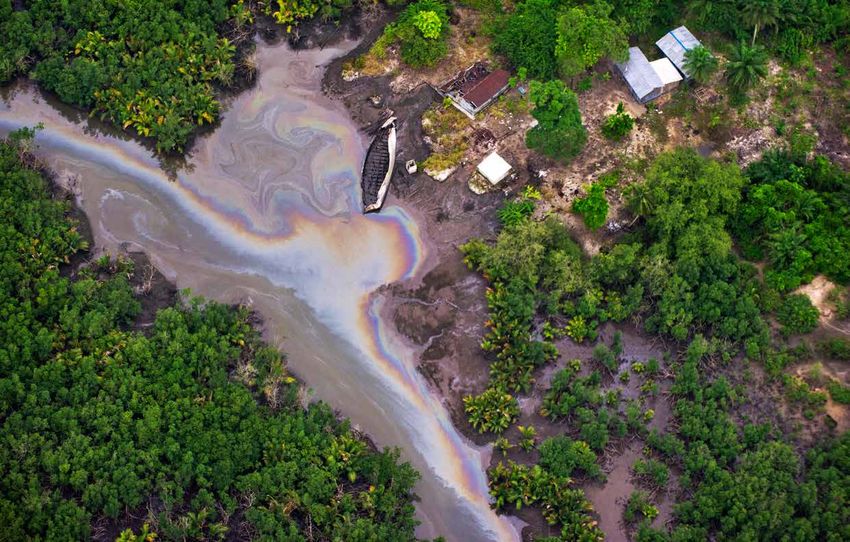
3   What if?

               Introduction                                                               4

               Map                                                                        5

               Case studies

               West Africa: Ferrero International, child labour and deforestation         7
               In Focus Turkey: Going nuts for Nutella                                    9

               Pakistan: KiK Textilien and the fatal factory fire                         11
               In Focus India: The Sumangali System                                       14

               Chile: Boliden’s toxic dumping ground                                      15
               In Focus India and Madagascar: Mica: Are our phones and cars
               worth the human cost?                                                      18

               Nigeria: Shell’s pollution in the Niger Delta                              19
               In Focus Democratic Republic of Congo: It’s not just Shell. Meet Perenco   22

               Guatemala: Grupo COBRA’s abuses of indigenous rights                       23
               In Focus Australia: Ferrovial: the Spanish multinational profiting
               from Australia’s abuse of refugees                                         26

               Brazil: Bayer Monsanto and the pesticide poisoning                         27

               China: Lego and Simba Dickie’s links to worker exploitation                30

               Bangladesh: VEON’s failure to protect workers’ rights                      33

               Recommendations                                                            36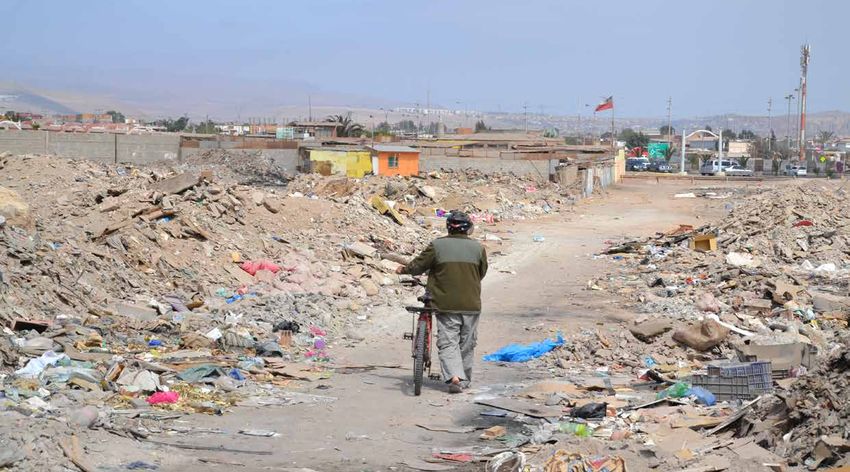
4   What if?

    Introduction
    Over the past few decades, some of the EU’s          This report details a number of case studies where
    largest and most well-known companies have           EU-based companies have been linked to corporate
    been involved in appalling human rights abuses       abuse and environmental harm in their global
    and environmental harm in countries across the       value chains and have so far managed to avoid
    globe. The companies have failed to address          liability before the courts. The companies which
    abuses perpetuated by subsidiaries or business       are the focus of the case studies in this report were
    partners in their global value chains, over          given the right to respond. Where responses were
    whom they often have considerable control            provided, these are summarised in the report.
    or influence. In many cases, the costs in these
                                                         The case studies clearly demonstrate how EU-wide
    global value chains are kept down as a result –
                                                         mandatory cross-sectoral human rights and
    directly or indirectly – of those same abuses.
                                                         environmental due diligence legislation, with
    EU-based automobile and cosmetic companies           a strong liability and enforcement regime and
    have been linked to child and forced labour in       improved access to remedy rules, would make
    India and Madagascar. Some of our chocolate          a difference in these cases. There is already strong
    companies stand accused of being linked to the       recognition of the need for change. The European
    exploitation of workers in West Africa and Turkey.   Commission published a report in February 2020
    Oil companies have been polluting communities and    highlighting the urgent need for regulatory action at
    the environment in African countries for decades.    EU level. Many EU and non-EU countries are already
    A German textile manufacturer ignored (and           adopting or considering their own due diligence
    allegedly signed off) lax health and safety          legislation. In April 2020, the EU Commissioner
    procedures in the Pakistani factory they source      for Justice committed to an EU-wide initiative on
    most of their products from. Not long afterwards,    mandatory human rights and environmental due
    a fatal fire killed 258 people.                      diligence legislation, to be presented in 2021.

    The uncomfortable truth is that many European        A number of leading businesses and business
    companies are linked to human rights abuses and      associations have supported calls for the law,
    environmental harm throughout their global value     arguing for the need to level the playing field and
    chains in the countries where they operate every     drive a uniform standard. Businesses taking
    single day, and they face few or no obstacles.       appropriate steps to respect human rights
    A lack of strong corporate accountability laws,      and the environment face considerable
    alongside complicated corporate structures and       disadvantages if competitors profit from
    convoluted supply chains, make it difficult, often   lower costs gained through exploitation and
    impossible, to hold these companies accountable.     disregard for these issues.

    In many of the foreign countries we have             Only by introducing binding legislation can we
    investigated, human rights abuses arise as a         truly protect people and planet, tackle human
    consequence of or are compounded by weak             rights and environmental abuses linked to
    governance systems, and victims of corporate abuse   European operations, products and services,
    face huge obstacles in standing up to them.          and finally hold EU-based companies to account.
    The weakness of these governance systems is a
    matter of widely available knowledge. By driving     Now is the time to make it happen.
    down costs elsewhere in the supply chain, it can
    enable companies to minimise their costs and
    maximise their profits, while operating with no
    due diligence.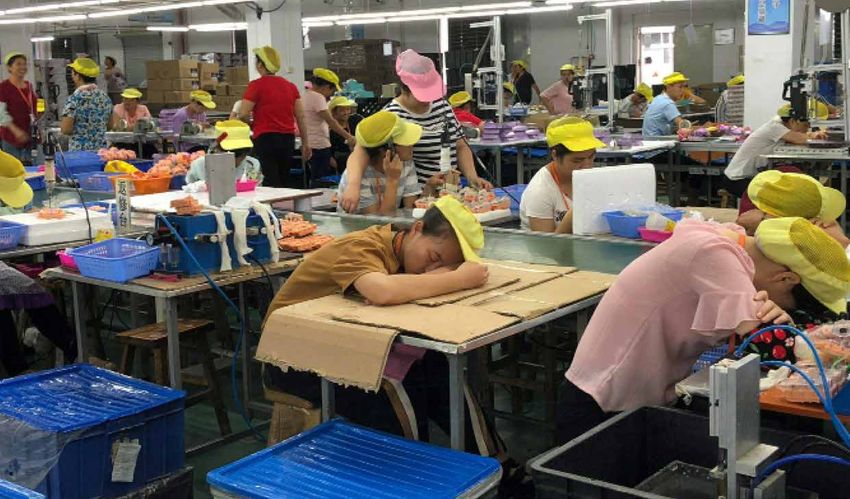
5 What if?
Where harm happens:
EU companies and their links to human
rights and environmental impacts worldwide
Brazil Turkey
Bayer Monsanto Ferrero International
(Germany) (Luxembourg)
Pesticides Hazelnut supply chain
Toxic chemicals Exploitation of migrant
People and planet workers
poisoned Child labour
See page 27 See page 7
Guatemala
Grupo COBRA
(Spain)
Hydroelectric
complex
Indigenous
communities
devastated
Barred from
accessing river
See page 23
Chile
Boliden (Sweden)
Mining waste
Dumped asbestos
Cancers and
diseases
See page 15
Nigeria Democratic Republic
West Africa of Congo
Shell (Netherlands)
Ferrero International Oil pollution Perenco (France)
(Luxembourg) Decades of Oil pollution
Cocoa supply chain contamination Severe environmental
Child and forced labour Ecosystems and destruction
Deforestation livelihoods destroyed Dumping toxic products
See page 7 See page 19 See page 22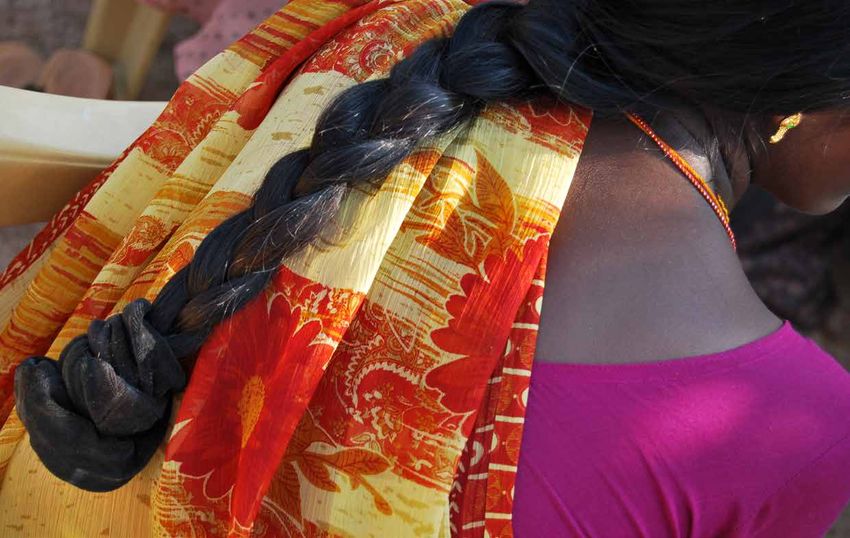
6 What if?
Pakistan China
KiK Textilien LEGO (Denmark)
(Germany) Toy supply chain
Textile supply chain Worker exploitation
Inadequate Appalling working
workers’ safety conditions China
258 deaths in See page 30
factory fire
Simba Dickie
(Germany)
See page 11
Toy supply chain
Worker exploitation
Appalling working
conditions
See page 30
Bangladesh
VEON (Netherlands)
Telecommunications
Assault on workers’ rights
Aggressive union busting
tactics
See page 32
Madagascar India
Multiple companies Multiple companies
Mica Textiles Australia
Debt bondage and Forced labour of Ferrovial (Spain)
child labour women and girls Offshore detention centres
See page 17 See page 13 Abuse of refugees
Assaults on women and children
See page 25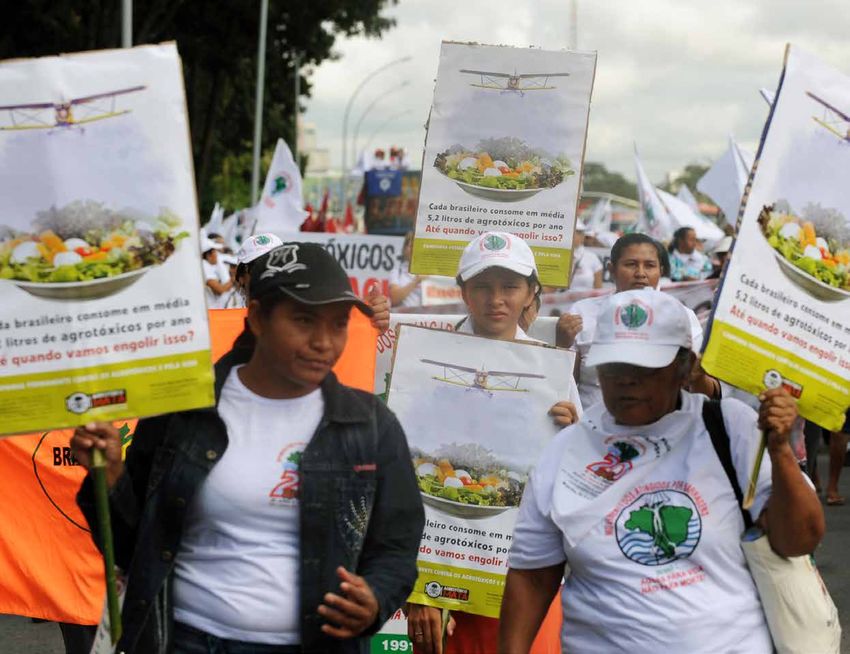
7   What if?

    Case studies

    West Africa: Ferrero International,
    child labour and deforestation

    Sector
               Cocoa
    Theme
               Child trafficking, child and forced labour, deforestation
    The company
               Ferrero International SA is headquartered in Findel, Luxembourg. It manages a group
               of chocolate and confectionery subsidiaries.

               Its subsidiary, Ferrero SpA, is headquartered in Alba, Italy. Ferrero SpA is one of the
               biggest chocolate producers and confectionery companies in the world, founded by the
               Ferrero family in 1946 in Italy. Its most famous brands include Ferrero Rocher, Nutella
               and Kinder.

               2019 revenue
               Ferrero International SA, €11.4 billion.1

    Affected communities
               In West Africa, most cocoa farmers live below the poverty line. Structural poverty is the
               prime challenge of the cocoa sector and one of the root causes of child labour. More than
               two million children are involved in child labour, particularly in Côte D’Ivoire and Ghanaian
               cocoa plantations. Child trafficking, a form of modern slavery, is also found in cocoa
               plantations in these countries, with children trafficked from Mali, Burkina Faso, Niger,
               Nigeria, Togo and Benin.

    Summary
               As a key buyer from the region, Ferrero should take more action to address the high risks
               of child labour, child trafficking and forced labour in the West African cocoa supply chain.
               Widespread deforestation has also been taking place to make room for cocoa plantations,
               causing devastation for both wildlife and the climate. The absence of binding regulation
               has meant there is little incentive to drive change in the sector.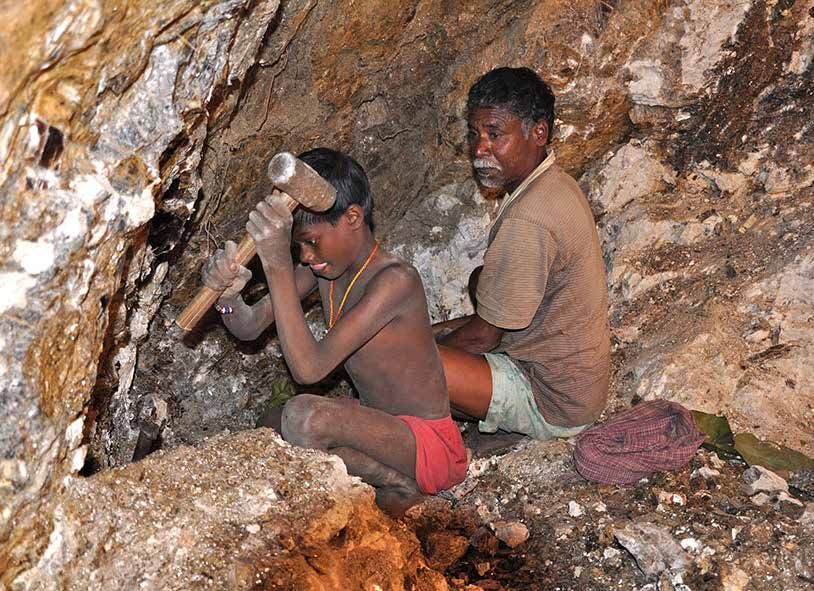
8   What if?

    Details
               Every year, 70 per cent of the world’s cocoa beans are produced on small farms in
               West Africa.2 Côte D’Ivoire and Ghana are the two largest producers: together they
               produce more than half the world’s cocoa.3 But the industry is rife with child labour,
               forced labour and environmental damage.

               Recent estimates suggest that 30,000 children and adults work in forced labour on cocoa
               plantations in Côte D’Ivoire and Ghana alone – and researchers noted this was likely to
               be an underestimate.4 Child trafficking in particular is a known but under-addressed issue
               in the region. Children as young as five are kidnapped or bought in Mali, Burkina
               Faso, Niger, Nigeria, Togo and Benin, and trafficked to cocoa plantations in Côte
               D’Ivoire and Ghana. There are reports of traffickers selling these children to owners of
               cocoa plantations for the equivalent of €230.5

               Child trafficking and forced labour occur within the context of very high levels of child
               labour. There are an estimated 2.1 million children in child labour in the two
               countries’ cocoa sectors, of which 96 per cent are thought to be in hazardous
               forms of labour.6,7 A combination of factors drives child labour in the region, including
               chronic poverty, lack of access to education, insufficient land and the low bargaining
               power of farmers to secure prices that provide a living income.

               According to an investigation by Mighty Earth,8 the cocoa industry in West Africa has
               also been the primary driver of deforestation. As reported by the Ivorian government,
               less than 11 per cent of the country remains forested, and less than 4 per cent remains
               densely forested. Besides legal deforestation, more than 90 per cent of the national
               parks and protected areas in Côte D’Ivoire have been cleared of forest and replaced
               with cocoa plantations.9 Approximately one quarter of deforestation in Ghana has been
               linked to the cocoa industry: almost 300,000 acres levelled between 2001 and 2014
               were part of protected areas.10 Elephants and chimpanzees have been decimated by this
               overwhelming loss of habitat.11

               The issues above affect the entire cocoa sector sourcing from West Africa. Ferrero
               International has a particular role to play – as the world’s third largest chocolate company
               in 2017/18,12 sourcing its entire cocoa supply from West Africa and Ecuador. But the
               company can do much more to address the issues occurring at the sharp end of its
               supply chains. While Ferrero states it has “zero tolerance for any form of human rights
               abuse along … [its] value chain”,13 and that it is “committed to production that respects the
               environment”,14 the company ranks near the bottom of an annual civil society analysis of
               confectionery companies’ commitments to making chocolate sustainable.15 Ferrero was
               alleged to be “lagging” in its commitments to address deforestation, agroforestry, child
               labour and living income.

               The negative impacts of the cocoa industry have been known for decades.
               Yet, voluntary commitments, such as the 2001 Harkin-Engel Protocol16 aiming
               to end child labour, have proven insufficient to transform the sector and drive
               all companies to meet the same standards.
9   What if?

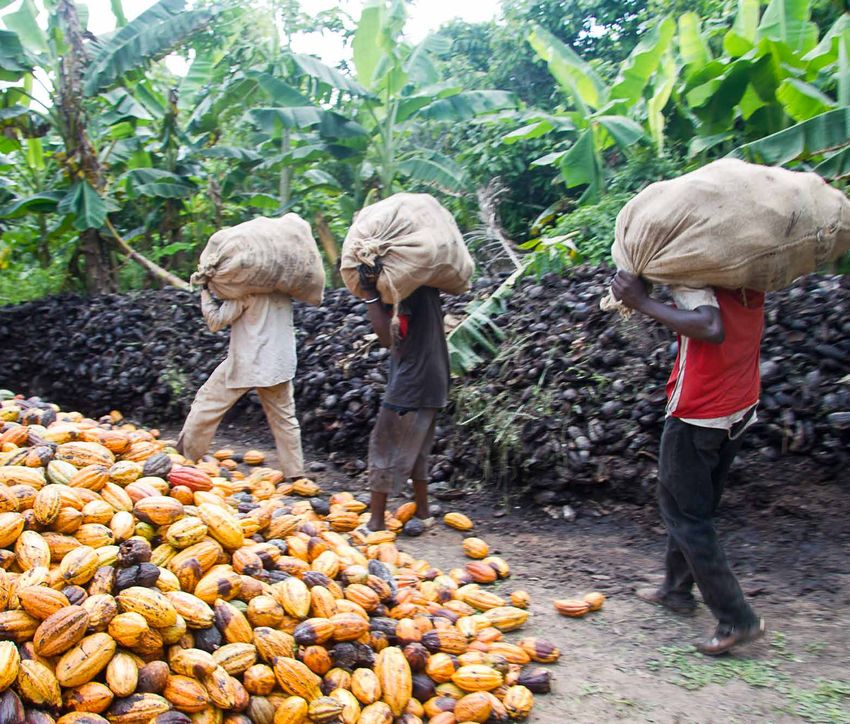
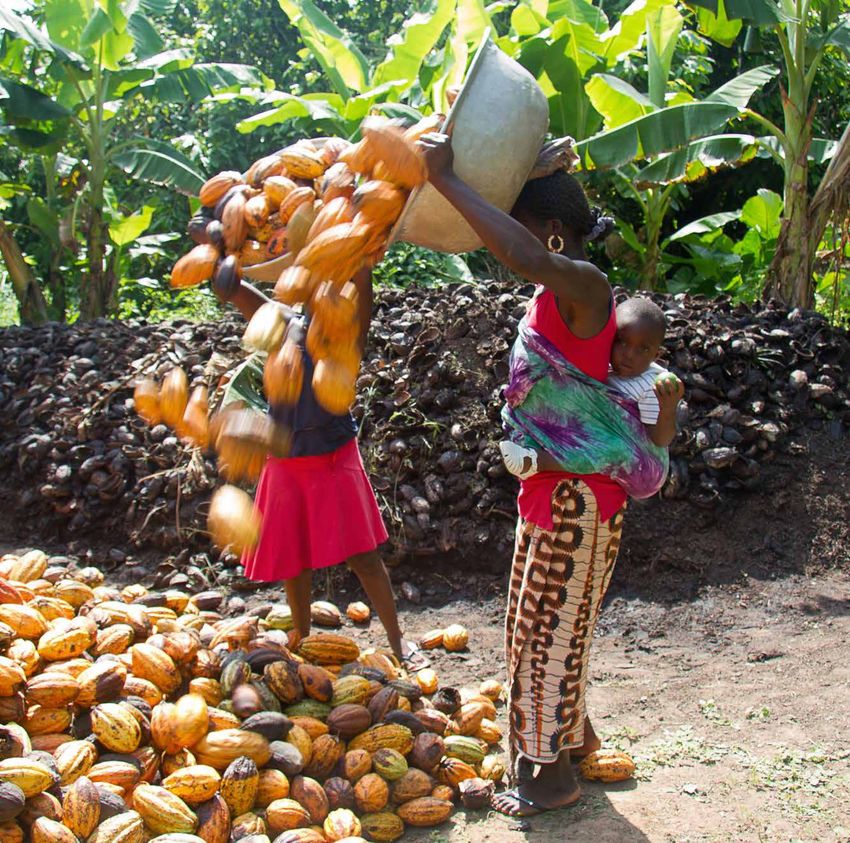
                                                                                             Cocoa harvest in Côte D’Ivoire
                                                                                             Image by Nile Sprague

      Going nuts for Nutella
      Meanwhile in Turkey, Ferrero buys a third of the country’s hazelnut harvest every year. At farms along
      the Black Sea coast, Syrian and Kurdish refugee families pick the hazelnuts that go into the brand’s
      famous delicious nutty spread. These workers are extremely vulnerable to exploitation and inhumane
      working conditions. They work long hours, but do not even earn the minimum wage. That means many
      are forced to bring their children to pick with them. Children work for up to 12 hours a day, often in
      hazardous conditions for low pay, without a contract or adequate health and safety equipment, and
      missing the beginning of the school year.

      You would think Ferrero would be going nuts over this. But it is not. It is failing to exercise leverage
      and use its dominant position in the hazelnut market to ensure environmental and human rights are
      respected at the bottom of the supply chain. Farmers say Ferrero does not pay a fair price for their
      hazelnuts. Given that the company is one of the major buyers of Turkish hazelnuts, Ferrero should use
      its power and influence to ensure adult workers are paid living wages and children are not picking their
      products for a pittance instead of going to school. In response to the investigation on conditions in its
      hazelnut supply chain, Ferrero acknowledged the problem of child labour in Turkey’s agricultural sector
      and said that it is “determined to prevent and eliminate child labour” in its supply chain.17,18,19,20,21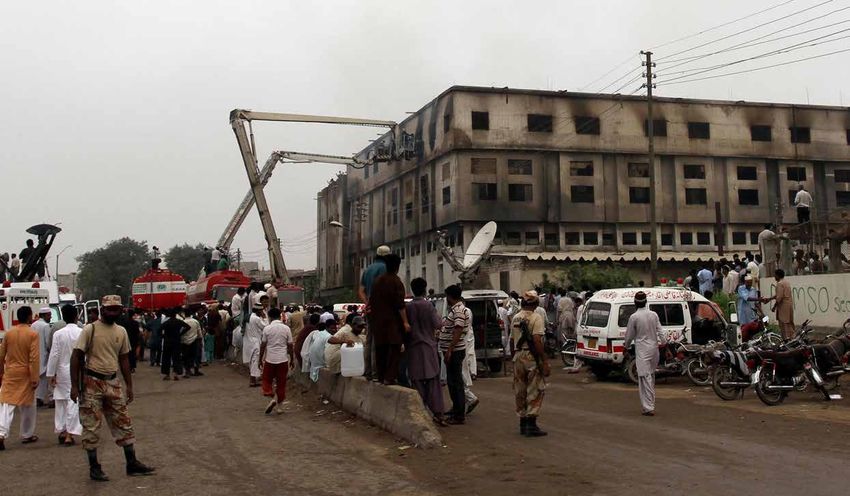
10 What if?
What if
Under an EU-wide mandatory human rights and environmental due diligence law, Ferrero would be
obliged to ensure respect for internationally recognised human and labour rights in its global value chains.
Ferrero would be obliged to carry out risk-based due diligence to identify, prevent, cease, mitigate
and account for its adverse impacts, including by seeking to ensure that its suppliers meet
international human and labour rights standards, notably with regard to forced and child labour,
and environmental standards.
Ferrero would have to increase transparency and take action to trace and map its supply chain,
down to farm level.
As part of HRDD, Ferrero should assess the drivers of risk in its supply chain, and therefore take
action to assess the impact of its own purchasing practices. As a result, Ferrero would need to
consider how these practices and its pricing may obstruct suppliers’ capacity to pay
farmers and their workers a living income, thereby addressing one of the most salient root
causes of forced and child labour.
Child labour, child trafficking and environmental damage are systemic in the cocoa industry,
and occur due to a cumulative impact of business models and contextual causes, such as lack
of access to education. An EU due diligence law would encourage companies to cooperate and
collaborate to address the root causes, including by working with the EU and governments of
cocoa-producing countries. It would level the playing field between chocolate companies, and
ensure companies such as Ferrero cannot enjoy the position of being the third largest chocolate
company in the world while also lagging behind in its efforts to respect human rights and
environmental standards.
Farmers and farmworkers, communities and their representatives could challenge
Ferrero’s alleged failure to ensure respect of their rights before Luxembourg’s judicial and
administrative authorities and seek remediation.
Ferrero could be held liable for harm arising from human rights, labour and environmental abuses
in its supply chain which it failed to prevent, if allegations were proven.11 What if?
Case studies
Pakistan: KiK Textilien and
the fatal factory fire
Sector
Garments and textiles
Theme
Labour rights, health and safety
The companies
KiK Textilien und Non-Food GmbH is Germany’s largest textile discounter chain,
operating approximately 3,500 stores across central and eastern Europe. KiK is a
subsidiary of Tengelmann Group, a holding company also headquartered in Germany.
KiK contracted Ali Enterprise, a Pakistani textile company operating a factory in
Karachi, Pakistan.
2019 revenue
KiK: €2.13 billion.22
Tengelmann net income: €8.1 billion.23
Affected communities
Millions of workers in Pakistani garment factories are paid below minimum wage, forced
to work overtime with insufficient breaks and unable to join independent trade unions.24
Despite the garment sector being a female-dominated industry in many countries, in
Pakistan men account for 59 per cent of garment workers. However, men are paid
on average three times more than women in the sector. Despite violating domestic
legislation, children under 14 can also be found working in some Pakistani factories.25
Summary26
On 11 September 2012, 258 workers died and hundreds were seriously injured when a
fire broke out in the Ali Enterprise garment factory in Karachi, Pakistan.27 Due to lax fire
safety measures, workers were at first unaware of and then trapped by the fire.
At the time, the factory was producing jeans for its main client, German retailer KiK.
Victims sought justice in the European courts, but failed due to the fact that Pakistani law
was applied.12 What if?
Detail
About 70 per cent of Pakistan’s exports to the EU are textile and garment products.28
But people working in Pakistani garment factories are often paid below minimum wage,
forced to work overtime and barred from joining independent trade unions.29
Pakistani textile factories are also frequently piled high with cotton, fabrics and chemical
dyes – representing a deadly fire risk. KiK had been buying up at least 70 per cent of the
factory’s production for several years30 and therefore should have been aware of the risks
at the Ali Enterprise factory. As the factory’s main customer, KiK should have met its
responsibility under the UN Guiding Principles on Business and Human Rights to
seek to ensure the safety of the people who worked there.
A few weeks before the fire, the factory had managed to gain an SA8000 certificate,
supposed to guarantee health and safety.31 But this assessment was made by auditors
who reportedly had not even visited the building.32 Despite reports of KIK representatives
conducting in-person visits33, the investigation that followed the fire found the factory
also had bars on the windows and exits.34
Three months after the Ali Enterprise fire in Pakistan, another 117 workers died in a
factory fire in Bangladesh. This factory was also producing for KiK, as well as various
other Western brands.35
After the Ali Enterprise fire, KiK immediately agreed to pay US$1million (approximately
€900,000) in compensation to the victims and survivors.36 Negotiations for further
compensation to cover the victims’ redress did not materialise. In March 2015, four of
the victims initiated a civil claim against the company at the Regional Court in Dortmund,
Germany, where the company is incorporated. The German courts decided to apply
Pakistani law, as this was where the harm occurred. In January 2019 the court
dismissed the action, deciding that according to Pakistani law the statute of
limitation had expired37 and the claimants were too late to seek justice.
As a consequence of the case’s dismissal on procedural grounds, issues around corporate
responsibility and liability for harms were never tested in court. As a result of public
pressure surrounding the legal proceedings, KiK agreed to a negotiated compensation
settlement, and committed to an additional US$5.15 million (approximately €4.69 million)
in compensation for the ‘pain and suffering’ of surviving victims and families.38
The survivors and families waited many years for justice, to be told we
waited too long. It takes a lot of time to organise such a case from Pakistan.
Our children still go to factories with the same conditions.
Abdul Aziz Khan, Ali Enterprise Factory Fire Affectees’ Association13 What if?
What if
Under a mandatory EU-wide human rights and environmental due diligence law KiK, in its role as the
major buyer, would have been obliged to seek to ensure respect for internationally recognised human
and labour rights at the Ali Enterprise factory, and would have been unable to defer this responsibility
to a third-party auditor.
KiK would be obliged to carry out risk-based due diligence to identify, prevent, cease and mitigate
the risk to human life at production factories within its supply chain, and push factory owners
to ensure that they identify and reduce risks to workers’ lives and safety. This would
mean addressing the complete absence of fire safety measures, and complying with
internationally recognised health and safety standards such as the provision of fire alarms
and extinguishers on the factory floor.
KiK should have assessed the impact of its own purchasing practices on the ability of Ali
Enterprise to meet these standards, and to ensure, in general, that its suppliers had the
financial capacity to comply with decent human rights and environmental standards.
The victims’ families and survivors of the fire would not have had to resign themselves
to charitable action by KiK in order to receive compensation, achieved only as a result of
public pressure. They would have had a legal right to access justice to make a claim for
compensation for the harm they suffered, and would be able to rely on German (EU) law in
seeking the right to claim compensation against KiK.
Victims would have had more time to bring their transnational claim under German (EU) law, as
opposed to the more restrictive Pakistani law that held their claims to be time-barred.
Bystanders look on outside the burnt-out
Ali Enterprises clothing factory in Karachi.
Image by Rehan Khan14 What if?
Young girls are commonly exploited
in clothing factories in India.
Image by Dev Gogoi
The Sumangali system: forced labour of women and girls
in the textile industry of South India ”
The textile industry plays a fundamental role in India’s economy. In 2018-2019, the sector employed
more than 45 million people, contributing to 15 per cent of India’s export earnings.39 Home to one-third
of India’s textile business, Tamil Nadu is sometimes referred to as ‘The Textile Valley of India’.40
EU companies including H&M, C&A, Primark and Inditex all source from Tamil Nadu.41 A 2016 report
with a sample of more than one-third of Tamil Nadu’s spinning mills unveiled the presence of forced labour
in 91 per cent of them. The prevalence of forced labour is such that it is likely that many EU companies
sourcing from Tamil Nadu have, however unwittingly, utilised forced labour in their clothing manufacture.42
Anti-Slavery International explains that the forced labour of women and girls in the region’s spinning
mills and factories is known as the ‘Sumangali system’. Unmarried girls aged between 13 and 18
are tied to three-year contracts in mills that operate 24 hours a day. Girls live in unsanitary hostels
with poor living conditions that inflict chronic illnesses. Confined to the mills, girls are permitted only
occasional visits from their parents, who believe the mills are providing their daughters with safe work.
Working conditions are appalling: unpaid overtime, 12-hour shifts, no days off, pay below minimum
wage and frequent injuries in the workplace. Despite a lump sum being promised at the end of the
contract, which girls hope to use to arrange their marriage, in reality, many girls leave the mills before
ending their contract, often due to ill health, thus unable to receive the final payment.43
In contravention of both domestic legislation and international standards such as ILO conventions on
child labour,44 some brands continue to benefit from a system of exploitation perpetrated by Indian
manufacturers to meet international demand for low-cost garments. The exploitation in Tamil Nadu
was brought to the attention of European brands almost a decade ago. Yet a series of voluntary
initiatives in this time have failed to drive change. We need a mandatory EU human rights and
environmental due diligence law to bring about effective change in the sector.15 What if?
Case studies
Chile: Boliden’s toxic
dumping ground
Sector
Mining
Theme
Environment, health
The companies
Boliden Mineral AB is one of Sweden’s largest mining corporations.45 It employs about
5,800 people,46 with operations in Sweden, Finland, Norway and Ireland. Before being
declared bankrupt, Promel was a Chilean mining company and contractor to Boliden
that operated mines and bought up mining waste.
2019 revenue
Boliden: approx. €4.7 billion,47 net profit €547 million.48
Affected communities
Itchy spots started appearing on our arms. Nobody minded, nobody
knew how dangerous that was. Now I am worried about my daughter.
Who knows how the polymetals will affect her?
A victim who unknowingly played on a toxic dump containing
Boliden toxic waste as a child.49
Chile, with the highest GDP in South America, attracts many people looking for a better
life; in the past 30 years there has been a spike in immigration into the country.50 Arica
province is in northern Chile, bordered by Peru. Many of the people who live in Arica
are migrants from countries such as Haiti or Bolivia, living in precarious conditions51
in impoverished neighbourhoods.16 What if?
Summary52
In the 1980s, Boliden paid Promel to export industrial waste to Chile, where Promel
disposed of it without removing the arsenic. This caused awful health effects, including
cancers and neurological disorders, for people living near the site. In 2013 victims took
legal action against Boliden in the Swedish courts but eventually lost their case, leaving
them not only with life-threatening diseases, but €3.2 million in litigation costs.53
Detail54
Between 1984 and 1985, Boliden paid Promel approximately €1 million to export 20,000
tons of mining waste. This toxic sludge was shipped to Arica, a port city in northern Chile.
But Promel failed to reprocess the sludge and extract the arsenic, and the mining
waste was dumped, unprocessed and unprotected.55 In 1994, many families moved
to newly built social housing on the outskirts of Arica. Residents did not realise that the
mounds their children were playing on was a toxic waste dump.56
In 1998 a wave of serious diseases including cancer, skin diseases and
neurological disorders were observed in about 3,000 people.57,58 Given that the
contaminated territory was being used as a playground,59 children were severely
affected.60 In 2007, after 374 residents filed civil proceedings against Promel,61 the
Chilean Supreme Court ordered Promel to restore the contaminated area. However,
Promel was declared bankrupt and did not comply with the order.62 In 2009 the Chilean
government, acknowledging the high levels of arsenic, lead, cadmium, mercury, copper
and zinc, ordered 1,880 houses demolished and the sludge removed to a different area
east of Arica.63 The waste is now held just outside Cherro Chuno, another impoverished
neighbourhood where the majority of people are migrants.64
In 2013 Arica Victims KB, a group representing 796 Chilean citizens, filed a lawsuit
before a Swedish court65 arguing that Boliden had breached a duty to ensure that the
sludge was appropriately processed by Promel. The court dismissed the action on the
basis that Boliden could not have reasonably foreseen the outcome. However,
the court found Boliden was negligent in continuing its relationship with Promel after
realising any exported waste would end up in an uncovered pile close to populated areas.
Boliden has not faced legal consequences for this negligence.
In March 2019, after the claimants appealed, the court decided to apply Swedish law –
but dismissed the appeal on a new basis: that the claim for damages had been filed
too late and the cause of action was time-barred.66 In Swedish law, a claim for
damages must be made within 10 years of the event. As a consequence, claimants were
required to pay both their own litigation costs and those of Boliden. Victims have been
left not only with life-threatening diseases, but €3.2 million in litigation costs.6717 What if?
What if
Under an EU-wide mandatory human rights and environmental due diligence law, Boliden would be
obliged to seek ways to ensure respect for internationally recognised human rights and the environment
in its global value chains, which includes waste management activities.
Boliden would be obliged to identify, prevent, cease and mitigate the effects of its waste
management process in Chile and elsewhere, notably with regard to the environment and to the
health and safety of local communities and to use its leverage towards its local partners for
them to prevent and mitigate the identified adverse impacts and take action in support
of local communities.
Under a mandatory due diligence law, victims could challenge Boliden’s alleged failure to seek to
ensure that its contractor respected international environmental standards before the Swedish
judicial and administrative authorities. Boliden could be held liable for harm arising from its
mining waste management as a result of its failure to conduct adequate due diligence,
if allegations were proven.
Barriers to justice that have prevented the victims of the waste pollution from enjoying
their rights in line with international human rights and environmental standards would be
removed. Notably, victims would not have to take on the burden of proving Boliden’s alleged
failures and their connection to the harm they suffered, but rather Boliden would be required to
prove it undertook reasonable human rights and environmental due diligence.
Victims of Boliden would have been guaranteed the right to remedy under Swedish law
automatically, under an overriding mandatory provision. Effective EU legislation with reasonable
time limitations for bringing legal actions would allow foreign victims – such as the communities of
Arica – sufficient time to file a lawsuit in the EU.
A man wheels his bicycle through the waste in the contaminated
neighbourhood of Cerro Chuno (10 August 2019).
Image by Pablo Cepeda18 What if?
7-year-old Karulal working underground
in a mica mine next to his father.
Image by Peter Bengtsen
Mica: are our phones and cars worth the human cost?
Mica refers to a group of minerals found in a wide range of everyday products. The electronics industry is
the biggest buyer of mica (electronic devices have components containing some form of it), followed by
paints and coatings (used by the automotive industry), construction and cosmetics.
Sheet mica mining is a labour-intensive process, predominantly carried out by very poor and often
exploited workers, that requires traveling deep into narrow mining shafts. India and Madagascar are
the main exporters of sheet mica, and in both countries there are reports of child labour and
whole families in debt bondage (a form of forced labour) in this sector. As reported in 2015,
up to 22,000 children were involved in mica mining in the Indian states of Jharkhand and Bihar.68
Research in 2016 uncovered the deaths of seven children in a period of just two months.69
In Madagascar, an estimated 11,000 children are involved in the mica sector.70
After a 2016 investigation, the Guardian revealed links between the suppliers of car paint companies
and cosmetics brands such as L’Oréal to illegal mines in India.71 Afterwards, some of the world’s biggest
carmakers, including BMW and Volkswagen, launched investigations into their paint supply chains.
However, as reported in 2019,72 despite increased attention, none of the brands in focus have
improved public supplier transparency over the past five years.
The European Parliament recently approved a resolution on mica mining73 calling for “the harmonisation
and strengthening of import and supply chain controls, including through working towards binding due
diligence and implementing OECD standards”. Regrettably, the EU Conflict Minerals Regulation,
which will come into effect in January 2021, does not apply to the mica sector.19 What if?
Case studies
Nigeria: Shell’s shameless pollution
and empty excuses
Sector
Oil
Theme
Environment, public health, indigenous rights
The company
Royal Dutch Shell, known as Shell, is one of the world’s largest oil and gas companies
and the biggest public company in Europe.74 The company is headquartered in The
Hague, with its registered office in London. Shell Petroleum Development Company
of Nigeria (SPDC)75 is the operator of a Joint Venture Agreement involving the Nigerian
National Petroleum Corporation (a state-owned company), Shell and two other Nigerian
corporations.76 SPDC was jointly financed by the Shell Group of Companies and the
British Petroleum (BP) Group. The company operates in the Niger Delta and adjoining
areas in an oil mining lease area of around 31,000km2.
2019 revenue
Shell: US$344.9 billion (approx. €312 billion), net profit $16,4 billion.77
Affected communities
Ogoni is both a region in the Niger Delta of southern Nigeria and the name of the ethnic
group that lives there. For the Ogoni and the Nigerian people, oil companies have brought
poverty, environmental devastation and widespread human rights abuses to their
region and to their lives.78 They have been fighting for justice for decades.
The Ogoni Nine were a group of nine activists who actively opposed Shell’s
practices in the Niger Delta. In 1995, the Ogoni Nine – Ken Saro-Wiwa, Saturday
Dobee, Nordu Eawo, Daniel Gbooko, Paul Levera, Felix Nuate, Baribor Bera,
Barinem Kiobel and John Kpuine – were brutally executed by the Nigerian
government. Since then, the victims’ families have brought charges against Shell,
alleging the company’s complicity in the executions. A case filed against Shell by
four widows of the Ogoni Nine was still unfolding in The Hague in 2019, marking
24 years of the victims’ families seeking – and being denied – justice.20 What if?
Summary
Shell is ravaging the Niger Delta through its decades-long quest for oil. Pollution caused
by the activities of its subsidiary SPDC is having a devastating effect on both the
ecosystem and people living in this area. Victims of Shell’s irresponsible business conduct
sued the company before Dutch courts, but claimants have faced endless legal barriers,
challenges and uncertainty. They still have not won justice.
Details
The Niger Delta contains the biggest oil reserves in Nigeria. Within it lies Ogoni, home to
an important wetland and coastal marine ecosystem, and more than 30 million people.
Shell, through SPDC’s operations, has been extracting oil from this area for more than
half a century. Oil spills have been reported since the 1950s: several million barrels
of oil have been spilled over the decades, causing widespread contamination, affecting
innumerable lives and leaving a number of villages uninhabitable.79 More than 60 years of
continual gas flaring has also caused severe environmental and health problems.
In 2011, a study carried out by the UN Environment Programme (UNEP)80 found the
pollution was having a severe impact on vegetation, crops and fisheries, posing
serious threats to ecosystems, as well as to the health and livelihoods of citizens.
The community had been exposed to elevated concentrations of petroleum
hydrocarbons in air, soil, ground and water for years. Water is contaminated 900
times above World Health Organization standards.
Shell has time and again failed to address the impact of their spills. Many sites that Shell
claim they cleaned up were found by UNEP experts to still be polluted. The methods
Shell used for cleaning oil spills were declared ineffective and inadequate by
UNEP. The company has manipulated information to avoid accountability for old and
leaking pipes.81 By 2020, not one of the sites documented by UNEP has yet been
properly cleaned, with clean-up activities started in only 11 per cent of sites.82
The damage and abuses resulting from the oil spills have given rise to numerous
proceedings before the Nigerian and Dutch courts. Friends of the Earth Netherlands,
together with four Nigerian farmers,83 filed a lawsuit against Shell in 2008 before
the Dutch civil courts. It was the first time a Dutch multinational company was sued in
the Netherlands for abuses caused abroad by its foreign subsidiary. The claimants argued
that Shell failed to protect them from the oil spills, as a result of which they suffered harm
and loss, and sought compensation and remediation. The Dutch courts applied Nigerian
law, as this was where the harm occurred.
In January 2013 the court rejected the claims against Shell, on the grounds that
under Nigerian law there was no general duty of care on parent companies toward
their subsidiaries.84 The court did rule that SPDC was liable for the oil spills on a farmer’s
land and ordered it to pay compensation. Both SPDC and Friends of the Earth appealed
the decision.85 The Court of Appeal has already partly reversed the court’s decision.
It stated that it could not be totally ruled out that Shell, as the parent company, may owe
a duty of care to the claimants and be liable for the human rights impacts arising out of
SPDC’s activities, because of its negligence in managing and monitoring its subsidiary.
The next stage of the appeal will take place in autumn 2020.21 What if?
Niger delta aerial (16 June 2014).
Marten van Dijl/Milieudefensie
What if
The people of Ogoni have been seeking justice and remedy for the harm caused by Shell in their home
region for more than two decades. In recent years, numerous courts have ruled inconsistently on Shell’s
activities in Nigeria. Under an EU-wide mandatory human rights and environmental due diligence law:
Shell would have to put in place a risk-based due diligence process to identify, prevent,
cease and mitigate human rights and environmental risks and impacts along its global
value chain, including those by SPDC. This would mean that Shell should work with SPDC to
closely monitor the oil spills, clean up the soil and water, replace old and damaged pipelines and
potentially cease operations if prevention and mitigation measures were found to be insufficient.
Shell would assume responsibility for its subsidiaries' human rights and environmental alleged
abuses, once proven, including those by SPDC, and could be held directly liable for harm arising
from them.
Shell would be required to publish reports on the effectiveness of its measures to prevent and
mitigate negative harms. This would make the company more easily accountable for its use of
methods declared inadequate by UNEP.
The story of Shell and SPDC has exposed the weakness of current EU law in allowing victims of
corporate harm effective access to remedy and justice. In current law, parent companies are unlikely
to be held liable for the activities of their subsidiaries. Furthermore, EU law currently dictates that cases
must be considered under the law of the country where the damage occurred.86
Had effective legislation been in place, the victims in this case would have had a legal right to
bring a claim against Shell in Dutch courts, the case would have been considered under Dutch law,
and Shell would have been required to prove it had undertaken effective due diligence to prevent and
mitigate the harm caused.22 What if?
It’s not just Shell. Meet Perenco
Perenco is a leading Anglo-French oil and gas group operating in northern Europe, Africa, Latin America
and Asia. It is the sole oil operator in the Democratic Republic of Congo (DRC), where it extracts
25,000 barrels a day and has been accused of causing severe environmental damage.87 Several reports
denounce the devastating consequences of spills of crude oil, discharge of toxic products and gas flaring
in unsafe conditions.88 Perenco France argued that these are activities carried out by other companies of
the group and that it therefore, essentially, has nothing to do with them.89
Perenco, well connected to political power in the DRC90,91 and a major contributor to its government
budget, operates in the country through four different entities. In 2008 a local court ordered one of these
local entities to compensate a community for the destruction of a forest, although this judgement was
never executed. NGOs initiated legal actions against Perenco France before the French courts in order to
clarify its role in this environmental harm.
However, Perenco France, the registered office of which is in Paris, does not fall within the scope of the
French Duty of Vigilance Law, which only applies to very large companies above certain thresholds.
Under a mandatory EU-wide due diligence law with a broad scope, covering all companies regardless of
sector and size, Perenco would be obliged to ensure respect for internationally recognised human rights and
the environment in its business relationships, including the companies that it factually or legally controls.
A company spokesperson declined to comment on these allegations as an investigation is ongoing.
Reflection in oil polluted river (5 November 2015).
Image by Luka Tomac/Friends of the Earth International.23 What if?
Case studies
Guatemala: Grupo COBRA’s
abuses of indigenous rights
Sector
Infrastructure
Theme
Environment, indigenous rights, access to water
The companies
Grupo COBRA is headquartered in Madrid, Spain and creates and operates electricity,
water, gas and communications infrastructure. It employs more than 38,000 people in
more than 70 countries.92 Grupo COBRA is a wholly-owned subsidiary of Grupo ACS,
a global leader in construction and engineering services.93
Corporación Multi Inversiones (CMI) is a Guatemala-based family-owned company
with more than 40,000 employees. In 2011, CMI subcontracted Grupo COBRA for the
construction of a hydroelectric complex in Alta Verapaz, Guatemala. The complex is
operated by Recursos Naturales y Celulosas (RENACE), a daughter company of CMI.
2019 revenue
Grupo COBRA revenue 2019: €4,205 million.94
Grupo ACS revenue 2019: €39,049 million,95 profit €962 million.96
Affected communities
The Q’eqchi’ indigenous people are an ethnic group of Mayan descent, most of whom live
in Alta Verapaz region, northern Guatemala.97 More than 80 per cent of people there live
below the poverty line.98 The Cahabón River is of unique significance to this region and to
the Q’eqchi’ people, who rely on it for drinking water, to wash their clothes and to fish.
The river is sacred to the Q’eqchi’ as the place of Mayan spiritual practices.24 What if?
Nobody was consulted, therefore, those projects are illegal. What we,
the communities, want is that they leave our river alone. That they
suspend those projects. […] That river is going to end up massacred.
These people are going to end up with no water.
Bernardo Caal Xol, Q’eqchi’ Community Leader.99
Summary100,101
In 2011 CMI subcontracted Grupo COBRA for the construction of a hydroelectric project
in Alta Verapaz. The project has ravaged the surrounding environment and way
of life of the Q’eqchi’ people. Grupo COBRA did not carry out a comprehensive risk
and impact assessment to identify and assess the cumulative environmental, social and
human rights risks of the project. Neither the government nor the company consulted
the local indigenous community prior to or during implementation. By 2016 the river was
being exploited by 15 different hydroelectric projects,102 further destroying forests and
preventing indigenous communities from accessing their main source of water.103
Detail104
In 2011, CMI contracted Grupo COBRA for the construction of three phases of the
RENACE project, the largest hydroelectric complex in Central America, on the Cahabón
River in Alta Verapaz, Guatemala. Local Q’eqchi’ communities were consulted
by neither the government or the company, violating their right to Free, Prior and
Informed Consent (FPIC), as recognised in international standards.105
When Grupo COBRA started work, they put up towering fences and set opening hours
and points of entry to the river,106 restricting the Q’eqchi’ people’s access to this
vital resource.107,108 These restrictions had serious effects on the cultural heritage of
the Q’eqchi’, due to the river’s sacred status in the community. Construction also had
an environmental impact as it led to significant changes in the course of the river,
leading to the potential flooding of naturally protected areas.109 The NGO Alianza
por la Solidaridad reports that while Grupo COBRA did carry out some environmental
impact assessments, they did not undertake a comprehensive assessment to consider
the cumulative impact, including on human rights, of the hydroelectric complex.
Alta Verapaz, one of the poorest regions in Guatemala, also has one of the highest
number of attacks against human rights defenders in the country.110,111
Communities and organisations that opposed this and other similar projects have been
threatened, defamed and criminalised.112 Q’eqchi’ leader Bernardo Caal was imprisoned
after defending the Cahabón River against another hydroelectric project.113,114
In November 2017, Alianza por la Solidaridad filed a complaint against Grupo COBRA
with the Spanish OECD National Contact Point (NCP). The NCP concluded that the
company, in its role as contractor, was not exempt from carrying out due
diligence, and that prevention and mitigation of the impacts of its business activities
was the company’s responsibility.11525 What if?
What if
Under a mandatory EU human rights and environmental due diligence law, Grupo COBRA would be
obliged to seek ways to ensure respect for internationally recognised human rights and environmental
standards in its global value chain.
Grupo COBRA would be obliged to carry out risk-based due diligence to identify, prevent, cease
and mitigate the human rights and environmental impacts of its operations, notably with regard
to indigenous rights, to use its leverage towards local partners for them to mitigate the
identified human rights and environmental abuses, and to take action in support of local
communities. This would mean the company would have had to identify and mitigate the impact
on the Q’eqchi’ people of restricting access to the river.
The company would have had to ensure respect of the right to Free, Prior and Informed
Consent, and cease construction activities until consent was obtained in line with the
standards set out in the UN Declaration on the Rights of Indigenous Peoples.
The Q’eqchi’ community and their representatives could challenge Grupo COBRA’s alleged failure
to ensure respect of their rights before the Spanish judicial and administrative authorities. Grupo
COBRA could be held liable for harm arising from human rights and environmental abuses
as a result of its failure to conduct adequate due diligence, if allegations were proven.
Locals look at the hydroelectric complex
built along the Cahabon river.
Image by Pedro Armestre/Alianza por la Solidaridad26 What if?
Ferrovial: the Spanish multinational profiting
from Australia’s abuse of refugees
As reported by Amnesty International116 and the Human Rights Law Centre,117 since 2012 Australia
has pursued a deliberate policy of refugee and asylum seeker deterrence by indefinitely warehousing
them in offshore detention centres (ODCs). Australia’s offshore detention regime has been repeatedly
condemned by human rights bodies, medical experts and the international community as breaching
fundamental human rights.
At the ODC on the tiny island of Nauru, there have been repeated allegations of sexual assaults on
women and children held there, in many cases with the direct involvement of guards employed by
Wilson Security, the subcontractor providing security services. The majority have never been criminally
prosecuted. There have been allegations of systematic downgrading of complaints by the
companies, and of contractors being paid to keep silent.
Broadspectrum, an Australian services and infrastructure company, was the leading private
contractor on Nauru from September 2012 to October 2017. In May 2016, it was acquired by
Spanish multinational Ferrovial. Ferrovial faced strong criticism for its links to this system.118
After a prolonged public campaign against them, both Wilson Security and Ferrovial stated that they
would not seek to renew their contracts with the Australian government.
Under a mandatory EU law, Ferrovial would have been obliged to seek ways to prevent and mitigate
the human rights impacts linked to its business in Australia. In fact, it is common practice to conduct
corporate due diligence prior to the acquisition of a business to identify and assess the risks of the
potential acquiree. Such a process should have comprised effective human rights due diligence
which would have revealed the gross abuses that had long been denounced on Nauru. As soon
as the acquisition took place, Ferrovial should have taken all reasonable measures to put an end to such
abuses and, in particular, to mitigate and remediate any sexual assaults that took place on Nauru,
and to prevent any further assaults, by exerting adequate leverage towards its local partners.27 What if?
Case studies
Brazil: Bayer Monsanto and
the pesticide poisoning
Sector
Pesticides
Theme
Public health, environment
The company
Bayer Group is a chemical company headquartered in Leverkusen, Germany.
Its business includes human and veterinary pharmaceuticals, consumer healthcare
products, agricultural chemicals, seeds and biotechnology products. After buying
agrochemical giant Monsanto for US$66 billion in 2018, Bayer Group became the
largest pesticide and genetically modified seed producer in the world.
2019 revenue
€43.5 billion, net profit €4.1 billion.119
Affected communities
Thousands of people in rural areas of Brazil are poisoned every year by pesticides.
These areas are home to the majority of Brazil’s 900,000 indigenous people from
305 different ethnic groups.120 Brazil has a population of at least 11,000 quilombos,
an indigenous group of enslaved African descent, many of whom are being directly
exposed to Bayer’s pesticides.121
Summary
Every year, thousands of Brazilian farm labourers and people from rural communities
become ill or die from contact with highly toxic pesticides. Brazilian biodiversity and
wildlife are being severely affected by the toxic spraying of agrochemicals. Bayer is
benefiting from Brazil’s weak pesticide regulations and contributing to lobbying efforts
to approve chemicals that are harmful for people and planet. Meanwhile, the EU
continues to import products that have been grown using the same pesticides
that were denied approval in many of its member states.28 What if?
Details
Chemical giant Bayer is a large EU-based transnational company that manufactures highly
hazardous pesticides,122 some of which have been denied approval in the EU due to health and
environmental hazards.123,124 Brazil, with more relaxed regulation around agricultural pesticides,
has been heavily targeted by Bayer. The company sells Brazil its herbicides, insecticides
and fungicides with active ingredients that are not approved in other countries. In 2018,
more than a third of Brazil’s 5,000 million tonnes of agricultural pesticides was glyphosate, a
notoriously harmful substance for both humans and the environment.125 One of the company’s
most infamous products, a weed killer containing glyphosate known as Roundup, classed by
the World Health Organization’s International Agency for Research on Cancer as “probably
carcinogenic in humans”.126 Despite being denied approval in dozens of countries, Roundup is
still the most used herbicide in Brazil.127
In January 2019 alone, 474 new pesticide products were approved, dozens of which contain
active ingredients classified as “highly hazardous”.128 Since 2016, more than 1,200 pesticides
have been approved, of which 193 contain active ingredients not approved in the EU, and
87 contain glyphosate.129 As of February 2020, Bayer was selling Brazil 17 substances
that are not approved in the EU.130 Studies suggest a strong link between politics and
agribusiness lobbying, finding Bayer responsible for funding Brazilian agribusiness and
employer associations.131
In response to the allegations above, Bayer argued that some products that have been
withdrawn in Europe are used to treat crops, control pests and respond to conditions that
don’t exist in Europe.
Brazil’s citizens are increasingly alarmed by pesticide poisoning. In 2018, Human Rights
Watch released a report revealing plantation workers and rural communities were
being poisoned by dangerous pesticides sprayed without precautions near their
homes.132 Regular exposure to pesticides is associated with infertility, negative impacts on
foetal development, cancer and other serious health conditions.133 Women and children are
particularly vulnerable. About 700 people have died every year in the past decade as a
result of direct contact with agrochemicals.134 People are often scared to speak out: in
2010, a rural farmer and anti-pesticide activist was killed after pushing the local government
to ban aerial spraying of pesticides.
It is not just farm labourers and rural communities who are at risk. Many of these chemical
pesticides persist in the food and water supply chain.135 The Brazilian Health Regulatory
Agency found that about one fifth of the food they examined contained residues that either
exceeded allowed levels or had unapproved products.136 Carbendazim, one of Bayer’s
pesticides not approved in the EU, appeared in 21 per cent of food samples analysed.137
Bayer claims to be voluntarily withdrawing products based on carbendazim in Brazil. As for
drinking water, 27 agrochemicals were found in the water of one in every four Brazilian cities.138
And then there are the devastating effects on Brazil’s diverse wildlife. Exposure to the
pesticides produced by Bayer is harming millions of bees, tapirs and other wildlife.139
Animals are being exposed to toxic substances via direct contact with contaminated vegetation,
soil and water, likely due to carelessly applied pesticides. Aldicarb, an insecticide produced by
Bayer and prohibited in Brazil since 2012, is one of the most toxic substances to be found in
tapirs’ stomachs.140
When given the right to reply, Bayer responded by stating its general commitment to only sell
products that meet the company’s and the local market’s safety standards, to continue to train
farmers around the world, and to increase the availability of personal protective equipment.29 What if?
Social movements and environmental organisations in Brasília promote a march
and public act to launch the Permanent Campaign against Pesticides and for
Life, and protest against changes to the Forest Code (7 April 2011).
Image by Marcello Casal Jr/Agência Brasil
What if
If there were an EU-wide human rights and environmental due diligence law, Bayer would be obliged
to ensure respect for internationally recognised human and labour rights and environmental standards
in its global value chain, and stop contributing to the poisoning of farm labourers and rural
communities and their ecosystems through hazardous products that have been found unfit for
sale in countries where adequate standards apply.
Bayer would be obliged to carry out risk-based due diligence to identify, prevent, cease and
mitigate the human rights and environmental impacts of its products in Brazil and elsewhere,
notably with regard to their pesticides.
Bayer would have to provide protective equipment and ensure appropriate labelling with
information on safety risks and proper usage of pesticides.
Bayer would have to consider the withdrawal of highly hazardous products, the safe use of
which cannot be guaranteed.
Under effective EU-wide due diligence laws, victims of Bayer pesticides and their representatives
could challenge Bayer before the German judicial and administrative authorities. Bayer could be
held liable for harm arising from human rights and environmental abuses as a result of its
failure to conduct adequate due diligence if proven.You can also read


