Cross-border territories Europe's laboratory - espaces ...
←
→
Page content transcription
If your browser does not render page correctly, please read the page content below
Cross-border
1   •
               EXPERIENCES
               IN THE TERRITORIES

territories
               —
               TOOLKIT

Europe’s
               OBSTACLES AND SOLUTIONS
               —

laboratory
               ACTING AT
               ALL LEVELS
–  •   2

                                                                                                                                                      E
                                                                                                                                                                    urope is at a crossroads. It is a time
                                                                                                                                                                    of anniversaries: the 60th anniversary
                                                                                                                                                                    of the Treaty of Rome, and the 25th
                                                                                                                                                                    anniversary of the Maastricht Treaty
                                                                                                                                                      and the beginnings of Interreg. And above all it is the
                                                                                                                                                      time for new visions to invent the post-2020 Europe:
                                                                                                                                                      a Europe which is facing unprecedented challenges,
                                                                                                                                                      but regaining the trust of its peoples.
                                                                                                                                                      The MOT is celebrating 20 years of existence:
                                                                                                                                                      an occasion for its network and technical team to take
                                                                                                                                                      stock and think about the future of its activities, and
                                                                                                                                                      more broadly of cross-border cooperation in Europe.
                                                                                                                                                      The brochure published on this occasion presents the
                                                                                                                                                      achievements of its members and partners by way
                                                                                                                                                      of 20 experiences aimed at serving the inhabitants
                                                                                                                                                      of cross-border territories (Part 1); the obstacles that
                                                                                                                                                      have been overcome or that still pose a problem,
                                                                                                                                                      and the toolkit developed to overcome them (Part 2);
                                                                                                                                                      and lastly, the current challenges for Europe and its
                                                                                                                                                      cross-border territories, and the political responses
                                                                                                                                                      at the different levels of territorial action: local and
                                                                                                                                                      regional, national, European and beyond (Part 3).
                                                                                                                                                      Most of the examples come from Western Europe,
This brochure is the result of a collective work by all members of the MOT network and its technical team, managed by the                             where the MOT and its network act on a daily basis;
working group “20 years of the MOT: outcome and perspectives for post-2020”, under the direction of Jean Peyrony, director general
and Olivier Denert, secretary general, and coordinated by Silvia Gobert-Keckeis, policy manager European policies and MOT association,                but the diversity of the borders discussed makes
Alexandre Martin and Marie Dreffier, interns, and Blandine Lysensoone, policy manager for communication and documentation.                            these examples stimulating for other borders in
An electronic version of this brochure may be downloaded from the MOT website:                                                                        Europe and the rest of the world.
www.cross-border-territories.eu
© Mission Opérationnelle Transfrontalière, all rights reserved
Date of publication: November 2017

Mission Opérationnelle Transfrontalière
38 rue des Bourdonnais
75 001 Paris – France
Phone: +33 (0)1 55 80 56 80 – mot@mot.asso.fr
    https: twitter.com/reseauMOT | http://bit.ly/2qL6Rls |      Linkedin: http://bit.ly/2yK0XDP

Translation from French to English: Simon Strachan
Graphical design and layout:
CONTENTS
Over the past 20 years, there have been significant
advances in cross-border cooperation, which have
benefited the inhabitants of cross-border territories
and enabled Europe to take concrete form there. I can
testify to this, having contributed to it as a local elected
representative in a border region and as the MOT’s
President. In the future, we need to aim for cross-
border and European integration, and cooperation               PART 1                                                                                    PART 2                                                                                  PART 3
requires more support in order to overcome the
remaining obstacles. A veritable laboratory for Europe,
cross-border territories need a toolkit that is designed
                                                               20 years of cross-border                                                                  The cross-border                                                                        Ambitions for
and implemented at the local, regional, national and           cooperation, 20 years                                                                     toolkit: obstacles                                                                      the future and
European levels. The MOT – both its network of players         of experiences in                                                                         and solutions                                                                           political responses
and the technical team that assists their projects – has
built up both sectoral and territorial expertise that has
                                                               cross-border territories
made it a major partner for players on the ground, but
                                                               1.1. What is cross-border cooperation?...................... 8                          2.1. Construction of cross-border territories.............. 29                         3.1. Cohesion policy post-2020................................. 54
also for institutions at national and European levels.
                                                               1.2. C
                                                                     ross-border cooperation and                                                             a. O
                                                                                                                                                                  bservation, strategy and planning............................. 30                  a. General context ......................................................... 54
Too many of our fellow citizens are still Eurosceptic, so
                                                                    the Mission Opérationnelle Transfrontalière:                                              b. Governance and political action ................................. 33                 b. Cohesion: origins, objectives and current policy.......... 54
we need to continue forging harmonious coexistence
                                                                    1997 – 2017......................................................... 10                   c. A
                                                                                                                                                                  ffiliations, identities and commitment                                             c. A new vision for Europe, redesigning
in cross-border territories and demonstrating that
                                                               1.3. The Mission Opérationnelle Transfrontalière                                                 to cooperation ........................................................... 36            European cohesion..................................................... 55
Europe is at work there. The discussions underway
                                                                     and its network.................................................... 12              2.2. Coordinating policies.......................................... 39                 3.2. Cross-border territories and the issue of
about what happens after 2020 should put cross-
                                                                    a. Being part of the network means... ............................ 12                    a. C oordination at the border level ................................. 39               European territorial cooperation (ETC)................ 56
     border integration at the heart of reforms.
                                                                    b. The network have their say......................................... 12                 b. Coordination at national level...................................... 40             a. T he general context for border regions........................ 56
          Long live cooperation… for a concrete Europe
                                                               1.4. T
                                                                     he MOT’s network illustrated by                                                         c. Coordination at European level................................... 42                b. Border regions and ETC: origins and
            dedicated to serving its citizens!
                                                                    20 experiences.................................................... 13                2.3. Support for cross-border territories.................... 44                                current policies........................................................... 56
                                                                    HEALTHCARE................................................................ 14             a. Support at the border level......................................... 45              c. The future of cross-border territories and ETC............ 57
                                                                    EDUCATION .................................................................. 14           b. Support at national level............................................. 46      3.3 Political responses: context and
             Michel DELEBARRE                                       TRAINING & HIGHER EDUCATION ................................ 15                           c. Support at European level........................................... 47             roadmaps for the future....................................... 58
                                                                    EMPLOYMENT............................................................... 16                                                                                                      a. R esponses at local / regional level.............................. 58
             President of MOT,                                      ECONOMIC DEVELOPMENT.......................................... 17                                                                                                                 b. Responses at national level ........................................ 59
             Former Minister of State                               RESEARCH & INNOVATION........................................... 18                                                                                                               c. Responses at intergovernmental / European level....... 61
                                                                    TRANSPORT & MOBILITY.............................................. 18                                                                                                             d. The role of the MOT.................................................... 63
                                                                    CULTURE & CIVIL SOCIETY........................................... 19                                                                                                        3.4. Exchanges with other borders in the world........ 64
                                                                    TOURISM....................................................................... 20                                                                                                 a. T
                                                                                                                                                                                                                                                          aking action on other borders.................................... 64
                                                                    ENVIRONMENT.............................................................. 21                                                                                                      b. Exchanges with academic networks .......................... 65

            Karl-Heinz                                              ENERGY ........................................................................ 22
                                                                    CLIMATE & RISKS.......................................................... 23
           LAMBERTZ                                                 SPATIAL PLANNING....................................................... 24
  President of the European
Committee of the Regions                                                                                                                                                                                                                         Conclusion
Since the signature of a declaration of common interest
in 2011, the links between the European Committee
of the Regions and the MOT have gone from strength
to strength. The MOT has affirmed its role as a leading
partner on cross-border issues. By fostering European
integration at local and regional levels, cross-border
cooperation is a crucial component of the European
project: it contributes on a daily basis to making Europe
more visible in the eyes of its citizens within cross-
border territories.
The European Committee of the Regions recognises
the value added provided by the MOT through its
support to players involved in cooperation and its
engagement at all levels – local, regional, national and
European – in the search for solutions to obstacles to
cross-border cooperation. The European Committee
of the Regions supports this engagement and
encourages networking between all of the European
players working across Europe, thereby creating a
genuine European platform in support of cooperation.
–  •   6   7   •

                         PART 1
                         20 years of
                         cross-border
                         cooperation,
                         20 years of
                         experiences in
                         cross-border
                         territories
PART 1 – 20 years of cross-border cooperation, 20 years of experiences in cross-border territories • 8 9 • 1.1. What is cross-border cooperation?
1.1. What is cross-border At the local level, these territories constitute areas that
go beyond the administrative framework delimited by CROSS-BORDER
cooperation? national borders. These territories possess a common
natural and cultural heritage that often predates the
TERRITORIES AND THE
drawing of the borders, common markets (jobs, goods
and services, etc.) developed thanks to their being
ISSUES ASSOCIATED
blurred in the European context, and a potential for
WITH THEM
C
openness to other ways of life or of functioning. Citizens
ross-border cooperation is a partnership can move freely from one side of the border to the other
in order to work, to consume, for leisure activities, to
between private or public players
make use of public facilities and services (hospitals,
separated by a national border, whose transport, schools, etc.), or simply to meet new people.
actions have repercussions at regional
and local levels on either side of this border. The In terms of public action, cross-border territories
cooperation discussed here will mainly be that require joint management by local, as well as regional
along Europe’s internal borders (European Union and national players, according to their respective
competence, which may vary from one country
and third countries linked to it by free movement
to another. This common approach leads to the
agreements). The 360° mobility across the border, implementation of thematic projects relating to the
the projects and policies that accompany this policies concerned (economic and social sectors, public
mobility in the territories close to the border, and services, the environment, etc.) coordinated within an
the gradual cross-border integration that this integrated territorial development strategy for the
cooperation allows and that gives birth to cross- cross-border territory concerned. LOCAL
border territories, characterise the experiences LEVEL
presented here – even if other settings will also be At the national level, border regions are peripheral and
talked about (cooperation on a greater scale such often little account is taken of them by national policy,
as macroregions, Europe’s external borders and even though they are places of exchange and openness
borders in other continents). and a resource for the inhabitants and businesses in
these territories. The coexistence of several political,
legal, technical and tax systems and cultures and
languages gives rise to demographic or economic
divergences and flows conducive to cross-border
integration, but also obstacles to cooperation.
It is important that the governments of neighbouring
CROSS-BORDER FACTS countries allow cooperation, and also support local and
regional players in their cross-border initiatives and adapt
NATIONAL
their national policy in their own areas of competence LEVEL
accordingly. The aim is to coordinate legislation,
strategies and funding across borders in order to
provide responses to common challenges.
CROSS-BORDER
TERRITORIES
At the European level, cross-border territories constitute
R E P R E S E N T cross-border veritable laboratories for European construction,
2 MILLIONS
conurbations putting into practice its fundamental aspects such as
in Europe.
freedom of movement, European citizenship, and
cross-border workers in the EU – economic, social and territorial cohesion. Within the
of which over 20% live in France.* framework of cohesion policy (objective of territorial
of the territory of the
European Union. cooperation), the European institutions promote cross-
border integration by creating appropriate legal tools, EUROPEAN
20,000 KM
of which are
on France’s financing projects that meet the needs of cross-border LEVEL
borders. areas, and promoting networks of exchanges on the
More than 1 European in 3 OF INTERNAL LAND BORDERS IN THE EU. issue of borders. But in spite of their emblematic
lives in a border region. position, these territories are always not sufficiently taken
into account in European public policy.
*
Source: EUROSTAT, Labour Force Survey, 2015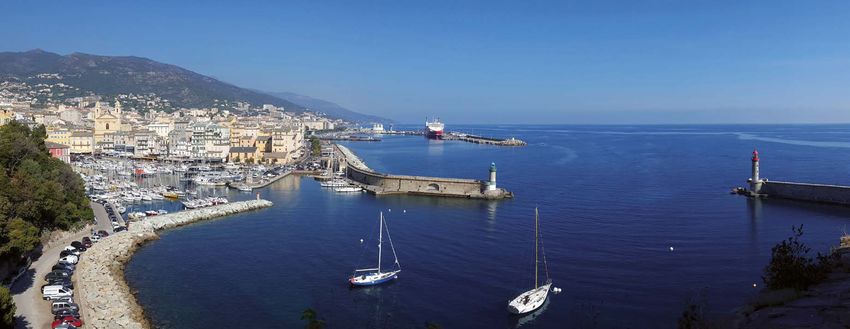
PART 1 – 20 years of cross-border cooperation, 20 years of experiences in cross-border territories • 10 11 • 1.2. Cross-border cooperation and the Mission Opérationnelle Transfrontalière: 1997 – 2017
1.2. Cross-border cooperation
and the Mission Opérationnelle
Transfrontalière: 1997 – 2017
State of sanitary
Timeline of European construction, cross-border cross-border
cooperation 10th anniversary of
Publication in
cooperation and the Mission Opérationnelle Recognition of the need for operational
the MOT: “European
conference – Cross-border
France of the
“Diplomacy and
Transfrontalière assistance for cross-border project
developers and the government’s
territories: day-to-day
Europe” in Lille, with more First Congress on Smart Territories” White
Paper
than 800 participants Cooperation, CECICN, in
administration Parliamentary La Coruña, Spain, nearly
Brief history of the MOT: The experience of the European Development Pole (PED) showed how many difficulties Alliance with other mission on
local players were facing to carry out their cross-border projects in the complex context of a trinational area. April: Creation of the MOT as an 400 participants, 5 key ideas
European partners cross-border for smart cooperation
In light of this assessment made in the early 1990’s, the idea took hold of creating an engineering structure for interministerial structure (CIADT) The MOT’s first Guide: “The The MOT’s
including the AEBR policy in France
the French borders which could provide technical answer to local authorities and to the State. In April 1997 Pilot sites set up tools of cross-border economic network in 2017
(Blanc-Keller-
development” “Manifesto for “Strategic document on
(CIADT), the Mission Opérationnelle Transfrontalière (Transfrontier Operational Mission – MOT) was created by Sanchez-
smart cooperation – Territorial
the French government as an interministerial structure. Various pilot sites were set up. In January 1998, the MOT January: Creation cross-border Schmid)
cooperation in cooperation fostering European
became a nonprofit organisation (according to the French law of 1901). It is a double structure (interministerial of the MOT as a
Europe” integration: cities and regions
non-profit association
and associative), unique in Europe. The MOT now has over 70 members. (networking of
linking across borders “,
Parliamentary CECICN/AEBR
Brief history of cross-border cooperation: In parallel with European construction, cross-border links were players) Creation of
report on the CECICN –
gradually forged after the Second World War, first of all on either side of the Rhine. These cooperation initiatives June: First General MOT’s 20th
cross-border Launch of the website Conference
gradually spread to all of Europe’s borders in the form of cooperation forums, cross-border working communities, Assembly in Lille anniversary –
cooperation www.cross-border-territories.eu of European
and intergovernmental bilateral relations. Map of “Cross- European conference
(Jean Cross-
Map of cross- Atlas of cross-border border territory in Brussels
Ueberschlag) Practical guide border and
Interreg from 1990 to today: Initially a Community Initiative Programme, Interreg became European territorial border worker cooperation projects and
flows to cross-border Interregional Euroregions”
cooperation (ETC), and has been a fully-fledged objective of cohesion policy since the 2007-2013 programming Creation City Networks
Brochure “Cross-border
cooperation (COE) of CESCI territories – Europe’s
period. It comprises three strands: cross-border, transnational and interregional cooperation, and is supported December: Practical
by the ERDF. in Hungary guide – laboratory” for the
Economic Symposium Methodology
(MOT Cross-border MOT’s 20th anniversary
and Social in Biarritz First issue of guide – Cohesion
founder economic
Committee “Cross-Border Intro- policy, governance and
MOT event report on News”
member)
duction cross-border territories development
cross-border of the (Europ’Act) (Europ’Act)
MOT publication Creation of the cross-border cooperation “bon-à-
European Development Pole, (Christian tirer”
Longwy (PED)
France event Estrosi) voucher
Roland Ries, the MOT’s Pierre Mauroy, the MOT’s service
Michel Delebarre, the
Europe event first President second President
MOT’s third President
1980 1981 1982 1983 1984 1985 1986 1987 1988 1989 1990 1991 1992 1993 1994 1995 1996 1997 1998 1999 2000 2001 2002 2003 2004 2005 2006 2007 2008 2009 2010 2011 2012 2013 2014 2015 2016 2017 2018 2019 2020
INTERREG I INTERREG II INTERREG III INTERREG IV INTERREG V
Single European
Act Communication on the follow-up
Karlsruhe agreement (COE) Madrid Outline Convention – to the European Commission’s
Enlargement from 9 to 10 Rome Protocol n°3 concerning
Member States Enlargement of the Cross-border Review
agreement Euroregional Co-operation
Enlargement from 10 to Amsterdam EU from 15 to 25
(COE) Groupings (COE)
12 Member States Treaty Member States
Bayonne treaty Territorial Cooperation in
Madrid Outline Convention of
Maastricht (COE) Europe – 25th anniversary
the Council of Europe (COE) Nice The first EGTC set up:
Treaty of Interreg
Schengen Treaty the Lille-Kortrijk-Tournai
Agreement EGTC
Madrid Outline Convention –
Luxembourg presidency of the
Launch of Interreg in Additional protocol n°1 on
Brussels Lisbon Treaty: Introduction EU Council (second half-year):
the prospective of the transfrontier co-operation (COE)
Agreement of the objective of proposals on cross-border
single market (COE) cooperation
territorial cohesion
Schengen Area enters
into force Enlargement of the
Enlargement of the EU from 27 to 28
Euro enters
EU from 25 to 27 Member States
into force
Member States
Enlargement of the Map Interreg
EU from 12 to 15 programming period
Member States 2014-2020
CCI Bayonne SMEAG Région Auvergne-
Pays Basque Région Provence- Beausoleil Rhône-Alpes
Alpes-CôteAgence
d'Azur
Transfrontalière PRINCIPAUTÉ
Communauté DE MONACO
PART 1 – 20 years of cross-border cooperation, 20 years of experiences in cross-border territories • 12 13 • 1.4. The MOT’s network illustrated by 20 experiences de l’Eurocité Basque d’Agglomération
Bayonne-San Sebastián Pays Basque
PRINCIPAT Métropole Ni
D’ANDORRA CCI Bayonne
Pays Basque
SMEAG
Ré
Département des Alp
Pyrénées-Orientales
1.3. The Mission Opérationnelle
PRINCIPAT
Hôpital de Cerdagne Bastia
D’ANDORRA
Département des
Pyrénées-Orientales
Hôpital de Cerdagne
Transfrontalière and its network
Collectivité territoriale
Generalitat de Corse
de Catalunya Generalitat
de Catalunya
50 km
Catégorie d'adhérents Category of members Mitglieder-Kategorien
CC Ouest
Guyanais
Etat State Staat
Saint Martin Groupement de collectivités Collec
Catégorie d'adhérents Category of members Mitglieder-Kategorien CCI Guyane Région* Region Region
territoriales
Grouping of local authorities
SURINAME
territo
de Guy
a. Being part
CC Ouest Canton Canton Kanton
Communauté autonome
Verband von Gebietskörperschaften
Commune
6 km
Guyanais Autonomous community Municipality
Etat State Staat Groupement de collectivités Collectivité
of the network means...
Autonome Gemeinschaft Martinique
Gemeinde und Kommune
Département
Guadeloupe
territoriales SURINAME
territoriale Province Province Provinz
Cluster GAT Caraïbes
Entreprise
Région* Region Region Grouping of local authorities de Guyane Groupement plurinational
Company
Logistique & Transports
Unternehmen
de collectivités territoriales
Canton Canton Kanton Verband von Gebietskörperschaften Plurinational grouping of local Réseau
The MOT’s role is to assist cross-border project developers, look Communauté autonome Commune BRASIL authorities Network
Netzwerk
Plurinationaler Verband von
Autonomous community Municipality Gebietskörperschaften
after the interests of the cross-border territories and facilitate Autonome Gemeinschaft
100 km
Groupement européen de
20 km Autre structure
10 km
Other structure
Gemeinde und Kommune coopération territoriale (GECT) Weitere Struktur
networking between players and the sharing of experiences. It Département European grouping of Mayotte Réunion
Province Province Provinz Entreprise
territorial cooperation (EGTC) Personnes physiques (non représentées sur la carte)
acts as the interface between the different stakeholders in order Europäischer Verbund für territoriale
Zusammenarbeit (EVTZ)
Natural persons (not shown on the map)
Company Natürliche Personen (auf der Karte nicht dargestellt)
to find cross-border solutions at the right levels. Groupement plurinational
Unternehmen
de collectivités territoriales 20 km 30 km
Plurinational grouping of local Réseau
In short, being part of the MOT’s network means: authorities Network
Plurinationaler Verband von Netzwerk
Gebietskörperschaften Autre structure
• ensuring that better account is taken of the needs of the
Groupement européen de Other structure
network’s members in national and European policy, coopération territoriale (GECT) Weitere Struktur
• exchanging with players in other cross-border territories European grouping of
along France’s borders, but also elsewhere in Europe and b. The network have their say 2
territorial cooperation (EGTC)
Europäischer Verbund für territoriale
Zusammenarbeit (EVTZ)
Personnes physiques (non représentées sur la carte)
Natural persons (not shown on the map)
worldwide, Natürliche Personen (auf der Karte nicht dargestellt)
• having access to a unique resource centre devoted to cross- The MOT is for the members of its network: Network of the Mission Opérationnelle Transfrontalière (MOT) /
border cooperation, © Mission Opérationnelle Transfrontalière
• benefiting from high-level expertise. • “an indispensable tool”, “a facilitator of local [action]”,
• “a unique structure for dialogue and expertise on cross-
The MOT’s network is representative of the different players border cooperation that helps to provide project developers
involved in cross-border cooperation along France’s borders. Its with solutions to concrete problems and facilitate
1.4. The MOT’s network illustrated
members represent both the different territorial levels and the networking between different players”,
different French borders and the neighbouring areas. The • “a tremendous springboard, a genuine technical, even
MOT’s network currently comprises more than 70 members1 from political platform for cross-border and European networks,
10 European countries.
In addition, the MOT’s network includes institutional partners at
whether in terms of advice, assistance, representation or
the sharing of experiences”. by 20 experiences
the French national level, notably the Commissariat général à
l’égalité des territoires (CGET – General Commission for Territorial
Equality), the Ministry for Europe and Foreign Affairs, the Ministry “IN A NUTSHELL, THE IMAGE WHICH
of the Interior, the Ministry of Overseas France and the Caisse
SUMS IT UP BEST IS THAT OF A SWISS
des Dépôts, as well as other States (Luxembourg, Andorra
and Monaco). The organisation also has very close links with KNIFE, REFLECTING THE VARIETY OF he MOT’s contribution is above all that of its Transport services are provided to help people move
the European institutions. All of the players needed are brought network, with the wealth of practice each around the region; the social and cultural life of the
together in order to facilitate the design and implementation of
ITS COMPETENCIES AND ITS ABILITY TO of its members brings. In order to illustrate border region resident is also the subject of policies in
cross-border projects. ADJUST TO THE NEEDS OF DIFFERENT the achievements of more than 20 years of the areas of culture and tourism; and his or her living
cooperation, we spotlight here 20 unique experiences environment is taken into account by policies relating
TERRITORIES.”
of the MOT’s members aimed at serving the inhabitants to the environment, energy, climate and risks, in the
of the cross-border territories. They are set out in framework of the development of the cross-border
order of the life cycle of a border region inhabitant territory. Selecting these 20 projects has been difficult –
and of the services that are provided in cross-border many other exemplary and instructive projects deserve
territories, starting with the topic of healthcare (and to feature in this brochure too. The reader can however
notably birth). This is followed by education and find all of the leading projects that were proposed by
training, then employment, economic development members of the network in a dedicated section on the
and research and innovation, which underpin the website www.cross-border-territories.eu.
1 Including 13 cross-border joint local authorities, 4 municipalities, 12 groupings of municipalities and local authorities, 7 French departments, 10 regions, counties etc.,
1 company, 2 chambers of commerce and industry, 2 national agencies, 5 federations and other networks, 2 urban planning agencies, 5 associations of legal entities and activity of the inhabitants of a cross-border territory.
2 associations of natural persons, as well as a number of natural persons (national and European parliamentarians).
2 Responses from the network to a questionnaire sent out in the spring of 2017 (verbatim).
PART 1 – 20 years of cross-border cooperation, 20 years of experiences in cross-border territories • 14 15 • 1.4 The MOT’s network illustrated by 20 experiences
HEALTHCARE >G
reater Region – Framework agreement on
professional training
Cross-border cooperation in healthcare mobilises healthcare > T he LELA+ network of towns (now Tonicités) –
players from two or more countries near to their borders. It the iot@ project
is extremely useful for citizens in that it makes up for the lack see www.cross-border-territories.eu
FOR OTHER
of medical provision in these regions or takes advantage of PROJECTS
complementarities regarding specialisms and equipment on either
side of the border. The essentially national nature of healthcare
systems due to limited European competence in this area, and
the cumbersome administrative procedures involved in receiving
medical treatment abroad remain obstacles to its implementation.
Teambuilding of pupils in the Schengen High School, Perl, Germany /
CERDANYA © Schengen High School
CROSS-BORDER
TRAINING
Cerdanya cross-border hospital, Puigcerdà, Catalonia
HOSPITAL © Cerdanya Hospital EGTC
EDUCATION & HIGHER
Cerdanya Hospital
EGTC
The Cerdanya Cross-Border Hospital (on the Franco-Spanish border)
Cross-border cooperation in the area of education and training
is organised differently depending on the level of education
EDUCATION
opened its doors in the autumn of 2014. It is the first time that a hospital concerned. At nursery and primary levels, it is often possible In higher education, several networks of universities have been
has been managed from its construction onwards as a cross-border for pupils to learn the language of the neighbouring country or the set up in cross-border territories. They aim to pool investments
project. It is located in Puigcerdà, on the Spanish side, 2 km from language common to the cross-border community in the case of and to take advantage of the complementarities in different fields
the border. The aim is to make up for the absence of a hospital in an regional languages. There are bilingual schools that enable school of expertise, by increasing the academic reach. As for vocational
isolated mountain region where the population can range from 30,000 and cultural exchanges to take place. At secondary level, some training, it is determined by the policies implemented in cross-
out of season to 150,000 in the tourist season. It provides, among schools offer streams known as “European streams” or bilingual border regions and labour markets (see the topic “Employment”).
other services, emergency and obstetric care, which previously could courses (AbiBac in the Franco-German context). There are also Its programming is primarily national, which hampers projects
only be provided on the French side in Perpignan (at least one-and- examples of completely binational schools such as the Schengen aimed at disseminating knowledge and know-how with a view to
a-half hours by road). There are 68 beds available to accommodate High School in Perl, on the German-Luxembourg border. meeting the need for cross-border labour.
patients for short-term stays. The building of the hospital was partly
funded by the Interreg IVA programme POCTEFA, and its governance
is provided by the Cerdanya Hospital EGTC. The hospital encounters
many obstacles in its daily functioning (employment, health insurance, THE SCHENGEN HIGH RÉUSSIR SANS FRONTIÈRE
etc.), which are progressively overcome. An emblematic projects of SCHOOL IN PERL (SUCCEEDING WITHOUT
cross-border cooperation it has received the BUILDING EUROPE BORDER)
Agreement between the Government
ACROSS BORDERS prize awarded by the European Committee of
of Luxembourg and the government of Grand Est Region
the Regions. the Land of Saarland (lead partner)
> F ranco-German border – ZOAST3 (SaarMoselle The German-Luxembourg Schengen High School in Perl (in Germany)
The 33 partners participating in the project “Réussir sans frontière”
Eurodistrict; Strasbourg Ortenau) is a cross-border school that aims to jointly teach pupils from Germany
(Interreg VA Upper Rhine) collaborate to provide solutions that facilitate
> ranco-Belgian border – ZOAST (MRTW – URSA;
F and Luxembourg (agreement between the Land of Saarland and the
access to cross-border training and entry into the cross-border labour
Ardennes; ARLWY; TOURVAL; MOMAU; Thiérache) Grand Duchy of Luxembourg). It combines elements from the two
market in the Upper Rhine. The project supports, for example, the
> aute-Savoie Departement (lead partner France) /
H school systems in an innovative teaching approach, and provides
La Source Institute and High School of Health creation of Azubi-BacPro, which brings together German and French
high-school students with courses and qualifications that enable them
(lead partner Switzerland) – “Autonomie 2020” Interreg V apprentices. It is part of a more general approach, the framework
to continue their studies or enter the labour market on either side of the
(France-Switzerland) project agreement on cross-border apprenticeships in the Upper
border. Languages play a crucial role. The medium of instruction for
see www.cross-border-territories.eu Rhine, signed on 12 September 2013 by 28 French and German
most subjects is German, with some subjects being taught in French.
FOR OTHER institutions, which aims to encourage and facilitate the cross-border
PROJECTS Opened in 2007, the high school currently has 835 Luxembourg and
mobility of apprentices. The agreement, an initiative of the Upper
3 Zone organisée d’accès aux soins transfrontaliers – organised German students (as well as 34 French students). It faces particular
Rhine Conference, sets out the precise framework and conditions for
zone of access to cross-border healthcare. challenges in terms of teaching methods linked to the diversity of its
cross-border apprenticeships, which are open to young people at all
students of different nationalities; the aim is thus to apply principles
levels of training in the Grand Est Region, Baden-Württemberg and
both of integration and differentiation.
Rhineland-Palatinate.
The University of the Greater Region gathers six universities from four bordering
countries / © UniGR – Uwe Bellhäuser
PART 1 – 20 years of cross-border cooperation, 20 years of experiences in cross-border territories • 16 17 • 1.4 The MOT’s network illustrated by 20 experiences
EMPLOYMENT FRANCO-GERMAN ECONOMIC CARIB-INTER.COM
DEVELOPMENT
JOBSEEKER PLACEMENT
FREIGHT MARKETPLACE
The differences between labour markets in different European SERVICES
countries can be an opportunity for people in border areas, Cluster GAT Caraïbes
Pôle Emploi (FR) –
enabling them to find a better-paid job or one which does The border induces disparities regarding taxes, wages,
Bundesagentur für
not exist in their own country. In March 2016, the European Arbeit (DE) unemployment rates, prices, languages, administrative
Commission recorded 2 million people who cross the border procedures, working methods and labour laws. These
every day to go to their place of work. It is vital to support disparities may be seen as obstacles or opportunities, The French Caribbean (Martinique, Guadeloupe, St Martin etc.)
them in order to encourage them to seize these opportunities. depending on the point of view taken. The disparities create and French Guiana are a part of the European Union, but are
Nearly 50,000 French people cross the Franco-German border situations of competition which households and businesses also located in the Caribbean geographical area. In 2015, the
every day to go to work in Germany, where the demand for labour can take advantage of when deciding where to set up, and Cluster GAT Caraïbes, a key player in the fields of transport and
is high and set to grow over the coming decades. Unemployment which markets (especially the labour market) to tap on the other logistics in the Caribbean, set up a multimodal Freight Marketplace
JOB figures point to a contrasting situation: in the Grand Est Region, side of the border. Public and private players find themselves in (http://www.carib-inter.com/) to coordinate the transportation of
SERVICES unemployment stands at 9.8%,4 whereas it stands at only 4.9% in a complex interplay of competition and cooperation. The aim goods in the Greater Caribbean. This marketplace aims to facilitate
Rhineland-Palatinate, 6.8% in Saarland, and Baden-Württemberg is to move from pure competition to “co-opetition”, which is a intra-Caribbean links for the exchange of goods by centralising
Groupement Transfrontalier supply and demand for transport, and thus contribute to the
Européen (European Cross- enjoys a situation of near full employment, with an unemployment fusion of cooperation and competition.
rate of only 3.4%.5 France’s public employment agency, Pôle development of Caribbean cross-border trade.
Border Grouping)
Emploi, and Germany’s Federal Employment Agency are working
to improve cross-border jobseeker placement, with the exchanging
of job vacancies and profiles, dissemination by press and radio, THE BIHARTEAN
In the heart of the cross-border Franco-Swiss region, the the organisation of recruitment-meetings, joint participation in trade CROSS-BORDER CCI
Groupement Transfrontalier Européen (GTE – European Cross- fairs, workshops at Pôle Emploi and in vocational schools, and >P
rincipality of Andorra – Promotion of economic
Bayonne-Basque
Border Grouping) set up a “job service” for people seeking work. mailing campaigns to employers, etc. This partnership led to a development through the prevention of risks linked to
Country CCI –
As part of this service, and thanks to funding from the Auvergne framework cooperation agreement,6 signed in February 2013, Gipuzkoa Chamber avalanches and upgrade of the RN20 highway
Rhône-Alpes Region, the GTE offers one-to-one personalised which has taken concrete form in the setting-up of five cross-border of Commerce > yndicat Mixte de la Côte d’Opale9 (lead partner) –
S
appointments. In these meetings, jobseekers are informed about jobseeker placement services7 along the Franco-German border. PROTER, Interreg IVA project (France-Wallonia-Flanders)
the state of the job market, methods for seeking work, the work see www.cross-border-territories.eu
culture in Switzerland and the status of cross-border workers. The BIHARTEAN cross-border chamber of commerce and industry
4 Insee Conjoncture Grand Est, No. 8, published: 23/05/2017.
The job service also organises information sessions on the cross- FOR OTHER
5 Source: Arbeitsmarkt 2016, Bundesagentur für Arbeit, https: statistik.arbeitsagentur. (CCI) is the first example in Europe of a cross-border structure set PROJECTS
border job market. Its website also lists job vacancies and allows de/Statistikdaten/Detail/201612/ama/heft-arbeitsmarkt/arbeitsmarkt-d-0-201612- 9 Pôle Métropolitain de la Côte d’Opale since 2012.
pdf.pdf up by two chambers of commerce. It is a European Economic
candidates to submit their CV. A “job pack” is also provided. 6 Between Pôle Emploi Alsace and the regional directorate of the Baden- Interest Grouping (EEIG) founded jointly in 20108 by the Bayonne-
The GTE’s more general goal is to inform and support cross- Württemberg Federal Employment Agency on the one hand, and between Pôle
Emploi Lorraine and the regional directorate of the Saarland-Rhineland-Palatinate Basque Country CCI and the Gipuzkoa Chamber of Commerce.
border worker between Switzerland and France in the legal, fiscal Federal Employment Agency on the other. BIHARTEAN serves companies located in Basque Country
and social fields. Thanks to an Interreg project, the GTE created 7 - Strasbourg-Ortenau service, set up between the Strasbourg et Offenburg agencies,
- Service set up between the Haguenau, Wissembourg, Landau and Karlsruhe-Rastatt territory on both sides of the Franco-Spanish border (French
European cross-border centres in 2003 (cross-border information agencies, Basque Country and Gipuzkoa province in the Spanish Basque
points opened to the larger public). - Service set up between the Haut-Rhin Department agencies and those of Freiburg and
Lörrach, Country). Over seven years, it has supported 1,100 businesses in
- Jobseeker placement service set up between the Saarbrücken and Sarreguemines all economic sectors, enabled cross-border economic projects to
agencies,
- Jobseeker placement service set up between the Sélestat and Freiburg agencies. be carried out and strengthened business networks using digital
technologies (see the “Cross-border business opportunities”
page). At the European level, this action has been recognised
> L ille-Kortrijk-Tournai Eurometropolis –
through its integration in the Enterprise Europe Network (EEN).
Cross-Border Jobs Forum
see www.cross-border-territories.eu The projects funded as part of the Interreg programme POCTEFA,
the strategic collaboration with the Nouvelle Aquitaine-Euskadi-
FOR OTHER Navarra Euroregion and the signing of an agreement in principle in
PROJECTS July 2017 on the integration of the Navarra CCI into BIHARTEAN
are all proof of the vitality of this cooperation.
8 With the MOT’s support.
Strasbourg-Ortenau cross-border placement service for employment /
© Christian Creutz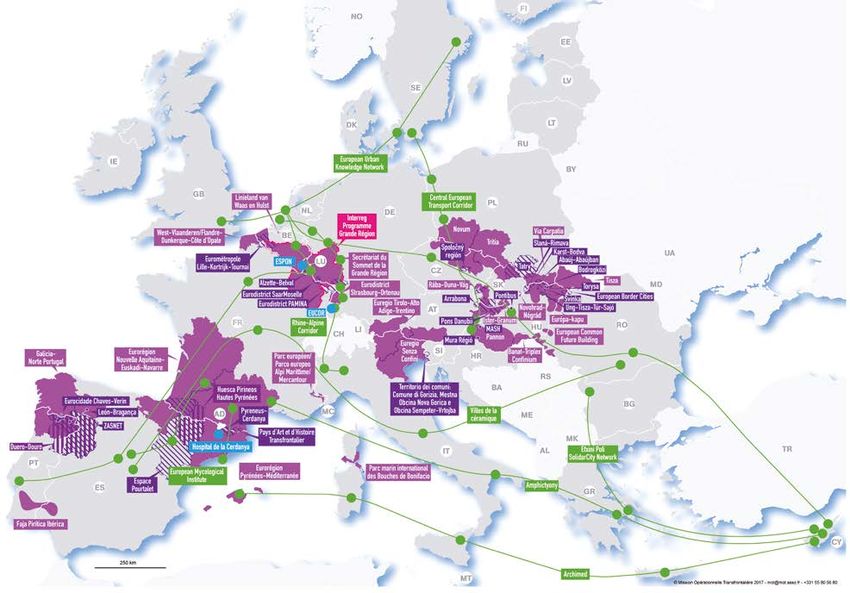
PART 1 – 20 years of cross-border cooperation, 20 years of experiences in cross-border territories • 18 19 • 1.4 The MOT’s network illustrated by 20 experiences
RESEARCH & CROSS-BORDER CULTURE &
INNOVATION CIVIL SOCIETY
CAR-SHARING IN
THE JURA ARC
Jura Arc – Haut Jura
In the area of research and innovation, existing strategies are Regional Nature Park The border is also a place for encounters and dialogue that
mostly defined nationally, which limits cross-border cooperation sometimes brings together people who share the same
initiatives. However, at the regional and local levels, cross- language or culture, or conversely, people from different
border territories can give rise to complementarities between worlds. Cross-border cooperation bridges divides and creates
research systems and the economic fabric on either side of The Jura Arc car-sharing project is a response to the worsening areas of development and citizenship through cultural initiatives
the border (pooling equipment, mutually enhancing different traffic and heavy congestion in the region. It is funded by the promoted by public policy or civil society. Promoting a shared
scientific cultures, and complementarities in research laboratory Interreg programme and implements a series of actions aimed historical and cultural heritage can bring populations together
specialisation, etc.). at creating awareness of and incentives for car-sharing among beyond borders. Civil society plays an important role in this.11
co-workers. A website (http://covoiturage-arcjurassien.com)
and call centre help users to connect with car-sharing partners.
The project also includes infrastructure such as clearly-marked
CROSS-BORDER RIS3 reserved parking spaces for car-sharers, in agreement with Swiss A SAUTE-FRONTIÈRE
and French municipalities. The project partners also organise (JUMPING BORDERS)
Extension of the Strasbourg tram line D to Kehl, on the Beatus-Rhenanus bridge /
Nouvelle Aquitaine-
© Eurometropolis of Strasbourg “car-sharing challenges” to award prizes to the companies that
Euskadi-Navarra Jura Arc Cross-Border
Euroregion have the largest number of car-sharers and to car-share groups
Forum
TRANSPORT &
selected at random.
The Nouvelle Aquitaine-Euskadi-Navarra Euroregion has drawn
up a Strategic Plan for the 2014-2020 period, which analyses MOBILITY > L ille-Kortrijk-Tournai Eurometropolis – Cross-border
Since 2007, the Cross-Border Forum has organised a series of
conferences and discussions for the general public to promote
the state of cooperation in the Euroregion between 2007 and broad reflections on the shared future of the Jura Arc cross-border
2013. The plan identifies four areas of cooperation (Euroregional Cross-border public transport systems support European and “Trampoline” train passes / Mouscron-Wattrelos-Roubaix
region and its population. The 2015-2016 series entitled “A Saute-
citizenship; knowledge-based economy, innovation and business territorial integration by directly enabling freedom of movement. integrated cross-border bus service
Frontière” (Jumping Borders) showcased 70 local cooperation
competitiveness; sustainable territory; open governance) and Mobility is at the heart of how cross-border territories function, > lzette-Belval EGTC – Study on the interoperability of
A
transport systems projects through a survey presented and discussed in five public
highlights a certain lack of awareness of possible synergies in with residents’ daily travel contributing to the construction
> trasbourg-Ortenau Eurodistrict – Dedicated bus service
S conferences. These regular thematic meetings enable players
the area of innovation. This led to seeking focal points between of these territories. Cross-border public transport systems
between Erstein and Lahr and decision-makers to compare their experiences and difficulties
the respective Smart Specialisation Strategies (RIS3) of Nouvelle are drivers of sustainable development. They facilitate the
movement of workers, pupils and consumers, and ease the > asel Trinational Eurodistrict – Extention of the tram, line 8
B regarding territorial issues and also to carry out real field analysis.
Aquitaine, Euskadi and Navarra in order to put in place a joint to Weil am Rhein (Germany) and line 3 to Saint-Louis Smaller local cooperation initiatives, be they citizen-led, private or
Euroregional economic development strategy. The strategy saturation of road infrastructures along many borders. In
(France) institutional, are often little known and ad hoc. Highlighting them
addition to infrastructure, other actions such as car-sharing,
identified the following sectors around which cooperation can be > nnemasse Agglo – Extension of the Geneva tramline to
A and having a greater understanding of them makes it possible to
organised: aeronautics and transport; health/biohealth; agriculture fare integration and joint ticketing systems help to sustainably Annemasse better identify and propagate them.
and the agri-food industry; sustainable construction, wood; ensure more fluid movement in cross-border regions. > eneva Canton / CFF / Réseau Ferré de France – CEVA
G
renewable energy; and marine and coastal resources. > orsica Territorial Authority / OTC – Preparation of an EGTC
C
to manage sea and air links for the islands in the western
Mediterranean
STRASBOURG-KEHL > quitaine-Euskadi Euroregion (lead partner) – Transfermuga
A >A lzette Belval EGTC – “Alzette Belval, Vivons ensemble”
CROSS-BORDER TRAM (Interreg IVA POCTEFA) > L ille-Kortrijk-Tournai Eurometropolis – Heartbeats
> L ille-Kortrijk-Tournai Eurometropolis – Eurometropolitan > rovince of Limburg (NL) / Province of North Brabant (BE) /
P Eurometropolis Festival
Smart Cities Forum on the building of networks among Eurometropolis / City of Ministry infrastructure and environment (NL): Triple-border > F ondation Circolo dei Lettori (lead partner) –
players in the digital community Strasbourg / City of Kehl railway connection Liège – Maastricht – Aachen10 “Lieux-vivants”
> Interreg Upper Rhine / Regional partners (Alsace see www.cross-border-territories.eu see www.cross-border-territories.eu
Region now Grand Est, Baden-Württemberg, Rhineland FOR OTHER
Palatinate) – Offensive Sciences PROJECTS
FOR OTHER 11 Other projects involving civil society are presented in Part 2.
see www.cross-border-territories.eu The extension of the tram network from the Strasbourg PROJECTS
10 In cooperation with Belgian and German partners; co-fi-
FOR OTHER Eurometropolis to Kehl which became operational on 29 April 2017 nanced by the EU.
PROJECTS is a symbolic undertaking born of the political will of the mayors of
Strasbourg and Kehl, who adopted a shared cross-border vision
for the construction of a 360° conurbation. This cross-border
tramline, which required the building of a new bridge over the
Rhine, connects to Kehl railway station, and then on to Kehl city
hall in 2018. Regulatory and technical obstacles (mainly linked to
the approval of trains from one national network in another country)
needed to be overcome in order to define an operating framework
that is balanced and fully integrates public transport networks.PART 1 – 20 years of cross-border cooperation, 20 years of experiences in cross-border territories • 20 21 • 1.4 The MOT’s network illustrated by 20 experiences
PASSAGE
Pas-de-Calais
Departmental Council
(lead partner)
The PASSAGE project (Public AuthoritieS Supporting low-cArbon
Growth in European maritime border regions), launched in May
2016 and cofinanced by the Interreg Europe programme, focuses
on low-carbon economies in the area of straits. The premise of
the project is that European straits, at the heart of maritime border
regions, are busy intersections where there is a concentration of
flows and activities that generate a large carbon footprint. The
project’s objective is to improve how this challenge is addressed
on five maritime borders. It is part of the European Straits Initiative,
a cooperation project that works for greater recognition of the
issues specific to European straits. The initiative was launched
in 2010 by the Pas-de-Calais Department, now lead partner of
the PASSAGE project. The aim of the six partner straits is to
produce cross-border action plans based on the exchange of
experiences in the course of thematic seminars and an analysis of
the current situation. The action plans will focus on implementing
their transition to low-carbon economies and strengthening cross-
border cooperation in each partner territory.
Bastia, one of the three main harbours of the Canal of Corsica, a strait partner of the
PASSAGE project / © Mission Opérationnelle Transfrontalière
TOURISM ENVIRONMENT REDVERT
Basque Eurocity
Tourism is a dynamic sector of the European economy and a working group of the Upper Rhine Conference, to launch and steer Cross-border actions in the area of the environment Cross-Border Agency
key focus of cross-border cooperation. The development of the project. The project was funded by the German Länder of complement national policies and local initiatives, and have
tourist infrastructures and services fosters local economies by Rhineland-Palatinate and Baden-Württemberg, the Swiss cantons real value added. Cross-border territories are, or should
creating short- and long-term employment. That is why using of Basel-Stadt, Basel-Landschaft, Aargau and Jura, the French become, areas of shared responsibility and management
tourism to promote border territories, which make up 40% of government, the Alsace Region and the European Union through of the environment and the pooling of resources. The focus The aim of the Agency for the Development of the Bayonne-San
the area of Europe, is an important issue. By shining a light on the Interreg II Upper Rhine and PAMINA programmes. Its success may be on various aspects such as protecting natural areas, Sebastian Basque Eurocity is to develop a network of
shared historical and geographical heritage, tourism also helps has led to its geographical expansion, a constant increase in the the transition to a low-carbon economy and incorporating environmental corridors with green and blue components. The
to strengthen citizens’ sense of belonging to and identification number of partner structures, in museum visits using the annual environmental concerns into sectoral policies. creation of green infrastructures is the key tool for protecting and
with a cross-border territory. pass, and in financial payments to member venues. promoting biodiversity in relation to human activities. In 2011,
the Basque Eurocity cross-border agency launched the Green
and Blue Network project (Réseau Vert et Bleu – REDVERT) with
the support of the Interreg POCTEFA programme. The project
> L ille-Kortijk-Tournai Eurometropolis – “Lonely Planet” consisted of three phases:
UPPER RHINE
travel guide / Tourist map
MUSEUM PASS >A
GUR (lead partner) – “Tendances”, Interreg V project
(France-Wallonia-Flanders) • conducting a mapping study on Basque Eurocity green
Museums-PASS- corridors (2012-2014),
Musée Association
> P ays Horloger Joint Association, Doubs Regional Nature
Park – “Les chemins de la contrebande franco-suisse” • defining a strategy and action plan to preserve and promote
(Tracks of the French-Swiss smuggling), Interreg IV these green corridors (2014-2015),
project (France-Switzerland) • steering and dissemination of the study on green corridors,
> Idelux-Aive Groupe (lead partner) – “Land of Memory: the strategy and action plan (2014-2015).
Launched officially on 1 July 1999, the Museum PASS is the first on the conflict’s steps at the origin of Europe”,
trinational cultural passport in Europe. The pass provides unlimited Interreg V (Greater Region) project
access to around 320 cultural sites for one year following purchase, see www.cross-border-territories.eu
encouraging people to cross borders in order to discover museums, FOR OTHER
PROJECTS
castles, gardens and other sites. An association under Swiss law,
Museums-PASS-Musée, was set up on the initiative of the “culture”PART 1 – 20 years of cross-border cooperation, 20 years of experiences in cross-border territories • 22 23 • 1.4 The MOT’s network illustrated by 20 experiences
The territory offers a wealth of opportunities and resources – a
CROSS-BORDER WASTE lake, agricultural and green waste, geothermal, solar and wood
WATER TREATMENT energy – and the population is expecting the public authori-
ties to provide concrete solutions regarding sustainable public
European Metropolis of Lille transport, and access to low-energy housing, training, advice,
(MEL), Flemish Region,
and funding.
AQUAFIN / MEL, Walloon
Region, IPALLE
A cross-border water quality improvement system is one of the CLIMATE
founding achievements that preceded the creation of the Lille-
Kortrijk-Tournai Eurometropolis, which has received the support
of the France-Wallonia-Flanders Interreg programme. The
& RISKS
system was developed to overcome the difficulties related to the Cross-border actions in this area display high value added
treatment of waste water. It was underpinned by two agreements and complement national policies and local initiatives,
signed in 2002 and 2003 by the French and Flemish sides, and because climate change and the natural and technological
Wind farm on the Danish coastline / © Martin Freire, World Future Council risks it entails are transnational if not global. It is crucial for
the French and Walloon sides. These agreements made possible
the joint use of two existing water treatment plants as well as the cross-border territories to pool knowledge and mechanisms
ENERGY
construction of two cross-border water treatment plants: one on to respond to these challenges, and to develop common
French territory and the other on Belgian territory. A third water strategies to manage risks and build territories’ resilience to
treatment plant was subsequently constructed on the Belgian climate change.
side following an amendment to the agreement signed with the Other than technical, environmental and economic issues,
Walloon Region. Construction of these infrastructures posed rich in energy matters, one has to add in a cross-border
challenges due to the need to harmonise technical and legal context difficulties linked to disparities in regulatory, tax PROTERINA
standards in Belgian and French law in order to ensure smooth and legal regimes. Cooperation in this field is nonetheless ÉVOLUTION 3
functioning of the plants. crucial to ensuring supply security on both sides of national
borders and the complete integration of the European energy CIMA Foundation
(lead partner)13
market. While the development of renewable energies and
the promotion of energy efficiency may yield economic and
>P
as-de-Calais Departmental Council (lead partner) – I3VT financial benefits in the medium and long term, in the short
(Cross-Border Cycle Routes and Greenways), Interreg IV
term, they require costly investment, which can be pooled Launched in February 2017, the “PROTERINA EVOLUTION 3”
(France-Wallonia-Flanders) project
across borders.
> L ille Metropolis natural area, City of Lille – Green and project, selected for funding under the Interreg V Italy-France
blue belt Marittimo programme, is aimed at flood risk prevention. The
> S aarMoselle Eurodistrict (lead partner) – The Blue Strip of City of Nice, a project partner, has developed a two-tiered
the Saar, Interreg IV project (Greater Region) technical and communication initiative. Firstly, the testing of a
ENVIRONMENTAL
> A lpes-de-Haute-Provence Departmental Council monitoring platform for the Magnan river, which cross-references
STRATEGY OF THE
(lead partner) – L’@venture géologique, Interreg V topographical, hydrological, meteorological data and real-time
(ALCOTRA) project GREATER GENEVA
PROJECT video, using smart cameras, in order to develop rain-water flow
> G eneralitat de Catalunya (lead partner), 3 French models that make it possible to trigger an alert one hour before
partners including the Pyrénées-Orientales Departmental
Greater Geneva LGCC the impact of the surge of water. Secondly, the installation of a
Council – PRINCALB, Interreg IV POCTEFA project for
the protection of the Albère mountain range against series of interactive information/communication stations along the
forest fires Magnan, to raise citizens’ awareness and get them involved in the
> J oint association of studies and planning of the Garonne prevention and alert system by enhancing their understanding of
(SMEAG) – Cross-border approach of the Garonne In 2010, players in the Greater Geneva conurbation met to include risk and appropriate preventive measures. In a global context of
> S outh Basque Country Conurbation (lead partner)12 – an energy-climate plan in the France-Vaud-Geneva Conurbation escalating risk and the increase in human challenges stemming
AQNIV (Improvement of the Quality of the Nivelle), project. The third generation of the conurbation project published in from urbanisation, the project aims to develop replicable joint pilot
Interreg IV (POCTEFA) project 2016 set new objectives and developed new tangible applications initiatives at the cross-border level with a view to increasing the
see www.cross-border-territories.eu such as: resilience of this Mediterranean territory to flood risk.
FOR OTHER
PROJECTS • G2AME (Greater Geneva Air Model Emissions), a tool for
12 Merged within the Basque Conurbation Community since
1 January 2017. tracking pollution levels across the territory,
• Launch of a climate-energy plan,
• The organisation, for the first time in a cross-border territory,
of a European conference on energy transition in January >P
rincipality of Andorra – Improving avalanche risk
see www.cross-border-territories.eu
2018. This event involves other members of the MOT network:
ENEDIS is one of the main partners and the CNFPT will offer
FOR OTHER
training sessions during the event. PROJECTS
13 Cross-border territory – 5 regions: Liguria, Tuscany, Sardinia,
Corsica, Provence-Alpes-Côte d’Azur – of which Alpes-
Maritimes and Var.You can also read


