Curriculum Guide 2021-2022 - Mill Creek Middle School - Matthew May Principal - Cherokee County School District
←
→
Page content transcription
If your browser does not render page correctly, please read the page content below
Mill Creek Middle School

Curriculum Guide
   2021-2022

       Matthew May
         Principal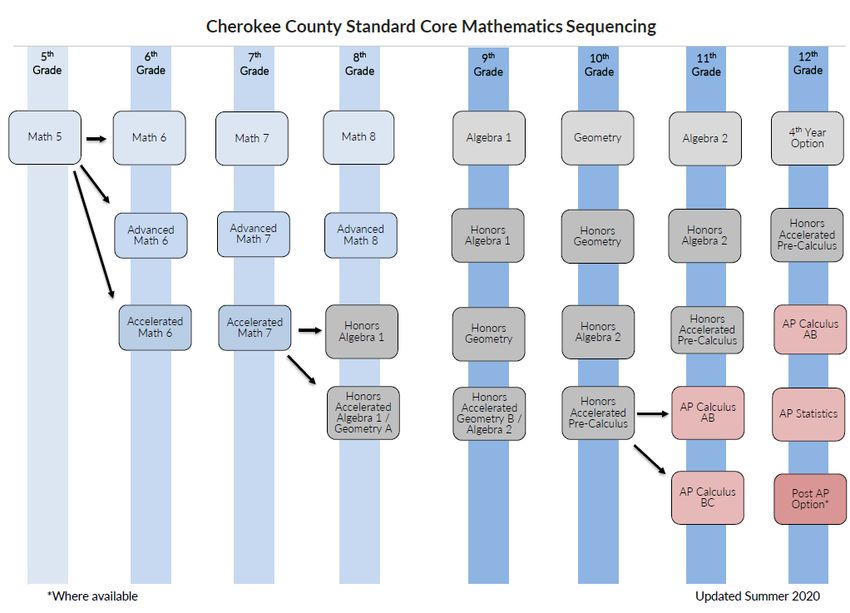
1

                             Table of Contents

Section 1: Introduction
 Overview                                        3
 Late Work Policy                                3
 Grading Policies                                3
 Milestones                                      4

Section 2: 6th Grade
 ELA Course Offerings                             6
 Math Course Offerings                            8
 Science Course Offerings                        11
 Social Studies Course Offerings                 12
 Connections Course Offerings                    13
 Resources for Students and Parents              14

Section 3: 7th Grade
 ELA Course Offerings                            16
 Math Course Offerings                           18
 Science Course Offerings                        21
 Social Studies Course Offerings                 22
 Connections Course Offerings                    24
 Resources for Students and Parents              25

Section 4: 8th Grade
 Spanish                                         27
 ELA Course Offerings                            28
 Math Course Offerings                           30
 Science Course Offerings                        33
 Social Studies Course Offerings                 35
 Connections Course Offerings                    37
 Resources for Students and Parents              38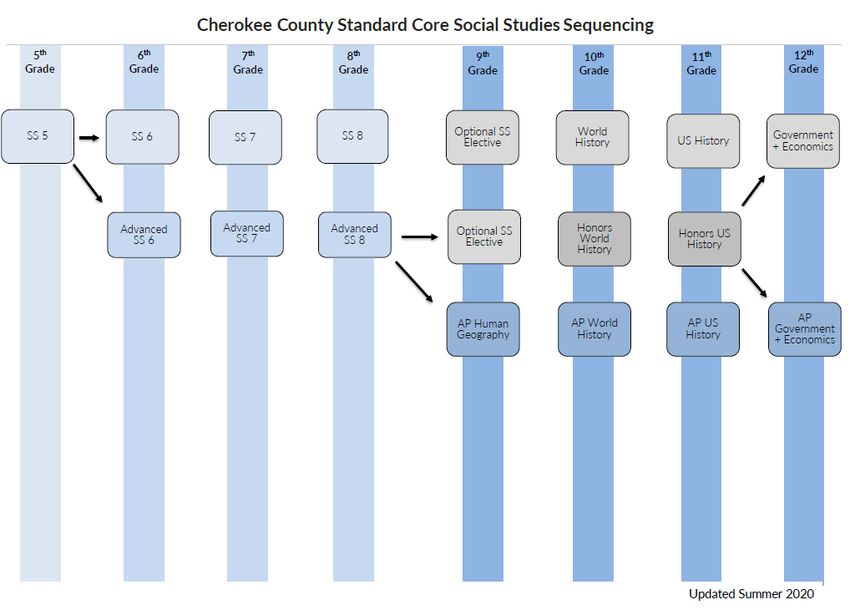
2

Section 5: Connections Courses
Connections Course Descriptions            39
Connections Course Pathways                44

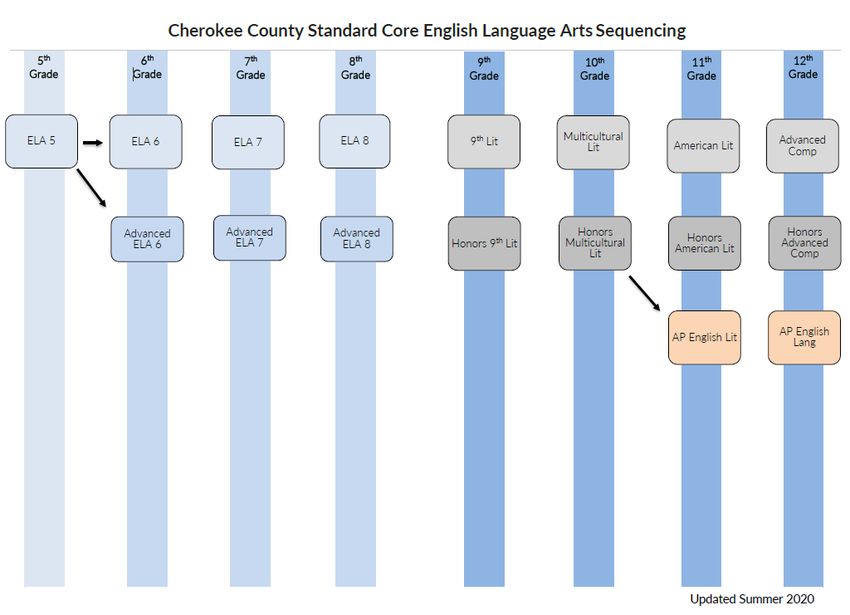
Section 6: CCSD Academic Core Sequencing

Section 7: Frequently Asked Questions
3

                                           Overview
The Mill Creek Middle School Curriculum Guide provides an overview of the courses that are
offered at each grade level. This resource for parents and students should answer many
questions and provide assistance throughout the course of the school year.

                                       Late Work Policy
Standards define what a student must master, not when. Therefore, students
should have the flexibility to turn in assignments and demonstrate mastery of a learning
target beyond a determined due date as long as it falls within the same unit of study.

The following criteria will be used when late work is submitted:

 Excused Absence          No penalty will be assigned if the work is submitted on the day the
                          student returns from an excused absence.
 1 day late               Maximum credit allowed is 90%
 2 days late              Maximum credit allowed is 80%
 3 days late or more      Maximum credit allowed is 70%
The classroom teacher will have discretion in determining the grade for an assignment. If you
have concerns about a grade, please discuss with your teacher.

Grades of Zero: Students should receive a grade of 0 only when they demonstrate zero
evidence of learning or mastery of standards. For work not submitted or completed, grade
codes should be used according to the chart below:

 Grade/Code        What it Means
 EX                Excused, assignment does not need to be completed.
 0                 Student turned in the assignment and demonstrated no evidence of
                   learning or mastery of standards
 1                 Student was present but did not submit the assignment. It is late but can
                   still be turned in for a grade.
 2                 The assignment is incomplete and cannot be graded as is. It needs to be
                   completed and resubmitted.
 3                 Student was absent and will get full credit when the assignment is turned in.

                                       Grading Policies
Within the Cherokee County School District, class grades are based upon student performance
on two types of assignments – summative and formative.
4
Formative assignments help teachers identify concepts where students are struggling to
understand. These can include assignments such as homework, classwork, quizzes, or other
activities that are completed in the classroom where students are in the process of learning a
concept.
Summative assignments are a more formal measure to evaluate student learning. These are
usually conducted at the end of a unit or topic of study. These can include assignments such as
tests, projects, or culminating writing assignments.
Milestones
Students in grades 6-8 will complete a Milestone end of grade assessment each spring. This
assessment measures how well students have learned the content standards for their grade
level. Students in 6th and 7th grades will take an assessment in English Language Arts and Math.
Students in 8th grade will take an assessment in English Language Arts, Math, Science, and
Georgia Studies. 8th grade students enrolled in high school credit math and/or science courses
will take a Milestone end of course assessment for that subject area.5
6th Grade Academic Courses
6th Grade Sample Schedule
Period Course
1st Math 6 or Advanced Math 6* or Accelerated Math
6*
2nd English Lit/Comp 6 or Advanced English Lit/Comp 6*
3rd Science 6 or Advanced Science 6*
4th Social Studies 6 or Advanced Social Studies 6*
5th Connection 1
6th Connection 2
*Enrollment in these courses is determined by a placement team.
For mor information on academic courses, see pages 6 - 12.
Students will take a Milestone end of grade assessment in ELA and Math.6
ELA Course Offerings
English Lit/Comp 6:
Course Overview:
6th Grade English Lit/Comp combines reading, grammar and writing into an integrated course. Students
will complete six engaging scenarios to apply reading, grammar, and writing to real-life situations.
Through these engaging scenarios, students will learn about narrative, informative, and argumentative
writing and respond to both fiction and non-fiction texts. Students will engage in individual and
collaborative experiences throughout the tasks assigned each unit. Teachers will utilize both formal and
informal assessments and activities to provide feedback to students on their progress through the
course and the development of their writing skills.
Units Overview:
The six units of study will have the following focus:
Unit 1: Argumentative/Informational
Unit 2: Cite Evidence/Literary Analysis
Unit 3: Informational/Explanatory
Unit 4: Narrative
Unit 5: Compare and Contrast
Unit 6: Culminating Task/Enrichment and Remediation as needed
Standards:
Standards for this course are the Georgia Standards of Excellence which can be accessed here. It
incorporates both the reading and the language arts standards for 6th grade.
Course Grading:
Category Percentage of grade
Graded Formative (Includes Tasks 1 and 2 from each unit) 60%
Summative (Includes Tasks 3 and 4 and Post-Assessment from each unit) 40%7 Advanced English Lit/Comp 6: The 6th grade Advanced English Lit/Comp course incorporates the same standards as the English Lit/Comp 6 class but provides students with more rigorous opportunities to build upon their reading and writing skills. Students may have the opportunity to participate in debate, experience an in-depth analysis of texts, interact with primary sources, and produce comprehensive writing assignments. Placement in the Advanced course is based upon Milestones scores, achievement in elementary school reading and language arts courses and teacher recommendations.
8

                                   Math Course Offerings
Math 6:
Course Overview:

The purpose of the math 6 course is to build upon math concepts learned in elementary school.
Instructional time in this course focuses on four critical areas:

    1. Solving ratio and rate problems that connects to multiplication and division of whole numbers
       from elementary school.
    2. Building student understanding of the number system through dividing fractions, learning about
       negative integers, and learning about absolute value.
    3. Building student understanding of expressions and equations through writing, interpreting, and
       solving them.
    4. Developing an understanding of statistical thinking, specifically looking at measures of center
       and characterizing data sets.

The Standards of Mathematical Practice apply throughout this course to help students make sense of
real-life problem situations.

Units Overview:

Unit 1: Number System Fluency

Unit 2: Numbers and their Opposites

Unit 3: Expressions

Unit 4: One-Step Equations and Inequalities

Unit 5: Rate, Ratio and Proportional Reasoning

Unit 6: Area and Volume

Unit 7: Statistics

Standards:

Standards for this course are the Georgia Standards of Excellence that can be found here.

Course Grading:

 Category                                                                      Percentage of Grade
 Graded Formative                                                              60%
 Summative                                                                     40%
9 Additional Resources: The GA Department of Education also has resources for each unit (tasks, vocabulary, additional support) located here. Advanced Math 6: The 6th grade Advanced Math course incorporates the same standards as the Math 6 class but provides students with more rigorous opportunities to build upon their math skills. Students may have the opportunity to complete real-world math tasks and explain their thinking orally. Placement in the advanced course is based upon Milestones scores, achievement in elementary school math and teacher recommendations. Accelerated Math 6: Course Overview: The Accelerated Math 6 course is a fast-paced math course whose standards come from both 6th and 7th grade math. This course will include all units from the 6th grade math course and the first three units from the 7th grade math course. Since it is one and a half years of math in one school year, the course will move quickly through the concepts, so a strong mathematical foundation is key for students enrolled in this course. In addition to the four critical areas from Math 6, Accelerated Math 6 will take a deeper dive into proportional relationships and the application of them in addition to developing a deeper understanding of operations with rational numbers and their role in expressions and linear equations. Placement in this course is based upon Milestones scores, achievement in elementary school math and teacher recommendations. This course is a prerequisite for high school level math courses in 8th grade. Unit Overview: Unit 1: Number System Fluency Unit 2: Rate, Ratio and Proportional Reasoning Using Equivalent Fractions Unit 3: Expressions Unit 4: One-Step Equations and Inequalities Unit 5: Area and Volume Unit 6: Statistics
10

Unit 7: Rational Explorations: Numbers and Their Opposites

Unit 8: Operations with Rational Numbers

Unit 9: Expressions and Equations

Unit 10: Ratios and Proportional Relationships

Standards:

The standards for this course can be found here.

Course Grading:

 Category                                                    Percentage of Grade
 Graded Formative                                            60%
 Summative                                                   40%
11

                                  Science Course Offerings
Science 6:
Course Overview:

Science 6 is a hands-on, student-centered, and inquiry-based approach to science instruction. In this
course, students will focus on earth science, which covers topics like meteorology, geology, astronomy,
and oceanography. Students will study weather patterns, construct explanations on the role of water in
Earth processes and use models to represent systems like the solar system and Earth/Moon/Sun system.

Unit Overview:

Unit 1: Solar System and Beyond

Unit 2: Earth, Moon, and Sun

Unit 3: Earth’s Changing Landscape (Includes plate tectonics, rocks and minerals, and weathering,
erosion, deposition, and soil)

Unit 4: Water in Earth’s Processes (Includes the water cycle and the ocean)

Unit 5: Climate and Weather

Unit 6: Human and Energy Needs

Standards:

The standards for this course are the Georgia Standards of Excellence which can be found here.

Course Grading:

 Category                                                                      Percentage of Grade
 Graded Formative                                                              60%
 Summative                                                                     40%

Advanced Science 6:
The 6th grade Advanced Science course incorporates the same standards as the Science 6 class but
provides students with more rigorous opportunities to build upon their science and math skills.
Students may have the opportunity to design solutions to real-world science phenomena and explain
their product in a presentation. Placement in the advanced course is based upon Milestones scores,
achievement in elementary school science and teacher recommendations.
12
Social Studies Course Offerings
Social Studies 6:
Course Overview:
This is the first course in a two-year World Area Studies course. Students will focus on Latin America,
Canada, Europe and Australia. They will study the geography, government/civics, economics, and
history of these areas. The purpose of the course is to acquaint students with the world they live.
Unit Overview:
Unit 1: Geography Skills
Unit 2: Europe’s Geography
Unit 3: Europe’s History
Unit 4: Europe’s Government/Economics
Unit 5: Latin America (including geography, history, government/economics)
Unit 6: Canada (including geography, history, government/economics)
Unit 7: Australia (including geography, history, government/economics)
Unit 8: Personal Finance
Standards:
The standards for this course are the Georgia Standards of Excellence which can be found here.
Course Grading:
Category Percentage of Grade
Graded Formative 60%
Summative 40%
Advanced Social Studies 6:
The 6th grade Advanced Social Studies course incorporates the same standards as the Social Studies 6
class but provides students with more rigorous opportunities to build upon their social studies and ELA
skills. Students may have the opportunity to interact and analyze primary source documents and
present their responses to the class. Placement in the advanced course is based upon Milestones scores,
achievement in elementary school social studies and teacher recommendations.13
Connections Courses
6th grade students will be enrolled in two Connections courses each quarter. If
students are enrolled in year-long Connections courses, then their Connections
will not change each quarter. Please reference the chart below for quarter and
year-long offerings.
Year-Long Courses Quarter-Long Courses
Beginning Band* Art
Beginning Chorus* Business Administration
Beginning Orchestra* Drama 6
Exploring Engineering and Technology
Family and Consumer Science
Foundations of Secure Information
Systems
Healthcare Diagnostics/Support Services
Physical Education
STEM Exploratory
*While this course is open to all students, registration is required prior to
enrollment.
See Connections Course Descriptions for overview of each course.14
Resources for Parents and Students
Milestones Study Guide: Resource for preparing for the End of Grade Milestones
in ELA and Math
Georgia Standards: Resources for standards, tasks, and supplemental clarification
of standards15
7th Grade Academic Courses
7th Grade Sample Schedule
Period Course
1st Connection 1
2nd Connection 2
3rd Science 7 or Advanced Science 7*
4th Social Studies 7 or Advanced Social Studies 7*
5th Math 7 or Advanced Math 7* or Accelerated Math 7*
6th English Lit/Comp 7 or Advanced English Lit/Comp 7*
*Enrollment in these courses is determined by a placement team.
For more information on academic courses, see pages 16 – 22.
Students will take a Milestone end of grade assessment in ELA and Math.16
ELA Course Offerings
English Lit/Comp 7
Course Overview:
7th Grade English Lit/Comp combines reading, grammar and writing into an integrated course. Students
will complete six engaging scenarios to apply reading, grammar, and writing to real-life situations.
Through these engaging scenarios, students will learn about narrative, informative, and argumentative
writing and respond to both fiction and non-fiction texts. Students will engage in individual and
collaborative experiences throughout the tasks assigned each unit. Teachers will utilize both formal and
informal assessments and activities to provide feedback to students on their progress through the
course and the development of their writing skills.
This course builds on skills learned in the English Lit/Comp 6 course.
Unit Overview:
The six units of study will have the following area of focus:
Unit 1: Textual Evidence/Informational
Unit 2: Analyze and Evaluate/Argumentative
Unit 3: Theme/Central Idea/Narrative
Unit 4: Point of View/Narrative
Unit 5: Compare and Contrast/Informational
Unit 6: Culminating/Research
Standards:
This course uses the Georgia Standards of Excellence which can be found here.
Course Grading:
Category Percentage of grade
Graded Formative (Includes Tasks 1 and 2 from each unit) 60%
Summative (Includes Tasks 3 and 4 and Post-Assessment from each unit) 40%17 Advanced English Lit/Comp 7: The 7th grade Advanced English Lit/Comp course incorporates the same standards as the English Lit/Comp 7 class but provides students with more rigorous opportunities to build upon their reading and writing skills. Students may have the opportunity to participate in debate, experience an in-depth analysis of texts, interact with primary sources, and produce comprehensive writing assignments. Placement in the Advanced course is based upon Milestones scores, achievement in 6th grade English Lit/Comp and teacher recommendations.
18

                                    Math Course Offerings
Math 7:
Course Overview:

The purpose of seventh grade math is to formalize and extend the mathematics that students learned in
the previous grades. Instruction in this course focuses on the following areas.

    1.   Extending knowledge of linear equations to include all rational numbers.
    2.   Further developing understanding of proportional relationships through real-life application.
    3.   Drawing inferences based upon samples that are provided.
    4.   Using algebra to further understand geometric concepts learned in previous grade levels.

The Standards of Mathematical Practice apply throughout this course to help students make sense of
real-life problem situations.

Unit Overview:

Unit 1: Operations with Rational Numbers

Unit 2: Expressions and Equations

Unit 3: Ratios and Proportions

Unit 4: Probability

Unit 5: Inferences

Unit 6: Geometry

Standards:

This course uses the Georgia Standards of Excellence which can be accessed here.

Course Grading:

 Category                                                                        Percentage of Grade
 Graded Formative                                                                60%
 Summative                                                                       40%

Advanced Math 7:
The 7th grade Advanced Math course incorporates the same standards as the Math 7 class but provides
students with more rigorous opportunities to build upon their math skills. Students may have the
19 opportunity to complete real-world math tasks and explain their thinking orally. Placement in the advanced course is based upon Milestones scores, achievement in Math 6 and teacher recommendations. Accelerated Math 7: *Accelerated Math 6 is a Prerequisite for this course* Course Overview: The Accelerated Math 7 course is the second course in the sequence of accelerated math classes at the middle school level. This course completes the last three units from seventh grade and all units from eighth grade. The purpose of the course is to bridge the gap between middle school and high school math courses. The Standards of Mathematical Practice are utilized throughout the course to help students make sense of real-world application problems. The focus in this course is on functions and linear equations. In addition, students will deepen their number sense reasoning by looking deeper at exponents, scientific notation, integers and how they are connected to geometry concepts. Students will also develop an understanding of probability and look at statistics with the use of two-way tables. Unit Overview: Unit 1: Geometry Unit 2: Inferences Unit 3: Probability Unit 4: Transformations, Congruence, Similarity Unit 5: Exponents and Equations Unit 6: Geometric Application of Exponents Unit 7: Functions Unit 8: Linear Functions Unit 9: Linear Models and Tables Unit 10: Systems of Equations Standards: This course utilizes the Georgia Standards of Excellence which can be found here.
20

Course Grading:

 Category           Percentage of Grade
 Graded Formative   60%
 Summative          40%
21

                                    Science Course Offerings
Science 7:
Course Overview:

Science 7 is a hands-on, student-centered, and inquiry-based approach to science instruction. In this
course, students will focus on life science to create a smooth transition from elementary school life
science standards to high school biology. Students will study topics like diversity of living organisms,
structure and function of cells, heredity, ecosystems, and biological evolution.

Unit Overview:

Unit 1: Diversity of Organisms: Characteristics of Life

Unit 2: Molecules to Organisms: Cell Structures and Processes

Unit 3: Molecules to Organisms: Organization and Body Systems

Unit 4: Heredity: Inheritance of Traits

Unit 5: Biological Evolution: Natural Selection

Unit 6: Ecosystems: Interactions, Energy, and Biodiversity

Standards:

This course utilizes the Georgia Standards of Excellence which can be found here.

Course Grading:

 Category                                                                         Percentage of Grade
 Graded Formative                                                                 60%
 Summative                                                                        40%

Advanced Science 7:
The 7th grade Advanced Science course incorporates the same standards as the Science 7 class but
provides students with more rigorous opportunities to build upon their science and math skills.
Students may have the opportunity to design solutions to real-world science phenomena and explain
their product in a presentation. Placement in the advanced course is based upon Milestones scores,
achievement in Science 6 and teacher recommendations.
22
Social Studies Course Offerings
Social Studies 7:
Course Overview:
This is the second course in a two-year World Area Studies course. Students will focus on Africa,
Southwest Asia (Middle East), Southern and Eastern Asia. They will study the geography,
government/civics, economics, and history of these areas. The purpose of the course is to acquaint
students with the world they live.
Unit Overview:
Unit 1: Map Skills, Government, and Economics Overview
Unit 2: SW Asia Geographic Understandings
Unit 3: SW Asia Historical Understandings
Unit 4: SW Asia Government/Economic Understandings
Unit 5: SE Asia Geographic Understandings
Unit 6: SE Asia Historical Understandings
Unit 7: SE Asia Government/Economic Understandings
Unit 8: Africa Geographic Understandings
Unit 9: Africa Historical Understandings
Unit 10: Africa Government/Economic Understandings
Unit 11: Personal Finance
Standards:
The standards for this course are the Georgia Standards of Excellence which can be found here.
Course Grading:
Category Percentage of Grade
Graded Formative 60%
Summative 40%23 Advanced Social Studies 7: The 7th grade Advanced Social Studies course incorporates the same standards as the Social Studies 7 class but provides students with more rigorous opportunities to build upon their social studies and ELA skills. Students may have the opportunity to interact and analyze primary source documents and present their responses to the class. Placement in the advanced course is based upon Milestones scores, achievement in Social Studies 6 and teacher recommendations.
24

                              Connections Courses
7th grade students will be enrolled in two Connections courses each quarter. If
students are enrolled in year-long Connections courses, then their Connections
will not change each quarter. Please reference the chart below for quarter and
year-long offerings.

 Year-Long Courses                     Quarter-Long Courses
 Intermediate Band*                    Art
 Intermediate Chorus*                  Business Management
 Intermediate Orchestra*               Drama 7
                                       Family and Consumer Science
                                       Foundations of Computer Programming
                                       Healthcare IT and Biotechnology
                                       Invention and Innovation
                                       Physical Education
                                       STEM Exploratory
*Registration is required prior to enrollment in this course.

See Connections Course Descriptions for class overview.
25
Resources for Students and Parents
Milestones Study Guide – Resource to prepare for the End of Grade Assessment in
ELA and Math
Georgia Standards: Resources for standards, tasks, and supplemental clarification
of standards26
8th Grade Academic Courses
8th Grade Sample Schedule
Period Course
1st Math 8 or Advanced Math 8* or Algebra 1** or Accelerated
Algebra/Geometry**
2nd English Lit/Comp 8 or Advanced English Lit/Comp 8*
rd
3 Connection 1
th
4 Connection 2
th
5 Science 8 or Advanced Science 8* or Physical Science**
th
6 Georgia Studies 8 or Advanced Georgia Studies 8*
*Enrollment in these courses is determined by a placement team.
**These are high school credit courses. Students must complete prerequisites in
order to be enrolled in these courses.
For more information about academic courses, see pages 28 – 36
Students will take a Milestone end of grade assessment in English Language Arts,
Math, Science and Social Studies.27
Spanish:
Select 8th grade students may have the opportunity to enroll in Spanish. Seating
in this course is limited, therefore selection criteria must be met prior to
enrollment. Students wishing to enroll in this course should be committed to
pursuing an AP Spanish pathway in high school. This course will take the place of
one of your connections courses.
8th Grade 9th Grade 10th Grade 11th Grade
Spanish 4
Spanish 1 Spanish 2 Spanish 3 or AP
Spanish28
ELA Course Offerings
English Lit/Comp 8:
Course Overview:
8th Grade English Lit/Comp combines reading, grammar and writing into an integrated course. Students
will complete six engaging scenarios to apply reading, grammar, and writing to real-life situations.
Through these engaging scenarios, students will learn about narrative, informative, and argumentative
writing and respond to both fiction and non-fiction texts. Students will engage in individual and
collaborative experiences throughout the tasks assigned each unit. Teachers will utilize both formal and
informal assessments and activities to provide feedback to students on their progress through the
course and the development of their writing skills.
This course builds on skills learned in the English Lit/Comp 7 course.
Unit Overview:
The six units of study will have the following area of focus:
Unit 1: Theme/POV/Narrative
Unit 2: Text Structure/Informational/Organization
Unit 3: Evidence/Argumentative
Unit 4: Rhetoric/Informational
Unit 5: Paired Passages/Compare and Contrast/Narrative
Unit 6: Culmination/Argumentative
Standards:
This course uses the Georgia Standards of Excellence which can be found here.
Course Grading:
Category Percentage of grade
Graded Formative (Includes Tasks 1 and 2 from each unit) 60%
Summative (Includes Tasks 3 and 4 and Post-Assessment from each unit) 40%29 Advanced English Lit/Comp 8: The 8th grade Advanced English Lit/Comp course incorporates the same standards as the English Lit/Comp 8 class but provides students with more rigorous opportunities to build upon their reading and writing skills. Students may have the opportunity to participate in debate, experience an in-depth analysis of texts, interact with primary sources, and produce comprehensive writing assignments. Placement in the Advanced course is based upon Milestones scores, achievement in 7th grade English Lit/Comp and teacher recommendations.
30

                                      Math Course Offerings
Math 8:
Course Overview:

The eighth-grade standards are designed to prepare students to bridge from middle grades mathematics
to high school courses that will ensure all students are college and career ready by the conclusion of
their fourth high school course. The Standards for Mathematical Practice are a key component as they
are applied in each course to equip students in making sense of problems and building a set of tools
they can use in real-world situations. Much of the eighth-grade mathematics curriculum focuses on
functions and linear relationships as building blocks to algebra and geometry.

Unit Overview:

Unit 1: Equations and Angle Relationships

Unit 2: Number Sense

Unit 3: Geometric Applications

Unit 4: Introduction to Functions

Unit 5: Linear Functions

Unit 6: Systems of Linear Equations

Unit 7: Transformations and Two-Way Tables

Standards:

The standards for this course are the Georgia Standards of Excellence which can be found here.

Course Grading:

 Category                                                                     Percentage of Grade
 Graded Formative                                                             60%
 Summative                                                                    40%

Advanced Math 8:
The 8th grade Advanced Math course incorporates the same standards as the Math 8 class but provides
students with more rigorous opportunities to build upon their math skills. Students may have the
opportunity to complete real-world math tasks and explain their thinking orally. Placement in the
advanced course is based upon Milestones scores, achievement in Math 7 and teacher
recommendations.
31 Honors Algebra 1: *Accelerated Math 7 is a prerequisite for this course* Course Overview: Algebra 1 is a high school credit course that can be taken in the middle school level (prerequisites must be met). The purpose of this course is to build upon the algebraic concepts learned in the middle school courses. The content of this course deepens a student’s understanding of functions with an emphasis on linear, quadratic and exponential functions. The Standards of Mathematical Practice are a key component as they are applied in each course to equip students in making sense of problems that utilize real-world situations. Unit Overview: Unit 1: Relationships between Quantities and Expressions Unit 2: Reasoning with Linear Equations and Inequalities Unit 3: Modeling and Analyzing Exponential Functions Unit 4: Describing Data Unit 5: Modeling and Analyzing Quadratic Functions Unit 6: Comparing and Contrasting Functions Standards: The standards for this course are the Georgia Standards of Excellence which can be found here. Course Grading: Category Percentage of Grade Graded Formative 40% Summative 60% *Students will take an end of course assessment in Semester 2 that will count for 20% of the semester 2 grade.
32

Honors Accelerated Algebra/Geometry A:
*Accelerated Math 7 is a prerequisite for this course*
Course Overview:

The Accelerated Algebra/Geometry A course includes all the Algebra 1 standards and the first half of the
geometry standards in a course that will earn students high school credit. Students will be completing
one and a half years of math in one school year. The purpose of this course is to build upon the
algebraic and geometric concepts that were learned in middle school. This course focuses on functions
and takes a deeper look at linear, exponential and quadratic functions. For the geometry standards,
students are building upon what they learned in eighth grade by focusing on transformations, similarity
and proofs and beginning to look at trigonometry. The Standards of Mathematical Practice are a key
component as they are applied in each course to equip students in making sense of problems that utilize
real-world situations.

Unit Overview:

Unit 1: Relationships between Quantities and Expressions

Unit 2: Reasoning with Linear Equations and Inequalities

Unit 3: Modeling and Analyzing Exponential Functions

Unit 4: Modeling and Analyzing Quadratic Functions

Unit 5: Comparing and Contrasting Functions

Unit 6: Describing Data

Unit 7: Transformations in the Coordinate Plane

Unit 8: Similarity, Congruence, and Proofs

Unit 9: Right Triangle Trigonometry

Standards:

The standards for this course are the Georgia Standards of Excellence and can be found here.

Course Grading:

 Category                                                                     Percentage of Grade
 Graded Formative                                                             40%
 Summative                                                                    60%
*Students will take an end of course assessment during Semester 2 that will count 20% of the
semester 2 grade.
33

                                   Science Course Offerings
Science 8:
Course Overview:

Science 8 is a hands-on, student-centered, and inquiry-based approach to science instruction. In this
course, students will focus on physical science to create a smooth transition from elementary school
physical science standards to high school physical science. Students will study topics like energy, nature
of matter, conservation of energy and dynamics.

Unit Overview:

Unit 1: Structure of Matter

Unit 2: Properties of Matter

Unit 3: Principles of Energy and Matter

Unit 4: Waves (Motion of Energy)

Unit 5: Forces and Motion (Includes Speed, Velocity, Acceleration; Forces (Balanced and Unbalanced)
and Newton’s Laws; and Forces in Nature)

Standards:

The standards for this course are the Georgia Standards of Excellence and can be found here.

Course Grading:

 Category                                                                        Percentage of Grade
 Graded Formative                                                                60%
 Summative                                                                       40%

Advanced Science 8:
The 8th grade Advanced Science course incorporates the same standards as the Science 8 class but
provides students with more rigorous opportunities to build upon their science and math skills.
Students may have the opportunity to design solutions to real-world science phenomena and explain
their product in a presentation. Placement in the advanced course is based upon Milestones scores,
achievement in Science 7 and teacher recommendations.
34 Physical Science: *Advanced Science 7 is a prerequisite for this course.* *Students must be enrolled in Algebra 1 or Accelerated Algebra/Geometry.* Course Overview: Physical Science is a high school credit course that can be taken at the middle school level. Students are placed in this course based upon grades in 7th grade math and science courses. This course is designed to be hands-on, student-centered, and inquiry-based and builds upon physical science concepts that have been taught in previous grade levels. This course focuses on the core ideas of physical science that will be studied more in-depth in chemistry and physics. Core ideas that will be studied include nature and structure of matter, conservation and transformation of energy, motion, forces, and the relationship between electricity and magnetism. Unit Overview: Unit 1: Atomic Structure and the Periodic Table Unit 2: Properties of Matter Unit 3: Reactions Unit 4: Nuclear Energy Unit 5: Energy Unit 6: Waves Unit 7: Force and Motion Standards: The standards for this course are the Georgia Standards of Excellence which can be found here. Course Grading: Category Percentage of Grade Graded Formative 40% Summative 60%
35

                               Social Studies Course Offerings
Georgia Studies 8:
Course Overview:

Georgia Studies 8 allows students to study Georgia geography, history, government and economics. All
four strands are interwoven, but time is provided for students to study in-depth the geography and
government of Georgia. In addition, U.S. historical events are also studied specifically looking at the role
that Georgia played in that event.

Unit Overview:

Unit 1: Georgia Geography

Unit 2: Native Americans and European Exploration

Unit 3: Georgia Colonization

Unit 4: American Revolution

Unit 5: Government

Unit 6: Westward Expansion and Indian Removal

Unit 7: Civil War and Reconstruction

Unit 8: New South

Unit 9: Early 20th Century

Unit 10: Post WWII and Civil Rights

Unit 11: Modern Georgia

Unit 12: Local Government and Finance

Standards:

The standards for this course come from the Georgia Standards of Excellence and can be found here.

Course Grading:

 Category                                                                         Percentage of Grade
 Graded Formative                                                                 60%
 Summative                                                                        40%
36 Advanced Georgia Studies 8: The 8th grade Advanced Georgia Studies course incorporates the same standards as the Georgia Studies 8 class but provides students with more rigorous opportunities to build upon their social studies and ELA skills. Students may have the opportunity to interact and analyze primary source documents and present their responses to the class. Placement in the advanced course is based upon Milestones scores, achievement in Social Studies 7 and teacher recommendations.
37

                                Connections Courses
8th grade students will be enrolled in two Connections courses each quarter. If
students are enrolled in year-long Connections courses, then their Connections
will not change each quarter. Please reference the chart below for quarter and
year-long offerings.

 Year-Long Courses                    Quarter-Long Courses
 Beginning Band 1*                    Art
 Beginning Chorus 1*                  Business: Investing and Finance
 Beginning Orchestra 1*               Family and Consumer Science
 Introduction to Business and         Foundations of Interactive Design
 Technology*
 Journalism**                         Healthcare Science
 Spanish 1*                           Physical Education
 Theatre Arts/Fundamentals*           STEM Exploratory
 Visual Arts 1*                       Technological Systems

*These courses are for High School credit. Students must apply or be invited to
participate in these courses.
**Enrollment in Journalism requires an application.

See Connections Course Descriptions for class overview.
38
Resources for Students and Parents
Milestones Study Guide – Resource to prepare for the End of Grade Assessment in
ELA, Math, Science, and Social Studies
EOC Milestone Study Guide – Resource to prepare for the End of Course
Assessment in Algebra and Physical Science
Georgia Standards: Resources for standards, tasks, and supplemental clarification
of standards39
Connections Course Descriptions
All Grade Levels
Course Description
Art This art course is designed as an introduction to art. We will focus on
problem-solving and using the elements and principles of design to
create expressive and well-organized works of art. Students will be
exposed to a broad spectrum of media and art techniques, both in two-
dimensional and three- dimensional assignments. Students will have
the opportunity to discuss and write about their own works, peer works,
as well as famous artists and their works of art.
Family and This course covers a broad field of learning life-skills that are applicable
Consumer to careers such as culinary arts, hospitality, education, nutrition,
housing, finance and apparel. Through cooking labs and career
Science
modules, students will explore these topics throughout the middle
school courses. In 6th grade, there is a focus on horticulture and
childcare specializations.
Physical Students will have the opportunity to be physically active through
Education participation in a wide variety of activities. Students will start at a basic
skill level in 6th grade and will systematically increase through the
middle school years.
STEM We will be exploring science and math concepts using the Engineering
Exploratory Design process and technology. Students will participate in a problem-
based learning environment that will allow them to develop their
creativity and teamwork skills. Standards for this course are a collection
of Science Georgia Standards of Excellence, Math Georgia Standards of
Excellence and Middle School Standards of Engineering Design. Each
grade level will share common challenges as well as grade-specific
projects based on math and science standards from that grade.40
6th Grade Specific
Course Description
Beginning Band The beginning band course is the first course in middle school for
students aspiring to play an instrument. Students will be
introduced to reading music and will begin to learn an instrument
(percussion, woodwind, or brass). Students will participate and
perform in concerts to showcase what they are learning in class.
Beginning Chorus The beginning chorus course is the first course in middle school for
students aspiring to sing or take chorus in high school. Students
will be introduced to reading music and will study melody,
harmony, rhythm, expression, and vocal technique. Students will
participate and perform in concerts to showcase what they are
learning in class.
Beginning The beginning orchestra course is the first course in middle school
Orchestra for students aspiring to play an instrument. Students will be
introduced to reading music and will begin to learn an instrument
(string). Students will participate and perform in concerts to
showcase what they are learning in class.
Business This course will provide an exploratory foundation in business office
Administration administration and support. Students will complete many hands-on
activities to build a strong foundation in integrated software
applications and standard office procedures. Some topics that will
be covered are spreadsheets, databases, and desktop publishing.
Drama 6 This course allows students to explore acting and improvisation.
Students will learn the basic techniques of acting, character and
voice development, presentation skills, and scriptwriting. Students
will also focus on engaging as an audience member and evaluating
theatrical productions.
Exploring Students will engage in engineering and technology activities
Engineering and throughout the quarter. Students will have access to hands-on
experiences that explore topics such as Lego design, robotics,
Technology
coding, and bridge designing. Students will have the opportunity
to choose which topics are of interest to them to create their own
experience in this Connections course.
Foundations of This course provides an exploratory foundation in information
Secure Information systems, networking, and cybersecurity. Through integrated
activities, students will have the opportunity to apply employability
Systems
skills and learn about possible career options in the information
technology area. Students will complete hands-on activities to
build a strong foundation in computer hardware and connectivity.41
Healthcare As an introductory course to healthcare science, students will
Diagnostics/Support explore various healthcare skills. With a focus on anatomy terms,
safety practices and infection control procedures, students will
Services
discover different aspects of the healthcare field. While learning
soft employment skills, students will understand why the healthcare
workplace is centered around teamwork and leadership.
7th Grade Specific
Course Description
Business This course will provide an exploratory foundation in business
Management management operations. Students will complete many hands-on
activities to build a strong foundation in integrated software
applications and standard office procedures. Some standards covered
are programming and web page design.
Drama 7 In this course, students will have the opportunity to create, perform,
respond, and connect to various works of dramatic art. Students will
begin to incorporate sensory and emotional experiences and
observation techniques into presentational theatre activities. They will
further apply vocal and movement techniques appropriate to theatre
activities and presentations. The students learn beginning technical
theatre skills such as lighting and staging, and they will continue to
engage actively and appropriately as audience members.
Foundations of This course will provide an exploratory foundation in computer
Computer programming. Students will have the opportunity to apply
employability skills and to learn about career options in the information
Programming
technology area. Through hands-on activities, students will build a
strong foundation in computer coding.
Healthcare IT & This course provides students with an introduction to healthcare
Biotechnology careers, safety procedures and interpersonal communication skills.
Through the use of project-based learning, students will be given the
opportunity to develop teamwork and leadership skills that are
necessary for the healthcare field.
Intermediate The intermediate band course is the second course in middle school for
Band students aspiring to play an instrument. Students will build upon what
they learned in 6th grade as it pertains to reading music and learning an
instrument (percussion, woodwind, or brass). Students will participate
and perform in concerts to showcase what they are learning in class.
Intermediate The intermediate chorus course is the second course in middle school
Chorus for students aspiring to sing or take chorus in high school. Students
will build upon what they learned in 6th grade as it pertains to reading
music and will continue their study of melody, harmony, rhythm,42
expression, and vocal technique. Students will participate and perform
in concerts to showcase what they are learning in class.
Intermediate The intermediate orchestra course is the second course in middle
Orchestra school for students aspiring to play an instrument. Students will build
upon what they learned in 6th grade as it pertains to reading music and
learning an instrument (string). Students will participate and perform in
concerts to showcase what they are learning in class.
Invention and Students will engage in engineering and technology activities
Innovation throughout the quarter. Students will have access to hands-on
experiences that explore topics such as Lego design, robotics, coding,
and architectural drawing. Students will have the opportunity to
choose which topics are of interest to them to create their own
experience in this Connections course.
8th Grade Specific
Course Description
Foundations of This course will provide an exploratory foundation in design and
Interactive development of websites and games. Through integrated instructional
activities, students will have opportunities to apply employability skills
Design
and to learn about career options in the information technology
area. Students will complete many hands-on activities to build a strong
foundation in designing interactive programs.
Healthcare This course provides students with an introduction to healthcare
Science careers, safety procedures and interpersonal communication skills. This
course will build upon the leadership and teamwork skills that students
developed during the 6th and/or 7th grade course. Taking this course in
6th and 7th grade is not a prerequisite for taking the course in 8th grade.
Investing and This course will provide an exploratory foundation in financial and
Finance investing operations. Through integrated instructional activities,
students will have opportunities to apply employability skills and to
research possible career options in the financial industry area. They will
also complete many hands-on activities to build a strong foundation in
banking, accounting, and investing. Capstone projects should be
incorporated at the completion of all standards as time allows. Students
who successfully complete this course will be prepared for the following
pathways upon entering high school: Advanced Accounting, Business
Accounting, and Financial Services.
Journalism Students must apply for this year-long course that creates and designs
the school’s yearbook. Students will complete all components for the43
yearbook (staff and student interviews, take pictures, write captions and
proofread all elements) and as a group will design it.
Technological Students will engage in engineering and technology activities
Systems throughout the quarter. Students will have access to hands-on
experiences that explore topics such as Lego design, robotics, and
coding. Students will have the opportunity to choose which topics are
of interest to them to create their own experience in this Connections
course.44
High School Credit Connections Courses
Course Description
Beginning Band 1: A year-long high school credit course, Beginning Band 1 allows
students to further develop their musical interests. Students will
learn to independently read and play music, study music from
different time periods, and participate in concerts.
Beginning Chorus 1: A year-long high school credit course, Beginning Chorus 1
allows students to further develop their musical interests.
Students will learn to independently read and play music, study
music from different time periods, and participate in concerts.
Beginning Orchestra 1: A year-long high school credit course, Beginning Orchestra 1
allows students to further develop their musical interests.
Students will learn to independently read and play music, study
music from different time periods, and participate in concerts.
Intro to Business and Introduction to Business & Technology is the foundation course
Technology: for Business and Technology, Entrepreneurship, and Human
Resources Management pathways. The course is designed for
high school students as a gateway to the career pathways
above, and provides an overview of business and technology
skills required for today’s business environment.
Spanish 1: In this course students begin developing proficiency in the four
basic skills: listening, speaking, reading, and writing Spanish. It is
a vocabulary-rich environment where survival skills are taught
along with cultural information about the many Spanish
speaking countries. Activities include dialogue, role-playing,
celebrations, films, videos, recordings, games, food study and
other activities which provide an overview of the language.
Theatre Arts/ This course serves as an introduction to the theatre arts.
Fundamentals Students investigate theatre by exploring the techniques and
origins of a wide variety of theatre arts in various cultures and
periods. Students will engage with theatrical techniques by
organizing and designing scripts, performing various roles in
differing environments, engaging as an audience member,
critiquing aspects of theatre, and examining the role of theatre
in society, culture, and history.
Visual Arts 1: Visual Art/ Comprehensive introduces art history, art criticism,
aesthetic judgment, and studio production. The course will focus
on problem-solving, using the elements and principles of
design, to create expressive and well organized works of art.
Students will be exposed to a broad spectrum of media and art
techniques, both in two-dimensional and three- dimensional
assignments. Students will have the opportunity to discuss and45
write about their own works, peer works, as well as famous
artists and their works of art.
Connections Course Pathways
How does a middle school Connections course relate to a high school pathway?
Many of Mill Creek’s connection courses relate to a pathway that students can complete
at the high school level. For a student to graduate from high school, they must
complete three units in a pathway. If a student enjoyed one of the following courses,
they could continue that pathway at the high school level.
Middle School Courses
Family and Engineering
Consumer Healthcare Art Business and
Science Science Technology
High School Courses
Food, Nutrition Introduction to Visual Arts 1* Intro to Foundations of
and Wellness Healthcare Business and Engineering and
Science Technology* Technology
Food for Life Essentials of Visual Arts 2 Business and Engineering
Healthcare or Technology Concepts
Specialized Art
Course
(Photography or
Ceramics)
rd
Food Science Clinical Lab 1 3 Course in Business Engineering
Pathway Communication Applications
*These courses are offered at Mill Creek for HS credit in the 8th grade.46 CCSD Academic Core Sequencing
47
48
49
50

                                Frequently Asked Questions

How are students placed in courses?

         Students are placed in courses based upon the previous year’s grades, Milestones scores
(if available) and teacher recommendation.

How do I change my student’s course placement?

       If you would like your student’s course placement reviewed, please reach out to the
grade level administrator for your student.

How can my student take high school credit courses in 8th grade?

       Math, Science, and Spanish high school credit courses are based upon prerequisites from
7 grade. This is due to the content and sequencing of courses to ensure that students are not
 th

missing skills that would hinder their success in the high school credit course.

       Other high school credit courses (music, business, visual arts) determine their enrollment
based upon teacher recommendation or an application process. 7th grade students should be
aware and listen for opportunities to apply for these courses (typically in February/March).

What if my student would like to be in a different Connections course?

       While we are unable to take requests for specific Connections courses, we strive to allow
students the opportunity to experience each offering prior to high school. If you have questions
or concerns, please speak with your grade level counselor.

Where can I find more information about each class?

       Each teacher should be able to provide you with more information regarding their class
and answer any specific questions you may have. You may also refer to
www.georgiastandards.org for the standards that each teacher is following for their class.
51
References
Math, Science and Social Studies course overviews come from the Comprehensive
Course Guides found on www.georgiastandards.org.
Academic Core Sequencing Charts come from the CCSD Course Selection Guide
found here.You can also read


