Curriculum Plan 2020 / 21 - PROSPECTUS - Avanti Schools Trust
←
→
Page content transcription
If your browser does not render page correctly, please read the page content below

Curriculum Plan
   2020 / 21

     PROSPECTUS
Curriculum for Avanti Hall School
The school year and timings of the school day
New term dates for 2020/2021 Changes to school day timings
2020 / 2021
As you are aware Avanti Schools Trust is consulting on new proposals for changes to the We are proposing that the school will open as follows from September 2020:
2020/21 school holiday pattern, to take part in this consultation please click on the link below.
Time Reception Key stages 1/2 Key stage 3
CLICK HERE
Focus days/themed weeks and festivals (and Year 11)
08.45 - 9.00 Registration/Assembly Registration/ Registration/
Throughout the academic year we hold a number of ‘focus days’ where the pupils will study an
START FINISH LENGTH alternative curriculum. We will plan to have at least 4 ‘focusAssembly Assembly
days’ per school year. Our teachers will
plan a whole day of exciting activities that will be educational, fun and also provide learners with
TERM 1 Tuesday 1 Friday 23 39 Days opportunities 09.00 - 10.00 a broader
to experience Morning session 1
understanding of theMorning
world we session
live in.1We will
Lesson
align 1the ‘focus
September 2020 October 2020 days’ with an agreed festival calendar and focus on a range of themes that may include: bringing the
10.00
world to Avanti Hall -(countries,
11.00 culture and religion); horticulture, herbs, the healingLesson 2
properties of
Autumn Break 2020 Monday 26 Friday 30 5 Days plants (introducing innovative ways of attracting wildlife into the school gardens); working as a team
and community 11.00 - 11.15
service. Break Break Break
October 2020 October 2020
11.15 - 12.15 Morning session 2 Morning session 2 Lesson 3
TERM 2 Monday 2 Wednesday 16 33 Days
November 2020 December 2020 12.15 - 13.15 Lunch Lunch Lunch
Until 1.30
Christmas Break 2020 Thursday 17 Friday 1 12 Days
December 2020 January 2021 13.15 - 14.15 Afternoon session Afternoon session Lesson 4
Home at 3pm
TERM 3 Monday 4 Friday 12 30 Days
14.15 - 15.15 Lesson 5
January 2021 February 2021
Spring Break 2021 Monday 15 Friday 19 5 Days
February 2021 February 2021 Avanti Schools Trust is consulting on the above changes to the timings of the school day for
the school year 2020/21 to take part in this consultation please click on the link below.
TERM 4 Monday 22 Thursday 1 29 Days
February 2021 April 2021
CLICK HERE
Easter Break 2021 Friday 2 Friday 16 11 Days
April 2021 April 2021
TERM 5 Monday 19 Friday 28 29 Days
April 2021 May 2021
Late spring break 2021 Monday 31 Friday 4 5 Days
May 2021 June 2021
The Early Years Foundation Stage (Reception class)
TERM 6 Monday 7 Friday 23 35 Days
Early childhood is the foundation on which children build the rest of their lives. We value the
June 2021 July 2021
importance that the EYFS plays in laying secure foundations for future learning and development.
We also view the EYFS as preparation for life and not simply preparation for the next stage of
TOTAL 195 Days
education.
3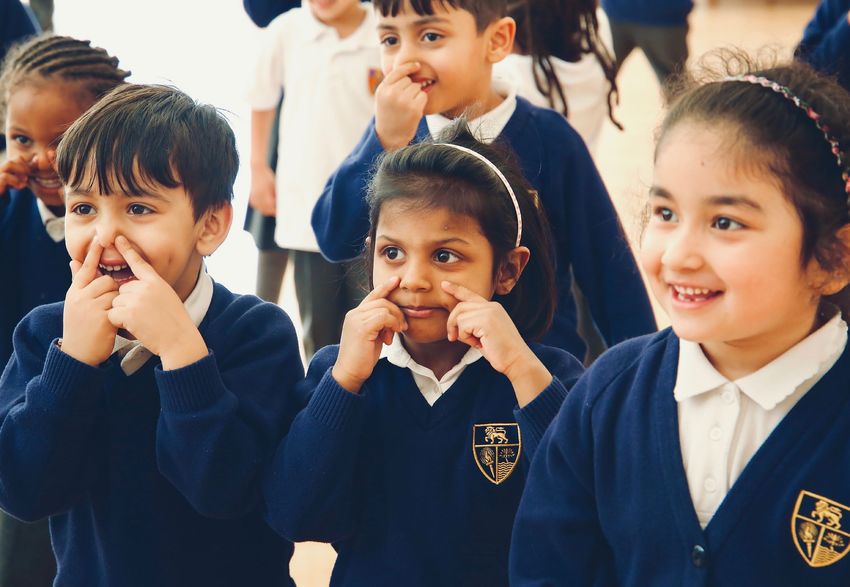
Curriculum for Avanti Park School

    Focus days/themed weeks and festivals

    Throughout the academic year we hold a number of ‘focus days’ where the pupils will study an
    alternative curriculum. We will plan to have at least 4 ‘focus days’ per school year. These may be
    incorporated into a themed week or spread across the academic year. Our teachers will plan a whole
    day of exciting activities that will be educational, fun and also provide learners with opportunities
    to experience a broader understanding of the world we live in. We will align the ‘focus days’ with
    an agreed festival calendar and focus on a range of themes that may include: bringing the world
    to Avanti Park (countries, culture and religion); horticulture, herbs, the healing properties of plants
    (introducing innovative ways of attracting wildlife into the school gardens); working as a team and
    community service.

    The Early Years Foundation Stage (Reception class and nursery)

    Early childhood is the foundation on which children build the rest of their lives. We value the
    importance that the EYFS plays in laying secure foundations for future learning and development.
    We also view the EYFS as preparation for life and not simply preparation for the next stage of
    education.

    We aim to support all children to become independent and collaborative learners by:

    •   Providing a happy, safe, stimulating and challenging programme of learning and development
    •   Providing a broad, balanced and creative curriculum that will set in place firm foundations for
        further learning and development
    •   Fostering independence and self-confidence in all children
    •   Valuing what each child can do, assessing their individual needs and helping each child to
        progress
    •   Developing strong relationships with parents and carers to build a partnership in supporting their
        children. We know parents are children’s first and most enduring educators and we value the
        contribution they make
    •   Provide a caring and inclusive learning environment which is sensitive to the requirements of the
        individual child including those who have additional needs.

4                                                                                                             5
The early-years curriculum we will offer children is based on the following principles:                 In keeping with the recommendations in the curriculum review we will be focusing on the
                                                                                                            following domains of learning as highlighted below:
    •   It builds on what children already know and can do
    •   It ensures that no child is excluded or disadvantaged
                                                                                                             Avanti Park School:                            National curriculum areas of learning
    •   It offers a structure for learning that has a range of starting points, content that matches the
                                                                                                             domains of learning
        needs of young children, and activities that provide opportunities for learning both indoors and
        outdoors
    •   It provides a rich and stimulating environment                                                       English and Languages                          Communication and             Literacy (Reading

    •   It acknowledges the importance of a full working partnership with parents and carers.                                                               Language (C&L)                & Writing)

                                                                                                             Mathematics                                    Mathematics (Number & Shape,
    Our curriculum for EYFS will be based on the Statutory framework for the early years foundation                                                         Space and Measure)
    stage (Setting the standards for learning, development and care for children from birth to five). We
    will use Development Matters in the Early Years Foundation Stage; non-statutory guidance material        Place and Time                                 Physical Development (PD)
    which support the implementation of the statutory requirements of the EYFS. At the end of the
    Reception year, each child will be assessed against the 17 Early Learning Goals (ELGs), each one         Arts, Music and Crafts                         Expressive Arts and Design (EAD)
    linked to one of the seven areas of learning highlighted in the EYFS curriculum below.
                                                                                                             Physical development and movement              Personal, Social and Emotional
                                                                                                                                                            Development (PSED)
                                                                                                             Philosophy, faith and belief
                                                                                                             (to include PSED)

                                                                                                             Nature and the environment,                    Understanding the World (UW)
                                                                                                             science and technology

                                                                                                           These domains of learning and development will shape educational provision in our Early Years.
                                                                                                           All areas of learning and development are important and inter-connected. None of the areas of
                                                                                                           learning can be delivered in isolation from the others; they require a balance of adult led and
                                                                                                           child initiated activities in order for most children to reach the levels required at the end of EYFS.
                                                                                                           Children’s development levels are assessed and as the academic year progresses, the balance
                                                                                                           will shift towards a more equal focus on all areas of learning, as children grow in confidence and
                                                                                                           ability within the three prime areas.

                                                                                                           The children in the Reception class will also participate in daily phonics sessions, following a
                                                                                                           nationally recognised programme such as ‘letters and sounds’ or ‘Read, Write Inc.’

                                                                                                           We will ensure the learning environment and delivery of the curriculum incorporates the three
                                                                                                           characteristics of effective learning:

6                                                                                                                                                                                                                   7
The Early Learning Goals provide the basis for planning throughout EYFS. The planning objectives
    are from the Development Matters Statements in the Early Years Foundation Stage document.
    The planning is based upon concepts with discrete phonics, mathematics and reading directed
    teaching.

    The EYFS staff will use observations as the basis for planning; observing children to identify their
    achievements, interests and next steps for learning. These observations will direct planning.

    Children will have access to both inside and outside areas across the day; this has a positive effect
    on the children’s development. Being outdoors offers opportunities for doing things in different
    ways and in different scales than when indoors. We are investigating ‘Forest School Status’ or ‘City
    Farm status’ and we would hope that some of the learning can take place in a woodland or natural
    environment to support the development of a relationship between the learner and the natural
    world.

    Examples of theme / topics

      Autumn – Key Concept example Identity                               Spring           Summer
      Learning Question: ‘Who are my family?”

      Example Nursery Rhymes:
      Baa, baa, black sheep // Hey diddle diddle //
                                                                          Ourselves        Adventures
                                                                                           and
                                                                                                            Key Stage 1                                                                    Ages 5 - 7
      Hickory dickory dock // Georgie Porgie                                               Journeys
                                                                                                            At KS1, the curriculum is delivered through a concept based approach. Subjects are woven into
      Examples stories including:                                         Colour and       Animals          these topics to make meaningful links. We know young children learn best through experiencing
      So Much // Two homes // One Family                                  Pattern                           a curriculum which is relevant and meaningful to them. This is based on good early years practice
                                                                                                            and in encompassing the National Curriculum requirements. English and mathematics will be
                                                                                                            delivered discretely. The children may be involved in directed and independent cross curricular
      Learn about Vocabulary associated                                   Favourite        Out and
                                                                                                            activities related to the week’s learning objectives, throughout the day, either with an adult or
      with ourselves and our family                                       Books            About            independently.
      Explore family dynamics and why family
      members are important to them                                                                         Domain(s) of Learning: English and Languages
      Identifying core family values

      Example creative outcomes:                                          Me and           At the Farm                                         Hours per        Other information

      Line - Portrait of my family                                        my World                                                             week

      Playdoh face masks
                                                                                                             English and a modern              9                English: 8.5 hours per week
      Explore where in the world different families come from                                                foreign language (Spanish)                         (includes phonics and whole class
                                                                                                                                                                guided reading sessions)
                                                                                                                                                                Spanish: 0.5 hours per week

8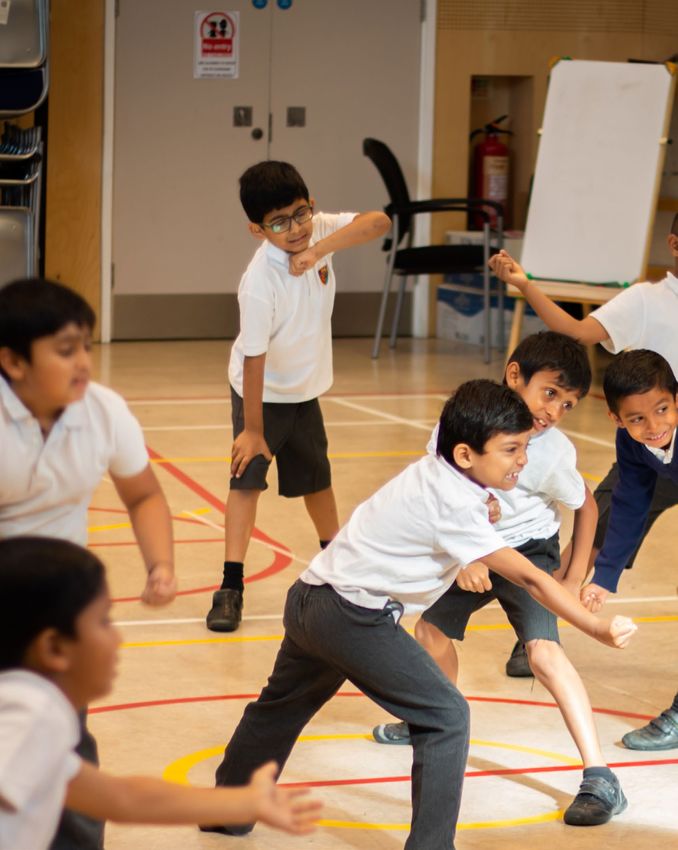
Domain(s) of Learning: Mathematics                                 Domain of Learning: Arts, Music and Crafts

                              Hours per   Other information                                             Hours per   Other information

                              week                                                                      week

      Mathematics             5                                          Performing and                 1           Specialist provision
                                                                         expressive arts including
                                                                         music and singing
     Domain of Learning: Place and Time
                                                                         Craft                          1           This will include specialist craft
                              Hours per   Other information
                                                                                                                    teaching (such as handcraft,
                              week
                                                                                                                    woodcraft and or landcraft)

      History and Geography   2           Delivered through a concept

                                                                        Domain of Learning: Philosophy, faith and belief
     Domain of Learning: Physical development and movement
                                                                                                        Hours per   Other information
                              Hours per   Other information                                             week
                              week
                                                                         Philosophy, faith and belief   2           Will include PHSE and SRE (compulsory
      PE, sport and yoga      2           Specialist provision                                                      from September 2020)

                                                                        Domain of Learning: Nature and the environment, science and technology

                                                                                                        Hours per   Other information
                                                                                                        week

                                                                         Science and environmental      3           Science and environmental studies: 2
                                                                         studies and computing                      Computing (delivered discretely): 1
                                                                                                                    We are investigating ‘Forest School Status’
                                                                                                                    or ‘City Farm status’ and we would hope
                                                                                                                    that some of the learning can take place
                                                                                                                    in a woodland or natural environment to
                                                                                                                    support the development of a relationship
                                                                                                                    between the learner and the natural world.

                                                                         Total hours in the KS 1        25

10                                                                                                                                                                11
Domain of Learning: Physical development and movement

     Key Stage 2                                                                       Ages 7 - 11                                     Hours per   Other information
                                                                                                                                       week

     Pupils will enter key stage 2 equipped to access a broad and balanced curriculum, that includes       PE, sport and yoga          2
     all of the required subjects of the national curriculum as well as yoga, a modern foreign language
     and environmental studies. Continuity and progression towards transition to secondary education
     will be devised by teachers from key stages 2 and local key stage 3 providers working closely
     together. A carefully constructed curriculum in the core subjects and provision to develop the       Domain of Learning: Arts, Music and Crafts
     skills that bridge the two key stages will help to guard against regression in rates of progress.
                                                                                                                                       Hours per   Other information
                                                                                                                                       week
     Domain(s) of Learning: English and Languages
                                                                                                           Performing and              1
                                        Hours per        Other information
                                                                                                           expressive arts including
                                        week
                                                                                                           music and singing

      English and a modern              8.5               English: 8.0 hours per week English              Craft                       1
      foreign language (Spanish)                          (to include whole class guided
                                                          reading sessions)
                                                          Spanish: 0.5 hour per week

     Domain(s) of Learning: Mathematics

                                        Hours per        Other information
                                        week

      Mathematics                       5

     Domain of Learning: Place and Time

                                        Hours per        Other information
                                        week

      History and Geography             2                 Delivered through concept
                                                          a based approach

                                                                                                           Total hours in the KS 2     25

12                                                                                                                                                                     13
12
Domain of Learning: Philosophy, faith and belief

                                     Hours per   Other information
                                     week

      Philosophy, faith and belief   2           Will include PHSE and SRE (compulsory
                                                 from September 2020)

     Domain of Learning: Nature and the environment, science and technology

                                     Hours per   Other information
                                     week

      Science, computing             3.5         Science: 2.5                                  Key Stage 3                                                                    Ages 11 - 14
      and Environmental                          Computing: 1
      Studies (including time                    We are investigating ‘Forest School Status’
                                                                                               Our key stage 3 pupils will be our oldest learners and will therefore be expected to model the
      taken out for visits)                      or ‘City Farm status’ and we would hope       behaviours and outcomes for the rest of the school. By this point in their education pupils
                                                 that some of the learning can take place      will need to be challenged to learn with even greater independence within a more specialised
                                                                                               curriculum which will have an increasing focus on specialist subject areas. Greater detail within
                                                 in a woodland or natural environment to
                                                                                               a wider range of subjects will help to prepare pupils for the move into Year 9 and then into key
                                                 support the development of a relationship     stage 4.
                                                 between the learner and the natural world.

                                                                                               Domain(s) of Learning: English and Languages
      Total hours in the KS 2        25
                                                                                                                                    Hours per week

                                                                                                 English                            4

                                                                                                 Modern foreign                     2
                                                                                                 language (Spanish)

                                                                                               Domain(s) of Learning: Mathematics

                                                                                                                                    Hours per week

                                                                                                 Mathematics                        4

14
Domain of Learning: Arts, Music and Crafts

                                                                                             Hours per week

                                                              Music                          1

                                                              Art                            1

                                                              Craft                          1

                                                             Domain of Learning: Philosophy, faith and belief

                                                                                             Hours per week   Other information

                                                              Philosophy, faith and belief   2                To include RE,
                                                                                                              PHSE and SRE

                                                             Domain of Learning: Nature and the environment, science and technology

                                                                                             Hours per week

                                                              Science                        3

     Domain of Learning: Place and Time                       Computing                      1

                             Hours per week

      History                2
                                                              Total hours in the KS 3        25
      Geography              2

     Domain of Learning: Physical development and movement

                              Hours per week

      PE, sport and yoga      2

16                                                                                                                                    17
16
Expectations with effect from September 2020

     In line with our other Avanti schools the following expectations will apply to schools
     in the south west:

     •      Full attendance – other than medical/authorised absence
     •      Staff addressed by title and surname
     •      Adherence to the school’s behaviour policy

     Uniform – there will be no change to the current uniform requirements in
     September 2020 but we intend to launch a formal consultation on the possible
     introduction of a uniform from September 2021.

18                                                                                            19
Avanti Park School
Park Road, Frome, Somerset. HA11 1EU
Phone 01373 832804
Website www.avanti.org.uk/avantipark
AVANTI PARK
Avanti Fields School is part of the Avanti Schools Trust
Avanti Schools Trust is a charitable company limited by guarantee registered in England & Wales
Registered No: 07506598 • Registered Office: Avanti Schools Trust, Wemborough Road, Stanmore, Middx, England, HA7 2EQYou can also read


