DAILY NEWS ARTICLES/EDITORIALS 03RD APRIL 2021
←
→
Page content transcription
If your browser does not render page correctly, please read the page content below
Best IAS Coaching in Bangalore                                                     Daily News Articles/Editorials 03rd April 2021
Shiksha IAS                            https://iasshiksha.com/daily-news-article/daily-news-articles-editorials-03rd-april-2021/

              DAILY NEWS ARTICLES/EDITORIALS 03RD APRIL 2021
                                 Posted on April 3, 2021 by admin

                                              Page: 1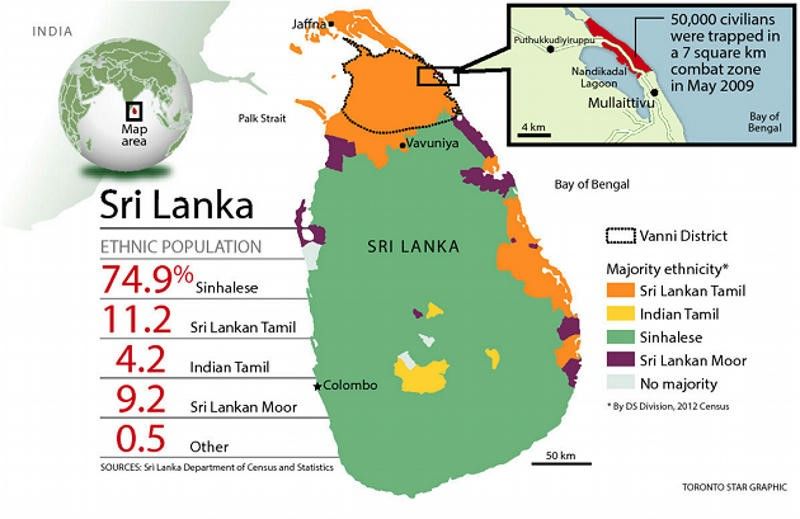
Best IAS Coaching in Bangalore                                                            Daily News Articles/Editorials 03rd April 2021
Shiksha IAS                                   https://iasshiksha.com/daily-news-article/daily-news-articles-editorials-03rd-april-2021/

                       A missing science pillar in the COVID response
CONTEXT:

        Maharashtra seems to be particularly affected, but nearly all States are reporting increases.
        The epidemiology of COVID-19 is poorly understood, but some early understanding of the
        transmission of the virus can enable a more effective science-driven response.

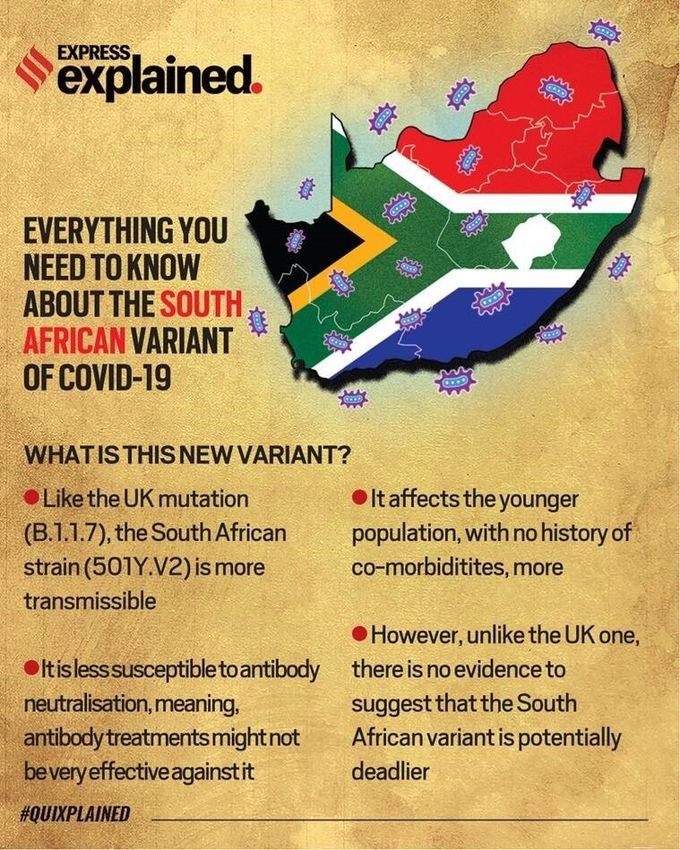
Spread of variants

        The surge is probably driven by variants from the original, as variants worldwide comprise
        much of the current wave.
             A resumption of global travel meant that spread of variants into India was inevitable, with
             the only question being when.
        The wishful thinking that India had achieved “herd immunity”.
             Notions of herd immunity do not fully capture the fact that for largely unknown reasons,
             viral transmission is cyclical.
        Much of the infection in India might well be mild, with less durable immune protection than
        induced by vaccination.
        ‘Asymptomatic infection is more commonly reported in Indian serosurveys, exceeding 90% in
        some, in contrast to high-income countries, where about one-third of infections report as
        asymptomatic’.

                                                     Page: 2
Best IAS Coaching in Bangalore Daily News Articles/Editorials 03rd April 2021
Shiksha IAS https://iasshiksha.com/daily-news-article/daily-news-articles-editorials-03rd-april-2021/
Page: 3Best IAS Coaching in Bangalore Daily News Articles/Editorials 03rd April 2021
Shiksha IAS https://iasshiksha.com/daily-news-article/daily-news-articles-editorials-03rd-april-2021/
Page: 4Best IAS Coaching in Bangalore Daily News Articles/Editorials 03rd April 2021
Shiksha IAS https://iasshiksha.com/daily-news-article/daily-news-articles-editorials-03rd-april-2021/
Page: 5Best IAS Coaching in Bangalore Daily News Articles/Editorials 03rd April 2021
Shiksha IAS https://iasshiksha.com/daily-news-article/daily-news-articles-editorials-03rd-april-2021/
Pattern in
Page: 6Best IAS Coaching in Bangalore Daily News Articles/Editorials 03rd April 2021
Shiksha IAS https://iasshiksha.com/daily-news-article/daily-news-articles-editorials-03rd-april-2021/
India
Delhi had two major peaks, in 2020, of death rates and case rates, one in June and another in
November, and now is entering a third major wave.
Within Mumbai, the current wave appears to be affecting more affluent areas and private
hospitals, in contrast to last year where the highest infection levels were in the slums and
poorer areas.
Forthcoming mortality-based analyses suggest several sub-waves exist within major viral
peaks, reflecting subtle changes in community transmission.
The ebbs and flow of vaccine transmission are far more variable than we assume.
Data must guide decisions
India needs to increase the quantity, quality and public availability of actual data to guide
decision-making.
Theories or mathematical models are hugely uncertain, particularly early on in the epidemic.
First, collection of anonymised demographic and risk details(age, sex, travel, contact
with other COVID-19 patients, existing chronic conditions, current smoking) on all positive
cases on a central website in each State remains a priority.
Second, greatly expanded sequencing of the viral genome is needed from many parts
of India, which can be achieved by re-programming sequencing capacity in Indian
academic and commercial laboratories.
Third, far better reporting of COVID-19 deaths is needed. Daily or weekly reporting of
the total death counts by age and sex by each municipality would help track if there is a
spike in presumed COVID-19 deaths.
The Registrar General of India’s verbal autopsy studies are invaluable, but must be
reactivated to review deaths occurring in 2020, given that the last available results
are from 2013.
The Indian Council of Medical Research’s national sero survey had design limitations such
that it probably underestimated the true national prevalence.
A far larger and better set of serial surveys is required. Finally, we need to
understand better why some populations are not affected.
Widespread existing immunity, perhaps from direct exposure to bat corona viruses
might be one explanation.
Counter growing inequity
Affluent and connected urban elites of India are vaccinating quickly, but the poorer and less
educated Indians are being left behind.
Vaccination campaigns need to reach the poor adults over age 45, without having to prove
anything other than approximate age.
Page: 7Best IAS Coaching in Bangalore Daily News Articles/Editorials 03rd April 2021
Shiksha IAS https://iasshiksha.com/daily-news-article/daily-news-articles-editorials-03rd-april-2021/
Follow-up studies among the vaccinated can establish the durability of protection, and, ideally,
reduction in transmission.
Adult vaccination plan
COVID-19 could well turn into a seasonal challenge and thus, the central government should
actively consider launching a national adult vaccination programme that matches India’s
commitment and success in expanding universal childhood vaccination.
The Disease Control Priorities Project estimates an adult national programme would cost about
?250 per Indian per year to cover routine annual flu vaccination, five-yearly pneumococcal
vaccines, HPV vaccines for adolescent girls and tetanus for expectant mothers.
Thus, adult and child vaccination programmes are essential to prepare for future pandemics.
Conclusion:
More draconian steps, such as another full national lockdown should be considered carefully,
as they incur a huge toll on the poor and stunt education of Indian children. It also remains
unclear if the population would comply.
The resurgence of COVID-19 presents a major challenge for governments, yet the best hope is
to rapidly expand epidemiological evidence, share it with the public and build confidence that
the vaccination programme will benefit all Indians.
In Geneva face-off, outrage versus hope
Context
The resolution on ‘Promoting reconciliation, accountability and human rights in Sri Lanka’ was
however adopted after 22 member states of the 47-member Council voted in its favour
India abstained from a crucial vote on Sri Lanka’s rights record at the United Nations Human
Rights Council in Geneva.
Why Human Rights Council in Geneva?
For human rights activists the world over, it is their forum
It is the place where both communities have large demonstrations next to the legless chair that
reminds the Palais de Nations of the consequence of war.
Tamil groups wanted the Human Rights Council to begin a pathway to the International
Criminal Court.
For many Tamils and now Muslims, it is a place of hope
It is seen as western countries ganging up on Sri Lanka for its closeness to China.
Page: 8Best IAS Coaching in Bangalore Daily News Articles/Editorials 03rd April 2021
Shiksha IAS https://iasshiksha.com/daily-news-article/daily-news-articles-editorials-03rd-april-2021/
For many Sri Lankans, especially the Sinhalese, it is an attack on national honour, a place
where their vulnerability as a small island is exploited.
Page: 9Best IAS Coaching in Bangalore Daily News Articles/Editorials 03rd April 2021
Shiksha IAS https://iasshiksha.com/daily-news-article/daily-news-articles-editorials-03rd-april-2021/
Geopolitics ‘plus’
Though geopolitics is the framework for decision making at the Human Rights Council, the
actual process is more nuanced and may be described as geopolitics “plus”
The activism, agitation and the momentum around a resolution created by this “plus” factor
spills over and creates the atmosphere in which the resolution is adopted.
First came the legal experts of the Office of the High Commissioner for Human Rights, as
well as the Special Rapporteurs and procedures who took very strong positions.
The pivotal input by the Office was the Report of the High Commissioner on “Promoting
Accountability and Reconciliation in Sri Lanka” by Michelle Bachelet as a High
Commissioner, a torture victim, President, and a Minister of Defence, that made the
resolution inevitable.
In addition to the work of OHCHR, the Tamil groups nationally and globally were
extremely active.
But, it was Muslim civil society and the Muslim diaspora that made the difference for this
resolution. Their passion, energy and sense of injustice filled the spaces.
Page: 10Best IAS Coaching in Bangalore Daily News Articles/Editorials 03rd April 2021
Shiksha IAS https://iasshiksha.com/daily-news-article/daily-news-articles-editorials-03rd-april-2021/
Elements to a global cause
Though the diasporas are always active, it is an international civil society made up of a whole
array of disparate groups that dominate the agitational space of the Human Rights Council.
The events unfolding in Geneva are particularly disturbing because of their shortsightedness.
In 2014, Sri Lanka faced a hostile Council and was an outlier in the international system
very much like today. Most people have conveniently forgotten this history.
The Resolution of the Human Rights Council in 2015 that Sri Lanka cosponsored after the
government changed was to pull Sri Lanka out of the rut that it had fallen into. If that
resolution were not passed, Sri Lanka would have had the evidence collection and
preserving mechanism in some form by 2016.
The 2015 resolution accepted international best practices, an office for missing persons,
an office for reparations, a truth commission and a judicial process for those guilty of
serious crimes.
At that time, the focus was on the need for a system that gave confidence to the victims.
Victim groups were clear that a purely domestic process had failed them before. As a
result, it was agreed to have a framework with an element of foreign participation.
International, resolution 30/1 became a great success though victim groups thought it
was a failure due to a lack of implementation. International hostility disappeared.
Despite its international success, 30/1 was reviled nationally as a resolution that
“sold out the soldiers” — blurring the lines between the few who have committed
war crimes and the large majority who have not.
Fundamentally, there was also a lack of understanding of what “co-sponsorship” meant
and the enlightened self-interest that it entailed.
Co-sponsorship has always meant accepting international standards while keeping
control of the national process — the legislation to be enacted and the personnel to
be appointed.
Conclusion:
With this dedicated capacity at the OHCHR, the human rights issues regarding Sri Lanka will
not go away.
For many Sri Lankans, especially the Sinhalese, this is an outrage of double standards.
There is real fury at what they see as global inequity.
For many members of the minorities, opposition leaders, journalists, lawyers, victim groups and
civil society activists who claim they are being harassed, prosecuted and intimidated on a daily
basis by a surveillance state, there is relief to know that someone will be watching
Page: 11Best IAS Coaching in Bangalore Daily News Articles/Editorials 03rd April 2021
Shiksha IAS https://iasshiksha.com/daily-news-article/daily-news-articles-editorials-03rd-april-2021/
Page: 12Best IAS Coaching in Bangalore Daily News Articles/Editorials 03rd April 2021
Shiksha IAS https://iasshiksha.com/daily-news-article/daily-news-articles-editorials-03rd-april-2021/
There are no comments yet.
Page: 13You can also read


