Defining a strategy for the Validation and Qualification of Sterile Filtration Processes of Investigational Medicinal Compounds - Ross W. Acucena ...
←
→
Page content transcription
If your browser does not render page correctly, please read the page content below
Defining a strategy for the Validation and
Qualification of Sterile Filtration Processes of
Investigational Medicinal Compounds

Ross W. Acucena
Regulatory Consultant, Provantage Services
EMD Millipore

March 4, 2014 @ PDA Metro Chapter Dinner

Traditional Definition of Sterilizing Grade
Performance
Sterilizing filtration is the process of removing microorganisms from a fluid
stream without adversely affecting product.
Demonstrate removal of a standard test organism (Brevundimonas diminuta)
At minimum concentrations of 107 cfu/cm2
ASTM F 838-05 is a standard TM inside which all sterilizing grade membranes
can be compared
“A filter that reproducibly removes test microorganisms from the
process stream, producing a sterile filtrate.”
PDA® Technical report N°26, 2008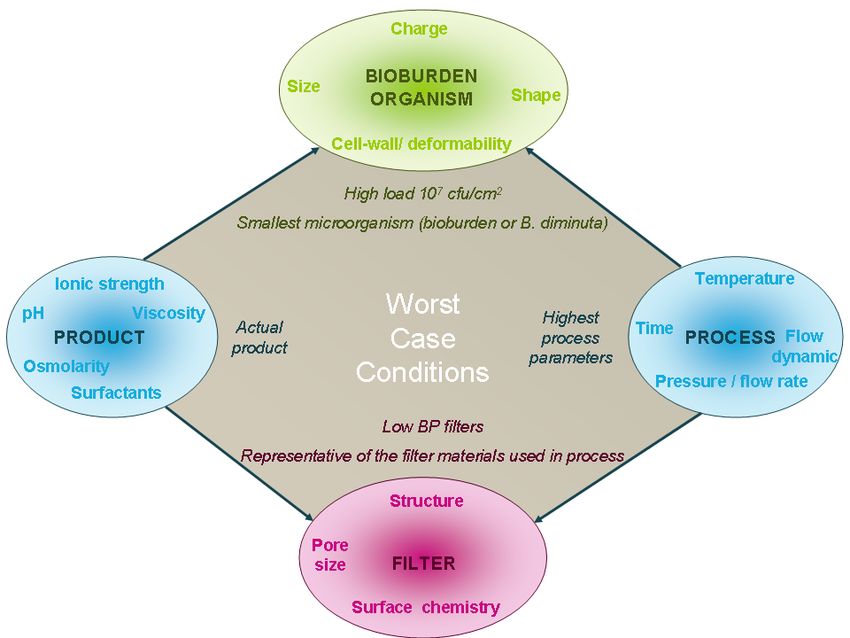
Definition – Filter functionality
Sterilizing-grade designation is not pore size
dependent
It is a functional definition
Functionality is firstly defined by qualification
testing
Filter manufacturer
Functionality is secondly defined by validation
Final user
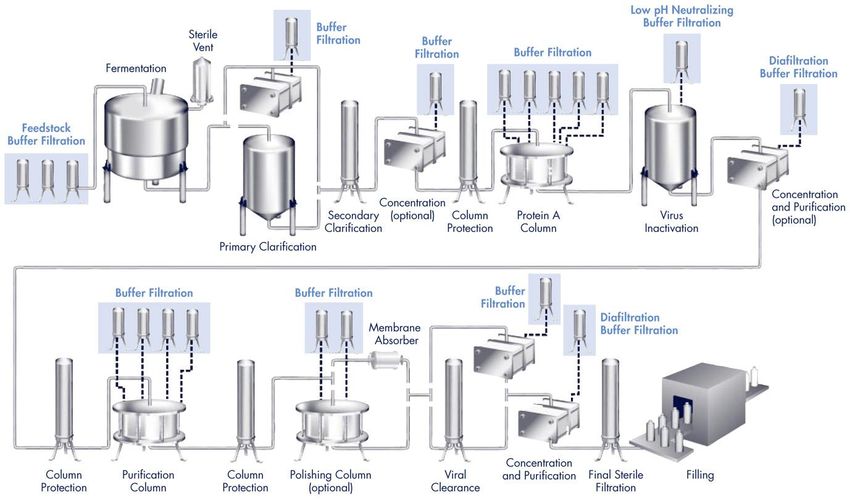
Biotech Manufacturing Process
Biotech Manufacturing Process

                                21 CFR 211.113(b)
                                “Appropriate written
                                procedures, designed to
                                prevent microbiological
                                contamination of drug
                                products purporting to be
                                sterile, shall be established
                                and followed. Such
                                procedures shall include
                                validation of any
                                sterilization process.”
8 Elements of a Sterile Filtration Validation
            Prove the filter’s bacterial
                                                                             Prove the filter meets all
            retention capabilities with a
                                                                       requirements within product &
            non-destructive test.
                                                                                 process conditions.

                                            Integrity
                                                        Fit for
                                             Testing
Prove the filter                                         Use                            Prove the sterilization
removes bacteria                                                                       method is effective and
from the stream per                                                                     does not compromise
ASTM 838-05.                                                                                         the filter.
                            Retention             Sterile         Sterilization
                                                  Filter
                          Extractables/
                                                  Master
Identify, quantify,                                                 Stability
and assess impact          Leachables              Plan                                   Prove the filter does
of compounds that                                                                         not adversely affect
migrate from filter                                                                       the process stream.
to process stream.
                                    Compatibility       Binding
     Prove the stream does not
                                                                            Prove the filter does not
     adversely impact the filter.
                                                                        remove stream components.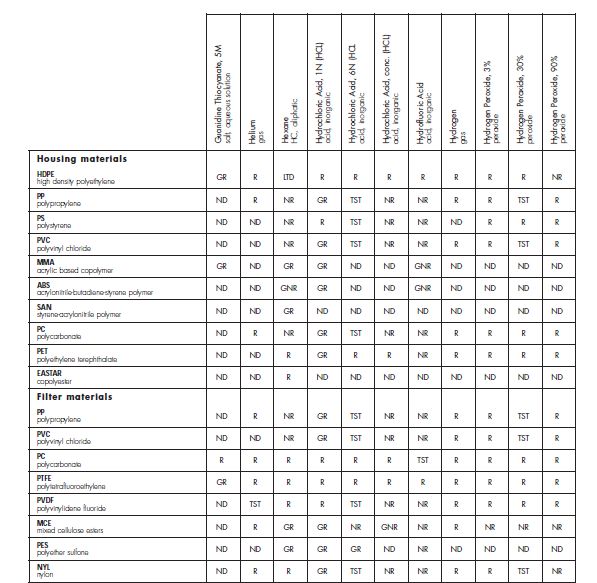
What standard to apply for
development phase products ?
Phase 1 Guidance - FDA

  FDA: Guidance for Industry CGMP for Phase
  1 Investigational Drugs

  C. Sterile Products/Aseptically Processed Products
  Because product sterility is a critical element of human subject safety, you should take
  special precautions for phase 1 investigational drugs that are intended to be sterile.
  You should give thorough consideration to implementing appropriate controls for
  aseptic processing to ensure a sterile phase 1 investigational drug. The guidance
  issued by FDA on aseptic processing is a good reference when using aseptic
  processing (Ref. 7). Particular manufacturing controls include:

  Follows with a bullet list of controls (such as): media simulation, environmental
  monitoring, sterilization of components and devices, aseptic technique training,
  quality control requirements.
Early Phase Guidance - EU

Medicinal Products for Human and
Veterinary Use
Annex 13
Investigational Medicinal Products

17. Production processes for investigational medicinal products are not
expected to be validated to the extent necessary for routine production
but premises and equipment are expected to be qualified. For sterile
products, the validation of sterilising processes should be of the
same standard as for products authorised for marketing. Likewise,
when required, virus inactivation/removal and that of other impurities of
biological origin should be demonstrated, to assure the safety of
biotechnologically derived
PIC/s Inspection Aide
Aide-memoire:
GMP PARTICULARITIES IN THE
MANUFACTURE OF MEDICINAL PRODUCTS
TO BE USED IN CLINICAL TRIALS
ON HUMAN SUBJECTS
The stakes are high how do we get this right ?
Drug Development Objective

To develop a product that is:
      - High quality
      - Approvable by Regulatory authorities
      - Commercially viable

Quality will be achieved by getting
  A characterized and consistent PRODUCT
  A validated and reproducible PROCESS
Drug Development process
Pre-Clinical Phase I
Phase II
Phase III
Manufacturing
Development Scale Pilot scale Commercial Scale
Analysis
Validated Safety Testing Validated Safety, Fully Validated In-
Identity, Purity, process and Release
impurities Tests
QUALITY
RISKEarly Phase Sterile Filter V&Q
Objectives Challenges
Minimize the risk for patients Limited knowledge of product
formulation
Sterility is a critical element of safety
Small amount of product available for
Robust, reproducible and reliable testing
results
from clinical trials Membrane chosen but device not
definitive
Commercial Viability - Gain
knowledge to save time and money to Process not well defined yet
design an optimized process for scale-
upHow to overcome the challenges and meet the objectives?
Focus on These 3 Elements of Validation

                                       Integrity
                                                    Fit for
                                        Testing
Prove the filter                                     Use
removes bacteria
from the stream per
ASTM 838-05.
                            Retention        Sterile          Sterilization
                                             Filter
                          Extractables/
                                             Master
Identify, quantify,                                             Stability
and assess impact          Leachables         Plan
of compounds that
migrate from filter
to process stream.
                                    Compatibility   Binding
     Prove the stream does not
     adversely impact the filter.
Sterile Filter Compatibility But, My process is not defined how can I approach this ? I have no product available ! My formulation may change !
Compatibility Data Collection Collect suppliers Information Manufacturer’s compatibility tables Manufacturer’s Validation Guides Collect drug manufacturer’s information Device fluid pathway Drug product solvents Key process parameters : Temperature, contact time
Risk Assessment per fluid pathway component

1. Drug product
         Drug Indication
         Drug Administration
         Drug Development Process Step
         (Clinical phase)                            Compatibility
2. Process step
         Upstream
         Downstream             RISK                  Evaluation
         Final Fill
3. Drug product contact
         Fluid pathway component contact surface       Strategy
         Fluid pathway component contact time
4. Proof of compatibility
         Documented historic of similar conditions
         Suppliers data availability
Certification Any possible interaction between the selected components and The Drug Product formulation is assessed using qualification docs, compatibility charts, literature and past experience. • Review of processing conditions • Identification of pharmaceutical product solvent • Scientific rationale and conclusion based on comparison of processing conditions and product solvent
Testing with Drug Product
Rationale :
Test of process fluid pathway (see risk assessment step) “Chemical
Simulation of longest contact time and max temperature compatibility testing
should encompass the
Study design :
Definition of test parameters per process entire device and
component tested (bag, filter, connector, tubing…) depends on the fluid,
Test methods definition and development
filtration
Test results assessment : temperature, and
Comparison before and after exposure contact time.”
Acceptance criteria review PDA® Technical report N°26,
Visual examination 2008Retention: What are the requirements
“It is vital that laboratory experiments simulate actual product conditions ...”
FDA Guideline on Sterile Drug Products Produced by Aseptic Processing (2004)
“pH and viscosity of the material to be filtered, flow rates,
pressures, temperature, compatibility of the material with
the filter itself, and the effect of hydraulic shock are
factors of production which can affect filter performance
and which should be simulated during validation of
Integrity Fit for filtration processes”
Testing Use FDA Guideline on Sterile Drug Products
Produced by Aseptic Processing (2004)
Retention Sterile Stability
Filter “The goal of bacterial retention validation studies is to
Extractables Master have documented evidence demonstrating that the
Leachables Plan Sterilization filtration process will consistently remove a high level of
standard bacterium (or isolate)…under process
condtions”
Compatibility Binding FDA Guideline on Sterile Drug Products
Produced by Aseptic Processing (2004)B. diminuta retention test process schematic
Actual drug product
inoculated with
B. diminuta Sterilizing-Grade
Test Filter
(47 mm Durapore
0.22 µm disc)
Microbial
Assay Filter
(47 mm MEC)
Plate MEC Waste
47 mm disc
on TSA
Incubate 7 days, Inspect for GrowthTest Design Considerations: Viability
Actual Drug Product
Inoculate with Challenge Organism
(Incubation Time = Duration of Filtration)
Not-Inhibitory Inhibitory
Modified
Product?
Direct Two Stage
Inoculation Test
TestImportant: Identify YOUR situation
When Required
• Filter V&Q experience with highly similar forumulations /
process parameters
• Leverage and risk assess – PDA TR26, The matrix
approach (R. Levy)
As soon as practical
• Difficult to filter sterilize / have experience
• Not a challenging formulation / little experience
As soon as possible
• Difficult to filter sterilize products
• No Prior ExperienceThe value of manufacturing history: You should be able to leverage historical success with similar formulations, filtration dynamics, membrane types, and process parameters. Using prior history of Validated and Efficacious Sterile Filtration to Assess Risk This could satisfy the FDA Phase 1 GMP Guidance May or May not fully satisfy EU Guidance but at very least will give a point of “defense” and demonstrate some diligence
Profiles of formulations that are difficult to filter sterilize: Oil and water emulsions liposomes Any nanoparticle or micelle containing solution Solutions containing a salt and a surfactant such as PEG or Tween 80 especially if other plugging ingredients like protein in the solution
Bacterial Retention Screening Studies
A screening study is a one disc retention study
Those developing product formulations that are difficult to filter sterilize
Should,
In addition to filter sizing and capacity testing conduct Bacterial Retention
Screening
Why,
Modifications to filter train or process parameters are easier to implement earlier in
process developmentRetention – Defining the Worst-case Conditions But, My process is not defined how can I approach this ? I have no product available ! My formulation may change !
Filters - Worst case filters
                                  Low BP Filters
                                  Recent focus from Regulators and “Industry” on the
                                  validity of the 10%
                                  In general, FDA has stated that membranes within
Worst-Case                        10% of the minimum specification are adequate
Selection Threshold
Distribution

                   Bubble Point
Challenge microorganism – worst case
B. diminuta & FDA Guideline
“B. diminuta is the reference micro-organism ...”
“... but one has to assure that actual bio-burden does not contain
micro-organisms of a size and/or concentration that would reduce
the targeted high level of filtrate sterility assurance”
More and more observations & comments from FDA & EMEA auditors
Know your bioburden - Review environmental monitoring program results to
identify small water-bourne organisms in the facility
Size organism in drug product and compare with B. diminuta
Use previously determined boundary conditions and process details to outline
retention test conditionsDefining the worst case conditions
DRUGProduct chemistry – Worst case conditions
Main effect Worst-case value
Osmolarity Size of organism Highest
Surface tension Retention mechanism Lowest
Organism proliferation 5-9
pH Filter compatibility Highest
Retention mechanism Lowest & highest
Ionic strength Retention mechanism Lowest & highest
Viscosity Retention mechanism HighestDefining the worst case conditions
DRUGProcess Parameters – Worst case conditions
Worst-
Main effect
case
Pressure or Flow → Use Vmax to validate design space
Retention mechanism Highest
rate / capacity for capacity
Grow-through →Include any static holding time as
Filtration time Highest well as nonroutine interventions &
Bio-burden proliferation
events
Hydraulic shock Blow-through Highest → In-line integrity testing
Membrane compatibility
Temperature
Bio-burden proliferationReality: Retention study requires the MOST
Product, a lab partner finds a solutions
150 Liters
• 107 ml/cm2
through a 4” • 1.5 L per filter x 4 = 6 Liters
filter
• Minimum working vol. 200mL/filter
Recirculation • Pump aggressive on sensitive molecules
• Minimum working vol. 50 mL
Reporcessing • System “open” higher risk of contaminationExtractables and Leachables: What are the
requirements?
“Production equipment shall not present
any hazard to the products. The parts of
the production equipment that come into
contact with the product must not be
reactive, additive or absorptive to such
an extent that it will affect the quality of
Integrity Fit for
Testing Use the product and thus present any
hazard.”
Retention Sterile Stability
European Commission, EUDRALEX Volume
Filter
Master 4, “Good Manufacturing Practices, Medicinal
Extractables
Leachables Plan Sterilization Products for Human and Veterinary Use”,
Chapter 3, “Premise and Equipment”, 2003
Compatibility BindingDefinition - Extractable and Leachable Substances
Extractables
Extracted from plastic or elastomeric materials in solvents under aggressive conditions.
Determined under “worst-case” conditions (Model Stream approach)
Leachables
Compounds that leach from the plastic or elastomeric materials
into actual drug product under normal use conditions.
Determined with the product under normal
processing/storage conditions.
Extractables
LeachablesExtractables & Leachables Testing have Different Goals... Extractables Studies: To identify and quantify as many compounds as possible that have the potential to become leachables Extractables testing is quite attainable for development phase products because the model solvent approach is used Leachables Studies: To identify and quantify as many compounds as possible that migrate from the filtration process or storage systems into the actual drug product Leachables evaluation starts with a well defined extractables study.
Regulatory Agencies expectations

“CBER recommends a risk-based approach be taken in evaluating extractables and
leachables where you take multiple aspects into account (e.g., indication, safety
issues, product characteristics, dosage, formulation, and stability profile).
" If there is no relevant risk associated with the (material in question), "vendor data
can be cross referenced and a detailed justification for the applicability of these data
and a justification for no additional testing should be submitted,"
Where there is relevant risk, the drug sponsor may have to determine toxicity
based on maximum dosage of potential leachables based on extractables data.
If the maximum dosage of potential leachables presents a safety risk, leachable
evaluation and testing may be necessary.
Additionally, if product quality could be affected by potential leachables, studies
may need to be performed to assess the effect on product quality, including
efficacy."

Destry M. Sillivan - Senior Regulatory Review Officer, CBER
IBC's 7th International Single Use Applications for Biopharmaceutical Manufacturing
Conference, la Jolla, CA, June 14, 2010
E&L Requirements for Final Filling Operations Operations downstream of Purification and Final Filling is generally considered greatest risk to patient Must demonstrate that patient is not at risk Must demonstrate product purity, efficacy, stability “When possible, leachables should be evaluated when the final step in the production process is sterile filtration prior to filling.” PDA® Technical report N°26, 2008
Recommended Steps for Drug Formulations in Development Incorporate Qbd by selecting well qualified and safe materials Generate extractables information in model solvents under worst-case conditions Perform risk assessment Conduct leachables studies as necessary Demonstrate non-toxicity
Extractable Substances Evaluation
Filter Extractables Study –
Model solvent approach (no product necessary !)
Worst-case conditions
Temperature
Time
Sterilization*
Filters are static soaked. (no flushing)
Generate a target compound profile
Total extractables quantified, individual compounds identified, linked to materials of
constructionSummary
Patient Safety is more than satisfying the regulators
– Clearly some regulatory inconsistencies exist
– But, patients are served by “Designing with the end in mind”
Traditional Challenges can be overcome
– By focusing on what is most important (Comp. Retention E&L) one can overcome the
traditional challenges of: process definition, product volume constraints
A paradigm shift from “point in time” to life cycle effort
– Helps to ensure that quality is designed into the process and verified at the earliest
opportunity not a pre-defined “gate”.
– Process Understanding – extends into other products and your existing knowledge has
VALUE and can be leveraged
It helps to have a value added partner who can consult and adviseQuestions ? and, Discussion
You can also read


