Democracy in Crisis: Corruption, Media, and Power in Turkey - A Freedom House Special Report
←
→
Page content transcription
If your browser does not render page correctly, please read the page content below
A Freedom House Special Report

Democracy in Crisis:
Corruption, Media,
and Power in Turkey

Susan Corke
Andrew Finkel
David J. Kramer
Carla Anne Robbins
Nate Schenkkan
Executive Summary                                    1                                                               Cover: Mustafa Ozer
                                                                                                                     AFP / GettyImages
Introduction                                        3
The Media Sector in Turkey                          5
Historical Development                              5

The Media in Crisis                                  8
How a History Magazine Fell Victim                  10
to Self-Censorship

Media Ownership and Dependency                      12
Imprisonment and Detention                          14

Prognosis                                           15

Recommendations                                     16
Turkey                                              16
European Union                                      17
United States                                       17

About the Authors

Susan Corke is           Andrew Finkel                   David J. Kramer              Carla Anne Robbins         Nate Schenkkan
director for Eurasia     is a journalist based           is president of Freedom      is clinical professor      is a program officer
programs at Freedom       in Turkey since 1989,          House. Prior to joining      of national security       at Freedom House,
House. Ms. Corke         contributing regularly          Freedom House in             studies at Baruch          covering Central
spent seven years at     to The Daily Telegraph,         2010, he was a Senior        College/CUNY’s School      Asia and Turkey.
the State Department,    The Times, The                  Transatlantic Fellow at      of Public Affairs and      He previously worked
including as Deputy      Economist, TIME,                the German Marshall          an adjunct senior          as a journalist
Director for European    and CNN. He has also            Fund of the United States.   fellow at the Council      in Kazakhstan and
Affairs in the Bureau    written for Sabah,              Mr. Kramer served as         on Foreign Relations.      Kyrgyzstan and
of Democracy, Human      Milliyet, and Taraf and         Assistant Secretary of       She was deputy editorial   studied at Ankara
Rights, and Labor.       appears frequently on           State for Democracy,         page editor at             University as a Critical
                         Turkish television. He          Human Rights, and            The New York Times         Languages Fellow.
                         is a founding member            Labor from March 2008        and chief diplomatic
                         of P24, a Turkish NGO           to January 2009 and was      correspondent at The
                         whose purpose is to             also a Deputy Assistant      Wall Street Journal.
                         strengthen the integrity        Secretary of State
                         of independent media            for European and
                         in Turkey.                      Eurasian Affairs.

Acknowledgments
In researching this report Freedom House spoke with more than two dozen journalists and editors,
as well as think tank representatives, civil society activists, and high-ranking Turkish government
officials. We thank all of those who agreed to speak with us for their honesty and directness.
Special thanks to Robert Ruby, Senior Manager for Communications for Freedom House.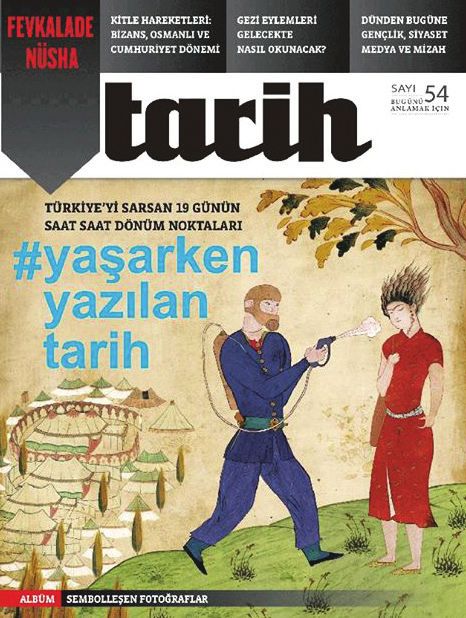
Freedom House

Executive Summary

In November 2013, a Freedom House delegation traveled to Turkey to meet with
journalists, NGOs, business leaders, and senior government officials about the
deteriorating state of media freedom in the country. The delegation’s objective
was to investigate reports of government efforts to pressure and intimidate jour-
nalists and of overly close relationships between media owners and government,
which, along with bad laws and overly aggressive prosecutors, have muzzled
objective reporting in Turkey.

Since November, events in Turkey have taken a severe       to the state; as recently as 1997, large media organiza-
turn for the worse. The police raids that revealed a       tions were co-opted by the military to subvert a
corruption scandal on December 17, and the allega-         democratically elected government. The AK Party was
tions of massive bidrigging and money laundering by        formed in the wake of those events. But even as it has
people at the highest levels of the government, have       tamed the military, the AKP has been unable to resist
sparked a frantic crackdown by the ruling Justice and      the temptations of authoritarianism embedded in the
Development (AK) Party. More journalists have been         state. Over the past seven years, the government has
fired for speaking out. Thousands of police officers       increasingly employed a variety of strong-arm tactics
and prosecutors have been fired or relocated across        to suppress the media’s proper role as a check on
the country. Amendments to the Internet regulation         power. Some of the most disturbing efforts include
law proposed by the government would make it               the following:
possible for officials to block websites without
court orders. The government is also threatening the         Intimidation: Prime Minister Recep Tayyip Erdoğan
                                                           •
separation of powers by putting the judiciary, includ-       frequently attacks journalists by name after they
ing criminal investigations, under direct control of the     write critical commentary. In several well-known
Ministry of Justice. The crisis of democracy in Turkey       cases, like those of Hasan Cemal and Nuray Mert,
is not a future problem—it is right here, right now.         journalists have lost their jobs after these public
                                                             attacks. Sympathetic courts hand out convictions
This report on the media recognizes that what is             in defamation cases for criticism.
happening in Turkey is bigger than one institution and
part of a long history that continues to shape current     • 	Mass firings: At least 59 journalists were fired
events. The media in Turkey have always been close              or forced out in retaliation for their coverage of

www.freedomhouse.org                                                                                                 1
SPECIAL REPORT Democracy in Crisis: Corruption, Media, and Power in Turkey
last summer’s Gezi Park protests. The December Freedom House calls on the government of Turkey
corruption scandal has produced another string to recognize that in a democracy, a free press and
of firings of prominent columnists. other independent institutions play a very important
role. There are clear and concrete steps the Turkish
• Buying off or forcing out media moguls: government must take to end the intimidation and
Holding companies sympathetic to the government corruption of Turkey’s media. Chief among these are
receive billions of dollars in government contracts, the following:
often through government bodies housed in the
prime minister’s office. Companies with media • Cease threats against journalists.
outlets critical of the government have been
targets of tax investigations, forced to pay large • Repeal the criminal defamation law and overly
fines, and likely disadvantaged in public tenders. broad antiterrorism and “criminal organization” laws
that have been used to jail dozens of journalists.
• Wiretapping: The National Security Organization
has wiretapped journalists covering national • Comply with European and international standards
security stories, using false names on the warrants in procurement practices in order to reduce
in order to avoid judicial scrutiny. the incentive for media owners to curry favor
by distorting the news. Turkish media owners
• Imprisonment: Dozens of journalists remain themselves must make a commitment to support
imprisoned under broadly defined antiterrorism changes in procurement practices if they are to
laws. A majority of those in prison are Kurds, and win back the trust of Turkey’s citizens.
some analysts believe the government is using
them as bargaining chips in negotiations with Although building a resilient democracy is fundamen-
the Kurdish PKK. tally up to Turkish citizens, the international commu-
nity cannot afford to be bystanders. The European
These tactics are unacceptable in a democracy. They Union and the OSCE have raised strong concerns
deny Turkish citizens full access to information and about government pressure on Turkey’s media, and
constrain a healthy political debate. Journalists and the EU’s warnings against governmental overreach
government officials alike acknowledge that reporters have been pointed. Unfortunately, the same cannot be
and news organizations have practiced self-censor- said for the United States. The Obama administration
ship to avoid angering the government, and especially has been far too slow to realize the seriousness of the
Prime Minister Erdoğan. threat to Turkey’s democracy. U.S. criticism of the
Turkish government’s recent actions has come from
The intentional weakening of Turkey’s democratic the State Department spokesperson and White House
institutions, including attempts to bully and censor press secretary, not from the high-ranking officials
Turkey’s media, should and must be a matter of deep who need to be engaged in responding to a crisis of
concern for the United States and the European this scale. Where European governments and institu-
Union. As the AK Party’s internal coalition has grown tions have been specifically and publicly engaged with
more fragile, Erdoğan has used his leverage over the the government over the crisis, the Obama adminis-
media to push issues of public morality and religion tration has avoided the difficult issues. It is time to
and to squelch public debate of the accountability of speak frankly and with seriousness about the growing
his government. The result is an increasingly polarized threat to democracy in Turkey, and to place freedom
political arena and society. of expression and democracy at the center of the
policy relationship.
2Freedom House
Introduction
Turkey’s democracy is in crisis. Three and a half million restraining discussion of ethnic identity, religion,
people across the country took part in the Gezi Park and history outside the narrow bounds of secular
protests last summer. Yet the AKP-led government’s nationalism. In 1997, leading media outlets supported
response, first to the protests and now to the the military’s efforts to undermine the coalition led by
December 17 corruption scandal, has been to crack the Islamist Welfare Party, which eventually led to the
down even harder on its critics, fanning even wider collapse of the democratically elected government
public alienation. At least 59 journalists were fired in what is often called the “post-modern coup.”
during the Gezi protests for criticism of the govern-
ment, and more have lost their jobs in recent weeks Formed after the banning of the Welfare Party and
for criticizing the government over corruption. As its successor, the Virtue Party, the AK Party was a
this report is being written, Prime Minister Erdoğan victim of these harsh restrictions on free speech.
is advocating the reversal of important democratic Then-mayor of Istanbul Recep Tayyip Erdoğan
reforms his own party championed just a few years ago. served jail time after he gave an Islamic-nationalist
speech in 1997, and was still banned from serving in
This report focuses on one element of the crisis in office when his AKP won general elections in 2002.
Turkey’s democracy: the government’s increasing Although the party arguably won on the public’s
pressure on the media over the last seven years. mistrust of a political establishment that had driven
While acknowledging that Turkey’s current crisis is it into economic crisis in 2001, the AKP’s commitment
bigger and more systemic, Freedom House believes to inclusive, democratic governance also appealed
it is important to analyze in depth the government’s to Turkey’s voters and clearly distinguished it from
efforts to marginalize and suppress independent the Welfare Party.
voices and reporting in Turkey’s media. A free press is
a vital actor in any democracy, providing accountability Many in Turkey, including liberals and members of
and encouraging a healthy public debate. In Turkey, minority groups interviewed for this report, agree
with a weak opposition and judiciary, an unfettered that there was progress under the AK Party in some
press is essential. The muzzling of the press in the last important areas of free expression. Long-standing
seven years has contributed to the wide disjuncture taboos against discussion of minority rights, including
between citizens and their government. It is both a the rights of Kurds and Alevis, headscarves for women,
symptom and a cause of the current crisis. and the Armenian genocide have all been lifted, even
if laws that could punish such discussion remain on
The problem of media freedom—and the eager the books. Given the severe restrictions under military
collaboration by media owners with the government— tutelage, these accomplishments are not insignificant.
did not start with the AK Party. During nearly five
decades of military “guardianship” (punctuated by Yet credit for such gains cannot offset the atmosphere
coups in 1960, 1971, and 1980), the Turkish military of intimidation that deepened as the AKP consolidated
and their bureaucratic allies enforced a set of red lines its power. Kurdish journalists have been arrested
www.freedomhouse.org 3SPECIAL REPORT Democracy in Crisis: Corruption, Media, and Power in Turkey
along with Kurdish activists and held as bargaining AK Party has consolidated power, it has used the
chips in peace negotiations with the Kurdistan government agency responsible for sales of defaulting
Workers’ Party (PKK). Editors and reporters from companies to transfer control of some of the
across Turkey’s media told Freedom House country’s most important media outlets to supporters.
about angry phone calls from the prime minister’s Tax investigations have been used to punish media
office after critical stories run, and—long before outlets that dare to challenge the government. The
Gezi—of media owners being told to fire specific once-dominant Doğan Media Group was assessed
reporters. In a growing number of cases, editors and enormous fines and forced to sell off several media
owners are firing reporters preemptively to avoid a properties, including one of the country’s leading
confrontation with government officials. Reporters papers, Milliyet, after its reporting on AKP corruption
who still hold their jobs admit to censoring their own infuriated the government.
coverage to ensure they remain employed. When they
cover politics, media employees are forced to be more Now, as the December 17 corruption scandal
concerned about their jobs than about the story. unfolds, the retreat from the early years of the AKP-led
liberalization is in full force. The government has even
At the heart of the problem are politicians and a floated the possibility of mending its bridges with the
prime minister who came to power vowing to create military, claiming that it was the same over-zealous
a more liberal government but have become increas- prosecutors from the Gülen religious community who
ingly intolerant of criticism and dissent. Even as initiated the coup-conspiracy trials that broke the
late as 2010, the AK Party successfully campaigned military’s influence. All of this has led to a profound
to pass a referendum allowing the parliament to crisis of confidence in the Erdoğan government and,
amend aspects of the 1982 constitution, adopted chillingly, the future of Turkey’s democracy.
while Turkey was under martial law. The referendum
included numerous changes to increase the indepen- There are positive signs that with the government
dence of the judiciary, to improve separation of suddenly weakened, some of Turkey’s media are
powers, and to protect the rights of individuals. beginning to remember their long-suppressed role,
Following its victory in 2011, the AKP pledged to breaking stories and covering the corruption
work with other parties to rewrite the constitution scandal in depth. Outlets associated with the
altogether, a project that has now collapsed. Gülen movement like Zaman, Today’s Zaman, and
Bugün; Doğan-owned Radikal and Hürriyet; T24, an
Yet despite winning the referendum and holding a independent Internet news site;1 and even formerly
parliamentary majority, the AKP has not rejected the pro-government media like Habertürk are finding
arbitrary powers the state still retains, or built a strong their voices after years of harassment and pressure.
system of democratic checks and balances. Among There is no way of knowing how long or even whether
the changes proposed by the party after the corrup- this will last. At the same time, yet more prominent
tion scandal broke this December has been a repeal columnists are losing their jobs, such as Nazlı Ilıcak
of the democratic reforms to the judiciary it fought for from Sabah and Murat Aksoy from Yeni Şafak.
in 2010. Limited improvements in media laws have
been trumped by the government’s continued use As reflected in Freedom House’s annual ratings,
of broad antiterrorism and criminal defamation laws including Freedom in the World, Turkey is not a
that allow the government wide leeway in punishing dictatorship. It is a country where different views are
dissent. The government has also not hesitated to use expressed and heard, with a vibrant and diverse civil
an intrusive state security apparatus to illegally spy society. But it remains a country where criticizing
on and harass journalists. the government means risking your livelihood, your
reputation, and sometimes, your freedom. And at the
The government’s greatest leverage over the present moment, it is a country where the govern-
media, however, is economic. The prime minister’s ment is behaving more, rather than less, authoritarian.
office controls the allocation of billions of dollars
in privatized assets, housing contracts, and a public The European Union and the United States must be
procurement process that allows rewarding favored fully engaged in the defense of Turkey’s democracy.
companies, including those with media arms. As the While the EU has spoken out forcefully in recent
1 Disclosure: The owner of T24 Doğan Akın is a founding member of P24, a non-profit organization that promotes press independence,
of which report co-author Andrew Finkel is also a founding member.
4Freedom House
months as Turkey has moved further away from its international affairs.5 Most media outlets have
democratic commitments, the U.S. has refrained from well-known and clear-cut political allegiances. Sözcü
high-level criticism or engagement. It is past the time (360,000 circulation) is Kemalist, BirGün (11,000) is
for a real change in U.S. policy to one based on leftist, Yeni Şafak (127,000) is Islamist, Zaman
hardheaded analysis. (1,161,000) is associated with the Gülen movement,
and so on.6 The ideological profiles of the papers can
There are long-term steps that the U.S. should support mask the depth of the harassment and restrictions on
to encourage reform in Turkey, including negotiating a Turkey’s media. In interviews for this report, high-rank-
free-trade pact to parallel the Transatlantic Trade and ing officials repeatedly pointed to the polemical
Investment Partnership between the U.S. and EU. antigovernment tone of Sözcü, for instance, as proof
Such an agreement must require that Turkey commit of freedom of speech. But despite being among the
to transparent procurement practices. In addition country’s highest-circulating dailies, Sözcü only
to strong rhetorical defenses of a free Turkish press, reaches the substantial minority already predisposed
the United States and Europe should also marshal to its secularist Kemalist views, which would never
investment and development funds to support the vote for the AK Party. It is not a government target.
growth of independent Turkish media. Most important,
with Turkey’s government proposing new steps every There is also a group of newspapers considered
day that would reverse democratic gains, the U.S. “mainstream,” meaning that despite their political
should elevate Turkey’s democratic crisis to a matter legacies they can reach an audience beyond the
of bilateral importance and engagement. The crisis is true believers of one ideological group. These papers
real and Turkey is too important in its own right, and in include Hürriyet (409,000), Milliyet (168,000),
its relations with other countries, for more denial or Sabah (319,000), and Akşam (103,000). A key aspect
deliberate inattention. of the government’s efforts to control the media has
been to focus most of its attention and pressure on
these “mainstream” outlets. The government-backed
The Media Sector in Turkey sales of Sabah and Akşam to pro-government
Even with the constraints placed on a free press, business groups and the forced sale of Milliyet to a
Turkey has a rapidly growing media and entertainment pro-government business group to pay off the Doğan
sector—the result of the increasing education and Media Group’s tax penalties reduced these papers’
wealth of a population with a deep hunger for independence. Milliyet has laid off important critical
information about their country and the world. In columnists like Hasan Cemal and Can Dündar.
2013, PricewaterhouseCoopers projected the sector’s In the most flagrant cases of Sabah and Akşam,
value at $11.6 billion, with estimated 11.4 percent the papers have become mouthpieces for the
annual growth between 2013 and 2017, more than government, what some call “Erdoğanist” media.
double the global average.1 Among European coun-
tries, Turkey has a relatively low newspaper circulation
of 96 newspapers bought daily per 1,000 population.2 Historical Development
Spurred by the growth in the Turkish economy, The events of the last 12 years, including the AKP-
advertising revenue reached $2.5 billion in 2011, the led government’s intensifying crackdown on media
bulk of which accrued to television, which includes freedom, cannot be understood without the context
popular serials, sports, and daytime talk shows, as of decades of military “guardianship” and the overly
well as news coverage.3 A small number of wealthy close relationship between the military and the media.
holding companies own nearly all of the country’s While ownership has shifted, in many cases the desire
most important outlets in both television and print. to curry favor with the government has remained the
Many companies are dependent on government favor, same. Following the coup of 1980 and the develop-
and even those with limited direct dealings with the ment of liberal economic policies under then-Prime
government would find it hard to operate in the face Minister Turgut Özal, family ownership in the media
of active hostility. market was replaced by corporate holding compa-
nies (albeit still with a strong family component) that
National newspapers based in Istanbul and Ankara benefited hugely from their close relationships with
account for 80.6 percent of the country’s annual the government.
circulation,4 and at most a dozen of those dominate
the national conversation on domestic politics and
www.freedomhouse.org 5SPECIAL REPORT Democracy in Crisis: Corruption, Media, and Power in Turkey
In nearly all cases, these holding companies earn Even as Erdoğan and Gül distanced themselves from
only a small fraction of their revenue from their media the more aggressive Islamism of the Welfare Party,
outlets, with the bulk of profits coming from other they still carried a profound sense of vulnerability
interests, such as construction, mining, finance, or and victimhood.
energy (see Table 1). In Turkey’s still state-centered
economy, privatization of government assets and When the AK Party came to power in 2002, it bore
government contracts are a huge source of the the scars of those experiences. Erdoğan, now leader of
holding companies’ income. This has created a the AKP, was only allowed to assume the premiership
situation in which media outlets are used to promote after a constitutional amendment in 2003. Five years
the ownership group’s financial interests. Members later, the AKP faced another serious challenge to its
of the media and the government alike describe existence when the Constitutional Court came only
newspapers’ Ankara bureau chiefs as “lobbyists” for one vote short of ruling that the party should be
their companies.7 closed for violating the constitution’s commitment
to secularism.
Holding company owners who rely on the state for
business have shown little commitment to real From its inception, the AK Party presented a very
debate, and even less sense of responsibility for different image to that of its more Islamic predecessor.
providing a check on government power. In 1997, It committed to a greater openness for religion in
when the military forced the collapse of a coalition public life in the context of its program to make Turkey
led by the Islamist Welfare Party, large media more fully democratic. It actively embraced the free
outlets supported the military with sensationalized market, rejected anti-Western rhetoric, and pledged to
and baseless stories about the Islamist threat implement an IMF standby agreement that required
to democracy.8 difficult economic reforms.
The AK Party and the current government were forged The AK Party’s decision to pursue European Union
by that history. Prime Minister Erdoğan and President accession required additional reforms and won new
Abdullah Gül were both members of the banned support from the international community, originally
Welfare Party. When Erdoğan served four months in wary of the party’s Islamic roots. The aftereffects
prison in 1997, and was subsequently barred from of the currency devaluation in 2001 and the IMF’s
holding public office, the secularist media applauded.9 backing helped attract foreign investment, and the
Table 1. Ownership Group Newspapers TV Other Business Interests
Main ownership
groups in Turkey’s
media, January 2014 Doğan Group Hürriyet, Radikal, Posta CNNTürk, Kanal D Energy, retail, industry, tourism
Finance, Automotive, Construction,
Doğuş Group -- NTV, Star
Energy, Retail
Feza Media Group Zaman, Today’s Zaman Not available
Ethem Sancak Akşam SkyTurk 360 Pharmaceuticals
Energy (50 percent owned by the
Star Media Group Star Kanal 24
State Oil Company of Azerbaijan)
Kalyon Group Sabah, Takvim ATV Construction
Ciner Group Habertürk Show TV, Habertürk TV Energy, Mining, Services
Energy, Mining, Industry,
Demirören Group Milliyet, Vatan --
Construction, Tourism
Construction, Industry, Tourism,
İhlas Holding Türkiye TGRT Haber
Mining
Construction, Industry, Logistics,
Albayrak Group Yeni Şafak TVNET
Energy, Services
Koza İpek Holding Bugün Kanaltürk Mining
6Freedom House
new macroeconomic stability created a windfall of journalists and professors, for seeking to undermine
lower interest rates and a decline in Turkey’s chron- the government with a convoluted conspiracy—
ically high rate of inflation. This allowed the AKP to known as Ergenekon, after a mythical place of origin
direct resources to its constituents in neglected cities of the Turkish people—of assassinations and false flag
across the country and to provide opportunities for operations. The indictments and trials were marked
the new business class. The EU’s strict demands for by appalling breaches of due process and judicial
institutional reform provided an additional mandate procedure, years of pretrial detention, and simple
for decreasing the involvement of the military in logical incoherence.
public life and gave an opportunity to install new (and,
in some cases, more professional) cadres in the civil Nevertheless, Ergenekon ended in September 2013
service, police, and judiciary. with the conviction of 275 defendants, including
the former chief of the Armed Forces. With military
In its fight against the old guard, the AK Party also tutelage finally broken and the political opposition
created a wider space for ideas and discussion. Yet as still tainted by its association with the military, the AK
the AKP strengthened its political position, it began to Party became the dominant political force in Turkey.
assert more control over the media sector, and the old
red lines were replaced with new ones. An important The AKP did not break the old media or military
step came in 2007 when the country’s second-largest tutelage by itself. Until recently, one of its key allies
media group, Sabah-ATV, was sold to Çalık Holding. was the Gülen movement, a tightly networked group
Prime Minister Erdoğan’s son-in-law Berat Albayrak following the teachings of Islamic preacher Fethullah
was the company’s CEO, and Albayrak’s brother led Gülen. The movement wields enormous economic
the media unit.10 In an unusual move, two state banks and social power with a network of hundreds of
stepped in with financing worth $750 million of the schools and colleges in Turkey and abroad, and
$1.1 billion purchase.11 Sabah’s editorial line rapidly extensive business interests inside and outside the
shifted from center-left to ardently pro-government.12 country. Turkey’s highest-circulation daily Zaman and
the influential English-language Today’s Zaman are
That same year, the government took aim at the owned by the Gülen-affiliated Feza Media Group. Koza
largest media owner in the country, Doğan Media İpek Holding, which owns Bugün daily and Kanaltürk
Group, which had long been associated with the TV station, is also affiliated with the movement.
secularist elite and had backed the 1997 “post-mod-
ern coup.” Doğan had enraged PM Erdoğan when its When Doğan Media Group was under attack, Gülenist
flagship papers, Hürriyet and Milliyet, gave extensive outlets were vocal in defending Erdoğan and blaming
front-page coverage of a German court case, accusing the group’s owner Aydın Doğan for bringing the prime
several prominent Turkish citizens with ties to the top minister’s wrath upon himself.16 During the Ergenekon
of the AKP of embezzling tens of millions of dollars cases, prosecutors allied with Gülen were seen as
from a Turkish charity. driving the charges against the military through leaks
and stories in the movement’s outlets and to sympa-
Erdoğan responded by calling for a boycott of the thetic journalists.
entire media group.13 In February 2009, Doğan Media
Group was hit with a $500 million tax fine, raised in The alliance between Gülen supporters and Erdoğan
September of the same year to $2.5 billion, four-fifths started to change as the government took a more
of the market capitalization of the entire company.14 confrontational stance towards Israel and pursued
The fine eventually forced Doğan to reduce its rapprochement with the Kurdish PKK, which the
commanding position in the Turkish press, including Gülen movement has opposed for decades.17A failed
by selling Milliyet and Vatan to another holding attempt to remove Turkey’s intelligence chief Hakan
company with strong ties to the government. Fidan in February 2012 was widely attributed to Gülen
supporters within the judiciary unhappy with the
The AKP also took on the military in 2007. In April, the outreach to PKK leader Abdullah Öcalan.18 The split
army issued a statement pledging to be an “absolute between Gülen supporters and Erdoğan has now
defender of secularism” in a veiled threat reminiscent burst into full public view with the December 17
of 1997.15 In June, police launched the raids that corruption scandal, which has been played out in
would lead to accusations against ten army generals leaks to sympathetic journalists and stories in the
and hundreds of other officers, as well as various movement’s outlets.
www.freedomhouse.org 7SPECIAL REPORT Democracy in Crisis: Corruption, Media, and Power in Turkey
The Media in Crisis
The tools used to pressure and control media outlets symbol of media cowardice in the protests.
and individual journalists existed before the AK Party Some papers and television stations, including
came to power. But the party, with its extraordinary CNNTürk, soon caught up with the news, while
political dominance, has used them unapologetically other pro-government stations like NTV continued
and with increasing frequency and force. The wave of to push the government’s conspiratorial talking points
firings and resignations during the Gezi Park protests, (protesters even gathered in front of NTV’s offices).
as outrageous as they are, are unfortunately just one But the initial failure to cover Gezi showed the
example of the AKP’s determination to suppress a free reflexive compliance and conflict aversion of the
press and full public debate. conglomerate-dominated media.
The Gezi Park protests started on May 27, 2013, with a It is difficult to firmly establish the number of report-
small group of environmental activists determined to ers, editors, and broadcasters fired in the wake of Gezi.
block government plans to replace a park in Istanbul’s On July 26, the Turkish Journalists’ Union said that
Taksim Square with a complex of hotels, a shopping 59 journalists had been fired or forced out; the
mall, and restaurants. As news of the occupation opposition Republican People’s Party (CHP) has
spread on social media, hundreds of people joined in, compiled a list of 77 journalists who were fired or
united by their frustration with the government’s lack forced out due to their coverage of the protests.
of accountability. The tipping point came on May 29 Some media employees cite much higher numbers.
and 30, when police routed protesters with tear gas NTV Tarih, a history magazine owned by NTV, was shut
and water cannons. Images of the brutality circulated down entirely and its staff let go after the magazine’s
rapidly on social media. A Reuters photograph of a editors prepared a special “Gezi edition.” The Gezi
young woman being sprayed in the face with pepper firings continued through the fall. In November, the
Art by Gökhan
gas by a policeman wearing a gas mask became the public broadcaster TRT fired two employees who used
Karakoç. Creative
Commons iconic image of the protest. Tens of thousands rushed social media to voice their support for the protests.19
attribution to occupy all of Taksim Square. Over the next two
non-commercial weeks, protests spread to 80 of the country’s 81 The government and its backers insist that there is
license. provinces, with more than 3.5 million people partici- no proof that the coverage of Gezi was behind any of
pating, according to the government’s own estimates. these firings. That argument is hard to accept, given
the government’s track record of intimidation and
Many of Turkey’s media outlets were caught off guard pressure against the media. Even before Gezi, it had
by these events and slow to adapt their coverage, become commonplace for top officials, especially
drawing popular ire. Most notoriously, on June 1, as Erdoğan, to publicly attack journalists who displease
mass protests filled Istanbul and CNN International them, and for those journalists to be fired soon after.
showed round-the-clock coverage, the Doğan-owned In 2011, after NTV host Nuray Mert compared the
CNNTürk was broadcasting a nature documentary government’s policies in eastern Turkey to a nationalist
about penguins. The penguin became an ironic massacre 70 years before, the prime minister
8Freedom House
denounced her writing as “despicable.” She lost her from the ownership of Taraf after advertisers
show with the channel, and was later fired from became reluctant to advertise. In July 2013, Altan
Milliyet.20 In August 2012, as the government’s peace was convicted of defamation and ordered to pay a
process with the PKK foundered, the prime minister EUR2,800 fine, on top of the 6,000 euros he was
warned the press in a televised debate that it must already required to pay in compensation to Erdoğan
ignore the conflict, arguing that broadcasting under a previous civil suit.28 In December 2013,
information about Turkish solders’ deaths would Erdoğan accused Taraf journalist Mehmet Baransu
provide propaganda support for terrorists. “I really of “treason” for a story describing a National Security
expect the media to act as one hand, one heart,” he Council plan to counter the influence of Gülen and
said. “On whose side will the media be?”21 his movement.29 Baransu and Taraf are under criminal
investigation for the story.30 In 2008 and 2009, the
In March 2013, Milliyet columnist Hasan Cemal, one National Security Organization (MİT) ordered wiretaps
of Turkey’s most respected journalists, defended his of several journalists at Taraf who broke major
paper’s decision to publish leaked informationon PKK national security stories. It was later revealed that
leader Abdullah Öcalan’s attitudes toward peace talks. MİT used false names for the reporters to prevent the
In a speech two days later, the prime minister attacked judges from knowing who was being wiretapped.31
Cemal, saying, “If this is journalism, then down with
your journalism!”22Milliyet fired Cemal later that month. Journalists say it has become increasingly hard
In December 2013, one of Sabah’s best-known to predict what will draw the prime minister’s ire.
columnists Nazlı Ilıcak was fired the day after she One editor in chief told Freedom House, “It could be
criticized the government over the corruption scandal environmental, economic. After all, everything related
on a television news show.23 In January this year, to life is related to politics.”32Journalist Can Dündar,
Murat Aksoy, a prominent writer for Yeni Şafak, was who was fired from Milliyet in August 2013, said about
also dismissed after making similarly critical remarks his editors, “They told me at [Milliyet], I don’t want
on air. news that will irritate the prime minister, but I don’t
know what news will irritate him. Anything can be
Editors and journalists in the mainstream media irritating, and once we irritate them they fire us.”33
say that they receive regular phone calls from the
prime minister’s office to change stories, to downplay The prime minister is not alone in practicing intimida-
coverage, or to fire reporters or columnists. The tion. During the Gezi protests, the AKP mayor of
accounts are consistent and come from both Ankara, Melih Gökçek, started a Twitter campaign
government critics and those who have supported against BBC reporter Selin Girit with the hashtag
the AK Party, although the government officials “#Don’t be a spy in the name of England Selin Girit.”
Freedom House met with all denied such calls take The BBC issued a statement calling the campaign
place. One journalist said that the phone calls were “unacceptable.”34 In October, the AKP mayor of
no longer necessary: “There isn’t a person who calls Eskişehir sent an email to a reporter from Radikal
every five minutes, but there is an expectation saying it was “vile and inglorious” to continue to report
that they will.”24 Some editors have developed a on the case of a protester who was beaten to death
pre-Pavlovian response—firing those who fail to by police.35
heed the party line even before they hear the bell.
One journalist described how her colleagues relished
The government also uses the courts to go after interviewing the opposition because it gave them a
offending journalists. Despite strong international chance to act like “real journalists” by asking difficult
criticism,25 defamation is still criminalized under questions and pressing for answers. Such aggressive
Turkish law. There is no official tally of defamation reporting, she said, is not allowed with the AK Party.
lawsuits by the prime minister, but the number may That too ensures that the coverage of the opposition
be in the hundreds. In addition to journalists, Erdoğan is far more critical than that of the government.
has sued high school students,26 political cartoonists,
and musicians.27 In February 2012, he sued the
then-editor of Taraf daily, Ahmet Altan, for defamation
after Altan wrote an editorial criticizing his refusal to
apologize after 34 civilians were killed by a Turkish
airstrike. Altan later stepped down under pressure
www.freedomhouse.org 9SPECIAL REPORT Democracy in Crisis: Corruption, Media, and Power in Turkey
How a History Magazine Fell Victim
to Self-Censorship
Andrew Finkel
The abrupt closure of NTV Tarih, a popular history
magazine with a healthy circulation, may not be
the most egregious example of self-censorship
in Turkey. But it is an unhappy illustration of a
mainstream media nervous of its own shadow.
“There was an element of happenstance. The
magazine might have survived had it gone to
press a few days earlier,” explains Neyyire Özkan,
who was herself forced to step down as head of
the Doğuş Magazine Group. She describes the
magazine as a “star” in a list of publications that
consisted of mainly Turkish-language franchises
for titles such as Vogue, National Geographic,
and GQ. NTV Tarih was among the best-selling
monthly magazines in Turkey, but created entirely
in-house.
“We weren’t stuffy, and we weren’t ideological. Cover of the censored edition of NTV Tarih.
We took on controversies and tried to make Reproduced by permission of the publisher.
people understand them from different historical
perspectives,” says its editor, Gürsel Göncü. In
(#historywrittenasitislived). Success for the issue
short, it tried to turn “official” history into just
seemed all but guaranteed by an ingenious front
history. When Prime Minister Erdoğan issued
cover. Artist Taha Alkan had recreated the
a guarded apology in November 2011 for the
iconic photo of the Gezi protest—a young
massacre of Alevis Kurds in the late 1930s in
woman university lecturer in a red dress being
the eastern province of Dersim, the magazine
sprayed in the face with pepper gas by a masked
followed with a cover story about this no-longer
policeman—in the style of an Ottoman
taboo episode of Turkey’s early Republican past.
miniature painting.
Monthly sales of around 35,000 nearly doubled.
NTV Tarih was not the only Doğuş publication to
Göncü was expecting an even more enthusiastic
use the Gezi theme. Even that month’s issue of
reception for the July 2013 issue, which
Turkish Vogue featured Gezi chic. However, by the
was inspired by the previous month’s head-
time the presses were ready to turn, the entire
line-grabbing occupation of Istanbul’s Gezi Park.
media group had become embroiled in far greater
It set out to chart the history of popular
controversy. NTV television station, the group’s
protest in Istanbul from the 404 AD Nika riots
flagship 24-hour channel, had come under bitter
of Byzantium, through Ottoman and Republican
attack by its own viewers for its initial reluctance
times. And it tried to see Gezi in the context of
to cover the Gezi events, and then for its
world events. The editors had also reconstructed
eagerness to comply with the government’s spin
a painstaking, hour-by-hour, tweet-by-tweet
that the protests were part of a greater conspiracy.
timeline of the Gezi events. This was billed on
As a result, crowds of demonstrators gathered
the front cover as #yaşarkenyazilantarih
10Freedom House
in front of the media giant’s imposing Istanbul nor to change the direction of NTV’s editorial
headquarters. On the other side of the city, near policy. He describes that policy as “center of
Gezi Park itself, protesters set upon and de- the road.” He rejects suggestions that NTV news
stroyed an NTV remote-broadcasting truck. channel had turned into an uncritical vehicle for
the ruling party’s point of view but says nor is it
These protests appear to have prompted a great the station’s mission to be a soapbox for the
deal of soul-searching within the NTV newsroom. government’s critics.
Cem Aydın, the media group’s chief executive
officer, assembled the entire staff to confess that If the television conveyed the message of the
the organization had lost its way. Well before Gezi, government, this was because it was popularly
the news channel had begun axing its hallmark elected by 50 percent of the population and they
discussion programs and shedding many wanted to know what the government had to say.
well-known presenters and commentators who The views of the opposition were also being
had given the station its critical edge. It had reported. “To my way of thinking, Turkey has full
adopted an all too familiar, anodyne editorial freedom of the press. Anyone can start up a
policy to avoid giving the government offense. newspaper tomorrow,” Yerdelen says.
“We only covered news that wasn’t news,” one
cameraman said, according to accounts by those And Yerdelen is unapologetic about his
who attended the meeting. Aydın pledged to decision not just to spike the Gezi issue of
recover the public’s trust, no matter how long it NTV Tarih but to shut down the magazine,
took. Tayfun Ertan, NTV television’s first editor in lock, stock, and barrel. The reasons he gives
chief, reflects on the irony of it all. The station are twofold: Despite its relatively high sales
was founded in 1996 by Cavit Çağlar, a business- (twice as many copies as Turkish Vogue), it wasn’t
man-politician who had been a supporter of bringing in advertising revenue. Printing extra
then-President Süleyman Demirel and who was copies would not have made it profitable. And he
later convicted of bank fraud. “We only signed on accused its editor of turning a history magazine
to the project when he gave his word he would into a political platform, and of trying to rush
never interfere with news content. And he kept the magazine into press without approval.
that promise, even during politically turbulent “It overstepped the boundaries,” he says.
times,” Ertan says.
Göncü takes issue with this interpretation
Ertan, still working for Doğuş Group (he was of events. He says it is impossible that a
subsequently dismissed), listened to Aydın’s strong-selling magazine produced by an editorial
apology, and afterwards the two men spoke. staff of five, that did not pay a foreign license,
“We have to get ourselves organized like we were could have been taking a loss. And he says it was
at the beginning,” Aydın told him. Instead of inconceivable to think the magazine could leave
trying to strike a balance that was not possible, the printers without the publisher’s consent.
he said that NTV should go back to its first
principles of doing the news. At the same time, he remains philosophical
about his brainchild’s plight. The pages of the
He never got the chance. A few days later, Aydın magazine found their way onto the Internet,
stepped down from his post. All this was before and from there to the publishing house Metis,
NTV Tarih tried to go to press. who reprinted the Gezi issue as a book. The
proceeds go to the families of those who died
Erman Yerdelen, chairman of the board of Doğuş in the Gezi protests. “What happened to the
Media Group, makes it clear that Aydın had no magazine cannot be erased. It became part
authority to convene that meeting of employees, of the history it tried to write.”
www.freedomhouse.org 11SPECIAL REPORT Democracy in Crisis: Corruption, Media, and Power in Turkey
Media Ownership
and Dependency
Money is the government’s most potent tool for The role of public tenders and privatization in main-
controlling the media. The breakup of Turkey’s two taining government influence over media cannot
dominant media groups was complete by 2011, when be overstated. The prime minister’s office controls
the Sabah-ATV group had been sold to Çalık Holding, billions of dollars in projects per year as the chair
led by Erdoğan’s son-in-law, and Doğan sold the news- of the Privatization High Council (OİB). The PM has
papers Milliyet and Vatan to settle its bill from the tax final say over privatization approvals, creating a clear
case. The sale of Milliyet, perhaps the most respected incentive for diversified holding companies to avoid
brand in Turkish journalism, dramatically diminished all conflict with his office. An even larger amount of
the influence of the Doğan Media Group. The huge money flows through the public procurement process.
tax fine also served as a clear warning to other media In 2012, the government issued $46.2 billion worth
owners of the cost of challenging the government. of contracts, with key holding companies with media
outlets eagerly bidding. Billions more are distributed
Every holding company with interests in the through the Housing Development Administration
media sector benefits from government contracts. (TOKİ), also run by the prime minister’s office. Defense
The following are only select examples: industry procurement, also overseen by the PM
through the Defense Industry Executive Committee,
• Doğuş Holding (NTV, StarTV) won a $702 is another major source of patronage and pressure.
million bid in May 2013 to operate Istanbul’s
Galataport in Karaköy.36 Over time, these procurement practices have become
even less transparent. In the last two years, amend-
• In November, İhlas Holding (Türkiye, ments to procurement law placed tenders in multiple
İhlas News Agency, TGRT TV) signed a sectors (including defense, security, intelligence,
$1.86 billion deal to redevelop Istanbul’s technology, and railways) outside the purview of the
Gaziosmanpaşa neighborhood.37 watchdog Public Procurement Authority (KİK) that is
responsible for issuing monitoring reports on public
• The Demirören Group, whose Milangaz subsidiary tenders.39 A change buried in the fourth judicial reform
is one of the country’s liquefied petroleum gas package in 2012 also reduced criminal charges for bid
giants and which built the controversial Demirören rigging in public tenders.40
shopping center on Istanbul’s Istiklal Avenue,
bought Milliyet and Vatan from Doğan in 2011. The Court of Accounts, which is charged with monitor-
According to Erdoğan himself, the company’s owner, ing and reporting to parliament on government
Erdoğan Demirören, asked the prime minister for spending, was defanged by June 2012 legislation that
his recommendation for editor in chief of Milliyet limited the court’s autonomy to pursue audits.41 The
after buying the paper.38 Constitutional Court overturned the legislation in
December 2012, yet the Court of Accounts has been
12Freedom House
unable to audit public institutions for the last two is a game of “pass the can,” where holding companies
years and will not be able to do so for at least three bear the cost of running a pro-government media
more because of an amendment that exempted state group for a time and then try to transfer ownership
institutions from providing account details.42 to another beneficiary of government favor as quickly
as circumstances allow.
The Savings Deposit and Insurance Fund (TMSF),
the body attached to the prime minister’s office that The result is an atmosphere of complicity, censorship,
recovers debt owed to banks and failed financial and outright stenography on the part of a large
institutions, provides another means for to assert segment of the media. It is no longer unusual for
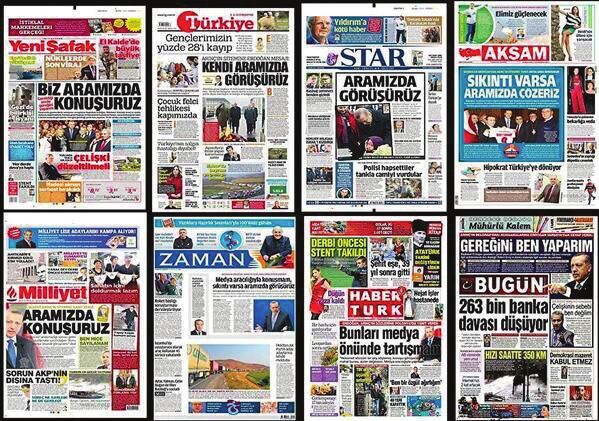
control over the media. TMSF has on several occa- multiple newspapers to run the same headline when
sions seized control of media organizations whose the political stakes are particularly high. In November,
parent companies have been in trouble. The reliable during a very public rift between Deputy Prime
result is resale to companies sympathetic to the Minister Bülent Arınç and Prime Minister Erdoğan
AK Party. This was the mechanism by which the over Erdoğan’s vow to use the police to investigate
Sabah-ATV group was sold to Çalık Holding in 2007, co-ed student housing, six newspapers ran near-iden-
and in 2013 Çukurova’s media properties went to tical headlines quoting the prime minister playing
Ethem Sancak, a wealthy businessmen and a passion- down the feud: “We will solve it amongst ourselves” is
ate supporter of the PM.43 Even before Sancak’s what readers saw when they picked up their papers.
purchase of Akşam, TMSF had appointed a former AKP
deputy to be the editor in chief of the newspaper.44 The same thing happened in early June when seven
papers ran headlines with an identical quote from
A remark heard frequently during Freedom House’s the prime minister on his return from North Africa
investigations is that many owners of powerful during the Gezi protests: “I would give my life for the
holding companies regard media properties as a demands of democracy,” he declared, suggesting that
burden rather than a privilege—a levy that must be like his hero Adnan Menderes, the prime minister
paid to ensure continued access to government hanged by the military in 1960, he was willing to
contracts. An increasingly common phenomenon martyr himself for the cause of democracy.45
Six pro-government
newspapers on
November 9, 2013,
feature headlines
saying “We will solve
it amongst ourselves.”
www.freedomhouse.org 13SPECIAL REPORT Democracy in Crisis: Corruption, Media, and Power in Turkey
The government and its supporters acknowledge that Approximately one-quarter of the imprisoned
media owners are eager to please the prime minister, journalists (as counted by CPJ) work for media outlets
and even that these owners may be afraid of the associated with banned leftist movements, while a
consequences of displeasing him. But they refuse to smaller number were swept up in the Ergenekon trials.
take responsibility for the atmosphere of intimidation Two of the reporters that covered the trial, Ahmet Şık
described consistently by reporters, editors, and even and Nedim Şener, were held in pretrial detention for
some owners, speaking privately. Without apparent over a year on charges of being part of Ergenekon,
irony, ministers insist that if owners and editors are the organization they were supposed to be covering.
“real journalists,” they should be able to withstand the Şener, who had written a book accusing police of
pressure against them.46 As the editor in chief of one organizing the murder of Armenian journalist Hrant
of the country’s leading papers told Freedom House, Dink, and Şık, who had written a book about Gülen
“You are ‘free’ to write anything, if you are willing to pay supporters in the police, are still facing charges of
the price. This is the atmosphere created by the prime supporting an armed terrorist organization in the
minister’s office.”47 OdaTV case, one of the spinoffs from the original
Ergenekon trial.
Imprisonment and Detention The high number of imprisoned and detained journal-
The most chilling example of government abuse is ists in Turkey is a direct consequence of overly broad
the detention and imprisonment of a large number of and aggressively applied antiterrorism laws, combined
journalists, mainly but not all Kurdish. As of December with a judicial system that too often sees its role as
1, 2013, the Committee to Protect Journalists (CPJ) protecting the state, rather than the individual.51
found that 40 journalists were imprisoned as a result Flagrant abuses of due process and fair trial are
of their work. While down from the 49 that the common. Even after several rounds of reform, the
organization documented in 2012, the number still antiterrorism laws make it possible to prosecute
made Turkey the top jailer of journalists in the world, journalists for producing “propaganda” for terrorist
ahead of China and Iran.48 Local monitoring organiza- organizations or “aiding” a criminal organization with
tion Bianet lists 59 imprisoned journalists and 23 a low burden of proof. The definitions of “terrorism,”
media employees.49 “terrorist organization,” and “propaganda” continue
to be so open-ended that interviews with PKK leaders
As other reports have documented, the majority or descriptions of PKK activities, as well as other
of the journalists in prison or in pretrial detention “armed” or “terrorist” organizations, could easily be
are Kurds working for outlets associated with the used for prosecution of journalists. According to
Kurdish movement.50 According to some analysts, Human Rights Watch, the Ministry of Justice’s own
the government is keeping the journalists and figures show that 8,995 people were imprisoned as
activists to be used as bargaining chips with the of last year on terrorism charges.52 These fundamental
PKK in negotiations. ambiguities in the law and the history of their use
should be remembered when Erdoğan describes the
Gülen movement as an “organization” that has
committed “treachery.”53
14Freedom House
Prognosis
The Gezi events and the December corruption scandal provides a new platform for journalists to challenge
have reinforced the AK Party leadership’s historic the government’s claims and voice their opinions.
sense of victimhood and its fear of another coup. After her firing from Sabah in December, Nazlı Ilıcak
With the military marginalized, its suspicions cited her Twitter reach, saying, “I have 500,000
are primarily focused on the many members of the followers. That’s more than Sabah’s circulation.”56
judiciary and the police that are affiliated with their Most important, there is a new generation of media
former allies in the Gülen movement. At the same outlets developing, with a strong commitment to
time, they are stepping up attacks on freedom of more balanced reporting.
expression. Proposed amendments to Law 5651
regulating the Internet, under discussion in parlia- Gezi also showed there is a strong demand in Turkey
ment at the time of writing, would allow government for professional news and journalists willing to stand
officials to order websites blocked for “violations of up to government pressure. The news site T24 has
privacy” without a court order. This would be a flagrant become a refuge for fired journalists and has seen its
rejection of the European Court of Human Rights, readership quintuple from 25,000 to 125,000 this year.
which ruled on this issue in a case against Turkey in Upstart sites like Vagus. TV, founded by journalist
December 2012.54 Unless the prime minister and his Serdar Akinan, incorporate user-generated video and
advisers change course, tensions will grow, with commentary. The dramatic changes in Turkey’s politics,
additional revelations of corruption likely and economy, and media present an opportunity for
the country preparing for three critical elections entrepreneurs, international foundations, and develop-
(for local office in March 2014, president in August ment agencies to invest in Turkey’s media market.
2014, and parliament in June 2015). One of the
most pernicious effects of the widespread firings of Turkey’s business community has an important role to
reporters and editors from the “mainstream” media play. The current crisis notwithstanding, the long-term
is that there are fewer moderate voices to be heard. promise of increasing European investment remains a
The result is an increasingly shrill and divisive media— guiding incentive for business leaders to press the
and public debate—split into “Erdoğanist” loyalists government to support legal reforms, including more
and polemical critics.55 transparent procurement practices. The Transatlantic
Trade and Investment Partnership (TTIP), currently
In the medium term, there are reasons for hope, being negotiated between the United States and
especially if the United States and other members Europe, provides an opportunity for a parallel invest-
of the international community do more to support ment pact between Turkey and the United States. If
and defend Turkey’s democracy. The clash between approached with rigorous standards that condition
the powerful Gülen movement and the AK Party has agreement on greater accountability and transparen-
opened more space for critical reporting as well as cy in government, these processes could help
criticism of the government, despite the government’s promote institutional development and a more
best efforts to silence debate. The rise of social media democratic political system.
www.freedomhouse.org 15You can also read


