Department of Physical Therapy 2021 - 2022 Student Handbook - Tennessee State University
←
→
Page content transcription
If your browser does not render page correctly, please read the page content below
Department of Physical Therapy

  2021 – 2022 Student Handbook
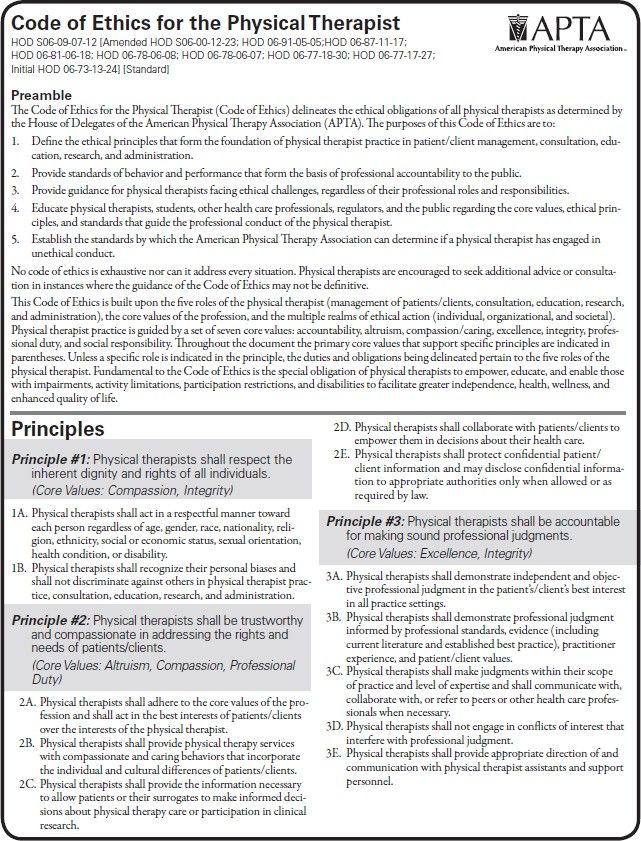
Table of Contents
      INTRODUCTION ...................................................................................................................................... 5
         Purpose ............................................................................................................................................... 5
         Accreditation ....................................................................................................................................... 5
         Notice of Change ................................................................................................................................. 5
      DESCRIPTION OF PROGRAM ................................................................................................................... 6
         Philosophy........................................................................................................................................... 6
         Statement of Principles........................................................................................................................ 6
         Mission................................................................................................................................................ 6
         Goals and Outcomes............................................................................................................................ 6
             Program .......................................................................................................................................... 6
             Faculty ............................................................................................................................................. 7
             Students .......................................................................................................................................... 7
      CURRICULUM MODEL ............................................................................................................................. 8
      FACULTY, COORDINATORS, AND STAFF .................................................................................................. 8
      GENERAL INFORMATION ........................................................................................................................ 9
         Class/Office Location ......................................................................................................................... 10
         Advising of and Appointments with Faculty Members ....................................................................... 10
         Departmental Communication to and among Students...................................................................... 10
         Changes in Contact Information......................................................................................................... 10
         Attire During Didactic and Laboratory Sessions .................................................................................. 11
         Safety and Security Services............................................................................................................... 11
         Program Costs ................................................................................................................................... 12
         Graduate Assistantships and Scholarships.......................................................................................... 13
         Student Relationship with the American Physical Therapy Association............................................... 13
         Employment and Participation in TSU Extracurricular Activities ......................................................... 14
         Departmental Committees ................................................................................................................ 14
      ACADEMIC POLICIES ............................................................................................................................. 15
         Essential Functions ............................................................................................................................ 15
         Grading Scale..................................................................................................................................... 15
         Retention Policy ................................................................................................................................ 16

2021 – 2022 Student Handbook                                              Page 2 of 48                                                           Revised May 2021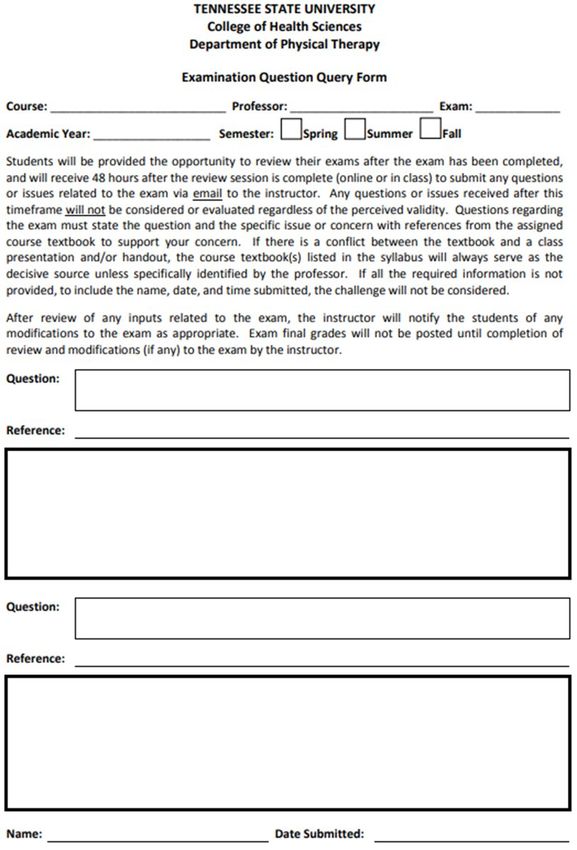
Major Illness, Surgery, Injury or Exceptional Situations ...................................................................... 17
         Student Responsibilities in Classrooms and Laboratories ................................................................... 17
         Laboratory Check-offs and Laboratory Examinations ......................................................................... 18
         Risk Management .............................................................................................................................. 19
         Academic Misconduct........................................................................................................................ 19
         Penalties for Academic Misconduct ................................................................................................... 20
         Grade Appeals and Complaints .......................................................................................................... 20
         Progression to Clinical Education ....................................................................................................... 21
             Year 1 Students .............................................................................................................................. 21
             Year 2 Students .............................................................................................................................. 21
         Assessment of Competence ............................................................................................................... 22
             Assessment of Entry-Level Competence.......................................................................................... 22
         Preparation for the NPTE ................................................................................................................... 22
      CLINICAL EDUCATION POLICIES ............................................................................................................. 23
         Definitions ......................................................................................................................................... 23
         Clinical Assignments .......................................................................................................................... 23
         Clinical Education Stipulations ........................................................................................................... 25
         Grading ............................................................................................................................................. 26
         Policy on Withdrawal from Clinical Education Experiences ................................................................. 26
         Student Responsibilities..................................................................................................................... 27
         Responsibilities of the SCCE and CI .................................................................................................... 28
         Responsibilities of the DCE ................................................................................................................ 29
         Attendance ........................................................................................................................................ 29
         Conduct ............................................................................................................................................. 30
         Dress Code ........................................................................................................................................ 30
         Health Insurance Portability and Accountability Act (HIPAA) .............................................................. 31
         Criminal Background Checks/Drug Screens ........................................................................................ 31
             Additional Information on Criminal Background Checks ................................................................. 31
      LIST OF APPENDICES ............................................................................................................................. 33
      APPENDIX A .......................................................................................................................................... 34
         Professional Curriculum..................................................................................................................... 34

2021 – 2022 Student Handbook                                             Page 3 of 48                                                         Revised May 2021
APPENDIX B .......................................................................................................................................... 36
Rhonda Hodge Memorial Scholarship Fund Awards ........................................................................... 36
APPENDIX C .......................................................................................................................................... 37
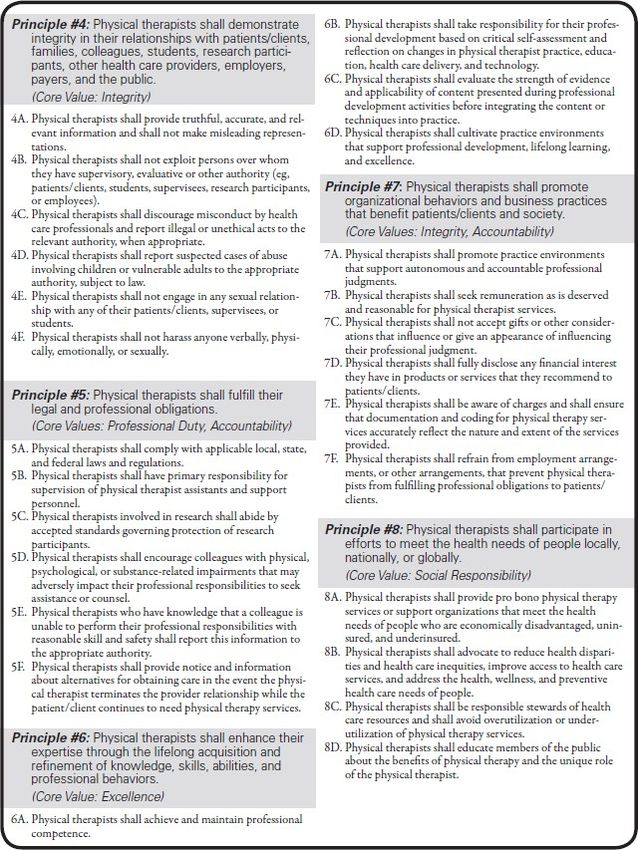
APTA Code of Ethics for the Physical Therapist .................................................................................. 37
APPENDIX D .......................................................................................................................................... 39
Examination Question Query Form .................................................................................................... 39
APPENDIX E........................................................................................................................................... 40
Waiver, Release, and Authorization Form .......................................................................................... 40
APPENDIX F........................................................................................................................................... 42
Clinical Education Stipulations ........................................................................................................... 42
APPENDIX G .......................................................................................................................................... 43
Professionalism in Physical Therapy: Core Values .............................................................................. 43
APPENDIX H .......................................................................................................................................... 44
Confidentiality Statement .................................................................................................................. 44
APPENDIX I ........................................................................................................................................... 45
Criminal Background Check and Drug Screen Requirement ................................................................ 45
APPENDIX J ........................................................................................................................................... 46
Acknowledgment of Modifications to the Student Handbook ............................................................ 46
APPENDIX K
TSU DPT Oath……………………………………………………………………………………………………………………………48
2021 – 2022 Student Handbook Page 4 of 48 Revised May 2021INTRODUCTION
Purpose
This student handbook provides necessary information regarding policies, procedures, and
regulations for all students in the Department of Physical Therapy at Tennessee State University.
The policies of the Department supersede the policies of the graduate school or University.
Students are accountable and responsible for all information contained in this student handbook.
In addition to the policies and procedures contained in this student handbook, students are
responsible for the policies and guidelines outlined in the Tennessee State University Student
Handbook.
Accreditation
Tennessee State University is accredited by the Southern Association of Colleges and Schools
Commission on Colleges to award the Associate, Bachelor's, Master's, Specialist in Education,
and Doctoral degrees. Contact the Commission on Colleges at 1866 Southern Lane, Decatur,
Georgia 30033-4097 or call 404-679-4500 for questions about the accreditation of Tennessee
State University.
The Doctor of Physical Therapy program at Tennessee State University is accredited by the
Commission on Accreditation in Physical Therapy Education (CAPTE), 1111 North Fairfax
Street, Alexandria, Virginia 22314; telephone: 703-706-3245; Email: accreditation@apta.org;
website: http://www.capteonline.org
Notice of Change
The Department of Physical Therapy reserves the right to make changes in the policies,
procedures and regulations subsequent to the publication of this student handbook. Notice of any
changes or revisions will be provided to the students in writing. Each student is responsible for
attaching the addendum to his or her handbook.
2021 – 2022 Student Handbook Page 5 of 48 Revised May 2021DESCRIPTION OF PROGRAM
Philosophy
The DPT program at Tennessee State University recognizes the reciprocal and responsive nature
of professional education, where both the student and the educator collaborate as partners in the
learning process. Inherent in the relationship is the primacy of the student and the facilitative role
of the educator as together they embark on a process of professional education.
Statement of Principles
Integral to the educational partnership is the recognition and acknowledgment of the roles, rights,
and responsibilities unique to and common between the student and the educator. The student is
expected to develop and exhibit characteristics of adult learners, including, but not limited to,
being problem-centered, willing to learn, and being self-directed. The student is also expected to
be a change agent willing to challenge habituated thoughts and practices as physical therapy
moves toward the doctoring profession. The educator is expected to uphold high academic
standards, respect student diversity, be role models of professional behavior, and create an
environment conducive for effective learning to occur.
Mission
The Mission of the Department of Physical Therapy is to graduate competent entry-level
physical therapists who demonstrate cultural competence, apply research evidence to practice,
uphold the code of ethics, value lifelong learning, and engage in professional/community service.
Goals and Outcomes
Program
• To maintain accreditation as an educational program preparing physical therapists who
embody the mission statement
• To promote diversity in the physical therapy profession by increasing the number of
physical therapists from underrepresented populations
• To foster a community of scholar-practitioners between and among the academic faculty,
clinical faculty, and students who serve the community
2021 – 2022 Student Handbook Page 6 of 48 Revised May 2021Faculty
• To engage in a continual process of improvement in teaching
• To exercise professional and social responsibility by participating in institutional,
professional, and community service
• To engage in scholarly endeavors that contribute to the body of knowledge of the
profession
Students
• To pass the National Physical Therapy Examination
• To use the principles of evidence-based practice
• To communicate and collaborate effectively and confidently in the health care
community
• To provide therapy to a diverse population with respect for patient differences
• To practice in a safe, legal, and ethical manner
• To practice autonomously within the scope of practice
• To demonstrate competence as a generalist entry-level physical therapist
• To make decisions related to patient care using reflective critical thinking
• To serve as compassionate practitioners and patient advocates
• To display leadership and professionalism
• To engage in lifelong learning to provide community service
Summary of Student Goals and Outcomes
Outcome 1: Graduates will possess entry-level competence to practice as physical therapists.
Associated Student Goals: 3a, 3c, 3e, 3f, 3g
Outcome 2: Graduates will demonstrate cultural competence. Associated Student Goals: 3c,
3d, 3e
Outcome 3: Graduates will apply research evidence to practice. Associated Student Goals: 3b,
3h, 3k
Outcome 4: Graduates will uphold the Code of Ethics. Associated Student Goals: 3e, 3f, 3i
Outcome 5: Graduates will value lifelong learning. Associated Student Goals: 3h, 3k
Outcome 6: Graduates will actively participate in professional/community service. Associated
Student Goals: 3c, 3d, 3i, 3j, 3l
2021 – 2022 Student Handbook Page 7 of 48 Revised May 2021CURRICULUM MODEL
The curriculum is built around the Traditional Model, which begins with the basic sciences,
followed by clinical courses, and culminating with clinical education experiences. The
curriculum is outlined in Appendix A.
The curriculum can also be found at https://www.tnstate.edu/pt/.
FACULTY, COORDINATORS, AND STAFF
David Lehman, PT, PhD Office 218
Interim Chair
Professor
Email: dlehman@tnstate.edu Phone: (615) 963-5946
Areas of interest: Neuroscience, Movement Science Neurologic Physical Therapy, Research, and
Parkinson Disease
Marsha L. Bowman, PT, DPT, WCS Office 222
Assistant Professor
Email: mbowman1@tnstate.edu Phone: (615) 963-5938
Areas of Interest: Women's Health and Pelvic Health
Derek Charles, PT, DPT, PhD(c), OCS, COMT Office 225
Assistant Professor
Email: dcharles@tnstate.edu Phone: (615) 963-5943
Areas of Interest: Orthopedics, Patient Care Principles, Therapeutic Exercise, and Orthopedic
Manual Therapy
Richard Clark, PT, DSc, SCS Office 226
Assistant Professor
Email: rclark20@tnstate.edu Phone: (615) 963-5944
Areas of Interest: Orthopedics and Sports Physical Therapy, Management, and Professional
Issues
Karen Smith, PT, DPT, C/NDT, CWS, WCC, FACCWS Office 228
Assistant Professor
karensmith@tnstate.edu
Email: Phone: (615) 963-2168
Areas of Interest: Pediatric and Adult Neuro, Prosthetics/Orthotics, Acute Care, and
Integumentary Systems
2021 – 2022 Student Handbook Page 8 of 48 Revised May 2021Deborah Edmondson, PT, EdD, CWcHP Office 216
Director of Clinical Education
Professor
Email: dedmondson@tnstate.edu Phone: (615) 963-5945
Areas of Interest: Orthopedics, Industrial Rehabilitation, and Clinical Education
Edilberto A. Raynes, MD, PhD Office 227
Associate Professor
Email: eraynes@tnstate.edu Phone: (615) 963-2190
Areas of Interest: Public Health, General Pediatrics, Anatomy, Physiology, Pathophysiology, and
Pharmacology
Annie Tapp, PT, DPT, Cert MDT Office 224
Lab Competency Coordinator
Email: atapp@tnstate.edu Phone: (615) 963-1388
Areas of Interest: Vestibular Rehabilitation, Pain Science, Clinical Reasoning, and Clinical
Education
Dorothy Fisher Office 215
Department Administrative Assistant
Email: dfisher9@tnstate.edu Phone: (615) 963-5188
GENERAL INFORMATION
Mailing Address:
Tennessee State University
Department of Physical Therapy
3500 John A. Merritt Blvd
Nashville, TN 37209
Telephone: 615-963-5881
Website: www.tnstate.edu/pt
Facebook: www.facebook.com/tnstatePT
The department telephone lines are reserved for business use only. Student use of department
phones is discouraged except in the case of an emergency. Students are encouraged to use their
personal cell phones. Emergency calls for students which are received by the Department are
relayed to students as quickly as possible.
Faculty members should not be called at home, except in the case of an emergency or if directed
to do so by the faculty member.
2021 – 2022 Student Handbook Page 9 of 48 Revised May 2021The Department is aware that job recruiters are frequently overzealous in contacting physical
therapists or physical therapy students. It is departmental policy not to release student names,
telephone numbers, addresses, clinical affiliation assignments, or other information. Students are
expected to follow this policy in regard to releasing information about classmates. If you choose,
you may release information about yourself to recruiters or prospective employers, but be
prepared for numerous disruptions in your life when they contact you.
Class/Office Location
Physical therapy classes are held in the Health Sciences Building (HSB). HSB is located on the
main campus of Tennessee State University.
The office of the Department of Physical Therapy is located on the second floor of the HSB.
Faculty and staff offices are also located on the second floor of the HSB.
Advising of and Appointments with Faculty Members
Faculty office hours are posted in the faculty members' syllabi/eLearn. Students should schedule
appointments with faculty members during these hours.
Each student is assigned a faculty advisor at the beginning of the semester of the first year.
Faculty advisors are available to assist students with problems involving the academic process,
adjustment to the classroom and campus, etc. Appointments may be initiated either by the
student or the faculty advisor. However, each student is strongly encouraged to schedule an
appointment with the faculty advisor immediately after the release of mid-term grades each
semester to discuss academic progress.
Departmental Communication to and among Students
Each cohort has a class distribution list for email that faculty use to communicate with students.
Additional lines of communication include e-Learn, and the use of designated class
representatives.
Meetings between faculty and students may be scheduled to discuss departmental concerns or
issues of mutual interest. Attendance at such meetings is required.
Changes in Contact Information
Students should report any changes in address and telephone number during their tenure in the
program to the Department Administrative Assistant and to the Records Office as soon as the
2021 – 2022 Student Handbook Page 10 of 48 Revised May 2021changes are in effect. Students are required to review and update their contact information
during their final week in the program prior to graduation. Students are to maintain a current
address and telephone number with the Department for future correspondence.
Attire During Didactic and Laboratory Sessions
Students should be appropriately dressed for the classroom and the particular lab activity planned
for the day. Students may wear scrubs or clinic attire during classes and should change to lab
attire as appropriate. Walking shorts during warmer months may be allowed at the discretion of
the instructor. For all lab courses, long hair must be pinned back and jewelry removed (i.e.,
dangling earrings, sharp rings, long chains). Caps are not allowed during class time. University
identification should be worn and visible at all times.
Appropriate Lab Attire:
Loose shorts
Top of two-piece swimsuit (or halter top or sports bra) and a t-shirt for women, t-shirts
for men
Low-heeled, close-toe shoes
Long hair tied back so that it does not interfere with lab activities
Fingernails must be clean and trimmed to conservative length.
Bare shoulders, midriffs, and extremities are necessary for practicing many physical therapy
procedures in the lab setting. Students practice these techniques on each other and with students
of all genders in order to develop the skill level necessary for actual clinical practice.
Additionally, as part of the instructional process, instructors of all genders may practice and
demonstrate these techniques on any of the students. Students having objections to this should
communicate with the instructor at the start of the semester.
In-person Anatomy Lab Attire:
White lab coat and scrubs
Washable scrub suits with long slacks to protect skin; shorts are not permitted.
Closed-toe shoes. No high heels (tennis shoes are acceptable).
Clinical Education Attire:
Please refer to the "Dress Code" section of the Clinical Education Manual for the
appropriate attire for clinical education experiences.
Safety and Security Services
2021 – 2022 Student Handbook Page 11 of 48 Revised May 2021The full scope of responsibilities of the TSU Police Department is described in the Tennessee
State University Police Department Campus Handbook. The extension number for the TSU
Police Department is 615-963-5171. Students are encouraged to report to the TSU Police
Department any suspicious persons, potentially unsafe or hazardous conditions encountered in
the building or on campus.
Students should closely guard all personal items of value. Tennessee State University and the
Department of Physical Therapy accept no responsibility or liability for the loss or theft of
personal items from these premises.
Individuals are discouraged from using these facilities during time periods when the building is
sparsely occupied. The study areas should be used by groups of students.
The Department Secretary is the designated person in the program to be responsible for receiving
and communicating university-wide information relative to campus emergencies. Additionally,
students can avail of emergency alerts from Campus Police by signing up for text alerts at the
following link: http://www.tnstate.edu/pr/notifications.aspx
Program Costs
In addition to tuition, room, and board, students can expect to incur costs for the following items:
Transportation and uniform costs associated with clinical education
Books and other supplemental readings and materials including software
Class dues as determined by the class (for class orders)
Dissection kit, gloves lab coat and scrubs, for anatomy lab if in-person
Liability Insurance
Physical examinations and drug screens, as required by the clinical site
Health Insurance (policy available through the University)
o Immunizations and tests: TB test, MMR, Hepatitis, varicella, and seasonal flu
shots. Additional immunizations or titers may be required for specific clinical
sites
Nametag
CPR training
Lock for locker
APTA dues
Criminal background checks
Lab coat for clinical education experiences
Goniometer, reflex hammer, stethoscope, sphygmomanometer, and non-cloth gait belt,
pulse oximeter, Siemens-Weinstein Monofilament, tape measure, TENS/EMS Combo
unit
Wristwatch with second hand or digital feature to read seconds
Research poster development
2021 – 2022 Student Handbook Page 12 of 48 Revised May 2021 Travel costs associated with a poster presentation
Travel costs and registration to district and state professional meetings
NPTE review course
Laptop with webcam (Note – Chrome books are not compatible with eLearn/Respondus.)
Note: Students need to consider buying the clinical items as a group so that they can get bulk
discounts.
Expect to go beyond the Metropolitan Nashville area for at least two, possibly three clinical
education experiences. Additional costs for housing and travel may be incurred during this and
other clinical education experiences.
Graduate Assistantships and Scholarships
Traditionally, the program has two graduate assistantships. Graduate assistantships begin in the
fall, not the summer. More information will be provided closer to the end of June or the
beginning of July. Tennessee State University offers tuition discounts through the 250-mile
radius program. Additionally, qualifying students who have been accepted into the program may
also avail of the POTUS (Preparing Our Tomorrows Uniquely in STEM) Fellows program. One
second year student is awarded a $7000 scholarship as a long-term neurodevelopmental trainee
in the Vanderbilt LEND program.
The program also offers the Rhonda Hodge Memorial Scholarship Fund. Information about this
scholarship is in Appendix B.
Student Relationship with the American Physical Therapy Association
Students are required to join the American Physical Therapy Association (APTA). Members
receive a monthly magazine, journal, and numerous other publications. In addition, students can
receive discounts on items purchased from APTA and discounts on car and life insurance, credit
cards, etc.
In lieu of a textbook, students are required to be APTA members as a course requirement for the
following courses:
Year 1 (Summer): PHTH 5380 Introduction to Physical Therapy
Year 2 (Summer): PHTH 6390 Research II
Year 3 (Spring): PHTH 7580 DPT Professional Issues
The Tennessee Physical Therapy Association (TPTA), a chapter of the APTA, holds a student
election yearly to provide a student liaison to the TPTA Board of Directors. The elected student
is responsible for communicating with the students at other schools in Tennessee.
The TPTA publishes a newsletter entitled the Volunteer Voice. Each issue includes an article on
2021 – 2022 Student Handbook Page 13 of 48 Revised May 2021the current happenings among physical therapy education programs in the state, including the
DPT program at TSU. The article is written by a member of the graduating class.
During the course of each student's matriculation, they must attend a MINIMUM of one National
and one state-level professional conference related to physical therapy or related field. Evidence
of attendance will be submitted during the Spring semester of their third year during the PHTH
7580 Professional Issues course. Substitutions may be accepted on a case-by-case basis with
prior approval from the course instructor.
Employment and Participation in TSU Extracurricular Activities
Students are free to engage in employment and extracurricular activities. However, students are
responsible for the impact and consequences of these activities in their professional education.
Toward this end, students are expected to attend all scheduled classes (including occasional
evening sessions, any scheduled classes whose meeting times have been changed to
accommodate adjunct faculty or guest lecturers) and other scheduled meetings and meet all
program and course deadlines.
Departmental Committees
The Physical Therapy Admissions Committee: Implements established policies and
procedures in the selection of applicants for the incoming class. Composition: Members of this
committee include academic faculty, alumni, Admissions Sub-Committee of the Advisory Board
members, and/or clinical faculty. The committee is chaired by a physical therapist core faculty
member.
The Physical Therapy Disciplinary Action Committee: Upon referral from the Department
Head, [1] reviews allegations of student misconduct, including but not limited to: unprofessional
behavior; tardiness and excessive absences; misuse of equipment and supplies in the classroom
or laboratory; and non-compliance with departmental policies and procedures; and [2] levies
consequences appropriate for the action, including but not limited to: dismissal of the allegations;
faculty counseling; inclusion of a permanent report in the student file; counseling by the
Department Head and/or referral to other campus resources. Recommended Composition:
Representative from the Dean's office (Assistant /Associate Dean); two full-time faculty
members from the program; one faculty from another program in the College of Health Sciences;
and 1 or 2 third-year students. The committee will be chaired by the Department Head.
Physical Therapy Student Executive Committee and Leadership
The Executive Committee consists of the (1st, 2nd, 3rd year) Class President, Vice President,
Secretary, and Treasurer. Other class Leadership positions are: Social Chair, Co-Social Chair,
Service Chair, Co-Service Chair, Chaplain, Legislative Liaison to the APTA-TN, Gala Chair,
Gala Co-Chair.
2021 – 2022 Student Handbook Page 14 of 48 Revised May 2021The Physical Therapy Student Executive Committee and Leaders are elected by secret ballot by
their classmates in the first two weeks of each fall semester. The term for each position is one
year.
In alignment with the TSU Student Government Association, the PT Student Executive
Committee purpose is:
1. To represent the welfare and interest of the physical therapy student body and the
university; To facilitate communication and dialogue among students, faculty and
administration in matters affecting the welfare of the physical therapy student body;
2. To promote academic excellence and good moral and ethical practices;
3. To provide opportunity for the development of superior character and leadership ability
among its members.
ACADEMIC POLICIES
Essential Functions
In order to be successful in the program, students are expected to perform the following essential
functions with or without reasonable accommodation:
Critical thinking ability sufficient for clinical judgment;
Interpersonal abilities sufficient to interact with individuals, families, and groups from a
variety of social, emotional, cultural, and intellectual backgrounds;
Coordination to move from room to room and maneuver in small spaces;
Gross and fine motor abilities sufficient to provide safe and effective physical therapy
care;
Auditory abilities sufficient to monitor and assess health needs;
Visual ability sufficient for observation and assessment necessary in physical therapy
care;
Tactile ability sufficient for physical assessment and treatment;
Physical ability to assist moving, transferring and ambulating patients who have physical
impairment or dysfunction.
If a student is unable to perform the aforementioned essential technical functions, they have the
right to request reasonable accommodations in accordance with the University's disability policy
as described in the TSU Student Handbook. Disability services may be found at:
http://www.tnstate.edu/disabilityservices/
Grading Scale
A 93 to 100% Excellent. Work of exceptional quality which indicates the highest level
of attainment in a course
2021 – 2022 Student Handbook Page 15 of 48 Revised May 2021B 84 to 92% Good. Work above average quality representing substantial fulfillment of
the minimum essentials of a course
C 75 to 83% Average. Work of average quality representing substantial fulfillment of
the minimum essentials of a course.
F < 75% Failure. Representing unacceptable performance.
I Incomplete. Represents incomplete work of passing quality and is given
when the student has missed an examination or some part of the required
coursework.
Note: Since the DPT program is a lockstep program, a student receiving a failing grade in any
course will not be able to progress in the program in their current cohort.
Retention Policy
Code of Ethics
The Code of Ethics by the American Physical Therapy Association has been adopted by the
Tennessee Board of Physical Therapy as the standard to which all physical therapists are subject
under Rule 1150- 01-14. Students in the physical therapy program are required to abide by the
same standard. Students who violate the Code of Ethics and its interpretive document, the Guide
to Professional Conduct, will be referred to the Physical Therapy Disciplinary Action Committee
for disciplinary sanctions.
Failing a Course/Dismissal
Earning a failing grade (F or U) in any course automatically results in dismissal from the
program. Students dismissed due to a failing grade in a course may appeal for "Retention in
Degree Program." Should the appeal be granted, the conditions of appeal must be met as outlined
in the notification.
Probation/Suspension
Students are required to have a cumulative GPA of 3.0 or higher to graduate from the program. If
a student's cumulative GPA falls below a 3.0 during his or her tenure in the program, the student
will be placed on academic probation the following semester. Probationary status requires the
student to raise the cumulative GPA to 3.0 or better by the end of the probationary semester.
Subsequently, the student must maintain a cumulative GPA of at least 3.0 for his/her remaining
tenure in the program. In other words, a student is allowed to be on Probationary Status only
once during his/her tenure in the Physical Therapy program.
Failure to raise the cumulative GPA to at least a 3.0 by the end of the probationary semester will
result in suspension from the Graduate School. Furthermore, a failure to maintain a cumulative
GPA of 3.0 throughout the rest of the program will result in suspension from the Graduate
2021 – 2022 Student Handbook Page 16 of 48 Revised May 2021School. Students who have been suspended may appeal for "Readmission following
Suspension."
Readmission following Appeal
A student who is readmitted following a granted appeal must maintain a semester-by-semester
GPA of at least 3.0 throughout his/her tenure in the Physical Therapy program. Failure to
accomplish a semester-by-semester GPA of at least 3.0 will result in Permanent Dismissal from
the program.
Additional Appeals
Only one appeal, whether granted or denied, is allowed during the student's tenure in the
Physical Therapy program.
Major Illness, Surgery, Injury or Exceptional Situations
After any major illness, surgery, injury or exceptional situations, a student must submit a
statement from a qualified health professional, which gives medical clearance for the student to
perform the essential functions of a student in the program with or without reasonable
accommodation.
Student Responsibilities in Classrooms and Laboratories
Laboratory practice and experience of designated patient care situations are prerequisite to the
performance of these techniques in actual clinical settings. Students are expected to participate in
all lab sessions, including but are not limited to assuming the role of patient, therapist, family
member, etc. Students are expected to observe standard precautions during simulated or actual
patient care situations.
Appropriate lab attire for each session is described in this handbook and in the course syllabus.
Students are expected to be dressed appropriately at the announced beginning time for each
session.
Students are expected to exhibit responsibility in maintaining a clean and pleasant classroom
atmosphere. Food or beverages are discouraged; however, exceptions may be allowed by the
instructor. No food or beverages are permitted in the computer laboratories. Teams of students
may be assigned laboratory, laundry, and classroom clean-up duties for one or more weeks
throughout the year.
The plinths in the laboratories are for student use during laboratory practice/demonstration
sessions. They are not intended to be replacements for desks or extensions of students' lockers.
Extra books, clothing, lunches, etc., should be stored elsewhere, not on the plinths. When using
2021 – 2022 Student Handbook Page 17 of 48 Revised May 2021the plinths for laboratory practice, care should be taken to prevent sharp objects or pieces of
equipment, etc., from tearing holes in the top covering of the plinth. Shoes are not permitted on
the furniture, plinths, or exercise mats. Laboratory equipment and supplies are not available for
checkout by students outside the laboratory.
Hand washing and/or use of sanitizer is required for all patient or simulated patient encounters.
Plinths and laboratory equipment need to be wiped down and disinfected after every lab session
that requires their use. This responsibility is to be determined by the course instructor.
Exercise equipment in the laboratories is reserved for classroom use and is not available for
recreational exercise or the treatment of students. The hot and cold pack equipment is not used to
warm up or cool down food items. The washing machine and dryer are for laboratory use only
and are never used for personal items. Towels and linens are for laboratory use and should be
given the same care and regard as other laboratory equipment. They should not be used to wipe
spills from the floor. In the case of spills, use a cloth or ask the custodial staff for assistance.
Responsibility for the inventory and care of laboratory equipment and supplies is shared among
students and faculty. Classrooms and laboratories should be readied for subsequent classes prior
to the departure of students.
Except by approval of the course instructor, observers and guests are not permitted in classrooms
and laboratories. Also, some courses are web-enhanced courses using the University's learning
platform.
Individual and group study areas are provided in throughout the College of Health Sciences
building, the Floyd- Payne Student Center, and the Library.
Laboratory Check-offs and Laboratory Examinations
The program's Lab Competency Coordinator schedules regular open labs for students to be able
to practice clinical skills learned during the semester. In addition to regularly scheduled open
labs, unscheduled open labs can be arranged with the coordinator for students who would like
more practice with specific skills. The coordinator needs to be present and available during open
labs.
Each laboratory check-off or examination utilizes a rubric outlining performance expectations
and grading guidelines. The rubric is made available to students prior to the examination. Faculty
members keep these rubrics as a matter of academic record.
It is the policy of the Department of Physical Therapy that any student who fails a portion of a
laboratory examination on the grounds of safety will receive an "F" for the entire examination.
Students who receive a grade less than "C" on a laboratory examination for any other reason may
retake that exam to bring the grade up to a "C." A student may not receive a grade higher than a
"C" for a laboratory examination which is being retaken because of a failure on the first attempt.
2021 – 2022 Student Handbook Page 18 of 48 Revised May 2021The retake must be scheduled prior to the next regularly scheduled laboratory examination. Only
one retake is allowed per failed laboratory examination. Students are required to pass both the
lab portion and didactic portions of courses with lab. A failure to pass a didactic or lab portion
will result in an "F" for the course.
Risk Management
During their tenure in the program, students are at risk for occupational injury from working
with, lifting and moving patients and equipment. These include, but are not limited to, the
following: low back and neck pain, sprain, strain, fall related injuries, etc. Good body mechanics
and a solid foundation on the safe and appropriate application and use of equipment and other
treatment interventions can minimize these risks. The Department has a Waiver, Release, and
Authorization Form (Appendix E) for use by students and/or faculty when engaging in physical
therapy related procedures and activities.
Students may also be exposed to supplies that may be hazardous to health, such as gels, lotions,
sprays, and pads. Safety Data Sheets (SDS) for these and other supplies used by the program
may be accessed through eLearn.
Students should expect to work with persons with infectious diseases (including but not limited
to hepatitis B and HIV). Students are expected to observe standard precautions during simulated
or actual patient care situations to minimize the risk of infection or transmission. Student health
service is available on campus at the following location:
Tennessee State University Health Services
Kean Hall, 3rd Floor, Room 304
Phone (615) 963-5291
Fax (615) 963-5084
Website http://www.tnstate.edu/campus_life/healthservices.aspx
Academic Misconduct
Students are required to read the Physical Therapy Student Handbook and sign a declaration
acknowledging their agreement to abide by the rules and regulations of the program. As graduate
students, they are also bound by the "Academic Integrity Statement" outlined in the Tennessee
State University Graduate Catalog.
Violations of academic rules and regulations are automatically referred to the Department Head
by the faculty member who observed the infraction. The Department Head is responsible for the
initial investigation of the infraction, utilizing information supplied by the faculty member and
the student(s) involved. If the severity of the infraction is such that dismissal from the program is
a consideration, the Department Head will refer the matter to the Physical Therapy Disciplinary
2021 – 2022 Student Handbook Page 19 of 48 Revised May 2021Action Committee. The committee reviews the case and makes the final decision regarding the
appropriate sanction for the offense.
The decision of the committee may be appealed by the student(s), according to the procedures
outlined in the Tennessee State University Student Handbook. Examples of academic
misconduct include, but are not limited to, the following:
• Cheating on any oral, written, or practical examination given as part of any course;
• Knowingly allowing another student (or students) unauthorized access to any written,
oral or practical examination or assignment in any course;
• Plagiarism on any written work assigned in the classroom, laboratory, or the clinic.
• Lack of professionalism (when outlined in the syllabus as a course expectation subject to
evaluation from the course instructor).
• A positive drug screen while at affiliated clinical sites. (Students must comply with
Principle 4c of the APTA Code of Ethics)
Penalties for Academic Misconduct
If the Physical Therapy Disciplinary Action Committee determines that academic misconduct
has occurred, the committee shall issue a written decision to the student and the Department
Head. A copy of the decision is included in the student's file. On the other hand, if the committee
determines that no infraction has occurred, then no written document shall be placed in the
student's file.
Cheating and plagiarism warrant a penalty of no less than a written warning placed in the
student's file on the first offense and an automatic zero for the work. Beyond the first offense,
cheating and plagiarism warrant dismissal from the program.
A positive drug screen warrants discontinuance of the clinical education experience and may
result in the student's dismissal from the Physical Therapy Program.
Grade Appeals and Complaints
Academic decisions may be appealed in the following order:
1. Written appeal to the Faculty member
2. Written appeal to the Department Head
3. Written appeal to the Physical Therapy Disciplinary Action Committee
4. Written appeal to the Dean of the College of Health Sciences
The particulars of the appeal process, including appeals beyond the level of the Dean of the
College of Health Sciences, are detailed in the Tennessee State University Student Handbook.
2021 – 2022 Student Handbook Page 20 of 48 Revised May 2021Complaints that fall outside the realm of due process (i.e., from clinical sites, employers, and the
public) should be reported to the Department Head.
Progression to Clinical Education
To progress in the program, students are required to pass the OSCE (Objective Structured
Clinical Evaluation) at the end of the spring and summer semesters of their first and second years
in the program. Successfully passing the OSCE is required for students to proceed with their
summer clinical internships
Year 1 Students
Objective Structured Clinical Examination (OSCE) I
Conducted during the 2nd summer semester
Tied to Introduction to Clinical Internship
Tied to progression to Clinical Internship I
Comprised of case-based stations that assess various aspects of clinical skills
• Station Tied to Biophysical Agents: biophysical agents
• Stations Tied to Therapeutic Exercise: [1] bed mobility & transfers, [2] ROM &
MMT, [3] assistive device, [4] therapeutic exercise, and [5] documentation
• Station Tied to Clinical Medicine I: vital signs & pharmacology
• Station Tied to Human Development: pediatrics
For OSCE I, students who fail a station are remediated by the course instructor until satisfactory
progress and student readiness have been achieved. The highest grade students can earn upon
redoing a station after remediation is a "C."
For OSCE specific questions: ask the instructors of Physical Agents, Pharmacology, Patient
Care, Clinical Medicine I and/or Therapeutic Exercise
Year 2 Students
Objective Structured Clinical Examination (OSCE) II
Course requirement for a number of courses in the spring semester (refer to course
syllabi)
Tied to progression to Clinical Internship II
Comprised of complex cases that require problem-solving and critical thinking in the
context of physical therapy patient/client management of orthopedic (adult and geriatric),
2021 – 2022 Student Handbook Page 21 of 48 Revised May 2021neurologic, cardiopulmonary, integumentary, and pediatric conditions across the
continuum of care. Grading is determined by the points earned through a rubric
Students who fail undergo subsequent remediation with the course instructor prior to
taking a different case. If the student fails on the second attempt, the student is then
assigned a different case in front of a panel of three faculty members. Based on the
student's performance on the third attempt, the panel will determine the gaps and the type
of remediation needed in order to progress to clinical education.
In no case shall a student determined to be incompetent or unsafe be allowed to go on clinical
affiliation or graduate from the program. Students deemed not ready for clinical education are
informed in writing of this decision.
Assessment of Competence
Year 1 and Year 2 OSCEs
OSCE I and II are used to determine the students' readiness to progress to Clinical Internship I
and Clinical Internship II.
Assessment of Entry-Level Competence
Physical Therapist Clinical Performance Instrument Web (PT CPI Web), the competency-based
evaluation tool will be used for all clinical education experiences.
The program utilizes the APTA Physical Therapist Clinical Performance Instrument – Web (PT
CPI Web) to determine whether or not students have entry-level competence. More specifically,
the program reviews the students' performance in Clinical Education III and IV to make this
determination. In areas where the student's final performance indicator ratings are not at the
minimally required level, the DCE will determine the student's final grade by consulting with the
CI(s) and/or referring to the CI(s)' written/verbal comments or recommendations.
Preparation for the NPTE
To prepare for the NPTE, the program hosts an NPTE review course in the fall and provides you
access to the Practice Exam Assessment Tool (PEAT) in the spring. As part of the course
requirements for PHTH 7480 Professional Issues, students will be:
1. Taking the PEAT twice during their final semester in the program.
2. Bringing to the course instructor the analyses of their performance
3. Developing a remediation plan for identified areas of weakness
Students who have a cumulative GPA of 3.4 and a first attempt PEAT score of 600 are eligible to
2021 – 2022 Student Handbook Page 22 of 48 Revised May 2021take the NPTE prior to graduation (usually in April).
CLINICAL EDUCATION POLICIES
Definitions
Clinical education – The portion of a physical therapy education program during which the
student has the opportunity to apply didactic information in a clinical setting and to develop
clinical skills under the supervision of a Clinical Instructor.
Director of Clinical Education (DCE) – A faculty member in the Physical Therapy Department
who is responsible for developing, coordinating, and implementing the clinical education portion
of the professional curriculum.
Site Coordinator of Clinical Education (SCCE) – A clinical education facility staff member
who is responsible for coordinating clinical education with the DCE.
Clinical Instructor (CI) – the physical therapist that is responsible for direct instruction and
supervision of the student during the clinical education experiences.
Physical Therapist Clinical Performance Instrument - Web (PT CPI – Web) – the
competency-based evaluation tool that will be used for all clinical education experiences.
Exxat – the clinical education website that the University uses. Each student will be sent an
invitation to the website to set up a profile. This site is where we will keep track of required
documents, immunizations and certifications, house all information regarding site contracts, keep
track of available sites for each clinical, run wish-lists and assign tasks during clinical rotations.
Clinical Assignments
1. The DCE is responsible for assigning students to a facility for each clinical education
experience.
2. Students are not ordinarily assigned to facilities in which they have worked or
volunteered or with which they have contractual arrangements for financing or
employment.
3. There are four clinical education experiences. Students must attend clinical education
experiences that are representative of the continuum of care between healthcare settings.
During the course of the program, students must complete at least one outpatient and one
inpatient clinical that is at least 7 weeks in length. The DCE will encourage you to attend
a variety of clinical settings to better prepare you for the NPTE and future clinical
2021 – 2022 Student Handbook Page 23 of 48 Revised May 2021practice.
4. Clinical Education III and IV may be combined into one 14 week rotation. However, the
student needs to register for both Clinical Education III and IV.
5. There are a limited number of clinical sites in Middle Tennessee and nationally;
therefore, students must be flexible and, if necessary, go outside of the Middle Tennessee
area (more than one hour driving distance from the campus) or outside of the state of
Tennessee for clinical education experiences. This may entail driving over one hour
driving distance from TSU for some clinical education experiences or finding housing as
needed.
6. Students will not be placed in California as a result of California not participating in the
National Council for State Authorization Reciprocity Agreements (NC-SARA). More
information on NC-SARA can be found here: https://www.nc-sara.org/
7. In order to avoid conflict of interest and assure students receive a variety of clinical
education experiences, students will not be assigned to facilities or clinical instructors
with whom they have volunteered for over 30 hours or with which they have worked in
any capacity or with which they have contractual arrangements for financing of school
fees or tuition or present and/or future employment arrangements.
If the facility has multiple locations, the student can be assigned to a facility, but the
following restrictions will apply:
• The student will not be assigned to a clinical instructor with whom they have
volunteered for over 30 hours or with whom they have worked in any capacity.
• The student will not be assigned to the facility if they have a contractual arrangement
for the financing of school fees or tuition or present and/or future employment
arrangements with the facility in any capacity.
If the facility is a large hospital/institution, the student can be assigned to the facility, but
all the following restrictions will apply:
• The student will not be assigned to a clinical instructor with whom they have worked
in any capacity or volunteered for more than 30 hours.
• The student will not be assigned to the facility if they have a contractual arrangement
for the financing of school fees or tuition or present and /or future employment in any
capacity.
• The student will not be assigned to the same department/area where they have worked
in any capacity or volunteered for more than 30 hours.
2021 – 2022 Student Handbook Page 24 of 48 Revised May 2021You can also read


